As a Doctor, May I Refuse to See Unvaccinated Patients?
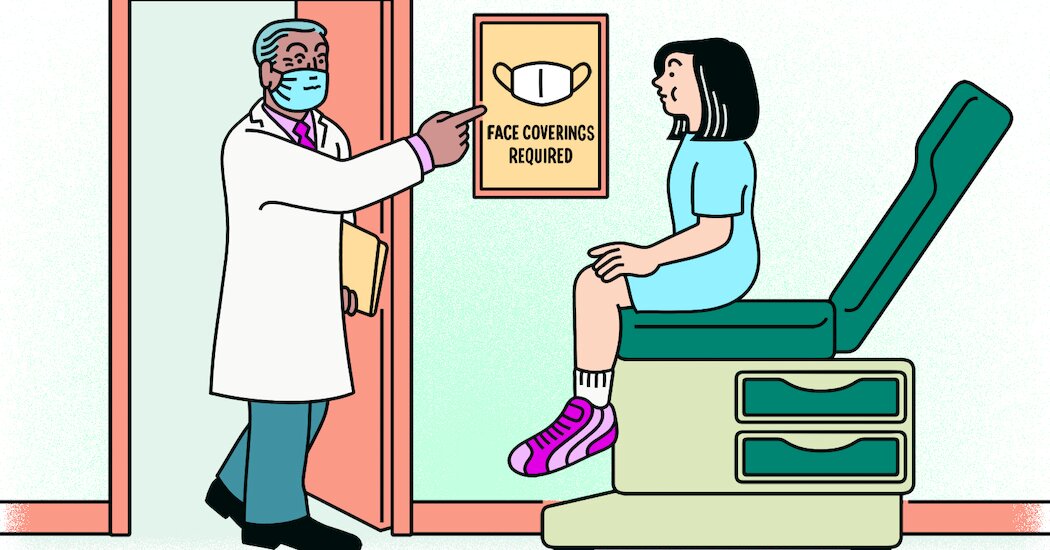
The magazine’s Ethicist columnist on mitigating risk from Covid-19 without punitive measures —and more.I’m a family physician in private practice. More than 225 of my patients have been infected with the coronavirus. Some were hospitalized, some were placed on ventilators and more than a few have “long Covid” symptoms. When the vaccines became available, not only did I and my staff get vaccinated, but we also assisted our patients in procuring vaccination appointments. By spring, more than 80 percent of my patients were fully vaccinated, and we can now offer unvaccinated patients the convenience of vaccination in our office. A significant segment of our practice consists not of “vaccine hesitant” but of “vaccine refusing.” We attempt to create a nonjudgmental, nonshaming atmosphere for our patients to express their reasons for refusing the vaccine. Many have bizarre, almost delusional reasons for not getting vaccinated. Others have fallen prey to misinformation online. Because our patients often take mass transit to their appointments and because our office is in a high-rise and because I offer telehealth appointments, is it ethical and in the interest of public health to restrict vaccine-refusing patients to telehealth appointments? Name Withheld, New YorkWe all depend on other people — our trusted networks — for much of what we know or believe to be true. So we’re all vulnerable to misinformation when people whose epistemic authority we trust mislead us. Sometimes, no doubt, a touch of arrogance eases the departure from reality, too. Lay people who dissent from the scientific consensus may strike you as woefully credulous but often pride themselves on being independent-minded. Still, these are social, not individual, delusions.And social delusions pose shared difficulties. Commendably, it sounds as if you’ve done your best to set everyone straight. Once certain patients are committed to nonvaccination, however, you are not free to make decisions that could reasonably be viewed as punitive. You can certainly insist on their keeping away from the premises if they pose a genuine risk to others in your practice. But that shouldn’t be the case, given that your patients are mostly vaccinated (and your staff entirely so) and that you’ll presumably require unvaccinated patients to wear masks and practice social distancing.When unvaccinated patients ask for an appointment, you can routinely offer teleconsultations (in circumstances where this is a medically sound option), explaining that, in your view, every trip puts them at further risk of contracting or transmitting infection. That’s a good way of keeping before them the fact that a relevant expert in their lives has a different view from theirs. Still, these exasperating people should be free to ignore your very sound advice and remain in your care.My adult son told me he was “waiting his turn” to be vaccinated but now admits he has no plans to do so. He is in his 30s and steeped in conservative media messages, like Fox News and Dave Ramsey. He says as long as we are vaccinated, it doesn’t matter if he isn’t. We feel that he’s taking a belligerent and selfish stance. We believe that the vaccine is important not only for each recipient’s own health but also to protect people who can’t take the shots (and the vaccine is not 100 percent effective). Logically, we know he’s unlikely to infect us. We’re scheduled to meet for a small celebration. Our first reaction was to continue our “no mask, no meet” policy, but are we overreacting? We could still meet, but we would wear masks. This will cause a deep rift if we don’t handle it well. Name WithheldTo go by current C.D.C. guidance for small indoor gatherings, your son is the one who should be masked. But if he’s the only unvaccinated participant, the risks to you — and to him — are very low. (New variants could change the calculation; we’re getting additional data all the time.) Yes, he’s being a knucklehead in this respect, and I trust you’ve made your views about it very clear to him. But a family celebration isn’t a favor to which you can attach conditions. The prospect of getting together, even with this blinkered soul, is something you plainly value. You probably won’t go wrong by suspending the policy and letting him raise a glass with you.My 11-year-old son is very nervous about being out in the world. My wife and I and our 13-year-old are all vaccinated. I would like our 11-year-old to get vaccinated and am willing to lie about his age to do so. (I am confident that if the vaccine is fine for someone a few months older than he, it’s fine for him too.) Is it ethical to sign him up for a vaccine and to ask him to lie if asked about his age? Peter, Iowa CityThe rules and recommendations of medical authorities rightly shift in response to shifting evidence; they shouldn’t be bent in response to our individual fears.Most of the time, the social logic of vaccination has a pleasing symmetry: It’s good for you, and it’s good for the rest of us. With children, who can transmit the virus but very seldom get seriously ill from it — and again, new variants could change the picture — the benefits flow mostly to others. As this newspaper has reported, children your son’s age are more likely to perish from flu, drowning or motor-vehicle accidents. Look for ways to reassure your boy that don’t involve a needle. The rules and recommendations of medical authorities rightly shift in response to shifting evidence; they shouldn’t be bent in response to our individual fears.I retired as a professor of education from a small college. One of my former colleagues in the department had only a master’s, for which the department was criticized by an accreditation agency. She applied to a Ph.D. program a few years ago but was not accepted and left the college. She is now working as an administrator in a private school for children with disabilities. A short bio on the school website states that she received her Ph.D. from a Midwestern university in 2012. I know that to be false, as she was rejected from a local program after that date.My first impulse was to contact the private school. On reflection, however, I realized that this would result in her losing her job. Do I have a professional obligation to let the school know that her bio is not accurate? Robert Berman, Long Island, N.Y.Your former colleague wronged her employers when she deceived them; she may have wronged others who competed with her for the job. But yes, taking an action that would have grave consequences requires careful consideration. Being fired is a serious penalty for this lie, especially if, as I suspect, the qualification she claimed wasn’t really necessary for the job. Had the school truly cared about the credential, it could have done its due diligence: Degrees are considered “directory information,” readily disclosed to potential employers.We regularly put too much stock in formal qualifications: If she was doing a good job in your department, your accreditors were taking a shortcut to a proper evaluation. Having a doctoral degree cannot matter more than experience and commitment in teaching. (And I’m putting aside the fact that plenty of people with doctoral degrees are lousy teachers.) In the British system of higher education in which I was formed, the doctorate arrived as a belated German import, and many eminences on the faculty wouldn’t have had one. What’s more, your colleague is working now as an administrator in a pre-college context, and teachers and administrators without doctoral degrees have been responsible for great K-12 schooling, including for students with disabilities. I would feel different if I thought her prevarication was at the expense of those children, but I see no reason this would have to be so.None of this is at all exculpatory. That our preoccupation with paper credentials is regrettable doesn’t excuse a misrepresentation of those credentials. So let me be clear: You’re certainly entitled to expose her and wouldn’t be wronging her if you did. The loss of her job, perhaps of her career, would have been her own fault. But you don’t have a professional obligation to expose her, either. Keeping other people honest about their credentials whenever we happen to find them misstated isn’t a duty we have in relation to everyone we’ve ever worked with.Kwame Anthony Appiah teaches philosophy at N.Y.U. His books include “Cosmopolitanism,” “The Honor Code” and “The Lies That Bind: Rethinking Identity.” To submit a query: Send an email to ethicist@nytimes.com; or send mail to The Ethicist, The New York Times Magazine, 620 Eighth Avenue, New York, N.Y. 10018. (Include a daytime phone number.)

Read more →
The epidemic within the pandemic

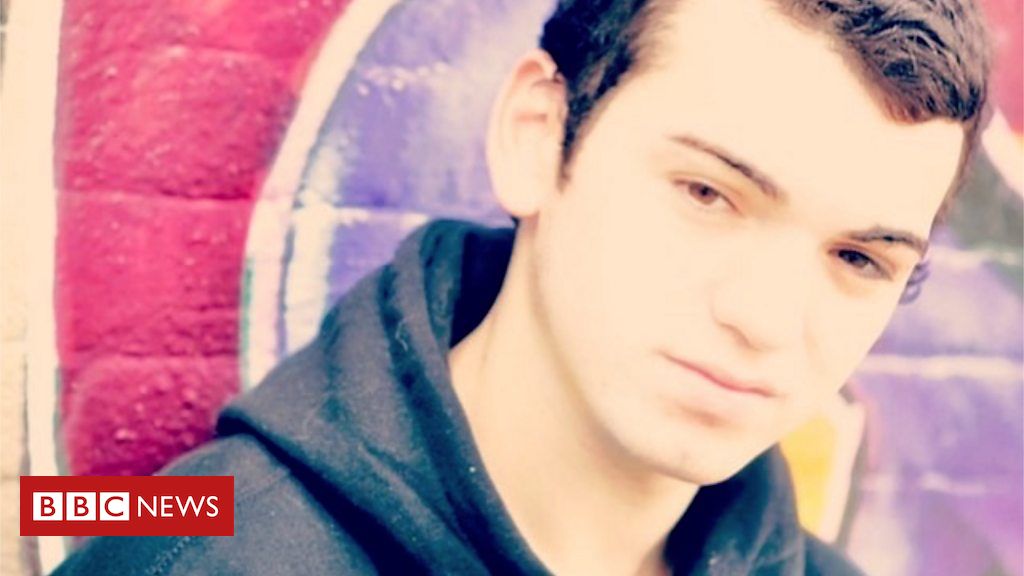
Overdose deaths in the US rose by 30% in 2020. Increased social isolation and the closure of treatment programmes due to Covid lockdown measures played a big role, say experts.Gina Malagold’s brother overdosed while in quarantine at his family’s cabin. She tells his story.Produced by Koralie Barrau.

Read more →

More Data Needed for Decision on Booster Shots, U.S. Officials Tell Pfizer

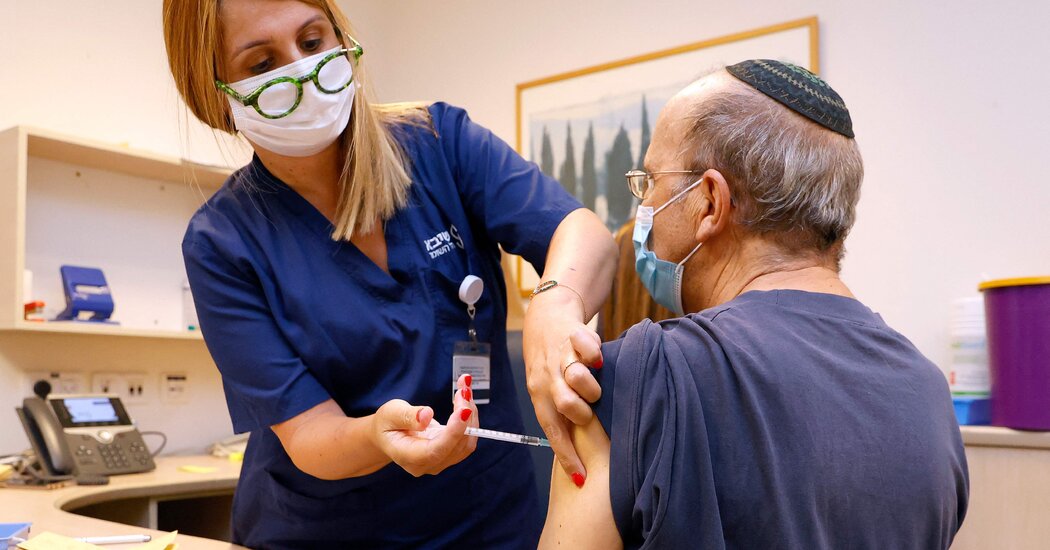
After meeting with company representatives, officials said the decision would depend partly on data on infections in vaccinated people that cause serious disease or hospitalization.Representatives of Pfizer met privately with senior U.S. scientists and regulators on Monday to press their case for swift authorization of coronavirus booster vaccines, amid growing public confusion about whether they will be needed and pushback from federal health officials who say the extra doses are not necessary now.The high-level online meeting, which lasted an hour and involved Pfizer’s chief scientific officer briefing virtually every top doctor in the federal government, came on the same day Israel started administering third doses of the Pfizer-BioNTech vaccine to heart transplant patients and others with compromised immune systems. Officials said after the meeting that more data — and possibly several more months — would be needed before regulators could determine whether booster shots were necessary.The twin developments underscored the intensifying debate about whether booster shots are needed in the United States, at what point and for whom. Many American experts, including Dr. Anthony S. Fauci, President Biden’s chief medical adviser for the pandemic, have said there is insufficient evidence yet that boosters are necessary. Some, though, say Israel’s move may foreshadow a government decision to at least recommend them for the vulnerable.Pfizer is gathering information on antibody responses in those who receive a third dose, as well as data from Israel, and expects to submit at least some of that to the Food and Drug Administration in the coming weeks in a formal request to broaden the emergency authorization for its coronavirus vaccine.But the final decision on booster shots, several officials said after the meeting, will also depend on real-world information gathered by the Centers for Disease Control and Prevention about breakthrough infections — those occurring in vaccinated people — that cause serious disease or hospitalization.And any recommendations about booster shots are likely to be calibrated, even within age groups, officials said. For example, if booster shots are recommended, they might go first to nursing home residents who received their vaccines in late 2020 or early 2021, while elderly people who received their first shots in the spring might have a longer wait. And then there is the question of what kind of booster: a third dose of the original vaccine, or perhaps a shot tailored to the highly infectious Delta variant, which is surging in the United States.“It was an interesting meeting. They shared their data. There wasn’t anything resembling a decision,” Dr. Fauci said in a brief interview Monday evening, adding, “This is just one piece of a much bigger puzzle, and it’s one part of the data, so there isn’t a question of a convincing case one way or the other.”A spokeswoman for Pfizer said in a statement, “We had a productive meeting with U.S. public health officials on the elements of our research program and the preliminary booster data.”With less than half of the United States population fully vaccinated, some experts said Monday that the country needed to remain focused on getting all Americans their first dose. The Food and Drug Administration’s most important task, they said, is to increase public confidence by granting full approval to the coronavirus vaccines in use, which for now are authorized on an emergency basis.“At this point, the most important booster we need is to get people vaccinated,” said Dr. Carlos del Rio, an infectious disease expert at Emory University in Atlanta. The booster doses in Israel, he added, “will help us answer some questions, but at the end of the day I don’t agree with what they’re doing. I think it’s awfully premature.”Within the Biden administration, some fear that if Americans are convinced that coronavirus vaccines provide only short-lived immunity before requiring a booster, they will be less likely to accept a shot. But those concerns could fall by the wayside if new data from Israel, expected in the next several weeks, shows conclusively that immunity wanes after six to eight months, significantly raising the risks for the elderly or other vulnerable populations.Workers unpacking doses of the Pfizer vaccine from cold storage last month. Pfizer is expected to submit a formal request in the coming weeks to broaden the emergency authorization for its vaccine.Bryan Anselm for The New York TimesThe administration convened Monday’s session in response to last week’s announcement by Pfizer and its German partner, BioNTech, that they were developing a version of their vaccine that targets the Delta variant, and reporting promising results from studies of people who received a third dose of the original vaccine six months after the second.The new data is not yet published or peer reviewed, but when the companies announced that they would submit data to the Food and Drug Administration for authorization of booster shots, it caught the Biden White House by surprise.In an unusual joint statement Thursday evening, hours after the Pfizer-BioNTech announcement, the F.D.A. and the C.D.C. pushed back.“Americans who have been fully vaccinated do not need a booster shot at this time,” the statement said, adding, “We are prepared for booster doses if and when the science demonstrates that they are needed.”The move may make good business sense for Pfizer-BioNTech. Since the onset of the pandemic, the partner companies have pursued a “get to market first” strategy in manufacturing and marketing their vaccine.The companies did not take federal money or participate in Operation Warp Speed, former President Donald J. Trump’s fast-track vaccine initiative. They were the not only the first to win Food and Drug Administration authorization for their coronavirus vaccine, the first to use novel mRNA technology, but also the first to gain authorization for their vaccine’s use in adolescents.The strategy has “paid off as handsomely as anyone could ask for,” said Steve Brozak, the president of WBB Securities, a research investment bank focused on biotechnology.Last week, Pfizer and BioNTech said a booster given six months after the second dose of the vaccine increased the potency of antibodies against the original virus and the Beta variant by five- to tenfold. But antibody levels may not be the best biological measurement of the need for booster doses, according to experts, who say it is no surprise that antibodies would increase after taking a third dose.“Antibody response is not the only measure of immune protection,” said Dr. Leana S. Wen, a former health commissioner for Baltimore. “There have been multiple studies that suggest these vaccines also stimulate B cell and T cell immunity, so even if there isn’t as much antibody, that doesn’t mean someone isn’t protected.”In Israel, the government agreed to provide Pfizer with data on its vaccine recipients, and Pfizer has been matching the Israeli data with what its own laboratory tests are showing. Some people familiar with the data say it indicates that immunity is waning among the vaccinated after roughly six to eight months, leading to a growing number of breakthrough infections.The attendees at Monday’s session amounted to a who’s who of government doctors: Dr. Fauci; Dr. Rochelle Walensky, the director of the Centers for Disease Control and Prevention; Dr. Francis Collins, the director of the National Institutes of Health; Dr. Vivek Murthy, the surgeon general; Dr. Rachel Levine, the assistant secretary for health; Dr. Janet Woodcock, the acting F.D.A. commissioner; Dr. Peter Marks, the director of the F.D.A.’s Center for Biologics Evaluation and Research; and Dr. David Kessler, a former F.D.A. commissioner who is heading the Biden administration’s vaccine distribution effort, among others.Dr. del Rio of Emory University complained about Monday’s meeting being conducted in private instead of Pfizer presenting its data publicly to the C.D.C.’s advisory committee on vaccine practices, which will ultimately recommend whether booster shots are necessary.Slightly more than two-thirds of American adults — 67.7 percent — have had at least one Covid-19 shot, according to the C.D.C. That figure falls short of the Biden administration’s goals; the president had hoped to have 70 percent of adults at least partially vaccinated by July 4.Still, the national vaccination campaign has made clear that the vaccine succeeds at preventing disease, and studies suggest that vaccines remain effective against the Delta variant. Outbreaks are occurring in areas with low rates of vaccination, and the national caseload has ticked up recently; according to a New York Times database.World Health Organization officials emphasized on Monday the importance of prioritizing global vaccine production and distribution over the development of boosters in light of the stark gaps among countries’ vaccination programs.“It’s not to say one or the other; it’s putting things in a crisis in order,” said Dr. Michael Ryan, the executive director of the organization’s health emergencies program, in reference to addressing what the organization calls a two-tier pandemic.Lauren McCarthy

Read more →

Plastic surgery booming in China despite the dangers

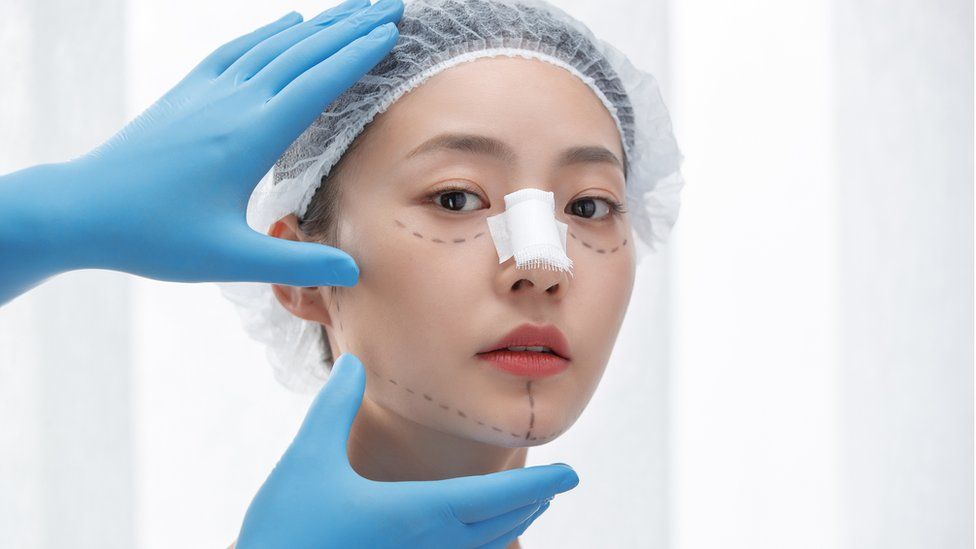
SharecloseShare pageCopy linkAbout sharingimage copyrightGetty ImagesLike many of her peers, 23-year-old Ruxin scrolls her social media feed every day, but she is looking for something very specific – updates about cosmetic surgery. Ruxin is planning to have “double eyelid” surgery where the surgeon creates a crease on the eyelid, that she hopes will make her eyes appear bigger. The Guangzhou resident logs on to the Gengmei app regularly to hunt for the most suitable surgeon. “There are so many clinics in the city but I want to make sure I go to a good one. It’s my face we’re talking about,” she told the BBC.Gengmei, which means “more beautiful” in Chinese, is one of several social networking platforms in China dedicated to cosmetic surgery, where users leave status updates about all things plastic surgery, including liposuction and nose jobs. Search results can be filtered by regions, treatments and clinics, among others.image copyrightGengmei/So-youngSince its launch in 2013, Gengmei’s users have surged from 1m to 36m. More than half are young women in their twenties.Similarly, cosmetic surgery platform So-Young has seen its monthly active users grow, from 1.4m in 2018 to 8.4m today.Their popularity is an indication of the changing attitudes towards cosmetic surgery in China, which now performs more operations than any country in the world after the US.According to a Deloitte report, the market in China has almost trebled in value in four years to some 177bn yuan ($27.3bn; £19.7bn) in 2019 – an annual growth rate of 28.7%, well above the global rate of 8.2%. If this continues, China could become the world’s largest cosmetic surgery market by the middle of the decade, according to The Global Times.While the most popular procedures include those creating “double eyelids” and V-shaped jaw lines, new surgery fads come and go, with the latest being pointy elf ears, according to reports. Members of Gen Z – those born after 1996 – are not shy about getting such procedures done despite the topic being seen as taboo in the past. Ruxin, who works in fashion retail, said that her friends “openly talk about getting cosmetic procedures”.”Even if people don’t advertise that they have gotten something done, they won’t deny it if you ask them about it.”More regulation neededHowever, China’s cosmetic surgery boom comes with its drawbacks. According to a Global Times report, the country had more than 60,000 unlicensed plastic surgery clinics in 2019.Those clinics were responsible for around 40,000 “medical accidents” every year, an average of 110 botched operations per day, the report added. In one of the most high-profile cases, actress Gao Liu shared images online of a cosmetic procedure that left her with necrosis of the nose, meaning the tissue at its tip has died.image copyrightWeibo/Gao LiuShe said that she will need more surgery to fix it, but the complication has already cost her more than 400,000 yuan in film deals.Meanwhile, her attending physician was suspended for six months, and the hospital fined 49,000 yuan.Many internet users said the penalty didn’t go far enough.”This is the punishment for crippling someone?” one user wrote as she demanded better regulation of the industry.Last month, China’s National Health Commission announced a campaign targeting unlicensed cosmetic surgery providers, including investigating customer complaints more swiftly.Why take the risk?Many people in China place a great deal of importance on looks and the quest to “be beautiful” is driving the cosmetic surgery trend, experts told the BBC.image copyrightGetty ImagesDr Brenda Alegre, a gender studies professor at the University of Hong Kong, said that “conforming to ideals makes one more desirable, not just for romance, but for jobs”. In China, job applicants are often required to submit a photograph. Some job advertisements also specify physical requirements, especially for women, even if they are not needed to do the job. A 2018 Human Rights Watch report highlighting China’s sexist job ads cited examples including one looking for an “aesthetically pleasing” clothing sales associate, and another for a “fashionable and beautiful” train conductor. And with the internet creating a whole host of new job opportunities – all of which ride heavily on one’s looks – experts say there is a renewed focus on appearance, more than ever before.”To a certain extent, beauty can bring more career opportunities – for example, there is monetisation in live streaming and creating online video content,” Gengmei vice president Wang Jun told the BBC.Gengmei says it only works with licensed practitioners on its platform.image copyrightGetty Images’Prettiest to ugliest’China’s tabloid culture can also be brutal. News publications often criticise celebrities for their appearance.Earlier this year, a Shanghai art gallery promoted an exhibition that ranked images of women from “prettiest to ugliest”.Lu Yufan, a Beijing-based photographer who is working on a book about cosmetic surgery, told the BBC that growing up, people would often be straightforward when it came her looks. Her relatives would tell her that she looked like TV actresses – “not the pretty heroines but the funny side characters”, the 29-year-old recalled. “When I was in middle school, boys also listed who they thought were the ugliest girls in class. They told me I was No. 5.”image copyrightLu YufanMs Lu, who has visited 30 cosmetic surgery clinics as part of her project, added that practitioners never held back when telling her how her face could be “improved”. “They were so persuasive that I found it difficult to say no, except that I didn’t have the money for it,” she said.For Ruxin, the eyelid operation is affordable, costing between $300 and $1,200. But it’s just the first step. “If this goes well, I’ll probably do more. Who doesn’t want to be prettier?” You might also be interested in:In 2016, the BBC visited a private cosmetic surgery clinic in Beijing.

Read more →

With the Delta Variant, Do I Need a Covid Booster Shot?

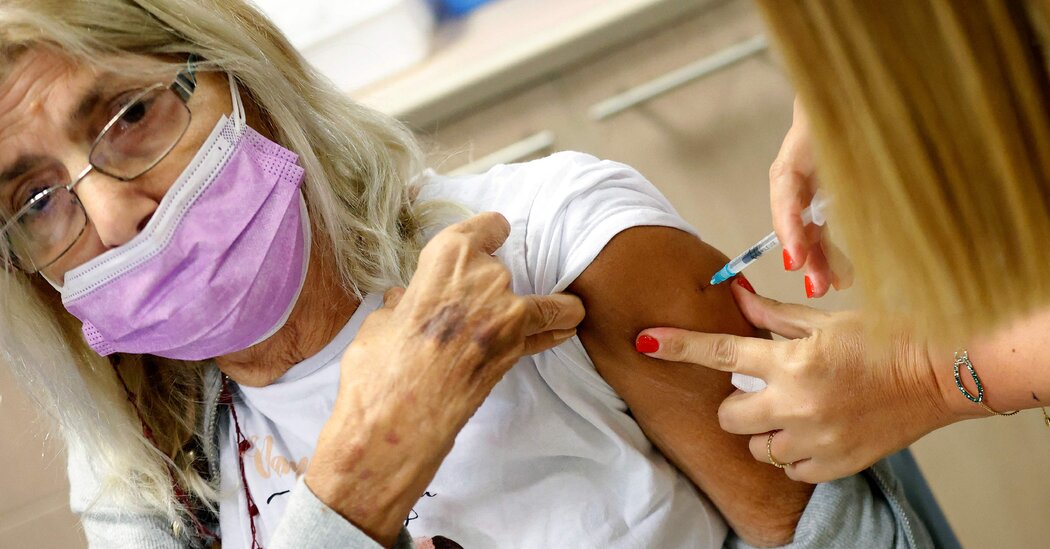
Although studies of a third dose are underway, experts agree that the vaccines are still working well, even against the Delta variant, and that booster shots are not necessary right now.Covid-19 booster shots are in the news, but chances are that Americans won’t be getting an extra shot in the arm any time soon.A surprise announcement from the vaccine maker Pfizer-BioNTech that it plans to seek authorization for a booster shot in the United States has prompted new worries among the general public about the effectiveness of Covid vaccines against the highly contagious Delta variant. Pfizer said it plans to seek authorization for a booster shot in the coming weeks, citing the possibility that protection against the coronavirus will wane six to 12 months after full immunization with the current two-shot regimen.But Pfizer’s talk of booster shots has been dismissed as premature by some of the world’s leading vaccine experts, who note that all evidence suggests that the Pfizer shots, along with the Moderna and Johnson & Johnson vaccines, continue to provide strong protection against Covid-19. A joint statement by the Centers for Disease Control and Prevention and the Food and Drug Administration offered a quick rebuke to the Pfizer announcement, noting that public health officials, not private pharmaceutical companies, would make the decision about booster shots.“Americans who have been fully vaccinated do not need a booster shot at this time,” the statement said. “We are prepared for booster doses if and when the science demonstrates that they are needed.”Even so, searches on Google for booster shots surged amid continuing worries about the Delta variant and the risk of breakthrough infections among the vaccinated. Adding to the confusion is the news that Israel’s Ministry of Health said on Monday it would begin offering a third dose of the Pfizer vaccine to adults with weakened immune systems, including cancer and organ transplant patients, in the country’s first step toward booster shots for the most vulnerable.So is a booster shot in your future? We talked to leading experts about whether booster shots are imminent and why it may be risky to give extra doses to the fully vaccinated in wealthy countries when many people around the world haven’t gotten their first shots. Here are answers to common questions.Why is Pfizer talking about booster shots?All of the vaccine companies have been studying booster shots for months, just in case they’re needed in the future. But Pfizer’s announcement that it’s ready to seek approval came as a surprise.In a news release, Pfizer-BioNTech cited recent data from Israel’s Ministry of Health announcing that although the vaccine remains about 93 percent effective at preventing serious illness and hospitalization, the vaccine is about 64 percent effective at stopping breakthrough infections, or infections that occur in those who are fully vaccinated, with or without symptoms. That figure is down from about 95 percent in May, before the highly infectious Delta variant became widespread. Experts say the data from Israel hasn’t been peer-reviewed and may be complicated by a number of variables. Other studies from Britain, Scotland and Canada show the Pfizer vaccine is still about 80 percent to 88 percent effective against the Delta variant.But Pfizer said that the findings from Israel were consistent with its own vaccine studies, and that it planned to present its data to federal health officials. A booster given six months after the second dose of the vaccine increases the potency of antibodies against the original coronavirus and the Beta variant, the form first detected in South Africa, by five- to tenfold, the company said, and it believes a vaccine booster would perform similarly against the Delta variant.“We continue to believe that it is likely, based on the totality of the data we have to date, that a third dose may be needed within six to 12 months after full vaccination,” the company said.What do public health experts say about booster shots?Several public health experts have criticized the Pfizer announcement, calling it “opportunistic” and “irresponsible.” Pfizer’s chief scientific officer met with top U.S. scientists on Monday to discuss the research.“Pfizer doesn’t get to decide when we need boosters; the F.D.A., C.D.C. and other regulatory agencies do that,” said Dr. Carlos del Rio, an infectious disease expert at Emory University. “The data needs to be shown publicly in an open, transparent way.”Dr. del Rio noted that even the data from Israel, cited in the company’s news release, shows the vaccine remains highly effective at protecting people from serious illness. Instead of talking about boosters, the focus should be on getting more shots in the arms of the unvaccinated, he said.“If you’ve been vaccinated, you don’t need to worry about boosters,” Dr. del Rio said. “The people who need to worry are those that haven’t been vaccinated. The booster is to get more people vaccinated. The more people we get vaccinated, the less likely we’ll have transmission.”Dr. Paul A. Offit, a professor at the University of Pennsylvania and a member of the F.D.A.’s vaccine advisory panel, said that while it’s important to study the safety and effectiveness of a booster dose to prepare for when it might be needed, the current evidence shows the vaccines are working against the Delta and other variants. He said he thinks it’s unlikely that people in the general population will get booster shots this year.“All the data to date point to the fact that immunity against severe critical illness is relatively long lasting,” Dr. Offit said. “The issue is not whether we can get a third dose. It’s whether we can get the first two doses in people who aren’t vaccinated.”Should I be worried about the Delta variant?The Delta variant now accounts for more than half of all infections in the United States, and the real risks are to the unvaccinated. While the Pfizer vaccine and others in use in the United States are slightly less effective against the Delta variant, all of them still offer significant protection against serious illness or hospitalization from Covid-19.Moderna has said test-tube studies using blood samples from vaccinated people show the vaccine is still highly effective against the Delta variant, which caused only a “modest reduction” in virus-fighting antibodies in the samples. And Johnson & Johnson has released two studies that show its vaccine remains effective against Delta, showing only a small drop in potency.“Roughly 99 percent of people who are hospitalized and killed by this virus are unvaccinated,” Dr. Offit said. “You’re not really trying to prevent asymptomatic or mild symptoms. You’re trying to keep people out of the hospital and out of the morgue. It’s a goal we’ve met remarkably well.”Why not just get a third shot to be sure?Given that large parts of the world still have very low vaccination rates, and vaccine supplies are limited, most public health experts say it’s shortsighted to give additional doses to people in wealthy countries who are fully vaccinated. In the United States, nearly 50 percent of all residents are fully vaccinated. But in India, only about 5 percent of the population is fully vaccinated. In much of Africa, fewer than 1 percent of people are vaccinated. The concern is that the longer large parts of the world remain unvaccinated, the greater the risk that new, more threatening variants will emerge.“American lives continue to be at risk if there are large outbreaks elsewhere with more variants being created,” said Dr. Ashish K. Jha, dean of the Brown University School of Public Health. “Even if you take a very narrow lens that you only care about the lives of Americans, there’s still a very compelling argument that a first shot for an Indian person does more good for America than a third shot for an American.”In a news conference on Monday, the leader of the World Health Organization pushed back against Pfizer’s plan to seek authorization for booster shots. “The priority now must be to vaccinate those who have received no doses and protection,” Tedros Adhanom Ghebreyesus, the W.H.O. director general, said.Who will be first in line to get booster shots once they are approved?Some countries are already giving booster doses of vaccine to people with compromised immune systems, including people who have undergone cancer treatment or those who have had organ transplants. Since April, health care providers in France have routinely given a third dose of a two-dose vaccine to people with certain immune conditions. On Monday, Israel also announced it would give a third dose of vaccine to highly vulnerable adults.In addition, Moderna is gearing up to test a third dose in 120 organ transplant recipients, and Pfizer, which produces some medications that suppress immunity, is planning a study of 180 adults and 180 children with compromised immune systems.An estimated 5 percent of the U.S. population is considered to be immunocompromised because of health conditions or drug treatments. While it may be months before booster shots are recommended for the general population, if at all, it’s possible federal health officials will approve an extra shot for a select group of vulnerable patients with compromised immune systems.Dr. Jha said the medical community was waiting for guidance from the C.D.C. and the F.D.A. about whether to give booster doses to people who are immunocompromised and did not develop adequate protection after a standard course of vaccination. “There are some data emerging that a third shot helps those people,” Dr. Jha said. “It really requires the engagement of your specialist. I think most physicians are saying hold. They’d like to see the C.D.C. recommendations on this.”

Read more →

France Covid: Vaccinations mandatory for all health workers

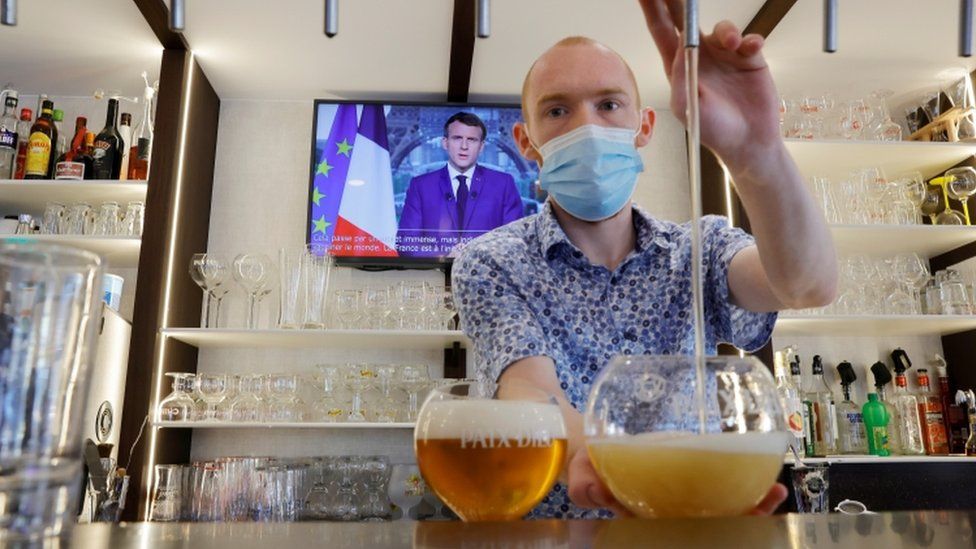
SharecloseShare pageCopy linkAbout sharingimage copyrightReutersAll health care workers in France must be fully vaccinated against Covid-19 by September or risk not being paid, the government has announced.The requirement applies to doctors, nurses, office staff and volunteers.President Emmanuel Macron has also said that from next month, health passes will need to be shown to access places like shops, bars, cinemas and long-distance train journeys in France.The passes show the holder has been jabbed, or had a recent negative test.”I am aware of what I am asking of you, and I know that you are ready for this commitment, this is part, in a way, of your sense of duty,” the president said in a televised address on Monday.The mandatory vaccinations will apply to anyone who comes into contact with vulnerable people, and therefore applies to everyone who works in hospitals, clinics and care homes, regardless of their role.They must be vaccinated by 15 September or risk not being paid, Health Minister Olivier Véran told France’s LCI television.Health passes are already used to enter some venues, such as nightclubs which reopened for the first time at the weekend. However they will be expanded to include more places including festivals, theatres and hospitals from 21 July and will apply to those aged over 12 years old.To encourage people to get jabbed, PCR covid tests that are currently free will have to be paid for, unless accompanied with a doctor’s prescription.After the president’s announcement, Doctolib, the website people use to book their jabs, crashed as so many people tried secure appointments.France bans non-essential travel from UKWhere is the Delta variant and how is it spreading?Cases are rising in France, with the Delta variant causing a surge in hospital admissions. On Friday, a panel of scientists who advise the French government on health matters warned of a fourth wave in the coming months, and said as many as 95% of people may need to be vaccinated to control the spread.However, only a little over half of the population has received a first dose and less than 40% have had two shots.

Read more →

W.H.O. Experts Seek Limits on Human Gene-Editing Experiments

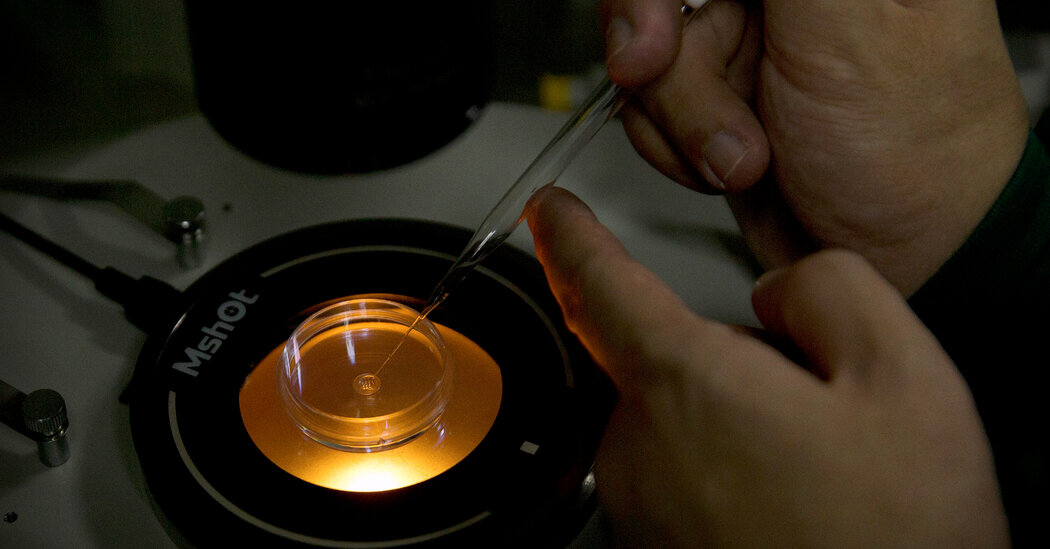
The panel also called on countries to ensure that beneficial forms of genetic alteration be shared equitably.A committee of experts working with the World Health Organization on Monday called on the nations of the world to set stronger limits on powerful methods of human gene editing.Their recommendations, made after two years of deliberation, aim to head off rogue science experiments with the human genome, and ensure that proper uses of gene-editing techniques are beneficial to the broader public, particularly people in developing countries, and not only the wealthy.“I am very supportive,” said Dr. Leonard Zon, a gene therapy expert at Harvard University who was not a member of the committee, but called it a “thoughtful group.” Recent gene-editing results are “impressive,” he said, and the committee’s recommendations will be “very important for therapy in the future.”The guidelines proposed by the W.H.O. committee were prompted in large part by the case of He Jiankui, a scientist in China who stunned the world in November 2018 when he announced he had altered the DNA of human embryos using CRISPR, a technique that allows precision editing of genes. Such alterations meant that any changes that occurred in the genes would be replicated in every cell of the embryo, including sperm and egg cells. And that meant that the alterations, even if they were deleterious instead of helpful, would arise not just in the babies born after gene editing but in every generation their DNA was passed on to.Dr. He’s goal was to alter the DNA of babies in an attempt to make them genetically unable to contract H.I.V. from their parents. A court in China determined he had forged ethics documents and misled subjects in the experiments who had not realized what his gene-editing experiment consisted of. He was sentenced to three years in prison in December 2019.Dr. He Jiankui, during a November 2018 announcement in Hong Kong, where he revealed he had altered the genomes of two babies using CRISPR.Anthony Wallace/Agence France-Presse — Getty ImagesThe fact that such an experiment, known as germline editing, could take place raised the question of how to control gene editing and how to be sure it was used to benefit people.The W.H.O. standards say that Dr. He’s use of germline editing was unacceptable and that it is irresponsible to even consider using it now. But other sorts of gene editing are a different story.Scientists already are attempting gene editing to correct the mutation that causes sickle cell disease. The edited gene would be in blood-forming bone marrow cells of people who have the disease, not in sperm or egg cells, so the changes would not be passed down through the generations. But even that use of CRISPR raises other questions.The W.H.O. committee described an invented scenario where researchers from a rich country want to do a clinical trial of sickle-cell gene editing in sub-Saharan Africa, where the disease is prevalent. If the trial succeeds, the gene-editing treatment would be too expensive for all but very few citizens of the country where it is to be tested.Another hypothetical situation involves a gene-editing trial to correct a gene mutation that causes Huntington’s disease, a progressive brain disorder. People who inherit the mutated gene will develop Huntington’s disease with absolute certainty. If the gene-editing experiment succeeds, it may spare them that horrific disease. And because the editing does not involve sperm and eggs, the changes will not be heritable.But it would take years, perhaps even decades, to know if study participants whose genes were edited were protected from Huntington’s disease. Participants would not be freed of the terrible fear that, despite the gene editing, they might still develop the fatal brain disease.In such a scenario, the W.H.O. group asked if there were more rapid ways of assessing the treatment’s effectiveness. It also proposed that researchers consider the psychological burden on participants who are left hoping they are cured but not knowing for sure.Yet gene editing is here and holds enormous promise, the committee said. The W.H.O. has started a registry of studies underway and says it already includes 156 experiments involving genes that are not in sperm or eggs.The W.H.O. committee stressed that each country must have guidelines to be sure the research is conducted ethically and with appropriate oversight, and with conditions in place to ensure access and social justice. With the costs of treatment expected to be very high, at least at first, the group said the goal must be to ensure that the benefits of gene editing accrue equitably to people around the world.“That is not an easy challenge,” said Françoise Baylis, a committee member who is a medical ethics researcher at Dalhousie University in Halifax, Nova Scotia.

Read more →

Childhood lead exposure may adversely affect adults' personalities

Lead exposure in childhood may lead to less mature and less healthy personalities in adulthood, according to a new study lead by psychology researchers at The University of Texas at Austin.
The study, published in the Proceedings of the National Academy of Sciences, sampled more than 1.5 million people in 269 U.S. counties and 37 European nations. Researchers found that those who grew up in areas with higher levels of atmospheric lead had less adaptive personalities in adulthood — lower levels of conscientiousness and agreeableness and higher levels of neuroticism.
“Links between lead exposure and personality traits are quite impactful, because we take our personalities with us everywhere,” said Ted Schwaba, a postdoctoral fellow in the Department of Psychology at UT Austin. “Even a small negative effect of lead on personality traits, when you aggregate it across millions of people and all the daily decisions and behaviors that our personality influences, can have really massive effects on well-being, productivity and longevity.”
In the study, researchers linked historical atmospheric lead data from the Environmental Protection Agency to online personality questionnaire responses from people who grew up in the sampled locations. Results showed that adults who were raised in U.S. counties with higher levels of atmospheric lead were less agreeable and conscientious and, among adults in their 20s and 30s, more neurotic than those who had less lead exposure during childhood.
“These three traits — conscientiousness, agreeableness and low neuroticism — make up a large part of what we would consider a mature, psychologically healthy personality and are strong predictors of our success or failure in relationships and at work,” Schwaba said. “Normally, across the lifespan, people become more conscientious and agreeable, and less neurotic.”
To further test whether lead exposure causes these differences, the researchers examined the effects of the 1970 Clean Air Act, finding that people born after atmospheric lead levels began to decline in their counties had more mature, psychologically healthy personalities in adulthood than those born before their counties phased out lead-based products.
To ensure these findings weren’t simply reflecting cohort effects — characteristics resulting from shared historical or social experiences — researchers replicated their study in Europe, where lead was phased out later than in the U.S. There, they found that people who grew up in areas with more atmospheric lead were also less agreeable and more neurotic in adulthood, although the findings regarding conscientiousness did not replicate.
“For a long time, we’ve known lead exposure is harmful, but each new wave of research seems to identify new ways in which lead exposure harms society,” Schwaba said. “Though there’s much less lead in the atmosphere today, lead remains in pipes, the topsoil and groundwater. And these sources of lead exposure tend to disproportionately harm people of color — Black children are twice as likely to have high levels of lead in their blood as white children. From an economic standpoint, from a social justice standpoint, or really any way you look at it, it’s incredibly important to limit lead exposure as much as possible.”
Story Source:
Materials provided by University of Texas at Austin. Note: Content may be edited for style and length.

Read more →

Magnetic field from MRI affects focused-ultrasound-mediated blood-brain barrier

MRI-guided focused ultrasound combined with microbubbles can open the blood-brain barrier (BBB) and allow therapeutic drugs to reach the diseased brain location under the guidance of MRI. It is a promising technique that has been shown safe in patients with various brain diseases, such as Alzheimer’s diseases, Parkinson’s disease, ALS, and glioblastoma. While MRI has been commonly used for treatment guidance and assessment in preclinical research and clinical studies, until now, researchers did not know the impact of the static magnetic field generated by the MRI scanner on the BBB opening size and drug delivery efficiency.
In new research published in Radiology, Hong Chen and her lab at Washington University in St. Louis have found for the first time that the magnetic field of the MRI scanner decreased the BBB opening volume by 3.3-fold to 11.7-fold, depending on the strength of the magnetic field, in a mouse model.
Chen, associate professor of biomedical engineering in the McKelvey School of Engineering and of radiation oncology in the School of Medicine, and her lab conducted the study on 30 mice divided into four groups. After the mice received the injection of the microbubbles, three groups received focused-ultrasound sonication at different strengths of the magnetic field: 1.5 T (teslas), 3 T and 4.7 T, while one group never entered the magnetic field.
They found that the activity of the microbubble cavitation, or the expansion, contraction and collapse of the microbubbles, decreased by 2.1 decibels at 1.5 T; 2.9 decibels at 3 T; and 3 decibels at 4.7 T, compared with those that had received the dose outside of the magnetic field. In addition, the magnetic field decreased the BBB opening volume by 3.3-fold at 1.5 T; 4.4-fold at 3 T; and 11.7-fold at 4.7 T. None of the mice showed any tissue damage from the procedure.
Following focused-ultrasound sonication, the team injected a model drug, Evans blue, to test whether the static magnetic field affects trans-BBB drug delivery efficiency. The images showed that the fluorescence intensity of the Evans blue was lower in mice that received the treatment in one of the three strengths of magnetic fields compared with mice treated outside the magnetic field. The Evans blue trans-BBB delivery was decreased by 1.4-fold at1.5 T, 1.6-fold at 3.0 T and 1.9-fold at 4.7 T when compared with those treated outside of the magnetic field.
“The dampening effect of the magnetic field on the microbubble is likely caused by the loss of bubble kinetic energy due to the Lorentz force acting on the moving charged lipid molecules on the microbubble shell and dipolar water molecules surrounding the microbubbles,” said Yaoheng (Mack) Yang, a doctoral student in Chen’s lab and the lead author of the study.
“Findings from this study suggest that the impact of the magnetic field needs to be considered in the clinical applications of focused ultrasound in brain drug delivery,” Chen said.
In addition to brain drug delivery, cavitation is also the fundamental physical mechanism for several other therapeutic techniques, such as histotripsy, the use of cavitation to mechanically destroy regions of tissue, and sonothrombolysis, a therapy used after acute ischemic stroke. The dampening effect induced by the magnetic field on cavitation is expected to affect the treatment outcomes of other cavitation-mediated techniques when MRI-guided focused-ultrasound systems are used.
Story Source:
Materials provided by Washington University in St. Louis. Original written by Beth Miller. Note: Content may be edited for style and length.

Read more →

The Equalizer: An engineered circuit for uniform gene expression

The function of a protein can depend on its abundance in a cell. So, when investigating the properties of a new protein, it is essential to make sure that the same amount is produced by every cell. Researchers at Baylor College of Medicine and Rice University have found a new way to do just that through the creation of new genetic circuits called Equalizers.
The findings, in the current edition of Nature Communications, show how researchers engineered these genetic circuits to buffer protein output from variations in the number of copies of the gene inside the cell, thereby helping to create consistent protein expression. This property is called “gene dosage compensation.”
The researchers use an analogy of heating a house to help explain how Equalizers work. Imagine using randomly placed space heaters to heat your home. To ensure each room gets a heater you would purchase some extra ones, but that would mean some rooms might have extra heaters. Those rooms might be too hot, so a solution would be to have thermostats on each heater to downregulate the heat when a room becomes too hot. Those thermostats act as the Equalizer.
Researchers typically encode genes to be expressed on circular pieces of DNA called plasmids. Excess plasmids are often used to ensure that most cells get one, but some cells will get several. The Equalizer is composed of transcriptional negative feedback and post-transcriptional incoherent feedforward loops. These loops counteract the presence of extra plasmids: they sense the outputs, in this case the proteins and mRNAs that the plasmids produce, and tune down their expression if they rise too high.
“We didn’t invent the parts, but rather we invented a new way to connect them together into a circuit,” said Jin Yang, who shared co-first authorship of the paper with graduate student Jihwan Lee of Rice University. Jin was a bioengineering undergrad at Rice University while developing this work and currently is a Ph.D. student at the Massachusetts Institute of Technology. “In natural systems, some gene networks must control gene dosage variation to remain functional and conserve their properties.
We repurposed and combined two types of gene dosage compensation circuits to create a version that enables uniform expression of any protein scientists want to produce in the lab.”
Negative feedback and incoherent feedforward circuit subcircuits can each help compensate for gene dosage, but the researchers found that coupling the two improved overall performance. This is because each circuit is not perfect. For example, the incoherent feedforward loop can saturate because it requires other proteins that are present in limited quantities in the cell. The negative feedback loop is limited in its inhibitory capacity, similar to a leaky sink faucet that cannot be fully closed. But combining these two imperfect circuits produced robust performance, with each circuit helping mitigate the limitation of the other.
“The process we used for these findings was a collaborative effort bringing together computer simulations and biology. This is similar to how engineers work — they draw up their plans, create a model and then build their structure,” said Dr. Oleg Igoshin, professor of bioengineering, of biosciences and of chemistry at Rice University and a senior author on the paper. “In this case we were able to create our model and show the effectiveness through computational models before it was then synthetically engineered in the lab.”
But why is minimizing expression variation important when it comes to biological research?
“The effect of a protein can depend on its abundance in a cell. If you’re studying a new protein and its concentration is too low, you may not be able to observe its function in the cell. If its concentration is too high, the protein may mislocalize, aggregate, produce cytotoxicity or otherwise produce responses that are not physiological. It is therefore important that a protein is expressed at the desired level in every cell under investigation,” said Dr. François St-Pierre, assistant professor of neuroscience and McNair Scholar at Baylor and corresponding author of this study. “We believe Equalizers will be of high value both for basic research and for industry.”
Others who took part in this research include Michelle A. Land and Shujuan Lai, both with Baylor College of Medicine.
The research was supported by the Welch Foundation, a Klingenstein-Simons Fellowship Award in Neuroscience, the McNair Medical Foundation, the National Science Foundation (including the NSF-supported Center for Theoretical Biological Physics), the National Institutes of Health, and the Cancer Prevention and Research Institute of Texas.
Story Source:
Materials provided by Baylor College of Medicine. Note: Content may be edited for style and length.

Read more →