Histone deacetylase inhibitor gel shows promise for the treatment of patients with basal cell carcinoma

Remetinostat, a topical cream and first-in-class inhibitor of histone deacetylation, showed signs of clinical efficacy in patients with basal cell carcinoma.
Basal cell carcinoma (BCC) is the most common form of skin cancer and is typically treated with surgical excision, explained Sarin. “While BCC is not associated with high mortality, surgical excision can be a costly and burdensome treatment, particularly for patients who develop multiple BCC lesions,” she noted.
A potential alternative strategy is to treat BCC with a topical cream; however, existing topical treatments for BCC are only effective for the superficial subtype of BCC, highlighting the need for more widely applicable topical treatments, Sarin explained.
Sarin and colleagues previously identified histone deacetylase (HDAC) inhibition as a promising therapeutic approach for BCC. In their latest study, a phase II clinical trial, Sarin and colleagues evaluated the safety and efficacy of the HDAC inhibitor remetinostat in adult patients with BCC. Unlike systemic HDAC inhibitors, which can be associated with various toxicities, remetinostat is designed to lose potency once it is absorbed beyond the skin, allowing its activity to be localized to the skin lesion.
The study enrolled 30 patients, each of whom had at least one BCC measuring 5 mm or greater in diameter at diagnosis. Ninety percent of patients identified as non-Hispanic white, and almost half had a prior history of skin cancer. Eight patients had multiple eligible tumors, resulting in a total of 49 tumors in the study. The tumors were found in both sun-exposed and non-exposed parts of the body, and the majority had either nodular or superficial histology.
Participants applied remetinostat gel to their tumors three times per day for six weeks. After eight weeks, any remaining tumor was surgically removed and examined histologically.

Read more →

Antibodies to SARS-CoV-2 remain stable, or even increase, seven months after infection

The levels of IgG antibodies against SARS-CoV-2 Spike protein remain stable, or even increase, seven months after infection, according to a follow-up study in a cohort of healthcare workers coordinated by the Barcelona Institute for Global Health (ISGlobal), an institution supported by “la Caixa” Foundation, in collaboration with the Hospital Clinic of Barcelona. The results, published in Nature Communications, also support the idea that pre-existing antibodies against common cold coronaviruses could protect against COVID-19.
In order to predict the pandemic’s evolution and develop effective strategies, it is critical to better understand the dynamics and duration of immunity to SARS-CoV-2 as well as the possible role of pre-existing antibodies against the coronaviruses that cause common colds. With this goal in mind, the team led by ISGlobal researcher Carlota Dobaño followed a cohort of healthcare workers at the Hospital Clinic (SEROCOV study) from the beginning of the pandemic, in order to evaluate the levels of antibodies against different SARS-CoV-2 antigens over time. “This is the first study that evaluates antibodies to such a large panel of SARS-CoV-2 antibodies over 7 months,” says Dobaño.
The research team analysed blood samples from 578 participants, taken at four different timepoints between March and October 2020. They used the Luminex technology to measure, in the same sample, the level and type of IgA, IgM or IgG antibodies to 6 different SARS-CoV-2 antigens as well as the presence of antibodies against the four coronaviruses that cause common colds in humans. They also analysed the neutralising activity of antibodies in collaboration with researchers at the University of Barcelona. The study had funding from the European innovation network EIT Health.
The results show that the majority of infections among healthcare workers occurred during the first pandemic wave (the percentage of participants with SARS-CoV-2 antibodies increased only slightly between March and October — from 13.5% to 16.4%). With the exception of IgM and IgG antibodies against the nucleocapsid (N), the rest of IgG antibodies (including those with neutralising activity) remained stable over time, confirming results from other recent studies.
“Rather surprisingly, we even saw an increase of IgG anti-Spike antibodies in 75% of the participants from month five onwards, without any evidence of re-exposure to the virus,” says Gemma Moncunill, senior co-author of the study. No reinfections were observed in the cohort.
Regarding antibodies against human cold coronaviruses (HCoV), the results suggest that they could confer cross-protection against COVID-19 infection or disease. People who were infected by SARS-CoV-2 had lower levels of HCoV antibodies. Moreover, asymptomatic individuals had higher levels of anti-HCoV IgG and IgA than those with symptomatic infections. “Although cross-protection by pre-existing immunity to common cold coronaviruses remains to be confirmed, this could help explain the big differences in susceptibility to the disease within the population,” says Dobaño.
Story Source:
Materials provided by Barcelona Institute for Global Health (ISGlobal). Note: Content may be edited for style and length.

Read more →

Light therapy helps burn injuries heal faster by triggering growth protein

Light therapy may accelerate the healing of burns, according to a University at Buffalo-led study.
The research, published in Scientific Reports, found that photobiomodulation therapy — a form of low-dose light therapy capable of relieving pain and promoting healing and tissue regeneration — sped up recovery from burns and reduced inflammation in mice by activating endogenous TGF-beta 1, a protein that controls cell growth and division.
The findings may impact therapeutic treatments for burn injuries, which affect more than 6 million people worldwide each year, says lead investigator Praveen Arany, DDS, PhD, assistant professor of oral biology in the UB School of Dental Medicine.
“Photobiomodulation therapy has been effectively used in supportive cancer care, age-related macular degeneration and Alzheimer’s disease,” says Arany. “A common feature among these ailments is the central role of inflammation. This work provides evidence for the ability of photobiomodulation-activated TGF-beta 1 in mitigating the inflammation, while promoting tissue regeneration utilizing an elegant, transgenic burn wound model.”
The study measured the effect of photobiomodulation on the closure of third-degree burns over a period of nine days.
The treatment triggered TGF?beta 1, which stimulated various cell types involved in healing, including fibroblasts (the main connective tissue cells of the body that play an important role in tissue repair) and macrophages (immune cells that lower inflammation, clean cell debris and fight infection).
The researchers also developed a precise burn healing protocol for photobiomodulation treatments to ensure additional thermal injuries are not inadvertently generated by laser use.
The effectiveness of photobiomodulation in treating pain and stimulating healing has been documented in hundreds of clinical trials and thousands of academic papers. The therapy was recently recommended as a standard treatment for pain relief from cancer-associated oral mucositis (inflammation and lesions in the mouth) by the Multinational Association for Supportive Care in Cancer.
Additional investigators on the study include Imran Khan, PhD, first author and staff scientist at the National Cancer Institute; Saeed Ur Rahman, PhD, assistant professor at Khyber Medical University, Peshawar; Elieza Tang, DDS, dentist; Karl Engel, senior field clinical specialist at Abbott; and Bradford Hall, PhD, staff scientist, and Ashok Kulkarni, PhD, senior investigator, both at the National Institute of Dental and Craniofacial Research.
Story Source:
Materials provided by University at Buffalo. Original written by Marcene Robinson. Note: Content may be edited for style and length.

Read more →

Newly developed, bioinspired cell delivery vehicles

Nanocontainers can transport substances into cells where they can then take effect. This is the method used in, for example, the mRNA vaccines currently being employed against Covid-19 as well as certain cancer drugs. In research, similar transporters can also be used to deliver labelled substances into cells in order to study basic cellular functions. To take advantage of their full potential, scientists are conducting intensive research into how nanocontainers interact with biological environments and how they have to be chemically constructed to deliver cargo into cells in the gentlest and most controllable way possible.
Scientists at the University of Münster have recently developed a new type of nanocontainer that is constructed entirely from biological components. Unlike other cargo transporters, these are not based on lipids but on sugar compounds which are sealed with a shell of protein structures — so-called polypeptides — the thickness of which is precisely tailored. “We do produce the components of our nanocontainers synthetically, but they are taken up by cells and — due to the overall structure we have developed — also degraded by them just like naturally occurring substances,” explains chemist Prof Bart Jan Ravoo. “For the degradation of the container shell inside the cell, we make use of two naturally occurring mechanisms — as a result, the transported substances are released rapidly, as soon as they arrive in the cell,” adds biochemist Prof Volker Gerke.
The scientists want to use the tiny nanocontainers, which are about 150 nanometers in diameter, to load cells with labelled biologically relevant lipids that can be used to study transport processes occurring within the cell membrane. In addition, they plan to further develop the chemical design of the containers in such a way that they are, for example, only taken up by certain types of cells or only release their cargo when stimulated by external light. In the future, transport systems built from sugar and protein components might also be suitable for applications in living organisms to deliver drugs specifically into certain tissues and cells. The study was published in the journal Advanced Science.
Bioinspired materials organize themselves, forming cargo-carrying containers
To synthesize the new cargo transporters, the scientists used sugar compounds (modified cyclodextrins) that are similar in structure — and thus behaviour — to certain lipids naturally found in every cell. Similar to the protective cell membrane lipids, the sugar structures arrange themselves, forming a shell in which they enclose the substances to be transported. However, because the resulting container is still leaky and would lose its cargo over time, the scientists added protein structures (polypeptides) that form a sealing layer around the container. “To test how thick the sealing layer needed to be, we varied the length of the peptide sequences and tailored them so that the containers stably encapsulated their cargo,” explains Sharafudheen Pottanam Chali, a chemistry doctoral student and one of the study’s two lead authors.
Nanocontainers that use a natural pathway into cells
In the next step, the scientists investigated whether and how the newly developed nanocontainers were taken up by cells. Their hypothesis was that this happens via so-called endocytosis. In this process, the cells internalize a part of their cell membrane and pinch it off, creating small vesicles called endosomes in which extracellular material is transported into the cell. To test this, the scientists used a sugar compound (dextran) known to be taken up by endocytosis. They treated their cell cultures with red fluorescent dextran and, at the same time, added nanocontainers filled with a green fluorescent cargo (pyranine). “In the fluorescence microscope, it became visible that both substances were taken up into the cells equally and their fluorescence overlapped visibly — therefore we could conclude that the nanocontainers, just like the dextran, were efficiently taken up by the cells through the endosomal transport process,” explains Sergej Kudruk, a biochemistry doctoral student and also a lead author of the study. The scientists confirmed this for two different cell types — human blood vessel cells and cancer cells.
Container shell is degraded by enzymes in the cells’ endosomes
Conditions inside the endosomes differ from those of the cellular environment, something which the scientists already were considering when designing their nanocontainers. They constructed the containers in such a way that the altered environment in the endosomes destabilizes and partially degrades the polypeptide shell — the nanocontainers thus become leaky and release their cargo into the inside of the cell. “When the containers are taken up into endosomes, two types of enzymes, which we knew to be present in endosomes and which can contribute to the degradation of the shell at specific sites, come into play,” explains Sergej Kudruk. “So-called reductases degrade the disulfide bridges that were previously established to crosslink the peptide molecules of our nanocontainers — in addition, peptidases cleave the peptide molecules themselves,” adds Sharafudheen Pottanam Chali. The scientists also tested the degradability of the container shell outside the cell. To do so, they loaded the containers with a fluorescent dye and simulated part of the complex endosomal microenvironment by using the enzyme trypsin as well as reducing agents. After treatment, the dye leaked out immediately.
Story Source:
Materials provided by University of Münster. Note: Content may be edited for style and length.

Read more →

Novavax Says U.S. Will Pause Funding for Production of Its Vaccine

The Maryland company, which has a $1.75 billion federal contract to develop and produce a coronavirus vaccine, said it needed to address the concerns of federal regulators.WASHINGTON — Novavax, the Maryland firm that won a $1.75 billion federal contract to develop and produce a coronavirus vaccine, said on Thursday that the federal government would not fund further production of its vaccine until the company resolves concerns of federal regulators about its work.The firm’s disclosure came in a quarterly filing with the Securities and Exchange Commission. The Trump administration agreed to buy 110 million doses of vaccine from Novavax as part of its crash vaccine development program.Although the company reported in June that its vaccine had an efficacy of 90 percent against symptomatic Covid-19 cases, and 100 percent against severe disease, Novavax has struggled for months to mass manufacture its product. Its vaccine has not been authorized for distribution in the United States, and federal officials said it is unclear when or if it will be.Four people familiar with Novavax’s operation said the company had been unable so far to demonstrate that its production process met Food and Drug Administration standards. They spoke on the condition of anonymity to discuss sensitive contracting issues.In its S.E.C. filing on Thursday, Novavax said: “The U.S. government has recently instructed the company to prioritize alignment with the U.S. Food and Drug Administration on the company’s analytic methods before conducting additional U.S. manufacturing and further indicated that the U.S. government will not fund additional U.S. manufacturing until such agreement has been made.”An official for the Department of Health and Human Services, which oversees Novavax’s federal contract, said the government wanted the company to strengthen its testing and quality control operation. The official spoke on the condition of anonymity to discuss confidential negotiations with the firm.Novavax said in a statement that the federal government continued to fund other work it had underway, including clinical trials. “We do not expect any impact on our funding arrangement with the U.S. government to support overall development and production of 110 million doses of our vaccine candidate,” the firm said.The company’s manufacturing problems come on top of production failures at a federally funded vaccine-making factory in Baltimore operated by Emergent BioSolutions.Federal regulators halted production at that plant for more than three months this year until the firm resolved quality control problems, including failure to prevent contamination that ruined tens of millions of doses. The plant had produced Johnson & Johnson’s and AstraZeneca’s vaccines but now manufactures doses only for Johnson & Johnson.Chris Hamby

Read more →

Scientists reverse a key hallmark of motor neurone disease in the laboratory

Scientists at the Francis Crick Institute and UCL have studied how proteins accumulate in the wrong parts of brain cells in motor neurone disease, and have demonstrated how it might be possible, in some cases, to reverse this.
Amyotrophic lateral sclerosis (ALS), more commonly known as motor neurone disease, is a progressive fatal disease that affects nerve cells in the brain and spinal cord, causing loss of muscle control, with patients become increasingly paralysed and losing the ability to speak, eat and breathe.
A common occurrence, in 97% of ALS cases, is the abnormal accumulation of proteins involved in the regulation of RNA, called RNA binding proteins, from a motor neuron’s nucleus into the surrounding cytoplasm.
In a new study, published in Brain Communications today (6 August), the researchers used motor neurons grown in the lab from skin cells donated by patients with ALS and showed it is possible to reverse the incorrect localisation of three RNA binding proteins. The patients who donated cells all had mutations in an enzyme called VCP. This mutation is only present in a small proportion of ALS cases.*
They found that the abnormal location of these proteins can be caused when the VCP enzyme is mutated, which has been shown to increase its activity.
Importantly, when the researchers blocked the activity of this enzyme in diseased cells, the distribution of proteins between the nucleus and the cytoplasm returned to normal levels. The inhibitor they used is similar to a drug which is currently being tested in phase II cancer trials and also blocks the activity of VCP.

Read more →

Covid vaccine: Needle-phobic call for vaccine exemption

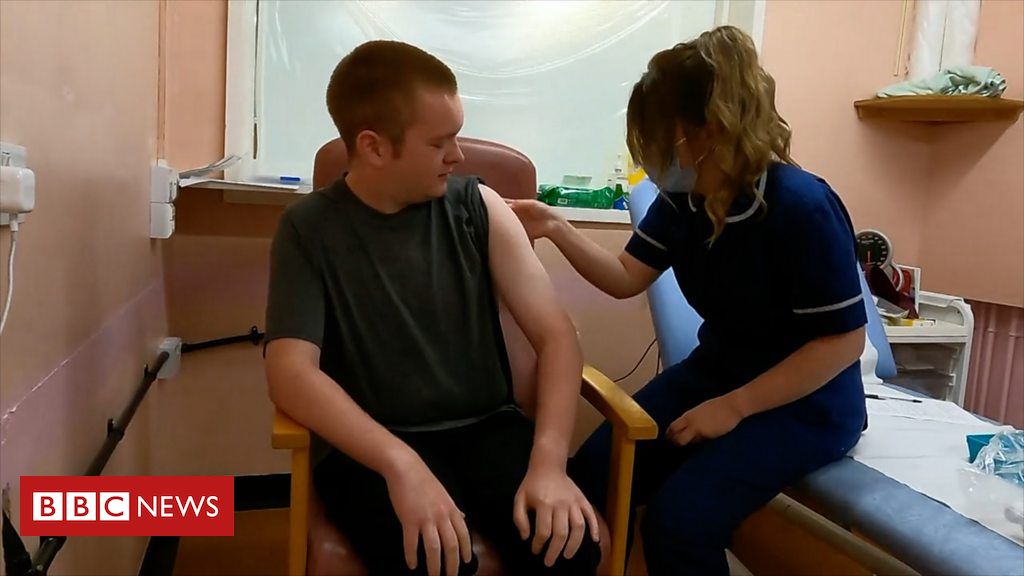
Charities and those with a phobia of needles have asked to be medically exempt from any Covid passport scheme, due to their difficulties with receiving Covid-19 vaccines. Needle phobia causes an extreme fear of injections and in many cases anxiety around just seeing a needle.Adam, 23, from Lincolnshire has anxiety and a phobia of needles and has tried twice to get a jab. He was encouraged to come forward after seeing a clinic offering extra support for those who need it.A spokesperson from the Department of Health and Social Care said: “We recognise some people cannot have a vaccine for medical reasons and we are working to ensure they are not disadvantaged.”If you have been affected by any of the issues in this film, you can find advice and support at bbc.co.uk/actionline.

Read more →

White House Makes Back-to-School Push for Student Vaccinations

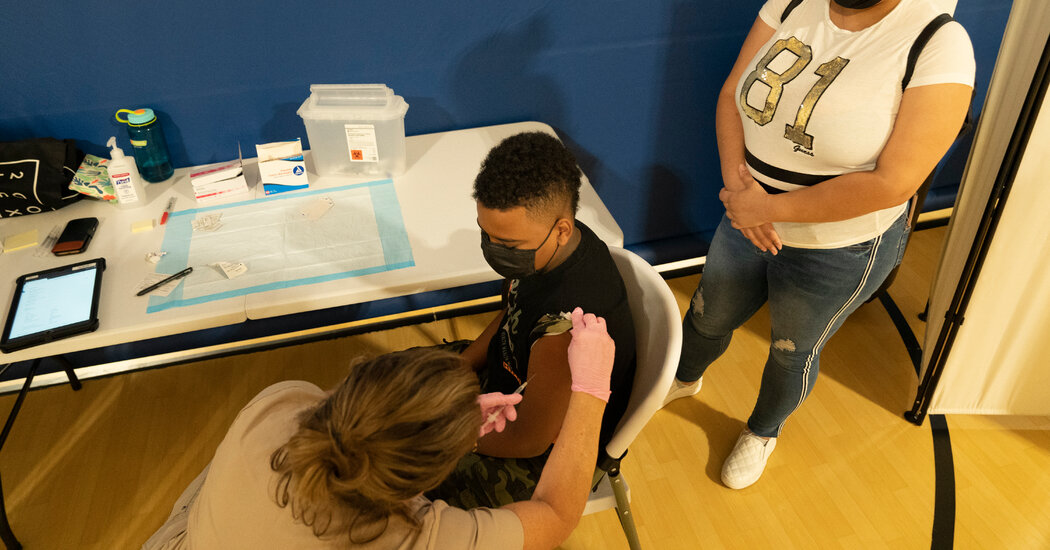
With vaccination rates lagging among young people, the administration wants to incorporate vaccination into school sports physicals and is asking schools to host vaccine clinics.WASHINGTON — The White House, worried that coronavirus vaccination rates among young people are lagging as the school year approaches, is enlisting pediatricians to incorporate vaccination into back-to-school sports physicals and encouraging schools to host their own vaccination clinics as part of a new push to get students their shots.The initiative, announced on Thursday by Education Secretary Miguel A. Cardona, is part of a broader “return to school road map” aimed at getting students back to in-person learning this fall. School officials around the country are worried that a surge in coronavirus cases, fueled by the highly infectious Delta variant, will threaten the return.Roughly 90 percent of the country’s educators are vaccinated, Dr. Cardona said during an appearance in the White House briefing room, and the administration sees vaccinating students as essential to keeping schools open. But experts and school superintendents said in interviews that increasing vaccination rates among students may be a slow and uphill battle.“When you look at a map of the United States and you see those states that have low vaccination rates and high infection rates, those are the areas where superintendents are having problems in getting kids vaccinated,” said Dan Domenech, executive director of AASA: The School Superintendents Association, which represents about 13,000 superintendents around the country.Young people ages 12 and older have been eligible for vaccination since May, when the Food and Drug Administration gave emergency authorization to the Pfizer-BioNTech vaccine. Though the nation has met President Biden’s goal of having at least 70 percent of adults at least partially vaccinated, only 40.7 percent of 12- to 15-year-olds and 51 percent of 16- to 17- year olds have received at least one dose, according to data collected by the Centers for Disease Control and Prevention.Last week the C.D.C. said it wanted in-person schooling to resume across the country, and updated its mask guidance to call for universal mask use by students, staff members and visitors in schools, regardless of their vaccination status or the rate of community transmission of the virus.Dr. Cardona issued a pointed message to Republican governors, including Ron DeSantis of Florida and Greg Abbott of Texas, about the steps they have taken to prevent local officials from requiring face coverings.“Don’t be the reason why schools are interrupted,” Dr. Cardona said. “Kids have suffered enough.”A White House official, speaking on condition of anonymity to preview Dr. Cardona’s announcement, said the administration was focusing on school athletics as an important path to vaccination.Millions of students play organized sports, and some school officials are making the case that if student athletes get vaccinated, they will be able to avoid quarantining — and forfeiting their games — if they are exposed to an infected person.To that end, the White House official said, the administration has enlisted groups including the American Academy of Pediatrics and the American Medical Society for Sports Medicine to help put out guidance for doctors and update the forms required for school physicals. Dr. Cardona and Doug Emhoff, the husband of Vice President Kamala Harris, are expected to visit a school vaccination clinic in Kansas next week.“Don’t be the reason why schools are interrupted,” said Miguel A. Cardona, the education secretary. “Kids have suffered enough.”Sarahbeth Maney/The New York TimesThe White House has also declared the week beginning this Saturday as “a week of action,” in which the administration is partnering with community groups to run texting campaigns and phone banks to encourage young people to get their shots.Mr. Biden called last week for every school district to host at least one pop-up vaccination clinic, and many schools and school districts — particularly those in urban areas — are already doing so.The Covid Collaborative, a bipartisan group of politicians and policymakers, has also been working with the White House and educational associations to promote school-based clinics. “Schools as vaccination sites is an issue whose time has come,” said John Bridgeland, a founder of the collaborative..css-1xzcza9{list-style-type:disc;padding-inline-start:1em;}.css-3btd0c{font-family:nyt-franklin,helvetica,arial,sans-serif;font-size:1rem;line-height:1.375rem;color:#333;margin-bottom:0.78125rem;}@media (min-width:740px){.css-3btd0c{font-size:1.0625rem;line-height:1.5rem;margin-bottom:0.9375rem;}}.css-3btd0c strong{font-weight:600;}.css-3btd0c em{font-style:italic;}.css-w739ur{margin:0 auto 5px;font-family:nyt-franklin,helvetica,arial,sans-serif;font-weight:700;font-size:1.125rem;line-height:1.3125rem;color:#121212;}#NYT_BELOW_MAIN_CONTENT_REGION .css-w739ur{font-family:nyt-cheltenham,georgia,’times new roman’,times,serif;font-weight:700;font-size:1.375rem;line-height:1.625rem;}@media (min-width:740px){#NYT_BELOW_MAIN_CONTENT_REGION .css-w739ur{font-size:1.6875rem;line-height:1.875rem;}}@media (min-width:740px){.css-w739ur{font-size:1.25rem;line-height:1.4375rem;}}.css-9s9ecg{margin-bottom:15px;}.css-uf1ume{display:-webkit-box;display:-webkit-flex;display:-ms-flexbox;display:flex;-webkit-box-pack:justify;-webkit-justify-content:space-between;-ms-flex-pack:justify;justify-content:space-between;}.css-wxi1cx{display:-webkit-box;display:-webkit-flex;display:-ms-flexbox;display:flex;-webkit-flex-direction:column;-ms-flex-direction:column;flex-direction:column;-webkit-align-self:flex-end;-ms-flex-item-align:end;align-self:flex-end;}.css-12vbvwq{background-color:white;border:1px solid #e2e2e2;width:calc(100% – 40px);max-width:600px;margin:1.5rem auto 1.9rem;padding:15px;box-sizing:border-box;}@media (min-width:740px){.css-12vbvwq{padding:20px;width:100%;}}.css-12vbvwq:focus{outline:1px solid #e2e2e2;}#NYT_BELOW_MAIN_CONTENT_REGION .css-12vbvwq{border:none;padding:10px 0 0;border-top:2px solid #121212;}.css-12vbvwq[data-truncated] .css-rdoyk0{-webkit-transform:rotate(0deg);-ms-transform:rotate(0deg);transform:rotate(0deg);}.css-12vbvwq[data-truncated] .css-eb027h{max-height:300px;overflow:hidden;-webkit-transition:none;transition:none;}.css-12vbvwq[data-truncated] .css-5gimkt:after{content:’See more’;}.css-12vbvwq[data-truncated] .css-6mllg9{opacity:1;}.css-qjk116{margin:0 auto;overflow:hidden;}.css-qjk116 strong{font-weight:700;}.css-qjk116 em{font-style:italic;}.css-qjk116 a{color:#326891;-webkit-text-decoration:underline;text-decoration:underline;text-underline-offset:1px;-webkit-text-decoration-thickness:1px;text-decoration-thickness:1px;-webkit-text-decoration-color:#326891;text-decoration-color:#326891;}.css-qjk116 a:visited{color:#326891;-webkit-text-decoration-color:#326891;text-decoration-color:#326891;}.css-qjk116 a:hover{-webkit-text-decoration:none;text-decoration:none;}Schools have been integral to past vaccination campaigns, especially those aimed at controlling infectious diseases. In 1875, New York City used schools to deliver the smallpox vaccine, and schools were used in the 1950s to deliver the Salk polio vaccine. During the 2012-13 school year, a school vaccination project in rural Kentucky administered the HPV vaccine, significantly improving vaccination rates, according to the National Association of School Nurses.But like everything else in the pandemic, the coronavirus vaccines have become caught up in partisan politics. Some school officials are finding that persuading parents to get their students vaccinated is difficult, and some are encountering resistance to using schools as vaccination clinics.The school district in Anchorage has been a national leader in encouraging vaccination. A clinic it hosted at the district headquarters drew 29,000 people between January and April, many of them older adults eager for their shots, the district superintendent, Deena Bishop, said in an interview.But when Anchorage set up clinics in schools over the summer, the demand was much lower; those clinics vaccinated only about 30 students a day, Dr. Bishop said. She said athletes, in particular, respond to the message that vaccination can help them avoid having to quarantine after an exposure to the coronavirus.“Kids will bug their parents more about playing sports and having a vaccine than they would just to go to science class,” she said, adding, “We’re disappointed in the number of people coming out to get vaccinated, but we’re just trying to think of new ways, new manners to connect.”Dr. Cardona reiterated the president’s call for schools to host pop-up vaccine clinics. But some superintendents said school-based clinics, which typically partner with local pharmacies or county health departments, are an especially hard sell in rural areas where there is already resistance to vaccination.“For people who are for it, it’s an easy one — they support vaccination as a strong strategy to fight Covid, and they don’t see any issue with the use of public space,” said Kristi Wilson, the superintendent of the Buckeye Elementary School District, just outside Phoenix, and the immediate past president of the superintendents association.“But the other side I’m hearing is, ‘Where do you draw the line? Who’s going to administer it? Even if public health does it, is it an appropriate use of space?’” she said. “If you have a community that is very anti-vaccination, how do you manage that?”

Read more →

A more complete molecular picture of lung squamous cell carcinoma comes into view

Lung cancer remains the leading cause of cancer-associated death in the United States and worldwide. Patients with a subtype called lung adenocarcinoma (LUAD) have benefited from the development of new targeted medicines, but the search for effective new therapies for another subtype called lung squamous cell carcinoma (LSCC) has largely come up short.
To learn more about the biological basis of LSCC, a team led by researchers from the Broad Institute of MIT and Harvard and the National Cancer Institute’s Clinical Proteomics Tumor Analysis Consortium (CPTAC), including collaborators from the Baylor College of Medicine, have developed the largest and most comprehensive molecular map to date of LSCC. Their effort, described in Cell, brings proteomic, transcriptomic, and genomic data together into a detailed “proteogenomic” view of LSCC. Analysis of that data has revealed potential new drug targets, immune regulation pathways that might help the cancer evade immunotherapies, and even a new molecular subtype of LSCC. Data from the study is available on the CPTAC portal (https://proteomics.cancer.gov/data-portal).
“Patients with lung squamous cell cancer have very limited therapeutic options, and even modest success in understanding this disease could make a difference in people’s lives,” said Shankha Satpathy, a group leader in the Broad Institute’s Proteomics team, and co-first and co-corresponding author on the Cell study with co-first authors Karsten Krug and Pierre Jean Beltran of Broad and Sara Savage of Baylor. “We hope the research community, from basic scientists to practicing oncologists, will make use of this new resource for testing hypotheses, stimulating further research, and opening new data-driven avenues for clinical trial design that, in the long run, could benefit patients.”
Targetable opportunities
In their study, the team analyzed DNA, RNA, proteins, and post-translational protein modifications (PTMs, i.e., phosphorylation, acetylation, and ubiquitylation) of 108 tumors before treatment, and compared them with normal tissue. Among the opportunities they saw for the development of new LSCC treatments, the researchers identified the gene NSD3 as a possible target for tumors harboring extra copies of FGFR1, another gene that is often duplicated or amplified in LSCC. Prior efforts have attempted, unsuccessfully, to target FGFR1 directly. The team’s proteogenomic findings suggest that NSD3 could be a critical driver of tumor growth and survival in these tumors, making it a potential therapeutic target.
They also noted a subset of patients whose tumors exhibited low expression of p63 but high expression of survivin, a protein that regulates cell proliferation and cell death and which is the target of clinical trials in other tumor types.

Read more →

The future of medicine is nearer thanks to researchers’ invention

Researchers at the University of Massachusetts Amherst recently unveiled their discovery of a new process for making RNA. The resulting RNA is purer, more copious and likely to be more cost-effective than any previous process could manage. This new technique removes the largest stumbling block on the path to next-generation RNA therapeutic drugs.
If DNA is the blueprint that tells the cells in our bodies what proteins to make and for what purposes, RNA is the messenger that carries DNA’s instruction to the actual protein-making machinery within each cell. Most of the time this process works flawlessly, but when it doesn’t, when the body can’t make a protein it needs, as in the case of a disease like cystic fibrosis, serious illness can result.
One method for treating such protein deficiencies is with therapeutics that replace the missing proteins. But researchers have long known that it’s more effective when the body can make the protein it needs itself. This is the goal of an emerging field of medicine — RNA therapeutics. The problem is, the current methods of producing lab-made RNA can’t deliver RNA that is pure enough, in enough quantities in a way that’s cost-effective. “We need lots of RNA,” says Elvan Cavaç, lead author of the paper that was recently published in the Journal of Biological Chemistry, MBA student at UMass Amherst, and a recent Ph.D. graduate in chemistry, also from UMass. “We’ve developed a novel process for producing pure RNA, and since the process can reuse its ingredients, yielding anywhere between three and ten times more RNA than the conventional methods, it also saves time and cost.”
The problem with impure RNA is that it can trigger reactions, like swelling, that can be harmful, and even life-threatening. For example, impure RNA can cause inflammation in the lungs of a patient with cystic fibrosis. Conventionally manufactured RNA has to undergo a lengthy and expensive process of purification. “Rather than having to purify RNA,” says Craig Martin, the paper’s senior author and professor of chemistry at UMass, “we’ve figured out how to make clean RNA right from the start.”
The process that Cavaç, Martin and their co-authors detail involves first increasing the salinity of the solution in which the RNA is generated, which inhibits the runaway production of RNA that leads to impurity. In this process, an enzyme called T7 RNA polymerase is “tethered” to a microscopic magnetic bead alongside a DNA promoter template — a specific sequence of DNA that codes for a specific RNA. Once the polymerase and DNA promoter interact, they produce RNA whose purity is ensured by the surrounding saline solution. “Our method,” says Martin, “can be more than ten times better at producing pure RNA than current processes.”
Cavaç, Martin and their colleagues are now turning to experiments that will allow them to scale up the production of RNA to satisfy society’s needs. “The real goal here,” says Martin, “is to have a ‘flow reactor,’ or a continuous pipeline into which you can slowly feed the ingredients and have pure RNA continuously come out the other end.”
Story Source:
Materials provided by University of Massachusetts Amherst. Note: Content may be edited for style and length.

Read more →