Secrets of COVID-19 transmission revealed in turbulent puffs

Turbulence is everywhere — in the movement of the wind, the ocean waves and even magnetic fields in space. It can also be seen in more transient phenomena, like smoke billowing from a chimney, or a cough.
Understanding this latter type of turbulence — called puff turbulence — is important not only for the advancement of fundamental science, but also for practical health and environmental measures, like calculating how far cough droplets will travel, or how pollutants released from a chimney or cigarette might disperse into the surroundings. But creating a complete model of how turbulent puffs of gases and liquids behave has so far proven elusive.
“The very nature of turbulence is chaotic, so it’s hard to predict,” said Professor Marco Edoardo Rosti, who leads the Complex Fluids and Flows Unit at Okinawa Institute of Science and Technology Graduate University (OIST). “Puff turbulence, which occurs when the ejection of a gas or liquid into the environment is disrupted, rather than continuous, has more complicated characteristics, so it’s even more challenging to study. But it’s of vital importance — especially right now for understanding airborne transmission of viruses like SARS-CoV-2.”
Until now, the most recent theory was developed in the 1970s, and focused on the dynamics of a puff only at the scale of the puff itself, like how fast it moved and how wide it spread.
The new model, developed in a collaboration between Prof. Rosti from OIST, Japan and Prof. Andrea Mazzino from the University of Genova in Italy, builds on this theory to include how minute fluctuations within the puff behave, and how both large-scale and small-scale dynamics are impacted by changes in temperature and humidity. Their findings were published in Physical Review Letters on August 25th 2021.
Interestingly, the scientists found that at cooler temperatures (15°C or lower), their model deviated from the classical model for turbulence.

Read more →

Diverse DNA signatures linked to heart disease

Risk for heart disease does not look the same on the genetic level for different population groups, report an international team of researchers this month in the journal JAMA Cardiology. The study, led by Texas Biomedical Research Institute (Texas Biomed) and Columbia University Mailman School of Public Health, begins to outline gene activity patterns that could serve as early warning indicators for cardiovascular disease.
“We shouldn’t expect it to be same for every population group,” said Associate Professor Shelley Cole, Ph.D., senior author and co-lead of the Population Health Program at Texas Biomed. “There are some universal factors affecting risk for heart disease, where you live in the world, your environment, your lifestyle, your access to health care, those all influence disease risk and progression. Advances in querying the entire genome or DNA of an individual, and statistical analyses, coupled with large, long-term studies are enabling us to see those influences on the genetic level for different populations.”
External influences that leave a mark on DNA are part of the growing field called epigenetics. Essentially, modifications occur that affect how DNA is expressed, without changing the basic genetic code. Identifying epigenetic patterns associated with particular diseases could one day help screen for illness years or even decades before symptoms develop.
“In this study, we harness the country’s best clinical data on heart disease from diverse populations to begin to unlock the specific epigenetic changes involved the complex biology that leads to disease,” said Ana Navas-Acien, M.D., Ph.D., the study’s first author and professor of environmental health sciences at Columbia University Mailman School of Public Health.
Navas-Acien, Cole and their collaborators compiled data from nearly 9,400 participants in four long-term health studies: the Strong Heart Study, which has studied cardiovascular disease among American Indians since the 1980s; the Women’s Health Initiative, which follows African-American, Hispanic and white women across the U.S.; the Framingham Heart Study, which follows men and women in Massachusetts; and Atherosclerosis Risk in Communities Study (ARIC), which follows men and women in four U.S. communities. (For this study, the ARIC data was split into two cohorts: Black and white.)
Researchers analyzed the entire genome of each person for DNA methylation, which causes changes to DNA activity without altering the genetic sequence, and compared that with individuals known to have developed coronary heart disease. Among the Strong Heart Study volunteers, there were about 505 methylation points associated with heart disease.
Those sites were compared with the other cohorts. Only 33 were also found in three additional groups with mixed results — sometimes a common site was associated with heart disease, while other times, it was actually associated with a lower risk of heart disease.
“This underscores the need to tailor indicators of risk and resilience, as well as interventions and treatments, for subpopulations as we move away from a one-size-fits-all approach and towards precision medicine,” said Cole, who chairs the Strong Heart Study Steering Committee and directs the Strong Heart Study Genetics Center.
By incorporating data from the Strong Heart Study, which involves 12 tribes in Arizona, Oklahoma, and North and South Dakota, this paper successfully brings advanced genetic analyses to traditionally underserved, rural populations.
“It can be challenging to do field research with remote population groups that don’t have easy access to hospitals and clinics, so they are often left out of research projects like this,” Cole said. “The Strong Heart Study is providing extremely valuable insights for the participating tribes as well as for the broader global community about how environmental factors influence our health.”
The Strong Heart Study is funded by the National Institutes of Health National Heart, Lung, and Blood Institute (NHLBI) contract #HHSN26818HV00001R.

Read more →

Will it be safe for humans to fly to Mars?

Sending human travelers to Mars would require scientists and engineers to overcome a range of technological and safety obstacles. One of them is the grave risk posed by particle radiation from the sun, distant stars and galaxies.
Answering two key questions would go a long way toward overcoming that hurdle: Would particle radiation pose too grave a threat to human life throughout a round trip to the red planet? And, could the very timing of a mission to Mars help shield astronauts and the spacecraft from the radiation?
In a new article published in the peer-reviewed journal Space Weather, an international team of space scientists, including researchers from UCLA, answers those two questions with a “no” and a “yes.”
That is, humans should be able to safely travel to and from Mars, provided that the spacecraft has sufficient shielding and the round trip is shorter than approximately four years. And the timing of a human mission to Mars would indeed make a difference: The scientists determined that the best time for a flight to leave Earth would be when solar activity is at its peak, known as the solar maximum.
The scientists’ calculations demonstrate that it would be possible to shield a Mars-bound spacecraft from energetic particles from the sun because, during solar maximum, the most dangerous and energetic particles from distant galaxies are deflected by the enhanced solar activity.
A trip of that length would be conceivable. The average flight to Mars takes about nine months, so depending on the timing of launch and available fuel, it is plausible that a human mission could reach the planet and return to Earth in less than two years, according to Yuri Shprits, a UCLA research geophysicist and co-author of the paper.
“This study shows that while space radiation imposes strict limitations on how heavy the spacecraft can be and the time of launch, and it presents technological difficulties for human missions to Mars, such a mission is viable,” said Shprits, who also is head of space physics and space weather at GFZ Research Centre for Geosciences in Potsdam, Germany.
The researchers recommend a mission not longer than four years because a longer journey would expose astronauts to a dangerously high amount of radiation during the round trip — even assuming they went when it was relatively safer than at other times. They also report that the main danger to such a flight would be particles from outside of our solar system.
Shprits and colleagues from UCLA, MIT, Moscow’s Skolkovo Institute of Science and Technology and GFZ Potsdam combined geophysical models of particle radiation for a solar cycle with models for how radiation would affect both human passengers — including its varying effects on different bodily organs — and a spacecraft. The modeling determined that having a spacecraft’s shell built out of a relatively thick material could help protect astronauts from radiation, but that if the shielding is too thick, it could actually increase the amount of secondary radiation to which they are exposed.
The two main types of hazardous radiation in space are solar energetic particles and galactic cosmic rays; the intensity of each depends on solar activity. Galactic cosmic ray activity is lowest within the six to 12 months after the peak of solar activity, while solar energetic particles’ intensity is greatest during solar maximum, Shprits said.
Story Source:
Materials provided by University of California – Los Angeles. Original written by Stuart Wolpert. Note: Content may be edited for style and length.

Read more →

A mechanism underlying most common cause of epileptic seizures revealed

During fetal development, cells should migrate to the outer edge of the brain to form critical connections for information transfer and regulation in the body. When even a few cells fail to move to the correct location, the neurons become disorganized and this results in focal cortical dysplasia. This condition is the most common cause of seizures that cannot be controlled with medication in children and the second most common cause in adults.
Now, an interdisciplinary team studying neurogenetics, neural networks, and neurophysiology at KAIST has revealed how dysfunctions in even a small percentage of cells can cause disorder across the entire brain. They published their results on June 28 in Annals of Neurology.
The work builds on a previous finding, also by a KAIST scientists, who found that focal cortical dysplasia was caused by mutations in the cells involved in mTOR, a pathway that regulates signaling between neurons in the brain.
“Only 1 to 2% of neurons carrying mutations in the mTOR signaling pathway that regulates cell signaling in the brain have been found to include seizures in animal models of focal cortical dysplasia,” said Professor Jong-Woo Sohn from the Department of Biological Sciences. “The main challenge of this study was to explain how nearby non-mutated neurons are hyperexcitable.”
Initially, the researchers hypothesized that the mutated cells affected the number of excitatory and inhibitory synapses in all neurons, mutated or not. These neural gates can trigger or halt activity, respectively, in other neurons. Seizures are a result of extreme activity, called hyperexcitability. If the mutated cells upend the balance and result in more excitatory cells, the researchers thought, it made sense that the cells would be more susceptible to hyperexcitability and, as a result, seizures.
“Contrary to our expectations, the synaptic input balance was not changed in either the mutated or non-mutated neurons,” said Professor Jeong Ho Lee from the Graduate School of Medical Science and Engineering. “We turned our attention to a protein overproduced by mutated neurons.”
The protein is adenosine kinase, which lowers the concentration of adenosine. This naturally occurring compound is an anticonvulsant and works to relax vessels. In mice engineered to have focal cortical dysplasia, the researchers injected adenosine to replace the levels lowered by the protein. It worked and the neurons became less excitable.
“We demonstrated that augmentation of adenosine signaling could attenuate the excitability of non-mutated neurons,” said Professor Se-Bum Paik from the Department of Bio and Brain Engineering.
The effect on the non-mutated neurons was the surprising part, according to Paik. “The seizure-triggering hyperexcitability originated not in the mutation-carrying neurons, but instead in the nearby non-mutated neurons,” he said.
The mutated neurons excreted more adenosine kinase, reducing the adenosine levels in the local environment of all the cells. With less adenosine, the non-mutated neurons became hyperexcitable, leading to seizures.
“While we need further investigate into the relationship between the concentration of adenosine and the increased excitation of nearby neurons, our results support the medical use of drugs to activate adenosine signaling as a possible treatment pathway for focal cortical dysplasia,” Professor Lee said.

Read more →

Restoring 'chaperone' protein may prevent plaque build-up in Alzheimer’s

For the first time, Penn Medicine researchers showed how restoring levels of the protein DAXX and a large group of similar proteins prevents the misfolding of the rogue proteins known to drive Alzheimer’s and other neurodegenerative diseases, as well as certain mutations that contribute to cancers. The findings could lead to new targeted approaches that would restore a biological system designed to keep key proteins in check and prevent diseases.
The findings were published online in Nature.
The study focuses on DAXX, or death domain-associated protein, which is a member of a large family of human proteins, each with an unusually high content of two specific amino acid residues, aspartate and glutamate, referred to as polyD/E proteins. The various roles of DAXX and approximately 50 other polyD/E proteins in cell processes have emerged over time, but their role as a protein quality control system — a “chaperone” that directs protein folding, so to speak — was unanticipated.
“We solve a decades-long puzzle by showing this group of proteins actually constitute a major protein quality control system in cells and a never-before-seen enabler of proper folding of various proteins — including misfolding-prone proteins associated with various diseases,” said senior author Xiaolu Yang, PhD, a professor of Cancer Biology in the Perelman School of Medicine at the University of Pennsylvania. “Keep that family of proteins functioning properly, and the tangling of rogue proteins may be diminished or stopped altogether.”
Proteins are the workhorses of the cell. To ensure normal cellular function and protect against protein-misfolding associated with disease, organisms have evolved elaborate protein quality control systems to enable efficient protein folding. However, these systems, especially those in humans, are still not well understood, which limits the ability to develop effective therapies.
The researchers showed that DAXX and other polyD/E proteins facilitate the folding of proteins, reverse protein aggregates, and unfold misfolded proteins. They prevent neurodegeneration-associated proteins, such as beta-amyloid and alpha-synuclein from misfolding, tangling, and forming extracellular plaques and intracellular inclusions, they found. Beta-amyloid clumping between the nerve cells is observed in the brains of Alzheimer’s disease patients and the target of many treatment approaches, while intracellular inclusions of alpha-synuclein are observed in the brains of patients with Parkinson’s disease.
The team also showed DAXX’s potential role in treating cancer.
DAXX restores native function to tumor-associated and aggregation-prone p53 proteins, reducing their cancer properties. That’s important because p53 is the preeminent tumor suppressor and mutations in p53 are associated with a bevy of cancers, including lung, colon, pancreatic, ovarian, and breast cancer. Bolstering DAXX function, the authors said, might represent an alternative approach to therapeutically reestablish the tumor suppressive function of mutant p53 to treat patients.
“The findings give us a better understanding of a new biochemical activity that effectively contends with protein misfolding seen in Alzheimer’s and other neurodegenerative diseases, as well as in cancer, and represent an opportunity to develop new approaches to treat these diseases,” Yang said.
The first author of the study is Liangqian Huang, PhD, a postdoctoral researcher in Yang’s lab.
This work was supported by National Institutes of Health (R01CA182675, R01CA184867, R01CA235760, R01CA243520, P01 AG031862, and R01GM099836), an Alzheimer’s Association Research Fellowship, a Warren Alpert Foundation Distinguished Scholars Fellowship, and a Sponsored Research Agreement from Wealth Strategy Holding Limited.

Read more →

Cytokine APRIL protects from atherosclerotic cardiovascular disease

Heart attacks and strokes are the main causes of death and loss of productive years globally. These clinical complications are caused by atherosclerosis, which is a chronic disease that leads to the accumulation of LDL cholesterol and immune cells in the inner layer of arteries and thereby resulting in the build-up of atherosclerotic plaques. Researchers from the Department of Laboratory Medicine of the Medical University of Vienna in collaboration with colleagues from the University of Lausanne (Switzerland) and the University of Cambridge (UK) have identified that a cytokine called A Proliferation Inducing Ligand (APRIL) plays a major protective role against the formation of atherosclerotic plaques. The study was now published in the journal Nature.
The investigators found that genetically engineered mice that do not express APRIL developed more atherosclerosis. They further confirmed this discovery by injecting mice with neutralizing antibodies against APRIL, which also lead to the development of bigger atherosclerotic plaques. APRIL binds immune receptors that are predominately expressed by B lymphocytes and thereby regulates antibody production and the survival of antibody-producing cells. Because of these properties, APRIL is being explored as a therapeutic target in autoimmune diseases. “We initially hypothesized that the protective properties of APRIL against atherosclerotic plaque formation are mediated via its ability to regulate B lymphocyte responses that play a crucial role in atherosclerosis. However, this hypothesis was wrong. We then focused on an unappreciated non-immunological property of APRIL that is its ability to bind to proteoglycans,” says Dimitrios Tsiantoulas, Research group leader at the Department of Laboratory Medicine of the Medical University of Vienna and lead author of the study.
The authors demonstrated that APRIL is produced in high amounts directly inside the arteries where it binds to the proteoglycan Perlecan (or heparan sulfate proteoglycan 2), which is a large molecule that decorates the inner layer of arteries. The investigators showed that administration of neutralizing antibodies against APRIL in mice that express a genetically engineered form of Perlecan, which APRIL cannot bind, had no effect on atherosclerotic plaque development. “These data clearly show that the protective properties of APRIL in atherosclerosis are mediated by its ability to bind to proteoglycans in arteries” says Christoph Binder, Professor of Atherosclerosis Research at the Department of Laboratory Medicine of the Medical University of Vienna and senior author of the study. Perlecan has previously been shown to promote the retention of LDL cholesterol, which according to the present study can be mitigated by APRIL. Furthermore, the authors identified a specific anti-APRIL antibody that enhances the binding of APRIL to proteoglycans and reduced atherosclerosis in mice. “The development of therapeutics that increase the binding of APRIL to proteoglycans could be a new line of treatment for atherosclerotic disease” says Dimitrios Tsiantoulas.
Furthermore, the authors investigated the relevance of APRIL in atherosclerotic disease in humans. Using several tools, which were developed by Pascal Schneider, Senior Researcher at the University of Lausanne and co-author of the study, the investigators discovered that human blood contains an additional and previously unknown form of APRIL that they named non-canonical APRIL (nc-APRIL). In contrast to the known form of APRIL, which they call now canonical APRIL (c-APRIL), nc-APRIL binds only proteoglycans and does not bind to immune receptors. “By analysing blood samples from more than 3,000 patients we found that levels of nc-APRIL in the blood predict risk of death from cardiovascular disease, which provides evidence that the interaction of APRIL and proteoglycans may play a role atherosclerotic disease in humans” says Christoph Binder.
Story Source:
Materials provided by Medical University of Vienna. Note: Content may be edited for style and length.

Read more →

From couch to ultra-marathon – mental imagery technique can aid running challenge completion

A motivational intervention known as functional imagery training (FIT) can help self-professed non-runners to complete an ultra-marathon (50km plus), according to new research.
The study, led by the University of Plymouth, started by examining the motivation of 31 non-runners who wanted to get fitter, by giving them a recognised behaviour change technique, often used by counsellors, known as Motivational Interviewing (MI). Participants were then left for five months to do whatever they presumed would benefit their fitness and health. After this period all were contacted and asked if they would consider completing an ultra-marathon.
Fifteen participants went on to express an interest in attempting an ultra-marathon as they continued to improve their fitness. Seven were randomly assigned FIT, while eight continued with just MI.
MI is a technique that sees a counsellor support someone to develop, highlight and verbalise their need or motivation for change, and their reasons for wanting to change. Functional Imagery Training builds on MI, as it teaches clients how to elicit and practice motivational imagery themselves, with participants encouraged to utilise all their senses to visualise how it would feel to achieve their goal.
Of the eight participants in the MI only group, four started the race, and two finished. Meanwhile, all seven of the FIT group started, and six finished — showing that those assigned to the technique were five times more likely to complete the challenge.
While researchers acknowledge the small population size, the study, published in the Journal of Imagery Research in Sport and Physical Activity, adds to the growing body of evidence that FIT can significantly reinforce a person’s motivation to complete a challenging goal.

Read more →

Research reveals how subtle changes in a microRNA may lead to ALS

When people think about the connection between genes and disease, they often envision something that works like a light switch: When the gene is normal, the person carrying it does not have the disease. If it gets mutated, a switch is flipped, and then they do have it.
But it’s not always that simple. Disease-related genes often have different degrees to which they are turned on or off. In these cases, there is a tipping point: With only an incremental biological change around a critical threshold, a person can go from having no symptoms to being very sick. The latest research on this topic from the Salk Institute has implications for studying and treating the underlying causes of amyotrophic lateral sclerosis (ALS) and other neurological and psychiatric disorders. The work, which was published in Neuron on August 26, 2021, could also be applicable to a wide range of diseases involving changes in gene expression levels, like cancer.
“This is increasingly becoming a new and very interesting direction for ALS research,” says Salk Professor Samuel Pfaff, the paper’s senior author. “Our study is highly revealing in terms of how gene regulation occurs within neurons. While our experiments were done in mice, we believe these findings will also apply to humans.”
A handful of genes has been found in patients that are associated with ALS, a disease of the motor neurons that leads to paralysis. What many of these genes have in common is that they are linked to the manufacture of microRNAs (miRNAs) — regulatory molecules that act like brakes to reduce the production of proteins. In the first part of this research, the team did a systematic review of past studies that profiled microRNA levels in patients with ALS. They found that across all the studies, the same microRNA, called miR-218, kept showing up as being lower, but not completely lost, in people with ALS. They decided to study why particular levels of miR-218 are important for motor neurons to do their job normally.
In a mouse model of ALS, Salk researcher Neal Amin, now a clinical scholar and postdoctoral researcher at Stanford University, devised a strategy to finely lower the levels of miR-218 in a controlled way to study the effects on motor neurons’ control of muscle function. Amin found that there’s a critical threshold somewhere between 36 percent and 7 percent of normal levels that leads to muscle paralysis and death. Above 36 percent, neuromuscular junctions are normal and healthy; below 7 percent, neuromuscular deficits are lethal. The rest of the study was focused on trying to understand why that was the case.
It turns out that miR-218 regulates the function of about 300 different genes. Many of them encode proteins related to how motor neurons grow axons and send signals to muscle. Once the levels of miR-218 dropped below 36 percent, the way these neurons could signal to muscles dropped off dramatically. The researchers used cutting-edge tools in the lab to determine how miR-218 was influencing various genes.
“Instead of acting like a simple switch, the molecule miR-218 is like an orchestra conductor of 300 musicians playing together,” Amin says. “Instead of gradually telling all of the players to dim the volume of their instruments in unison, it’s telling some musicians to play more quietly and others to stop completely. It has a much more dynamic and complex control over gene function than we ever previously appreciated.”
The researchers say that being able to study this fine-tuning in animal models will allow them to learn much more about how genetic mutations that reduce gene expression put patients at risk for developing brain disorders. This could eventually lead to new treatments that get at the heart of the biological changes that lead to disease. The research not only has implications for ALS, but for other diseases of the nervous system, including schizophrenia, which has also been associated with changes in the expression level of microRNAs.
“We think that these processes may also take place in other diseases related to genes and aging, including cancer,” says Pfaff, who holds the Benjamin H. Lewis Chair at Salk. “Having a new way to create animal models of how genetic disease begins and how it progresses will allow us to get at the underlying mechanisms and a deeper understanding of these complex activities.”
Story Source:
Materials provided by Salk Institute. Note: Content may be edited for style and length.

Read more →

Osteoarthritis: New genetic risk factors and novel drug targets

Researchers found new genetic risk factors for osteoarthritis and identified novel drug targets. Their finding is a milestone towards the development of the first ever curative treatment for osteoarthritis. The study involved an international consortium led by Helmholtz Zentrum München.
Osteoarthritis is a disease of the joints and affects over 300 million individuals worldwide. It is characterized by a gradually increasing degeneration of the cartilage on the joint surface. This results in chronic pain and stiffness in the joints and is a leading cause of disability. Until today, no curative treatments are available. An improved understanding of what causes the disease and the development of novel treatments are therefore urgently needed and eagerly anticipated by patients.
The power of large studies
In the largest study of osteoarthritis to date (across over 825,000 individuals from 9 populations), an international team of researchers led by Helmholtz Zentrum München discovered new genetic risk factors for the disease and identified high-value drug targets. This study provides a stepping stone for translating genetic discoveries into osteoarthritis drug development, ultimately helping to catalyze an improvement in the lives of patients suffering from osteoarthritis. “This is a major step forward in understanding this debilitating disease and could not have been achieved without this international team effort,” said Eleftheria Zeggini, Director of the Institute of Translational Genomics at Helmholtz Zentrum München and professor at the Technical University of Munich.
Unravelling the secrets of osteoarthritis
The researchers also found previously unknown differences in disease risk for weight-bearing and non-weight-bearing joints, the first ever female-specific risk factors for developing disease, and the first risk factors for early-onset disease. For the first time, they found genetic links between osteoarthritis and its main symptom, pain.

Read more →

The Biden administration is being criticized for falling short on its pledge to provide vaccines to the world.

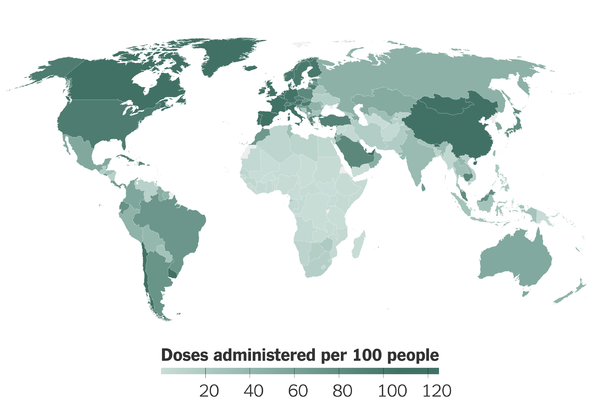
President Biden, who has pledged to fight the coronavirus pandemic by making the United States the “arsenal of vaccines” for the world, is under increasing criticism from public health experts, global health advocates and even Democrats in Congress who say he is nowhere near fulfilling his promise.Mr. Biden has either donated or pledged about 600 million vaccine doses to other countries — a small fraction of the 11 billion that experts say are needed to slow the spread of the virus worldwide. His administration has also taken steps to expand Covid-19 vaccine manufacturing in the United States and India, and is supporting production in South Africa and Senegal to expand access to locally produced vaccines in Africa.But with the administration now recommending booster doses for vaccinated Americans starting next month, outraged public health experts and many Democrats on Capitol Hill are calling on the president to move more aggressively to scale up global manufacturing. In an analysis published on Thursday, the AIDS advocacy group PrEP4All found that the administration had spent less than 1 percent of the money that Congress appropriated for ramping up Covid-19 countermeasures on expanding vaccine manufacturing.Tracking Coronavirus Vaccinations Around the WorldMore than 5.08 billion vaccine doses have been administered worldwide, equal to 66 doses for every 100 people.Congress put a total of $16.05 billion in the American Rescue Plan this year, in two separate tranches, that could be used to procure and manufacture treatments, vaccines and tools for ending the pandemic. But PrEP4All found that all told, the administration had spent $145 million — just $12 million of it from the American Rescue Plan — to expand vaccine manufacturing. The United States has donated 115 million surplus doses, and has purchased 500 million more from Pfizer and BioNTech to be distributed through Covax, more than any other country. But that is still a minute fraction of the 12 billion doses Duke University’s Global Health Innovation Center predicts the world needs by the end of 2021. James Krellenstein, a founder of PrEP4All and the author of its report, said “if they don’t change course pretty soon, the Biden administration is going to be remembered in terms that the Reagan administration is remembered today in not dealing with the AIDS crisis.”

Read more →