Staying home, having access to primary care, and limiting contagion hubs may curb COVID-19 deaths

Staying home and limiting local travel, supporting access to primary care, and limiting contacts in contagion hubs — including hospitals, schools, and workplaces — are strategies that might help reduce COVID-19-related deaths, according to new research. The research team, by statisticians at Penn State, the Sant’Anna School of Advanced Studies in Pisa, Italy, and Université Laval in Quebec, Canada, used novel statistical approaches to compare the first wave of the epidemic across 20 regions in Italy and identify factors that contributed to mortality.
“The first wave of the COVID-19 epidemic took very different paths in different regions, with some areas being hit especially hard while others fared much better,” said Francesca Chiaromonte, leader of the research team, who is a professor of statistics and the holder of the Lloyd and Dorothy Foehr Huck Chair in Statistics for the Life Sciences at Penn State, and the scientific coordinator of the EMbeDS department of excellence at the Sant’Anna School. “We wanted to understand why some regions were hit so much harder than others, so we used both vetted and newly developed techniques in a field of statistics called functional data analysis to compare how the first wave progressed in different regions in Italy.”
Rather than focusing on models for predicting epidemic trajectories, the study used functional data analysis techniques to gather information from the shapes of mortality curves over time, providing a sensitive way to capture associations and patterns from data. The researchers compared mortality curves during the first wave of the epidemic across 20 regions in Italy. After clustering and aligning the curves, to characterize their shapes and account for outbreaks beginning on different dates, the researchers could evaluate factors that might contribute to their differences. Their results appear Aug. 30 in the journal Scientific Reports.
The researchers found that local mobility — how much people moved around their local areas — was strongly associated with COVID mortality. Specifically, they used data from Google’s “grocery and pharmacy” category, which reflects mobility linked to acquiring necessities such as food and medicine. During a national lock-down which started in March 2020, these mobility levels dropped drastically in Italy, roughly by 30% just in the first week of lockdown and then further by as much as 60% during weekdays and almost 100% during weekends in March and April.
“Early on in the epidemic, there were a lot of questions about whether mobility restrictions would really work; our results add to the mounting evidence that they do,” said Chiaromonte. “We see the effect with a lag, but when people reduced their mobility, we saw fewer COVID-related deaths. And we aren’t the only ones to document this, so when we’re told to stay home as a mitigation measure, we should stay home!”
The rates of positive COVID tests and mortality were also associated with each other with a lag, according to the study, reaffirming that positivity is a useful measure to include in disease models.

Read more →

Light-to-moderate coffee drinking associated with health benefits

Up to three cups of coffee per day is associated with a lower risk of stroke and fatal heart disease, according to research presented at ESC Congress 2021.1,2
“To our knowledge, this is the largest study to systematically assess the cardiovascular effects of regular coffee consumption in a population without diagnosed heart disease,” said study author Dr. Judit Simon, of the Heart and Vascular Centre, Semmelweis University, Budapest, Hungary.
“Our results suggest that regular coffee consumption is safe, as even high daily intake was not associated with adverse cardiovascular outcomes and all-cause mortality after a follow-up of 10 to 15 years,” she continued. “Moreover, 0.5 to 3 cups of coffee per day was independently associated with lower risks of stroke, death from cardiovascular disease, and death from any cause.”
Even though coffee is among the most consumed beverages in the world, little is known about the long-term impact of regular consumption on cardiovascular health.
This study investigated the association between usual coffee intake and incident heart attack, stroke and death. The study included 468,629 participants of the UK Biobank with no signs of heart disease at the time of recruitment. The average age was 56.2 years and 55.8% were women.
Participants were divided into three groups according to their usual coffee intake: none (did not consume coffee on a regular basis, 22.1%), light-to-moderate (0.5 to 3 cups/day, 58.4%) and high (more than 3 cups/day, 19.5%).
The researchers estimated the association of daily coffee consumption with incident outcomes over a median follow-up of 11 years using multivariable models. The analyses were adjusted for factors that could influence the relationship including age, sex, weight, height, smoking status, physical activity, high blood pressure, diabetes, cholesterol level, socioeconomic status, and usual intake of alcohol, meat, tea, fruit and vegetables.
Compared to non-coffee drinkers, light-to-moderate consumption was associated with a 12% lower risk of all-cause death (hazard ratio [HR]=0.88, p

Read more →

Schemer or Naïf? The Trial of Elizabeth Holmes

The trial for the founder of Theranos, the once high-flying blood testing start-up, will cap a saga of Silicon Valley hubris, ambition and deception.SAN FRANCISCO — After four years, repeated delays and the birth of her baby, Elizabeth Holmes, the founder of the blood testing start-up Theranos, is set to stand trial for fraud, capping a saga of Silicon Valley hubris, ambition and deception.Jury selection begins on Tuesday in federal court in San Jose, Calif., followed by opening arguments next week. Ms. Holmes, whose trial is expected to last three to four months, is battling 12 counts of fraud and conspiracy to commit wire fraud over false claims she made about Theranos’s blood tests and business.In 2018, the Department of Justice indicted both her and her business partner and onetime boyfriend, Ramesh Balwani, known as Sunny, with the charges. Mr. Balwani’s trial will begin early next year. Both have pleaded not guilty.Ramesh Balwani, known as Sunny, center, the former business partner and boyfriend of Ms. Holmes, in 2019. He will go on trial next year and has pleaded not guilty.Michael Short/BloombergMs. Holmes’s case has been held up as a parable of Silicon Valley’s swashbuckling “fake it till you make it” culture, which has helped propel the region’s start-ups to unfathomable riches and economic power. That same spirit has also allowed grifters and unethical hustlers to flourish, often with little consequence, raising questions about Silicon Valley’s tightening grip on society.But the trial will ultimately be about one individual. And the central question will be whether Ms. Holmes was a deceptive schemer driven by greed and power, or a naïf who believed her own lies and was manipulated by Mr. Balwani.The case hinges on Ms. Holmes’s knowledge of the problems with Theranos’s blood testing devices. Her lawyers could argue that she was merely the start-up’s public face while Mr. Balwani and others handled the technology, legal experts said. They could make the case that the sophisticated investors who backed Ms. Holmes should have done better research on Theranos. And they could say that Ms. Holmes was simply following Silicon Valley’s norms of exaggeration in service of an ambitious mission.Last year, Judge Edward Davila of U.S. District Court for the Northern District of California agreed to separate Ms. Holmes’s and Mr. Balwani’s cases. The move was unusual for such cases, legal experts said, and allows the pair to blame each other with no ability to respond.In sealed court filings from 2020 that were made public over the weekend, Ms. Holmes said that her relationship with Mr. Balwani had a “pattern of abuse and coercive control.” The filings said Ms. Holmes’s lawyers might introduce expert testimony on her mental state and the effects of the alleged abuse. Mr. Balwani’s lawyers denied the accusations in a filing. If convicted, Ms. Holmes, 37, faces up to 20 years in prison. While high-profile start-up founders from Uber’s Travis Kalanick to WeWork’s Adam Neumann have experienced swift falls from grace over ethics scandals, Ms. Holmes may become one of the few to actually go to jail for it.“All too often this kind of fraud doesn’t get prosecuted,” said Alex Gibney, director of “The Inventor,” a documentary about Theranos. “So many other people fake it till they make it, but that never justifies not bringing charges when someone has committed fraud.”Ms. Holmes’s lawyers did not respond to a request for comment. A lawyer for Mr. Balwani, 56, declined to comment, as did a representative for the U.S. attorney’s office for the Northern District of California, which is prosecuting the case.Looming large over the trial will be the public’s fascination with the scandalous details of the Theranos drama.For years, Ms. Holmes cultivated her public image with an unusually deep voice, an intense stare and an uniform of black turtlenecks meant to evoke Steve Jobs. She installed bulletproof glass in her office and traveled by jet or chauffeur with a security detail. In 2019, she reportedly married William Evans, a hotel heir. She gave birth to their son in July.The Theranos blood testing machine at the company lab.Carlos Chavarria for The New York TimesHer high profile presents a challenge in finding jurors who have not formed opinions about her or the case. Jury members filled out a 28-page questionnaire outlining their media consumption, medical experiences and whether they have heard of Ms. Holmes or seen her TED Talk. Approximately half of the more than 200 potential jurors had consumed media related to the case, according to a court filing last week.It is unclear whether Ms. Holmes will take the stand to defend herself. As Theranos’s chief executive and chairwoman, she was persuasive and inspiring. She fiercely defended Theranos and dismissed any criticism as a sign that the company was changing the world.But if Ms. Holmes takes the stand, prosecutors could use past statements to hurt her credibility. In a Securities and Exchange Commission deposition in 2017, she responded to questions by saying “I don’t know” at least 600 times.“It will be hard for her to say, ‘I remember it this way,’ when she said ‘I don’t know’ so many times,” said John C. Coffee Jr., a professor at Columbia Law School who is not involved in the case. “That is the most damaging evidence against her.”By the time the United States indicted Ms. Holmes in 2018, the once high-flying Theranos was all but dead.Ms. Holmes founded the start-up at age 19 in 2003 and dropped out of Stanford soon after. She hired Mr. Balwani in 2009 and raised more than $700 million from investors, valuing Theranos at $9 billion. The Palo Alto, Calif., company struck deals with Walgreens and Safeway to offer its blood testing in their stores. It also attracted dignitaries, senators and generals — including George Shultz, Henry Kissinger, William Frist and James Mattis — to its board of directors.“We’ve reinvented the traditional laboratory infrastructure,” Ms. Holmes said at a 2014 conference. “It eliminates the need for people to have needles stuck in their arm.”Then in 2015, The Wall Street Journal published a series of exposés that called the effectiveness of the Theranos machines into question.“She committed a fraud,” said Dr. Phyllis Gardner, a Stanford medical professor who was an early Theranos skeptic. “She harmed many patients. She bilked people out of their money.”Increased scrutiny from regulators and investors revealed further problems and accusations of deception, leading to civil fraud charges from the Securities & Exchange Commission and a lawsuit from investors and Walgreens.By 2016, Forbes had lowered its estimate of Ms. Holmes’s net worth from $4.5 billion to nothing. In 2018, she settled with the S.E.C. and investors. That same year, Theranos shut down.The Justice Department’s indictment, also issued that year, accused Ms. Holmes and Mr. Balwani of telling investors that Theranos’s blood testing machines could quickly perform a full range of clinical tests using a finger stick sample of blood, even though both knew the tests were limited, unreliable and slow. Ms. Holmes and Mr. Balwani also overstated Theranos’s business deals and told investors that the company would generate $1 billion in revenue in 2015, when it made only a few hundred thousand dollars, the indictment said.Ms. Holmes after a hearing in federal court in San Jose, Calif., in 2019.Stephen Lam/ReutersMs. Holmes’s lawyers have since repeatedly pushed for delays to the trial. They have sought to have evidence excluded and witnesses blocked. And they have argued over other details, such as whether Ms. Holmes must wear a mask during the proceedings.Some fraud charges on behalf of doctors and patients, whose tests were paid for by insurance, were dropped from the case last year. But patients of Theranos whose test results were inaccurate are being allowed to testify.The potential witness list of more than 200 people includes many big names who entered the Theranos orbit. Among them: Rupert Murdoch, the media mogul who invested in the start-up; David Boies, the star lawyer who represented Ms. Holmes and sat on Theranos’ board; and Mr. Kissinger, Mr. Frist and Mr. Mattis.Lawyers in the case have also sparred over the hype and stretching of the truth in Silicon Valley fund-raising. To keep the focus on Theranos, prosecutors have tried to prevent Ms. Holmes’s lawyers from arguing that it is common practice for start-ups to exaggerate their claims to garner investments. But Judge Davila has said the court would permit general comments on the topic.“Fake it till you make it — you don’t do that in medical devices,” Dr. Gardner said. “They’re highly regulated. They have to be perfectly accurate and not harm anyone, and this did.”

Read more →

Ivermectin Demand Surges Though It Doesn’t Work for Covid-19

Prescriptions for ivermectin have jumped to more than 88,000 per week, some pharmacists are reporting shortages and people are overdosing on forms of the drug meant for horses.For the past week, Dr. Gregory Yu, an emergency physician in San Antonio, has received the same daily requests from his patients, some vaccinated for Covid-19 and others unvaccinated: They ask him for ivermectin, a drug typically used to treat parasitic worms that has repeatedly failed in clinical trials to help people infected with the coronavirus.Dr. Yu has refused the ivermectin requests, he said, but he knows some of his colleagues have not. Prescriptions for ivermectin have seen a sharp rise in recent weeks, jumping to more than 88,000 per week in mid-August from a prepandemic baseline average of 3,600 per week, according to researchers from the Centers for Disease Control and Prevention.Some pharmacists are even reporting shortages of the drug. Travis Walthall, a pharmacist in Kuna, Idaho, a town of about 20,000 people, said that this summer alone he had filled more than 20 ivermectin prescriptions, up from two or three in a typical year. For the past week he has not been able to obtain the drug from his suppliers; they were all out.Mr. Walthall was astonished, he said, at how many people were willing to take an unapproved drug for Covid. “I’m like, gosh, this is horrible,” he said.While sometimes given to humans in small doses for head lice, scabies and other parasites, ivermectin is more commonly used in animals. Physicians are raising alarms about a growing number of people getting the drug from livestock supply centers, where it can come in highly concentrated paste or liquid forms.Calls to poison control centers about ivermectin exposures have risen dramatically, jumping fivefold over their baseline in July, according to C.D.C. researchers, who cited data from the American Association of Poison Control Centers. Mississippi’s health department said earlier this month that 70 percent of recent calls to the state poison control center had come from people who ingested ivermectin from livestock supply stores.Dr. Shawn Varney, a toxicologist and medical director for the South Texas Poison Center, said that in 2019 his center received 191 calls about exposure to ivermectin; so far this year the center has received 260 calls and is on pace to reach 390 by the end of the year. The vast majority of the recent calls came from people who took a veterinary product in an attempt to treat or prevent Covid-19.“Everyone wants some cure for Covid because it’s such a devastating illness,” Dr. Varney said. “I plead with people to stop using ivermectin and get the vaccine because it’s the best protection we have at this point. Everything else is risk after risk.”Dr. Varney said people calling the poison control center after taking ivermectin sometimes reported nausea, muscle pain and diarrhea. He noted that there have been ivermectin overdose deaths in the past, though he did not know of any specifically associated with Covid-19.The biggest risk, he added, comes from people taking the livestock product and ingesting a far higher dose than is appropriate for humans — sometimes 10 to 15 times the amount that a capsule approved for humans might contain.“People are going to animal feed stores and getting a formulation that’s highly concentrated because it’s for 1,000-pound animals,” Dr. Varney said. “They’re opening themselves to great potential harm.”Ivermectin was introduced as a veterinary drug in the late 1970s, and the discovery of its effectiveness in combating certain parasitic diseases in humans won the 2015 Nobel Prize for medicine.Though it has not been shown to be effective in treating Covid, people are now clamoring to get the drug, trading tips in Facebook groups and on Reddit. Some physicians have compared the phenomenon to last year’s surge of interest in hydroxychloroquine, though there are more clinical trials evaluating ivermectin.The Food and Drug Administration weighed in last week. “You are not a horse,” the agency tweeted, with a warning explaining that ivermectin is not F.D.A.-approved for treating or preventing Covid-19 and that taking large doses can cause serious harm.A recent review of 14 ivermectin studies, with more than 1,600 participants, concluded that none provided evidence of the drug’s ability to prevent Covid, improve patient conditions or reduce mortality. Another 31 studies are still underway to test the drug.“There is great interest in repurposing well-known inexpensive drugs such as ivermectin that are readily available as an oral tablet,” Maria-Inti Metzendorf and Stephanie Weibel, the authors of the review, said in an email to The Times. “Even if these circumstances seem ideal, the results from the available clinical studies carried out so far cannot confirm the widely advertised benefits.”One of the largest trials studying ivermectin for Covid-19 treatment, called the Together Trial, was halted by the data safety monitoring board on Aug. 6 because the drug had been shown to be no better than a placebo at preventing hospitalization or prolonged stay in the emergency room. Dr. Edward Mills, a professor at McMaster University who led the study, which enrolled more than 1,300 patients, said the team would have discontinued it earlier were it not for the level of public interest in ivermectin.“The data safety person said, ‘This is now futile and you’re offering no benefit to patients involved in the trial,’” Dr. Mills said.Another study of the drug found that ivermectin could be fairly benign unless taken at high doses. Dr. Eduardo López-Medina, a researcher at the Center for Pediatric Infectious Diseases in Colombia, led a randomized control trial for the study last spring on the effects of ivermectin and found that it had no statistically significant effect on reducing the duration of Covid symptoms. But he also found that there was no statistically significant increase in adverse events for the patients receiving ivermectin, though they were taking a fairly high dose of 300 micrograms per kilogram.“It appears to be a safe medication, but that is not enough to prescribe it openly,” Dr. López-Medina said. “People should use it in trials but not necessarily to treat patients. The data is not robust enough to support its use.”Researchers and physicians are particularly alarmed by people seeking out ivermectin as a form of possible prevention or treatment instead of getting one of the highly effective Covid vaccines. The F.D.A. fully approved the Pfizer-BioNTech Covid vaccine for people 16 and older last week, and an approval of Moderna’s vaccine is expected in the coming weeks.“The only functional strategy we have for getting control of Covid-19 is vaccination,” said Dr. Irwin Redlener, a physician in New York and founding director of the National Center for Disaster Preparedness at Columbia University. “If people are not getting vaccinated because of nonsense they’re reading on the internet, that interferes with our ability to get this pandemic under control.”

Read more →

New Zealand woman dies after receiving Pfizer vaccine

SharecloseShare pageCopy linkAbout sharingimage sourceGetty ImagesNew Zealand has reported what it believes to be its first death linked to the Pfizer Covid-19 vaccine. An independent vaccine safety monitoring board said the woman’s death was “probably” due to myocarditis, an inflammation of the heart muscle.It also noted there were other medical issues which could have “influenced the outcome following vaccination”.European regulators say myocarditis is a “very rare” side effect and that the vaccine’s benefits outweigh the risks.The official cause of death has not yet been determined. However, the Covid-19 Vaccine Independent Safety Monitoring Board said the myocarditis was “probably due to vaccination”. “This is the first case in New Zealand where a death in the days following vaccination has been linked to the Pfizer COVID-19 vaccine. While the Centre for Adverse Reactions Monitoring has received other reports of deaths in someone recently vaccinated, none are considered related to vaccination,” it said in a statement. The woman’s death is being investigated further and a coroner is due to rule on the case. Officials have not released any further details, including the woman’s age.The European Medicines Agency has highlighted myocarditis as a “very rare” side effect of the Covid vaccines made by Pfizer and Moderna, adding that the side-effects were more common in younger men.For instance, the UK has seen 195 reports of myocarditis among people who have received the Pfizer vaccine, at a rate of around five cases per million. Most of those cases have led to mild symptoms.The EMA has urged people to continue to get vaccinated, as they help to stop people from getting very sick with Covid-19.Symptoms of myocarditis can include new onset chest pain, shortness of breath and an abnormal heartbeat. Experts are urging anyone experiencing these symptoms in the days after vaccination to seek medical attention promptly.Heart inflammation link to Pfizer and Moderna jabsOn Monday New Zealand officials said they “remain confident about using [the Pfizer vaccine] in New Zealand”.According to Johns Hopkins University, the country has seen 3,465 Covid cases and 26 deaths so far.New Zealand was initially praised for its handling of the virus, but has since seen a slow roll-out of vaccines although it has been ramping up in recent days.More than three million vaccine doses have been administered, and 23% of the population are now fully vaccinated.A recent spike in Covid cases, attributed to the Delta variant, has put large parts of the country into lockdown. There are currently more than 560 cases in the country of about 5 million people.Restrictions are set to ease on Tuesday, barring the country’s biggest city Auckland.

Read more →

Covid: Australia records 1,000th death from the pandemic

SharecloseShare pageCopy linkAbout sharingimage sourceEPAAustralia has recorded its 1,000th death from the pandemic, as it struggles to contain Delta variant outbreaks.The country’s 1,003 Covid deaths is a lower total than most other advanced nations, due in particular to its early success in suppressing the virus.But Australia is now seeing its worst case numbers since the pandemic began. A recent surge in infections in Sydney has challenged Australia’s response strategy and strained health resources.On Monday, New South Wales state – of which Sydney is capital – reported four new deaths and another daily record of 1,218 cases. Authorities warned that death and hospitalisation rates would increase into October, even as more people got vaccinated. More than half of Australians are in lockdown after outbreaks in Sydney, Melbourne and Canberra.Lengthy lockdowns and a rapid rise in vaccinations has intensified debate over when states and the nation should reopen.Reopening debatePrime Minister Scott Morrison last week stepped away from the country’s previous zero-Covid strategy. He has called for the nation to begin easing restrictions when 70% of adults, or just over half of the general population, is vaccinated.”We cannot live in this cave forever,” he told parliament last week, referring to the multiple city lockdowns and closed state borders.Poorer Sydney suburbs on edge over army deploymentAustralia sends in army to enforce Sydney lockdownBut critics and some medical experts oppose Mr Morrison’s targets, arguing they could endanger lives if restrictions are eased too early. The government’s plan is based on modelling from the Doherty Institute, which shows if society reopened at a 70% vaccination rate, there would be an estimated 1,500 deaths and 389,000 cases in six months.Australia’s National Cabinet – which includes state leaders – agreed to the plan “in principle” in July. But now some state premiers argue the modelling did not account for an escalation in Sydney’s Delta wave. Western Australia and Queensland have voiced most concern. Those two states – along with South Australia, Tasmania and the Northern Territory – have Covid rates at zero or near to zero, after sealing off their borders.On current vaccination rates it’s estimated that Australia could reach the 70% mark by mid-November. Currently, about 34% of adult Australians are vaccinated, while 57% have received a first dose.

Read more →

Edoxaban may be effective treatment for atrial fibrillation after transcatheter aortic valve replacement

The anticoagulant edoxaban may be just as effective as warfarin for preventing heart attack or stroke in patients with atrial fibrillation (AF) who undergo transcatheter aortic valve replacement (TAVR), according to a large-scale international study led by Mount Sinai.
The ENVISAGE-TAVI AF trial is the largest to investigate an edoxaban-based strategy in this patient population compared with warfarin, which is currently the standard of care. It demonstrates that edoxaban is non-inferior to warfarin. The results, which could lead to an alternative treatment strategy, were announced Saturday, August 28, as a late-breaking clinical trial at the ESC Congress 2021 from the European Society of Cardiology and simultaneously published in The New England Journal of Medicine.
“Atrial fibrillation after transcatheter aortic valve replacement is common, especially among older patients, but there has been little research on the optimal treatment strategies, and this has resulted in heterogeneous use of anticoagulants in clinical practice. TAVR patients are typically very elderly and possess numerous comorbidities; therefore they are at high risk for all sorts of adverse events, both ischemic and bleeding. It is important to further understand what treatment is most effective to prevent devastating complications,” says lead investigator George Dangas, MD, PhD, Professor of Medicine (Cardiology) and Director of Cardiovascular Innovation at the Zena and Michael A. Wiener Cardiovascular Institute at the Icahn School of Medicine at Mount Sinai. “Based on these results, the trial met its primary endpoint of non-inferiority and edoxaban may be a plausible alternative to warfarin, albeit with attention to increased bleeding with this agent in this study population.”
Cardiologists prescribe antithrombotic agents — specifically warfarin, a vitamin K antagonist — to prevent thromboembolic complications in patients who have TAVR, a minimally invasive heart procedure to replace the aortic valve. Choosing the optimal antithrombotic regimen remains challenging, especially in patients with an underlying condition like AF — irregular rapid heartbeat that impacts blood flow — that requires the use of anticoagulants. Past studies have shown anywhere between 20-40 percent of TAVR patients have AF and a large proportion of them are frail, so a main challenge in managing their care involves balancing the risks of bleeding and stroke.
Until now, there has been minimal research into the optimal oral anticoagulation therapy in TAVR patients.
Mount Sinai researchers led an international trial across 173 centers in 14 countries to compare the safety and efficacy of edoxaban versus warfarin in AF patients who need oral anticoagulation. To determine efficacy, they looked at combined adverse clinical events including all-cause death, thromboembolic events, and major bleeding. For safety they looked at serious bleeding events. Investigators randomized 1,426 patients 5 to 12 days after TAVR to either warfarin (with or without antiplatelet therapy) or 60 mg daily oral edoxaban (with or without antiplatelet therapy). They followed up with patients for up to three years following TAVR (average of 18 months). The study findings showed that edoxaban was noninferior to warfarin for efficacy as assessed by a composite set of ischemic and bleeding adverse events. At the same time, edoxaban led to some higher bleeding complications (mainly gastrointestinal) when compared to warfarin (or its analogs as available in each country).
Interestingly, patients who received a lower dose of edoxaban (30 mg instead of 60 mg) due to poor kidney function or low body weight appeared to have similar rates of adverse thromboembolic and bleeding events to those on warfarin.
“The next step would be to establish in large randomized trials the optimal anticoagulant dose according to different bleeding-ischemic risk profiles,” adds Dr. Dangas. “It seems that lowering the edoxaban dosage when indicated and avoiding patients with mandatory antiplatelet therapy because of their elevated bleeding risk is reasonable safety advice from the clinical point of view. We will be conducting a detailed analysis on various types of bleeding in the near future. ENVISAGE-TAVI AF suggests that treatment with edoxaban can be valuable in the management of this high-risk population of AF patients after TAVI.”
ENVISAGE-TAVI AF was sponsored by Daiichi Sankyo Inc. with a scientific collaboration between scientists of Icahn Mount Sinai and Global Specialty Medical Affairs of Daiichi Sankyo.

Read more →

Four-in-one blood pressure pill: Safe and much more effective than usual hypertension treatment, study finds

High blood pressure is the world’s leading killer but poor rates of blood pressure control remain common. A new strategy where patients are started on a pill containing four medicines, each at a quarter of their usual doses, has been shown to be much more effective in getting blood pressure under control, compared to the common practice of monotherapy, where treatment commences with just one drug.
This first large-scale, randomised controlled clinical trial of starting this novel combination blood pressure medication brought blood pressure under control in 80 percent of participants in 12 weeks, compared to 60 percent in the control group who nonetheless had access to the best patient care.
Traditionally doctors have started with one drug and then follow up to consider adding or changing treatment — but this strategy is often not successful in practice and blood pressure control rates have remained stubbornly low for decades.
The results of the Australian study published today in The Lancet and are being presented at the world-leading European Society of Cardiology conference, ESC Congress 2021.
Professor Clara Chow, lead and corresponding author and Director of the University of Sydney’s Westmead Applied Research Centre, said in a separate Comment in The Lancet this week that control of high blood pressure, known as hypertension, was not ideal anywhere, and in some regions such as Africa fewer than one in 10 had hypertension under control.
“Statistics on the global burden of high blood pressure this week show that there’s been a doubling in the past 30 years of hypertension cases — the leading cause of the world’s top killer: heart attack and stroke,” Professor Chow said.

Read more →

Five Decades Later, Medicare Might Cover Dental Care

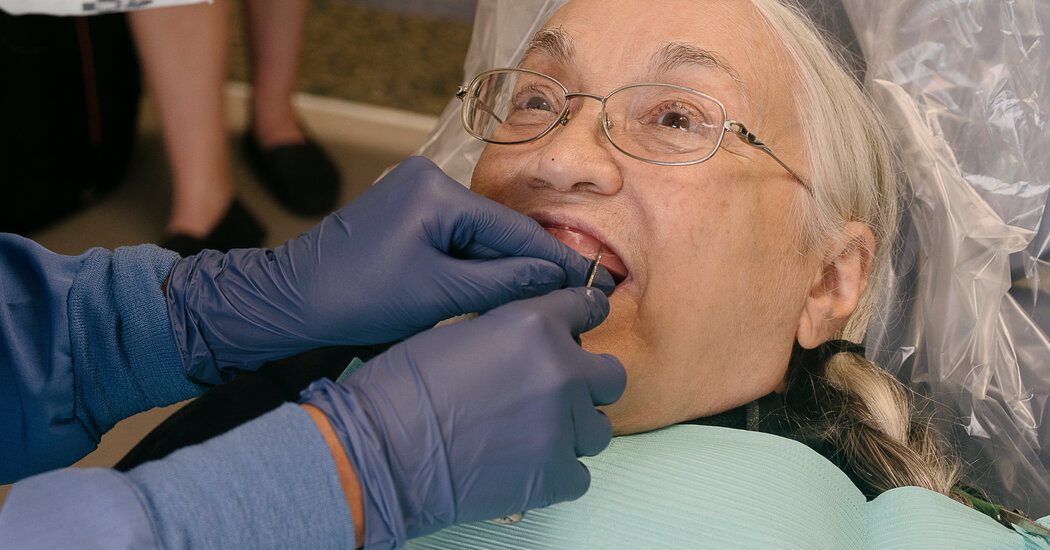
In the large budget bill now in Congress, supporters of the measure see a rare opportunity to advance a popular policy.Tens of millions of older Americans who cannot afford dental care — with severe consequences for their overall health, what they eat and even when they smile — may soon get help as Democrats maneuver to add dental benefits to Medicare for the first time in its history.The proposal, part of the large budget bill moving through Congress, would be among the largest changes to Medicare since its creation in 1965 but would require overcoming resistance from dentists themselves, who are worried that it would pay them too little.The impact could be enormous for people like Natalie Hayes, 69. Ms. Hayes worked in restaurants, raised a son and managed her health as best she could within her limited means. As she lost her teeth — most of them many years ago and her remaining front ones last fall — she simply lived with it.“I had a lot of pneumonia,” she said, at a recent visit to the Northern Counties Dental Center in Hardwick, Vt. “Not a lot of good dental care.”For Ms. Hayes, the top set of dentures she was there to get will mean the difference between smiling and not smiling — and a wider choice of food. But financially, this would never be an option if her two sisters had not pooled funds to help her. Though Medicare, the federal program primarily for people 65 and older, helped pay for her pneumonia hospitalizations and recent shoulder surgery, it does not cover dental care.For reference, she showed Colleen Mercier, a dental assistant, an old photograph.“You have a pretty smile,” Ms. Mercier saidNearly half of Americans 65 and over didn’t visit a dentist in the last year, and nearly one in five have lost all their natural teeth, according to the Centers for Disease Control and Prevention. There’s growing evidence that dental problems can worsen other health conditions that Medicare does cover.Bernie Sanders, the Vermont independent who is the chairman of the Senate Budget Committee, has played a crucial role in advancing the measure. He recalled living as a young man in Vermont’s Northeast Kingdom, five miles from the clinic where Ms. Hayes received her care, and learning that many residents lacked access to dentists. “A child who lived nearby, his teeth were literally rotting in his mouth,” he said.Since then, the situation in Vermont has improved. Community health centers serve about a quarter of the state’s population. The state’s Medicaid program pays for preventive care and for up to $1,000 a year in other treatment for children and poor adults. But it does not pay for dentures, which can run into the thousands of dollars. Nationwide, around half of Americans 65 and older lack any source of dental insurance.The patient, Natalie Hayes, brought in an old photo of her smile to help dentists recreate it.Kelly Burgess for The New York TimesWith so many uninsured older patients, dentists like Dr. Adrienne Rulon, who treated Ms. Hayes, practice triage. Certain teeth — like the eye teeth and first molars — are more important to save. Filling a cavity in one tooth is less expensive than a root canal in another. Sometimes, patients will come in for an exam, learn about more expensive problems, then disappear for months while they save money for the procedure. “People are having to pick and choose,” she said. “It’s a huge untreated population.”.css-1xzcza9{list-style-type:disc;padding-inline-start:1em;}.css-3btd0c{font-family:nyt-franklin,helvetica,arial,sans-serif;font-size:1rem;line-height:1.375rem;color:#333;margin-bottom:0.78125rem;}@media (min-width:740px){.css-3btd0c{font-size:1.0625rem;line-height:1.5rem;margin-bottom:0.9375rem;}}.css-3btd0c strong{font-weight:600;}.css-3btd0c em{font-style:italic;}.css-w739ur{margin:0 auto 5px;font-family:nyt-franklin,helvetica,arial,sans-serif;font-weight:700;font-size:1.125rem;line-height:1.3125rem;color:#121212;}#NYT_BELOW_MAIN_CONTENT_REGION .css-w739ur{font-family:nyt-cheltenham,georgia,’times new roman’,times,serif;font-weight:700;font-size:1.375rem;line-height:1.625rem;}@media (min-width:740px){#NYT_BELOW_MAIN_CONTENT_REGION .css-w739ur{font-size:1.6875rem;line-height:1.875rem;}}@media (min-width:740px){.css-w739ur{font-size:1.25rem;line-height:1.4375rem;}}.css-9s9ecg{margin-bottom:15px;}.css-uf1ume{display:-webkit-box;display:-webkit-flex;display:-ms-flexbox;display:flex;-webkit-box-pack:justify;-webkit-justify-content:space-between;-ms-flex-pack:justify;justify-content:space-between;}.css-wxi1cx{display:-webkit-box;display:-webkit-flex;display:-ms-flexbox;display:flex;-webkit-flex-direction:column;-ms-flex-direction:column;flex-direction:column;-webkit-align-self:flex-end;-ms-flex-item-align:end;align-self:flex-end;}.css-12vbvwq{background-color:white;border:1px solid #e2e2e2;width:calc(100% – 40px);max-width:600px;margin:1.5rem auto 1.9rem;padding:15px;box-sizing:border-box;}@media (min-width:740px){.css-12vbvwq{padding:20px;width:100%;}}.css-12vbvwq:focus{outline:1px solid #e2e2e2;}#NYT_BELOW_MAIN_CONTENT_REGION .css-12vbvwq{border:none;padding:10px 0 0;border-top:2px solid #121212;}.css-12vbvwq[data-truncated] .css-rdoyk0{-webkit-transform:rotate(0deg);-ms-transform:rotate(0deg);transform:rotate(0deg);}.css-12vbvwq[data-truncated] .css-eb027h{max-height:300px;overflow:hidden;-webkit-transition:none;transition:none;}.css-12vbvwq[data-truncated] .css-5gimkt:after{content:’See more’;}.css-12vbvwq[data-truncated] .css-6mllg9{opacity:1;}.css-qjk116{margin:0 auto;overflow:hidden;}.css-qjk116 strong{font-weight:700;}.css-qjk116 em{font-style:italic;}.css-qjk116 a{color:#326891;-webkit-text-decoration:underline;text-decoration:underline;text-underline-offset:1px;-webkit-text-decoration-thickness:1px;text-decoration-thickness:1px;-webkit-text-decoration-color:#326891;text-decoration-color:#326891;}.css-qjk116 a:visited{color:#326891;-webkit-text-decoration-color:#326891;text-decoration-color:#326891;}.css-qjk116 a:hover{-webkit-text-decoration:none;text-decoration:none;}Ms. Hayes was also making such judgments. A top set of dentures would give her a smile back. But she had also lost most of her bottom molars. Without a partial set of bottom dentures, she still will be unable to chew many hard foods.Poor adults in other states have even fewer resources. Medicaid is not required to cover adult dental services, and many states do not pay for any services at all, while others cover only emergency treatments, like tooth extractions. Vermont’s program is among the most generous in the nation.On Capitol Hill, the proposal to add a Medicare dental benefit has near-universal support among Democrats, and many health industry and consumer groups back it, too. The main opposition comes from dentists. With the Democrats’ large policy ambitions but narrow majority, its passage is not assured.The American Dental Association, which fought to keep dental care out of the original Medicare program in 1965, supports a limited government benefit for older Americans. The association, whose leaders say they want Congress to concentrate scarce resources on the patients who struggle the most, wants Medicare dental benefits to be offered only to poorer patients, to be offered by private insurers, and to be included in its own special part of Medicare. “Our focus is on the people who don’t go to the dentist at all,” said Michael Graham, the senior vice president for government and public affairs at the association, adding that many Medicare-eligible patients with higher incomes can already get dental care now.Medicare would most likely pay lower prices than older patients who can now afford to pay for care themselves, a potential hit to dental income. It’s possible some providers would refuse to accept Medicare.Groups that have been pushing for the provision describe this as a rare opportunity to advance a popular policy. In one recent poll, 84 percent of Americans, including more than three-quarters of Republicans, supported adding dental, vision and hearing to Medicare. While Democratic lawmakers have tended for years to embrace the idea of dental benefits, they have not made it a priority. When passing the Affordable Care Act in 2010, they chose to focus federal resources on expanding health coverage.But the $3.5 trillion package now being considered has a big enough budget for a variety of long-stalled priorities. Lawmakers hope to add not just dental benefits to Medicare, but vision and hearing coverage as well. They intend to offer Medicaid to poor adults in states that have not expanded it. They plan to extend subsidies that make Obamacare insurance less expensive for people who buy their own insurance. And they aim to broaden investments in loan repayments for health care providers who choose to practice in underserved areas like rural Vermont.The provision still faces challenges. So far, no Republicans have signed onto the plan, and negotiations are still underway among Democratic lawmakers about its size and contours. Among the various health care priorities, the dental benefit is relatively expensive — the cost estimate for a version passed by the House in 2019 was $238 billion over five years. But Melissa Burroughs, an associate director at the consumer group Families USA, who has been leading a coalition pushing for the measure, says she’s been struck by how every lawmaker she talks to wants dental coverage in the package.“It’s highly unusual,” she said. “We’ve gotten from, ‘Oh this would be good,’ to, ‘Oh this is important, and let’s take action now.’”.css-1xzcza9{list-style-type:disc;padding-inline-start:1em;}.css-3btd0c{font-family:nyt-franklin,helvetica,arial,sans-serif;font-size:1rem;line-height:1.375rem;color:#333;margin-bottom:0.78125rem;}@media (min-width:740px){.css-3btd0c{font-size:1.0625rem;line-height:1.5rem;margin-bottom:0.9375rem;}}.css-3btd0c strong{font-weight:600;}.css-3btd0c em{font-style:italic;}.css-w739ur{margin:0 auto 5px;font-family:nyt-franklin,helvetica,arial,sans-serif;font-weight:700;font-size:1.125rem;line-height:1.3125rem;color:#121212;}#NYT_BELOW_MAIN_CONTENT_REGION .css-w739ur{font-family:nyt-cheltenham,georgia,’times new roman’,times,serif;font-weight:700;font-size:1.375rem;line-height:1.625rem;}@media (min-width:740px){#NYT_BELOW_MAIN_CONTENT_REGION .css-w739ur{font-size:1.6875rem;line-height:1.875rem;}}@media (min-width:740px){.css-w739ur{font-size:1.25rem;line-height:1.4375rem;}}.css-9s9ecg{margin-bottom:15px;}.css-16ed7iq{width:100%;display:-webkit-box;display:-webkit-flex;display:-ms-flexbox;display:flex;-webkit-align-items:center;-webkit-box-align:center;-ms-flex-align:center;align-items:center;-webkit-box-pack:center;-webkit-justify-content:center;-ms-flex-pack:center;justify-content:center;padding:10px 0;background-color:white;}.css-pmm6ed{display:-webkit-box;display:-webkit-flex;display:-ms-flexbox;display:flex;-webkit-align-items:center;-webkit-box-align:center;-ms-flex-align:center;align-items:center;}.css-pmm6ed > :not(:first-child){margin-left:5px;}.css-5gimkt{font-family:nyt-franklin,helvetica,arial,sans-serif;font-size:0.8125rem;font-weight:700;-webkit-letter-spacing:0.03em;-moz-letter-spacing:0.03em;-ms-letter-spacing:0.03em;letter-spacing:0.03em;text-transform:uppercase;color:#333;}.css-5gimkt:after{content:’Collapse’;}.css-rdoyk0{-webkit-transition:all 0.5s ease;transition:all 0.5s ease;-webkit-transform:rotate(180deg);-ms-transform:rotate(180deg);transform:rotate(180deg);}.css-eb027h{max-height:5000px;-webkit-transition:max-height 0.5s ease;transition:max-height 0.5s ease;}.css-6mllg9{-webkit-transition:all 0.5s ease;transition:all 0.5s ease;position:relative;opacity:0;}.css-6mllg9:before{content:”;background-image:linear-gradient(180deg,transparent,#ffffff);background-image:-webkit-linear-gradient(270deg,rgba(255,255,255,0),#ffffff);height:80px;width:100%;position:absolute;bottom:0px;pointer-events:none;}.css-uf1ume{display:-webkit-box;display:-webkit-flex;display:-ms-flexbox;display:flex;-webkit-box-pack:justify;-webkit-justify-content:space-between;-ms-flex-pack:justify;justify-content:space-between;}.css-wxi1cx{display:-webkit-box;display:-webkit-flex;display:-ms-flexbox;display:flex;-webkit-flex-direction:column;-ms-flex-direction:column;flex-direction:column;-webkit-align-self:flex-end;-ms-flex-item-align:end;align-self:flex-end;}.css-12vbvwq{background-color:white;border:1px solid #e2e2e2;width:calc(100% – 40px);max-width:600px;margin:1.5rem auto 1.9rem;padding:15px;box-sizing:border-box;}@media (min-width:740px){.css-12vbvwq{padding:20px;width:100%;}}.css-12vbvwq:focus{outline:1px solid #e2e2e2;}#NYT_BELOW_MAIN_CONTENT_REGION .css-12vbvwq{border:none;padding:10px 0 0;border-top:2px solid #121212;}.css-12vbvwq[data-truncated] .css-rdoyk0{-webkit-transform:rotate(0deg);-ms-transform:rotate(0deg);transform:rotate(0deg);}.css-12vbvwq[data-truncated] .css-eb027h{max-height:300px;overflow:hidden;-webkit-transition:none;transition:none;}.css-12vbvwq[data-truncated] .css-5gimkt:after{content:’See more’;}.css-12vbvwq[data-truncated] .css-6mllg9{opacity:1;}.css-qjk116{margin:0 auto;overflow:hidden;}.css-qjk116 strong{font-weight:700;}.css-qjk116 em{font-style:italic;}.css-qjk116 a{color:#326891;-webkit-text-decoration:underline;text-decoration:underline;text-underline-offset:1px;-webkit-text-decoration-thickness:1px;text-decoration-thickness:1px;-webkit-text-decoration-color:#326891;text-decoration-color:#326891;}.css-qjk116 a:visited{color:#326891;-webkit-text-decoration-color:#326891;text-decoration-color:#326891;}.css-qjk116 a:hover{-webkit-text-decoration:none;text-decoration:none;}For centuries, care of the mouth has been divided from care of the rest of the body. Dentists train at different schools than doctors, they accept different insurance, and the vast majority practice in private clinics where they must run their own business, not in hospitals or health centers.Northern Counties Dental Center in Hardwick, Vt. Community health centers like Northern Counties Health Care, which runs this clinic, serve about a quarter of the state’s population.Kelly Burgess for The New York TimesBut research increasingly shows how closely dental health is connected to overall health. Dental problems, and their accompanying inflammation and bacteria, can worsen other chronic conditions, like diabetes and heart disease. And missing or sore teeth can make it hard to eat a healthy diet. Dental infections can be painful — they are a major cause of emergency room visits — and, in rare cases, life-threatening.“Dental care is health care, and dental care must be part of any serious health care program in the United States,” Senator Sanders said.Medicare coverage would give older and disabled patients a way to pay for their care, yet there is no guarantee that dentists everywhere would accept it. Nearly every doctor and hospital in the country takes Medicare, but dentists have built their businesses over the last 50 years without relying on the program. Many dentists in private practice refuse to accept Medicaid, saying that payments are too low and the red tape burden too high.“If you provide somebody with a covered benefit and they have no place to go, then that’s feckless,” said Tess Kuenning, the president of Bistate Primary Care Association, a group for community health centers in Vermont and New Hampshire. Ms. Kuenning urged lawmakers to ensure payment rates that would be enticing to dentists, and investments in public health dentists like Dr. Rulon, who would be more inclined than dentists in private practices to treat Medicare patients.But optimists see Medicare dental coverage as something that might do more than just improve affordability for beneficiaries. It could also shift longstanding norms about what health insurance should cover. Historically, health plans have tended to ignore health problems “in your head”: omitting dental coverage, vision benefits, hearing aids and mental health. Congress began requiring mental health coverage about 15 years ago, starting in Medicare, and then expanding to other types of plans. Mental health care access is still uneven, but has become more broadly understood to be a part of health care.“When Medicare moves, everyone else moves,” said Michael Costa, the C.E.O. at Northern Counties Health Care and a former top health policy official for Vermont.In the meantime, Medicare patients treated in Hardwick continue to make tough choices. When Gina Brown, 66, came in recently for a teeth cleaning, Dr. Rulon discovered a cavity near a root — one that could quickly cost her the tooth. She was back in the chair for a filling that afternoon. She had comprehensive health coverage through her job caring for developmentally disabled adults, she said, but her dental benefit was “very limited.” She could afford to fix this ailing front tooth, but not a partial denture to replace the molars she had lost years ago, when money was tight and dental care out of reach.“Maybe if I had some dental insurance, I might think about getting a partial,” she said, as she waited for the Novocain to kick in.

Read more →