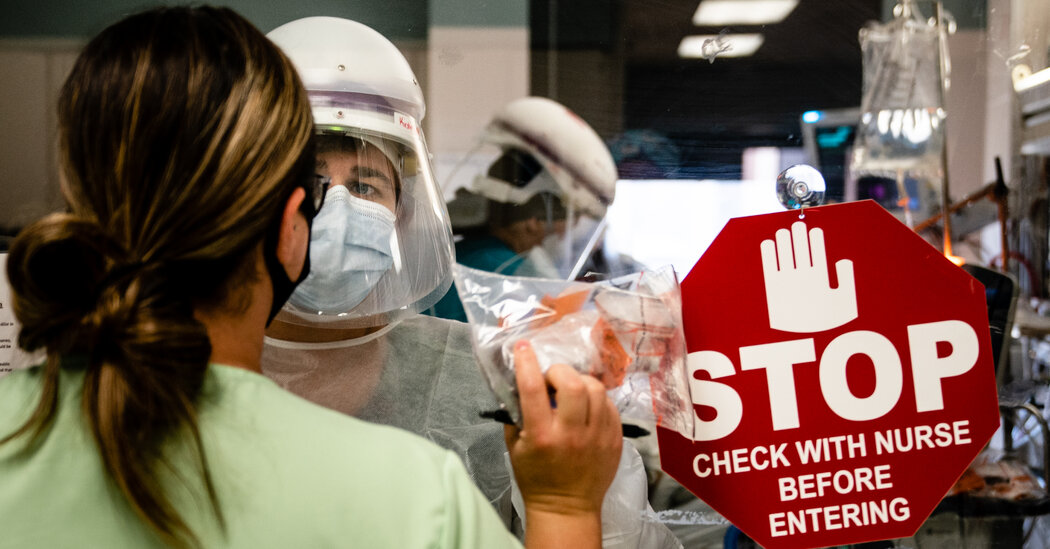
Drug-resistant infections have increased in hospitals during the pandemic.

At the height of the pandemic, doctors and nurses made furious efforts to protect themselves with gowns and masks and scrambled to save the lives of the severely ill Covid-19 patients with ventilators.But these efforts, among other life saving measures, had a side effect: drug-resistant infections have increased in hospitals.The development, reported on Thursday by the Centers for Disease Control and Prevention, came about in part because drug-resistant bacteria thrived on reused protective equipment, intravenous lines and medical equipment like ventilators.Drug-resistant infections have in recent years become a gnawing, sometimes deadly, problem. The threat has grown as various germs — notably bacteria and fungi — have mutated and developed defenses that allow them to resist medications and thrive; the germs prey in particular on older patients and the immunocompromised, limiting drug options to counter infections or, in extreme cases, leaving no effective treatments.Immense efforts have been made in recent years to slow the growth of these noxious microbes that, increasingly, resist treatment by various classes of medicines. In the second half of 2020, though, “sometimes these efforts went terribly wrong,” with so much focus on stopping transmission of Covid-19, according to a commentary that accompanies the new study by the C.D.C. The authors wrote that the practices best known to stop the spread of drug-resistant infections were ignored or subverted in the face of a larger threat.Drug-resistant bloodstream infections at hospitals rose 47 percent in the last three months of 2020 compared to the same period a year earlier. That was a sharp change in momentum. In the first three months of 2020, such infections had fallen nearly 12 percent compared to the same period a year earlier, reflecting heightened efforts at the time to stop the spread.Similar trends showed up with regard to infections traced to ventilators, which rose 45 percent in the fourth quarter of 2020 over the previous year. During the same period, infections from one bacterium — methicillin-resistant Staphylococcus aureus, or MRSA —rose 34 percent after having fallen in the first quarter of 2020 as compared to the same period a year earlier.

Read more →

Researchers use artificial intelligence to predict which COVID-19 patients will need a ventilator to breathe

Researchers at Case Western Reserve University have developed an online tool to help medical staff quickly determine which COVID-19 patients will need help breathing with a ventilator.
The tool, developed through analysis of CT scans from nearly 900 COVID-19 patients diagnosed in 2020, was able to predict ventilator need with 84% accuracy.
“That could be important for physicians as they plan how to care for a patient — and, of course, for the patient and their family to know,” said Anant Madabhushi, the Donnell Institute Professor of Biomedical Engineering at Case Western Reserve and head of the Center for Computational Imaging and Personalized Diagnostics (CCIPD). “It could also be important for hospitals as they determine how many ventilators they’ll need.”
Next, Madabhushi said he hopes to use those results to try out the computational tool in real time at University Hospitals and Louis Stokes Cleveland VA Medical Center with COVID-19 patients.
If successful, he said medical staff at the two hospitals could upload a digitized image of the chest scan to a cloud-based application, where the AI at Case Western Reserve would analyze it and predict whether that patient would likely need a ventilator.
Dire need for ventilators
Among the more common symptoms of severe COVID-19 cases is the need for patients to be placed on ventilators to ensure they will be able to continue to take in enough oxygen as they breathe.

Read more →

Novel mechanism links genetic defect in IBD patients to gut leakiness

A team of researchers led by a biomedical scientist at the University of California, Riverside, has identified a novel mechanism by which loss-of-function mutations in the gene PTPN2, found in many patients with inflammatory bowel disease, or IBD, affect how intestinal epithelial cells maintain a barrier.
The intestinal epithelium, a single layer of cells, plays a critical role in human health by providing a barrier while also allowing nutrient and water absorption. Intestinal epithelial cells are needed for regulating immune function, communicating with the intestinal microbiota, and protecting the gut from pathogen infection — all of which critically depend on an intact epithelial barrier.
Affecting roughly 3 million Americans, IBD is a set of chronic intestinal diseases in which the lining of the gut becomes inflamed and leaky. Increased gut leakiness has recently been confirmed to increase the risk of developing IBD.
“This new publication is a culmination of a body of work from my lab identifying how loss-of-function mutations in PTPN2 can increase gut permeability or leakiness,” said Declan F. McCole, a professor of biomedical sciences in the UCR School of Medicine, who led the study published in the Journal of Clinical Investigation. The journal has selected the research paper as an “Editor’s highlight.”
In the study, which was conducted in mice, human cells, and tissue from IBD patients, McCole and his colleagues showed that in IBD patients carrying a loss-of-function PTPN2 mutation, the expression of claudin-2, a protein that causes loss of water and sodium into the gut and promotes diarrhea, is increased. Using mouse models, the McCole lab identified a dual mechanism that explains how claudin-2 expression increases and contributes to fluid loss.
PTPN2 typically acts as a brake on the expression of claudin-2, McCole explained. The loss-of-function mutation in PTPN2 that occurs in IBD removes this brake and allows increased fluid loss.

Read more →

Sudden cardiac episodes could be caused by 'deadly cocktail'

When international top footballer Christian Eriksen fell to the ground during the European Championships, the world was suddenly and abruptly made aware of such sudden, unexplainable cardiac episodes.
While Eriksen was stabilised, he is not the only one to have experienced such an episode. Sudden cardiac episodes account for at least 15 percent of all deaths in Western societies. But it largely remains a mystery why some people live a perfectly normal life until suddenly experiencing a cardiac episode.
In a new study, researchers from the Department of Drug Design and Pharmacology provide insight to the phenomenon using a new technology.
“We know that some of these episodes happen due to a malfunction in a certain protein in the cell membrane of heart cells. The protein is called the cardiac sodium channel, which is basically responsible for keeping our heart beating. But we did not know why the protein suddenly stops functioning correctly after working seemingly normal for years. In our study, we demonstrate that some cases of sudden cardiac episodes are caused not by the originally suspected genetic mutation within this membrane protein alone, but may rather require the presences of both the mutation and a nearby phosphorylation” says Professor and Group Leader Stephan Pless.
Phosphorylation is a process that modifies the protein and can change its function. It happens all the time, explains Stephan Pless, since every protein is constantly modified and unmodified with a variety of chemical entities. The phosphorylation process can for example be triggered by stress or disease and the group found this modification to also affect the response to clinically used drugs.
The combination of the genetic mutation and chemical modification can render the protein non-functional, which causes the heart to stop functioning.
Engineering a protein
To test their hypothesis, the researchers used a new technology to manipulate the protein with chemical modifications, in this case phosphorylation. To build up the protein from scratch, would be “a massive task and impossible to achieve with today’s technology,” explains Stephan Pless.
Instead, the researchers are able to insert short synthetic amino acid sequences containing mutations and or modifications into the protein. This allowed them to investigate the function of phosphorylation in combination with the mutation on the protein.
“Before, the problem was that we couldn’t experimentally control how much phosphorylation there is because it is the cell containing the protein that will regulate the phosphorylation level at any given time. But with this new technology, we can decide if we want to have 0 percent or 100 percent phosphorylation, allowing us to study the effects of this particular modification with and without the mutation,” explains Ph.D. student Hendrik Harms.
“The technology enables us for the first time to actually study a mutation with an adjacent phosphorylation, which is either there or not. It couldn’t be done before, and certainly not without help from Professor Lucie Delemotte at the Royal Institute of Technology in Stockholm, who used computer simulations to observe the details of the structure of the protein in the presence and absence of the mutation with or without the phosphorylation,” says Postdoc Iacopo Galleano.
The insight could provide a foundation for more research into what role modifications play for the proteins in heart cells and how they respond to drugs.

Read more →

Prior exposure to common cold coronaviruses enhances immune response to SARS-CoV-2

Researchers from Charité — Universitätsmedizin Berlin, the Berlin Institute of Health at Charité (BIH) and the Max Planck Institute for Molecular Genetics (MPIMG) have shown that certain immune cells, which are found in people previously exposed to common cold coronaviruses, enhance the body’s immune response to SARS-CoV-2, both during natural infection and following vaccination. The researchers, whose work has been published in Science, also report that this ‘cross-reactive immunity’ decreases with age. This phenomenon may help to explain why older people are more susceptible to severe disease and why their vaccine-induced immunity is often weaker than that of young people.
Last year, researchers from Charité and the MPIMG made a surprising discovery. They were the first to report that individuals with no prior exposure to SARS-CoV-2 nonetheless had immunological memory cells capable of recognizing this novel virus. The researchers concluded that these ‘T helper cells’ must have been generated to deal with mostly harmless common cold coronaviruses and that, thanks to the structural similarities between coronaviruses (in particular the characteristic spike protein found on their outer surface), these T helper cells will also attack the novel coronavirus. This ‘cross reactivity’ hypothesis has since been confirmed by a range of studies.
Still unclear, however — and the object of intense debate — is the question of whether these immune cells affect the course of subsequent SARS-CoV-2 infections. “Our assumption at the time was that cross-reactive T helper cells have a protective effect, and that prior exposure to endemic (i.e. long-established and widely circulating) coronaviruses therefore reduces the severity of COVID-19 symptoms,” says the study’s (and the previous study’s) first author, Dr. Lucie Loyal, a researcher based at both the Si-M (‘Der Simulierte Mensch — literally ‘The Simulated Human’, a joint research space of Charité and Technische Universität Berlin) and the BIH Center for Regenerative Therapies (BCRT). She adds: “However, the opposite could have been true. With some viruses, a second infection involving a similar strain can lead to a misdirected immune response and a negative impact on clinical course.” In the current study, the Berlin-based research team presents evidence to support their previous assumptions regarding the existence of a protective effect. According to their data, cross-reactive immunity could be one of several reasons for the variability in disease severity seen with COVID-19 but might also explain differences in vaccine efficacy seen in different age groups.
For the current study, the researchers recruited individuals with no prior exposure to SARS-CoV-2, testing them at regular intervals to establish whether they had contracted the infection. Out of a total of nearly 800 participants who were recruited from mid-2020 onwards, 17 persons tested positive. The researchers studied the affected individuals’ immune systems in detail. Their analyses showed that the immune response against SARS-CoV-2 also included the mobilization of T helper cells which had been generated in response to endemic common cold viruses. The researchers also showed that the quality of the immune response against SARS-CoV-2 was linked to the quantity of cross-reactive cells which had been present in the body prior to infection. These cells were particularly effective at recognizing a certain area of the spike protein. In both the endemic viruses and the new coronavirus, this site was characterized by sequence similarities which were particularly well ‘preserved’. “During infections with the more harmless coronaviruses, the immune system builds up a kind of protective ‘universal coronavirus’ memory,” explains the study’s corresponding author, Dr. Claudia Giesecke-Thiel, Head of the Flow Cytometry Service Group at the MPIMG. “Once exposed to SARS-CoV-2, these memory cells are reactivated and kick-start the response against the new pathogen. This could help accelerate the initial immune response to SARS-CoV-2 and limit viral propagation during the early stages of the infection and is therefore likely to have a positive effect on the course of the disease.” Taking a more cautionary tone, the researcher adds: “This does not mean that prior exposure to common cold viruses will definitely protect an individual against SARS-CoV-2, nor does it change the course of the pandemic as of now because these underlying mechanisms have been operating all along. It in no way diminishes the importance of getting vaccinated. Our study provides one of several explanations for an observation made since the beginning of the pandemic, namely that the symptoms of SARS-CoV-2 infection can vary greatly between individuals.”
The researchers’ findings furthermore confirmed that the immunity-enhancing effects of cross-reactive T cells also occur following vaccination with the BioNTech COVID-19 vaccine. Just like natural infection, the vaccine prompts the body to produce the SARS-CoV-2 spike protein (including the well-preserved section of it) and present it to the immune system. An analysis of the immune responses of 31 healthy individuals before and after vaccination revealed that, while the activation of normal T helper cells took place gradually over the course of two weeks, the activation of cross-reactive T helper cells was extremely rapid, taking place within one week of vaccination. Naturally, this also had a positive effect on the generation of antibodies. Even after the first dose of the vaccine, the body was able to produce antibodies against the preserved section of the spike protein at a rate normally only seen after booster vaccinations. “Even following vaccination, the body is able to utilize at least some of its immunological memory — provided it has had previous exposure to endemic coronaviruses,” says co-corresponding author Prof. Dr. Andreas Thiel, a Charité researcher based at both the Si-M and the BCRT. He adds: “This might explain the surprisingly rapid and extremely strong protective effect we see after the initial dose of the COVID-19 vaccine, at least in younger individuals.”
In a second part of the study, the researchers analyzed T helper cells in approximately 570 healthy individuals. They were able to show that cross-reactive immunity declines in older adults. In fact, both the number of cross-reactive T cells and the strength of their binding interactions was shown to be lower in older participants than in younger participants. According to the authors, this decline in cross-reactive immunity is caused by normal, age-related changes. “Infection with an endemic coronavirus represents a benefit in younger people, helping them fight off SARS-CoV-2 or develop immunity following vaccination. Sadly, this benefit is less pronounced in older adults,” says Prof. Thiel. He adds: “It is likely that a third (or booster) dose would be able to compensate for this weaker immune response, ensuring that members of this high-risk group have adequate immunity.”
Common cold coronaviruses
The four endemic coronaviruses which have been circulating in humans for some time are generally referred to as human endemic coronaviruses (HCoV). The four viruses, all of which usually cause symptoms of the common cold, are known as HCoV-OC43, HCoV-229E, HCoV-HKU1, and HCoV-NL63. Estimates suggest they are responsible for up to 30 percent of all seasonal colds.
T helper cells
T helper cells are responsible for regulating and coordinating the body’s immune response. Once a pathogen invades the body, cells known as macrophages and dendritic cells engulf the pathogen, break it up and present fragments of it (‘antigens’) on their cell surface. T helper cells scour these fragments. If the T helper cell carries a receptor which recognizes these activating fragments, the T helper cell is activated. Activated T helper cells then prompt other immune cells to mount a direct response against the pathogen and produce precisely fitting antibodies. Most immune responses will also generate memory T cells, which can persist in the body for many years and are responsible for the body’s ability to mount a faster and more effective immune response upon re-exposure to the same pathogen. One characteristic feature of T helper cells is that their activation is not dependent on pathogens which are a perfect match. Rather, they can be activated by pathogens with ‘sufficient similarity’.
On this study
This research is based on the ‘Charité Corona Cross’ study, which was launched in 2020, and is being led by Charité and conducted in cooperation with Technische Universität Berlin and the MPIMG. Funded by the Federal Ministry of Health (BMG), the ‘Charité Corona Cross’ study investigates the impact of cross-reactive T helper cells on the course of COVID-19. Elements of this research formed part of a collaborative project known as ‘COVIM — Determining and using immunity to SARS-CoV-2’. The aim of the COVIM consortium is to study who has protective immunity to SARS-CoV-2, how this is achieved and how long it lasts. A further aim is to study how to transfer the protective immunity of a few individuals to a large number of people without such immunity. The project is being coordinated by Charité and University Hospital Cologne. COVIM is one of 13 large collaborative research projects conducted under the auspices of the NUM academic research network. Initiated and coordinated by Charité, the NUM is funded by the Federal Ministry of Education and Research (BMBF). The NUM brings together the combined strength of Germany’s 36 university hospitals.

Read more →

Many with food allergies don’t know about oral immunotherapy treatment option

A study of a geographically, clinically, and socioeconomically diverse, nationally-representative sample of US households — including both adult patients and caregivers of children with food allergy — found that 72 percent did not know what oral immunotherapy (OIT) was prior to the survey. Researchers also discovered that current OIT awareness is disproportionately elevated among wealthier, more highly educated respondents, which underscores the need for more equitable outreach efforts and greater access to these therapies for all patients with food allergies. Findings were published in the Journal of Allergy and Clinical Immunology: In Practice.
Food allergy is a significant health concern affecting approximately 8 percent of children and 10 percent of adults in the U.S. Currently, recommended food allergy management involves strict avoidance of the offending food and ensuring ready access to epinephrine. This poses a great challenge for patients and families as it can impair quality of life, impose financial burdens, and potentially result in life threatening anaphylaxis following accidental ingestion. In 2020, the FDA approved Palforzia®, a drug product from peanut flour, for use in OIT, making it the first approved treatment for patients with peanut allergy, ages 4-17 years.
“With the ongoing expansion of oral immunotherapy offerings and additional therapies on the horizon, it is important to ensure equitable access to all treatments for food allergy,” said senior author Ruchi Gupta, MD, MPH, a pediatrician and food allergy researcher at Ann & Robert H. Lurie Children’s Hospital of Chicago and Professor of Pediatrics at Northwestern University Feinberg School of Medicine. “The latest epidemiological data indicates that approximately half of US food-allergic children are either Black, Hispanic/Latinx, or multi-racial, populations which have historically encountered greater barriers to specialty care owing to lower socioeconomic status. It is critical that we reach these children and create greater awareness of oral immunotherapy, so that they too can benefit from recent advances in food allergy treatments.”
Surveys were completed by 781 respondents from all 50 states. Respondents were required to report a physician-diagnosed food allergy to be eligible for the study.
“Our Community Access Initiative strives to understand barriers like the one found in this study and develop the programs and resources to address the need,” said Anita Roach, MS, FARE, VP of Community Programs & Education. “Income and level of education should not be a factor in access to food allergy care or support.”
This work was supported by FARE, the largest private funder dedicated to Food Allergy Research & Education.
Story Source:
Materials provided by Ann & Robert H. Lurie Children’s Hospital of Chicago. Note: Content may be edited for style and length.

Read more →

Engineering CAR T cells to deliver endogenous RNA wakes solid tumors to respond to therapy

Chimeric antigen receptor (CAR) T cell therapy, which uses engineered T cells to treat certain types of cancers, has often been a challenging approach to treating solid tumors. CAR T cells need to recognize a specific target on cancer cells to kill them. However, cancer cells do not always have the target, or they find ways to hide the target and stay invisible to CAR T cell attack. A new study from Penn Medicine, published online in Cell, demonstrates that RN7SL1, a naturally occurring RNA, can activate the body’s own natural T cells to seek out the cancer cells that have escaped recognition by CAR T cells. This may help improve efforts to treat solid tumors, which represent most human cancers.
“CAR T cells typically are like lone soldiers without backup. However, if given the right tools, they can kickstart the body’s own immune system and give them help against the cancer cells missed with CAR T cells alone,” said co-lead author Andy J. Minn, MD, PhD, a professor of Radiation Oncology in the Perelman School of Medicine at the University of Pennsylvania and director of the Mark Foundation Center for Immunotherapy, Immune Signaling, and Radiation at Penn.
The first tool is an endogenous RNA, or RNA originating from the body’s own cells, called RN7SL1. However, when delivered to a tumor by CAR T cells, RN7SL1 mimics a viral RNA. Just like after a virus infection, an arm of the body’s immune system called innate immune cells wakes up after seeing RN7SL1 delivered by CAR T cells. These innate immune cells can now function to stimulate the body’s T cells, mobilizing them to join the attack on cancer. However, as with CAR T cells, the body’s natural T cells also need a target on cancer cells to recognize and attack. Therefore, the second tool provided by the CAR T cells are foreign antigens, which get “painted” on the surface of cancer cells, essentially marking them for killing by the natural T cells.
Using mouse models, the researchers showed that arming CAR T cells with this one-two punch to recruit the body’s own immune system prevents tumor relapse even when many of the cancer cells cannot be recognized and killed by the CAR T cells alone. Therefore, engineering CAR T cells to deliver RN7SL1 and foreign antigens may help to combat common ways that solid tumors escape CAR T cells, hence improving efficacy.
Besides helping to recruit the body’s natural immune system, the study shows that RN7SL1 can improve the function of CAR T cells themselves. CAR T cells that express RN7SL1 have the additional advantages of persisting longer, infiltrating tumors better, and retaining greater function against tumors.
“Strategies that simultaneously employ CAR T cells, enhance endogenous T cell function and counteract common suppressive mechanisms may offer effective combinatorial approaches to improve solid tumor responses,” said co-lead author Carl H. June, MD, the Richard W. Vague Professor in Immunotherapy in the department of Pathology and Laboratory Medicine and director of the Center for Cellular Immunotherapies and the Parker Institute for Cancer Immunotherapy at the University of Pennsylvania.
Story Source:
Materials provided by University of Pennsylvania School of Medicine. Note: Content may be edited for style and length.

Read more →

HPV vaccination will reduce throat and mouth cancers, but overall impact will take 25-plus years to see

Vaccinations against human papillomavirus (HPV), a major cause of throat and back of mouth cancers, are expected to yield significant reductions in the rates of these cancers in the U.S., but will not do so until after 2045, according to a new modeling study from researchers at the Johns Hopkins Bloomberg School of Public Health.
HPV is the most common sexually transmitted infectious virus worldwide. HPV infections are often silent, and while most infections clear, some are chronic and can trigger cancers including mouth and throat (oropharyngeal), and cervical cancer because they disrupt DNA and inhibit tumor-suppressor proteins in the cells they infect. Although there is no cure for existing HPV infections, new infections are preventable with vaccines, the first of which entered use in the U.S. in 2006.
In the new study, the Bloomberg School researchers analyzed national databases on oropharyngeal cancer cases and HPV vaccinations, and projected the impact of HPV vaccination on the rates of these cancers in different age groups. They estimated that the oropharyngeal cancer rate would nearly halve between 2018 and 2045 among people ages 36-45. However, they also projected that the rate in the overall population would stay about the same from 2018-2045, due to still-rising rates of these cancers in older people, where most of these cancers occur.
The study appears online September 2 in JAMA Oncology.
“We estimate that most of the oropharyngeal cancers from 2018 to 2045 will occur among people who are 55 years and older and have not been vaccinated,” says study lead author Yuehan Zhang, a PhD candidate in the research group of Gypsyamber D’Souza, PhD, professor in the Department of Epidemiology at the Bloomberg School.
“HPV vaccination is going to work to prevent oropharyngeal cancers, but it will take time to see that impact, because these cancers mostly occur in middle age,” D’Souza says.

Read more →

Optimal lifting of COVID-19 restrictions would follow pace of vaccination, study suggests

A new analysis suggests that, in order to boost freedoms and protect against overwhelming new waves of COVID-19, the pace at which restrictions to reduce spread are lifted must be directly tied to the pace of vaccination. Simon Bauer, Viola Priesemann, and colleagues of the Max Planck Institute for Dynamics and Self-Organization, Germany, present these findings in the open-access journal PLOS Computational Biology.
More than a year after the COVID-19 pandemic began, vaccination programs now hold promise to ease many burdens caused by the disease — including necessary restrictions that have had negative social and economic consequences. Much research has focused on vaccine allocation and prioritization, and optimal ways to control spread. However, how to execute a smooth transition between an unprotected population to eventual population immunity remained an open question.
To address that question, Bauer and colleagues applied mathematical modeling to epidemiological and vaccination data from Germany, France, the U.K., and other European countries. Specifically, they quantified the pace at which restrictions could be lifted during vaccine rollout in order to mitigate the risk of rebound COVID-19 waves that overwhelm intensive care units.
After considering various plausible scenarios, the researchers concluded that further severe waves can only be avoided if restrictions are lifted no faster than the pace dictated by vaccination progress, and that there is basically no gain in freedom if one eases restrictions too quickly. The findings suggest that, even after 80 percent of the adult population has been vaccinated, novel, more infectious variants could trigger a new wave and overwhelm intensive care units if lifting all restrictions.
“In such an event, restrictions would quickly have to be reinstated, thus quickly vanishing the mirage of freedom,” Priesemann says. “Furthermore, an early lift would have high morbidity and mortality costs. Meanwhile, relaxing restrictions at the pace of vaccination shows almost the same progress in ‘freedom’ while maintaining low incidence.”
The researchers say their findings suggest that, despite public pressure, policymakers should not rush relaxation of restrictions, and a high vaccination rate — especially among high-risk populations — is necessary. Further research will be needed to design optimal scenarios from a global perspective.
Story Source:
Materials provided by PLOS. Note: Content may be edited for style and length.

Read more →

Why are only some cells ‘competent’ to form cancer?

Right now, in your body, lurk thousands of cells with DNA mistakes that could cause cancer. Yet only in rare instances do these DNA mistakes, called genetic mutations, lead to a full-blown cancer. Why?
The standard explanation is that it takes a certain number of genetic “hits” to a cell’s DNA to push a cell over the edge. But there are well-known cases in which the same set of mutations clearly causes cancer in one context, but not in another.
A good example is a mole. The cells making up a mole are genetically abnormal. Quite often, they contain a mutated DNA version of the BRAF gene that, when found in cells located outside of a mole, will often lead to melanoma. But the vast majority of moles will never turn cancerous. It’s a conundrum that has scientists looking to cellular context for clues to explain the difference.
To get at that question, Dr. White teamed up with MSK developmental biologist Lorenz Studer, an expert at creating and using stem cells to study and treat disease. Through their complementary expertise — and the efforts of postdoctoral fellow Arianna Baggiolini and graduate student Scott Callahan — they were able to investigate how cancer genetics and developmental biology cooperate in cancer formation. A decade later, the results are in.
In a paper published September 3, 2021 in Science, Drs. White and Studer and their team report that melanoma formation depends on something called “oncogenic competence,” which is the result of a collaboration between the DNA mutations in a cell and the particular set of genes that are turned on in that cell. Cells that are competent to form melanoma are able to access a set of genes that normally are closed off to mature melanocytes (the cells that make melanin and give skin its color). In order to access these locked-up genes, the cells require specific proteins that act as keys. Without them, the cells do not form melanoma, even when they have cancer-associated DNA mutations.
The findings provide an explanation for why some cells, but not others, can form cancer, and offer potential therapeutic targets that could one day help patients.

Read more →