ECT Can Be a Good Treatment Option for Serious Depression

Electroconvulsive therapy can effectively treat depression, and is as safe as antidepressant drugs along with psychotherapy, a new analysis found.Electroconvulsive therapy, or ECT, can be effective for the treatment of major depression and is just as safe that a large new study concludes.The procedure, once referred to as electroshock therapy, has a controversial and largely unfavorable history. This was partly due to inaccurate portrayals in popular books and films like “One Flew Over the Cuckoo’s Nest,” and partly the result of real problems with the earliest versions of the procedure, which used strong electrical currents and no anesthesia.Today, ECT is performed under general anesthesia, and the doctor, working with an anesthesiologist and a nurse, applies a weak electric current to the brain (usually about 0.8 amperes at 120 volts) for one to six seconds. This causes a seizure inside the brain, but because of the anesthesia, the patient does not experience muscular contractions. The seizure leads to brain changes that relieve symptoms of depression and certain other mental illnesses. Usually, doctors administer a series of ECT treatments over a period of days or weeks.The only painful part of the procedure is the insertion of an intravenous line before anesthesia. There can be side effects afterward, including temporary memory loss, confusion or transitory headaches and muscle aches. Doctors debate whether ECT can cause long-term memory problems distinct from the memory problems that can be caused by depression itself.For this new study, published in Lancet Psychiatry, Canadian researchers used the records of 10,016 adults whose depression was severe enough that they spent three or more days in the hospital. Half of them had received ECT, while the other half were treated with drugs and psychotherapy. Their average age was 57, and about two-thirds were women. The researchers tracked how each group fared in the 30 days after they were discharged from the hospital.The study carefully matched patients with controls, adjusting for more than 75 factors, including sociodemographic characteristics, medication use, other medical diseases, behavioral and cognitive status, and the use of psychiatric and other health services. This thorough methodology helped overcome some of the limitations of previous studies.ECT did not seem to increase the risk of serious medical problems, including circulatory, respiratory or genitourinary issues that require a hospital stay, or deaths that were not a result of suicide. In the 30 days after discharge, 105 of the ECT patients had a serious medical problem, compared with 135 among the controls, a statistically insignificant difference. The researchers did not track minor medical problems treated in outpatient settings. Suicides were rare in both groups, but were significantly lower in those treated with ECT.“This is an interesting and well-performed study,” said Dr. Martin Balslev Jorgensen, a professor of psychiatry at the University of Copenhagen who has published widely on ECT but was not involved in this study. “Since ECT is surrounded by lots of negative opinions, we need all the help we can get from real-life research.”Dr. Jacob P. Feigal, the medical director of the ECT program at Duke who also had no part in the work, said the study could be helpful in talking to people for whom the best treatment is ECT but who have fears about complications. “As a clinician,” he said, “this helps me frame the argument. It contributes a really important element to the discussion about the risk of doing ECT compared to the risk of not doing it in people with severe depression.”Dr. Jorgensen said this study shows that patients don’t have to worry about medical complications and can focus on the real problems of ECT: that you have to be anesthetized, and that after several treatments you may have some loss of memory in the time leading up to and during ECT.Dr. Irving M. Reti, a professor of psychiatry and director of the brain stimulation program at Johns Hopkins who was not involved in the report, said that it is “an important, substantial study” that adds to the literature showing that ECT is safe. “This puts it in a medical context — thousands of patients with no significant medical complications.”The lead author of the study, Dr. Tyler S. Kaster, a brain stimulation fellow at the University of Toronto, agreed that ECT has risks, but, he said, so does major depression, which can lead to serious problems — among them, cardiovascular disease, dementia, substance use and suicide. Deciding to undergo ECT is a “complex and serious decision,” he said. “The hope in this study is that it provides important information that allows patients, their loved ones and their doctors to understand the risks and make a decision they are comfortable with.”

Read more →

The New Science on How We Burn Calories

How could that change our understanding about, for starters, chronic disease, aging and obesity?It’s simple, we are often told: All you have to do to maintain a healthy weight is ensure that the number of calories you ingest stays the same as the number of calories you expend. If you take in more calories, or energy, than you use, you gain weight; if the output is greater than the input, you lose it. But while we’re often conscious of burning calories when we’re working out, 55 to 70 percent of what we eat and drink actually goes toward fueling all the invisible chemical reactions that take place in our body to keep us alive. “We think about metabolism as just being about exercise, but it’s so much more than that,” says Herman Pontzer, an associate professor of evolutionary anthropology at Duke University. “It’s literally the running total of how busy your cells are throughout the day.” Figuring out your total energy expenditure tells you how many calories you need to stay alive. But it also tells you “how the body is functioning,” Pontzer says. “There is no more direct measure of that than energy expenditure.”Though scientists have been studying metabolism for at least a century, they have not been able to measure it precisely enough — in real-world conditions, in enough people, across a broad-enough age range — to see how it changes throughout the human life span. It is clear that the bigger someone is, the more cells they have, and thus the more total calories they burn per day. But it has been much harder to assess whether variables like age, sex, lifestyle and illness influence our rate of energy expenditure. This lack of data led to assumptions rooted in personal experience: for instance, that significant hormonal changes like those that take place during puberty and menopause cause our metabolism to speed up or slow down, prompting us to burn more or fewer calories per day; or that men have inherently faster metabolisms than women, because they seem able to shed pounds more easily; or that our energy expenditure slows in midlife, initiating gradual and inevitable weight gain. “I’m in my 40s; I feel different than I did in my 20s — I buy it, too,” Pontzer says. “All that intuition was never backed up by data. It just seemed so sure.”Last month, however, a paper published in Science by Pontzer and more than 80 co-authors revealed that much of what we thought we knew about metabolism was wrong. Using previously collected data from more than 6,400 subjects who ranged in age from 8 days to 95 years, and adjusting for body size and the amount of fat and muscle present, they found that our metabolism generally goes through four distinct life phases. Newborns’ metabolism resembles that of adults. Then, when they are about a month old, their metabolic rate starts rapidly increasing, until between 9 and 15 months, it is more than 50 percent higher than an adult’s — the equivalent of a grown-up burning around 4,000 calories a day. (The U.S. Department of Health and Human Services estimates that, on average, adult women need between 1,600 and 2,400 calories a day and adult men between 2,000 and 3,000 calories.) At that point, between age 1 and 2, energy expenditure starts to decline and keeps falling until roughly age 20. From there, it holds steady for the next 40 years, even during pregnancy and menopause; you burn calories as efficiently at 55 as you do at 25. At around age 60, energy expenditure begins to drop again and continues to do so until the end of our lives. Men, the researchers observed, do not have innately faster metabolisms than women; rather, they tend to burn more calories per day for their size because they typically have a higher proportion of muscle, which uses more energy than fat does.Illustration by George(s)The study “addresses a really significant gap in our understanding of basic human physiology,” says Richard Bribiescas, a professor of anthropology at Yale University. “It’s really important not only for basic science but because metabolism — how we utilize energy in our body — is absolutely central to any understanding of disease or well-being.”Researchers have long been able to calculate how many total calories we burn by measuring how much carbon dioxide we emit as a byproduct. But usually subjects must be in a lab to undergo the necessary tests, so the results show only their metabolism at rest, at one moment in time. Not until the 1980s did a method to measure metabolism during daily life, called “doubly labeled water,” start being used for people. Subjects are given water in which the hydrogen and oxygen elements are “labeled” by using isotopes. The difference in the number of neutrons in their nuclei allows them to be detected. After drinking it, the subjects resume regular activity and provide a few samples of urine (or blood or saliva) in a week. Energy expenditure is calculated by measuring the rate at which the participants eliminate the labeled hydrogen, which passes intact through the body, versus the labeled oxygen, some of which is exhaled as carbon dioxide, a waste product from our cells’ transforming fuel into energy. The proportion of labeled oxygen that is missing lets researchers figure out how much carbon dioxide was emitted and thus the caloric expenditure.Working with doubly labeled water is expensive. Only about nine labs in the world employ it regularly, says Jennifer Rood, associate executive director for cores and resources at the Pennington Biomedical Research Center, which is affiliated with Louisiana State University, and an author of the Science paper. A single study done with doubly labeled water typically includes fewer than 100 people, not enough to see population-wide patterns. But in 2014, the labs that use it came up with the idea of creating a database to collate as many doubly labeled water measurements as possible from the past 40 years. The still-growing database, which underpins the Science paper, includes samples from dozens of countries and cultures, from foragers in Tanzania to commuters in Manhattan. “In terms of scale and scope, this is just unprecedented,” says Rozalyn Anderson, a professor of medicine at the University of Wisconsin-Madison and an author of a commentary published with the study.The size and diversity of the sample enabled researchers to see a common pattern in how metabolism changes with age. But there was still tremendous variation in subjects’ metabolic rates, highlighting the significant role that other factors, like genes and lifestyle, most likely play in determining why people of the same size with similar habits can have very different daily energy expenditures. Eventually, Pontzer says, mapping the universal features of human metabolism will narrow the possible reasons for those disparities.Already, the paper raises a host of questions. For instance, how should children’s substantially faster metabolisms, and older adults’ slower ones, influence nutritional recommendations and drug dosages? And what is the link between the decline of metabolism around 60 and the corresponding increase in chronic disease? “There’s got to be some switch that turns on in a 1-month-old that says, ‘I have to ramp up energy expenditure really high,’ and then something that says, ‘Now I’m 60, I’m not going to be as efficient as I was,’” Rood says. “What are those switches? I think those are the keys to aging.”In fact, Anderson says, there are drugs already in use that influence metabolism in people and have been shown to increase life span in mice. Researchers have theorized that aging cells use less energy because they’re doing less of the repair and maintenance needed to prevent illness. But, Bribiescas notes, simply ramping up the metabolic rate of older people is “not going to be a magic bullet for addressing a lot of disease” because of the stress it puts on other systems in the body: “If you add more energy, you may just cause things to fall apart even faster.”Knowing when metabolism naturally changes, though, should help researchers refine their concepts of health at every age. “It’s kind of like looking at the caterpillar stage versus the butterfly stage,” Bribiescas says. “What we’re seeing here is, you’re a completely different organism from when you’re 5 years old to when you’re 50.” This contrasts with a tendency in science to consider all humans as “a generic blob of cells” that are fundamentally the same, he adds. “This particular study is going to draw greater awareness for understanding these important nuances.”Kim Tingley is a contributing writer for the magazine.

Read more →

How to Learn to Walk Again

Be prepared to do much of the work alone and to fall; you will.“You have to believe, ‘Today is the day I’m going to walk,’ ” says Brady Johnson, a former senior airman for the U.S. Air Force from Belvidere, Ill., who suffered a catastrophic stroke in 2004 during a surgery for a cerebral hemorrhage. One day, Johnson was a healthy 31-year-old training for a marathon. The next thing he knew, he was waking from a weeklong coma, unable to talk or walk. “Day 1 was terrible for me,” he says. “But Day 2, I said, ‘This is a war.’” Someone has a stroke every 40 seconds in the United States; strokes are a leading cause of serious, long-term disability. In rehab, you’ll most likely start with leg lifts in bed, progress to a walker supported by a therapist and work up to a cane. Johnson went on to walk without a cane despite never regaining feeling on his right side. He can’t run anymore, which frustrates him, so he has turned to competitive bodybuilding instead. Practice your balance. At the beginning, Johnson would stand holding a book to get his right hand and arm working together with his left. Strengthen your muscles. “Don’t just sit there,” says Johnson, who does leg exercises during every commercial when he watches television. Be prepared to do much of the work alone. Johnson’s medical insurance covered eight weeks of rehabilitation and physical therapy. He knows other stroke survivors who got half that, even when the relearning might require a lifetime of work and discipline. “It’s something I’ll always be learning,” Johnson says.Don’t look down at your feet. You need to extend your gaze out into the distance. “Keep your chin up and shoulders down,” Johnson says. Be prepared to fall; you will. When Johnson was practicing without his cane, he would choose a path along the edge of a grassy lawn for a softer landing. If you can, watch toddlers. Three years after his stroke, Johnson and his wife had a baby boy. Witnessing his son learn to walk offered the most profound lesson of all. Never wracked by doubt, the boy took to the task with playful resilience. “He’d fall, look at me, roll over, stand himself up and walk off,” Johnson says. “I’d see him and think, That’s what I need to do.”

Read more →

India’s I.C.M.R. Is a 'Political Weapon' Under Modi, Some Scientists Say

The country’s top science agency tailored its findings to fit Prime Minister Narendra Modi’s optimistic narrative despite a looming crisis, researchers say.NEW DELHI — The forecast was mathematically based, government-approved and deeply, tragically wrong.In September 2020, eight months before a deadly Covid-19 second wave struck India, government-appointed scientists downplayed the possibility of a new outbreak. Previous infections and early lockdown efforts had tamed the spread, the scientists wrote in a study that was widely covered by the Indian news media after it was released last year.The results dovetailed neatly with Prime Minister Narendra Modi’s two main goals: restart India’s stricken economy and kick off campaigning for his party in state elections that coming spring. But Anup Agarwal, a physician then working for India’s top science agency, which reviewed and published the study, worried that its conclusions would lull the country into a false sense of security.Dr. Agarwal took his concerns to the agency’s top official in October. The response: He and another concerned scientist were reprimanded, he said.In the wake of the devastating second wave, which killed hundreds of thousands of people, many in India are asking how Mr. Modi’s government missed the warning signs. Part of the answer, according to current and former government researchers and documents reviewed by The New York Times, is that senior officials forced scientists at elite institutions to downplay the threat to prioritize Mr. Modi’s political goals.“Science is being used as a political weapon to forward the government narrative rather than help people,” said Dr. Agarwal, 32.Anup Agarwal in New Mexico, where he moved after leaving India. He was reprimanded by the head of India’s leading science agency after raising concerns about a Covid-19 study.Brad Trone for The New York TimesSenior officials at Dr. Agarwal’s agency — called the Indian Council of Medical Research, or I.C.M.R. — suppressed data showing the risks, according to the researchers and documents. They pressured scientists to withdraw another study that called the government’s efforts into question, the researchers said, and distanced the agency from a third study that foresaw a second wave.Agency scientists interviewed by The Times described a culture of silence. Midlevel researchers worried that they would be passed over for promotions and other opportunities if they questioned superiors, they said.“Science thrives in an environment where you can openly question evidence and discuss it dispassionately and objectively,” said Shahid Jameel, one of India’s top virologists and a former government adviser, who has been critical of the agency.“That, sadly, at so many levels, has been missing,” he said.The science agency declined to answer detailed questions. In a statement, it said it was a “premier research organization” that had helped to expand India’s testing capacity. India’s health ministry, which oversees the agency, did not respond to requests for comment.India is hardly the first country where virus science has become politicized. The United States remains far short of taming the disease as politicians and anti-vaccine activists, fueled by disinformation and credulous media, challenge the scientific consensus on vaccines and wearing masks. The Chinese government has tried to obscure the outbreak’s origin, while vaccine skeptics have won audiences from Russia to Spain to Tanzania.A researcher worked on genome testing of Covid-19 variants in July at a government laboratory in New Delhi.Karan Deep Singh/The New York TimesIndia, a vast country with an underfunded health care system, would have struggled to contain the second wave no matter what. A more contagious new variant fueled the spread. People had stopped wearing masks and socially distancing.“Prime Minister Modi has never, ever said to lower the guard,” said Vijay Chauthaiwale, a member of Mr. Modi’s governing Bharatiya Janata Party.Still, the government contributed to complacency. Mr. Modi boasted in January, just months before the devastating second wave hit, that India had “saved humanity from a big disaster.” Harsh Vardhan, then the health minister, said in March that the country was “in the endgame of Covid-19.” (Amid criticism over the government’s response, Dr. Vardhan stepped down in July.)The I.C.M.R., which conducts and reviews research for the government, played a major role in shaping perceptions. India has not released granular data on the virus’s spread, hampering the ability of scientists to study it. In that vacuum, the agency offered projections that often steered debate.Politics began to influence the agency’s approach early last year, according to scientists familiar with its deliberations.In April 2020, in the midst of a nationwide lockdown ordered by Mr. Modi, the government blamed an early outbreak on an Islamic gathering, spurring attacks against Muslims by some Hindu nationalists, who provide the core of the prime minister’s support.Amid that anger, some officials within the science agency said the gathering had undermined containment efforts. The gathering “has undone the benefits of lockdown,” said one news outlet, citing an agency source. Raman Gangakhedkar, then its chief scientist, in an interview singled out the gathering as an “unexpected surprise.”In an interview with The Times, Dr. Gangakhedkar said that he had expressed “anguish” over the government’s statements targeting Muslims but said the science agency’s director general, Balram Bhargava, told him that the matter should not concern him. Dr. Bhargava did not respond to requests for comment.Shahid Jameel, one of India’s top virologists, at his home in New Delhi. He said government scientists did not feel free to “openly question evidence and discuss it dispassionately.”Saumya Khandelwal for The New York TimesThe lockdown did severe economic damage. Once it ebbed, Mr. Modi moved to rekindle the economy and start election campaigning — and government scientists, researchers within the agency said, helped pave the way.In June 2020, a study commissioned by the agency concluded that Mr. Modi’s lockdown had slowed but would not stop the virus’s spread. Within days, the authors withdrew it. The agency, saying the study’s modeling had not been peer-reviewed, wrote in a tweet that it “does not reflect the official position of I.C.M.R.”One of the study’s authors, along with a scientist familiar with it, said the authors had withdrawn it amid pressure from the agency’s leaders, who questioned its findings and complained that it had been published before they had reviewed it. The move was unusual, the scientists said, adding that the agency’s leadership would typically adjust problematic language rather than demand a paper be withdrawn.In July 2020, Dr. Bhargava issued two directives to agency scientists that his internal critics saw as politically motivated.The first called on scientists at a number of institutions to help approve, in just six weeks, a coronavirus vaccine developed by Indian scientists. In a memo dated July 2 and reviewed by The Times, Dr. Bhargava said the agency aimed to approve the vaccine by Aug. 15, India’s Independence Day, an event at which Mr. Modi frequently urges the country toward greater self-reliance. “Kindly note that noncompliance will be viewed very seriously,” the directive read.The request alarmed agency scientists. Regulators in other countries were still months away from approving their own vaccines. The agency’s top leaders backed off once the timetable became public. (The vaccine was approved by the Indian authorities months later, in January.)Cremation grounds were overwhelmed during India’s second Covid wave.Atul Loke for The New York TimesDr. Bhargava’s second directive, issued in late July 2020, forced scientists to withhold data that suggested the virus was still spreading in 10 cities, according to emails and scientists familiar with the work.The data came from the agency’s serological studies, which tracked the disease based on antibodies in blood samples. The data showed high infection rates in some neighborhoods, including in Delhi and Mumbai, despite containment efforts. In a July 25 email reviewed by The Times, Dr. Bhargava told the scientists that “I have not got approval” to publish the data..css-1xzcza9{list-style-type:disc;padding-inline-start:1em;}.css-3btd0c{font-family:nyt-franklin,helvetica,arial,sans-serif;font-size:1rem;line-height:1.375rem;color:#333;margin-bottom:0.78125rem;}@media (min-width:740px){.css-3btd0c{font-size:1.0625rem;line-height:1.5rem;margin-bottom:0.9375rem;}}.css-3btd0c strong{font-weight:600;}.css-3btd0c em{font-style:italic;}.css-w739ur{margin:0 auto 5px;font-family:nyt-franklin,helvetica,arial,sans-serif;font-weight:700;font-size:1.125rem;line-height:1.3125rem;color:#121212;}#NYT_BELOW_MAIN_CONTENT_REGION .css-w739ur{font-family:nyt-cheltenham,georgia,’times new roman’,times,serif;font-weight:700;font-size:1.375rem;line-height:1.625rem;}@media (min-width:740px){#NYT_BELOW_MAIN_CONTENT_REGION .css-w739ur{font-size:1.6875rem;line-height:1.875rem;}}@media (min-width:740px){.css-w739ur{font-size:1.25rem;line-height:1.4375rem;}}.css-9s9ecg{margin-bottom:15px;}.css-16ed7iq{width:100%;display:-webkit-box;display:-webkit-flex;display:-ms-flexbox;display:flex;-webkit-align-items:center;-webkit-box-align:center;-ms-flex-align:center;align-items:center;-webkit-box-pack:center;-webkit-justify-content:center;-ms-flex-pack:center;justify-content:center;padding:10px 0;background-color:white;}.css-pmm6ed{display:-webkit-box;display:-webkit-flex;display:-ms-flexbox;display:flex;-webkit-align-items:center;-webkit-box-align:center;-ms-flex-align:center;align-items:center;}.css-pmm6ed > :not(:first-child){margin-left:5px;}.css-5gimkt{font-family:nyt-franklin,helvetica,arial,sans-serif;font-size:0.8125rem;font-weight:700;-webkit-letter-spacing:0.03em;-moz-letter-spacing:0.03em;-ms-letter-spacing:0.03em;letter-spacing:0.03em;text-transform:uppercase;color:#333;}.css-5gimkt:after{content:’Collapse’;}.css-rdoyk0{-webkit-transition:all 0.5s ease;transition:all 0.5s ease;-webkit-transform:rotate(180deg);-ms-transform:rotate(180deg);transform:rotate(180deg);}.css-eb027h{max-height:5000px;-webkit-transition:max-height 0.5s ease;transition:max-height 0.5s ease;}.css-6mllg9{-webkit-transition:all 0.5s ease;transition:all 0.5s ease;position:relative;opacity:0;}.css-6mllg9:before{content:”;background-image:linear-gradient(180deg,transparent,#ffffff);background-image:-webkit-linear-gradient(270deg,rgba(255,255,255,0),#ffffff);height:80px;width:100%;position:absolute;bottom:0px;pointer-events:none;}.css-uf1ume{display:-webkit-box;display:-webkit-flex;display:-ms-flexbox;display:flex;-webkit-box-pack:justify;-webkit-justify-content:space-between;-ms-flex-pack:justify;justify-content:space-between;}.css-wxi1cx{display:-webkit-box;display:-webkit-flex;display:-ms-flexbox;display:flex;-webkit-flex-direction:column;-ms-flex-direction:column;flex-direction:column;-webkit-align-self:flex-end;-ms-flex-item-align:end;align-self:flex-end;}.css-12vbvwq{background-color:white;border:1px solid #e2e2e2;width:calc(100% – 40px);max-width:600px;margin:1.5rem auto 1.9rem;padding:15px;box-sizing:border-box;}@media (min-width:740px){.css-12vbvwq{padding:20px;width:100%;}}.css-12vbvwq:focus{outline:1px solid #e2e2e2;}#NYT_BELOW_MAIN_CONTENT_REGION .css-12vbvwq{border:none;padding:10px 0 0;border-top:2px solid #121212;}.css-12vbvwq[data-truncated] .css-rdoyk0{-webkit-transform:rotate(0deg);-ms-transform:rotate(0deg);transform:rotate(0deg);}.css-12vbvwq[data-truncated] .css-eb027h{max-height:300px;overflow:hidden;-webkit-transition:none;transition:none;}.css-12vbvwq[data-truncated] .css-5gimkt:after{content:’See more’;}.css-12vbvwq[data-truncated] .css-6mllg9{opacity:1;}.css-qjk116{margin:0 auto;overflow:hidden;}.css-qjk116 strong{font-weight:700;}.css-qjk116 em{font-style:italic;}.css-qjk116 a{color:#326891;-webkit-text-decoration:underline;text-decoration:underline;text-underline-offset:1px;-webkit-text-decoration-thickness:1px;text-decoration-thickness:1px;-webkit-text-decoration-color:#326891;text-decoration-color:#326891;}.css-qjk116 a:visited{color:#326891;-webkit-text-decoration-color:#326891;text-decoration-color:#326891;}.css-qjk116 a:hover{-webkit-text-decoration:none;text-decoration:none;}“You are sitting in an ivory tower and not understanding the sensitivity,” Dr. Bhargava wrote. “I am sincerely disappointed.”Naman Shah, a physician who worked on the studies, said withholding the data worked against science and democracy.“This is a government which clearly has a philosophy and history of trying to assert power by capturing every institution and making it an arena for political struggle,” he said.The data that I.C.M.R. did release helped officials argue incorrectly, to the country and the world, that the coronavirus wasn’t spreading in India as virulently as in the United States, Brazil, Britain and France.Then, last autumn, an agency-approved study wrongly suggested that the worst was over.Known as the Supermodel in India, the study projected that the pandemic would ebb in India by mid-February. It cited Mr. Modi’s lockdown earlier in 2020. It said that the country may have reached herd immunity because more than 350 million people had already been infected or developed antibodies. The science agency fast-tracked the study’s approval, said Dr. Agarwal and other people familiar with its progress.Prime Minister Narendra Modi addressing the nation in June. Many have asked how his government missed the signs that a deadly second wave was coming.Jagadeesh Nv/EPA, via ShutterstockScientists inside and outside the agency picked the study apart. Other countries were nowhere close to herd immunity. Plenty of people in India still hadn’t been infected. None of the study’s authors were epidemiologists. Its model appeared to have been designed to fit the conclusion, some scientists said.“They had parameters which can’t be measured and whenever the curve was not matching, they changed that parameter,” said Somdatta Sinha, a retired scientist who studies infectious disease models and who wrote a rebuttal. “I mean, we don’t do modeling like that. This is misguiding people.”Dr. Agarwal, the agency physician, said he took his concerns in October to Dr. Bhargava, who told him it was “none of his business.” Dr. Bhargava, he said, then summoned another scientist who had raised concerns about the study with Dr. Agarwal and reprimanded them both.M. Vidyasagar, chairman of the committee that produced the Supermodel, declined to comment. Indian science officials said in May, as the second wave tore through the country, that the panel’s mathematical model “can only predict future with some certainty so long as virus dynamics and its transmissibility don’t change substantially over time.”One study, published in January 2021, did predict a second wave. Published in the journal Nature, it said that such an outbreak could strike if restrictions were “lifted without any other mitigations in place” and called for more testing. One of its authors worked for the I.C.M.R., but its leadership pressured him to remove his affiliation with the agency from the paper, said people familiar with the matter.A Sikh house of worship in Delhi provided oxygen for Covid-19 patients in April. Hospital beds, oxygen and other necessities were in short supply.Atul Loke for The New York TimesThe second wave struck in April. With hospitals overwhelmed, Indian health officials recommended treatments that the government’s own scientists had found to be ineffective.One was blood plasma. Dr. Agarwal and his colleagues had concluded months before that blood plasma did not help Covid-19 patients, a finding that echoed others. The agency dropped the recommendation in May.The government still recommends a second treatment, the Indian-made malaria drug hydroxychloroquine, despite overwhelming scientific evidence that it is ineffective. Desperate families scrambled to find both during the second wave, creating black markets where prices soared.Current and former agency scientists said they didn’t speak out because they considered the treatments politically protected. Mr. Modi’s party had organized plasma donation camps last year to mark his 70th birthday. The Indian government also used hydroxychloroquine as a diplomatic tool, winning points with Donald J. Trump, then the American president, and Jair M. Bolsonaro, the Brazilian leader, who both pressured New Delhi last year to lift its export limits on the drug.“If you want to work somewhere for the rest of your life, you want a good relationship with people,” Dr. Agarwal said. “You just be nonconfrontational about everything.”Dr. Agarwal resigned in October and later worked in Gallup, N.M. Now a physician in Baltimore, he said his experience with the agency had driven him to leave India.“You start questioning your work, you know,” he said. “And then, you get disillusioned by it.”The headquarters of the Indian Council of Medical Research in New Delhi.Karan Deep Singh/The New York TimesEmily Schmall contributed reporting.

Read more →

Ebola vaccine regimen generates strong immune response in children and adults in a clinical trial in Sierra Leone

Johnson & Johnson’s two-dose Ebola vaccine regimen is safe, well tolerated and produces a strong immune response in people over the age of one, according to two new papers published in The Lancet Infectious Diseases.
The EBOVAC-Salone study provides important further evidence for the potential of the regimen using the Ad26.ZEBOV and MVA-BN-Filo vaccines to be used as a protective measure against Ebola virus disease for both children and adults.
Conducted in Sierra Leone, the study is the first to assess the safety and tolerability of this vaccine regimen in a region affected by the 2014-2016 West African Ebola outbreak, which was the worst on record. It is also the first study reporting the evaluation of this vaccine regimen in children.
The research in Kambia district was a collaboration between the London School of Hygiene & Tropical Medicine (LSHTM) and Sierra Leone’s College of Medicine and Allied Health Sciences (COMAHS) under the EBOVAC11 project.
The authors found that the vaccine regimen was well tolerated and induced antibody responses to Zaire ebolavirus 21 days after the second dose in 98% of participants, with the immune responses persisting in adults for at least two years.
During the 2014-16 outbreak of Ebola in West Africa, 28,652 cases and 11,325 deaths from Ebola were reported. Approximately 20% of cases were in children under 15 years, and children younger than five years are at a higher risk of death than adults.

Read more →

Colon cancer risk extends to second- and third-degree relatives

Having second- or third-degree relatives with colorectal cancer increases a person’s risk of developing the disease, according to the findings of a study led by researchers from the University at Buffalo and the University of Utah.
Early colonoscopy screening is often recommended for first-degree relatives of someone diagnosed with early-onset — meaning before age 50 — colorectal cancer, cases of which have been increasing significantly over the past few decades. But the study suggests that early screening may be beneficial for second- and third-degree relatives as well.
The study found that first-degree relatives of someone diagnosed with early-onset colorectal cancer are 6 times more likely to be diagnosed with colorectal cancer before age 50, while second-degree relatives are 3 times likelier and third-degree relatives 1.56 times likelier.
First-degree relatives include parents, children and siblings. Second-degree relatives include aunts, uncles, grandparents, grandchildren, nieces and nephews. First cousins, great-grandparents and great-grandchildren are examples of third-degree relatives.
The findings were published last month in the journal Cancer Epidemiology. Researchers from the University at Buffalo and University of Utah led the study, which reviewed more than 1,500 early-onset colon cancer cases in the Utah Cancer Registry, part of the Utah Population Data Base.
“Unique Utah resources, including a decades old National Cancer Institute statewide cancer registry and computerized genealogy data for the majority of the population, made this important collaboration possible,” says Lisa Cannon-Albright, PhD, professor and leader of the genetic epidemiology program in the Department of Internal Medicine at the University of Utah School of Medicine. She is also a Huntsman Cancer Institute investigator.
“Our study provides new insight into the magnitude of risk for more distant relatives of colorectal cancer cases, and in particular, for relatives of cases who were diagnosed before age 50,” says first author Heather Ochs-Balcom, PhD, associate professor of epidemiology and environmental health in UB’s School of Public Health and Health Professions. “This work is important given the rising rates of early-onset colorectal cancer.”
The study also found that individuals are at a 2.6-fold higher risk of colorectal cancer at any age if they have a first-degree relative with early-onset colon cancer. The risk is 1.96 and 1.3 times greater for second- and third-degree relatives, respectively. In addition, the risk for all degrees of relatives for early-onset colon cancer is higher than the risk for colon cancer at any age.
The findings suggest that early colonoscopy screening may be beneficial for second-degree relatives and possibly third-degree relatives, in addition to first-degree relatives of individuals diagnosed with colorectal cancer before age 50.
The researchers also point out that relatives may benefit from being more aware of their extended family history and sharing this information with their physician when making cancer screening decisions.
Story Source:
Materials provided by University at Buffalo. Original written by David J. Hill. Note: Content may be edited for style and length.

Read more →

Docking peptides, slow to lock, open possible path to treat Alzheimer’s

Progress on treating Alzheimer’s disease has been frustratingly slow. A group of scientists in Houston suggest frustration at a very small scale may lead to a new path toward treatment.
Researchers at the University of Houston (UH) and at Rice University, associated with the Rice-based Center for Theoretical Biological Physics (CTBP), found through experiments and computations that amyloid beta peptides, small molecules that are abundant in the brain, go through several intermediate stages of frustration as they “dock and lock” to the tips of growing fibrils.
Folding proteins tend to look for the easiest way to get to their functional forms. Similarly, amyloid beta peptides look for the easiest way to bind to the tips of growing fibrils, but are sometimes held back — or frustrated — when the positive and negative forces between atoms don’t immediately align.
When they do finally align, the growing fibrils form the gummy plaques implicated in Alzheimer’s and other neurological diseases. New research in the Proceedings of the National Academy of Sciences shows that drugs might be developed to take advantage of the peptides’ frustrated intermediate states to stabilize the fibril tips and block further aggregation.
UH chemical and biomolecular engineer Peter Vekilov, said it wasn’t a stretch to look at amyloid beta fibril growth in his lab. “Previous studies that observed fibrilizing proteins with an atomic force microscope focused on more exotic behaviors because amyloid beta fibrils with a steady rate of growth are kind of boring,” he said.
“But I was fascinated because the correlation of the growth rate to the concentration of peptides in the solution carries loads of information,” Vekilov said. “It helps to measure the rate constant, a quantity which is easy to model.”
He said Rice physicist Peter Wolynes, whose lab specializes in building computer models of protein and chromosome folding, suggested that disrupting the steady growth with urea, known to denature (or unfold) proteins, might provide useful data about how amyloid fibrils form. It sure did.

Read more →

Scientists discover new pathway that prevents bowel cancer treatment from working

Leading scientists at the University of Birmingham have discovered a previously unknown pathway that prevents specific drugs from working in patients with bowel cancer.
The research findings pave the way for increasing the number of bowel cancer patients who can be successfully treated, say the scientists.
Bowel cancer, also called colorectal cancer, affects the large bowel, which is made up of the colon and rectum. It is the fourth most common cancer in the UK, with over 42,000 people diagnosed with bowel cancer every year in the UK. It is also the second biggest cancer killer, with 16,000 people with bowel cancer dying in the UK every year.
The University of Birmingham-led research involved the study of 184 tumour samples and medical records of bowel cancer patients participating in the COIN trial, as well as research carried out in mice, cell cultures, and a laboratory model for pre-malignant colorectal cancer.
Co-senior author Andrew Beggs, Professor of Cancer Genetics & Surgery at the University of Birmingham, explained: “About 60% of bowel cancers are sensitive to drugs called anti-EGFR inhibitors which work by blocking a key pathway in these cancers.
“However, despite this, in cancers that should be sensitive to them, these drugs only work in patients about 50% of the time.”
Co-senior author Dr Fedor Berditchevski, also of the University of Birmingham, added: “Scientists have previously found that if bowel cancer patients have a mutation in a gene called RAS, the anti-EGFR inhibitors will not work.
“However, our research has now discovered a new pathway involving a tetraspanin protein called TSPAN6 that is frequently inactive in bowel cancer patients and this makes these drugs less effective. Crucially, our research also shows that if this pathway is active in a patient’s cancer then the drug will work, irrespective of whether they have a mutation in RAS or not.”
First author Dr Regina Andrijes, a Postdoctoral Fellow at the University of Birmingham, concludes: “This is the first time a tetraspanin protein has been shown to be directly involved with bowel cancer. Our research findings show that this new pathway could act as a biomarker for treatment with anti-EGFR drugs in bowel cancer, increasing a patient’s chance of survival and the number of patients who could benefit from these drugs who previously would not have.”
The researchers are now set to undertake a clinical trial of using this marker to better identify patients for anti-EGFR treatment.
The study, published today (Sept 13th) in the Proceedings of the National Academy of Sciences (PNAS), was carried out in collaboration with University Hospitals Birmingham NHS Foundation Trust, Semmelweis University in Hungary, and Assiut University in Egypt.
Story Source:
Materials provided by University of Birmingham. Note: Content may be edited for style and length.

Read more →

Improving biomaterials design for bone regeneration

Bone injuries in the face and skull — known as craniomaxillofacial defects — can be caused by sports injuries, vehicle accidents, or battlefield injuries. Repairing such defects is complicated because different types of cells need to interact with each other. In a new study, researchers are investigating the types of material used in reconstruction to see which one works best.
Over 2 million bone graft surgeries occur annually across the world. CMF bone defects are usually irregularly shaped, which is why they are often repaired using regenerative biomaterials. The Harley Lab develops collagen scaffold biomaterials containing components that are found in bone, such as calcium and phosphate ions, and sugar compounds called glycosaminoglycans (GAGs).
“Our lab focuses on developing degradable biomaterials — also known as scaffolds — for bone and tissue repair,” said Vasiliki Kolliopoulos, a graduate student in the Harley lab. “There are many types of cells in the bone environment that contribute to healing, including stem cells that form bone, and monocytes that help with the immune response. This study investigated how the scaffold material affects the combined behavior of these different cells.”
The researchers adapted a collagen biomaterial to include one of three different types of GAGs found in the bone tissue microenvironment: chondroitin-4-sulfate, chondroitin-6-sulfate, and heparin. They then investigated how these GAGs influence processes important to bone regeneration such as stem cell activity, immune cell activation, and endothelial cell activity, which is important for the formation of new blood vessels.
To do so, stem cells were added to the scaffolds and the surrounding solution, or media, was collected for up to twenty-one days. Stem cells are powerful factories of molecules that may influence other cells in the wound environment. After being collected, the conditioned media was added to cultures of endothelial cells, which are found in blood vessels. “Bone regeneration requires the growth of blood vessels and not many people have looked at how scaffold materials affect endothelial cells and how it could improve bone repair,” said Marley Dewey, a former graduate student in the Harley lab.
The researchers tracked the growth of the endothelial cells for 6-12 hours. “Although heparin is known to directly influence blood vessel formation, to our surprise we saw that the media generated by stem cells in chondroitin-6-sulfate scaffolds led to the greatest amount of blood vessel development compared to the other two scaffolds,” Kolliopoulos said.
The conditioned media was also studied to determine the types of molecules, known as soluble factors, that aid in blood vessel and bone development. Finally, the researchers added the conditioned media to monocytes and tracked their growth for 21 days to measure the types of immune cells they turned into. They found that the types and number of soluble factors were different for each scaffold type, and chondroitin-6-sulfate media produced the greatest number of immune cells that help during an inflammatory response.
The researchers are planning to further investigate the responses of the immune cells. “Stem cells can signal to monocytes when your body sounds the alarm that something is wrong. Therefore, we want to see whether the stem cells that are grown in the scaffolds in an inflammatory environment will secrete a different cocktail of soluble factors,” Kolliopoulos said.
“These results show that the soluble factors play an important role in these multicellular systems,” Kolliopoulos said. “We showed that there are differences in the cell responses depending on what material is used and it is important to understand these interactions before you move on to more complicated experiments.”
It is unclear what aspect of the scaffold material is contributing to the differences in growth factors and cell growth, a problem the Harley lab plans to tackle next. “After we identify how the scaffolds influence the cells, we want to combine the different cell types to see what happens,” Kolliopoulos said. “We are trying to develop biomaterials that will be used by surgeons to repair bone defects. Understanding what these materials do to multiple cell types is important.”

Read more →

Covid: Which countries are vaccinating children and why?

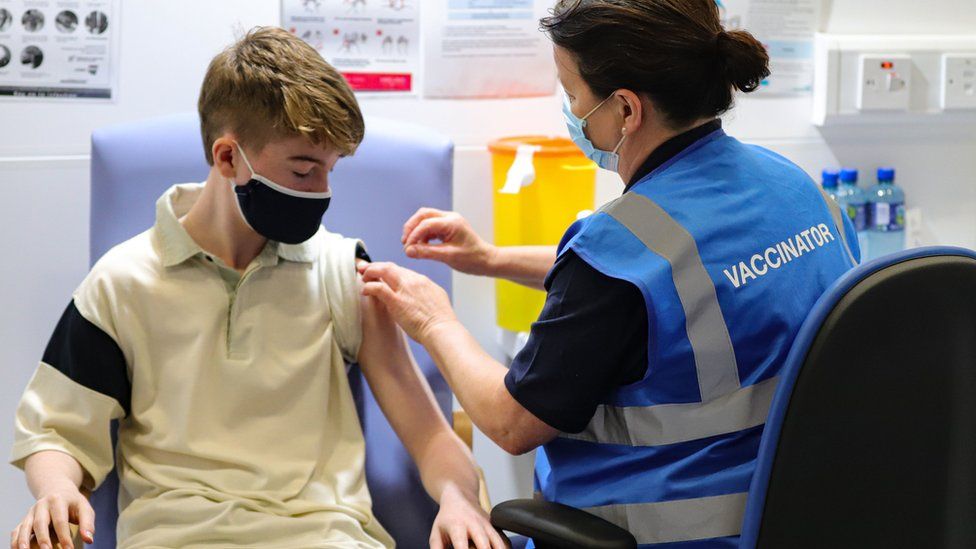
SharecloseShare pageCopy linkAbout sharingimage source, Damien StoranChildren in the UK aged 12 to 15 are set to be able to get a Covid jab, following advice from the UK’s chief medical officers.They have recommended the youngsters should be offered one dose of the Pfizer vaccine.Some other countries have been vaccinating younger teenagers for some time – but approaches do differ.Why vaccinating all teens is a difficult decisionCovid: Which children are being vaccinated and why?What’s happening in Europe? In May, the European Medicines Agency (EMA) approved the Pfizer vaccine for 12 to 15-year-olds. Since then, different EU countries have moved at different speeds.Denmark (12 to 15-year-olds) and Spain (12 to 19-year-olds) have both now vaccinated most of their child population with at least a single dose. France too has been moving quickly with 66% of those aged 12 to 17 now single jabbed, and 52% fully vaccinated. By October the country’s health pass – or pass sanitaire – will be extended to under-18s, meaning all teenagers will need to show proof of vaccination or a negative Covid test to access places like cinemas, museums, restaurants and indoor shopping centres. In June Germany’s scientific advisers recommended the vaccine should only be offered to children aged 12 to 15 with underlying health conditions. But in August, after the Delta variant started spreading more widely, the rollout was extended to all those over 12 years old.In Sweden children aged 12 to 15 are only eligible for a vaccine if they have lung disease, severe asthma or another high-risk medical condition. In Norway, not part of the EU, the vaccine rollout was recently extended to children aged 12 to 15, but only a first dose will be offered, with a decision on a second dose to be made later.The US – mandatory vaccination In May, US and Canadian regulators were the first to approve the Pfizer jab for use in children from 12 years and older. The rollout started immediately at sites across the US with two injections given three weeks apart. By the end of July, 42% of 12 to 17-year-olds had received their first dose and 32% their second dose of either the Pfizer or Moderna shots. The drive to vaccinate children came as the US started to battle a rise in infections driven by the Delta variant.image source, Getty ImagesThe latest report from the Centre for Disease Control said that the number of children hospitalised with Covid was between 3.4 to 3.7 times higher in states with the lowest vaccination coverage.A handful of US school boards have voted to make the jab mandatory for children aged 12 and over to attend class, despite objections by some parents.In Los Angeles the order was recently extended to 600,000 pupils, while in New York staff but not students must be inoculated.Pfizer has also started testing its Covid vaccine on younger children. The first results, in those between five and 11 years old, are expected in September with data for infants aged six months to four years old likely to follow by the end of the year.President Biden has already indicated that vaccines for that younger age group could be available “soon” after regulators review the clinical data.China – jab approved for children three and overIn June, China began to allow some children from three to 17 years old to be offered shots of a vaccine produced by drug-maker Sinovac, making it the first country to approve a jab for such a young age group.The country has set a rough target of vaccinating 80% of its 1.4 billion population by the end of the year, a figure impossible to meet without jabbing large numbers of under-18s.In theory the Covid vaccine is voluntary in China, although some local governments have said that students will not be allowed back to school this term unless their entire family is double jabbed. The Sinovac vaccine is also widely used in many countries in Asia, Africa and South America. In Chile, it has already been approved for use in children from six years old, while the company has recently started clinical trials to test its vaccine on children in South Africa aged from six months to 17 years old.image source, Getty ImagesIndia – adult jabs come firstIndia is thought to have the largest adolescent population in the world, estimated at about 253 million by Unicef. The latest data from the National Serological Survey suggests about 60% of children have been exposed to coronavirus since the start of the pandemic, and are likely to have built up some immunity from past infection. In August, the country’s drug regulator granted emergency use for a new vaccine developed by local drug firm Zydus Cadila in all those aged 12 years and over, the first approval to cover children.The jab currently needs to be given in three separate doses using a needle-free applicator, rather than a traditional syringe. The firm has said it soon hopes to start trials in younger children aged two and over. Government scientific advisers have said vaccination for children aged 12 to 17 with serious health conditions could start in October, but a wider rollout will only take place after the adult programme in India is completed, currently slated for the end of the year.Follow Jim Reed on Twitter

Read more →