Aides at U.S. Nursing Homes Least Likely to Be Vaccinated, Study Shows

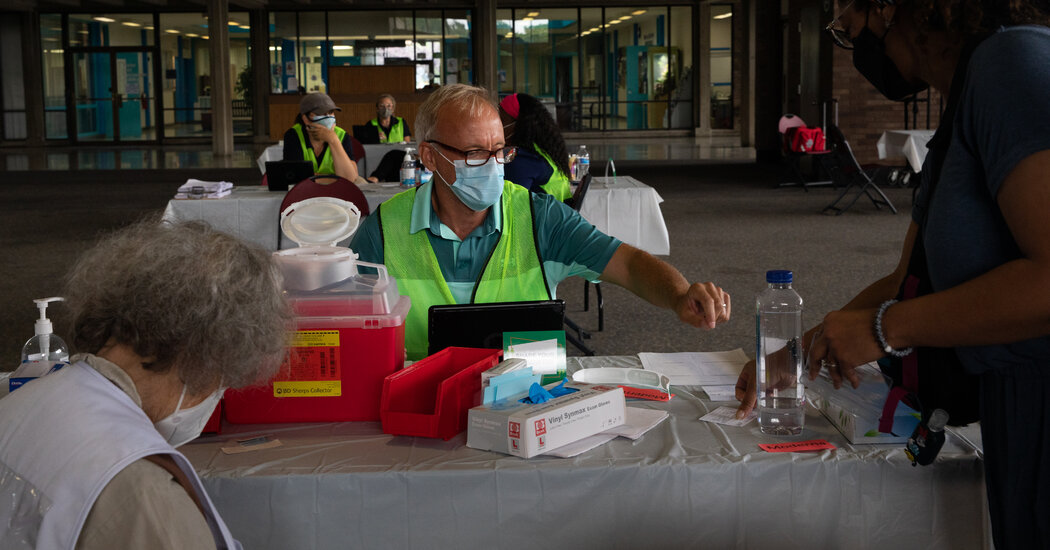
Nursing home aides — the staff members who provide the most direct care to residents — were the least likely to be fully vaccinated against the coronavirus by mid-July, according to a new analysis of U.S. facilities.The study underscores the influence that President Biden’s new federal mandate for all health care workers may have on populations like the elderly in nursing homes who are vulnerable to coronavirus infections, experts say.The findings are “alarming and reason for pause,” said Brian McGarry, a health researcher at the University of Rochester and one of the authors of the analysis, which appeared in a research letter in JAMA Internal Medicine on Thursday.Low vaccination rates among nursing home workers in some areas have fueled concern about fresh outbreaks among staff and residents in these facilities, even with high numbers of vaccinated residents. Covid deaths among nursing home staff and residents accounted for nearly one third of the nation’s pandemic fatalities as of June 1, and vaccination rates among staff average around 63 percent, according to the latest federal data.But slightly under half of the certified nursing assistants were fully vaccinated, according to the analysis, which looked at federal vaccination data through July 18. That was before many nursing homes, states and cities began imposing mandates.According to the study, in nursing homes overall, 61 percent of nurses, both registered nurses and licensed practical nurses, were vaccinated, compared with 71 percent of therapists and 77 percent of doctors and independent practitioners like physician assistants or nurse practitioners. Some large nursing homes were starting to mandate vaccinations as the Delta variant began tearing through their communities and coming into nursing homes.Nationally, about two-thirds of adults are now fully vaccinated, according to federal data.David Grabowski, a professor of health care policy at Harvard Medical School and one of the study’s authors, said few nursing homes have mandates in place so far. While homes’ vaccination rates have ticked up slightly, the overall rate for nursing homes has hovered at just a little above 60 percent in the last couple of months even as the Delta variant took hold and drove up new cases among staff and residents.The nursing home industry, which had been opposed to a mandate aimed specifically at its workers, favors the broader U.S. mandate. “We applaud President Biden for expanding Covid-19 vaccination requirements to all Medicare and Medicaid-certified health care settings as well as larger businesses,” said Mark Parkinson, the chief executive of the American Health Care Association, a major nursing home trade group, in a statement. The researchers also looked at characteristics of the nation’s 15,000 nursing homes to determine which facilities had the most success in vaccinating their workers. While the vaccination rates of the county where they were located played a significant role, the researchers also found that traits like higher quality ratings from the Medicare program, the nonprofit status of the facility and a long-tenured staff also seemed to lead to higher rates.“That gives us some suggestion that facility culture and leadership may play a role,” Dr. McGarry said, and management at these nursing homes may be better able to work with their staff to increase vaccine acceptance..css-1xzcza9{list-style-type:disc;padding-inline-start:1em;}.css-3btd0c{font-family:nyt-franklin,helvetica,arial,sans-serif;font-size:1rem;line-height:1.375rem;color:#333;margin-bottom:0.78125rem;}@media (min-width:740px){.css-3btd0c{font-size:1.0625rem;line-height:1.5rem;margin-bottom:0.9375rem;}}.css-3btd0c strong{font-weight:600;}.css-3btd0c em{font-style:italic;}.css-w739ur{margin:0 auto 5px;font-family:nyt-franklin,helvetica,arial,sans-serif;font-weight:700;font-size:1.125rem;line-height:1.3125rem;color:#121212;}#NYT_BELOW_MAIN_CONTENT_REGION .css-w739ur{font-family:nyt-cheltenham,georgia,’times new roman’,times,serif;font-weight:700;font-size:1.375rem;line-height:1.625rem;}@media (min-width:740px){#NYT_BELOW_MAIN_CONTENT_REGION .css-w739ur{font-size:1.6875rem;line-height:1.875rem;}}@media (min-width:740px){.css-w739ur{font-size:1.25rem;line-height:1.4375rem;}}.css-9s9ecg{margin-bottom:15px;}.css-16ed7iq{width:100%;display:-webkit-box;display:-webkit-flex;display:-ms-flexbox;display:flex;-webkit-align-items:center;-webkit-box-align:center;-ms-flex-align:center;align-items:center;-webkit-box-pack:center;-webkit-justify-content:center;-ms-flex-pack:center;justify-content:center;padding:10px 0;background-color:white;}.css-pmm6ed{display:-webkit-box;display:-webkit-flex;display:-ms-flexbox;display:flex;-webkit-align-items:center;-webkit-box-align:center;-ms-flex-align:center;align-items:center;}.css-pmm6ed > :not(:first-child){margin-left:5px;}.css-5gimkt{font-family:nyt-franklin,helvetica,arial,sans-serif;font-size:0.8125rem;font-weight:700;-webkit-letter-spacing:0.03em;-moz-letter-spacing:0.03em;-ms-letter-spacing:0.03em;letter-spacing:0.03em;text-transform:uppercase;color:#333;}.css-5gimkt:after{content:’Collapse’;}.css-rdoyk0{-webkit-transition:all 0.5s ease;transition:all 0.5s ease;-webkit-transform:rotate(180deg);-ms-transform:rotate(180deg);transform:rotate(180deg);}.css-eb027h{max-height:5000px;-webkit-transition:max-height 0.5s ease;transition:max-height 0.5s ease;}.css-6mllg9{-webkit-transition:all 0.5s ease;transition:all 0.5s ease;position:relative;opacity:0;}.css-6mllg9:before{content:”;background-image:linear-gradient(180deg,transparent,#ffffff);background-image:-webkit-linear-gradient(270deg,rgba(255,255,255,0),#ffffff);height:80px;width:100%;position:absolute;bottom:0px;pointer-events:none;}.css-uf1ume{display:-webkit-box;display:-webkit-flex;display:-ms-flexbox;display:flex;-webkit-box-pack:justify;-webkit-justify-content:space-between;-ms-flex-pack:justify;justify-content:space-between;}.css-wxi1cx{display:-webkit-box;display:-webkit-flex;display:-ms-flexbox;display:flex;-webkit-flex-direction:column;-ms-flex-direction:column;flex-direction:column;-webkit-align-self:flex-end;-ms-flex-item-align:end;align-self:flex-end;}.css-12vbvwq{background-color:white;border:1px solid #e2e2e2;width:calc(100% – 40px);max-width:600px;margin:1.5rem auto 1.9rem;padding:15px;box-sizing:border-box;}@media (min-width:740px){.css-12vbvwq{padding:20px;width:100%;}}.css-12vbvwq:focus{outline:1px solid #e2e2e2;}#NYT_BELOW_MAIN_CONTENT_REGION .css-12vbvwq{border:none;padding:10px 0 0;border-top:2px solid #121212;}.css-12vbvwq[data-truncated] .css-rdoyk0{-webkit-transform:rotate(0deg);-ms-transform:rotate(0deg);transform:rotate(0deg);}.css-12vbvwq[data-truncated] .css-eb027h{max-height:300px;overflow:hidden;-webkit-transition:none;transition:none;}.css-12vbvwq[data-truncated] .css-5gimkt:after{content:’See more’;}.css-12vbvwq[data-truncated] .css-6mllg9{opacity:1;}.css-qjk116{margin:0 auto;overflow:hidden;}.css-qjk116 strong{font-weight:700;}.css-qjk116 em{font-style:italic;}.css-qjk116 a{color:#326891;-webkit-text-decoration:underline;text-decoration:underline;text-underline-offset:1px;-webkit-text-decoration-thickness:1px;text-decoration-thickness:1px;-webkit-text-decoration-color:#326891;text-decoration-color:#326891;}.css-qjk116 a:visited{color:#326891;-webkit-text-decoration-color:#326891;text-decoration-color:#326891;}.css-qjk116 a:hover{-webkit-text-decoration:none;text-decoration:none;}But none of those factors alone appeared to be critical in a nursing home’s success. “A lot of things seemed to matter a little bit,” he said.Most influential may be the president’s decision earlier this month to impose a new federal mandate requiring all health care workers to be vaccinated. Nursing home workers may no longer be able to “job shop” as easily to find employment where vaccines are not mandated.“The mandate takes all those things off the board and says everyone has to do it,” he said.

Read more →

Covid-19: France suspends 3,000 unvaccinated health workers

SharecloseShare pageCopy linkAbout sharingimage source, EPAAbout 3,000 health workers in France have been suspended because they have not been vaccinated against Covid-19.A new rule, which came into force on Wednesday, made vaccination mandatory for the country’s 2.7 million health, care home and fire service staff.But French Health Minister Olivier Véran said on Thursday that “most of the suspensions are only temporary”.Many are now agreeing to get jabbed because “they see that the vaccination mandate is a reality”, he said.The rule applies to all doctors, nurses, office staff and volunteers.President Emmanuel Macron first gave workers notice of the rule change on 12 July, warning them that they needed to get at least one jab by 15 September or resign from their jobs.”I am aware of what I am asking of you, and I know that you are ready for this commitment, this is part, in a way, of your sense of duty,” he said at the time.After the president’s announcement, Doctolib, the website people use to book their jabs, crashed as so many people tried secure appointments.But with the mandate now in place, and thousands still refusing to get the vaccine, there are fears of a disruption to healthcare services.In just one hospital in Nice in southern France, for example, almost 450 workers have been suspended – sparking protests outside the building.And in another southern city, Montélimar, one hospital confirmed that it had already begun cancelling non-urgent operations because of a shortage of vaccinated anaesthetists, AFP news agency reports.”We have to keep these people on the job until they have been replaced,” Christophe Prudhomme, an emergency doctor and left-wing MP, said.But Mr Véran told French RTL radio on Thursday that “the continuity of care and the security of care and quality of care were assured yesterday in all hospitals and medico-social facilities”, although a few services, such as MRI scans, were impacted for a few hours.He added that the suspensions mainly affected support staff, and “few white coats”. There have also been “a few dozen resignations” across the country, he said.image source, ReutersWhen the vaccines were first rolled out globally, France was one of the most vaccine-sceptical countries in the world. Then, about 40% of eligible people said they planned to get immunised, according to a survey by Ipsos. At the same time research from BBC Monitoring found that the number of followers of French-language pages sharing anti-vaccine content grew in 2020, from 3.2m to almost 4.1m likes.But since the introduction of a Covid “health pass” in July, France has become one of the world’s most vaccinated countries. Almost 90% of all adults have now had at least one jab. France has also started vaccinating children aged 12 and over, and is administering booster jabs to vulnerable people.Vaccine mandates elsewhere in the worldFrance is not the only country to introduce a vaccine mandate. Italy is also making an anti-Covid “green pass” mandatory for all employees from 15 October, meaning that workers who can’t show proof of vaccination or a recent negative Covid test will be penalised.”The government is ready to speed up on the ‘green pass’… (for) not just the public sector, but private too,” regional affairs minister Mariastella Gelmini said on Wednesday.The green pass is already required for anyone in Italy who wants to eat indoors at restaurants, go to cinemas and sports stadiums, and take certain public transport or flights. It is also already mandatory for teachers.The vaccine misinformation battle raging in France Why is the US falling behind with its vaccinations?How Covid passports work around the worldIn Greece, unvaccinated public and private sector employees have to have Covid tests once or twice a week, at their own expense. The rule came into force on 13 September.And last week, the US made vaccines mandatory for federal government workers and contractors, and for all businesses with more than 100 employees. The rule affects covers about 100 million workers.US President Joe Biden warned that if people didn’t get vaccinated, they should be prepared to undergo weekly testing for Covid-19.”This is not about freedom, or personal choice, it’s about protecting yourself and those around you,” he said as he unveiled the plan.

Read more →

U.S. Booster Policy Is in Flux as Studies Add to Dissent

A week before President Biden’s plan is to roll out, scientists are at odds about whether extra coronavirus shots are needed and for whom.WASHINGTON — Almost a month ago, President Biden announced a plan to make coronavirus booster shots available to most adults in the United States eight months after they received their second dose. But a week before the plan is to roll out, its contours are up in the air amid a chorus of dissent inside and outside the government.The White House has already been forced to delay offering boosters to recipients of the Moderna vaccine, and for now it is planning third shots only for those who received the Pfizer-BioNTech vaccine. Depending on what two public health agencies decide in the coming days, the administration may have to change course again, perhaps restricting extra shots to older Americans and others who are particularly vulnerable to serious illness.A series of dueling reviews this week illustrated the fierce argument among scientists about whether boosters are needed, and if so, for whom. A study released on Wednesday in The New England Journal of Medicine appears to bolster the case made by the White House and its senior health advisers, stating that those who received a third shot of the Pfizer vaccine in Israel were far less likely to develop severe Covid than those who received two injections.But a review by regulators at the Food and Drug Administration, also made public on Wednesday, looked at broader evidence on third doses of the Pfizer vaccine and raised caveats.And in The Lancet this week, an article written by two of the Food and Drug Administration’s top vaccine scientists, among others, argued that there was no credible evidence that the vaccines’ potency against severe disease declined substantially over time. The two scientists had announced that they would leave the agency this fall, but their public opposition to the administration’s plan caught the F.D.A.’s top leaders by surprise and forced the White House on the defensive.Jen Psaki, the White House press secretary, stressed on Wednesday that the administration’s most senior health officials — including Dr. Janet Woodcock, the acting commissioner of the Food and Drug Administration, and Dr. Rochelle P. Walensky, the director of the Centers for Disease Control and Prevention — had signed a statement announcing Mr. Biden’s booster plan. “Nothing has changed as it relates to the eight top doctors who put out that statement, almost a month ago,” Ms. Psaki said.What comes next partly depends on crucial meetings of expert advisory committees to both the F.D.A., which is responsible for authorizing vaccines, and the C.D.C., which typically has the final word on vaccination policies.The F.D.A. committee will meet on Friday to discuss and vote on Pfizer-BioNTech’s application to offer third shots to people 16 and older. The C.D.C. panel is expected to meet next week. Agency officials are not required to follow the recommendations of their outside expert panels, but they generally do so.Depending on the experts’ reaction to the data review that F.D.A. regulators posted on Wednesday, the agency could decide to scale back an authorization. Even if the Food and Drug Administration approves the application as it currently stands, however, the C.D.C. might recommend boosters only for those 65 and older or others who are particularly at risk, according to people familiar with the discussions.The plan to start offering extra shots next week was announced when the White House was under growing pressure to move on boosters. Because of the highly contagious Delta variant, hospitalizations and deaths were soaring, albeit largely among the unvaccinated. Breakthrough infections were becoming more common. France, Germany and Israel were moving faster than the United States to offer boosters. And several governors were publicly calling on Mr. Biden to follow suit..css-1xzcza9{list-style-type:disc;padding-inline-start:1em;}.css-3btd0c{font-family:nyt-franklin,helvetica,arial,sans-serif;font-size:1rem;line-height:1.375rem;color:#333;margin-bottom:0.78125rem;}@media (min-width:740px){.css-3btd0c{font-size:1.0625rem;line-height:1.5rem;margin-bottom:0.9375rem;}}.css-3btd0c strong{font-weight:600;}.css-3btd0c em{font-style:italic;}.css-1kpebx{margin:0 auto;font-family:nyt-franklin,helvetica,arial,sans-serif;font-weight:700;font-size:1.125rem;line-height:1.3125rem;color:#121212;}#NYT_BELOW_MAIN_CONTENT_REGION .css-1kpebx{font-family:nyt-cheltenham,georgia,’times new roman’,times,serif;font-weight:700;font-size:1.375rem;line-height:1.625rem;}@media (min-width:740px){#NYT_BELOW_MAIN_CONTENT_REGION .css-1kpebx{font-size:1.6875rem;line-height:1.875rem;}}@media (min-width:740px){.css-1kpebx{font-size:1.25rem;line-height:1.4375rem;}}.css-1gtxqqv{margin-bottom:0;}.css-19zsuqr{display:block;margin-bottom:0.9375rem;}.css-12vbvwq{background-color:white;border:1px solid #e2e2e2;width:calc(100% – 40px);max-width:600px;margin:1.5rem auto 1.9rem;padding:15px;box-sizing:border-box;}@media (min-width:740px){.css-12vbvwq{padding:20px;width:100%;}}.css-12vbvwq:focus{outline:1px solid #e2e2e2;}#NYT_BELOW_MAIN_CONTENT_REGION .css-12vbvwq{border:none;padding:10px 0 0;border-top:2px solid #121212;}.css-12vbvwq[data-truncated] .css-rdoyk0{-webkit-transform:rotate(0deg);-ms-transform:rotate(0deg);transform:rotate(0deg);}.css-12vbvwq[data-truncated] .css-eb027h{max-height:300px;overflow:hidden;-webkit-transition:none;transition:none;}.css-12vbvwq[data-truncated] .css-5gimkt:after{content:’See more’;}.css-12vbvwq[data-truncated] .css-6mllg9{opacity:1;}.css-qjk116{margin:0 auto;overflow:hidden;}.css-qjk116 strong{font-weight:700;}.css-qjk116 em{font-style:italic;}.css-qjk116 a{color:#326891;-webkit-text-decoration:underline;text-decoration:underline;text-underline-offset:1px;-webkit-text-decoration-thickness:1px;text-decoration-thickness:1px;-webkit-text-decoration-color:#326891;text-decoration-color:#326891;}.css-qjk116 a:visited{color:#326891;-webkit-text-decoration-color:#326891;text-decoration-color:#326891;}.css-qjk116 a:hover{-webkit-text-decoration:none;text-decoration:none;}Administration officials have started making the case that offering boosters only to older people would not be a huge change from the president’s original plan. Because older adults were vaccinated first, they make up a disproportionate number of those who were vaccinated at least eight months ago.Several officials suggested that the difference from Mr. Biden’s original announcement would be minimal as long as some people are offered boosters next week — even if it is only older people who received the Pfizer vaccine.John P. Moore, a virologist at Weill Cornell Medicine, said that the White House was under political pressure after declaring that boosters were necessary and that they would be available next week pending regulatory approval.“Weeks ago, the administration decided that the public needs cake and deserves cake, and so shall have cake,” he said. “Now, the public expects cake and would be very annoyed if its cake was taken away at this point.”Receiving a third dose of the Pfizer vaccine in Ramat Gan, Israel, last month. The Israeli government began offering booster shots in August. Oded Balilty/Associated PressThe backpedaling is a result of what some describe as a double mistake by the White House: First, officials pinpointed a specific week when additional shots would be rolled out. Second, they announced a broad plan covering the Pfizer and Moderna vaccines before regulators had time to review or even gather all the necessary data.“We just got things turned around,” said Dr. Jesse L. Goodman, a former chief scientist at the Food and Drug Administration. “The administration and the leaders of the scientific agencies who signed on got out in front of any public discussion, airing of the data or vetting of it. That put the F.D.A. and the C.D.C. and their advisory committees in a corner.”Dr. Woodcock, the acting F.D.A. commissioner, privately warned that it was risky to announce a timetable, especially for multiple vaccines, according to people familiar with the discussions. The F.D.A. and the C.D.C. meetings in the coming days and Pfizer’s application for approval of its booster dose appear to be conforming to the timetable the administration proposed in August.Like other senior health officials, Dr. Woodcock had hoped that booster shots could be offered this month not only for Pfizer and Moderna recipients, but for recipients of Johnson & Johnson’s one-dose vaccine as well, according to people familiar with the deliberations. But the administration had to limit its plan to Pfizer recipients, officials said, because neither Moderna nor Johnson & Johnson delivered the expected data in time.While Mr. Biden publicly noted that his strategy depended on regulatory action, he also made the plan sound all but definite. “It’s simple,” he said at the time. “Eight months after your second shot, get your booster shot.”In interviews, senior administration officials defended the decision to specify a date for the rollout, saying that precious time would have been lost if pharmacies, providers and state officials were not prepared.The data from Israel, which offered boosters first, was particularly concerning to U.S. health officials..css-1xzcza9{list-style-type:disc;padding-inline-start:1em;}.css-3btd0c{font-family:nyt-franklin,helvetica,arial,sans-serif;font-size:1rem;line-height:1.375rem;color:#333;margin-bottom:0.78125rem;}@media (min-width:740px){.css-3btd0c{font-size:1.0625rem;line-height:1.5rem;margin-bottom:0.9375rem;}}.css-3btd0c strong{font-weight:600;}.css-3btd0c em{font-style:italic;}.css-w739ur{margin:0 auto 5px;font-family:nyt-franklin,helvetica,arial,sans-serif;font-weight:700;font-size:1.125rem;line-height:1.3125rem;color:#121212;}#NYT_BELOW_MAIN_CONTENT_REGION .css-w739ur{font-family:nyt-cheltenham,georgia,’times new roman’,times,serif;font-weight:700;font-size:1.375rem;line-height:1.625rem;}@media (min-width:740px){#NYT_BELOW_MAIN_CONTENT_REGION .css-w739ur{font-size:1.6875rem;line-height:1.875rem;}}@media (min-width:740px){.css-w739ur{font-size:1.25rem;line-height:1.4375rem;}}.css-9s9ecg{margin-bottom:15px;}.css-16ed7iq{width:100%;display:-webkit-box;display:-webkit-flex;display:-ms-flexbox;display:flex;-webkit-align-items:center;-webkit-box-align:center;-ms-flex-align:center;align-items:center;-webkit-box-pack:center;-webkit-justify-content:center;-ms-flex-pack:center;justify-content:center;padding:10px 0;background-color:white;}.css-pmm6ed{display:-webkit-box;display:-webkit-flex;display:-ms-flexbox;display:flex;-webkit-align-items:center;-webkit-box-align:center;-ms-flex-align:center;align-items:center;}.css-pmm6ed > :not(:first-child){margin-left:5px;}.css-5gimkt{font-family:nyt-franklin,helvetica,arial,sans-serif;font-size:0.8125rem;font-weight:700;-webkit-letter-spacing:0.03em;-moz-letter-spacing:0.03em;-ms-letter-spacing:0.03em;letter-spacing:0.03em;text-transform:uppercase;color:#333;}.css-5gimkt:after{content:’Collapse’;}.css-rdoyk0{-webkit-transition:all 0.5s ease;transition:all 0.5s ease;-webkit-transform:rotate(180deg);-ms-transform:rotate(180deg);transform:rotate(180deg);}.css-eb027h{max-height:5000px;-webkit-transition:max-height 0.5s ease;transition:max-height 0.5s ease;}.css-6mllg9{-webkit-transition:all 0.5s ease;transition:all 0.5s ease;position:relative;opacity:0;}.css-6mllg9:before{content:”;background-image:linear-gradient(180deg,transparent,#ffffff);background-image:-webkit-linear-gradient(270deg,rgba(255,255,255,0),#ffffff);height:80px;width:100%;position:absolute;bottom:0px;pointer-events:none;}.css-uf1ume{display:-webkit-box;display:-webkit-flex;display:-ms-flexbox;display:flex;-webkit-box-pack:justify;-webkit-justify-content:space-between;-ms-flex-pack:justify;justify-content:space-between;}.css-wxi1cx{display:-webkit-box;display:-webkit-flex;display:-ms-flexbox;display:flex;-webkit-flex-direction:column;-ms-flex-direction:column;flex-direction:column;-webkit-align-self:flex-end;-ms-flex-item-align:end;align-self:flex-end;}.css-12vbvwq{background-color:white;border:1px solid #e2e2e2;width:calc(100% – 40px);max-width:600px;margin:1.5rem auto 1.9rem;padding:15px;box-sizing:border-box;}@media (min-width:740px){.css-12vbvwq{padding:20px;width:100%;}}.css-12vbvwq:focus{outline:1px solid #e2e2e2;}#NYT_BELOW_MAIN_CONTENT_REGION .css-12vbvwq{border:none;padding:10px 0 0;border-top:2px solid #121212;}.css-12vbvwq[data-truncated] .css-rdoyk0{-webkit-transform:rotate(0deg);-ms-transform:rotate(0deg);transform:rotate(0deg);}.css-12vbvwq[data-truncated] .css-eb027h{max-height:300px;overflow:hidden;-webkit-transition:none;transition:none;}.css-12vbvwq[data-truncated] .css-5gimkt:after{content:’See more’;}.css-12vbvwq[data-truncated] .css-6mllg9{opacity:1;}.css-qjk116{margin:0 auto;overflow:hidden;}.css-qjk116 strong{font-weight:700;}.css-qjk116 em{font-style:italic;}.css-qjk116 a{color:#326891;-webkit-text-decoration:underline;text-decoration:underline;text-underline-offset:1px;-webkit-text-decoration-thickness:1px;text-decoration-thickness:1px;-webkit-text-decoration-color:#326891;text-decoration-color:#326891;}.css-qjk116 a:visited{color:#326891;-webkit-text-decoration-color:#326891;text-decoration-color:#326891;}.css-qjk116 a:hover{-webkit-text-decoration:none;text-decoration:none;}In the New England Journal of Medicine article on Wednesday, researchers said they analyzed health records of more than 1.1 million people in Israel who had received both doses of the Pfizer vaccine at least five months earlier. They found that the rate of severe disease among people over 60 who had received a third shot at least 12 days earlier was nearly twentyfold lower than among those who had received two injections.The Food and Drug Administration has invited Dr. Sharon Alroy-Preis, Israel’s head of public health services and a co-author of the study, to describe her country’s experience with boosters to the advisory committee on Friday. In an interview, Dr. Alroy-Preis said Israel had vaccinated more of its population faster than other countries and therefore saw the effect of waning immunity much earlier.If the United States does not start offering booster shots, she said, more fully vaccinated people will contract severe Covid-19, as they did in Israel. “I am sure of that,” she said.Before Israel’s government began offering third shots in August, Dr. Alroy-Preis said, people who were fully immunized with the Pfizer vaccine made up at least half of severely or critically ill Covid patients. The number of those patients is now less than half what officials had previously projected, she said, and the spread of the virus has slowed.“We are beginning to control the fourth wave,” Dr. Alroy-Preis said, “mainly by vaccinating people with third doses.”Yet vaccine experts said on Wednesday that what the Israeli data show — that a booster can enhance protection for a few weeks in older adults — is unsurprising and does not necessarily indicate long-term benefit. There are differences between Israel and the United States that could lead to different outcomes, scientists have warned.The Food and Drug Administration on Wednesday cautioned its advisory committee from putting too much weight on the experiences of other countries.“While observational studies can enable understanding of real-world effectiveness, there are known and unknown biases that can affect their reliability,” regulators wrote in a briefing paper. Studies conducted in the United States “may most accurately represent vaccine effectiveness in the U.S. population,” they added.The Food and Drug Administration’s analysis also noted that Pfizer had gathered data on immune responses against the Delta variant in only two dozen people. The company said in a separate filing that one month after a third injection, levels of neutralizing antibodies against the Delta variant were about five to seven times as high as they were a month after the second dose.Whatever the Food and Drug Administration decides, it should clearly and publicly explain its reasoning, said Dr. Joshua Sharfstein, a vice dean at the Johns Hopkins Bloomberg School of Public Health and a former principal deputy commissioner of the agency.“F.D.A. does the best in situations when there are strongly held but conflicting views, when they’re forthcoming with the data and really explain decisions,” he said. “It’s important for the F.D.A. not to say, ‘Here’s our decision, mic drop.’”He added, “It’s much better for them to say, ‘Here’s how we looked at the data, here are the conclusions we made from the data, and here’s why we’re making the conclusions.’”Isabel Kershner

Read more →

Ros Atkins on… why people are using a horse drug

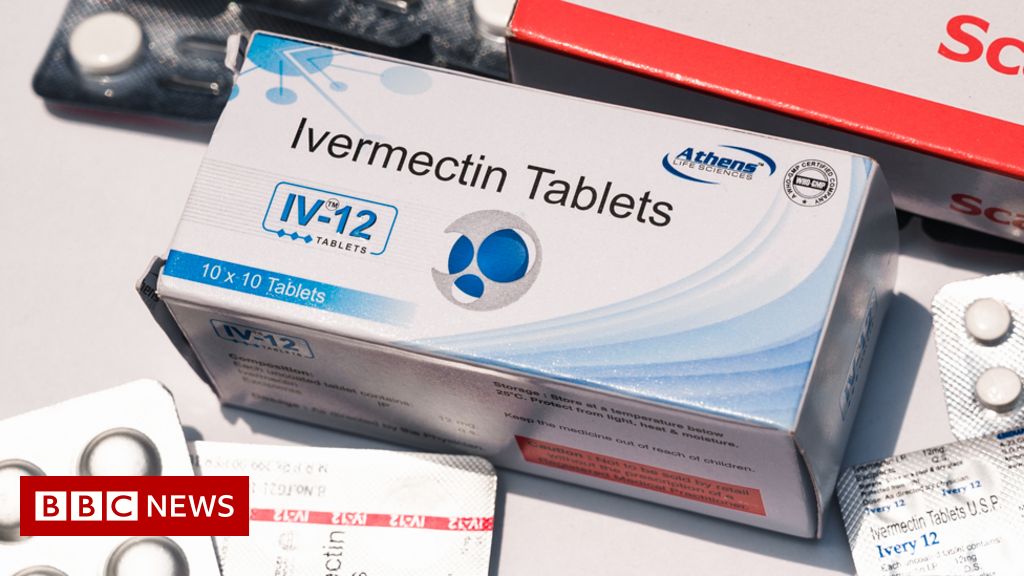
In the US, a drug called Ivermectin is being touted as a way of treating or preventing Covid-19, with celebrities such as podcast host Joe Rogan praising its use.Ivermectin is primarily used to treat parasitic infections, and is often used for animals in larger doses.Official advice says it’s not approved for treating coronavirus.Ros Atkins explores why people continue to use the controversial drug.

Read more →

Why is St. Jude Children’s Research Hospital Involved in SpaceX Launch?

When he announced Inspiration4 in February, Mr. Isaacman said he wanted it to be more than an extraterrestrial jaunt for rich people like him. He reached out to St. Jude Children’s Research Hospital in Memphis, which treats children at no charge and develops cures for childhood cancers as well as other diseases. Mr. Isaacman offered to use the mission as a fund-raising vehicle for St. Jude, setting a $200 million target.“If you’re going to accomplish all those great things out in space, all that progress, then you have an obligation to do some considerable good here on Earth, like making sure you conquer childhood cancer along the way,” he said.So far, more than $130 million has been raised including the $100 million that Mr. Isaacman is personally donating to St. Jude.“We are elated with where we are from a fund-raising perspective,” said Richard C. Shadyac Jr., the president of ALSAC, the fund-raising organization for St. Jude. “I couldn’t be more pleased. We’ll continue to strive for that $200 million goal.”

Read more →

St. Jude Hospital and the SpaceX Inspiration4 Launch

When he announced Inspiration4 in February, Mr. Isaacman said he wanted it to be more than an extraterrestrial jaunt for rich people like him. He reached out to St. Jude Children’s Research Hospital in Memphis, which treats children at no charge and develops cures for childhood cancers as well as other diseases. Mr. Isaacman offered to use the mission as a fund-raising vehicle for St. Jude, setting a $200 million target.“If you’re going to accomplish all those great things out in space, all that progress, then you have an obligation to do some considerable good here on Earth, like making sure you conquer childhood cancer along the way,” he said.So far, more than $130 million has been raised including the $100 million that Mr. Isaacman is personally donating to St. Jude.“We are elated with where we are from a fund-raising perspective,” said Richard C. Shadyac Jr., the president of ALSAC, the fund-raising organization for St. Jude. “I couldn’t be more pleased. We’ll continue to strive for that $200 million goal.”

Read more →

How ribosomes are assembled in human cells

All cells need ribosomes to make the proteins necessary for life. These multi-component molecular machines build complex proteins by stitching building blocks together according to instructions encoded in the cell’s messenger RNAs. But ribosomes are themselves composed of small and large subunits, each of which is made up of ribosomal proteins and RNA. Before they can manufacture proteins, these subunits must be manufactured themselves.
In a new study, scientists in the lab of Sebastian Klinge provide the most detailed view of how human small ribosomal subunits are put together by capturing their 3D portraits at three different stages of the assembly process. The findings are published in Science.
“The assembly of a ribosome is like an origami,” says Klinge, associate professor and head of the Laboratory of Protein and Nucleic Acid Chemistry. “Segments of RNA and other proteins have to be accurately folded in precise steps. The fundamental problem we are trying to understand is how proteins known as assembly factors work in concert to control each step of the assembly.”
For the study, the researchers developed a human gene-editing platform to tag ribosome assembly factors and established a novel biochemical procedure to overcome the hurdle of extracting the pre-ribosomal particles from the nucleolus, a structure inside the cell’s nucleus. These particles were then imaged using cryo-electron microscopy, revealing their structure at near atomic resolution.
The findings detail how some 70 assembly factors come together to create a scaffolding for the construction of the small subunit, and to guide each step of its maturation. Once their job is done, the assembly factors break apart, liberating the mature small subunit they held inside.
The three stages captured in the study provide a better understanding of the key molecular mechanisms that bring about the formation of the small subunit. The findings also provide new insights into rare human diseases that result from mutations in ribosomal proteins or assembly factors during the assembly of ribosomes.
Story Source:
Materials provided by Rockefeller University. Note: Content may be edited for style and length.

Read more →

Saliva test for COVID-19 outperforms commercial swab tests, study shows

In the early days of the pandemic, with commercial COVID tests in short supply, Rockefeller’s Robert B. Darnell developed an in-house assay to identify positive cases within the Rockefeller community. It turned out to be easier and safer to administer than the tests available at the time, and it has been used tens of thousands of times over the past nine months to identify and isolate infected individuals working on the university’s campus.
Now, a new study in PLoS ONE confirms that Darnell’s test performs as well, if not better, than FDA-authorized nasal and oral swab tests. In a direct head-to-head comparison of 162 individuals who received both Rockefeller’s “DRUL” saliva test and a conventional swab test, DRUL caught all of the cases that the swabs identified as positive — plus four positive cases that the swabs missed entirely.
“This research confirms that the test we developed is sensitive and safe,” says Darnell, the Robert and Harriet Heilbrunn professor and head of the Laboratory of Molecular Neuro-Oncology. “It is inexpensive, has provided excellent surveillance within the Rockefeller community, and has the potential to improve safety in communities as the pandemic drags on.”
An answer to nasal swabs
COVID-19 testing was a nightmare in the early days of the pandemic. Feverish patients slipped germ-covered masks under their noses and braced for providers to plunge swabs deep into each nostril. Nurses risked catching the disease with every twist of the swab; technicians hazarded handling vials full of transport medium designed to keep viruses alive. And then came the shortages. All at once, we ran out of swabs, gloves, masks, medium. The virus raged on.
The DRUL test offered several advantages. It was safe — a test that could be taken at home and sent to the lab in transport medium that kills virus on contact. It was efficient. The assay used only off-the-shelf reagents, ducking beneath shortages that felled other programs. It was inexpensive, costing around $2 per test. (By comparison, Medicare is currently paying up to $100 for every commercial test conducted.) And it was comfortable. Providing a sample was a simple matter of spitting in a cup.

Read more →

Study uncovers new link between long-term arsenic exposure and Type 2 diabetes

A University of Arizona Health Sciences study has identified the biological mechanism linking long-term arsenic exposure to diseases such as cancer and Type 2 diabetes. The findings could result in potential new targets for drug development.
More than 34 million Americans have diabetes, according to the Centers for Disease Control and Prevention, and approximately 90-95% of them have Type 2 diabetes. One of the main risk factors is environmental toxicant exposure, particularly chronic exposure to arsenic, which has been shown to affect insulin production and sensitivity, blood sugar levels, and lipid profiles, all common features of diabetes onset and progression.
Because arsenic is a natural metalloid found in soil, it can be one of the most significant contaminants in drinking water globally, especially when ingested at unsafe levels. Arsenic is present in almost all groundwater sources in Arizona, particularly in rural areas. Combined with occupational exposures, such as mining, more than 160 million people worldwide are exposed to arsenic.
New research led by Donna D. Zhang, PhD, the Musil Family Endowed Chair in Drug Discovery at the UArizona College of Pharmacy and a member of the BIO5 Institute, uncovered a biological mechanism by which chronic arsenic exposure led to insulin resistance and glucose intolerance, two key features of diabetes progression.
The study examined the effect of arsenic exposure on nuclear factor-erythroid 2 related factor 2 (NRF2) activation. NRF2 is a protein that plays an important role in maintaining cellular homeostatis, especially during times of oxidative stress when there is an imbalance of free oxygen radicals and antioxidants in the body.
Long-term oxidative stress, such as that caused by cigarette smoke, radiation, diets high in sugar, fat and alcohol, or environmental toxins, contributes to the development of a range of chronic conditions including cancer, diabetes and neurodegenerative disease.
NRF2 is the body’s governing regulator against oxidative stress. When the body enters an oxidative stress state, NRF2 is activated and the process of cellular protection begins. When cellular homeostatis is restored, NRF2 levels return to normal.
Dr. Zhang and the research team found that arsenic exposure results in the prolonged and uncontrolled activation of NRF2, which previously was determined to be a driver of cancer progression and resistance to anti-cancer therapy. In this study, they found that arsenic exposure resulted in glucose intolerance and decreased insulin sensitivity. In particular, prolonged NRF2 activation by chronic arsenic exposure caused shifts in pathways that control amino acid, fatty acid, carbohydrate, lipid and drug metabolism.
The findings demonstrated that prolonged NRF2 activation in response to arsenic increased glucose production in the liver and the release of that glucose to the bloodstream, which could represent a key driver of changes in systemic blood glucose.
“Hopefully this study will serve as a foundation for future toxicant-driven diabetes research here at the University of Arizona Health Sciences and elsewhere,” said Dr. Zhang, who also is an associate director of the UArizona Superfund Research Center. “Our eventual goal is to generate effective preventive or interventive strategies to treat exposed populations.”

Read more →