The microbiome: Battle of the bugs

In a new study, Bärbel Stecher and her team from LMU have shown that, depending on the composition of the microbiome, E. coli bacteria can prevent infections by Salmonella strains.
Every individual harbors a specific microbiome, which is unlike that of any other. Each is made up of diverse bacterial, fungal and viral species, which are found on all body surfaces — the skin, mucous membranes and particularly in the gastrointestinal tract. Moreover, the microbiome have an enormous influence on the immune system, the endocrine system and the metabolism of their hosts.
Bärbel Stecher is Professor of Medical Microbiology and Hygiene in the Max von Pettenkofer-Institute at LMU Munich and a member of the German Center for Infection Research (DZIF). Her research focuses on the role of the gut microbiome in the control of infections. In her latest study — whose first author is doctoral student Claudia Eberl — her team set out to define what a healthy microbiome needs to effectively defeat an invasive pathogen. In this case, they asked whether the bacterial species Escherichia coli (E. coli) can provide protection against infection with human pathogenic Salmonella species. Many people are acquainted with the negative side of E. coli, as specific strains of the bacterium can cause diseases such as diarrhea, sepsis and even cancer. But there are lots of benign strains of E. coli. Most of these colonize individuals during or soon after birth, and contribute to the establishment of a balanced host-microbial interaction. Stecher and her research group have now investigated how these strains protect their hosts against infection by Salmonella.
The importance of cooperation
It turns out that the critical factor is interspecies competition for resources. “We discovered that, in particular, competition for a variety of sugars in the gastrointestinal tract can account for the failure of Salmonella to colonize the gut,” Stecher explains. In order to cause an infection, pathogenic bacteria must find an appropriate niche within the gut, which provides them with the carbon sources — such as certain sugars — that they need to replicate. However, competition for carbon sources in the gut is fierce. “If commensal E. coli consume all the sugar substrates, leaving nothing behind for Salmonella, the risk of infection is strongly decreased,” says Stecher.
However, in order to effectively exclude Salmonella, E. coli usually needs help. The new study also shows that E. coli is not always in a position to prevent infections caused by Salmonella. “If the complexity of the microbiome is too low, its members cannot consume all of the sugar substrates that Salmonella strains depend on, and this opens up opportunities for the pathogen to become established.” Stecher and her colleagues therefore concluded that E. coli needs allies. — And they went on to identify these as species of the Lachnospiraceae. This group of anaerobic bacteria is also often found in the human gut, and its members can also metabolize various sugars.
The research strategy
“Using synthetic bacterial consortia, we were able to construct a model microbiome,” Stecher explains. This microbiome was made up of 12 bacterial species, all of which are found in the healthy murine gut. This combination of species was then introduced into germ-free mice, which were subsequently infected with Salmonella. They discovered that, in the absence of Lachnospiraceae, E. coli was unable to prevent Salmonella infection. “This strengthens our conclusion that a combination of competition for carbon sources and complex interactions between bacterial species can protect the host against bacterial infections,” says Stecher.
To translate these findings to humans, Bärbel Stecher plans to work with bacterial consortia found in the human gut microbiome. “At some point, our work could then help to develop treatments, such as probiotic bacterial cocktails that support the maintenance of a healthy microbiome.”
Story Source:
Materials provided by Ludwig-Maximilians-Universität München. Note: Content may be edited for style and length.
Read more →

Natural compound in basil may protect against Alzheimer’s disease pathology

Fenchol, a natural compound abundant in some plants including basil, can help protect the brain against Alzheimer’s disease pathology, a preclinical study led by University of South Florida Health (USF Health) researchers suggests.
The new study published Oct. 5 in the Frontiers in Aging Neuroscience (@FrontiersIn), discovered a sensing mechanism associated with the gut microbiome that explains how fenchol reduces neurotoxicity in the Alzheimer’s brain.
Emerging evidence indicates that short-chain fatty acids (SCFAs)- metabolites produced by beneficial gut bacteria and the primary source of nutrition for cells in your colon — contribute to brain health. The abundance of SCFAs is often reduced in older patients with mild cognitive impairment and Alzheimer’s disease, the most common form of dementia. However, how this decline in SCFAs contributes to Alzheimer’s disease progression remains largely unknown.
Gut-derived SCFAs that travel through the blood to the brain can bind to and activate free fatty acid receptor 2 (FFAR2), a cell signaling molecule expressed on brain cells called neurons.
“Our study is the first to discover that stimulation of the FFAR2 sensing mechanism by these microbial metabolites (SCFAs) can be beneficial in protecting brain cells against toxic accumulation of the amyloid-beta (Aβ) protein associated with Alzheimer’s disease,” said principal investigator Hariom Yadav, PhD, professor of neurosurgery and brain repair at the USF Health Morsani College of Medicine, where he directs the USF Center for Microbiome Research.
One of the two hallmark pathologies of Alzheimer’s disease is hardened deposits of Aβ that clump together between nerve cells to form amyloid protein plaques in the brain. The other is neurofibrillary tangles of tau protein inside brain cells. These pathologies contribute to the neuron loss and death that ultimately cause the onset of Alzheimer’s, a neurodegenerative disease characterized by loss of memory, thinking skills and other cognitive abilities.

Read more →

Most Vaccine-Hesitant People Remain Willing to Change Their Minds

Credit: fizkes/Shutterstock; adapted from Siegler, JAMA Netw Open. 2021

As long and difficult as this pandemic has been, I remain overwhelmingly grateful for the remarkable progress being made, including the hard work of so many people to develop rapidly and then deploy multiple life-saving vaccines. And yet, grave concerns remain that vaccine hesitancy—the reluctance of certain individuals and groups to get themselves and their children vaccinated—could cause this pandemic to go on much longer than it should.

We’re seeing the results of such hesitancy in the news every day, highlighting the rampant spread of COVID-19 that’s stretching our healthcare systems and resources dangerously thin in many places. The vast majority of those currently hospitalized with COVID-19 are unvaccinated, and most of those tragic 2,000 deaths each day could have been prevented. The stories of children and adults who realized too late the importance of getting vaccinated are heartbreaking.

With these troubling realities in mind, I was encouraged to see a new study in the journal JAMA Network Open that tracked vaccine hesitancy over time in a random sample of more than 4,600 Americans. This national study shows that vaccine hesitancy isn’t set in stone. Over the course of this pandemic, hesitancy has decreased, and many who initially said no are now getting their shots. Many others who remain unvaccinated lean toward making an appointment.

The findings come from Aaron Siegler and colleagues, Emory University, Atlanta. They were interested in studying how entrenched vaccine hesitancy would be over time. The researchers also wanted to see how often those who were initially hesitant went on to get their shots.

To find out, they recruited a diverse, random, national sampling of individuals from August to December 2020, just before the first vaccines were granted Emergency Use Approval and became widely available. They wanted to get a baseline, or starting characterization, on vaccine hesitancy. Participants were asked two straightforward questions, “Have you received the COVID-19 vaccine?” and “How likely are you to get it in the future?” From March to April 2021, the researchers followed up by asking participants the same questions again when vaccines were more readily available to many (although still not all) adults.

The survey’s initial results showed that nearly 70 percent of respondents were willing to get vaccinated at the outset, with the other 30 percent expressing some hesitancy. The good news is among the nearly 3,500 individuals who answered the survey at follow-up, about a third who were initially vaccine hesitant already had received at least one shot. Another third also said that they’d now be willing to get the vaccine, even though they hadn’t just yet.

Among those who initially expressed a willingness to get vaccinated, about half had done so at follow up by spring 2021 (again, some still may not have been eligible). Forty percent said they were likely to get vaccinated. However, 7 percent of those who were initially willing said they were now less likely to get vaccinated than before.

There were some notable demographic differences. Folks over age 65, people who identified as non-Hispanic Asians, and those with graduate degrees were most likely to have changed their minds and rolled up their sleeves. Only about 15 percent in any one of these groups said they weren’t willing to be vaccinated. Most reluctant older people ultimately got their shots.

The picture was more static for people aged 45 to 54 and for those with a high school education or less. The majority of those remained unvaccinated, and about 40 percent still said they were unlikely to change their minds.

At the outset, people of Hispanic heritage were as willing as non-Hispanic whites to get vaccinated. At follow-up, however, fewer Hispanics than non-Hispanic whites said they’d gotten their shots. This finding suggests that, in addition to some hesitancy, there may be significant barriers still to overcome to make vaccination easier and more accessible to certain groups, including Hispanic communities from Central and South America.

Willingness among non-Hispanic Blacks was consistently lowest, but nearly half had gotten at least one dose of vaccine by the time they completed the second survey. That’s comparable to the vaccination rate in white study participants. For more recent data on vaccination rates by race/ethnicity, see this report from the Kaiser Family Foundation.

Overall, while a small number of respondents grew more reluctant over time, most people grew more comfortable with the vaccines and were more likely to say they’d get vaccinated, if they hadn’t already. In fact, by the end of the study, the hesitant group had shrunk from 31 to 15 percent. It’s worth noting that the researchers checked the validity of self-reported vaccination using antibody tests and the results matched up rather well.

This is all mostly good news, but there’s clearly more work to do. An estimated 70 million eligible Americans have yet to get their first shot, and remain highly vulnerable to infection and serious illness from the Delta variant. They are capable of spreading the virus to other vulnerable people around them (including children), and incubating the next variants that might provide more resistance to the vaccines and therapies. They are also at risk for Long COVID, even after a relatively mild acute illness.

The work ahead involves answering questions and addressing concerns from people who remain hesitant. It’s also incredibly important to reach out to those willing, but unvaccinated, individuals, to see what can be done to help them get their shots. If you happen to be one of those, it’s easy to find the places near you that have free vaccines ready to administer. Go to vaccines.gov, or punch 438829 on your cell phone and enter your zip code—in less than a minute you will get the location of vaccine sites nearby.

Nearly 400 million COVID-19 vaccine doses have been administered in communities all across the United States. More than 600,000 more are being administered on average each day. And yet, more than 80,000 new infections are still reported daily, and COVID-19 still steals the lives of about 2,000 mostly unvaccinated people each day.

These vaccines are key for protecting yourself and ultimately beating this pandemic. As these findings show, the vast majority of Americans understand this and either have been vaccinated or are willing to do so. Let’s keep up the good work, and see to it that even more minds will be changed—and more individuals protected before they may find it’s too late.

Reference:

[1] Trajectory of COVID-19 vaccine hesitancy over time and association of initial vaccine hesitancy with subsequent vaccination. Siegler AJ, Luisi N, Hall EW, Bradley H, Sanchez T, Lopman BA, Sullivan PS. JAMA Netw Open. 2021 Sep 1;4(9):e2126882.

Links:

COVID-19 Research (NIH)

COVID-19 Vaccinations in the United States (Centers for Disease Control and Prevention, Atlanta)

Aaron Siegler (Emory University, Atlanta)

NIH Support: National Institute for Allergy and Infectious Diseases

Read more →

When blood pressure needs more control, what’s better: An additional drug or more of the same?

Nearly 34 million Americans have blood pressure that’s still too high even though they take medicine to control it. A new study may help them and their doctors decide whether to increase the dose of one of their existing drugs, or add a new one, to bring down their pressure and lower their risk of future health problems.
In a look back at data from nearly 179,000 veterans over age 65 who received treatment over two years at VA hospitals nationwide, researchers find that patients have a better chance of sticking to their medication regimen if their doctor maximizes the dosage of one of the drugs they’re already taking. They also found that both strategies decrease blood pressure, but adding a new medication has a very slim advantage over increasing the dose of an existing medication, despite some of the patients being unable to stay on the new medication.
In the end, the researchers say, the new findings could add to discussions between physicians and patients whose blood pressure remains elevated despite starting medication treatment.
The findings, published in the Annals of Internal Medicine by a team from the University of Michigan and the VA Ann Arbor Healthcare System, focus on patients whose initial systolic blood pressure was above 130 mm Hg.
By looking back at VA and Medicare data, the researchers were able to see patterns in treatment and blood pressure readings over time, in a kind of natural experiment. All the patients were taking at least one blood pressure medication at less than the maximum dose and had a treatment intensification at the start of the study period, indicating that their physicians thought they needed more intense treatment.
Because intensification of blood pressure treatment can come with risks — whether a drug interaction if a new drug is added, or an electrolyte imbalance with high doses, or fainting and falling if a person’s pressure gets too low — such decisions must be carefully made.
This is the first time a study has directly compared the effects of the two approaches, said first author Carole E. Aubert, M.D., M.Sc., a general internist from Bern University in Switzerland who performed much of the research while a scholar at the U-M Institute for Healthcare Policy and Innovation.
“There’s increasing guidance on approaches to starting treatment in older adults, but less on to the next steps to intensify treatment, especially in an older and medically complex population that isn’t usually included in clinical trials of blood pressure medication,” she said. “How can we increase medications safely in a population already taking many medications for hypertension and other conditions.”
“Treatment guidelines do suggest starting treatment with multiple medications, and clinicians are comfortable with an approach of ‘starting low and going slow’ in older patients,” said senior author Lillian Min, M.D., M.S.H.S. “But these results show that in older patients, we have further opportunity to tailor choices in intensifying drug therapy for hypertension, depending on the individual patient’s characteristics.”
She continued, “Is the patient more likely to stick to a simpler regimen? Then increase an existing medication. Or is the blood pressure very high and the clinician is more concerned about reducing it? Then consider starting a new medication now.” Min is a geriatrician at the Division of Geriatrics and Palliative Care at Michigan Medicine, U-M’s academic medical center, and the VA Ann Arbor Healthcare System Geriatric Research Education and Clinical Center.
For older adults who already take a range of medications, the added complexity of having to take one more kind of pill may be too much. The risks of polypharmacy, the term for taking multiple medications, are already well-known from other research, Min said. In fact, Medicare covers an annual medication review with a pharmacist for many older adults who take many drugs.
The research was funded by the National Institute on Aging and the Veterans Health Administration. In addition to Aubert and Min, the research team included Jeremy B. Sussman, M.D., M.S.; Timothy P. Hofer, M.D., M.Sc.; William C. Cushman, M.D.; and Jin-Kyung Ha, PhD.

Read more →

Biden Officials End Ban on Abortion Referrals at Federally Funded Clinics

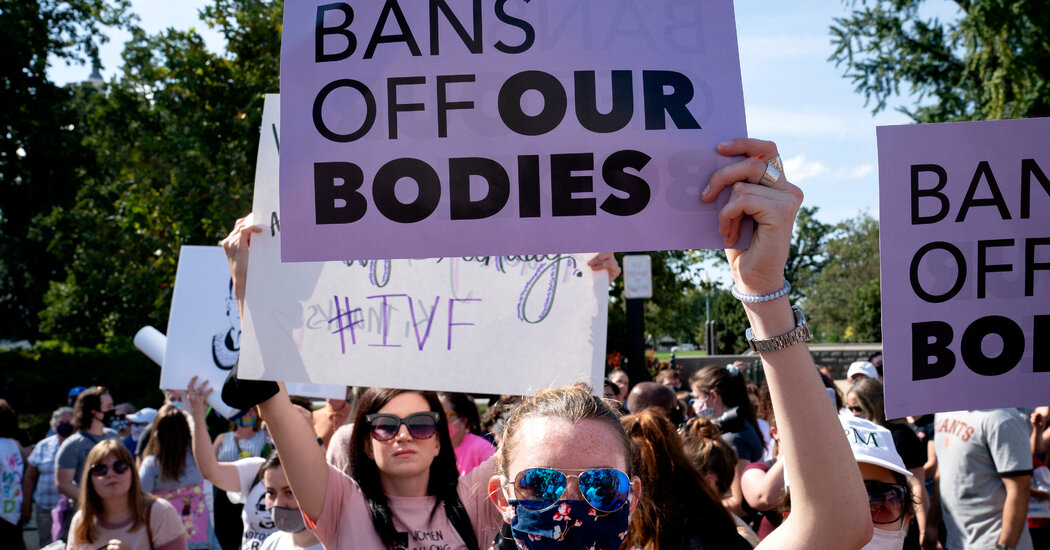
The change reversed a key piece of abortion policy set under the Trump administration.WASHINGTON — The Biden administration on Monday reversed a contentious policy set under President Donald J. Trump that barred organizations that provide abortion referrals from receiving federal family planning money.The new rule, set to take effect on Nov. 8, deals with what is known as the Title X family planning program, which is more than a half-century old and subsidizes birth control, cancer screenings and other medical care for millions of low-income patients.“Our nation’s family planning clinics play a critical role in delivering health care, and today more than ever, we are making clear that access to quality family planning care includes accurate information and referrals — based on a patient’s needs and direction,” Xavier Becerra, the health and human services secretary, said in a statement.Dr. Rachel L. Levine, the assistant secretary for health, said the new rule would “allow for the Title X service network to expand in size and capacity to provide quality family planning services to more clients.”The 2019 rule set by the Trump administration aggressively targeted organizations that offer abortions, including Planned Parenthood, and was a top priority of social conservatives during Mr. Trump’s term as president. Regulations surrounding the 1970 Title X law already banned direct funding of abortion, but organizations such as Planned Parenthood have relied on Title X money to subsidize other women’s health services, such as dispensing birth control and providing cancer screenings.Monday’s reversal comes as the debate over abortion rights has flared up again on Capitol Hill after the Supreme Court refused last month to block a Texas law prohibiting most abortions. With other states rushing to enact similar restrictions, and the court, now dominated by conservatives, preparing to take up a case that could overturn the 1973 decision in Roe v. Wade, Democrats are making the issue a centerpiece of their campaign strategy for next year’s midterm elections.

Read more →

Exposure to deadly urban heat worldwide has tripled in recent decades, says study

A new study of more than 13,000 cities worldwide has found that the number of person-days in which inhabitants are exposed to extreme combinations of heat and humidity has tripled since the 1980s. The authors say the trend, which now affects nearly a quarter of the world’s population, is the combined result of both rising temperatures and booming urban population growth. The study was published today in the Proceedings of the National Academy of Sciences.
Over recent decades, hundreds of millions have moved from rural areas to cities, which now hold more than half the world’s population. There, temperatures are generally higher than in the countryside, because of sparse vegetation and abundant concrete, asphalt and other impermeable surfaces that tend to trap and concentrate heat — the so-called urban heat island effect.
“This has broad effects,” said the study’s lead author, Cascade Tuholske, a postdoctoral researcher at Columbia University’s Earth Institute. “It increases morbidity and mortality. It impacts people’s ability to work, and results in lower economic output. It exacerbates pre-existing health conditions.”
The researchers combined infrared satellite imagery and readings from thousands of ground instruments to determine maximum daily heat and humidity readings in 13,115 cities, from 1983 to 2016. They defined extreme heat as 30 degrees Centigrade on the so-called “wet-bulb globe temperature” scale, a measurement that takes into account the multiplier effect of high humidity on human physiology. A wet-bulb reading of 30 is the rough equivalent of 106 degrees Fahrenheit on the so-called “real feel” heat index — the point at which even most healthy people find it hard to function outside for long, and the unhealthy might become very ill or even die.
To come up with a measure of person-days spent in such conditions, the researchers matched up the weather data with statistics on the cities’ populations over the same time period. The population data was provided in part by Columbia’s Center for International Earth Science Information Network, where Tuholske is based.
The analysis revealed that the number of person-days in which city dwellers were exposed went from 40 billion per year in 1983 to 119 billion in 2016 — a threefold increase. By 2016, 1.7 billion people were being subjected to such conditions on multiple days.

Read more →

Cell 'quakes' may help cells respond to the outside world

Animal cells get their structural integrity from their cytoskeleton, a shapeshifting mesh of filaments inside a cell that helps the cell organize its structure and communicate with its environment. A few years ago, scientists noticed that parts of the cytoskeleton would occasionally rearrange very rapidly, causing an earthquake-like disturbance in part of the cell. They named these disturbances cytoquakes, but no one understood how or why they happened.
New computer simulations developed by University of Maryland researchers reveal that these cytoquakes are caused by the slow buildup and sudden release of mechanical energy within the cell. The researchers believe the quakes may help the cell respond rapidly to signals from the outside environment, like chemicals produced by other cells or hormones in the bloodstream.
The research appears in the October 8, 2021, issue of the journal Proceedings of the National Academy of Sciences. “Cytoquakes represent a sudden remodeling of a very important component of the cell, but the physics behind them really wasn’t known,” said Garegin Papoian, a co-author of the study who is the Monroe Martin Professor of Chemistry and Biochemistry with a joint appointment in the Institute for Physical Science and Technology at the University of Maryland. “We think these cytoquakes must be biologically important because the cytoskeleton is involved in so many functions within the cell. Understanding the physics behind them can provide insight into how cells work.”
The cytoskeleton is like an internal scaffolding within animal cells. It is made of a network of filaments that constantly grow, shrink, attach and detach from one another. In addition to providing structure to a cell, the filaments also serve as tracks for chemical signals to flow from one part of a cell to another.
Papoian and his colleagues hypothesized that the sudden rapid restructuring that happens in cytoquakes was the result of the cytoskeleton’s physical structure being particularly sensitive to its environment. He likens it to the sensitivity of a pile of sand compared with a brick. Both may be made of the same molecules, but the brick holds its structure, even under pressure, without collapsing. The pile of sand may hold its structure for a long while but then suddenly collapses into an avalanche of sliding sand.
To test the hypothesis, the team created a computer simulation of a model cytoskeleton using a pioneering active matter simulation software that they developed called MEDYAN for “mechanochemical dynamics of active networks.” The software applies the laws of chemistry and physics to determine how the molecules within the cytoskeleton interact and behave.
The study revealed that the filaments in a cytoskeleton arrange themselves a bit like a shape-shifting tensegrity structure. In the macroscopic world, a tensegrity structure is a kind of geometric toy or sculpture made of cables and floating rods under tension and compression that appear to defy gravity. Analyzing these cellular tensegrity structures helped Papoian and his colleagues understand tension release within the cytoskeleton. They found that tension applied to one area of the structure can build and cause tension until it suddenly releases in another area. In other words, the cytoskeleton behaves more like a pile of sand than a brick.
The physical structure of the cytoskeleton allows tension to build between some of the filaments like the tension between grains of sand in a sand pile or between two tectonic plates along a fault line. When some threshold is met, the tension suddenly releases, the pile of sand collapses, an earthquake rumbles or a cytoquake occurs.
“We postulate that the cytoquake mechanism poises the cell to react quickly to external signals from its environment compared to a system without this mechanism,” Papoian said.
For example, if a cell involved in repairing injuries must rush to the site of a wound, the cytoquake mechanism may respond to chemical signals from the injury site by jolting the cell into motion. When a cell migrates through the body, the leading edge may also use this mechanism to project or collapse protrusions as the cell probes its local neighborhood.
The team’s next step will be to expand on their simulation methods to include more parts of a cell such as the nucleus. They recently simulated the outer membrane of a cell and analyzed how the cytoskeleton pushes against this membrane to form finger-like protrusions.
“This work is showing us that we can use MEDYAN to model important components of a cell,” Papoian said. “Ideally, we would like to keep going and essentially build the fundamental model of a whole cell at single molecule resolution.”
Story Source:
Materials provided by University of Maryland. Original written by Kimbra Cutlip. Note: Content may be edited for style and length.

Read more →

Comparable survival for pacemaker wearers after heart valve replacement

Researchers at Karolinska Institutet in Sweden have examined long-term outcomes in patients who received pacemaker implantations after transcatheter aortic valve replacement through their groin. The result showed no significant difference in mortality for the patients with pacemakers compared to those without. The study is published in the journal JACC: Cardiovascular Interventions.
The use of transcatheter aortic valve replacement has increased as a treatment option for severe narrowing of the aortic valve, the heart’s primary valve for regulating blood flow to the body’s main artery.
In this procedure, doctors insert a catheter from the groin through the main artery to the heart and replace the faulty aortic value with an artificial one that normalizes the blood flow. The technique is an alternative to open-chest surgery.
A potential complication of aortic valve replacement is the need for a permanent pacemaker implantation to stabilize the heart rhythm. This complication has turned out to be more common after transcatheter operations than during open-chest surgery and has in previous studies been linked to increased mortality. Despite this, there has been a lack of larger studies on the effect of pacemaker implantation after transcatheter aortic valve replacement.
In this study, the researchers compared the survival rate of all patients who underwent transcatheter aortic valve replacement through groin leg incisions at Swedish hospitals between 2008 and 2018. A total of 3,420 patients were included, of whom 481 (14 percent) received a permanent pacemaker within 30 days after surgery. The patients were on average 81 years old and followed for up to 11.8 years (2.7 years on average).
The study showed that the patients who received a pacemaker did not have a significantly higher risk of death, heart failure or endocarditis (a severe heart infection) compared to those who did not need a pacemaker.
“Our study contributes to understanding the impact of pacemaker implantation after transcatheter aortic valve replacement, which is becoming increasingly important as the use of this method expands to include younger and low-risk patients with a long life expectancy,” says Natalie Glaser, researcher at the Department of Molecular Medicine and Surgery at Karolinska Institutet and the study’s corresponding author.
More research is needed to determine if the findings are replicable in a wider patient population that includes younger and low-risk patients.
The study has been financed with the help of donations from the Swedish Heart-Lung Foundation, the Swedish Society of Medicine, Region Stockholm, the Capio Research Foundation, the Eva and Oscar Ahrén Research Foundation and the Seraphim Hospital Foundation.
Story Source:
Materials provided by Karolinska Institutet. Note: Content may be edited for style and length.

Read more →

'Think twice' campaign could reduce risk of UK opioid epidemic

A campaign that urged GPs to ‘think-twice’ before putting a patient on opioid medicines is effective in reducing opioid prescribing in primary care, according to the findings of a major study.
Although the reduction in the number of opioid prescriptions issued by individual GPs was small, when aggregated together they had a large effect.
The campaign was trialled in West Yorkshire and the researchers say over a year, it resulted in 15,000 fewer patients being given opioids — and a net saving to the NHS of £700,000. If it were replicated across the UK, it could lead to 406,000 fewer patients taking opioid medications.
This study, led by researchers from the University of Leeds and published in the journal PLoS Medicine, involved a ‘feedback’ intervention that continued for a year, where GPs were given two-monthly updates on the number of people at their practice being prescribed opioids.
Opioids are morphine-based medicines that can result in addiction, dependency and an increased risk of falls and early death.
They are often given as painkillers, but the Royal College of Anaesthetists says there is little evidence they help with long-term chronic pain — although they work for acute pain and end-of-life care.

Read more →

An Acclaimed Playwright on Masks and the Return to the Stage

Sarah Ruhl, after a long struggle living with Bell’s palsy, knows the feeling of being masked among the unmasked.In the theater, we smile. We smile because the show must go on. We smile, to quote Nat King Cole, even when our hearts are breaking. Unless we are performers in a tragedy, we put on some glitter and we sail out into the night, toward the theater district. Even writers, the least performative of the lot, smile. I didn’t want to be an opaque, judging playwright at auditions; I wanted to mirror the actors’ joy, or sadness, and partake of the strange communion between performers and their first audience. I never expected that one day, during a pandemic, we would all come to the theater masked.About a decade ago, I was nominated for a Tony Award for my play “In the Next Room, or the Vibrator Play.” I was thrilled with the news, but you wouldn’t have known it from looking at my face. A month earlier, after giving birth to twins, I’d been diagnosed with Bell’s palsy, a paralysis of the seventh cranial nerve. I quite literally could not smile. When I went to a photo shoot to celebrate the Tony nominees, a phalanx of photographers shouted at me, “Smile!” When I tried and failed, one photographer looked up from his camera at me and said, “What’s wrong with you? Can’t you smile for your Tony Award?”“No,” I said, “my face is paralyzed.” Chagrined, he quietly took my photo and the next dazzler in line on the red carpet stepped forward.FOR MOST people with Bell’s palsy, relief comes relatively quickly, the vast majority recovering their smiles in three months. But for the unlucky minority that I was in, there was a slow and uncertain path to moving facial muscles again, and for years, an unfamiliar person stared back at me in the mirror.I was, to overuse a metaphor, masked, even to myself. I felt lucky to be a playwright rather than an actor, whose canvas is his or her face. But, at least before the pandemic, I was around actors constantly, and longed to mirror their expressions in a rehearsal room. I didn’t want to be only an opaque judging playwright at auditions; I wanted to inhabit the actors’ joy, or sadness, and partake of the strange communion between performers and their first audience. I never expected that one day, during a pandemic, we would all come to the theater masked.After my diagnosis, the doctor told me I’d most likely be better in only a couple of months. The realization that one is dealing with a chronic condition rather than a temporary one is painful. I know how dislocating, and disappointing that can be. Denial is one method of grappling with an in-between state, and I used it well for many years. But looking in the mirror, unmasked, is another method, which I finally tried, in the form of writing about my experience.I resisted writing about Bell’s palsy for many years because it seemed to belong to the land of the private, the disappointing, rather than the narrative structure I was used to — which has a catharsis in the third act. But I decided that the disappointing, and the chronic, was worth investigating, partly because it’s so often invisible in a culture that prefers neat arcs.The chronic illness narrative is one that many of us would rather not wrap our minds around. Our cultural preference is, I think, for an illness narrative that offers a complete return to health in the last chapter — an apotheosis — the chronic condition banished to the shadows. But there are so many illnesses that offer an incomplete recovery, and give us, instead, a messy in-between state of being to contend with, whether we’re talking about paralysis, pandemics, or even social upheavals. A neat resolution, a neat return to the old person, the old status quo, is often not possible. In certain cases, a return to what came before is not even desirable.AS WE COME BACK to the theater with our masks on, I find myself thinking about covered-up smiles. When I went to “Pass Over,” my first Broadway show after 18 months of longing, the performers were unmasked in every sense of the word. They revealed themselves with all the bravery demanded by the beautiful and honest language of Antoinette Nwandu’s extraordinary play. In a sharp reversal of Greek antiquity, the audience was masked and the performers were not.Greek masks in ancient theater were both practical and ritualistic; they allowed performers to change roles and genders, and also to let an immortal howl out of a face that became more than mortal with artifice. From African masks in theater and dance, to Tibetan masks in ceremonial traditions, to commedia dell’arte masks in 15th-century Italy, masks were thought to unleash an almost supernatural power in the actor. But masked theater in the West is now rare, and the particular genius of most New York actors is they can make us believe that they are revealing themselves fully while they are in fact masked by a role. So, two weeks ago, we in the audience sat in actual masks, in reverent silence, seeing the actors’ naked faces once again, feeling the incredible warmth of communal theater.Finally being together again in an audience felt miraculous, and also — if I am being completely honest — a little strange, and unfamiliar. There was a time many of us thought we’d hunker down for a couple months, perhaps learn a new hobby or two, and come back neatly to doing what we’d been doing before. In my case, that was writing plays and being in a rehearsal room. I know I’m not the only one in the theater community who feels oddly dislocated now; the quarantine itself was awful but had a glacial clarity about it; at least one knew what to do — one stayed put. Now that theater, dance and music (our secular New York City worship rituals) are back, there is celebration, and, I find, a sense of floating oddly — in a landscape that should feel like home.If I thought there would be a knife-edged clarity to the return to the theater, as though I could walk in the door of my childhood home and pick up right where I left off, the warm mug still on the table where I left it — I was mistaken. The liquid in the mug needs to be warmed. The mirrors need to be dusted. Can we still recognize our faces in those same mirrors we’ve been accustomed to using, to confirm our identities in the eyes of the people we trust and work with?I SUSPECT that, behind our masks right now, some of us don’t even feel ready to smile yet. How to return to life after a long illness as an individual, or as a theater community, or as a body politic, especially when there is not a clear return to health? And how to acknowledge the losses, the transformations, the seismic gaps?When I ran into colleagues at the theater recently, most of whom I hadn’t seen in 18 months, all of us masked, partially revealed, the simple question, “How are you?” hovered with new weight. I didn’t know who, in the last year and a half, had had a marriage break up; or a teenager going through a mental health crisis; or lost a parent, an aunt, a cousin, a spouse; who was suffering from long Covid; who might not be able to afford paying the rent. So to ask “How are you?” no longer felt like small talk. We relied on our eyes above our masks to make connections. And then the theater darkened, the curtain went up, and we reveled in the unmasked actors giving us their full-throated artistry. If actors have always been avatars for what we cannot express, they seemed even more so now.I think we all want to come back into our old rehearsal rooms, studios, and offices with confidence and gleaming smiles; but for some of us, right now, a half-smile is a more accurate expression of our emotional states. We are learning to be a work in progress together again. Unfinished, masked, and hopeful. As we slowly take our masks off in the coming months, let us be tender with one another. Let us be patient as we relearn the beautiful, and once automatic, act of smiling face to face.Sarah Ruhl is a playwright, essayist and poet living in Brooklyn. Her new book is “Smile: The Story of a Face,” published by Simon & Schuster.

Read more →