Onset of Allergies including asthma and hay fever not directly causally linked to mental health traits

Allergic diseases such as asthma, atopic dermatitis and hay fever do not cause the onset of mental health conditions or vice versa, according to the findings of a new University of Bristol-led study published today (6 October) in the journal Clinical and Experimental Allergy.
While previous studies have reported an observational relationship between mental health and common allergic diseases, until now, causal relationships had not yet been identified.
Researchers from Bristol Medical School: Population Health Sciences (PHS) and School of Psychological Science wanted to find out whether allergic diseases actually cause mental health traits including anxiety, depression, bipolar disorder and schizophrenia or vice-versa.
First, the team of researchers sought to isolate the effects of these allergic diseases by applying a scientific technique called Mendelian Randomisation, which allowed them to identify genetic variants linked to these allergic diseases and then investigated how these variants were causally related to the presence of mental health conditions based on a sample of 12,000-344,901 individuals.
Although researchers identified observational associations between allergic disease and mental health traits, these were not replicated in the team’s causal analysis.  Little evidence of a causal relationship between the onset of allergic disease and mental health was found suggesting that the observational associations found were due to confounding or other forms of bias.
The authors conclude that intervening on the initial presentation of allergic disease is unlikely to improve mental health outcomes. Likewise, preventing the onset of mental health traits will unlikely reduce the risk of allergic disease. However, further research is required to investigate whether intervening on the progression of allergic disease after onset has any causal impact on mental health.
Dr Ashley Budu-Aggrey, Senior Research Associate at Bristol Medical School: PHS and the study’s lead author said: “Common mental health disorders such as anxiety and depression are some of the largest contributors to the global burden of disease and the prevalence of these and allergic disease has been increasing for some time. Disentangling the nature of the relationship between allergic disease and mental health helps answer an important health question and suggests that the onset of allergic disease does not cause the onset of mental health traits or vice versa.
“This however does not rule out a potential causal effect upon the progression of disease which is yet to be investigated and could help uncover novel treatment strategies for allergic disease or mental health traits.”
Senior author Dr Hannah Sallis, Senior Research Associate in Bristol’s School of Psychological Science added: “The research used a combination of approaches and data from several studies. This helps to strengthen our confidence in the findings. Establishing whether allergic disease causes mental health problems, or vice versa, is important to ensure that resources and treatment strategies are targeted appropriately.”
The study was funded through grants from the Medical Research Council (MRC), European Research Council (ERC), National Institute for Health Research Bristol Biomedical Research Centre (NIHR Bristol BRC), Norwegian Research Council, British Skin Foundation and the Academy of Medical Sciences Springboard Award, which is supported by the Wellcome Trust, Department for Business, Energy and Industrial Strategy, Global Challenges Research Fund and the British Heart Foundation.
Story Source:
Materials provided by University of Bristol. Note: Content may be edited for style and length.

Read more →

Study reveals why some people get Covid toe condition

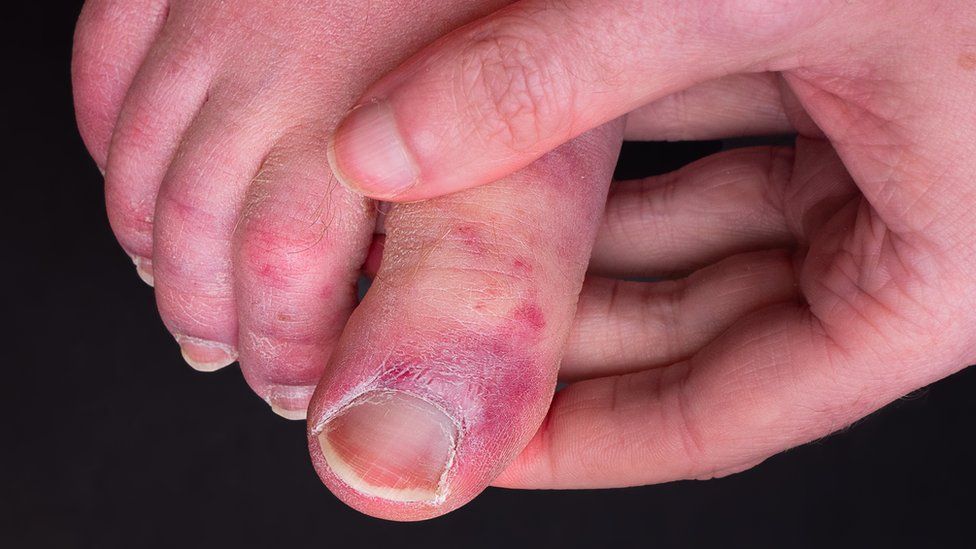
SharecloseShare pageCopy linkAbout sharingImage source, Chris Curry/GettyScientists believe they can explain why some people who catch Covid develop chilblain-like lesions on their toes and even fingers. Covid toe appears to be a side effect of the body switching into attack mode to fight off the virus. The researchers say they have pinpointed the parts of the immune system that appear to be involved. The findings, in the British Journal of Dermatology, may help with treatments to ease the symptoms. What is Covid toe?It can happen at any age, but affects children and teenagers more commonly.For some it is painless, but the rash can be extremely sore and itchy, with tender blisters and swelling.Sofia, who is 13 and from Scotland, was barely able to walk or wear shoes when she developed Covid toe earlier this year. Over the summer, she told BBC Scotland’s The Nine how she relied on a wheelchair for longer walks. Covid toes left me unable to wear shoesCovid toe and other rashes puzzle doctorsThe affected skin – usually the toes, but sometimes the fingers – can look red or purple. Some people develop painful raised bumps or areas of rough skin. There can also be pus. Some have it for months, others for weeks. Often, they will have none of the classic Covid symptoms, such as the persistent cough, fever and loss or change in smell or taste. Why does it happen?These latest study findings, based on blood and skin tests, suggest two parts of the immune system may be at play.Both involve mechanisms the body uses to fight coronavirus. One is an antiviral protein called type 1 interferon, and the other is a type of antibody that mistakenly attacks the person’s own cells and tissues, not just the invading virus. Cells lining small blood vessels supplying the affected areas are also involved, say the investigators from the University of Paris, France.The researchers studied 50 people with suspected Covid toe in the spring of 2020, and 13 others with similar chilblains lesions that were not linked to Covid infections, because they occurred long before the pandemic began. They hope the finds will help patients and doctors better understand the condition.UK podiatrist Dr Ivan Bristow said, for most – like the regular chilblains typically seen during cold spells and in people who have problems with circulation – the lesions usually go away on their own. But some may need treatment with creams and other drugs.”The confirmation of the cause will help to develop new treatments to manage it more effectively,” he said. Dr Veronique Bataille, a consultant dermatologist and spokeswoman for the British Skin Foundation, said Covid toe was seen very frequently during the early phase of the pandemic, but has been less common in the current Delta variant wave.That might be down to more people being vaccinated or having some protection against Covid from past infections. “Presentations after vaccination are much rarer,” she said.Covid-related skin problems can appear quite a while after the acute infection and in people who have no other symptoms, so the link with the virus is sometimes not made, she said. The British Association of Dermatologists has a list of skin conditions that might be linked to Covid.

Read more →

Indian Health Service ‘Willfully Ignored’ Sexual Abuse by Doctor, Report Finds

The independent inquiry, kept private until now, says agency leaders feared that addressing accusations of misconduct by a pediatrician would be ‘awkward.’WASHINGTON — An independent report commissioned by the Indian Health Service found that officials at the federal agency silenced and punished whistle-blowers in an effort to protect a doctor who sexually abused boys on several Native American reservations for decades.At the same time, the report, written early last year but kept private until now, found that members of I.H.S. management “willfully ignored or actively suppressed any efforts to address the dangers themselves.”The 161-page report by Integritas Creative Solutions, a consulting company, was obtained through a Freedom of Information Act lawsuit brought against the I.H.S. by The New York Times and later joined by The Wall Street Journal. It concludes that I.H.S. leaders went out of their way to ignore the allegations against Stanley Patrick Weber, the former physician, because addressing them would be “awkward, arduous, inconvenient, messy and embarrassing.”The report’s release comes after a federal appeals court ruled last week that the I.H.S. had to release the independent assessment on how Mr. Weber, who worked as a pediatrician for the agency, sexually preyed on Native American boys for decades. The decision affirmed a lower-court ruling in The Times’s lawsuit seeking to have the report released to the public.Mr. Weber is currently serving multiple life sentences after federal investigations in both South Dakota and Montana. He was convicted in September 2019 of committing sex crimes against boys as young as 9 between 1994 and 2011 at his home in Pine Ridge, S.D., and in 2018, Mr. Weber was convicted of abusing young boys in Montana.The report recommends that the I.H.S. put in place whistle-blower protection coordinators at its 12 regional area offices and possibly at its 170 local administrative offices. It also calls for the agency to expand its abuse policies to address victims of all ages, not only those who are children, and to create an internal system that would track allegations of wrongdoing as well as all information learned during abuse investigations.Jennifer Buschick, a spokeswoman for the I.H.S., said in a statement that the report shows that past policies and procedures for handling sexual abuse allegations made by patients led to decades of failures.“The I.H.S. acknowledges the trauma suffered by the victims of sexual abuse within our agency is unacceptable,” the statement says. “These actions are reprehensible, and we sincerely regret the harm caused to those involved. We will do all we can to improve and sustain the culture of care throughout the I.H.S. The agency is committed to working with tribal and urban Indian organization leaders across the nation to ensure we can protect the health and well-being of every child.”Ms. Buschick said the agency had started to make changes. This includes the creation of a 24-hour hotline to report child or sexual abuse, training for all I.H.S. employees and contractors in handling reports of suspected child or sexual abuse, and putting in place stronger patient safety protocols.Based in Rockville, Md., the I.H.S. was created to carry out the government’s treaty obligation to provide health care services to eligible American Indians and Alaska Natives. The tribes agreed to exchange land and natural resources for health care and other services from the federal government. But the agency has long been plagued by insufficient funding and shortages of supplies, a lack of doctors and nurses, too few hospital beds, aging facilities, and mismanagement.The blistering report included criticisms that serious allegations were badly documented and that records were poorly preserved by I.H.S. officials. The report also found that there were never any credible attempts by I.H.S. managers to investigate complaints brought by whistle-blowers.The report states that management at I.H.S. facilities in Browning and Billings, Mont., and Pine Ridge and Aberdeen, S.D., had access to plenty of evidence, “some presented to them and some discoverable with the most modest amount of sincere inquiry,” to justify removing Mr. Weber.“In a very real sense, every victim of Weber’s abuse at Pine Ridge was also a victim of the failures of I.H.S. management,” the report says.The Blackfeet Nation in Montana was one of the tribal communities affected by Mr. Weber’s abuse. Chairman Timothy Davis said that in light of the report, the community is demanding an apology from the I.H.S. and more accountability for those who covered up the abuse.“To allow this pediatrician to do this to our children for all these years is unforgivable and atrocious,” Mr. Davis said. “This guy was allowed to run rampant against our children for all those years, and was it was covered up by the administration of the Indian Health Service. They have to be held accountable for their grave misconduct.”The agency awarded a $618,000 contract to Integritas Creative Solutions in May 2019 to investigate its handling of sexual abuse claims against Mr. Weber. It did so after a Wall Street Journal article detailed Mr. Weber’s crimes and the agency’s failure to stop them.The I.H.S., which has 15,170 employees, most of whom work in its hospitals and clinics, has lacked consistent leadership since the Obama administration. Rear Adm. Michael D. Weahkee, a member of the Zuni Tribe, served on an interim basis from 2017 until he was confirmed by the Senate in April 2020.He resigned at the start of the Biden administration. Elizabeth A. Fowler, a member of the Comanche Nation who is descended from the Eastern Band of Cherokee Indians, now serves as the agency’s acting director.

Read more →

Do I Still Need a Pulse Oximeter at Home to Monitor Covid-19?

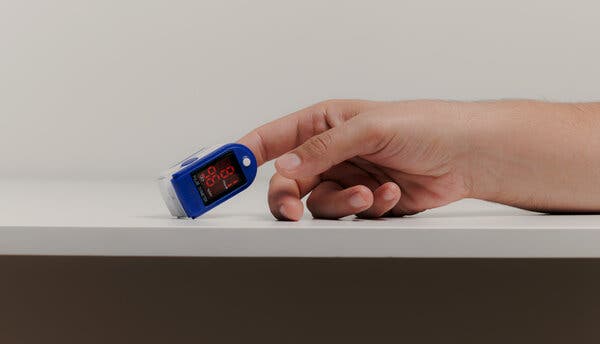
When my daughter returned to school this fall, I sent a care package that was perfect for a college student living through a pandemic. It included cookies, a coffee mug — and a pulse oximeter.A pulse oximeter is a small device that clips on your finger and measures your blood oxygen levels. Even though my daughter and her friends are all vaccinated against Covid-19, I wanted her to have the device handy just in case she got a breakthrough infection.Many people first learned about a pulse oximeter in the early days of the pandemic, after doctors warned that some patients with Covid-19 develop a form of oxygen deprivation called “silent hypoxia,” which occurs when blood oxygen levels drop so slowly that a patient doesn’t notice anything is wrong. Often these patients are so ill by the time they get to the hospital that they need to be put on a ventilator.New research from South Africa shows that using a pulse oximeter to check oxygen levels after a Covid diagnosis really does save lives. For the study, 8,115 high-risk patients were given a pulse oximeter to use at home after Covid-19 was diagnosed. The study focused on the highest-risk patients, including older people, those who were pregnant or those with chronic illnesses like heart disease, hypertension or diabetes.After a Covid diagnosis, the patients were given a pulse oximeter and received a follow-up call to make sure they were using it correctly. They were asked to record their oxygen saturation and heart rate twice a day, and instructed to call a doctor if the reading started to drop below 95 percent.If the reading fell below 90 percent, they were instructed to go to the emergency room. And all the patients were told to seek emergency care if they had difficulty breathing, regardless of the number on the device.The study group was then compared with about 30,000 patients in the general population who were seen by doctors across the country between March and October of 2020. During the study period, 544 people (out of 38,660 patients) died from Covid-19, including 49 in the study group.But the risk of dying was 52 percent lower among the patients who had been instructed to monitor their oxygen at home. Based on the overall mortality rate, it was expected that 95 people in the study group would have died. But using a pulse oximeter appears to have saved the lives of 46 people.“I think it’s important to know that a pulse oximeter makes a difference,” said Shirley Collie, an author of the new study and chief health analytics actuary at Discovery Health, a large managed care administrator in South Africa. “You’re monitoring your oxygen because the timing of when you get to the hospital makes a huge difference on your clinical outcome.”The magnitude of the benefit startled even some of the staunchest supporters of home oxygen monitoring. Dr. Richard Levitan, an emergency room doctor who sounded the alarm about silent hypoxia in a guest essay for The Times, called the findings “astounding.”“It’s exceedingly rare in medicine to show such a huge difference in treatment, particularly with such a complicated disease,” said Dr. Levitan, who practices at Littleton Regional Healthcare in New Hampshire. “All of this happened with different management, in different hospitals, while the pandemic was unfolding. To have a 50 percent mortality difference is phenomenal. We almost never see a benefit as large as that.”Aileen Son for The New York TimesThe researchers said the difference in mortality between the two groups appeared to be explained by the fact that people monitoring their oxygen levels at home sought medical care sooner in the course of their illness. Among the patients who went to the hospital, those who had used a pulse oximeter at home had lower levels of inflammation, as measured by a C-reactive protein (CRP) test.In addition to helping patients know when to seek medical care, a pulse oximeter can lower anxiety after a Covid-19 diagnosis. Ms. Collie said she experienced the benefit firsthand after experiencing a breakthrough infection this summer, despite being fully vaccinated with the Johnson & Johnson vaccine. She had a cough and tightness in her chest and regularly monitored her oxygen levels at home. “It does give a lot of comfort in terms of checking where you’re at,” she said. “This monitoring can modify your risk of a really bad outcome. I think it’s hugely empowering.”To use a pulse oximeter, press the device open as you would press a clip or clothespin, and place your finger snugly inside. The device beams different wavelengths of light through your finger. It’s targeting hemoglobin, a protein molecule in your blood that carries oxygen. Your pulse oximeter will give you a numerical reading — a percentage that indicates the level of oxygen saturation in your blood. Within seconds, it lights up with numbers indicating your blood oxygen level and heart rate.Most healthy people will get an oxygen reading around 95 to 99 percent. Some people with existing health conditions may have a lower normal reading. In general, doctors say you should seek medical advice if the number drops rapidly or falls below 94.But the accuracy of the device can vary, particularly in patients with dark skin. One study found that the result wasn’t accurate in one in 10 Black patients. A person with dark skin can still use the device, but doctors say it’s important to pay attention to any downward trend in oxygen readings, rather than fixating on a particular number. If you’re sick at home with Covid-19 and your normal reading drops by four points or more, that’s a good reason to call your doctor.The South Africa study was conducted before vaccines were available, and vaccinated people have a far lower risk of serious illness or being hospitalized for Covid-19. But some vaccinated people, particularly those in high-risk groups, can still develop severe illness. Dr. Levitan said that even if you are vaccinated and at low risk of serious illness, you should use a pulse oximeter after a Covid-19 diagnosis.“Your odds of getting seriously ill are low, but I’ve hospitalized patients with Covid pneumonia who are vaccinated,” Dr. Levitan said. “Across all of medicine, with earlier treatment people do better. If you come in early and spend three to five days in the hospital, that’s very different than coming in late and landing in the I.C.U.”

Read more →

Iron deficiency in middle age is linked with higher risk of developing heart disease

Approximately 10% of new coronary heart disease cases occurring within a decade of middle age could be avoided by preventing iron deficiency, suggests a study published today in ESC Heart Failure, a journal of the European Society of Cardiology (ESC).
“This was an observational study and we cannot conclude that iron deficiency causes heart disease,” said study author Dr. Benedikt Schrage of the University Heart and Vasculature Centre Hamburg, Germany. “However, evidence is growing that there is a link and these findings provide the basis for further research to confirm the results.”
Previous studies have shown that in patients with cardiovascular diseases such as heart failure, iron deficiency was linked to worse outcomes including hospitalisations and death. Treatment with intravenous iron improved symptoms, functional capacity, and quality of life in patients with heart failure and iron deficiency enrolled in the FAIR-HF trial.  Based on these results, the FAIR-HF 2 trial is investigating the impact of intravenous iron supplementation on the risk of death in patients with heart failure.
The current study aimed to examine whether the association between iron deficiency and outcomes was also observed in the general population.
The study included 12,164 individuals from three European population-based cohorts. The median age was 59 years and 55% were women. During the baseline study visit, cardiovascular risk factors and comorbidities such as smoking, obesity, diabetes and cholesterol were assessed via a thorough clinical assessment including blood samples.
Participants were classified as iron deficient or not according to two definitions: 1) absolute iron deficiency, which only includes stored iron (ferritin); and 2) functional iron deficiency, which includes iron in storage (ferritin) and iron in circulation for use by the body (transferrin).

Read more →

Francis Collins, Who Guided N.I.H. Through Covid-19 Crisis, Is Exiting

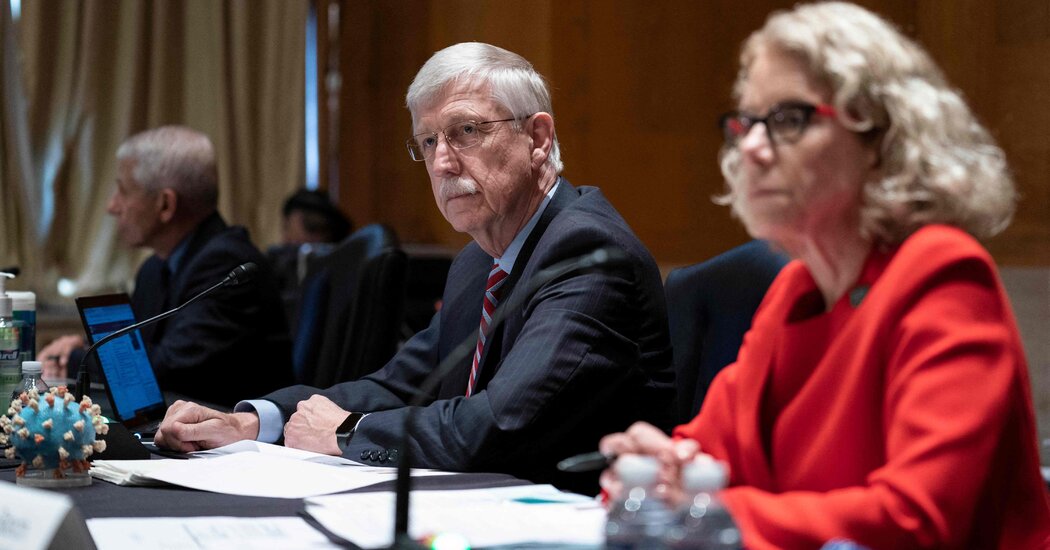
The agency’s director under three presidents said he was planning to shift his focus back to the lab, and that he hoped his replacement would be a woman.WASHINGTON — Dr. Francis S. Collins, the director of the National Institutes of Health, holed up in an Airbnb in the countryside in May to ponder leaving the job he had held for more than a decade, over three presidencies.“I spent a long weekend thinking about this and mapping out timetables and pros and cons,” he said. He prayed over it.On Tuesday he announced his decision: He would step down by the end of the year.Dr. Collins’s replacement, once nominated by President Biden, will have to be confirmed in an evenly divided Senate. A division of the Department of Health and Human Services, the N.I.H. describes itself as the largest biomedical research agency in the world. In a statement on Tuesday, Mr. Biden called Dr. Collins “one of the most important scientists of our time.”“After I was elected president, Dr. Collins was one of the first people I asked to stay in his role with the nation facing one of the worst public health crises in our history,” Mr. Biden said. “Millions of people will never know Dr. Collins saved their lives. Countless researchers will aspire to follow in his footsteps. And I will miss the counsel, expertise and good humor of a brilliant mind and dear friend.”Dr. Collins, 71, was appointed in 2009 by President Barack Obama after more than a decade leading the National Human Genome Research Institute, which is part of the N.I.H. There, he led the international Human Genome Project, which mapped the genes in human DNA. The N.I.H. said on Tuesday that Dr. Collins would continue to lead his laboratory at the genome institute, which is studying the causes and prevention of Type 2 diabetes and new therapies for Hutchinson-Gilford progeria syndrome, a form of premature aging.Among the N.I.H.’s accomplishments under Dr. Collins was its support for research into mRNA vaccines, said Dr. Anthony S. Fauci, the director of the National Institute of Allergy and Infectious Diseases at the N.I.H. Scientists at the health agency then made crucial discoveries that enabled the development of the Moderna and Pfizer-BioNTech vaccines.In its announcement, the N.I.H. noted that Dr. Collins had increased its substantial budget by more than a third, to $41.3 billion in 2021 from $30 billion in 2009 — the result, his admirers say, of a steady campaign to win over Congress.“I heard it said that he is the best politician in Washington, and I think it is true,” said Mary-Claire King, professor of medicine and genome sciences at the University of Washington. “He really knows his subject and reads people well. He has kept biomedical research and the N.I.H. in a positive light.”A geneticist and physician by training, Dr. Collins oversees 18,000 federal employees and a sprawling research program. His agency awarded more than 50,000 grants to more than 300,000 researchers during the 2020 fiscal year alone. Its campus tells the story of its reach, spread across 27 institutes and centers in 75 buildings in Bethesda, Md.During the pandemic, Dr. Collins helped found a project involving partnerships and collaborations with pharmaceutical and biotech companies that enabled numerous trials of antivirals and other treatments for Covid-19 to run simultaneously.Some scientists and public health experts have criticized the federal government’s efforts at studying Covid-19 treatments, saying some that ultimately did not show strong results — such as convalescent plasma and hydroxychloroquine — were prioritized over more rigorous research.Dr. H. Clifford Lane, the clinical director at the allergy and infectious diseases branch of the N.I.H., said that Dr. Collins operated deftly amid a chaotic research environment, quickly mobilizing N.I.H. resources to study more promising treatments, including remdesivir and monoclonal antibodies.Dr. Fauci said that Dr. Collins made a critical pivot from his expertise to the broader pandemic response. It was, he said, “really extraordinary to get someone who is fundamentally a geneticist, whose diseases involved cystic fibrosis and progeria, who turns out to be a valued colleague in the arena of infectious diseases, pandemics, public health.”Dr. Collins almost stepped down early last year, Dr. Fauci said. One evening, he visited Dr. Fauci in his office and admitted that he was considering leaving for personal reasons. “I begged him not to step down,” Dr. Fauci recounted, “because, I said, ‘We are in the Trump administration. If you step down, we have no idea who’s going to get appointed as director. So we need you to stay on with us. Don’t leave now.’ And he understood that.”Dr. Collins received a Ph.D. in physical chemistry from Yale in 1974 but decided molecular biology was more exciting. He spent years training anew. He also wanted to be a doctor, and earned his M.D. at the University of North Carolina.He was not brought up with religion, but when a patient asked Dr. Collins if he believed in God, he realized, he has said, that he did not know. He began reading widely and was persuaded by the writer and theologian C.S. Lewis, who said faith could be a rational choice. At 27, he became a nondenominational evangelical Christian.As director of the N.I.H., Dr. Collins said, he had promised that his faith would not affect his choice of projects for the institutes.“It does guide me a bit in terms of how I approach a challenge in bioethics,” he said during an interview on Tuesday. “But I find I usually come down in the same place on an ethical dilemma as people who are agnostics or even atheists.”“I admit I prayed about those vaccines,” he added.Dr. Collins has used his Christianity as an entree into conservative evangelical communities, appearing on Christian radio and speaking to evangelical groups to make the case for getting inoculated. But he admitted on Tuesday that he had not achieved as much progress as he had hoped.“That’s a heartbreak,” he said. “We are supposed to be people of truth.”He said in the interview that one of his chief regrets as N.I.H. director was the persistence of vaccine hesitancy during the pandemic. “Culture war has had terrible consequences,” he said. “Was there something else we should have done there in terms of anticipating that? Maybe investing more in the behavioral research side of this, to try and understand the basis of those resistances?”During the Biden administration, Dr. Collins has stood behind the federal government’s increasingly assertive vaccine policy, endorsing a broad booster shot plan and Mr. Biden’s decision to require federal workers to be vaccinated against the coronavirus.Dr. Collins has struggled with some persistent problems at the N.I.H., including a lack of reliable funding for young scientists, which forced many to abandon research careers. Although he points to progress, the issue still rankles.“People don’t look at careers in science as viable anymore,” said Michael B. Eisen, a professor of genetics, genomics and development at the University of California, Berkeley. “An incredible fraction of our best students are going into the private sector. You can’t count on the N.I.H.”The N.I.H. has also been criticized for not doling out more grants to people of color.On Tuesday, Dr. Collins said he had doubled the number of women who are institute directors at the N.I.H. He also said that he hoped his replacement would be a woman.Asked during the interview what had surprised him most during his time leading the N.I.H., he pointed to “the intensity, the unremitting intensity.”“Every Friday afternoon at 4 was a crisis,” he said, adding that he was working 100 hours a week, leaving him less time to play guitar or ride his motorcycle.“I do have calluses from playing the guitar,” he said, “but not as deep.”

Read more →

N.I.H. Director to Step Down by the End of 2021

The agency’s director under three presidents said he was planning to shift his focus back to the lab, and that he hoped his replacement would be a woman.WASHINGTON — Dr. Francis S. Collins, the director of the National Institutes of Health, holed up in an Airbnb in the countryside in May to ponder leaving the job he had held for more than a decade, over three presidencies.“I spent a long weekend thinking about this and mapping out timetables and pros and cons,” he said. He prayed over it.On Tuesday he announced his decision: He would step down by the end of the year.Dr. Collins’s replacement, once nominated by President Biden, will have to be confirmed in an evenly divided Senate. A division of the Department of Health and Human Services, the N.I.H. describes itself as the largest biomedical research agency in the world. In a statement on Tuesday, Mr. Biden called Dr. Collins “one of the most important scientists of our time.”“After I was elected president, Dr. Collins was one of the first people I asked to stay in his role with the nation facing one of the worst public health crises in our history,” Mr. Biden said. “Millions of people will never know Dr. Collins saved their lives. Countless researchers will aspire to follow in his footsteps. And I will miss the counsel, expertise and good humor of a brilliant mind and dear friend.”Dr. Collins, 71, was appointed in 2009 by President Barack Obama after more than a decade leading the National Human Genome Research Institute, which is part of the N.I.H. There, he led the international Human Genome Project, which mapped the genes in human DNA. The N.I.H. said on Tuesday that Dr. Collins would continue to lead his laboratory at the genome institute, which is studying the causes and prevention of Type 2 diabetes and new therapies for Hutchinson-Gilford progeria syndrome, a form of premature aging.Among the N.I.H.’s accomplishments under Dr. Collins was its support for research into mRNA vaccines, said Dr. Anthony S. Fauci, the director of the National Institute of Allergy and Infectious Diseases at the N.I.H. Scientists at the health agency then made crucial discoveries that enabled the development of the Moderna and Pfizer-BioNTech vaccines.In its announcement, the N.I.H. noted that Dr. Collins had increased its substantial budget by more than a third, to $41.3 billion in 2021 from $30 billion in 2009 — the result, his admirers say, of a steady campaign to win over Congress.“I heard it said that he is the best politician in Washington, and I think it is true,” said Mary-Claire King, professor of medicine and genome sciences at the University of Washington. “He really knows his subject and reads people well. He has kept biomedical research and the N.I.H. in a positive light.”A geneticist and physician by training, Dr. Collins oversees 18,000 federal employees and a sprawling research program. His agency awarded more than 50,000 grants to more than 300,000 researchers during the 2020 fiscal year alone. Its campus tells the story of its reach, spread across 27 institutes and centers in 75 buildings in Bethesda, Md.During the pandemic, Dr. Collins helped found a project involving partnerships and collaborations with pharmaceutical and biotech companies that enabled numerous trials of antivirals and other treatments for Covid-19 to run simultaneously.Some scientists and public health experts have criticized the federal government’s efforts at studying Covid-19 treatments, saying some that ultimately did not show strong results — such as convalescent plasma and hydroxychloroquine — were prioritized over more rigorous research.Dr. H. Clifford Lane, the clinical director at the allergy and infectious diseases branch of the N.I.H., said that Dr. Collins operated deftly amid a chaotic research environment, quickly mobilizing N.I.H. resources to study more promising treatments, including remdesivir and monoclonal antibodies.Dr. Fauci said that Dr. Collins made a critical pivot from his expertise to the broader pandemic response. It was, he said, “really extraordinary to get someone who is fundamentally a geneticist, whose diseases involved cystic fibrosis and progeria, who turns out to be a valued colleague in the arena of infectious diseases, pandemics, public health.”Dr. Collins almost stepped down early last year, Dr. Fauci said. One evening, he visited Dr. Fauci in his office and admitted that he was considering leaving for personal reasons. “I begged him not to step down,” Dr. Fauci recounted, “because, I said, ‘We are in the Trump administration. If you step down, we have no idea who’s going to get appointed as director. So we need you to stay on with us. Don’t leave now.’ And he understood that.”Dr. Collins received a Ph.D. in physical chemistry from Yale in 1974 but decided molecular biology was more exciting. He spent years training anew. He also wanted to be a doctor, and earned his M.D. at the University of North Carolina.He was not brought up with religion, but when a patient asked Dr. Collins if he believed in God, he realized, he has said, that he did not know. He began reading widely and was persuaded by the writer and theologian C.S. Lewis, who said faith could be a rational choice. At 27, he became a nondenominational evangelical Christian.As director of the N.I.H., Dr. Collins said, he had promised that his faith would not affect his choice of projects for the institutes.“It does guide me a bit in terms of how I approach a challenge in bioethics,” he said during an interview on Tuesday. “But I find I usually come down in the same place on an ethical dilemma as people who are agnostics or even atheists.”“I admit I prayed about those vaccines,” he added.Dr. Collins has used his Christianity as an entree into conservative evangelical communities, appearing on Christian radio and speaking to evangelical groups to make the case for getting inoculated. But he admitted on Tuesday that he had not achieved as much progress as he had hoped.“That’s a heartbreak,” he said. “We are supposed to be people of truth.”He said in the interview that one of his chief regrets as N.I.H. director was the persistence of vaccine hesitancy during the pandemic. “Culture war has had terrible consequences,” he said. “Was there something else we should have done there in terms of anticipating that? Maybe investing more in the behavioral research side of this, to try and understand the basis of those resistances?”During the Biden administration, Dr. Collins has stood behind the federal government’s increasingly assertive vaccine policy, endorsing a broad booster shot plan and Mr. Biden’s decision to require federal workers to be vaccinated against the coronavirus.Dr. Collins has struggled with some persistent problems at the N.I.H., including a lack of reliable funding for young scientists, which forced many to abandon research careers. Although he points to progress, the issue still rankles.“People don’t look at careers in science as viable anymore,” said Michael B. Eisen, a professor of genetics, genomics and development at the University of California, Berkeley. “An incredible fraction of our best students are going into the private sector. You can’t count on the N.I.H.”The N.I.H. has also been criticized for not doling out more grants to people of color.On Tuesday, Dr. Collins said he had doubled the number of women who are institute directors at the N.I.H. He also said that he hoped his replacement would be a woman.Asked during the interview what had surprised him most during his time leading the N.I.H., he pointed to “the intensity, the unremitting intensity.”“Every Friday afternoon at 4 was a crisis,” he said, adding that he was working 100 hours a week, leaving him less time to play guitar or ride his motorcycle.“I do have calluses from playing the guitar,” he said, “but not as deep.”

Read more →

New way to image whole organisms in 3D brings key skin color pigment into focus

To understand the biological underpinnings of skin and hair pigmentation and related diseases such as albinism or melanoma, scientists and doctors need quantitative, three-dimensional information about the architecture, content and location of pigment cells. Penn State College of Medicine researchers have developed a new technique that allows scientists to visualize every cell containing melanin pigment in 3D, in whole zebrafish.
Studying melanin is challenging because it blocks the light used in traditional microscopy. So the researchers turned to X-ray imaging, which can pass through optically opaque matter like melanin.
In 2019, a team led by Dr. Keith Cheng, distinguished professor of pathology, pharmacology and biochemistry and molecular biology, developed “X-ray histotomography” — a cellular form of CT imaging, as a method for investigating the 3D architecture of cells and tissues in biological samples at unprecedented resolution and clarity. Spencer Katz, an MD/PhD medical scientist training program student on Cheng’s team, has modified this micro-CT technique to specifically investigate melanin, a pigment scientists are studying in human skin color and melanoma research, in whole zebrafish.
Melanin is a brown to black pigment that gives the zebrafish its characteristic stripes and humans dark skin, hair and eyes. More than 15 years ago, Cheng and his lab discovered a key gene in the evolution of light skin color in humans by studying a particular mutant zebrafish line, golden, that has lighter stripes. This discovery demonstrated the relevance of zebrafish models for studying critical questions about human biology and disease, including albinism and melanoma.
Micro-CT, like human CT, uses a series of X-rays taken at slightly different angles to compute, or reconstruct, 3D representations of the original object. For micro-CT, the samples are smaller and the resolution developed by Cheng’s team is 2000-fold higher. Katz used silver to stain the melanin, which allowed the researchers to determine the 3D location and density of melanin from scans of whole zebrafish.
To perform the imaging, the Cheng Lab partnered with Dilworth Parkinson at the Advanced Light Source at the Lawrence Berkeley National Labs in Berkeley, California — home of one of America’s most powerful synchrotron X-ray sources, where he directs a micro-CT resource suitable for Cheng’s X-ray histotomography. The lab’s new X-ray detector system was designed to achieve resolutions unprecedented for samples the size of whole zebrafish or human biopsies. The team scanned zebrafish with both normal and altered pigmentation, including golden.
The researchers were able to visualize every cell containing melanin, called melanocytes, in the fish, and map each of their positions in 3D. Moreover, they could get quantitative measurements of their melanin content, allowing direct comparison of melanin content across normal and mutant fish for the first time. They published the results of their study in eLife.
This work laid a foundation for further research on melanin-containing cancers, or melanomas, which are typically graded by the depth of tumor cell invasion. According to Cheng, a researcher at Penn State Cancer Institute, a number of zebrafish models of melanoma exist and can be studied using the new technique. Katz and Cheng said that human melanomas can be stained with silver and imaged in the same way to more completely characterize the tumor cells and their arrangements in tumors. They predict that scientists will be able to, for example, count the number of tumor cells of different characteristics and more definitively study invasion, a central characteristic of cancer, helping doctors with prognostic and treatment decisions.
In the future, the Cheng Lab will continue to develop new staining and optical methods for expanding the applications of histotomography. This study represents a proof-of-principle for how whole-body, 3D computational analysis of organisms and tissues can be achieved using micro-CT that may allow a far more complete understanding of gene function.
Maksim Yakovlev, Daniel Vanselow, Yifu Ding, Alex Lin, Victor Canfield and Khai Chung Ang of Penn State College of Medicine also contributed to this research. The new lens system used in the study was designed and built by Yuxin Wang of Mobile Imaging Innovations Inc. The authors declared no competing interests.
This research was supported by the National Institutes of Health, the Pennsylvania Department of Health Tobacco CURE Funds, the Jake Gittlen Laboratories for Cancer Research at Penn State College of Medicine, Penn State Huck Institutes of the Life Sciences and Penn State Institute for Computational and Data Sciences.
This study utilized the College of Medicine’s zebrafish functional genomics core and represents activities of the Penn State Center for Artificial Intelligence Foundations and Scientific Applications and computational phenomics initiatives.

Read more →

Chronic pain treatment should include psychological interventions

The latest issue of Psychological Science in the Public Interest examines psychological interventions for the treatment of chronic pain, including the gap between the evidence of the effectiveness of several psychological interventions and their availability and use in treatment.
Pain is the body’s way of alerting the brain to injury and disease. Without a robust pain response, physical trauma could go unnoticed and untreated. Some people, however, experience chronic pain that lasts long after an injury has healed or has no easily identifiable cause.
Unfortunately, treating chronic pain with over-the-counter and prescription medication has its own health risks, including adverse side effects and addiction. In the latest issue of Psychological Science in the Public Interest (PSPI), a team of researchers explores how psychological interventions can be part of a comprehensive plan to manage chronic pain while reducing the need for surgeries and potentially dangerous medications.
“There are several effective nonmedical treatments for chronic pain, and psychological treatments emerge among the strongest of these,” said Mary Driscoll, a researcher at Yale University and first author on the issue’s main article. “People who engage in psychological treatments can expect to experience meaningful reductions in pain itself as well as improvements in physical functioning and emotional well-being.”
The current state of care
In many cases, the causes of chronic pain are unknown, and the use of traditional medical interventions, such as pain medication and surgery, may give little to no relief — or make the condition worse. People with chronic pain often report frustrations with health care systems and health insurance, which tend to be dismissive or unsuccessful in addressing their complaints.
Psychological treatment may reduce the need for medications, surgeries, and other invasive treatments that can be costly, ineffective, and even dangerous. And research suggests that the effects of psychological treatment can be maintained for a lifetime.
“People with pain should feel empowered to select the psychological treatment that is most appealing,” said Driscoll. “Once they do, finding a psychotherapist who can provide this care and with whom they can establish a meaningful connection will be a key factor in obtaining benefit.”
Psychological treatments
Research has shown that psychological factors can play a role in the onset, severity, and duration of chronic pain. For those reasons, several psychological interventions have been shown to be effective in treating chronic pain.
In the article, Driscoll and her colleagues describe the interventions that have been most widely studied by the pain community, including: Supportive psychotherapy, which emphasizes unconditional acceptance and empathic understanding Relaxation training, or the use of breathing, muscle relaxation, and visual imagery to counteract the body’s stress response Biofeedback, which involves monitoring patients’ physiological responses to stress and pain (e.g., increased heart rate, muscle tension) and teaching them how to down-regulate these responses Hypnosis by a trained clinician, which may induce changes in pain processing, expectations, or perception and incorporates relaxation training Cognitive-behavioral therapy, in which patients learn to reframe maladaptive thoughts about pain that cause distress; change unhelpful behaviors, such as isolation and inactivity; and develop helpful behavioral coping strategies (e.g., relaxation) Mindfulness-based interventions, which help to disentangle physical pain from emotional pain via increased awareness of the body, the breath, and activity Psychologically informed physical therapy, which integrates physical therapy and cognitive-behavioral therapyThe PSPI report also addresses topics such as integrated pain care, or the blending of medical, psychological, and social aspects of health care; the future of pain treatment; and improving the availability and integration of pain-management strategies.
Story Source:
Materials provided by Association for Psychological Science. Note: Content may be edited for style and length.

Read more →

Color-coded nutrition labels and warnings linked to more healthful purchases

A new analysis has integrated findings from 134 studies of the impact of color-coded nutrition labels and warnings found on the front of some food packaging, indicating that these labels do indeed appear to encourage more healthful purchases. Jing Song of Queen Mary University of London, UK, and colleagues present these findings in the open-access journal PLOS Medicine.
Some countries have introduced mandatory front-of-package labeling in hope of improving people’s diets and reducing the burden of diseases associated with poor diets. These labels may employ color coding to indicate nutrition, or they may warn consumers about unhealthful features of products. However, studies on the impact of such labeling have produced mixed evidence.
To help clarify the impact of front-of-package nutrition labels, Song and colleagues analyzed data from 134 peer-reviewed studies published between January 1990 and May 2021. They applied an analytical method known as network meta-analysis in order to integrate the results of the studies and evaluate the impact of four different labeling systems — two that use color-coding and two that use warnings.
This meta-analysis showed that all four labeling systems appeared to be advantageous in encouraging consumers to purchase more nutritionally beneficial products. Evaluation of specific nutritional qualities found that labeling nudged consumers towards foods and drinks with lower levels of energy, sodium, fat, and saturated fat.
The analysis also highlighted psychological mechanisms that may underlie the different strengths of different labels, due to their impact on consumers’ understanding of nutrition information and resulting changes in attitudes towards unhealthful or healthful foods. Color-coded labels appeared to be more beneficial in promoting more healthful purchases, and warning labels were more effective in discouraging unhealthy purchases.
These findings could help guide and refine policies on front-of-package labeling to improve public health. Meanwhile, future research could build on this study by addressing related concepts, such as the impact of labeling on reformulation of products by the food industry or more long-term benefits of labeling on purchasing behavior.
“This study found that color-coded labels and warning labels are all able to direct consumers towards more healthful purchase behaviour,” the researchers add. “Color-coded labels can promote the purchase of more healthful products, while warning labels discourage the purchase of less healthful products.
Story Source:
Materials provided by PLOS. Note: Content may be edited for style and length.

Read more →