Small molecules with a dual function

The human gut is a multi-species habitat that can control our health and well-being. Bacteria, viruses and microbial fungi are part of this complex microbial community and help us with our digestion and immune defense. If the intestinal flora is impaired, for example by contaminated drinking water or food infected by germs, this can result in infectious diseases. Researchers of the Cluster of Excellence “Balance of the Microverse” at Friedrich Schiller University Jena are investigating how cholera bacteria manage to disturb the intestinal balance and at the same time produce a pathogenic toxin. In the current issue of the EMBO Journal, they present a previously unknown molecular mechanism for the production of the cholera toxin.
Central to this mechanism is a small ribonucleic acid (sRNA), together with a small protein. “Small ribonucleic acids and small proteins have often been overlooked in the past, but they play an important role in the physiology of microorganisms,” explains Prof. Kai Papenfort. “The molecular mechanisms by which these small molecules function have so far been only incompletely explored,” continues Papenfort, professor of General Microbiology at the University of Jena.
Ribonucleic acid intervenes at two distinct levels in the metabolism of the cholera pathogen
In their publication, Papenfort and his team were able to show that a single RNA molecule, called VcdRP (Vibrio cholerae dual RNA and protein), intervenes at two distinct levels in the metabolism of the cholera pathogen and thus controls its harmful effects. “On the one hand, the sRNA molecule contained in VcdRP inhibits the production of the cholera toxin. On the other hand, this small ribonucleic acid also simultaneously takes on the role of a piece of genetic information and encodes the blueprint for a small regulatory protein,” says Papenfort. This protein, in turn, activates a central metabolic pathway that converts dietary carbon into energy and biosynthetic building blocks such as amino acids.
“Our work shows that the toxin production and thus the disease-causing properties of the cholera bacterium are directly linked to its metabolism,” says Papenfort. For the first time, the researchers have been able to identify a sRNA with such a dual function in cholera bacteria. Their findings provide an important basis for developing new ways of combating cholera. At the same time, the new data could be useful in biotechnological applications with microorganisms that use the same molecular mechanism as that of the dual-function RNA. With its research, the team led by Papenfort supports the Cluster’s goal of understanding fundamental mechanisms of microbial communities and developing innovative therapeutic approaches.
Story Source:
Materials provided by Friedrich-Schiller-Universitaet Jena. Original written by Ute Schönfelder. Note: Content may be edited for style and length.

Read more →

Meditation training reduces long-term stress, hair analysis shows

Mental training reduces the concentration of the stress hormone cortisol in hair. This is what scientists from the Max Planck Institute for Human Cognitive and Brain Sciences in Leipzig have found out. The amount of cortisol in hair provides information about how much a person is burdened by persistent stress. Earlier positive training effects had been shown in acutely stressful situations or on individual days — or were based on study participants’ self-reports. The current study thus provides the first objective evidence that mental training reduces physical signs of long periods of stress.
According to a study by the Techniker Krankenkasse, 23 percent of people in Germany frequently suffer from stress. This condition not only puts a strain on the well-being of those affected, but it is also linked to a number of physiological diseases, including diabetes, cardiovascular diseases and psychological disorders such as depression, one of the world’s leading causes of disease burden (Global Burden of Disease Study, 2017).
Therefore, effective methods are being sought to reduce everyday stress in the long term. One promising option is mindfulness training, in which participants train their cognitive and social skills, including attention, gratitude and compassion, through various meditation and behavioural exercises. Various studies have already shown that even healthy people feel less stressed after a typical eight-week training programme. Until now, however, it has been unclear how much the training actually contributes to reducing the constant burden of everyday stress. The problem with many previous studies on chronic stress is that the study participants were usually asked to self-assess their stress levels after the training. However, this self-reporting by means of questionnaires could have distorted the effects and made the results appear more positive than they actually were.
The reason for such a bias: The participants knew they were training their mindfulness, and a reduction in stress levels was a desired effect of this training. This awareness alone has an impact on subsequent information. “If you are asked whether you are stressed after a training session that is declared as stress-reducing, even addressing this question can distort the statements,” explains Lara Puhlmann, doctoral student at MPI CBS and first author of the underlying publication, which has now appeared in the journal Psychosomatic Medicine. Factors such as social desirability and placebo effects played a role here. Unlike pharmacological studies, for example, in which the study participants do not know whether they have actually received the active substance or not, so-called blinded studies are not possible in mental training. “The participants know that they are ingesting the ‘antidote’,” says Puhlmann. “In mindfulness research, we are therefore increasingly using more objective, i.e. physiological, methods to measure the stress-reducing effect more precisely.”
The concentration of cortisol in hair is considered a suitable measure of exposure to prolonged stress. Cortisol is a hormone that is released when we are confronted with an overwhelming challenge, for example. In that particular situation, it helps put our body on alert and mobilise energy to overcome the challenge. The longer the stress lasts, the longer an increased concentration of cortisol circulates around our body — and the more it accumulates in our hair. On average, hair grows one centimetre per month. To measure the study participants’ stress levels during the 9-month training, the researchers, in cooperation with the working group of Clemens Kirschbaum at the University of Dresden, analysed the amount of cortisol every three months in the first three centimetres of hair, starting at the scalp.
The mental training itself was developed as part of a large-scale longitudinal study on the effects of mental training, the ReSource project, led by Prof. Dr. Tania Singer, scientific director of the Social Neuroscience Research Group. This 9-month mental training programme consisted of three 3-month sessions, each designed to train a specific skill area using Western and Far Eastern mental exercises. The focus was either on the factors of attention and mindfulness, on socio-affective skills such as compassion and gratitude, or on so-called socio-cognitive skills, in particular the ability to take perspective on one’s own and others’ thoughts. Three groups of about 80 participants each completed the training modules in different order. The training lasted up to nine months, 30 minutes a day, six days a week.
Less stress, less cortisol
And it really showed: After six months of training, the amount of cortisol in the subjects’ hair had decreased significantly, on average by 25 percent. In the first three months, slight effects were seen at first, which increased over the following three months. In the last third, the concentration remained at a low level. The researchers therefore assume that only sufficiently long training leads to the desired stress-reducing effects. The effect did not seem to depend on the content of the training. It is therefore possible that several of the mental approaches studied are similarly effective in improving the way people deal with chronic everyday stress.
In an earlier study from the ReSource project with the same sample, the researchers had investigated the effects of training on dealing with acute stressful situations. In this study, the participants were placed in a stressful job interview and had to solve difficult maths problems under observation. The results showed that people who had undergone socio-cognitive or socio-affective training released up to 51 percent less cortisol under stress than those who had not been trained. In this case, they did not measure the amount of cortisol in the subjects’ hair, but instead acute cortisol surges in their saliva. Overall, the researchers conclude that training can improve the handling of acute particularly stressful social situations as well as chronic everyday stress. “We assume that different training aspects are particularly helpful for these different forms of stress,” says Veronika Engert, head of the research group “Social Stress and Family Health” at MPI CBS.
“There are many diseases worldwide, including depression, that are directly or indirectly related to long-term stress,” explains Puhlmann. “We need to work on counteracting the effects of chronic stress in a preventive way. Our study uses physiological measurements to prove that meditation-based training interventions can alleviate general stress levels even in healthy individuals.”

Read more →

Higher levels of education and higher income mean better health for older adults

A new cross-national study comparing multimorbidity disease cluster patterns, prevalence and health risk factors across Ireland, England, The United States and Canada, reveal important findings that could have health implications for public health policy.
The study led by TILDA: the Irish Longitudinal Study on Ageing offers fresh insight to help health authorities better understand the complex nature of multimorbidity (a co-occurrence of two or more chronic diseases), and to identify and improve appropriate prevention and management strategies for treating these diseases across countries. All four countries ranked globally in the top 14 of the 2018 UN Human Development Index, allowing for suitable comparison across the range of public healthcare delivery systems of North America and Europe.
The study investigates lifetime prevalence of 10 common chronic, cardiovascular and mental health conditions among 62,111 older adults aged 52-85 years of age across the four countries, and uncovers how differences in demographics, socio-economic status and health behaviours affect the combination of diseases within and across four countries. The findings are a good news story for Ireland, who had the lowest prevalence for 6 out of 10 diseases compared to the other countries.
Multimorbidity is a term used to describe conditions that affect people living with two or more long-term or chronic diseases and is associated with poor health outcomes such as physical and functional decline, mortality, decreased quality of life and increased healthcare use and cost.
WHAT DID THE STUDY SHOW?
The study found that multimorbidity among those aged 52-85 years old was highest in the U.S. at 60.7% and lowest in Ireland at 38.6%. Five predominant multimorbidity patterns for each country were identified in the study, with researchers discovering that socio-economic disparity existed across all four countries, where those who had higher levels of education and higher income in general had better health. Elevated Body Mass Index (BMI) was also identified as a risk factor for high disease burden and multimorbidity across all countries.
KEY FINDINGS The U.S. had significantly higher prevalence of hypertension, stroke, angina, heart attacks, arthritis, cancer, lung disease and psychiatric illnesses. Despite the U.S. spending more per capita on health care than Ireland, Canada, and England, and it had the highest prevalence for 9 out of 10 common chronic, cardiovascular, and mental health conditions when compared to Ireland. Ireland had the lowest prevalence for 6 out of 10 diseases compared to the other countries. The U.S. had a higher prevalence of multimorbidity even after adjustments for age, sex, BMI, income, employment status, education, alcohol consumption and smoking history. The odds of having diabetes in the U.S. was double that of Ireland or England even after controlling for factors such as age, sex, education, income, employment status, B.M.I., smoking and alcohol consumption. Ireland had the highest prevalence of osteoporosis of all four countries. The link between health and wealth was present across all four countries but was most pronounced in the U.S., with higher income and higher education levels associated with lower disease prevalence and lower probability associated with multimorbidity clusters.As the world’s population is ageing and expanding rapidly, identifying early treatment and management of disease is a priority for healthcare policymakers and providers. While patients living with multimorbidity often have complex medical needs, this can result in challenges to health system capacity worldwide, requiring significant healthcare resources to meet cost, and provision of care. Preventing and improving how multimorbidity and age-related diseases are managed and treated is crucial to enhance development of sustainable and safe models of care.
Dr Belinda Hernandez, senior research fellow at TILDA, and lead author said:
“Chronic illnesses are the leading cause of death worldwide. These conditions rarely happen in isolation and commonly occur together which is known as multimorbidity. This is a particularly important issue for our health care service and for public health policy in ageing societies as multimorbid people tend to have more complex health care needs and poorer health outcomes such as reduced physical functioning and higher rates of mortality. The findings of this study can be used to better understand the complex nature of multimorbidity and identify appropriate prevention and management strategies for treating the unique patterns of non-communicable disease in these respective countries.”
Professor Rose Anne Kenny, Principal Investigator of TILDA and co- author said:
“The findings of this study clearly outline the health concerns that affect our ageing population and are particularly relevant for those tasked with strengthening healthcare delivery in Ireland and further afield. Having an informed understanding of disease patterns for a given country can bring about a better understanding of the complex nature of multimorbidity and disease. Furthermore, research shows that preventing the development of chronic diseases may be beneficial in delaying or preventing dementia-related disease or cognitive impairment. We know that Ireland has the second highest rate of obesity in the EU, while dementia rates are estimated to more than double in the next 25 years, to over 150,000 by 2045. This research clearly outlines why targeted health interventions and campaigns are needed to encourage healthier habits and behaviours to help prevent or delay the development of disease, while supporting better health and longevity for those who age.”
Story Source:
Materials provided by Trinity College Dublin. Note: Content may be edited for style and length.

Read more →

Screen time linked to risk of myopia in young people

A new study published in one of the world’s leading medical journals has revealed a link between screen time and higher risk and severity of myopia, or short-sightedness, in children and young adults.
The open-access research, published this week in The Lancet Digital Health, was undertaken by researchers and eye health experts from Singapore, Australia, China and the UK, including Professor Rupert Bourne from Anglia Ruskin University (ARU). The authors examined more than 3,000 studies investigating smart device exposure and myopia in children and young adults aged between 3 months old and 33 years old.
After analysing and statistically combining the available studies, the authors revealed that high levels of smart device screen time, such as looking at a mobile phone, is associated with around a 30% higher risk of myopia and, when combined with excessive computer use, that risk rose to around 80%.
The research comes as millions of children around the world have spent substantial time using remote learning methods following the closure of schools due to the COVID-19 pandemic.
Professor Bourne, Professor of Ophthalmology in the Vision and Eye Research Institute at Anglia Ruskin University (ARU), said: “Around half the global population is expected to have myopia by 2050, so it is a health concern that is escalating quickly. Our study is the most comprehensive yet on this issue and shows a potential link between screen time and myopia in young people.
“This research comes at a time when our children have been spending more time than ever looking at screens for long periods, due to school closures, and it is clear that urgent research is needed to further understand how exposure to digital devices can affect our eyes and vision. We also know that people underestimate their own screen time, so future studies should use objective measures to capture this information.”
Story Source:
Materials provided by Anglia Ruskin University. Note: Content may be edited for style and length.

Read more →

Clean air matters for a healthy brain

Two USC researchers whose work linked air pollution to a greater risk of Alzheimer’s disease and faster cognitive decline are seeing signs that cleaner air can make a difference in brain health.
Cars and factories produce a fine particulate known as PM2.5 that USC-led studies have linked to memory loss and Alzheimer’s disease. Smaller than the width of a human hair, these tiny particles pose a big problem. Once inhaled, they pass directly from the nose up and into the brain, beyond the blood-brain barrier that normally protects the brain from dust or other invaders.
In a research letter published today in Alzheimer’s & Dementia: The Journal of the Alzheimer’s Association, the USC researchers described how their labs each independently reported indications of recent decreases in neurotoxicity (damage to the brain or nervous system caused by exposure to toxic substances) of PM2.5 air pollution in humans and mice.
University Professor Caleb Finch and associate professor of gerontology and sociology Jennifer Ailshire, both with the USC Leonard Davis School of Gerontology, focused on PM2.5 pollution. Long-term exposure to PM2.5 has been linked to premature death, particularly in people with chronic heart or lung diseases.
Ailshire’s research, published earlier this year in the Journal of Alzheimer’s Disease, showed a strong association between cognitive deficits and air pollution among people with lower levels of education in 2004.
Based on data from the nationwide Health and Retirement Study, her work showed that, when exposed to PM2.5, adults 65 and older who had fewer than eight years of education faced a greater risk of cognitive impairment. But one decade later, Ailshire found no such association for study participants.

Read more →

Ear sensor enables safe telemedical care for COVID-19 risk patients

Using telemedicine, COVID-19 patients can be cared for safely at home — from initial home isolation to recovery or, in case problems arise, admission to hospital. A team from the Technical University of Munich (TUM) has now successfully demonstrated this in a study involving 150 patients with risk factors for a severe progression of the disease.
COVID-19 patients are required to go into home isolation. But this can be dangerous for high-risk patients if they develop a severe progression during isolation. In this case, timely admission to the hospital for treatment can be critical for survival.
Unfortunately, many COVID-19 patients do not immediately notice when their condition starts to deteriorate. The alternative of playing safe by admitting all at-risk patients immediately upon diagnosis would overburden the clinics.
Small effort — large gain in safety
During the recent Corona waves, Georg Schmidt and his team provided telemedical care to more than 150 patients with risk factors for a severe progression of the disease using an ear sensor that is easily worn behind the ear like a hearing aid.
The sensor recorded all important values such as body temperature, heart rate, respiration rate, and oxygen saturation in 15-minute intervals and transmitted the data to the telemedicine center at TUM’s university hospital Klinikum rechts der Isar. There, the team continuously monitored all incoming data. In addition, each participant was called at least once a day to inquire about his or her condition.
Whenever the team noticed a deterioration in the readings, they called the patient. A physician then took a decision on whether hospitalization was indicated. With minimal effort, the team achieved a quality of monitoring quite comparable to that at a hospital.
Great patient satisfaction
Around one in eight participants had to be admitted during the study. Interestingly, most of these patients later stated that they did not themselves realize the degree of deterioration in their condition.
“To our knowledge, this is the first study worldwide to continuously monitor patients in home isolation remotely and to prompt immediate hospitalization in the event of critical health deterioration,” said Prof. Georg Schmidt, head of the Biosignal Processing Group at the Klinikum rechts der Isar.
The study illustrates that COVID-19 risk patients can be monitored effectively using telemedicine, potentially saving valuable resources in future waves of infection. Patients were also very satisfied and felt significantly safer thanks to the continuous monitoring.
The study was funded by the TUM University Foundation, the Margarete Ammon Foundation and the Bavarian State Ministry of Science and the Arts. The sensor used by the authors is manufactured by Cosinuss GmbH, a spin-off from the Technical University of Munich.
Story Source:
Materials provided by Technical University of Munich (TUM). Note: Content may be edited for style and length.

Read more →

Flying high-speed drones into the unknown with AI

When it comes to exploring complex and unknown environments such as forests, buildings or caves, drones are hard to beat. They are fast, agile and small, and they can carry sensors and payloads virtually everywhere. However, autonomous drones can hardly find their way through an unknown environment without a map. For the moment, expert human pilots are needed to release the full potential of drones.
“To master autonomous agile flight, you need to understand the environment in a split second to fly the drone along collision-free paths,” says Davide Scaramuzza, who leads the Robotics and Perception Group at the University of Zurich. “This is very difficult both for humans and for machines. Expert human pilots can reach this level after years of perseverance and training. But machines still struggle.”
The AI algorithm learns to fly in the real world from a simulated expert
In a new study, Scaramuzza and his team have trained an autonomous quadrotor to fly through previously unseen environments such as forests, buildings, ruins and trains, keeping speeds of up to 40 km/h and without crashing into trees, walls or other obstacles. All this was achieved relying only on the quadrotor’s on-board cameras and computation.
The drone’s neural network learned to fly by watching a sort of “simulated expert” – an algorithm that flew a computer-generated drone through a simulated environment full of complex obstacles. At all times, the algorithm had complete information on the state of the quadrotor and readings from its sensors, and could rely on enough time and computational power to always find the best trajectory.
Such a “simulated expert” could not be used outside of simulation, but its data were used to teach the neural network how to predict the best trajectory based only on the data from the sensors. This is a considerable advantage over existing systems, which first use sensor data to create a map of the environment and then plan trajectories within the map – two steps that require time and make it impossible to fly at high-speeds. 
No exact replica of the real world needed

Read more →

C.D.C. Urges Flu Shots to Reduce Strain on Health Care System

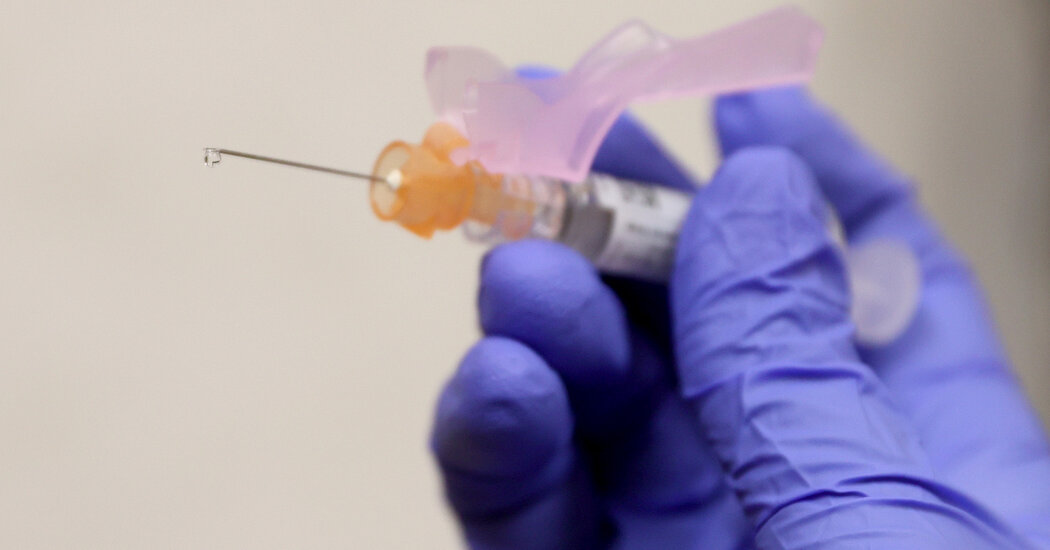
Lockdowns helped keep last year’s flu season historically mild in both the United States and around the world, but U.S. officials fear a more serious season this fall and winter, with unmasked people out and about far more, and nearly half of adults in a new survey saying they are unlikely to get a flu shot.At a news briefing to release the survey data on Thursday morning, top health experts said they were particularly concerned that, with the coronavirus still coursing around the country, nearly one in four people at higher risk for flu-related complications indicated they did not intend to get the flu vaccine.Dr. Rochelle P. Walensky, head of the Centers for Disease Control and Prevention, noted that while experts did not yet know how severely the flu would hit the United States this fall, other respiratory infections had already returned, including RSV, a common cause of pneumonia and bronchitis in babies and a serious threat to older adults. The C.D.C.’s latest weekly flu report shows that only one state, Wyoming, had reached a “moderate” level of flu cases.Because the flu was almost nonexistent last year, Dr. Walensky noted, people do not have the protective immunity they might have acquired if they had gotten sick, and she urged that everyone age 6 months and older be vaccinated. “The Covid-19 pandemic is not over, and the risk of both flu and Covid-19 circulating could put additional strain on hospitals and frontline health care professionals,” she said.The survey was commissioned by the National Foundation for Infectious Diseases, a nonprofit organization. Its medical director, Dr. William Schaffner, said that overall vulnerability to flu could be higher this year, “with relaxed Covid-19 mitigation strategies, increased travel and the reopening of schools.”For the survey, more than 1,110 respondents 18 and older from all 50 states and the District of Columbia answered questions in mid-August that explored attitudes about the flu; Covid-19; pneumococcal disease, which can cause pneumonia, sepsis and meningitis; and vaccination intentions.The answers revealed a tension between beliefs about the value of the flu vaccination and the intention to get one: 61 percent of respondents agreed that a shot was the best protection against the flu, but 44 percent said they were either unsure whether they would get one or did not intend to do so.The coronavirus pandemic, however, has had a positive effect on behaviors that could help lessen the impact of the flu. Nearly half of those surveyed said that because of the pandemic, they were more likely to stay home from work or school if they were sick, and 54 percent said they would wear a mask at least sometimes during the flu season.But there were racial disparities: 73 percent of Black respondents and 62 percent of Latinos said they would wear a mask during flu season, compared with only 46 percent of white respondents. Black and Latino respondents were also more likely to be worried about being infected with Covid and the flu simultaneously than white respondents.Dr. Walensky said that the flu vaccination rate nationally had held steady over the year before, at about 52 percent, but criticized what she called a “disparity gap” in flu vaccination: 56 percent for white people versus 43 percent among Black people. Patsy Stinchfield, a nurse practitioner at Children’s Minnesota, a pediatric health care system, and the president-elect of the infectious disease foundation, said that it was safe for people to get flu and Covid shots — including boosters — at the same time. Dr. Walensky also raised alarms about a decline in the flu vaccination rates among young children, to 59 percent from 64 percent the year before. In the 2019-2020 season, she said, 199 children died from the flu, about 80 percent of whom were not vaccinated.

Read more →

Malaria vaccine: When will it be available?

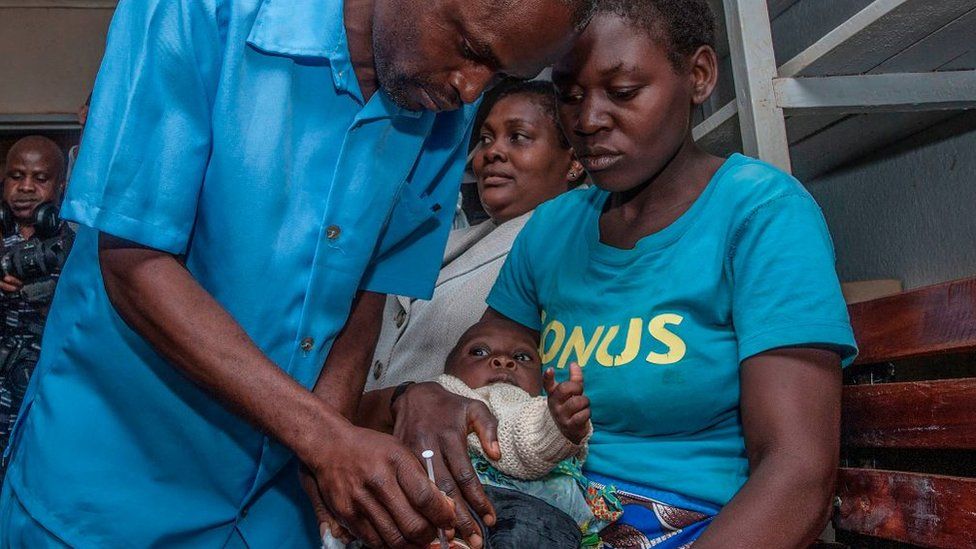
SharecloseShare pageCopy linkAbout sharingImage source, AFPResearchers and health professionals have been celebrating after the World Health Organization (WHO) approved the widespread use of the world’s first malaria vaccine.With more than 260,000 children under five dying from malaria each year in sub-Saharan Africa, this development, decades in the making, could save tens of thousands of lives, the WHO says.But when will people start benefitting from the vaccine known as RTS,S?We have been looking at that and some other key questions.How effective and safe is it?The vaccine was proven effective six years ago, preventing 40% of malaria cases and 30% of severe cases.Since 2019, researchers have been carrying out wider pilot immunisation programmes in Ghana, Kenya and Malawi.More than 800,000 children have received at least one dose and the WHO says there are no safety concerns.Does it matter that the protection is relatively low? It would obviously be better if it was higher, but what many would say is you need to think about the scale of the problem – with hundreds of millions of cases, a 40% reduction is still a huge number of lives saved.”This is a moderately efficacious vaccine… [but] saving, preserving, avoiding 30-40% of cases and deaths can bring a major benefit to the population,” the WHO’s Pedro Alonso told BBC Focus on Africa.Health authorities are also keen to stress this is a new weapon in the fight against malaria to be used alongside other preventative measures, such as treated bed nets and drugs that target the malaria parasite.How does the vaccine work?Malaria is a parasite that invades and destroys our blood cells in order to reproduce, and it’s spread by the bite of blood-sucking mosquitoes.The vaccine targets the most deadly and common parasite in Africa: Plasmodium falciparum.It tries to deal with the form of the parasite which enters the victim’s blood shortly after being bitten, by partially blocking access into human cells and therefore preventing disease, Dr Alonso said.It needs four doses to be effective. The first three are given a month apart at the age of five, six and seven months, and a final booster is needed at around 18 months.Children are considered to be the most at risk from dying from malaria as, unlike adults, they have not had a chance to build up immunity.How much will it cost and who will pay?The vaccine has been developed by the pharmaceutical giant GSK which has pledged to supply the doses at the manufacturing cost plus 5%, but has not specified the price.When it comes to buying them it is now up to countries and donors to find the money.”The international funding community has to now discuss and then decide how to procure the vaccine,” GSK’s chief global health officer Thomas Breuer told the BBC.Image source, Getty ImagesRose Jalang’o, who has been helping to co-ordinate the pilot programme in Kenya, said the authorities were waiting for global guidance on how the vaccine will be financed as part of the national immunisation programme.Currently in Kenya, most of the funding for vaccinations comes from donors such as the global vaccine alliance Gavi and the Bill and Melinda Gates Foundation.What is the timetable for distribution?The pilot programmes in Ghana, Kenya and Malawi will continue. GSK says it has donated 10 million doses for the study and so far a quarter of those have been used.The company has committed itself to providing 15 million doses a year. If the money is found then they could start being available for wider use from the end of 2022 or early 2023, Mr Breuer said.But that number may not be enough. By the end of the decade up to 100 million doses may be needed every year, according to Ashley Birkett from Path, which helped work on the immunisation programme.What infrastructure is needed?As the vaccination is intended for children under the age of two it can be bundled up with other child immunisation programmes so there may not be any need for extra infrastructure.There would need to be more public education and some training of health workers.In the pilot programme in Kenya, more than 200,000 children were vaccinated and it was made available in rural and remote areas through outreach programmes and remote clinics, Dr Jalang’o told the BBC.What other vaccines are being developed?Other vaccines are being worked on, including one from the University of Oxford in the UK. In April, researchers reported on early trials suggesting it was 77% effective.But the development of vaccines for malaria is a long process as it is a much more complex disease to tackle than Covid-19, for example.RTS,S is the first malaria vaccine to have gone through all the necessary checks and trials, but the WHO says a second malaria vaccine “could be highly beneficial to malaria control” as it would help satisfy anticipated high demand.

Read more →

Over 120,000 U.S. Children Lost a Primary Caregiver to Covid-19, Study Says

New findings showed wide racial disparities among those whose caregivers had died during the pandemic.Over a 15-month period of the pandemic, more than 120,000 children in the United States had a parent or caregiver die from Covid-19, a loss that more severely affected racial minorities, according to a modeling study published in the medical journal Pediatrics on Thursday.The study estimated that for every four Covid-19 deaths between April 1, 2020, and June 30, 2021, one child lost a parent or caregiver. The finding suggested that the ongoing pandemic, which has claimed more than 700,000 American lives thus far, could leave tens of thousands of children dealing with trauma for generations to come.“It’s not just one of 500 are dead; one of 500 American children have lost their mommy or daddy or grandparents who took care of them,” Dr. Susan Hillis, the lead author and a researcher and epidemiologist at the Centers for Disease Control and Prevention, said in an interview.In addition to the 120,630 children who were estimated to have lost a primary caregiver — a parent or grandparent responsible for providing housing, basic needs and care — 22,007 lost a secondary caregiver, or a grandparent providing housing but not most basic needs, the study projected. Dr. Hillis said the loss of such grandparents could lead to homelessness.All children losing a parent would face new challenges that could threaten their development: The lack of an adult taking care of basic needs increased the risk of mental health problems, abuse, unstable housing and poverty, experts said.“The death of a parental figure is an enormous loss that can reshape a child’s life,” Nora D. Volkow, the director of the National Institute on Drug Abuse, said in a statement. “We must work to ensure that all children have access to evidence-based prevention interventions that can help them navigate this trauma, to support their future mental health and well-being.”The study follows a previous study, published in The Lancet in July, that found that more than 1.5 million children worldwide had lost a primary or secondary caregiver during the first 14 months of the pandemic.The new findings aligned with research that has repeatedly demonstrated that racial minorities have been disproportionately vulnerable to the pandemic.According to the study in Pediatrics, one of every 168 American Indian/Alaska Native children, one of every 310 Black children, one of every 412 Hispanic children, and one of every 612 Asian children have lost a caregiver, compared to one in 753 white children.“Something is very broken in our system and our cultures and hearts,” Dr. Hillis said. “We must come together to fix it. We should not be willing to tolerate that for another day.”Dr. Hillis cautioned that the study ran only through June, and that the number of lost caregivers “is a constantly growing number, and will continue to grow till the pandemic is over.”Roni Caryn Rabin

Read more →