Baby-wearing products lead to higher risk of injury, hospitalizations in children under age 1

Baby-wearing products are an increasingly popular way to carry a young child in a sling, soft carrier or other type of device, but new research suggests that they can pose a higher risk of injury to children under age 1.
The study abstract, “Baby Wearing Injuries Presenting to Emergency Departments, 2011-2020: A Dangerous Fashion Trend,” — presented during the virtual American Academy of Pediatrics 2021 National Conference & Exhibition — shows that young children are not only more likely to sustain injury related to baby wearing but have a higher frequency of being hospitalized after the injury.
“The most precious thing a parent will ever wear is their child,” said author CPT Samantha Rowe, MD, MC, USA. “But like when buying a new pair of shoes, parents must be educated on the proper sizing, selection and wear of baby carriers to prevent injury to themselves and their child.”
Baby-wearing, also known as baby carrying, is a common form of attachment parenting that dates back to prehistoric times. Over the last decade, baby-wearing has demonstrated many benefits, including improved success with breastfeeding, improved infant to parent bonding, and improved attentiveness by fathers.
The researchers sought to characterize the epidemiology and impact of baby-wearing related injuries presenting to U.S. emergency departments. They reviewed 14,024 cases of baby-wearing injuries reported to the National Electronic Injury Surveillance System from 2011 to 2020 and found that 61% of children of injuries occurred in children aged 0-5 months with 19.3% of these infants requiring hospitalization, and 83.7% of these children injuring their heads. A total 18.1% of head injuries related to a baby-wearing product led to hospitalization.
More than one out of five — or 22% — of all injuries were associated with the caregiving falling. The authors found seven cases of cardiopulmonary arrest.
About 30% of baby-wearing injuries were associated with sling carriers, and 45% associated with non-specified types of baby carriers.
The authors suggest there is a need for more rigorous parental education regarding the use of baby carriers. They found a wide variety of products on the market, with most designed with additional space in the bust for breastfeeding women. This may increase the risk of injury to children when the product is worn by men.
Dr. Rowe will present the study abstract at Monday, Oct. 11, 2021.
Story Source:
Materials provided by American Academy of Pediatrics. Note: Content may be edited for style and length.

Read more →

Breast milk of marijuana users does not hurt short-term health of early premature infants, long-term effects still unknown

Legalization of marijuana has been associated with increased use in women of childbearing age. Since tetrahydrocannabinol (THC), one of the active ingredients in marijuana, passes through breast milk, many neonatal intensive care units (NICUs) restrict the use of breast milk from THC-positive women because the effects on early preterm infants are unknown. However, science has shown that feeding these preterm babies breast milk is one of the best ways to improve their outcomes and leads to fewer infections and intestinal issues, improved brain growth, and better overall development compared to feeding them infant formula.
The study abstract, “Maternal Marijuana Use During Pregnancy and Breastfeeding: Assessing In-Hospital Outcomes of Early Preterm Infants,” to be presented at the virtual American Academy of Pediatrics National Conference & Exhibition, analyzed the medical records of 763 early preterm infants from 2014 to 2020. Researchers found 17% of their mothers tested positive at the time of delivery for THC.
“Providing breast milk from THC-positive women to preterm infants remains controversial since long-term effects of this exposure are unknown,” said Natalie L. Davis, MD, MMSc, abstract author and Associate Professor of Pediatrics at the University of Maryland School of Medicine and Attending Neonatologist at the University of Maryland Children’s Hospital. “For this reason, we continue to strongly recommend that women avoid marijuana use while pregnant and while nursing their babies. Our study, however, did provide some reassuring news in terms of short-term health effects. It definitely indicates that more research is needed in this area to help provide women and doctors with further guidance.”
Researchers compared early preterm infants who were fed breast milk from THC-positive mothers to those who were fed either formula or breast milk from THC-negative mothers and found no differences in short-term health impacts such as breathing difficulties, lung development, and feeding issues. Overall, early preterm babies born to mothers who tested positive for marijuana at delivery were similarly healthy by the time of their discharge when fed their mother’s breast milk compared to those who did not receive their mother’s breast milk.
“Teasing out the effects of THC can be very difficult to study,” Dr. Davis said. “We found that women who screened positive for THC were frequently late to obtain prenatal care, which can have a detrimental effect on their baby separate from marijuana use. This is important to note for future public health interventions.”
Story Source:
Materials provided by American Academy of Pediatrics. Note: Content may be edited for style and length.

Read more →

'I turned Marge Simpson yellow – it was so scary'

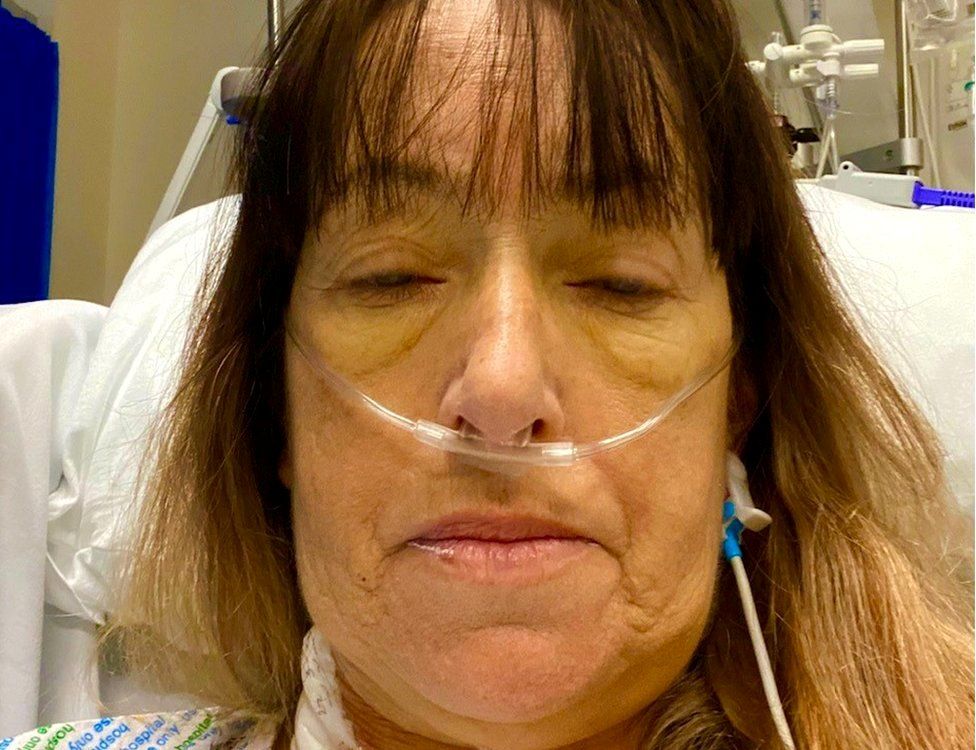
SharecloseShare pageCopy linkAbout sharingImage source, Julie NicholsonOne weekend last year, Julie Nicholson started turning “golden yellow” but she was unaware that she had a dangerous medical condition.The 52-year-old, from Armadale in West Lothian, says her husband noticed it first and they put it down to her being dehydrated from working 15-hour days so she started to drink lots of water.”I didn’t feel ill, but the next day in the shower I could see my skin was yellow and my kids were saying my skin looked a funny colour,” she says.The following day she called her doctor and they arranged for her to have blood tests.She says: “As soon as I saw the doctor, she noticed straight away I was yellow. “By now I had turned Marge Simpson yellow, I could have played her in a stage show, I was that yellow. It was so scary.”Image source, FOXStill unaware of how serious her condition was, Julie went home where she continued working as a data privacy officer for drinks giant Diageo. “I was in a Zoom meeting the following day when my phone wouldn’t stop ringing, so eventually I thought I had better answer it,” she says.”It was my doctor and she was saying I had to report immediately to the medical centre.”Julie was then sent to hospital as staff said she was turning more yellow by the minute.She had an ultrasound and a CT scan, which found a blockage in her bile duct.”They said you have a tumour, it’s probably cancer and where it is we have to operate,” Julie says.Bile ductsImage source, Getty ImagesThe bile ducts are a series of thin tubes that go from the liver to the small intestine.Their main job is to allow a fluid called bile to go from the liver and gallbladder into the small intestine, where it helps digest the fats in food.A whipple procedure is a complex operation to remove the head of the pancreas, the first part of the small intestine, the gallbladder and the bile duct.If left untreated, bile duct obstructions can lead to life-threatening infections.Medicine called Creon is taken by the patient once the bile duct has been removed to help them digest food.Intensive careJulie says: “They told me it was a dangerous whipple operation and of the death rate on the operating table.”My dad was with me, as I hadn’t wanted to bother my husband at work, and he went pure white.”Half of her pancreas, the gall bladder and bile duct and some of her small intestine were removed.She lost two-and-a-half stones in weight and was in hospital, including intensive care, for a month.Her daughter had given birth to her first grandchild, Havanah May, so she wanted to convalesce at home.Image source, Julie NicholsonJulie says her husband saved her life by noticing she was turning yellow.Keith, a forklift driver, said: “When I noticed Julie’s eyes were going awful yellow I immediately put it down to the hours she works and told her she must be dehydrated.”She’s working when I go to work and is still working when I return from my shift.”But the next day she was even yellower, despite drinking water, and her skin was a golden colour. We didn’t know what it was, it was weird what was happening to her.”You hear of things like this happening to other people but you never think it’s going to happen in your own household.”Julie started turning yellow in March 2020. She had an operation and then several rounds of chemotherapy and could not walk without a Zimmer frame. Her husband had to wash her and took three months off work to care for her.Since then, Julie has undergone intervention for serious wounds after her operation.She only started recovering back to full strength in the summer 2021.Image source, Julie NicholsonIn August, she completed a 134-mile (216km) walk of the whole John Muir Way from Helensburgh on the west coast of Scotland to Dunbar on the east coast.But although she had reached full strength, she still had a lot of anxiety about what had happened.”That’s when I visited Maggie’s Centre and they have been helping me so much. I can speak to them about everything and they don’t take notes,” Julie says.She will continue to be regularly monitored at the hospital.Lesley Howells, lead psychologist for Maggie’s centre, said: “Regardless of prognosis, life post-treatment can be hugely challenging.”Friends and family might be clapping their hands and saying ‘great, normal service resumed’, but for the person who has been through the treatment they might feel as if their life has been turned upside down and shaken around.”Julie’s husband Keith says: “It was very lucky Julie changed colour or we would never have known something was wrong as she didn’t feel any different. It let us know something wasn’t right here.”

Read more →

Doctors alerted to dangerous dry scooping workout trend

SharecloseShare pageCopy linkAbout sharingImage source, Getty ImagesDoctors are being warned about a dangerous pre-workout trend called dry scooping that some gym-goers are doing. It involves eating powder supplements neat, rather than diluting them in water, as recommended by manufacturers, to make a drink. Researchers, who are giving a talk at a US medical conference, are worried young teens may try it, spurred on by a flurry of internet videos of the fad. They scanned TikTok, counting the millions of likes. Health warningPre-workout powders typically contain lots of amino acids, vitamins and other ingredients, such as caffeine. The idea is to give the body a boost before a workout to help stamina, although the science around it is patchy.But there are known risks from taking on too many energy-boosting stimulants. A big dose of caffeine, for example, can cause heart-related side effects, including palpitations and extra or missed beats. A scoop of powder might pack as much caffeine as five cups of coffee, say the researchers from the Cohen Children’s Medical Center in New York. This jolt can cause “an increase in blood pressure and heart rate, potentially leading to disturbances in heart rhythm”.And accidentally inhaling the powder into the lungs could cause choking or an infection or pneumonia, say the researchers.In the UK, the products are regulated as foods rather than medicines, but must be deemed safe for consumption to be able to be sold in shops to people 18 and over.Some powders sold online may not be from reputable suppliers or contain the ingredients listed on the pack. Several have since been banned for containing substances such as a synthetic amphetamine called DMAA and a stimulant called synephrine.Image source, TikTok/brivtnyRecent newspaper articles have also highlighted the dangers after a 20-year-old social media influencer from the US, called Briatney Portillo, posted about purportedly having a heart attack that she links to dry scooping.Student’s heart failure linked to ‘excessive’ energy drinksUS teen died after drinking caffeine too quickly, coroner saysWhy coffee could be good for your healthGaining popularityThe study researchers analysed 100 videos posted on the TikTok social network channel, using the hashtag “preworkout” for their search. Only eight of them showed the powder being used in the correct way.More than 30 featured dry scooping, with individuals putting a scoop of undiluted powder into their mouth followed by a few sips of water or liquid. These amassed more than eight million likes. The researchers warn in their presentation for the American Academy of Pediatrics meeting: “Physicians should be aware of the pervasiveness of pre-workout, dangerous methods of consumption, and the potential for accidental over-consumption, inhalation, and injury.”Nutrition scientist Bridget Benelam, from the British Nutrition Foundation, said: “Pre-workout powders typically contain caffeine along with other ingredients such as creatine, amino acids and vitamins. “There doesn’t appear to be much research on the benefits of these products, although there is some evidence that caffeine may improve sports performance in some cases. These studies are typically done in athletes, and so it’s not clear how relevant this is for the wider population. “The levels of caffeine in these products vary from the equivalent of about one to over three cups of filter coffee, if made up according to the manufacturer’s instructions. “So, there is a risk of over-consuming caffeine, especially if using more than once a day, or just consuming the powder, where you may consume more than the recommended amount.”Keeping hydrated by having enough water or fluid as you exercise is also important. The British Heart Foundation advises: you should be having six to eight glasses of fluid a day whether you are training or notlisten to your body – if you’re thirsty or sweating by the bucketload then drinkyou can definitely drink too much water, so don’t overdo itThe same applies to caffeineHave you ever dry scooped? Share your experiences by emailing haveyoursay@bbc.co.uk.Please include a contact number if you are willing to speak to a BBC journalist. You can also get in touch in the following ways:WhatsApp: +44 7756 165803Tweet: @BBC_HaveYourSayUpload pictures or videoPlease read our terms & conditions and privacy policy

If you are reading this page and can’t see the form you will need to visit the mobile version of the BBC website to submit your question or comment or you can email us at HaveYourSay@bbc.co.uk. Please include your name, age and location with any submission.

Read more →

Long-term exposure to permissible concentrations of air pollution linked with increased mortality risk

Exposure to low concentrations of air pollution, even at levels permitted under federal regulations, may be causing tens of thousands of early deaths each year among elderly people and other vulnerable groups in the U.S., according to a large national study from Harvard T.H. Chan School of Public Health.
The study will be published October 7, 2021, in The Lancet Planetary Health.
“We found that among elderly patients enrolled in Medicare, small increases in long-term exposure to both particle and gaseous air pollutants increased the risk of death, even at levels deemed safe by current regulations,” said lead study author Mahdieh Danesh Yazdi, a postdoctoral fellow in Harvard Chan School’s Department of Environmental Health. “Our findings suggest that current air pollution limits are not adequate to protect the health of vulnerable groups.”
Previous studies have suggested that people exposed to air pollution concentrations that are lower than those permitted by the U.S. Environmental Protection Agency may still have an increased risk of illness and mortality. But most earlier studies didn’t focus on individuals who were continually exposed to lower concentrations of pollutants during the study period, as the new study does. Researchers also used a robust causal modeling technique and a large dataset for their analysis that gave them enough power to detect links between air pollution and mortality in demographic and socioeconomic subgroups.
The analysis included data on millions of Medicare enrollees from 2000 to 2016. The researchers predicted people’s exposure levels by using satellite-based measurements, land-use data, meteorological data, and chemical-transport models to generate daily air pollution predictions as well as annual averages of exposure levels across the U.S. Participants were assigned exposures based on their residential postal codes. The researchers adjusted for factors such as age, sex, race, education level, and smoking history.
The study looked at the effects of three different types of pollutants, including fine particulate matter, or PM2.5 — particulates with a diameter of less than 2.5 micrograms per cubic meter of air (?g/m3) — nitrogen dioxide (NO2), and summer ozone (O3). The researchers limited their dataset to individuals who were exposed to air pollution concentrations below the annual maximums recommended by the EPA. For PM2.5, the threshold is 12 ?g/m3; for NO2, it’s 53 parts per billion (ppb). There is no regulation regarding long-term exposure for O3, so the researchers chose 50 ppb as an upper exposure limit for the purposes of the study.

Read more →

A new framework for protecting mental health in cities

People who live in cities face many challenges that threaten their mental health. In countries in which relatively higher numbers of people live in cities, depression, anxiety and addiction are generally more common. Amid the increasing incidence of common mental disorders and ongoing urbanisation around the world, there is an urgent need to better understand the dynamic interplay between these areas. This is what UvA researchers from the Centre for Urban Mental Health (UMH) say in their position paper, published on October 7 in The Lancet Psychiatry. The researchers emphasise the urgency of the situation and present a new conceptual framework for identifying novel prevention and treatment methods for common mental disorders in urban contexts.
Unintended disadvantages
‘Life in the city is attractive in many ways, but it also has various unintended disadvantages,’ says lead author Junus van der Wal. ‘A great deal of knowledge has been accumulated about the extent to which these disadvantages in and of themselves are associated with mental disorders. But in order to really understand what living in a busy city does to your mental health, it is necessary to study all such factors together.’ In an extensive literature review, Van der Wal and his colleagues identified a large number of factors that influence the urban environment and, consequently, can also influence people’s mental well-being.
An example: the fictitious Jane
A sample scenario involving the fictitious Jane, given by the researchers in their position paper, makes it clear how different factors can interact and how important it is to look at the connection between factors. Jane lives in a big city, in a neighbourhood with little greenery. Her flat is close to a busy road. Jane has a low income, so she is often stressed about money. Constant traffic noise disturbs her sleep and causes insomnia. Her work performance is suffering as a result, which further increases her money stress. In addition, air pollution from the traffic on the busy road may affect the functioning of Jane’s brain. ‘Moreover, there are often feedback loops in these models. If many people in the area have mental health problems, for example, this can have a negative impact on the social cohesion of the neighbourhood, which in turn can have a negative effect on the residents,’ says Claudi Bockting, co-director of UMH and professor of Clinical Psychology within Psychiatry. ‘However, if the municipality where Jane lives were to invest in sustainable development, for example by creating a park between the building where Jane lives and the busy road, this could help Jane. This kind of intervention could reduce stress and traffic congestion, possibly increase social cohesion in the neighbourhood and help to counteract air pollution.’
Working towards targeted interventions
Reinout Wiers, professor of Developmental Psychopathology and co-director of UMH, adds: ‘In our position paper, we present a new conceptual framework for all future research on mental health in the urban environment. Only this approach will allow us to see how all the factors interact and affect individuals, and also to come up with targeted interventions and treatments to improve the mental health of urban dwellers.’
Karen Maex, rector magnificus of the UvA, is enthusiastic about the position paper: ‘It shows how our Centre for Urban Mental Health uniquely promotes the interdisciplinary cooperation that is essential for understanding the complex relationships between urban factors and mental health.’
Story Source:
Materials provided by Universiteit van Amsterdam. Note: Content may be edited for style and length.

Read more →

Alzheimer's and COVID-19 share a genetic risk factor, study finds

An anti-viral gene that impacts the risk of both Alzheimer’s disease and severe Covid-19 has been identified by a UCL-led research team.
The researchers estimate that one genetic variant of the OAS1 gene increases the risk of Alzheimer’s disease by about 3-6% in the population as a whole, while related variants on the same gene increase the likelihood of severe Covid-19 outcomes.
The findings, published in Brain, could open the door for new targets for drug development or tracking disease progression in either disease, and suggest that treatments developed could be used for both conditions. The findings also have potential benefits for other related infectious conditions and dementias.
Lead author Dr Dervis Salih (UCL Queen Square Institute of Neurology and UK Dementia Research Institute at UCL) said: “While Alzheimer’s is primarily characterised by harmful build-up of amyloid protein and tangles in the brain, there is also extensive inflammation in the brain that highlights the importance of the immune system in Alzheimer’s. We have found that some of the same immune system changes can occur in both Alzheimer’s disease and Covid-19.
“In patients with severe Covid-19 infection there can also be inflammatory changes in the brain. Here we have identified a gene that can contribute to an exaggerated immune response to increase risks of both Alzheimer’s and Covid-19.”
For the study the research team sought to build on their previous work, which found evidence from a large dataset of human genomes, to suggest a link between the OAS1 gene and Alzheimer’s disease.

Read more →

UK public now eating significantly less meat

SharecloseShare pageCopy linkAbout sharingImage source, Getty ImagesDaily meat consumption in the UK has fallen by 17% in the last decade, a study has shown.That reduction though is not happening quickly enough to meet a key national target, according to scientists. The aim is to reduce the environmental impact of our diets.This goal, set by the National Food Strategy, is based on a review of the whole UK food system – from farming and production to hunger and sustainability. It recommends meat consumption in the UK fall by 30% over the next 10 years.Climate change food calculator: What’s your diet’s carbon footprint?Should there be a tax on red meat?Cows trained to use special ‘MooLoo’ toilet”We now know we need a more substantial reduction,” said lead researcher Cristina Stewart from the University of Oxford. The new study, published in the journal the Lancet Planetary Health, revealed that while most people are eating less red and processed meat compared to a decade ago, they are eating more white meat. High consumption of red and processed meat can increase the risk of health problems including cardiovascular disease, type 2 diabetes, and even certain cancers. Meat production also has a higher environmental impact – producing more planet-warming greenhouse gas emissions – than other types of agriculture and food production. Not all meat is equalImage source, Victoria GillThis Oxford-based research team used data from the National Diet and Nutrition Survey – a detailed survey of the dietary habits of more than 15,000 people across the country. This showed that daily meat consumption had reduced by about 17g per person per day. What it did not reveal was the reason people were changing their diets. But market research in 2019 suggested that almost 40% of meat-eaters were actively trying to reduce their consumption, with many citing either health or environmental reasons. Dr Stewart stresses that, for those who want to reduce the environmental impact of what they eat, “any reduction in meat will have an impact”. “You don’t have to be vegetarian,” she said. “Although, in general, meat-free dishes will have a lower impact. “But if you’re someone that eats meat every day, reducing your meat consumption by 30% just looks like having two meat-free days per week.” There is huge variation in the environmental impact of meat; it depends on what livestock are fed and where and how the meat is produced. The COP26 global climate summit in Glasgow in November is seen as crucial if climate change is to be brought under control. Almost 200 countries are being asked for their plans to cut emissions, and it could lead to major changes to our everyday lives.Why the COP26 climate summit is importantWhat will climate change look like for you?Will the UK meet it’s climate targets?Simple guide to climate change”Locally produced meat has a much lower impact than meat that has been imported,” Dr Stewart pointed out. She and her colleagues have also been studying the effect of “environmental impact labelling” on consumer choices. They have designed experimental labels that score a product based on its greenhouse gas emissions, biodiversity loss, water-use and water pollution. “When you don’t have the information about environmental impact of food, it’s really hard to shop with that in mind,” she pointed out. Having the support of those we eat our meals with, the Oxford researchers say, makes it easier for us to change our diets. And the availability and prominence of meat-free food options has an effect on people’s food choices, too. “So, for example, if you’re at a restaurant, you often see a vegetarian options ‘box of shame’ at the bottom of the menu rather than at the top with chef’s specials,” Dr Stewart explained.The team’s ongoing study of what drives people to reduce their meat consumption has revealed some simple strategies that participants have found helpful, including: Trying one new vegetarian recipe; Making one meal in a day vegetarian, rather than going a whole day without meat;Reducing portion size: In a recipe that includes meat, like a bolognese, reduce the amount of meat and supplement that with lentils and vegetables.”Hopefully this paper will help us understand the patterns and trends so we can tailor public health policies and behavioural nudges to help people choose more sustainable options,” said Dr Stewart. Hear Idris and Sabrina Elba discuss the impact on the planet of what we eat on the What Planet Are We On podcast on BBC SoundsFollow Victoria on TwitterGIRL, WOMAN, OTHER: Listen along to Bernardine Evaristo’s Booker Prize-winning novelAUTUMN IS HERE: What is the obsession with all things autumn, Halloween and pumpkin spice?

Read more →

Planned home birth presents little risk where midwifery is well-integrated

In the state of Washington, a planned home birth with a licensed midwife is just as safe as a birth at a licensed birth center.
Researchers from the University of British Columbia and Bastyr University (Wash.) arrived at this conclusion after analyzing outcomes of more than 10,000 community births in Washington state between 2015 and 2020.
The research team of midwives, epidemiologists and obstetricians published the findings Thursday in Obstetrics & Gynecology.
“The birth setting had no association with increased risk for either parent or baby,” said Elizabeth Nethery, a PhD candidate at UBC’s school of population and public health who was lead author of the study. “Our findings show that when a state has systems to support the integration of community midwives into the healthcare system as Washington has done, birth centers and homes are both safe settings for birth.”
Home birth remains controversial in the U.S. The American College of Obstetricians and Gynecologists (ACOG) has stated that birth is safest at a hospital or an accredited birth center. They recommend against home birth because of studies that show higher rates of neonatal death among home births across the entire U.S.
However, states vary widely in their licensing requirements, regulatory status and access to medications for midwives. These variations might contribute to differences in outcomes at the state level that are reflected in nationwide numbers.
Washington has done more than most other states to integrate midwifery into the healthcare system. It has one of the highest rates of community birth in the U.S., with at least 3.5 per cent of all births (approximately 3,000 per year) occurring with midwives either at home or at a state-licensed birth center.
The result is a low rate of 0.57 perinatal deaths per 1,000 births, which is comparable to other countries where home birth is well-integrated into the health system. It’s also identical to the ACOG’s benchmark for low-risk birth.
“Washington provides a model for midwifery care and safe community birth that could be replicated throughout the U.S.,” said Nethery. “Currently, some U.S. states currently have no licensure available for community birth midwives at all, and this could be contributing to poorer birth outcomes in those states.”
The study analyzed data from 10,609 home and birth center births from midwives who were members of the state’s largest midwifery professional association. Births met the professional association guidelines and were within regulatory standards for birth center births in Washington state. This included individuals with healthy pregnancies who were carrying to term with no history of cesarean delivery, and a fetus oriented for head-first birth.
Story Source:
Materials provided by University of British Columbia. Note: Content may be edited for style and length.

Read more →