Why Is Good Medical Advice for Pregnant Women So Hard to Find?

A recent warning about the pain reliever acetaminophen is a reminder that health risks in pregnancy remain maddeningly, dangerously understudied.If you have spent the pandemic calculating the potential costs and benefits of every action you might take — whether to travel, to work, to see family, to seek medical care — while fearing that a misjudgment will result in catastrophe, you have some idea of what it can feel like to be pregnant in the 21st century. Women have been warned that everything from fish to frozen yogurt, alcohol, coffee, X-rays and airplane flights can harm an unborn child. In most such cases, the reproductive risks “tend to be fairly small, if they exist at all,” says Anne Drapkin Lyerly, a professor at the University of North Carolina’s Center for Bioethics. But just the possibility of a negative outcome, however unlikely, can obscure what might be the greater benefits of the action or substance in question.The challenge in weighing risks while pregnant is especially difficult when it comes to medications — “There’s a lot of uncertainty and fear,” Lyerly says. But women cannot forgo treatment for conditions like diabetes, depression or high blood pressure the way they can give up unpasteurized cheese.Last month, Nature Reviews Endocrinology published a statement raising concerns about fetal exposure to an over-the-counter medication that 65 to 70 percent of pregnant women in the United States report having taken: acetaminophen, a pain reliever and fever reducer commonly sold as Tylenol. Left untreated, fever during pregnancy has been linked to an increased risk of a child having neural-tube defects and cardiovascular disorders later in life. In adults, severe and ongoing pain can lead to depression, anxiety and high blood pressure, all of which can also negatively impact fetal development. There are compelling reasons to treat these conditions.But while nonpregnant adults have multiple options for combating fever and pain, for pregnant women, acetaminophen — also an ingredient in hundreds of other cold, flu, allergy and sleep medications — is considered the safest choice. The Food and Drug Administration has so far found no conclusive evidence of risk during pregnancy when used as directed. And the agency warns against a common alternative: nonsteroidal anti-inflammatory drugs, which include aspirin, ibuprofen and naproxen (sold as Aleve). In rare cases when used in the second half of a pregnancy, they can lead to fetal kidney problems and low amniotic fluid levels.Despite the clear need for acetaminophen to be available during pregnancy, the 13 authors of the Nature Reviews statement (which was signed by an additional 78 scientists) argue that raising awareness about its potential negative effects could have public health benefits. They considered evidence from observational and experimental studies and found an association between fetal exposure to the drug and neurodevelopmental disorders (including autism and A.D.H.D.) and reproductive and urogenital disorders (including early puberty and decreased fertility). In randomized controlled trials in animals, acetaminophen appeared to cause similar outcomes. The drug can disrupt the endocrine system, potentially affecting the activity of hormones that help regulate fetal development.But the associated risk appeared to be small. “One reason this has been overlooked is because the risk is not that great for an individual, and you need to have really good studies to find an association,” says David M. Kristensen, an associate professor at the Danish Headache Center at the University of Copenhagen and one of the statement’s authors. In studies for which women reported the drugs they took, the strongest links were among those who said they used acetaminophen for more than 14 days. (The authors noted that the existing studies included only cisgender women.) Given that so many pregnant women take acetaminophen, even a slight reduction in individual consumption could theoretically result in an overall decrease in the associated disorders.Ori ToorCrucially, however, it is not possible to say for certain whether acetaminophen caused those disorders in people. (Neurodevelopmental disorders are believed to be the result of multiple factors.) It could be that women who took the drug were more likely to have faced other potential risk factors, like stress or illness. As the American College of Obstetricians and Gynecologists observed in a written response to the paper, there is still “no clear evidence that proves a direct relationship between the prudent use of acetaminophen during any trimester and fetal developmental issues.” Kristensen believes we will never get that clear evidence. That’s because proving that acetaminophen causes the associated disorders, and at what dose, traditionally requires a randomized controlled trial, in which the drug is given to some pregnant women and a placebo to others. Because there is already some evidence that acetaminophen could be harmful, that would be considered by some to be unethical.And yet it’s in widespread use. In fact, there are hundreds of medications potentially being taken by pregnant women about which little is known, says Xiaobin Wang, a pediatrician and director of the Center on the Early Life Origins of Disease at Johns Hopkins Bloomberg School of Public Health. “There are so many questions” about these drugs and pregnancy, she says, “and so little data to provide definite answers.”In part this is because pregnant women have long been excluded from clinical trials for drugs that might be beneficial. A 2014 review published in Frontiers in Pediatrics found that from the late 1960s through August 2013, just 1.3 percent of clinical trials focusing on how drugs move through the body included pregnant participants. The consequences of this lack of research have been that those who are pregnant must take such medications anyway, but without any data to say what dose is safest and most likely to work — a significant deficit, given that pregnancy causes the body to metabolize drugs differently. “If you don’t do studies in pregnant and lactating women, rather than protecting pregnant women, you’re going to provide care without any evidence to guide it,” says Catherine Y. Spong, chief of the division of maternal fetal medicine at the University of Texas Southwestern Medical Center. That may include relying on older medications with longer track records for which potential risks appear small — like acetaminophen — when newer ones could be safer and more effective.“It’s not that we cannot do it,” Spong adds. There are, after all, clear protocols for including pregnant participants in medical research. For example, they can be enrolled in clinical trials of new treatments if researchers do preliminary reproductive toxicology studies in animals. But for medications already in use, it has been harder to find the funding needed to study them (though there is legislation that provides financing and incentives for research to be done on children’s medicines). Simply put, those who are pregnant have been left without the same evidence-based treatment options available to other adults.In the absence of better guidance or options, Kristensen and his colleagues say that women who need acetaminophen should keep taking it in consultation with a physician. (In fact, asking a doctor before taking any medication is already standard advice for pregnant women.) Their goal in publicizing their findings is to reach pregnant people, who, they say, surveys have shown may be taking the drug without being aware of its potential risk, or who are using it in an ongoing effort to manage conditions — like back pain or migraine — for which it is not very effective. In those cases, popping a few Tylenol and toughing it out over an extended period might come with more risk than previously realized while not necessarily resolving the user’s pain. The statement’s authors also hope to spur more research, and to persuade regulatory agencies, including the F.D.A., to review the existing literature.But the question remains how best to respond to risks during pregnancy that — frustratingly and frighteningly — are complex and hard to quantify. “It may be we never really have an answer,” says Sarah Richardson, a professor of the history of science at Harvard. “If we can never know, should we act on it?” In this case, she argues no: “If this is the bar for issuing precautionary action, we might find ourselves in a scenario where everything and anything is dangerous for pregnant women.” Kristensen disagrees: “I would rather be informed of potential risk than live in lack of knowledge.” But, he adds, “This is not a black-and-white discussion.”Kim Tingley is a contributing writer for the magazine.

Read more →

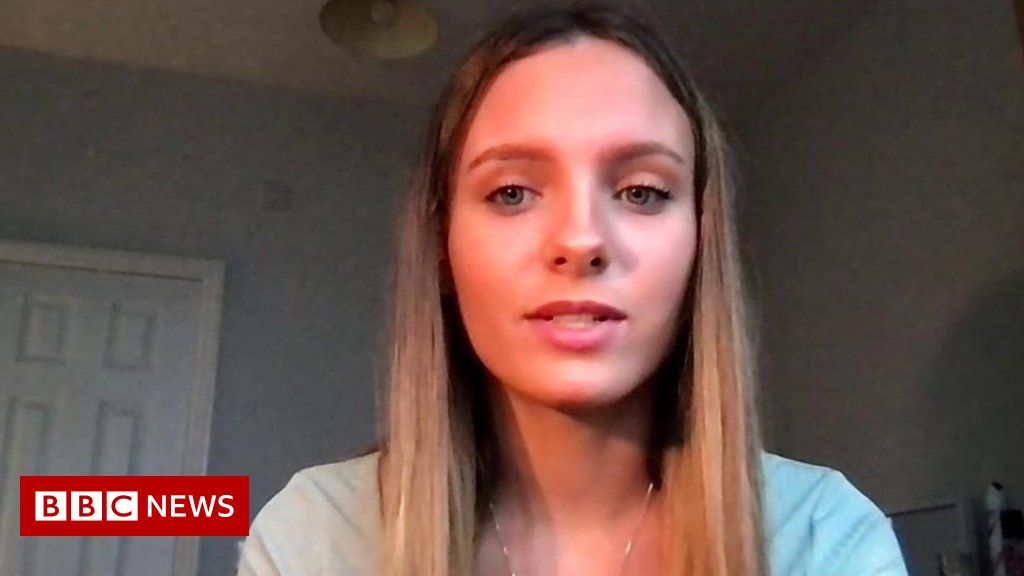
Teenager Sarah Buckle woke up in hospital after a suspected spiking incident

Sarah Buckle woke up in hospital after a suspected spiking incident in a Nottingham nightclub in September.The 19-year-old spoke to Breakfast’s Naga Munchetty about finding a pin prick wound on her hand.She said since she spoke about her experience, others have got in touch to share what happened to them, and said she still feels “incredibly nervous” when out at night.

Read more →

Covid: WHO warns pandemic will drag on deep into 2022

SharecloseShare pageCopy linkAbout sharingImage source, AFPThe Covid pandemic will “go on for a year longer than it needs to” because poorer countries are not getting the vaccines they need, the World Health Organization (WHO) says.Dr Bruce Aylward, senior leader at the WHO, said it meant the Covid crisis could “easily drag on deep into 2022”.Less than 5% of Africa’s population have been vaccinated, compared to 40% on most other continents.The UK has delivered more than 10 million vaccines to countries in need.It has pledged a total of 100 million.More than 50 countries missing Covid vaccine targetCovax: How many Covid vaccines have the US and the other G7 countries pledged?Covid vaccines: How fast is progress around the world?The original idea behind Covax was that all countries would be able to acquire vaccines from its pool, including wealthy ones. But most G7 countries decided to hold back once they started making their own one-to-one deals with pharmaceutical companies.The vast majority of Covid vaccines overall have been used in high-income or upper middle-income countries. Africa accounts for just 2.6% of doses administered globally. The group of charities, which includes Oxfam and UNAids, also criticised Canada and the UK for procuring vaccines for their own populations via Covax, the UN-backed global programme to distribute vaccines fairly.Official figures show that earlier this year the UK received 539,370 Pfizer doses while Canada took just under a million AstraZeneca doses. Dr Aylward appealed to wealthy countries to give up their places in the queue for vaccines in order that pharmaceutical companies can prioritise the lowest-income countries instead.He said wealthy countries needed to “stocktake” where they were with their donation commitments made at summits such as the G7 meeting in St Ives this summer. “I can tell you we’re not on track” he said. “We really need to speed it up or you know what? This pandemic is going to go on for a year longer than it needs to.”The People’s Vaccine – an alliance of charities – has released new figures suggesting just one in seven of the doses promised by pharmaceutical companies and wealthy countries are actually reaching their destinations in poorer countries. Image source, BBC NewsOxfam’s Global Health Adviser, Rohit Malpani, acknowledged that Canada and the UK were technically entitled to get vaccines via this route having paid into the Covax mechanism, but he said it was still “morally indefensible” given that they had both obtained millions of doses through their own bilateral agreements. “They should not have been acquiring these doses from Covax,” he said. “It’s nothing better than double-dipping and means that poorer countries which are already at the back of the queue, will end up waiting longer.” The UK government pointed out it was one of the countries which had “kick-started” Covax last year with a donation of £548m. The Canadian government was keen to stress that it had now ceased to use Covax vaccines. The country’s International Development Minister, Karina Gould, said: “As soon as it became clear that the supply we had secured through our bilateral deals would be sufficient for the Canadian population, we pivoted the doses which we had procured from Covax back to Covax, so they could be redistributed to developing countries.” Covax originally aimed to deliver two billion doses of vaccines by the end of this year, but so far it has shipped 371m doses.SHOULD ONE ORGANISATION HAVE SO MUCH INFLUENCE?: Stephen Nolan investigates the power of StonewallTHE AWARD FOR MENDING THE PLANET: What is the Earthshot Prize?

Read more →

Weight loss and mental health: 'Food has been my happiness'

New research for the BBC has highlighted the mental health anguish that thousands of people living with obesity feel everyday. A survey by Ipsos Mori found that those who are severely overweight had the poorest mental health and felt shame, embarrassment and despair when they look in the mirror.Watch 28-year-old India on her weight loss and mental health journey, as the BBC followed her over five months.Correspondent – Jeremy CookeCamera/ Edit – Steve FildesProducer – Claire KendallIf you have been affected by any of the issues raised in this video, BBC Action Line is a good place to start looking for help.

Read more →

F.D.A. Authorizes Moderna and Johnson & Johnson Booster Shots

The agency will also allow vaccine recipients to pick which vaccine they want as a booster, endorsing a mix-and-match approach.WASHINGTON — The Food and Drug Administration authorized booster shots on Wednesday for tens of millions of recipients of Moderna’s two-dose coronavirus vaccine and Johnson & Johnson’s single-dose shot, significantly expanding efforts to bolster protection for vulnerable Americans.The agency also authorized medical providers to give people a booster shot of a different Covid-19 vaccine, a strategy known as “mix and match.”That decision may dampen interest in the United States in Johnson & Johnson’s vaccine, which studies have found provides less protection than the other two. Recipients of that vaccine will have the option of seeking a Moderna or Pfizer-BioNTech booster, which could prompt a more substantial jump in protective antibodies. Recipients of the other two vaccines will have the same leeway to choose a different vaccine for a booster shot.The regulators, who authorized boosters for high-risk recipients of the Pfizer-BioNTech vaccine last month, did not recommend any one vaccine over another as a booster.“We do not have preferential recommendations,” Dr. Janet Woodcock, the F.D.A.’s acting commissioner, said at an evening news briefing. “We feel that if patients have questions, they should consult with perhaps their physician or another provider.”The latest authorizations arrived amid what is shaping up to be a busy stretch of major regulatory decisions on vaccines. The F.D.A. is expected to decide in the coming weeks whether Pfizer-BioNTech’s vaccine should be authorized for children 5 to 11. The agency’s independent vaccine advisory committee is set to consider the matter on Tuesday and make a recommendation.Regulators may also decide as early as November whether to allow even more people to obtain booster shots, including younger adult recipients of the Pfizer or Moderna vaccines who are not yet eligible. While many vaccine experts have questioned whether healthy younger people need booster shots at this time, some members of the advisory committee urged the agency last week to expand eligibility. Dr. Peter Marks, the F.D.A.’s top vaccine regulator, said the agency could be “nimble” in including more younger adults. “It is something that can happen as soon as we see and feel that we need to take that action,” he said.One key question before regulators was whether to authorize a full or a half-dose of Moderna’s vaccine as a booster shot. Data from a federally funded study suggested a full-strength dose of Moderna could hugely boost the antibody levels of Johnson & Johnson recipients and increase the antibody levels of Pfizer recipients better than an additional shot of the same vaccine.But Moderna only sought permission for a half-dose as a booster shot, submitting data in support of that. In the end, the F.D.A. decided to authorize the half-dose Moderna booster for recipients of all three vaccines, at least in part, Dr. Marks suggested, in order to limit confusion among providers.The move on Wednesday to make a much larger swath of Americans eligible for boosters followed unanimous votes last week from the F.D.A.’s advisory committee to recommend the authorizations. A separate committee advising the Centers for Disease Control and Prevention is scheduled to vote on Thursday on its own recommendations for the Moderna and Johnson & Johnson boosters.The panel will also consider whether people need more guidance about when and whether to switch vaccines for a booster shot. C.D.C. officials are expected to argue for flexibility.Given the existing data, “we have to be noncommittal about what is the best,” Dr. Marks said. “We have to simply say that any one of these combinations is reasonable.”The C.D.C.’s director typically endorses that panel’s recommendations as a final step before vaccines are put into use. If the agency agrees with the F.D.A., those booster shots could be available to the public as soon as this weekend.The eligibility requirements for a booster differ depending on vaccine. Pfizer and Moderna recipients will be able to get an extra shot six months after their second injection if they are at least 65 years old or at high risk of severe Covid-19 complications because of medical conditions or where they work. Johnson & Johnson recipients — all of whom are 18 and older — will be eligible for a second shot at least two months after the first.The decision to allow recipients to switch to a different vaccine as a booster adds yet another layer of complexity. “Although it is not simple,” Dr. Marks said, “it’s not utterly hopelessly complex.”Even as the F.D.A.’s advisory panel last week unanimously supported Moderna and Johnson & Johnson boosters last week, its experts raised concerns that the data in the companies’ applications was limited and, in the case of Johnson & Johnson’s, not independently verified.Moderna argued to the committee that a third shot of its vaccine would bolster protection against infection and more moderate disease. There appeared to be little evidence that the vaccine’s robust protection had waned significantly.In contrast, some F.D.A. experts and committee members argued that Johnson & Johnson recipients needed an additional shot to better bolster them against severe Covid-19, since that vaccine was less effective than those of Moderna and Pfizer-BioNTech.The F.D.A. discussed data with the committee showing that Johnson & Johnson’s vaccine was only roughly 70 percent effective against hospitalization, compared with around 90 percent for Moderna and Pfizer.But other data, including from a study of nearly nine million people in New York State, found better results from a single dose of Johnson & Johnson, including for older Americans, with durable protection..css-1kpebx{margin:0 auto;font-family:nyt-franklin,helvetica,arial,sans-serif;font-weight:700;font-size:1.125rem;line-height:1.3125rem;color:#121212;}#NYT_BELOW_MAIN_CONTENT_REGION .css-1kpebx{font-family:nyt-cheltenham,georgia,’times new roman’,times,serif;font-weight:700;font-size:1.375rem;line-height:1.625rem;}@media (min-width:740px){#NYT_BELOW_MAIN_CONTENT_REGION .css-1kpebx{font-size:1.6875rem;line-height:1.875rem;}}@media (min-width:740px){.css-1kpebx{font-size:1.25rem;line-height:1.4375rem;}}.css-1gtxqqv{margin-bottom:0;}.css-k59gj9{display:-webkit-box;display:-webkit-flex;display:-ms-flexbox;display:flex;-webkit-flex-direction:column;-ms-flex-direction:column;flex-direction:column;width:100%;}.css-1e2usoh{font-family:inherit;display:-webkit-box;display:-webkit-flex;display:-ms-flexbox;display:flex;-webkit-box-pack:justify;-webkit-justify-content:space-between;-ms-flex-pack:justify;justify-content:space-between;border-top:1px solid #ccc;padding:10px 0px 10px 0px;background-color:#fff;}.css-1jz6h6z{font-family:inherit;font-weight:bold;font-size:1rem;line-height:1.5rem;text-align:left;}.css-1t412wb{box-sizing:border-box;margin:8px 15px 0px 15px;cursor:pointer;}.css-hhzar2{-webkit-transition:-webkit-transform ease 0.5s;-webkit-transition:transform ease 0.5s;transition:transform ease 0.5s;}.css-t54hv4{-webkit-transform:rotate(180deg);-ms-transform:rotate(180deg);transform:rotate(180deg);}.css-1r2j9qz{-webkit-transform:rotate(0deg);-ms-transform:rotate(0deg);transform:rotate(0deg);}.css-e1ipqs{font-size:1rem;line-height:1.5rem;padding:0px 30px 0px 0px;}.css-e1ipqs a{color:#326891;-webkit-text-decoration:underline;text-decoration:underline;}.css-e1ipqs a:hover{-webkit-text-decoration:none;text-decoration:none;}.css-1o76pdf{visibility:show;height:100%;padding-bottom:20px;}.css-1sw9s96{visibility:hidden;height:0px;}.css-1in8jot{background-color:white;border:1px solid #e2e2e2;width:calc(100% – 40px);max-width:600px;margin:1.5rem auto 1.9rem;padding:15px;box-sizing:border-box;font-family:’nyt-franklin’,arial,helvetica,sans-serif;text-align:left;}@media (min-width:740px){.css-1in8jot{padding:20px;width:100%;}}.css-1in8jot:focus{outline:1px solid #e2e2e2;}#NYT_BELOW_MAIN_CONTENT_REGION .css-1in8jot{border:none;padding:10px 0 0;border-top:2px solid #121212;}What to Know About Covid-19 Booster ShotsThe F.D.A. has authorized booster shots for millions of recipients of the Pfizer-BioNTech, Moderna and Johnson & Johnson vaccines. Pfizer and Moderna recipients who are eligible for a booster include people 65 and older, and younger adults at high risk of severe Covid-19 because of medical conditions or where they work. Eligible Pfizer and Moderna recipients can get a booster at least six months after their second dose. All Johnson & Johnson recipients will be eligible for a second shot at least two months after the first.Yes. The F.D.A. has updated its authorizations to allow medical providers to boost people with a different vaccine than the one they initially received, a strategy known as “mix and match.” Whether you received Moderna, Johnson & Johnson or Pfizer-BioNTech, you may receive a booster of any other vaccine. Regulators have not recommended any one vaccine over another as a booster. They have also remained silent on whether it is preferable to stick with the same vaccine when possible.The C.D.C. has said the conditions that qualify a person for a booster shot include: hypertension and heart disease; diabetes or obesity; cancer or blood disorders; weakened immune system; chronic lung, kidney or liver disease; dementia and certain disabilities. Pregnant women and current and former smokers are also eligible.The F.D.A. authorized boosters for workers whose jobs put them at high risk of exposure to potentially infectious people. The C.D.C. says that group includes: emergency medical workers; education workers; food and agriculture workers; manufacturing workers; corrections workers; U.S. Postal Service workers; public transit workers; grocery store workers.Yes. The C.D.C. says the Covid vaccine may be administered without regard to the timing of other vaccines, and many pharmacy sites are allowing people to schedule a flu shot at the same time as a booster dose.The experts appeared swayed by the idea that a single shot of Johnson & Johnson’s vaccine never offered as much protection as the vaccines made by Moderna and Pfizer-BioNTech, and thus needed to be shored up. They also argued that Moderna recipients should be eligible for booster shots, at least partly because Pfizer recipients already were. Pfizer won authorization for a booster shot last month, after it argued that the potency of its vaccine had waned against severe disease.“We’ve already approved it for Pfizer, and I don’t see how we can possibly not approve it for Moderna” without sowing confusion, said Dr. Stanley Perlman, an infectious disease expert at the University of Iowa and an F.D.A. committee member.The Food and Drug Administration’s decision to make recipients of the Moderna and Johnson & Johnson vaccines eligible for booster shots followed unanimous votes in favor of authorization by its advisory committee. Bess Adler for The New York TimesNorman W. Baylor, the former director of the F.D.A.’s vaccines office, said that the lack of substantiated data for Johnson & Johnson’s vaccine was highly unusual, calling into question why the F.D.A. had pushed to gather its expert committee for a vote on booster shots.“It’s obvious F.D.A. was not as prepared,” he said. “The F.D.A. appears to be, from what we’ve seen, rushed to make a decision on these boosters.”After the Biden administration began pushing for a broad booster rollout in August, top officials said that streamlining booster recommendations could help avert public confusion. Dr. Marks has said the goal was to reach a “harmonized” approach toward booster recommendations for the general population.For at least some of the roughly 15 million people who chose the Johnson & Johnson vaccine, the debate over the company’s data may not matter. The F.D.A.’s decision to allow flexibility to providers and patients in booster shots could lead many of them to choose a Moderna or Pfizer-BioNTech booster instead.Regulators were influenced by preliminary data from a federally funded study that measured antibody levels in people who received a different vaccine as a booster, comparing nine groups of 50 volunteers each. Those getting another dose of Johnson & Johnson saw antibodies go up just fourfold, the study found. Switching to a Pfizer-BioNTech booster raised antibody levels by a factor of 35. A full-dose Moderna booster raised them 76-fold.Dr. Kirsten E. Lyke of the University of Maryland School of Medicine, who presented the findings at the F.D.A. meeting last week, cautioned in an interview against drawing hasty conclusions from their results. By next month, the researchers hope to know how well the different boosters increase virus-attacking T cells. It is possible that Johnson & Johnson’s vaccine could do well in those results, she said, adding, “We’ll get a more rounded picture.”Since the Pfizer-BioNTech vaccine was authorized as a booster shot last month, some state health officials have clamored for mix-and-match flexibility, saying it would help them reach older and at-risk residents in cases where they did not have a supply of the same vaccine that people initially received.Top C.D.C. officials suggested last week that the mix-and-match rules would also leave room for those concerned about side effects — for example, younger women worried about the Johnson & Johnson vaccine’s ties to a rare blood clotting condition — to switch brands. Some may be interested in switching to Johnson & Johnson, on the other hand, if they have concerns about rare heart-related side effects linked to the Moderna and Pfizer-BioNTech vaccines.“We would expect many people will continue to get the same series that they had already received,” Dr. Woodcock said. But she added: “We wanted to provide a lot of flexibility.”Carl Zimmer

Read more →

Gene silencing medicine transforms crippling pain

SharecloseShare pageCopy linkAbout sharingAn innovative type of medicine – called gene silencing – is set to be used on the NHS for people who live in crippling pain. The drug treats acute intermittent porphyria, which runs in families and can leave people unable to work or have a normal life. Clinical trials have shown severe symptoms were cut by 74% with the drug.While porphyria is rare, experts say the field of gene silencing has the potential to revolutionise medicine.Listen: Inside Health Gene Silencing Special Listen: The Silence of the GenesSisters Liz Gill and Sue Burrell have both had their lives turned around by gene silencing. Before treatment, Liz remembers the trauma of living in “total pain” and, at its worst, she spent two years paralysed in hospital. Younger sister Sue says she “lost it all overnight” when she was suddenly in and out of hospital, made redundant and did know whether her partner would stick with her (he did).”It was scary,” she tells me.Both became used to taking potent opioid painkillers on a daily basis. But even morphine could not block the pain during a severe attack that needed hospital treatment.Silence of the genesGene silencing gets to the root-cause of the sisters’ disease rather than just managing their symptoms. Their porphyria leads to a build-up of toxic proteins in the body, that cause the physical pain. Gene silencing “mutes” a set of genetic instructions to block that protein production. Both had been taking the therapy as part of a clinical trial and are still getting monthly injections. “The difference is astronomical, we’re not in pain anymore,” Liz said.”You’re not dependent on opiate-based pain relief and that leads to things like being able to succeed in a job and being able to buy your own home.” Image source, Sue BurrellSue said the therapy had transformed her life: “[You’re] able to do things that you couldn’t do before, being able to be a mother better, being able to be a wife better… to just live life.”Clinical trials showed the gene silencing therapy, called givosiran, cut the number of severe attacks by 74%.The National Institute for Health and Clinical Excellence (NICE), which approves drugs for use in England, said the therapy “would improve people’s quality of life” and was “value for money”.Image source, Getty ImagesProf David Rees, the director of the King’s College Hospital National Acute Porphyria Service, told the BBC: “To find a drug that really does transform people’s lives is extraordinary.”However, acute intermittent porphyria is rare. Only around 17 people are diagnosed in the UK each year. “[But] if we can control genes and switch them on and off when we want to, then almost anything is possible in terms of treating diseases including Alzheimer’s and cancer and everything else,” Prof Rees said.Gene-silencing has already proven effective in other rare genetic diseases such as amyloidosis. Its ability to tweak how DNA works in the human body, without permanently altering it, has already seen it used as a twice-a-year cholesterol busting jab.Tara Moore, a professor of personalised medicine at the University of Ulster, said gene silencing had the potential to be as big as antibiotics. She told BBC Radio 4’s Inside Health: “It will be, it’s a very powerful tool, it is so specific, it’s really phenomenal.”There’s really nothing to stop us targeting so many different diseases from cancer to cardiovascular disease to cholesterol problems.” Follow James on Twitter

Read more →

Pain Doctor Accused of Sexually Assaulting Patients Faces New Federal Charges

Ricardo Cruciani, a former pain management physician, already faces state charges. Each of the federal charges carries a maximum sentence of 20 years.Federal prosecutors in New York filed criminal charges on Wednesday against Ricardo Cruciani, a former pain management physician, accusing him of enticing women to cross state lines to engage in illegal sexual activity over the course of 15 years.Mr. Cruciani, 63, who has been accused of overmedicating and sexually assaulting numerous female patients, also faces state criminal charges in New York and New Jersey and is the target of a number of civil lawsuits seeking damages.He surrendered his medical license in 2017 and had to register as a sex offender after pleading guilty to sexual assaults in Pennsylvania, but he has not served any time in prison.Each of the five new federal counts against him carries a maximum sentence of 20 years in prison. The indictment also says that assets derived from committing the offenses could be seized by the government.Mr. Cruciani, who lives in Wynnewood, Pa., was arrested in Pocono Pines, Pa., on Wednesday morning. His case will be heard by Judge John P. Cronan of U.S. District Court for the Southern District of New York. He was scheduled to be arraigned on Thursday.Efforts to reach his lawyer for comment were unsuccessful.“Doctors like the defendant take an oath to do no harm,” Damian Williams, U.S. attorney for the Southern District, said in announcing the charges. “It is difficult to imagine conduct more anathema to that oath than exploiting patients’ vulnerability in order to sexually abuse them.”Several of Mr. Cruciani’s former patients said that they felt gratified to see that the federal government had filed charges against him and that they hoped he would be held accountable.“As a survivor of Mr. Cruciani’s repeated sexual assaults during his tenure as a pain management physician at Beth Israel, Capital Health and Drexel, I have longed for the day he would be held accountable for these heinous crimes,” said Hillary Tullin, a former patient.“It has been nearly four years since state charges were brought against him, yet there is no trial date in sight,” she said. “It has been a living hell.” The federal investigation in the case is still in progress, and officials urged anyone who might have been a victim of Mr. Cruciani’s to contact the U.S. attorney’s office for the Southern District of New York.The 16-page federal indictment describes in detail how the former physician, who provided treatments for intractable pain conditions, developed personal relationships with patients. It says he sought to engender their trust and prescribed addictive pain medication that caused patients to become dependent on him, even as he became increasingly abusive.Over the course of a 15-year period, from 2002 to 2017, Mr. Cruciani worked at several hospitals, including Beth Israel Medical Center in New York, Capital Health Hospitals in New Jersey and Drexel University in Philadelphia.He met with patients alone in hotel rooms or apartments as well as in hospital offices, where he often locked the door, the indictment said. He asked the patients about their personal lives and shared details about his own life in an effort to get them to trust him, and he prescribed “significant quantities of opioids,” the indictment said.In order to refill prescriptions of the highly addictive drugs, the patients had to return to see Mr. Cruciani in person, the indictment says.“Cruciani and the victims knew that the victims suffered from severe and excruciating if not debilitating pain” and that most pain doctors would not prescribe the same amounts of medication, the indictment says. Mr. Cruciani, “at his discretion, could refuse to refill prescriptions,” it added.Once he had established a relationship with a patient, the indictment says, Mr. Cruciani started engaging in sexual abuse — doing medically unnecessary vaginal and breast exams, forcing the women to stimulate him manually or perform oral sex, masturbating in front of them and forcing them to have vaginal intercourse.The indictment describes Mr. Cruciani’s assaults on five unnamed women, identified only as Victims 1 through 5, all of whom crossed state lines to see him at his various places of employment. Four women lived outside New York State and traveled to get care from him at Beth Israel Medical Center in Manhattan, while the fifth traveled from New York to his offices in New Jersey and Pennsylvania, according to the indictment.In one episode described in the indictment, Victim 1, a chronic pain patient who traveled from outside New York State to see Mr. Cruciani in 2002 or 2003, sought to switch doctors because of the sexual assaults. She requested that her medical records be sent to her new doctor, but Mr. Cruciani refused, insisting that she come to see him in person to pick them up.“Upon arriving at Cruciani’s medical offices, Cruciani sexually abused and/or attempted to sexually abuse Victim 1,” the indictment says.

Read more →

Covid boosters: FDA approves Moderna and J&J shots

SharecloseShare pageCopy linkAbout sharingImage source, Getty ImagesThe US Food and Drug Administration (FDA) has approved Moderna and Johnson & Johnson vaccines to be used as booster jabs, and said Americans can now receive doses of vaccines that are different from the one they initially received. The news that mixing-and-matching will soon be allowed comes one month after the FDA authorised Pfizer booster jabs for some Americans, including those over 65 or at higher risk of severe illness and who work in frontline jobs.However, the FDA’s ruling still requires final approval from the Centers for Disease Control and Prevention (CDC) before jabs can begin being delivered.Less than 5% of Americans have so far received a booster jab, according to US health officials. But with tens of millions of US residents already eligible for a third shot, many remain confused about boosters, who needs them and how they help.Here’s what we know so far.What’s the status of each vaccine?PfizerNumbers: To date, more than 103 million US residents have been fully vaccinated with two Pfizer doses, while approximately 7 million have received boosters. Efficacy: Data shows that a full dosage of the Pfizer vaccine is 88% effective in preventing hospital admission. CDC data released in mid-September shows that the vaccine’s effectiveness falls to 77% after 120 days. Company Claim About Booster: Pfizer has been supportive of the need for boosters, with CEO Albert Bourla telling reporters that studies have shown that the vaccine’s effectiveness steadily declines to about 84% for vaccinated people four to six months after receiving their second dose. FDA Ruling: Pfizer boosters have been approved for older adults and 50 to 64 year olds with medical conditions, as well as adults with underlying medical conditions or those who live and work in high-risk settings. ModernaNumbers: To date, more than 69 million people have been fully vaccinated with the Moderna vaccine, with about 1.5 million people having received Moderna booster jabs. Efficacy: New data shows that Moderna’s vaccine was about 93% effective at reducing the risk of being admitted to hospital with Covid-19. It stays about 92% effective after 120 days. Company Claim About Booster: Moderna has said that a half-dose booster jab would boost antibodies to a higher point than the initial two shots and believes a booster will be necessary “prior to the winter season”. Currently, Moderna boosters have only been approved for certain people with weakened immune systems, such as cancer patients or transplant recipients. FDA Ruling: The FDA approved people 65 and older and those with weakened immune systems to receive a half-dose of the vaccine, six months after their last jab. The CDC must now make a final decision on whether to authorise Moderna boosters.Johnson & JohnsonNumbers: Nearly 15 million US residents have received a Johnson & Johnson (J&J) vaccine, which is administered in one dose. CDC data shows that only about 9,800 people have so far received J&J boosters. Efficacy: Research shows that the J&J vaccine is 71% effective in preventing the need for hospital care. After just 28 days, the vaccine’s effectiveness falls to 68%. Company Claim About Booster: Like Moderna, J&J had submitted a request for emergency use authorisation for its booster jab. In late September, the company said that research shows that a booster provides a nine-fold increase in antibodies. Four weeks later, it had climbed to a 12-fold increase. FDA Ruling: The FDA recommended that boosters be given to anyone over 18, at least two months after the initial dose. A number of panel members said that J&J should ultimately be considered a two-dose vaccine like Pfizer’s and Moderna’s.Preliminary data from a federal clinical trial released earlier this month suggested that those who received a J&J vaccine may benefit more from having a Moderna or Pfizer booster.The research showed that those with a J&J vaccine followed by Moderna or Pfizer boosters saw significantly higher antibody responses than with an extra dose of J&J.The researchers noted that the data suggests “that if a vaccine is approved or authorised as a booster, an immune response will be generated regardless of the primary Covid-19 vaccination regimen.”MAPS AND CHARTS: Covid map: Where are cases the highest? FEATURE: Could 241m vaccine doses go to waste?REALITY CHECK: Biden on vaccines fact-checkedWhat scientists are saying Image source, Getty ImagesDr Priscilla Hanudel, a Los Angeles-based emergency doctor, told the BBC she isn’t surprised that people are confused.”There’s so many different steps in the process. I think it can be a little hard for people to understand until final approvals are in,” she said.Currently, Dr Hanudel recommends that immunocompromised people “definitely” receive an additional dose of the vaccine. She believes that it is likely that boosters will be authorised for the general public as immunity wanes. “I think it’s going to look similar to the flu shot once a year,” she said. “Whether that’s a booster or thought of as just another annual shot, I think it’s going to happen forever for everyone eventually.” Julia Raifman, an assistant professor at Boston University’s School of Public Health, said that the debate over boosters is a sign that the US needs to “reset” pandemic policymaking. How many vaccines are rich countries sharing?”Strong, clear, well thought out and vetted messages from national leaders is key to communicating in a crisis,” she said. “We didn’t see a well-developed policy decision with boosters or with the May guidance that people remove masks. In both cases it really undercut public health.” Dr Monica Gandhi, an infectious diseases physician and professor at the University of California San Francisco, said that while she believes that immunocompromised people and at-risk frontline workers should get additional jabs, other vaccine doses should be sent abroad to countries with low vaccination rates. “There’s a moral and ethical obligation. We’ve had these vaccines for 10 months and we managed to only get 4% in the hands of low-income countries,” she said.The World Health Organization has called on wealthier nations to hold off on widespread rollouts of booster shots until vaccination rates go up in lesser developed countries. In September, WHO Director-General Tedros Adhanom Ghebreyesus said it was “really not right” to give boosters to “healthy populations”. Dr Gandhi added: “From a public health perspective, no one is safe from the emergence of other variants unless we get transmission down worldwide.”Dr Francis Collins, the director of the US National Institutes of Health, told BBC News on Thursday that the US can give boosters to its own citizens while also providing help to other nations at the same time. “It think it’s probably not correct to set these two against each other. It’s not about either/or. We should be doing both/and,” he said.

Read more →

Brazil Senate’s Pandemic Panel, in Last-Minute Shift, Softened Criminal Recommendations on Bolsonaro

Senators on the 11-member panel had second thoughts about the provability of homicide and genocide charges. Instead, they accused the president of “crimes against humanity.”BRASÍLIA, Brazil — On Tuesday night, a Brazilian congressional panel was hours away from revealing on national television its recommendation that President Jair Bolsonaro should face homicide and genocide charges for his mishandling of the pandemic, which has killed 600,000 Brazilians. Then a few senators had second thoughts.Even though they opposed Mr. Bolsonaro and felt he was effectively responsible for hundreds of thousands of deaths, these senators felt that the plans to recommend such charges were on shaky legal ground and might not hold up with prosecutors and judges, said four senators on the panel. Suddenly the highly anticipated report — which still recommended other serious criminal charges against Mr. Bolsonaro — had lost support from what had been the seven-member majority of the panel’s 11 voting members.The leaders of the panel, which had been investigating the government’s handling of the pandemic for six months, in an inquiry that riveted the country, called a late-night meeting at one senator’s apartment. For three and a half hours, they debated over duck and rice. Two senators argued that the crimes of homicide and genocide were so severe — and difficult to prove in court — that they could weaken the report’s prospects of carrying legal consequences for Mr. Bolsonaro. Alessandro Vieira, one senator who was particularly passionate that the charges would sabotage their investigation, said in an interview that he dove into the technicalities of Brazilian law to explain why they should change the charges. The report’s author, Senator Renan Calheiros, one of Brazil’s longest-serving senators and the former Senate president, eventually realized that he would have to remove the charges to ensure the report would pass the committee and head to Brazil’s attorney general for possible prosecution of the president. Instead, the report would charge Mr. Bolsonaro with “crimes against humanity,” among other crimes.The last-minute shift, after some of the report’s details had already had leaked, reflect the polarized and complicated political landscape under Mr. Bolsonaro, whose popularity has plummeted since he took office in 2019 but who still retains enormous power, making his adversaries tread warily.“The report has to be very strong, very devastating, but it has to be very solid legally,” Senator Humberto Costa, one of the senators who form the majority in the committee, told reporters in the Senate before a nationally televised hearing on the report on Wednesday. “What we can’t do is present a report that the first prosecutor who looks at it says is worthless.”Senators Omar Aziz, left, and Renan Calheiros, attend a session by their commission investigating the government’s management of the Covid-19 pandemic at the Federal Senate in Brasilia, Brazil, Wednesday.Eraldo Peres/Associated PressThe senators were concerned that a homicide charge could require a prosecutor to name individual victims, he said, and that the genocide charge, which was based on the pandemic’s devastating impact on Brazil’s Indigenous groups, might not fit the standards of the International Criminal Court.The congressional report released on Wednesday accuses Mr. Bolsonaro of intentionally allowing the coronavirus to spread unchecked across Brazil in an attempt to achieve herd immunity and return Latin America’s largest country to normal life. The committee’s report blames the president’s policies for more than half of the 600,000 deaths from Covid-19 in Brazil, the second-highest total behind the United States, where more than 720,000 have died.Mr. Bolsonaro’s office did not respond to a request for comment, but the report’s detractors have been vocal. The report “frames it as if he created the pandemic,” Marcos Rogério, one of the four voting senators on the panel who support the president, told reporters on Wednesday. “It’s a piece of fiction.”Pedro Abramovay, a former national secretary of justice and the Latin America director for the philanthropic group Open Society Foundations, said that despite the late changes, the report was still bad news for Mr. Bolsonaro. “Again, we are talking about crimes against humanity.” The panel’s majority includes senators from the left to the center of the political spectrum, and “they wanted to reach an agreement that would show the report was not just a manifesto from the opposition, but is a very solid legal document,” he said.The changes on the eve of the report’s release left the seven-member majority of senators on the panel reacting defensively on Wednesday, arguing that they had not softened their stance and were not going easy on Mr. Bolsonaro.Gravediggers carrying the coffin of a Covid-19 victim during a burial in São Paulo, Brazil, in May.Mauricio Lima for The New York Times“This does not represent any type of concession to Mr. Bolsonaro,” Mr. Costa said. The nine recommended charges against Mr. Bolsonaro would carry 50 to 150 years in prison, he said. “So whoever says that this report was light on Bolsonaro either didn’t read it or didn’t understand it.”Senator Omar Aziz, the president of the panel, sent a New York Times reporter a political meme that said Mr. Bolsonaro could face 78 years in prison if convicted of the recommended charges. “You think that’s a little?”Mr. Calheiros, the report’s author, told The Times on Monday that the seven senators who formed the panel’s majority had effectively agreed on the report he had prepared, which included the recommended homicide and genocide charges. The Times and several Brazilian news outlets reported on the panel’s plans to charge Mr. Bolsonaro with such crimes. Then some senators protested.Mr. Calheiros read parts of the report in a hearing on Wednesday that was carried live on the nation’s news networks. At one point, he addressed the last-minute changes, and said that he had ultimately agreed with his colleagues’ concerns, which he described as “technical arguments.” Leonardo Coelho contributed reporting.

Read more →