Covid: Pfizer says antiviral pill 89% effective in high risk cases

SharecloseShare pageCopy linkAbout sharingImage source, Getty ImagesAn experimental pill to treat Covid developed by the US company Pfizer cuts the risk of hospitalisation or death by 89% in vulnerable adults, clinical trial results suggest.The drug – Paxlovid – is intended for use soon after symptoms develop in people at high risk of severe disease.It comes a day after the UK medicines regulator approved a similar treatment from Merck Sharp and Dohme (MSD).Pfizer says it stopped trials early as the initial results were so positive.The UK has already ordered 250,000 courses of the new Pfizer treatment along with another 480,000 courses of MSD’s molnupiravir pill.The Pfizer drug, known as a protease inhibitor, is designed to block an enzyme the virus needs in order to multiply. When taken alongside a low dose of another antiviral pill called ritonavir, it stays in the body for longer.Three pills are taken twice a day for five days.Covid map: Where are cases highest? Europe once again at epicentre of Covid, WHO warnsCovid vaccines: How fast are countries receiving them?The combination treatment works slightly differently to the Merck pill which introduces errors into the genetic code of the virus.Pfizer said it plans to submit interim trial results for its pill to the US medicines regulator, the FDA, as part of the emergency use application it started last month.The company’s chairman and chief executive officer Albert Bourla said the pill had “the potential to save patients’ lives, reduce the severity of Covid-19 infections, and eliminate up to nine out of 10 hospitalisations”.Trial resultsVaccines against Covid-19 are seen as the best way of controlling the pandemic but there is also demand for treatments that can be taken at home, particularly for vulnerable people who become infected.Interim data from trials of the treatment in 1,219 high-risk patients who had recently been infected with Covid found that 0.8% of those given Paxlovid were hospitalised compared with 7% of patients who were given a placebo or dummy pill.They were treated within three days of Covid symptoms starting.Seven patients given the placebo died compared to none in the group given the pill.When treated within five days of symptoms appearing, 1% given Paxlovid ended up in hospital and none died. This compared to 6.7% of the placebo group being hospitalised and 10 of them dying.Patients in the trial were elderly or had an underlying health condition which put them at higher risk of serious illness from Covid. They all had mild to moderate symptoms of coronavirus.Pfizer is also studying the treatment’s impact on people at low risk of Covid illness and on those who have already been exposed to the virus by someone in their household.Pfizer – pharmaceutical companyThe BBC is not responsible for the content of external sites.

Read more →

Pfizer Says Its Antiviral Pill Is Highly Effective in Treating Covid

Pfizer’s is the second pill to show effectiveness against Covid-19, and it is the first purpose-built to attack the virus that causes the disease.Pfizer announced on Friday that its pill to treat Covid-19 had been found in a key clinical trial to be highly effective at preventing severe illness among at-risk people who received the drug soon after they exhibited symptoms.The antiviral pill is the second of its kind to demonstrate efficacy against Covid. It appears to be more effective than a similar offering from Merck, which is awaiting federal authorization.Pfizer’s pill, which will be sold under the brand name Paxlovid, cut the risk of hospitalization or death by 89 percent when given within three days after the start of symptoms.Pfizer said an independent board of experts monitoring its clinical trial recommended that the study be stopped early because the drug’s benefit to patients had proved so convincing. The company said it planned to submit the data as soon as possible to the Food and Drug Administration to seek authorization for the pill to be used in the United States.“The results are really beyond our wildest dreams,” said Annaliesa Anderson, a Pfizer executive who led the drug’s development. She expressed hope that Paxlovid “can have a big impact on helping all our lives go back to normal again and seeing the end of the pandemic.”The treatment could become available in the next few months, though supplies are likely to be limited at first. The Pfizer and Merck pills are both geared toward patients regarded as high-risk, such as those above the age of 60 or with conditions like obesity that make them more susceptible to severe consequences from Covid.The arrival of a new class of easy-to-use pills that dramatically reduce hospitalizations could help bring the curtain down on the most severe phase of the pandemic, at least in wealthy countries where most adults have been vaccinated.Pfizer and Merck have said that they have already begun producing pills and plan to ramp up production over the next year.The U.S. government has been in negotiations with Pfizer for enough pills for 1.7 million courses of treatment, with an additional option for 3.3 million, according to a senior administration official. That is about the same quantity that the United States has ordered from Merck. The government expects to pay about $700 per treatment course for both drugs, the official said.A number of wealthy countries, including Britain and Australia, have also raced to lock up supplies of Pfizer’s drug.Pfizer said it planned to offer poorer countries the drug at discounted prices. The company has been in talks with a United Nations-backed nonprofit, the Medicines Patent Pool, to allow the pill to be made and sold inexpensively in such countries; Merck has already reached a similar deal.Donald Davis, one of the participants in the clinical trial of Pfizer’s antiviral pill.Michael Stravato for The New York TimesThe Pfizer and Merck pills, which can be dispensed at pharmacies and taken at home, are expected to reach many more people than monoclonal antibody treatments, which are typically given by intravenous infusion at a clinic. The treatment consists of 30 pills given over five days. That includes 10 pills of ritonavir, an old H.I.V. drug, which helps Pfizer’s drug remain active in the body longer. (Merck’s treatment course is 40 pills over five days.)The pills so far have mainly been tested in high-risk patients. But Pfizer is also running trials on low-risk patients and people in the same household as those infected with the virus.The efficacy results announced on Tuesday included data from more than 1,200 adults in the United States and overseas who received either Pfizer’s drug or a placebo pill after contracting Covid. The volunteers were enrolled between July and September, when the Delta variant was ripping across the globe. They were unvaccinated and had at least one characteristic that put them at greater risk of becoming severely ill from the virus, such as older age or having obesity or diabetes.Pfizer’s 89 percent efficacy figure came from the group of volunteers who started treatment within three days of developing symptoms. Including people who began treatment on the fourth or fifth day, the pill reduced the risk of hospitalization or death by 85 percent.By contrast, the Merck pill was about 50 percent effective when given within five days of the onset of symptoms, though the different designs and timing of the Pfizer and Merck trials make such comparisons imprecise. Monoclonal antibody treatments reduce hospitalizations and deaths by at least 70 percent in high-risk Covid patients, but those treatments are more expensive and more cumbersome to administer.Study volunteers who got the Pfizer pill reported mostly mild side effects at a slightly lower rate than those who received the placebo pill. That was a promising sign for the drug’s safety, indicating that Covid symptoms are probably more bothersome than any of the pill’s side effects.The origins of Pfizer’s pill stretch back 19 years, to the SARS epidemic. Early last year, Pfizer began modifying the drug’s design so that it could be used to fight Covid and taken as a pill rather than intravenously.Pfizer’s drug is in the class of so-called protease inhibitors that are commonly used to treat H.I.V. and hepatitis C. The drug is designed to stop the coronavirus from replicating by blocking the activity of a key enzyme that the coronavirus uses to replicate inside cells.Pfizer also said that its studies showed that the drug was safe and did not cause worrisome mutations. Some scientists have raised that concern about Merck’s pill, which works by inserting errors into the virus’s genetic code to stop it from replicating. Pfizer’s pill doesn’t do that.Britain, which on Thursday became the first government to authorize Merck’s pill, recommended that it not be used in women who are pregnant, breastfeeding or who could become pregnant during the period.Carl Zimmer

Read more →

In India, Fears Grow That Diwali Celebrations Could Fuel Another Virus Spike

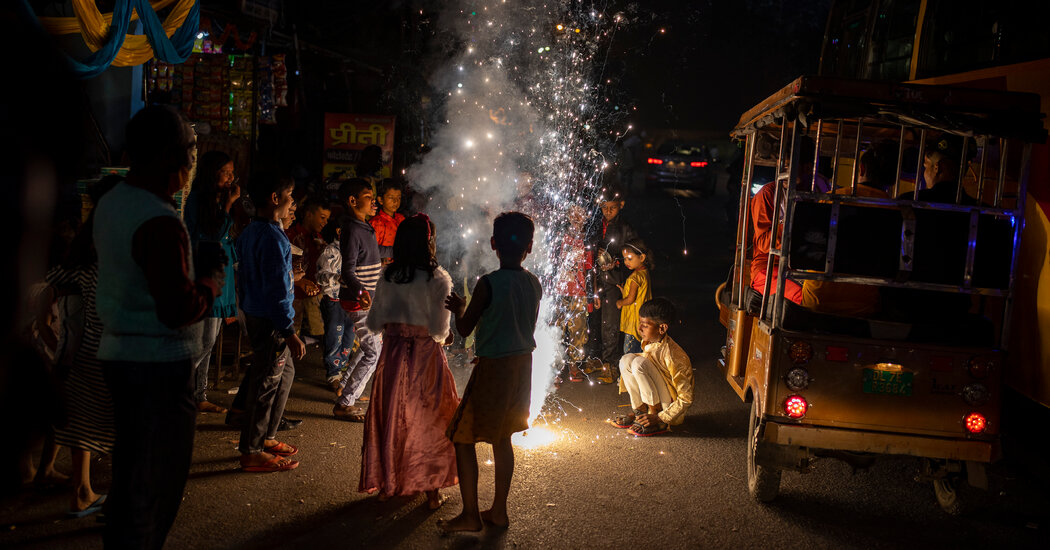
When a devastating second wave of coronavirus infections hit India in the spring, hospitals were overwhelmed with sick patients and crematories struggled to bury the dead as the bodies piled up.Now India is celebrating one its most important holidays — Diwali, the festival of lights — and many fear another wave of infections as millions gather for the celebrations.“We let our guard down on this Diwali,” said Dr. Thekkekara Jacob John, a former head of clinical virology at Christian Medical College in the southern Indian state of Tamil Nadu. “Despite government and health experts’ warnings, people think the virus is gone — it is not.”The holiday began on Thursday, and there is no data yet on what impact the festivities might be having on the country’s battle to curb the spread of the virus. But epidemiologists said that they already had concerns.People have been thronging markets with little social distancing, and hundreds of thousands traveled around the country this week to celebrate the holiday with their family members.“For this Diwali, people almost forgot the virus is still here and killing people,” said Dr. Prakash Singh, a virologist in New Delhi, India’s capital.Last year’s festival was observed without the usual fanfare of group prayers and fireworks. Then, the authorities deployed police officers in residential areas to restrict large gatherings. Hundreds of people in New Delhi were fined for breaching coronavirus restrictions..css-1xzcza9{list-style-type:disc;padding-inline-start:1em;}.css-3btd0c{font-family:nyt-franklin,helvetica,arial,sans-serif;font-size:1rem;line-height:1.375rem;color:#333;margin-bottom:0.78125rem;}@media (min-width:740px){.css-3btd0c{font-size:1.0625rem;line-height:1.5rem;margin-bottom:0.9375rem;}}.css-3btd0c strong{font-weight:600;}.css-3btd0c em{font-style:italic;}.css-1kpebx{margin:0 auto;font-family:nyt-franklin,helvetica,arial,sans-serif;font-weight:700;font-size:1.125rem;line-height:1.3125rem;color:#121212;}#NYT_BELOW_MAIN_CONTENT_REGION .css-1kpebx{font-family:nyt-cheltenham,georgia,’times new roman’,times,serif;font-weight:700;font-size:1.375rem;line-height:1.625rem;}@media (min-width:740px){#NYT_BELOW_MAIN_CONTENT_REGION .css-1kpebx{font-size:1.6875rem;line-height:1.875rem;}}@media (min-width:740px){.css-1kpebx{font-size:1.25rem;line-height:1.4375rem;}}.css-1gtxqqv{margin-bottom:0;}.css-16ed7iq{width:100%;display:-webkit-box;display:-webkit-flex;display:-ms-flexbox;display:flex;-webkit-align-items:center;-webkit-box-align:center;-ms-flex-align:center;align-items:center;-webkit-box-pack:center;-webkit-justify-content:center;-ms-flex-pack:center;justify-content:center;padding:10px 0;background-color:white;}.css-pmm6ed{display:-webkit-box;display:-webkit-flex;display:-ms-flexbox;display:flex;-webkit-align-items:center;-webkit-box-align:center;-ms-flex-align:center;align-items:center;}.css-pmm6ed > :not(:first-child){margin-left:5px;}.css-5gimkt{font-family:nyt-franklin,helvetica,arial,sans-serif;font-size:0.8125rem;font-weight:700;-webkit-letter-spacing:0.03em;-moz-letter-spacing:0.03em;-ms-letter-spacing:0.03em;letter-spacing:0.03em;text-transform:uppercase;color:#333;}.css-5gimkt:after{content:’Collapse’;}.css-rdoyk0{-webkit-transition:all 0.5s ease;transition:all 0.5s ease;-webkit-transform:rotate(180deg);-ms-transform:rotate(180deg);transform:rotate(180deg);}.css-eb027h{max-height:5000px;-webkit-transition:max-height 0.5s ease;transition:max-height 0.5s ease;}.css-6mllg9{-webkit-transition:all 0.5s ease;transition:all 0.5s ease;position:relative;opacity:0;}.css-6mllg9:before{content:”;background-image:linear-gradient(180deg,transparent,#ffffff);background-image:-webkit-linear-gradient(270deg,rgba(255,255,255,0),#ffffff);height:80px;width:100%;position:absolute;bottom:0px;pointer-events:none;}.css-1g3vlj0{font-family:nyt-franklin,helvetica,arial,sans-serif;font-size:1rem;line-height:1.375rem;color:#333;margin-bottom:0.78125rem;}@media (min-width:740px){.css-1g3vlj0{font-size:1.0625rem;line-height:1.5rem;margin-bottom:0.9375rem;}}.css-1g3vlj0 strong{font-weight:600;}.css-1g3vlj0 em{font-style:italic;}.css-1g3vlj0{margin-bottom:0;margin-top:0.25rem;}.css-19zsuqr{display:block;margin-bottom:0.9375rem;}.css-12vbvwq{background-color:white;border:1px solid #e2e2e2;width:calc(100% – 40px);max-width:600px;margin:1.5rem auto 1.9rem;padding:15px;box-sizing:border-box;}@media (min-width:740px){.css-12vbvwq{padding:20px;width:100%;}}.css-12vbvwq:focus{outline:1px solid #e2e2e2;}#NYT_BELOW_MAIN_CONTENT_REGION .css-12vbvwq{border:none;padding:10px 0 0;border-top:2px solid #121212;}.css-12vbvwq[data-truncated] .css-rdoyk0{-webkit-transform:rotate(0deg);-ms-transform:rotate(0deg);transform:rotate(0deg);}.css-12vbvwq[data-truncated] .css-eb027h{max-height:300px;overflow:hidden;-webkit-transition:none;transition:none;}.css-12vbvwq[data-truncated] .css-5gimkt:after{content:’See more’;}.css-12vbvwq[data-truncated] .css-6mllg9{opacity:1;}.css-qjk116{margin:0 auto;overflow:hidden;}.css-qjk116 strong{font-weight:700;}.css-qjk116 em{font-style:italic;}.css-qjk116 a{color:#326891;-webkit-text-decoration:underline;text-decoration:underline;text-underline-offset:1px;-webkit-text-decoration-thickness:1px;text-decoration-thickness:1px;-webkit-text-decoration-color:#326891;text-decoration-color:#326891;}.css-qjk116 a:visited{color:#326891;-webkit-text-decoration-color:#326891;text-decoration-color:#326891;}.css-qjk116 a:hover{-webkit-text-decoration:none;text-decoration:none;}Before this year’s gatherings, health officials in India had already been warning of a possible third wave of infections, even though the second wave has at best only leveled off. A relaxed attitude — combined with the holiday festivities — could hamper the country’s fight against the virus, they said.During the second wave in the spring, the country experienced one of the world’s worst coronavirus surges, reaching a tragic peak in early May of more than 400,000 cases reported per day, with 4,500 daily deaths.But as vaccinations picked up after a slow and chaotic initial rollout, India saw cases plummet. More than three out of four adults have now received at least one vaccine shot, according to government data. And Prime Minister Narendra Modi’s government recently lifted an eight-month ban on vaccine exports.More than 680,000 people flew from airports across the country on Monday in the lead-up to the festival, government officials said.The surge in travel was an apparent sign of confidence in the country’s inoculation campaign, with 54 percent of the population having received at least one shot and 25 percent having been fully inoculated, according to the Our World in Data project at the University of Oxford.During a strict lockdown from late March to late May last year, most of India’s Covid-19 cases were concentrated in urban areas. But as restrictions on interstate travel were eased, many people started moving from the cities to rural areas, bringing the virus with them. That is what experts fear might happen this time.On Friday, a throat-burning cloud settled over New Delhi, swallowing national monuments, as the air quality deteriorated to the “severe” category a day after Diwali. Despite a government ban, people had celebrated the holiday by setting off fireworks.Amit Tandon, a businessman in the northern Indian city of Chandigarh whose wife died during the second wave of infections in April, said that he was pained by the scenes of people celebrating the holiday while ignoring health restrictions.“When I saw people mixing together without masks and bursting firecrackers, my blood boiled,” he said. “Only those who lost their loved ones know how this disease can destroy families and lives.”

Read more →

Federal Government Cuts Ties With Troubled Vaccine Maker

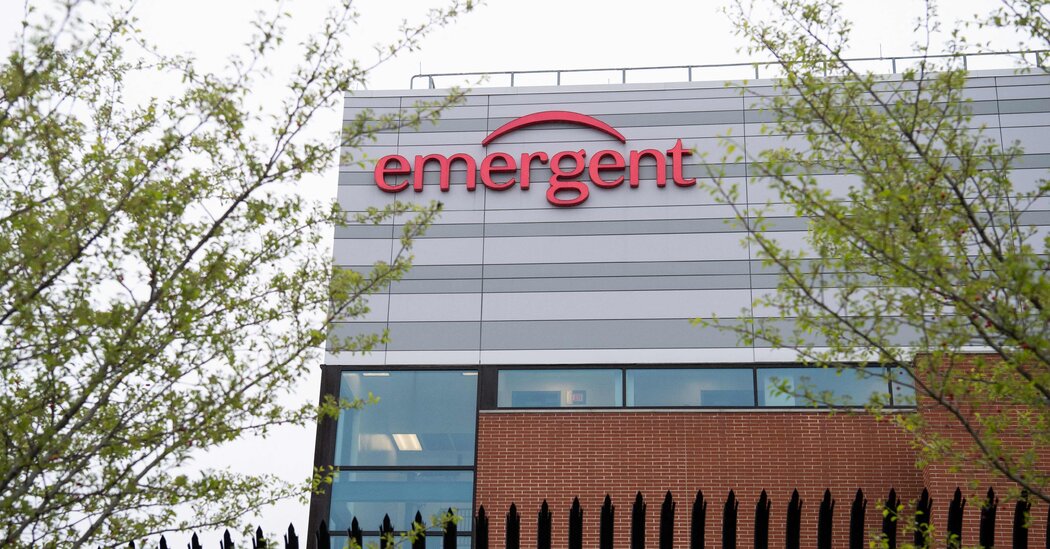
Emergent BioSolutions ruined millions of doses of Covid-19 vaccines. Now its $600 million deal is canceled.WASHINGTON — The federal government has canceled its contract with a troubled Covid-19 vaccine manufacturer that ruined millions of doses and had to halt production for months after regulators raised serious quality concerns.The decision marks a stark reversal of fortune for the politically connected contractor, Maryland-based Emergent BioSolutions, and an abandonment by the government of a deal that was supposed to be a centerpiece of Operation Warp Speed.Early in the pandemic, the government decided to bank on the company to be the sole domestic manufacturer of the Johnson & Johnson and AstraZeneca vaccines. But this March, testing found that a batch of the Johnson & Johnson vaccine had been contaminated, and Emergent agreed to pause manufacturing after an inspection uncovered a host of problems at its facility in Baltimore’s Bayview area.The termination of the contract, disclosed on Thursday by Emergent executives during a call with investors, was the result of negotiations that began after the government earlier this year stopped making payments under the deal, which was awarded in May 2020 and was worth more than $600 million. Emergent will now forgo roughly $180 million of that amount, according to company disclosures.The company said it would continue working with Johnson & Johnson to produce its vaccine in Baltimore because the arrangement with that company, while endorsed by the government, was not financed under the $600 million deal. While the site has not yet won regulators’ approval, it has resumed operations, and the Food and Drug Administration has allowed roughly 100 million doses to be released for potential use.The contract cancellation also brings an abrupt end to a nearly decade-old effort by the government that was intended to better prepare for a pandemic. In 2012, the Department of Health and Human Services gave Emergent a $163 million contract to expand the Baltimore site and ready it to rapidly produce vaccines in response to a novel virus.The decision disclosed on Thursday put a stop to that deal years before it was set to expire, leaving the facility without the stamp of approval that it had long touted in presentations to investors and potential clients.The Emergent chief executive, Robert Kramer, acknowledged during the investor call that the initiative, “as it was contemplated back in 2012, was a good idea at the time, but unfortunately it didn’t work out as it was anticipated.” Mr. Kramer also sought to put a positive spin on the breakup, writing in a guest essay in The Baltimore Sun that the health department had agreed to Emergent’s “request to end our 9-year pandemic manufacturing partnership.”Mr. Kramer laid blame on the government, even as he conceded that “not everything went perfectly” during the pandemic. “But if you want companies to engage,” he wrote, “you need to be willing to stand by them through both challenge and achievement.”But a senior Biden administration official, speaking on the condition of anonymity, disputed Mr. Kramer’s account. The official said that the health department had ended the contract, and that the termination was structured in such a way that the company would not fight it and the government would avoid a costly legal challenge. The company had been asking for payment since spring, the official added, but the government had not paid since the contamination was disclosed.When the pandemic arrived last year, the Baltimore site still had not won regulatory approval to mass-produce any approved product, and a government assessment warned that relying on the largely untested facility was risky.Mr. Kramer on Thursday said a lack of experience at the factory was attributable in large part to a lack of consistent government funding over the years. “The necessary operational investments by all administrations fell short of what was needed to maintain capability in case of an emergency,” he said.Since May, Emergent has said it expected federal regulators to soon certify vaccine production at the Baltimore plant. But regulators have yet to issue that certification, although they have certified Johnson & Johnson’s manufacturing operation in the Netherlands as well as plants that produce vaccines for Pfizer-BioNTech and Moderna vaccines.Instead of giving the Bayview plant a green light, the F.D.A. cleared multiple batches of AstraZeneca’s and Johnson & Johnson’s vaccines — and then only after special scrutiny, because of the plant’s problems. A batch can include as many as 15 million doses.The cancellation appears to have no impact on the availability of coronavirus vaccines in the United States. The contract only involved production of AstraZeneca’s vaccine, which is not authorized for distribution in the United States.Although Johnson & Johnson, one of only three federally authorized vaccines here, produced tens of millions of doses at the Baltimore plant, it did so under a separate contract with Emergent as its subcontractor.In a statement on Thursday, a spokesman for Johnson & Johnson said that “today’s announcement by Emergent BioSolutions will not impact our collaboration to produce our Covid-19 vaccine.” The company said it would continue to work with authorities to obtain certification of the Bayview site for production of its vaccine.Johnson & Johnson has played a comparatively minor role in the nation’s vaccination campaign. Slightly more than 15 million people have received one dose of the Johnson & Johnson shot, compared with nearly 71 million who have received two doses of the Moderna vaccine and 107 million who have received two doses of the Pfizer-BioNTech vaccine. In a series of regulatory decisions since mid-September, at least some recipients of all three vaccines became eligible for booster shots.The manufacturing problems at the Bayview site have affected immunization efforts outside the United States, delaying the distribution of vaccines in Canada, the European Union and South Africa.Executives emphasized during Thursday’s call that the cancellation would not affect the other government contracts that remain the core of Emergent’s business. In fact, the company noted, health officials this year committed to purchasing another $637 million worth of Emergent’s anthrax and smallpox products in coming months.The company also disclosed that Mary Oates, a former Pfizer executive who joined Emergent in November 2020 as a senior vice president overseeing manufacturing quality, was leaving “to pursue a new career opportunity.”In September, Emergent announced that it had reached a five-year agreement with Providence Therapeutics, a Canadian biotechnology company that specializes in mRNA vaccine therapies, to support that company’s Covid-19 mRNA vaccine development.“Emergent’s commitment to fight the Covid-19 pandemic is anchored in our partnerships with innovators who share the same mission to address public health threats around the world,” Adam R. Havey, the company’s executive vice president and chief operating officer, said in a statement at the time.Sharon LaFraniere and Sheryl Gay Stolberg contributed reporting.

Read more →

South Korea Toughens Measures as Virus Spreads Among Teens

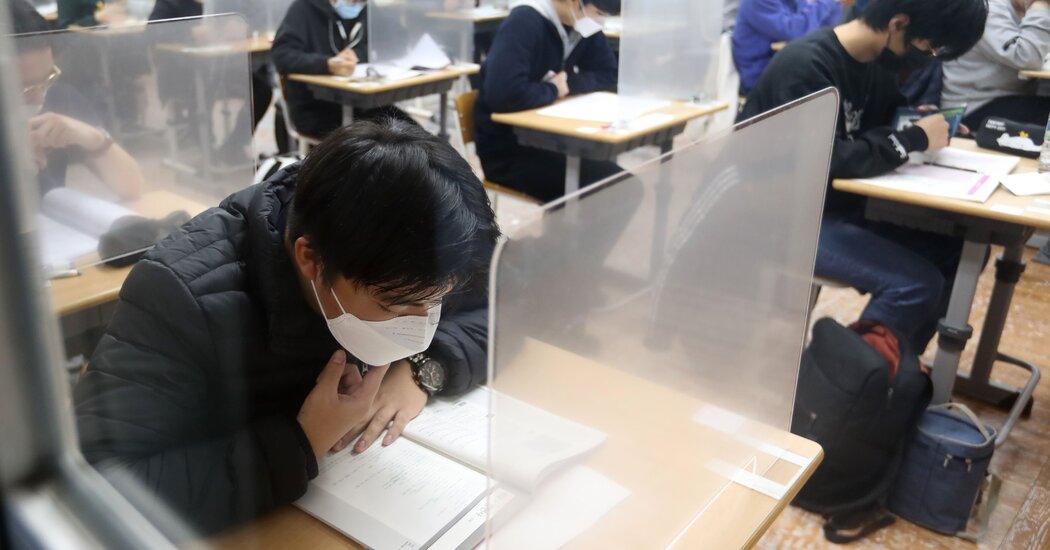
The decision comes as the country experiences rising caseloads again. The nine-hour test is seen as critical in determining students’ futures, and many have prepared for it since kindergarten.South Korea said on Thursday that it would hospitalize even asymptomatic high school seniors with Covid if they are taking the country’s high-stakes college entrance exam later this month, as the drive to vaccinate younger people lags and teenagers account for nearly a quarter of all Covid patients.The decision comes as South Korea experiences rising caseloads again. The annual nine-hour exam is seen as critical in determining students’ futures, and many of those taking the test have prepared for it since kindergarten.But because the test must be taken under supervision, the government has decided that those taking the Nov. 18 exam who test positive for the virus will have to do so from a hospital or quarantine facility, even if they show no symptoms.“We are preparing for the situation in which people may take the social-distancing rules less seriously as the country eases restrictions,” the Education Ministry said in a statement on Thursday, two weeks before half a million students will hunker down for the exams.As South Korea begins its phased easing of Covid restrictions, the risk of infections will “only increase,” particularly among younger people, who have lower vaccination rates, Son Young-rae, a Health Ministry spokesman, said on Wednesday.Only about 0.2 percent of people ages 17 and under, including those not yet eligible for shots, were fully vaccinated as of last week, according to data released by the Health Ministry on Oct. 27. South Korea began vaccinating those ages 16 to 17 on Oct. 18 and those ages 12 to 15 on Nov. 1.Since easing restrictions on Monday, the country has recorded more than 2,000 cases a day on average in the past week, an increase that officials are watching closely, Mr. Son said. More than 24 percent of Covid patients are teenagers, the interior and safety minister, Jeon Hae-cheol, said on Wednesday.The easing of restrictions, including the lifting of all limits on the operating hours of restaurants and bars, was a relief for many small-business owners, but it has also stirred fears about the possibility of outbreaks larger than the country has yet seen.“It feels like watching an approaching tsunami from a small boat,” said Dr. Joong-sik Eom, professor of infectious diseases who has treated Covid patients at Gachon University Gil Hospital in Incheon, in a Facebook post on Monday.As part of the phased reopening plan, the Education Ministry said that it would fully reopen elementary, middle and high schools nationwide on Nov. 22. But it said that it would make an exemption for high schools ahead of the college entrance exams, switching all instruction to remote learning starting on Nov. 11, a week before the exams, until the exams are over.For test takers with Covid, the ministry said that it had reserved 244 hospital beds. It said that it would also closely monitor cases and adherence to Covid rules at 320 cram schools nationwide.

Read more →

Bood metabolites associated with coffee consumption may affect kidney disease risk

Food and beverages may have important effects on kidney health, but the potential biological mechanisms involved are often unclear. New research in CJASN identifies several metabolites in the blood whose levels are altered by coffee consumption and may affect the risk of developing chronic kidney disease (CKD).
When Casey M. Rebholz, PhD, MS, MNSP, MPH (Johns Hopkins Bloomberg School of Public Health) and her colleagues examined 372 blood metabolites in 3,811 participants in the Atherosclerosis Risk in Communities study, a prospective community-based cohort, they found that 41 metabolites were associated with coffee consumption. When the team analyzed these metabolites in an additional 1,043 adults in the Bogalusa Heart Study, a community-based long-term epidemiological study, 20 of the 41 metabolites were also associated with coffee consumption in this group.
Higher levels of 3 of these coffee-related metabolites were significantly associated with higher risks of developing CKD: glycochenodeoxycholate, O-methylcatechol sulfate, and 3-methyl catechol sulfate.
Glycochenodeoxycholate, a lipid involved in primary bile acid metabolism, may contribute to potentially beneficial effects of coffee consumption on kidney health. O-methylcatechol sulfate and 3-methyl catechol sulfate, which are involved in metabolism of the preservative benzoate, may represent harmful aspects of coffee on the kidneys.
“A large body of scientific evidence has suggested that consuming a moderate amount of coffee is consistent with a healthy diet. We were able to identify one metabolite that supports this theory,” said Dr. Rebholz. “There were 2 other metabolites associated with coffee that surprisingly were associated with a higher risk of incident chronic kidney disease. These compounds were also associated with cigarette smoking, which may in part explain why these compounds were associated with higher risk of kidney disease.”
With more research on the metabolic underpinnings of the coffee-kidney relationship, these metabolites may point to processes that are relevant for preventing kidney disease through dietary modifications.
An accompanying editorial notes that it would have been interesting to see how the study’s results on metabolites associated with kidney disease after accounting for participants’ self-reported consumption of coffee. “Integrating these data types should provide a better understanding of the role coffee and other diet factors play in the development of CKD or other diseases,” the authors wrote.
Story Source:
Materials provided by American Society of Nephrology. Note: Content may be edited for style and length.

Read more →

Young Children Receive First Dose of Covid-19 Vaccine

Whether it’s reporting on conflicts abroad and political divisions at home, or covering the latest style trends and scientific developments, Times Video journalists provide a revealing and unforgettable view of the world.Whether it’s reporting on conflicts abroad and political divisions at home, or covering the latest style trends and scientific developments, Times Video journalists provide a revealing and unforgettable view of the world.

Read more →

Nerves may be key to blocking abnormal bone growth in tissue

Blocking a molecule that draws sensory nerves into musculoskeletal injuries prevents heterotopic ossification (HO), a process in which bone abnormally grows in soft tissue during healing, UT Southwestern researchers reported in a study. The findings, published in Nature Communications, suggest that drugs currently being tested in clinical trials to inhibit this molecule for pain relief could also protect against this challenging condition.
“Heterotopic ossification is an incredibly debilitating condition for which we have no truly effective therapies,” said study leader Benjamin Levi, M.D., Associate Professor of Surgery and in the Children’s Medical Center Research Institute at UT Southwestern and the Charles and Jane Pak Center for Mineral Metabolism and Clinical Research. “To be able to prevent HO from occurring after an injury while also decreasing pain would be a substantial step forward.”
HO occurs in a significant number of patients with musculoskeletal injuries or who undergo some surgeries. For example, about 20% of patients undergoing an initial hip replacement develop this abnormal bone growth, and for a second replacement of the same hip, that number rises to up to 80%. HO is also common in patients with large-area burns, traumatic elbow injuries, spinal cord injuries, and pelvic fractures, where it causes contractures that limit mobility. Although pain during healing is an obvious feature of these injuries and surgeries, Dr. Levi explained, it’s been unclear whether pain-sensing nerves play a role in its development.
To investigate this question, Dr. Levi and Johns Hopkins colleague Aaron W. James, M.D., Ph.D., co-led a team of researchers from six institutions to determine how HO is affected by sensory nerves. Using a mouse model, the researchers observed that sciatic nerve axons — long extensions of neurons — grew into the injury site before HO occurred. When the nerve axons were not present, HO did not develop.
In an effort to identify the signal that draws sensory nerve axons into the injury site, the researchers surveyed gene activity to determine which genes might be over- or under-producing proteins after injury. They found that the amount of one protein, called nerve growth factor (NGF), increased several-fold after injury, and it came from cells on the outside of blood vessels. Because nerve fibers usually travel the same routes as blood vessels, NGF seemed like a likely beacon to draw axons in.
Sure enough, when the researchers used a genetic technique to shut down NGF- signaling at the injury site, HO did not develop. The researchers achieved similar success by using small molecules or an investigational drug to block TrkA, the receptor to which NGF binds.
Dr. Levi noted that several drugs that aim to relieve pain by blocking NGF are currently in phase 3 clinical trials at other institutions. These drugs could serve a dual purpose in patients at risk for HO by preventing this condition from developing.
Story Source:
Materials provided by UT Southwestern Medical Center. Note: Content may be edited for style and length.

Read more →