California couple sue clinic for alleged IVF swap 'horror'

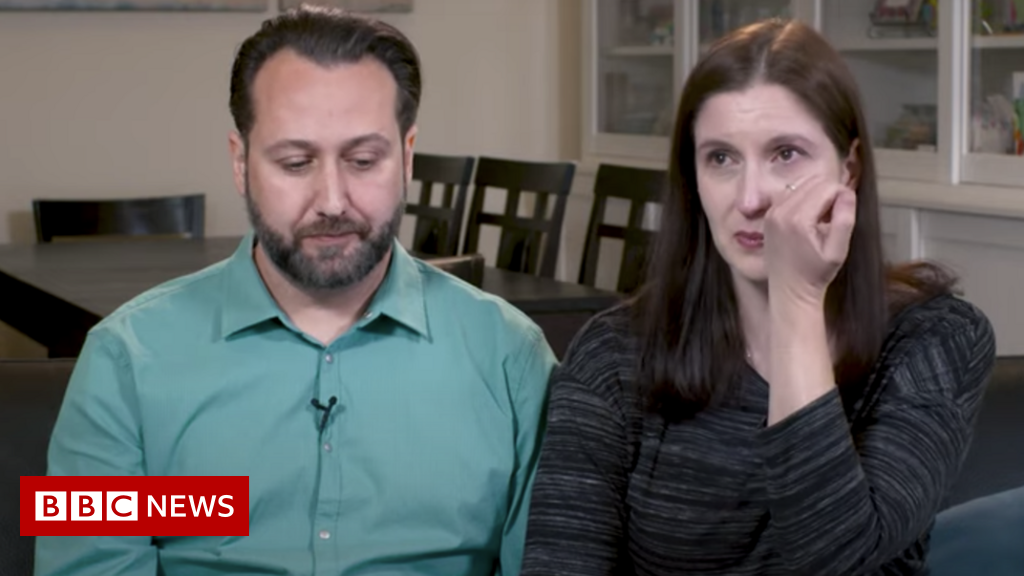
SharecloseShare pageCopy linkAbout sharingThis video can not be playedTo play this video you need to enable JavaScript in your browser.A California couple gave birth to a stranger’s child after being given the wrong embryo by a fertility clinic during in vitro fertilisation (IVF), says a lawsuit.Daphna and Alexander Cardinale say they gave birth in September 2019 to a girl that looked nothing like them.After a DNA test, they found the couple that carried their daughter to term, and together decided to swap the girls. This is not the first alleged mix-up during an IVF procedure.IVF is a procedure during which a woman’s eggs are fertilised by man’s sperm in a laboratory before the embryos are implanted into a woman’s uterus.The Cardinales are suing the Los Angeles-based fertility centre, the California Center for Reproductive Health (CCRH), as well as In VitroTech Labs, an embryology lab.The lawsuit alleges medical malpractice, negligence and fraudulent concealment. Neither company responded to a BBC News request for comment. In an emotional news conference on Monday, Mrs Cardinale said her family’s “heartbreak and confusion can’t be understated”.”Our memories of childbirth will always be tainted by the sick reality that our biological child was given to someone else, and the baby that I fought to bring into this world was not mine to keep.”Mrs Cardinale said she was “robbed of the ability to carry my own child”.According to the lawsuit, the couple sought help from the fertility clinic in the summer of 2018. Mrs Cardinale gave birth the next year to a child they thought was theirs. In the delivery room, Mr Cardinale had expected “a fair child”, like their firstborn, but he was surprised to see the baby girl “came out with much darker skin”, says the lawsuit.”It was so jarring that Alexander actually took several steps away from the birthing table, backing up against the wall,” reads the legal action.Nearly two months later the family decided to take at-home DNA tests, which ultimately determined they were not biologically related to the infant. “The room shrank and got really dizzy and everything just went numb,” Mr Cardinale said, recalling the moment the DNA results came back. The CCRH then helped them find the California couple who had carried their daughter and had given birth to another healthy girl a week apart. The Cardinales’ daughter was around four months old when they first met. After several meetings, the couples agreed to go through the legal process of formally exchanging the babies, which happened in January 2020.”Instead of breastfeeding my own child, I breastfed and bonded with a child I was later forced to give away,” Mrs Cardinale said at the news conference.She added that the incident has been hardest for the couple’s seven-year-old daughter, who has struggled to understand the swap. “The horror of this situation cannot be understated,” says the lawsuit.Mrs Cardinale, a licensed therapist, and her husband, a singer-songwriter, have since both sought mental-health treatment for “symptoms of anxiety, depression, and PTSD”, says the legal action.Adam B Wolf, a lawyer representing the Cardinales, said the other family in the mix-up also plans to sue, but will remain anonymous. In 2019, another California family discovered that their child had been born in New York. They sued the birth mother, who reportedly wanted to keep the child. The judge later ruled in favour of the genetic parents. This video can not be playedTo play this video you need to enable JavaScript in your browser.

Read more →

U.S. Urges Court Not to Block Vaccine Mandate on Employers

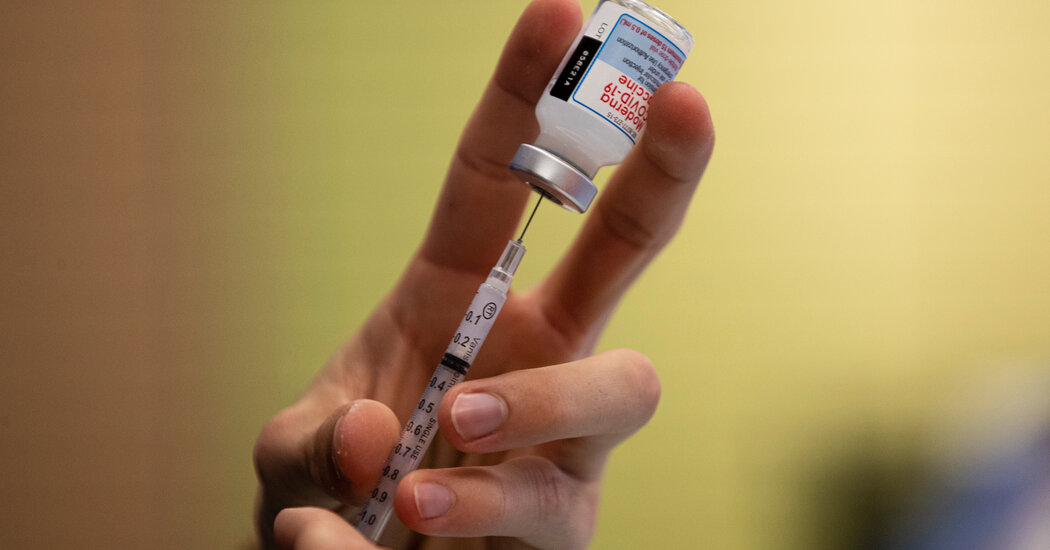
The Biden Justice Department filed its case before an appeals court that has temporarily halted the measure.WASHINGTON — The Biden administration on Monday argued that the federal government had all the power it needed to require large employers to mandate vaccination of their workers against the Covid-19 virus — or to require those who refuse the shots to wear masks and submit to weekly testing.In a 28-page filing before the United States Court of Appeals for the Fifth Circuit, which temporarily blocked the mandate with a nationwide stay last week, the Justice Department argued that the rule was necessarily to protect workers from the pandemic and was well grounded in law.Keeping the mandate from coming into effect “would likely cost dozens or even hundreds of lives per day, in addition to large numbers of hospitalizations, other serious health effects, and tremendous costs,” the Justice Department said in its filing. “That is a confluence of harms of the highest order.”The Occupational Safety and Health Administration, part of the Labor Department, issued the standard last week. The rule would force companies with at least 100 employees to require unvaccinated employees to wear masks indoors starting Dec. 5. Employees who remain unvaccinated by Jan. 4 would have to undergo weekly testing at work.A coalition of plaintiffs — including several employers, and Republican-controlled states — have challenged the mandate in court. Their lawsuit argued that the mandate is an unlawful overreach that exceeds the authority Congress has legitimately delegated to OSHA.The agency, several of the plaintiffs argued in a 20-page filing on Nov. 7, is an occupational safety organization with limited jurisdiction to protect workers from dangerous workplace substances like asbestos — “not a public health agency with wide-ranging authority to address communicable diseases through regulation.”They also argued that raising concerns about workplace safety was just a “pretext” for the Biden administration’s real agenda — pressuring more Americans to get vaccinated.Last week, a three-judge panel on the Fifth Circuit temporarily blocked the new standard, saying in a terse unsigned opinion that the challengers had given “cause to believe there are grave statutory and constitutional issues with the mandate.”The Fifth Circuit panel will now decide whether to lift its decision to block the mandate or make it permanent. But it is unlikely to have the final word.Some other legal challengers to the mandate are in different appeals court circuits, and the many pending challenges are expected to be consolidated before a randomly assigned appeals court later this month..css-1xzcza9{list-style-type:disc;padding-inline-start:1em;}.css-3btd0c{font-family:nyt-franklin,helvetica,arial,sans-serif;font-size:1rem;line-height:1.375rem;color:#333;margin-bottom:0.78125rem;}@media (min-width:740px){.css-3btd0c{font-size:1.0625rem;line-height:1.5rem;margin-bottom:0.9375rem;}}.css-3btd0c strong{font-weight:600;}.css-3btd0c em{font-style:italic;}.css-1kpebx{margin:0 auto;font-family:nyt-franklin,helvetica,arial,sans-serif;font-weight:700;font-size:1.125rem;line-height:1.3125rem;color:#121212;}#NYT_BELOW_MAIN_CONTENT_REGION .css-1kpebx{font-family:nyt-cheltenham,georgia,’times new roman’,times,serif;font-weight:700;font-size:1.375rem;line-height:1.625rem;}@media (min-width:740px){#NYT_BELOW_MAIN_CONTENT_REGION .css-1kpebx{font-size:1.6875rem;line-height:1.875rem;}}@media (min-width:740px){.css-1kpebx{font-size:1.25rem;line-height:1.4375rem;}}.css-1gtxqqv{margin-bottom:0;}.css-16ed7iq{width:100%;display:-webkit-box;display:-webkit-flex;display:-ms-flexbox;display:flex;-webkit-align-items:center;-webkit-box-align:center;-ms-flex-align:center;align-items:center;-webkit-box-pack:center;-webkit-justify-content:center;-ms-flex-pack:center;justify-content:center;padding:10px 0;background-color:white;}.css-pmm6ed{display:-webkit-box;display:-webkit-flex;display:-ms-flexbox;display:flex;-webkit-align-items:center;-webkit-box-align:center;-ms-flex-align:center;align-items:center;}.css-pmm6ed > :not(:first-child){margin-left:5px;}.css-5gimkt{font-family:nyt-franklin,helvetica,arial,sans-serif;font-size:0.8125rem;font-weight:700;-webkit-letter-spacing:0.03em;-moz-letter-spacing:0.03em;-ms-letter-spacing:0.03em;letter-spacing:0.03em;text-transform:uppercase;color:#333;}.css-5gimkt:after{content:’Collapse’;}.css-rdoyk0{-webkit-transition:all 0.5s ease;transition:all 0.5s ease;-webkit-transform:rotate(180deg);-ms-transform:rotate(180deg);transform:rotate(180deg);}.css-eb027h{max-height:5000px;-webkit-transition:max-height 0.5s ease;transition:max-height 0.5s ease;}.css-6mllg9{-webkit-transition:all 0.5s ease;transition:all 0.5s ease;position:relative;opacity:0;}.css-6mllg9:before{content:”;background-image:linear-gradient(180deg,transparent,#ffffff);background-image:-webkit-linear-gradient(270deg,rgba(255,255,255,0),#ffffff);height:80px;width:100%;position:absolute;bottom:0px;pointer-events:none;}.css-1g3vlj0{font-family:nyt-franklin,helvetica,arial,sans-serif;font-size:1rem;line-height:1.375rem;color:#333;margin-bottom:0.78125rem;}@media (min-width:740px){.css-1g3vlj0{font-size:1.0625rem;line-height:1.5rem;margin-bottom:0.9375rem;}}.css-1g3vlj0 strong{font-weight:600;}.css-1g3vlj0 em{font-style:italic;}.css-1g3vlj0{margin-bottom:0;margin-top:0.25rem;}.css-19zsuqr{display:block;margin-bottom:0.9375rem;}.css-12vbvwq{background-color:white;border:1px solid #e2e2e2;width:calc(100% – 40px);max-width:600px;margin:1.5rem auto 1.9rem;padding:15px;box-sizing:border-box;}@media (min-width:740px){.css-12vbvwq{padding:20px;width:100%;}}.css-12vbvwq:focus{outline:1px solid #e2e2e2;}#NYT_BELOW_MAIN_CONTENT_REGION .css-12vbvwq{border:none;padding:10px 0 0;border-top:2px solid #121212;}.css-12vbvwq[data-truncated] .css-rdoyk0{-webkit-transform:rotate(0deg);-ms-transform:rotate(0deg);transform:rotate(0deg);}.css-12vbvwq[data-truncated] .css-eb027h{max-height:300px;overflow:hidden;-webkit-transition:none;transition:none;}.css-12vbvwq[data-truncated] .css-5gimkt:after{content:’See more’;}.css-12vbvwq[data-truncated] .css-6mllg9{opacity:1;}.css-qjk116{margin:0 auto;overflow:hidden;}.css-qjk116 strong{font-weight:700;}.css-qjk116 em{font-style:italic;}.css-qjk116 a{color:#326891;-webkit-text-decoration:underline;text-decoration:underline;text-underline-offset:1px;-webkit-text-decoration-thickness:1px;text-decoration-thickness:1px;-webkit-text-decoration-color:#326891;text-decoration-color:#326891;}.css-qjk116 a:visited{color:#326891;-webkit-text-decoration-color:#326891;text-decoration-color:#326891;}.css-qjk116 a:hover{-webkit-text-decoration:none;text-decoration:none;}A Federal District Court judge in the District of Columbia separately declined on Monday to block the rule, and the issue is very likely to end up before the Supreme Court.Part of the Justice Department’s filing pointed to the process of randomly selecting an appeals court to consolidate the cases from across the country — and the fact that the deadlines for the mandate have not yet kicked in — as a reason for the Fifth Circuit to restrain itself. But other portions of the filing served as a preview of the administration’s broader arguments.The filing argued that OSHA had properly determined that potential exposure to the virus raised a “grave danger” to workers, in line with the standard Congress had laid out in the law. It also rejected the challengers’ contention that steps to reduce the risk of infection by a disease fell outside the sorts of workplace hazards that the agency had the power to regulate.The Justice Department wrote that “the statutory text is unambiguous and limited to addressing grave dangers to employees in the workplace. Like many other areas of regulation, workplace-safety regulations may affect many Americans and may touch on issues about which some people disagree. But that does not automatically compel a circumscribed interpretation of a deliberately broad congressional grant.”Karine Jean-Pierre, the principal deputy White House press secretary, said on Monday that it was routine for administration policies to face legal challenges and urged employers not to wait for the litigation to be completed before requiring their workers to get vaccinated — as some already have — or begin submitting to weekly testing.Noting that more than 750,000 Americans have died from Covid-19, with about 1,300 new deaths each day in the United States, she argued that the mandate was about protecting workers from the risk that they will be infected by the coronavirus.“This is an authority that we believe the Department of Labor has — we are very confident about it,” she said, adding: “This is about keeping people safe in the workplace, and it’s critical and it’s important to do.”The White House announced in September that the federal government would issue and encourage a series of vaccination mandates, including ones for federal workers, employees of federal contractors, and recipients of federal funding.“We’ve been patient,” Mr. Biden said at the time, referring to some 80 million Americans who have refused to get vaccinated, increasing the risk that the coronavirus finds new hosts to keep spreading through. “But our patience is wearing thin. And your refusal has cost all of us.”The litigation focuses on the part of Mr. Biden’s mandate plan that applies to companies that employ more than 100 workers. It relies on an emergency provision of the Occupational Safety and Health Act of 1970, which empowers the federal government to regulate workplaces to protect worker safety.At Mr. Biden’s direction, OSHA developed an “emergency temporary standard” based on a claim that workers face a “grave danger” at work from the virus and that mandating vaccinations or frequent testing is a necessary and feasible way for employers to reduce the danger of serious illness, hospitalization or death.The rule makes an exception for employees who do not come into close contact with other people at work, such as those who work at home or exclusively outdoors.The agency published the standard on Nov. 4, and the plaintiffs filed the lawsuit the next day.If the courts ultimately allow the rule to go into effect, OSHA would be empowered to collect reports of violations and send inspectors to examine workplaces, backed by fines that start at $13,650 per violation and can escalate to up to $136,500 per violation for willful or repeated offenses.In June, OSHA used the same authority to impose an emergency rule targeting health care employers. It required them to provide workers with protective equipment like masks and to ensure adequate ventilation and distancing, among other measures. But the agency has not previously used that power to impose a broad vaccine mandate on all large employers.

Read more →

Bedtime linked with heart health

Going to sleep between 10:00 and 11:00 pm is associated with a lower risk of developing heart disease compared to earlier or later bedtimes, according to a study published today in European Heart Journal — Digital Health, a journal of the European Society of Cardiology (ESC).
“The body has a 24-hour internal clock, called circadian rhythm, that helps regulate physical and mental functioning,” said study author Dr. David Plans of the University of Exeter, UK. “While we cannot conclude causation from our study, the results suggest that early or late bedtimes may be more likely to disrupt the body clock, with adverse consequences for cardiovascular health.”
While numerous analyses have investigated the link between sleep duration and cardiovascular disease, the relationship between sleep timing and heart disease is underexplored. This study examined the association between objectively measured, rather than self-reported, sleep onset in a large sample of adults.
The study included 88,026 individuals in the UK Biobank recruited between 2006 and 2010. The average age was 61 years (range 43 to 79 years) and 58% were women. Data on sleep onset and waking up time were collected over seven days using a wrist-worn accelerometer. Participants completed demographic, lifestyle, health and physical assessments and questionnaires. They were then followed up for a new diagnosis of cardiovascular disease, which was defined as a heart attack, heart failure, chronic ischaemic heart disease, stroke, and transient ischaemic attack.
During an average follow-up of 5.7 years, 3,172 participants (3.6%) developed cardiovascular disease. Incidence was highest in those with sleep times at midnight or later and lowest in those with sleep onset from 10:00 to 10:59 pm.
The researchers analysed the association between sleep onset and cardiovascular events after adjusting for age, sex, sleep duration, sleep irregularity (defined as varied times of going to sleep and waking up), self-reported chronotype (early bird or night owl), smoking status, body mass index, diabetes, blood pressure, blood cholesterol and socioeconomic status.
Compared to sleep onset from 10:00 to 10:59 pm, there was a 25% higher risk of cardiovascular disease with a sleep onset at midnight or later, a 12% greater risk for 11:00 to 11:59 pm, and a 24% raised risk for falling asleep before 10:00 pm. In a further analysis by sex, the association with increased cardiovascular risk was stronger in women, with only sleep onset before 10:00 pm remaining significant for men.
Dr. Plans said: “Our study indicates that the optimum time to go to sleep is at a specific point in the body’s 24-hour cycle and deviations may be detrimental to health. The riskiest time was after midnight, potentially because it may reduce the likelihood of seeing morning light, which resets the body clock.”
Dr. Plans noted that the reasons for the observed stronger association between sleep onset and cardiovascular disease in women is unclear. He said: “It may be that there is a sex difference in how the endocrine system responds to a disruption in circadian rhythm. Alternatively, the older age of study participants could be a confounding factor since women’s cardiovascular risk increases post-menopause — meaning there may be no difference in the strength of the association between women and men.”
He concluded: “While the findings do not show causality, sleep timing has emerged as a potential cardiac risk factor — independent of other risk factors and sleep characteristics. If our findings are confirmed in other studies, sleep timing and basic sleep hygiene could be a low-cost public health target for lowering risk of heart disease.”

Read more →

Rabbi Earl A. Grollman, 96, Dies; Sought to Demystify Death and Grief

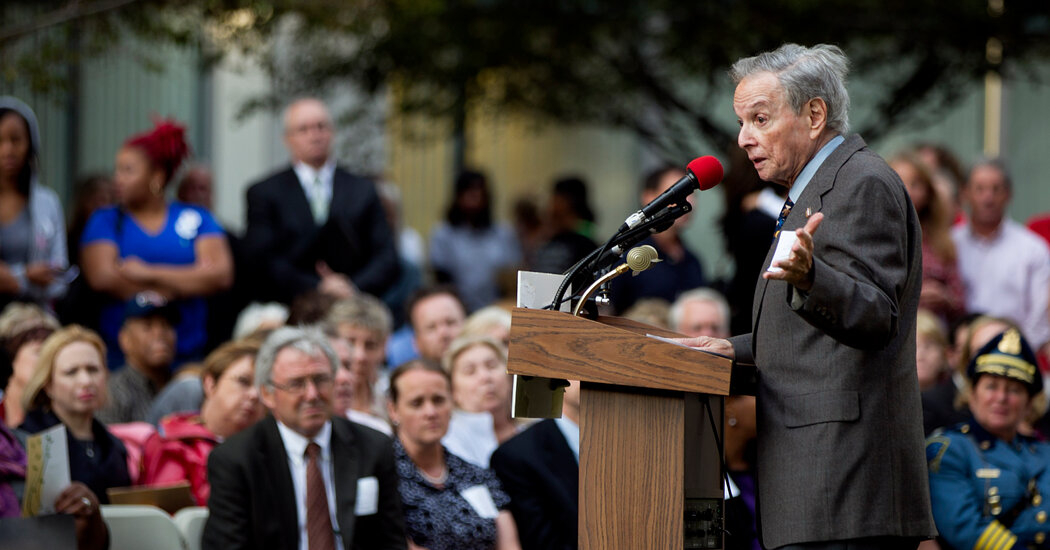
He wrote prolifically about grief, counseled the bereaved after 9/11 and the Oklahoma City bombing and paid particular attention to children. “Grief is the price we pay for love,” he’d say.Rabbi Earl A. Grollman, a prolific writer on grief who became widely known for ministering to those mourning the death of loved ones in the 9/11 attacks, the 1995 Oklahoma City bombing and other times of loss, died on Oct. 15 at his home in Belmont, Mass. He was 96.His daughter, Sharon Grollman, said that the cause was congestive heart failure.Rabbi Grollman was known nationally as an expert in the field of grief counseling, appearing on “Mister Rogers’s Neighborhood,” “The Oprah Winfrey Show” and other television programs. He ministered to people of all faiths, encouraging frank conversations about a topic that has often been taboo.He wrote more than two dozen books about death and grieving, including “Living When a Loved One Has Died” (1977), “Straight Talk About Death for Teenagers: How to Cope With Losing Someone You Love” (1993) and “Your Aging Parents: Reflections for Caregivers” (1997).His work took him to all corners of the country. After a far-right militant bombed the Alfred P. Murrah Federal Building in downtown Oklahoma City in 1955, killing 168 people, Rabbi Grollman flew in from Boston and made several presentations on dealing with grief. He spoke at the National Cowboy Hall of Fame in that city and met with survivors, family members and emergency medical workers.“One touch of sorrow makes the whole world kin,” he told The Daily Oklahoman in 1997, when he returned to the state to speak to emergency medical workers and others affected by the attack.Rabbi Grollman, who led the Beth El Temple Center in Belmont, Mass., for 36 years before retiring in 1987, was in Vancouver, British Columbia, attending a conference on bereavement on Sept. 11, 2001, when planes hijacked by Islamist militants crashed into the twin towers of the World Trade Center and the Pentagon. He said a member of his former congregation was a passenger aboard the fourth jetliner hijacked by the terrorists, United Airlines Flight 93, which was forced down into a field in Shanksville, Pa.“I’m telling people that the most important part for all of us at the moment is to feel free to feel all the reactions and feelings that we are experiencing,” Rabbi Grollman was quoted as saying in The Vancouver Sun.Indeed, he was a proponent of talking openly about dying and grief, something that came with difficulty for many people, he said. “Death has come out of the closet,” he told The New York Times in 1994.“For so many years people thought that if they didn’t talk about it, death would go away,” he continued. “It was the immorality of mortality. But for the first time, people are willing to acknowledge that living is the leading cause of death, and they want to talk about it.” He counseled mourners with his often-used adage “Grief is the price we pay for love.”His appearance on “Mister Rogers’ Neighborhood,” in 1981, was focused on the effect of divorce on children, and his message to them was that their negative feelings about their parents’ separation were OK, that they were natural.Jonathan Kraus, the current rabbi at the Belmont synagogue, outside Boston, said Rabbi Grollman’s work on children’s grief was an important part of his legacy. Rabbi Grollman, he said, understood that grief could be complicated for children but could translate those issues into simple language.“He had a capacity to make those ideas accessible without watering them down,” Rabbi Kraus said.Earl Alan Grollman was born on July 3, 1925, in Baltimore to Gerson and Dorah (Steinbach) Grollman. His mother taught Hebrew school; his father sold books and postcards at the city’s port.Earl became curious about grief at a young age. He recalled in an interview with Highmark Caring Place, an organization that helps young people deal with grief, that he had not been allowed to attend his grandmother’s funeral as a 14-year-old. The prevailing sentiment at the time was that children had no business experiencing death.He attended Hebrew Union College in Cincinnati and was ordained in 1950. He became an assistant rabbi at Temple Israel in Boston and then the rabbi of Beth El Temple Center in Belmont in 1951.At seminary, he said, he was not taught how to deal with death in a congregation, and this lack of communication about dying rankled him. After the death of a close friend, he wanted to counsel the bereaved family. But there were scant resources available that discussed death and grief in detail, he said.He published his first book on the topic, “Talking about Death: A Dialogue Between Parent and Child,” in 1970.Rabbi Grollman married Netta Levinson in 1949. Along with his daughter, his wife survives him, as do their sons, David and Jonathan; six grandchildren; and five great-grandchildren. His brother, Jerome, who died in 2008, was also a rabbi and led the United Hebrew Congregation in St. Louis.After Rabbi Grollman retired from Beth El to focus on writing and counseling, he returned there occasionally to recite the Yizkor, a memorial prayer for the dead, and regularly addressed the congregation into his 90s.“Obsessing about death can lead to paralysis, while ignoring it can squander opportunity,” he told The Times in 1994. “The important thing about death is the importance of life. Do what you have to do now. Live today meaningfully.”

Read more →

More Than 40 Nations Pledge to Cut Emissions From Their Health Industries

The plans, while short on specifics, represent a notable step toward cutting greenhouse gas emissions from hospitals and the health care industry, a sizable emitter globally.More than 40 countries have pledged to cut greenhouse-gas emissions across their health systems, World Health Organization officials said late Monday, representing the largest global effort to date to try to reduce contributions by the world’s hospitals and health care industry to global warming.“This announcement is huge,” said Josh Karliner, the international director of program and strategy at Health Care Without Harm, a nonprofit that has worked to reduce the environmental impact of the health care sector. It is designed to put the industry on a path toward “net zero” emissions of greenhouse gases, he said, and “What it implies is that the way health care is provided is going to be fundamentally transformed.”The governments of 42 countries have said they will lower their emissions of carbon dioxide, the main greenhouse gas that is warming the world, across their health systems. Twelve countries have pledged to reach net zero carbon dioxide emissions before 2050.The pledges have come from high-income countries including the United States, Britain and Germany, as well as several low- and middle-income countries that are already among the most vulnerable to the effects of climate change, such as the Bahamas, Fiji and the Maldives.The health care sector accounts for almost five percent of global carbon dioxide emissions. If it were a country, it would be the fifth largest emitter.Many of the pledges represent initial commitments that will need to be bolstered with more specific details on how the goals might be achieved.At this week’s global climate summit in Glasgow, the issue of public health has taken on a higher profile than at any previous United Nations climate conference. For the first time there is a dedicated health pavilion, and a series of panels, speeches, and lectures outlining the effects of climate change on health.They included emotional pleas by mothers of children suffering from air pollution, including Rosamund Adoo-Kissi-Debrah, who spoke with Alok Sharma, the head of the conference, on Friday and whose daughter’s death from asthma was attributed to air pollution. There have also been presentations of new technologies, including the introduction of a zero-emissions ambulance.There is already a sizable body of research showing that climate change is contributing to a wide range of health risks around the world. It is exacerbating heat waves, intensifying wildfires, heightening flood risks and worsening droughts. These are, in turn, increasing heat-related mortality, pregnancy complications and cardiovascular disease. And as with many things climate-related, the risks and harms are particularly severe in places that are the least able to respond.The United States, which accounts for more than a quarter of health-sector carbon dioxide emissions globally, joined in the commitment to clean up its health sector. Admiral Rachel Levine, the assistant secretary of the Department of Health and Human Services, said the government would reduce emissions at federal health facilities, which could include those operated by the Department of Defense and the Department of Veterans Affairs, and would provide incentives, guidance and assistance to privately operated health facilities to make similar reductions.Nineteen private health care systems in the United States have already committed to reducing their greenhouse gas emissions.The Biden Administration has said that by 2030 the United States will aim to reduce greenhouse gas emissions by 50 to 52 percent from 2005 levels across the economy. Health care accounts for 8.5 percent of the country’s greenhouse gas emissions.The federal Health and Human Services department said it planned to lay out more details Tuesday morning in a public statement in Glasgow. Carrying out these commitments will require countries to significantly retool their health care sectors.For high income countries, that would include making the health care sector more energy efficient and less wasteful, but also would likely require the transformation of overall energy grids to supply clean energy. For low- and middle-income countries, whose populations may not have regular access to health care or where health care facilities don’t have reliable energy, it will likely require building new and greener facilities at the same time as they are expanding health care coverage.In a closed-door meeting on Monday, international funders including USAID, the World Bank, and the Green Climate Fund had an initial conversation about how they would support the commitments made by low- and middle- income countries.“In the midst of the pandemic, we had to recover from extreme weather events and manage the resulting health impacts,” said Ifereimi Waqainabete, Fiji’s Minister for Health and Medical Services, in a statement. It “has shown us that health systems and facilities are the main line of defense in protecting populations from emerging threats.”

Read more →

Scientists Fight a New Source of Vaccine Misinformation: Aaron Rodgers

The Green Bay Packers quarterback, one of the most visible athletes in the country, last week used anti-vaccination rhetoric as his reasoning for not getting vaccinated against Covid-19.This spring, he was auditioning to be the host of “Jeopardy!” Nearly every day, he pops up on television ads for national brands like State Farm insurance. And on Sundays this fall, he has led the Green Bay Packers to a division-best 7-2 record.Quarterback Aaron Rodgers is not just the N.F.L.’s reigning most valuable player, he’s a celebrity who transcends the nation’s most popular sport, a household name on par with Tom Brady and Patrick Mahomes.So when news broke that he tested positive for the coronavirus last week and was unvaccinated, Rodgers justified his decision to not get vaccinated by speaking out against the highly effective vaccines and spewing a stream of misinformation and junk science. Medical professionals were disheartened not just because it will make it harder for them to persuade adults to get vaccinated, but because they are also starting to vaccinate 5- to 11-year-olds.“When you’re a celebrity, you are given a platform,” said Dr. Paul A. Offit, the director of the Vaccine Education Center at the Children’s Hospital of Philadelphia. “When you choose to do what Aaron Rodgers is doing, which is to use the platform to put out misinformation that could cause people to make bad decisions for themselves or their children, then you have done harm.”The N.F.L. is investigating whether Rodgers and the Packers violated any of the league’s expansive Covid-19 protocols, which were developed with the N.F.L. Players Association. Rodgers admitted to flouting those protocols, including attending a Halloween party with teammates where he appeared in videos unmasked. The Packers and Rodgers could be fined hundreds of thousands of dollars for failing to adhere to the rules.Rodgers is in the midst of a 10-day isolation period and did not play in the Packers’ 13-7 loss to Kansas City on Sunday. Like all unvaccinated N.F.L. players who test positive, Rodgers must provide two negative tests, taken 24 hours apart, after his isolation to return to the field, which could come as soon as Saturday.The lasting damage from Rodgers’s stance, though, cannot be measured in dollars or games lost or won. Vaccination rates in the N.F.L. are very high compared to the general population. Nearly every coach and staff member who is around players is vaccinated, and 94 percent of the 2,000 or so players have also been inoculated, according to the league.But given how popular the league is, even the handful of unvaccinated players get outsize attention. Wide receiver Cole Beasley of the Buffalo Bills, and quarterbacks Kirk Cousins of the Minnesota Vikings and Carson Wentz of the Indianapolis Colts have all been criticized for choosing to remain unvaccinated.But they were upfront about their decisions. Rodgers, by contrast, evaded answering directly when asked if he was vaccinated. He said he was immunized and gestured with his fingers in the air to indicate quotation marks around the word “immunized,” a suggestion that he was trying to be ironic.Rodgers admitted to flouting the league’s expansive Covid-19 protocols, which were developed with the N.F.L. Players Association.Matt Ludtke/Associated PressIn an interview on The Pat McAfee Show last week, Rodgers said he followed his own “immunization protocol,” though he did not provide details about what it entailed. But vaccination and natural infection are the only ways to gain immunity to the virus, scientists said.In the interview, Rodgers fueled the controversy further by trying to distance himself from conspiracy theorists. “I’m not, you know, some sort of anti-vax, flat-earther,” he said. “I am somebody who’s a critical thinker.”But many of his statements on the show echo those made by people in the anti-vaccine movement.“Aaron Rodgers is a smart guy,” said David O’Connor, a virologist at the University of Wisconsin-Madison and a Packers fan. But, he added, “He’s still vulnerable to the blind side blitz of misinformation.”In the interview, Rodgers suggested that the fact that people were still getting, and dying from, Covid-19, meant that the vaccines were not highly effective.Although imperfect, the vaccines provide extremely strong protection against the worst outcomes of infection, including hospitalization and death. Unvaccinated Americans, for instance, are roughly 10 times more likely to be hospitalized and 11 times more likely to die from Covid-19 than vaccinated Americans, according to a study by the Centers for Disease Control and Prevention.“As far as the people who are in the hospital with Covid, overwhelmingly, those are unvaccinated people,” said Angela Rasmussen, a virologist at the Vaccine and Infectious Disease Organization at the University of Saskatchewan. “And transmission is being driven overwhelmingly by unvaccinated people to other unvaccinated people.”.css-1xzcza9{list-style-type:disc;padding-inline-start:1em;}.css-3btd0c{font-family:nyt-franklin,helvetica,arial,sans-serif;font-size:1rem;line-height:1.375rem;color:#333;margin-bottom:0.78125rem;}@media (min-width:740px){.css-3btd0c{font-size:1.0625rem;line-height:1.5rem;margin-bottom:0.9375rem;}}.css-3btd0c strong{font-weight:600;}.css-3btd0c em{font-style:italic;}.css-1kpebx{margin:0 auto;font-family:nyt-franklin,helvetica,arial,sans-serif;font-weight:700;font-size:1.125rem;line-height:1.3125rem;color:#121212;}#NYT_BELOW_MAIN_CONTENT_REGION .css-1kpebx{font-family:nyt-cheltenham,georgia,’times new roman’,times,serif;font-weight:700;font-size:1.375rem;line-height:1.625rem;}@media (min-width:740px){#NYT_BELOW_MAIN_CONTENT_REGION .css-1kpebx{font-size:1.6875rem;line-height:1.875rem;}}@media (min-width:740px){.css-1kpebx{font-size:1.25rem;line-height:1.4375rem;}}.css-1gtxqqv{margin-bottom:0;}.css-16ed7iq{width:100%;display:-webkit-box;display:-webkit-flex;display:-ms-flexbox;display:flex;-webkit-align-items:center;-webkit-box-align:center;-ms-flex-align:center;align-items:center;-webkit-box-pack:center;-webkit-justify-content:center;-ms-flex-pack:center;justify-content:center;padding:10px 0;background-color:white;}.css-pmm6ed{display:-webkit-box;display:-webkit-flex;display:-ms-flexbox;display:flex;-webkit-align-items:center;-webkit-box-align:center;-ms-flex-align:center;align-items:center;}.css-pmm6ed > :not(:first-child){margin-left:5px;}.css-5gimkt{font-family:nyt-franklin,helvetica,arial,sans-serif;font-size:0.8125rem;font-weight:700;-webkit-letter-spacing:0.03em;-moz-letter-spacing:0.03em;-ms-letter-spacing:0.03em;letter-spacing:0.03em;text-transform:uppercase;color:#333;}.css-5gimkt:after{content:’Collapse’;}.css-rdoyk0{-webkit-transition:all 0.5s ease;transition:all 0.5s ease;-webkit-transform:rotate(180deg);-ms-transform:rotate(180deg);transform:rotate(180deg);}.css-eb027h{max-height:5000px;-webkit-transition:max-height 0.5s ease;transition:max-height 0.5s ease;}.css-6mllg9{-webkit-transition:all 0.5s ease;transition:all 0.5s ease;position:relative;opacity:0;}.css-6mllg9:before{content:”;background-image:linear-gradient(180deg,transparent,#ffffff);background-image:-webkit-linear-gradient(270deg,rgba(255,255,255,0),#ffffff);height:80px;width:100%;position:absolute;bottom:0px;pointer-events:none;}.css-1g3vlj0{font-family:nyt-franklin,helvetica,arial,sans-serif;font-size:1rem;line-height:1.375rem;color:#333;margin-bottom:0.78125rem;}@media (min-width:740px){.css-1g3vlj0{font-size:1.0625rem;line-height:1.5rem;margin-bottom:0.9375rem;}}.css-1g3vlj0 strong{font-weight:600;}.css-1g3vlj0 em{font-style:italic;}.css-1g3vlj0{margin-bottom:0;margin-top:0.25rem;}.css-19zsuqr{display:block;margin-bottom:0.9375rem;}.css-12vbvwq{background-color:white;border:1px solid #e2e2e2;width:calc(100% – 40px);max-width:600px;margin:1.5rem auto 1.9rem;padding:15px;box-sizing:border-box;}@media (min-width:740px){.css-12vbvwq{padding:20px;width:100%;}}.css-12vbvwq:focus{outline:1px solid #e2e2e2;}#NYT_BELOW_MAIN_CONTENT_REGION .css-12vbvwq{border:none;padding:10px 0 0;border-top:2px solid #121212;}.css-12vbvwq[data-truncated] .css-rdoyk0{-webkit-transform:rotate(0deg);-ms-transform:rotate(0deg);transform:rotate(0deg);}.css-12vbvwq[data-truncated] .css-eb027h{max-height:300px;overflow:hidden;-webkit-transition:none;transition:none;}.css-12vbvwq[data-truncated] .css-5gimkt:after{content:’See more’;}.css-12vbvwq[data-truncated] .css-6mllg9{opacity:1;}.css-qjk116{margin:0 auto;overflow:hidden;}.css-qjk116 strong{font-weight:700;}.css-qjk116 em{font-style:italic;}.css-qjk116 a{color:#326891;-webkit-text-decoration:underline;text-decoration:underline;text-underline-offset:1px;-webkit-text-decoration-thickness:1px;text-decoration-thickness:1px;-webkit-text-decoration-color:#326891;text-decoration-color:#326891;}.css-qjk116 a:visited{color:#326891;-webkit-text-decoration-color:#326891;text-decoration-color:#326891;}.css-qjk116 a:hover{-webkit-text-decoration:none;text-decoration:none;}Rodgers also expressed concern that the vaccines might cause fertility issues, a common talking point in the anti-vaccine movement. There is no evidence that the vaccines affect fertility in men or women.“Those allegations have been made since the vaccines first came on the scene, and they clearly have been addressed many, many times over,” said Dr. William Schaffner, a vaccine expert at Vanderbilt University. He added, “The vaccines are safe and stunningly effective.”There are a few potentially serious adverse events that have been linked to the vaccines, including a clotting disorder and an inflammation of the heart muscle, but they are very rare. Experts agree that the health risks associated with Covid-19 overwhelmingly outweigh those of vaccination.Rodgers said he ruled out the mRNA vaccines, manufactured by Pfizer and Moderna, because he had an allergy to an unspecified ingredient they contained.Such allergies are possible — a small number of people are allergic to polyethylene glycol, which is in the Pfizer and Moderna vaccines — but extremely rare. For instance, there were roughly 11 cases of anaphylaxis, a severe allergic reaction, for every million doses of the Pfizer vaccine administered, according to one C.D.C. study.Vaccination rates in Wisconsin, where 63 percent of state residents have had at least one vaccine dose, lag behind the national average of 67 percent.Charlie Riedel/Associated PressThe public health agency recommends that people with a known allergy to an ingredient in one of the mRNA vaccines not get those vaccines, but some scientists expressed skepticism that Rodgers truly had a known, documented allergy. Even if he did, he may have been eligible for the Johnson & Johnson vaccine, which relies on a different technology.Rodgers also took aim at the N.F.L., almost daring the league to fine him. He claimed, for instance, that the league sent a “stooge” to the Packers’ training camp to “shame” the players into getting vaccinated. He said he did not follow some protocols, like wearing a mask when speaking with reporters, because he did not agree with them.Like many star athletes, Rodgers has worked hard to shape his own narrative. But that can come at a cost, as the pushback to his comments has shown.“The challenge for players now is it’s so easy for them to go on podcasts and tweet,” said Brad Shear, a lawyer who advises N.F.L. players on technology and social media. “I tell players to stay on script, have notes handy and when you get a tough question, deflect. His interview was like a car crash that got worse and worse.”Though the league has no timeline for finishing its investigation, the blowback has been swift. Prevea Health, a primary care provider in Wisconsin, ended its partnership with Rodgers the day after his interview went public. State Farm, which has employed Rodgers as a spokesman for years, said it did not support some of the statements Rodgers made (without specifying which), but that it respects “everyone’s right to make a choice.”On Sunday, just 1.5 percent of all televised State Farm ads included Rodgers, compared to around 25 percent the previous two Sundays, according to data collected by Apex Marketing, which monitors and tracks national media and branding.Television commentators, including the Hall of Fame quarterback Terry Bradshaw, also called out Rodgers for potentially putting his teammates in jeopardy and not being honest. Basketball legend Kareem Abdul-Jabbar went one step further. “Aaron Rodgers didn’t just lie he also damaged professional sports,” he wrote.Rodgers is no stranger to controversy. Through much of his 16-year N.F.L., he has created an image as a contrarian on a range of issues. In late April, ESPN reported that Rodgers was so “disgruntled” with the Packers that he told members of the team that he did not want to return to Green Bay. The team’s general manager, Brian Gutekunst, who was busy preparing for the draft, had to state publicly that Rodgers would not be traded.Rodgers also used his knack for calculated disruption in 2020, when he tried to convince other players to vote against a proposed labor deal because it contained a path toward adding a 17th game to the regular season. (The players narrowly approved the agreement.)Rodgers has made news not just because he is an elite quarterback, but because he’s an elite quarterback in the country’s most popular sports league. Every issue is magnified when the N.F.L. is involved, whether it is bullying, domestic violence, protests during the national anthem and other issues. That’s why Rodgers’s stance on vaccines has caused so much anxiety among scientists.Dr. O’Connor said that he “cringed” when he heard that Rodgers had not been vaccinated, especially given how many people in Wisconsin have yet to get their shots; 63 percent of state residents have had at least one vaccine dose, compared to a 67 percent rate nationally.“Within the community where he plays, there is still a lot of work to be done to improve vaccine uptake,” he said.The timing, coming just as the vaccination campaign for young children gets underway, is particularly unfortunate, Dr. Schaffner said.“He is such a highly regarded and highly admired sports figure,” he said of Rodgers. “We would want clear role modeling there to get the vaccine, and we certainly don’t want role modeling of duplicitous behavior.”

Read more →

Blood plasma protein fibrinogen interacts directly with nerve cells to cause brain inflammation

Neuroinflammatory diseases, including Alzheimer’s disease and traumatic brain injury, have been linked to deposits of a tough protein known as fibrin, derived from the blood clotting factor fibrinogen. These mesh-like fibrin deposits occur outside blood vessels in the brain, contributing to the death of certain central nervous system cells (neurons) that eventually leads to impaired memory.
Now for the first time, a team at the University of South Florida Health (USF Health) Morsani College of Medicine, reports that before soluble fibrinogen is converted into insoluble fibrin molecules that can adversely accumulate, it can connect directly with neurons and cause a damaging inflammatory reaction. The researchers further discovered that fibrinogen specifically binds to two fibrinogen receptors on the surface of neurons: cellular prion protein (PrPC) and intracellular adhesion molecule-1 (ICAM-1).
Their preclinical study was published Sept. 18 in a special issue entitled “Prions and Prion-Like Mechanisms in Disease and Biological Function” in MDPI-Biomolecules.
The findings have implications for identifying targeted therapies to help prevent or stop neurodegeneration in Alzheimer’s disease, traumatic brain injury, or other chronic neuroinflammatory diseases associated with abnormal vascular permeability (leakage) in the brain.
“Fibrinogen is one of the overlooked culprits involved in the processes of neurodegeneration and resulting memory loss,” said principal investigator David Lominadze, PhD, a USF Health professor of surgery, and molecular pharmacology and physiology. “Our study shows that fibrinogen is not only a marker (biological indicator) of inflammation but can be a cause of inflammation in the brain.”
Fibrinogen is a protein naturally produced in the liver and travels throughout the bloodstream to other organs and tissues. Outside of blood vessels, fibrinogen is converted by the enzyme thrombin into fibrin during blood clot formation, playing a key role in wound healing.

Read more →

New study pinpoints likely path of COVID-related plastic waste in the ocean

Around the world, the COVID-19 pandemic has led to an increased demand for single-use plastics such as face masks, gloves, and face shields. The resulting waste, some of which ends up in rivers and oceans, is intensifying pressure on an already out-of-control global plastic problem. While many researchers suspect there will be a massive influx of COVID-related mismanaged plastic waste, a new study is the first to project the magnitude and fate of the waste in the oceans.
Led by a team of researchers at Nanjing University’s School of Atmospheric Sciences and UC San Diego’s Scripps Institution of Oceanography, the study uses a newly developed ocean plastic numerical model to quantify the impact of the pandemic on plastic discharge from land sources. Graduate students Yiming Peng and Peipei Wu of Nanjing University led the research, which was published Nov. 8 in thejournal Proceedings of the National Academy of Sciences.
Using the model, the researchers found that more than eight million tons of pandemic-associated plastic waste have been generated globally, with more than 25,000 tons entering the global ocean. Within three to four years, a significant portion of this ocean plastic debris is expected to make its way onto either beaches or the seabed. A smaller portion will go into the open ocean, eventually to be trapped in the centers of ocean basins or subtropical gyres, which can become garbage patches, and a circumpolar plastic accumulation zone in the Arctic Ocean.
The researchers incorporated data from the start of the pandemic in 2020 through August 2021, finding that most of the global plastic waste entering the ocean is coming from Asia, with hospital waste representing the bulk of the land discharge. The study reveals the need for better management of medical waste in developing countries.
“When we started doing the math, we were surprised to find that the amount of medical waste was substantially larger than the amount of waste from individuals, and a lot of it was coming from Asian countries, even though that’s not where most of the COVID-19 cases were,” said study co-author Amina Schartup, an assistant professor at Scripps Oceanography. “The biggest sources of excess waste were hospitals in areas already struggling with waste management before the pandemic; they just weren’t set up to handle a situation where you have more waste.”
Devised by the research team, the Nanjing University MITgcm-plastic model (NJU-MP) used in this study works like “a virtual reality,” explained Yanxu Zhang, the corresponding author and a professor at the School of Atmospheric Sciences at Nanjing University. He said the model was built based on Newton’s laws of motion and the law of conservation of mass.

Read more →

A new tool for studying COVID's impact on gut health

Most of us are familiar with COVID-19’s hallmark symptoms of a loss of taste or smell and difficulty breathing, but a full 60% of patients infected with SARS-CoV-2 also report gastrointestinal symptoms (GI) such as nausea, diarrhea, and stomach pain. Infection of the gut, which expresses high levels of the ACE2 receptor protein that SARS-CoV-2 uses to enter cells, is correlated with more severe cases of COVID-19, but the exact interactions between the virus and intestinal tissue is difficult to study in human patients. Animal models, while useful, do not fully reflect how human organs react to infection by pathogens, further limiting our current understanding of how coronaviruses like SARS-CoV-2 affect the gut.
To solve that problem, a team of scientists at the Wyss Institute for Biologically Inspired Engineering at Harvard University and several other Wyss partner organizations in Boston used a human Intestine Chip previously developed at the Institute to study coronavirus infection and potential treatments in an environment that mimics the human intestine more effectively than cells grown in a dish.
They infected the Intestine Chip with a coronavirus called NL63 that causes the common cold and, like SARS-CoV-2, uses the ACE2 receptor to enter cells, and then tested the effects of various drugs that have been proposed for treating SARS-CoV-2 infection. They found that a drug called nafamostat reduced infection while the drug remdesivir, which has been used to treat COVID-19 patients, did not reduce infection and actually damaged the intestinal tissue. This new preclinical model, which could be used to identify drugs that can target GI symptoms associated with both the common cold and SARS-CoV-2 virus infections in the future, is described in Frontiers in Pharmacology.
Toxic treatment
Most in vitro studies of coronavirus infection are performed in organoids (blobs of human organ cells grown in a dish), which lack many of the features of living tissues in human organs. Organ Chips address this issue by providing a physiological environment that recreates the tissue-tissue contact and other physical conditions that organ cells experience in the human body. The Intestine Chip is a device about the size of a USB memory stick made of a clear, flexible polymer through which run two parallel channels: one lined with human blood vessel cells, the other with human intestinal lining cells. A permeable membrane between the two channels ensures that the cells can exchange molecular messengers, and that substances can be delivered into the blood via the gut, mimicking digestion. The tissues in the Intestine Chip are continuously stretched and released to recreate the rhythmic movements caused by muscle contractions in the GI tract.
In addition to ACE2, another membrane protein called TMPRSS2 is also known to be involved in coronavirus infection. The researchers measured how much mRNA coding for each protein were produced by the cells in the Intestine Chip, and found that both were much higher than in cultured human intestine organoids. They also analyzed individual cells’ repertoires of RNA molecules and confirmed that the Intestine Chip contained a variety of cell types found in the human gut, including stem cells, goblet-like cells, and intestinal absorptive cells.

Read more →

Immunotherapy-chemotherapy treatment coupled with in-depth genomic analyses leads to improved survival for patients with mesothelioma

Combining the immunotherapy agent durvalumab with the chemotherapy agents pemetrexed and cisplatin or carboplatin may provide a new treatment option for patients who have inoperable pleural mesothelioma, a cancer of the tissues lining the lungs, according to a phase II clinical trial led by researchers at the Johns Hopkins Kimmel Cancer Center and the Bloomberg~Kimmel Institute for Cancer Immunotherapy.
In the multicenter study PrE0505 (NCT02899195), 55 patients with mesothelioma received a fixed dose of durvalumab intravenously once every three weeks, in combination with pemetrexed and cisplatin or carboplatin for up to six cycles. The median overall survival for all patients was 20.4 months — significantly longer than the 12 months seen historically for similar patients. For patients with epithelioid tumors, the most common subtype of mesothelioma, survival was 24.3 months. The addition of durvalumab to chemotherapy did not lead to any unexpected toxicities.
These results were published in the Nov. 8 issue of Nature Medicine.
Investigators also explored the genomic and immunologic features of responding mesothelioma tumors. They found that patients whose cancers harbored a higher number of immunogenic mutations (changes in the genetic material of cancer cells that may provoke an immune response against the tumor), and a more diverse repertoire of T-cells that recognize and destroy abnormal cells, were more likely to have a favorable clinical outcome. Genome-wide analyses demonstrated a higher degree of genomic instability among epithelioid tumors that responded. Additionally, patients with alterations in genes that predispose people to cancer especially those involved in DNA damage repair — were more likely to have long-term survival.
“Mesothelioma is a rare and fatal cancer with limited therapeutic options,” says study lead author Patrick Forde, M.B.B.Ch., director of the thoracic cancer clinical research program at the Johns Hopkins Kimmel Cancer Center and an associate professor of oncology at the Johns Hopkins University School of Medicine. “The PrE0505 study indicates that concurrent durvalumab with platinum-based chemotherapy has promising clinical activity and that responses are driven by the complex genomic background of malignant pleural mesothelioma [MPM],” says Forde. “The survival for patients with epithelioid MPM exceeded two years, and some patients with epithelioid MPM who enrolled in the clinical trial continue to be free from tumor progression today.”
MPM affects more than 30,000 people each year and is nearly always fatal. The majority of mesotheliomas are caused by exposure to asbestos and consequent chronic inflammation in the pleural cavity — the space between the lining of the lungs. More than half of MPMs carry mutations in the genes involved in DNA damage repair, and the inactivation of tumor suppressor genes such as BAP1, NF2, CDKN2A, TP53 and SETD2 is thought to play a role in the development of MPM. Mesotheliomas have a relatively low number of mutations and thus historically have been considered a tumor type with low mutation-driven immunogenicity.

Read more →