Early Data Suggest Pfizer Pill May Prevent Severe COVID-19

Credit: Fizkes/Shutterstock

Over the course of this pandemic, significant progress has been made in treating COVID-19 and helping to save lives. That progress includes the development of life-preserving monoclonal antibody infusions and repurposing existing drugs, to which NIH’s Accelerating COVID-19 Therapeutic Interventions and Vaccines (ACTIV) public-private partnership has made a major contribution.

But for many months we’ve had hopes that a safe and effective oral medicine could be developed that would reduce the risk of severe illness for individuals just diagnosed with COVID-19. The first indication that those hopes might be realized came from the announcement just a month ago of a 50 percent reduction in hospitalizations from the Merck and Ridgeback drug molnupiravir (originally developed with an NIH grant to Emory University, Atlanta). Now comes word of a second drug with potentially even higher efficacy: an antiviral pill from Pfizer Inc. that targets a different step in the life cycle of SARS-CoV-2, the novel coronavirus that causes COVID-19.

The most recent exciting news started to roll out earlier this month when a Pfizer research team published in the journal Science some promising initial data involving the antiviral pill and its active compound [1]. Then came even bigger news a few days later when Pfizer announced interim results from a large phase 2/3 clinical trial. It found that, when taken within three days of developing symptoms of COVID-19, the pill reduced by 89 percent the risk of hospitalization or death in adults at high risk of progressing to severe illness [2].

At the recommendation of the clinical trial’s independent data monitoring committee and in consultation with the U.S. Food and Drug Administration (FDA), Pfizer has now halted the study based on the strength of the interim findings. Pfizer plans to submit the data to the FDA for Emergency Use Authorization (EUA) very soon.

Pfizer’s antiviral pill is a protease inhibitor, originally called PF-07321332, or just 332 for short. A protease is an enzyme that cleaves a protein at a specific series of amino acids. The SARS-CoV-2 virus encodes its own protease to help process a large virally-encoded polyprotein into smaller segments that it needs for its life cycle; a protease inhibitor drug can stop that from happening. If the term protease inhibitor rings a bell, that’s because drugs that work in this way already are in use to treat other viruses, including human immunodeficiency virus (HIV) and hepatitis C virus.

In the case of 332, it targets a protease called Mpro, also called the 3CL protease, coded for by SARS-CoV-2. The virus uses this enzyme to snip some longer viral proteins into shorter segments for use in replication. With Mpro out of action, the coronavirus can’t make more of itself to infect other cells.

What’s nice about this therapeutic approach is that mutations to SARS-CoV-2’s surface structures, such as the spike protein, should not affect a protease inhibitor’s effectiveness. The drug targets a highly conserved, but essential, viral enzyme. In fact, Pfizer originally synthesized and pre-clinically evaluated protease inhibitors years ago as a potential treatment for severe acute respiratory syndrome (SARS), which is caused by a coronavirus closely related to SARS-CoV-2. This drug might even have efficacy against other coronaviruses that cause the common cold.

In the study published earlier this month in Science [1], the Pfizer team led by Dafydd Owen, Pfizer Worldwide Research, Cambridge, MA, reported that the latest version of their Mpro inhibitor showed potent antiviral activity in laboratory tests against not just SARS-CoV-2, but all of the coronaviruses they tested that are known to infect people. Further study in human cells and mouse models of SARS-CoV-2 infection suggested that the treatment might work to limit infection and reduce damage to lung tissue.

In the paper in Science, Owen and colleagues also reported the results of a phase 1 clinical trial with six healthy people. They found that their protease inhibitor, when taken orally, was safe and could reach concentrations in the bloodstream that should be sufficient to help combat the virus.

But would it work to treat COVID-19 in an infected person? So far, the preliminary results from the larger clinical trial of the drug candidate, now known as PAXLOVID, certainly look encouraging. PAXLOVID is a formulation that combines the new protease inhibitor with a low dose of an existing drug called ritonavir, which slows the metabolism of some protease inhibitors and thereby keeps them active in the body for longer periods of time.

The phase 2/3 clinical trial included about 1,200 adults from the United States and around the world who had enrolled in the clinical trial. To be eligible, study participants had to have a confirmed diagnosis of COVID-19 within a five-day period along with mild-to-moderate symptoms of illness. They also required at least one characteristic or condition associated with an increased risk for developing severe illness from COVID-19. Each individual in the study was randomly selected to receive either the experimental antiviral or a placebo every 12 hours for five days.

In people treated within three days of developing COVID-19 symptoms, the Pfizer announcement reports that 0.8 percent (3 of 389) of those who received PAXLOVID were hospitalized within 28 days compared to 7 percent (27 of 385) of those who got the placebo. Similarly encouraging results were observed in those who got the treatment within five days of developing symptoms. One percent (6 of 607) on the antiviral were hospitalized versus 6.7 percent (41 of 612) in the placebo group. Overall, there were no deaths among people taking PAXLOVID; 10 people in the placebo group (1.6 percent) subsequently died.

If all goes well with the FDA review, the hope is that PAXLOVID could be prescribed as an at-home treatment to prevent severe illness, hospitalization, and deaths. Pfizer also has launched two additional trials of the same drug candidate: one in people with COVID-19 who are at standard risk for developing severe illness and another evaluating its ability to prevent infection in adults exposed to the coronavirus by a household member.

Meanwhile, Britain recently approved the other recently developed antiviral molnupiravir, which slows viral replication in a different way by blocking its ability to copy its RNA genome accurately. The FDA will meet on November 30 to discuss Merck and Ridgeback’s request for an EUA for molnupiravir to treat mild-to-moderate COVID-19 in infected adults at high risk for severe illness [3]. With Thanksgiving and the winter holidays fast approaching, these two promising antiviral drugs are certainly more reasons to be grateful this year.

References:

[1] An oral SARS-CoV-2 M(pro) inhibitor clinical candidate for the treatment of COVID-19.Owen DR, Allerton CMN, Anderson AS, Wei L, Yang Q, Zhu Y, et al. Science. 2021 Nov 2: eabl4784.

[2] Pfizer’s novel COVID-19 oral antiviral treatment candidate reduced risk of hospitalization or death by 89% in interim analysis of phase 2/3 EPIC-HR Study. Pfizer. November 5, 2021.

[3] FDA to hold advisory committee meeting to Discuss Merck and Ridgeback’s EUA Application for COVID-19 oral treatment. Food and Drug Administration. October 14, 2021.

Links:

COVID-19 Research (NIH)

Accelerating COVID-19 Therapeutic Interventions and Vaccines (ACTIV) (NIH)

A Study of PF-07321332/Ritonavir in Nonhospitalized Low-Risk Adult Participants With COVID-19 (ClinicalTrials.gov)

A Post-Exposure Prophylaxis Study of PF-07321332/Ritonavir in Adult Household Contacts of an Individual With Symptomatic COVID-19 (ClinicalTrials.gov)

Read more →
Pfizer Will Allow Its Covid Pill to Be Made and Sold Cheaply in Poor Countries

The company announced a deal that could help significantly expand access to the Covid-19 treatment, but the agreement excludes a number of countries hit hard by the pandemic.DURBAN, South Africa — Pfizer announced a deal on Tuesday to allow its promising Covid-19 treatment to be made and sold inexpensively in 95 poorer nations that are home to more than half of the world’s population.The agreement follows a similar arrangement negotiated by Merck last month, and together the deals have the potential to vastly expand global production of two simple antiviral pills that could alter the course of the pandemic by preventing severe illness from the coronavirus.“The fact that we now have two manufacturer-anywhere licenses for these two drugs is a big change, and it draws a big contrast with the restrictive licensing so far for vaccines,” said James Love, who leads Knowledge Ecology International, a nonprofit that researches access to medical products.Under the agreement, Pfizer will grant a royalty-free license for the pill to the Medicines Patent Pool, a nonprofit backed by the United Nations, in a deal that will allow manufacturers to take out a sublicense. They will receive Pfizer’s formula for the drug, and be able to sell it for use in 95 developing countries, mostly in Africa and Asia, once regulators authorize the drug in those places. The organization reached a similar deal with Merck for its Covid antiviral pill, molnupiravir, to be made and sold inexpensively in 105 poorer countries.Nevertheless, there are serious concerns about whether this step will do enough to ensure sufficient supply of the drug for countries that continue to lack Covid vaccines.Like the Merck deal, the Pfizer agreement excludes a number of poorer countries that have been hit hard by the virus. Brazil, which has one of the world’s worst pandemic death tolls, as well as Cuba, Iraq, Libya and Jamaica, will have to buy pills directly from Pfizer, most likely at higher prices compared with what the generics manufacturers will charge, and those countries risk getting shut out of supplies. China and Russia — middle-income countries that are home to a combined 1.5 billion people — are excluded from both deals, as is Brazil.Still, Pfizer’s approach on its drug is markedly different from the way it has handled its Covid vaccine. The company has shipped more than two billion vaccine doses globally but sent only about 167 million of those to the developing countries that are home to about four billion people. It has not provided any manufacturers a license to make its Covid vaccine, for which it is on track to bring in $36 billion in revenue this year. In a key clinical trial, the Pfizer pill, which will be sold in wealthy countries under the brand name Paxlovid, was found to be strongly effective in preventing severe disease when given to high-risk unvaccinated study volunteers soon after they started showing Covid symptoms.The pill is urgently needed in places where few people have yet had the opportunity to be vaccinated. And because it is a pill that can be taken at home, it will be much easier to distribute than treatments that are typically given intravenously.“This is going to be really important for low- and-middle income countries, because it’s easy to take, just a short course of five days, and potentially relatively cheap to produce,” said Charles Gore, executive director of the Medicines Patent Pool.But Felipe Carvalho, the coordinator of Doctors Without Borders’ access-to-medicines campaign in Brazil, lamented his country’s exclusion from the deal. “It is outrageous that a high-burden country like Brazil is once again left behind on access to treatment,” he said. While his is an upper-middle-income country, he said, three-quarters of Brazilians rely on the public health system and few can afford expensive treatments.The pharmaceutical company Merck will allow its pill, called molnupiravir, to be made and sold inexpensively in 105 poorer countries.MerckFor all their promise, the impact of the pills from Pfizer and Merck will depend on patients having access to affordable and easy-to-use Covid testing. The treatments must be given within a few days after symptoms start to be most effective, which experts predict will be challenging in wealthy countries and even more difficult in countries where people have less reliable access to health care providers.Pfizer’s own production of its treatment will be limited at first. The company says it can produce enough of the pills by the end of this year for 180,000 people — equivalent to about a one-week supply for everyone infected in Florida at the height of that state’s Delta wave. The company expects to ramp up manufacturing, producing at least 50 million treatment courses in 2022, including 21 million or more in the first half of the year. Pfizer has said it will charge poorer countries less for the drug than wealthier ones.Pfizer’s treatment may have several advantages over Merck’s drug: It appears to be more effective, according to trial data, and the way it stops the coronavirus from replicating seems to be safer, especially for use in pregnant women and women who may become pregnant. These factors are likely to increase demand for Pfizer’s pill around the world.Australia and Britain have already locked up some of Pfizer’s supply of its pill. In the United States, where Pfizer is expected to soon apply for emergency authorization, no supply deal has yet been announced.Unlike Merck, which also licensed its treatment to Indian generic drug manufacturers while it was still testing its drug, Pfizer has yet to make a deal directly with any generics drugmakers, a step that might have helped ensure larger supply.Mr. Gore said that more than 20 companies had contacted the patents pool to express interest in a license to make Pfizer’s drug and that production could start in the first quarter of next year. But access will also depend on how quickly regulatory bodies and the World Health Organization move to authorize the medication, he said.Stephen Saad, the chief executive of Aspen Pharmacare, a South African drugmaker, said his firm would probably apply for a sublicense to make a generic version of the drug and aim to sell it for about $10 a course across Africa. However, he said he could not predict how soon the company would be able to produce the drug because as yet Aspen knows nothing about what will be involved in making it or what supply of raw ingredients is available.Pfizer’s treatment is meant to be taken at home as a five-day regimen of 30 pills. Ten of the pills are a low dose of an H.I.V. drug known as ritonavir, meant to slow the breakdown of Pfizer’s pill so that it remains active in the body longer.Generics manufacturers around the world produce ritonavir, but success of the Covid treatment will depend on that drug’s availability. A spokesman for Pfizer, Kit Longley, said the company did not foresee any supply concerns with ritonavir.When both the Merck and Pfizer drugs are available as generics, it will be possible for doctors to use the two together as a treatment that could keep even more people out of struggling hospitals. Mr. Gore cited experiences with other viruses, including H.I.V. and hepatitis C, for which antivirals have proven more effective taken in combination.Advocates for health equity said that the Pfizer deal did far too little to address the crisis that has been created by the huge disparity in vaccine access. “Is this the best we can do in a pandemic?” said Fatima Hassan, the director of a South African organization called the Health Justice Initiative. “Who makes these decisions? What’s the rationale for Brazil being excluded? There’s nothing we can do with the M.P.P. or Pfizer to get them included: It’s take it or leave it. So you take whatever scraps come your way, because how can you say no?”

Read more →

Covid: 'Putting people to sleep knowing they may not wake'

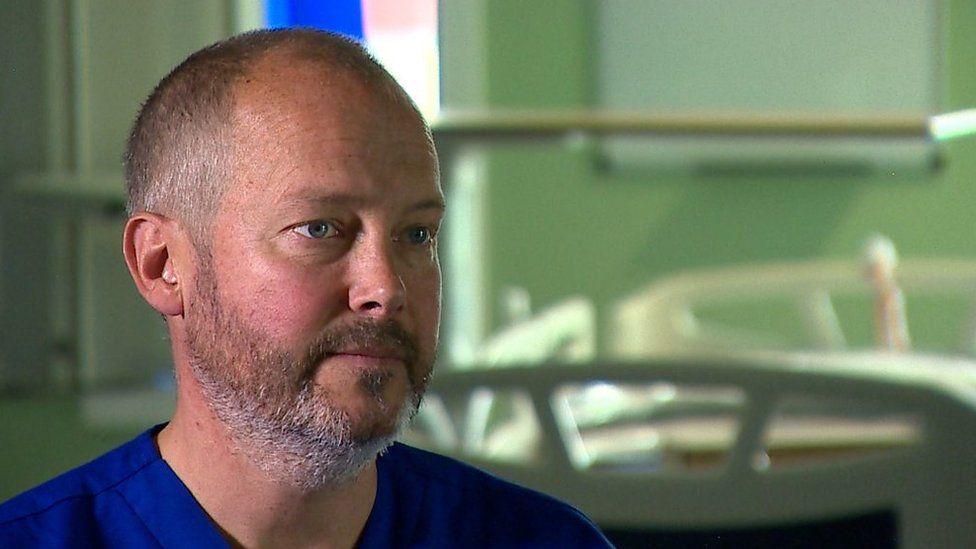
SharecloseShare pageCopy linkAbout sharingPutting Covid patients to sleep knowing they may not wake up is what an intensive care consultant says he hates.Dr David Hepburn is seeing unvaccinated people dying of Covid after a “really rapid and catastrophic deterioration”.He said the impact of the Delta variant is most prominent in patients aged 40 to 50. He also urged vaccinated people to get a booster jab as it seems to have a “big effect”. The consultant at Aneurin Bevan university health board added there was “steady stream” of Covid patients in intensive care.There have been 6,295 reported deaths with Covid in Wales since the pandemic began.Data from the Office for National Statistics showed 70 deaths occurred in Wales in the week ending 5 November.Wales to offer Covid vaccine boosters to over-40sWhat is a Covid pass and how do I get one?Is my Covid vaccine wearing off?’Majority Unvaccinated’Image source, Getty ImagesWhile cases are high at the moment, the number of deaths and hospitalisations are much lower than in the first two waves due to the vaccine roll-out with more than 2.25 million being double-jabbed in Wales.But Dr Hepburn tweeted: “Still a steady stream of covid patients in ITU. Majority unvaccinated – good people on the whole who have unfortunately believed the negative stories and this has led to them not getting the jab.”Still getting deaths. Difference to previous waves is delta plus no vaccine seems to lead to really rapid and catastrophic deterioration. Ages last couple months are 40-50 in the main.”He added: “I suspect nothing I say will change anyone’s mind about getting the vaccine but as your friendly neighbourhood ITU team we really, really think you should.This video can not be playedTo play this video you need to enable JavaScript in your browser.’Get your booster. Seems to have a big effect'”And if you have had your vaccine, get your booster. Seems to have a big effect – we are seeing vaccine escape in double vaccinated patients, thankfully not many.”The one thing I hate is putting people off to sleep knowing they may never wake up. The vaccine is really helping, when I think back to this time last year.”Boosters are already being offered to people over the age of 50, frontline NHS and social care staff and people who are extremely vulnerable to Covid.Latest figures show 626,012 people have had a booster vaccine.On Monday, it was confirmed those over 40 will also receive the booster.

Read more →

Cities Are Not Only Tackling Covid, But Its Pollution, Too

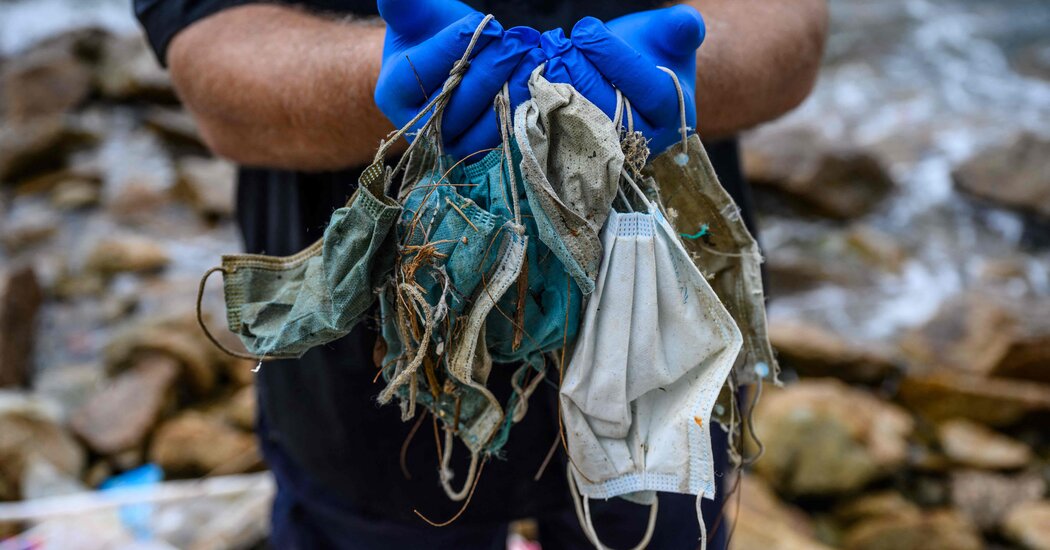
All around the world the remnants of a global pandemic are testing the resolve of governments and private firms to rid the planet of its waste.The River Thames, the tidal artery that squiggles through central London, holds up a mirror to life on dry land: scraggly remains of fir trees float by after Christmas; in the first days of a fresh year, bobbing champagne bottles hint at recent revelry.Lara Maiklem, author of “Mudlark: In Search of London’s Past Along the River Thames,” scours the shoreline for artifacts such as coins, tokens, buckles and potsherds, some dating to the period of Roman rule. Loosed from pockets or heaped as infill, these are the flotsam of centuries lived on London’s streets.“I find stuff because humans are litterbugs,” Ms. Maiklem said. “We’ve always been chucking things into the river.”But lately Ms. Maiklem is encountering a type of garbage she hadn’t seen there before: the remnants of Covid 19-era personal protective equipment (or P.P.E.), particularly masks and plastic gloves bloated with sand and resting in the rubbly silt.Ms. Maiklem once counted around 20 gloves while canvassing 100 yards of shoreline. She wasn’t surprised; if anything, she had feared the shore would be even more inundated with pieces that had flown from pockets or trash cans or swirled into the Victorian sewers. Happily, Ms. Maiklem said, the carpet of Covid-inspired trash at the edge of the Thames wasn’t nearly as plush as it is elsewhere.A protective face mask in the sand on Tel Aviv’s beach in April.Jack Guez/Agence France-Presse — Getty ImagesPlastic gloves, face masks and other waste in waters off Antibes, France.Operation Mer Propre, via Associated PressP.P.E. litter is fouling landscapes across the globe. Dirtied masks and gloves tumbleweed across city parks, streets and shores in Lima, Toronto, Hong Kong and beyond. Researchers in Nanjing, China, and La Jolla, Calif., recently calculated that 193 countries have generated more than 8 million tons of pandemic-related plastic waste, and the advocacy group OceansAsia estimated that as many as 1.5 billion face masks could wind up in the marine environment in a single year.Since January, volunteers with the Ocean Conservancy’s International Coastal Cleanup have plucked 109,507 pieces of P.P.E. from the world’s watery margins.Now, across the litter-strewn planet, scientists, officials, companies and environmentalists are attempting to tally and repurpose P.P.E. — and limit the trash in the first place.Slipping out of pockets, falling off wrists or blowing out of trash cans, face masks are littering streets across the globe, including in front of the Lincoln Memorial in Washington. Kevin Lamarque/ReutersTrash surveys and cleanupsTodd Clardy, a marine scientist in Los Angeles, sometimes counts the P.P.E. he sees on the 10-minute walk from his apartment in Koreatown to the Metro station. One day this month, he said, he spotted “24 discarded masks, two rubber gloves and loads of hand sanitation towelettes.” Sometimes he sees them atop grates that read, “No Dumping, Drains to Ocean.”Dr. Clardy suspects some masks simply slip from wrists. “Once it falls on the ground, people probably look at it like, ‘Huh, I’m not wearing that again.’” Breezes likely free some from trash cans, too. “The bins are always full,” Dr. Clardy added. “So even if you wanted to put it on top, it would fly away.”Dr. Clardy’s accounting isn’t part of a formal project, but there are several such undertakings underway. In the Netherlands, Liselotte Rambonnet, a biologist at Leiden University, and Auke-Florian Hiemstra, a biologist at Naturalis Biodiversity Center, keep a running count of masks and gloves littering streets and canals. They track animals’ interactions with the castoff gear.Among their documented examples are an unfortunate perch trapped in the thumb of a phlegmy-looking latex glove, and birds weaving P.P.E. into nesting materials, risking entanglement. “Nowadays it would be difficult to find a coot nest in the canals of Amsterdam without a face mask,” Ms. Rambonnet and Mr. Hiemstra wrote in an email.The researchers maintain a global website, Covidlitter.com, where anyone can report animal and P.P.E. incidents. Dispatches include sightings of a brown fur seal tangled in a face mask in Namibia; a mask-snarled puffin found dead on an Irish beach; and a sea turtle in Australia with a mask in its stomach. Back home, the researchers, who also lead canal cleanups in Leiden, worry P.P.E. trash will increase now that the Dutch government has reinstated mask requirements.“Every weekend we encounter face masks — new ones and old, discolored ones,” Ms. Rambonnet and Mr. Hiemstra wrote. “Some are barely recognizable, and blend in with autumn leaves.”A discarded plastic glove on the pavement in London in March 2020.Daniel Leal-Olivas/Agence France-Presse — Getty ImagesA macaque monkey playing with a face mask in Malaysia in October 2020.Mohd Rasfan/Agence France-Presse — Getty ImagesCleanup efforts are also underway in London, where staff members and volunteers with the environmental group Thames21 count and collect trash from the river’s banks. In September, the group closely surveyed more than a kilometer of shore and found P.P.E. at 70 percent of their study sites — and notably clustered along a portion of the Isle of Dogs, where 30 pieces pocked a 100-meter stretch.“I don’t remember seeing any face masks until the pandemic; they weren’t on our radar,” said Debbie Leach, the group’s chief executive officer, who has been involved since 2005. Ms. Leach’s team sends the P.P.E. to incinerators or landfills, but small bits are surely left behind because the trash “releases plastics into the water that can’t be retrieved,” she said.Researchers in Canada recently estimated that a single surgical-style mask on a sandy shoreline could unleash more than 16 million microplastics, far too small to collect and haul away.A sign at a school in Santiago, Chile, reminded passersby to throw away their Covid trash. Esteban Felix/Associated PressAnti-litter campaignsRoaming sandy swaths along Chile’s coast, Martin Thiel, a marine biologist at the Universidad Católica del Norte in Coquimbo, saw plenty of signs asking visitors to mask up — but few instructions about ditching used coverings. To his frustration, masks were scattered, swollen with sand and water and tangled in algae. “They act a little like Velcro,” he said. “They very quickly accumulate stuff.”But a few beaches, including one in Coquimbo, had trash cans designated specifically for P.P.E. Unlike oil-drum-style alternatives nearby, some had triangular tops with tiny, circular openings that would deter rummaging and prevent wind from tousling the garbage.In a paper published in Science of the Total Environment this year, Dr. Thiel and 11 collaborators recommended that communities install more purpose-built receptacles like these, as well as signs reminding people to consider the landscape and their neighbors, human and otherwise. “We think there is more to the story than, ‘just protect yourself,’” said Dr. Thiel, the paper’s lead author.Houston has already started. In September 2020, the city launched an anti-litter campaign partly aimed at P.P.E. Featuring images such as a filthy mask on grass, the posters read “Don’t Let Houston Go to Waste” and encouraged residents to “Do the PPE123,” choreography that entailed social distancing, wearing masks and throwing them away.Early in the pandemic, “we weren’t sure if [P.P.E.] was a safety concern and would spread Covid around the city,” said Martha Castex-Tatum, the city’s vice mayor pro tem, who spearheaded the initiative. As a clearer picture of transmission emerged, the effort “became a beautification project,” she said. The images were plastered on billboards, sports stadium jumbotrons and trash-collection trucks. Council members handed out 3,200 trash grabber tools and urged residents to use them.One use for discarded masks: Stuff them into plastic bottles, where they could be transformed into “ecobricks.” Young people in La Paz, Bolivia, participated in a campaign in October.Martin Alipaz/EPA, via ShutterstockRecycling effortsAs the pandemic bloomed across South Africa, shoppers grabbed fistfuls of wet wipes as they entered stores, draping the cloths over shopping cart handles while roaming aisles, said Annette Devenish, marketing manager at Sani-touch, a brand that supplies many national Shoprite Group supermarkets with wipes for customer use. Sani-touch found that usage soared 500 percent early on and has fallen, but still hovers above prepandemic figures.Environmentalists often rail on wet wipes, many of which snarl sewer systems when they are flushed down drains and degrade into microplastics that drift through food webs. (Thames21, for instance, is backing newly proposed legislation that would ban all wipes containing plastic.)Ms. Devenish said that manufacturers ought to focus on making them recyclable or compostable, and this fall Sani-touch launched a project to give used wipes a second life. Customers can drop off cloths before leaving the store; recycling companies will turn the polypropylene cloths into plastic pallets for use in Sani-touch’s manufacturing facilities.Fashioned from many materials, including metal and elastic, single-use masks can be harder to recycle, Ms. Devenish said, but she hopes they can be stuffed into plastic bottles to become “ecobricks,” low-cost building blocks of benches, tables, trash bins and more.P.P.E. recycling schemes are also advancing elsewhere. In the Indian city of Pune, the CSIR-National Chemical Laboratory is teaming up with a bio-medical waste facility and private companies to pilot ways to transform head-to-toe protective wear into plastic pellets used to manufacture other goods. (None are yet being made and sold, “but hopefully soon,” wrote Harshawardhan V. Pol, a principal scientist, in an email.)In fall 2020, the Canadian government asked companies to pitch ideas for recycling P.P.E. or making it compostable. The government may funnel up to $1 million eachtoward a few prototypes.Preventing P.P.E. from polluting urban environments will be a boon to the spaces where residents have sought solace. “In stressful times, people seek out these places, but they’ve been pretty bad about taking rubbish and trash away with them,” said Ms. Leach of Thames21. “Masks blow hither and thither,” she added, “and finally come to rest when they hit a patch of water,” grass or sidewalk, where they too often remain.

Read more →

Does it Matter if I Eat the Stickers on Fruits and Vegetables?

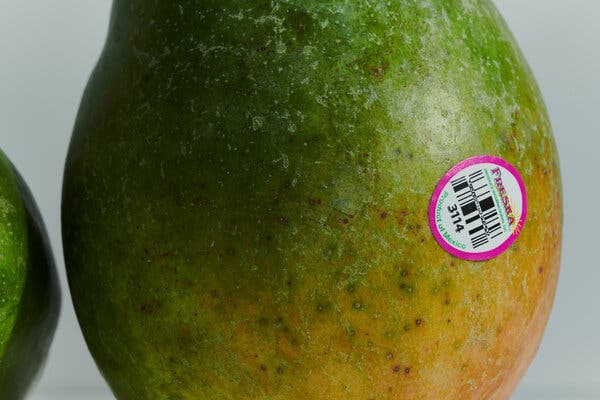
I keep finding myself biting into an apple or a peach, only to find I’ve eaten half the sticker the store put on there. Is there any harm in eating produce stickers?While the stickers that get placed on fruits and vegetables won’t cause you any harm, it’s probably best to remove them before eating.PLU stickers, which stands for “Price Look Up,” serve an important function in grocery stores: telling the clerk how much to charge for that item. In the United States, about half of fresh produce doesn’t arrive in packaging, so the sticker is the main source of information on what type of produce it is and how it was grown. (Stickers that start with the numbers 3 or 4 mean the item was grown conventionally, and those starting with 9 indicate the item was grown organically.)“Because produce stickers have contact with food, the intended use of these stickers is the subject of premarket approval by the Food and Drug Administration, to ensure that any substances that may migrate to food from the use of the sticker is safe,” said a spokeswoman for the agency in an email. “As these stickers are intended to be removed before consumption of produce, the F.D.A.’s review does not include the exposure that would result from regular consumption of these labels. However, as these substances are of low toxicity, any exposure from the occasional, unintentional consumption of a sticker would not be expected to be a health concern.”There are three main components to the sticker, according to Ed Treacy, vice president of supply chain and sustainability for the Produce Marketing Association (PMA), the organization that invented the produce -ticker system decades ago. There’s the ink, which spells out the PLU number; there’s the substrate it’s printed on (typically plastic, plastic composite or paper); and there’s the adhesive, which makes it stick. “All three of those have to be safe for humans,” Mr. Treacy said.Aileen Son for The New York TimesThough the stickers are edible, they have no flavor and no nutritional value. And there is an environmental downside to not removing them before discarding skins, peels and other parts that you don’t eat: Produce stickers are not home compostable, so they won’t break down in the compost.When it comes to making the stickers biodegradable: “That is a challenge that our industry is spending a lot of time, effort and money trying to solve,” Mr. Treacy said. “The challenge is the adhesive” — finding something that is sticky enough to stay stuck to the fruit or vegetable throughout the entire supply chain.“For something to be compostable, it has to be made out of natural ingredients — something that was once alive and is now dead,” said Jean Bonhotal, director of the Cornell Waste Management Institute. She explained that every time you forget to remove the label before tossing your banana peel, avocado skin or orange peel in your countertop compost bin, those stray stickers contaminate the compost with tiny microplastics that, in turn, contaminate the soil where that batch of compost gets dropped.Just one more reason to remove the sticker and place it in the trash before enjoying your fruits or vegetables.

Read more →

Covid: The country locking down the unvaccinated

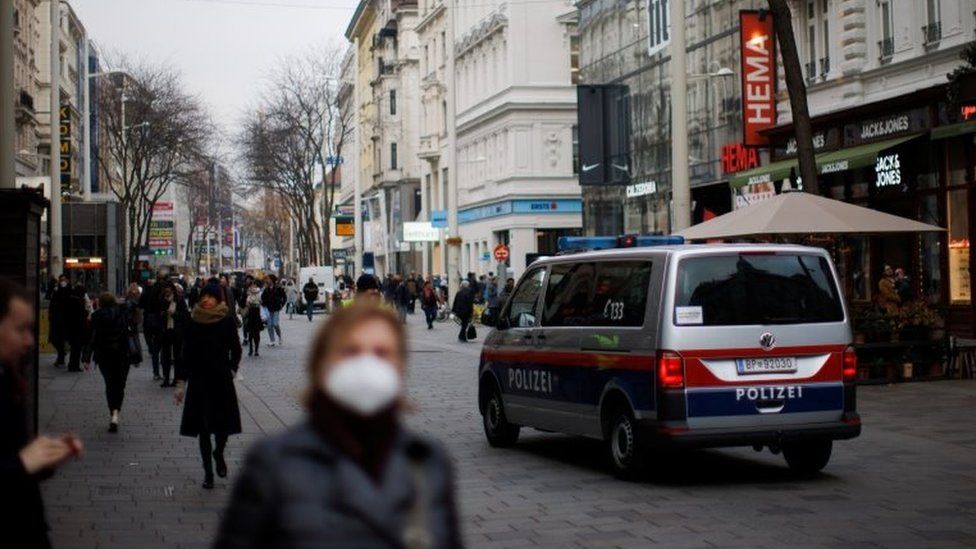
SharecloseShare pageCopy linkAbout sharingImage source, ReutersCarina, a yoga teacher in Vienna, is not vaccinated against Covid-19 and wants to remain that way. So she is now under lockdown, like around two million other unvaccinated Austrians.She is only allowed to leave her home for essential reasons like work or shopping for food, and is barred from cafés and restaurants. So I met her in a Vienna park, where she is allowed to take exercise. Carina says she doesn’t understand the rationale behind the lockdown and that it makes her feel sad.”I was walking by some cafes this morning,” she told me. “It’s a bit strange to look inside and to know that I couldn’t go in. It makes you feel really excluded, and ostracised.” “I’m one of these people that is made into the enemy,” she said. “And that doesn’t sit well.””I don’t want people to get sick. I am careful. I get tested. I’m not at very great risk [from Covid-19] and I feel like it’s a very personal decision. I understand people who do get vaccinated and when people don’t want to get vaccinated.”There have been demonstrations in several parts of the country in protest against the lockdown. Police say they’ll carry out random spot checks on people in public places and fine anyone who can’t show a certification of vaccination or recovery. Austria introduces lockdown for unvaccinatedCovid passes set to stay as Europe heads for winterHow fast is vaccine progress around the world?Around 65% of Austria’s population is fully vaccinated, one of the lowest rates in western Europe.The country is currently seeing the highest rate of daily infections for Covid-19 since the pandemic began.Chancellor Alexander Schallenberg says the government was forced to act because of the surge in new infections.He said the vaccination rate was “shamefully low” and would “keep us trapped in a vicious circle, from one lockdown to the next”.Since the measures tightened, more Austrians have been getting jabbed. Long lines have formed outside one Vienna vaccination centre. Some were coming for booster shots, others for their first injections. Image source, ReutersDr Thomas Szekeres, head of the Austrian Medical Chamber, says he is hoping the vaccination rate will rise to 80% or more. “We know that vaccination is the only way to decrease the number of infections,” he says. “We know this from other countries. We hope that the lockdown for unvaccinated Austrians will be enough to decrease the number of infections. But the experts are not sure about that. Maybe we will need additional measures to reach the goal to decrease the number.”Many Austrians have welcomed the increase in vaccinations, but some are concerned the lockdown for the unvaccinated isn’t constitutional.Karl Weller, a Viennese businessman, told me he is very much in favour of the jab. “It is necessary for our health and our economy,” he said. “But I think it’s a catastrophe, to divide between the vaccinated and not vaccinated. People start to become more and more angry and they are afraid.” Shopping for clothes and other non-essentials is now only possible for the vaccinated. Doris, who was out in central Vienna, said she was losing patience with those who refuse to get jabbed. “The only solution is that we all have to be vaccinated. That’s the only solution. Otherwise, we have the problem for quite a long time. And we really want to get rid of it.”

Read more →

Medical training takes a mental toll, but less than a decade ago

A 13-year effort to track the mental health of new doctors in their most stressful time of training shows signs that things have gotten better.
But those first-year residents, also called interns, still have a sizable risk of developing depression. And many who do still don’t seek help.
The jump in depression scores over the course of the first post-medical school year has gotten 25% smaller from 2007 to 2019, according to the study of nearly 17,000 new doctors led by a team from the University of Michigan Medical School and published in the Annals of Internal Medicine.
To help understand potential drivers of the effect, the team explored individual and residency program factors previously shown to be linked to depression among training doctors. The study suggests, but can’t prove, that reduced work hours, slightly increased sleep, more feedback from supervisors and increased use of mental health care contributed to the change in depressive symptoms over time. Data from the participants showed significant changes in all of these measures.
The findings come from the Intern Health Study, which has used wearable activity trackers, mobile apps, surveys and genetic tests to study medical interns at hundreds of teaching hospitals.
In addition to tracking a group with a known high risk of depression, the study provides a way to study the effects of intense, prolonged stress more generally.

Read more →

Scientists identify second HIV patient whose body appears to have rid itself of the virus

During infection, HIV places copies of its genome into the DNA of cells, creating what is known as a viral reservoir. In this state, the virus effectively hides from anti-HIV drugs and the body’s immune response. In most people, new viral particles are constantly made from this reservoir. Anti-retroviral therapy (ART) can prevent the new viruses from being made but cannot eliminate the reservoir, necessitating daily treatment to suppress the virus.
Some people, known as elite controllers, have immune systems that are able to suppress HIV without the need for medication. Though they still have viral reservoirs that can produce more HIV virus, a type of immune cell called a killer T cell keeps the virus suppressed without the need for medication.
Xu Yu, MD, a member of the Ragon Institute of MGH, MIT and Harvard, has been studying the HIV reservoirs of elite controllers. Her research group identified one patient who had no intact HIV viral sequence in her genome, indicating that her immune system may have eliminated the HIV reservoir — what scientists call a sterilizing cure. Yu’s team sequenced billions of cells from this patient, known as the San Francisco Patient, searching for any HIV sequence that could be used to create new virus, and found none. This extraordinary finding, the first known incidence of a sterilizing cure without a stem cell transplant, was reported in Nature in 2020.
Yu’s group now reports a second untreated HIV-infected patient, known as the Esperanza Patient, who, like the San Francisco Patient, has no intact HIV genomes found in more than 1.19 billion blood cells and 500 million tissue cells sequenced. This report, published in the Annals of Internal Medicine, may represent a second instance of a sterilizing cure.
“These findings, especially with the identification of a second case, indicate there may be an actionable path to a sterilizing cure for people who are not able to do this on their own,” says Yu, who is also a physician investigator at Massachusetts General Hospital.
She further explains that these findings may suggest a specific killer T cell response common to both patients driving this response, with the possibility that other people with HIV have also achieved a sterilizing cure. If the immune mechanisms underlying this response can be understood by researchers, they may be able to develop treatments that teach others’ immune systems to mimic these responses in cases of HIV infection.
Yu adds: “We are now looking toward the possibility of inducing this kind of immunity in persons on ART through vaccination, with the goal of educating their immune systems to be able to control the virus without ART.”
Additional co-authors on this study include: Gabriela Turk, PhD; Kyra Seiger, BSc; Xiaodong Lian, PhD; Weiwei Sun, PhD; Elizabeth M. Parsons, BSc; Ce Gao, PhD; Yelizaveta Rassadkina, BSc; Maria Laura Polo, PhD; Alejandro Czernikier, MSc; Yanina Ghiglione, PhD; Alejandra Vellicce, MD; Joseph Varriale, MSc; Jun Lai, MSc; Yuko Yuki, DDM; Maureen Martin, MD; Ajantha Rhodes, BSc; Sharon R. Lewin, AO, PhD; Bruce D. Walker, MD; Mary Carrington, PhD; Robert Siliciano, MD; Janet Siliciano, PhD; Mathias Lichterfeld, MD, PhD; and Natalia Laufer, MD, PhD.

Read more →

Time for My Booster Shot

I got my booster shot last week. The process was extremely quick and easy, and I felt great afterwards. I received my first dose of the Moderna vaccine in December 2020 and the second dose in January 2021. So, it was definitely time for me to get my Moderna booster. If you haven’t already, please consider getting a COVID-19 booster shot to protect your health entering the winter holiday season. Credit: NIH

Read more →

Prions may channel RNA’s messages

Prions get mostly bad press, but they may be the keys to controlling protein synthesis in cells.
Prions, proteins that can misfold and aggregate, have been implicated in many neurodegenerative diseases. Yet some prions are involved in storing long-term memories. New models by Rice University scientists describe how they can regulate the translation of RNA messages into new proteins by forming organized protein synthesis factories.
A study led by theoretical physicist Peter Wolynes and graduate student Xinyu Gu, with aid from Rice alumnus Nicholas Schafer, suggests that two prions in either aggregate or condensate form can activate or repress the translation of actin proteins, depending on the orientation in which they bind mRNA.
The study appears in the Proceedings of the National Academy of Sciences.
The lab modeled “protein assembly lines” centered on CPEB and Rim4, two examples of the 240 known prion-coding genes that are also known to bind RNA in eukaryotic cells.
CPEB and Rim4 represent a kind of yin and yang when it comes to translation because they are direct opposites in how they bind to mRNA. Their orientation affects how — and whether — ribosomes are able to be recycled during protein synthesis when the RNA is assembled on the prion.

Read more →