F.D.A. Plans to Authorize Pfizer Boosters for All Adults This Week
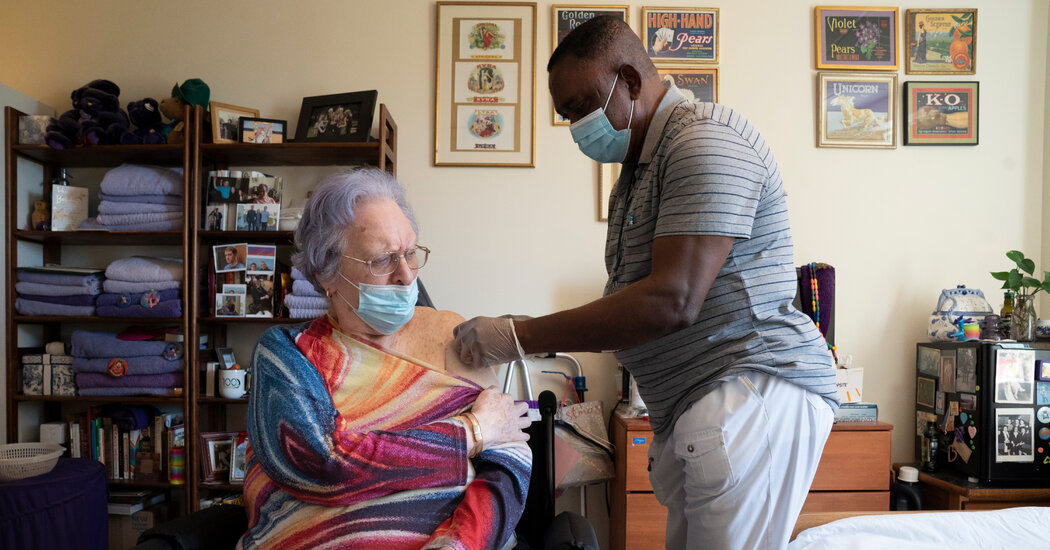
Regulators are set to clear extra doses of Pfizer-BioNTech’s vaccine as soon as Thursday, after states began expanding eligibility on their own.WASHINGTON — The Food and Drug Administration is aiming to authorize booster doses of Pfizer-BioNTech’s coronavirus vaccine for all adults as early as Thursday, a move that would expand the number of Americans eligible for additional shots by tens of millions, according to people familiar with the agency’s plans.The Centers for Disease Control and Prevention’s independent committee of vaccine experts has scheduled a meeting for Friday to discuss data on the booster dose’s efficacy and safety. If both the F.D.A. and the C.D.C. sign off this week, they will have acted strikingly quickly — a little more than a week after Pfizer asked for authorization of boosters for everyone 18 and older.Under that scenario, any adult who received a second dose of the vaccine at least six months earlier would be officially eligible to get a booster as soon as this weekend. The F.D.A. is expected to rule without consulting its own expert panel, which has met frequently during the pandemic to review vaccine data and make a recommendation ahead of a regulatory decision.The broad booster authorization has been viewed as something of a fait accompli for weeks. Some state and local officials have begun rolling out similar policies ahead of F.D.A. action — responding to persistent virus case counts, including some breakthrough cases, and the eagerness of many Americans to seek additional protection ahead of holiday gatherings.New York City health officials on Monday encouraged all adults who want boosters to seek them out. Arkansas, California, Colorado and New Mexico have also moved to expand access.Many Americans, regardless of where they live, have taken the matter into their own hands and sought out extra doses even if they did not yet officially qualify.The F.D.A. in September downsized an initial request from Pfizer-BioNTech’s to fully approve booster doses for all adults. Instead, it made a more limited population eligible, including those 65 and older, as well as adults with underlying medical conditions or those at risk because of their jobs.At least 30 to 40 percent of vaccinated adults are still excluded from booster eligibility, according to some estimates.More than 30 million people have already gotten additional shots, with the daily number often outpacing that of first shots given around the country. Booster doses were also authorized in October for everyone who received the single-dose Johnson & Johnson vaccine, and for vulnerable groups who received Moderna’s two-dose shot.The C.D.C.’s gathering on Friday is scheduled to be briefer than recent meetings about Covid vaccines — just three hours. It is expected to be straightforward, one federal official familiar with the planning said, in part because of how far the nation’s booster campaign has already come. That would suggest a significant softening of opposition among public health experts since President Biden announced in August that he hoped to offer booster doses to all adults.Mr. Biden wanted to start the campaign in late September, but his announcement was heavily criticized by public health experts, who said he was rushing the federal scientists and regulators responsible for deciding whether the data supported such a move. Some key regulators and outside advisers had argued that the effectiveness of the two-dose regimen, especially in preventing hospitalization and death, has held up strongly. One large study in New York of nearly nine million people has shown remarkable durability in the protection gained from all three federally authorized vaccines.But more recently, federal regulators and scientists have said the evidence is increasingly clear that a reduction in vaccine efficacy against milder Covid cases, and in protective antibodies, has put Americans — especially seniors and those with medical conditions — at risk of harmful breakthrough infections as the Delta variant of the virus only gradually loosens its grip.Pfizer and BioNTech said last week that their request is based on data from a clinical trial in the United States and elsewhere that included more than 10,000 volunteers. After a third dose, the vaccine’s efficacy rate against symptomatic disease had been restored to about 95 percent, they said. It remains unclear, however, how long the protection from a booster shot will last..css-1xzcza9{list-style-type:disc;padding-inline-start:1em;}.css-3btd0c{font-family:nyt-franklin,helvetica,arial,sans-serif;font-size:1rem;line-height:1.375rem;color:#333;margin-bottom:0.78125rem;}@media (min-width:740px){.css-3btd0c{font-size:1.0625rem;line-height:1.5rem;margin-bottom:0.9375rem;}}.css-3btd0c strong{font-weight:600;}.css-3btd0c em{font-style:italic;}.css-1kpebx{margin:0 auto;font-family:nyt-franklin,helvetica,arial,sans-serif;font-weight:700;font-size:1.125rem;line-height:1.3125rem;color:#121212;}#NYT_BELOW_MAIN_CONTENT_REGION .css-1kpebx{font-family:nyt-cheltenham,georgia,’times new roman’,times,serif;font-weight:700;font-size:1.375rem;line-height:1.625rem;}@media (min-width:740px){#NYT_BELOW_MAIN_CONTENT_REGION .css-1kpebx{font-size:1.6875rem;line-height:1.875rem;}}@media (min-width:740px){.css-1kpebx{font-size:1.25rem;line-height:1.4375rem;}}.css-1gtxqqv{margin-bottom:0;}.css-19zsuqr{display:block;margin-bottom:0.9375rem;}.css-12vbvwq{background-color:white;border:1px solid #e2e2e2;width:calc(100% – 40px);max-width:600px;margin:1.5rem auto 1.9rem;padding:15px;box-sizing:border-box;}@media (min-width:740px){.css-12vbvwq{padding:20px;width:100%;}}.css-12vbvwq:focus{outline:1px solid #e2e2e2;}#NYT_BELOW_MAIN_CONTENT_REGION .css-12vbvwq{border:none;padding:10px 0 0;border-top:2px solid #121212;}.css-12vbvwq[data-truncated] .css-rdoyk0{-webkit-transform:rotate(0deg);-ms-transform:rotate(0deg);transform:rotate(0deg);}.css-12vbvwq[data-truncated] .css-eb027h{max-height:300px;overflow:hidden;-webkit-transition:none;transition:none;}.css-12vbvwq[data-truncated] .css-5gimkt:after{content:’See more’;}.css-12vbvwq[data-truncated] .css-6mllg9{opacity:1;}.css-qjk116{margin:0 auto;overflow:hidden;}.css-qjk116 strong{font-weight:700;}.css-qjk116 em{font-style:italic;}.css-qjk116 a{color:#326891;-webkit-text-decoration:underline;text-decoration:underline;text-underline-offset:1px;-webkit-text-decoration-thickness:1px;text-decoration-thickness:1px;-webkit-text-decoration-color:#326891;text-decoration-color:#326891;}.css-qjk116 a:visited{color:#326891;-webkit-text-decoration-color:#326891;text-decoration-color:#326891;}.css-qjk116 a:hover{-webkit-text-decoration:none;text-decoration:none;}Moderna is expected to soon submit its own request for the F.D.A. to broaden eligibility for its booster. But for now, every adult can get the Pfizer booster if it is broadly authorized, according to people familiar with the planning.Top federal health officials, including Dr. Anthony S. Fauci, have argued for months — often pointing to Israel, which started its booster campaign in late July and now offers extra shots to everyone 12 and older — that the case for boosting widely in the United States is clear. Dr. Fauci said at an event sponsored by Reuters on Tuesday that the virus could potentially be brought under control in the U.S. by the spring if boosters were available for everyone.Vaccine experts have said that antibody protection is just one measure of how a vaccine confers protection, and that in the case of Covid vaccines, it was always expected to fade. Some have warned that keeping antibody levels high would possibly require regular booster shots — a standard that would be difficult to sustain.While the F.D.A.’s expert committee is not expected to weigh in before the agency’s ruling, several members said last month at a meeting discussing booster shots that the agency should go ahead and lower the age eligibility.An Israeli study published in the scientific journal The Lancet in late October compared about 730,000 people who had received a booster dose in August or September with individuals who had received only two doses of the Pfizer-BioNTech vaccine at least five months earlier, finding that boosted recipients had a lower risk of hospitalization and severe disease. Those with booster shots were evaluated between one week and nearly two months after their third dose.Israeli officials reported at an F.D.A. meeting last month that third doses had not caused any significant safety concerns, a finding that Pfizer was expected to present to the F.D.A. in its request to expand eligibility. Friday’s meeting of the C.D.C. panel will likely examine data the company provides on side effects. Regulators have been particularly concerned about links between the Pfizer-BioNTech and Moderna vaccines and myocarditis, inflammation of the heart muscle, which has been observed especially in younger men who received two doses of those vaccines.A. Oveta Fuller, an associate professor of microbiology and immunology at the University of Michigan and a member of the F.D.A. committee, said that while she was at first skeptical about clearing booster shots for so many adults based heavily on data from Israel, she was more convinced now that millions of Americans have received the extra shots.“Caution is always better,” she said. Clearing more adults to get boosters, she added, would help make the messaging around booster shots more manageable.

Read more →

U.S. to Buy Enough of Pfizer’s Covid Antiviral Pills for 10 Million People

The antiviral drugs have helped inspire hope among senior administration officials that the United States will be able to curb the devastating toll from the Delta variant.WASHINGTON — The Biden administration plans to pay more than $5 billion for a stockpile of Pfizer’s new Covid-19 pill, enough for about 10 million courses of treatment to be delivered in the next 10 months, according to people familiar with the agreement.Senior federal health officials are counting on the drug to be a powerful weapon against Covid. When given promptly to trial groups of high-risk unvaccinated people who developed symptoms of the disease, the drug sharply reduced the risk of hospitalization and death.Pfizer on Tuesday applied for federal authorization of the drug on an emergency basis. A similar pill developed by Merck and Ridgeback Biotherapeutics could be authorized as soon as early December, meaning pharmacies could have limited supplies on hand in weeks. Pfizer’s treatment is taken as a regimen of 30 pills over five days; Merck’s requires 40 pills over five days.The antiviral drugs have helped inspire hope among senior administration officials that the United States will be able to curb the devastating toll from the Delta variant and its predecessors. Some experts believe the worst of the coronavirus pandemic has passed in the country, in part because more than four out of every five Americans ages 12 and older are at least partly vaccinated.Other say rates of infection have merely plateaued and could easily rebound, especially with the onset of winter. After declining for more than a month, the daily average of cases has started creeping up.“I do think that these new oral antivirals will change the way that Covid is managed,” said Dr. David Dowdy, an associate professor of epidemiology at the Johns Hopkins Bloomberg School of Public Health.“These will help reduce burden on hospitals and the death toll,” he said, but he added that “even without these pills, those numbers are going down.”The antiviral drugs are a new class of treatment for Covid that is ultimately expected to reach far more patients than others have. Monoclonal antibody treatments typically require infusions, usually given at outpatient clinics. Antiviral pills, in comparison, are meant to be picked up at pharmacies and taken orally at home.Their promise depends in part on access to rapid over-the-counter tests, because the pills have proved to work in five days or less after symptoms develop. While the government has pledged $3 billion for rapid tests and the Food and Drug Administration has cleared a dozen of them, a test typically costs about $12 and not everyone can easily obtain one.One of the newest rapid tests costs $7, though, and by the end of the year the overall supply is projected to be nearly 10 times what it was in August, federal officials said.“You do have more availability and more coming online,” said Dr. Amesh A. Adalja, a senior scholar at the Johns Hopkins Center for Health Security.“But they are still not being used to their full potential,” he added, and “fast testing is going to be critical for those antiviral tests.”A much bigger obstacle, at least initially, is likely to be availability. Until about March, most of the government’s supply of antiviral pills is expected to come from Merck. The government has ordered about three million treatment courses from the company, with options for two million more, at about $700 per person.While Pfizer has said it expects to be able to produce enough pills for more than 180,000 people by the end of the year, a vast majority of the treatments it will provide the federal government are expected from March through September.That means the drug that appeared less effective in studies will be more plentiful at first. The Pfizer pill cut the risk of hospitalization or death by 89 percent when given within three days after the start of symptoms. The Merck pill was only about 50 percent effective when given within five days of the onset of symptoms, though the different designs and timing of the clinical trials make comparisons imprecise.Both drugs are geared toward people who are older than 65 or who have medical conditions that put them at higher risk of severe Covid. Pfizer submitted data showing the effectiveness of the treatment only for unvaccinated people at high risk, although officials said the company could submit more data later as clinical trials progress. Kit Longley, a company spokesman, said that depending on what clinical trials showed, it might broaden that request later. It is up to the Food and Drug Administration to decide which groups will be eligible to receive the pill.Merck, which applied for authorization for its drug last month, said the agency would decide whether to authorize it for vaccinated people as well as the unvaccinated. A panel of experts that advises the Food and Drug Administration on antimicrobial drugs is scheduled to meet at the end of the month to discuss Merck’s drug.“I think this is a powerful new tool in terms of keeping people alive and out of the hospital,” Dr. Dowdy said. “But the people who are going to get these are the people who can get diagnosed quickly and who are enough at risk that someone thinks they might need to get to the hospital.”Pfizer and Merck plan to ramp up production over the next year. Pfizer has said it expects to be able to produce enough pills to cover more than 21 million people in the first half of next year and 50 million by the end of the year.Australia and Britain have already snapped up some of the supply. Pfizer said on Tuesday that it had reached an agreement to allow other manufacturers to make and sell the pills inexpensively for use in 95 developing countries.The U.S. government had initially planned to order 1.7 million courses of Pfizer’s treatment, with an additional option for 3.3 million, for about $700 per course. But under the contract for 10 million treatments, the cost is expected to be significantly lower — perhaps as much as $180 less per treatment.The contract is not yet final, but an announcement is expected this week.

Read more →

Postpartum depression: A deaf mum's story.

Having a baby can have a huge and sometimes unexpected affect on a parent’s mental health. But have you ever thought how it is for deaf mothers? Catherine talks about her experiences as a new mother, her diagnosis of postpartum depression, and how she was able to work through such challenging period in her life, thanks to the support from an organisation in Nairobi which helps deaf mothers through postpartum depression.Produced by Anne Okumu and Anthony IrunguVoice over by Esther OgolaEdited by Anne OkumuExecutive producer: Connor Boals

Read more →

Artificial intelligence successfully predicts protein interactions

UT Southwestern and University of Washington researchers led an international team that used artificial intelligence (AI) and evolutionary analysis to produce 3D models of eukaryotic protein interactions. The study, published in Science, identified more than 100 probable protein complexes for the first time and provided structural models for more than 700 previously uncharacterized ones. Insights into the ways pairs or groups of proteins fit together to carry out cellular processes could lead to a wealth of new drug targets.
“Our results represent a significant advance in the new era in structural biology in which computation plays a fundamental role,” said Qian Cong, Ph.D., Assistant Professor in the Eugene McDermott Center for Human Growth and Development with a secondary appointment in Biophysics.
Dr. Cong led the study with David Baker, Ph.D., Professor of Biochemistry and Dr. Cong’s postdoctoral mentor at the University of Washington prior to her recruitment to UT Southwestern. The study has four co-lead authors, including UT Southwestern Computational Biologist Jimin Pei, Ph.D.
Proteins often operate in pairs or groups known as complexes to accomplish every task needed to keep an organism alive, Dr. Cong explained. While some of these interactions are well studied, many remain a mystery. Constructing comprehensive interactomes — or descriptions of the complete set of molecular interactions in a cell — would shed light on many fundamental aspects of biology and give researchers a new starting point on developing drugs that encourage or discourage these interactions. Dr. Cong works in the emerging field of interactomics, which combines bioinformatics and biology.
Until recently, a major barrier for constructing an interactome was uncertainty over the structures of many proteins, a problem scientists have been trying to solve for half a century. In 2020 and 2021, a company called DeepMind and Dr. Baker’s lab independently released two AI technologies called AlphaFold (AF) and RoseTTAFold (RF) that use different strategies to predict protein structures based on the sequences of the genes that produce them.
In the current study, Dr. Cong, Dr. Baker, and their colleagues expanded on those AI structure-prediction tools by modeling many yeast protein complexes. Yeast is a common model organism for fundamental biological studies. To find proteins that were likely to interact, the scientists first searched the genomes of related fungi for genes that acquired mutations in a linked fashion. They then used the two AI technologies to determine whether these proteins could be fit together in 3D structures.

Read more →

Research in mice shows how diet alters immune system function through a gut microbe

The cliché “you are what you eat” has been used for hundreds of years to illustrate the link between diet and health. Now, an international team of researchers has found the molecular proof of this concept, demonstrating how diet ultimately affects immunity through the gut microbiome.
The work, conducted in mice, reveals that what animals consume initiates the release of a metabolic byproduct from a specific gut microbe that, in turn, modulates the animals’ gut immunity.
The findings, published Nov.10 in Nature, offer a unifying explanation for the complex interplay between diet, gut microbiota, and immune function. They are the result of collaboration among scientists at Harvard Medical School, Brigham and Women’s Hospital, Seoul National University, and Monash University in Australia.
The experiments pinpoint a microbial molecule, the synthesis and release of which are influenced by host diet. That molecule, in turn, stimulates the activation and signaling of a subset of cells known as natural killer (NK) T cells, which are involved in immune regulation and implicated in a range of inflammatory conditions.
While scientists have surmised for a long time that diet plays a role in immune health, the new study elucidates the precise molecular cascade behind this interplay, said study senior author Dennis Kasper, professor of immunology in the Blavatnik Institute at Harvard Medical School.
“We have shown how diet affects the immune system through a microbial mediator in the gut, and this is a really striking example of the diet-microbiota-immunity triad at play,” Kasper said. “What this work really does is provide a step-by-step pathway from beginning to end that explains how and why this triad works and how diet ultimately affects the immune system.”
If confirmed in larger animals and eventually in humans, the findings can help inform the design of small-molecule treatments that enhance both intestinal and overall immunity, the researchers said.

Read more →

Why drug used to treat critically ill COVID-19 patients may only benefit males

A new study from the University of Calgary shows how dexamethasone, the main treatment for severe COVID-19 lung infections, alters how immune cells work, which may help male patients, but has little to no benefit for females.
These remarkable findings are the result of a multidisciplinary study published in Nature Medicine, led by Dr. Jeff Biernaskie, PhD, professor, Comparative Biology and Experimental Medicine in the Faculty of Veterinary Medicine (UCVM) and Dr. Bryan Yipp, MD, associate professor, Department of Critical Care Medicine, Cumming School of Medicine.
“We found that the males derived benefit from the steroids, and the females, at both the cellular level and at the population level, received limited benefit,” says Yipp, Tier II Canada Research Chair in Pulmonary Immunology, Inflammation and Host Defense. “Currently, it’s possible the mainstay therapy for severe COVID-19 that we’re giving everybody is only benefiting half the population. This is a big problem.”
How do our bodies battle COVID-19 infection?
At the onset of the pandemic, hospitals’ treatments of the severely ill were not yet informed by research into how effective the drugs were under COVID-19 conditions. Steroids were the first identified drugs with proven benefit, but they were only moderately successful at reducing deaths, and exactly what they did was not understood.
In addition, when the study began, no one knew exactly how immune cells would react to COVID-19 infection at a cellular level. Why did some people get really sick while others did not? Why did certain drugs help some but not others?

Read more →

Outcomes for hospitalized COVID-19 patients taking immunosuppressive medications similar to non-immunosuppressed patients, study finds

A large, nationwide study of COVID-19 cases led by researchers at the Johns Hopkins Bloomberg School of Public Health has found that people taking medications that suppress the immune system — for example, to prevent transplant rejection or to treat cancer — overall do not have a higher risk of dying from COVID-19 or being put on a ventilator than non-immunosuppressed hospitalized COVID-19 patients.
The researchers analyzed electronic health records of adults hospitalized with COVID-19 from January 2020 to June 2021, covering 222,575 individuals, including 16,494 — 7 percent of the total cases in the study period — in which patients had been on immunosuppressive medications prior to hospitalization. The researchers separated these medications into 17 classes and found that none were associated with a significantly increased risk of being put on a ventilator — an indication of severe COVID-19 illness.
The results were published online November 15 in The Lancet Rheumatology.
“In general, people taking immunosuppressive medications may be reassured that they can safely continue to do so during this pandemic,” says study lead author Kayte Andersen, MSc, a doctoral candidate in the Bloomberg School’s Department of Epidemiology.
“These findings are encouraging and important, given how commonly these medications are used,” says G. Caleb Alexander, Professor of Epidemiology at the Bloomberg School.
Estimates suggest that there are approximately 10 million immunocompromised people in the U.S. People who take immunosuppressive drugs for organ transplants, autoimmune diseases, cancers and other conditions were considered, at the outset of the pandemic, as being at potentially increased risk of severe outcomes, given their weakened immune systems. On the other hand, some of the damage to lungs and other organs in severe COVID-19 comes less from direct viral damage and more from immune overactivation. By the summer of 2020, doctors were treating severe COVID-19 with immunosuppressive drugs such as dexamethasone. It was not initially clear whether the long-term use of immunosuppressive drugs increased or decreased the risk of severe COVID-19.

Read more →

New screening process could lead to next-generation therapeutics for a broad spectrum of diseases

A new study led by University of California, Irvine researchers developed a high-throughput screen methodology to identify compounds affect a key G protein coupled receptor (GPCR) rhodopsin (Rh). GPCRs mediate many important physiological functions and are considered to be one of the most effective therapeutic targets for a broad spectrum of diseases, ranging from diabetes to immune system disorders.
The study, titled “Identification of small molecule allosteric modulators that act as enhancers/disrupters of rhodopsin oligomerization,” was published in the Journal of Biological Chemistry, and provides a monitoring tool for future investigation of the Rh signaling cascade. It also reveals the discovery of new allosteric modulators of Rh dimerization that can also alter the physiology of rod photoreceptors in the eye. The team identified lead compounds that demonstrated allosteric modulation of rod light response kinetics or reduction of rod sensitivity. The next step will be to use medicinal chemistry to improve the pharmacological properties of the lead compounds.
“Our employed methodology will open new avenues for study, tremendously benefitting the discipline of pharmacology by improving understanding of the role of GPCR dimerization,” said Krzysztof Palczewski, PhD, Donald Bren Professor of Ophthalmology in the UCI School of Medicine and corresponding author. “This approach will also be tested in other GPCR systems such as opioid, adrenergic receptors and others, paving the way to discovery of other more selective modulations of GPCR signaling. These advanced insights result in the identification and production of next-generation medications.”
Understanding the functional role of GPCRs, and identifying compounds that either enhance or disrupt the dimerization of the GPCR rhodopsin (Rh), could provide the key to unlock the full potential of these most effective therapeutic targets. Recent studies have shown that many GPCRs exist as dimers and oligomers, and that their organization is an essential requirement for proper operation. The functional role of the dimerization of Rh is currently unknown due to a lack of precise structural information.
Other members of the research team included Tamar Getter, UCI biochemistry of vision post-doctoral fellow; Frans Vinberg, PhD, ophthalmology/visual sciences assistant professor; and Albert Kemp, biomedical engineering student, both from the University of Utah, Salt Lake City.
This work was funded by grants R01EY014800, P30EY026651, and R24EY027283 from the National Institutes of Health, as well as from Research to Prevent Blindness, the Department of Ophthalmology at UCI, and the Department of Ophthalmology & Visual Sciences at University of Utah.
Story Source:
Materials provided by University of California – Irvine. Note: Content may be edited for style and length.

Read more →

Common gene variants linked to sepsis and COVID-19 severity in African Americans

Two genetic risk variants that are carried by nearly 40 percent of Black individuals may exacerbate the severity of both sepsis and COVID-19, a team of researchers from the University of Pennsylvania’s Perelman School of Medicine have found. The findings, published in Immunity, identify two potential pathways to reduce the health disparities driven by these gene mutations.
“Our findings indicate that the APOL1 risk variants could explain an important racial disparity observed in sepsis incidence and severity among Black individuals. Furthermore, our work implies that the identification of subjects with the high-risk APOL1 genotype might be important for disease risk prediction and early intervention,” said the study’s lead author, Katalin Susztak, MD, PhD, a professor of Renal-Electrolyte and Hypertension at Penn.
Each year, at least 1.7 million adults in the United States develop a sepsis infection, resulting in nearly 270,000 deaths. In the U.S., patients of African ancestry have a 67 percent higher severe sepsis hospitalization rate and 20 percent increased likelihood of dying from the condition compared to white individuals, even after adjusting for co-variates. Similarly, COVID-19 disproportionately affects African Americans, with higher infection rates and more severe disease.
Two variants of the gene APOL1 — G1 and G2 — are found almost exclusively in people of West African descent. Carrying one risk allele imparts resistance against African sleeping sickness, while having two risk alleles significantly increases the risk of developing chronic kidney disease, as well as HIV and COVID- induced glomerular disease, which has been recently studied by the Susztak lab.
To determine whether the APOL1 risk variants could contribute to the disparity in sepsis severity between Black and white patients, Penn Medicine researchers analyzed data from the Million Veteran Program — a national biobank that includes genomic data on more than 840,000 veterans.
The researchers assessed the association of the APOL1 risk variants with sepsis incidence in 57,000 Black participants, finding that there was a statistically significant correlation between the gene variants and sepsis incidence in this population.
Similar to sepsis, COVID-19 is associated with severe inflammation, renal failure, and severe vascular changes. The research team obtained plasma samples from 74 COVID-19 patients admitted to the Hospital of the University of Pennsylvania and found that there was again a link between patients with the APOL1 variants and higher COVID-19 severity.
To test the strength of this correlation, the research team generated new mouse models that carried the G2 risk alleles and compared them to controls that did not carry the variants. The study showed that mice expressing the risk alleles experienced vascular inflammation, leakage, and more severe sepsis. Single cell sequencing and in vivo experiments demonstrated expression of the risk-variant alleles also led to mitochondria damage, leading to the cytosolic release of mitochondrial DNA.
Finally, the research team tested whether these outcomes could be prevented, finding that inhibiting two pathways (inflammasome and STING) in genetically-altered mice protected against the defects induced by the risk variants. There are several new promising drugs that are being developed to target APOL1, and the Penn team’s results indicate that genetic studies could provide critical information for precision therapeutics in treating severe sepsis and COVID-19.
This work was supported by the National Institutes of Health (NIH NIDDK R01DK076077, R01 DK087635, and R01 DK105821) and was performed in collaboration with the Penn COVID-MESSI team.

Read more →

Scientists create a new best-in-class anti-malarial antibody

Longstanding and equally lethal infectious disease crises have continued unabated in the background of the COVID-19 pandemic. While the 2020 mortality data is still being assessed, malaria, which kills more than 400,000 people annually, seems to have far outstripped COVID-19 in sub-Saharan Africa. The doubled global health burden, and the effects of pandemic disruption on malaria prevention efforts, highlight the need for effective tools to stop the spread of malaria.
Earlier this year, researchers at the Vaccine Research Center (VRC) of the National Institute of Allergy and Infectious Diseases (NIAID), a part of the National Institutes of Health (NIH), completed a successful Phase 1 trial for the first monoclonal antibody capable of preventing malaria: CIS43LS. A single infusion of CIS43LS prevented malaria for nine months. Monoclonal antibodies could fill gaps left by even highly effective vaccines by limiting morbidity and mortality in infants and young children, protecting women during pregnancy, preventing malaria in travelers and military personnel, and ultimately acting as a tool for elimination.
Deployment, however, is more logistically challenging than the average vaccination campaign, due in large part to the amount of antibody required for infusion. Improving CIS43LS by making it protective at lower doses could help make monoclonal antibodies a serious option for broad distribution during seasonal malaria transmission peaks. In Immunity, researchers working at the Ragon Institute of MGH, MIT and Harvard and NIAID report that they have done just that, creating a new best-in-class anti-malarial antibody. Their approach may allow them to create even more protective variants of anti-malarial monoclonal antibodies.
The lab of Facundo D. Batista, PhD, associate director of the Ragon Institute and a professor at Harvard Medical School, has developed a technique for the rapid generation of “humanized” mouse models. These models have proven to be highly effective for the preclinical testing of vaccine candidates against a variety of pathogens, but the Batista lab hypothesized that they could have another application: using the antibody repertoire generated by vaccination to identify valuable mutations and improve existing antibodies. Batista says: “When we started this project, I was excited by the opportunity to not just apply the lessons we had learned from working on HIV to malaria, but to help pilot a whole new approach with this platform.”
The team at the Ragon, led by postdoctoral scholar Sven Kratochvil, undertook a series of experiments that yielded insights into both vaccine design and a library of brand-new antibody sequences. Kratochvil then turned to the lab of Peter Kwong, chief of the Structural Biology Section in the Virology Laboratory at the VRC. They created a bioinformatic “sieve” to home in on promising antibody variants in that library to test in animal models of malaria infection.
“We were immensely excited to discover that some of the new antibodies provided protection at a fraction of the doses previously used for in vivo assays,” Kratochvil says.
The teams now had a wealth of data about the traits found in protective antibodies, which raised an exciting possibility: Could the sequences of highly protective antibodies be combined to produce even better ones?
The approach worked, ultimately producing “D3,” an antibody significantly more protective than not just CIS43, but the former best-in-class monoclonal anti-malarial antibody L9.
The researchers involved consider this work transformational. Robert Seder, chief of the Cellular Immunology Section in the VRC Immunology Laboratory, is driving the ongoing human trials with CIS43 and L9 and intends to integrate this novel approach for increasing the potency of malaria mAbs. This would lower the required dose, increasing clinical utilization in children and pregnant women in endemic countries and in malaria elimination campaigns.
Batista is also enthusiastic about expanding this approach to other systems. “Antibody improvement is a revolutionary use for our humanized mouse platform. We’re already working to develop even better CIS43 variants, and we’re going to find out what happens when we start from former best-in-class L9. But malaria is not the only disease where monoclonal antibodies can act as preventatives and therapeutics. We are starting to apply this approach to other diseases we work on, including SARS-CoV-2. Who knows what we could make in coming years?”
The work was supported by the Ragon Institute and the Intramural Research Program of the Vaccine Research Center within the National Institute of Allergy and Infectious Diseases (NIAID).
Story Source:
Materials provided by Massachusetts General Hospital. Note: Content may be edited for style and length.

Read more →