Dietary fiber improves outcomes for melanoma patients on immunotherapy

Melanoma patients receiving therapy that makes it easier for their immune system to kill cancer cells respond to treatment better when their diet is rich in fiber, according to a large, international research collaboration that includes the Oregon State University College of Pharmacy.
Published today in Science, the study led by the University of Texas and the National Institutes of Health is a promising development in the fight against multiple types of cancer including melanoma, the most deadly form of skin cancer, the researchers said.
Nationwide, melanoma is the fifth-most common cancer. Roughly 100,000 new melanoma cases will be diagnosed in the United States in the coming year, and more than 7,000 of those patients are expected to die, according to the American Cancer Society.
One of the most aggressive cancers, melanoma kills by metastasizing, or spreading, to other organs such as the liver, lungs and brain.
The new study focuses on a therapeutic technique called immune checkpoint blockade, often referred to by its initials of ICB, which has revolutionized treatment of melanoma, and cancer in general.
ICB therapy relies on inhibitor drugs that block proteins called checkpoints that are produced by certain immune system cells — T cells, for example — and also by some cancer cells.

Read more →

Merck’s Covid Pill Is Authorized by F.D.A. for High-Risk Adults

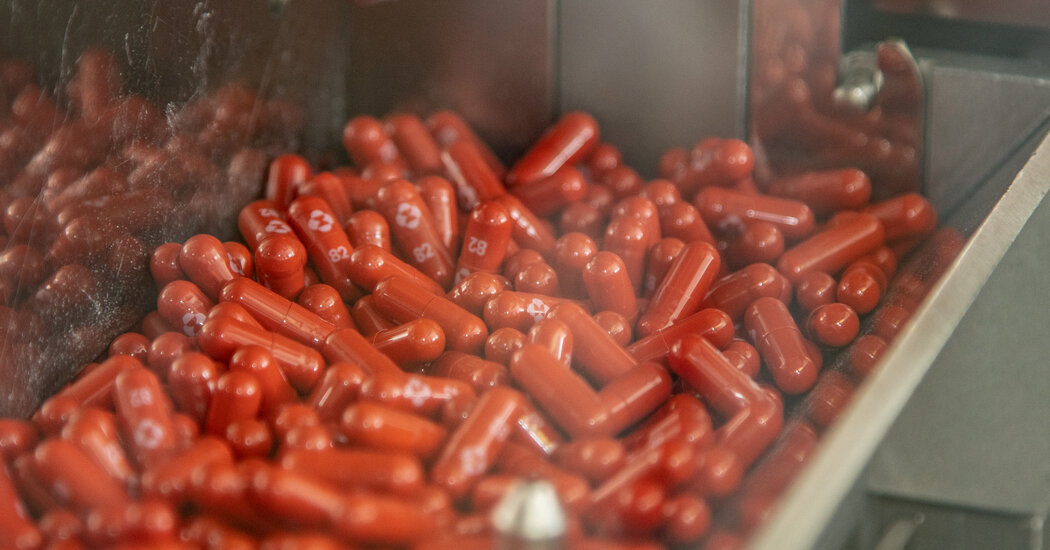
The F.D.A. said the drug should be prescribed mainly when other treatments were “not accessible or clinically appropriate.”The Food and Drug Administration on Thursday authorized a second antiviral pill for Covid but said it should not be preferred over other treatments.The F.D.A. cleared the pill, developed by Merck and known as molnupiravir, for adults who are vulnerable to becoming severely ill from Covid and for whom alternative treatment options are “not accessible or clinically appropriate.”The agency’s decision reflects concerns that Merck’s pill is only modestly effective and carries possible safety risks, including for pregnant women.Merck’s treatment is expected to be available early next month. With the Omicron variant driving an onslaught of infections, the drug will be in greater supply in the coming weeks than other treatments in the United States.Older people and those who have conditions like obesity, diabetes or heart disease would be eligible to get a prescription for Merck’s pills if they become sick from the coronavirus and cannot get treatments like Pfizer’s newly authorized pills or monoclonal antibody drugs. Both vaccinated and unvaccinated people will be eligible.But while the agency authorized Pfizer’s treatment for high-risk Covid patients as young as 12, it said that it was authorizing Merck’s drug only for adults because it “may affect bone and cartilage growth.”Even before the F.D.A.’s decision, some doctors and health officials had tempered expectations for Merck’s drug. It appears far less effective than a similar pill from Pfizer, which received F.D.A. authorization on Wednesday and is expected to become more widely available in the United States starting in a few months.In a key clinical trial, Merck’s drug reduced the risk of hospitalization or death by 30 percent when given to high-risk, unvaccinated people within five days of the onset of symptoms. Pfizer’s pill was found to reduce that risk by 88 percent.“I don’t think Merck’s version is going to be the game changer,” said Dr. Walid Gellad, who directs the Center for Pharmaceutical Policy and Prescribing at the University of Pittsburgh.Dr. Dean Li, a Merck executive, said on Thursday that preliminary laboratory studies suggested that the drug was equally effective against Omicron as it was against earlier versions of the virus. The company and independent researchers have been running experiments on how well the drug can stop the Omicron variant from replicating.The pills from Merck and Pfizer can be taken at home and are expected to reach many more people globally than monoclonal antibody treatments, which are typically given via intravenous infusions by a health care provider.Until this week, the antibody drugs have been the only authorized treatment option for Covid patients who are at high risk of becoming severely ill. But Omicron has wreaked havoc on the country’s supply of the antibodies.On Thursday, the federal government paused distribution of the treatments from Regeneron and Eli Lilly, saying it was unlikely they would work against Omicron. Those treatments represented nearly all of the country’s supply. The only antibody treatment that remains potent against the new variant, from GlaxoSmithKline and Vir Biotechnology, is in very limited supply for now.In that context, the value of Merck’s pill has increased, experts said.“Anything that keeps people out of the hospital, even incremental, has a role,” said Dr. Nahid Bhadelia, director of the Center for Emerging Infectious Diseases Policy and Research at Boston University.In early November, the Delta variant started fueling a rise in coronavirus cases, particularly in the Midwest and the Northeast. Omicron, which rapidly became the dominant form of new cases in the United States, is now driving the surge.Merck’s treatment is meant to be taken as 40 pills over five days. The company is ready to ship the first 378,000 courses for the United States within days. Merck is expected to fulfill the federal government’s full order of enough pills for 3.1 million people, at a cost of about $700 a person, by the end of January.Pfizer is expected to provide enough of its pills, known as Paxlovid, for 265,000 Americans before the end of January. The federal government on Thursday allocated the first 65,000 treatment courses to states and said the first shipments would begin arriving within the next few days.As was done with Covid vaccines, the federal government will allocate the pills to states, which can then distribute them to health departments and pharmacies. The government will also ship the pills directly to community health centers.The Coronavirus Pandemic: Key Things to KnowCard 1 of 5The holiday season.

Read more →

Cochlear implant in deaf children with autism can improve language skills and social engagement, study finds

Restoring hearing through cochlear implantation for children with autism spectrum disorder (ASD) can help them understand spoken language and enhance social interactions, according to a study from Ann & Robert H. Lurie Children’s Hospital of Chicago. The study reported long-term outcomes of the largest number of children with ASD who received a cochlear implant, with mean follow-up of 10.5 years. Findings were published in the journal Otology & Neurotology.
“Our results add to the growing body of evidence that cochlear implantation clearly benefits deaf children with autism spectrum disorder,” said senior author Nancy Young, MD, Medical Director of Audiology and Cochlear Implant Programs at Lurie Children’s and a Professor of Pediatric Otolaryngology at Northwestern University Feinberg School of Medicine. “Improved hearing provides access to spoken language that may enhance their cognitive and communication potential, as well as help these children engage more with their families.”
The majority (73 percent) of children in the study consistently used their cochlear implant throughout the day, of whom 45 percent developed some understanding of spoken words with hearing alone (no visual cues). Forty five percent also used spoken language to some degree as part of their overall communication. Eighty six percent were reported by parents to have improved social engagement after implantation. Responding to a survey, one parent reported: “Without his implant, he was stuck in his own little world, no sound, no eye contact with others. The implant brought his personality out to us.”
According to recent estimates, one in 88 children in the US have ASD, a complex developmental disorder characterized by impaired communication and social interaction. Twenty-five to 30 percent of normal hearing children with ASD do not develop spoken language as a means of communication. Therefore, children with ASD in combination with profound hearing loss have two conditions that may limit development of spoken language. Not surprisingly, the children in this study usually developed understanding and use of spoken language more slowly than implanted children without ASD.
Children with ASD have been reported to have a higher prevalence of sensorineural hearing loss (SNHL) than children without ASD. Conversely, children with SNHL have been reported to have a higher rate of ASD than those with normal hearing. Dr. Young noted that “the relationship between these two diagnoses for some of these children may be due to congenital cytomegalovirus (CMV), an infection that begins in the developing fetus that often is unrecognized after birth. It may cause hearing loss and is associated with increased incidence of ASD.”
Most children in the study were diagnosed with ASD after cochlear implantation. Diagnosis after implantation is likely related to the young age at which most received their implant, and to increased difficulty diagnosing ASD when significant hearing loss is present.
“Understanding the range of outcomes in this population is important for counseling parents and educators to ensure that these children receive appropriate support and services,” said Beth Tournis, AuD, an audiologist at Lurie Children’s and co-author of the study.
Story Source:
Materials provided by Ann & Robert H. Lurie Children’s Hospital of Chicago. Note: Content may be edited for style and length.

Read more →

CBD reduces glioblastoma’s size, supportive environment in experimental model

Inhaled CBD shrinks the size of the highly aggressive, lethal brain tumor glioblastoma in an animal model by reducing the essential support of its microenvironment, researchers report.
“We saw a significant reduction in the size of the tumor and its microenvironment was different,” Dr. Babak Baban, immunologist and associate dean for research at the Dental College of Georgia at Augusta University says, after only seven days of treatment.
Researchers at DCG and the Medical College of Georgia say that the inhaler approach not only helped ensure the compound found in cannabis reached the brain, but that the method of delivery could, much like asthma inhalers, eventually be easily used by patients.
It was the first study to use CBD in an animal model of glioblastoma, they report in the journal Cannabis and Cannabinoid Research.
Using modified glioblastoma cells from humans, they created what is called an orthotopic glioblastoma model, to provide the most realistic model they could for this most common and lethal malignant brain tumor. By day eight the aggressive tumor was established in the brain of the mice, and at day 9 they started giving daily doses of inhaled CBD or a placebo that continued for seven days. They then looked again at an image of the tumor and directly at the tumor tissue.
While the approach is likely easily applicable to humans, at this juncture they are looking primarily at the biological response of the tumor to CBD, says Dr. Martin Rutkowski, MCG neurosurgeon whose expertise includes operating on these patients who tend to present after a seizure or sudden loss of consciousness, or with slower onset of neurological deficits like a weak arm, vision or cognitive problems.

Read more →

Omicron: 'First signs of cautious optimism' – Dr Susan Hopkins

Dr Susan Hopkins, epidemiologist for the UK Health Security Agency, has called early findings about Omicron’s severity a cause for “cautious optimism”. The agency’s research has suggested that people catching the new Covid variant Omicron are 50% to 70% less likely to need hospital care compared with previous variants.More on this story: Omicron up to 70% less likely to need hospital care

Read more →

Omicron up to 70% less likely to need hospital care

SharecloseShare pageCopy linkAbout sharingImage source, Getty ImagesPeople catching Omicron are 50% to 70% less likely to need hospital care compared with previous variants, a major analysis says. The UK Health Security Agency says its early findings are “encouraging” but the variant could still lead to large numbers of people in hospital. It also shows the vaccine’s ability to stop you catching Omicron starts to wane 10 weeks after a booster dose.Protection against severe disease is likely to be far more robust. The report comes hot on the heels of data from South Africa, Denmark, England and Scotland which all pointed to reduced severity.The latest analysis is based on all cases of Omicron and Delta in the UK since the beginning of November, including 132 people admitted to hospital with the variant. There have also been 14 deaths in people within 28 days of catching Omicron. The report shows people catching Omicron are:31% to 45% less likely to go to A&E50% to 70% less likely to be admitted to hospital for treatmentHowever, a milder virus could still put pressure on hospitals. The issue remains that any benefit of a milder virus could be wiped out by large numbers of people catching Omicron. The UK has set another daily Covid record with 119,789 confirmed cases.There is also uncertainty about what will happen when Omicron reaches older age groups as most of those catching it and going into hospital so far are under the age of 40.Dr Jenny Harries, the chief executive of the UKHSA, said: “Our latest analysis shows an encouraging early signal that people who contract the Omicron variant may be at a relatively lower risk of hospitalisation than those who contract other variants. “Cases are currently very high in the UK, and even a relatively low proportion requiring hospitalisation could result in a significant number of people becoming seriously ill.”There are also signs that the effect of booster doses is waning. Two doses of a vaccine were shown to offer limited protection against catching Omicron, which was then restored with a booster dose. However, the report says this protection drops by between 15% and 25% after 10 weeks. This is still better than having no booster dose and the protection against severe disease or death is likely to be even greater. The health and social care secretary, Sajid Javid, said the early data was “promising” and government was monitoring the data “hour-by-hour”.But he warned: “Cases of the variant continue to rise at an extraordinary rate – already surpassing the record daily number in the pandemic. Hospital admissions are increasing, and we cannot risk the NHS being overwhelmed.”Follow James on TwitterUK Health Security AgencyThe BBC is not responsible for the content of external sites.

Read more →

COVID-19 infection detected in deer in six Ohio locations

Scientists have detected infection by at least three variants of the virus that causes COVID-19 in free-ranging white-tailed deer in six northeast Ohio locations, the research team has reported.
Previous research led by the U.S. Department of Agriculture had shown evidence of antibodies in wild deer. This study, published today (Dec. 23, 2021) in Nature, details the first report of active COVID-19 infection in white-tailed deer supported by the growth of viral isolates in the lab, indicating researchers had recovered viable samples of the SARS-CoV-2 virus and not only its genetic traces.
Based on genomic sequencing of the samples collected between January and March 2021, researchers determined that variants infecting wild deer matched strains of the SARS-CoV-2 virus that had been prevalent in Ohio COVID-19 patients at the time. Sample collection occurred before the Delta variant was widespread, and that variant was not detected in these deer. The team is testing more samples to check for new variants as well as older variants, whose continued presence would suggest the virus can set up shop and survive in this species.
The fact that wild deer can become infected “leads toward the idea that we might actually have established a new maintenance host outside humans,” said Andrew Bowman, associate professor of veterinary preventive medicine at The Ohio State University and senior author of the paper.
“Based on evidence from other studies, we knew they were being exposed in the wild and that in the lab we could infect them and the virus could transmit from deer to deer. Here, we’re saying that in the wild, they are infected,” Bowman said. “And if they can maintain it, we have a new potential source of SARS-CoV-2 coming in to humans. That would mean that beyond tracking what’s in people, we’ll need to know what’s in the deer, too.
“It could complicate future mitigation and control plans for COVID-19.”
A lot of unknowns remain: how the deer got infected, whether they can infect humans and other species, how the virus behaves in the animals’ body, and whether it’s a transient or long-term infection.

Read more →

SARS-CoV-2 goes 'underground' to spread from cell to cell

The virus that causes COVID-19 has adopted some stealth moves to stay alive and kicking, and one secret to its success is hiding from the immune system by spreading through cell-to-cell transmission, a new study has found.
Cell culture experiments showed that SARS-CoV-2, which causes COVID-19, limits the release of viral particles that can be inactivated by antibodies, instead staying tucked within cell walls and spreading between cells.
“It’s basically an underground form of transmission,” said lead author Shan-Lu Liu, a virology professor in the Department of Veterinary Biosciences at The Ohio State University and an investigator in the university’s Center for Retrovirus Research.
“SARS-CoV-2 can spread efficiently from cell to cell because there are essentially no blockers from the host immunity. Target cells become donor cells, and it just becomes a wave of spread, as the virus may not get out of the cells.”
Liu and colleagues found other revealing details about SARS-CoV-2: The spike protein on its surface alone enables cell-to-cell transmission, and yet the virus’s primary receptor on target cells — to which the spike binds — is not a necessary part of the cell-to-cell transmission operation. Additionally, they found that neutralizing antibodies are less effective against the virus when it spreads through cells.
The research was published Wednesday (Dec. 22, 2021) in the journal Proceedings of the National Academy of Sciences.

Read more →

Improving medication treatment leads to dramatic gains in emergency department care for opioid use disorder

Making initiation of buprenorphine easy and timely was associated with a 25 percent increase in the likelihood of its use of treatment in emergency departments.
A program designed to increase initiation of buprenorphine treatment for opioid use disorder in the emergency department led to a sixfold increase in its use at three Penn Medicine hospitals, according to new research from the Perelman School of Medicine at the University of Pennsylvania. By using various tactics in three acute care centers — ranging from financial incentives for doctors to train to treat opioid use disorder to an automated connection to peer recovery specialists — the program was not only able to boost buprenorphine treatment rates initially, but it sustained the changes.
“We used a behavioral design approach to make implementation of evidence-based treatment easy, attractive, social and timely. While we concentrated initially on prescribing itself, we realized we also needed to overcome other barriers, such as identifying and engaging patients in care,” said Margaret Lowenstein, MD, an assistant professor of Medicine and the lead author of the research, published in Annals of Emergency Medicine. “So much of our work focused on helping providers better identify treatment opportunities, reducing the friction related to prescribing, and supporting patient engagement and care linkage.”
Buprenorphine is a medication that stabilizes opioid withdrawal and soothes cravings. Its use can increase long-term engagement with opioid use disorder care and reduce overdose death and other complications of drug use.
To get this potentially lifesaving medication to patients, the researchers first had to make it easy to prescribe buprenorphine through increasing the proportion of clinicians authorized to prescribe it. Clinicians needed to obtain the authority to prescribe buprenorphine — an “X-waiver” — through the completion of specific training courses. Prior to the loosening of these requirements in 2021, all prescribers had to undergo trainings — and the process still requires advance registration on a government website.
To better promote medication treatment for opioid use disorder, several strategies were employed by a clinical team led by Jeanmarie Perrone, MD,a study co-author and a professor of Emergency Medicine, as well as the director of the Penn Medicine Center for Addiction Medicine and Policy. A financial-incentive system rewarding doctors for the training resulted in X-waivered providers climbing from 6 to 90 percent in just six weeks. Additionally, the team increased motivation and influenced social norms to prescribe buprenorphine regularly by sharing patient success stories and publicly congratulating clinicians for initiating the treatment.

Read more →

What makes an mRNA vaccine so effective against severe COVID-19?

The first two vaccines created with mRNA vaccine technology — the Pfizer/BioNTech and Moderna COVID-19 vaccines — are arguably two of the most effective COVID vaccines developed to date. In clinical trials, both were more than 90% effective at preventing symptomatic infection, easily surpassing the 50% threshold the Food and Drug Administration had set for COVID-19 vaccines to be considered for emergency use authorization.
While breakthrough infections have increased with the emergence of the delta and omicron variants, the vaccines remain quite effective at preventing hospitalizations and deaths. The success of the new technology has led scientists to try to figure out why mRNA vaccines are so effective and whether the protection they provide is likely to endure as new variants arise.
A new study from researchers at Washington University School of Medicine in St. Louis and St. Jude Children’s Research Hospital shines light on the quality of the immune response triggered by mRNA vaccines. The study shows that the Pfizer vaccine strongly and persistently activates a kind of helper immune cell that assists antibody-producing cells in creating large amounts of increasingly powerful antibodies, and also drives the development of some kinds of immune memory. Known as T follicular helper cells, these cells last for up to six months after vaccination, helping the body crank out better and better antibodies. Once the helper cells decline, long-lived antibody-producing cells and memory B cells help to provide protection against severe disease and death, the researchers said.
Further, many of the T follicular helper cells are activated by a part of the virus that doesn’t seem to pick up mutations, even in the highly mutated omicron variant. The findings, published online Dec. 22, 2021, in the journal Cell, help explain why the Pfizer vaccine elicits such high levels of neutralizing antibodies and suggests that vaccination may help many people continue producing potent antibodies even as the virus changes.
“The longer the T follicular helper cells provide help, the better the antibodies are and the more likely you are to have a good memory response,” said co-corresponding author Philip Mudd, MD, PhD, an assistant professor of emergency medicine at Washington University. “In this study, we found that these T follicular helper cell responses just keep going and going. And what’s more, some of them are responding to one part of the virus’s spike protein that has very little variation in it. With the variants, especially delta and now omicron, we’ve been seeing some breakthrough infections, but the vaccines have held up very nicely in terms of preventing severe disease and death. I think this strong T follicular helper response is part of the reason why the mRNA vaccines continue to be so protective.”
The first antibodies produced in response to an infection or vaccination tend not to be very good. B cells need to go through a kind of boot camp in so-called germinal centers in the lymph nodes before they can produce really powerful antibodies. T follicular helper cells are the drill sergeants of these boot camps. The helper cells provide instruction to the antibody-producing cells on making ever more potent antibodies and encourage those with the best antibodies to multiply and, in some cases, turn into long-lived antibody-producing cells or memory B cells. The longer the germinal centers last, the better and stronger the antibody response.
Earlier this year, Ali Ellebedy, PhD, an associate professor of pathology & immunology, of medicine and of molecular microbiology at Washington University, reported that, nearly four months after people had received the first dose of the Pfizer vaccine, they still had germinal centers in their lymph nodes that were churning out immune cells directed against SARS-CoV-2, the virus that causes COVID-19.
In this latest study, Mudd and co-corresponding authors Ellebedy and Paul Thomas, PhD, of St. Jude, aimed to understand the role of T follicular helper cells in producing such a strong germinal center response. The research team also included co-first authors Anastasia Minervina, PhD, and Mikhail Pogorelyy, PhD, postdoctoral researchers who work with Thomas at St. Jude, and others.
The researchers recruited 15 volunteers who each received two doses of the Pfizer vaccine three weeks apart. The volunteers underwent a procedure to extract germinal centers from their lymph nodes 21 days after the first dose, just before the second dose; then at days 28, 35, 60, 110 and 200 after the initial dose. None of the volunteers had been infected with SARS-CoV-2 at the start of the study. The researchers obtained T follicular helper cells from the lymph nodes and analyzed them.
The researchers now are studying what happens after a booster dose and whether changes to T follicular helper cells could explain why people with compromised immune systems, such as those with HIV infection, do not mount a strong antibody response.

Read more →