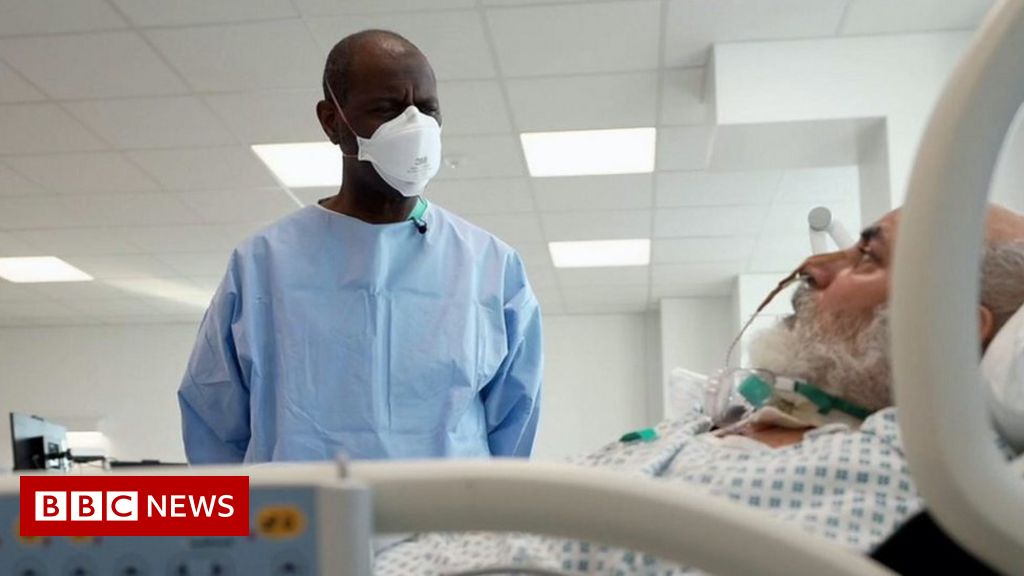
Back on the Covid wards: How is the NHS coping now?

Plan B Covid restrictions in England are due to be lifted later this week, in a move the government hopes will gradually see the country move beyond the pandemic. The World Health Organization’s special envoy on Covid 19, says “light is at the end of the tunnel” for the UK. But British officials remain cautious because of the high number of unvaccinated people, estimated to be around five million. Presenter Clive Myrie has spent the last week at the Royal London Hospital, talking to staff and patients about the continuing pressures the Omicron variant is putting on the NHS, and what life might be like after Covid.Camera: David McIlveen, Producer: Sam Piranty

Read more →

Judge Lifts Order Preventing Wisconsin Hospital Workers From Starting New Jobs

ThedaCare had sought to temporarily prevent seven employees from leaving for jobs at Ascension, saying the departures would jeopardize patient care. A judge sided with the workers on Monday.A judge in Wisconsin on Monday lifted an order that had temporarily blocked seven employees of ThedaCare, a major regional hospital system, from leaving for new jobs with another health care network until it could find people to replace them.The dismissal of a temporary injunction cleared the way for the workers to begin new jobs with Ascension Northeast Wisconsin. Last week, ThedaCare sued Ascension, seeking to temporarily keep the workers from leaving and touching off an unusual labor dispute rooted in twin crises roiling the health care industry: a shortage of workers, many of whom are demanding higher wages, and a raging coronavirus pandemic.Ascension Northeast Wisconsin said in a statement before Monday’s hearing that ThedaCare “had an opportunity but declined to make competitive counter offers to retain its former employees.”The employees, members of ThedaCare’s interventional radiology and cardiovascular team, were at-will employees and were not contractually obligated to stay with ThedaCare for a fixed time, according to Ascension, which is part of one of the largest Catholic health care systems in the United States.ThedaCare, which operates seven hospitals and provides care to more than 600,000 people annually, said in its lawsuit that it was seeking to “protect the community” by temporarily retaining the employees, who accepted new jobs with Ascension in December and were supposed to start on Monday.It added that the employees, who together comprise a majority of an 11-person team, provide “vital care for critically ill patients” and that Ascension “should have known that this action would decimate ThedaCare’s ability to provide critical care” to trauma and stroke victims in the Fox River Valley, a three-county stretch from Green Bay to Oshkosh.Judge Mark McGinnis of Outagamie County Circuit Court granted ThedaCare’s request for a temporary restraining order blocking the employees from starting at Ascension this week as planned, and told the lawyers for both parties on Friday to seek a deal, The Post-Crescent of Appleton, Wis., reported. The lawsuit was filed as hospital systems across the country, including in Wisconsin, are struggling to retain workers during the pandemic.But Joe Veenstra, a labor and employment lawyer in La Crosse, Wis., said the lawsuit was an unusual and far-reaching attempt by ThedaCare to interfere with the free market and to keep employees without having to pay them higher wages.“We’ve definitely entered an alternate universe,” Mr. Veenstra said, adding: “Now we have managements incapable of controlling labor and asking courts to prevent the free market from happening. It’s just, we’re living in an upside down world right now.”It was unclear how long ThedaCare wanted to retain the seven employees. The hospital system said in its lawsuit that it wanted Ascension to either lend one radiology technician and one nurse to ThedaCare each a day until it hired adequate staff or Ascension should pause its hiring of the employees until replacements could be found.Mr. Veenstra said that for ThedaCare “to restrict their employment in this way, it’s very, very unusual.”ThedaCare says in the lawsuit that in order to retain the Level II trauma center status at ThedaCare Regional Medical Center-Neenah — the second-highest category a hospital can achieve — it must be able to perform interventional radiology procedures 24 hours a day. That is impossible to sustain if the employees leave, it says.If the hospital is unable to provide round-the-clock interventional radiology care, such as restoring blood flow to a patient’s brain after a stroke, it would “risk the withdrawal of its Level II trauma center verification” and be forced to transport patients elsewhere, the lawsuit states.Timothy Breister, one of the departing employees mentioned in the lawsuit, said in a letter to Judge McGinnis that Ascension “in no way recruited any of the seven of us,” as ThedaCare has argued.The Coronavirus Pandemic: Key Things to KnowCard 1 of 4Omicron in retreat.

Read more →

Cash Aid to Poor Mothers Increases Brain Activity in Babies, Study Finds

The research could have policy implications as President Biden pushes to revive his proposal to expand the child tax credit.WASHINGTON — An experiment that provided poor mothers with cash stipends for the first year of their children’s lives appears to have changed the babies’ brain activity in ways associated with stronger cognitive development, a finding with potential implications for safety net policy.The differences were modest — researchers likened them in statistical magnitude to moving to the 75th position in a line of 100 from the 81st — and it remains to be seen if changes in brain patterns will translate to higher skills, as other research offers reason to expect.Still, evidence that a single year of subsidies could alter something as profound as brain functioning highlights the role that money may play in child development and comes as President Biden is pushing for a much larger program of subsidies for families with children.“This is a big scientific finding,” said Martha J. Farah, a neuroscientist at the University of Pennsylvania, who conducted a review of the study for the Proceedings of the National Academies of Sciences, where it was published on Monday. “It’s proof that just giving the families more money, even a modest amount of more money, leads to better brain development.”The payments will continue until the children are at least 4 years old, and the researchers plan further tests.via Lauren Meyer/Baby’s First YearsAnother researcher, Charles A. Nelson III of Harvard, reacted more cautiously, noting the full effect of the payments — $333 a month — would not be clear until the children took cognitive tests. While the brain patterns documented in the study are often associated with higher cognitive skills, he said, that is not always the case.“It’s potentially a groundbreaking study,” said Dr. Nelson, who served as a consultant to the study. “If I was a policymaker, I’d pay attention to this, but it would be premature of me to pass a bill that gives every family $300 a month.”A temporary federal program of near-universal children’s subsidies — up to $300 a month per child through an expanded child tax credit — expired this month after Mr. Biden failed to unite Democrats behind a large social policy bill that would have extended it. Most Republicans oppose the monthly grants, citing the cost and warning that unconditional aid, which they describe as welfare, discourages parents from working.Sharing some of those concerns, Senator Joe Manchin III, Democrat of West Virginia, effectively blocked the Biden plan, though he has suggested that he might support payments limited to families of modest means and those with jobs. The payments in the experiment, called Baby’s First Years, were provided regardless of whether the parents worked.Evidence abounds that poor children on average start school with weaker cognitive skills, and neuroscientists have shown that the differences extend to brain structure and function. But it has not been clear if those differences come directly from the shortage of money or from related factors like parental education or neighborhood influences.The study released on Monday offers evidence that poverty itself holds children back from their earliest moments.“This is the first study to show that money, in and of itself, has a causal impact on brain development,” said Dr. Kimberly G. Noble, a physician and neuroscientist at Columbia University, who helped lead the study.Dr. Noble and colleagues from six universities recruited a thousand mother-infant pairs within days of the babies’ birth and randomly divided the families into two groups. One group received a nominal $20 a month and another received $333.Using electroencephalograms, or EEG tests, to evaluate the children at age 1, the researchers found that those in the high-cash group had more of the fast brain activity other research has linked to cognitive development than those in the low-cash group. The differences were statistically significant by most, but not all, measures and were greatest in parts of the brain most associated with cognitive advancement.The payments will continue until the children are at least 4 years old, and the researchers plan further tests.Researchers are still trying to determine why the money altered brain development. It could have purchased better food or health care; reduced damaging levels of parental stress; or allowed mothers to work less and spend more time with their infants.The question of whether cash aid helps or hurts children is central to social policy. Progressives argue that poor children need an income floor, citing research that shows even brief periods of childhood poverty can lead to lower adult earnings and worse health. Conservatives say unconditional payments erode work and marriage, increasing poverty in the long run.President Bill Clinton changed the Democratic Party’s stance a quarter-century ago by abolishing welfare guarantees and shifting aid toward parents who work. Though child poverty subsequently fell to record lows, the reasons are in dispute, and rising inequality and volatility have revived Democratic support for subsidies. Many other rich countries offer broad children’s allowances without condition.The temporary expansion of the child tax credit, passed last year, offered subsidies to all but the richest parents at a one-year cost of more than $100 billion. Representative Suzan DelBene, Democrat of Washington, said the study strengthened the case for the aid by showing that “investing in our children has incredible long-term benefits.”Greg J. Duncan, an economist at the University of California, Irvine, who was one of nine co-authors of the study, said he hoped the research would refocus the debate, which he said was “almost always about the risks that parents might work less or use the money frivolously” toward the question of “whether the payments are good for kids.”But a conservative welfare critic, Robert Rector of the Heritage Foundation, argued that the study vindicated stringent welfare laws, which he credited with reducing child poverty by incentivizing parents to find and keep jobs.“If you actually believe that child poverty has these negative effects, then you should not be trying to restore unconditional cash aid,” he said. “You certainly don’t want to go in the business of reversing welfare reform.”Economists and psychologists once dominated studies of poor children, but neuroscientists have increasingly weighed in. Over the past 15 years, they have shown that poor children on average differ from others in brain structure and function, with the disparities greatest for the poorest children.EEG tests have found differences in electrical activity. Magnetic resonance imaging, or M.R.I.s, have shown differences in the size of the cerebral cortex, especially in areas linked to language development and executive functioning. One study found differences in cerebral cortex size may account for up to 44 percent of the achievement gap between high- and low-income adolescents.As with any group differences, averages do not predict individual outcomes. Many other factors beyond brain features influence cognitive development, and many low-income children thrive.To test the effects of cash aid, Baby’s First Years raised more than $20 million from public and private sources, including the National Institutes of Health. Researchers recruited participants from maternity wards in New York City, Minneapolis-St. Paul and the metro areas of New Orleans and Omaha, randomly assigning them to the high- and low-payment groups.The families had average incomes of about $20,000, below the official poverty line for an average-sized family, meaning those who received $333 a month experienced an income gain of approximately 20 percent. The mothers were told they could use the money as they wished.The researchers predicted that children in the high-cash group would show more high-frequency brain activity than those in the low-cash group and less low-frequency activity. Previous research has found such patterns are associated with higher cognitive skills and fewer attention problems.The results largely conformed to predictions, with the children who received the higher grants showing more of the fast brain activity (though no differences in slow brain activity).The scientists wrote that the money “appeared” to cause the changed brain patterns, though they were less equivocal in interviews. Dr. Noble said the evidence, though strong, was not “airtight,” in part because the coronavirus pandemic allowed them to test only 435 infants.Researchers are still trying to determine why the money altered brain development. It could have purchased better food or health care.Cody O’Loughlin for The New York TimesJohn Gabrieli, a neuroscientist at the Massachusetts Institute of Technology, said the evidence that cash aid altered brain activity was persuasive and “very important scientifically,” though he added, “We want to see if these differences result in improvements to cognition.”While the size of the recorded differences are modest (about a fifth of a standard deviation), the researchers said they were comparable to those produced by the average school experiment, like giving children tutors. While those services are often hard to administer, they added, cash can be distributed on a mass scale.Katherine Magnuson, a co-author of the study who directs the Institute for Research on Poverty at the University of Wisconsin, said she was surprised that only a year’s worth of aid made a difference. “It shows how sensitive the brain is to environments,” she said.Critics of unrestricted cash aid often warn that families will waste or abuse it. But Lisa A. Gennetian, an economist at Duke University and a co-author of the study, said the results indicated that parents could be trusted to make good decisions. “For one family, that might be food; for another, it might be housing,” she said. Additional research will examine how parents spent the money.Unlike last year’s expansion of the child tax credit, the experiment was narrowly targeted to poor newborns, which would make it less costly to replicate and possibly ease conservatives’ concerns about deterring work.One critic of the broader payments, Angela Rachidi of the American Enterprise Institute, said the study suggested the importance of infant bonding. Should the initial results hold up, she said, they could lend support for policies that help mothers spend more time with their newborns, including paid leave.But any cash aid, she said, should be “targeted to those with low incomes, time limited, and not erode work incentives in the long term.”

Read more →

Current vaccines teach T cells to fight Omicron

Scientists at La Jolla Institute for Immunology (LJI) have found that four COVID-19 vaccines (Pfizer-BioNTech, Moderna, J&J/Janssen, and Novavax) prompt the body to make effective, long-lasting T cells against SARS-CoV-2. These T cells can recognize SARS-CoV-2 Variants of Concern, including Delta and Omicron.
“The vast majority of T cell responses are still effective against Omicron,” says LJI Professor and study co-leader Alessandro Sette, Dr. Biol.Sci.
“These cells won’t stop you from getting infected, but in many cases they are likely to keep you from getting very ill,” adds LJI Professor Shane Crotty, Ph.D.
“And this is true in all the type of vaccines we studied — and up to six months after vaccination,” says LJI Instructor Alba Grifoni, Ph.D., who co-led the work with Sette and Crotty.
These data come from adults who were fully vaccinated, but not yet boosted. The researchers are now investigating T cell responses in boosted individuals and people who have experienced “breakthrough” COVID-19 cases.
The new Cell study also shows that fully vaccinated people have fewer memory B cells and neutralizing antibodies against the Omicron variant. This finding is in line with initial reports of waning immunity from laboratories around the world.

Read more →

Undiagnosed autistic traits common among youths with substance use disorders, study finds

One in five teens and young adults who seek treatment for alcohol or drug use may have traits characteristic of a previously unrecognized autism spectrum disorder (ASD), researchers at Massachusetts General Hospital (MGH) report.
They found that among patients with an average age of 18.7 years being treated in an outpatient substance use disorder (SUD) clinic, 20% had elevated scores on the Social Responsiveness Scale-2 (SRS-2), a parent- or teacher-reported measure that has been shown to reliably identify the presence and severity of social impairment among individuals along the autism spectrum, and to distinguish autism from other disorders.
The study, results of which are published in The American Journal on Addictions, is the first to look at the prevalence of previously undiagnosed autistic traits among teens and young adults with SUD, says lead author James McKowen, PhD, of the Addiction Recovery Management Service at MGH and Harvard Medical School.
“Usually studies of substance use disorder in autism are done in those with an autism diagnosis already,” he says. “We have looked at this question from the other side, asking how many people with substance use disorder have autism.”
The researchers asked parents of 69 youths reporting for the first time to a specialty outpatient psychiatric SUD clinic to fill out the SRS-2 form. The form is designed to measure an individual’s social awareness, social cognition (thinking about other people and interactions with them), social communication, social motivation, and restricted interests and repetitive behaviors.
They found that although there were few differences between those with elevated autistic trait scores and those with lower, non-autistic scores in terms of demographic or psychiatric factors, the adolescents with higher SRS-2 scores had a nearly eightfold higher likelihood of stimulant use disorder, and a fivefold higher risk for opioid use disorder.
The findings highlight the importance of assessing patients in a SUD treatment setting for autistic traits, the researchers write.
“For clinicians, the big takeaway point from this study is that we need to get better at screening and certainly training in the presence of autism spectrum disorder, because many clinicians treat substance use disorder but don’t have specialty developmental training, particularly for issues around autism,” McKowen says.
“For parents, the big takeaway is that if you suspect that your child may have an autism spectrum issue or if school personnel have suggested that your child may have autistic traits, you should certainly get that assessed, and let your clinicians know whether your child has had a prior diagnosis of ASD,” he says.
The researchers are developing a free clinical therapy protocol that can help clinicians better address the issues of autistic traits in patients with SUD.
Study co-authors include Diana Woodward, BA, Maura DiSalvo, MPH, Vinod Rao, MD, PhD, Julia Greenbaum, BA, Gagan Joshi, MD, and Timothy E. Wilens, MD, from MGH, and Amy M. Yule, MD, from Boston University School of Medicine and Boston Medical Center.
The study was supported by grants from the Demarest Lloyd, Jr. Foundation.

Read more →

Women ages 35 and younger are 44% more likely to have an ischemic stroke than male peers

Women ages 35 years and younger were 44% more likely to have an ischemic stroke (caused by blocked blood vessels in the brain) than their male counterparts, according to a new review of more than a dozen international studies on sex differences in stroke occurrence, published today in a Go Red for Women® 2022 spotlight issue of Stroke, a peer-reviewed journal of the American Stroke Association, a division of the American Heart Association.
“In this second annual Go Red Stroke issue, we have compiled some outstanding articles to inform our readers about multiple important clinical and translational science issues addressing gaps in our knowledge of stroke among women,” said Stroke Editor-in-Chief Ralph L. Sacco, M.D., M.S., FAHA, chair of the department of neurology, and the Olemberg Family Chair in Neurological Disorders and executive director of the Evelyn F. McKnight Brain Institute at the University of Miami Leonard Miller School of Medicine, in Miami. “Stroke affects more women each year than men. We want all stroke professionals to know about the latest research on the recognition, prevention and treatment of strokes among women.”
In the article, “Systematic Review of Sex Differences in Ischemic Strokes Among Young Adults- Are Young Women Disproportionately at Risk?” (Leppert et al.), researchers looked at the differences in stroke incidence among women and men in various young adult age groups. They reviewed studies from January 2008 to July 2021 published and indexed on PubMed, one of the largest online research databases in the world managed by the National Library of Medicine at National Institutes of Health. They included original studies that were population-based and focused on young adults 45 years of age and younger. The studies included data on any stroke type, including ischemic strokes; hemorrhagic strokes (a bleed that occurs when a weakened blood vessel ruptures); TIA, or transient Ischemic attack, also called a mini-stroke (caused by a serious, temporary clot); and cryptogenic strokes for which no known cause is identified. Most of the strokes in the review were ischemic strokes, which account for about 87% of all strokes.
The researchers identified 16 studies, including a combined total of 69,793 young adults with stroke (33,775 women and 36,018 men), from more than half a dozen countries, including the U.S., Canada, France and The Netherlands.
The authors’ analysis identified the sex differences in the incidence of ischemic strokes was the greatest and most evident among adults younger than age 35 years, with an estimated 44% more women than men in this age group experiencing ischemic strokes. This sex difference narrowed among adults ages 35 to 45 years. Sex differences in older age groups were more difficult to determine due to wide variability in the way data was presented among the studies in this systemic review. The researchers were also not able to identify specific causes behind the higher prevalence of strokes in young women compared to young men.
Researchers noted the variables of their data set that posed limitations to their review included: study populations spanning different continents, including 15 different countries with varying levels of development, and the diversity of the study participants from numerous racial and ethnic groups; methodological differences among the studies; and possible publication bias because larger epidemiology studies may not have published results in the younger age groups due to the relatively small number of cases captured. According to the researchers, the incidence of ischemic stroke increases exponentially with age, and only 15% of all ischemic strokes occur in adults younger than age 50 years.
Based on their analysis, the researchers concluded, “Traditional atherosclerotic risk factors are a major contributor to ischemic strokes in both young men and women and become increasingly important with age. However, these risk factors are less prevalent in younger women and may not account for the observed higher incidence of ischemic strokes in women younger than age 35. Young women who are survivors of ischemic stroke also have worse outcomes, with 2 to 3 times higher risk of poorer functional outcomes compared to their male counterparts.”
The researchers said more research is needed to better define the sex differences of ischemic stroke in young adults and the contributions that non-traditional risk factors, such as pregnancy, postpartum and hormonal contraceptives, may play in the overall burden of ischemic strokes in young women.
“Our finding suggests that strokes in young adults may be happening for different reasons than strokes in older adults. This emphasizes the importance of doing more studies of stroke in younger age groups so that we can better understand what puts young women at a higher risk of stroke,” said study co-author Sharon N. Poisson, M.D., M.A.S., an associate professor of neurology at the University of Colorado, Denver. “Better understanding which young adults are at risk for stroke can help us to do a better job of preventing and treating strokes in young people.”
Co-authors are Michelle H. Leppert, M.D., M.B.A.; James F. Burke, M.D., M.Sc.; Lynda D. Lisabeth, Ph.D., FAHA; Tracy E. Madsen, M.D., Ph.D., FAHA; Dawn O. Kleindorfer, M.D., FAHA; Stefan Sillau, Ph.D.; Lee H. Schwamm, M.D., FAHA; Stacie L. Daugherty, M.D., M.S.P.H.; Cathy J. Bradley, Ph.D.; and P. Michael Ho, M.D., Ph.D., FAHA.  The study was partially funded by the National Institutes of Health.
In a commentary review also published in today’s special Stroke issue, “Advances in Stroke: Stroke in Women,” (Bushnell and Kapral), the authors summarized new knowledge about stroke in women. They found recent evidence suggests that: Stroke incidence may be increased in young women relative to young men; Women with a history of stroke have low risk of pregnancy complications; Women with pregnancy complications such as pre-eclampsia and preterm delivery may be at increased risk of stroke for many years after childbirth; and The representation and reporting of women in clinical trials of acute stroke continues to be suboptimal.

Read more →

Artificial intelligence identifies individuals at risk for heart disease complications

For the first time, University of Utah Health scientists have shown that artificial intelligence could lead to better ways to predict the onset and course of cardiovascular disease. The researchers, working in conjunction with physicians from Intermountain Primary Children’s Hospital, developed unique computational tools to precisely measure the synergistic effects of existing medical conditions on the heart and blood vessels.
The researchers say this comprehensive approach could help physicians foresee, prevent, or treat serious heart problems, perhaps even before a patient is aware of the underlying condition.
Although the study only focused on cardiovascular disease, the researchers believe it could have far broader implications. In fact, they suggest that these findings could eventually lead to a new era of personalized, preventive medicine. Doctors would proactively contact patients to alert them to potential ailments and what can be done to alleviate the problem.
“We can turn to AI to help refine the risk for virtually every medical diagnosis,” says Martin Tristani-Firouzi, M.D. the study’s corresponding author and a pediatric cardiologist at U of U Health and Intermountain Primary Children’s Hospital, and scientist at the Nora Eccles Harrison Cardiovascular Research and Training Institute. “The risk of cancer, the risk of thyroid surgery, the risk of diabetes — any medical term you can imagine.”
The study appears in the online journal PLOS Digital Health.
Current methods for calculating the combined effects of various risk factors — such as demographics and medical history — on cardiovascular disease are often imprecise and subjective, according to Mark Yandell, Ph.D., senior author of the study, a professor of human genetics, H.A. and Edna Benning Presidential Endowed Chair at U of U Health, and co-founder of Backdrop Health. As a result, these methods fail to identify certain interactions that could have profound effects on the health of the heart and blood vessels.

Read more →

Insights into a cystic fibrosis treatment may herald a novel class of drugs

Protein misfolding is a likely culprit in many degenerative disorders. Cystic fibrosis, for instance, is caused by mutations in the CFTR gene that prevent the eponymous protein from assuming its proper configuration. Mutations that impair how other proteins fold have been linked to Alzheimer’s, Parkinson’s, and Huntington’s disease.
Now, a new study demonstrates that drugs commonly used to treat cystic fibrosis work by directly aiding the protein folding process — binding CFTR to ensure that the protein has ample time to bend into shape. The findings, published in Cell, may serve as a roadmap for the development of future medications to treat other diseases caused by misfolded proteins.
“Knowing how these drugs bind the protein enabled us to build a theory of how protein folding correctors work at a fundamental level,” says first author Karol Fiedorczuk, a postdoc in the laboratory of Jue Chen at The Rockefeller University. “When analyzing the structure of a protein bound to a drug, we can usually see just a snapshot of the interaction. However, the structural information we obtained in this study reveals a thermodynamic theory of how the correctors improve the process of CFTR folding.”
A problem protein
It was not until about two decades ago that effective treatments for cystic fibrosis became available. Before that, patients seldom lived past age 30. Many now live well into their 50s.
Scientists understood the contours of the disease well enough. At the heart of this genetic condition is CFTR, a protein channel that sits on the surface of cells lining the lungs and digestive tract. By spitting out chloride ions, the channel attracts water that thins mucus and prevents it from accumulating.

Read more →

A spouse's education can positively impact their partner's overall health

Research has long shown that people with more schooling tend to experience better overall health. But can your spouse’s education make you healthier?
According to a study by Indiana University researchers, the answer is yes.
The study, published in the Journal of Health and Social Behavior, found that spousal education is positively related to people’s overall health, with an effect size that rivals the impact of a person’s own education.
“Our results show that who you’re married to, and how much education they have, matter for your health,” said Andrew Halpern-Manners, an associate professor in the Department of Sociology at IU. “This provides further evidence that education, in addition to being valuable for individuals, is also a sharable resource.”
The researchers used more than half a century’s worth of data from the Wisconsin Longitudinal Study, a rich longitudinal study of individuals, their spouses, their siblings and their siblings’ spouses that includes information about respondents’ health, marriages, educational attainments and the educational attainments of their spouses. Due to the timing of the study, which began in 1957, it only refers to heterosexual couples.
Elaine M. Hernandez, co-author of the study and an assistant professor in the Department of Sociology at IU, said researchers have routinely observed a relationship between spousal education and health, but the nature of this relationship has been harder to establish. Because healthier people tend to have more schooling and to partner with those who also are highly educated, it can be difficult to isolate the unique effect of spousal education.
To address this, the team compared the self-rated health of siblings whose spouses had different levels of schooling. The idea, Halpern-Manners said was to find pairs of people who were as similar as possible across a variety of dimensions and then ask whether differences in their partners’ education could explain differences in their health.
They found that the effect of spousal education on a person’s self-assessed overall health is positive and relatively large, suggesting that people benefit from having more highly educated partners in the same way (and to roughly the same extent) that they benefit from being highly educated themselves.
This pattern was especially pronounced among women, whose health was more closely tied to spousal education than men’s. This finding, Hernandez said, could reflect the time period (1960s-1970s) in which most of the respondents completed their education, married and entered the labor force.
“The fact that we observe significant cross-over effects means that education has health-enhancing benefits for the individual, but it also has tangible benefits for those around them — especially intimate ties,” Halpern-Manners said. “This underscores the importance of education — as a public good worth investing in — and suggests that its overall public health impact may be larger than we typically imagine.”
Tabitha G. Wilbur, a PhD candidate in the Department of Sociology at IU, also contributed to the study.
Story Source:
Materials provided by Indiana University. Note: Content may be edited for style and length.

Read more →

Overweight dogs respond well to high-protein, high-fiber diet

A study of overweight dogs fed a reduced calorie, high-protein, high-fiber diet for 24 weeks found that the dogs’ body composition and inflammatory markers changed over time in ways that parallel the positive changes seen in humans on similar diets. The dogs achieved a healthier weight without losing too much muscle mass, and their serum triglycerides, insulin and inflammatory markers all decreased with weight loss.
All such changes are beneficial, said University of Illinois Urbana-Champaign animal sciences professor Kelly Swanson, who led the new research.
Previous studies have shown that overweight and obesity lead to a shorter lifespan and a lower quality of life — in dogs and humans, Swanson said.
“Some of the problems we see in humans with obesity also occur in pet dogs,” he said. “There’s added stress on the joints, there’s an intolerance to exercise and heat; there’s also glucose intolerance, insulin resistance. And if you look at pet insurance claims, obesity is a big factor there.”
Reported in the Journal of Animal Science, the study is unusual in that it also measured changes in the dogs’ fecal microbiota over the course of losing weight, Swanson said.
Even though there are similarities in dog and human metabolism and digestive processes, dogs and humans differ in the species of microbes that inhabit the gut, he said. These microbes perform similar functions, however. They metabolize proteins, carbohydrates and other molecules that are derived from food but escape digestion by the host; and they break down fiber to produce short-chain fatty acids that are important in regulating glucose and appetite, reducing inflammation, bolstering the immune system and providing energy to cells in the colon.
Some of the microbial changes observed in the dogs were difficult to interpret, Swanson said, but a reduction in fecal ammonia — probably the result of eating less protein on the calorie-restricted diet — was likely beneficial.
“High concentrations of ammonia are toxic,” he said.
Dogs that lost weight also had increases in the proportion of bacteria of the genus Allobaculum. Higher Allobaculum populations correlated with an increase in fecal butyrate, a short-chain fatty acid that is a byproduct of the fermentation of dietary fiber. Previous studies have shown that butyrate has anti-inflammatory and anti-carcinogenic effects in the gut.
Total short-chain fatty acid concentrations did not change over time, however. This may reflect the fact that most of these organic acids are absorbed and not excreted, the researchers report.
Most studies of gut microbiota focus on humans, so the new research offers insight into the similarities and differences between dogs and humans, and how they respond to dietary changes and weight loss. More research will be needed to clarify the findings, Swanson said.
Funding for this project was provided by Perfect Companion Group Co. Ltd., Thailand.
Story Source:
Materials provided by University of Illinois at Urbana-Champaign, News Bureau. Original written by Diana Yates. Note: Content may be edited for style and length.

Read more →