Novavax Covid jab approved by UK drugs regulator

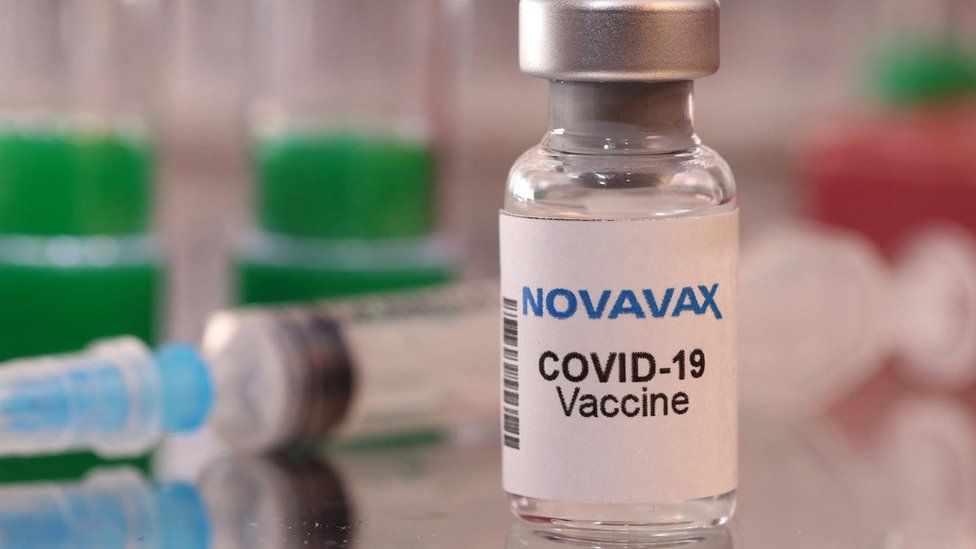
SharecloseShare pageCopy linkAbout sharingImage source, ReutersThe UK has approved a fifth Covid-19 vaccine, developed by US company Novavax, which offers up to 89% protection against Covid illness.The Medicines and Healthcare products Regulatory Agency has said it is safe as a first and second dose in adults.Millions of doses are currently being manufactured at a plant on Teesside.Health Secretary Sajid Javid says independent scientists on the Joint Committee on Vaccination and Immunisation will now consider its use.’Invaluable research’The vaccine could then be used immediately as part of the UK vaccination programme. But, with more than 91% of the UK population already double vaccinated, it is more likely to be used later in the year as part of a possible autumn or winter booster rollout.Before that can happen, the company would need additional authorisation from the medicines regulator. “It’s a testament to the country’s first-rate research and development capabilities for vaccines,” Mr Javid said, “with tens of thousands of people taking part in clinical trials here in the UK, contributing to the invaluable research that shows our vaccines are safe and effective.”The Novavax product – known by the brand name Nuvaxovid – was shown to be 89% effective against catching symptomatic Covid-19 in clinical trials.The original research was conducted against both the earlier Wuhan and Alpha variants of the virus.Image source, PAIn December, Novavax said two doses were also effective in generating an immune response against the now dominant Omicron variant, first identified in South Africa. The company has also started working on a version specific to Omicron.MHRA chief executive Dr June Raine, said: “Our approval of Nuvaxovid follows a rigorous review of the safety, quality and effectiveness of this vaccine, and expert advice from the government’s independent scientific advisory body, the Commission on Human Medicines.”Immune responseThe jab, a protein adjuvant vaccine, is based on technology used for decades to protect people from diseases such as hepatitis and shingles.It delivers copies of the spike protein on the surface of the virus directly into a person’s cells, stimulating the immune system to produce antibodies and T-cells. An extra ingredient, an adjuvant, then helps boost the immune response.Scientists say this approach makes it simpler to produce than some other vaccines and means it can be stored in a refrigerator. Prof Sir Munir Pirmohamed, who chairs the independent Commission on Human Medicines, said: “Nuvaxovid is distinct from other Covid-19 vaccines currently in use in the UK as it uses recombinant protein-based technology which has been used for many years in the development of vaccines to prevent other illnesses, for example hepatitis B.”Manufacturing setbacksIn August 2020, the government agreed to buy 60 million doses and support the final – or phase-three – trials of the jab. And a factory in Billingham, Stockton-on-Tees, has been producing a key ingredient of the vaccine since February 2021.But setbacks to the approval process around the world have led to concerns about jobs in the area.Novavax had to delay its submission to US regulators multiple times because of development and manufacturing setbacks.It was eventually filed on Monday.OXFORD JAB: What is the Oxford-AstraZeneca vaccine?YOUR QUESTIONS: We answer your queriesVACCINE: When will I get the jab?NEW VARIANTS: How worried should we be?COVID IMMUNITY: Can you catch it twice?

Read more →

In New York City Sewage, a Mysterious Coronavirus Signal

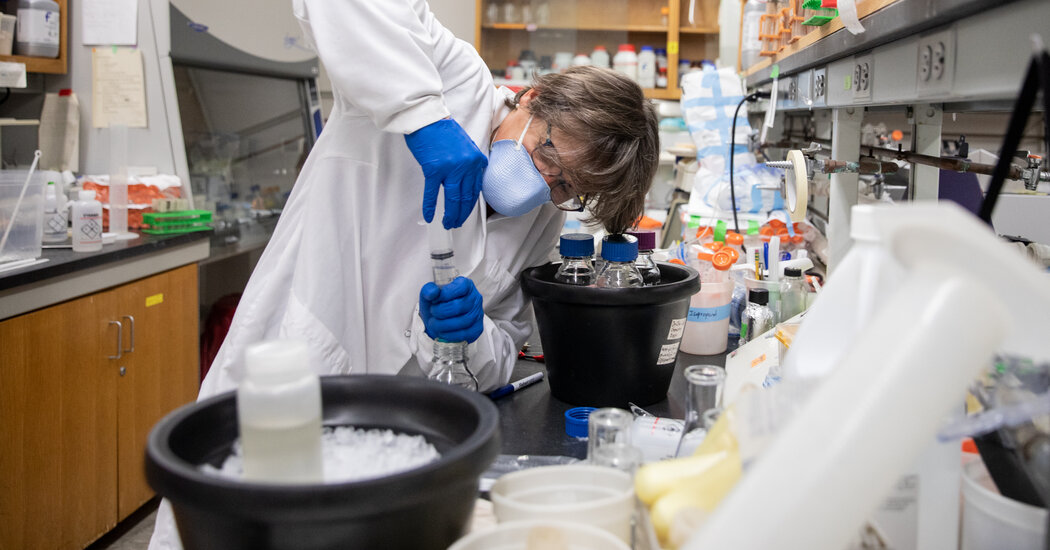
For the past year, scientists have been looking for the source of strange coronavirus sequences that have appeared in the city’s wastewater.Last January, a team of researchers searching for the coronavirus in New York City’s wastewater spotted something strange in their samples. The viral fragments they found had a unique constellation of mutations that had never been reported before in human patients — a potential sign of a new, previously undetected variant.For the past year, these oddball sequences, or what the scientists call “cryptic lineages,” have continued to pop up in the city’s wastewater.There is no evidence that the lineages, which have been circulating for at least a year without overtaking Delta or Omicron, pose an elevated health risk to humans. But the researchers, whose findings will be published in Nature Communications on Thursday, still have no idea where they came from.“At this point, what we can say is that we haven’t found the cryptic lineages in human databases, and we have looked all over,” said Monica Trujillo, a microbiologist at Queensborough Community College and an author of the new paper.The researchers themselves are torn about the lineages’ origins. Some lean toward the explanation that the virus is coming from people whose infections aren’t being captured by sequencing. But others suspect that the lineages may be coming from virus-infected animals, possibly the city’s enormous population of rats. Even then, the favored theory can change from day-to-day or hour-to-hour.Answers remain elusive.“I think it’s really important that we find the source, and we have not been able to pin that down,” said John Dennehy, a virologist at Queens College and an author of the paper.Filtered wastewater samples, colored black because of the binding agent that adheres to coronavirus particles, in John Dennehy’s lab at Queens College.Jackie Molloy for The New York TimesStrange sequencesThe researchers — who also include Marc Johnson, a virologist at the University of Missouri, Davida Smyth, a microbiologist at Texas A&M University and others — have been sampling wastewater from 14 treatment plants in New York City since June 2020. In January of 2021, they began doing targeted sequencing of the samples, focusing on part of the gene for the virus’s all-important spike protein.Although this approach provides a limited look at the viral genome, it allows researchers to extract a lot of data from wastewater, in which the virus is typically fragmented.Viral fragments with novel patterns of mutations appeared repeatedly at a handful of treatment plants, the researchers found. (They could not disclose the specific plants or areas of the city, they said.)“To date we have not seen these variants among clinical patients in N.Y.C.,” said Michael Lanza, a spokesman for New York City Department of Health and Mental Hygiene.Researchers at the University of California at Berkeley have found similar sequences in one California sewershed, said Rose Kantor, a microbiologist at the university.Dr. Dennehy speculated that the “cryptic lineages” could be coming from people who are confined to long-term health care facilities, but he has been unable to prove it.Jackie Molloy for The New York TimesThe scientists’ continuing quest to figure out where the sequences are coming from highlights both the potential of wastewater surveillance, which can help scientists keep tabs on how the virus is evolving, and the challenge of making sense of any anomalies pulled out of the murk.“We really struggled trying to understand what it was that we had,” Dr. Trujillo said.The lineages could be coming from people whose infections have escaped detection or whose virus has not been sequenced.But the fact that they kept turning up at the same few wastewater plants makes this theory less likely, the researchers said, given that New Yorkers, and any variants they may be carrying, tend to move throughout the city without restriction.Still, Dr. Dennehy speculated that the sequences could be coming from people who are confined to long-term health care facilities in just a few areas of the city. But he has not been able to prove it.“We were able to pin it down to a very small area of the sewershed,” Dr. Dennehy said. “And I emailed doctors and hospitals in those areas and never once got a response to my emails.”Indeed, people who have compromised immune systems may have more difficulty fighting off the virus, giving it more opportunities to mutate. Many scientists theorize that Omicron emerged from an immunocompromised patient.Intriguingly, some of the cryptic lineages have some of the same mutations as Omicron, or mutations in the same locations. Laboratory experiments suggest that these lineages may also be able to evade some antibodies.The New York City lineages might be a result of the same kind of selective pressure to evade some of the body’s immune defenses, the researchers theorize.An animal origin?Marc Johnson, a virologist at the University of Missouri, loaded wastewater samples into a centrifuge. “This is a very promiscuous virus,” he said. “It can infect all kinds of species.”Michael B. Thomas for The New York TimesOn the other hand, the lineages have been circulating for long enough now that they should have appeared in at least one sample sequenced from an infected person, some scientists said.“To have something in a sewershed that you’re detecting, you need a fair bit of it around,” said Dr. Adam Lauring, a virologist at the University of Michigan, who was not involved in the research.Dr. Johnson, the Missouri virologist, agrees. He favors the hypothesis that the sequences are coming from animals, perhaps a few specific populations with limited territories. In May and June of 2021, when the number of human Covid-19 cases in the city was low, the mysterious lineages made up a greater proportion of the viral RNA in wastewater, suggesting that they may have come from a nonhuman source.The researchers initially considered a diverse array of potential hosts, from squirrels to skunks. “This is a very promiscuous virus,” Dr. Johnson said. “It can infect all kinds of species.”To narrow down the possibilities, they went back to the wastewater, assuming that any animal that was shedding virus might be leaving its own genetic material behind, too.Although a vast majority of the genetic material in the water came from humans, small amounts of RNA from dogs, cats and rats were also present, the scientists found.Dr. Johnson has been considering rats, which roam the city by the millions. In his lab, he created pseudoviruses — harmless, nonreplicating viruses — with the same mutations present in the cryptic sequences. The pseudoviruses were able to infect both mouse and rat cells, he found. The original version of the virus does not appear able to infect rodents, although some other variants, like Beta, can.“So in and of itself, that isn’t huge data, but it is at least consistent with the idea that it’s coming from rodents,” Dr. Johnson said.Since last summer, the scientists have been working with Animal and Plant Health Inspection Service at the U.S. Department of Agriculture to look for signs of the virus in blood and fecal samples from local rats. So far, they’ve come up empty.“Maybe we’re not hitting the right animals,” Dr. Dennehy said.Or maybe rats aren’t the source of the mystery lineages. Scientists have repeatedly found that human can pass the virus to animals, especially pets, zoo animals, farmed mink and others with which they are in frequent contact. That has raised concerns that the virus might establish itself in an animal reservoir, where it might mutate and get passed back to humans.But rats have not typically been high on the list of concern, and there has not been any evidence that the virus is circulating in wild rats. The pathway by which humans could have infected rats is also unknown.“Nothing makes perfect sense,” Dr. Johnson said.But some kind of animal origin remains a possibility, scientists said.“It’s just as plausible, if not more plausible, than a human origin,” Dr. Lauring said.So the search continues. Dr. Johnson has developed a new technique that can amplify only non-Omicron sequences, which should make it easier to detect the lineages. He has also begun searching for similar lineages in sewage samples from other states, which might help provide further clues to their origins.“We will know eventually,” Dr. Johnson said.

Read more →

Was He Really Having a Heart Attack?

The doctor insisted he was — but he felt it couldn’t be true. One of them was right.The 67-year-old man dropped heavily into the plastic chair inside the Alta Mountain resort in Utah. It was his third day skiing the Rockies but his first at Alta. He had been excited to try these new slopes, but his run that morning was brutal. It was a clear, cold day, and the sharp mountain edges stood out crisply before the bright blue sky, so different from the slopes back East where he lived and usually skied. About halfway down an intermediate-grade slope on his first run that morning, the man started to feel bad, as if he were coming down with something. He rested for a few minutes and when that didn’t help, headed back to the lodge. The trip down was miserable. He felt a strange exhaustion and had to stop every few minutes, as if he were running up the mountain rather than skiing down. It was so bad that, at one point, he worried he would have to be taken in by the ski patrol. But he made it. Finally.As he entered the warmth of the lodge, he was greeted by the usual scent of coffee and the cinnamon charm of freshly baked pastries, but he wasn’t hungry. Sitting by the fire, he tried to figure out what was wrong. He wasn’t out of breath anymore, and that was a relief. But now he had a strange ache in his chest, a few inches below his right clavicle, as if he pulled a muscle. And he was sweating like crazy. He could feel the cool of the saturated undershirt against his chest. He could see the dark dampness as it seeped through his turtleneck. A door opened, and the cold air chilled the sweat on his face. He just sat there, unable to do anything more. It was nearly an hour before he started to feel better; the ache in his chest was still there but the crazy sweating had stopped. And he felt well enough to return to those beautiful slopes.But first he had to buy a new shirt; the one he was wearing was soaked, and he would be cold out on the mountain. Finally dry and relayered, he grabbed his skis and headed toward the lift. On his way, he saw the first-aid building. He felt OK now but was worried — was he well enough to ski? A young woman was working behind the counter. He described the strange and sudden fatigue he had on the slopes and the drenching sweats and chest pain he had in the lodge.Out of nowhere a young man appeared. “I need you to come back with me,” he said, then introduced himself as the doctor on duty. The man needed an EKG, the doctor told him, and led him to an exam table. He placed the sticky tabs on the man’s chest, arms and legs. “You’re having a heart attack,” he explained gravely as the spikes of heartbeats moved across the screen. “No, I’m not,” the man replied promptly. He had never had a heart attack, but he knew what they were supposed to feel like. He had no chest pressure, just this ache. And it wasn’t even on the left side, where pain from heart attacks usually occurs. The doctor was insistent: The EKG clearly indicated a serious myocardial infarction. The man resisted. “Call my son,” he said. “He’s a doctor. He’ll tell you I’m not having a heart attack.”“I Think You Should Go.”The man’s son was in New York City, training to become an oncologist. He listened to the doctor describe his father’s symptoms and the resulting EKG. After a pause, the doctor held the phone out to the man now sitting on the exam table. “Dad, you’re having a heart attack,” his son said. The man answered a little testily, “I’m not.” The son was insistent. The doctor there wanted to send him to a hospital in Salt Lake City, and his son agreed. “I think you should go,” he said. Although the father couldn’t believe he’d had a heart attack, he was worried enough to cut short his day on the slopes to get checked out.Dr. Kent Meredith, the cardiologist on call that day at the Intermountain Medical Center, was waiting as the ambulance pulled in. He introduced himself, then began to jog up the driveway to the hospital, indicating that the E.M.T.s should follow at the same pace. Based on the EKG done at Alta, the man was clearly having a heart attack, Meredith explained as they hurried down corridors. To protect his heart, he would need a cardiac catheterization.In this procedure, Meredith would introduce a slender catheter into one of the vessels of the man’s wrist and thread it up the arm to the chest and then into the heart. Once it was in place, he would inject a dye into the arteries that provide blood to the cardiac muscle. A heart attack occurs when one of these vessels is suddenly blocked, cutting off oxygen-carrying blood to the hard-working cardiac muscles. Meredith would be able to see the effect of the blockage on a moving-picture X-ray: The vessel feeding a section of the heart — and lit up by the contrast — would suddenly appear to end on the scan. No blood meant no oxygen, and without oxygen, the muscle would die. The faster they could clear that obstruction, the less likely it was that the man’s heart would be permanently injured.Moments later, Meredith was surprised by what he found — or didn’t find. There was no obstruction. The patient’s coronary arteries were wide open.Photo illustration by Ina JangHeart BrokenHe hadn’t had a heart attack after all. There were two other possibilities. The same chest pain and EKG changes could have been caused by a spasm in one of the coronary arteries squeezing it shut just long enough to injure the heart. The fact that, during the catheterization, the artery looked normal would mean that the spasm had relaxed and the artery reopened. If that was the case, the EKG abnormality seen at Alta should be gone too. A second EKG was done. It was unchanged. This wasn’t a spasm.That left a second possibility: a rare condition called Takotsubo syndrome, also known as broken-heart or stress-induced cardiomyopathy. In this disorder, the muscular walls of the left ventricle — the part of the heart that squeezes the blood into the body — are suddenly weakened, stretched out like an old piece of elastic. When seen on an ultrasound, the normally bullet-shaped space, defined by the strong muscular walls of the heart, appears enlarged, and the walls are thinned and distended. Its squeeze is weak and can pump only a fraction of its usual payload of blood into the body.The syndrome was first described in 1990 by a Japanese cardiologist, who thought the injured ventricle looked like the thin-necked, elongated pot used by fishermen to trap octopuses — a takotsubo. The injury, often seen after a patient has had some kind of physical or psychological stress, is thought to be caused by a sudden surge of adrenaline or other fight-or-flight hormone. While the immediate effects can be life-threatening, the injury is reversible and function usually returns to normal within weeks or months. This man wouldn’t be a typical takotsubo patient: It’s most commonly seen in older women, and the classic story is of a brokenhearted widow, just after the death of her husband. It was clear from the earliest reports, however, that more ordinary stresses — such as singing karaoke or public speaking — could also be triggers. And some patients reported no stressors at all.“You were right,” Meredith announced when the man woke after the procedure. He hadn’t had a heart attack. But his heart was far from normal. Meredith explained the diagnosis of stress-induced cardiomyopathy. Exactly how or why this happens is still not well understood, he told his patient, but he would recover soon. Until then he would need medications to support his weakened heart. He was discharged from the hospital the next day and told to follow up with a cardiologist at home.He flew back to New Jersey and quickly found a cardiologist. A stress test done just a few weeks later was completely normal. That was eight years ago. The man still skis every winter and goes out to the Rockies when he can. He was offered a pass to Alta, to replace his day that was cut short. But he’s not interested; he gave it to one of his sons. He has never returned to those slopes. And, he says, he never will.Lisa Sanders, M.D., is a contributing writer for the magazine. Her latest book is “Diagnosis: Solving the Most Baffling Medical Mysteries.” If you have a solved case to share, write her at Lisa.Sandersmdnyt@gmail.com.

Read more →

New path to treat advanced triple-negative breast cancer

A new study by researchers at Yale Cancer Center shows inhibition of the CECR2 gene prevents triple-negative breast cancer from advancing or metastasizing. The discovery is an early step in finding new therapeutics for triple-negative breast cancer (TNBC), one of the most difficult disease sub-types to treat. The findings are published online today in the journal Science Translational Medicine.
“These study results are very encouraging as there are few effective treatments for triple-negative breast cancer once it has metastasized,” said senior study author Qin Yan, PhD, Associate Professor of Pathology and Director of Center for Epigenetics and Biomarkers in the Department of Pathology at Yale School of Medicine, co-leader of Genomics, Genetics and Epigenetics Research Program and Scientific Co-Director of Center for Breast Cancer of Yale Cancer Center. “We are constantly searching for new effective therapeutic strategies to help patients with this potentially deadly disease.”
In this study, researchers profiled 13 pairs of primary and metastatic breast tumor samples from patients with breast cancer. They identified a therapeutic target, a gene called CECR2, that increased expression in the tumors that have spread to distant organs. The research team discovered that CECR2 allowed the breast cancer cells to migrate and invade to adjacent tissues and evade surveillance by the host immune system. As the result, CECR2 targeting resulted in the activation of T cells and prevented the tumor from spreading. Researchers also discovered that small molecule inhibitors of CECR2 can suppress the ability of TNBC cells to spread in cell cultures and animal models, providing a new avenue of therapeutic strategy to treat advanced disease. According to researchers, the findings could translate to increased response to current immunotherapies, which had modest efficacy on breast cancer as monotherapies.
“We will continue to study these important findings,” added Yan. “We are working on characterizing the mechanisms by which CECR2 modulates gene expression and tumor microenvironment using multiple cutting-edge technologies. In addition, we hope to develop small molecule inhibitors of CECR2 for clinical studies.”
The study was funded by the Department of Defense Breast Cancer Research Program, the National Institutes of Health, a Yale Cancer Center Class of ’61 Cancer Research Award and the James Hudson Brown-Alexander Brown Coxe Postdoctoral Fellowship.
Story Source:
Materials provided by Yale University. Note: Content may be edited for style and length.

Read more →

Does strep throat lead to the development of tics?

A new study has found no link between a strep throat infection and the development of tics in children who have a parent or sibling with a chronic tic disorder. The research is published in the February 2, 2022, online issue of Neurology®, the medical journal of the American Academy of Neurology.
Tics are repetitive movements and vocalizations prompted by an urge to produce them. They are the defining feature of chronic tic disorders like Tourette syndrome, a neurodevelopmental disorder that begins in childhood.
“There has been much debate about whether the bacteria that causes strep throat, group A streptococcus, plays a role in the development of tic disorders, with previous research providing mixed results,” said study author Anette Eleonore Schrag, MD, PhD, of University College London in the United Kingdom. “Our research looked at a population of children at a higher risk of developing tics due to having a first-degree relative with a tic disorder and did not find an association between exposure to strep and the development of tics.”
The study involved 259 children, age three to 10, who did not have tics but who had a parent or sibling diagnosed with a chronic tic disorder. These children were tested for strep infection at the start and throughout the study, detected through throat swabs, blood tests to detect antibodies that indicate a strep infection, or a combination of these tests.
The participants were followed for an average of 1.6 years, with alternating medical evaluations either in person or over the phone every two months. Parents also kept a weekly diary and were told to report any possible sign of tics in their child as soon as possible. Tic onset was defined as the occurrence of a sudden, involuntary movement or vocalization on three or more days within a three-week period, which was always confirmed on examination.
Over the course of the study, 61 children, or 24%, developed tics.
Researchers compared the frequency of tic disorders in children who had strep and those who did not and found no association between having had a strep infection and the development of tics. After adjusting for age, sex and parental education level, there was still no association.
When researchers followed up with the participants two years after the study ended, seven more children had developed tics, but researchers still found no association between tics and strep.
Independent of strep, researchers found a strong association of sex and the onset of tics, with girls having a 60% lower risk of developing tics than boys, which is similar to the findings of previous studies.
Schrag said, “Future studies are needed to investigate whether pathogens other than strep, or other factors that affect the immune system, play a specific role in the development of tics.”
A limitation of the study is that participants were enrolled at multiple study centers across Europe, rather than at one site, which may have resulted in small inconsistencies in assessment of participants.
The study was supported by the European Union’s Seventh Framework Programme and other funding agencies.
Story Source:
Materials provided by American Academy of Neurology. Note: Content may be edited for style and length.

Read more →

ADHD medicine may treat symptoms of genetic movement disorder in children, study finds

Using a common attention deficit hyperactivity disorder (ADHD) medication appears to help manage the symptoms of a rare and currently difficult to treat genetic movement disorder primarily found in children, according to a new study from a University of Maryland School of Medicine (UMSOM) researcher Andrea Meredith, PhD, and her collaborators.
The disorder, KCNMA1-linked channelopathy, named after the affected gene, can cause abnormal, involuntary movements from collapsing episodes, in which patients slump forward with their arms and legs appearing rigid. These episodes can occur up to 300 times per day, putting patients at risk of serious injury.
The researcher found that the stimulant drug, lisdexamfetamine, reduced these attacks and may help other accompanying symptoms, such as seizures and developmental delays, as well.
These findings were published online on December 11, 2021 in Movement Disorders Clinical Practice.
The researchers say their findings can help to better understand different brain regions involved with the attacks and how the disease manifests itself. While this research shows promise of specifically treating KCNMA1-linked channelopathy, there are broader implications to exploring the treatment effects on the body, potentially shedding light on the mechanisms behind other neuromuscular diseases and how to treat them.
“Sometimes the science doesn’t initially lead us to the answers, it is often the patients and families themselves,” said senior author Dr. Meredith, Professor of Physiology at the University of Maryland School of Medicine.

Read more →

Molecular profiling of meningioma can lead to improved prognosis and therapy

Reliably predicting whether meningioma, the most common primary brain tumor, will recur or remain benign has not been easy. In this study, published in Science Advances, researchers at Baylor College of Medicine and the Jan and Dan Duncan Neurological Research Institute (Duncan NRI) at Texas Children’s Hospital continued their efforts to improve tumor prognostication.
The team reports that the analysis of 365 meningiomas by integrating multiple molecular profiling approaches strongly suggested there are three biologically distinct groups, with one being reliably malignant. This could transform patient care by providing a better prognosis and revealing the tumors that require more aggressive treatment.
The current classification is the World Health Organization system, which divides meningiomas into three categories: WHO grade I (benign), grade II (atypical) and grade III (malignant). “The WHO system relies on tumor histopathology; that is, the appearance of tumor cells under the microscope. Although this system has some success predicting tumor recurrence, there is room for improvement,” said co-corresponding author Dr. Akash J. Patel, a neurosurgeon specialized in treating meningioma at Baylor St. Luke’s Medical Center.
“For instance, WHO grade II and III tumors tend to recur, but we also have seen patients with grade II meningioma whose tumors have a more benign course,” said Patel, who also is an associate professor of neurosurgery at Baylor and an investigator at the Duncan NRI. “On the other hand, a portion of grade I tumors, which are generally cured with surgery, recur despite complete resection and benign microscopic features. It seems that the way we are looking at meningioma could benefit from reevaluation, and this inspired us to continue searching for evidence supporting a better way to predict tumor behavior.”
In their previous work, Patel and his colleagues examined meningioma tumors at the genetic rather than cellular level. They used three molecular profiling approaches: whole exome sequencing, RNA sequencing and gene copy number variations. They identified three distinct groups of meningioma (A, B and C) that didn’t correspond with the WHO grading system. Group C tumors had a remarkably worse clinical course than group A or B tumors. These three types enabled better prediction of tumor behavior than the WHO system.
In the current study, Patel and his colleagues compared their meningioma molecular profiling approach with others that used DNA methylation to classify tumors. A DNA methylation profile refers to the distribution of the chemical methyl tags along the genome, which affects which genes are expressed.

Read more →

New study estimates prevalence of undiagnosed HIV in children in sub-Saharan Africa

Over the past two decades, important progress has been made in implementing services to prevent mother-to-child (vertical) transmission of HIV and to access and uptake of HIV testing for infants and children in countries with a high HIV burden. During the period of upscaling, however, many children living with HIV did not receive HIV testing, and gaps remain in efforts to test all HIV-exposed infants and children.
A new study by CUNY SPH Assistant Professor Chloe Teasdale, doctoral candidate Rebecca Zimba, and colleagues from ICAP at Columbia University provides the first national estimates of the prevalence of undiagnosed HIV in children based on population-level data from sub-Saharan Africa. The findings were published Tuesday in The Lancet HIV.
Using data from the Population-based HIV Impact Assessment (PHIA) surveys conducted in Eswatini, Lesotho, Malawi, Namibia, Tanzania, Zambia, and Zimbabwe from 2015 to 2017, the researchers estimated that close to 40 percent of children aged 1-14 years of age who are living with HIV across these seven countries were undiagnosed, amounting to 166,000 children living with HIV who were not diagnosed or on antiretroviral therapy (ART). They found that, among all children living with HIV in the seven countries, only 55 percent were on ART and only 33 percent had a suppressed viral load. There was substantial variation by country in the prevalence of undiagnosed HIV and pediatric ART coverage, and the authors found that the countries with the highest prevalence of missed diagnosis also had the lowest ART coverage among all children living with HIV.
The findings underscore the urgent need to accelerate HIV testing in order to identify undiagnosed children living with HIV and to ensure that they initiate treatment. This is extremely important as children living with HIV who are not on ART face high risk of mortality. Unfortunately, children continue lag behind adults in treatment coverage, currently only about half of children living with HIV are on ART. To address the treatment gap in children, we must improve pediatric testing coverage, Teasdale says.
“While we know that we are falling short of providing treatment for all children living with HIV, an unknown aspect of the pediatric treatment gap has been an understanding of how many children are not on ART because they have never been diagnosed,” she explains. “The PHIA data provided an opportunity to quantify the proportion of undiagnosed HIV infections in children which has been a missing piece of the puzzle. These data are a call to action. We must do more to identify children living with HIV and to ensure that they start treatment immediately.”
Story Source:
Materials provided by CUNY Graduate School of Public Health and Health Policy. Note: Content may be edited for style and length.

Read more →

Quick COVID breathalyzer could allow mass screening in public places

According to experts, bringing an end to the pandemic will require rapid screening of people attending large gatherings, such as conferences and weddings. Even those who are asymptomatic can still transmit COVID-19 to others, making it important to identify and isolate them until they are no longer contagious. Now, researchers reporting in ACS Nano have developed a prototype “breathalyzer” that can sensitively and accurately diagnose COVID-19, even in asymptomatic individuals, in less than 5 minutes.
Currently, the “gold standard” for COVID-19 testing is a technique called reverse transcription-polymerase chain reaction (RT-PCR), which is slow, requires an uncomfortable nasopharyngeal swab for sample collection and must be performed in a lab. The rapid antigen test is much quicker but has a higher rate of false negatives and positives. Scientists have also developed breathalyzer-type tests for COVID-19, which rely on differences in concentrations of volatile organic compounds exhaled by those infected with the coronavirus, but most require bulky, nonportable instruments for analysis. Xing Yi Ling and colleagues wanted to develop a quick, convenient and accurate breathalyzer test that would be suitable for on-site screening of large numbers of people.
The researchers designed a handheld breathalyzer that contains a chip with three surface-enhanced Raman scattering (SERS) sensors attached to silver nanocubes. When a person exhales into the device for 10 seconds, compounds in their breath chemically interact with the sensors. Then, the researchers load the breathalyzer into a portable Raman spectrometer that characterizes the bound compounds based on changes to the molecular vibrations of the SERS sensors.
The team found that Raman spectra from COVID-positive and -negative people were different in regions responsive to ketones, alcohols and aldehydes, which they used to develop a statistical model for COVID diagnosis. They tested the breathalyzer on 501 people in hospitals and airports in Singapore, who were shown by RT-PCR to be negative (85.2%), positive and symptomatic (8.6%), or positive and asymptomatic (6.2%) for the coronavirus. The method had a 3.8% false-negative and 0.1% false-positive rate, comparable to RT-PCR tests, but it could be completed on-site in less than 5 minutes. The breathalyzer could someday be a new tool to reduce the silent spread of COVID-19 in communities, the researchers say.
The authors acknowledge funding from the National Medical Research Council, Singapore, A*STAR Singapore, the Max Planck Institute-Nanyang Technological University Joint Lab and Nanyang Technological University.
Story Source:
Materials provided by American Chemical Society. Note: Content may be edited for style and length.

Read more →