Australia revisited – a country changed by Covid

SharecloseShare pageCopy linkAbout sharingImage source, Getty ImagesAfter eight years in the US, Nick Bryant returned to Australia to find a country that had retained many of its finest qualities. But it had also turned in on itself and become a more fractured nation.It was the final full day of our summer holiday – January is the August of the southern hemisphere – and our friend had returned to the beach, in the golden hour of the late afternoon, to capture a few last snapshots. By then, the sands had largely emptied. The sea looked too rough to swim in. But over the crash of the incoming waves, she could hear the anguished cries of a swimmer out at sea, who was obviously caught in a rip tide.The woman looked like she was about to be swallowed by the swirling currents. But the closest lifeguard on duty was a mile away. So my friend called her husband on the phone – I was with him at the time – and told him to hurry down with his surfboard. Not for one moment did he hesitate. He raced to the shore in what seemed like a flash. Then out he paddled, into the cauldron of a churning sea, to pluck the stranded woman from the ocean. In my naiveté, I thought that the moment he pulled her onto his surfboard was the endpoint of the drama. But in many ways his struggle was only just beginning. Now he had to get back to dry land, hoping to catch a set of waves that would return them both to the shore. This task was made all the more treacherous by a swell that threatened to hurl them against the rocks.Image source, Nick BryantAs I watched from the clifftop, where I had stayed behind with our young kids, I could see the narrowness of the channel he was aiming for. I could also tell he was tiring. By now, there were more people on the beach, but if any of them ventured into the water without a buoyancy aid, they, too, would be swept out to sea. Some were locals who knew the history of this bay on the Central Coast of New South Wales. Only last October, a man had drowned here after coming off his surfboard and being thrown against the rocks.My friend and the woman were in the water for 15 minutes. It was a frighteningly long battle. But finally he caught a couple of helpful waves, which carried them to safety. As they came ashore in a rocky inlet, my mate was ready to cop what he later described as “a serious cheese grater shredding” but they emerged from the water without a scratch. The swimmer was reunited with her boyfriend. My friend was reunited with his wife. Then, without any fuss, he walked home with his surf board tucked under his arm, where he downed a cold beer and then cooked dinner on the barbecue.Image source, Nick BryantRarely have I witnessed such an impressive act of heroism. His steak was pretty good, too. But I’m telling this story not as an homage to Australian masculinity but because I think it speaks of a certain Australian mindset: a generosity of spirit, a calmness in the midst of crisis, a strong sense of community and togetherness. They’re qualities that both my friends displayed that afternoon, and their response was instantly recognisable as Australian.Yet the country as a whole feels different than it did when we lived here eight years ago before we left to live in New York City. More fractured. More remote. More inward-looking. For much of the pandemic, Covid restrictions have turned the lines on the map that divide the states and territories into rigid borders that could only be crossed with the grant of a permit – paperwork that was routinely denied. Not since the founding of modern Australia, more than a hundred years ago, has the country been more geographically fragmented. Western Australia, whose borders are still shut, feels like it has declared independence. Queensland has also acted at times like a self-governing fiefdom. The premiers of the states have often governed more like prime ministers. Absent throughout has been a sense of Australian nationhood. Image source, Getty ImagesAs well as witnessing the fragility of Australia’s federation, we have seen the enduring solidity of its Fortress Australia mentality. Early on in Covid, the decision was taken to pull up the drawbridge and shutter the portcullis. The country’s international borders only opened up to non-citizens in the middle of December.Not only were foreigners kept out. Australians were locked in. Many expatriate Australians also struggled to make it home, because of the difficulty of getting flights and the prohibitive cost of two weeks of mandatory hotel quarantine. Made to feel even more estranged from their distant country, the unofficial expat anthem, the Peter Allen ballad I Still Call Australia Home, no longer rang so true.Sydney celebrates end of 107-day lockdownThe battle to open up ‘Fortress Australia’Both externally and internally, there has also been a hardheartedness about how Australian officialdom has regulated the movement of its citizens. When the Delta variant hit, the government threatened to jail its own citizens for trying to return from India. Even children wishing to cross state lines to bid a final farewell to terminally ill parents have had applications for compassionate travel waivers knocked back. The Novak Djokovic controversy ahead of the Australian Open demonstrated the broad power at the government’s disposal to grant or cancel visas, which has been likened to a God-like level of authority. Image source, Getty ImagesBut the tough approach that Australia has adopted towards immigrants, especially since the prime ministership of John Howard, and especially since the turn of the century onwards, has also been used against its own citizenry. The Australian government would cite the country’s comparatively low Covid death rate as proof that its strict policies have been effective, a persuasive claim. But at the federal and state level, officials have faced accusations of bureaucratic overkill and a cruel authoritarianism with echoes of the penal past. Covid has surely finally buried the myth once and for all that this country is anti-authoritarian. Arguably, one of its most defining characteristics is compliance.My sense when I lived here before was that Australia had, to a certain extent, become politician-proof. The reform era of the Eighties and Nineties had created a robust economic model. Australia was then in the midst of its remarkable quarter-century run without recession. Despite the regular churn of prime ministers that made Canberra the coup capital of the democratic world, things functioned pretty well. Read more from NickHas the United States become ungovernable?The time when America stopped being greatWhat we all get wrong about the MayflowerCovid, however, has underscored the primacy of government, the only agency with the reach and resources to coordinate a speedy national response. Yet from the sluggishness of its vaccine roll-out to the failure to provide rapid antigen tests in sufficient quantities, the government of Scott Morrison stands accused of falling short.Thankfully, so many of the qualities that I love about this country have withstood the viral assault. The upbeat approach to life. The lack of pretension. The joy of the outdoors. The “no drama” approach even in dramatic situations. All those things were evident at the beach that afternoon when my mate saved that swimmer from a near certain drowning. Here was another reminder of why my family now calls Australia home.

Read more →
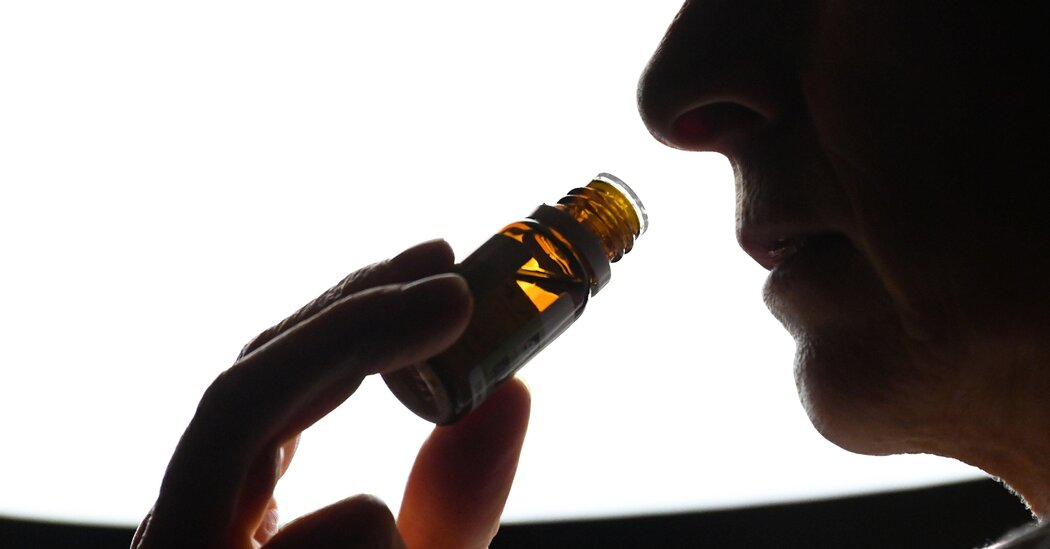

Body Odor May Have Smelled Much Worse to Your Ancient Ancestors

Researchers worked out which receptors in your nose detect particular scent molecules, and found evidence of evolutionary change in some of these genes.When you take a whiff of something, odor molecules sail inside your nose where they bind to proteins — called olfactory receptors — on cells that line your nasal cavity. These receptors trigger signals that your brain interprets as one or many smells.A team of scientists has identified the olfactory receptors for two common odor molecules: a musk found in soaps and perfumes and a compound prominent in smelly underarm sweat. The research team also discovered that more recent evolutionary changes to these olfactory receptors make people less sensitive to those odors. So if you’re one of the fortunate ones who isn’t overwhelmed by body odor, you should probably thank evolution. The work was published in PLoS Genetics on Thursday.Olfactory receptors can be traced back hundreds of millions of years and are believed to be present in all vertebrates. Humans have around 800 olfactory receptor genes, but only about half of them are functional, meaning they’ll be translated into proteins that hang out in the nose and detect odor molecules. But within a functional gene, minor variations can cause changes in its corresponding receptor protein, and those changes can massively affect how an odor is perceived.“There’s a molecule called androstenone,” said Joel Mainland, a neuroscientist at Monell Chemical Senses Center and an author of the new study. “And we know that some people smell that molecule as urine, some people smell that molecule at sandalwood, and some people don’t smell it at all.”With that said, genetic changes aren’t the only thing underlying smell interpretation. “One is genetic and the other is experience, which includes things like the culture you grew up in,” said Hiroaki Matsunami, a molecular biologist at Duke University who was not involved in the research but whose work is focused on olfaction.The study by Dr. Mainland and colleagues was a collaborative effort between scientists in the United States and China. They sequenced the genomes of 1,000 people in Tangshan, China, who are members of the Han ethnic group. They did the same with an ethnically diverse cohort of 364 people in New York City. Participants were asked to rate, on a 100-point scale, the intensity and pleasantness of a range of common odors. The researchers then looked for associations between olfactory receptor genes and odors as well as variations within those genes and their potential impact on perception of the odor.By sampling a large, diverse population of people the researchers were able to home in on odors whose perception was based in genetic differences between people, rather than cultural or experiential factors. That led them to molecules including trans-3-methyl-2-hexenoic acid and galaxolide.Trans-3-methyl-2-hexenoic acid is considered one of the most pungent compounds in underarm sweat. Galaxolide is a synthetic musk often described as having a floral, woody odor that’s used in perfumes and cosmetics, but also things like kitty litter. The research team was able to identify olfactory receptor variants for those odors and, in both cases, people with the more evolutionarily recent gene variant found the odors significantly less intense.The galaxolide findings were particularly striking, with some participants unable to smell the musk at all. “It’s really rare to find an effect that’s as large as what we saw for this one receptor on the perception of the musk odor,” said Marissa Kamarck, a neuroscientist at the University of Pennsylvania who was an author of the study.Dr. Matsunami views this work as another example of human olfaction being more complex than people initially thought. He said that, although the major findings in the study involved just two scents, they’re adding to evidence that “odorant receptors as a group have extraordinary variety.”The authors think their findings support a hypothesis that has been criticized that the primate olfactory system has degenerated over evolutionary time. Kara Hoover, an anthropologist at the University of Alaska Fairbanks who was not involved in this research but who studies the evolution of human smell, is not convinced by that hypothesis in the first place.“Why is reduced intensity assumed to be degradation?” she asked. “Maybe other things are becoming more intense or odor discrimination is improving. We know too little to make these conclusions.”For Dr. Hoover, these findings stirred up other evolutionary questions. “Our species is really young,” she said. “Why this much variation in such a short period of time? Is there an adaptive significance?”

Read more →

F.D.A. Nominee Faces Steep Climb to Senate Confirmation

Dr. Robert Califf, a former agency commissioner, is encountering opposition over federal opioid and abortion policies and his industry ties.The White House is facing pressure from prominent lawmakers over its pick to lead the Food and Drug Administration, with abortion foes urging Republican senators to reject the nominee, Dr. Robert Califf, and with key Democrats withholding support over opioid policies and his industry ties.Nearly six years after Dr. Califf received overwhelming bipartisan support to lead the agency in the final year of the Obama administration, lawmakers and aides are struggling to lock up the votes he needs to clear an evenly divided Senate, where Vice President Kamala Harris serves as the tiebreaking vote.Few, if any, nominees to the F.D.A. have faced as much opposition on both sides of the aisle, and the agency has been without a permanent commissioner for more than a year. The agency’s agenda includes a series of significant issues: oversight of drugs, tests and devices related to Covid-19; the pandemic-related decline in inspections of drug and device manufacturers; and the popularity of flavored e-cigarette products among teenagers.Administration officials have been trying to rally support for Dr. Califf and say he continues to have the support of President Biden and top health officials. Senate Democratic leaders also continue to back him publicly. But a date has not been set for his confirmation vote before the full Senate. At least five Democrats are publicly opposing his nomination, so Dr. Califf needs at least five Republicans to support him.“We are confident Dr. Califf will be confirmed with bipartisan support, and it is critical to have confirmed leadership at the F.D.A. in the midst of a pandemic,” Chris Meagher, a White House spokesman, said. Dr. Califf has declined interview requests while his nomination is pending.This week, some senators seemed uncertain that Dr. Califf could survive the divisions over his candidacy. “I’m not sure that’s going to come to a vote, and I’ll make a final decision then,” said Senator Roy Blunt, Republican of Missouri. “I like him as a person, I think he can do the job and let’s see what else develops between now and the vote.”Prospects for a quick vote may be further complicated by the absence of Senator Ben Ray Luján, Democrat of New Mexico, who is recovering from a stroke. A senior aide to Mr. Luján said on Wednesday that he remained in the hospital and would return in four to six weeks unless there are complications. Mr. Luján voted in favor of Dr. Califf at the committee stage.Notable Democrats — including Senators Joe Manchin III of West Virginia, a key centrist, and Bernie Sanders of Vermont, the independent — have publicly announced that they will oppose the nominee over his ties to the pharmaceutical industry and his handling of the opioid crisis during the Obama administration.“In terms of health care, in terms of the F.D.A., we need aggressive leadership who are prepared to take on the greed of the pharmaceutical industry,” Mr. Sanders said. “Unfortunately, I don’t think Dr. Califf is that person.”Dr. Califf cleared a vote in the Senate Committee on Health, Education, Labor and Pensions in January with Republican support. Four senators crossed the aisle to advance the nomination: Richard Burr of North Carolina, the committee’s ranking member; Susan Collins of Maine; Lisa Murkowski of Alaska; and Mitt Romney of Utah.Senator John Thune of South Dakota, the second-ranking Senate Republican, said on Wednesday that Dr. Califf’s experience and competence boded well for his prospects with many in his party, though concerns over his role in abortion decisions were driving others away.“It’s hard for me to say at this point kind of where our members are going to be,” Mr. Thune said, “but I know that there are mixed views.”Two Democrats — Mr. Sanders and Senator Maggie Hassan of New Hampshire, facing a tough re-election in a state hit hard by opioids — opposed the choice, and more Democrats are said to be leaning against his nomination. All three Democrats who voted against Dr. Califf’s first confirmation to the post in 2016, Mr. Manchin and Senators Ed Markey of Massachusetts and Richard Blumenthal of Connecticut, remain in office.Senator Bernie Sanders, independent of Vermont, has been one of the more vocal opponents to Dr. Califf’s nomination.Al Drago for The New York TimesMr. Markey’s office confirmed that he would again vote against Dr. Califf. Mr. Blumenthal said on Tuesday that if the vote were held that day, he would do the same.“I still strongly believe that there’s a need for a new era and leadership that will separate the F.D.A. from the pharmaceutical industry in a very public and important way,” Mr. Blumenthal said, adding that he had lingering concerns after speaking with Dr. Califf. On Wednesday, he made a point of reiterating his opposition.Dr. Califf has been making the rounds of the Senate, meeting with an estimated 45 members, among the most scheduled for any Biden nominee. Aides privately indicated that they believed they could rally the necessary support for his appointment. This week, Mr. Burr predicted: “I think Dr. Califf will be the next F.D.A. commissioner.”Despite concerns from Mr. Manchin and other Democrats, Dr. Califf was named for the position in November. Mr. Manchin, whose state has been devastated by the opioid epidemic, has outlined numerous changes he would like to see at the F.D.A., including mandatory education for opioid prescribers similar to the education required of those prescribing addiction medication.The senator’s concerns about the crisis have hampered negotiations over Mr. Biden’s marquee $2.2 trillion domestic policy bill, as Mr. Manchin rejected plans to extend the child tax credit over concerns that those monthly payments to families with children were being used to purchase opioids.“I strongly opposed his nomination, which is an insult to those who have been impacted by the drug epidemic,” Mr. Manchin said on Twitter on the day of the panel’s vote, adding: “It’s time the F.D.A. had leadership willing to step forward to protect Americans from the drug epidemic that continues to ravage our nation. Dr. Califf is not that leader.”Several senators, pressed this week on their support for Dr. Califf, said they had not yet made a decision.Senator Shelley Moore Capito, Republican of West Virginia, said she was still undecided: “I know there’s some issues that have come up, but he has been to West Virginia — he has seen firsthand some of the issues that we have. That’s important to me.”The F.D.A. commissioner role has been subject to Senate confirmation since 1988, unlike the director of the Centers for Disease Control and Prevention, who is a presidential appointee. The nominee tends to be subject to sharp questioning, but observers say the decision has never been so wrapped up in national politics unrelated to the nominee’s qualifications.With no confirmed leader, Dr. Janet Woodcock, the interim commissioner, can serve while the nomination is pending. If Dr. Califf’s nomination is voted down, she could lead the agency for 210 more days, according to Charles Young, a spokesman for the Government Accountability Office.Dr. Califf spent much of his career running cardiology trials at Duke University medical school, where he earned a reputation as an evenhanded expert. In 2017, he joined Verily, the life sciences arm of Alphabet, the parent company of Google.The Coronavirus Pandemic: Key Things to KnowCard 1 of 4Omicron in retreat.

Read more →

How a SARS-CoV-2 infection can become severe COVID-19

Infection with SARS-CoV-2 leaves some people almost unaffected, while others develop life-threatening COVID-19 symptoms. So far, we do not understand exactly why symptoms and disease severity, especially in infections with the original variant, vary so significantly. A team of scientists has now discovered that severe courses of the disease are not only marked by strong immune activation and inflammatory reactions, but also by a dysfunctional endothelium, in other words, the vascular system: If this barrier between blood flow and tissue is damaged, the patient’s condition deteriorates.
‘In our study, we investigated which immune cells are activated in severe cases and in what way the endothelium, in other words the blood vessels, and their activation play a role in the disease progress’, explains Prof. Christine Falk, Scientist at the Hanover Medical School (MHH) and the German Center for Infection Research (DZIF). Many clinical symptoms, such as the destruction of blood vessels in the lungs and acute respiratory distress syndrome, pointed to an impact on the endothelium.
The endothelium is a thin layer of cells that line blood vessels, forming a barrier between blood flow and the surrounding tissues. Infection with SARS-CoV-2 appears to cause strong activation of immune and endothelial cells in the lungs, resulting in the release of various soluble plasma proteins. Severe COVID-19 cases are associated with a dysfunction of the endothelium, wherein the barrier between the alveoli and the surrounding vessels is no longer intact.
The scientists studied 25 patients with severe COVID-19 and 17 recovered patients in the intensive care unit (ICU). They were able to prove that the severity of the disease is linked to disruption of the endothelial barrier and can be measured by looking at inflammatory and endothelial plasma proteins. A pattern of seven plasma proteins appears to be associated with a severe form of the disease, which is characterised by strong inflammatory processes and in which the endothelium is permanently damaged. Furthermore, recovery from severe COVID-19 cases seems to be related to the regeneration of this endothelial barrier.
Which immune cells were detected in the COVID-19 ICU patients? The study showed excessive activation of T-lymphocytes and natural killer cells as well as development of memory T-cells and strong proliferation of plasmablasts, cells that can produce large amounts of antibodies. Furthermore, ICU patients infected with SARS-CoV-2 had high titres of spike- and nucleocapsid-specific antibodies. The researchers found particularly interesting that the immune cell phenotype of these patients mainly changed over time and was less related to progressive severity of the disease. The progression of COVID-19, on the other hand, was closely linked to increased levels of various soluble plasma proteins, namely certain inflammatory mediators and especially endothelial factors.
‘We were able to demonstrate that ICU patients with COVID-19 can be divided into different groups based on their plasma protein profile, which are associated with disease severity’, explains lead author Louisa Ruhl, a PhD doctoral student at MHH. This finding is of great importance for identification of potential biomarkers for severe COVID-19 courses as well as for the development and use of new therapeutic concepts.
Christine Falk’s team now wants to investigate which elements of the immune system lead to activation and damage of the endothelium and whether the strong activation of the immune system also leads to the development of virus-specific T-lymphocytes that can recognise and destroy infected cells and thus contribute to overreaction. Moreover, the study has shown that there are also shifts in the immune cell repertoire in recovered ICU patients with COVID-19. This could be related to the development of Long-COVID cases. These aspects are currently being promoted as part of the COFONI initiative of the state of Lower Saxony with a Fasttrack and a Flexfund project. In collaboration with partners from pneumology (Prof. Tobias Welte, MHH and DZL) and neurology (Prof. Günter Höglinger, MHH), they are not only investigating as to whether the endothelial inflammation with the overreaction of the T-lymphocytes and natural killer cells causes lasting damage, but also to what extent the regeneration of the lung is impaired and the nervous system is affected.
The study was conducted jointly with scientists and clinicians at the MHH, the German Center for Lung Research (DZL) and scientists at the Erlangen University Hospital.
Story Source:
Materials provided by German Center for Infection Research. Note: Content may be edited for style and length.

Read more →

Small study finds Alzheimer's-like changes in some COVID patients' brains

A study from researchers at Columbia University Vagelos College of Physicians and Surgeons reports that the brains of a small sample of patients who died of COVID display some of the same molecular changes found in the brains of people with Alzheimer’s disease.
The findings could help explain the memory problems reported by sufferers of “long COVID,” though the researchers caution that the study is small — with data from only 10 patients — and needs to be replicated by others.
The study was published Feb. 3 in Alzheimer’s & Dementia: The Journal of the Alzheimer’s Association.
Early reports of “brain fog” and persistent cardiac symptoms in COVID survivors prompted the Columbia researchers to investigate how certain molecules called ryanodine receptors were affected in this new disease.
Defective ryanodine receptors have been implicated in diverse pathogenic processes, ranging from heart and lung disease to the brain’s response to stress and Alzheimer’s disease, as reported in research led by Andrew Marks, MD, chair of the Department of Physiology & Cellular Biophysics at the Vagelos College of Physicians and Surgeons, who led the new study.
“When the COVID pandemic hit, like everybody else I was interested in being helpful and doing what we could do,” says Marks. “What we found is really I think quite unexpected: Not only did we find defective ryanodine receptors in the hearts and lungs of deceased COVID patients, we also found them in their brains.”
Molecular changes

Read more →

Scientists detect novel SARS-CoV-2 variants in NYC wastewater

First delta, then omicron. The latest Covid variants have spread like wildfire across the globe in recent months, leading many scientists to wonder when the next variant will appear. Now, scientists may be one step closer to making that determination.
A multi-institutional team of researchers, including virologist Marc Johnson, a professor of molecular microbiology and immunology at the University of Missouri, has detected at least four “cryptic” variants of SARS-CoV-2, the virus that causes COVID-19, in samples of wastewater from New York City’s public sewer system. Their findings were recently published in Nature Communications, a journal of Nature.
According to the Centers for Disease Control and Prevention (CDC), viruses such as SARS-CoV-2 can continually evolve by acquiring mutations. Variants, such as delta or omicron, may contain one or more mutations within their viral sequence that help to distinguish themselves from other variants of SARS-CoV-2.
Johnson, a co-corresponding author on the study, believes the results suggest the “cryptic” mutations they identified in New York City could be linked to possible animal origins. While these origins have not been verified yet, he believes one possible source could be the rats that frequent New York City’s sewer system.
“For instance, we still don’t know where the omicron variant came from, but it had to come from somewhere,” Johnson said. “These variants are bubbling up everywhere, including omicron, which eventually spilled into the general population and wreaked havoc. We think these weird lineages could be where the next variant of concern for COVID-19 comes from.”
Hunting for virus mutations
The idea for this project started in March 2020 after John Dennehy, a virologist and professor of biology at Queens College, City University of New York, began looking for different ways to analyze the impact of the COVID-19 pandemic. Monica Trujillo, an associate professor at Queensborough Community College, City University of New York, shared with Dennehy a study from Australia that described using wastewater to track the spread of a coronavirus, and it inspired Trujillo to ask officials from the New York City Department of Environmental Protection to send her wastewater samples in order to conduct similar work.

Read more →

When it comes to obesity, the problem isn’t an excess of fat but its loss of function, researchers argue

Cell Press. “When it comes to obesity, the problem isn’t an excess of fat but its loss of function, researchers argue.” ScienceDaily. ScienceDaily, 3 February 2022. .
Cell Press. (2022, February 3). When it comes to obesity, the problem isn’t an excess of fat but its loss of function, researchers argue. ScienceDaily. Retrieved February 3, 2022 from www.sciencedaily.com/releases/2022/02/220203122923.htm
Cell Press. “When it comes to obesity, the problem isn’t an excess of fat but its loss of function, researchers argue.” ScienceDaily. www.sciencedaily.com/releases/2022/02/220203122923.htm (accessed February 3, 2022).

Read more →

How liquid-like protein droplets collectively read DNA regions to switch on genes

Life starts with one cell. When an organism develops, dividing cells specialize to form the variety of tissues and organs that build up the adult body, while keeping the same genetic material — contained in our DNA. In a process known as transcription, parts of the DNA — the genes — are copied into a messenger molecule -the ribonucleic acid (RNA) — that carries the information needed to produce proteins, the building blocks of life. The parts of our DNA that are read and transcribed determine the fate of our cells. The readers of the DNA are proteins called transcription factors: they bind to specific sites on the DNA and activate the transcription process. How they recognize which location on the DNA they need to bind to and how these are distinguished from other random binding sites in the genome remains an open question. Scientists at the Max Planck Institute of Molecular Cell Biology and Genetics (MPI-CBG) and the Max Planck Institute for the Physics of Complex Systems (MPI-PKS), both located in Dresden, show that thousands of individual transcription factors team up and interact with each other. They collectively wet the DNA surface by forming liquid droplets that can identify clusters of binding sites on the DNA surface.
Transcription, one of the most fundamental cellular processes, is the action by which the information contained in the DNA is transcribed into the messenger molecule RNA. This “message” is later translated into proteins. Deciding which parts of the DNA are transcribed at any given moment is crucial for proper development to maintain the health of an organism, because many diseases are likely to occur when the genetic programs are not executed correctly. The decision as to which genes are transcribed is made by a complex network of regulatory proteins called transcription factors. While these factors bind to short DNA sequences, the recognition of clusters of many such sequences is required to switch on nearby genes.
The research groups of Stephan Grill and Anthony Hyman, both directors at the MPI-CBG, and the group of Frank Jülicher, director at the MPI-PKS investigated in their recent study in the journal Nature Physics how transcription factors find and recognize clusters of many specific DNA sequences where they can bind and lead to gene activation. To find this out, the researchers followed an interdisciplinary approach, combining expertise in experimental and theoretical biophysics with cell biology. Jose A. Morin, one of the first authors of the study, explains: “We employed optical tweezers — a technology that uses lasers to isolate and manipulate very small objects such as single DNA molecules — combined with confocal microscopy to look at them individually. With optical tweezers it is possible to capture a single DNA molecule and with confocal microscopy we can observe transcription factors binding and forming protein condensates at their preferred DNA sequences. The fact that we can study this process one molecule at the time allowed us to detect interactions otherwise blurred by the complexity of the living cell.” Sina Wittmann, another first author, adds: “With the help of the physicists, we were able to understand how transcription factors communicate with each other and assemble through team work. They undergo what is called a prewetting transition to form liquid-like droplets, which are similar to the drops on a mirror in your bathroom after a shower. These condensates are filled with thousands of transcription factors. Assembled in this way, the transcription factors can now identify the correct DNA region by reading out DNA sequence.”
Stephan Grill summarizes: “We now have a possible mechanistic explanation for the localisation of transcription factors along the genome. This is essential to understand how gene expression is regulated. Since we know that this regulation breaks down in developmental diseases and cancer, these new results give us a clearer picture of how these diseases occur. This knowledge is important to think about new therapeutic options that take the team work of transcription factors into account.”
Story Source:
Materials provided by Max Planck Institute of Molecular Cell Biology and Genetics (MPI-CBG). Note: Content may be edited for style and length.

Read more →

Repeated seasonal influenza vaccines also provide kids better protection against future flu pandemics, researchers find

Researchers at McMaster University have found that children who receive years of season-specific flu vaccines develop antibodies that also provide broader protection against new strains, including those capable of causing pandemics.
The same ability does not exist in adults.
The findings, reported today in the journal Cell Reports Medicine, could inform the design of a universal influenza virus vaccine for children, who are especially vulnerable to serious complications from flu, such as pneumonia, dehydration and, in rare cases, death.
“Little is known about how seasonal flu vaccination impacts the immune responses in children, who are a major source of flu transmission and a very high-risk group,” explains Matthew Miller, lead author of the study and Associate Professor at the Michael G. DeGroote Institute for Infectious Diseases Research. “Understanding how seasonal vaccination and different vaccine formulations shape childhood immunity is critical for effective prevention.”
Children and adults are fundamentally different in their immune responses to influenza virus, explains Miller, whose lab is part of McMaster’s Global Nexus for Pandemics and Biological Threats. Unlike small children, most adults have been infected with and vaccinated against flu many times throughout their lives.
“When we give adults vaccines, they make a very specific immune response against seasonal strains,” says Miller. “Adults simply don’t generate immune responses to seasonal flu vaccines capable of protecting them from pandemic viruses like children can.”
The researchers spent three years studying immune responses in children between the ages of 6 months and 17 years. They found that as the children grew older, they became less capable of producing broadly protective antibodies, because of their repeated exposure to influenza, through infection or vaccination.
While COVID-19 related measures such as distancing and masking have also resulted in lower rates of influenza, Miller warns the flu will return, possibly in dangerous forms.
Influenza has caused five pandemics in the last 100 years. The Spanish Flu of 1918-19 killed roughly 50 million people worldwide at a time when the global population was about 1.8 billion — less than a quarter what it is today.
For the study, researchers also compared two forms of vaccine: the conventional flu shot and a nasal spray vaccine that works in the upper respiratory tract, where infection first takes hold.
Both worked equally well at generating broadly protective antibodies, which is welcome news for parents seeking a painless alternative to needles.
“This is an important finding because it means we have flexibility in terms of the type of vaccines we can use to make a universal vaccine for children. We now know that children’s immune systems are much more flexible than adults’ when it comes to being able to teach them how to make these broadly protective responses,” says Miller.
Story Source:
Materials provided by McMaster University. Note: Content may be edited for style and length.

Read more →

Structure of central inflammation switch elucidated

Researchers at the Universities of Bonn and Regensburg have elucidated the structure of a central cellular inflammatory switch. Their work shows which site of the giant protein called NLRP3 inhibitors can bind to. This opens the way to develop new pharmaceuticals that could target inflammatory diseases such as gout, type 2 diabetes or even Alzheimer’s disease. The results are published in the journal Nature.
In their study, the researchers investigated a protein molecule with the cryptic abbreviation NLRP3. This is a kind of danger sensor in the cell: It sounds the alarm when the cell is under stress, such as from a bacterial infection or toxins.
NLRP3 then induces the formation of pores within the cellular membrane, which ultimately results in the cell’s death. Before that, however, the sensor molecule stimulates the formation of inflammatory messenger substances that are released through the perforated membrane. These so-called cytokines recruit more immune cells to the site and ensure that cells in the surrounding area commit suicide — thereby preventing a bacterium or virus from further spreading.
“The result is a massive inflammatory response,” explains study leader Prof. Dr. Matthias Geyer from the Institute of Structural Biology at the University of Bonn. “This is certainly very useful for the defense against pathogens. But if this response is overdosed or triggered by even harmless cues, it can lead to chronic inflammatory diseases — such as type II diabetes, gout, Crohn’s disease, or even dementias like Alzheimer’s.”
Targeted containment of inflammation
Researchers around the globe are therefore seeking for ways to target inflammatory processes without disrupting the entire mechanism of the immune response. As early as 20 years ago, the US pharmaceutical company Pfizer published an interesting finding in this regard: Certain active substances prevent the release of cytokines, the most important inflammatory messengers. How these CRIDs (Cytokine Release Inhibitory Drugs) do this, however, was unknown until now.

Read more →