Obesity may lead to a decline in lung function in premenopausal and postmenopausal women

Obesity has been linked to a wide array of health problems. A new study suggests that abdominal obesity as measured by body mass index (BMI) and waist circumference, may result in a greater risk of chronic obstructive pulmonary disease (COPD) and asthma. Study results are published online today in Menopause, the journal of The North American Menopause Society (NAMS).
Previous studies have shown that women experience greater lung function impairment and have a higher risk of developing COPD than men, despite less exposure to smoke. In addition, female smokers, compared with male smokers, experience a more rapid decline in lung function between 45 and 50 years of age. The asthma incidence and hospitalization rate because of asthma are also higher in women than in men. It is believed that female hormones contribute to the greater incidence of asthma in women.
Obesity has been shown to affect the risk of these airway obstructive diseases and can lead to a decline in lung function. The incidence of COPD in people who are obese is significantly higher than in those of normal weight. In addition, women who are obese are more likely to experience asthma than men who are obese.
Until now, little has been known about the effects of obesity on COPD and asthma in women before and after menopause. This new study, based on data collected from more than one million women, aimed to determine the effect of BMI and waist circumference on COPD and asthma development in premenopausal and postmenopausal women.
The researchers concluded that, regardless of menopause status, high BMI and waist circumference were found to significantly increase the risk of COPD and asthma. Moreover, the higher the BMI and waist circumference, the greater the risk. In addition, being underweight was also identified as a risk factor for COPD in postmenopausal women, suggesting that controlling weight and maintaining a healthy body shape are key to helping prevent COPD and asthma in women.
Study results are published in the article “Obesity and abdominal obesity are risk factors for airway obstructive diseases in Korean women: nationwide population-based cohort study.”
“This study highlights yet another detrimental effect of obesity and abdominal adiposity in women and specifically identified that women with a high BMI and/or waist circumference had a greater risk of developing COPD and asthma. In addition to avoiding tobacco use, maintaining a healthy body weight and composition may help reduce the incidence of COPD and asthma in women,” says Dr. Stephanie Faubion, NAMS medical director.
Story Source:
Materials provided by The North American Menopause Society (NAMS). Note: Content may be edited for style and length.

Read more →

Possible driver of Parkinson’s disease

Parkinson’s disease may be driven in part by cell stress-related biochemical events that disrupt a key cellular cleanup system, leading to the spread of harmful protein aggregates in the brain, according to a new study from scientists at Scripps Research.
The discovery, published in The Journal of Neuroscience in February 2022, offers a clear and testable hypothesis about the progression of Parkinson’s disease, and may lead to treatments capable of significantly slowing or even stopping it.
“We think our findings about this apparent disease-driving process are important for developing compounds that can specifically inhibit the process of disease spread in the brain,” says study senior author Stuart Lipton, MD, PhD, Step Family Endowed Chair, founding co-director of the Neurodegeneration New Medicines Center, and professor in the Department of Molecular Medicine at Scripps Research.
Parkinson’s disease affects roughly one million people in the United States. Its precise trigger is unknown, but it entails the deaths of neurons in a characteristic sequence through key brain regions. The killing of one small set of dopamine-producing neurons in the midbrain leads to the classic Parkinsonian tremor and other movement impairments. Harm to other brain regions results in various other disease signs including dementia in late stages of Parkinson’s. A closely related syndrome in which dementia occurs early in the disease course is called Lewy Body Dementia (LBD), and affects about 1.4 million people in the U.S.
In both diseases, affected neurons contain abnormal protein aggregations, known as Lewy bodies, whose predominant ingredient is a protein called alpha-synuclein. Prior studies have shown that alpha-synuclein aggregates can spread from neuron to neuron in Parkinson’s and LBD, apparently transmitting the disease process through the brain. But precisely how alpha-synuclein aggregates build up and spread in this way has been unclear.
One clue, uncovered by Lipton’s lab and others in prior research, is that the Parkinson’s/LBD disease process generates highly reactive nitrogen-containing molecules including nitric oxide. In principle, these reactive nitrogen molecules could disrupt important cellular systems, including “housekeeping” systems that normally keep protein aggregates under control.

Read more →

More adults are falling every year, despite prevention efforts

Falls are a leading cause of hospitalization and institutionalization for older adults in the U.S. and fall prevention efforts are an important part of geriatric education and health.
Yet, a new University of Michigan study found that despite prevention efforts, falls increase by about 1.5% annually, with wide variations in incidence based on geography.
“It could be that efforts aren’t working — or that they are, by mitigating even worse potential injury risk in the population,” said Geoffrey Hoffman, assistant professor at the U-M School of Nursing and co-author of the research letter, which appears in JAMA Network Open. “Either way, more investment in prevention, such as education and funding for fall education and prevention programs, would help.”
It’s not clear why falls are increasing. Researchers adjusted for age, but the study could have captured population changes in health and function, or in prescribing patterns for medications associated with increased falls. Or, Hoffman said, the results could reflect other factors — for instance, a more active older adult population could result in more falls. Finally, the findings could reflect other changes in treatment and care, or how fall injuries are administratively coded.
Hoffman was surprised by the wide variation in fall injury rates between low and high injury areas. Counties with the highest (in the 90th percentile) fall rates had rates that were roughly 75% higher than counties with the lowest (10th percentile) fall rates.
“This suggests that environmental factors may play a larger role in falls than has been previously discussed and that population-targeted risk management to target-specific areas may be cost-effective and beneficial,” Hoffman said.

Read more →

'E-nose' could someday diagnose Parkinson's disease by 'smelling' skin

Scientists have been trying to build devices that could diagnose Parkinson’s disease (PD) through odor compounds on the skin. Now, researchers reporting in ACS Omega have developed a portable, artificially intelligent olfactory system, or “e-nose,” that could someday diagnose the disease in a doctor’s office.
PD causes motor symptoms, such as tremors, rigidity and trouble walking, as well as non-motor symptoms, including depression and dementia. Although there’s no cure, early diagnosis and treatment can improve one’s quality of life, relieve symptoms and prolong survival. However, the disease usually isn’t identified until patients develop motor symptoms, and by that time, they’ve already experienced irreversible neuron loss. Recently, scientists discovered that people with PD secrete increased sebum (an oily, waxy substance produced by the skin’s sebaceous glands), along with increased production of yeast, enzymes and hormones, which combine to produce certain odors. Although human “super smellers” are very rare, researchers have used gas chromatography (GC)-mass spectrometry to analyze odor compounds in the sebum of people with PD. But the instruments are bulky, slow and expensive. Jun Liu, Xing Chen and colleagues wanted to develop a fast, easy to use, portable and inexpensive GC system to diagnose PD through smell, making it suitable for point-of-care testing.
The researchers developed an e-nose, combining GC with a surface acoustic wave sensor — which measures gaseous compounds through their interaction with a sound wave — and machine learning algorithms. The team collected sebum samples from 31 PD patients and 32 healthy controls by swabbing their upper backs with gauze. They analyzed volatile organic compounds emanating from the gauze with the e-nose, finding three odor compounds (octanal, hexyl acetate and perillic aldehyde) that were significantly different between the two groups, which they used to build a model for PD diagnosis.
Next, the researchers analyzed sebum from an additional 12 PD patients and 12 healthy controls, finding that the model had an accuracy of 70.8% in predicting PD. The model was 91.7% sensitive in identifying true PD patients, but its specificity was only 50%, indicating a high rate of false positives. When machine learning algorithms were used to analyze the entire odor profile, the accuracy of diagnosis improved to 79.2%. Before the e-nose is ready for the clinic, the team needs to test it on many more people to improve the accuracy of the models, and they also need to consider factors such as race, the researchers say.
The authors acknowledge funding from the National Natural Science Foundation of China, the National Key Research and Development Program of China, the Zhejiang Public Welfare Technology Application Research Project, the Key Research and Development Program of Shaanxi, the Major Scientific Project of Zhejiang Lab, the Zhejiang Provincial Natural Science Foundation of China, the China Postdoctoral Science Foundation and the Major Consulting Project of the Chinese Academy of Engineering.
Story Source:
Materials provided by American Chemical Society. Note: Content may be edited for style and length.

Read more →

Smoking before and after conception is linked to delayed embryonic development

Smoking by mothers during the period immediately before and after conception is linked to a delay in embryonic development, smaller foetuses at the time of the 20-week ultrasound scan, and lower birth weight.
The study, which is published today (Wednesday) in Human Reproduction, one of the world’s leading reproductive medicine journals, followed 689 women with singleton pregnancies between 2010 and 2018. The researchers found that by the tenth week of pregnancy, embryo development was delayed by nearly a day in women who smoked ten or more cigarettes a day compared to non-smokers, and by 1.6 days in smokers who had conceived by means of in vitro fertilisation (IVF) and intracytoplasmic sperm injection (ICSI).
They also found that embryos were not able to “catch up” their development over the course of the pregnancy and were more likely to be born small for gestational age and with a median (average) birth weight 93 grams lower than babies born to non-smoking women.
This is the first study to investigate the association between smoking by mothers from 14 weeks before conception up to 10 weeks after conception (the periconceptional period) and the development of embryos as assessed by looking at the external and internal shape of the embryo (the morphology) during ongoing pregnancies. The researchers used virtual reality to look at the embryos’ development and they compared the morphology against established stages of embryo development, known as the Carnegie Stages.
Dr Melek Rousian, a gynaecologist at Erasmus MC, University Medical Center, Rotterdam, The Netherlands, who led the study, said: “One of the key messages of this study is that the delay in embryonic development due to mothers smoking in the periconceptional period is also associated with smaller foetal measurements at the 20-week ultrasound scan and a lower birth weight. Part of foetal and neonatal outcomes can be explained by smoking during the periconceptional period and the delay in embryonic development.”
The Carnegie Stages only cover embryonic development for the first 10 weeks of gestation, so the researchers could not compare the embryo shapes against an agreed standard beyond this stage, but the ultrasound scans and birth weights provided developmental information instead, including head and abdominal circumferences and thigh bone length.

Read more →

Monitoring breast milk for PFAS

Perfluoroalkyl and polyfluoroalkyl substances (PFAS) are a large family of synthetic organic chemicals that do not occur naturally in the environment. Used extensively in everyday products like non-stick coatings, food-contact surfaces, stain-resistant fabrics and personal care products, they are often referred to as “forever chemicals” because they remain in the environment for a very long time. Production of some “legacy” PFAS (e.g., PFOA and PFOS) has been banned or voluntarily discontinued in many countries, but other PFAS variations have taken their place, and their effects on health and the environment are poorly understood.
While there is over 20 years of biomonitoring data on PFAS in human serum and urine, scientists and physicians have a limited understanding of the level of these chemicals in breast milk. Now, in a study published in Environmental Health Perspectives a group of U.S. and Canadian scientists have analyzed the studies on this subject.
“As often happens in the field of toxicology, it was the communities that are most exposed to these chemicals” — people living or working close to airports, military bases, landfills and industries that produce PFAS — “and who are most concerned about their possible effects on breastfed infants and their families that asked the scientists for help,” said the study’s sole Canadian co-author,Marc-André Verner, a toxicology expert and professor at the Université de Montréal School of Public Health.
Small sample Sizes; Modeling Levels in Breast Milk
To initiate their study, the research team first conducted a literature search and found only three papers in the U.S. and Canada that included data that measured levels of PFAS in breast milk. These data included 129 samples from three U.S. states and 13 samples from one Canadian province.
To compensate for the scarcity of data, the team developed a model using global maternal serum to milk concentration ratios in the published literature to estimate the breastmilk concentrations of four PFAS: perfluorooctanoic acid (PFOA), perfluorooctane sulfonate (PFOS), perfluorohexane sulfonate (PFHxS) and perfluorononanoic acid (PFNA). They then compared the measured and estimated breast milk concentrations to Environmental Media Evaluation Guides (EMEGs) — children’s drinking water screening values developed by the U.S. Agency for Toxic Substances and Disease Registry. EMEGs for children were selected because children consume proportionately more water than adults.

Read more →

Neural disruptions underlying feeding, swallowing disorders in children identified

Every time you chew, talk, yawn, or sense the zap of a toothache, cranial nerve cells are shuttling electrochemical signals to your brain. Some of these neurons detect pain, while others sense facial muscle movements or sensations in the skin.
Now, in a new study published in Disease Models & Mechanisms, Fralin Biomedical Research Institute at VTC scientists led by Anthony-Samuel LaMantia depict the early development of pain-sensing and movement-sensing neurons in the face and throat. The findings reveal a previously unexplored feature of brain and cranial nerve development underlying eating, swallowing, and speech.
“We were able to show for the first time that this momentary interaction between two groups of cells plays a crucial role in regulating movement and pain-sensing innervation in the face,” LaMantia, professor and director of the Fralin Biomedical Research Institute’s Center for Neurobiology Research.
The researchers examined early neural development in mice embryos with DiGeorge syndrome, a rare genetic disorder associated with neural and facial abnormalities. Like human patients born with DiGeorge, mice can carry the identical genetic mutation, providing an ideal model to study where development goes awry at the cellular and molecular level.
Children born with DiGeorge commonly have trouble coordinating suckling and swallowing milk, a condition called pediatric dysphagia, but it’s unclear how the mutation causes these functional abnormalities. While mouth, tongue, and throat movements involved in eating are controlled by motor neurons, mechanosensory neurons — a subject of this study — detect and integrate movement signals to fine-tune the behavior. The study also evaluated pain-sensing neurons, or nociceptors, which monitor potentially harmful aspects of eating behavior, including excessive temperatures and irritants like capsaicin in hot peppers.
LaMantia and his laboratory have been studying this syndrome to disentangle facets of cranial nerve development and oropharyngeal behaviors for a decade.

Read more →

RNA molecules control repair of human DNA in cancer cells

A new study from Karolinska Institutet in Sweden shows how certain RNA molecules control the repair of damaged DNA in cancer cells, a discovery that could eventually give rise to better cancer treatments. The study is published today in the journal Nature Communications.
It was long assumed that RNA molecules — basic molecules that exist in all living organisms — only participated in protein synthesis. New research demonstrates, however, that RNA molecules have a much broader function and can play a key role in the development of disease.
One such disease in cancer, where damage to our cells’ DNA can be a contributing factor. DNA damage occurs and is repaired continuously, but in some cases it can lead to carcinogenic mutations in the genome. A fundamental understanding of how our cells repair DNA is therefore key to the design of new treatments.
In this current study, the researchers examined how certain RNA molecules affected the ability of the cancer cells to repair radiation-damaged or broken DNA strings. They discovered that two molecule types — small Cajal body-specific RNA 2 (scaRNA2) and WRAP53 — interacted to regulate the enzyme DNA-dependent protein kinase (DNA-PK), which in turn affected the DNA-repair mechanisms.
Works like an “on-off” button
“Our findings show that some RNA can bind to an enzyme that repairs damaged DNA and operate like an ‘on-off’ button for this enzyme, thereby controlling DNA repair,” says the study’s corresponding author Marianne Farnebo, researcher at the Department of Cell and Molecular Biology and the Department of Biosciences and Nutrition at Karolinska Institutet. “We’ve also discovered that altered levels of such RNA leads to faulty DNA repair in cancer cells.”
The researchers hope that the results can enhance understanding of the part played by RNA in DNA repair and cancer.
“This can open up new approaches to the treatment of cancer, such as using synthetic RNA molecules to stimulate cell death in cancer cells,” Marianne Farnebo says.
The study was supported with grants from the Swedish Cancer Society, the Swedish Research Council, the Centre for Innovative Medicine, the Cancer Research Funds of Radiumhemmet, Karolinska Institutet, the strategic research programme Cancer KI and the Wenner-Gren Foundations.
Story Source:
Materials provided by Karolinska Institutet. Note: Content may be edited for style and length.

Read more →

The Strange Connection Between Mono and M.S.

New research proves a virus — one that almost all of us have — “causes” multiple sclerosis.Denis Burkitt, an Irish surgeon, traveled to Africa during World War II as a member of the Royal Army Medical Corps, and afterward he settled in Uganda to practice medicine. There he observed that a surprising number of children developed strange jaw tumors, a cancer that would come to be known as Burkitt lymphoma. Eventually, Burkitt sent samples of the tumor cells to Middlesex Hospital Medical School in London, where Michael Anthony Epstein, a pathologist, and his colleagues Yvonne Barr and Bert Achong examined them through an electron microscope.Their findings — they noticed particles shaped like a herpesvirus, only smaller — were published in a landmark paper in The Lancet in 1964 and spurred the realization that this newly identified member of the Herpes​viridae family, subsequently named Epstein-Barr virus, was a cause of Burkitt lymphoma. It was the first evidence that a viral infection could lead to cancer. The virus has since been shown to increase the risk of Hodgkin lymphoma, as well as nasopharyngeal and stomach cancer. It is also the virus most often responsible for infectious mononucleosis, a disease usually characterized by extreme fatigue, sore throat, fever and swollen lymph nodes in the neck. These symptoms can last for weeks and, in chronic cases, recur for years.We now know that upward of 90 percent of adults have the Epstein-Barr virus. As happens with other herpes​viruses, once you have been infected, the virus stays with you forever — it deposits its DNA alongside yours in the nucleus of many of your cells. (RNA viruses, like SARS-CoV-2, can be cleared from your body.) Most people contract Epstein-Barr in childhood: It is spread through body fluids, usually saliva; kissing is a frequent route of transmission (as may be the sharing of utensils). Young children, if they get sick at all, typically develop symptoms indistinguishable from those of a cold or flu; mono is more common when the first infection happens after puberty. “Most people never know they’re infected,” says Jeffrey Cohen, the chief of the Laboratory of Infectious Diseases at the National Institute of Allergy and Infectious Diseases.The virus enters cells at the back of the throat and from there moves into B cells, a type of white blood cell that produces antibodies. In some B cells, the virus replicates, making proteins that the immune system can recognize and subdue. In other cells, though, it remains dormant. “It’s very stealthy,” Cohen says. Ultimately, as those infected B cells circulate throughout the body, they reach the back of the throat again. The virus awakens and starts producing proteins, which its host sheds, potentially spreading the pathogen to others, probably for several days each month. “The vast majority of people who are infected are passing it around,” Cohen says. “It’s shed in our saliva the rest of our lives.”Scientists have long hypothesized that viruses, including Epstein-Barr, are involved in the development of autoimmune diseases, in which the immune system mistakenly attacks healthy tissue. Evidence links it to lupus, and a recent study reported that people with long Covid were more likely than others to have an active Epstein-Barr infection (though it is unclear whether that infection causes symptoms, because the virus can proliferate when the immune system is under stress without creating any health problems). There are documented associations between mono and multiple sclerosis, a disease in which the immune system destroys a protective sheath called myelin that coats nerve fibers, often disabling communication between the nervous system and the rest of the body. “People have been trying for many, many decades to prove that a virus causes M.S. or rheumatoid arthritis,” says William H. Robinson, the chief of the immunology and rheumatology division at Stanford. “And they have not been able to convincingly demonstrate that it does.”Illustration by Andrea UciniThe very ubiquity of Epstein-Barr has made it especially difficult to isolate as a causal factor. To show that Epstein-Barr causes M.S., or any other condition that takes years to develop, researchers would need to find a group of people who don’t have the virus and follow them over decades to see who becomes infected — and of those, how many go on to develop M.S., compared with how many without Epstein-Barr do. Such a study would need tens of thousands of participants, because only about 10 percent of the adult population has not been infected by Epstein-Barr by their mid-20s, and an even smaller number of people — 1 in 330 in the U.S. — develop M.S., usually between age 20 and 50.Researchers from the Harvard T.H. Chan School of Public Health and elsewhere, however, devised a novel way to carry out that study, and they published their findings in January in Science. U.S. military recruits, a group of more than 10 million people, are screened for H.I.V. when their service starts and biennially thereafter. Their blood serum samples are then archived in the Department of Defense Serum Repository and can be retested for other pathogens. Between 1993 and 2013, the researchers identified cases of M.S. among active-duty U.S. military personnel. Then they tested their first serum sample; their last sample before M.S. onset; and one in between. They found that of 801 soldiers with M.S., 800 were positive for Epstein-Barr.They also looked at serum samples from a randomly selected group of those participants’ peers with similar characteristics, such as age, gender, race and branch of service. At the time of the first sample, 35 of the M.S. cases tested negative for the virus and 107 of the controls did. By the last test, all but one of the M.S. cases were positive for the virus, whereas only 57 percent of those who didn’t have M.S. were. “In practical terms, if you’re not infected with E.B.V., your risk of M.S. is virtually zero,” says Alberto Ascherio, a professor of epidemiology and nutrition at Harvard and a senior author of the Science study. “After infection, your risk jumps by over 30-fold.” The odds of that increase having occurred by chance are less than one in a million.That was the strongest evidence yet that Epstein-Barr initiates M.S., but it didn’t explain why. Just over a week after the Science paper came out, though, Robinson and colleagues published their own paper in Nature that demonstrated how the virus triggers the disease in some people. Epstein-Barr produces proteins that mimic a protein in the myelin sheath, they found; when the immune system makes antibodies to attack the virus, they also attack the myelin — “the insulation around your neurons,” as Robinson puts it. “Like electrical wires, if the insulation gets stripped off, it short-​circuits,” he says. “That’s what results in M.S.”This protein mix-up, though, can only explain about a quarter of M.S. cases. And while the Science paper concludes that Epstein-Barr is the “leading cause” of M.S., Cohen says he wants to be careful with the word “cause.” He thinks the study proves that the virus is a necessary precondition for M.S., but the fact that so many people have Epstein-Barr and so few of them get M.S. demonstrates that other factors, very likely including genetic susceptibility, must play a significant role in the development of the disease. Still, similar hard-to-disentangle circumstances describe other diseases for which most people do feel comfortable pointing to a specific culprit. The C.D.C. refers to polio as “a disabling and life-threatening disease caused by the poliovirus,” for instance, but fewer than five in a thousand people who contract the virus develop serious symptoms.What is exciting about the discovery that Epstein-Barr is necessary for M.S. is that it raises the prospect that a vaccine could prevent that disease — as well as other serious conditions — even if we never understand precisely why the virus behaves as it does in a given individual. As long as the link between Epstein-Barr and M.S. remained controversial, commercial and popular interest in such a vaccine was “lukewarm,” says Hank Balfour, a professor of laboratory medicine, pathology and pediatrics at the University of Minnesota Medical School and the principal investigator of the Mono Project, an Epstein-Barr disease research group that hopes to begin clinical trials of a vaccine this year. “Now I think things will change.”Kim Tingley is a contributing writer for the magazine.

Read more →

Seven-week gap advised for elective surgery after Omicron

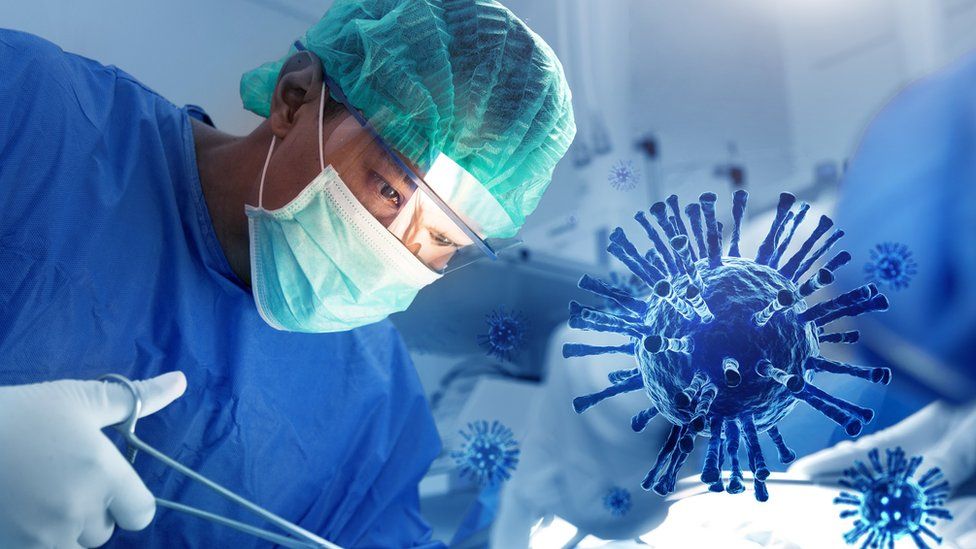
SharecloseShare pageCopy linkAbout sharingImage source, Getty ImagesDespite a backlog of routine operations, NHS hospitals are being advised to delay elective surgical procedures by at least seven weeks if a patient has just had Omicron. UK experts say it is a precaution since the first couple of months following infection is a riskier period, linked to poorer post-operative recovery. In some circumstances the surgery may be urgent enough to go ahead, however. Patients should ideally have had all of their Covid vaccines too.The advice has been issued by surgery and anaesthesia experts, including two Royal Colleges representing those professions. The experts who drew up the recommendations, which are published in a journal called Anaesthesia, say the desire to tackle waiting lists and backlogs must be balanced with delivering the safest care possible. Currently, there are 6 million people on NHS waiting lists in England. That’s one in nine of the population. And about one in 20 of those has been waiting – for routine care such as knee and hip surgery – for more than a year.

A modern browser with JavaScript and a stable internet connection are required to view this interactive.

How is the NHS in your area coping this winter?
Enter a postcode to find out. Eg ‘M50 2EQ’

Data not available

Data not available

Data not available

This trust does not currently supply A&E waiting time figures.

Data not available

Data not available

Data not available

Data not available

Data not available

Data not available

About the data

About the data

Ambulance queues
When patients arrive at hospital by ambulance they should be handed over within 15 minutes. This data shows the proportion of ambulance patients who waited 30 minutes or more, in the week shown. It comes from daily situation reports which are published weekly during the winter in England. As this is fast-turnaround data, the NHS says only minimal validation can be carried out but it is considered fit for purpose.
Scotland, Wales and Northern Ireland do not publish ambulance queue data.
A&E waits
Patients at A&E should be seen within four hours of arrival. This data shows the proportion of patients attending A&E who waited longer than four hours to be treated, discharged or admitted.
This data is published monthly for England and Wales and weekly for Scotland. Northern Ireland publishes its data quarterly and Winter 2021 is not yet available.
Bed waits and occupancy
If a patient at A&E needs to be admitted, the wait from decision to admit to being given a bed on a ward is recorded in England. The bed waits figure is the proportion of patients admitted via A&E who waited longer than four hours for a ward bed.
In Wales, bed wait data is not published, so the figure shown is the occupancy level in general and acute beds. Scotland and Northern Ireland do not publish bed wait or bed occupancy data.
NHS trusts and boards
Data for England is show by NHS trust, where the trust includes at least one hospital with a Type 1 A&E department. Type 1 means a consultant-led 24 hour A&E service with full resuscitation facilities.
When you enter a postcode for a location in England you will be shown a list of NHS trusts in your area. They will not necessarily be in order of your closest hospital as some trusts have more than one hospital. Data for Wales and Scotland are shown by NHS board.
Comparative data from two years ago is shown where available. However, where trusts have merged there is no like-for-like comparison to show. Bed occupancy data in Wales only goes back to April 2020.

If you can’t see the lookup, click hereMinisters have already warned that the waiting list for hospital treatment will not start falling for two years, despite unveiling a plan to tackle England’s backlog in care.The latest expert guidance on routine operations recommends:Elective surgery should not take place within 10 days of a confirmed Covid infection, mainly because the patient may be infectious which is a risk to staff and other patientsOperations that happen in the six-week period after an infection – even an asymptomatic one – carry a higher risk of serious complications for the patient, experience suggestsThe data is based on information available before the Omicron surge. Experts are still gathering more information on this variant and say they will relax the rules if possible – given that Omicron may be less severe, partly due to people having built up some immunity from vaccines and past infections. Dr Mike Nathanson, president of the Association of Anaesthetists, said: “The frustration felt by patients is immense and we – the healthcare professionals – want to do our jobs and provide these services when it is safe to do so and with the risks clear to all involved. “We look forward to new data being available soon which may further clarify the situation now that the Omicron variant is dominant, and most patients are vaccinated.”Prof Duncan Summerton, one of the co-authors, who is president of the Federation of Surgical Specialty Associations, said there should be “full and frank discussions” between patients and their doctors about the decision to delay or proceed with surgery. More on this storyNHS waiting-list backlog will take years to clearHospital waiting lists hit six million in EnglandAnaesthesia journalThe BBC is not responsible for the content of external sites.

Read more →