Life may actually flash before your eyes on death – new study

SharecloseShare pageCopy linkAbout sharingImage source, Getty ImagesNew data from a scientific “accident” has suggested that life may actually flash before our eyes as we die. A team of scientists set out to measure the brainwaves of an 87-year-old patient who had developed epilepsy. But during the neurological recording, he suffered a fatal heart attack – offering an unexpected recording of a dying brain. It revealed that in the 30 seconds before and after, the man’s brainwaves followed the same patterns as dreaming or recalling memories.Brain activity of this sort could suggest that a final “recall of life” may occur in a person’s last moments, the team wrote in their study, published in Frontiers in Aging Neuroscience on Tuesday. Dr Ajmal Zemmar, a co-author of the study, said that what the team, then based in Vancouver, Canada, accidentally got, was the first-ever recording of a dying brain.He told the BBC: “This was actually totally by chance, we did not plan to do this experiment or record these signals.”So will we get a glimpse back at time with loved ones and other happy memories? Dr Zemmar said it was impossible to tell.”If I were to jump to the philosophical realm, I would speculate that if the brain did a flashback, it would probably like to remind you of good things, rather than the bad things,” he said.”But what’s memorable would be different for every person.” Dr Zemmar, now a neurosurgeon at the University of Louisville, said in the 30 seconds before the patient’s heart stopped supplying blood to the brain, his brainwaves followed the same patterns as when we carry out high-cognitive demanding tasks, like concentrating, dreaming or recalling memories. It continued 30 seconds after the patient’s heart stopped beating – the point at which a patient is typically declared dead. “This could possibly be a last recall of memories that we’ve experienced in life, and they replay through our brain in the last seconds before we die.”The study also raises questions about when, exactly, life ends – when the heart stops beating, or the brain stops functioning. Dr Zemmar and his team have cautioned that broad conclusions can’t be drawn from a study of one. The fact that the patient was epileptic, with a bleeding and swollen brain, complicates things further. “I never felt comfortable to report one case,” Dr Zemmar said. And for years after the initial recording in 2016, he looked for similar cases to help strengthen the analysis but was unsuccessful.But a 2013 study – carried out on healthy rats – may offer a clue.In that analysis, US researchers reported high levels of brainwaves at the point of the death until 30 seconds after the rats’ hearts stopped beating – just like the findings found in Dr Zemmar’s epileptic patient. The similarities between studies are “astonishing”, Dr Zemmar said. They now hope the publication of this one human case may open the door to other studies on the final moments of life. “I think there’s something mystical and spiritual about this whole near-death experience,” Dr Zemmar said. “And findings like this – it’s a moment that scientists lives for.” More on this storyNear-death experiences ‘explained’How new drugs are finally taming the virusThree ethical issues around pig heart transplantsHow HIV elimination is within Australia’s reach

Read more →

A cellular stress state predicts a poor chemotherapy response in ovarian cancer patients

The prognosis for ovarian cancer patients is grim: less than half of high-grade serous ovarian cancer (HGSC) patients survive past five years from diagnosis. Initially, the tumours typically respond well to chemotherapy but become resistant after repeated treatments, enabling the cancer to regrow.
In a study carried out by the University of Helsinki, the University of Turku and the Turku University Hospital, researchers investigated how these tumours develop resistance to chemotherapy. They studied how the tumors changed during chemotherapy and identified a new cancer cell state associated with a poor treatment response.
“Our research design is exceptional, even globally, and requires close collaboration between the clinicians who treat the patients, computational researchers and biologists. It’s also of vital importance that great majority of patients foresee cancer research as something valuable and choose to donate their samples for research purposes,” says University Researcher Anna Vähärautio, the corresponding author of the study from the University of Helsinki.
“Our clinical partners, spear-headed by gynecological oncologist, MD PhD Johanna Hynninen, collected these unique paired tumour specimens at the Turku University Hospital. To fully benefit from these samples, a new analysis approach developed by researchers in Professor Sampsa Hautaniemi’s group, especially the PhD student Kaiyang Zhang (first author of the study), allowed us to investigate what unites the tumours, instead of analysing specific features of each tumor. This way, we were able to identify similar, chemotherapy-induced changes in gene expression at the level of individual cells across this heterogeneous set of tumours,” Vähärautio explains.
The study was published in the journal Science Advances.
Chemotherapy increased a stress state in cancer cells
The findings demonstrated that chemotherapy boosted a stress-related state in cancer cells. The tumour subclones with the highest stress state before chemotherapy were enriched during the therapy. This was because these high-stress subclones reinitiated growth more robustly after chemotherapy than other clones and consequently repopulated the tumours more effectively.
“Our observation is also supported by a more extensive international validation cohort of 271 ovarian cancer patients, where a higher stress state in the tumour prior to chemotherapy predicted a significantly poorer treatment response,” Vähärautio says.
In the study, the cancer cell stress state was associated to the microenvironment composition in the tumour. High-stress tumours had a particularly high concentration of inflammatory stroma. In these tumours, both cancer cells and the stroma produced a large amount of signalling molecules, which have the ability to further strengthen the inflammatory stress state on both cell types. This vicious cycle of inflammatory signalling may reduce the tumour’s response to chemotherapy.
“Our findings help to identify already prior to treatment the tumours that are the most likely to have a poor response to therapy. Our results also suggest that therapies could be targeted at the inflammatory microenvironment of cancer cells and the surrounding tissue to improve treatment outcomes with the help of combination therapy,” says Vähärautio.
In the future, combination therapies can boost the efficacy of chemotherapy especially in patients whose tumours respond poorly to current therapies.
Story Source:
Materials provided by University of Helsinki. Note: Content may be edited for style and length.

Read more →

Older Japanese dog owners may face lower risk of disability than non-dog owners, study finds

An analysis of data from more than 11,000 older Japanese adults suggests that seniors who own a dog may be at lower risk of disability than those who have never been dog owners. Yu Taniguchi of the National Institute for Environmental Studies in Tsukuba, Japan, and colleagues present these findings in the open-access journal PLOS ONE on Feb. 23, 2022.
Earlier studies by these researchers have linked dog ownership among Japanese seniors with a lower risk of frailty — a relationship that appears to be partially explained by higher levels of physical activity and social functioning among dog owners. Other research also suggests that physical frailty significantly boosts risk of future disability.
To better understand the relationship between dog ownership and risk of disability, Taniguchi and colleagues used questionnaires to collect data on dog and cat ownership from 11,233 Japanese adults aged 65 to 84. They also collected demographic, disability, and other health data for the participants, spanning the period of June 2016 to January 2020. Statistical analysis of the combined datasets enabled them to examine potential links between dog ownership and disability risk.
The researchers found that, during the study period, older adults who were current dog owners were approximately half as likely to have a disability than those who had never been dog owners. This relationship held true even after accounting for other sociodemographic and health factors that could influence disability risk, such as marital status, history of chronic diseases, time spent outdoors, and more. In addition, dog owners who exercised regularly had an even lower risk of disability.
Meanwhile, the researchers found, cat ownership was not associated with any difference in disability risk, and neither dog nor cat ownership was associated with reduced risk of death from any cause.
This study suggests that dog ownership — especially combined with regular exercise — may protect against disability for older Japanese adults. These findings could help inform efforts to promote successful aging. Meanwhile, future research could investigate physical or psychological mechanisms by which dog ownership might provide benefits, or examine relationships between dog ownership and disability risk in other countries.
The authors add: “Dog ownership protects against the onset of disability in older adults. The daily care, companionship and exercise of a pet dog may have an important role to play in successful aging.”
Story Source:
Materials provided by PLOS. Note: Content may be edited for style and length.

Read more →

Blood pressure rose during the pandemic, study finds

Blood pressure rose moderately during the early months of the pandemic, according to a UT Southwestern study of patients who monitored themselves at home.
“People were less active, ate more, and drank more during the pandemic, all of which led to higher blood pressure. COVID made it challenging for people see their doctors and have their medications adjusted,” said Eric Peterson, M.D., M.P.H., lead author of the study, Professor of Cardiology and Vice Provost and Senior Associate Dean for Clinical Research at UT Southwestern.
The study, published in the American Heart Journal, found that rates of uncontrolled high blood pressure went from 15% to 19% though only 5% had severely uncontrolled blood pressure (defined as systolic blood pressure greater than 160 mm/hg).
Dr. Peterson said while these changes appear modest, they are significant as slight changes in blood pressure control at the population level can have tremendous consequences downstream. Additionally, as the study looked at only those patients in a hypertension management program who were already concerned about their health, he suspects greater changes in blood pressure may be seen in the general population.
“The study’s findings are important because even a few millimeters of blood pressure change can result in measurable differences in risks for heart attack, stroke or heart failure. We need to get these patients under better control long term,” Dr. Peterson said. “If this is within a program of patients in a digital home management system, it’s concerning how well controlled blood pressure was in the general population. I think this is just the tip of the iceberg. It could be much worse in the general population.”
The study examined data of 72,706 patients across the United States enrolled in a blood pressure disease management program administered by a digital health company. Researchers compared readings from April-August 2020 with data taken before the pandemic, January 2019-March 2019.
Ann Maria Navar, M.D., Ph.D., Associate Professor of Cardiology, was also an author of the study.
Dr. Peterson previously served on an advisory board for Livongo, the digital health company that provided the data for this study. He holds the Adelyn and Edmund M. Hoffman Distinguished Chair in Medical Science.
Story Source:
Materials provided by UT Southwestern Medical Center. Note: Content may be edited for style and length.

Read more →

Researchers feed worms a natural plant extract; watch them fatten, live 40% longer

A research team in the Louisiana State University Department of Biological Sciences led by Assistant Professor Adam Bohnert has published a landmark study linking greater metabolic health — achieved through a natural plant extract — with longer lifespans in C. elegans, commonly known as roundworms. Although worms and humans don’t appear to have much in common, the researchers say there is good reason to assume the results could be replicated in people, as the study builds on previous work onmetabolic health in mice, conducted at LSU’s Pennington Biomedical Research Center under Professor Jacqueline Stephens.
“The reason this study made so much sense to do in worms is because worms live for only about three weeks, so in a month or two, we had definite results,” said Bhaswati Ghosh, LSU student and lead author of the published study.
Bohnert’s and Stephens’s research teams are interested in studying the effects of Artemisia scoparia, a natural plant extract of a particular kind of wormwood that is native to Asia. Made from its leaves, the extract was fed to worms in various doses in Bohnert’s lab. The treated worms who received the highest and second-highest dose showed near-immediate improvement in their metabolic health. Not only did the treated worms live up to 40% longer than the untreated control group — they also grew fat and a little slow, as their increased body mass made it harder for them to move around. But the worms also became healthier and more resilient. It was easier for the treated worms to handle stress. In addition, the researchers found that Artemisia scoparia helps convert unhealthy fat stores into healthy fat stores in the body.
This study adds to previous work by Bohnert and LSU Assistant Professor Alyssa Johnson on ways dietary changes influence aging at a cellular level. Now, it appears Artemisia scoparia also can activate many pro-longevity pathways in the body, and effectively turn on multiple genes involved in the lifespan regulation process.
“Until recently, it wasn’t really known how aging could be modified through diet, or how core metabolic signaling pathways influence longevity,” Bohnert said. “What we’ve been able to show is that a natural extract can come in and influence these pathways in much the same way a genetic mutation would.”
The study positions aging as non-deterministic and under our control.

Read more →

New artificial intelligence tool detects often overlooked heart diseases

Physician-scientists in the Smidt Heart Institute at Cedars-Sinai have created an artificial intelligence (AI) tool that can effectively identify and distinguish between two life-threatening heart conditions that are often easy to miss: hypertrophic cardiomyopathy and cardiac amyloidosis. The new findings were published in JAMA Cardiology.
“These two heart conditions are challenging for even expert cardiologists to accurately identify, and so patients often go on for years to decades before receiving a correct diagnosis,” said David Ouyang, MD, a cardiologist in the Smidt Heart Institute and senior author of the study. “Our AI algorithm can pinpoint disease patterns that can’t be seen by the naked eye, and then use these patterns to predict the right diagnosis.”
The two-step, novel algorithm was used on over 34,000 cardiac ultrasound videos from Cedars-Sinai and Stanford Healthcare’s echocardiography laboratories. When applied to these clinical images, the algorithm identified specific features — related to the thickness of heart walls and the size of heart chambers — to efficiently flag certain patients as suspicious for having the potentially unrecognized cardiac diseases.
“The algorithm identified high-risk patients with more accuracy than the well-trained eye of a clinical expert,” said Ouyang. “This is because the algorithm picks up subtle cues on ultrasound videos that distinguish between heart conditions that can often look very similar to more benign conditions, as well as to each other, on initial review.”
Without comprehensive testing, cardiologists find it challenging to distinguish between similar appearing diseases and changes in heart shape and size that can sometimes be thought of as a part of normal aging. This algorithm accurately distinguishes not only abnormal from normal, but also between which underlying potentially life-threatening cardiac conditions may be present — with warning signals that are now detectable well before the disease clinically progresses to the point where it can impact health outcomes. Getting an earlier diagnosis enables patients to begin effective treatments sooner, prevent adverse clinical events, and improve their quality of life.
Cardiac amyloidosis, often called “stiff heart syndrome,” is a disorder caused by deposits of an abnormal protein (amyloid) in the heart tissue. As amyloid builds up, it takes the place of healthy heart muscle, making it difficult for the heart to work properly. Cardiac amyloidosis often goes undetected because patients might not have any symptoms, or they might experience symptoms only sporadically.

Read more →

How well do boosters work? Depends on your genes

Genetics play an important role in how our bodies respond to vaccines and booster shots, suggesting that certain protective responses elicited by vaccination could be more effective with personalization, according to a new study led by University of Michigan researchers.
The team also identified a particular form of an antibody-related gene that predicts, at a population level, whether boosting to produce more antibodies will be effective for increasing innate immune responses.
“What’s most interesting with this work is the concept of personalized variability and understanding direct links between vaccine responses and different genes people have,” said Kelly Arnold, U-M assistant professor of biomedical engineering and senior author of the paper in Frontiers in Immunology.
The study explored how people may respond differently to conventional boosting, which reexposes the immune system to the virus (or some portion of it) to increase antibody concentration.
However, in some people, the increase in antibody concentration may not matter as much because their genes encode for immune receptors that aren’t as good at sticking to the antibodies — they’re said to have a lower affinity.
As a result, a person can have a respectable antibody count and still have a poor immune response. So one theoretical alternate immune-boosting route could be to design vaccines that tweak the structure of the antibodies — making those antibodies more likely to stick to a person’s immune cell receptors.

Read more →

Pioneering simulations focus on HIV-1 virus

For the HIV-1 virus, a double layer of fatty molecules called lipids not only serves as its container, but also plays a key role in the virus’s replication and infectivity. Scientists have used supercomputers to complete the first-ever biologically authentic computer model of the HIV-1 virus liposome, its complete spherical lipid bilayer.
What’s more, this study comes fresh off the heels of a new atomistic model of the HIV-1 capsid, which contains its genetic material. The scientists are hopeful this basic research into viral envelopes can help efforts to develop new HIV-1 therapeutics, as well as laying a foundation for study of other enveloped viruses such as the novel coronavirus, SARS-CoV-2.
“This work represents an investigation of the HIV-1 liposome at full-scale, and with an unprecedented level of chemical complexity,” said Alex Bryer, a PhD student in the Perilla Laboratory, Department of Chemistry and Biochemistry, University of Delaware. Bryer is the lead author of the liposome-modeling research, published January 2022 in the journal PLOS Computational Biology.
The science team developed a complex chemical model of the HIV-1 liposome that revealed key characteristics of the liposome’s asymmetry. Most such models assume a geometrically uniform structure and don’t capture the asymmetry inherent in such biological containers.
Lipid Flip-Flop
Bryer and his co-authors investigated a mechanism that’s known colloquially as “lipid flip-flop,” which is when lipids in one of the leaflets of the bilayer are moved or transported to the other leaflet. The leaflets flip-flop the lipids and exchange the molecules for various purposes such as achieving a dynamic equilibrium.

Read more →

Molds and yeasts common in daycares — could cause chronic asthma and allergy

Molds, and especially yeasts, were far more common in indoor daycare centers than outside of them, according to a new study. Factors such as certain building features and the number of children in a daycare influenced the species of fungi found within, suggesting that many of the molds and yeasts probably have indoor sources.
“This information is important to understand the alarming increase in chronic diseases like asthma and allergies in children,” said first author Eva Lena Estensmo, Ph.D., University of Oslo, Norway. The research is published in Applied and Environmental Microbiology, a journal of the American Society for Microbiology.
The study was motivated by the rise in chronic allergies and asthma, combined with the general lack of knowledge about the indoor mycobiome, said Dr. Estensmo. “Fungal growth can lead to poor indoor air quality, and some fungi are associated with allergic reactions and respiratory symptoms that may lead to chronic respiratory diseases.”
In the study, the researchers investigated the indoor and immediate outdoor mycobiomes of 125 daycare centers in Norway, sampling dust swabbed from the insides and outsides of door frames and correlating the findings with different variables such as the number and ages of children in each daycare, the building type (single building, apartment, etc.), building materials (bricks, wood, etc.), ventilation type, presence of pests, history of mold damage and year of construction.
The study also accounted for environmental data including temperature and moisture levels inside and out, distance from the coast, and longitude and latitude of the daycare centers.
“Especially the high diversity of yeasts came as a surprise,” said Dr. Estensmo. “Many might be associated with the human body. We don’t fully know whether the yeasts are especially associated with children, but we have some indications — work in progress — that far more yeasts are present in daycares than in other indoor environments.
“In addition, the daycare environment with a lot of activity and high density of people is an interesting environment to study in relation to human influence on the indoor mycobiome,” said Dr. Estensmo. She said it was well established that the indoor microbiome related to bacteria is influenced by humans, but that much less had been known about human influence on the mycobiome.
“Since young children often bring in organic materials such as soil and litter from nature, daycare centers may accumulate extra organic substrates promoting fungal growth, compared to other indoor environments,” the authors wrote. Previously, it has been shown that the concentration of fungi in daycare centers is higher than that in homes.
Citizen scientists played an important role in the research, using materials mailed to them by the investigators to collect dust samples from doorframes both outside and inside the buildings. They also filled out questionnaires the researchers had mailed them, on the number and ages of children in the daycares, the building type (single building, apartment, etc.) and the previously mentioned characteristics of the buildings.
Story Source:
Materials provided by American Society for Microbiology. Note: Content may be edited for style and length.

Read more →

F.D.A. Grants the First Condom Approval for Anal Sex

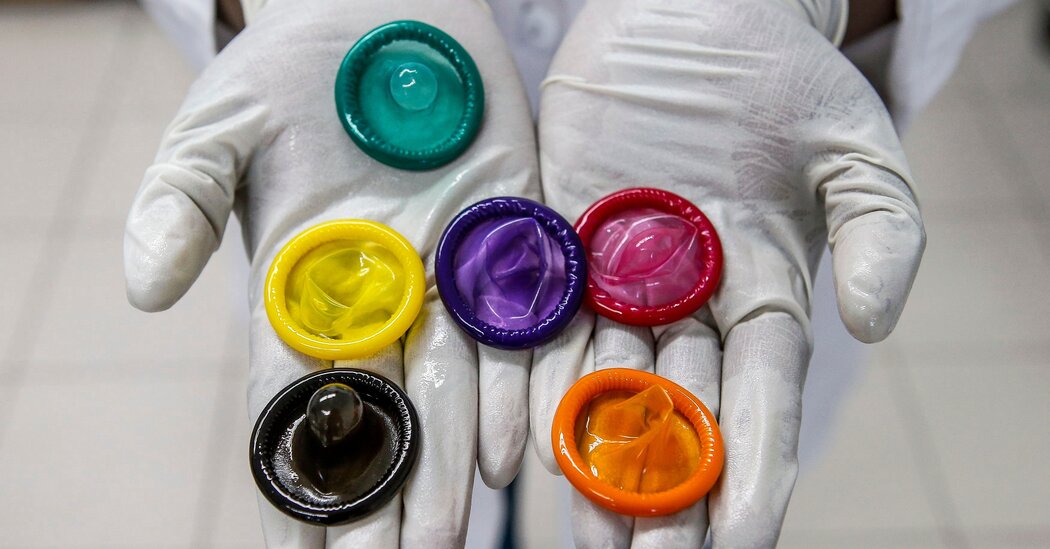
Though public health experts have long advised the use of condoms for anal sex to protect against H.I.V. and other infections, regulators did not have enough data to allow marketing for that use.For the first time, U.S. regulators have officially authorized a condom to be used for anal sex, not just vaginal sex.The decision, announced by the Food and Drug Administration on Wednesday, has long been sought by sexual health experts, who said it could encourage more people who engage in anal sex to use condoms to protect themselves against H.I.V. and other sexually transmitted infections.The risk of sexually transmitted diseases is “significantly higher” during anal sex than vaginal sex, an F.D.A. official said Wednesday. But until now, there has not been enough data to show that condoms are safe and effective during anal sex.“The F.D.A.’s authorization of a condom that is specifically indicated, evaluated and labeled for anal intercourse may improve the likelihood of condom use during anal intercourse,” Courtney Lias, director of the F.D.A. office that issued the approval, said in a statement. The decision applies to a condom manufactured by Global Protection Corp. called the ONE male condom. Last year, the company asked the F.D.A. to allow it to add anal sex to the intended use of the condom on the product label, based on a study showing the failure rate, defined as slippage or breakage, to be less than 1 percent during anal sex.The F.D.A. said in the statement that other condom companies would now be able to apply for similar approval by submitting claims that their condoms demonstrated “substantial equivalence” to the evidence shown for ONE condoms.“I don’t think this is viewed as something that should be restricted, but rather something that opens the door for other companies to rigorously assess their condoms and show that they also perform well for anal sex,” said Aaron Siegler, an epidemiologist at Emory University who helped lead the study that prompted the F.D.A. decision.Davin Wedel, president and founder of Global Protection Corp, said, “I think most people would be surprised to know that condoms are not approved for anal sex. With this new designation from the FDA, consumers will have important information about the safety and effectiveness of condoms for anal sex.”The federal agency had previously said that condoms needed to have less than a 5 percent failure rate, and earlier studies of condoms for anal sex had shown failure rates higher than that.As a result, while using condoms for anal sex is recommended by public health authorities like the World Health Organization and the Centers for Disease Control and Prevention, it has been considered an “off-label” use in the United States. Companies have not been able to market condoms for anal sex, said Dr. Kenneth Mayer, the medical research director for Fenway Health, a community health center in Massachusetts that has long been a leader in treating patients who identify as L.G.B.T.Q.“It’s a great thing if the package inserts could indicate anal sex because it might create an incentive for the companies to do more marketing,” Dr. Mayer said. “You don’t see condom ads on gay social media, for example, so this would incentivize that as part of part of the conversation.”“And it’s not just gay men.” Dr. Mayer continued. “It’s not that heterosexuals who engage in anal sex are unaware that condoms exist, but there’s been very little education, so it’s somewhat out of sight out of mind.”Condom use during anal sex has declined in recent years, since the advent of a method to prevent H.I.V. infection called pre-exposure prophylaxis, or PrEP, which involves taking a daily pill. According to the most recent statistics from C.D.C.’s National H.I.V. Behavioral Surveillance data, about 46 percent of men who have sex with men were having anal sex without condoms in 2017, compared to 28-to-40 percent in 2011.But although PrEP is very effective, there can be issues with cost and access. Currently, only about a third of men who are at high risk for H.I.V. infection are taking the drug, the C.D.C. reported.“That’s hundreds of thousands of people,” said Dr. Mayer, who was not involved in the study that led to the F.D.A.’s decision. “And certainly those are individuals who would benefit from condoms.”He added that condoms are the most effective protection against other sexually transmitted infections, including syphilis, which has been increasing in the United States.To try to amass data that could lead to the approval of condoms for anal sex, the company teamed up with researchers at Emory University, met with the F.D.A. and designed a study.Funded by the National Institutes of Health, the study, the largest to date on condom effectiveness during anal sex, was conducted between May 2016 and May 2017. It involved 504 men, half of whom had sex with men and half of whom had sex with women, and the researchers took several steps designed to encourage more consistent and accurate data than previous studies, Dr. Siegler said.After being trained in proper condom use, the men were given condoms and asked to fill out a daily diary on a phone app, to answer questions about whether they had had sex that day and whether the condom they used broke or slipped. The participants reported 2,351 anal and 2,533 vaginal sex acts during the study period.Dr. Siegler said that the team had hypothesized that the condom failure rate during anal sex would be low enough to pass muster with the F.D.A., but had not expected it to be as low as it was — 0.7 percent — or that it would be lower than the failure rate during vaginal sex, which was 1.9 percent.The researchers attribute the higher failure rate during vaginal sex to the fact that the study encouraged lubricant appropriate for condoms to be used for every instance of anal sex, but, adhering to public health guidelines, only encouraged lubricant to be used during vaginal sex “as needed or desired.” So, while 98 percent of people who had anal sex used lubricant, only 42 percent of those who had vaginal sex did. When the researchers looked only at people who used lubricant, the failure rate in the vaginal group was 1.1 percent, making the odds of failure in each group essentially the same, the study reported.Public health experts said that suggests that lubricant was critical to the study’s results, and in its statement, the F.D.A. said that during anal sex, the condom “should be used with a condom-compatible lubricant.”The study involved three different types of the One condom — standard, thin and fitted, which comes in 54 different sizes. They did not have ribbing or other characteristics, Dr. Siegler said. Each participant was given five samples of each type of condom to use for two to four weeks. The researchers had expected the fitted condoms to have the lowest failure rate, but the study found there was no difference, an outcome that Dr. Siegler said he thought reflected that all three varieties had to meet the same manufacturing and durability standards.Dr. Siegler, who specializes in research on PReP, said that before conducting the condom study, the Emory team wondered whether adding anal sex to a condom label would encourage more men to use condoms.“Does this matter? Would it change use?” he asked. The team conducted a survey of more than 10,000 men who had sex with men and found that 69 percent said that if the F.D.A. approved condoms for anal sex, they would be more encouraged to use them.“I don’t see condoms versus PReP as kind of mutually exclusive options, I see them as options that can support each other and that allow people that choice,” he said. “There isn’t perfect use of any one technology. But if we optimize people’s access to and understanding of different prevention options, I think we can increase the overall population level protection against H.I.V.”Dr. Mayer said he also saw adding the label to condoms as an additional tool that could help improve the use of all protective measures.“It’s definitely not a one-size-fits-all kind of kind of environment,” Dr. Mayer said. “It will help normalize the conversation because there’ll be an economic incentive for the companies to advertise condoms for anal sex.”

Read more →