Machine learning antibiotic prescriptions can help minimize resistance spread

Antibiotics are a double-edged sword: on the one hand, antibiotics are essential to curing bacterial infections. On the other, their use promotes the appearance and proliferation of antibiotic-resistant bacteria. Using genomic sequencing techniques and machine learning analysis of patient records, the researchers have developed an antibiotic prescribing algorithm which cuts the risk of emergence of antibiotic resistance by half.
The paper, published today in Science, is a collaboration between research group of Professor Roy Kishony from the Technion — Israel Institute of Technology Faculty of Biology and the Henry and Marilyn Taub Faculty of Computer Science in collaboration with Professors Varda Shalev, Gabriel Chodick, and Jacob Kuint at Maccabi KSM Research and Innovation Center headed by Dr. Tal Patalon. Focusing on two very common bacterial infections, urinary tract infections and wound infections, the paper describes how each patient’s past infection history can be used to choose the best antibiotic to prescribe them to reduce the chances of antibiotic resistance emerging.
Clinical treatment of infections focuses on correctly matching an antibiotic to the resistance profile of the pathogen, but even such correctly matched treatments can fail as resistance can emergence during treatment itself. “We wanted to understand how antibiotic resistance emerges during treatment and find ways to better tailor antibiotic treatment for each patient to not only correctly match the patient’s current infection susceptibility, but also to minimize their risk of infection recurrence and gain of resistance to treatment,” said Prof. Kishony.
The key to the success of the approach was understanding that the emergence of antibiotic resistance could be predicted in individual patients’ infections. Bacteria can evolve by randomly acquiring mutations that makes them resistant, but the randomness of the process makes it hard to predict and to avoid. However, the researchers discovered that in most patients’ infections resistance was not acquired by random mutations. Instead, resistance emerged due to reinfection by existing resistant bacteria from the patient’s own microbiome. The researchers turned these findings into an advantage: they proposed matching an antibiotic not only to the susceptibility of the bacteria causing the patient’s current infection, but also to the bacteria in their microbiome that could replace it.
“We found that the antibiotic susceptibility of the patient’s past infections could be used to predict their risk of returning with a resistant infection following antibiotic treatment’ explained Dr. Mathew Stracy, the first author of the paper. “Using this data, together with the patient’s demographics like age and gender, allowed us to develop the algorithm.”
The study was supported by the National Institutes of Health (NIH), the Israel Science Foundation within the Israel Precision Medicine Partnership program, the Ernest and Bonnie Beutler Research Program of Excellence in Genomic Medicine, the European Research Council (ERC), the Wellcome Trust, and the D. Dan & Betty Kahn Foundation.
“I hope to see the algorithm applied at the point of care, providing doctors with better tools to personalize antibiotic treatments to improve treatment and minimize the spread of resistance,” said Dr. Tal Patalon.
Story Source:
Materials provided by Technion-Israel Institute of Technology. Note: Content may be edited for style and length.
Read more →

Immune cells forget (cell) culture shock

Macrophages are immune cells crucial for immune response, tissue repair, and the removal of cancer cells. Scientists see macrophages as promising living therapeutics. However, to be effectively used for therapies, macrophages have to be grown to large numbers in laboratory culture without losing their special functions. So far, it was unclear if this is even possible. A team of scientists from Dresden and Marseille now reports that macrophages grown for long periods in laboratory conditions can function normally when transferred back into the body and are indistinguishable from the cells that never left the tissue. The results pave the way to new macrophage-based cell therapies. The study was published in the journal Nature Immunology on February 24, 2022.
Macrophages are immune cells that are present in all organs of our body. They act as tissue guardians, nurturing other cells and removing detrimental substances such as bacteria, cellular debris, and even tumor cells. Therefore macrophages have been on the scientists’ radar as potential new living drugs to heal damaged organs, fight infections, and combat cancer. However, to achieve this cells must be grown outside of the body to large numbers. So far, this has been difficult for macrophages. On top of it, there were serious doubts that laboratory conditions might make them lose their special abilities.
Multiplying cells in the laboratory, so-called cell culture, is a common technique that over the years allowed enormous progress in biology and medicine. Nevertheless, cells grown in the lab are removed from their natural environment and the physical signals that appear essential to their function. Cells are grown on plastic culture dishes and bathed in artificial nutrient solutions. They have to adapt to these new conditions — a real culture shock. “We wanted to know exactly how the cells change in prolonged cell culture and whether these changes are permanent or not,” says Prof. Michael Sieweke, Humboldt Professor at the TU Dresden.
The Cell Culture Shock
Prof. Sieweke’s team at the Center for Regenerative Therapies Dresden (CRTD) at TU Dresden and the Center of Immunology of Marseille Luminy (CNRS, INSERM, Aix-Marseille University) studied mouse lung macrophages, immune cells that naturally live in the air sacs of the lung. The team managed to grow the cells under laboratory conditions over several months and to large numbers. Although their looks and general characteristics were not affected, when examined more closely, it became clear that the cells had actually acquired many changes to adapt to the new environment.
“Every cell in our body has the same set of genes, but the cells differ in which genes are turned on and which are kept off. One can think of it as the molecular fingerprint of the cell — a unique combination of turned-on genes that distinguish, e.g., a lung macrophage from an intestine macrophage and a brain cell,” says Sethuraman Subramanian, one of the authors of the study. The scientists have compared the gene pattern in the cells cultured in the laboratory with their counterparts from the lung, and have seen substantial differences. “This was to be expected. Living on a plastic surface and having all the nutrients readily available is quite different from natural conditions. The cells had to get used to it and did so by changing the status of more than 3,000 genes. The question that truly interested us was whether these changes can be reversed,” explains Prof. Sieweke.
Forgetting the Culture
The team transferred the macrophages cultured in the lab back into their natural location in the mouse lungs. Detailed comparisons showed that the cells grown in the laboratory were indistinguishable from their equivalents who never left the lung. “We were surprised to see that the substantial adaptations that the macrophages made to live in the laboratory have proven to be completely reversible. The lab-cultured macrophages had forgotten about the time they spent in the lab and fully assumed their normal function and status in the lung, oblivious of their previous culture shock,” says Clara Busch, one of the authors of the study.
Cell Therapies of the Future
Although the research was performed in mice, it has very promising implications for human therapies. The ability to shuttle the macrophages between the cell culture and their natural environment shows great potential for future macrophage-based cell therapies. The lung macrophages could be multiplied in the laboratory and experimentally tailored for battling a specific disease before being delivered to the patient’s lungs where they can immediately start to perform their function. Such a setup could be used to treat cancer, fibrotic disease, or infections similar to COVID-19 in the lung and eventually in other organs.
“This study started long before the beginning of the pandemic but demonstrates again that fundamental research can serve as a source of future therapeutic applications,” concludes Prof. Sieweke.
Story Source:
Materials provided by Technische Universität Dresden. Note: Content may be edited for style and length.

Read more →

Companies Finalize $26 Billion Deal With States and Cities to End Opioid Lawsuits

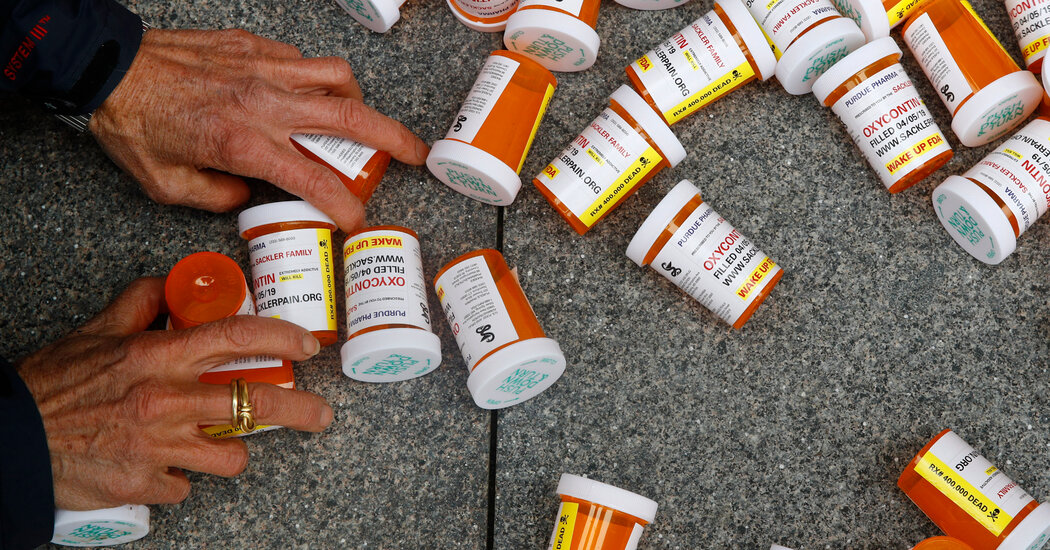
The first checks could be cut in April. The money — from the nation’s three major pharmaceutical distributors and Johnson & Johnson — will be used for addiction treatment and prevention.The nation’s three largest drug distributors and a major pharmaceutical manufacturer announced Friday that a supermajority of states and localities had accepted the terms of their $26 billion offer to settle thousands of civil claims related to the deadly opioid crisis. The first checks are expected to go out in early April.Through its pharmaceutical division, Janssen, Johnson & Johnson will pay $5 billion, broken into annual payments over nine years. McKesson, Cardinal Health and AmerisourceBergen, the distributors, will pay a combined $21 billion over 18 years. At least 85 percent of the payments will be dedicated to addiction treatment and prevention services. By signing onto the deal, thousands of local governments as well as states have agreed to drop their opioid lawsuits against the companies and also pledge not to bring any future action.In its sweep and bottom line, the deal is second only to the Big Tobacco settlement of the late 1990s as a multistate agreement.The total amount includes almost $2 billion that will cover fees and costs for the platoons of lawyers nationwide who represented local governments as well as some states and built much of the legal strategy in the cases. Those payments will go out over roughly seven years.There are no separate funds to compensate families and individual victims of the opioid crisis.The announcement is a milestone in the nationwide opioid litigation, which began in 2014 with a few cities and counties filing lawsuits against five drug manufacturers. But as thousands of governmental plaintiffs eventually filed claims, the cases reached across the pharmaceutical industry, to distributors and retailers as well. The actions gelled into a modern legal behemoth that is still far from fully resolved, featuring, most prominently, the cases against Purdue Pharma.The crisis continues to take a terrible toll: More than 500,000 Americans have died from overdoses to prescription and illegal street opioids since 1999, according to federal data.The distributors and Johnson & Johnson released statements Friday morning, noting that the deal is not an admission of wrongdoing and that they strongly dispute the allegations. The distributors said in a joint statement that they believed that “the implementation of this settlement is a key milestone toward achieving broad resolution of governmental opioid claims and delivering meaningful relief to communities across the United States that have been impacted by the epidemic.”Johnson & Johnson also added that it would “continue to defend itself against any litigation that this final settlement agreement does not resolve,” noting that it no longer sells prescription opioid medication in the United States.When Johnson & Johnson, the distributors and a smaller group of states announced their proposed settlement in July, the companies said they required an unspecified majority of plaintiffs to sign on, to guarantee an end to litigation. The announcement Friday morning signals that a sufficient threshold has been reached, or at least 90 percent of those governments eligible to participate, and 46 of 49 eligible states for the distributors and 45 for Johnson & Johnson. Courts in each state will now have to sign off on the agreements, a process that is expected to go relatively smoothly and swiftly.According to the agreements, a state will get its full allocation if all its local governments sign on to the deal. For example, all 100 North Carolina counties and 47 municipalities have agreed, and the state will get its allotment of $750 million.“North Carolina communities will begin to receive money this year to help people struggling with substance abuse,” said Josh Stein, the state’s attorney general and a leader of a bipartisan coalition of states that negotiated with the companies and local governments for nearly three years. “The treatment, recovery, prevention and harm reduction services that will be available across the state will help people regain control over their lives and make North Carolina safer.”A few holdout states and localities still remain against either the distributors or Johnson & Johnson, including Washington, Oklahoma and Alabama. But legal experts say that stance could be perilous: The outcomes from a few completed trials point to favorable resolutions for the companies, suggesting that continuing to do battle with those governments who declined the deal is a risk the companies are willing to take.This month, the same companies announced a tentative settlement with Native American tribes that have suffered disproportionately high addiction and death rates during the opioid epidemic. In combination with a $75 million deal that distributors struck with the Cherokee Nation last fall, the 574 federally recognized tribes could receive $665 million in payouts over nine years. An overwhelming majority of tribes are expected to sign on to the proposal.A major theme coursing throughout the opioid litigation has been the aggressive marketing of the drugs, which went all but unchecked for years. Distributors almost never sent up warning flares when pharmacy clients took deliveries of quantities of opioids that were wildly disproportionate to the local population. A central feature of the new deal is that the distributors must set up an independent clearinghouse to track and report one another’s shipments, a mechanism intended to raise red flags immediately when outsize orders are made.During the settlement negotiations, a secondary series of talks between the states and the local governments over the allocation of the funds was also unfolding. By now, about two dozen states have worked up their own distribution plans with local cities and counties that also sued the companies.The executive committee of lawyers, including Joe Rice, Elizabeth Cabraser and Jayne Conroy, who negotiated for local governments, released a statement saying, “We arrived at this moment after years of work by community leaders across the country who committed themselves to seeking funds they need to combat the opioid epidemic.”They continued, “While this is a vital step, it is only one of the many that are necessary to put an end to this crisis.”

Read more →

Study questions the role of vitamin D2 in human health but its sibling, vitamin D3, could be important for fighting infections

New research has found significant differences between the two types of vitamin D, with vitamin D2 having a questionable impact on human health. However, the study found that vitamin D3 could balance people’s immune systems and help strengthen defences against viral infections such as Covid-19.
In a collaborative study by the Universities of Surrey and Brighton, researchers investigated the impact of vitamin D supplements — D2 and D3 — taken daily over a 12-week period on the activity of genes in people’s blood.
Contrary to widely held views, the research team discovered that both types of vitamin D did not have the same effect. They found evidence that vitamin D3 had a modifying effect on the immune system that could fortify the body against viral and bacterial diseases.
Professor Colin Smith, lead-author of the study from the University of Surrey, who began this work while at the University of Brighton, said:
“We have shown that vitamin D3 appears to stimulate the type I interferon signalling system in the body — a key part of the immune system that provides a first line of defence against bacteria and viruses. Thus, a healthy vitamin D3 status may help prevent viruses and bacteria from gaining a foothold in the body.
“Our study suggests that it is important that people take a vitamin D3 supplement, or suitably fortified foods, especially in the winter months.”
Although some foods are fortified with vitamin D, like some breakfast cereals, yoghurts, and bread, few naturally contain the vitamin. Vitamin D3 is produced naturally in the skin from exposure to sunlight or artificial ultraviolet UVB light, while some plants and fungi produce vitamin D2.
Many people have insufficient levels of vitamin D3 because they live in locations where sunlight is limited in the winter, like the UK. The Covid-19 pandemic has also limited people’s natural exposure to the sun due to people spending more time in their homes.
Professor Susan Lanham-New, co-author of the study and Head of the Department of Nutritional Sciences at the University of Surrey, said:
“While we found that vitamin D2 and vitamin D3 do not have the same effect on gene activity within humans, the lack of impact we found when looking at vitamin D2 means that a larger study is urgently required to clarify the differences in the effects. However, these results show that vitamin D3 should be the favoured form for fortified foods and supplements.”
The study is published in Frontiers in Immunology.
Story Source:
Materials provided by University of Surrey. Note: Content may be edited for style and length.

Read more →

African 'hotspot' for highly infectious diseases

A regional corner of Africa is a hotspot for cases of HIV, tuberculosis and malaria, prompting researchers to call for targeted health support rather than a national response.
The new research, published today in BMJ Global Health, found a high prevalence of all three infectious diseases in the Gambela region, a regional centre located in western Ethiopia that borders South Sudan.
Lead author Dr Kefyalew Alene, from the Curtin School of Population Health and the Telethon Kids Institute, said it was concerning to find one region reporting large numbers of all three diseases.
“Human immunodeficiency virus (HIV), tuberculosis and malaria are the three most serious infectious diseases in the world, causing high morbidity and mortality rates especially in low and middle-income countries,” Dr Alene said.
“This study identified that the Ethiopian region of Gambela, which is home to more than 330,000 people, was a hotspot for high cases of HIV, tuberculosis and malaria. The high prevalence of HIV, tuberculosis and malaria in this region may be due to inadequate case management and weaker health systems along the border.”
The study found the Gambela region was characterised by low healthcare access, low socioeconomic index, and high temperatures and rainfall.
Dr Alene said the study suggested the need for more targeted health services to deal with the spate of cases concentrated to one part of Africa.
“This highlights that targeting health services at a local level would be more effective than a nation-wide service response,” Dr Alene said.
“These findings can guide policymakers in Ethiopia to design geographically targeted and integrated disease control programs to achieve maximum impact in addressing the high prevalence of cases.”
The research was co-authored by other experts from Curtin and the Telethon Kids Institute, as well as Ethiopia’s University of Gondar and the National TB Control Program.
Story Source:
Materials provided by Curtin University. Note: Content may be edited for style and length.

Read more →

The protective armor of superbug C.difficile revealed

The spectacular structure of the protective armour of superbug C.difficile has been revealedfor the first time showing the close-knit yet flexible outer layer — like chain mail.
This assembly prevents molecules getting in and provides a new target for future treatments, according to the scientists who have uncovered it.
Publishing in Nature Communications, the team of scientists from Newcastle, Sheffield and Glasgow Universities together with colleagues from Imperial College and Diamond Light Source, outline the structure of the main protein, SlpA, that forms the links of the chain mail and how they are arranged to form a pattern and create this flexible armour. This opens the possibility of designing C. diff specific drugs to break the protective layer and create holes to allow molecules to enter and kill the cell.
Protective armour
One of the many ways that diarrhea-causing superbug Clostridioides difficile has to protect itself from antibiotics is a special layer that covers the cell of the whole bacteria — the surface layer or S-layer. This flexible armour protects against the entry of drugs or molecules released by our immune system to fight bacteria.
The team determined the structure of the proteins and how they arranged using a combination of X-ray and electron crystallography.

Read more →

Repurposing FDA-approved drugs may help combat COVID-19

Several FDA-approved drugs — including for type 2 diabetes, hepatitis C and HIV — significantly reduce the ability of the Delta variant of SARS-CoV-2 to replicate in human cells, according to new research led by scientists at Penn State. Specifically, the team found that these drugs inhibit certain viral enzymes, called proteases, that are essential for SARS-CoV-2 replication in infected human cells.
“The SARS-CoV-2 vaccines target the spike protein, but this protein is under strong selection pressure and, as we have seen with Omicron, can undergo significant mutations,” said Joyce Jose, assistant professor of biochemistry and molecular biology, Penn State. “There remains an urgent need for SARS-CoV-2 therapeutic agents that target parts of the virus other than the spike protein that are not as likely to evolve.”
Previous research has demonstrated that two SARS-CoV-2 enzymes — proteases including Mpro and PLpro — are promising targets for antiviral drug development. Pfizer’s COVID-19 therapy Paxlovid, for example, targets Mpro. According to Jose, these enzymes are relatively stable; therefore, they are unlikely to develop drug-resistant mutations rapidly.
Katsuhiko Murakami, professor of biochemistry and molecular biology, Penn State, noted that these virus proteases, because of their capabilities to cleave, or cut, proteins, are essential for SARS-CoV-2 replication in infected cells.
“SARS-CoV-2 produces long proteins, called polyproteins, from its RNA genome that must be cleaved into individual proteins by these proteases in an ordered fashion leading to the formation of functional virus enzymes and proteins to start virus replication once it enters a cell,” Murakami explained. “If you inhibit one of these proteases, further spread of SARS-CoV-2 in the infected person could be stopped.”
The findings published today (Feb. 25) in the journal Communications Biology.

Read more →

Hair salon for autistic children opens in Sheffield

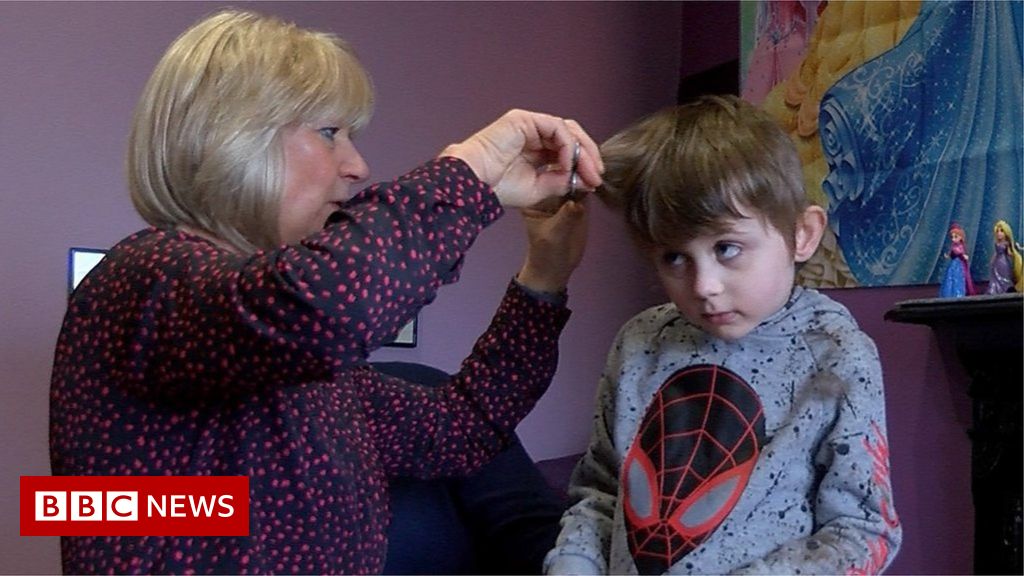
A hair salon in Sheffield has created a specialised room to help autistic children get their hair cut in a less challenging environment.Kathy Chisholm added toys and sensory equipment to the salon after she realised the difficulties families faced.Her son is autistic and she said she just “wanted to give some[thing] back”.The Sheffield-based hairdresser said she works hard to build trust with her clients and each haircut is an achievement for the child.

Read more →

The White House Is Mulling a New Pandemic Strategy

The White House, intensifying its efforts to develop a new coronavirus strategy, is evaluating a blueprint by outside experts whose recommendations include stronger air filtration systems in public buildings, billions of dollars in research and a major upgrade to the nation’s public health system.The team of more than two dozen experts was led by Dr. Ezekiel Emanuel, a University of Pennsylvania bioethicist who advised President Biden’s transition team. The group includes former federal officials who have served presidents of both parties. They have spent much of this week meeting behind closed doors with government scientists and top health officials.The New York Times obtained a draft copy of their 136-page plan from a person involved in the sessions, who said the White House has asked the Emanuel team to provide cost estimates for some of its recommendations.Entitled “Getting to and Sustaining the Next Normal: A Roadmap for Living With Covid,” the plan strikes the same “Things are getting better but we’re not out of the woods yet” tone that the president himself has adopted in recent weeks. It provides a guide for bringing the nation out of crisis mode at a time when, the authors write, the United States is still “far from a normal situation.”“The mood of the American public, the demands of the economy and society, and the challenges posed by a virus that constantly surprises the experts pose new and unique challenges,” the authors wrote. “Trying to eliminate Covid is not realistic. Instead, the nation must plan to mitigate its effects, prepare for variants, and build towards a next normal.”White House officials emphasized that Mr. Biden’s coronavirus response team has been engaged for weeks in discussions with governors, business leaders and health experts on how to revise its strategy for the next phase of the pandemic.Dr. Emanuel’s team settled on 10 broad recommendations. Its report assumes that there will be fewer deaths from Covid-19 in 2022 than in 2021 and calls for the federal government to develop key indicators that community health officials can use to decide when to impose or ease emergency measures like masking and social distancing.“Economists determine the health of the economy using multiple indicators, primarily unemployment, inflation, and GDP growth,” the authors write. “Similarly, a dashboard for respiratory viral illnesses will be composed of several critical metrics.”The authors also call on the government to start a new research initiative, modeled on the Trump Administration’s Operation Warp Speed, to develop new and more effective therapeutics and vaccines that might work against all coronavirus variants.They want the Environmental Protection Agency to develop new air quality standards to prevent viral transmission indoors, a stronger scientific response to “long Covid,” new regulations to make it easier for health care providers to conduct virtual visits, and initiatives to improve safety in schools and workplaces.“From now on, the nation must do far more to avoid closing schools,” the authors wrote.

Read more →

More intense roasting of cocoa beans lessens bitterness, boosts chocolate liking

Confection makers who want to develop products containing 100% chocolate and no sugar for health-conscious consumers can reduce bitterness and optimize flavor acceptance by roasting cocoa beans longer and at higher temperatures.
That’s the conclusion of a team of researchers who conducted a new study in Penn State’s Sensory Evaluation Center in the Department of Food Science. The study involved 27 100%-chocolate preparations made from cocoa beans roasted at various intensities and 145 people who came to the center on five consecutive days, evaluating five different samples each day.
The research confirmed that bitterness and astringency are negatively correlated to consumer liking, and demonstrated that those qualities in chocolate can be reduced through optimizing roasting, according to research team member Helene Hopfer, Rasmussen Career Development Professor in Food Science in the College of Agricultural Sciences.
“More and more people these days are eating darker chocolates with less sugar and more cacao because they are trying to cut down on sugar intake or they want to take advantage of perceived health benefits,” she said. “Dark chocolate is particularly high in flavonoids, particularly a subtype called flavan-3-ols and their oligomers, which are all considered functional ingredients due to their associated health effects.”
However, unsweetened chocolate is too bitter for most people to enjoy, so researchers experimented with roasting treatments to modify the flavor — investigating more than basic tastes such as sour and bitter — making it more acceptable for consumers, Hopfer explained.
For the study, research team member Alan McClure, founder of craft chocolate company Patric Chocolate and related consultancy Patric Food & Beverage Development, partnered with Hopfer and Penn State to characterize the flavor and acceptability of the chocolates.

Read more →