Mindfulness therapy reduces opioid misuse and chronic pain in primary care, according to new research

Results from a new clinical trial demonstrate that an eight-week mindfulness-based therapy — Mindfulness-Oriented Recovery Enhancement (MORE) — decreased opioid use and misuse while reducing chronic pain symptoms, with effects lasting as long as nine months. This is the first large-scale clinical trial to demonstrate that a psychological intervention can simultaneously reduce opioid misuse and chronic pain among people who were prescribed opioid pain relievers.
The study, published in the peer-reviewed journal JAMA Internal Medicine, followed 250 adults with chronic pain on long-term opioid therapy who met the criteria of misusing opioids. Most participants took oxycodone or hydrocodone, reported two or more painful conditions and met the clinical criteria for major depression. More than half of participants also had a diagnosable opioid use disorder.
Study participants were randomly assigned to either a standard supportive psychotherapy group, or a MORE group, both engaging in eight weekly two-hour group sessions, as well as 15 minutes of daily homework. The study treatment groups were delivered in doctor’s offices, in the same clinical care setting where patients received their opioid pain management. Researchers measured the participants’ opioid misuse behaviors; symptoms of pain; depression, anxiety and stress; and opioid dose through a nine-month follow-up. Opioid craving was measured at three random times a day, prompted by a text message sent to the participants’ smartphones.
Nine months after the treatment period ended, 45% of participants in the MORE group were no longer misusing opioids, and 36% had cut their opioid use in half or greater. Patients in MORE had more than twice the odds of those in standard psychotherapy to stop misusing opioids by the end of the study. Additionally, participants in the MORE group reported clinically significant improvements in chronic pain symptoms, decreased opioid craving and reduced symptoms of depression to levels below the threshold for major depressive disorder.
“MORE demonstrated one of the most powerful treatment effects I’ve seen,” said Eric Garland, lead author of the study, director of the Center on Mindfulness and Integrative Health Intervention Development at the University of Utah and the most prolific author of mindfulness research in the world. “There’s nothing else out there that works this well in alleviating pain and curbing opioid misuse.”
“Remarkably, the effects of MORE seem to get stronger over time,” said Garland, who developed MORE and has been studying it for over a decade. “One possible explanation is that these individuals are integrating the skills they’ve learned through MORE into their everyday lives.” Garland also hypothesized that, based on previous research, the sustained benefits might be related to MORE’s ability to restructure the way the brain processes rewards, helping the participants’ brains shift from valuing drug-related rewards to valuing natural, healthy rewards like a beautiful sunset, the bloom of springtime flowers or the smile on the face of a loved one.
MORE combines meditation, cognitive-behavioral therapy and principles from positive psychology into sequenced training in mindfulness, savoring and reappraisal skills.
Participants are taught to break down the experience of pain or opioid craving into their sensory components, “zooming in” on what they are feeling and breaking it down into different sensations like heat, tightness or tingling. They are trained to notice how those experiences change over time, and to adopt the perspective of an observer. They are also taught to savor pleasant, healthful and life-affirming experiences, amplifying the sense of joy, reward and meaning that can come from positive, everyday events. Finally, participants are taught to reframe stressful events to find a sense of meaning in the face of adversity, to recognize what can be learned from difficult events and how dealing with those experiences might make a person stronger.
Garland explained, “Rather than getting caught up in the pain or craving, we teach people how to step back and observe that experience from the perspective of an objective witness. When they can do that, people begin to recognize that who they truly are is bigger than any one thought or sensation. They are not defined by their experiences of pain or craving; their true nature is something more.”
People experiencing both chronic pain and opioid misuse present a significant treatment challenge, since opioid use disorder has been shown to increase pain sensitivity, which in turn promotes further opioid misuse. By simultaneously reducing pain and opioid use, MORE may offer an effective, economical and lifesaving intervention to help halt the ongoing opioid crisis.
Story Source:
Materials provided by University of Utah. Original written by Jennifer Nozawa. Note: Content may be edited for style and length.

Read more →

Texas Investigates Parents Over Care for Transgender Youth, Suit Says

The investigations by the state’s Department of Family and Protective Services started last week with an employee of the agency, according to the suit, after Gov. Greg Abbott called for such inquiries.HOUSTON — Texas officials have begun investigating parents of transgender adolescents for possible child abuse, according to a lawsuit filed on Tuesday, after Gov. Greg Abbott directed them last week to handle certain medical treatments as possible crimes.The investigations by the state’s Department of Family and Protective Services, which have not been previously reported, were launched in response to an order from Mr. Abbott to the agency, the lawsuit says. The order followed a nonbinding opinion by the Texas attorney general, Ken Paxton, that parents who provide their transgender teenagers with puberty-suppressing drugs or other medically accepted treatments — which doctors describe as gender-affirming care — could be investigated for child abuse.Among the first to be investigated was an employee of the state protective services agency who has a 16-year-old transgender child. On Tuesday, the American Civil Liberties Union of Texas and Lambda Legal went to state court in Austin to try to stop the inquiry.The employee, who was not named in the court filing, works on the review of reports of abuse and neglect. She was placed on administrative leave last week, according to the filing, and on Friday was visited by an investigator from the agency, which is also seeking medical records related to her child. The family of the child, identified in court documents only as Mary Doe, has refused to voluntarily turn over the records.“We are terrified for Mary’s health and well-being, and for our family,” wrote the employee in a declaration filed with the suit, in which she and her husband are identified as Jane and John Doe. “I feel betrayed by my state and the agency for whom I work.”She added: “Not providing Mary with the medically necessary health care that she needs is not an option for us.”A rally against a Texas bill banning transgender student athletes from participating in school sports, outside the Capitol in Austin in October. The law went into effect in January.Jay Janner/Austin American-Statesman, via Associated PressAccording to the lawsuit, the state’s investigator told the parents that the only allegation against them was that their transgender daughter might have been provided with gender-affirming health care and was “currently transitioning from male to female.”A spokeswoman for the state protective agency did not immediately respond to a request for comment.It was not clear that Mr. Abbott’s order would survive judicial scrutiny. They do not change Texas law, and several county attorneys and district attorneys have said that they would not prosecute families for child abuse under the new definition. Still, the directive by Mr. Abbott has had a chilling effect, and the ramifications of the redefinition are significant.As Mr. Abbott described in his letter, the order would mean that “all licensed professionals who have direct contact with children” would be required to report to state authorities those that they believe are receiving gender-affirming treatment, or face criminal penalties.In the court filing on Tuesday, the A.C.L.U. of Texas and Lambda Legal, a civil rights organization focusing on the L.G.B.T.Q. community, sought to block the request for medical records in the employee’s case and, more broadly, challenged the legitimacy of the investigation and the power of the governor to change the definition of child abuse. According to the filing, other investigations have also begun.The groups argue in the suit that the directive by the governor was issued improperly under state law, ran afoul of the Texas constitution and violated the constitutional rights of transgender youth, as well as their parents.“No family should have to fear being torn apart because they are supporting their trans child,” Adri Pérez, the policy strategist at the A.C.L.U. of Texas, said in a statement. “A week before an election, Gov. Abbott and Attorney General Ken Paxton issued a partisan political attack that isn’t rooted in the needs of families.”Dr. Megan Mooney, a licensed psychologist in Houston, is also a plaintiff in the lawsuit. Dr. Mooney, who is required to report suspected child abuse under Texas law, has a practice that includes transgender patients, many of whom have been diagnosed with gender dysphoria, according to the suit.The moves by Mr. Abbott and Mr. Paxton, both two-term Republican incumbents, came days before a primary election in which each faces significant and noisy challenges from far-right opponents. Mr. Paxton, who has been indicted on securities fraud charges and accused of corruption by his own former top aides, has been seen as particularly vulnerable. Going into Tuesday’s primary, he appeared unlikely to receive more than 50 percent of the vote and was likely to end up in a May runoff.Paul Castillo, senior counsel at Lambda Legal, said in a statement that Mr. Abbott and Mr. Paxton were “joining a politically motivated misinformation campaign with no consideration of medical science and seem determined to criminalize parents seeking to care and provide for their kids,” adding that “gender-affirming care for the treatment of gender dysphoria is medically necessary care, full stop.”The officials’ moves had been praised, however, by some groups that oppose such treatments. “Minors are prohibited from purchasing paint, cigarettes, alcohol, or even getting a tattoo,” Jonathan Covey, policy director for the group Texas Values, said in statement last week. “We cannot allow minors or their parents to make life-altering decisions on body-mutilating procedures and irreversible hormonal treatments.”The effort to stop treatments for transgender teenagers has been sharply criticized by professional medical groups and by transgender health experts, who have said that such decisions, particularly those that carry medical risks, should be weighed by a patient, their parents and their doctors. Studies have found that transgender teenagers are at higher risk of suicide.The medical community has been debating when such treatment is appropriate, as an increasing number of teenagers have sought to better align their bodies with their gender identities through hormones and surgeries.At the same time, legislation to ban gender-affirming treatment for teenagers has been introduced in more than 20 states, including in Texas, though no such bills passed there during the last legislative session. In Texas, one of the bills would have redefined child abuse to include gender-affirming treatment for transgender children.After those bills failed, Mr. Abbott last summer directed the state’s protective services agency to determine whether surgeries for transgender teenagers would constitute child abuse. The agency also removed information about gender identity and about a suicide prevention hotline from its website after one of Mr. Abbott’s Republican primary opponents, Don Huffines, attacked the governor for “promoting transgender sexual policies to Texas youth.”Then late last month, Mr. Paxton issued his opinion, and Mr. Abbott responded with his directive. According to the filing on Tuesday, the agency began its investigations almost immediately after.

Read more →

The coronavirus may be evolving in deer, two studies suggest.

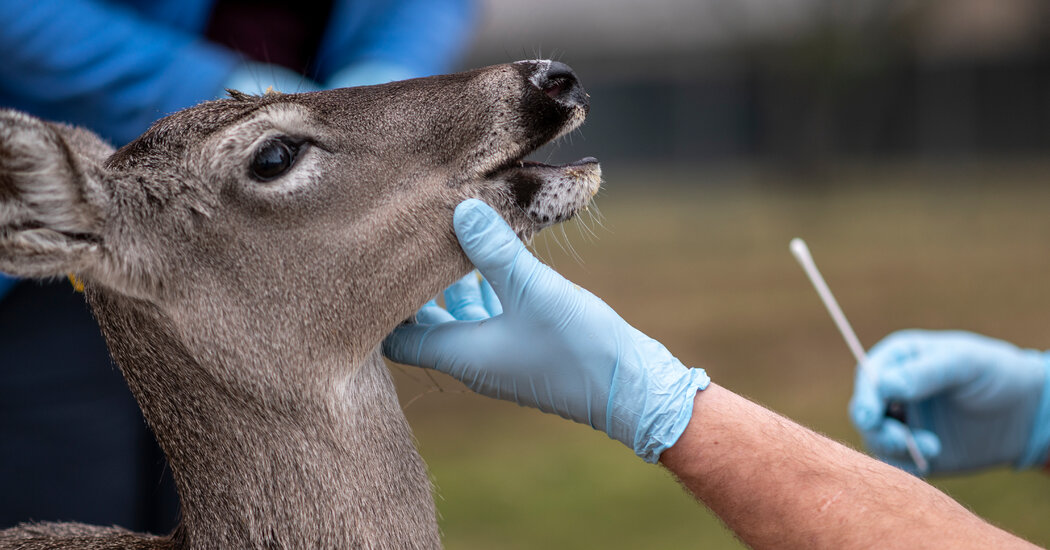
Scientists have identified a new, highly mutated version of the coronavirus in white-tailed deer in southwestern Ontario, one that may have been evolving in animals since late 2020.They also found a very similar viral sequence in one person in the area who had close contact with deer, the first evidence of possible deer-to-human transmission of the virus.“The virus is evolving in deer and diverging in deer away from what we are clearly seeing evolving in humans,” said Samira Mubareka, a virologist at Sunnybrook Research Institute and the University of Toronto and an author of the new paper.The report has not yet been published in a peer-reviewed journal, and there is no evidence that the deer lineage is spreading among, or poses any elevated risk to, people. Preliminary laboratory experiments suggest that the lineage is unlikely to evade human antibodies.But the paper was posted online just days after another team reported that the Alpha variant may have continued to spread and evolve in Pennsylvania deer even after it disappeared from human populations.Together, the two studies suggest that the virus may be circulating among deer for extended periods of time, raising the risk that the animals could become a long-term reservoir of the virus and a source of future variants.“There’s certainly no need to panic,” said Arinjay Banerjee, a virologist at the University of Saskatchewan who was not involved in either study.But, he added, “The more hosts you have, the more opportunities the virus has to evolve.”

Read more →

John Q. Trojanowski Dies at 75; Changed Understanding of Brain Diseases

He was able to combine pathology and biochemistry to help figure out how and why people get diseases as disparate as Alzheimer’s, Parkinson’s and A.L.S.Dr. John Q. Trojanowski, a neuropathologist whose work was at the forefront of research on Alzheimer’s and other neurodegenerative diseases, died on Feb. 8 in a hospital in Philadelphia. He was 75.His wife and longtime collaborator, Virginia M.-Y. Lee, said the cause was complications of chronic spinal cord injuries.Dr. Trojanowski “was a giant in the field,” said Leslie Shaw, a professor with Dr. Trojanowski in the department of pathology and laboratory medicine at the University of Pennsylvania — adding that he meant that in two ways.At 6 feet 4 inches, Dr. Trojanowski towered over his colleagues. And, Dr. Shaw said, he was also a towering figure in his field, whose scientific contributions were “phenomenal” because they combined pathology and biochemistry to figure out what goes wrong, and why, when people get diseases as disparate as Alzheimer’s, Parkinson’s and A.L.S. The results can lead to improved diagnosis and potential treatments.Key to the work Dr. Trojanowski did with Dr. Lee was their establishment of a brain bank: stored brains from patients with diseases like Alzheimer’s and Parkinson’s, as well as from people without degenerative brain diseases. It allowed them to compare the brains of people with and without the conditions and ask what proteins were involved in the diseases and what brain regions were affected.Among their first quests was an attempt to solve the mystery of strange areas in the brains of people with Alzheimer’s. Known as tangles and first described by Alois Alzheimer himself at the turn of the 20th century, they look like twisted strands of spaghetti in dying nerve cells. In 1991, Dr. Trojanowski and Dr. Lee determined that the regions are made up of a malformed protein called tau, which causes the structure of nerve cells to collapse.Dr. Trojanowski with his wife and longtime collaborator, Virginia M.-Y. Lee, in 2016. “It was really exciting working with John,” Dr. Lee said. “We literally spent 24/7 together.”Scott SpitzerAt a time when most Alzheimer’s researchers and drug companies were focused on a different protein, amyloid, Dr. Trojanowski and Dr. Lee insisted that tau was equally important. They then discovered that it also played a central role in a rare group of degenerative dementias known as frontotemporal lobar degeneration.The team went on to discover that another abnormal protein, alpha-synuclein, accumulates in areas known as Lewy bodies in the brains of people with Parkinson’s disease.Among their most striking discoveries was that the abnormal folding of a protein known as TDP-43 can cause what is now recognized as a common type of dementia, which is associated with profound amnesia and is often present along with Alzheimer’s disease.Dr. Trojanowski and Dr. Lee published dozens of influential papers and were among the top 10 most highly cited neuroscientists from 1997 to 2007.In an online posting of tributes by former students and colleagues, Dr. Jeffrey Kordower of Rush University Medical Center in Chicago said that Dr. Trojanowski was “the scientific light that the rest of us followed.”John Quinn Trojanowski was born in Bridgeport, Conn., on Dec. 17, 1946, the second of Margaret (Quinn) Trojanowski and Maurice Trojanowski’s seven children. Because his father was an officer in the Air Force, he spent his childhood and adolescence moving every few years among Air Force bases in the United States and Germany.After attending a long list of schools, he graduated from Notre Dame High School in Fairfield, Conn., in 1965. He majored in German studies at King’s College in Wilkes-Barre, Pa., and graduated in 1970. In 1976, he received a combined M.D.-Ph.D. degree from Tufts University.Dr. Trojanowski met Dr. Lee when she was doing postdoctoral training at Boston Children’s Hospital and he was studying at Harvard Medical School, with which the hospital is affiliated. They married in 1979 and both became faculty members at the University of Pennsylvania, where they worked as a research team.“It was really exciting working with John,” Dr. Lee said. “We literally spent 24/7 together.”Science was always on their minds, she said, a constant source of conversation, and Dr. Trojanowski had few activities outside of his work.And, she added, he never really had close friends, other than her. In part, she said, that was because he moved so often when he was growing up. But it was also because the two of them were so close.“We were very happy together,” she said. “He was pretty content just to spend his time with me.”The end of Dr. Trojanowski’s life was difficult, Dr. Lee said. He began tripping when climbing stairs, and waking in the middle of the night and wandering. After a fall the day before his birthday in December, he asked to go to the hospital, where a scan showed deep bruises pressing on his spinal cord.He had surgery twice to remove the clots but was left paralyzed and required a ventilator. He began getting infections, and every time an infection cleared he would get infected again.After three weeks of stasis, Dr. Trojanowski and Dr. Lee discussed his future.“I said, ‘You are not going into hospice care and you can’t stay here forever,’” she recalled. “‘You know you will get infections, and even if you don’t you will be paralyzed from the neck down.’”Dr. Trojanowski decided he wanted to end his life support. He asked that his ventilator tube be removed.He died two and a half hours later, Dr. Lee said.In addition to his wife, Dr. Trojanowski is survived by his brothers, John, Davis and Mark, and his sisters, Lynn Trojanowski, Annie Trojanowski and Janet Meyer.

Read more →

Several common rapid antigen tests work well for Omicron, according to a new study.

Several rapid antigen tests that are widely used in the United States — Abbott BinaxNow, BD Veritor At-Home and Quidel QuickVue — are effective in detecting the Omicron variant of the coronavirus, according to a new real-world study that eases concerns about possible false negative test results.The tests performed similarly for Omicron and the Delta variant in the study, which was released on Monday but has not yet been published in a peer reviewed journal. Among people who tested positive for the virus on a P.C.R. test, 61 percent of those with Omicron infections also tested positive on a rapid antigen test within 48 hours, compared with 46 percent of those with Delta infections, according to the research, a collaboration between the National Institutes of Health, the Food and Drug Administration and UMass Chan Medical School. The difference between variants was not statistically significant.The tests performed better among people with the highest viral loads, detecting more than 90 percent of Omicron and Delta infections in this group, the researchers found.“This study adds to the body of evidence that says that Omicron can be detected with the home tests that we have,” said Nathaniel Hafer, a molecular biologist at the UMass medical school and an author of the study.Rapid antigen tests, which are less sensitive than P.C.R. tests, are designed to detect proteins on the surface of the virus. If genetic mutations alter these proteins, it could affect the tests’ ability to detect the virus. So each time a new variant emerges, researchers need to re-evaluate the tests.Early laboratory research suggested that some antigen tests might be less sensitive to detecting Omicron than previous variants, meaning that they might generate more false negatives. The F.D.A. warned about that possibility in late December.But experts had noted that the tests still needed to be evaluated in large, real-world studies.The new findings are from an ongoing U.S. study that began in October and was designed to assess the performance of rapid antigen tests in asymptomatic people.Participants received P.C.R. home-collection kits and one of three randomly assigned brands of rapid antigen tests in the mail. They collected P.C.R. specimens and took rapid antigen tests every 48 hours for 15 days. They shipped their P.C.R. samples to a lab for testing and reported the results of their rapid antigen tests in a research app. (They were also asked to upload photos of their rapid-test results.)Nearly 6,000 people participated in the study between October and late January. The new analysis focuses on 153 people who tested positive for the virus at least once on a P.C.R. test at some point during that period. Roughly sixty percent had confirmed or likely Omicron infections, the researchers concluded, using a combination of sequencing data and information about when each person first tested positive. The rest were presumed to have Delta.The P.C.R. results suggested that roughly half of the 153 participants had high viral loads. Among this group, 96 percent of those with Omicron infections and 91 percent of those with Delta infections tested positive on an antigen test within two days of their positive P.C.R. result.“The study showed that when there’s higher amounts of the virus, these antigen tests are going to do a good job in detecting cases,” said Matthew Binnicker, the director of clinical virology at Mayo Clinic, who was not involved in the research. “The real concern of false negatives is when there’s lower levels of the virus.”Experts urge people who have symptoms of or have been exposed to the virus to take multiple antigen tests, over a period of several days, to increase the odds of detecting an infection.

Read more →

COVID in a cat

Since being identified in people in 2019, SARS-CoV-2 has gone on to infect a wide range of animal species, wild and domestic. Concerns abound that these species jumps could lead to novel mutations and even harmful new variants.
In a new report, researchers from the University of Pennsylvania’s School of Veterinary Medicine and Perelman School of Medicine find that, for at least one example of apparent interspecies transmission, this crossing the species boundary did not cause the virus to gain a significant number of mutations.
Writing in the journal Viruses, the scientists identified a domestic house cat, treated at Penn Vet’s Ryan Hospital, that was infected with the delta variant of SARS-CoV-2 subsequent to an exposure from its owner. The full genome sequence of the virus was a close match to viral sequences circulating in people in the Philadelphia region at the time.
“SARS-CoV-2 has a really incredibly wide host range,” says Elizabeth Lennon, senior author on the work, a veterinarian, and assistant professor at Penn Vet. “What this means to me is that, as SARS-CoV-2 continues to be prevalent in the human population, we need to watch what’s happening in other animal species as well.”
The find is the first published example of the delta variant occurring in a domestic cat in the United States. Notably, the cat’s infection was only identified by testing its fecal matter. A nasal swab did not result in a positive test.
“This did highlight the importance of sampling at multiple body sites,” says Lennon. “We wouldn’t have detected this if we had just done a nasal swab.”
Lennon and colleagues have been sampling dogs and cats for SARS-CoV-2 since early in the pandemic. This particular pet cat, an 11-year-old female, was brought to Ryan Hospital in September with gastrointestinal symptoms. It had been exposed to an owner who had COVID-19 — though that owner had been isolating from the cat for 11 days prior to its hospitalization, another household member doing the cat care in the interim.

Read more →

Mutations in SARS-CoV-2 spike protein receptor-binding domains may result in escape variants resistant to therapeutics and vaccines

The SARS-CoV-2 virus is continuously evolving and structural changes to the virus may impact the efficacy of antibody therapies and vaccines. A study publishing Feb. 17 in PLOS Pathogens by Anshumali Mittal at the University of Pittsburgh, USA and colleagues describes the structural and functional landscape of neutralizing antibodies against SARS-CoV-2 spike protein and discuss the effects of mutations on the virus spike protein that may allow it to evade antibody responses.
All viruses mutate as they evolve, and most mutations have either negative or neutral effects on viral fitness. However, some mutations give viruses a selective advantage, making them more infectious, transmittable, and resistant to antibody responses and therapeutics. To better understand the relationship between immune responses to SARS-CoV-2 virus and how mutations may allow the virus to escape neutralization, researchers conducted a review of the literature, comprising approximately 139 studies. They synthesized research on emerging SARS-CoV-2 variants, described the structural basis of how antibodies may neutralize SARS-CoV-2, and mapped out the spike protein mutations or “escape variants” that resist antibody binding and neutralization.
The researchers summarized the structure-based classification of the spike protein receptor-binding domains (RBD) that target antibodies to better understand the molecular mechanisms of neutralization. They also further described the RBD escape mutations for several antibodies that resist vaccine-elicited and therapeutically relevant antibodies binding. Future studies are needed, however, to better understand how these mutations may affect illness severity and mortality.
According to the authors, “The potency of therapeutic antibodies and vaccines partly depends on how readily the virus can escape neutralization. The SARS-CoV-2 virus will continue to evolve resulting in the emergence of escape variants; therefore, worldwide genomic surveillance, better vaccination drive, development of broadly neutralizing antibodies, and new drugs are vital to combat COVID-19.”
Mittal adds, “Structure-based escape maps combined with computational modelling are valuable tools to understand how mutations at each residue affect the binding of an antibody, and can be utilized to facilitate the rational design of escape-resistant antibody therapeutics, vaccines and other countermeasures.”
Story Source:
Materials provided by PLOS. Note: Content may be edited for style and length.

Read more →

Investigating the effects of critical illness in early childhood on neurocognitive outcomes

Approximately 23,700 children in the U.S. undergo invasive mechanical ventilation for acute respiratory failure annually. Although most survive, little is known if they have worse long-term neurocognitive function than children who do not undergo such procedures. There are concerns about neurotoxic effects of critical illness and its treatment on the developing brain. Therefore, infants and young children may be uniquely susceptible to adverse neurocognitive outcomes after invasive mechanical ventilation.
A four-year sibling-matched cohort study conducted at 31 U.S. PICUs and associated neuropsychology testing centers sheds light on the subject. Researchers found that children who survived PICU hospitalization for respiratory failure and were discharged without severe cognitive dysfunction had significantly lower subsequent IQ scores than their matched siblings.
“While the difference in IQ scores between patients and unexposed siblings was small, the data provide strong evidence of the existence and epidemiology of pediatric post-intensive care syndrome (PICS-p) after a single typical episode of acute respiratory failure necessitating invasive ventilation among generally healthy children,” says Martha A.Q. Curley, PhD, RN, FAAN, Professor of Nursing at the University of Pennsylvania School of Nursing (Penn Nursing) and the study’s lead researcher.
The study reaffirms the importance of assessing long-term outcomes as part of any trial evaluating acute interventions in pediatric critical care. It also underscores the importance of further study to understand which children may be at highest risk, what modifiable factors could cause it, and how it can be prevented. The results of the study have been published in JAMA. The article “Association of Acute Respiratory Failure in Early Childhood With Long-Term Neurocognitive Outcomes” is available online.
Co-authors of the article include R. Scott Watson, MD, MPH, of the University of Washington, Seattle; Lisa A. Asaro, MS, of Boston Children’s Hospital; Cheryl Burns, MS, University of Pittsburgh Medical Center; David Wypij, PhD and Min Jung Koh, MS. both of the Harvard T.H. Chan School of Public Health; Mallory A. Perry, RN, PhD, the Children’s Hospital of Philadelphia; and Sue R. Beers, PhD and Derek C. Angus, MD. MPH, the University of Pittsburgh School of Medicine. Funding for the study included grants from the Eunice Kennedy Shriver National Institute of Child Health and Human Development for RESTORE-Cognition (RO1 HD074757; MPI: Curley and Watson) and for the RESTORE trial from the National Heart, Lung and Blood Institute and the National Institute of Nursing Research, National Institutes of Health (U01 HL086622; Curley and U01 HL086649; Wypij).
Story Source:
Materials provided by University of Pennsylvania School of Nursing. Note: Content may be edited for style and length.

Read more →

Does nerve damage contribute to 'long-COVID' symptoms?

During the COVID-19 pandemic, some people infected with the SARS-CoV-2 virus continue to experience “long-COVID” symptoms persisting at least three months after recovery from COVID, even after mild cases. These include difficulty getting through normal activities, faintness and rapid heart rate, shortness of breath, cognitive difficulties, chronic pain, sensory abnormalities, and muscle weakness. A new study led by researchers at Massachusetts General Hospital (MGH) and the National Institutes of Health suggests that some patients with long-COVID have long-lasting nerve damage that appears caused by infection-triggered immune dysfunction.
The study, newly published in Neurology: Neuroimmunology & Neuroinflammation, included 17 patients with COVID (16 with mild cases) who met WHO criteria for long-COVID. They had been evaluated and treated in 10 U.S. states/territories. Evaluations revealed evidence of peripheral neuropathy in 59%. Typical symptoms of neuropathy nerve damage include weakness, sensory changes, and pain in the hands and feet as well as internal complaints including fatigue.
“This is one of the early papers looking into causes of long-COVID, which will steadily increase in importance as acute COVID wanes,” says lead author Anne Louise Oaklander, MD, PhD, an investigator in the Department of Neurology at MGH. “Our findings suggest that some long-COVID patients had damage to their peripheral nerve fibers, and that damage to the small-fiber type of nerve cell may be prominent.”
Oaklander notes that if patients have long-COVID symptoms that aren’t otherwise explained and aren’t improving, they might benefit from discussing neuropathy with their doctor or seeing a neurologist or neuromuscular specialist.
“Research from our team and others is clarifying what the different types of post-COVID neuropathy are, and how best to diagnose and treat them,” says Oaklander. “Most long-COVID neuropathies described so far appear to reflect immune responses to the virus that went off course. And some patients seem to improve from standard treatments for other immune-related neuropathies.” She cautioned that there hasn’t been enough time to conduct clinical trials to rigorously test specific treatments , however.
Co-authors include Alexander J. Mills, BS, Mary Kelley, DO, Lisa S. Toran MD, Bryan Smith, MD, Marinos C. Dalakas, MD, and Avindra Nath, MD.
The study was supported in part by the National Institutes of Health and Thomas Jefferson University.
Story Source:
Materials provided by Massachusetts General Hospital. Note: Content may be edited for style and length.

Read more →

Medicine masquerade: Engineer develops imitation red blood cells to deliver lifesaving drugs

From the liver to the kidneys to the lungs, the human body is equipped with many levels of filters, which protect the body from harmful outside materials. But this system also has its downsides. Critically important drugs such as chemotherapy or multiple sclerosis treatments are also foreign materials, so the body filters out a large portion of these drugs — up to 90%, in some cases.
One way scientists and physicians compensate for this is by giving patients substantial quantities of a drug. This way, even though much of the drug gets filtered out, enough of it gets through to get the job done. But higher dosage levels also mean more adverse side effects. To avoid such high dosages, another strategy is to design the vehicle carrying the drug to target a specific destination.
“Many drug delivery vehicles fail to reach the right location in the body, and the main reason is because our bodies have this really nice filtering system. So many of them end up in the liver, the kidney or the spleen,” said Minkyu Kim, assistant professor of materials science and engineering and biomedical engineering. “If we can overcome this by developing new drug delivery vehicles, it will be a significant advance.”
Kim is setting out to do just that with a $600,000 CAREER Award, a National Science Foundation award in support of early-career faculty who have the potential to serve as academic role models in research and education. His plan is to combine materials science, synthetic biology and multiscale mechanics to develop a new form of drug delivery microparticle designed to bypass the body’s filtration systems.
Same Drugs, New Vehicle
How do you get past a system designed to deny entry to outsiders? You masquerade as an insider. Kim is creating a microparticle vehicle that mimics the properties of a red blood cell. Those cells consist of a protein- and lipid-based casing carrying hemoglobin, the protein which transports oxygen throughout the body. Instead of being a vehicle for hemoglobin, the microparticle Kim designs will be a vehicle for drug particles. He will first use a well-established process to contain a drug in a microsphere core. Then, he will add a layer of artificial proteins he develops, followed by a lipid bilayer. Taken together, these components imitate a red blood cell, and even enable a controlled release of the drug. It can carry these drugs past a series of biological filters to the part of the body where the drugs are needed.
It’s as if you needed to attend an event that only admitted people driving red cars, so you borrowed a red car from a friend. You’d get to where you had to go, because you used a vehicle that was allowed in. Of course, building a protein structure that imitates the qualities of a red blood cell is much more complicated than borrowing a car. Red blood cells have a few key properties which are most important to imitate. For one, they can squeeze through very small spaces and return to their original shape, over and over again.
“A red blood cell is about 7 micrometers in diameter, and they go through microcapillaries, which are a lot smaller than that,” said Kim, who is also a member of the BIO5 Institute. “The cytoskeleton of a red blood cell is made up of a well-ordered structure of proteins. When it needs to move through a small space, that structure can be extended by protein unfolding, but once the stresses are removed, the original structure returns. A red blood cell can do this a thousand times and continue to show the same mechanical behavior.”
Red blood cells can also stay in the body much longer than typical drug delivery vehicles.
“Right now, the fate of drug delivery vehicles is up to four weeks, maximum,” Kim said. “My goal is for these microparticles to reach the lifespan of a red blood cell, which is about four months. And eventually, I hope, even longer.”
Because red blood cells are so effective at moving through the body, some researchers have investigated the possibility of using actual red blood cells as drug vehicles. But this requires human blood donations, particular storage methods, and careful accounting of blood type. This vehicle Kim plans to create could be adapted to carry a wide variety of drugs and used in patients with any blood type.
“The goal is to develop a universal platform anyone can start with, to engineer whatever they want,” Kim said. “You can engineer the outside. You can engineer the inside.”

Read more →