Researchers produce fully functional pancreatic beta cells from stem cells

Insulin is a vital hormone produced by pancreatic beta cells. Type 1 diabetes is caused by the destruction of these cells, which results in patients having to replace the lost insulin with multiple daily injections.
Insulin secretion can be restored in diabetic patients by transplanting beta cells isolated from the pancreas of a brain dead organ donor. However, this treatment has not been widely introduced, since cells from at least two donors are needed to cure one diabetic.
For a long time, attempts have been made to produce functional beta cells from stem cells, which could make this treatment increasingly common. However, the beta cells produced from stem cells have so far been immature, with poorly regulated insulin secretion. This may be a partial explanation for why no breakthroughs have been achieved in the clinical trials based on immature cells ongoing in the United States.
A research group headed by Professor Timo Otonkoski at the University of Helsinki, has carried out pioneering efforts to optimise the functionality of pancreatic cells produced from stem cells.
In a recently published extensive article, the group has demonstrated, for the first time, that stem cells can form cells that closely mimic normal pancreatic islets, in terms of both structure and function.
The article was published in the Nature Biotechnology journal and it has been mainly funded by the Academy of Finland Center of Excellence MetaStem.

Read more →

New tool reveals function of enigmatic gene sequences

While the large proportion of our genome that does not instruct our cells to form proteins has been harder to study than protein-coding genes, it has been shown to have vital physiological functions. Scientists at Karolinska Institutet in Sweden have now developed new high-precision tools able to identify what these noncoding sequences do. The study, which is published in the journal Nature Genetics, may eventually contribute to the development of new, targeted drugs.
Only a small proportion of our genome comprises genes that instruct the cells to make specific proteins; the majority are so-called noncoding DNA, sometimes called “junk DNA” given that their function has been largely unknown. However, recent research has shown that some of these sequences can give rise to RNA which affects vital cellular processes. It transpires that most of the genetic changes linked to different diseases lie in these very noncoding parts of patients’ DNA.
“This has come as a great surprise and we now need to understand in detail how these genetic changes affect different diseases in order to eventually be able to develop more accurate drugs,” says the study’s first author Per Johnsson, researcher at the Department of Cell and Molecular Biology, Karolinska Institutet. “Generally speaking we don’t know that much about this interaction, but we believe that noncoding RNA will one day be a source of attractive drug candidates. It’s therefore extremely important that we speed up the characterisation of these RNA molecules.”
For this study, the researchers combined single-cell sequencing with mathematical calculations to show that it is possible in this way to identify the function of noncoding RNA, something that has proved very difficult before. Using these tools, they were then able to identify an entirely new mechanism for how the RNA molecules regulate the activity of protein-coding genes in their vicinity.
“After many years of development, single-cell sequencing has now reached a stage where we can isolate individual cells and study regulating mechanisms with high precision,” says principal investigator Rickard Sandberg, professor at the Department of Cell and Molecular Biology, Karolinska Institutet. “This is multidisciplinary research that we believe will contribute significantly to our basic understanding of cell biology and that, in the long run, can give us new insights into how cellular function can be influenced through the agency of small drug substances.”
The group has so far used the method to study the function of a handful of noncoding RNA molecules, but there are thousands of similar molecules waiting to be characterised. They now plan to do similar work on RNA molecules with a possible role in the development of disease, such as cancer.
“We’ll be applying larger-scale methods to study hundreds to thousands of similar genes in parallel, thus greatly advancing our understanding of these interesting RNA molecules,” says Dr Johnsson.
The study was financed by the Swedish Research Council, the Knut and Alice Wallenberg Foundation, the Göran Gustafsson Foundation and the Vallee Foundation.
Story Source:
Materials provided by Karolinska Institutet. Note: Content may be edited for style and length.

Read more →

Extending the longevity of stem cells

People are having children later than ever before. The average age of new parents in the United States has been rising for at least the past half century.
But time is tough on our bodies and our reproductive systems. For instance, as animals age, our stem cells are less effective at renewing our tissues. This is particularly true for germline stem cells, which turn into sperm and eggs.
What if there were a way to pause this process?
Biologists at UC Santa Barbara have published a study on the ability of fruit flies to extend the longevity of their germline stem cells. The paper, released in Nature Communications, describes a process that halts egg production in female flies. The scientists found that nearly every step was put on hold, extending the stem cells’ viability. The insights could inform future medical discoveries.
“We’re interested in extending the life of stem cells in general, and female germline stem cells in particular,” said senior author Denise Montell, the Duggan Professor and a distinguished professor in the Department of Molecular, Cellular, and Developmental Biology.
When fruit flies emerge in their adult form into cold, dark conditions, they enter a dormancy called diapause. It’s a seasonal response to save energy for reproduction when success is more likely: in warmer times of the year. Diapause can double a fly’s lifespan and significantly extend their reproductive period. Flies in diapause eat less, are less active and suspend their reproductive processes; however, they don’t actually hibernate.

Read more →

Weighing up: What’s the bottom line when it comes to weight loss?

When it comes to weight loss, many of us have dabbled in the latest diets. But whether you’re cutting carbs or keeping to keto, new research from the University of South Australia shows that diet trends can cost more than your waistline and leave a hefty hole in your hip pocket.
In a new study, UniSA researchers have evaluated the affordability of popular diets, comparing them to the recommendations within the Australian Guide to Health Eating (AGHE), and the Mediterranean Diet, finding that costs of cutting your calories can vary by up to $300 per week.
The research shows that the most cost-effective diet was modelled from the AGHE and adapted for weight loss through calorie restriction. This meal plan included all five core food groups and a range of affordable staple items such as breads, pasta, and legumes, as well as lower amounts of animal products.
The diet plans that were most expensive typically restricted multiple food groups and included premium products such as organic produce, protein supplements, low-carbohydrate replacements, and high protein bread.
In Australia, more than 2.5 million Australians had tried a weight loss diet.
Lead researcher Associate Professor Karen Murphy says understanding the costs of weight loss programs is important, especially when people are facing financial struggles and reduced access to fresh produce amid COVID-19 and current floods.

Read more →

Cutting through the clutter

Does coffee improve memory? Do carrots boost vision? Does vitamin D deficiency increase the risk for COVID-19?
It depends.
The same research question can yield vastly different answers depending on how a study is designed, which variables are measured, and how results are analyzed. Because of the hodgepodge of approaches used to decipher the interplay between variables, association studies — those that explore how one thing affects another — are notoriously prone to error or “bias.” Finding a false link where none exists or missing one if it does can thwart the pursuit of critical scientific questions and solutions, lead researchers down the wrong path and generate contradictory results that confuse peer scientists and the public alike.
To help remedy such problems, a team of computational scientists from Harvard Medical School has developed an auditing tool called vibration of effects (VoE). The tool, first described in PLoS Biology in September 2021, has now been deployed to analyze reported links between various gut microbes and six diseases in 15 previously published studies comprising samples from 2,434 patients with colon cancer, type 1 diabetes, type 2 diabetes, cardiovascular disease, inflammatory bowel disease (IBD) and cirrhosis of the liver.
The newly published research is the final installment in a three-paper series and represents the culmination of the team’s two-year journey undertaken at the start of the COVID-19 pandemic and conducted with collaborators working remotely across the country.
The results of the latest study, published March 2 in PLoS Biology, reveals that a full one-third of 581 reported microbe-disease associations were inconsistent, with outcomes changing depending on how the design was tweaked and which other variables were included in the analysis.

Read more →

Nocturnal teeth grinding can damage temporomandibular joints

Nocturnal teeth grinding and clenching of the upper and lower jaw are known as sleep bruxism and can have a number of consequences for health. In dental science, the question of whether sleep bruxism is associated with the development or progression of temporomandibular joint disorders is controversial. In a study conducted at the University Clinic of Dentistry of the Medical University of Vienna, it was found that certain tooth shapes and tooth locations could well lead to temporomandibular joint problems as a result of bruxism. The research findings of Benedikt Sagl’s team were recently published in the Journal of Advanced Research.
Around 15% of the population grind their teeth while they are asleep. The problem is particularly common in younger people. The, often immense, pressure exerted on tooth surfaces and on the jaws is thought to cause various dental health problems and can also result in pain in the jaw muscles and headaches. Researchers led by Benedikt Sagl at the University Clinic of Dentistry of the Medical University of Vienna have now investigated whether sleep bruxism can also have a negative impact on the temporomandibular joint (TMJ) structures. Their research was based on the theory that specific combinations of tooth shape and tooth location during grinding have an influence on the mechanical load on the temporomandibular joint and can thus be considered a risk factor for TMJ disorders.
Angle of inclination and location
The studies were performed using a state-of-the-art computer model of the masticatory region, which includes bone, cartilage and muscular structures. Such computer models can be used to investigate research questions when direct studies on patients are not feasible on ethical grounds. The subject of the research was the interaction of two factors that coincide in the phenomenon of bruxism. The first of these is the shape of the affected tooth, more precisely the angle of inclination of the dental cusp that is in contact with its opposite number during grinding. The second is the location of the tooth contact (the so-called wear facet) during a dynamic grinding motion, which was considered by the research team. The study simulated the effects of lateral grinding on the first molar and on the canine with six different wear facet inclinations, resulting in a total of twelve simulated scenarios.
“Our results show that both the inclination and location of the wear facets have an influence on the strength of the mechanical load on the temporomandibular joint,” explains Benedikt Sagl. “However, it would appear that the decisive factor is the steepness of the grinding facet. The flatter the tooth, the higher the loading on the joint and therefore the higher the risk of a TMJ disorder.” Conversely, if the dental cusps involved in bruxism have a steeper angle of inclination, the calculated joint loading was lower, even with the same “grinding force” (bruxing force). Further research will now be conducted, coupled with clinical investigations, to establish whether this finding can be incorporated into the development of therapeutic interventions for sleep bruxism.
Story Source:
Materials provided by Medical University of Vienna. Note: Content may be edited for style and length.

Read more →

New method to produce chemically modified mRNA developed

In a recent study, the research group at the University of Cologne’s Institute of Organic Chemistry led by Professor Dr Stephanie Kath-Schorr describes a novel method for the enzymatic production of synthetic messenger RNA (mRNA). While natural base modifications of mRNA are already being used – for example by BioNTech/Pfizer for the production of their coronavirus vaccine – this newly developed mRNA additionally contains site-specifically introduced, non-natural nucleotides. Nucleotides are molecules that function as the basic building blocks of RNA. This new approach using non-natural nucleotides allows the scientists to study how mRNA is introduced into cells and to observe how the newly introduced information spreads at the cellular level. This in turn promises better therapeutic applications in the long run. The article ‘Stronger together for in cell translation: natural and unnatural base modified mRNA’ has appeared in Chemical Science.Previous methods did not allow for the production of mRNAs with chemically modified building blocks at specific positions because mRNAs are produced enzymatically due to their length of several thousands of building blocks. In the new method, the researchers use a so-called ‘expanded genetic alphabet’ during the enzymatic transcription of DNA to RNA. Where normally two base pairs are responsible for transcription, the team introduced a third base pair. This allowed them to introduce unnatural RNA nucleotides into specific mRNA segments, to modify protein production, and to study cellular application in detail.‘We investigated how stable this chemically modified mRNA is in cells, whether the artificially produced mRNA can be used in cells as a template for efficient protein production, and what influence the chemical modifications have on protein production,’ said Kath-Schorr. The results show that the new method is very powerful for monitoring the introduction of mRNA into cells, and for monitoring and influencing its spread at the cellular level as well as the efficiency of information transcription. This opens up new possibilities to develop efficient mRNA therapies – not only as vaccines, but also in cancer therapy.In principle, the method could be applied to any mRNA. However, this requires further research, which is currently in planning in cooperation with University Hospital Cologne. In a further step, clinical studies would have to be carried out. Kath-Schorr’s team is currently also developing a more efficient method to package mRNAs before introducing them into cells. In this field, the Institute of Organic Chemistry is cooperating with other scientists from the Chemistry Department as well as the Faculty of Medicine within the framework of the UoC Forum ‘Transformative Nanocarriers for RNA Transport and Tracking – Advanced Concepts for Therapy and Diagnostic’ (iRNA Carriers).
Story Source:
Materials provided by University of Cologne. Note: Content may be edited for style and length.

Read more →

Meta-analysis of 15 studies reports new findings on how many daily walking steps needed for longevity benefit

A meta-analysis of 15 studies involving nearly 50,000 people from four continents offers new insights into identifying the amount of daily walking steps that will optimally improve adults’ health and longevity — and whether the number of steps is different for people of different ages.
The analysis represents an effort to develop an evidence-based public health message about the benefits of physical activity. The oft-repeated 10,000-steps-a-day mantra grew out of a decades-old marketing campaign for a Japanese pedometer, with no science to back up the impact on health.
Led by University of Massachusetts Amherst physical activity epidemiologist Amanda Paluch, an international group of scientists who formed the Steps for Health Collaborative found that taking more steps a day helps lower the risk of premature death. The findings are reported in a paper published March 2 in Lancet Public Health.
More specifically, for adults 60 and older, the risk of premature death leveled off at about 6,000-8,000 steps per day, meaning that more steps than that provided no additional benefit for longevity. Adults younger than 60 saw the risk of premature death stabilize at about 8,000-10,000 steps per day.
“So, what we saw was this incremental reduction in risk as steps increase, until it levels off,” Paluch says. “And the leveling occurred at different step values for older versus younger adults.”
Interestingly, the research found no definitive association with walking speed, beyond the total number of steps per day, Paluch notes. Getting in your steps — regardless of the pace at which you walked them — was the link to a lower risk of death.
The new research supports and expands findings from another study led by Paluch, published last September in JAMA Network Open, which found that walking at least 7,000 steps a day reduced middle-aged people’s risk of premature death.
The Physical Activity Guidelines for Americans, updated in 2018, recommends adults get at least 150 minutes of moderate-intensity aerobic physical activity each week. Paluch is among the researchers seeking to help establish the evidence base to guide recommendations for simple, accessible physical activity, such as walking.
“Steps are very simple to track, and there is a rapid growth of fitness tracking devices,” Paluch says. “It’s such a clear communication tool for public health messaging.”
The research group combined the evidence from 15 studies that investigated the effect of daily steps on all-cause mortality among adults age 18 and older. They grouped the nearly 50,000 participants into four comparative groups according to average steps per day. The lowest step group averaged 3,500 steps; the second, 5,800; the third, 7,800; and the fourth, 10,900 steps per day.
Among the three higher active groups who got more steps a day, there was a 40-53% lower risk of death, compared to the lowest quartile group who walked fewer steps, according to the meta-analysis.
“The major takeaway is there’s a lot of evidence suggesting that moving even a little more is beneficial, particularly for those who are doing very little activity,” Paluch says. “More steps per day are better for your health. And the benefit in terms of mortality risk levels off around 6,000 to 8,000 for older adults and 8,000 to 10,000 for younger adults.”

Read more →

Taller adults may be at increased risk for colorectal cancer

A new meta-analysis, or data examination of several independent studies, by Johns Hopkins Medicine researchers adds to evidence that taller adults may be more likely than shorter ones to develop colorectal cancer or colon polyps that can later become malignant. While the association between taller height and colorectal cancer has been previously investigated, the Johns Hopkins Medicine researchers say those studies offered conflicting results, carried inconsistent measures of height and failed to include the risk of adenomas, which are precancerous colon polyps.
“This is the largest study of its kind to date. It builds on evidence that taller height is an overlooked risk factor, and should be considered when evaluating and recommending patients for colorectal cancer screenings,” says Gerard Mullin, M.D., associate professor in the Division of Gastroenterology and Hepatology at Johns Hopkins Medicine. He and his team cautioned that the study does not prove causal effect, or that taller stature is as dominant a risk factor as age or genetics. However, the Johns Hopkins study strengthens long-observed links between taller stature and colorectal cancer risk.
“One possible reason for this link is that adult height correlates with body organ size. More active proliferation in organs of taller people could increase the possibility of mutations leading to malignant transformation,” says Elinor Zhou, M.D., co-first author of the published study report.
The authors of the meta-analysis, published March 2 in Cancer Epidemiology, Biomarkers & Prevention, a journal of the American Association for Cancer Research, first identified 47 international, observational studies involving 280,660 cases of colorectal cancer and 14,139 cases of colorectal adenoma. They also included original data from the Johns Hopkins Colon Biofilm study, which recruited 1,459 adult patients undergoing outpatient colonoscopies to explore the relationship between cancer and bacteria stuck to the walls of the colon, known as biofilm.
Because the definition of tallness is different around the world, the Johns Hopkins team compared the highest versus the lowest height percentile of various study groups. “The findings suggest that, overall, the tallest individuals within the highest percentile of height had a 24% higher risk of developing colorectal cancer than the shortest within the lowest percentile. Every 10-centimeter increase (about 4 inches) in height was found to be associated with a 14% increased risk of developing colorectal cancer and 6% increased odds of having adenomas,” says Mullin.
According to the U.S. Centers for Disease Control and Prevention, the average height in the U.S. for men is 5 feet, 9 inches, and for women it is 5 feet, 4 inches. This means men who are 6 feet, 1 inch and women who are 5 feet, 8 inches (4 inches/10 centimeters above the average U.S. height) or taller are at a 14% increased risk of colorectal cancer and a 6% increased risk of adenomas.

Read more →

Another life-saving Covid drug identified

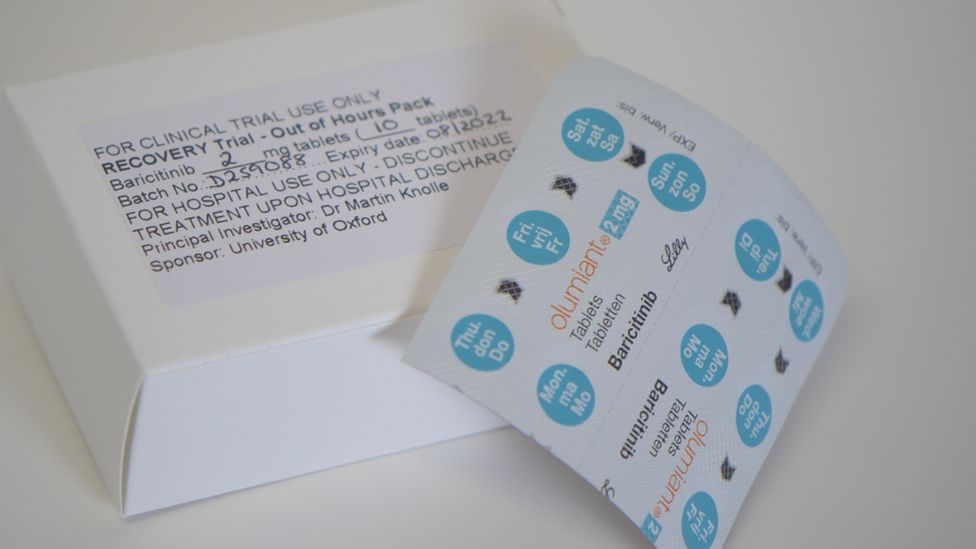
SharecloseShare pageCopy linkAbout sharingImage source, Cambridge University Hospitals NHS Foundation TrusUK experts say they have found another life-saving drug that can help people ill with Covid. The anti-inflammatory baricitinib is normally used to treat rheumatoid arthritis. Trials suggest it can cut death risk by about a fifth in patients needing hospital care for severe Covid. It could be used with other Covid treatments, such as the cheap steroid dexamethasone, to save even more lives, researchers say.That might halve deaths.The NHS may soon recommend baricitinib based on these new results. A 10-day course of the pills costs around £250, although the NHS may be able to negotiate a discount. Protecting livesHealth and Social Care Secretary Sajid Javid said: “A big thank you to all of the researchers, doctors and volunteers involved in this work.”Our medical and scientific experts will now consider the results before any decisions are made on next steps.”Although vaccines have been doing a great job at cutting infections and protecting lives, some people will still catch and become very sick with Covid.And the Recovery trial has been testing existing medications on Covid patients to see if they help. It has already identified dexamethasone, tocilizumab and a treatment called Ronapreve – discoveries that have changed clinical practice worldwide and been credited with saving hundreds of thousands, if not millions, of lives, experts say.And now it appears some very ill Covid patients, including those on ventilators, fare much better if they receive baricitinib.The benefit was on top of other proven life-saving Covid drugs.’Something positive’One of the patients enrolled on the trial, Mark Rivvers, 51, from Cambridge, said: “I was in hospital for almost a month, mostly in an intensive-care unit. “Everything in my body seemed to be fighting against everything else.”I was on almost constant respiratory support, I developed sepsis, and I had pneumonia all across my lungs.”But I saw it as my duty to take part in the Recovery trial because I knew that no matter what happened to me, I was doing something positive to help others. “I’m really pleased about the result with baricitinib and hope that it can now be used to benefit many others.”There are now many drugs that can help fight Covid:anti-inflammatory drugs that stop the immune system overreacting with deadly consequencesanti-viral drugs that make it harder for the coronavirus to replicate inside the bodyantibody therapies that mimic the immune system to attack the virusWhich treatments work best against Covid?Recovery trial joint chief investigator Sir Martin Landray, professor of medicine and epidemiology, at Oxford Population Health, said: “It is now well established that in people admitted to hospital because of severe Covid, an overactive immune response is a key driver of lung damage. “Today’s results not only show that treatment with baricitinib improves the chances of survival for patients with severe Covid-19 but that this benefit is additional to that from other treatments that dampen down the overactive immune response, such as dexamethasone and tocilizumab. “This opens up the possibility of using combinations of anti-inflammatory drugs to further drive down the risk of death for some of the sickest patients.”The Recovery Trial has been a pandemic success story. With more than 47,000 participants across the UK, it is the biggest study of Covid treatments in the world.The treatments it has discovered have saved countless lives.But its latest drug, baricitinib, was uncovered with the help of some DNA detective work.The Genomicc study has been trying to understand why some people with Covid have no symptoms while others become extremely ill. It has been looking for answers in people’s genes, comparing intensive-care patients’ genomes with healthy people’s DNA.And it has pinpointed some key genetic differences – including one in the TYK2 gene.If this gene is faulty, the immune response can go into overdrive. And this genetic discovery led to baricitinib being added to the Recovery trial’s list of treatments.Genetics is crucial for understanding how Covid-19 affects the body – and combining this DNA knowhow with a major clinical trial has provided another weapon in the fight against coronavirus.LOOK-UP TOOL: How many cases in your area?SYMPTOMS: What are they and how to guard against them?YOUR QUESTIONS: We answer your queriesGLOBAL SPREAD: How many worldwide cases are there?TREATMENTS: What progress are we making to help people?More on this storyGenetic clues for severe Covid identifiedLife-saving coronavirus drug ‘major breakthrough’Which treatments work best against Covid?

Read more →