After more than 20 years, scientists have solved the full-length structure of a Janus Kinase

For more than 20 years, his team and others around the world had been chasing an elusive quarry — the 3D structure of a crucial signaling protein in cells. In late 2021, his electron microscope images of the molecule started to come into focus. On December 8, postdoc Naotaka Tsutsumi and graduate student Caleb Glassman sent him an email with a startlingly clear picture of the protein latched on to a key receptor. “I was sitting in a meeting, and I realized we had it,” recalls Garcia, a Howard Hughes Medical Institute Investigator at Stanford University. “I immediately left the meeting and ran back to the lab.”
Glassman, who had just moved to Boston for a Harvard postdoc, canceled his planned backcountry trip, and rushed back to Stanford. “I wanted to finish what Naotaka and I had started,” he explains. Then the three researchers worked around the clock to nail the complete structure of the protein, known as a Janus kinase, and beat competing labs to the discovery. “It was a big horse race between many great groups worldwide, and we were sprinting towards the finish line,” Garcia says. On December 26, they rushed a manuscript to the journal Science, which published the work on March 10, 2022.
Garcia’s team has nabbed not just the full structure of a vitally important signaling molecule, but also the mechanism for how these kinases work, which had been “a fundamental question in biology,” says John O’Shea, an immunologist at the National Institutes of Health who helped to develop one of the first drugs to block Janus kinase function and was not involved with the new research. Because the proteins can go awry in disease, the results could lead to new and better drugs against certain cancers. “It’s amazing work,” O’Shea says.
Chipping away
Janus kinases are one of the communication whizzes of the animal kingdom. They take signals that come from outside cells and pass the info along to molecules inside. Scientists have known for years that malfunctioning Janus kinases can cause disease. Some mutations that impair Janus kinases can severely curtail the body’s ability to fight off infection, causing a condition virtually identical to “bubble boy disease.” And when genetic glitches and exaggerated signals rev up the kinases too much, the result can be blood cancers like leukemia, and allergic or autoimmune diseases.
Researchers knew the shape of parts of the proteins, including related enzyme and regulatory regions at the end of the molecule, which earned them the name Janus kinases, after the two-faced mythological Roman god. And sophisticated drug screens have unearthed molecules that inhibit these proteins, giving doctors a way to treat some cancers and disorders like rheumatoid arthritis. But scientists developed the drugs without knowing the molecules’ full structure or how they become activated. So most of the current arsenal of nearly a dozen drugs, plus more in clinical trials, are relatively blunt instruments, blocking both healthy and mutated Janus kinases. They can still treat many diseases, from eczema to COVID-19, but also can cause a range of side effects.

Read more →

New Vaccine Findings Pose Tough Questions for Parents of Young Children

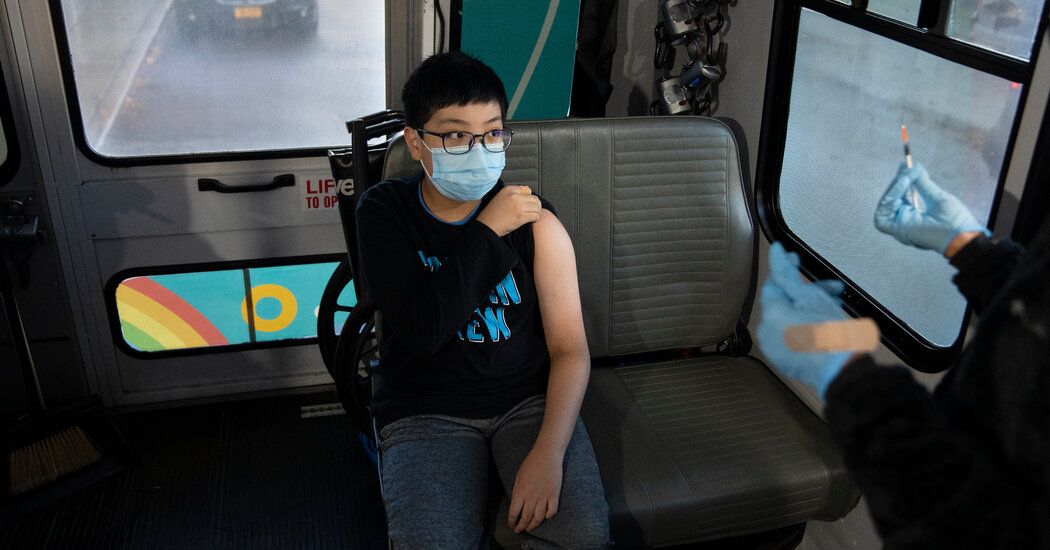
The F.D.A. temporarily halted efforts to authorize the Pfizer-BioNTech vaccine for young children amid several unexpected findings. The coming weeks should bring clarity. For American parents, particularly those with young children, the last couple of months have been dizzying and beyond frustrating.In early February, federal regulators announced that they would evaluate Pfizer-BioNTech’s coronavirus vaccine for the youngest children — only to scrap that plan 10 days later, citing doubts about the vaccine’s effectiveness in that age group.Soon after, scientists reported that the vaccine was only weakly protective against infection with the Omicron variant among children aged 5 to 11 and that it appeared to offer little defense against moderate Covid illness among adolescents aged 12 to 17.On Monday, citing these data, Florida’s surgeon general declared that healthy children need not be immunized, advice that Jen Psaki, the White House press secretary, called “deeply disturbing.”Through it all, experts have continued to endorse vaccines, noting that while the Omicron variant may be able to penetrate immune defenses and infect people, the vaccines still prevent severe illness and death — and may do so for years.The Centers for Disease Control and Prevention found that record numbers of children under 5 had been hospitalized during the Omicron surge, underscoring the need for vaccines for those children. But the agency has since said that 90 percent of Americans can safely stop wearing masks in public indoor spaces, even in schools with young children.Who could blame parents for feeling bewildered?“The part that’s confusing is like there’s no longer any clear, right answer,” said Anne Gonzalez, a 41-year-old mother of two who manages volunteers for a large religious nonprofit in St. Louis. “I’ve come to the point that all I can do is what I think is right for my family.”Fortunately, the coming weeks should bring some clarity. Both Pfizer and Moderna plan to report results from trials of their vaccines in young children. The results, if positive, should lead to a new round of regulatory review, perhaps as early as April, that may well allow vaccinations for tens of millions of youngsters.Anne Gonzalez with her children Ezra, 10, left, and Alaya, 7, in St. Louis. “The part that’s confusing is like there’s no longer any clear, right answer,” said Ms. Gonzalez.Michael B. Thomas for The New York TimesBut those findings will arrive as the Omicron variant fades in the United States, complicating parental decisions about whether to vaccinate children.Fewer than one in four children aged 5 to 11 are now fully vaccinated. More than half of adolescents 12 to 17 are fully vaccinated, but only about 12 percent have received a booster dose. Those percentages are even lower in rural areas of the United States.Children are less likely to experience illness, so the balance of risk and benefit was never the same as for adults. And by now, as much as 95 percent of the country has some degree of protection from the virus because of vaccines or prior infection, according to recent data from the C.D.C.Experts worry that the most recent findings have made it even more challenging to persuade some parents to immunize their children.“We should be disappointed with the data — we wish it could be better,” said Luciana Borio, a former acting chief scientist at the Food and Drug Administration. “But in the near term, it’s important for parents to still vaccinate children.”The country may still see a surge in the fall or winter, and the best protection for children will be to have had at least two shots before then, she said.The vaccines are continuing to prevent severe disease and death, even with the Omicron variant. That trend is particularly clear at hospitals, said Dr. James Campbell, a physician at the University of Maryland School of Medicine and a member of the American Academy of Pediatrics committee on infectious diseases.Among his pediatric patients who were sick enough to need a mechanical ventilator or die, “every single one of them was unvaccinated,” Dr. Campbell said.A Dosing ConundrumAt the moment, the Pfizer-BioNTech vaccine is the only one authorized for children, whose dose is 10 micrograms for children ages 5 to 11 and three micrograms for children under age 5.David Ryder/Getty ImagesThe recent studies suggest that the problem is not so much the vaccine as the dose.In the trials in adults in 2020, vaccine manufacturers made best guesses at the right dose and opted for short intervals between the shots to protect people as quickly as possible during the initial surge.The Pfizer-BioNTech and Moderna vaccines proved to be safe and powerfully protective in clinical trials and were speedily authorized for use. But the trials in children were complicated by the arrival of the Delta and Omicron variants, and the vaccine appeared to be less protective in children aged 2 to 4.At the moment, the Pfizer-BioNTech vaccine is the only one authorized for children. (The vaccines made by Moderna and Johnson & Johnson are authorized only for adults.)In the Pfizer trials, adolescents aged 12 to 17 were given 30 micrograms, the same dose given to adults. But children aged 5 to 11 received 10 micrograms, and those 6 months to 5 years old received just three micrograms.These doses may have been too low to rouse an adequate and lasting response. But federal officials who have seen the data told The New York Times that higher doses produced too many fevers in children.What to do when you can’t administer a dose high enough to shield children against the Omicron variant because of side effects? That’s the problem that scientists and federal officials are now wrestling with.Pfizer and BioNTech are now testing a third dose in children under 12 to determine whether it can deliver the level of protection that two doses could not. The F.D.A. is still evaluating the Moderna vaccine for use in children 6 to 11. Last week, the agency rejected an application for authorization of the Indian-made vaccine Covaxin for children.There are other Covid vaccines, like those made by Novavax and Sanofi, that may turn out to work well in children. Federal health officials should consider all of these options and test whether a different dose or a longer interval between doses would improve the immune response, experts said.“It seems to me that vaccines for children are taking longer than they should, given the importance of protecting that population,” Dr. Borio said. “The sooner we re-energize our search for safe and effective vaccines for children, the better off we’ll be.”Masks in SchoolsArt class at an elementary school in Washington, D.C. Erin Schaff/The New York TimesThe disappointing findings, along with the receding Omicron surge, have greatly complicated policy decisions for local health officials.Countering Florida’s recommendations, Louisiana and California will require schoolchildren to be immunized by fall 2022, and the District of Columbia set a deadline of March 1 for students 12 and older to be fully vaccinated.Other states may adopt similar policies but are likely to do so only if the F.D.A. grants the vaccine full approval for use in schoolchildren, said Hemi Tewarson, executive director at the National Academy for State Health Policy, a nonpartisan organization.“For a lot of them, that’s going to be key for requiring vaccines as a mandate,” she said.A school vaccine mandate would ease the fears of many families with children who have medical vulnerabilities.Nearly every member of Heather Keever’s family, including her son, Wesley, 14, has heart disease, high blood pressure and kidney disease. But because they are not technically immunocompromised, they have not qualified for accommodations at work or at school, said Ms. Keever, 42, a consultant in suburban Chicago.“They forget that there’s some of us who just literally can’t take the mask off,” at least until the rates fall much further, she said. “I felt like I didn’t matter and I wasn’t important and I was arguably disposable. And I still do.”Some scientists, too, have said they would continue to wear masks until the numbers dip because of the risk of infection.Because the youngest children have not yet been vaccinated, “I’d be very hesitant to ask a child below 5 to remove masks indoors,” said Akiko Iwasaki, an immunologist at Yale University who studies long Covid, the cluster of symptoms that can persist long after the acute infection is resolved.Masks hung in the home of Ms. Gonzalez in St. Louis.Michael B. Thomas for The New York TimesGiven the muddled results on the effectiveness of vaccines and the mixed messages on the benefits of masks, families are weighing risks on their own — and coming to very different conclusions.Jennifer Steinberg, a management consultant in Wilmington, Del., has two daughters who split their time with her and their immunocompromised father.“Yes, great, it protects against severe illness,” Ms. Steinberg said of the vaccine. “But if your kids are still going to get infected, this is a huge disruption to family lives. I’m probably going to stay masked for the foreseeable future.”Katie Sunderland of Arlington, Va., has long been ready to give up masks. If her children, 7 and 5, do become infected, “that’s a trade-off I’m OK with if they are able to unmask and see faces,” she said.“I’m not convinced that wearing a mask would significantly reduce the risk of getting Covid anyway — especially not the type of masks I see most kids wearing,” Ms. Sunderland, 37, said. “It doesn’t make sense to me to impede my kids’ development for that very, very, very low risk.”But many other parents are still unsure of what to do. Ms. Gonzalez has a niece and nephew who have congenital heart defects and problems with lung capacity, and she will continue to wear masks to protect them, she said.But if her son’s school drops the mask requirement, “we don’t know what we’re going do yet.”

Read more →

Covid in Scotland: Hospital patient numbers highest in 13 months

SharecloseShare pageCopy linkAbout sharingImage source, Getty ImagesThe number of people in Scottish hospitals with Covid is at its highest for 13 months, new figures have shown.On Wednesday, there were 1,636 people in hospital with recently-confirmed Covid-19, up 127 on the previous day.That is higher than the Omicron peak of 1,571 which was recorded in January this year.Health boards say that while far fewer people need intensive care, large numbers of Covid patients are affecting available beds and other services. There are more patients in hospital than at any time since 8 February 2021, when the total was 1,672. In January, 2021 hospital numbers peaked at 2,053.Covid in Scotland: The latest casesEssential visiting only at Wishaw hospitalHow will Covid rules change in Scotland?Sturgeon unveils ‘cautious’ route out of lockdownThe latest Covid figures from the Scottish government show that more than 14,000 people have tested positive in the last 24 hours. That is the highest daily case rate since 8 January.Scotland has recorded 41 coronavirus-linked deaths in the last 24 hours – more than double the total of 18 from the previous day.Jillian Evans, head of health intelligence at NHS Grampian, said it was a difficult situation to manage in hospitals.She told BBC Scotland’s Drivetime programme : “It is quite a rise in new cases. We are also seeing the impact on hospitals and it is quite marked actually.”The last few days, we’ve seen quite big step changes every day. I know from my own board – I’ve just come from a meeting where we’ve been talking about flow of patients, pressure on beds, and I know how difficult it is to manage that in a system that’s operating with very, very little headroom anyway.”And then you have what feels like a continued surge of admissions or people in hospital with Covid so it’s a difficult one to manage but we are living with this at the moment.”She said the threat risk was still “fairly elevated”, given the trajectory of new cases, and the fact the latest ONS infection survey showed a fifth consecutive rise.Ms Evans said the number of people in hospital had risen from 872 four weeks ago to 1,636 now, adding that the number of patients being admitted to hospital were older or more vulnerable people.Be vigilant to symptomsShe said the rise could be partly due to the waning effectiveness of the Covid vaccine and welcomed the booster top-up programme that was now starting for most vulnerable groups.”The only thing we can do right now is to continue doing what we’ve done really well,” she said. “Keep wearing those masks even though those legal protections might be lifted. And most importantly, be vigilant to symptoms. If you think it’s a cold, it’s probably Covid and stay away from other people.”Image source, Getty ImagesScotland’s largest health board, Greater Glasgow and Clyde said hospitals were near capacity with more than 550 Covid-19 patients. In Lanarkshire, numbers have gone from 66 in the middle of last month to 162 across its three main hospitals.The majority of Covid patients do not need intensive care treatment but the high volume of patients mean people wait longer than they should in emergency departments for beds to become available.A number of health boards have also had to limit or cancel routine operations and change visiting arrangements. Staff absences have been improving but continue to cause some disruption. ‘Spreading like wildfire’In Orkney, there are currently 2,375 cases per 100,000 – more than double the UK level. BBC Scotland’s Rob Flett said it had taken 21 months to get to 1,000 infections, two months to get to 2,000 infections and just a month to get to 4,000 infections.”It’s spreading like wildfire through here,” he said, adding that lots of schools were returning to home learning, with 62 teachers off at the beginning of the week.He said that while there was no increase in significant and serious illness but it was having a “massive impact” on services on the islands.Numbers are also high in Shetland and in the Western Isles.Of the 1,636 people in hospital with recently confirmed Covid-19, 22 were in intensive care, a rise of three from the previous day.The 41 deaths recorded on Thursday, up from 18 on Wednesday, mean the number of people who have died within 28 days of testing positive for Covid-19 has risen to 10,947.On Wednesday, Health Secretary, Humza Yousaf, said that recently rising Covid-19 case numbers were “concerning and a reminder that Covid is still with us” and urged people to get their vaccinations. So far, 4,439,451 people have received their first dose of a Covid-19 vaccination, 4,165,704 have received their second dose, and 3,459,127 have received a third dose or booster.RULES: What are the restrictions in your area?EASING: What rules are changing, and when?WHO? The people who have died with Covid-19More on this storyCovid in Scotland: The latest casesEssential visiting only at Wishaw hospitalHow will Covid rules change in Scotland?Sturgeon unveils ‘cautious’ route out of lockdownCoronavirus (COVID-19) protection levels- what you can do – gov.scotThe BBC is not responsible for the content of external sites.

Read more →

How toddler-mother attachment impacts adolescent brain and behavior

Interpersonal trust is a crucial component of healthy relationships. When we interact with strangers, we quickly gauge whether we can trust them. And those important social skills may be shaped by our earliest relationship with caregivers.
Adolescents who had an insecure attachment to their mothers as toddlers are more likely to overestimate the trustworthiness of strangers, according to a new study from the University of Illinois.
“The idea is to understand whether early attachment relationships with mothers have a longitudinal, predictive association with how adolescents process cues related to trustworthiness, both at the behavioral level and the brain level,” explains Xiaomei Li, doctoral student in the Department of Human Development and Family Studies (HDFS) at U of I and lead author on the paper.
The project builds on data from the Children’s Social Development Project, a longitudinal study conducted under the lead of Nancy McElwain, HDFS professor and co-author on the paper.
In the first round of data collection, 128 toddlers and their mothers participated in a laboratory visit where researchers observed their interactions and evaluated their attachment style.
Ten years later, when the children were in their early adolescence, they were invited back for a second round of studies. This time, the researchers wanted to observe how the adolescents evaluated the trustworthiness of strangers.

Read more →

Nano carriers fit for purpose

A new approach to send ‘friendly’ nano-particles into a patient’s blood stream has shown promising results by modifying the surface of these potential drug, vaccine or cancer treatment delivery objects to encourage the best result.
In collaboration with experts in Australia and Germany’s Max Planck Institute for Polymer Research, Flinders University Professor of Biomedical Nanotechnology Krasimir Vasilev is testing the body’s responses to various surface treatments to nanomaterials.
This novel approach, called ‘plasma polymer deposition’, shows the potential to tailor the physiological responses to nanomaterials by engineering their surface chemical composition to suit a particular application.
Nanoparticles are widely used for biomedical applications — from vaccines to drug delivery, diagnostics and therapeutics — usually resulting in a response of some kind by the body’s innate immune cellular responses to the foreign body.
“We are working on a wide range of nanoengineering techniques and technologies that are capable of tuning a body’s immune response to nanoparticles used in medical treatments and delivery of various therapeutics in order to improve their efficacy in advanced lifesaving applications,” says Matthew Flinders Professor Vasilev, from Flinders Health and Medical Research Institute at Flinders University.
“When a foreign object enters our body, naturally the body reacts to protect itself. That’s why we get scars from a cut, or an itch from a mosquito bite. Our immune system responds, even when the foreign object is much, much smaller than a splinter, in nano size.

Read more →

The cellular cleaning program autophagy helps in wound healing

A team led by Maria Leptin has shown in the fruit fly Drosophila that autophagy, a mechanism of stress responses in cells, plays an important role in wound healing: When a wound heals, the process of autophagy is initiated and regulated by the protein complex TORC1. This is a newly discovered function of autophagy and the first evidence that autophagy controls the formation of syncytia (multinucleated cells). While syncytia are also formed during the development of muscles or the placenta, their role in wound healing and the involvement of autophagy are new discoveries. The article, ‘Autophagy-mediated plasma membrane removal promotes the formation of epithelial syncytia’ has been published in The EMBO Journal.
Autophagy is a cellular recycling mechanism that has been conserved over the course of evolution from yeast to humans. Autophagic vesicles, small bubbles within the cell, recognize, engulf, and digest invaders such as bacteria and viruses or the cell’s own material such as accumulated protein clumps. The material is recycled, thus providing the cell with raw materials under stressful conditions. During aging, infection, or disease, when proper cellular function declines and harmful products accumulate in organs, autophagy function is instrumental in restoring health. In turn, dysfunction of autophagy increases the risk of neurodegenerative diseases such as Alzheimer’s and Parkinson’s, as well as cancer and infections.
In the new study, scientists from the CECAD Cluster of Excellence for Aging Research, the Center for Molecular Medicine Cologne (CMMC), and the Institute of Genetics (all at the University of Cologne) investigated the function of autophagy in wound healing and in the healthy and uninjured epidermis (skin) of the fruit fly Drosophila melanogaster. In the process studied here, autophagy hence did not digest viruses or bacteria, but the cell’s own cell membrane, so that boundaries between cells broke down and a large cell with multiple nuclei was formed.
The team observed that autophagy is increased in the cells surrounding the wound. This leads to a selective breakdown of the membranes that connect the cells. Eventually, a large, multinucleated cell (syncytium) is formed. ‘When we genetically triggered autophagy in healthy, uninjured skin, we again observed the same phenomenon: the membrane between adjacent cells is lost and large patches of multinucleated syncytia form throughout the epidermis,’ said Parisa Kakanj, first author of the study. ‘It is surprising that the formation of syncytia, which we already know to occur in the formation of some organs such as muscles or placenta, also occurs in wound healing. The role of autophagy in this may also be important for our understanding of disease mechanisms, since multinuclear cells are also found in tumors and infected tissues.’
In previous studies of muscle and placenta development, the formation of a syncytium was shown to provide mechanical stability and a strong barrier function to protect tissues from pathogens. Whether the process performs similar functions in wound healing is not yet clear. This will be the subject of future studies.
The investigators also observed an interaction of the autophagic vesicles with the lateral plasma membrane of the cell in the healthy, unwounded epidermis as well as in the cells surrounding the wound. In this context, proper function of the TORC1 protein complex, which has a central regulatory function in cell metabolism, and here also controls autophagy, is crucial to prevent destruction of the epidermis by autophagy. Based on these and other observations, the team hypothesizes that the lateral plasma membrane is a potential source of the autophagic vesicles. ‘Autophagy is a double-edged sword, the precise extent and spatiotemporal activity of which determines whether it is useful or problematic,’ said Maria Leptin. To be able to use the beneficial side of autophagy for prevention and therapy, it is even more important to understand how autophagy is activated and how autophagic vesicles are formed.
Story Source:
Materials provided by University of Cologne. Note: Content may be edited for style and length.

Read more →

Blood test as possible diagnostic tool for Alzheimer’s disease

A recent study published out of the lab of Donna Wilcock, Ph.D., the Robert P. and Mildred A. Moores Endowed Chair in Alzheimer’s Disease, at University of Kentucky shows promising results for a blood test that could be used to identify Alzheimer’s changes in the brain before the onset of any symptoms, which could result in preventative treatments being used before any memory loss.
In their paper, published in Alzheimer’s & Dementia: The Journal of the Alzheimer’s Association, the researchers note that the detection of disease-causing pathology associated with Alzheimer’s disease and Vascular Contributions to Cognitive Impairment and Dementia (VCID) is limited to cognitive evaluations and neuroimaging like MRI and PET scans. Due to recent technological developments, blood-based biomarkers of disease are now available and the team at Sanders-Brown believes they could be beneficial in the diagnosis of Alzheimer’s and other dementias. A biomarker — short for biological marker — is a measurable indicator that captures what is happening in a cell or an organism at a given moment.
Zachary Winder, MD/PhD student at the UK College of Medicine, led the work within the Wilcock lab which used the extensive bank of samples found within UK’s Alzheimer’s Disease Research Center autopsy cohort, which consists of Kentucky residents who have agreed to donate their brains at time of death. For this study, researchers identified samples from participants who had blood taken and banked within two years of their death. They then tested blood samples from 90 participants for a variety of proteins with the goal of identifying biomarkers in the blood that could predict changes in the brain that might have contributed to dementia.
They believe their results support the continued study of blood-based biomarkers as a clinical screening tool for Alzheimer’s and VCID. “This study provides evidence that a blood test could be used to estimate the presence of Alzheimer’s disease changes and blood vessel damage in the brain. We identified proteins in blood that indicate protein changes and changes in the brain known to cause dementia. Higher pTau181 and lower beta-amyloid in the blood indicate amyloid plaques of Alzheimer’s in the brain,” said Wilcock, who is associate director at Sanders-Brown. “Protein markers of inflammation in the blood were also associated with higher amyloid plaques in the brain. We also looked at proteins that might have a relationship with damage to the blood vessels of the brain. We found that inflammation proteins in blood were related to damage to blood vessels in the brain.”
Wilcock, Winder and the rest of the research team agree that establishing biomarkers that allow doctors to diagnose and monitor patients is a crucial step towards identifying at-risk but not yet symptomatic patients, who could be more responsive to potential therapeutics.
“Blood samples can be easily obtained, even at primary care visits. The development of a blood test would eliminate the need for expensive, specialized PET scans or invasive, uncomfortable spinal taps,” said Wilcock.
Thanks to the community-based cohort at UK, researchers have found through autopsies that there are mixed causes of dementia and that proteins in the blood are associated with brain changes. They believe those discoveries provide additional evidence that blood biomarkers have a strong potential for diagnosis of Alzheimer’s and other causes of dementia.
Up until recent years the only way to know if someone had Alzheimer’s or a related dementia was after death through an autopsy. Advances in research regarding biomarkers, like this recent study from Sanders-Brown, are allowing researchers to see changes in the brain while people are alive, monitor the disease’s progression, and test the effectiveness of potential treatments.
Story Source:
Materials provided by University of Kentucky. Original written by Hillary Smith. Note: Content may be edited for style and length.

Read more →

Could leaky blood vessels in the brain be a culprit in Alzheimer’s disease?

Alzheimer’s disease is an enormous problem that, with an aging population, will only get bigger. More than 6 million Americans are living with Alzheimer’s disease, and 1 in 3 seniors will die of it, according to the Alzheimer’s Association. By 2050, the cost of Alzheimer’s disease, currently estimated at $355 billion, will rise to $1.1 trillion.
Could one of the causes of such a huge and costly problem be traced back to the cells that line the body’s tiniest blood vessels?
A new study published by a Medical University of South Carolina (MUSC) research team in Molecular Therapy suggests that the answer is yes. The team, led by Hongkuan Fan, Ph.D., associate professor in the Department of Pathology and Laboratory Medicine, found fewer of these cells, known as pericytes, in the brains of people who died of Alzheimer’s disease. They also found higher levels of Fli-1, a protein most often found in blood cells and thought to govern their development.
When the team blocked, or inhibited, the action of Fli-1 in a mouse model of Alzheimer’s disease, the memory of the mice improved. Blocking the protein also stopped immune cells from leaking into the brain and causing the inflammation that is a hallmark of Alzheimer’s disease. Blocking Fli-1 could be a promising new approach to treating Alzheimer’s disease and other dementias.
“We are really excited by these data because they suggest that Fli-1 could be a new therapeutic target for Alzheimer’s disease,” said Fan.
Better therapies for Alzheimer’s disease are urgently needed. Most existing Alzheimer’s therapies just treat the symptoms and do little to address underlying causes.

Read more →

Exploring ancient tuberculosis transmission chains

Nearly one quarter of the world’s population is suspected to have been exposed to the bacterium responsible for tuberculosis, a disease that accounts for the highest global mortality from a bacterial infection. TB’s global distribution was once viewed as support for its emergence deep in our past, where it was thought to have evolved in Africa tens of thousands of years ago and became distributed throughout the world following migrations with its host. Its ability to infect a number of mammalian species also make it a highly adaptable pathogen.
Analyses of ancient TB genomes have stirred up controversy about when this host-pathogen association began and precisely how TB became globally distributed. A 2014 study led by research teams at the University of Tübingen and Arizona State University reported on three ancient TB genomes from coastal Peru, which revealed aspects of its history that were incompatible with prevailing assumptions on TB’s origins.
First, rather than identifying one of the well-characterized human-associated strains of the pathogen, the team identified a comparatively rare strain that today infects mostly marine mammals such as seals and sea lions (pinnipeds). In addition, their data suggested that TB was a much younger disease than previously thought, having emerged only sometime in the last 6000 years. “At the time, we assumed that TB made its way from Africa to the Peruvian coast through travel with infected seal populations,” comments Kirsten Bos of the Max Planck Institute for Evolutionary Anthropology who co-led the new study. “We assumed the source of the infection in Peru had been a zoonosis from seals. It was not clear, though, if the specific TB infection we identified in the three people was a local phenomenon restricted to the area, or whether its distribution was broader.”
TB is an infection well known to specialists in bone lesions and pathology. Paleopathologist Jane Buikstra of Arizona State University has extensively studied human skeletal remains across the Americas, and clear cases of TB infection are easily identified across the continents in the pre-contact period. “We’ve known for decades that a form of TB infection was present in the western coast of South America through the study of human remains. Now, with 21st century scientific advances, ancient DNA is the best tool available to investigate the relationships between the TB manifestations we observe osteologically in different parts of the Americas.”
In a study published this week in Nature Communications, the team reports on three new cases of pre-contact era South American TB, this time from human remains that come from inland archaeological sites, two of which are situated in the highlands of the Colombian Andes. All three people were infected with the marine-associated strain of TB, thus making a simple zoonosis from seals unlikely.
TB’s entry into South America through human exposure to infected seals is still the strongest hypothesis, but how TB was subsequently distributed on land remains an open question. Lead authors Åshild Vågene and Tanvi Honap are confident that these new cases present strong evidence that the TB variant currently found in seals was once able to travel long distances on land. “The TB bacterium can infect numerous mammalian species, so there are many candidates for its terrestrial dispersal, including humans themselves,” says Vågene. “Vast trade networks may have played an important role in transporting the pathogen from the coast.” Honap adds that “recovering ancient TB DNA in animal remains from the pre-contact era Americas may one day allow us to explore the transmission chains responsible for bringing this marine variant so far inland.”
Anne Stone of Arizona State University who specializes in the evolutionary history of TB and co-led the current study, sees the new results as an opportunity for deeper exploration into the ecology of the disease in the Americas before the colonial period. “It’s an exciting time in ancient DNA research, as we can now look at genome-level differences in these ancient pathogens and track their movements across continents and beyond. For TB, the open question is how widespread the seal-associated strain was in human populations of the Americas prior to its replacement by the more virulent strains that arrived with the Europeans.”
Story Source:
Materials provided by Max Planck Institute for Evolutionary Anthropology. Note: Content may be edited for style and length.

Read more →

Rear-end collision on the 'ribosome highway'

As a molecular machine found in the cells of all organisms, the ribosome is responsible for making new proteins. It reads the blueprint for a certain protein on a messenger molecule – known as messenger RNA (mRNA) – and then converts this information into new proteins. For a number of reasons, this process can fail, leaving the ribosome stalled on the mRNA and bringing synthesis of the protein to a halt. An international research team led by scientists from the Center for Molecular Biology of Heidelberg University (ZMBH) has now identified a bacterial protein called MutS2 that senses and rescues these stuck protein factories. The fact that the next ribosome on the mRNA chain collides with the stalled ribosome plays a key role.
The blueprints of proteins are stored in the DNA in the cell nucleus, where they are transcribed into mRNA. Bearing the genetic information for a specific protein, the mRNA leaves the nucleus and is transported to the ribosomes, where its information is converted into proteins. “Sometimes ribosomes can get stuck reading the blueprints owing to a defective mRNA molecule, for instance. This is particularly problematic because unfinished proteins are potentially toxic to the cell,” explains ZMBH molecular biologist and working group leader Prof. Dr Claudio Joazeiro. “That is why cells have developed mechanisms that detect stalled ribosomes and mark the incomplete proteins for destruction while still in their birthplace, the ribosome.”
Using high-resolution cryo-electron microscopy, the researchers decoded a major step in this process with the aid of the common soil bacterium, Bacillus subtilis. They were able to precisely characterise how the MutS2 protein, found in nearly one third of all bacteria species, senses stalled ribosomes. MutS2 detects the collision between the stuck ribosome and the next one on the mRNA – a process which ZMBH junior research group leader Dr Stefan Pfeffer likens to a rear-end collision caused by a stalled vehicle on the highway, thus catching the attention of the police.
To rescue ribosomes stuck on the mRNA, MutS2 follows two independent strategies, according to the researchers. “On one hand, MutS2 cuts the mRNA molecule, which subjects it to degradation. On the other hand, MutS2 separates the ribosome into its two subunits, so that it can be recycled for later rounds of protein synthesis. At the same time, the so-called ribosome-associated protein quality control marks the unfinished protein for destruction,” explains Dr Pfeffer. Prof. Joazeiro emphasises that this quality control mechanism is conserved from bacteria to humans. “We thus expect that the understanding of this fundamental process in bacteria will shed light on disease mechanisms in mammals, where failure to degrade unfinished proteins is associated with neurodegeneration and neuromuscular diseases,” adds the researcher.
In addition to the ZMBH researchers from Heidelberg, scientists from the University of Cologne as well as Scripps Research in Florida (USA) also participated in the study. Funding was provided by the US National Institute of Neurological Disorders and Stroke, the German Research Foundation, the European Union in the context of “Horizon 2020”, the Aventis Foundation and the Chica and Heinz Schaller Foundation. The results of the study were published in the journal Nature.
Story Source:
Materials provided by Heidelberg University. Note: Content may be edited for style and length.

Read more →