As virus data grows, the J.&J. vaccine holds its own.

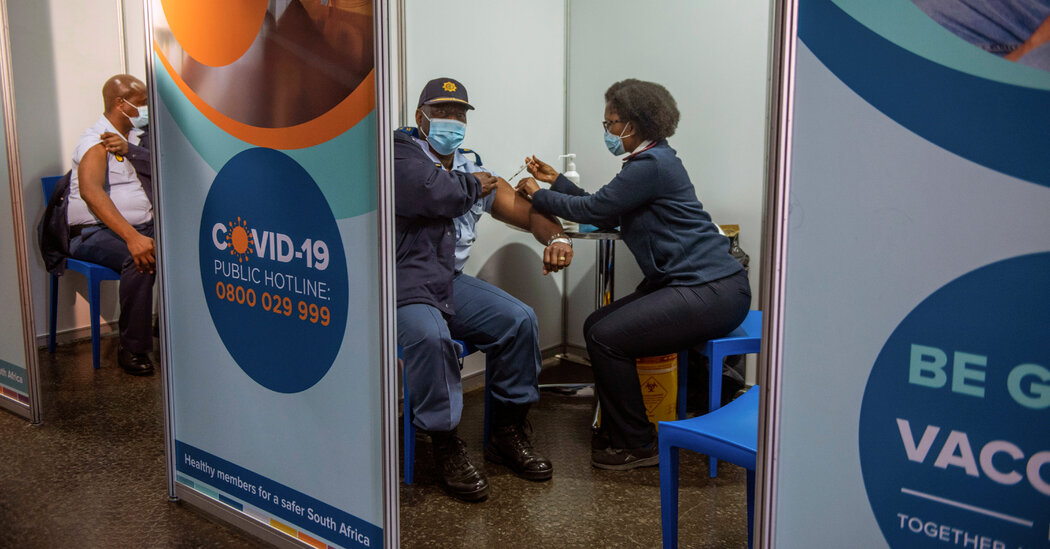
Roughly 17 million Americans received the Johnson & Johnson Covid vaccine, only to be told later that it was the least protective of the options available in the United States. But new data suggest that the vaccine is now preventing infections, hospitalizations and deaths at least as well as the Pfizer-BioNTech and Moderna vaccines.The reasons aren’t clear, and not all experts are convinced that the vaccine has vindicated itself. But the accumulating data nonetheless offer considerable reassurance to recipients of the vaccine and, if confirmed, have broad implications for its deployment in parts of the world.In Africa, for example, distribution of a single-dose vaccine that can be refrigerated for months is by far the most practical option.Johnson & Johnson has at least temporarily shut down the only plant making usable batches of the vaccine. But the South Africa-based Aspen Pharmacare is gearing up to supply large quantities to the rest of the continent. Only about 13 percent of Africans are fully vaccinated, and only about 1 percent have received a booster dose.The Johnson & Johnson vaccine was billed as an attractive option for communities with limited access to health care, including some within the United States, because of its ease of delivery and mild side effects. But it has had a bumpy journey.The shot seemed to produce a weaker initial immune response, and more people who got the single-dose vaccine had breakthrough infections, compared with those who got two doses of Pfizer or Moderna, the mRNA vaccines.In April, federal health officials in the United States and in South Africa paused the Johnson & Johnson vaccine’s distribution as they examined reports of a rare blood-clotting disorder in women. Though both countries resumed the rollouts soon after, the vaccine’s reputation never fully recovered.But the notion that the vaccine is inferior has grown outdated, some experts said.

Read more →

Ukraine: The volunteers racing aid from the UK to the front line

Volunteers are racing medical supplies from the UK to the Ukrainian front line.Over two days, 1,000 miles and six countries, they transported vans loaded with trauma kits, oxygen regulators and ultrasound machines a thousand miles east in just two days.The convoy, organised by the Ukrainian Medical Association of the UK, is made of Ukrainian doctors and nurses working here in the UK who have also been raising money and shipping equipment to their home country. Both the UN agency and the UK government have already delivered hundreds of tonnes of supplies to hospitals in Kyiv and other cities.

Read more →

The tragedy of Afghanistan's malnourished children

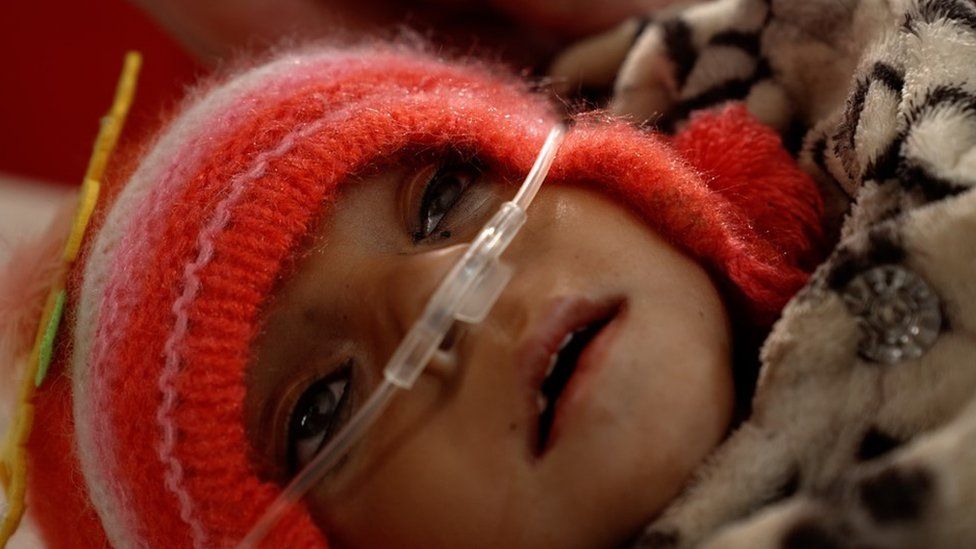
SharecloseShare pageCopy linkAbout sharingEvery few seconds a sick child is brought in to the emergency room of the main hospital in Lashkar Gah in a race against time to save the youngest casualties of Afghanistan’s hunger crisis.Amidst the heart-rending sound of dozens of hungry babies crying, and desperate pleas for help from their mothers, nurses scramble to prioritise children who need urgent care. There are many such babies. Lashkar Gah is a city in the capital of Helmand, one of Afghanistan’s most war-ravaged provinces and lies roughly 400 miles (644km) south-west of Kabul. Jalil Ahmed is brought in hardly breathing. His hands and feet have gone cold. He’s rushed through to the resuscitation room. His mother Markah says he’s two and a half years old, but he looks a lot tinier. He’s severely malnourished and has tuberculosis. Doctors work fast to revive him. Markah watches in tears. “I’m helpless as he suffers. I’ve spent the whole night scared that at any minute he’ll stop breathing,’ she says.Space has to be made in an already full intensive care unit for little Jalil. A doctor carries him there in his arms, as a nurse follows holding up the bottles of fluid and medicines that are being injected into his body through multiple tubes. There’s no time for the staff to stop. They must quickly put another baby, five-month-old Aqalah, back on oxygen. It’s her third time in hospital. Doctors say that a few hours earlier, they thought she wouldn’t make it, but right now, she’s just about holding on. One in every five children admitted to critical care is dying, and the situation at the hospital has been made worse in recent weeks by the spread of the highly contagious measles disease that damages the body’s immune system, a deadly blow for babies already suffering from malnutrition.The hospital, run by charity Medecins Sans Frontieres, is one of a handful of fully-functioning facilities in a province that’s home to around 1.5 million people. It’s completely overwhelmed. It has 300 beds, but is seeing around 800 patients a day, most of them children. There’s almost nowhere else for people to turn to. Cutting off the foreign money which ran Afghanistan has dealt a double blow. It’s triggered an economic crisis that has brought an already poor population to the brink of starvation, and it’s led to the near collapse of the public healthcare system that it almost entirely funded before the Taliban takeover. Child malnutrition has long been a problem in Afghanistan, but data collected by Unicef (United Nations Children’s Fund) shows a massive surge in the number of children with severe acute malnutrition admitted to hospitals, from 2,407 in August 2021, to 4,214 in December 2021. The increase can, in part, be attributed to it being safer to travel to hospitals now that the frontlines have gone, but also misses a large number of malnourished children not taken to hospital because their families cannot afford the journey. Even if they could, they’d need to travel for hours on rubble roads, and it would be hard to find a medical facility that’s not dysfunctional. The Musa Qala and Gereshk district hospitals are overrun with malnourished children, but neither hospital has operational critical care. There are no female doctors. The hospital buildings are run-down, cold and dark. Electricity comes and goes. Night time temperatures drop to 4C. In Gereshk a small heater hooked to a gas cylinder kept in the centre of the rooms provides barely any warmth. Mothers and babies sit huddled under blankets. The smell of disease hangs thick in the air. At Musa Qala, when the breathing of another baby, one-and-a-half-year-old Walid, became irregular, he had to be carried through alleys and doorways to a decaying building next door which had the only oxygen cylinder we saw at the hospital. The father of 10-day-old Zakiullah was sent out to find a saline drip solution in the market, because the hospital had no supplies. Dr Aziz Ahmed who has worked at Gereshk hospital for more than a decade says they have few medicines and barely any staff, and yet have hundreds of patients coming in every day. They have to turn seriously ill children away because they don’t have the facilities to help them, and Dr Ahmed says some have died before they got to a fully functioning hospital. He and the other staff didn’t receive salaries from August till October. From November, they and some other hospitals in the region have been receiving some payments through humanitarian organisations like Unicef, WHO (World Health Organization) and local charity Baran (Bu Ali Rehabilitation and Aid Network). “The humanitarian family is just trying to provide a survival bridge for these children while the world figures out the politics, but we cannot fully fund the health system,” says Salam Janabi of Unicef. “Don’t mix up children in politics. The moment here in Afghanistan is critical for children, and every decision the world makes, the politicians make, will impact them.”When you travel through Helmand province, destruction caused by war can be seen in almost every area. The scale of it in Sangin town is particularly shocking. There are swathes of land covered with debris and mud, where once homes and shops had stood. These areas are where foreign and Afghan troops encountered some of their fiercest battles and where British soldiers were posted. Abdul Raziq is from a community that has lived on the frontline for decades. “We are happy there is peace now, but we have no food, no work and no money. Wheat and fuel have become too expensive’, he says. “Hundreds of children in my village are malnourished. In every house, you will find two or three. We have nothing to feed their mothers, that’s why they’re being born like this.”In a mud home nearby lives Hameed Gul. Two of his daughters, Farzana and Nazdana, are malnourished. Nazdana is so ill he’s sent her to her grandparents because he’s unable to feed her. His 10-year-old son Naseebullah has already begun to work on the fields to help out. The unending suffering of his family is the legacy of foreign actions, present and past. Hameed’s home was bombed in American airstrikes five years ago. Ten of his family, including his parents, six brothers and a sister were killed. “We had no connection with the Taliban. My house was unjustly bombed. Neither the Americans, the previous government or the new one offered to help me,” Hameed says. “We eat just dry bread. About two to three nights a week, we go to bed hungry.”Everywhere we went, we asked what people had eaten that day. Most described sharing a few pieces of dry bread between whole families. Children are the most vulnerable in this crisis of hunger. Afghanistan’s youngest generation is being left to die. In many of the areas we visited, malnutrition deaths might not even get recorded or counted. The world might never know the scale of the tragedy unfolding in Afghanistan.More on this storyThe Afghan children battling malnutrition and measles

Read more →

Pfizer Seeks Authorization of a Second Booster Shot for Older Americans

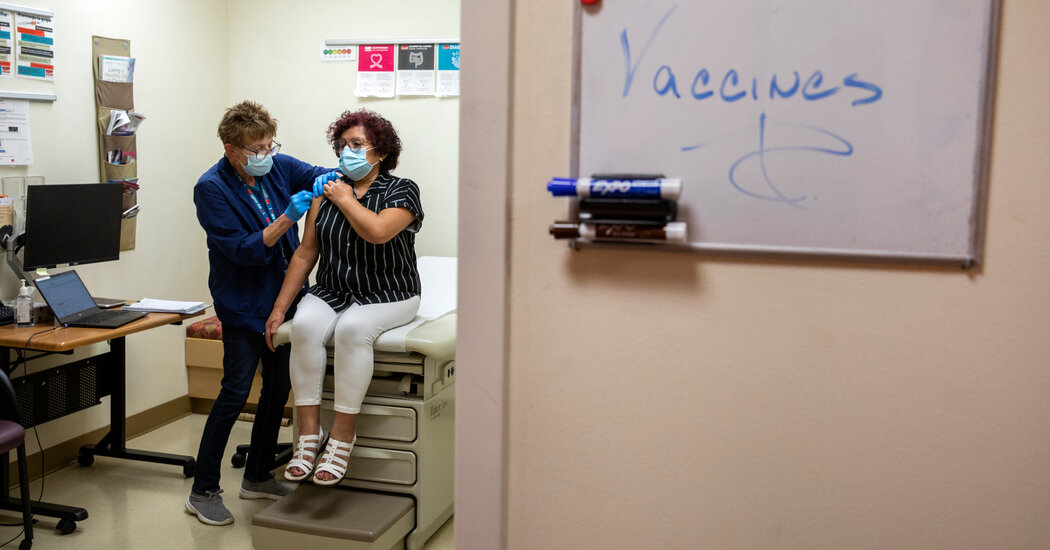
The move could further inflame a tortuous debate among scientists over when the coronavirus vaccines’ protection should be bolstered, and for whom.WASHINGTON — Pfizer and BioNTech said on Tuesday that they had sought emergency authorization for a second booster shot of their coronavirus vaccine for adults 65 and older.The companies’ request to the Food and Drug Administration was based heavily on data from Israel, where such shots are authorized for a somewhat broader group. Their move could further inflame a tortuous debate among scientists over when and how the vaccines’ protection should be bolstered, and for whom.Pfizer’s chief executive, Dr. Albert Bourla, said repeatedly over the past week that he believed an additional dose would be necessary to counteract waning protection after the third dose, now authorized for all Americans 12 and older. “The protection that you are getting from the third, it is good enough, actually quite good for hospitalizations and deaths,” he told CBS’s “Face the Nation” on Sunday. “It’s not that good against infections.”Previous requests last fall for a booster shot set off a fierce public debate. Some public health experts vigorously opposed them for the general population last fall, only to change their minds after the Omicron variant proved more agile at evading the vaccines’ shield. Scientists have continued to clash over how long the vaccines’ protection really lasts and how much benefit added shots offer.In an interview with Business Insider on Monday, Dr. Stephen Hoge, the president of Moderna, whose vaccine is the second most widely used in the United States, sounded a more cautious note than Dr. Bourla.“For those who are immune-compromised, those who are older adults, over the age of 50 or at least 65, we want to strongly recommend and encourage” a fourth shot, he said. But he did not say how soon he thought it would be needed. Like a number of other experts, he suggested that most people would need an annual shot to protect them against the coronavirus, just like the flu.In their justification, Pfizer and BioNTech cited in part two recent studies from Israel, both published on preprint servers without peer review. One study, done in conjunction with Israel’s Ministry of Health, reviewed the health records of 1.1 million people and concluded that they were less likely to become infected with the virus or to develop severe illness after a fourth dose of Pfizer’s vaccine.But since Israel only recently began its second booster program, researchers could not determine whether the added protection was short-lived. Israel began offering fourth doses to health care workers in late December, then quickly broadened eligibility to those 60 and older and other vulnerable groups.The second study, of Israeli health care workers, showed that while fourth shots of either Pfizer’s or Moderna’s vaccine boosted antibody levels, it was not very effective at preventing infections. Researchers said those findings underscored the urgency of developing vaccines that target whatever variant is circulating.The National Institutes of Health in the United States and various vaccine manufacturers have been studying how the vaccines could be updated.Some senior administration officials say a fourth shot for all older Americans may make sense now, but that the general population should probably wait until the fall. The F.D.A. is expected to convene a meeting of its expert advisory committee next month to discuss the issue of fourth shots. Developments on Pfizer’s request were reported earlier by The Washington Post.Asked last month whether everyone would need yet another injection, Dr. Peter Marks, the F.D.A.’s top vaccine regulator, said, “Barring any surprises from new variants, maybe the best thing is to think about our booster strategy in conjunction with the influenza vaccine next fall, and get as many people as possible boosted then.” Dr. Anthony S. Fauci, the chief medical adviser to the White House, has suggested that any recommendation before then would most likely be aimed at those most at risk, possibly based on underlying conditions as well as age.To date, about two thirds of Americans 5 and older have been fully vaccinated with two shots of a vaccine. Only about half of those eligible for booster shots have received them, but the proportion rises to two-thirds for those 65 and older, according to the Centers for Disease Control and Prevention.In a call with reporters on Tuesday, senior administration officials said that the administration was running short on funds for vaccines. Assuming that regulators authorize a fourth shot to people 65 and older, the administration has enough supply to manage that, officials said. But they said it could not expand that effort to everyone without more funding from Congress.The C.D.C. has recommended that many Americans with immune deficiencies get three shots as part of their initial series, followed by a fourth shot as a booster.A study released by the agency last month showed waning protection after a booster shot of either Moderna’s or Pfizer-BioNTech’s vaccine. While they did not break down cases by age, underlying conditions or the presence of immune deficiencies, researchers said the findings illustrated the possible importance of a fourth shot.The study analyzed hospitalizations and visits to emergency rooms and urgent care clinics in 10 states by people who received booster shots of either Moderna’s or Pfizer-BioNTech’s vaccine. It showed the level of protection against hospitalization fell from 91 percent in the two months after a third shot to 78 percent after four to five months. Effectiveness against visits to emergency rooms or urgent care clinics declined from 87 percent to 66 percent.Kaiser Permanente Southern California suggested that the effectiveness of a booster dose against both symptomatic and severe disease wanes in three to six months, while a fourth dose restores antibody levels to the peak level triggered by a third dose.But other recent studies have suggested that three doses of a Covid vaccine — or even just two — are enough to protect most people from serious illness and death for a long period of time. While antibody levels fall off, other parts of the immune system can remember and destroy the virus over many months if not years, according to at least four studies published in top-tier journals in recent weeks.“We’re starting to see now diminishing returns on the number of additional doses,” E. John Wherry, the director of the Institute for Immunology at the University of Pennsylvania, said in an interview last month.

Read more →

Mounting Data Shows J&J Vaccine as Effective as Pfizer and Moderna

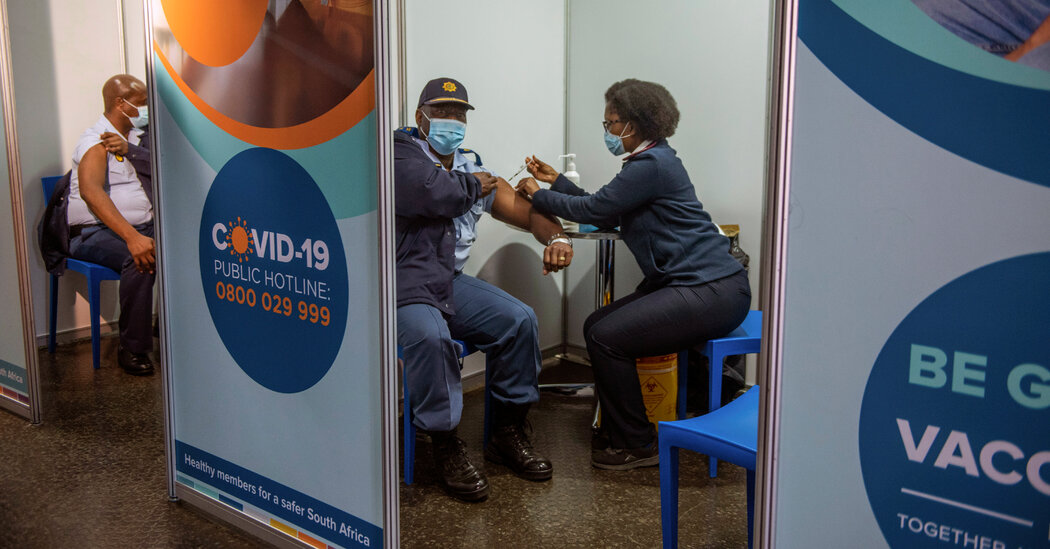
Once dismissed as less effective, the vaccine now seems to be preventing infections and illness about as well as the two mRNA options.Roughly 17 million Americans received the Johnson & Johnson Covid vaccine, only to be told later that it was the least protective of the options available in the United States. But new data suggest that the vaccine is now preventing infections, hospitalizations and deaths at least as well as the Pfizer-BioNTech and Moderna vaccines.The reasons aren’t clear, and not all experts are convinced that the vaccine has vindicated itself. But the accumulating data nonetheless offer considerable reassurance to recipients of the vaccine and, if confirmed, have broad implications for its deployment in parts of the world.In Africa, for example, distribution of a single-dose vaccine that can be refrigerated for months is by far the most practical option.Johnson & Johnson has at least temporarily shut down the only plant making usable batches of the vaccine. But the South Africa-based Aspen Pharmacare is gearing up to supply large quantities to the rest of the continent. Only about 13 percent of Africans are fully vaccinated, and only about 1 percent have received a booster dose.“In the setting of Africa, where we have the need to quickly get vaccines out, the single dose is very exciting,” said Linda Gail-Bekker, director of the Desmond Tutu H.I.V. Center at the University of Cape Town, who has studied the vaccine’s effectiveness in South Africa.The Johnson & Johnson vaccine was billed as an attractive option for communities with limited access to health care, including some within the United States, because of its ease of delivery and mild side effects. But it has had a bumpy journey.The shot seemed to produce a weaker initial immune response, and more people who got the single-dose vaccine had breakthrough infections, compared with those who got two doses of Pfizer or Moderna, the mRNA vaccines.In April, federal health officials in the United States and in South Africa paused the J.&J. vaccine’s distribution as they examined reports of a rare blood-clotting disorder in women. Though both countries resumed the rollouts soon after, the vaccine’s reputation never fully recovered.But the notion that the vaccine is inferior has grown outdated, some experts said: More recent data suggest that it has more than held its own against its competitors.“We’ve been aware that J.&J. has been kind of downgraded in people’s minds,” Dr. Gail-Bekker said. But “it punches above its weight for a single-dose vaccine.”Until last June, the cumulative data from the C.D.C. showed that immunization with the Moderna vaccine resulted in the lowest rates of breakthrough infections; those who got Johnson & Johnson saw the highest rates, with Pfizer-BioNTech somewhere in the middle.During the summer months, the gaps — particularly between J.&J. and Pfizer — began to narrow. By now, all the vaccines seem to be performing about equally well against coronavirus infections; in fact, Johnson & Johnson appears to be holding up slightly better.Workers in the Johnson & Johnson vaccine facililty of the pharmaceutical company Aspen Pharmacare in Gqeberha, South Africa.Siphiwe Sibeko/ReutersAs of Jan. 22, the latest data available, unvaccinated people were 3.2 times as likely to become infected as those who received the single-dose Johnson & Johnson vaccine; they were 2.8 times as likely to become infected as those who received two doses of the Moderna vaccine and 2.4 times as likely as those with two doses of Pfizer-BioNTech. Overall, then, the Johnson & Johnson vaccine appeared to be somewhat more protective against infection than the two alternatives.Among Americans who got booster doses, all the vaccines appeared to have roughly the same effectiveness against infection. A booster shot did not add much to Johnson & Johnson’s previous level of protection (although the data do not indicate who received which type of booster shot).The data were collected by the C.D.C. from 29 jurisdictions, representing 67 percent of the population.“The C.D.C. data adds to the growing body of evidence indicating the Johnson & Johnson Covid-19 vaccine provides durable protection against breakthrough infection and hospitalization,” the company said in a statement.The findings indicate that the J.&J. vaccine deserves a closer look, said Dr. Larry Corey, an expert in vaccine development at the Fred Hutchinson Cancer Research Center in Seattle.“This vaccine platform may have some surprising characteristics that we hadn’t anticipated,” he said. The data “is interesting, provocative, and we should spend more time understanding it.”Dr. Corey said the results jibe with his experience in H.I.V. research with the adenovirus that forms the backbone of the Johnson & Johnson vaccine. “It has much longer durability than almost any other platform that we’ve ever worked with,” he said.Scientists are only beginning to guess why the vaccine’s profile is improving with the passing months.Levels of antibodies skyrocket in the first few weeks after immunization, but then rapidly wane. The J.&J. vaccine may produce antibodies that decline more slowly than those produced by the other vaccines, some research suggests. Or those antibodies may become more sophisticated over time, through a biological phenomenon called affinity maturation.Perhaps, some researchers suggest, the vaccine offered a more robust defense against the Omicron variant, responsible for the huge increase in infections over the past few months. And studies have shown that the vaccine trains other parts of the immune system at least as well as the other two vaccines.Not everyone is convinced that the Johnson & Johnson vaccine is catching up. It may only appear to be effective now because many recipients got breakthrough infections early on, gaining additional immunity, said Natalie Dean, a biostatistician at Emory University. “They may have a different immunity profile,” she said.The infection rate is now lower among people who got the Johnson & Johnson vaccine but did not get a booster. Still, the death rate is slightly higher, compared with that among those who got the Pfizer-BioNTech and Moderna vaccines, Dr. Dean noted.But the differences are not huge, and disappeared among those who got booster shots. The C.D.C.’s statistics on deaths only run through Jan. 1, and the Johnson & Johnson vaccine’s edge may only become apparent in data from February or March, said Dan Barouch, a virologist at Beth Israel Deaconess Medical Center in Boston who collaborated with Johnson & Johnson in the development of the vaccine.Deaths tend to lag infections, often by weeks or months, “because many deaths are after prolonged hospital courses,” he said.Dr. Dean said for a clearer comparison of the vaccines, she would like to see data with information on individual factors, like prior infections and other high-risk conditions, rather than the age-adjusted overall numbers provided by the C.D.C.“It is a shame that we don’t have more direct study of outcomes among people who received J.&J.,” she said. That is in part because fewer people got the vaccine than the mRNA vaccines, she said, but also “because we’re relying on other countries generating data.”Johnson & Johnson vaccinations in Soweto, South Africa, last year.Alet Pretorius/Associated PressSome of that information has come from South Africa. In one trial, called Sisonke, Dr. Gail-Bekker and her colleagues evaluated one dose of the Johnson & Johnson vaccine in nearly 500,000 health care workers, and two doses in about 240,000 of those individuals.In the first part of the trial, the researchers matched the recipients with a control group by age, sex, risk factors for Covid, socioeconomic status and prior Covid infection. When the Delta variant was dominant in the country, they found that the vaccine had an effectiveness of about 67 percent against hospitalization and about 82 percent against death. Protection against the Beta variant was similar.“Certainly during the Beta and the Delta waves, the single dose worked very well for severe disease and death,” Dr. Gail-Bekker said.When the Omicron variant began circulating in South Africa, the researchers offered a booster of the same vaccine to the participants. Fewer than half of them agreed.“It was extraordinary, the pushback,” Dr. Gail-Bekker said. By that point, the perception was that the Pfizer-BioNTech and Moderna vaccines were superior. “There was a feeling again that we were offering a very second-rate option,” she recalled.Still, the data so far suggest that two doses of the J.&J. vaccine had an effectiveness of about 75 percent against hospitalization with the Omicron variant, comparable to the protection from the Pfizer-BioNTech vaccine. The researchers presented the findings last month at the Conference on Retroviruses and Opportunistic Infections in Denver.Although the trial looked only at people who got two doses of the Johnson & Johnson vaccine, it suggests that the vaccine may make an excellent booster for people who initially got two doses of an mRNA vaccine, experts said.But in December, the C.D.C. recommended the mRNA vaccines over Johnson & Johnson’s for all adults, citing a risk of rare side effects like blood clots and Guillain-Barré syndrome. The agency found four cases of blood clots per million people who got the vaccine; women ages 30 to 39 had the highest incidence, at about 11 per million.The mRNA vaccines, too, have been associated with uncommon side effects. They are thought to cause about 11 cases of myocarditis, or inflammation of the heart, for every 100,000 vaccinated males aged 16 to 29 years.More data on different combinations of vaccines may clarify which is the safest and most effective in the long term, Dr. Dean said. The arrival of new variants may also give some vaccines an edge over others, she said.“I do keep a very open mind about what could end up being the best vaccine regimen for the future,” she said.

Read more →

Brain differences in children with binge eating disorder

Brain scans of children ages 9-10 with a type of eating disorder that causes uncontrollable overeating showed differences in gray matter density compared to their unaffected peers, according to a USC-led study.
Binge eating disorder, which affects about 3-5% of the U.S. population, is characterized by frequent episodes of eating large amounts of food and a sense of having no control over the behavior. The study’s findings suggest that abnormal development in the brain’s centers for reward and inhibition may play a role.
The recently published study is available online in the journal Psychiatry Research.
“In children with binge eating disorder, we see abnormality in brain development in brain regions specifically linked to reward and impulsivity, or the ability to inhibit reward,” said lead author Stuart Murray, Della Martin Associate Professor of Psychiatry and the Behavioral Sciences at the Keck School of Medicine of USC, where he serves as director of the Eating Disorders Program.
“These kids have a very, very heightened reward sensitivity, especially toward calorically dense, high-sugar foods. The findings underscore the fact that this is not a lack of discipline for these kids.”
Pandemic saw increase in eating disorders among young people
Experts say eating disorders in young people soared during the pandemic, along with steep increases in hospitalizations. Social isolation, stress, disruption of routine and a social media-fueled quest for perfection all exacerbated disorders such as anorexia, muscle dysmorphia and binge eating.

Read more →

Pathogen and drug work together to fight fungal lung infection

Pathogens don’t always work against drug treatments. Sometimes, they can strengthen them, according to a new University of Maine study.
Diseases caused by a combination of bacteria, viruses, fungi and parasites — also known as polymicrobial infections — are challenging to treat because scientists don’t fully understand how pathogens interact during infection and how these interactions impact the drugs used to treat them.
In a study published in the journal Infection and Immunity, researchers in the Molecular & Biomedical Sciences Department looked at two pathogens that often occur at similar sites, particularly in cystic fibrosis and mechanically ventilated patients: Candida albicans and Pseudomonas aeruginosa.
Candida is the fourth most common hospital-acquired pathogen, and is particularly difficult to treat. It is targeted by a number of antifungal agents, but some only slow it rather than kill it outright. Meanwhile, P. aeruginosa infects 90% of all adult cystic fibrosis patients. Combined, C. albicans and P. aeruginosa cause more serious disease in cystic fibrosis and ventilated patients.
The researchers investigated the effectiveness of an antifungal drug, fluconazole, in the test tube and during infection of the zebrafish with both pathogens. Fluconazole is known to slow fungal growth, but Candida can become tolerant to the drug and not only survive, but also develop tolerance that leads to failed therapy and, potentially, death.
What the study found was promising. The results showed that P. aeruginosa works with fluconazole to eliminate drug tolerance and clear the C. albicans infection in the culture and the zebrafish.
“Polymicrobial infections are challenging to treat not only because of the lack of understanding of how invading microorganisms interact but also because we don’t know how these interactions affect treatment efficacy. Our work demonstrates that polymicrobial interactions can indeed affect treatment efficacy and, most importantly, it highlights the importance of nutrient availability in the environment — such as iron in our study — and how it modulates treatment efficacy,” says Siham Hattab, lead author of the study who conducted the research as part of her Ph.D. in the Department of Molecular and Biomolecular Sciences.
What’s more, the bacteria also enhance the drug’s ability against a second pathogenic Candida species that tends to be more resistant to the drug.
The increased effectiveness of the drug suggests to the researchers that there is still much more to learn about how current drugs work when targeting these dangerous and complex polymicrobial infections. “We are really excited to have revealed that sometimes drugs against fungal infection can work even better in a more ‘real-world’ situation than in the test tube. There is still a lot to learn about how pathogens interact during infection, and it will be interesting to see how the bacteria manage to work with the drugs to target Candida,” says Robert Wheeler, associate professor of microbiology and senior author of the study.
Story Source:
Materials provided by University of Maine. Note: Content may be edited for style and length.

Read more →

The immune system is very complicated, but now, it's on a chip

To quote veteran science writer Ed Yong’s simple yet extremely accurate words in The Atlantic, “The immune system is very complicated.” As the COVID-19 pandemic had made abundantly clear, science still doesn’t fully understand the sophisticated defense mechanisms that protect us from microbe invaders. Why do some people show no symptoms when infected with SARS-CoV-2 while others suffer from severe fevers and body aches? Why do some succumb to cytokine storms of the body’s own making? We still lack exact answers to these questions.
Today’s scientists, however, now have a new tool to help them tease out the immune system’s mysteries, thanks to a group of researchers at the Wyss Institute for Biologically Inspired Engineering at Harvard University. They cultured human B and T cells inside a microfluidic Organ Chip device and coaxed them to spontaneously form functional lymphoid follicles — structures that reside in lymph nodes and other parts of the human body which mediate immune responses. They consist of different chambers that harbor “naïve” B cells and T cells, which together initiate the cascade of events that leads to a full immune response when they are exposed to a specific antigen.
In addition to allowing researchers to probe the normal function of the immune system, these lymphoid follicle (LF) Chips can also be used to predict immune responses to various vaccines and help select the best performers, offering significant improvement over existing preclinical models like cells in a dish and non-human primates. The achievement is reported today in Advanced Science.
“Animals have been the gold-standard research models for developing and testing new vaccines, but their immune systems differ significantly from our own and do not accurately predict how humans will respond to them. Our LF Chip offers a way to model the complex choreography of human immune responses to infection and vaccination, and could significantly speed up the pace and quality of vaccine creation in the future,” said first author Girija Goyal, Ph.D., a Senior Staff Scientist at the Wyss Institute.
An accidental discovery
Like many great scientific discoveries, the LF Chip project is the result of serendipity in the lab. Goyal and other Wyss Institute scientists wanted to investigate how B and T cells circulating in the blood would change their behavior once they entered a tissue, so they obtained those cells from human blood samples and cultured them inside a microfluidic Organ Chip device to replicate the physical conditions they would experience when they encountered an organ.

Read more →

'Healthspan' increasing even for people with common chronic conditions

The number of healthy years a person lives is, on average, increasing even for people with common chronic conditions, according to a new study publishing March 15th in PLOS Medicine by Holly Bennett of Newcastle University, UK, and colleagues.
There have been advances in healthcare over recent decades that mean many people with chronic health conditions are living longer. In the new study, researchers wanted to determine whether this extension to life involves an increase in years with or without disability. The team analyzed data from two large population-based studies of people aged 65 or over in England. The studies, the Cognitive Function and Aging Studies (CFAS I and II) involved baseline interviews with 7,635 people in 1991-1993 and with 7,762 people in 2008-2011, with two years of follow-up in each case.
For both healthy people and those with health conditions, the average years of disability-free life expectancy (DFLE) increased from 1991 to 2011. Overall, men gained 4.6 years in life expectancy (95% CI: 3.7 — 5.5 years, p

Read more →

Skin biopsy can help identify patients with Parkinson's disease

The diagnosis of Parkinson’s disease (PD) is currently based on consensus clinical criteria. A novel study reported in the Journal of Parkinson’s Disease has found that the presence of neuronal deposits of the biomarker phosphorylated alpha-synuclein (p-syn) in the brain and the skin of patients with PD distinguishes them from individuals with symptoms of parkinsonism due to the accumulation of another protein, tau. This development may help the early identification and differential diagnosis of PD among the various parkinsonism subtypes.
The main parkinsonian symptoms are shared with other synucleinopathies, as well as with atypical parkinsonism, including progressive supranuclear palsy (PSP) and corticobasal syndrome (CBS), both of which are due to the accumulation of another protein, tau. Despite the clinical overlap with PD, PSP is characterized by 4-repeat tau deposits, mainly in the basal ganglia, brainstem, and cerebellum, and CBS is a clinical syndrome with a heterogeneous underlying neuropathology, represented mainly by tauopathies but also by synucleinopathies.
“Research in PD and other neurodegenerative disorders is to find treatments able to halt and ideally prevent the accumulation the pathological proteins responsible for the different disorders. Our lab, led by Prof. Rocco Liguori and Dr. Vincenzo Donadio, has spent the last decade looking for reliable biomarkers of PD and related disorders to achieve an accurate and early diagnosis,” explained corresponding author Maria Pia Giannoccaro, PhD, Department of Biomedical and Neuromotor Sciences, University of Bologna and IRCCS Istituto delle Scienze Neurologiche di Bologna, Bologna, Italy.
“This research sprang from the same effort. Our aim was to see if we could distinguish PD from two potential mimics, PSP and CBS, and to explore the potential for using this approach to support clinical diagnosis,” Dr. Giannoccaro continued.
Investigators recruited 26 patients with PD, 26 patients with either PSP (18) or CBS (8), and 26 healthy individuals from May 2014 to April 2017. All individuals underwent skin biopsy in three sites, the leg, the thigh, and the cervical area, to study p-syn deposits in skin nerves. They found that all except two of the PSP/CBS patients had no skin p-syn deposits, as well as all the healthy individuals. Conversely, all PD patients showed p-syn deposition.
The investigators were surprised by the finding that two patients diagnosed with PSP and CBS, respectively, had p-syn skin deposits. One possibility is that these two patients were misdiagnosed, however, the diagnosis was confirmed by clinical and MRI findings. Another intriguing possibility is that some patients have a mixed pathology with multiple neurodegenerative disorders occurring at the same time. Both patients had some atypical features more typical of PD that could suggest an atypical synucleinopathy presentation.
“To our knowledge this is the largest study comparing in vivo the peripheral deposition of misfolded alpha-synuclein in PD and PSP/CBS cases,” commented Dr. Giannoccaro. “We showed that the presence of skin p-syn deposits accurately distinguishes patients with PD from those with atypical parkinsonism. Early differentiation and accurate in vivo diagnosis are important for adequate clinical management and patient care since the treatment and prognosis of PD, PSP and CBS are different.
The investigators recommend further studies including larger samples of patients to confirm these results. Moreover, in the near future, it could be relevant for the recruitment of patients in clinical trials of potential disease-modifying therapies.
PD is a slowly progressive disorder that affects movement, muscle control, and balance. It is the second most common age-related neurodegenerative disorder affecting about 3% of the population by the age of 65 and up to 5% of individuals over 85 years of age.
Story Source:
Materials provided by IOS Press. Note: Content may be edited for style and length.

Read more →