Stabilizing low blood sugar in infancy prevents long-term brain damage

Low blood sugar in infancy is serious, but treatment can ward off long-term brain damage in infants, a new study has found.
The study from the University of Waterloo and the University of Auckland is the first research of its kind to declare stabilizing blood sugar levels in newborns with hypoglycemia prevents brain damage.
Low blood sugar, also known as hypoglycemia, occurs when the level of glucose in the blood is too low. Low blood sugar is very common, affecting more than one in six babies. As glucose is the main source of fuel for the brain and the body, untreated low blood sugar can cause adverse effects on a child’s neurodevelopment up to the age of 4.5 years old.
While it’s known that exposure to hypoglycemia alters the shape of the early developmental course, there has been a significant gap in our understanding of how hypoglycemia can alter a child’s development after early childhood. The team’s new study examined the long-term consequences of a child’s brain development in mid-childhood-nine to 10 years old-and found that there was no significant difference in academic outcomes for children exposed to hypoglycemia as newborns, as compared to their peers.
“Rich pre-school and school experiences may help a child’s brain to re-organize and improve their academic abilities up to the developmental milestones of their peers,” said Ben Thompson, a professor from the School of Optometry & Vision Science at Waterloo, CEO of the Centre for Eye and Vision Research in Hong Kong, and part of the team working on the groundbreaking research.
Following 480 children born at risk of neonatal hypoglycemia, researchers assessed each child at aged nine to 10 in five key areas: academic achievement, executive function, visual-motor function, psychosocial adaptation, and general health. All child participants were involved in previous studies, providing researchers with information on their neuro-development outcomes at two and 4.5 years old.
The research team says that this catch-up in neuro-cognitive function could be because of brain-plasticity — the brain’s ability to adapt, change and mature as a result of experience.
“It’s a big relief to know that babies who are born with and treated for a condition as common as hypoglycemia are not likely to suffer long-term brain damage,” Thompson said.
Over the past decade, the research team has continued studying the efficacy of dextrose gel to treat low blood sugar in the first 48-hours of a newborn’s life, avoiding the need for babies to go to newborn intensive care units immediately after delivery. Dextrose is a sugar that comes from corn or wheat that is chemically identical to blood sugar.
In an additional study published in the Journal for the American Medical Association, the team assesses the later risks of dextrose gel as a treatment for hypoglycemia in infancy, and found it caused no significant difference to the risk of neuro-sensory impairment at age two. This treatment continues to be widely used outside of New Zealand in a growing number of countries, including Canada, Australia, the United Kingdom and the United States.
The studies, Association of neonatal hypoglycemia with academic performance in mid-childhood and Prophylactic oral dextrose gel and neurosensory impairment at 2-year follow-up of participants in the hPOD randomized trial, were published in the Journal of the American Medical Association this month.
Story Source:
Materials provided by University of Waterloo. Note: Content may be edited for style and length.

Read more →

Americans love football, but differ on whether kids should play

Football may be America’s most popular sport, but the nation is deeply divided about whether youth should play the tackle version of the game.
In a new study, about 45% of Americans agreed that tackle football is appropriate for kids, while 50% disagreed. The remainder didn’t know.
The findings come as participation in youth tackle has declined with growing concern about the effects of concussions on young brains, said Mariah Warner, lead author of the study and a doctoral student in sociology at The Ohio State University.
“We found that tackle football for kids has become a contentious issue in the United States,” Warner said.
“Football may still be very popular overall, but many people don’t think it is appropriate for kids, most likely because of safety issues.”
But support for and opposition to kids playing tackle football isn’t evenly divided among all segments of society, the study showed.

Read more →

Exercise may reduce depression symptoms, boost effects of therapy

Exercising for half an hour may reduce symptoms of depression for at least 75 minutes post-workout and amplify the benefits of therapy, according to two new studies led by researchers at Iowa State University.
“A lot of previous research on the effects of exercise on mental health, in general, have used very broad measures of wellbeing. What we were interested in, specifically, is: how does acute exercise — that is, one session of exercise in a day — influence the primary symptoms of depression,” said Jacob Meyer, a professor of kinesiology at ISU and the lead-author of both publications.
For the first study, the researchers recruited 30 adults who were experiencing major depressive episodes. The participants filled out electronic surveys immediately before, half-way-through and after a 30-minute session of either moderate-intensity cycling or sitting, and then 25-, 50- and 75-minutes post-workout. Those who cycled during the first lab visit came back a week later to run through the experiment again with 30-minutes of sitting, and vice versa.
Each survey included standard questions and scales used to measure symptoms of depression and several cognitive tasks, including the Stroop test; participants responded to the color of a particular font rather than the word itself (e.g., indicating red when they saw the word ‘blue’ in red ink).
The researchers then used the survey data to track any changes in three characteristics of major depressive disorder: depressed mood state (e.g., sad, discouraged, gloomy), anhedonia (i.e., difficulty experiencing pleasure from activities previously enjoyed) and decreased cognitive function (e.g., difficulty thinking, juggling multiple pieces of information at once).
During the cycling experiment, participants’ depressed mood state improved over the 30 minutes of exercise and consistently up to 75 minutes afterward. The improvement to anhedonia started to drop off at 75 minutes post-exercise, but still was better than the participants’ levels of anhedonia in the group that did not exercise.

Read more →

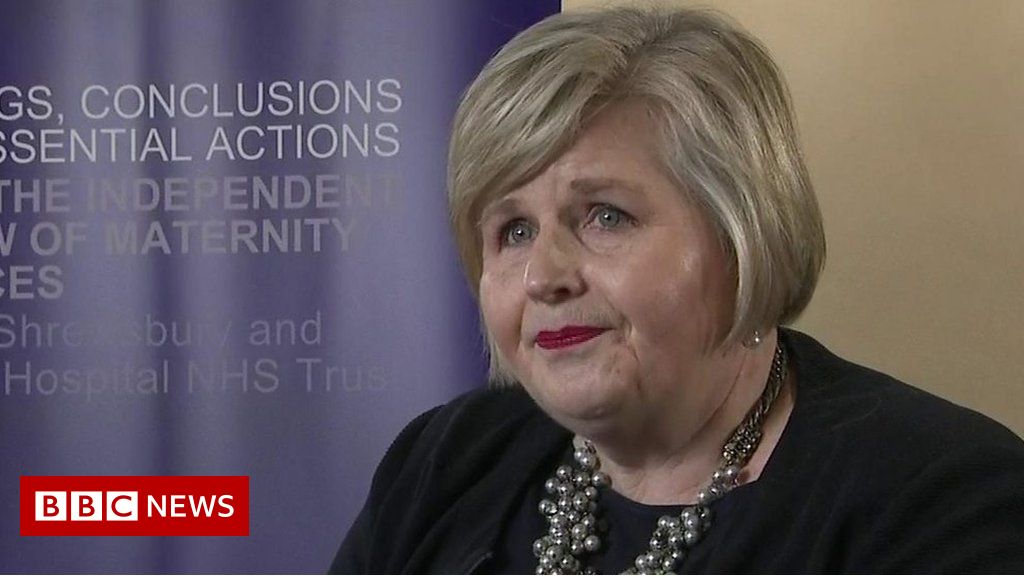
Shrewsbury and Telford maternity scandal: 'Grave concern' as new cases reported

More than 200 babies may have died and many others left with life-changing injuries due to repeated failures at an NHS Trust, a report has found.Senior midwife Donna Ockenden’s review examined catastrophic failures in maternity care at the Shrewsbury and Telford NHS Trust (SaTH).She said there were “grave concern” that new cases continued to be reported outside the period the review covered.

Read more →

Can Moving the Body Heal the Mind?

In her new book, Jennifer Heisz blends personal experience and the latest science about how exercise can improve your mental well-being.When Jennifer Heisz was in graduate school, she borrowed a friend’s aged, rusty road bike — and wound up redirecting her career. At the time, she was studying cognitive neuroscience but, dissatisfied with the direction of her work and her personal life, began experiencing what she now recognizes as “pretty severe anxiety,” she told me recently. Her friend suggested biking as a reprieve. Not previously athletic, she took to the riding with enthusiasm, finding it “soothed my mind,” she said.That discovery convinced her to change the focus of her research. Now the director of the NeuroFit Lab at McMaster University in Hamilton, Ontario, she studies the interplay of physical and emotional health and how exercise helps stave off or treat depression, anxiety, stress and other mental health conditions.“The effects of motion on the mind are just so pervasive and fascinating,” said Dr. Heisz.That idea animates her new book, “Move the Body, Heal the Mind,” which details the latest science about exercise and mental health, as well as her own journey from inactivity and serial emotional slumps to triathlon training and increasing serenity. Recently, I caught up with Dr. Heisz to talk about her book and what it can tell us about mental health, the benefits of gentle exercise, the strains of the pandemic years and how to choose the right workout, right now, to raise your spirits. Our edited conversation follows.Can we talk about exercise and anxiety, which many of us are feeling these days?JH: Exercise is extremely beneficial for reducing anxiety. At the end of every workout, in fact, you typically get a brief reprieve from anxiety, due to neuropeptide Y, which increases with exercise. It’s a resiliency factor. It helps soothe the anxious amygdala, which is the part of the brain that recognizes danger and puts us on high alert. For the last few years, with the pandemic, our amygdala has been on hyper-alert, setting off an almost constant stress response. This chronicity of stress starts to make our minds really fearful and you wind up with constant anxiety. Exercise, by up-regulating neuropeptide Y, helps soothe the anxious amygdala, dial down the fear and hyper-vigilance and keep us calmer.Any particular type of exercise?JH: The really nice thing is that light to moderate exercise, like walking, is enough. Research from my lab shows this kind of exercise reduces anxiety immediately after your workout and then, over time, if you keep exercising, reduces anxiety even more and for longer. It looks like about 30 minutes of this kind of exercise three times a week is good. Walking, cycling, swimming, dancing — a wide variety of activities work.At her Ontario workout laboratory, Dr. Heisz has found that exercise is directly tied to lower depression and anxiety.Narisa Ladak for The New York TimesWhat about more intense workouts?JH: You need to be careful with really intense exercise and anxiety. If you’re feeling anxiety, you’re already under stress. High-intensity exercise is also a kind of stress. But our bodies only have, in general, one stress response. So, during intense exercise, you add extreme physical stress onto the stress your body already is feeling and it might all become too much. Right before the pandemic, I was training for a triathlon and doing a lot of high-intensity workouts. But once the pandemic started, I was feeling so much emotional stress, I couldn’t finish those workouts. So, I backed off. What I would tell people is that, when you’re already feeling stressed-out, prolonged, intense exercise may not be the right option.What would you recommend people do instead?JH: Aim for exercise that feels comfortably challenging, so your heart rate is elevated but not racing. For a lot of people, that would mean taking a brisk walk around the park or the block.Does exercise help in the same ways against depression?JH: Classically, depression has been blamed on a lack of serotonin in the brain, which anti-depressants treat. But for some people with depression the drugs don’t work well, probably because serotonin is not their problem. Many of us who study depression now think their problem may involve inflammation, which is linked to stress. The inflammation starts to damage cells in the body, inducing an immune response and increasing inflammation, which can then get into the brain, affecting mood. For those people, exercise may be the medicine they need, because it helps fight the inflammation. In studies, when individuals who haven’t responded to anti-depressants start exercising, they usually see significant reductions in their symptoms.How much exercise are we talking about?JH: One study that looked at frequency, or how much exercise you need to combat depression, compared 150 minutes of moderate to vigorous exercise a week, which is the standard exercise recommendation for physical health, with a quarter of that. And both groups benefited the same. So, it looks like the exercise prescription for mental health is less than that for physical health, which is kind of nice.In terms of helping to potentially combat depression, do you think the exercise intensity matters?JH: It might. We conducted a study a few years ago with healthy students who were facing high-pressure final exams. Some of them rode stationary bicycles moderately three times a week for 30 minutes and others did shorter, more-intense interval cycling. A third group didn’t exercise at all. After six weeks, the students who hadn’t worked out showed symptoms of fairly serious depression, which had come on shockingly fast, and presumably from their academic stress. The students who had been exercising moderately, though, were less stressed out than they had been at the start of the study and their bodies’ inflammation levels were lower. But what’s really interesting to me is that the intense exercisers showed symptoms of increased stress, both physical and mental. So, it does look as if moderate exercise may be the most beneficial for mental health.You talk frankly in your book about your own bouts of anxiety, stress and obsessive compulsive disorder, including after the birth of your daughter and, later, your divorce. Did exercise help you cope?JH: It’s the key. Mental illness can happen to anyone, even people who seem to be handling things well. For me and many other people, life transitions, like divorce and childbirth, can be especially challenging. After my divorce, I really needed something to redirect my life. And I knew how potently exercise, as a stimulus, alters the brain. Someone mentioned triathlons. I was still biking then. So, I added in the running and swimming.And qualified for the World Championships?JH: Eventually, yes. But it took years. Then the championships were delayed by the pandemic and now I’m out of shape and will have to start training all over again. But that’s something to look forward to, really. What I find is that, in times like these, there is solace in exercise. In the peaceful moments after a workout, hope is alive. You feel like the world is right again. And that’s really special.

Read more →

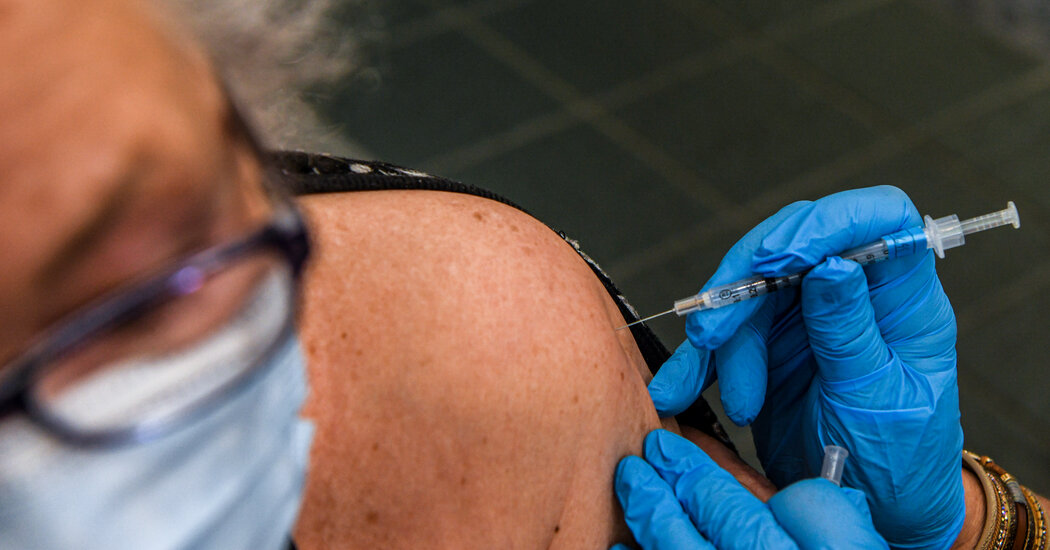
Pfizer and Moderna Boosters Help Protect Americans With J.&J. Shots, C.D.C. Says

Americans who received the single-dose Johnson & Johnson Covid vaccine were better protected against severe illness and hospitalization during the Omicron surge if they received a second dose of the Pfizer-BioNTech or Moderna vaccines, instead of an additional Johnson & Johnson shot, according to a new study published on Tuesday by the Centers for Disease Control and Prevention.The report did not offer a comparison with the protection afforded by two doses of mRNA vaccines and included relatively few Johnson & Johnson recipients, making the findings difficult to interpret.The findings broadly support the added benefit of a booster dose against the Omicron variant, which is known to partially sidestep immune defenses. Yet the report is somewhat at odds with other data collected by the C.D.C. that suggest that a single dose of the Johnson & Johnson vaccine prevented infections with the Omicron variant at least as well — if not better — than two doses of the mRNA vaccines.Those data do indicate that people who received a single dose of the Johnson & Johnson vaccine are at slightly higher risk of death than those who received two mRNA doses.Separately, South African researchers have found that two doses of the Johnson & Johnson vaccine offer protection against severe illness and hospitalization that is comparable to that seen with two doses of the Pfizer-BioNTech vaccine.The C.D.C. now recommends that all adults who received one or two doses of the Johnson & Johnson vaccine get a booster dose of an mRNA vaccine. On Tuesday, the Food and Drug Administration authorized a second booster shot for all adults 50 and older, even those who already have had three mRNA doses (that is, two for full vaccination plus one booster).In the new study, researchers analyzed data from 80,287 Covid-related visits to emergency departments or urgent care clinics and 25,244 hospitalizations in 10 states. The data were tallied from Dec. 16, 2021 to March 7, 2022, when the Omicron variant was the predominant version of the virus.A single dose of the Johnson & Johnson vaccine had an effectiveness of 24 percent for preventing E.R. and urgent care visits, compared with 54 percent after two doses of the vaccine.The effectiveness of a single dose of the Johnson & Johnson vaccine combined with a booster shot of an mRNA vaccine was similar to the protection from three mRNA doses, the study found. (This finding is consistent with the results from other studies of booster shots.)Vaccine effectiveness against hospitalization showed a similar trend: 31 percent for a single dose of Johnson & Johnson, 67 percent for two doses of the vaccine, 78 percent for one dose of the Johnson & Johnson vaccine plus one of an mRNA vaccine, and 90 percent after three doses of an mRNA vaccine.But the margins of error for these estimates overlapped, meaning that the differences may not be meaningful.The researchers noted that the study has other limitations. The data do not include data beyond two months after receipt of the last dose on average. Other studies have suggested that the mRNA vaccines wane sharply in effectiveness against infection after an initial peak, while the Johnson & Johnson vaccine is performing better long-term.The study included less data regarding Johnson & Johnson recipients than about those who got mRNA vaccines, making the comparisons less reliable. For example, the researchers recorded 164 hospitalizations among people who received two doses of the Johnson & Johnson vaccine, compared with nearly 8,000 among recipients of three mRNA doses.And the numbers overall were too small to parse vaccine recipients by age, sex or presence of other health conditions, all of which may have skewed the results.

Read more →

The hidden disease affecting one in 10 women

Endometriosis is a cruel and debilitating disease that affects one in 10 women globally of reproductive age. Although it is common, many women are dismissed and continue life undiagnosed as the average wait for diagnosis is eight years. Two women have told us how their lives have been permanently affected by the disease.Produced by Fay Nurse

Read more →

F.D.A. Allows Second Coronavirus Boosters for Everyone 50 and Older

People in the age group can get the additional shot at least four months after their first booster. Those 12 and older with certain immune deficiencies are also eligible.WASHINGTON — Federal regulators authorized second booster shots of the Pfizer-BioNTech and Moderna coronavirus vaccines on Tuesday for everyone 50 and older, describing the move as an effort to bolster waning immunity against severe disease in case the virus sweeps the nation again in the coming months.The Food and Drug Administration said people in the age group could get the additional shot at least four months after their first booster. The agency also authorized a second booster for people 12 and older with certain immune deficiencies.The decision means that tens of millions of Americans are now eligible for what would be their fourth shot. And even though the public may be tiring of repeated doses, the move is most likely an interim one: Federal health officials say it is quite possible that Americans of all ages may need another shot in the fall to prepare for any winter surge. The hope is that by then, scientists will have reconfigured the existing vaccines to work better and last longer against the variants that have emerged since November.Federal health officials initially considered limiting second boosters to those at least 60 or 65 years old. But at a news briefing, Dr. Peter Marks, who oversees the F.D.A.’s vaccine division, said a lower age limit made more sense because so many Americans over 50 have chronic medical conditions that put them at risk.While a single booster dose continues to protect most Americans from hospitalization and death due to Covid-19, he said, those 50 or older who got their first booster more than four months ago “should seriously consider getting another.”The Centers for Disease Control and Prevention was a bit more circumspect. In the fall, when the first round of boosters was authorized, the agency cited a clear benefit from an added shot.On Tuesday, in contrast, the C.D.C. updated its vaccine guidance to note that second boosters were now allowed. Dr. Rochelle P. Walensky, the agency’s director, said the option of another dose was “especially important for those 65 and older and those 50 and older with underlying medical conditions that increase their risk for severe disease from Covid-19 as they are the most likely to benefit from receiving an additional booster dose at this time.” About one-third of people aged 50 to 65 have significant medical conditions, officials said.The F.D.A. made the decision with very limited data, largely from Israel. Experts said there was fairly robust data showing a need for stronger protection now that variants have cut into the vaccines’ potency. There is significantly less data on whether a second booster will provide that protection, and for how long. Regulators said another dose posed no new safety concerns.The idea that just six months after federal regulators authorized the first round of boosters, another booster is already necessary could add to public fatigue with Covid vaccines. The evidence now suggests that the government’s decision last fall to authorize a first booster — the subject of much scientific debate at the time — saved lives over the winter. While the Omicron variant surged, those who were boosted were 21 times less likely to die from Covid and seven times less likely to be hospitalized than those who were unvaccinated, according to the C.D.C.But at this point, “each additional dose is offering marginal value,” said Dr. Eric Rubin, an infectious diseases expert at the Harvard T.H. Chan School of Public Health. At an event hosted by Columbia University this week, Dr. Kate O’Brien, the director of the vaccines department at the World Health Organization, said, “We’re in a relatively weak position on the sort of policy front around exactly what the data are that are compelling decisions about fourth doses.”A medical worker giving a test in Hagerstown, Md., last month.Kenny Holston for The New York TimesThe strongest data in support of a second booster came from a newly released Israeli study that has not yet been peer reviewed. During a 40-day period this year, the researchers studied Covid death rates among more than half a million adults 60 to 100 years old who had received at least one booster.Among the 234,868 who had only one booster, 232 people died of Covid. Among the 328,597 people who got a second booster, 92 died of Covid. The mortality rate “was significantly lower among those who had received an additional booster,” the researchers said.Federal officials also studied statistical models that suggested that if the virus surged again in late spring or summer, a second booster could save thousands of lives and prevent tens of thousands of hospitalizations.The C.D.C. singled out Johnson & Johnson recipients for special treatment. The agency has already recommended Moderna’s and Pfizer’s vaccines over Johnson & Johnson’s for safety reasons.On Tuesday, it said adults who got an initial dose plus a booster of Johnson & Johnson’s vaccine at least four months ago — a group that could include more than 1.4 million people — were eligible for a second booster with one of the mRNA vaccines. The agency cited new data that showed Johnson & Johnson’s vaccine was less effective than the other two.Both Pfizer and Moderna have argued for a second booster. Pfizer and BioNTech have said data collected during the Omicron wave showed that the potency of their initial booster wanes within three to six months against both symptomatic infection and severe disease. Data from Israel suggests a second booster restores protection, but researchers have not tracked the recipients of those boosters for long.Dr. Paul Burton, Moderna’s chief medical officer, told CNN on Monday that the virus’s mutations had weakened the vaccines’ shield. “The only way that we’re going to get to a period of stability and ultimately to an endemic disease is to keep people protected, keep their antibody levels up, and I’m afraid that means regular boosting,” he said.Both Pfizer and Moderna have an obvious financial incentive to promote more shots: They are projecting tens of billions of dollars in Covid vaccine sales this year alone.Neither the F.D.A. nor the C.D.C. convened its outside committee of experts to debate the new policy, sparking criticism. Dr. Rubin, an F.D.A. panel member, called that decision reasonable but said it was critical for the agency to make public any data it relied upon for others to scrutinize. The agency’s decision memo is expected to be posted online soon.Like other experts, Dr. Rubin said what is really needed now is a vaccine that works better than the existing ones against the new variants. Many studies are now underway to find it, but the earliest results are not expected until later this spring.“It’s not actually clear yet what the optimal booster should be,” Dr. Marks said.The F.D.A. panel is scheduled to meet on April 6 to discuss what the nation’s booster strategy should be moving forward. Federal health officials have suggested that shots in the fall could be needed, just as they are for the flu. “At some point,” Dr. Marks said, “we’re going to have to realize that this is a virus that’s going to be with us and that we have to come to grips with dealing with it on a regular basis.”Another major decision looms, possibly next month, when the F.D.A. may rule on whether to authorize a vaccine for the nation’s youngest children — the only group still ineligible for shots. Moderna plans to submit data in the coming weeks from what it has described as a successful clinical trial of a two-dose regimen for children under 6. Pfizer and BioNTech have said they expect results from their three-dose trial next month for children under 5.Dr. Marks said on Tuesday that the F.D.A. would seek input from its advisory committee before making decisions on shots for the youngest children.For many of the roughly 3 percent of Americans with immune deficiencies, Tuesday’s decision authorizes what would essentially be a fifth dose. Those 12 and older can get Pfizer’s shot, while those adults can pick between Pfizer’s and Moderna’s.How much public demand there is for another booster is unclear. With the pandemic in a lull, the nation’s enthusiasm for shots has been flagging. New reported infections have been falling since the third week in January, when the Omicron wave peaked.According to C.D.C. estimates on Tuesday, an even more contagious subvariant of Omicron, known as BA.2, is now dominant among new U.S. cases. The subvariant has led to a surge of new cases in Europe. But some experts think the United States may escape the brunt of its impact, partly because the Omicron variant infected so many Americans.Cheryl Shell, a 71-year-old retiree in the town of Spring Arbor in southern Michigan, said she was not waiting around to find out. She got her first booster in November, she said, and she is eager to get a second because she is concerned about waning potency. “I’ve got to go for any protection I can get,” she said.Kate Bedingfield, the White House communications director, said the new authorization “is a good thing and it is a straightforward thing.” She said the government had plenty of supply to offer second boosters to those now eligible.But she reiterated a point the White House has made repeatedly in recent weeks: If booster shots are recommended for the general population, she said, Congress will have to provide more money to pay for them.Noah Weiland

Read more →

Immune cells produce chemical messenger that prevents heart disease–related inflammation

The immune system’s white blood cells, which are produced in the bone marrow, mostly help to defend against bacteria and injury, but sometimes they can turn against the body — for example, in cardiovascular disease, their inflammatory aggression can harm arteries and the heart. New research in Nature Immunology that was led by investigators at Massachusetts General Hospital (MGH) provides insights into the pathways that increase or decrease the bone marrow’s output of these cells. The findings may lead to new treatments for conditions that arise when the balance of white blood cell production goes awry.
Senior author Matthias Nahrendorf, MD, PhD, an investigator in MGH’s Center for Systems Biology and The Richard Moerschner professor at the MGH Research Institute and Harvard Medical School, explains that the nervous system plays a role in controlling blood cell production through chemical messengers or neurotransmitters. “This is for instance important in people exposed to stress, where stress hormones — part of the ‘fight-or-flight’ response controlled by the sympathetic nervous system — may increase bone marrow activity and cardiovascular inflammation in response to the neurotransmitter noradrenaline,” he says. The sympathetic nerves have a counter player — the parasympathetic nerves, which slow down responses and bring about a state of calm to the body, mainly through the neurotransmitter acetylcholine.
Because acetylcholine can have a protective effect against inflammation and heart disease, the researchers studied this neurotransmitter in the bone marrow. “When we looked into how acetylcholine acts on the production of blood cells, we found that it does the expected — it reduces white blood cells, as opposed to noradrenaline, which increases them,” says Nahrendorf. “What was unexpected though was the source of the neurotransmitter acetylcholine.”
The team found no evidence in the bone marrow of the typical nerve fibers that are known to release acetylcholine. Instead, B cells, which are themselves a type of white blood cell (most known for making antibodies), supplied the acetylcholine in the bone marrow. “Thus, B cells counter inflammation — even in the heart and the arteries — via dampening white blood cell production in the bone marrow. Surprisingly, they use a neurotransmitter to do so,” says Nahrendorf.
Tapping into this process may help investigators develop strategies to block inflammation in cardiovascular conditions such as atherosclerosis. “Ultimately this may lead to new therapeutics that combat myocardial infarction, stroke, and heart failure,” says Nahrendorf.
Additional study authors include Maximilian J. Schloss, Maarten Hulsmans, David Rohde, I-Hsiu Lee, Nicolas Severe, Brody H. Foy, Fadi E. Pulous, Shuang Zhang, Konstantinos D. Kokkaliaris, Vanessa Frodermann, Gabriel Courties, Chongbo Yang, Yoshiko Iwamoto, Anders Steen Knudsen, Cameron S. McAlpine, Masahiro Yamazoe, Stephen P. Schmidt, Gregory R. Wojtkiewicz, Gustavo Santos Masson, Karin Gustafsson, Diane Capen, Dennis Brown, John M. Higgins, David T. Scadden, Peter Libby, Filip K. Swirski, and Kamila Naxerova.
This work was supported in part by the National Heart Lung and Blood Institute at the National Institutes of Health (grant HL142494) and the MGH Research Scholar program.
Story Source:
Materials provided by Massachusetts General Hospital. Note: Content may be edited for style and length.
Read more →

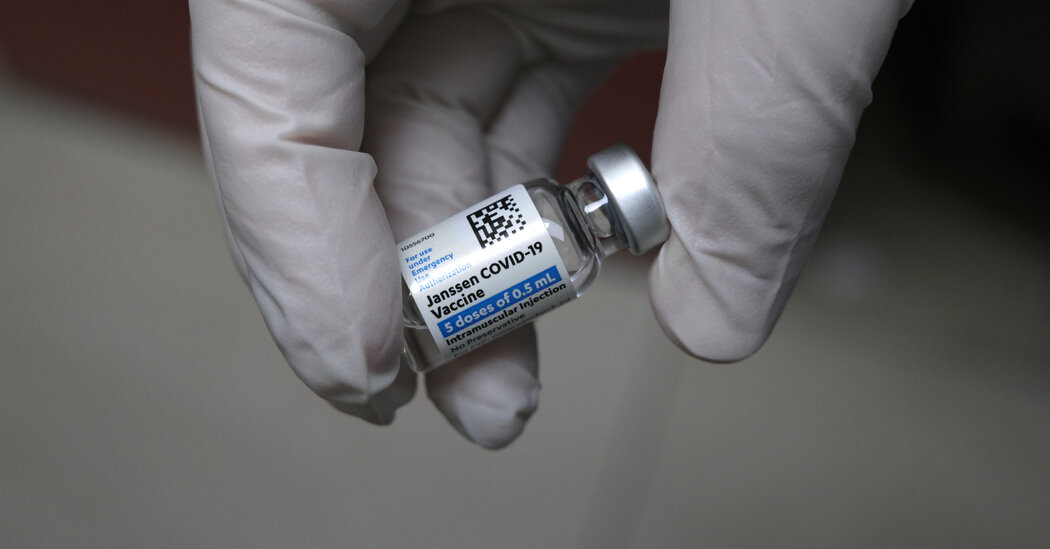
Universal flu vaccine candidate

Scientists have leveraged on a novel vaccine platform to deliver M2e to immune cells. This allowed them to prove that a single shot immunization containing M2e was able to trigger long-lasting immune responses that could protect effectively against multiple strains of the flu.
Influenza, commonly referred to as “flu,” is a major global public health concern and a huge economic burden to societies. Seasonal influenza epidemics afflict between 13 to 100 million individuals annually, including three to five million cases of severe illness and 300,000 to 600,000 deaths worldwide. This represents a top global public health concern and an extraordinary economic burden to all societies. Pandemics are less frequent, but are generally more severe and pose a greater threat. Over the past century, there have been at least four devastating pandemics caused by the Influenza A virus which took the lives of hundreds of millions of individuals.
Although vaccination arguably represents the most effective way to prevent influenza, current vaccination strategies suffer from certain limitations, chief of which require current influenza vaccines to be updated annually to match circulating strains. This results in low vaccination take-up rates and poor coverage due to inaccurate prediction of circulating strains. Broadly protective, “universal” flu vaccines that do not need to be updated annually have therefore been pursued.
The highly conserved M2e peptide is a leading universal flu candidate; this peptide shares a conserved sequence with nearly all known human Influenza A strains. However, its limited ability to trigger a strong and long-lasting immune response has represented a major roadblock in its clinical development.
Researchers from the Yong Loo Lin School of Medicine at the National University of Singapore and Monash University in Melbourne have published a paper in the latest issue of Proceedings of the National Academy of Sciences of the United States of America where they successfully leveraged on a novel vaccine platform to deliver M2e to immune cells. This allowed them to prove that a single shot immunisation containing M2e was able to trigger long-lasting immune responses that could protect effectively against multiple strains of the flu.
The team was also able to demonstrate that this vaccination approach significantly enhanced protective immune responses in the context of pre-existing flu immunity. This scenario is particularly relevant in adult and elderly populations, where individuals have been exposed to flu viruses multiple times in the past and have low levels of M2e-specific antibodies in their blood circulation.
This vaccine approach has the potential to minimise the amount of M2e vaccine antigen (substance that triggers the body’s immune response against that itself) and the number of injections required for effective and long-lasting protection. It also removes the need for strong adjuvants (a substance which enhances the body’s immune response to an antigen), reducing potential side-effects, particularly in more vulnerable populations.
Beyond the flu, this vaccine platform could be employed to tackle a multitude of diseases, including infectious diseases such as COVID-19. The current COVID-19 pandemic has highlighted the importance of developing versatile, powerful platforms for the rapid deployment of vaccines against any highly virulent diseases. This new finding could lend itself to further development of vaccines for this, or any future, novel diseases. The team is currently working on a COVID-19 vaccine candidate using the same strategy.
Story Source:
Materials provided by National University of Singapore, Yong Loo Lin School of Medicine. Note: Content may be edited for style and length.

Read more →