Covid: Can I catch Omicron twice?

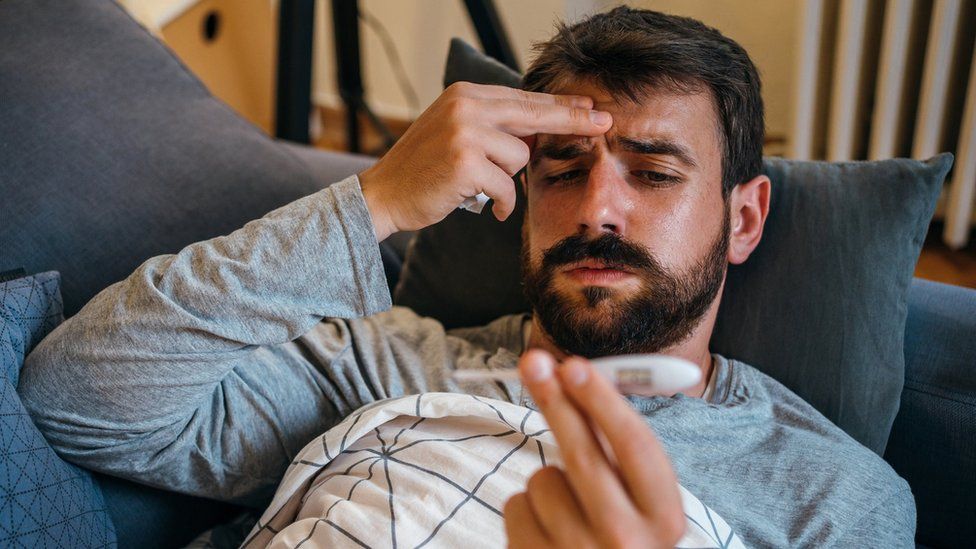
SharecloseShare pageCopy linkAbout sharingImage source, Getty ImagesIn the early days of the pandemic, it was extremely rare to hear of people catching Covid twice. That’s not the case anymore, especially since the Omicron variant emerged in late November 2021. Why are more people catching Covid again? Part of it is Omicron itself – a variant that’s better at sneaking past defences built on old infections. Part of it is a numbers game. So many of us have already been infected at some point, that a rising proportion of new infections are a second bout. But getting Covid twice in short space of time is still pretty unlikely, even with the latest version of Omicron which is widespread in the UK. And for most people a second infection is less likely to make them very ill. Covid symptoms: Is a runny nose a cold or Covid?How to look after yourself if you get CovidHow likely are you to catch Covid twice? Eventually, pretty likely – immunity fades and coronaviruses evolve. Most people can expect to catch the other coronaviruses, such as those which cause common cold symptoms, many times in their life. Image source, Getty ImagesBut early in the pandemic, that didn’t seem to be the case with Covid. Fewer than 1% of all cases recorded in the UK before November 2021 were labelled as re-infections. But then Omicron took over. This looks very different to the versions of coronavirus that we saw before. Its differences give it a better chance of sneaking past the body’s early defences, which were based on exposure to previous Covid infections. And so the rates of re-infection have been about 10 times higher this year compared with rates seen earlier in the pandemic. How many people have been infected more than once with Covid?How many cases are there in your area?How is the new version of Omicron different?This new “Spring” Omicron – known as BA.2 – has driven UK infections back up to record levels. The Office for National Statistics said that around one in 16 people across the UK had Covid in the week ending 19 March. It is similar to – but even more infectious than – the version that came before, “Christmas” Omicron (BA.1).If you’ve had Covid in the past few months, it’s likely to have been a version of Omicron, which in turn should give you good protection against a second bout of it. The data we have so far suggest that a second Omicron infection is “rare, but can occur”. More reinfections have been seen among younger people and those who haven’t been vaccinated.Laboratory studies suggest that a combination of an Omicron infection and vaccination could leave your body even better prepared to fight off a new infection than one infection alone. About 4.5 million people have had a Covid booster dose since the start of the year, with another two million getting their second dose. And tens of millions of us have protection from a recent infection. About one in three of us caught Covid during the first Omicron wave.But even if there’s only a small chance of any one person catching Omicron a second time, you’re quite likely to hear about it happening. It’s a small chance multiplied by the tens of millions of people who have recently had Covid. Will it make me sicker?So far, it looks like a case of BA.2 is no more likely to put you in hospital than a case of BA.1 was. And even if you do test positive again, that “is not the same as being sick with Covid-19,” according to immunologist Professor Eleanor Riley. “It means there is virus in your nose and throat.” The protection provided by vaccination or having had a previous infection is more useful at preventing the virus from getting into your body and doing serious damage, than it is at keeping the virus out of your nose and throat. Professor Riley thinks if you test positive again but feel well, “your main concern should be whether you might pass it on to someone who is particularly vulnerable”. An infection can still land some people in hospital, particularly those with weakened immune systems or underlying health conditions.But despite the record numbers of Covid infections, the current wave is putting even fewer people in hospital than we saw in January – precisely because so many of us now have a combination of protection from vaccination and previous infections. During January’s peak, about 55% of people in Covid beds in English hospitals were being treated mainly for their Covid. The most recent figures, for 22 March, say that figure is down to about 45%. And the total numbers of people in hospital with Covid are less than half of what we saw in January 2021. The government hopes the spring booster vaccine rollout will help top up immunity for the most vulnerable, and make it even harder for Omicron to cause serious illness, whether it strikes once or twice. More on this storyRos Atkins on… the UK’s rising Covid infections

Read more →

Engineering researchers develop porous nanoparticles for regenerative medicine

Stem cells can develop into many different types of cells in the body. For instance, when a person is injured, stem cells come to the site of the injury and aid in healing damaged tissues. New nanotechnology developed by a team of researchers from Texas A&M University could leverage the body’s regenerative potential by directing stem cells to form bone tissue.
Akhilesh K. Gaharwar, associate professor and Presidential Impact Fellow in the Department of Biomedical Engineering and a fellow of the American Institute for Medical and Biological Engineering, leads the team. The researchers have developed water-stable, 2D covalent organic framework (COF) nanoparticles that can direct the differentiation of human mesenchymal stem cells into bone cells.
Significant research attention has been given to 2D COFs — porous organic polymers — due to their crystallinity, ordered and tunable porous structure, and high specific surface area. However, the difficulty of processing COFs into nanosized materials — along with their poor stability — has limited their application in regenerative medicine and drug delivery. There is a need for new approaches that provide these COFs with sufficient physiological stability while maintaining their biocompatibility.
Gaharwar’s team has enhanced the hydrolytic (water) stability of COFs by integrating them with amphiphilic polymers, which are macromolecules that contain both hydrophobic and hydrophilic components. This approach, which has not been reported previously, gives water dispersibility to COFs, enabling biomedical application of these nanoparticles.
“To the best of our knowledge, this is the first report demonstrating the ability of COFs to direct stem cells toward bone tissue,” Gaharwar said. “This new technology has the potential to impact the treatment of bone regeneration.”
The researchers found that 2D COFs do not affect a cell’s viability and proliferation, even at higher concentrations. They observed that these 2D COFs exhibit bioactivity and direct stem cells towards bone cells. The preliminary study indicated that the shape and size of these nanoparticles can impart this bioactivity, and additional in-depth studies need to be carried out for mechanistic insights.
These nanoparticles are highly porous, and Gaharwar’s team has leveraged this unique characteristic for drug delivery. They were able to load an osteo-inducing drug called dexamethasone into the porous structure of the COF to further enhance bone formation.
“These nanoparticles could prolong delivery of drugs to human mesenchymal stem cells, which are commonly used in bone regeneration,” said Sukanya Bhunia, senior author of the study and postdoc associate in the biomedical engineering department. “The sustained delivery of the drug resulted in enhanced stem cell differentiation toward bone lineage, and this technique can be used for bone regeneration.”
Gaharwar noted that, having provided a proof-of-concept, the team’s next step in its research will be to evaluate this nanotechnology in a diseased model.
These findings are important for the future design of biomaterials that can give directions for tissue regeneration and drug delivery applications.
The results were published in Advanced Healthcare Materials journal. Other research contributors are Manish Jaiswal, Kanwar Abhay Singh and Kaivalya Deo from the biomedical engineering department at Texas A&M. The research was supported by the National Institute of Biomedical Imaging and Bioengineering of the National Institutes of Health.
Story Source:
Materials provided by Texas A&M University. Note: Content may be edited for style and length.

Read more →

Living donation opens new doors for colorectal cancer patients in need of liver transplants

A study published in the Journal of the American Medical Association Surgery is the first in North America to demonstrate that living-donor liver transplant is a viable option for patients who have systemically controlled colorectal cancer and liver tumors that cannot be surgically removed.
“This study proves that transplant is an effective treatment to improve quality of life and survival for patients with colorectal cancer that metastasized to the liver,” said senior study author Dr. Gonzalo Sapisochin, a transplant surgeon at the Ajmera Transplant Centre and the Sprott Department of Surgery at University Health Network (UHN).
“As the first successful North American experience, it represents an important step towards moving this protocol from the research arena to standard of care,” adds Dr. Sapisochin, who is also a clinician investigator at the Toronto General Hospital Research Institute and an Associate Professor in the Department of Surgery at University of Toronto.
The study, which was conducted at UHN, the University of Rochester Medical Center (URMC), and the Cleveland Clinic, focused on colorectal cancer in part because of its tendency to spread to the liver. Nearly half of all patients with colorectal cancer develop liver metastases within a few years of diagnosis and 70 percent of liver tumors in these patients cannot be removed without removing the entire liver.
Unfortunately, deceased-donor liver transplant is not a viable option for most of these patients because, despite their tumors, their liver function is fairly normal, which lands them toward the bottom of the national organ transplant waiting list. In North America, one in six patients dies each year while waiting for an organ on this list.
Thanks to recent advances in cancer treatments, many of these patients are able to get their cancer under systemic control, which means their liver tumors are the only things standing between them and a “cancer free” label. It also increases the odds that these patients — and their new livers — will remain cancer free, which is crucial when balancing the benefit to the patient with the risk to a living donor.

Read more →

Hands, feet, and fins: The connection that explains acral melanoma

To understand cancer in humans, researchers at the Sloan Kettering Institute (SKI) are turning to our distant relatives from 425 million years ago: fish.
A lot has evolved since then: Fish use their fins to swim, whereas we use our hands to play Wordle.
But there remains a deep similarity, explains Richard White, a physician-scientist in the Cancer Biology and Genetics Program at SKI. “The genes that determine how humans develop fingers are similar to the ones that determine how fish get fins,” Dr. White says. “This gene program has been deeply conserved throughout evolution.”
Dr. White and his team are using this evolutionary relationship to solve a long-standing mystery about human melanoma: Why do some cases of the deadly skin cancer form only on the hands or feet — and nowhere else?
Called acral melanoma, this type of skin cancer can be particularly aggressive. It killed reggae singer Bob Marley.
Until now, scientists have not fully understood what distinguishes acral melanoma from the more common cutaneous variety, which typically strikes the face, trunk, or back.

Read more →

Study shows that RNA can be targeted by small molecule drugs, creating new possibilities for disease treatment

RNA (ribonucleic acid) plays many roles in human health, and now a study in the journal Nature offers powerful evidence that RNA could also be a viable target for drug development. This work, led by researchers at Massachusetts General Hospital (MGH), suggests that a new class of biological factors numbering in the thousands can be targeted and thereby heralds a new era in drug development.
Nearly all drugs currently available target one of approximately 700 disease-related proteins among the roughly 20,000 human proteins identified by the Human Genome Project. However, in recent years there has been growing interest in expanding the list of “druggable” targets to include RNA. In cells, DNA (deoxyribonucleic acid) carries the genetic code for forming proteins. A segment of DNA is copied, or transcribed, into a “coding” RNA, which is in turn translated into protein. However, the vast majority of RNA in the human genome — 98 percent — is “noncoding.”
“These noncoding RNAs play very important roles in the genome, and we now understand that mutations in this noncoding space can result in disease,” says the senior author of the Nature paper, Jeannie Lee, MD, PhD, of the Department of Molecular Biology at MGH. “And there may be far more of these RNA genes than there are protein-coding genes. If we could target these RNAs, we would hugely increase the universe in which we can find drugs to treat patients.”
However, the pharmaceutical industry has historically been hesitant to pursue RNA as a drug target. Proteins tend to have stable shapes, or conformations, which make them optimal targets: Drugs bind to proteins like a key in a lock. By contrast, explains Lee, RNA tends to be highly flexible, or “floppy,” and capable of assuming multiple conformations. “If a lock is constantly changing shape, your key is not going to work,” says Lee. Noncoding RNA’s unstable nature has made companies reluctant to invest in trying to develop medications that target it. However, it’s known that some regions on RNA retain stable conformations, despite all of that shape-shifting, but finding such regions has been a challenge.
Lee directs a molecular biology lab at MGH, where she and her team study RNA and its role in a biological process called X-chromosome inactivation (XCI), which deactivates one copy of the X chromosome in female mammals and is necessary for normal development. In a study led by postdoctoral fellow Rodrigo Aguilar, PhD, Lee’s group collaborated with colleagues at Merck Research Laboratories to find out if RNA could be a viable drug target. The focus of the study was a form of noncoding RNA called Xist, which silences genes on the X chromosome. Finding a way to interfere with this process and reactivate a dormant X chromosome could help guide development of treatments for genetic disorders caused by mutations on the X chromosome (known as X-linked disorders), such as Rett syndrome and Fragile X syndrome.
Together with Merck scientists Kerrie Spencer and Elliott Nickbarg, the MGH team screened Xist against a library of 50,000 small molecule compounds and found several that bind to a region called Repeat A (RepA) on Xist. One compound, which Lee’s team named X1, had particularly interesting qualities: It prevented several key proteins, PRC2 and SPEN, from binding to RepA, which is necessary for Xist to silence the X chromosome. “As a result, X inactivation cannot take place,” says Lee. To understand why, the team collaborated with structural biologists led by Trushar Patel of the University of Lethbridge in Canada. Normally, Xist’s RepA can assume 16 different conformations, but X1 caused it to adopt a more uniform shape. This structural change prevented RepA from binding with PRC2 and SPEN.
The approach employed in this study could be used to identify other RNA-targeting drugs. “This really opens up a large universe for new drug development,” says Lee. “Now we don’t just have 700 proteins to target using small molecules. In the future, we may have tens and possibly hundreds of thousands of RNAs to target to cure disease.”
Lee is also a professor of Genetics at Harvard Medical School. Aguilar is now an assistant professor and researcher at Andres Bello University in Santiago, Chile.
Funding for this work came from the Howard Hughes Medical Institute, the Pew Charitable Trust Latin American Fellows Program, and the MGH Fund for Medical Discovery.

Read more →

How Your Sense of Direction Is Shaped by Where You Grew Up

Childhood environments shape people’s navigational skills, researchers reported. The findings one day may lead to better tests for early dementia.As a child in Chicago, Stephanie de Silva found that the city helped her get where she was going. Streets had directional names like “West” or “North,” and they often met at neat right angles. If all else failed, Lake Michigan could situate her.But when Ms. de Silva, 23, moved to London, where she now studies cognitive science, she suddenly could not navigate to a restaurant two blocks from home without a smartphone map. The streets were often crooked. Sometimes they seemed to lead nowhere.“I don’t think the cardinal directions exist here,” she said. “I’ve lived here for six months now, and I don’t know which direction I’m facing.”Scientists in Ms. de Silva’s lab at University College London, along with colleagues in Britain and France, have now arrived at an explanation: People who grow up in predictable, gridlike cities like Chicago or New York seem to struggle to navigate as easily as those who come from more rural areas or more intricate cities.Those findings, published in Nature on Wednesday, suggest that people’s childhood surroundings influence not only their health and well-being but also their ability to get around later in life. Much like language, navigation is a skill that appears to be most malleable when people’s brains are developing, the researchers concluded.The authors hope the findings eventually lead to navigation-based tests to help diagnose Alzheimer’s disease. Getting lost can sometimes occur earlier in the course of the illness than memory problems, they said.Researchers have developed virtual navigation tests for cognitive decline, but they can interpret the results only if they know what other factors influence people’s way-finding abilities.Among the forces shaping people’s navigation skills, the study suggested, was what kind of places they experienced as a child.“The environment matters,” said Hugo Spiers, a professor of cognitive neuroscience at University College London and one of the study’s lead authors. “The environment we’re exposed to has a knock-on effect, into the 70s, on cognition.”People in countries whose biggest cities were complex patchworks, like Barcelona, Spain, may have sharpened their navigational skills by dealing with chaotic street layouts, scientists suggested. Emilio Morenatti/Associated PressIt took a series of unlikely events — involving a cellphone company, a controversial YouTuber and a custom-made video game — to generate the large data set behind the study.In 2015, Michael Hornberger, who studies dementia at University of East Anglia in England, heard about a company that wanted to invest in dementia-related research.Having just attended a workshop about gaming in science, he proposed a video game that could help him figure out how people of different ages, genders and locations performed on navigation tasks. Such a game, he thought, could create benchmarks against which to assess patients who might be in the early stages of Alzheimer’s disease.To his surprise, the company — Deutsche Telekom, a major stakeholder in T-Mobile — funded his idea. Known as “Sea Hero Quest,” the smartphone game involved steering a boat to find sea creatures. To recruit players, the company launched an advertising campaign that included a video from PewDiePie, YouTube’s biggest star at the time, who was later penalized by the platform for using antisemitic language.The scientists had hoped that the game would draw 100,000 people in Western Europe. The participants would be testing their navigation skills while also providing basic demographic details, like whether they had grown up in or outside of cities.Instead, over 4.3 million people joined in, generating a global database of clues about people’s ability to get around. “We underestimated the gaming world,” Dr. Hornberger said. “It went beyond our wildest dreams.”For all its simplicity, the game has been shown to predict people’s ability to get around real places, including London and Paris. In recent years, the research team has used the resulting data to show that age gradually erodes people’s navigation skills and that gender inequality is a predictor of whether men will perform slightly better than women. The latest study addressed what its authors described as a more vexing question: Do cities, however grid-like, have the effect of honing people’s navigational skills by offering them a plethora of options for moving around? Or do people from more rural areas, where distances between places are long and paths are winding, develop superior navigation abilities?Ms. de Silva’s childhood in Chicago, a gridlike city, left her struggling to navigate her new home, London.Lyndon French for The New York TimesTo find out, the researchers studied game data from roughly 400,000 players from 38 countries. The effect was clear: People who reported growing up outside cities showed better navigation skills than those from within cities, even when the scientists adjusted for age, gender and education levels.The only situation in which people accustomed to more predictably arranged cities did better was on simpler levels of the video game.Players of varying nationalities performed differently. Urbanites from some places, like Spain, came very close to matching the navigation skills of their rural counterparts. In other nations, like the United States, people raised in cities were at a huge disadvantage.One explanation, the researchers suggested, was that in countries whose biggest cities were complex patchworks, like Spain, chaotic street layouts had sharpened navigation skills. By contrast, nations known for more predictable urban designs, like the United States, put people from outside cities at a bigger advantage.“If you grew up in a city like Chicago or Buenos Aires or Montreal — cities that are very grid-like — you don’t train as much your navigation skills as if you grew up in a more complex city, like London or Paris, where the streets are much more convoluted,” said Antoine Coutrot, a scientist at the French National Center for Scientific Research and another lead author of the paper.To address concerns that people from outside cities were only succeeding because the video game was set in nature, the study’s authors wrote that they replicated the findings in a smaller group of participants recruited to play a different game: “City Hero Quest,” with the same goals but a car in place of a boat.For that experiment, the researchers asked more detailed background questions, including what environment the participants currently lived in. As a result, they were able to learn that people’s present-day surroundings did not significantly affect their performance on the video games.“It really tells you that when your brain is developing, this is the key period,” Dr. Coutrot said. “It’s a bit like when you want to learn a new language.”The study speculated that more complex environments might help new neurons form in the hippocampus, a brain structure important in memory. The authors, though, emphasized that people still were able to develop navigation skills later in life.Some of the authors also noted that street layout was not the only factor making a city harder or easier to navigate. Visible landmarks can be important but are harder to quantify for research purposes than a street network.London’s finanical district and Canary Wharf, a confusing jumble.Hannah Mckay/ReutersThe sea creature game also steered clear of specific questions about people’s locations, professions or how they got around, part of an effort to assuage privacy concerns and keep the science from intruding on the gaming.That hid potentially relevant elements of someone’s upbringing from the research team, even as some commentators remained skeptical of the project on privacy grounds. Among the unknowns was how the Global Positioning System had changed people’s navigational experiences, though Dr. Spiers noted that younger participants produced results similar to those of older people.Outside scientists said that the range and number of participants were far greater than usual.“Lots of different nations are represented, and lots of different types of geographical landscapes are represented,” said Amber Watts, an associate professor of psychology at the University of Kansas who has studied neighborhood layout and cognition but was not involved in the study.Whether the cognitive benefits of more unpredictable city designs were worth the cost of making places more complicated to navigate — including for people already struggling with impairments — was less clear.“Does this mean we should design environments that should be more cognitively challenging?” Dr. Watts said. “If I went to an urban planner and said make it as confusing as possible to get around a city, that’s probably not going to sell well.”Paolo Santi, a research scientist at the Massachusetts Institute of Technology’s Senseable City Lab who was not part of the “Sea Hero Quest” team, said that the results called to mind how he would give directions to tourists in the Italian cities where he grew up.If directions in Manhattan were sometimes as simple as down and over a few blocks, directions in Italian cities had to be more forgiving of grid-minded tourists.“Rather than telling you something you’ll forget, I say to just remember the first part, and when you get there, there are plenty of people to ask again,” he said.Of a place like New York, he said, “On the one hand, you can say the city’s designed well because it’s simplified for the main task, which is getting around. On the other hand, if we don’t challenge ourselves, in a sense we do not fully exploit the potential of our brains.”

Read more →

Anti-cancer dream cream shrinks oral tumors

Modern medicine offers “peel and stick” solutions like nicotine or contraceptive patches that you can put right on your skin without needing to visit a doctor for an injection or procedure. Now, researchers have found that applying a topical ointment containing anti-tumor factor can increase the effectiveness of cancer treatment.
In a study that will be published soon in Molecular Therapy Oncolytics, researchers from Tokyo Medical and Dental University (TMDU) reveal that treating oral cancer cells with miR-634, a microRNA that targets pro-tumor factors, can increase the effectiveness of treatment with cisplatin.
Over 90% of cases of oral cancer are a type of cancer called oral squamous cell carcinoma (OSCC). While OSCC can be treated with chemotherapy and radiation, many patients develop resistance to cisplatin, the main drug used to treat it.
“We recently found that miR-634 counteracts some cell-protective processes, such as anti-apoptotic signaling and antioxidant scavenging, that are activated in cancer cells that are resistant to cisplatin,” says Phuong Xuan Tran, lead author on the study. “This suggests that increasing the amount of this small molecule in cells could increase their sensitivity to this drug.”
To test whether miR-634 can help increase tumor sensitivity to cisplatin, the researchers treated two different OSCC cell lines with both the miRNA and the drug and looked at how many of the cells survived.
“The results were very clear,” states Johji Inazawa, senior author of the study. “Treatment with miR-634 effectively increased cisplatin-induced cytotoxicity and overcame cisplatin resistance in OSCC cells, resulting in increased tumor cell killing.”
To confirm these results, the researchers then tested the treatment combination in mice with experimental tumors. When the mice were injected with cisplatin and an miR-634 ointment was applied to the tumors, the tumors shrank rapidly.
“Our findings suggest that miR-634-mediated repression of pro-tumor factors can effectively increase the sensitivity of OSCC to existing chemotherapeutic options such as cisplatin,” says Tran.
Taken together, the results from this study suggest that miR-634 ointment could be useful for enhancing the effects of chemotherapy in patients with advanced OSCC. Given that the synergistic effects of miR-634 and cisplatin were also seen in esophageal squamous cell carcinoma, bladder cancer, and ovarian cancer cell lines, this treatment combination may also be effective across a variety of cancer types.
Story Source:
Materials provided by Tokyo Medical and Dental University. Note: Content may be edited for style and length.

Read more →

New study of how bacteria swim could help prevent the spread of disease and improve medical treatments

For years, science fiction authors have written about the idea of using microswimmers that could perform surgeries or deliver medicines to humans. Now, a team led by University of Minnesota Twin Cities researchers discovered how bacteria swim through different complex fluids and environments, such as the human body.
Their findings could help scientists develop new treatments for bacteria-causing diseases and design bacteria-based systems for delivering drugs into the human body.
The study is published in Nature, the world’s leading peer-reviewed, multidisciplinary science journal.
The University of Minnesota has a long history with swimming in fluids other than water. In 2004 Ed Cussler, then a professor in the Department of Chemical Engineering and Materials Science, compared how fast a competitive university athlete swam in water versus a thick, syrupy guar gum solution. It led to an unexpected discovery (and an IgNobel prize) that humans can swim just as fast in guar gum solutions as in water.
Almost two decades later, a multidisciplinary team at the University of Minnesota has revisited the problem, except the swimmers are now microscopic bacteria instead of university athletes. They found that bacteria swim even faster in thick solutions than in water.
“Bacterial swimming,” as it’s commonly known in the research community, has been studied intensively by scientists since the 1960s. Previous studies have found that bacteria swim faster in thick polymer solutions, namely fluids containing polymers, which are substances made up of long chain-like molecules. Researchers have theorized that this is because the bacteria can swim through the network formed by the chain molecules and can stretch the chains to assist their propulsion.

Read more →

Telehealth: Bridging or perpeatuating health inequities?

Health inequities among Black Indigenous People of Color, immigrant and low-income communities is driven largely by inadequate healthcare access. Telehealth offers an opportunity to increase healthcare access and reduce health inequities. However, according to researchers from Boston University Questrom School of Business, Boston University School of Medicine (BUSM), and Boston Medical Center (BMC), telehealth has unwittingly become a “double-edged sword,” whereby the technology with potential to reduce health inequities also holds the key to exacerbate structural inequities.
“Using qualitative data and our own experiences as front line primary care physicians we discovered that while digital access is necessary, it is not sufficient in redressing disparate engagement with telehealth,” says corresponding author Rebecca G. Mishuris, MD, MPH, MS, assistant professor of medicine at BUSM, and primary care physician and Chief Medical Information Officer of the BMC Health System.
According to the researchers, a key component of these structural inequities is the digital divide, driven partly by “digital redlining.” Digital redlining is the modern day manifestation of redlining that perpetuates health inequities and structural racism by maintaining barriers to technological access, further perpetuating lack of healthcare access.
Based on their experience as well as data about their patients’ access to healthcare, virtual and otherwise, Mishuris and her colleagues theorize that two additional barriers to equitable telehealth exist: digital fluency, the ability to use digital tools efficiently and effectively; and the capacity for health advocacy, a patients’ ability to advocate for their own health needs.
“Without addressing these critical, less often discussed elements of telehealth implementation, it is our belief that telehealth will fall short of its promise and rather than mitigate health inequities, will perpetuate health inequities in the very communities that stand to benefit most from its implementation,” says co-author Katherine Gergen Barnett, MD, clinical associate professor of family medicine at BUSM and Vice Chair of Primary Care Innovation and Transformation at BMC.
In an effort to overcome the barriers of device and broadband access, digital fluency and health advocacy to mitigate current inequities in digital health engagement, the researchers propose a three-pronged approach of creating federal and state policies to democratize access to telehealth. “By establishing platform standards for accessing telehealth, and supporting societal and health system investments to increase health literacy, advocacy and technology fluency, we can begin to address the disparities in telehealth engagement and healthcare access,” says Mishuris.
Collaborators include Jayakanth Srinivasan, PhD, research associate professor at Boston University’s Questrom School of Business; Charles T. Williams, MD, BMC/BUSM family medicine; Alexa Bragg, BS, BMC/BUSM family medicine; Afi M. Semenya, MD, MPH, BMC/BUSM family medicine; Marielle Baldwin, MD, MPH, BMC/BUSM family medicine; Jessica Howard, MA, MPH, BMC/BUSM family medicine and Stephen A. Wilson, MD, MPH, BMC/BUSM family medicine.
These findings appear as a Perspective in the Journal of General Internal Medicine.
Funding was provided by the Boston University Center for Antiracist Research.

Read more →

Genetically determined levels of inflammation linked to neuropsychiatric illness

A potential link between inflammation and the structure of specific regions of the brain has been identified by researchers at the University of Birmingham.
The study, published today (30 March 2022) in JAMA Psychiatry, may be particularly relevant for neurodevelopmental psychiatric disorders including autism spectrum and schizophrenia.
Researchers say the findings could open up a completely new target for the pharmacological treatment of these disorders, which has not significantly changed since the identification of antipsychotic medications in the mid-late 20th century.
The research was carried out by a team based in the University’s Institute for Mental Health and Institute of Cancer and Genomic Sciences, with collaborators from the University of Cambridge, Manchester and Bristol. It showed that genes associated with inflammation, particularly interleukin (IL) 6, are linked to a reduction in grey matter volume in certain areas of the brain known to be implicated in neuropsychiatric disorders.
Using records from the UK Biobank, a large-scale biomedical database, the team was able to compare genetic variants which affect levels of IL-6, and other inflammatory genes in more than 20,000 patients with changes in grey matter volume in specific areas of the brain.
They were able to show strong links between IL-6 and brain structure particularly in the temporal and frontal regions. Further analysis using the Allen Human Brain Atlas, showed that genes overexpressed in these areas are associated with conditions such as epilepsy, cognitive disfunction, and schizophrenia.
Professor Rachel Upthegrove, in the University’s Institute for Mental Health, is senior author on the paper. She said: “This study shows that the IL-6 gene, which we know to be linked to systemic inflammation, also affects brain structure in areas associated with these neuropsychiatric disorders. Understanding these links offers an exciting opportunity to explore new treatments which target IL-6. This could be the first new target for severe mental illnesses including schizophrenia identified in more than 60 years.”
Dr John Williams, of the Institute for Cancer and Genomic Sciences at the University, a first author on the paper, said: “Current treatments for these illnesses act on dopamine, a chemical messenger in the brain associated with mood and attention. These drugs can have side effects, however, and they are not effective in all patients.
“There are drugs already on the market which target inflammation as well as the opportunity to screen potential new compounds. Finding a new avenue for exploring the links between inflammation, brain structure and neuropsychiatric disorders is really exciting.”
The work is part of the PIMS (Psychosis Immune Mechanism Stratified Medicine Study) programme, led by the University of Birmingham and set up to investigate the links between inflammation and psychosis. In the next phase of the research, the group will carry out experimental studies to knock out IL-6, as well as replicating the Biobank research in more diverse patient cohorts.
Story Source:
Materials provided by University of Birmingham. Note: Content may be edited for style and length.

Read more →