Researchers outline bias in epidemic research — and offer new simulation tool to guide future work

A team of researchers unpacks a series of biases in epidemic research, ranging from clinical trials to data collection, and offers a game-theory approach to address them, in a new analysis. The work sheds new light on the pitfalls associated with technology development and deployment in combating global crises like COVID-19, with a look toward future pandemic scenarios.
“Even today, empirical methods used by epidemic researchers suffer from defects in design and execution,” explains Bud Mishra, a professor at New York University’s Courant Institute of Mathematical Sciences and the senior author of the paper, which appears in the journal Technology & Innovation. “In our work, we illuminate common, but remarkably oft-overlooked, pitfalls that plague research methodologies — and introduce a simulation tool that we think can improve methodological decision-making.”
Even in an era when vaccines can be successfully developed in a matter of months, combatting afflictions in ways not imaginable in previous centuries, scientists may still be unwittingly hindered by flaws in their methods.
In the paper, Mishra and his co-authors, Inavamsi Enaganti and Nivedita Ganesh, NYU graduate students in computer science, explore some standard paradoxes, fallacies, and biases in the context of hypothesizing and show how they are relevant to work aimed at addressing epidemics. These include the Grue Paradox, Simpson’s Paradox, and confirmation bias, among others:
The Grue Paradox
The authors note that research has often been hampered by errors linked to inductive reasoning, falling under what is known as the Grue Paradox. For example, if all emeralds observed during a given period are green, then all emeralds must be green. However, if we define “grue” as the property of being green up to a certain period in time and then blue thereafter, inductive evidence supports the conclusion that all emeralds are “grue” and supports the conclusion that all emeralds are green, preventing one from reaching a definitive conclusion on the color of emeralds.

Read more →

Babies exposed to cannabis in the womb may be at risk for obesity, high blood sugar

Cannabis use among pregnant women is on the rise and may be associated with negative health outcomes in children, according to a new study published in the Endocrine Society’s Journal of Clinical Endocrinology and Metabolism.
A 2016 study in Colorado revealed that up to 22% of pregnant women had detectable levels of cannabinoids in their body. Women who use cannabis, both tetrahydrocannabinol (THC) and cannabidiol (CBD), during pregnancy could be putting their child at risk for low birth weight and behavioral problems. Exposure to cannabinoids may also increase the child’s future risk of obesity and high blood sugar.
Part of CBD’s popularity is that it is marketing as being “nonpsychoactive,” and that consumers can reap health benefits from the plant without the high. CBD is advertised as providing relief for anxiety, depression and post-traumatic stress disorder. It is also marketed to promote sleep.
“We found that cannabis use during pregnancy was linked to increased fat mass percentage and fasting glucose levels in 5-year-old children,” said Brianna Moore, Ph.D., of the Colorado School of Public Health in Aurora, Colo. “We would encourage women to refrain from using any cannabis while pregnant or breastfeeding to minimize adverse health effects in the offspring.”
The researchers studied urine samples from 103 pregnant women, 15% of whom had detectable levels of cannabinoids (such as THC and CBD) in their urine. These mothers’ 5-year-old children had higher fat mass and fasting glucose levels compared to children who were not exposed to cannabis during pregnancy.
“More studies are needed to understand how exposure to different cannabinoids during pregnancy may impact the offspring,” Moore said.
Other authors of this study include: Katherine Sauder and Dana Dabelea of the Colorado School of Public Health and the University of Colorado School of Medicine in Aurora, Colo.; Allison Shapiro of the University of Colorado Anschutz Medical Campus in Aurora Colo.; and Tessa Crume and Gregory Kinney of the Colorado School of Public Health in Aurora Colo.
The study received funding from the National Institutes of Health.
Story Source:
Materials provided by The Endocrine Society. Note: Content may be edited for style and length.

Read more →

Device directs sperm to ‘go against the flow’ to help infertility

The female genital tract can be a hostile environment for conception. Out of about 100 million sperm, only a few hundred make it to the fallopian tubes. Guided by a directional movement called rheotaxis, sperm cells swim against the cervical mucus flow to reach the egg for fertilization. This journey, however, is even more critical when considering infertility. Sperm motility — the ability to swim the right way — is key.
By taking advantage of this natural rheotaxis behavior of sperm, researchers from Florida Atlantic University’s College of Engineering and Computer Science have developed a microfluidic chip for sperm sorting that is fast, inexpensive, easy to operate and efficiently isolates healthy sperm directly from semen. Importantly, it effortlessly collects sorted sperm cells from the collecting chamber while minimizing contamination by deformed or dead sperm cells.
Assisted reproductive technologies such as in vitro fertilization (IVF), intrauterine insemination and intracytoplasmic sperm injection all require healthy sperm cells for a successful outcome. Current centrifugation methods for sperm sorting require multiple steps, multiple types of equipment and take about two hours to isolate sperm cells. These methods damage sperm during processing and induce significant DNA fragmentation and oxidative stress.
Results of the study, published in the journal Analyst of the Royal Society of Chemistry, showed that sperm cells isolated from the collecting chamber in this microfluidic chip exhibited significantly higher motility (almost 100 percent), a higher number of morphologically normal cells and substantially lower DNA fragmentation, which is a crucial parameter for the fertilization process. In addition, the developed chip provides more than enough cells required for a successful intracytoplasmic sperm injection due to the amount and quality of sperm cells isolated using the chip.
“Operating our chip is very easy. Once the semen is loaded into the sample inlet chamber, the competent sperm cells start moving against the fluid flow toward the collecting chamber from where they can easily be collected,” said Waseem Asghar, Ph.D., senior author, an associate professor in FAU’s Department of Electrical Engineering and Computer Science, and a member of the FAU Institute for Human Health and Disease Intervention (I-Health) and FAU Institute for Sensing and Embedded Network Systems Engineering (I-SENSE). “Furthermore, this chip offers a one-step, one-hour operational benefit, which an operator can use with minimal training.”
The study also validates that rheotaxis selects the healthy, motile, and higher velocity sperm cells for the fertilization process.

Read more →

For Decades, He Had Strange Episodes of Utter Exhaustion

What was causing these spells, and why were they now more frequent?The 51-year-old man sat at his desk preparing for his next online meeting when he suddenly became aware of a familiar stiffness and exhaustion. Had he slept badly? Or was this the beginning of one of his strange episodes? As the symptoms worsened, he had his answer. He knew that when he started to feel this way, the only recourse was to get into bed before he got any weaker. As he made his way slowly down the hall, his legs felt heavy, as if he were wearing ankle weights. Just lifting them was real work. He passed his wife’s home office without a word. She knew just from looking at him that he would probably have to spend the rest of the day in bed.For much of their 30-year marriage, he had these strange spells; he would suddenly feel exhausted and weak and have to lie down. He couldn’t work. He was a software engineer, and any mental exertion was too much for him. Once the fatigue fully set in — maybe after the first hour or so — he couldn’t walk, couldn’t stand, couldn’t even sit up. It was as if his body was totally out of gas, worse than how it felt when he ran a marathon. He would lie in a dark room, too weak to even hold up a book and too tired to think. But by the next morning, he would usually be fine, brimming with energy and enthusiasm, like normal. It was so strange.After more than 20 years, they both had come to expect these episodes. For most of that time, the spells were infrequent, maybe once a month. But recently they became more frequent. The monthly episodes became weekly, then a couple of times a week. They often came, as they did that morning, out of nowhere. Just before leaving his office, he sent an email to the woman he was to meet online. Sorry, he wrote, I’m not feeling well. Could we reschedule?Seeing a PsychiatristOver the years the man saw many doctors. They had their theories, but so far none panned out. A few were convinced that he had periodic paralysis, a disorder sometimes linked to thyroid disease, where patients become temporarily paralyzed by too much or too little potassium in the bloodstream. But his potassium was always normal, even during these episodes.He had EMGs, looking for problems in the way his nerves communicated with his muscles: normal. He had EEGs, looking for problems in his brain. Those scans were normal too; he wasn’t having seizures. Out of desperation, he went to the Mayo Clinic. Doctors there repeated all the tests and added a few more. They had no answers, though they did suggest that he exercise more. He did, and that did help. Indeed, he came to suspect that the reason these periodic exhaustions became more frequent was that once Covid hit, his gym closed down and so did his trainer.Time after time, he was asked if he was depressed. He didn’t feel depressed. But he started going to a psychiatrist just in case he was wrong. It didn’t take long for the psychiatrist, Dr. Sanjay Patel, to determine that the man was not at all depressed. Even after that diagnosis was ruled out, he continued to see Patel. It made him feel like a real New Yorker, he joked. At the very least, the doctor could listen as his patient tried to understand why he had these strange spells.If not exercising could affect the frequency of these spells, so could exercising too hard. After a really long run, there was a good chance he would end up in bed the next day. Because of that, he thought for a while that he might have chronic fatigue syndrome, which is also known as systemic exertion intolerance disease (S.E.I.D.). But he usually recovered within 24 hours, and that wasn’t true for those with S.E.I.D.At his rescheduled meeting, he apologized for the sudden change in plan. No problem, his colleague told him; she said that she had migraines that could come on suddenly and forced her to cancel meetings every now and then. The comment resonated with the patient. A few months earlier he saw a neurologist who said that these transient episodes of weakness sounded like migraines, but thought it unlikely because his exhaustion didn’t come with a headache. The man used to have migraine headaches — the pain in his head was throbbing and intense and was often accompanied by nausea and vomiting. These episodes of debilitating tiredness seemed nothing like those. Still, could these be related to migraines?Photo illustration by Ina JangOne Benefit of Online MeetingsAt their next online therapy session, he mentioned the comments about migraines to Patel. The psychiatrist was intrigued. Could you have a migraine without the headache? Patel typed “migraine without headache” into a search engine and clicked enter. Reference after reference appeared for what was referred to variously as silent migraines or acephalgic migraines (literally headaches without a head), usually describing a migraine that starts with preceding symptoms called an aura but then never becomes a headache.Four out of five migraineurs may have symptoms that herald the onset of the migraine before the headache itself. The first signs often arrive with a change in mood, food cravings, light sensitivity or fatigue. One in five can have additional symptoms that are more localized and last anywhere from five minutes to an hour. The most common are visual, often with shapes that appear before the eyes and enlarge — but aura can also manifest as ringing in the ears or difficulty speaking.Could the man’s day of exhaustion be the precursor for a migraine headache that never arrives? The more the duo read, the more convinced they were that this is what he had. Patel did a little more searching and referred the patient to a headache clinic in Boston.Part of a Bigger PictureThe patient was able to have his first video visit with a headache specialist two weeks later. He described his symptoms and the timeline. It starts off with a feeling of malaise, he said — as if he were coming down with something. Then after half an hour, stiffness arrives in his neck and shoulders, sometimes even his jaw. Another half-hour later, the weakness kicks in and he has trouble even sitting up. But he didn’t get headaches and hadn’t for decades.The specialist had been seeing migraine patients for more than 30 years and knew that migraines came in many shapes and sizes. What the patient described wasn’t an aura: It lasted far too long. It was as if he had a long episode of the preliminary symptoms but never quite got the headache. Moreover, he had a history of migraine headaches and, over time, a patient’s migraines can change so that they have many of the symptoms but not the headache. Indeed, experts in the field no longer call the disorder migraine headaches but rather migraine disease, because the headache is only a part of the bigger picture. And the way these debilitating symptoms came out of nowhere and then resolved completely was consistent with migraine disease.There are no tests for migraine — it is a diagnosis made based on the patient’s story. The story this patient was telling didn’t make the diagnosis certain, but it was possible. To test the diagnosis, the headache specialist suggested that they try treating the episodes with medications that can stop a migraine from progressing. A new medication, approved by the F.D.A. just over a year earlier, called ubrogepant or Ubrelvy, had been effective for many. The drug blocks a protein that promotes the inflammation in the brain that is thought to initiate the process that produces migraines. When taken at the very start of the symptoms, it can stop the episode in its tracks. The patient needed no persuading. Anything that might free him from the unpredictable tyranny of these spells was worth trying.The medication was life changing, the patient told the specialist at their next appointment. He took it when the stiffness was first starting to set in, and within a couple of hours, it was gone completely.For decades the presence of the typical headache was the defining quality of migraines. Experts like the one who saw this patient now recognize that migraines can change over time so that sometimes they aren’t even headaches anymore.Lisa Sanders, M.D., is a contributing writer for the magazine. Her latest book is “Diagnosis: Solving the Most Baffling Medical Mysteries.” If you have a solved case to share, write her at Lisa.Sandersmdnyt@gmail.com.

Read more →

President Biden Pressures Congress for Emergency Covid Funds

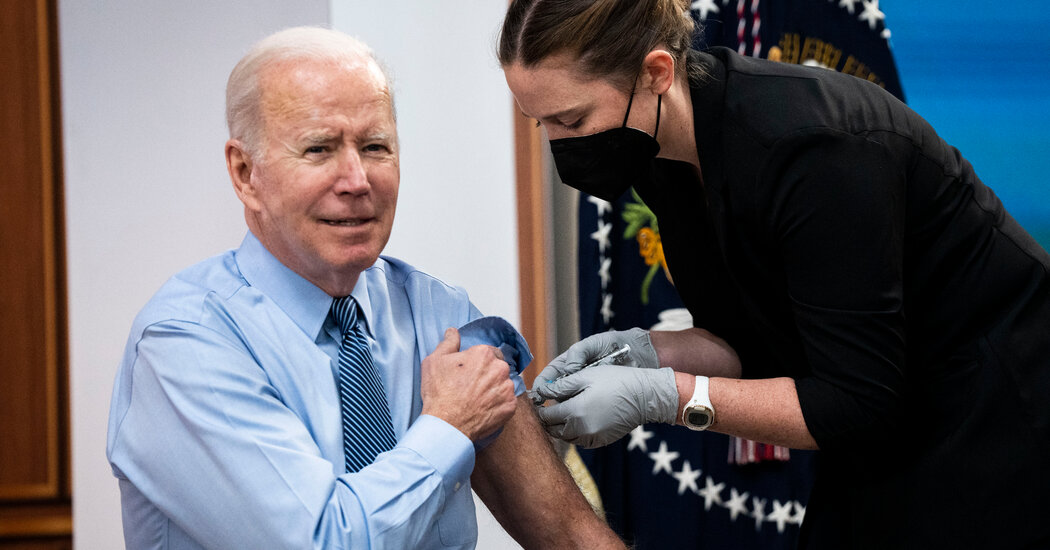
Billions of dollars in aid hang in the balance, just as the government is running low on money for additional booster doses and a highly contagious new subvariant looms.WASHINGTON — President Biden stepped up pressure on Congress to approve billions of dollars in emergency coronavirus relief aid, using a speech at the White House on Wednesday to warn that U.S. progress against Covid-19 would be at severe risk if Congress failed to act right away.“This isn’t partisan. It’s medicine,” Mr. Biden said, adding, “Americans are back to living their lives again; we can’t surrender that now. Congress, please act. You have to act immediately.”On Capitol Hill, senators of both parties said they hoped a deal could be struck before Congress leaves next week for a two-week April recess. Such a deal would likely be $15.6 billion, matching the size of the smaller package that Democrats abruptly removed from a catchall spending bill earlier this month when rank-and-file lawmakers and governors objected to clawing back state aid to help pay for the deal.It remains unclear how the package will be paid for — a Republican demand that has delayed passage.“It’s totally up to Democrats,” said Senator John Thune of South Dakota, the No. 2 Republican. “This can get done, but it’s in their court, and it just requires them to be willing to repurpose some existing funds, which they’re reluctant to do.”Mr. Biden’s speech on Wednesday was his first dedicated entirely to the pandemic since before his State of the Union address on March 1. It came just one day after federal regulators cleared additional boosters of the Pfizer and Moderna vaccines for Americans older than 50 and many immunocompromised people, four months after their first booster dose.At the end of his remarks, the president, 79, rolled up his sleeve to get his second Pfizer-BioNTech booster shot.Mr. Biden also used his remarks to spotlight a new one-stop-shopping coronavirus website, covid.gov, aimed at helping Americans navigate access to testing, treatment, vaccines and masks, and to assess the risk of Covid-19 in their neighborhoods. The site went live Wednesday morning.The website, and Mr. Biden’s speech, are part of a broader effort to ease the nation out of pandemic crisis mode and usher in what experts are calling the “next normal” — a phase in which Americans will learn to live with the risk of Covid-19 and to adjust behavior like wearing masks based on whether cases and hospitalizations are rising or falling.That strategy depends on the availability of vaccines and therapeutics, though, and the administration says it is out of money for both. The White House has been pleading with Republicans in Congress to approve the emergency aid to purchase new vaccines and therapeutics, and to reimburse doctors who care for uninsured Covid-19 patients.The federal government said recently that a fund established to reimburse doctors and hospitals was no longer accepting those claims for virus testing and treatment “due to lack of sufficient funds.”While new coronavirus case have been falling in the United States, a highly transmissible Omicron subvariant known as BA.2 has driven a surge in cases in Europe, and many experts expect that the United States may soon see the same. Should that occur, it will be the first major test of the country’s new strategy of living with the virus while limiting its impact.Around the country, state and local governments have relaxed restrictions like mask and vaccine mandates. White House and federal health officials have been making the case for weeks that Americans now have the tools — testing infrastructure, masks and other mitigation strategies, and drugs and vaccines — to live with the threat of the virus.In his State of the Union address, Mr. Biden announced a new “test-to-treat” initiative — a network of pharmacies and other sites where people can be tested for the coronavirus and then receive antiviral drugs if they test positive. More than 2,000 sites are participating, the White House said. The covid.gov website features a tool to help people find participating locations.Under a banner saying “Find Covid-19 guidance for your community,” the website asks users to enter the name of the county in which they live. It then identifies whether the risk of Covid-19 in that county is low, medium or high, depending on factors including the number of hospitalizations and available hospital beds.The site also links to other government websites, including vaccines.gov and covidtests.gov, that help users access vaccines and find nearby testing sites.At a House hearing on Wednesday, Dawn O’Connell, the assistant secretary for preparedness and response, said that over 900 million of the billion at-home rapid tests President Biden had promised to offer Americans for free had been secured, and that over 250 million “high quality” masks, including the N95 style, had been shipped across the country.But she warned that the administration was so low on funds that it was unclear if the federal government would have enough money to purchase enough second booster doses, if the general public eventually needs them, “particularly if we are going to need a variant-specific vaccine.”On the other side of the Capitol, Senator Mitt Romney, Republican of Utah, who has been leading talks with Senator Chuck Schumer of New York, the majority leader, emerged from an afternoon meeting with Mr. Schumer and other top lawmakers on Wednesday and said the two parties had exchanged lists of possible funds to repurpose, but had yet to reach agreement.“There’s a gap between where we would go and where they would go,” Mr. Romney told reporters on Capitol Hill.Speaking on the Senate floor ahead of the meeting, Mr. Schumer warned that “the consequences of not getting Covid funding are really serious — scary, almost.”“We are not yet at the finish line,” Mr. Schumer said, “but we will keep working throughout the day and I am committed to working with the other side reasonably and in good faith.”

Read more →

What Is Aphasia? Bruce Willis’s Diagnosis, Explained

Bruce Willis will retire from acting after being diagnosed with the condition. Here’s what we know about it.Bruce Willis, the film star known for his roles in “Die Hard” and “Pulp Fiction,” will step away from his decades-long movie career in the wake of a recent aphasia diagnosis. His ex-wife, Demi Moore, shared the news in an Instagram post, saying the disease was “impacting his cognitive abilities.”Dr. Borna Bonakdarpour, a behavioral neurologist with Northwestern Medicine, said about one million people in the United States currently had aphasia, which disrupts the ability to speak, read and write. Here’s what we know about the condition.What is aphasia?Aphasia is a constellation of symptoms that make it difficult or impossible to express or comprehend language. The disorder stems from damage to the parts of the brain that are responsible for language functions, which are typically housed on the left side of the brain. Aphasia can be devastating for patients, disrupting their ability to take part in everyday life.All cases of aphasia stem from neurological changes in the brain. Strokes resulting in brain damage are the number-one cause, said Dr. Shazam Hussain, director of the Cerebrovascular Center at Cleveland Clinic in Ohio. But it can also be caused by degenerative conditions like dementia and Alzheimer’s disease. According to the National Institute on Deafness and Other Communication Disorders, other triggers include brain injuries, including from severe blows to the head; brain tumors; gunshot wounds and brain infections.How does aphasia manifest itself?There are several types of aphasia, all of which have an outsize impact on patients. Those with expressive aphasia may struggle to speak in complete sentences or find the words they are looking for. “It’s very frustrating,” Dr. Hussain said.They may also have trouble remembering the words for certain objects, said Dr. Bonakdarpour, which leads them to pause for long periods of time, often in the middle of their sentences.Other patients have receptive aphasia; they may experience intense confusion when people talk to them, and they may fail to follow conversations.A person can experience receptive aphasia and expressive aphasia, but some experience only one or the other.Global aphasia is a condition in which all four of the main language modalities — speaking, understanding, reading and writing — are severely impaired, leaving a person unable to communicate, said Karen Gendal, a speech-language pathologist at N.Y.U. Langone Rusk Rehabilitation.Are there warning signs?While aphasia occurs mostly in patients over the age of 65, it can develop at any age. The condition can come on suddenly, particularly in the wake of a stroke, but some people with aphasia develop it gradually. “Their sentences become shorter and shorter,” Dr. Hussain said. “Then, they get to a point where they have difficulty expressing any language at all.” Patients may also find that their ability to read or write worsens over time.“Everyone can have periods where they’re busy or distracted or forgetting a word,” Dr. Hussain said. But if your inability to communicate holds you back from day-to-day activities, keeps growing more severe or, crucially, if friends and family point out a pattern that you are not aware of, seek medical attention, he said. People with aphasia typically lose insight into their interactions with others.“If it’s really preventing your communication, that’s when you should be worried,” Dr. Bonakdarpour said. “If you’re forgetting a word here and there, that’s OK.”Are there ways to prevent aphasia?There is no guaranteed technique to prevent aphasia, but you can take simple steps to boost your brain health in general, Dr. Hussain said. Eat a balanced diet, exercise regularly and watch out for stroke risk factors like high blood pressure, high cholesterol and diabetes. Smoking can also elevate your risk for stroke and aphasia. “The healthier you can keep your brain overall, the less a chance of these or other issues of the brain developing,” Dr. Hussain said.Are there treatments?While there is no cure, patients with aphasia can seek speech and occupational therapy.The National Aphasia Association recommends two primary methods of treatment. Impairment-based therapies involve evaluating and then targeting specific reading, speaking and writing skills through activities like fill-in-the-blank exercises and training patients to remember synonyms and antonyms. Communication-based therapies focus on rebuilding conversation and cognition skills that patients use to participate in everyday activities; they may role-play scenarios like ordering a coffee or speaking on a video call, said Ms. Gendal, the speech-language pathologist.Support groups are also available across the United States and online to help people cope with the toll of the condition.

Read more →

Americans are taking fewer precautions two years into the pandemic, a poll says.

As the United States entered its third year of the pandemic, fewer Americans are reporting that they have been wearing masks in recent months, according to a poll released on Tuesday by The Associated Press and NORC.About 44 percent of Americans reported this month that they usually wore a mask outside their home, down from about two-thirds during the peak of the Omicron wave in January, according to the poll, which surveyed 1,082 U.S. adults from March 17 to March 21.Only about a third of Americans said this month that they still avoided others as much as possible, compared with over half of them just two months earlier. About 40 percent said in March that they continued to avoid nonessential travel, down from 60 percent in January.People 60 and older were most likely to report that they took precautions more than two years into the pandemic, according to the poll.Andrew Noymer, a public health professor at the University of California, Irvine, said the poll results reflected that the country was at a lull in the pandemic, with the U.S. caseloads at their lowest point since the winter Omicron surge.“Partly it’s fatigue,” he said, “and partly it’s that they’re being authorized to take fewer precautions by the C.D.C.”The Centers for Disease Control and Prevention suggested in February that most Americans could stop wearing masks.Dr. Noymer added that the poll indicated that, now and in the years to come, “Americans are less interested in masking everywhere they go outside the home.”Going forward, the Covid vaccines will be one of the best ways to control the pandemic and lower caseloads, said Dr. Arnold S. Monto, a professor of epidemiology and global public health at the University of Michigan School of Public Health.Another solution, Dr. Noymer said, was to improve indoor air quality, which the Biden administration this month said would help lower the risk of indoor aerosol transmission, the primary driver of the pandemic.

Read more →

Why are people with allergic asthma less susceptible to severe COVID?

The vast majority of people infected with the omicron variant of SARS-CoV-2 experience mild cold-like symptoms, moderate flu-like symptoms, or no symptoms at all, but the virus is so transmissible that it still spread deep into lung tissue to cause severe disease and death in thousands of people in the United States in 2022 alone. Researchers at the University of North Carolina at Chapel Hill revealed biological reasons for how disease progression happens and why a certain population of asthma patients are less susceptible to severe COVID.
This research, published in the Proceedings of the National Academy of Sciences, illustrates the importance of a well-known cytokine called interleukin-13 (IL-13) in protecting cells against SARS-CoV-2, which helps explain the mystery of why people with allergic asthma fair better than the general population despite having a chronic lung condition. The same cannot be said for individuals with other diseases, such as chronic obstructive pulmonary disease (COPD) or emphysema, who are at very high risk of severe COVID.
“We knew there had to be a bio-mechanistic reason why people with allergic asthma seemed more protected from severe disease,” said senior author Camille Ehre, PhD, assistant professor of pediatrics at the UNC School of Medicine and member of the UNC Marsico Lung Institute. “Our research team discovered a number of significant cellular changes, particularly due to IL-13, leading us to conclude that IL-13 plays a unique role in defense against SARS-CoV-2 infection in certain patient populations.”
Although cytokines like IL-13 cannot be used as therapies because they trigger inflammation, it is important to understand natural molecular pathways that cells use to protect themselves from pathogen invasion, as these studies have the potential to reveal new therapeutic targets.
There are many health factors that increase a person’s risk of severe COVID, including chronic lung diseases such as COPD, but as the pandemic went on, epidemiologists found that people with allergic asthma were less susceptible to severe disease.
“These are patients with asthma caused by allergens, such as mold, pollen, and dander,” said Ehre, who is also a member of the UNC Children’s Research Institute. “To find out why they are less susceptible, we investigated specific cellular mechanisms in primary human airway epithelial cell cultures.”
The experiments were led by co-first authors Cameron Morrison, a medical student in the Ehre lab, and Caitlin Edwards, a research assistant and MPH student in the lab of Ralph Baric, PhD, Kenan Distinguished Professor of Epidemiology at the UNC Gillings School of Global Public Health and professor in the UNC Department of Microbiology and Immunology at the UNC School of Medicine.

Read more →

Experimental drug linked to reduced tics in children, teens with Tourette Syndrome

According to a new preliminary study, children and teens with Tourette syndrome who are treated with an experimental drug called ecopipam may have improved scores on tests of tic severity three months later. The research being released today, March 30, 2022, will be presented at the American Academy of Neurology’s 74th Annual Meeting being held in person in Seattle, April 2 to 7, 2022 and virtually, April 24 to 26, 2022. Tourette syndrome is a neurological disorder characterized by motor and verbal tics, which are repetitive movements and vocalizations prompted by an irresistible urge to produce them.
“Our results are exciting, because they suggest ecopipam shows promise as a treatment for reducing the number, frequency and severity of the tics young people experience with Tourette syndrome,” said study author Donald L. Gilbert, MD, of the Cincinnati Children’s Hospital Medical Center in Ohio, and a Fellow of the American Academy of Neurology. “That’s especially true because many people with the disease who are taking the medications currently available still have debilitating symptoms or experience weight gain or other side effects.”
The research looked at 149 children and teens between the ages of six and 17 with Tourette syndrome. They were divided into two groups: 74 were treated with ecopipam, 75 with a placebo.
Researchers measured the severity of participants’ tics using two common tic rating scales at the beginning of the study and again three months later. The first test measures the motor and vocal tics and has a maximum score of 50. The second test looks at overall tic symptoms and severity of tic-related impairment. It has a maximum score of 100. Higher scores on either of the tests indicate more severe symptoms and negative effect on daily life.
After three months, researchers found that the group taking ecopipam had fewer and less severe tics and were doing better overall according to both test scores.
On average, the participants taking ecopipam improved their motor and vocal tic severity score from 35 to 24, a decrease of 30%. That’s compared to those taking placebos, who improved from an average tic severity score of 35 to 28 during the same time, a decrease of 19%.
When researchers looked at scores for the second test to evaluate the overall effectiveness of ecopipam, they found that those taking the medication improved from an average score of 68 to 46, a decrease of 32%, compared to those taking a placebo, who improved from an average score of 66 to 54, a decrease of 20%.
Gilbert noted that 34% of the participants taking ecopipam experienced side effects like headaches and fatigue, while 21% of those taking placebos did.
“Previous research suggests problems with dopamine, a neurotransmitter in the brain, may be linked to symptoms of Tourette syndrome, and that D1 dopamine receptors play a key role,” Gilbert said. “Dopamine receptors are found in the central nervous system. When they receive dopamine, they create signals for various mental and physical functions like movement. Different receptors help control different functions. While ecopipam is still in the testing phase, it is the first drug to target the D1 receptor instead of the D2 receptor, which is the one targeted by medications currently on the market. Our results demonstrate that ecopipam deserves more study as a viable treatment option for Tourette syndrome in young people in the future.”
A limitation of the study is its three-month length. Gilbert noted that although it is standard for this type of study, it will be important to learn if symptom improvements persist longer.
The study was supported by Emalex Biosciences, LLC.
Story Source:
Materials provided by American Academy of Neurology. Note: Content may be edited for style and length.

Read more →

High rate of diabetes, high blood pressure in Puerto Ricans linked to brain changes

The high rate of diabetes and high blood pressure combined in Puerto Rican people may be linked to structural changes in the brain, according to a study published in the March 30, 2022, online issue of Neurology®, the medical journal of the American Academy of Neurology.
“This high prevalence of people who have both diabetes and high blood pressure may be a key factor contributing to health disparities in cognitive impairment in Puerto Rican people compared to white people of the same age range,” said study author Bang-Bon Koo, PhD, of Boston University in Massachusetts. “This research is important because although Hispanic people make up more than 18% of the U.S. population, they are underrepresented in large studies on the prevalence of diseases and have usually been treated as a whole group instead of looking at smaller groups from different backgrounds such as Puerto Ricans, Cubans or Mexican Americans.”
The study involved 192 Puerto Rican people from the Boston area who were part of a larger study and were followed for more than 10 years. Participants had brain scans and took tests of their thinking skills.
They were divided into four groups based on whether they had type 2 diabetes and high blood pressure. A total of 54 people had neither condition; 67 had high blood pressure but did not have diabetes; and 61 people had both conditions. Ten people had diabetes but no high blood pressure. This group was not included in the analysis due to the small number.
The participants were also compared to participants from two other large studies that included both Hispanic and white people.
The study found that about five times as many Puerto Rican people had diabetes as white people, 32% compared to 7%. Twice as many Puerto Rican people had high blood pressure as white people, 67% compared to 39%.
The brain scans showed that Puerto Rican people with both conditions had the smallest volume in the hippocampal area of the brain, which plays a role in learning and memory and is affected by Alzheimer’s disease.
The people with both conditions also had clear patterns of deterioration in the white matter of the brain compared to the people with neither condition, while the people with high blood pressure only had a lesser amount of deterioration. The people with both conditions also had a larger difference between their actual age and their estimated “brain age,” meaning that aging was affecting their brain to a greater degree than for the people who did not have both conditions.
The results were adjusted for other factors such as age, sex and education level.
“The decline in brain health and cognitive capacity in people in the Puerto Rican study who had both diabetes and high blood pressure was comparable to people in another study who had mild cognitive impairment and progressed to Alzheimer’s disease within five years,” Koo said. “Our results suggest that the high rate of diabetes and high blood pressure among Puerto Rican people may contribute to the higher risk of Alzheimer’s disease within this group.”
A limitation of the study was that people with type 2 diabetes who did not have high blood pressure were not included due to small numbers.
The study was supported by the National Institutes of Health and the Department of Defense.
Story Source:
Materials provided by American Academy of Neurology. Note: Content may be edited for style and length.

Read more →