Artificial pancreas to revolutionise diabetes care in England
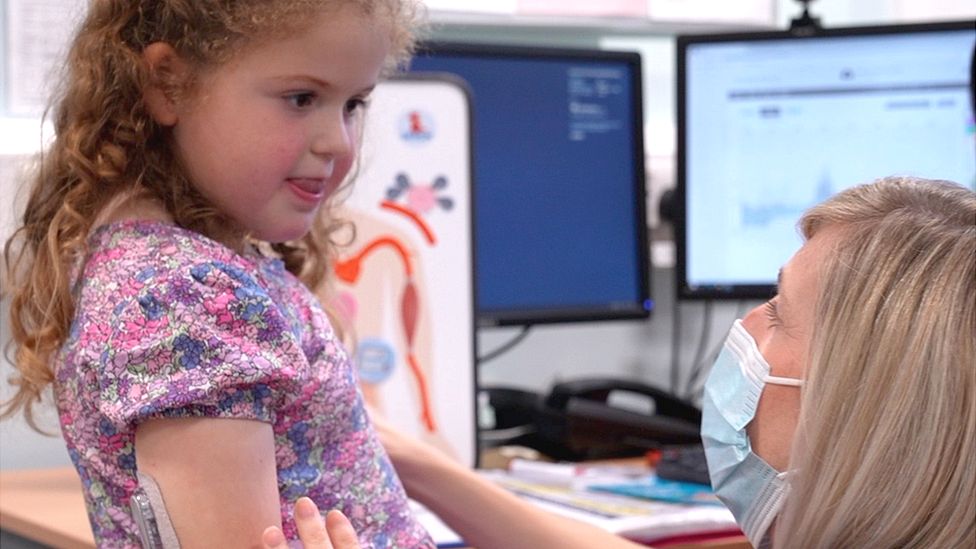
SharecloseShare pageCopy linkAbout sharingNearly 900 patients with type 1 diabetes in England are testing a potentially life-changing artificial pancreas.It can eliminate the need for finger prick tests and prevent life-threatening hypoglycaemic attacks, where blood sugar levels fall too low.The technology uses a sensor under the skin.It continually monitors the levels, and a pump automatically adjusts the amount of insulin required.Six-year-old Charlotte, from Lancashire, is one of more than 200 children using the hybrid closed loop system.Her mother, Ange Abbott, told us it has made a massive impact on the whole family. “Prior to having the loop, everything was manual,” she said. “At night we’d have to set the alarm every two hours to do finger pricks and corrections of insulin in order to deal with the ups and downs of Charlotte’s blood sugars.” About 400,000 people in the UK have type 1 diabetes, a condition where the body can’t produce insulin, the hormone which regulates blood sugar levels. NHS England says it is the first nationwide test of the technology in the world, and it comes 100 years after the first diabetes patient received insulin injections.The hybrid system is not completely automated, because the amount of carbohydrates being eaten at mealtimes needs to be inputted. Charlotte’s consultant Dr May Ng, a paediatric endocrinologist at Ormskirk District General Hospital, thinks the new technology has huge potential. “I think it’s absolutely fantastic. I’ve been practising for 25 years in children’s diabetes and it’s a game-changer,” she said.”To be able to improve the quality of life, to be able to see that most of their blood glucose readings are within that target range, it’s very exciting.”For Ange, the constant monitoring means that Charlotte can go back to being the child she was.”She loves days out with her friends and sleepovers, but we had to stop these as soon as she was diagnosed because other people couldn’t manage her diabetes. “Now we can allow her to go out for these social occasions when we’re not there.”Image source, Yasmin HopkinsYasmin Hopkins, 27, from London, has also received an artificial pancreas as part of the pilot.She was diagnosed with type 1 diabetes 15 years ago and had struggled to maintain her blood sugar levels. Yasmin told us she finds the new technology liberating. “I wake up now and I can do a normal day’s work, or go on a dog walk without being concerned,” she said.”Before, I felt like I’d have been at risk from some of the long-term complications of diabetes, whereas now I don’t see that happening.”If blood sugar levels are not kept under control, diabetes patients risk long-term damage to their heart, kidneys, eyes and nerves. Prof Partha Kar, NHS national speciality adviser for diabetes, said: “Having machines monitor and deliver medication for diabetes patients sounds quite sci-fi like, but technology and machines are part and parcel of how we live our lives every day. “It is not very far away from the holy grail of a fully automated system, where people with type 1 diabetes can get on with their lives without worrying about glucose levels or medication.” Chris Askew, chief executive of Diabetes UK, said: “This technology has the potential to transform the lives of people with type 1 diabetes, improving both their quality of life and clinical outcomes.”To date, 875 patients have joined the pilot, which will enrol up to 1,000 people. The results will be part of an assessment by the National Institute for Health and Care Excellence, which is considering where to roll out the technology more widely.It comes after NICE recommended that everyone in England with type 1 diabetes be offered some form of continuous glucose monitoring via a sensor attached to the skin.More on this storyArtificial pancreas for children hailed a success

Read more →
House Passes Bill to Limit Cost of Insulin to $35 a Month

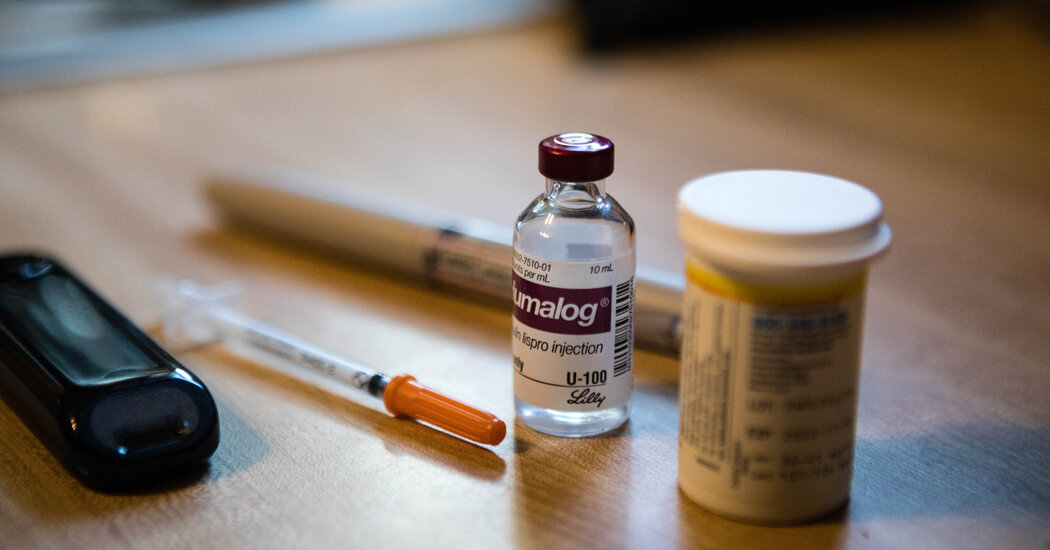
The bill stands to benefit millions of Americans with diabetes, but to become law, it will need to attract at least 10 Republican votes in the SenateWASHINGTON — A bill to limit the cost of insulin to $35 a month for most Americans who depend on it passed the House on Thursday, raising Democrats’ hopes that the party could take at least one step toward fulfilling its promise of lowering drug costs.The bill attracted unanimous support from Democrats who voted, as well as from 12 Republicans, making it a rare piece of bipartisan policy legislation.To become law, the bill will need to attract at least 10 Republican votes in the Senate to overcome a filibuster. Some lawmakers involved in the effort have expressed optimism that such a coalition might be possible, but few Republican senators have publicly endorsed the bill yet. Senator Susan Collins, Republican of Maine, has been working with Senator Jeanne Shaheen, Democrat of New Hampshire, on a broader bill related to insulin prices.The bill would have substantial benefits for many of the nearly 30 million Americans who live with diabetes. Insulin, a lifesaving drug that is typically taken daily, has grown increasingly expensive in recent years, and many diabetes patients ration their medicines or discontinue them because of the cost. About one in five Americans who take insulin would save money under the proposal, according to a recent analysis from the Kaiser Family Foundation.But the insulin bill represents a substantial scaling back of Democratic ambitions to tackle high drug prices for all Americans. A broader prescription drug package, written as part of the $2.2 trillion social spending and climate bill that has stalled in the Senate, would limit price increases on all prescription drugs, improve the generosity of Medicare’s drug coverage, and allow the government to negotiate directly on the price of some drugs used by Medicare patients, while also limiting insulin co-payments.Other parts of the broader bill would expand health insurance coverage, extending insulin coverage to diabetes patients who are uninsured. The bill that passed the House on Thursday would not improve the affordability of insulin for people who lack health insurance.The insulin bill may be the Democrats’ best chance of passing part of their popular prescription drug agenda, as the future of the larger package remains unclear.“If the effort to address drug prices ends with this plan to cap out-of-pocket costs for insulin, it will amount to crumbs compared to Democrats’ initial ambitions to allow the government to negotiate drug prices,” said Larry Levitt, the executive vice president for health policy at the Kaiser Family Foundation, a health research group.On the House floor, several Republicans expressed their opposition to the measure.“We all share the goal of reducing the cost of insulin,” said Representative Cathy McMorris Rodgers of Washington, the top Republican on the House Energy and Commerce Committee. “This bill, however, is not the right answer.”The pharmaceutical industry opposed the drug price regulations in the social spending and climate legislation, but it has not vocally opposed the insulin bill. While the bill would lower costs for many individual patients who take insulin, it would do nothing to reduce the prices paid to the companies that make it. Instead, insurance companies would simply pay a larger share of the price. The Congressional Budget Office estimated that the bill would increase government spending, since health insurers, including Medicare, would be responsible for a greater share of insulin costs.But consumer insulin costs have emerged as a politically potent problem, given how widespread diabetes is in the United States, and one that is relatively easier to solve than the prices for prescription drugs overall. At a White House event in December, President Biden centered a speech about prescription drugs around the cost of insulin.“I think it’s safe to say that all of us, all of us, whatever our background, our age, where we live, we can agree that prescription drugs are outrageously expensive in this country,” Mr. Biden said at the event, where patients with diabetes told their stories of struggles to afford the medicine.Debate on the broader legislation has slowed, but has not died. Senator Joe Manchin III, Democrat of West Virginia and a key centrist holdout, has expressed support for the prescription drug provisions in the bill, even as he has been more skeptical about other parts of the package.At her weekly news conference on Thursday, Speaker Nancy Pelosi of California tried to cast the passage of the insulin bill as progress toward the party’s broader drug-pricing agenda. She described insulin prices as a “kitchen-table issue.”“It is for us a step in the direction of the secretary being able to negotiate for lower drug prices beyond insulin,” she added, referring to the secretary of the Department of Health and Human Services.Senator Patty Murray, Democrat of Washington and the chairwoman of the Senate’s Health, Education, Labor and Pensions Committee, is a co-sponsor of similar insulin legislation in her chamber. She said she remained committed to passing a full suite of prescription drug price reforms, but that she viewed the insulin issue as particularly urgent.“We’re focused on insulin, because it affects so many Americans in so many specific ways,” she said.Emily Cochrane

Read more →

Burst of accumulated zinc shows how the mineral boosts immune function, suggesting ways to improve health

Zinc’s immune-boosting properties are well-established, but scientists haven’t known exactly how it works. In a new study published online March 25 in the journal Blood, Fred Hutchinson Cancer Research Center scientists reveal two ways the mineral supports immunity and suggest how it could be used to improve health.
Using mice, the team discovered that zinc is needed for the development of disease-fighting immune cells called T cells and prompts regeneration of the thymus, the immune organ that produces T cells.
“This study adds to our knowledge of what zinc is actually doing in the immune system and suggests a new therapeutic strategy for improving recovery of the immune system,” said senior author Dr. Jarrod Dudakov, an immunologist at Fred Hutch.
The study also revealed that an experimental compound that mimics zinc’s action in this organ works even better than the natural mineral to promote immune recovery.
“We are now looking into how zinc may fit in with our other discoveries of how the immune system repairs itself and could eventually lead to therapies to improve immune function for people who receive a blood stem cell transplant for a blood cancer or people with chronic immune decline that accompanies aging,” Dudakov said.
Thymic regeneration and immune function, and zinc
Previously, Dudakov and his team have outlined the molecular pathways and cell types that govern how the immune system’s thymus repairs itself after injury. Such treatments could improve vaccine efficacy and hasten thymic regeneration after stressors like chemotherapy, blood stem cell transplant and radiation exposure.

Read more →

German and Austrian deer thus far spared SARS-CoV-2 infections, unlike in North America

In North America, SARS-CoV-2 has spread from humans to white-tailed deer. The deer are now considered SARS-CoV-2 reservoirs and may even spill virus back to humans. A science team headed by the Leibniz Institute for Zoo and Wildlife Research (Leibniz-IZW) and the Charité have now shown that in Germany and Austria this has not happened as all deer tested were negative for SARS-CoV-2 antibodies. The research is reported in the journal Microorganisms in a special issue on Viruses of Wild Mammals.
SARS-CoV-2 (Severe acute respiratory syndrome coronavirus type 2) is a virus identified in 2020 as the causative agent of COVID-19 disease. White-tailed deer in North America have been shown to be infected with human derived SARS-CoV-2 variants at very high prevalence in many cases. There is preliminary evidence that SARS-CoV-2 can then spill back to humans from deer. This is a cause of concern as novel variants could evolve in their new deer host and eventually spill back to humans, with unforeseeable consequences. While white-tailed deer are a North American species, deer occur worldwide and in central Europe like North America, are heavily hunted and managed.
A team of scientists from the German Leibniz-IZW, the Institute of Virology of the Charité, the Austrian Research Institute of Wildlife Ecology (FIWI) and the German Federal Institute for Risk Assessment (BfR) examined sera from 433 roe, red and fallow deer, both pre-pandemic and pandemic collected for SARS-CoV-2 antibodies using an assay that previously confirmed antibody titres in North American deer. None of the deer from Germany or Austria were positive. The team also compared the ACE2 gene, the cellular receptor of hosts for the SARS-CoV-2 virus, among the different deer species. With the exception of one change which might potentially make red deer somewhat more resistant to infection, no changes were found in the receptor in the European species that could account for the drastic difference in results between central European and North American deer exposure.
A likely explanation for the differences in exposure are how deer are distributed and managed in North America and central Europe. In North America, deer are often peri-urban and urban with high potential levels of contact with humans and human waste. Deer are managed principally by the federal government. In Germany and Austria, deer are generally not peri-urban or present in urban settings and an allocation of hunting licenses for a specific area (the “Revier”) is predominant where deer in a specific area are locally managed. The Revier structure likely prevents human-deer contact and also hinders the spread of pathogens among deer populations.
“Every effort should be made to maintain barriers to human-deer contact in central Europe to prevent the establishment of deer as a SARS-CoV-2 reservoir,” says Prof Alex D Greenwood, Head of the Department of Wildlife Diseases at the Leibniz IZW.
Story Source:
Materials provided by Leibniz Institute for Zoo and Wildlife Research (IZW). Note: Content may be edited for style and length.

Read more →

Quantum 'shock absorbers' allow perovskite to exhibit superfluorescence at room temperature

Semiconducting perovskites that exhibit superfluorescence at room temperature do so due to built-in thermal “shock absorbers” which protect dipoles within the material from thermal interference. A new study from North Carolina State University explores the mechanism involved in this macroscopic quantum phase transition and explains how and why materials like perovskites exhibit macroscopic quantum coherence at high temperatures.
Picture a school of fish swimming in unison or the synchronized flashing of fireflies — examples of collective behavior in nature. When similar collective behavior happens in the quantum world — a phenomenon known as macroscopic quantum phase transition — it leads to exotic processes such as superconductivity, superfluidity, or superfluorescenece. In all of these processes a group of quantum particles forms a macroscopically coherent system that acts like a giant quantum particle.
Superfluorescence is a macroscopic quantum phase transition in which a population of tiny light emitting units known as dipoles form a giant quantum dipole and simultaneously radiate a burst of photons. Similar to superconductivity and superfluidity, superfluorescence normally requires cryogenic temperatures to be observed, because the dipoles move out of phase too quickly to form a collectively coherent state.
Recently, a team led by Kenan Gundogdu, professor of physics at NC State and corresponding author of a paper describing the work, had observed superfluorescence at room temperature in hybrid perovskites.
“Our initial observations indicated that something was protecting these atoms from thermal disturbances at higher temperatures,” Gundogdu says.
The team analyzed the structure and optical properties of a common lead-halide hybrid perovskite. They noticed the formation of polarons in these materials — quasiparticles made of bound lattice motion and electrons. Lattice motion refers to a group of atoms that are collectively oscillating. When an electron binds to these oscillating atoms, a polaron forms.
“Our analysis showed that formation of large polarons creates a thermal vibrational noise filter mechanism that we call, ‘Quantum Analog of Vibration Isolation,’ or QAVI,” Gundogdu says.
According to Franky So, Walter and Ida Freeman Distinguished Professor of Materials Science and Engineering at NC State, “In layman’s terms, QAVI is a shock absorber. Once the dipoles are protected by the shock absorbers, they can synchronize and exhibit superfluorescence.” So is co-author of the research.
According to the researchers, QAVI is an intrinsic property that exists in certain materials, like hybrid perovskites. However, understanding how this mechanism works could lead to quantum devices that could operate at room temperature.
“Understanding this mechanism not only solves a major physics puzzle, it may help us identify, select and also tailor materials with properties that allow extended quantum coherence and macroscopic quantum phase transitions” Gundogdu says.
The research appears in Nature Photonics and is supported by the National Science Foundation (grant 1729383) and NC State’s Research and Innovation Seed Funding. NC State graduate students Melike Biliroglu and Gamze Findik are co-first authors.
Story Source:
Materials provided by North Carolina State University. Original written by Tracey Peake. Note: Content may be edited for style and length.

Read more →

Technology has the potential to change the patient-provider relationship

Healthcare technology continues to evolve and has the potential to significantly change the relationship between providers and their patients. A study from the U.S. Department of Veterans Affairs, Regenstrief Institute and Indiana University School of Medicine analyzed perspectives on personal health records.
Personal health records are different from electronic health records because they are used by the patient as opposed to the provider. They are sometimes referred to as patient portals and allow the patient to see test results, medications and other health information.
The research team interviewed providers, patients and caregivers associated with the Richard L. Roudebush VA Medical Center about their thoughts on personal health records and how they could be used.
“During the interviews, patients expressed the potential for personal health records to deepen their relationship with their provider and to allow them to be more understood. Physicians were interested in having more clinical information sharing to facilitate better care,” said study author David Haggstrom, M.D., MAS, director of the Regenstrief Institute Center for Health Services Research, core investigator at the VA Health Services Research and Development (HSR&D) Center for Health Information and Communication (CHIC) and associate professor of medicine at IU School of Medicine. “These different visions of the value of these records show the need for discussions between physicians and patients to set expectations about the uses of PHRs.”
Both doctors and patients raised concerns about workflow.
“Patient portals have already created an additional strain on medical staff, and patients are sensitive to that. Careful thought needs to be given to how health systems and teams deploy PHRs to still provide patient-centered care,” said Dr. Haggstrom.
The next steps for personal health records involve implementing them more widely, tailoring them for specific conditions and making them more user-friendly.
Dr. Haggstrom is currently leading a five-year clinical trial using a personal health record created specifically for cancer patients. The research team will be looking at both the quality of care and the impact on the patient-provider relationship.
In addition to Dr. Haggstrom, Thomas Carr, M.D. of VA CHIC is an author. The study was supported in part by VA HSR&D CDA 07-016, the VA Advanced Medical Informatics Fellowship Program and the Livestrong Foundation.
Story Source:
Materials provided by Regenstrief Institute. Note: Content may be edited for style and length.

Read more →

Viral transformations in the female genital tract can spell trouble for women’s health

The human papillomavirus (HPV) is a known risk factor for cervical cancer. Researchers at Arizona State University are hoping to better understand the factors leading to persistent HPV infection and the progression to cancer, by studying the complex communities of microbes in the female reproductive tract, known as the vaginal microbiome.
In a new study, Efrem Lim and his colleagues examine an often-overlooked subset of the vaginal microbiome — the viruses. Lim is a researcher with the ASU Biodesign Center for Fundamental and Applied Microbiomics, and an assistant professor at the ASU School of Life Sciences. The research demonstrates that crucial changes in the vast community of viruses or virome may enable persistent HPV infection and progression to cancer. The viral alterations appear to be associated with changes in bacterial composition and genital inflammation.
“Microbes maintain a delicate balance in our body to promote health,” Lim says. “Viruses can tip the scale towards a worse health outcome.”
The research appears in the current issue of the journal mSystems.
Cervical cancer is one of the most common cancers among women. In 2020, more than 600,000 cases and 340,000 deaths were reported worldwide. In addition to infection with the HPV virus, known risk factors for cervical cancer include immunodeficiency, smoking and oral contraceptive use.
Recent studies have explored the relationship of the vaginal microbiome to cervical cancer, though the viral component has often been neglected. Viruses interact with both human cells and the vast profusion of bacteria present in the genital tract. The new study uses next-generation gene sequencing to get a clearer read on the community of viruses present in vaginal microbiome samples from women in the Phoenix, Arizona metropolitan area.
The results highlight an association between genital inflammation and low abundance of the bacterial species Lactobacillus with reduction in virome diversity. Lactobacillus bacteria are known to be important mediators of genital health. Further, conditions conducive to persistent HPV infection were also associated with the abundance of a group of viruses that infect bacteria — known as bacteriophages. The findings further emphasize the importance of studies of the virome and its complex interactions with other constituents of the human microbiome.
Story Source:
Materials provided by Arizona State University. Original written by Richard Harth. Note: Content may be edited for style and length.

Read more →

Researchers generate the first complete, gapless sequence of a human genome

Scientists have published the first complete, gapless sequence of a human genome, two decades after the Human Genome Project produced the first draft human genome sequence. According to researchers, having a complete, gap-free sequence of the roughly 3 billion bases (or “letters”) in our DNA is critical for understanding the full spectrum of human genomic variation and for understanding the genetic contributions to certain diseases. The work was done by the Telomere to Telomere (T2T) consortium, which included leadership from researchers at the National Human Genome Research Institute (NHGRI), part of the National Institutes of Health; University of California, Santa Cruz; and University of Washington, Seattle. NHGRI was the primary funder of the study.
Analyses of the complete genome sequence will significantly add to our knowledge of chromosomes, including more accurate maps for five chromosome arms, which opens new lines of research. This helps answer basic biology questions about how chromosomes properly segregate and divide. The T2T consortium used the now-complete genome sequence as a reference to discover more than 2 million additional variants in the human genome. These studies provide more accurate information about the genomic variants within 622 medically relevant genes.
“Generating a truly complete human genome sequence represents an incredible scientific achievement, providing the first comprehensive view of our DNA blueprint,” said Eric Green, M.D., Ph.D., director of NHGRI. “This foundational information will strengthen the many ongoing efforts to understand all the functional nuances of the human genome, which in turn will empower genetic studies of human disease.”
The now-complete human genome sequence will be particularly valuable for studies that aim to establish comprehensive views of human genomic variation, or how people’s DNA differs. Such insights are vital for understanding the genetic contributions to certain diseases and for using genome sequence as a routine part of clinical care in the future. Many research groups have already started using a pre-release version of the complete human genome sequence for their research.
The full sequencing builds upon the work of the Human Genome Project, which mapped about 92% of the genome, and research undertaken since then. Thousands of researchers have developed better laboratory tools, computational methods and strategic approaches to decipher the complex sequence. Six papers encompassing the completed sequence appear in Science, along with companion papers in several other journals.
That last 8% includes numerous genes and repetitive DNA and is comparable in size to an entire chromosome. Researchers generated the complete genome sequence using a special cell line that has two identical copies of each chromosome, unlike most human cells, which carry two slightly different copies. The researchers noted that most of the newly added DNA sequences were near the repetitive telomeres (long, trailing ends of each chromosome) and centromeres (dense middle sections of each chromosome).

Read more →

Scientists bioprint tissue-like constructs capable of controlled, complex shape change

Where standard 3D printing uses a digital blueprint to manufacture an object out of materials like plastic or resin, 3D bioprinting manufactures biological parts and tissues out of living cells, or bioinks. A fourth dimension — shape transformation over time — can be achieved by incorporating materials that enable printed constructs to morph multiple times in a preprogrammed or on-demand manner in response to external signals.
Bioprinting 4D constructs provides opportunities for scientists to better mimic the shape changes that occur during the development, healing and normal function of real tissues and fabricate complex structures.
A new study in the science journal Advanced Materials describes the development of a new cell-laden bioink, comprised of tightly-packed, flake-shaped microgels and living cells, for bioprinting 4D constructs. This new system enables the production of cell-rich bioconstructs that can change shape under physiological conditions.
Titled “Jammed Micro-Flake Hydrogel for Four-Dimensional Living Cell Bioprinting,” the study is authored by engineers at the University of Illinois Chicago who created the bioink and conducted experiments of prototype hydrogels.
Their experiments resulted in a variety of complex bioconstructs with well-defined configurations and high cell viability, including a 4D?cartilage-like tissue formation. Further designs demonstrate complex, multiple 3D-to-3D shape transformations in bioconstructs fabricated in a single printing.
“This bioink system provides the opportunity to print bioconstructs capable of achieving more sophisticated architectural changes over time than was previously possible. These cell-rich structures with pre-programmable and controllable shape morphing promise to better mimic the body’s natural developmental processes and could help scientists conduct more accurate studies of tissue morphogenesis and achieve greater advances in tissue engineering,” said study corresponding author Eben Alsberg, Richard and Loan Hill Chair, who has appointments in the departments of biomedical engineering, mechanical and industrial engineering, pharmacology and regenerative medicine, and orthopaedics.
Alsberg says the bioink advances previous technologies in several ways.
“The bioinks have what are called shear-thinning and rapid self-healing properties that enable smooth extrusion-based printing with high resolution and high fidelity without a supporting bath. The printed bioconstructs, after further stabilization by light-based crosslinking, remain intact while, for example, bending, twisting or undergoing any number of multiple deformations. With this system, cartilage-like tissues with complex shapes that evolve over time could be bioengineered,” Alsberg said. “Another key achievement was engineering a system that enables fabrication of bioconstructs capable of undergoing complicated 3D-to-3D shape transformations.”
“This is the first system that meets the demanding requirements of bioprinting 4D constructs: load living cells in bioinks, enable printing of large complex structures, trigger shape transformation under physiological conditions, support long-term cell viability and facilitate desired cell functions such as tissue regeneration,” said Aixiang Ding, postdoctoral research associate at UIC and the first author of the paper. “We are endeavoring to translate this system into clinical applications of tissue engineering, as there is a critical shortage of available donor tissues and organs.”
UIC’s Oju Jeon, David Cleveland, Kaelyn Gasvoda, Derrick Wells and Sang Jin Lee are co-authors of the paper.
This work was supported by grants from the National Institute of Arthritis and Musculoskeletal and Skin Diseases (R01AR069564, R01AR066193) and the National Institute of Biomedical Imaging and Bioengineering (R01EB023907).
Story Source:
Materials provided by University of Illinois Chicago. Note: Content may be edited for style and length.

Read more →

NIH experts discuss controlling COVID-19 in commentary on herd immunity

Achieving classical herd immunity against SARS-CoV-2, the virus that causes COVID-19, may not be attainable, according to a new perspective published in The Journal of Infectious Diseases. However, widespread use of currently available public health interventions to prevent and control COVID-19 will enable resumption of most activities of daily life with minimal disruption, the authors note. Anthony S. Fauci, M.D., director of the National Institute of Allergy and Infectious Diseases (NIAID), part of NIH, David M. Morens, M.D., senior scientific advisor to the NIAID director, and Gregory K. Folkers, chief of staff to the NIAID director, authored the perspective.

advertisement

Read more →