Biden Administration May Appeal Mask Mandate Ruling

If the C.D.C. decides there is a public health basis for trying to reinstate and extend the mask mandate, the Justice Department will swiftly file an appeal.WASHINGTON — The Biden administration announced on Tuesday that it intended to appeal a Florida judge’s ruling that struck down a federal mask requirement on airplanes, trains, buses and other public transportation — but only if the Centers for Disease Control and Prevention decides that extending the measure is necessary.The announcement from the Department of Justice came after a day of back and forth inside the White House, as administration officials faced a legal and political quandary: whether to let the judge’s ruling stand or to fight it, knowing that an appeal could result in a higher court, perhaps the Supreme Court, ruling against the administration and setting a lasting precedent that could undercut the C.D.C.’s authority.In the end, the administration charted a careful course, publicly objecting to Monday’s ruling but putting off a final decision about whether to contest it. The Justice Department and the C.D.C. “disagree with the district court’s decision and will appeal, subject to C.D.C.’s conclusion that the order remains necessary for public health,” the department said in a statement.“You are in the position of having two horrible choices,” said Lawrence O. Gostin, an expert in public health law at Georgetown University. “One choice is to risk forever taking away C.D.C.’s powers if this goes up to the 11th Circuit and ultimately the Supreme Court.“And on the other hand,” he added, “if you let what I consider to be a lawless decision by this judge go forward, then C.D.C. is going to be gun-shy about doing things that it deems effective for the protection of the American public.”The mask mandate — which also applied to transportation hubs like airports and train stations, and even to ride-sharing services like Uber — had been set to expire on May 3 even before the judge struck it down on Monday.If the C.D.C. decides there is a public health basis for trying to reinstate and extend the mandate, the Justice Department will swiftly file an appeal. But if the C.D.C. decides otherwise, the administration will not appeal and the case will instead end as mooted — but without any signal of executive branch acquiescence to the judge’s view of its authority.The Justice Department “continues to believe that the order requiring masking in the transportation corridor is a valid exercise of the authority Congress has given C.D.C. to protect the public health,” its statement said. “That is an important authority the department will continue to work to preserve.”The C.D.C. imposed the mandate in early 2021, at the direction of the president. The agency had already extended it several times, most recently on April 13. At the time, it said it wanted to keep the requirement in place several more weeks while it assessed the potential severity of the Omicron subvariant known as BA.2, which recently became the dominant version among new U.S. cases.As the administration considered its options on Tuesday, White House officials, including President Biden himself, were cautious in their public remarks. On a trip to New Hampshire to promote infrastructure spending, the president was asked by reporters whether people should wear masks on planes.“That’s up to them,” Mr. Biden replied.The Federal District Court judge in Tampa who struck down the mandate — Kathryn Kimball Mizelle — put forward a sharply constrained interpretation of the C.D.C.’s legal authority under the Public Health Service Act of 1944. If her view prevailed, the agency’s hands would be tied in future public health crises.But a ruling by a district court judge is not a binding precedent. Appealing the matter would carry the risk that the court that oversees her — the Court of Appeals for the 11th Circuit in Atlanta — could issue a ruling that constrains the agency’s future conduct at least in its region, the Southeastern United States. A majority of the judges on that circuit are also Trump appointees.And above it, the Supreme Court has a six-to-three conservative majority. In January, it blocked a Biden administration edict that large employers require workers to get vaccinated or submit to regular testing. (On the other hand, the court has permitted military officials to require service members and reservists to get vaccinated; it also upheld a federal mandate requiring health care workers at facilities receiving federal money to be vaccinated.)Dr. Thomas Frieden, who directed the C.D.C. for eight years under President Barack Obama, noted that the C.D.C. has “very little regulatory authority” and said other pandemic-related actions — including a moratorium on evictions and the use of the border authority known as Title 42 to keep immigrants from seeking asylum — may have, in effect, reduced the agency’s political capital to keep the mask mandate in place.“The broader question is, what is the appropriate use of mandates,” Dr. Frieden said. “The clearest case is for interstate travel, and so there is the risk that by pushing the envelope on other issues, we lost some of the narrative on what is an appropriate use of mandates.”Some supporters of the mask mandate have viewed an appeal as risky.“As tempting at it is to appeal it, because it’s a ridiculous ruling, the bigger issue is that you need to reserve the ability for the C.D.C. to act in case we have a big outbreak in the fall or the winter,” said Andrew Slavitt, a former senior health adviser to the president who helped run the administration’s Covid-19 response.“Trump appointed 234 federal judges,” he added, “and if you end up there or in the Supreme Court, you could really damage your ability to respond to the pandemic in the future.”But others spoke strongly in favor of an appeal.“What worries me is the fact that this judge is saying that C.D.C. doesn’t have the authority to protect the health of people in America as they best see fit,” said Dr. Rich Besser, a former acting director of the C.D.C. He added that if the ruling stands, it would be “really damaging, because going into the next event you’ve got this ruling there and it hasn’t been contested.”As a matter of politics, support for mask mandates has fallen in opinion polls as it has become clearer that healthy people who have been vaccinated and boosted — as well as those who remain unvaccinated but have survived a bout of Covid-19 — are generally at lower risk of experiencing severe or life-threatening symptoms if they get infected.“The country clearly wants to move on,” said David Axelrod, a Democratic strategist who served as senior adviser to President Barack Obama. “Mandatory masking is a volatile issue. So my instinct is that the path of least resistance would be to stand down, on the grounds the clock is quickly running out anyway.”But some people remain strongly in favor of such mandates. They have pointed to the continuing serious risk that any infection poses to immunocompromised people despite vaccination, and to the fact that very young children — while less likely to experience significant symptoms — are not eligible for vaccination.Monday’s ruling took officials in the White House by surprise and frustrated them, two senior officials said. But on Tuesday, as travelers aboard airplanes took directions from pilots to unmask and riders aboard transit systems went mask-free, the Biden administration did not lay out a detailed plan to contest the ruling, even as public health experts warned that the C.D.C.’s authority to prevent the spread of a contagious virus was on the line.Inside the C.D.C., officials felt their most recent extension of the mask mandate was reasonable, to give them time to assess the evidence and make a considered decision about whether to continue it.“C.D.C. scientists had asked for 15 days to make a more data-driven durable decision,” Dr. Ashish K. Jha, the new White House coronavirus response coordinator, wrote on Twitter. “We should have given it to them. But I’ll continue to follow CDC guidance & mask up on planes.”Katie Rogers

Read more →

Concerns Rise as Passenger Masks Fall

Health experts expressed dismay at a judge’s ruling that struck down the C.D.C. mask mandate for passengers on planes, trains and buses.Public health experts reacted with dismay to a federal judge’s ruling on Monday that struck down a mask requirement for plane, bus and train passengers, expressing concern that the case would set a precedent that erodes the authority of public health agencies and hampers their ability to respond to health emergencies.The Florida judge’s ruling was issued less than a week after the Centers for Disease Control had extended its mask order through May 3. The ruling also came in the middle of a school vacation that coincides with several major religious holidays, when many families are traveling to see relatives, some for the first time in two years.Many airplane passengers flung their masks off and cheered when pilots made announcements saying that the rule was no longer in effect. Others who have disabilities, are immunocompromised or were traveling with children too young to be vaccinated were caught off-guard and distressed that the rules were changed literally mid-flight.“If this ruling stands, it could put the American public at great risk,” said Dr. Richard Besser, president and chief executive of the Robert Wood Johnson Foundation and a former acting director of the C.D.C. He added that his concerns were less to do with the immediate consequences for mask mandates than with “the implications for future crises, of the ability to put in place simple public health measures to keep people safe.”Dr. Lakshmi Ganapathi, who teaches pediatrics at Harvard Medical School, pointed out that the ruling coincides with a recent rise in Covid cases nationally, driven by a rise in cases on the East Coast.“I think it’s extremely shortsighted and, if I were impolite would say, kind of stupid,” Dr. Ganapathi said. “This ruling is ill-timed, and it’s not commensurate with public health principles.”She noted that low booster rates among seniors and other vulnerable groups, including low-income people who rely heavily on buses and trains for transportation, make them susceptible to infection, and there is still no vaccine for very young children. Banking on immunity from previous infections and vaccinations for protection may be overly optimistic, as emerging new variants emerge could evade immunity, she said.Moreover, the widespread use of home testing kits, the results of which go unreported, means that official case counts do not reflect the true number of new cases. A rise in hospitalizations is not a reliable or timely indicator of severity either, Dr. Ganapathi said, since hospitalizations rise several weeks after cases begin to increase. “Once hospitalizations start rising, it’s baked in — you haven’t done anything to stop it,” she said. “And a proportion of those hospitalized will die.”Amtrak travelers at Penn Station on Tuesday, a day after the federal mask mandate was lifted for trains.Hilary Swift for The New York TimesThe C.D.C. issued an order in January 2021 requiring people to wear masks while using indoor public transportation and when inside transportation hubs, like airports and bus and train stations. In a statement released Tuesday, the agency said that as a result of the court ruling Monday, the order was no longer in effect and would not be enforced, although the agency still recommended masks inside public transportation settings. Supporters of masks have started an online petition urging major airlines to designate some flights as mask-required in order to give customers a choice.Even some experts who had previously supported the lifting of the government mask mandate for passengers said they were troubled by the precedent that the federal judge’s ruling could set, which could curtail public health agencies’ ability to respond to public health emergencies.Several said they hoped that the Biden administration would challenge the ruling. President Biden said on Tuesday that Americans should decide for themselves whether to wear masks.Dr. Leana Wen, a public health professor at George Washington University, had strongly criticized Philadelphia’s decision to reinstate mask mandates this week. She clarified Tuesday that she still strongly supported the wearing of high-quality masks like an N95 and that she merely thought a government mandate was not appropriate at this time.“I don’t want people to get the wrong message — I don’t want people to think that masks are no longer required or shouldn’t be worn,” Dr. Wen said. “The message is that at a certain point the government can no longer require you to do the right thing.”Both she and Dr. Robert Wachter, chair of the department of medicine at the University of California, San Francisco, who also had said he favored lifting mask requirements, noted that it was critically important for the government to have the authority to issue mandates during public health crises in order to respond to future threats, including new variants of Covid-19.“If this becomes a precedent, that a judge can overrule government and C.D.C. experts, that puts us in a problematic place for the next surge, the next pandemic, bioterrorism or who knows,” Dr. Wachter said. “Government needs to be able to act, and to imply government does not have that authority is deeply concerning.”He noted that he would continued to wear a mask on flights and strongly encouraged his family and loved ones to do so, although he did not think the situation was sufficiently dire to justify a government mandate.“Should you wear a mask when you’re in an aluminum tube, shoulder to shoulder with people for six hours?” Dr. Wachter said. “I think you should, and I will.”The same argument applied to trains and buses, he said. “My general feeling is that there is still enough virus around that I think it’s prudent to wear a mask in tight indoor spaces when you’re not sure of the vaccine status of the people around you and there’s a fair amount of virus in the community.”The virus seemed to be getting more transmissible with each new variant, said Michael Osterholm, director of the Center for Infectious Disease Research and Policy at the University of Minnesota, and new Omicron subvariants appeared to be carrying mutations that may impact immunity. “This virus is so highly infectious that you don’t need to have a lot of exposure to get infected,” Mr. Osterholm said.The risk was also extremely unpredictable, he added. “These variants are 210-mile-per-hour curveballs,” he said. “What’s going to happen is really in the hands of the virus.”Telling people to wear masks is one of the simplest, cheapest steps they can take to fight the spread of infectious diseases, said Dr. Georges Benjamin, executive director of the American Public Health Association. “This is telling them they can’t use the most effective tool they have,” he said of the ruling against passenger mask mandates. “It doesn’t hurt anybody. It’s easy to do. It’s as simple as an umbrella up in the rain.”

Read more →

Smartwatches and fitness bands reveal individual physiological responses to COVID-19 vaccine

A new digital health study by researchers at Scripps Research shows how data from wearable sensors, such as smartwatches and fitness bands, can track a person’s physiological response to the COVID-19 vaccination.
The study, published in npj Digital Medicine, analyzed sensor data on sleep, activity and heart rate from over 5,600 individuals. Among the findings, the team showed that the average resting heart rate of participants significantly increased the day following vaccination. The effect appeared to be stronger after the second dose of the Moderna vaccine, compared to the Pfizer-BioNTech vaccine, and more pronounced in younger individuals.
According to lead author Giorgio Quer, PhD, director of Artificial Intelligence at the Scripps Research Translational Institute, this study is a first step toward quantifying the physiological response to vaccination in individuals using commercial sensors.
“Investigating the physiological signals in the period around vaccination can help us better understand the variability of vaccine response between people, as well as the changes from an individual norm due to vaccination,” Quer says. “As these individual changes are due to a person’s initial immune response to the vaccine, they can potentially help guide future vaccine development to optimize their efficacy and safety, and allow for more precise, individualized vaccine regimens.”
The researchers drew their data from a larger project, called Digital Engagement and Tracking for Early Control and Treatment (DETECT) launched in March 2020, in response to the emergence and rapid spread of SARS-CoV-2, the virus that causes COVID-19. DETECT is a mobile-app research platform that allows participants to share physiological and behavioral data gathered through a fitness band or smartwatch, as well as manually entered symptoms, test results and vaccination status.
To determine whether consumer wearables could unearth digital biomarkers of vaccine-induced immune response, the scientists analyzed DETECT sensor data from two weeks before and after each vaccination dose. They compared post-vaccination changes to the participants’ resting heart rate, sleep and activity levels, to their baselines.

Read more →

Revising the lifecycle of an important human parasite

“We have been interested in the romantic life of the parasite Cryptosporidium for some time,” says Boris Striepen, a scientist in Penn’s School of Veterinary Medicine.
Cryptosporodium is a leading cause of diarrheal disease in young children around the world. The intestinal parasite contributes to childhood mortality and causes malnutrition and stunting. How a parasite like this one reproduces and completes its life cycle has significant impact on child health.
“It’s the product of parasite sex, that is infectious agent here, a spore, that is transmitted by contaminated water,” Striepen says. “So, if you break its ability to have sex, you would break the cycle of transmission and infection.”
In a new paper in PLOS Biology, Striepen and colleagues in his lab tread new ground in understanding how Cryptosporidium reproduces inside a host. Using an advanced imaging technique allowed the scientists to observe the entire lifecycle in the laboratory. They found the parasite completes three cycles of asexual replication and then directly switches to male and female sexual forms. Their observations refute an intermediate stage that was introduced in the 1970s and align well with the original description of physician and parasitologist Edward Tyzzer who discovered this pathogen more than a century ago.
“What we have shown contradicts what you see in most textbooks today, including the description at the Centers for Disease Control and Prevention website,” Striepen says. “It’s really a super simple lifecycle that is completed in a single host in three days and only has three characters: asexual cells, male cells, and female cells.”
Other parasites, such as the malaria parasite Plasmodium, a “cousin” of Cryptosporidium, have more complicated and lengthy paths to follow an overall similar life cycle. While Crypto completes its lifecycle in one host, most malaria parasites move between two: a mosquito, where the parasite’s sexual reproduction occurs, and a human, where its asexual replication occurs.

Read more →

Regulating the regulators of the immune system

Checkpoint inhibitors have become important tools in the cancer-fighting arsenal. By blocking proteins that normally restrain the immune response, these drugs can help the immune system destroy cancer cells.
But they don’t work in all patients. And now a new study in Nature Immunology led by researchers from Penn’s School of Veterinary Medicine suggests a possible reason why: Not only can these drugs encourage the activity of cancer killing T cells, but they can, in some cases, also activate a population of regulatory T cells that serve the opposing function — to rein in that attack.
In the study, immunologists led by Penn Vet professor Christopher Hunter and doctoral student Joseph Perry discovered that blocking the activity of the checkpoint protein PD-L1, which interacts with a T cell receptor PD-1, enhanced the activity of a subset of T cells known as effector regulatory T cells, or effector Tregs. This intervention unexpectedly reduced the ability of mice to control a parasite infection.
The findings reveal a complexity to how the body “regulates the regulators” of the immune system, says Hunter. “Once you have those Tregs to control your T cell response, you also need to control them,” he says. “It’s like with a car. You have the ignition, the accelerator, and you also need a brake. PD-1 is a brake not only on killer T cells but also on Tregs.”
T cells may be best known for their roles in fighting infections and killing cancer cells. But the immune system also has several mechanisms in place to counterbalance those responses to prevent out-of-control inflammation that could damage healthy tissue. Tregs are one aspect of this balancing act.
“You can think of Tregs as the health and safety inspectors of the immune system,” Hunter says. “They’re really important, but sometimes, when you need to mount an immune response against a pathogen, you need them to take a back seat. When an infection is present, we see Treg levels crash so that an effector response can emerge. But we never understood what causes that crash.”
The researchers began to understand more after exploring an unanticipated finding. They discovered that, when the checkpoint protein PD-L1 was blocked, mice infected with Toxoplasma gondii were less effective at fighting off the parasite than mice with an uninhibited PD-L1. “That was the opposite of what we expected,” Hunter says, as the dogma would have suggested that blocking this checkpoint inhibitor would allow for a better effector T cell response against infection.

Read more →

Omicron Was More Severe for Unvaccinated Children in 5-to-11 Age Group, Study Shows

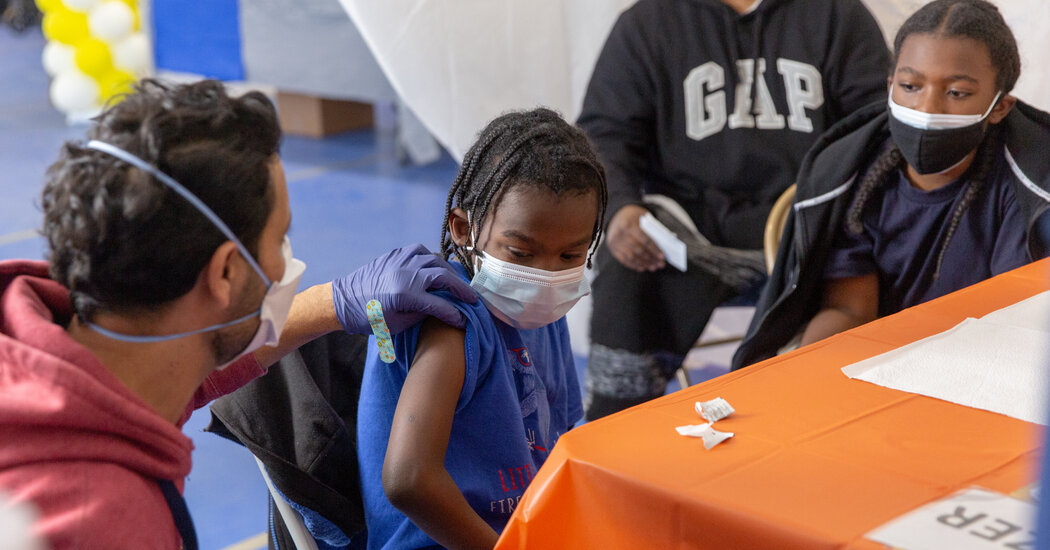
Black children who had not been immunized made up about a third of those hospitalized during the winter surge.Unvaccinated children from 5 to 11 years old were hospitalized with Covid at twice the rate of vaccinated children during the winter Omicron variant surge, the Centers for Disease Control and Prevention reported on Tuesday.The study was the latest to demonstrate that vaccines help keep children out of the hospital with Covid, despite the shots losing some of their potency at stopping infections from the Omicron variant.But the C.D.C. report, based on data from hospitals serving about 10 percent of the U.S. population across 14 states, also offered some of the strongest evidence to date that racial disparities in childhood vaccination might be leaving Black children more exposed to severe illness from Covid.Black children in the 5-to-11 age group accounted for about a third of unvaccinated children in the study, the largest of any racial group, and made up roughly a third of overall Covid-related hospitalizations within the age group.Estimates from 2020 based on census data suggest that Black children made up about 14 percent of U.S. residents from 5 to 11 years old. But it is not clear whether the areas covered in the C.D.C. study are representative of the country’s population, making it difficult to precisely measure any disparities.“Increasing vaccination coverage among children, particularly among racial and ethnic minority groups disproportionately affected by Covid-19, is critical to preventing Covid-19-associated hospitalization and severe outcomes,” the C.D.C. study said.The agency has not reported nationwide data on the race or ethnicity of vaccinated children, making it difficult for researchers to examine gaps in protection.Seven states and Washington, D.C., report race data for vaccinated children from 5 to 11. Black children were inoculated at lower rates than white children in most, but not all, of those states, an analysis by the Kaiser Family Foundation found this month. Asian children tended to have the highest vaccination rates, the analysis found, and Hispanic children were inoculated at rates lower than or similar to those of white children.Among all U.S. residents, Black people remain less likely than white people to be vaccinated, though the gap has grown smaller over the course of the vaccination campaign.Children are protected in far smaller numbers: Only about a third of children from 5 to 11 have at least one vaccine dose, the lowest rate of any age group. And the pace of vaccinations in that age group has slowed considerably in recent weeks.The C.D.C. study covered the period from mid-December to late February, during which about 400 children were hospitalized with Covid at the select hospitals participating in the study. Almost 90 percent of them were unvaccinated. The report said that roughly a third of the children had no underlying medical conditions and a fifth were admitted to an intensive care unit.Among the children who tested positive for the virus before or during their hospitalization, three-quarters of them were admitted primarily for Covid, rather than other illnesses, the C.D.C. said.The agency said that Omicron appeared to be causing less serious illness in children than the Delta variant, as was the case for adults, but that Omicron was so contagious and infecting so many children that they were hospitalized at higher rates during the Omicron surge.Infected children are far less likely to become seriously ill, compared with adults. But because the youngest children (under age 5) do not yet qualify for vaccination and older children are inoculated at much lower rates, children overall are somewhat less protected from the virus than adults.

Read more →

Disasters could disrupt care for opioid use disorder in most vulnerable communities

The COVID-19 pandemic has spiked the overdose death rate from opioid use. For people who rely on medications (buprenorphine, methadone, and extended-release naltrexone) to treat opioid use disorders, the pandemic and such natural disasters as tornados, hurricanes, and wildfires can disrupt access to medications. And new Yale-led research published April 19 in JAMA Network Open finds that the location of medication treatment services makes treatment interruption likely where those disruptions exist.
The research team, led by Paul Joudrey, MD, MPH, assistant professor of medicine (general medicine); and Yale Drug Use, Addiction, and HIV Research (DAHRS) scholar, correlated Centers for Disease Control (CDC) data on community vulnerability to natural disasters and pandemics with the locations of medications and opioid use disorder services across the continental United States. Reasons people within a community could be more vulnerable to disasters and pandemics include their age, minority race, poverty, housing, and access to transportation.
They found the availability of medication services was not matched with community vulnerability. “In plain terms, we are not placing enough services in communities that are more vulnerable to disasters and pandemics. If a disaster disrupts medication services, people living within these communities are less likely to receive treatment.” This mismatch between community vulnerability during disaster and the availability of services was the worst for vulnerable suburban communities. This was a particularly unique finding. “We also found that in rural communities, because the availability of services was just bad all around, there was no association between vulnerability and access to medications,” added Joudrey.
These findings confirm what has been reported in recent natural disasters. “Hurricane Katrina, Hurricane Sandy, and Hurricane Maria showed that part of the deaths that occur following disasters such as those are because people’s health services were disrupted. Our results show that preparedness has too long been only a practice for the middle and upper class. We need to think more deliberately about how preparedness for hurricanes and for COVID-19 includes those placed at highest risk,” said Emily Wang, MD, professor of medicine (general medicine) and of public health (social and behavioral sciences); and director, SEICHE Center for Health and Justice at Yale.
The research is a collaboration among Yale’s Program in Addiction Medicine and SEICHE Center for Health and Justice, and the Healthy Regions & Policies Lab, Center for Spatial Data Science at the University of Chicago.
Joudrey praised the partnership with the Healthy Regions & Policies Lab. “One of my primary mentors, Dr. Emily Wang, connected me with the lab through her National Institutes of Drug Abuse’s JCOIN (Justice Community Opioid Innovation Network) work. Dr. Marynia Kolak, one of the key authors on this paper, is a wonderful health geographer and has similar interests to my own. When Emily connected us, it was really that collaboration and connection that allowed this project to come together. Her health geography lab at University of Chicago has just been a wonderful group to work with.”
Along with Joudrey and Wang from Yale School of Medicine, additional contributors include Kolak; Qinyun Lin; Susan Paykin; and Vidal Anguiano Jr. from the University of Chicago.
Story Source:
Materials provided by Yale University. Original written by Julie Parry. Note: Content may be edited for style and length.

Read more →

Bioengineers visualize fat storage in fruit flies

For the first time, researchers have visually monitored, in high resolution, the timing and location of fat storage within the intact cells of fruit flies. The new optical imaging tool from the lab of bioengineering professor Lingyan Shi at the University of California San Diego is already being used to untangle often discussed, yet mysterious, links between diet and things like obesity, diabetes and aging.The work from bioengineers at the UC San Diego Jacobs School of Engineering is published in the journal Aging Cell.
The optical microscopy platform developed by the UC San Diego bioengineers is unique. It allows the researchers to visually track, in high resolution within fat cells, how specific dietary changes affect the way flies turn the energy from their food into fat. The tool also allows the researchers to monitor the reverse process of changing fat back into energy. In addition, the researchers can now visually monitor changes in size in individual fat-storage “containers” within the class of fruit fly cells that is analogous to mammalian fat (adipose) cells.
In the new paper in Aging Cell, the researchers demonstrated the ability to visually track changes in fat (lipid) metabolism in flies after they were put on a wide range of different diets. The diets included calorie-restricted diets, high protein diets, and diets with twice, four-times, and ten-times the sugar of a standard diet.
“With our new optical microscopy system, we can see both where and when fats are being put into storage and taken out of storage,” said Shi, the bioengineering professor at UC San Diego who is the corresponding senior author on the new paper. “This is the first imaging technology that can visualize fat metabolism at high resolution in both space and time within individual fat cells. We have demonstrated that we can see both where and when lipid metabolism changes within individual fruit fly fat body cells in response to dietary changes.”
“Interest in optimizing the human diet is intense,” Shi continued. “People want answers to questions like, ‘What are the best diets to slow aging? What are the best diets for losing weight? What are the best diets for extending health span?’ I don’t yet have answers to these questions, but in my lab, we develop new technologies that are getting us closer to answering some of the big dietary questions out there.”
In the new work in Aging Cell, for example, the researchers report a new way to answer questions like:
How much does a specific diet, such as a high-protein diet, or a high-sugar diet, or a calorie-restricted diet, alter a fruit fly’s process of turning energy from food into fat? And how much do these same diets affect a fruit fly’s process of turning fat back into energy?

Read more →

Mental illness associated with increased death from cardiovascular disease

Compared to the general population, people with severe mental illness, including schizophrenia, have higher levels of cardiovascular-related mortality, and that association has become stronger over recent decades, according to a new study publishing April 19 in PLOS Medicine by Amanda Lambert of the University of Birmingham, UK, and colleagues.
Previous research has identified higher incidence and mortality from cardiovascular disease in people with severe mental illness, but it was not known whether that association has changed over time. The new study involved a systemic review and meta-analysis of 108 previous studies including over 30 million participants in high-income countries, all aged 16 to 65 years of age at onset of psychiatric disorder.
The study found that, overall, the cardiovascular-related mortality rate for people with severe mental illness is about twice that of the general population (SMR 1.96, 95% CI: 1.61-2.39, p

Read more →

New research predicts the disappearance of Olympic Peninsula glaciers

By 2070, the glaciers on the Olympic Peninsula, in Washington State, will have largely disappeared, said Andrew G. Fountain, professor of geology and geography at Portland State University, who led a team of researchers on the subject. Although some glaciers will probably remain — albeit as tiny shells of their former selves.
Fountain’s study was recently published in the Journal of Geophysical Research, Earth Surface in an article titled “Glaciers of the Olympic Mountains, Washington — the past and future 100 years.” Since about 1900 the region has lost half of its glacier area and since 1980, 35 glaciers and 16 perennial snowfields have disappeared.
“There’s little we can do to prevent the disappearance of these glaciers,” Fountain said. “We’re on this global warming train right now. Even if we’re super good citizens and stop adding carbon dioxide in the atmosphere immediately, it will still be 100 years or so before the climate responds.”
Even though preventing glacier melt at the hand of global warming isn’t in the cards, ensuring things don’t get worse is a critical goal, Fountain said.
“This is yet another tangible call out for us to take climate change seriously and take actions to minimize our climate impact,” he added.
Dan Cayan, research meteorologist at the Scripps Institution of Oceanography, University of California, San Diego, said this research reveals that glaciers are a “hydroclimate finger on the pulse of Pacific decadal climate.” The long-term loss of glacial mass found in the Olympic Peninsula is a strong indication of a warming global climate, he added.

Read more →