People with diabetes and cognitive decline may be at higher risk for heart disease

People with type 2 diabetes who have cognitive impairment could be at greater risk for stroke, heart attack or death than other individuals with diabetes, according to a new study published in the Endocrine Society’s Journal of Clinical Endocrinology and Metabolism.
Cognitive impairment is when a person has trouble remembering, learning new things, concentrating or making decisions that affect their everyday life. More than 16 million people in the United States are living with cognitive impairment, and age is the biggest risk factor. Cognitive impairment ranges from mild to severe and has been associated with Alzheimer’s disease, heart disease, stroke and diabetes.
“Our study found low scores on cognitive tests predicted heart disease in people with diabetes and other heart risk factors,” said co-author Hertzel C. Gerstein, M.D., of McMaster University in Hamilton, Canada. “Although the explanation for this remains unclear, proven heart medications should be offered to these patients to reduce their future risk of a heart attack or stroke.”
The researchers assessed the relationship between cognitive function and future cardiovascular events in 8,772 people with type 2 diabetes from the REWIND trial during more than five years of follow up. They found that people with the lowest level of cognitive function had a higher risk of heart attack and stroke than those with higher levels of cognitive function.
People with severe cognitive impairment were up to 1.6 times more likely to experience major adverse cardiovascular events, and 1.8 times more likely to experience a stroke or die compared to people without cognitive impairment. These findings suggest cognitive function could predict a person’s future risk of heart disease.
The study received funding from Eli Lilly and Company.
Story Source:
Materials provided by The Endocrine Society. Note: Content may be edited for style and length.

Read more →

Scientists identify new molecular strategies for tackling aggressive form of leukemia

A discovery by researchers at the University of Sussex has the potential to benefit leukemia patients by opening up new treatment strategies for treating the disease.
Acute myeloid leukemia (AML) is an aggressive form of leukemia which impacts a type of white blood cell (leukocyte) normally responsible for fighting infection and preventing tissue damage. There are around 3,000 new cases of AML in the UK annually, but the disease has a poor prognosis and high rates of relapse, as current chemotherapies are both highly toxic and ineffective.
But now, researchers have discovered that two major oncoproteins could be working together within leukemia cells, impacting one another’s oncogenic signalling activity — that is, their ability to alter genes and cause the development of a tumour.
Dr Rhys Morgan, Lecturer in Biomedical Science at the University of Sussex, and Director of the Sussex Haematology Research Group, said: “This is an important development because better understanding of molecular interactions in cancer can open up new pathways for treatment and help us better understand how the disease progresses.
“We’ve known for a long time that each of these oncoproteins contributes to leukemia progression but never fully understood how, which has hampered treatment design. This study has shown for the first time that these two ‘heavyweights’ in leukemia physically interact and influence each other’s activity in AML cells.
“The overactivity of a signalling molecule called beta-catenin is well established in AML, but this oncogenic activity is dictated heavily by what other molecules it interacts with in a cancer cell.
“For the first time, we’ve been able to unravel beta-catenin’s interaction network in leukemia cells and discovered that it interacts with another well-known signalling protein called Wilms Tumour 1 (WT1). WT1 is famously known to be mutated in a childhood kidney cancer called Wilms Tumours but it’s also frequently overactive and mutated in AML.”
Their findings, published in Haematologica, should provide some hope for leukemia patients. To date, treatments targeting beta-catenin have shown limited success, and Dr Morgan and his team believe that treatments which focus on disrupting its interaction with other proteins, could have great potential.
Dr Morgan explained: “The next step for this research will be to try to understand exactly how the interaction of these two proteins contributes to leukemia progression and then collaborate with structural biologists and medicinal chemists to strategize how this might be disrupted therapeutically.
“Estimates from our group at the University of Sussex, and others, suggest that between 40-80% of AML cases exhibit some level of beta-catenin overactivity. So any therapy which can disrupt this leukemia-promoting activity, has the potential to benefit a large number of patients with AML — but also beyond.”
“This kind of research doesn’t happen without the kind donation of leukemia or normal stem cells from patients and donors, so I’d like to extend my sincere thanks to all those who consent for their tissue to be used in medical research.”
Story Source:
Materials provided by University of Sussex. Original written by Stephanie Allen. Note: Content may be edited for style and length.

Read more →

Covid: Woman caught virus twice within record 20 days

SharecloseShare pageCopy linkAbout sharingImage source, Getty ImagesA 31-year-old healthcare worker caught Covid twice within 20 days – the shortest-known gap between infections, Spanish researchers have claimed. Tests show the woman was infected with two different variants – Delta in late December and then Omicron in January.This shows that even if you have had Covid before, you can still be infected again even if fully vaccinated, the researchers say.Reinfections in the UK require 90 days between positive tests. Based on that definition, health officials say nearly 900,000 people have potentially been infected twice with Covid up to the start of April.It is difficult to pin down an exact number, because only whole genome sequencing can confirm the infections are caused by different strains, and very few positive tests go through this process.Why are so many people catching Covid again? UK Covid-19 infections appear to be droppingHave I got Covid, a bad cold or something else?The Spaniard did not develop any symptoms after her first positive PCR test, but less than three weeks later she developed a cough and fever which prompted her to take another test.When the tests were analysed further, they showed the patient had been infected by two different strains of coronavirus.In a presentation at the European Congress of Clinical Microbiology and Infectious Diseases, study author Dr. Gemma Recio said the case highlighted that Omicron can “evade the previous immunity acquired either from a natural infection with other variants or from vaccines”.She said: “In other words, people who have had Covid-19 cannot assume they are protected against reinfection, even if they have been fully vaccinated.”Nevertheless, both previous infection with other variants and vaccination do seem to partially protect against severe disease and hospitalisation in those with Omicron,” added Dr Recio, from the Institut Catala de Salut, Tarragona in Spain.She said monitoring reinfections in people who were fully vaccinated was important, and would help the search for variants which evade vaccines.Covid reinfections rose sharply in December 2021 after the much more infectious Omicron variant emerged, and there was another increase when a slightly different version of it, called BA.2, appeared in early March.Before that, 1% of all cases recorded in the UK were labelled as second infection – but that has now gone up to 11%.Most are likely to be people infected by the Alpha or Delta variants and then infected again by the more contagious Omicron.Scientists predict that eventually everyone will catch Covid twice, and probably many more times over the course of their lifetime.More on this storyHave I got Covid, a bad cold or something else?Am I still supposed to be wearing a mask?

Read more →

Shanghai lockdown: Whole communities relocated in anti-Covid drive

SharecloseShare pageCopy linkAbout sharingThis video can not be playedTo play this video you need to enable JavaScript in your browser.The BBC has been told of fresh efforts to relocate entire communities in areas of Shanghai as Chinese authorities enforce extreme measures to try to stop a new wave of Covid.An official notice from local Communist Party officials in an area in the north of the city details orders to transfer residents to quarantine facilities more than 100 miles (160km) away.The plan is to move people from their homes in Pingwang to the neighbouring province of Zhejiang, where they will stay for at least a week. Young children, the elderly and those with disabilities could be excluded, according to the notice.It said only those who tested negative could go – it’s not clear why people with negative tests are being moved. Officials are under great pressure to cut the risk of transmission and reduce cases to zero. It comes just days after authorities moved people out of their homes and evacuated much of the population in another area of Shanghai. At least 1,000 people were forced to leave the small town of Beicai and move to temporary accommodation so officials could disinfect the area on the outskirts of the Pudong area in the east of the city.An official notice issued to residents told them to pack their belongings and leave their wardrobe doors open. They were also told to leave open the front door of their home. Images on social media of people queuing with packed suitcases at night-time showed the scale of the operation. The notice from the town’s Epidemic Prevention Office also included this order: “You cannot bring your pets with you during this evacuation, but we will arrange for them to be taken care of.”Image source, Getty ImagesIt’s a renewed sign of the extreme lengths to which China is willing to go to stop the spread of Covid in Shanghai, which has recorded about 400,000 cases during this outbreak. Most of the city’s 25 million population remain under a strict lockdown which is now in its fourth week.This week officials in the city have recorded 17 people who died after contracting Covid. Nearly all were elderly, unvaccinated residents with underlying health problems.Shanghai’s U-turn on its Covid approachOmicron vs Zero-Covid: How long can China hold on?Why China is locking down its citiesVideo has emerged on social media showing health workers in full PPE walking through Beicai spreading lime powder in the streets and pavements to try to kill any remaining remnants of the virus. Local government officials had earlier denied claims that up to 8,000 people there had tested positive, dismissing it as “false information”.Residents were reportedly moved to several quarantine centres or quarantine hotels. One 33-year-old woman, who was sent to a school that had been requisitioned, posted on social media: “I had enough, just arrived last night but I already want to go back home!!!”Image source, Getty ImagesOthers said the conditions in the temporary hospitals they’d been moved to were an improvement. One domestic worker who is in her 40s said she was among 100 people taken to a facility where she said the food was better. In an earlier post she’d complained about the government supply of “two carrots, one rotten pumpkin and two ears of corn”.The decision to relocate a large number of the town’s population appears to have come immediately after a visit by a very senior Communist Party official. Vice Premier Sun Chunlan, who is in charge of day-to-day measures to counter the spread of Covid across China, went to see for herself the extent of the problem the day before the evacuation took place. On the same day – 16 April – she visited a nearby area of Shanghai and instructed officials that there should be “no exemptions”, adding “all infected people should be treated, all close contacts should be isolated”.This video can not be playedTo play this video you need to enable JavaScript in your browser.The BBC has tried repeatedly to contact officials in the area via the public phone number. The official notice handed out to residents ended by saying: “In the face of the sudden epidemic, the only way we can overcome the difficulties together is to work together and return to normal life as soon as possible.”This is not the first time that authorities in China have moved the entire population of a town to try to stop the virus spreading. Earlier this year around 9,000 residents of two compounds in nearby Hangzhou were moved out en masse to what was described as “centralised isolation sites” after an outbreak of the Omicron variant.In January last year around 20,000 people living in more than a dozen towns in Hebei – a province near Beijing – were transferred in an effort to contain the virus.More on this storyElderly deaths contradict Shanghai Covid figuresShanghai hospital struggles with Covid infectionsWhy Shanghai has changed its approach to Covid

Read more →

What Travelers Should Know About the Federal Mask Mandate

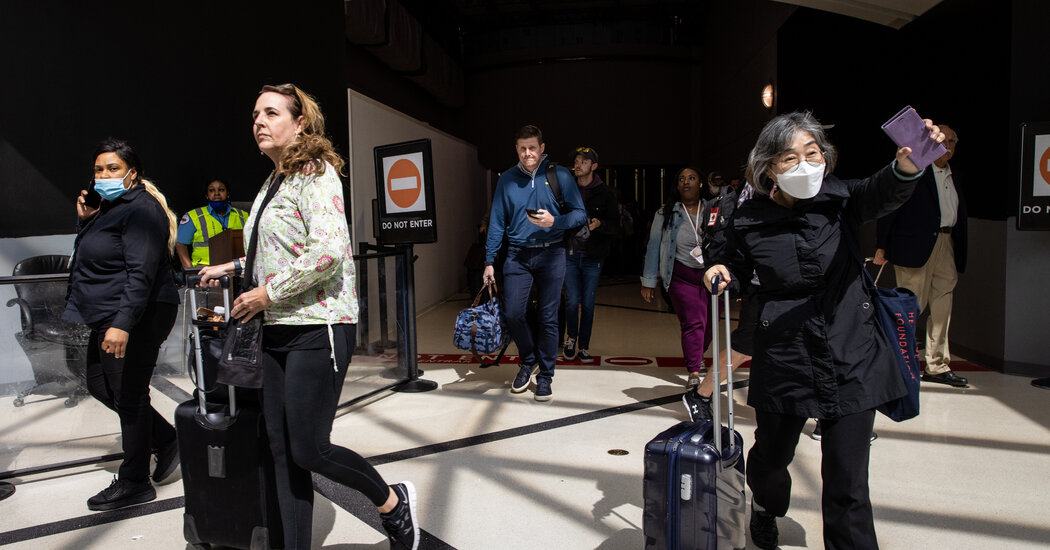
After a federal mask mandate was struck down on Monday, travelers are facing a patchwork of rules spanning air travel, trains, buses, cruise ships and ride-hailing services. Here’s what to know.A federal judge in Florida struck down the federal mask requirement for planes and public transit on Monday, which had been set to expire on May 3. Within 24 hours, all major U.S. airlines, as well as the Amtrak rail system, had declared that they were no longer requiring masks for passengers or employees. The White House said on Tuesday evening that it would appeal the ruling if the Centers for Disease Control and Prevention decided that there is a public health basis for trying to reinstate the mandate. The C.D.C. said in a statement on Wednesday evening that it had asked the Justice Department to proceed with an appeal. What does all this mean for travelers? Here’s the latest on the evolving situation — which could soon change again.Your questions about masks and travel:Do I need to wear a mask on a domestic flight?What about in airports?What if I’m flying internationally?Do I still have to test when flying into the United States?Can I get refunded if I’m not comfortable flying amid unmasked people?Are masks required on cruise ships?How about other mass transit?What about taxis and ride-hailing services?Do I need to wear a mask on a domestic flight?No. Wearing a mask on a plane is currently optional on all major U.S. carriers for both passengers and crew. What about in airports?While most U.S. airports no longer require masks for travelers or staff, some exceptions include New York’s John F. Kennedy International and La Guardia airports and Philadelphia International Airport. Each airport makes its own rules, so it’s possible these requirements could change.What if I’m flying internationally?Face coverings may still be required to or from some international destinations, depending on either that country’s or the airline’s rules.Mask rules onboard vary from country to country. Many nations, including China, Canada, France and Germany, for example, still require all travelers to wear masks on planes departing from or arriving into the country. But in Mexico and in many parts of the Caribbean it is up to the airline to set its own rules.Several international airlines, including British Airways and Virgin Atlantic, updated their policies on Tuesday to make masks optional on flights to U.S. destinations. They had previously stopped requiring masks on many routes to the Caribbean.Do I still have to test when flying into the United States?Yes, indeed. Every traveler over the age of 2 flying into the United States, regardless of vaccination status or citizenship, must show a negative coronavirus test taken the day before boarding. Alternatively, people who have tested positive in the past 90 days may travel with positive viral test results and a signed letter from a licensed health care provider or a public health official saying that they have been cleared for travel.Unlike the federal mask mandate, there is no expiration date on this requirement. Airlines and trade organizations representing the hospitality industry have been lobbying for the C.D.C. to lift the requirement, which they say is financially damaging. The White House said earlier this month that there were no immediate plans to remove the rule.Can I get refunded if I’m not comfortable flying amid unmasked people?It depends. Airlines do not seem to be offering any special type of refund for people in this situation. If you booked a nonrefundable fare, you may be out of luck. Your best bet may be getting a credit or rebooking the flight for some distant date; most airlines no longer charge change fees on all but basic economy flights.If you are flying Delta, though, you can plead your case. “We hear situations out on a case-by-case basis and make a determination,” a spokesman for Delta said on Wednesday.Southwest offers a voucher or a refund, depending on the type of ticket.In response to this question, American Airlines sent its standard refund policy which requires a traveler to cancel within 24 hours on a nonrefundable ticket.The sudden change of mask rules has caused anxiety for some travelers. Susanna Speier, 49, who has Crohn’s disease, is among the many immunocompromised Americans now grappling with what to do about upcoming travel plans. When she committed to attending a conference in Austin, Texas, on April 28, Ms. Speier, who lives in Denver, understood that everyone on the plane would be wearing a mask.“I’m angry that the airlines are doing it and that they are doing this suddenly,” said Ms. Speier, who writes a newsletter about living with a weakened immune system.Are masks required on cruise ships?Mask-wearing is optional on most major cruise lines, including Carnival Cruise Line, Royal Caribbean and Norwegian. Most cruise companies sailing on U.S. waters have opted in to the C.D.C.’s voluntary sailing order, which does not require cruise passengers to wear masks onboard ships when 95 percent of crew and passengers over the age of 5 are fully vaccinated.Following Monday’s ruling on mask mandates for public transportation hubs, masks are no longer required to be worn in cruise terminals. Mask rules for international ports vary by destination and should be checked before disembarking.How about other mass transit?It depends. Since the federal transportation mandate no longer holds, public transit systems may set their own rules in accordance with city, county or state health authorities. As of Wednesday, riders are still required to wear masks while taking public transportation in New York City and Portland, Ore., but not in Washington D.C. or Los Angeles for example. The Amtrak rail system said passengers and employees would no longer need to wear masks on trains or in stations. Adding to confusion, though, mask-wearing may be required in some train stations that choose to enforce it.What about taxis and ride-hailing services?Masks are no longer mandated in taxis, and both Uber and Lyft has stopped requiring riders and drivers in the United States to wear face coverings. But local regulations can supersede these policies. In New York City, for example, masks are still required in Ubers, Lyfts and taxis.Follow New York Times Travel on Instagram, Twitter and Facebook. And sign up for our weekly Travel Dispatch newsletter to receive expert tips on traveling smarter and inspiration for your next vacation. Dreaming up a future getaway or just armchair traveling? Check out our 52 Places list for 2022.

Read more →

Aid Workers in Ukraine Fight to Deliver Supplies Despite Lives Lost to Russian Shelling

On a bracingly cold day in March, four people set out from Ukraine’s capital, Kyiv, to deliver lifesaving medicines, heating devices and food to the besieged residents of Chernihiv, in the northeast. Only one survived.During a quick stop en route, the convoy was hit by Russian shelling. Two of the four people died instantly. A third was pelted by fragments and died a half-hour later. The survivor was a man who had stepped away from the vans to relieve himself.Among the dead: 21-year-old Aanastasiia Tagirova, who had wanted to go to Chernihiv to reunite with her boyfriend, and her cat.The ill-fated trip, on March 30, was organized by 100% Life, a large nonprofit group that serves Ukrainians living with H.I.V. It was not the group’s first mission to Chernihiv, nor its last.Undeterred, the organization’s staff and volunteers have continued to make forays into Chernihiv, learning to be nimble and unobtrusive to Russian eyes. So far, they have delivered enough medicines to treat the 1,800 people in Chernihiv known to be living with H.I.V., although an unknown number may have fled the city or been killed.Public health groups like these are going to extraordinary lengths to help their compatriots and to preserve Ukraine’s hard-won progress against H.I.V., tuberculosis and other scourges. While they have always committed to saving lives, the goal has come to mean something entirely different since the invasion.“Struggling and fighting for life is our principle,” Dmytro Sherembei, who heads 100% Life, said through a translator in a recent interview. “We always have to be ready to fight for life under any circumstances and any conditions.”Experts have warned that wars nearly always lead to public health crises. Pathogens find easy targets among large groups huddled closely together in basements and refugee camps, children who miss routine vaccinations and patients who lose access to medications.Interruptions in treatment for H.I.V. and TB can breed versions of the pathogens that are resistant to the medications. Ukraine and its neighbors already represent the global epicenter of drug-resistant tuberculosis.On March 25, volunteers from 100% Life loaded two vans with a half ton of medicines — including liquid formulations of H.I.V. treatments for children — clothes and food. The only bridge to Chernihiv had been destroyed by bombing, so they drove the vans to the banks of the Dnipro River, transferred the cargo to a boat and unloaded it on the other side. They returned with 34 people fleeing Chernihiv.On their second trip, on March 30, volunteers again loaded two minivans with food and medicines, and this time heating devices for freezing residents. They were joined by three vans from an evangelical church hoping to evacuate some of their members from Chernihiv.The shelling incinerated four of the vans and partially destroyed the fifth. Mr. Sherembei said three people from the church group had been brought to a hospital, but he did not know their fates.“The Russians were bombing us, they were shelling us, knowing full well that it was a humanitarian convoy,” he said.The organization lost two volunteers: Bohdan Stefanyshyn, 40, and Oleksii Antonov, 28. Yurii Luniov, the 41-year-old volunteer who had stepped away into the bushes, was spared.Mr. Sherembei seemed particularly distraught as he talked about Ms. Tagirova. No entreaties from him or from her friends and family had dissuaded her from joining the trip, he said.Even after the tragedy, abandoning the missions was not an option — not when there were people, including many children, who needed the medicines, he said. So the volunteers thought of ways to make themselves less conspicuous, and have made three trips so far.Figuring that one van would draw less attention than a convoy, and that the Russians might be unlikely to use precious missiles on a single target, they swapped the two small vans for a large dull-colored one. They no longer travel with the church group. They packed solar panels, candles for people living out of dank basements, and food. The aid workers could bring back only about 10 people.Russia-Ukraine War: Key DevelopmentsCard 1 of 3A new phase of the war.

Read more →

C.D.C. Calls for Appeal to Reinstate Transportation Mask Mandate

WASHINGTON — The Centers for Disease Control and Prevention said Wednesday that it had asked the Justice Department to appeal a federal court ruling striking down its requirement for masking on planes, trains, buses and other modes of transportation, after concluding that “an order requiring masking in the indoor transportation corridor remains necessary for the public health.”The announcement came a day after the Biden administration said it intended to appeal the ruling from a Florida judge — but only if the C.D.C. decided that the mask mandate was still necessary.“C.D.C. believes this is a lawful order, well within C.D.C.’s legal authority to protect public health,” the agency said in a statement, adding that it “continues to recommend that people wear masks in all indoor public transportation settings.”The Department of Justice also announced, through its spokesman on Twitter, that it had filed a notice of appeal. But the announcements do not change the status of the mask mandate, which has been lifted by the Transportation Security Administration and cannot legally be enforced unless the administration wins a stay of the lower court order, or wins the appeal.An appeal is potentially risky for the agency. The ruling by a Federal District Court judge, Kathryn Kimball Mizelle, an appointee of former President Donald J. Trump, does not set a legal precedent. But should an appeals court, or the Supreme Court, uphold her decision, it could permanently constrain the C.D.C.’s authority.

Read more →

Scientists Find No Benefit to Time-Restricted Eating

In a yearlong study, participants who confined meals to certain hours lost no more weight than those who ate at any time.The weight-loss idea is quite appealing: Limit your eating to a period of six to eight hours each day, during which you can have whatever you want.Studies in mice seemed to support so-called time-restricted eating, a form of the popular intermittent fasting diet. Small studies of people with obesity suggested it might help shed pounds.But now, a rigorous one-year study in which people followed a low-calorie diet between the hours of 8 a.m. and 4 p.m. or consumed the same number of calories anytime during the day has failed to find an effect.The bottom line, said Dr. Ethan Weiss, a diet researcher at the University of California, San Francisco: “There is no benefit to eating in a narrow window.”The study, published on Wednesday in the New England Journal of Medicine, was led by researchers at Southern Medical University in Guangzhou, China, and included 139 people with obesity. Women ate 1,200 to 1,500 calories a day, and men consumed 1,500 to 1,800 calories daily. To ensure compliance, participants were required to photograph every bit of food they ate and to keep food diaries.Both groups lost weight — an average of about 14 to 18 pounds — but there was no significant difference in the amounts of weight lost with either diet strategy. There also were no significant differences between the groups in measures of waist circumference, body fat and lean body mass.The scientists also found no differences in such risk factors as blood glucose levels, sensitivity to insulin, blood lipids or blood pressure.“These results indicate that caloric intake restriction explained most of the beneficial effects seen with the time-restricted eating regimen,” Dr. Weiss and his colleagues concluded.The new study is not the first to test time-restricted eating, but previous studies often were smaller, of shorter duration and without control groups. That research tended to conclude that people lost weight by eating only during a limited period of time during the day.Dr. Weiss himself used to be a true believer in time-restricted eating and said that for seven years he had eaten only between noon and 8 p.m.In previous research, he and his colleagues asked some of the 116 adult participants to eat three meals a day, with snacks if they got hungry, and others were instructed to eat whatever they wanted between noon and 8 p.m. Participants lost a small amount of weight — an average of two pounds in the time-restricted eating group, and 1.5 pounds in the control group, a difference that was not statistically significant.In an interview, Dr. Weiss recalled he could hardly believe the results. He asked the statisticians to analyze the data four times, until they told him further work wouldn’t change the results.“I was a devotee,” he said. “This was a hard thing to accept.”That experiment lasted just 12 weeks. Now, it looks like even a one-year study has failed to find a benefit in time-restricted eating.Dr. Christopher Gardner, director of nutrition studies at the Stanford Prevention Research Center, said he wouldn’t be surprised if time-restricted eating nonetheless worked on occasion.“Almost every type of diet out there works for some people,” he said. “But the take-home supported by this new research is that when subjected to a properly designed and conducted study — scientific investigation — it is not any more helpful than simply reducing daily calorie intake for weight loss and health factors.”Weight-loss experts said time-restricted diets are unlikely to go away. “We don’t have a clear answer yet” about whether the strategy helps people lose weight, said Courtney Peterson, a researcher at the University of Alabama at Birmingham who studies time-restricted eating.She suspects the diet might benefit people by limiting the number of calories they have an opportunity to consume each day. “We just need to do larger studies,” Dr. Peterson said.Dr. Louis J. Aronne, director of the Comprehensive Weight Control Center at Weill Cornell Medicine in New York, said that, in his experience, some people who have trouble with calorie-counting diets do better if they are told simply to eat only during a limited period of time each day.“While that approach hasn’t been shown to be better, it doesn’t appear to be worse” than calorie counting, he said. “It gives patients more options for success.”The hypothesis behind time-restricted eating is that circadian genes that are thought to increase metabolism are turned on during daylight hours, said Dr. Caroline Apovian, co-director of the Center for Weight Management and Wellness at Brigham and Women’s Hospital in Boston.The question for researchers, she added: “If you overeat a bit during daylight hours, are you more able to burn those calories rather than store them?” Dr. Apovian said she would like to see a study that compared a group of subjects who overate all day to a time-restricted eating group of subjects who also overate.She said she would still recommend time-restricted eating to patients, she said, even though “we don’t have proof.”For Dr. Weiss, he said he was persuaded by his own study and said the new data reinforced his conviction that time-restricted eating offers no benefit.“I started eating breakfast,” he said. “My family says I am a lot nicer.”

Read more →

Risky driving behaviors increase as common sleep disorder worsens

People with sleep apnea wake up tired in the morning, no matter how many hours they actually sleep. The condition causes them to briefly stop and restart breathing dozens or even hundreds of times a night. Even though such breathing interruptions often don’t awaken those with apnea, they prevent them from sinking into deep, refreshing sleep.
A new study puts a number on how dangerous such chronic tiredness can be, at least in regard to driving. For every eight additional breathing interruptions per hour, the odds of making a dangerous driving move such as speeding, braking hard or accelerating suddenly increase by 27%, according to a study by researchers at Washington University School of Medicine in St. Louis.
Older adults are more likely to develop sleep apnea. They also are more likely to be seriously injured or killed in a car accident. The findings, available online in the journal Sleep, suggest that screening older adults for sleep apnea and for treatment, if needed, may help older people continue driving safely for longer.
“The percentage of older adults with mild sleep apnea is 30% to 50%, but if such adults don’t have daytime sleepiness or other evidence of impairment, they may not come to medical attention,” said co-senior author Brendan Lucey, MD, an associate professor of neurology and director of Washington University’s Sleep Medicine Center. “However, these findings suggest that we might want a lower threshold to evaluate older adults for sleep apnea and track their breathing interruptions. If their conditions worsen by just eight interruptions an hour, that could have significant adverse effects on their driving and their risk of suffering serious injury.”
People 65 and over are the most responsible drivers on the road. They obey speed limits. They drive defensively. They avoid driving at night, in bad weather and in unfamiliar places. But the changes that often come with advancing age — such as deteriorating vision, slower reflexes and, yes, difficulty sleeping — can undermine even the safest habits.
Lucey teamed up with driving researcher Ganesh M. Babulal, PhD, OTD, an assistant professor of neurology and the paper’s co-senior author, to investigate the relationship between sleep apnea and risky driving behaviors. Participants were recruited from ongoing studies at Washington University’s Charles F. and Joanne Knight Alzheimer Disease Research Center (Knight ADRC).
Babulal and Lucey monitored the driving and sleep habits of 96 older adults under real-world conditions. They used a commercially available take-home test to identify people with sleep apnea and measure its severity. Less than five breathing interruptions per hour is considered normal, five to 15 is mild sleep apnea, 15 to 30 is moderate, and greater than 30 is severe.
To assess driving habits, the researchers installed a chip developed by Babulal and colleagues into participants’ personal vehicles and monitored their driving for a year, focusing on episodes of hard braking, sudden acceleration and speeding. In total, they collected data on more than 100,000 trips. Participants also were evaluated by researchers at the Knight ADRC for cognitive impairments and molecular signs of early Alzheimer’s disease.
Even though all participants were cognitively normal, about a third had brain changes indicative of early Alzheimer’s disease. The researchers found that the frequency with which drivers made dangerous moves behind the wheel rose in parallel with the frequency with which their sleep was interrupted at night, regardless of whether their brains bore the marks of early Alzheimer’s.
“We didn’t have cameras in the vehicles, so we don’t know exactly what happened that caused someone to, say, brake hard suddenly,” Babulal said. “But it could be something like a stoplight that they didn’t realize was red until they got close and had to stomp on the brakes. The more tired you are, the less attention you have to deploy to the task at hand, especially if it is novel and constantly changing.”
The study helps untangle the ways aging-associated risk factors such as poor sleep and Alzheimer’s disease put older adults in danger while driving, and could aid efforts to find ways to maximize years of safe driving, the researchers said.
“Driving always carries the risk of crashing, and older adults are at risk of more severe injury than younger adults if they experience a crash,” Babulal said. “But we can’t just tell them to give up their keys. When older people stop driving, they lose a lot of their independence and mobility, which is often associated with negative health and social outcomes. What we want to understand is what puts them at a higher risk so we can intervene and help them stay behind the wheel, safely, for as long as possible.”

Read more →

African dust crosses the Atlantic

A beautiful sunset over the Atlantic off the Florida coast, or an orangey glow in the Texas sky at dusk may be caused by dust from West Africa, according to researchers who are looking at the paths of particulate matter in the skies over the Sahara desert and the semi-arid Sahel.
“We are looking at how much dust is being transported into West Africa in the winter and across the Atlantic in the summer,” said Gregory S. Jenkins, professor of meteorology and atmospheric science, geography, and African studies, Penn State. “In the winter, it is low in the atmosphere and in the summer, it is higher in the atmosphere. Dust has an impact, especially on health.”
Jenkins and Moussa Gueye, research professor, University of SIne Saloum El-Hȃdj Ibrahima NIASS, Dakar, Sénégal, modeled annual particulates less than 10 microns (PM10) from 1960 to 2016.
“We showed that there is a simulated annual downward trend in surface PM10 concentrations in Senegal and Cabo Verde after the 1980s, which is similar to earlier findings,” the researcher report in Atmospheric Environment. However, the data for summers suggests that there was an increase in dust over the Western Sahara that was transported to Cabo Verde suggesting that this Eastern Atlantic dust continued on toward the U.S. and the Caribbean.
The researchers can measure the amounts of dust that reach the Western Atlantic near Miami, Barbados and Puerto Rico for example, because there are ample meteorological and other measurement stations in those areas, but in West Africa and places like Cabo Verde, there are few ground-based measurement facilities to measure the dust reaching there.
Researchers must then rely on satellite-based measurements, which cannot provide measurement at night. The data collected by ground-based and satellite instruments is used as the basis for models that estimate the paths and amounts of dust hitting West Africa in the winter and the Atlantic and Caribbean in the summer. However, there are so few measurement stations in Africa — because the stations require electricity, cell phones, internet and someone to maintain them — that the models are somewhat incomplete.

Read more →