Machine-learning model can distinguish antibody targets

A new study shows that it is possible to use the genetic sequences of a person’s antibodies to predict what pathogens those antibodies will target. Reported in the journal Immunity, the new approach successfully differentiates between antibodies against influenza and those attacking SARS-CoV-2, the virus that causes COVID-19.
“Our research is in a very early stage, but this proof-of-concept study shows that we can use machine learning to connect the sequence of an antibody to its function,” said Nicholas Wu, a professor of biochemistry at the University of Illinois Urbana-Champaign who led the research with U. of I. biochemistry Ph.D. student Yiquan Wang; and Meng Yuan, a staff scientist at Scripps Research in La Jolla, California.
With enough data, scientists should be able to predict not only the virus an antibody will attack, but which features on the pathogen the antibody binds to, Wu said. For example, an antibody may attach to different parts of the spike protein on the SARS-CoV-2 virus. Knowing this will allow scientists to predict the strength of a person’s immune defense, as some targets of a pathogen are more vulnerable than others.
The new approach was made possible by the abundance of data related to antibodies against SARS-CoV-2, Wu said.
“In 20 years, scientists have discovered about 5,000 antibodies against the flu virus,” he said. “But in just two years, people have identified 8,000 antibodies for COVID. This provides an opportunity that’s never been seen before to study how antibodies work and to do this kind of prediction.”
The researchers used antibody data from 88 published studies and 13 patents. The datasets were big enough to allow the researchers to train their model to make predictions based on the antibodies’ genetic sequence.
The model was designed to distinguish whether the sequences coded for antibodies targeting regions on the influenza virus or on the SARS-CoV-2 virus. The researchers then checked the accuracy of those predictions.
“The accuracy was close to 85% overall,” Wang said.
“I was actually quite surprised that it worked so well,” Wu said.
The team is working to improve its model so that it can more precisely determine which parts of the virus the antibodies attack.
“If we can make these predictions based on antibody sequence, we might also be able to go back and design antibodies that bind to specific pathogens,” Wu said. “This is not something that we can do now, but those are some implications for future study.”
The National Institutes of Health supported this research.
Story Source:
Materials provided by University of Illinois at Urbana-Champaign, News Bureau. Original written by Diana Yates. Note: Content may be edited for style and length.

Read more →

Nylon cooking bags, plastic-lined cups can release nanoparticles into liquids

Nylon cooking bags and plastic-lined cardboard cups are conveniences many people rely on, but a new study in ACS’ Environmental Science & Technology suggests that they are an underappreciated source of nanoparticles. They report that the plastic in these products release trillions of nanometer-sized particles into each liter of water that they come in contact with. That sounds like a lot, but the team notes that these levels are under the regulatory limits for consumption.
Food-grade plastics come into contact with a variety of foods and drinks that people consume every day. For instance, nylon cooking bags help keep food moist in the oven and make clean-up easier for slow cookers. Likewise, plastic-lined paper cups are designed to keep liquids hot and prevent them from leaking out. Previous studies have shown that some plastic materials, including polypropylene baby bottles and polyethylene terephthalate tea bags, can shed microscopic and nanoscale particles into heated liquids, though the human health implications of ingesting these particles are unclear. So, Christopher Zangmeister and colleagues wanted to see whether food-grade plastic films can also be a source of small plastic particles.
The researchers poured room temperature or hot water into nylon slow cooker bags and low density polyethylene-lined cardboard cups from different retailers. After keeping the slow cooker hot for an hour, the researchers found that 35 trillion plastic nanoparticles leached into the liter of water in each bag. When the team put hot liquid in 12-fluid-ounce cups for 20 minutes, 5.1 trillion plastic nanoparticles per liter leached out. Both materials released considerably fewer nanosized particles into room temperature water. Finally, the researchers calculated that a person would have to drink 13 cups of hot water from a plastic-lined cup or half a liter of water from the cooking bag to consume the equivalent of one nanoplastic particle for every seven cells in a person’s body. But they also note that the number of particles that migrated from the food-grade plastics into both the room temperature and hot water are still well below the levels for safe human consumption, according to U.S. Food and Drug Administration limits.
The authors received funding from the U.S. National Institute of Standards and Technology.
Story Source:
Materials provided by American Chemical Society. Note: Content may be edited for style and length.

Read more →

Cancer: Huge DNA analysis uncovers new clues

SharecloseShare pageCopy linkAbout sharingImage source, Science Photo Library/Getty ImagesUK scientists have undertaken a huge “archaeological dig” of cancer in the UK, analysing the complete genetic make-up – or whole genome sequence – of tumours from about 12,000 patients.The team says the unprecedented amount of data allowed them to uncover new patterns in the DNA of cancer – hinting at causes that are not yet understood.They add that the genetic clues will ultimately help improve diagnosis and treatment.The research is published in Science.Cancer can be thought of as a corrupted version of our own healthy cells – mutations to our DNA change our cells until eventually they grow and divide uncontrollably.Traditionally many cancers have been categorised by doctors based on where they are in the body and the type of cells involved – but whole genome sequencing can provide another layer of key information.’Dinosaur footprints’Whole genome sequencing is relatively new, but is already available on the NHS for a small number of specific cancers, including some blood cancers.The NHS long-term plan aims to make it more widely available, through the NHS Genomic Medicine Service.Lead researcher Prof Serena Nik-Zainal, a consultant at Cambridge University Hospitals, told the BBC the study was like an “archaeological dig” of people’s cancer.She added: “We can see the patterns or imprints in the field of their cancers – like dinosaur footprints – of what is going wrong with their cancers. “And everyone’s cancer is different. To know we can personalise each person’s cancer report means we are a step closer to personalising treatment for them.”Led by the University of Cambridge, the research team analysed anonymised DNA data provided by the 100,000 Genomes Project – an England-wide project to sequence the whole genomes of patients affected by cancer and rare diseases. With thousands of genetic changes seen in each tumour they analysed, researchers were able to detect specific combinations of genetic alterations – so-called “mutational signatures” – that may be key to cancers developing. Comparing the data to other international genetic cancer projects, they confirmed patterns that are already known, and uncovered 58 new ones.This video can not be playedTo play this video you need to enable JavaScript in your browser.Some signatures can provide clues about whether patients have had exposure to environmental causes of cancers – such as smoking.Others provide more information about genetic abnormalities that may be amenable to specific drugs, researchers say. Researchers also created a computer programme to help scientists and doctors check whether patients who have had whole genome sequencing have any of the newly discovered mutational clues.Image source, CUH’Challenging journey’Aubrey, a two-year-old girl from Bedfordshire, was diagnosed with cancer when she was only 16 months old. She did not take part in the study. But whole genome sequencing helped doctors identify the type of cancer she has – a rhabdomyosarcoma – a rare cancer that generally affects muscles attached to bones. The results helped make sure she is on the best treatment. Anna, Aubrey’s mother, said: “Because of the unusual way Aubrey’s cancer presented, the doctors were not sure of the exact cancer type. “The whole genome sequence test helped doctors to know how to treat her and keep her stable. “Whilst we still have a challenging journey with Aubrey’s diagnosis and treatment, we are relieved to know she does not have cancer that was inherited, and we do not have to worry that it could affect our son or other members of the family as well.”What is your genome? Your genome is the information needed to build the human body and keep it healthyIt is written in chemical code called DNAThe genome is made of segments of DNA called genes and other genetic materialMost cancers are caused by cells with unusual changes in their genome Source: NHS EnglandProf Matt Brown, chief scientific officer of Genomics England, said: “Mutational signatures are an example of using the full potential of whole genome sequencing. “We hope to use the mutational clues seen in this study and apply them back into our patient population, with the ultimate aim of improving diagnosis and management of cancer patients.”The research is supported by Cancer Research UK. More on this storyBrain cancer DNA research aims to improve treatmentsDNA mapping project ‘to transform society’Hundreds with rare diseases get genetic diagnosisRelated Internet LinksScience Journalgenome-sequencing-cancer- patient-information NHSThe BBC is not responsible for the content of external sites.

Read more →

Routine Childhood Vaccinations in the U.S. Slipped During the Pandemic

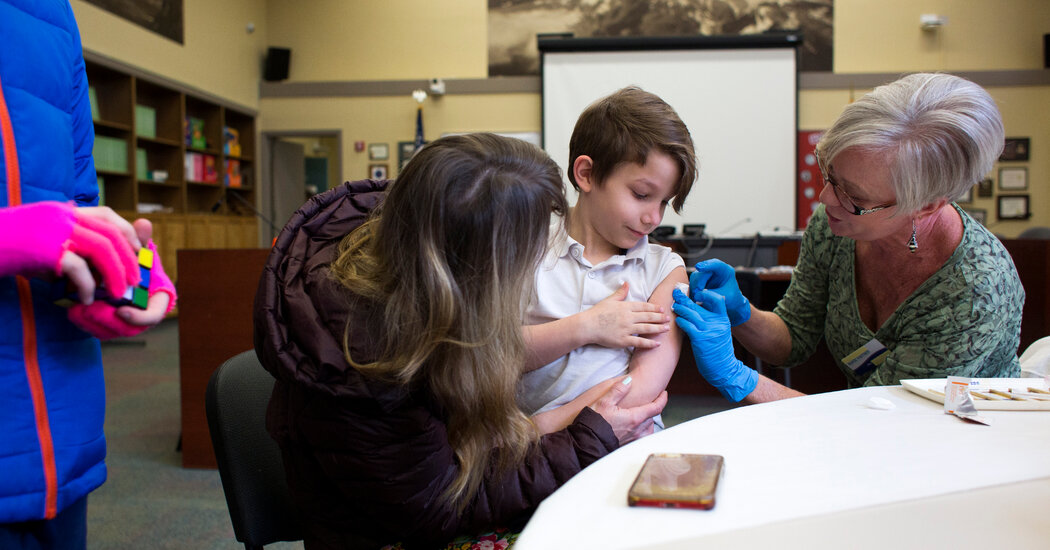
Kindergartners in the United States fell behind on routine childhood vaccinations during the pandemic, the Centers for Disease Control and Prevention reported on Thursday, a slide that experts attributed to skipped checkups and to a groundswell of resistance to Covid-19 shots spilling into unease about other vaccines.During the 2020-21 school year, about 94 percent of kindergartners had the required vaccines, a drop of roughly one percentage point from the previous school year, the C.D.C. said. That pulled coverage levels below the target of 95 percent, raising fears that life-threatening childhood illnesses like measles could at some point become more prevalent.“This means there are 35,000 more children in the United States during this time period without documentation of complete vaccination against common diseases,” Dr. Georgina Peacock, the acting director of the C.D.C.’s immunization services division, said at a news conference on Thursday. “This is further evidence of how pandemic-related disruptions to education and health care could have lingering consequences for children.”Enrollment in kindergarten had also fallen by around 10 percent, Dr. Peacock said, meaning that about 400,000 additional children who had been expected to start school but did not may also have fallen behind on routine vaccinations.Some states showed dramatic declines in coverage, while others held steadier. Maryland, for instance, reported a roughly 10 percent drop in coverage with the measles, mumps and rubella vaccine from the 2019-20 school year to 2020-21 among kindergartners. Wisconsin, Georgia, Wyoming and Kentucky all reported declines of around 5 percent.Idaho had among the lowest levels of coverage during the 2020-21 school year with the measles, mumps and rubella vaccine, at 86.5 percent.The C.D.C. said that coverage had fallen in a majority of states. Virginia, Kansas and Alabama were among a small number of states reporting higher levels of measles, mumps and rubella vaccine coverage during the last school year.C.D.C. scientists emphasized that extra barriers to reporting vaccination data during the pandemic, including reduced staffing and difficulties collecting information from parents, could also have artificially lowered recorded coverage levels in some places.Nationally, vaccination coverage fell slightly below 94 percent for the measles, mumps and rubella vaccine; the diphtheria, tetanus and acellular pertussis vaccine; and for the varicella vaccine, the C.D.C. said. The United States had already very nearly lost its status as a country that had eliminated measles in 2019. During that year, the country experienced an unusually high number of measles outbreaks in communities where vaccination levels had dropped.C.D.C. scientists ascribed the coverage declines in part to missed well-child checkups, which pediatricians said that some families were avoiding during the pandemic out of fear of coming into contact with children with Covid. The agency said that disruptions to schooling, including eased immunization requirements for remote learners and heavy demands on school nurses, could also have contributed to reduced vaccinations.Pediatricians said in interviews that those issues had also collided with growing levels of anti-vaccine misinformation aimed at the coronavirus shots, which they said had prompted more resistance to ordinary vaccines, too.“There’s a greater proportion of parents who are questioning routine vaccines,” said Dr. Jason V. Terk, a pediatrician practicing in a suburb of Dallas who also acts as a spokesman for the American Academy of Pediatrics.“The experience of the pandemic, and the agenda-driven disinformation that has been pushed out relative to Covid vaccines,” he added, had “fed the fire of distrust and skepticism that is really sort of the new pandemic of hesitancy for routine vaccines.”Public health experts also noted a movement by some state legislatures to create new restrictions around requiring vaccines, though they said that many bills were still pending.The C.D.C. study did not find evidence of a surge of families seeking exemptions during the pandemic: It said that the percentage of kindergartners with an exemption for one or more required vaccines was 2.2 percent in 2020-21, similar to the figure reported a year earlier.The agency said that it estimated vaccination coverage based on counts provided by federally funded immunization programs that work with schools and local education departments to examine students’ vaccination and exemption status. It noted that the pandemic had sometimes interfered with efforts to collect and report vaccination data and that national coverage estimates for 2020-21 included only 47 of 50 states and Washington, D.C.Signs of declining childhood immunization rates had emerged earlier in the pandemic, including reduced vaccine orders from states as part of a federally funded program for uninsured patients.Dr. Gary Kirkilas, a pediatrician in Phoenix who cares for patients whose families are often poor or homeless, said that conversations about vaccines with the families of children entering kindergarten are often straightforward. After all, he said, the shots needed at that age are often effectively booster doses of vaccines that were administered at younger ages.But he said that vaccinating children in families that were transient, unused to seeing doctors regularly or distrustful of the medical community required a special level of attention. Skipped well-child checkups during the pandemic exacerbated those problems, Dr. Kirkilas said.And while one segment of families arrived eager for their children to get vaccines to protect against Covid and other diseases, another was more resistant than ever.“All the rumblings about vaccines for kids and the misinformation that was going on at the time — that sort of amplified that particular segment of families, where ‘I’m distrustful of the flu vaccine and then I’m also distrustful of the Covid vaccine and maybe I’m starting to be distrustful of vaccines in general,’” he said.C.D.C. scientists said they were hopeful that the return of in-person schooling would accelerate efforts to catch children up on routine vaccines. They encouraged schools to send reminders to families whose children were behind and said doctors’ offices should alert families that children were due for additional shots.

Read more →

New production method promises to end medical radioisotope shortages

A commonly used radioisotope, technetium-99m, used in medical diagnoses regularly suffers from shortages due to being produced at aging nuclear reactors that often shut down for repairs. But an alternative technique for producing the isotope, developed by a group of researchers at the University of Tokyo and that takes advantage of equipment commonly found in hospitals, promises to bring an end to such supply chain frustrations.
A paper describing the method and its effectiveness in mice test subjects was recently published in the journal Nuclear Medicine Biology.
Technetium-99m (99mTc) is one of the most commonly used medical radioisotopes in the world, thanks to the unique properties of its radioactivity. It emits gamma rays of moderate energy that are easily detectable by medical equipment. 99mTc also has a moderately short half-life that allows its gamma emissions to be used as a tracer in medical diagnostic procedures while keeping patient radiation exposure very low.
This radioisotope is produced from molybdenum-99 (99Mo), which is produced by the fission of uranium-235 in nuclear reactors. Most of the reactors producing the vast majority of the world’s supply of 99mTc are quite old now, and frequently shut down for extended periods for repairs, threatening the availability of this vital medical commodity. A worldwide shortage of 99mTc occurred in 2010 when two of the 99Mo production reactors were offline at the same time, prompting research into alternative methods of 99Mo/99mTc production.
One of the most promising alternatives is the use of a linear particle accelerator (or “linac”), instead of nuclear reactors. A linac speeds up charged subatomic particles to a very high velocity along a straight line, as opposed to acceleration around a loop (hence “linear”). The 99Mo is produced by irradiating molybdenum trioxide with photons from the linac electron beams, and the 99mTc extracted from the decaying 99Mo by a technetium-99m generator, sometimes called a “moly cow” by its operators.
What makes this alternative so attractive compared to reactors is that the relatively compact linacs are already widely used in hospitals for radiation treatment for cancer patients.
A challenge this option has faced, however, is that for the 99mTc to be usable as a medical tracer, the element must have a high radioactive concentration (RAC — the amount of radioactivity per volume), and the 99Mo precursor produced with linacs has a much lower level of “specific activity” (emissions per molybdenum mass) than that produced as a result of nuclear fission. The 99Mo can result in the 99mTc having impractically low RAC if the 99mTc is extracted using aluminum oxide (alumina) as a filter in the moly cow machine.
To solve this problem, the University of Tokyo researchers replaced the alumina with activated carbon (sometimes called activated charcoal, or just AC), a type of carbon that has been specially processed to have lots of tiny pores. These pores profoundly enhance the surface area of the substance, thus also enhancing the places to which atoms can adhere (and thus be extracted). For this reason, activated carbon is widely used in air filters, sewage treatment, decaffeination and gold purification. This attribute also makes it great for concentrating the 99mTc and can be used even with 99Mo with low specific activity.
“We had previously demonstrated the practicality of this combined linac-AC method to produce medically usable 99mTc, but had yet to perform any preclinical or clinical trials to see if in the body, this alternatively produced radioisotope is as effective as its conventionally produced one,” said Jaewoong Jang, an assistant professor at the university and lead author of the study. “We had a great concept, but no idea whether it would be what we call ‘bioequivalent’ — in essence, work the same way in patients.”
So they injected one group of mice with the linac-AC-derived 99mTc in the form of pertechnetate (the most basic compound of technetium used in radiopharmaceuticals) and another group of mice with the conventionally produced 99mTc. The mice were then dissected to assess the spread (“biodistribution”) of the radioisotope in different organs.
The two types of 99mTc radiopharmaceuticals showed similar distribution in all organs and tissues examined, and no adverse effects in the mice were observed, suggesting the clinical applicability of linac-AC-derived 99mTc radiopharmaceuticals.
The study was preliminary, with the assessment taking place at only one time point after injection of the radioisotope. The researchers now want to perform additional biodistribution studies at different time points to completely confirm the bioequivalence of the two 99mTc methods.
Story Source:
Materials provided by University of Tokyo. Note: Content may be edited for style and length.

Read more →

Can a messenger substance considered to be inflammatory alleviate asthma symptoms?

The messenger substance interleukin-3 produced by the body was previously considered to be pro-inflammatory in bronchial asthma. A research team from Universitätsklinikum Erlangen has now shown for the first time that the administration of interleukin-3, or IL-3 for short, can have a positive effect on chronic inflammatory respiratory disease.
Members of the research group led by Prof. Susetta Finotto, MD, and doctoral candidate and pharmacist Susanne Krammer from the Department of Molecular Pneumology investigated the production of the messenger substance in healthy preschool children and those affected by asthma who had participated in the European PreDicta pediatric asthma study. They found that children whose asthma was considered controlled by inhaled corticosteroid therapy had higher IL-3 production caused by blood cells known as activated peripheral blood lymphocytes. There was also a positive correlation between IL-3 in nasal fluid and the anti-inflammatory soluble form of the ST2 receptor. This suggests that IL-3 may contribute to alleviating asthma.
Using mice models induced with asthma, the researchers also investigated whether intranasal administration of IL-3 during asthma provocation could actually improve asthma symptoms. They discovered that IL-3 has a regulatory effect on the immune system and induces certain immune cells called regulatory T cells, which are believed to play a role in relieving bronchial asthma. Administration of IL-3 also decreased the number of pro-inflammatory eosinophil cells and reduced mucus production in the lungs of asthmatic mice.
IL-3 also resulted in decreased activation of inflammatory innate lymphoid type 2 cells. These immune cells secrete substances that can participate in the development of allergic diseases. They showed lower cell surface expression of the pro-inflammatory bound receptor ST2, which is important for activation of this cell type, when IL-3 was administered. The research group led by Prof. Finotto and Susanne Krammer have clearly shown that IL-3 also has immunoregulatory properties that can improve symptoms in bronchial asthma.
Story Source:
Materials provided by Friedrich-Alexander-Universität Erlangen-Nürnberg. Note: Content may be edited for style and length.

Read more →

Breast cancer: Why metastasis spreads to the bone

When cancer cells break away from a primary tumor and migrate to other organs, this is called “metastatic cancer.” The organs affected by these metastases, however, depend in part on their tissue of origin. In the case of breast cancer, they usually form in the bones. In an attempt to identify what determines the organs affected by metastasis, a team from the University of Geneva (UNIGE), in collaboration with researchers from ETH Zurich, has identified a protein involved in this phenomenon. This discovery could lead to the development of therapeutic approaches to suppress metastasis. This work can be read in the journal Nature Communications.
From the primary site of a tumor, cancer cells can invade their microenvironment and then circulate via blood and lymphatic vessels to distant healthy tissue to form metastases. In the case of metastatic breast cancer, the cancer cells primarily colonize the bones, but can also be found in other organs such as the liver, lungs or brain.
Plasticity of tumor cells
Although the molecular and cellular mechanisms responsible for the different stages of the metastatic process are not yet fully understood, studies show that cellular plasticity plays an important role. This term refers to the ability of cells to change function and/or form. Thus, tumor cells that become metastatic change their shape and become mobile.
The laboratory of Professor Didier Picard of the Department of Molecular and Cellular Biology at the Faculty of Science is interested in the mechanisms that govern the metastatic processes related to breast cancer. His group collaborated with Professor Nicolas Aceto’s group at ETHZ to study these processes in mice. The biologists investigated the potential role of the protein ZEB1, known to increase cell plasticity, in breast cancer cell migration.
”Unlike in women, mice transplanted with human breast cancer cells develop metastasis to the lungs, not the bones,” says Nastaran Mohammadi Ghahhari, researcher in the Department of Molecular and Cell Biology and first author of the study. ”We therefore sought to identify factors capable of inducing metastasis in bone tissue and in particular tested the effect of the factor ZEB1,” continues Nastaran Mohammadi Ghahhari.
Directing metastasis to bone
In in vitro migration and invasion experiments, the scientists found that cancer cells expressing ZEB1 moved to bone tissue, unlike cancer cells that did not express it. These results were later confirmed when human breast cancer cells were transplanted into the mammary glands of mice. If the cancer cells did not express ZEB1, metastasis occured primarily in the lungs. In contrast, when ZEB1 was present, metastases also developed in the bones, as is the case in women.
”We can therefore assume that this factor is expressed during tumor formation and that it directs cells that have acquired metastatic characteristics to the bones,” explains Didier Picard, the study’s last author. This study confirms the importance of the plasticity of tumor cells during the metastatic process and could allow, in the long term, to consider new therapeutic approaches to prevent the appearance of metastases.
Story Source:
Materials provided by Université de Genève. Note: Content may be edited for style and length.

Read more →

Study suggests tree-filled spaces are more favorable to child development than paved or grassy surfaces

A study recently published in Environment International has found that living in a tree-filled environment is associated with better early childhood development than living in an environment where vegetation takes the form of grass cover. The analysis — led by Matilda van den Bosch, senior researcher at the Barcelona Institute for Global Health (ISGlobal), a centre supported by the “la Caixa” Foundation — also found that both varieties of green space are associated with better child development outcomes than areas dominated by paved surfaces.
The study reinforces the notion — supported by a growing body of research — that green spaces are associated with better attention and memory in early childhood, higher academic achievement, and fewer emotional and behavioural problems. However, the research team wanted to go further and explore whether the type of vegetation makes a difference in these positive associations. All green spaces appear to promote health, but tree-filled areas may mitigate air pollution, noise and heat better than more open green spaces, while also doing more to support restoration from mental fatigue and the capacity for directed attention. Grassy spaces, in contrast, may do more to encourage group activities and therefore foster social well-being. Paved surfaces, meanwhile, are associated with more heat exposure and traffic-related air and noise pollution.
How the Study Was Conducted
The analysis was carried out in the Vancouver metropolitan area (Canada) and was based on a large birth cohort containing data on 27,539 children. These data were collected between 2000 and 2005 by various government bodies, including the British Columbia Ministry of Health. The children were followed from birth to age five years, at which time their kindergarten teachers rated their physical health and well-being, social competence, emotional maturity, language and cognitive development, communication skills and general knowledge. The teachers performed this assessment using a tool known as the Early Development Instrument (EDI).
The researchers used a high-spatial-resolution land cover map to determine whether the areas where the children lived were vegetated or non-vegetated and whether the vegetated land consisted of grass or trees (predominantly deciduous). The mean percentage of total vegetation exposure was found to be 36%, while the mean percentage of paved surfaces exposure was slightly lower at 32.2%.
Conclusion
Children with the greatest exposure to vegetation (either trees or grass) had the highest developmental scores. This positive association was especially notable for exposure to tree-filled areas. In contrast, early-life exposure to paved surfaces was associated with poorer child development.
“Because we assessed different types of vegetation, our findings contribute to an improved understanding of associations between exposure to green spaces and early childhood development,” commented Ingrid Jarvis, researcher at the University of British Columbia (Canada) and first author of the study.
Although more research is needed, these findings may be useful to urban planners. “Taken together, our findings suggest that converting paved surfaces to green spaces and, in particular, increasing the amount of trees in neighbourhoods may have positive effects on early childhood health and development,” noted ISGlobal researcher Matilda van den Bosch who led the research. Such efforts would not only reap the benefits associated with green spaces, but potentially also “reduce the adverse effects associated with urbanisation and impervious environments,” she added. Although the observed associations between environmental exposure and childhood development were relatively small, “even minor individual gains in childhood could lead to important public health benefits across the life course,” she concluded.
Story Source:
Materials provided by Barcelona Institute for Global Health (ISGlobal). Note: Content may be edited for style and length.

Read more →

Some autism spectrum disorder symptoms linked to astrocytes

Abnormalities in a type of brain cell called astrocytes may play a pivotal role in causing some behavioral symptoms of autism spectrum disorders, according to a preclinical study by Weill Cornell Medicine investigators.
For the study, published April 1 in Molecular Psychiatry, senior author Dr. Dilek Colak, assistant professor of neuroscience at the Feil Family Brain and Mind Research Institute at Weill Cornell Medicine, and her colleagues grew astrocytes from the stem cells derived from patients with autism and transplanted them into healthy newborn mice. They found that after the transplant, the mice developed repetitive behaviors, a hallmark symptom of autism spectrum disorders (ASD), but they did not develop the social deficits associated with the disease. The mice also developed memory deficits, which are commonly seen in ASD but are not a core characteristic of the disease.
“Our study suggests that astrocyte abnormalities might contribute to the onset and progression of autism spectrum disorders,” said Dr. Colak, who is also assistant professor of neuroscience in pediatrics and a member of the Drukier Institute for Children’s Health. “Astrocyte abnormalities may be responsible for repetitive behavior or memory deficits, but not other symptoms like difficulties with social interactions.”
Most studies of autism spectrum disorders have focused on the role of neurons, a type of brain cell that relays information in the brain. But other brain cells, called astrocytes, help regulate the behavior of neurons and the connections between them. Genetic mutations linked to autism spectrum disorders are likely to affect various types of cells in the brain differently, Dr. Colak said. Post-mortem studies had already revealed abnormalities in astrocytes in the brains of patients with autism spectrum disorders.
“We didn’t know if these astrocyte abnormalities contributed to the development of the disease or if the abnormalities are the result of disease,” Dr. Colak said.
To determine if astrocytes might be involved early in the disease, the team obtained stem cells derived from patients with autism spectrum disorders, coaxed them into developing into astrocytes in the laboratory, and transplanted them into the brains of otherwise healthy newborn mice, creating a human-mouse chimera.
Using a microscopic technique called two-photon imaging, they observed excessive calcium signaling in the transplanted human astrocytes in the brains of mice, explained co-lead author Dr. Ben Huang, instructor of neuroscience in psychiatry at Weill Cornell Medicine.
“It was amazing to see these human astrocytes responding to behavioral changes in active mice,” Dr. Huang said. “We believe we are the first to record the activity of transplanted human astrocytes this way.”
To determine if the increased calcium signaling was causing the mice’s behavioral symptoms, the team infected astrocytes grown from ASD patient stem cells in the laboratory with a virus carrying a fragment of RNA designed to reduce calcium signaling to normal levels. When they transplanted these astrocytes into the mice, the animals did not develop memory problems.
“Future therapies for autism might exploit this finding by using genetic tools to limit extreme calcium fluctuations inside astrocytes,” said co-lead author Megan Allen, a postdoctoral associate in neuroscience in the Feil Family Brain and Mind Research Institute at Weill Cornell Medicine.
The discoveries may also have important implications for understanding and treating other neuropsychiatric diseases like schizophrenia that also involve memory deficits, said Dr. Colak.
“It is important to determine the roles of specific types of brain cells, including astrocytes, in neurodevelopmental and neuropsychiatric diseases,” she said.
Story Source:
Materials provided by Weill Cornell Medicine. Note: Content may be edited for style and length.

Read more →

Skin bacteria may boost immune response of mice vaccinated with smallpox vaccine, study shows

The global eradication of smallpox in the 1980s was achieved by intradermal vaccination with vaccinia virus. A study published in PLOS Pathogens by Evgeniya V. Shmeleva, Brian J. Ferguson and Geoffrey L. Smith at University of Cambridge, United Kingdom and colleagues shows that there is a large increase in skin bacteria and suggests that this may enhance the immune response.
The smallpox vaccination was administered via multiple skin punctures and this method of vaccination may have introduced local bacteria into the vaccination site. However, the effect of smallpox vaccination on skin microbiota and whether these bacteria affect vaccination efficacy is not well understood. To investigate the role of bacteria in the immune response to smallpox vaccination, researchers used a mouse model with germ-free mice as well as normal mice, some of which were treated with antibiotics. The mice were vaccinated with vaccinia virus, after which the researchers analyzed the immune responses of each group.
The researchers found a 1000-fold increase in skin microbiota, larger lesions, and higher levels of antibodies after intradermal vaccination of mice that were not germ-free, suggesting an enhanced skin-based inflammation response in the presence of bacteria. Germ-free or antibiotic-treated animals had smaller infection-related lesions and less skin inflammation. However, all groups had equal numbers of memory T cells and similar protection from re-infection. The study was limited to vaccination of mice with vaccinia virus and further research is required to determine if these results in mice can be extrapolated to either other vaccines or to vaccination of humans.
According to the authors, “This study highlights a role for commensal bacteria in enhancing the immune response following dermal vaccination and has implications for other vaccines based upon infectious poxviruses or other viral vectors that are delivered by dermal vaccination.”
The authors add: “We discovered that dermal vaccination with the smallpox vaccine led to a large increase in local bacteria, which increased the vaccination lesion size and affected the immune response. This suggests that manipulation of commensal skin microbiota might be a way to enhance the efficacy of intradermal vaccines.”
Story Source:
Materials provided by PLOS. Note: Content may be edited for style and length.

Read more →