Reducing sedentary time mitigates the risk of type 2 diabetes and cardiovascular diseases

A new study suggests that reducing daily sedentary time can have a positive effect on the risk factors of lifestyle diseases already in three months. Spending just one hour less sitting daily and increasing light physical activity can help in the prevention of these diseases.
Type 2 diabetes and cardiovascular diseases are the most common chronic diseases globally. The risk of developing these diseases is increased particularly by overweight caused by physical inactivity and unhealthy diet, and metabolic disorders often associated with it.
Regular exercise is well known to be beneficial in weight management and disease prevention. However, many adults do not meet the weekly recommendation of 2.5 hours of moderate-intensity exercise, and the majority of the day is typically spent sitting.
In an intervention study of the Turku PET Centre and the UKK Institute in Finland, the researchers investigated whether health benefits can be achieved by reducing daily sedentary time during a three-month intervention period. The research participants were sedentary and physically inactive working-age adults with an increased risk of type 2 diabetes and cardiovascular diseases.
The researchers compared two groups: the intervention group was guided to reduce their sitting time by one-hour per day through increasing standing and light-intensity physical activity, and the control group was instructed to maintain their usual habits and sedentary lifestyle.
“What makes our research design unique is that sedentary time and physical activity of both groups were measured with accelerometers throughout the entire three-month period, whereas in earlier studies activity has typically been measured only for a few days at the beginning and end of the study period. This makes it possible to receive more information on the actual behaviour changes over a longer time period,” says Doctoral Candidate Taru Garthwaite from the University of Turku in Finland.
The intervention group managed to reduce sedentary time by 50 minutes per day on average, mainly by increasing the amount of light- and moderate-intensity physical activity. In the three-month period, the researchers observed benefits in health outcomes related to blood sugar regulation, insulin sensitivity and liver health in the intervention group.
“It is an encouraging thought that health benefits can be achieved by reducing the time spent sitting and increasing the amount of even light-intensity physical activity. For many, this may be an easier starting point than increasing actual exercise,” says Garthwaite.
Particularly beneficial for physically inactive individuals
It is likely that people who do not meet the weekly physical activity recommendations will benefit the most from replacing sedentary time with light physical activity. However, reducing sedentary time is probably not enough in itself to prevent diseases if the person has several risk factors of diabetes and cardiovascular diseases.
“Reducing the time spent sitting might still slow down the development of these diseases, but greater benefits can of course be gained by increasing the amount or intensity of physical activity in addition to sitting less,” encourages Garthwaite.
The next step for the researchers is to study how changes in daily activity and sedentary time affect energy metabolism and body composition in addition to the risk factors of diabetes and cardiovascular diseases during a six-month study period.
Story Source:
Materials provided by University of Turku. Note: Content may be edited for style and length.

Read more →

Sound — a new tool to control enzymatic reactions

Spatiotemporal regulation of multistep enzyme reactions through compartmentalization is essential in studies that mimic natural systems such as cells and organelles. Until now, scientists have used liposomes, vesicles, or polymersomes to physically separate the different enzymes in compartments, which function as ‘artificial organelles’. But now, a team led by Director KIM Kimoon at the Center for Self-assembly and Complexity within the Institute for Basic Science in Pohang, South Korea successfully demonstrated the same spatiotemporal regulation of chemical reactions by only using audible sound, which is completely different from the previous methods mentioned above.
Sound has been widely used in physics, materials science, and other fields, but has been rarely used in chemistry. In particular, audible sound (in the range of 20-20,000 Hz) has not been used in chemical reactions so far because of its low energy. However, for the first time, the same group from the IBS had previously successfully demonstrated the spatiotemporal regulation of chemical reactions through a selective dissolution of atmospheric gases via standing waves generated by audible sound back in 2020.
Later, they closely observed the movement of the solution induced by the audible sound and found that the solution was separated and not mixed together due to the node region of the wave as if the different layers were blocked by an invisible wall. They called this transient domain of the solution created by audible sound “pseudo-compartmentalization,” and used it to control enzyme-based cascade reaction networks in a solution. In this phenomenon, the flow of fluid that is induced in a container vibrating up and down by audible sound does not mix with each other around the node of the wave, and as such, the solution becomes naturally compartmentalized.
This new finding inspired the group to use this phenomenon to attempt spatiotemporal regulation of multistep enzyme reactions. Normally, doing this requires artificial compartments to be created using lipids or polymers are generally used, but Kim’s group showed that such can be possible using only audible sound. To achieve this, they designed a clever system by taking advantage of the fact that oxygen in the air is dissolved only in the antinode region of the vibrating solution.
To test this system, Kim’s Group performed a multistep enzyme reaction composed of glucose oxidase (GOx) and horseradish peroxidase (HRP). In the first step, the enzyme GOx catalyzes the oxidation of glucose and produces hydrogen peroxide. This peroxide is then used by the enzyme HRP to fuel the second step, which involves the oxidation of colorless ABTS dye into cyan-colored ABTS radical. The researchers would know that their system worked as intended if the cyan color appeared at specific regions in the solution.
As expected, the authors were able to visually observe cyan-colored concentric ring patterns, which confirmed that they succeeded in spatiotemporal control of the GOx-HRP cascade reaction using only audible sound. The authors further showed that this method can be extended to control the redox-driven in situ growth or pH-responsive self-assembly of nanoparticles within spatiotemporal domains present in the solution. . In addition, the authors also presented the preparation of nanoparticle patterned hydrogels, which contained self-assembled particles only in selected regions. These gels can be used in region-specific cell growth platforms.
“This new approach using audible sound will provide a totally new and reliable strategy to control chemical processes within predictable yet transiently generated pseudo-compartments within a solution,” explains Director Kim.
Story Source:
Materials provided by Institute for Basic Science. Note: Content may be edited for style and length.

Read more →

Image-based mechanical simulations improve accuracy in gauging healing progress of bone fractures

When you first break a bone, the body sends out an inflammatory response, and cells begin to form a hematoma around the injured area. Within a week or two, that blood clot is replaced with a soft material called callus that forms a bridge of sorts that holds the fragments together. Over months, the callus hardens into bone, and the healing process is complete.
But sometimes, that bridge between the bones fails to form, creating a nonunion. In patients with long-bone fractures (of the tibia, fibia, or femur, for example), nonunions can be particularly debilitating, severely affecting their quality of life and ability to work. For surgeons, nonunions can be difficult to diagnose as they require subjective assessments of X-rays taken over a period of six to nine months. The difficulty lies in that the bone could be healing, just very slowly, in which case additional intervention may not be necessary. But if it’s not healing, the patient has endured months of pain and limited activity, only to face additional surgery.
In a perfect world, surgeons would have a tool that could identify nonunions earlier.
“The end goal is to save patients time, money, and frustration,” says Brendan Inglis, a Lehigh University graduate student in the Department of Mechanical Engineering and Mechanics. “Because if the surgeon comes back to you and says you have a clinically diagnosed nonunion, and you need further interventions, that’s going to further delay your ability to get back to your life.”
Inglis is the lead author of a paper recently published in Scientific Reports that shows how the dual nature of the healing zone, as both a soft and hard material, determines the mechanical rigidity of the whole bone. The work builds on research in the lab of Hannah Dailey, an assistant professor of mechanical engineering and mechanics in Lehigh’s P.C. Rossin College of Engineering and Applied Science. Previously, the team has shown the viability of using a non-invasive, imaging-based virtual biomechanical test to assess the progress of fracture healing. Additionally, the team has developed and validated a material properties assignment method for intact ovine bones using virtual biomechanical testing.
The problem, says Inglis, was that the virtual tests overpredicted the mechanical properties of the bone early in the healing process because parts of the callus are still too soft to be modeled as bone.

Read more →

Patients Taking Experimental Obesity Drug Lost More Than 50 Pounds, Maker Claims

The data have not yet been peer reviewed or published. But experts said the drug may give people with obesity an alternative to bariatric surgery.An experimental drug has enabled people with obesity or who are overweight to lose about 22.5 percent of their body weight, about 52 pounds on average, in a large trial, the drug’s maker announced on Thursday.The company, Eli Lilly, has not yet submitted the data for publication in a peer-reviewed medical journal or presented them in a public setting. But the claims nonetheless amazed medical experts.“Wow (and a double Wow!)” Dr. Sekar Kathiresan, chief executive of Verve Therapeutics, a company focusing on heart disease drugs, wrote in a tweet. Drugs like Eli Lilly’s, he added, are “truly going to revolutionize the treatment of obesity!!!”Dr. Kathiresan has no ties to Eli Lilly or to the drug.Dr. Lee Kaplan, an obesity expert at the Massachusetts General Hospital, said that the drug’s effect “appears to be significantly better than any other anti-obesity medication that is currently available in the U.S.” The results, he added, are “very impressive.”Dr. Kaplan who consults for a dozen pharmaceutical companies, including Eli Lilly, said he was not involved in the new trial or in the development of this drug.On average, participants in the study weighed 231 pounds at the outset and had a body mass index, or B.M.I. — a commonly used measure of obesity — of 38. (Obesity is defined as a B.M.I. of 30 and higher.)At the end of the study, those taking the higher doses of the Eli Lilly drug, called tirzepatide, weighed about 180 pounds and had a B.M.I. just below 30, on average. The results far exceed those usually seen in trials of weight-loss medications and are usually seen only in surgical patients.Some trial participants lost enough weight to fall into the normal range, said Dr. Louis J. Aronne, director of the comprehensive weight control center at Weill Cornell Medicine, who worked with Eli Lilly as the study’s principal investigator.Most of the people in the trial did not qualify for bariatric surgery, which is reserved for people with a B.M.I. over 40, or those with a B.M.I. from 35 to 40 with sleep apnea or Type 2 diabetes. The risk of developing diabetes is many times higher for people with obesity than for people without it.An Eli Lilly spokeswoman said the company did not have a public timeline for seeking approval of the drug with the Food and Drug Administration.Because obesity is a chronic medical condition, patients would need to take tirzepatide for a lifetime, as they do for blood pressure or cholesterol drugs, for example.Dr. Robert F. Kushner, an obesity expert at Northwestern University’s Feinberg School of Medicine and a paid consultant to Novo Nordisk, said the new drug along with a similar but less effective one by Novo Nordisk, can close a so-called treatment gap.Diet and exercise, combined with earlier obesity drugs, usually yield perhaps a 10 percent weight loss in patients. That is enough to improve health, but not nearly enough to make a big difference in the lives of peoples who are obese.The only other treatment is bariatric surgery, which can result in substantial weight loss. But many people are ineligible or simply do not want the surgery.With the Eli Lilly drug and Novo Nordisk’s semaglutide, which was recently approved, “we really are on the cusp of a new way of treatment,” Dr. Kushner said.Semaglutide, marketed as Wegovy, Novo Nordisk’s own treatment for diabetes and weight loss.Cristian Mihaila/Novo Nordisk, via Associated PressBut prices may be a barrier. Insurers often will not pay for weight loss drugs. The Novo Nordisk drug, whose brand name is Wegovy, has a list price of $1,349.02 per month.Experts worry that tirzepatide, if approved, might carry a price in the same range. Many people who could most benefit from weight loss may be unable to afford such expensive drugs.The Eli Lilly study lasted 72 weeks and involved 2,539 participants. Many qualified as obese, while others were overweight but also had such risk factors as high blood pressure, high cholesterol levels, cardiovascular disease or obstructive sleep apnea.They were divided into four groups. All received diet counseling to reduce their calorie intake by about 500 a day.One group was randomly assigned to take a placebo, while the other three received doses of tirzepatide ranging from 5 milligrams to 15 milligrams. Patients injected themselves with the drug once a week.Those taking the highest dose lost the most weight, the investigators found. Participants taking a placebo lost 2.4 percent of their weight, an average of 5 pounds, typical for a diet study.Dr. Nadia Ahmad, senior medical director of Eli Lilly’s obesity program, said that seeing the results was an emotional moment for her.“I don’t think I ever imagined we could reach this degree of weight loss with a medicine,” she said. “We only got this far with surgery.”For decades, people who are overweight or have obesity were told that solving the problem was up to them. Diet and exercise were the prescriptions, and they simply did not work for many people. Most tried diet after diet, only to regain any weight they lost.Last year, the situation began to change when Novo Nordisk received approval from the Food and Drug Administration to market semaglutide. The drug can elicit a 15 percent to 17 percent weight loss in people with obesity.The medications are among a new class of drugs called incretins, which are naturally occurring hormones that slow stomach emptying, regulate insulin and decrease appetite. The side effects include nausea, vomiting and diarrhea. But most patients tolerate or are not bothered by these effects.Incretins raise the bar for the sort of weight loss possible with drugs. But they also pose difficult questions about whether bariatric surgery is becoming a relic of the past. Already there are new versions of incretins in development that might be even more powerful than the Eli Lilly drug.Even without them, Dr. Aronne said, the reductions observed with the Eli Lilly drug are “squarely in the range of surgical weight loss.”Some patients who have had bariatric surgery describe mixed results. Sarah Bramblette, a board member of the Obesity Action Coalition, had bariatric surgery only to regain the weight.Now 44, she weighed 500 pounds when she had the operation 20 years ago, which enabled her to get down to 250 pounds. Over the years, though, her weight crept back up to 490 pounds. She needed heart surgery but was too heavy for the operating table. Diets — and she has tried them repeatedly — did not help.Novo Nordisk’s semaglutide enabled her to get down to 430 pounds. Now, Ms. Bramblette said, she would like to try the Eli Lilly drug if it becomes available.“Trust me, I would not choose to be this size,” Ms. Bramblette said. “I need to lose weight.”

Read more →

'The Down Syndrome Act means so much to me'

Lucienne, Charlotte and Sarah, from Sutton in south London, have all been part of the National Down Syndrome Policy Group which has been working to bring about change for people with the condition.After lobbying the government, listening to issues from people with Down’s syndrome and gaining the support of MPs, the Down Syndrome Act has been given Royal Assent.The Act will give people with Down’s syndrome better rights with housing, education, social care and healthcare. Video by Gem O’Reilly

Read more →

Loss of Pandemic Aid Stresses Hospitals That Treat the Uninsured

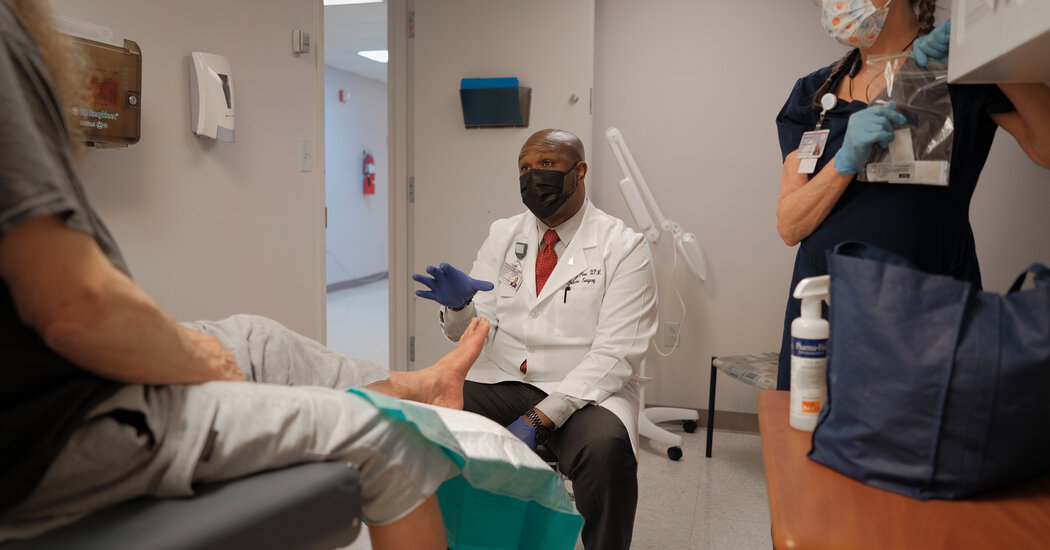
Hospitalizations from Covid-19 are receding, but safety-net providers are facing tremendous unmet needs from poor and uninsured patients who delayed seeking care during the pandemic.NASHVILLE — Mary Howard, a dishwasher with no health insurance, has never had Covid-19. But the coronavirus, she said, caused her life to spiral over the past two years.Friends died from it. Ordinary parts of her day, like riding the bus, felt perilous. The restaurant where she worked closed temporarily, and she fought depression and high blood pressure, seeking care in the emergency room because in-person appointments were hard to come by as the pandemic raged.She turned for help to Nashville General Hospital. The lone public safety-net hospital in a city with a booming health care industry, it has provided care to multitudes of poor and uninsured people throughout the pandemic and for more than 130 years.Now, the end of federal programs that paid for Covid care for the uninsured and helped stabilize hospital finances during the pandemic is threatening a new kind of crisis for people like Ms. Howard and the providers that care for them. Billions of dollars in aid not only guaranteed that uninsured Covid patients would not face medical bills during the pandemic but also offered a lifeline for financially stressed institutions like Nashville General that provide extensive uncompensated care for the poor.The infusion of aid is ending at a time when hospitalizations from Covid are receding, but as safety-net providers are facing tremendous unmet needs from patients who have delayed care for chronic conditions and other health problems even more than usual during the pandemic.“Their margins are slim to begin with,” Beth Feldpush, the senior vice president for policy and advocacy at America’s Essential Hospitals, which represents safety-net hospitals, said of the institutions. She added that some were already having a “more difficult time bouncing back operationally and financially.”Nashville General has seen an average of just one Covid patient a week recently. But its doctors and nurses say that a wide range of health problems that worsened during the pandemic are now overwhelming the hospital.As he prepared to clip an uninsured patient’s worsening fungal toenails, Dr. Andrew Pierre, the hospital’s podiatrist, said the range of unchecked problems had expanded in his practice: bunions, flat feet that need reconstructive surgery, a surge in diabetic wounds.Dr. Eric Neff said the pandemic had created an environment in which patients were afraid of visiting the hospital. William DeShazer for The New York TimesDr. Eric Neff, an orthopedic surgeon, said patients were afraid to visit the hospital during much of the pandemic and often had trouble finding transportation when they did. The consequences were dire: People waited six months to seek care for a broken wrist or ignored a torn rotator cuff, making it harder for him to fix their injuries.“It’s horrible,” he said.Dr. Philip Elizondo, his orthopedic colleague, said the hospital had to cancel minor surgeries for health problems that subsequently ballooned. One uninsured woman he treated had torn her meniscus, lost her job and lost her house. Dr. Elizondo said he could have performed a 20-minute surgery if the patient had been able to seek care immediately, but instead her injury went untreated and got worse.Dr. Richard Fremont, a pulmonologist, said that he had treated dozens of Covid patients over the past two years, but that patients with other health conditions, such as chronic asthma, had more often needed oxygen. Because uninsured patients cannot get short-term home oxygen therapy, he sometimes keeps those who need it in the hospital for days or weeks.The crisis of the uninsured is especially acute in Tennessee, which has one of the highest rates of hospital closures in the country and is among a dozen states that have chosen not to expand Medicaid to cover more low-income adults under the Affordable Care Act. Roughly 300,000 people in the state fall in the so-called coverage gap, meaning they are ineligible for either Medicaid or discounted health insurance under the Affordable Care Act despite having little to no income.John Graves, a health policy professor at Vanderbilt University School of Medicine, said the influx of relief funds during the pandemic had allowed something akin to a “universal coverage system within a system,” granting coverage to everyone who got Covid. Now, he said, hospitals and patients are back to facing prepandemic pressures — and will face even more once the federal government ends the public health emergency, which has temporarily increased Medicaid and Medicare reimbursements.The federal Provider Relief Fund offered hospitals an early lifeline in the pandemic by providing tens of billions in direct funding, although the money was steered inequitably, said Jason Buxbaum, a Harvard doctoral student who has written about the program.Separately, the Covid-19 Uninsured Program provided more than $20 billion in reimbursements to roughly 50,000 hospitals, clinics and other providers for testing, vaccinating and treating the uninsured, including nearly $8 million to Nashville General. A pandemic relief package that has stalled in the Senate will most likely not replenish the fund, leaving providers on the hook and making reimbursements during future Covid waves unlikely.An abscess that John Spence developed during the pandemic required surgeons to amputate part of his leg. Health insurance remains expensive and out of reach, he said.William DeShazer for The New York Times“The safety net has been disinvested in, and has been a political football, for a decade,” said Michele Johnson, the executive director of the Tennessee Justice Center, a legal aid group that helps poor Tennesseans. The influx of pandemic aid, she added, “kind of covered up this thing that was barely hanging on the ropes; it put some rouge on the corpse.”Hospitals like Nashville General have disproportionately cared for communities hit hardest by the virus. They have also not been performing as many surgeries and procedures during the pandemic that could subsidize the cost of treatment for people seeking delayed care, according to Ms. Feldpush of America’s Essential Hospitals. That could mean having to pare back services further, she said, such as scaling back hours in an outpatient clinic or delaying opening a new clinic altogether.Hospitals and community clinics in Nashville are unlikely to benefit from Medicaid expansion any time soon. State lawmakers last year rejected what could have amounted to hundreds of millions in savings over two years from an expansion offered under President Biden’s $1.9 trillion stimulus package.And the Biden administration’s social policy bill, which would have provided poor adults in states that did not expand Medicaid with access to free coverage, appears all but dead.Nashville General’s finances improved during the pandemic. Even though the number of inpatients declined, revenues grew as those who were hospitalized stayed longer and patients were sicker overall, in part because of Covid. The hospital received roughly $10 million in federal stimulus funding, helping it break even, hospital officials said.Losing the federal funds will be “hard to contend with,” said Dr. Graves, the Vanderbilt health policy expert, not least because the cost of labor has surged.The stimulus was an “answer to prayers,” said Brian Haile, the chief executive of Neighborhood Health, a network of community health clinics in Nashville that serve the uninsured. The money covered administrative fees for vaccines and testing for uninsured patients across the city, helping relax fears about surprise bills. The funds also allowed the clinics to compete for medical workers who might have been drawn to higher-paying jobs elsewhere in town.Dr. DeAnn Bullock said the emergency department conducted between three and 10 psychiatric evaluations each day — more than before the pandemic.William DeShazer for The New York TimesAs the cost of contract labor rose substantially, Nashville General grappled with the costs of hiring nurses and respiratory therapists. The hospital had dozens of nurse openings before the pandemic and struggled to retain its staff, as pay for travel nurses skyrocketed and private hospitals looked to add to their ranks with offers of higher salaries.Rates for nurses and respiratory therapists, critical positions for treating Covid patients, remain high, hospital executives said. Drug prices are also high, they said — another source of financial anxiety after the lapse in federal funds.Dr. DeAnn Bullock, Nashville General’s chief medical officer and its emergency department medical director, said the unit conducted between three and 10 psychiatric evaluations each day — more than before the pandemic — in a hospital that does not have a psychiatric ward.“From kids to adults to seniors,” she said. “Not only do you have a higher incidence and prevalence that’s now out there, I think that people are now more able to talk about it, feel comfortable saying: ‘I have this. I need some help.’”The hospital has also seen more diabetic ketoacidosis, often the result of poor diabetics fearful of drug costs trying to stretch out their medications, doctors said. Patients have skipped colonoscopies and mammograms, doctors said, leading to more advanced cancers.Sick with Covid in the winter of 2020 as the coronavirus ravaged Tennessee, Randall Aikens appeared lifeless to his family. He arrived at Vanderbilt University Medical Center, across town from Nashville General, with plunging odds of survival.But as Mr. Aikens stabilized, doctors discovered a different concern, one they believed was greater than the virus, his mother, Gwendolyn, said. He had undiagnosed diabetes, and his blood pressure and blood glucose levels were alarmingly high. Uninsured and on food stamps, he now visits Nashville General for primary care appointments to keep a close watch on his diabetes.For John Spence, a patient in Nashville General’s orthopedic unit who works at a cleaning service, not having health insurance during the pandemic and often working seven days a week made it harder to manage his diabetes, high blood pressure and the sometimes long list of medications he takes, he said after a recent checkup. An infection and abscess he developed during the pandemic almost turned fatal after he discovered fluid leaking out of his foot. Surgeons at the hospital had to amputate the lower part of his left leg last fall.Dr. Rosalena Muckle, center, and Dr. Taiwo Talabi, right, examined Donald Frazier, a patient.William DeShazer for The New York Times“We see a lot of putting off, putting off, because it’s like: ‘Maybe we can do it tomorrow. Maybe we can do it the next day, or maybe it’ll just go away,’” said Dr. Rosalena Muckle, an internal medicine physician.Ms. Howard, the dishwasher, said her frustrations getting and affording health care were adding up. Her ailments were not improving. After a recent primary care appointment, she wondered aloud how she would come up with the $10 for her visit. “I don’t want to just be seen or heard,” she said. “Without any money, it’s hard.”She said she still had dreams — to become a medical assistant, or a bus driver for the elderly.“To take care of people,” she said.

Read more →

Fuad El-Hibri, Who Led a Troubled Vaccine Maker, Dies at 64

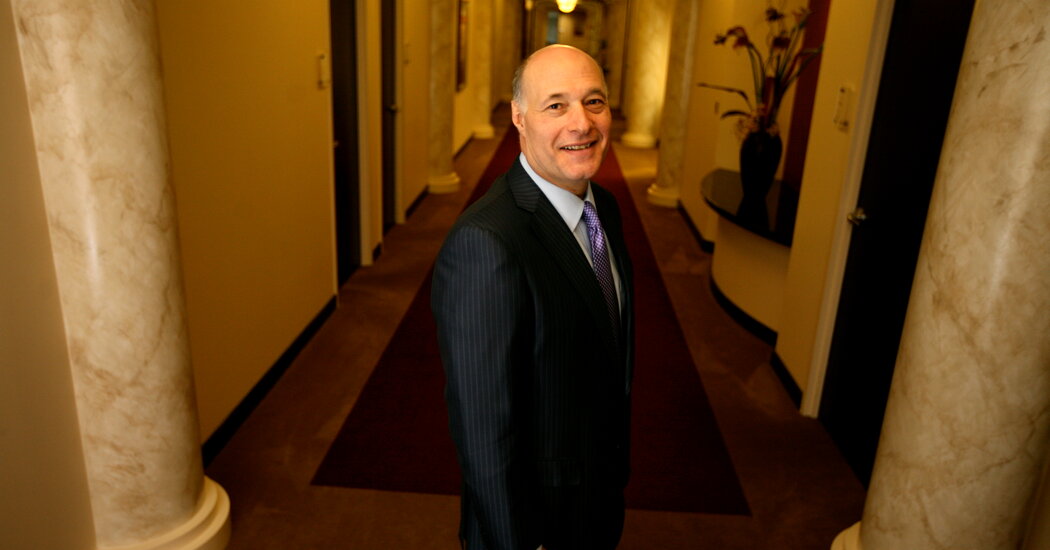
His company, Emergent BioSolutions, won a lucrative contract to produce Covid vaccines but then had to throw out millions of contaminated doses.Fuad El-Hibri, whose biotech company won billions of dollars in government contracts to manufacture a vaccine against anthrax but stumbled in 2021 when, having been hired to produce Covid vaccines, it had to throw out the equivalent of 75 million contaminated doses, died on April 23 at his home in Potomac, Md. He was 64.His death was announced in a statement by his family. A representative for the family said the cause was pancreatic cancer.Mr. El-Hibri’s Maryland-based company, Emergent BioSolutions, was an obscure player in the world of government contracting, but an influential one: It deployed extensive lobbying efforts and campaign contributions to secure a near-monopoly on the production of an anthrax vaccine in the early 2000s. The contract accounted for nearly half the budget for the Strategic National Stockpile, a medical reserve held in case of crises like a bioweapons attack or a pandemic.Though the relationship occasionally drew scrutiny — including an extensive investigation by The New York Times in March 2021 — it also made Mr. El-Hibri’s company a seemingly obvious choice to produce the Covid vaccines developed by Johnson & Johnson and AstraZeneca. Emergent received a $628 million contract from the federal government in 2020.Mr. El-Hibri testified via videoconference before the House Select Subcommittee on the Coronavirus in May 2021, two months after his company announced that the equivalent of some 15 million doses of the Johnson & Johnson vaccine had been contaminated and had to be discarded. Pool photo by Stefani ReynoldsBut in fact, Emergent was not at all ready for the imposing task. Though it was already part of a government program to rapidly scale up vaccine production in an emergency, it had yet to demonstrate such a capacity when it began to churn out Covid vaccines in early 2021.In March of that year, the company announced that because of worker error, the equivalent of some 15 million doses of the Johnson & Johnson vaccine had been contaminated and had to be discarded. Production nationwide shut down temporarily, creating a political headache for the Biden administration, which had been hoping for a smooth rollout to tamp down vaccine hesitancy.Congress launched an investigation, and in May Mr. El-Hibri, who was Emergent’s executive chairman, and Robert G. Kramer, the company’s chief executive, testified before the House Select Subcommittee on the Coronavirus.While both men defended the company and cited the unprecedented challenge their task presented, Mr. El-Hibri was contrite about its failures.“The cross-contamination incident is unacceptable,” he said, “period.”About 60 million additional doses were found to be contaminated in June.Fuad El-Hibri was born on March 2, 1958, in Hildesheim, Germany, the son of Elizabeth (Trunk) El-Hibri, a homemaker, and Ibrahim El-Hibri, an engineer and entrepreneur. He grew up in Lebanon and Germany and graduated from Stanford University in 1980 with a degree in economics. He received a master’s degree in public and private management from the Yale School of Management in 1982.He is survived by his wife, Nancy (Grunenwald) El-Hibri; his mother; his brother, Samir; his sister, Yasmin El-Hibri Gibellini; his daughters, Faiza and Yusra El-Hibri; his son, Karim; and three grandchildren.Mr. El-Hibri began his career working for Citicorp in Saudi Arabia and later worked for the consulting firm Booz Allen Hamilton in Indonesia. After returning to the United States, he started a business that helped national telecom companies upgrade their networks in Russia, Venezuela and El Salvador.In the 1990s he advised the Saudi Arabian government on its efforts to buy millions of doses of an anthrax vaccine. That experience seeded the idea for what became Emergent BioSolutions.He co-founded the company, originally called BioPort, in 1998. He and his partners, including William J. Crowe, a former admiral, soon won a bid to buy a disused government laboratory in Lansing, Mich., and upgrade it to produce anthrax vaccines for the U.S. military.The company changed its name to Emergent BioSolutions in 2004. It went public in 2006.Mr. El-Hibri co-founded Emergent BioSolutions, originally called BioPort, in 1998. It went public in 2006.Jim Lo Scalzo/EPA, via ShutterstockThough it mostly focused on just one product and one customer (it also produced Narcan, used to treat opioid overdoses), Emergent grew rich under Mr. El-Hibri’s leadership, reporting $1.5 billion in revenue in 2020.As The Times’s investigation found, the company’s financial success was in part attributable to its aggressive efforts to win a large part of the strategic stockpile’s budget. Many experts consider it an outsize chunk, given the relatively low risk of a widespread anthrax attack and the option to use cheap antibiotics for many cases.“Purchases are supposed to be based on careful assessments by government officials of how best to save lives,” the investigation found, “but many have also been influenced by Emergent’s bottom line.”Mr. El-Hibri and his wife were prolific campaign donors; they gave nearly $1 million between 2018 and 2021, mostly to Republican candidates. An employee political action committee at Emergent gave another $1.4 million over the same period.Those connections proved crucial in the fall of 2020, when Emergent was one of two facilities contracted to produce Covid vaccines. Shortly after, Mr. El-Hibri cashed out $42 million in shares and stock options.After the production debacle at Emergent became public, the company faced an uprising by shareholders, including a lawsuit accusing it of committing securities fraud by falsely claiming it was ready to produce the vaccine in order to boost the value of its stock.Mr. El-Hibri stepped down as chairman of Emergent BioSolutions on April 1.

Read more →

Breakthrough in treatment for Dupuytren's disease

Researchers at the Kennedy Institute, University of Oxford, led by Professor Jagdeep Nanchahal have demonstrated the efficacy of the anti-TNF drug adalimumab for patients with early stage Dupuytren’s disease.
“This phase 2b trial represents the clinical translation of our laboratory findings, where we identified TNF as a potential therapeutic target followed by a phase 2a dose ranging trial which showed that the highly concentrated formulation injected directly into the diseased tissues was effective in downregulating myofibroblasts, the cells responsible for fibrosis,” said Jagdeep Nanchahal, Oxford Professor of Hand, Plastic and Reconstructive Surgery. “We also found the treatment to be completely safe and there were no related serious adverse events.”
Dupuytren’s disease is a common condition of the hand that affects about 5% of the UK population and tends to run in families. It causes the fingers to curl irreversibly into the palm and can be extremely disabling. There is currently no treatment for early disease and typically people have to wait until the condition deteriorates when surgery can be performed.
The trial recruited 140 participants with early-stage Dupuytren’s disease who were randomised to receive 4 injections at 3 monthly intervals of either adalimumab (40mg adalimumab in 0.4ml) or saline. The primary outcome was nodule hardness measured at 12 months, and patients were followed up for a total of 18 months.
Published in The Lancet Rheumatology, the study found that the patients receiving adalimumab experienced softening and reduction in size of the treated nodule. Although adalimumab only has a half-life of about two or three weeks the researchers saw continued effects nine months after the last injection, indicating a sustained treatment effect.
“This could be a game-changer for patients who suffer from this disabling condition,” said Professor Chris Buckley, Director of Clinical Research at the Kennedy Institute. “Dupuytren’s disease is easy to spot at an early stage, so by starting a course of anti-TNF injections could bring long lasting respite and prevent the disease advancing to the stage that surgery is needed.”
The research was funded by the Health Innovation Challenge Fund (Wellcome Trust, Department of Health and Social Care) and 180 Life Sciences.
Story Source:
Materials provided by University of Oxford. Note: Content may be edited for style and length.

Read more →

COVID-19 vaccine technique shows promise for heart disease

A method for delivering genetic material to the body is being tested as a way to repair damaged heart muscle after a heart attack. The ground-breaking research is presented today at Frontiers in CardioVascular Biomedicine 2022, a scientific congress of the European Society of Cardiology (ESC).1
The COVID-19 messenger RNA (mRNA) vaccines2 use lipid nanoparticles (tiny fat droplets) to deliver mRNA to the body’s cells. This mRNA instructs the cells to manufacture a dummy spike protein on their surface to mimic the protein on the virus causing COVID-19. The body then mounts an immune response by creating antibodies which can be used if the individual becomes infected with the virus.
A similar method for mRNA delivery was used in the current study. However, instead of aiming for an immune response, the researchers’ ultimate goal is to instruct the heart’s cells to repair themselves after a heart attack.
This preliminary study was conducted to determine whether mRNA could be successfully delivered to the heart muscle in lipid nanoparticles. The researchers injected different formulations into the left ventricular wall of mouse hearts during open chest surgery under general anaesthesia. Twenty-four hours after administration, the mice were sacrificed and the location of mRNA translation was examined.
The researchers found that mRNA successfully reached the heart cells 24 hours after injection. However, despite injection into the heart, the highest levels of mRNA translation were found in cells of the liver and spleen.
Study author Dr. Clara Labonia of the University Medical Center Utrecht, the Netherlands said: “High expression was expected in the liver, since it metabolises the lipid nanoparticles. Nonetheless, it was encouraging to see that there was mRNA translation in the heart tissue which means that lipid nanoparticles could work as delivery systems for mRNA therapy.”
She concluded: “The next step of this research is to test more formulations and choose the one which most efficiently targets the heart tissue. We will then assess whether delivery of mRNA to mice with ischaemic hearts (resembling a heart attack) has any therapeutic effect.”
References and notes
1The abstract “Modified mRNA delivery to the heart using lipid nanoparticles” will be presented during the session “Young Investigator Award — Novelties in cardiovascular disease mechanism” which takes place on 30 April at 11:30 CEST in Lecture Room 3.
2The COVID-19 mRNA vaccines include Pfizer-BioNTech and Moderna.
Story Source:
Materials provided by European Society of Cardiology. Note: Content may be edited for style and length.

Read more →