Cognitive impairment from severe COVID-19 equivalent to 20 years of aging, study finds

Cognitive impairment as a result of severe COVID-19 is similar to that sustained between 50 and 70 years of age and is the equivalent to losing 10 IQ points, say a team of scientists from the University of Cambridge and Imperial College London.
The findings, published in the journal eClinicalMedicine, emerge from the NIHR COVID-19 BioResource. The results of the study suggest the effects are still detectable more than six months after the acute illness, and that any recovery is at best gradual.
There is growing evidence that COVID-19 can cause lasting cognitive and mental health problems, with recovered patients reporting symptoms including fatigue, ‘brain fog’, problems recalling words, sleep disturbances, anxiety and even post-traumatic stress disorder (PTSD) months after infection. In the UK, a study found that around one in seven individuals surveyed reported having symptoms that included cognitive difficulties 12 weeks after a positive COVID-19 test.
While even mild cases can lead to persistent cognitive symptoms, between a third and three-quarters of hospitalised patients report still suffering cognitive symptoms three to six months later.
To explore this link in greater detail, researchers analysed data from 46 individuals who received in-hospital care, on the ward or intensive care unit, for COVID-19 at Addenbrooke’s Hospital, part of Cambridge University Hospitals NHS Foundation Trust. 16 patients were put on mechanical ventilation during their stay in hospital. All the patients were admitted between March and July 2020 and were recruited to the NIHR COVID-19 BioResource.
The individuals underwent detailed computerised cognitive tests an average of six months after their acute illness using the Cognitron platform, which measures different aspects of mental faculties such as memory, attention and reasoning. Scales measuring anxiety, depression and post-traumatic stress disorder were also assessed. Their data were compared against matched controls.

Read more →

Study finds healthy-appearing lupus skin predisposed to flares, rashes

People with lupus have overactive immune systems that attack their own tissue, causing inflammation throughout the body.
Around 70-80% of them will develop skin disease as part of their condition. And while it’s thought that exposure to ultraviolet light triggers the rashes, scientists are not sure how it ties together with the systemic inflammation.
A Michigan Medicine study now brings more clarity, as researchers found that the normal-appearing skin of lupus patients contains the same inflammatory signals that are detected when the skin develops a rash — sometimes at even higher levels. The results are published in Science Translational Medicine.
“This really starts to piece the puzzle together of how inflammation seen in lupus patients may be related to skin exposures such as UV light,” said J. Michelle Kahlenberg, M.D., Ph.D., senior author of the study and rheumatologist at University of Michigan Health. “We were able to see the properties of normal-appearing skin in unparalleled resolution, suggesting that the skin is primed for inflammatory reactions.”
The team of researchers used single-cell RNA-sequencing analysis to assess the biopsies of both normal-appearing skin and skin from rashes of seven lupus patients. The results reveal that elevated signals of interferon, a protein known to contribute to UV sensitivity, were robustly present in all lupus biopsies compared to healthy control skin — with the strongest signal coming from the healthy-appearing skin, not the inflamed skin.
These interferon-rich inflammatory properties weren’t just found in the keratinocytes, the cells that make up the epidermis of the skin. Researchers saw the same inflammatory changes in the fibroblasts that generate the connective tissue of the skin.

Read more →

Meals apps and online gaming driving obesity – WHO

SharecloseShare pageCopy linkAbout sharingImage source, Getty ImagesHow children use meal-delivery apps and the rising popularity of online gaming could be driving obesity across Europe, the World Health Organization has said.No European country is on track to stop obesity rising by 2025, the WHO says.Nearly 60% of adults and a third of children are overweight or obese – and the Covid pandemic has made that worse.It suggests restricting the marketing of unhealthy foods to children, cutting the cost of healthy food and encouraging all ages to exercise more.The WHO European Regional Obesity Report 2022 says rates of overweight and obesity have reached “epidemic proportions”, with only the Americas having a higher level of obese adults than Europe.It estimates the problem is causing 1.2 million deaths every year in Europe – 13% of all deaths.Complex challengeObesity increases the risk of many diseases, including 13 types of cancer, type-2 diabetes and chronic respiratory conditions. It is also the main cause of disability, the report says.Obesity is “a complex disease” and much more than the combination of “unhealthy diet and physical inactivity”.”Obesity knows no borders,” said Dr Hans Kluge, WHO regional director for Europe. “The countries in our region are incredibly diverse but every one is challenged to some degree.”But “we can change the trajectory of obesity in the region” by developing strong health systems, he said.Image source, Getty ImagesEurope’s highly digitalised food environments affect what, when and how people eat and should be monitored more closely, the report says.Meal-delivery apps, for example, play a significant role in increasing consumption of high-fat and high-sugar food and drinks.UK research suggests eating a takeaway meal means consuming 200 more calories per day, on average, than food prepared at home. Over the course of a week, this could mean a child eating the equivalent of an extra day’s worth of calories.Keep your waistline to less than half your heightPandemic sees big rise in obese childrenLiving with obesity: Hard-wired to store fatBut the report also suggests online food and meal delivery systems can be used in a positive way to improve diets, access to healthy food and wellbeing.Online gaming, which is hugely popular among children, has also been linked to poorer diet, unhealthy behaviour and more time sitting rather than being active.But again, the WHO says this technology could be harnessed to improve the physical and mental health of young people.In the European region, the UK:has the second highest proportion of obese adults, behind Maltahas the fourth highest proportion of overweight or obese adults, behind Israel, Malta and TurkeyAcross Europe, being overweight or obese affects:8% of under-fives 29% of five-nine-year-olds25% of 10-19-year-oldsIn the UK, some policies have been introduced to tackle obesity. They include large restaurants and cafes being required by law to show calorie information, with a similar system being considered for Scotland.In the autumn in England, ‘buy one, get one free’ (BOGOF) promotions will be start to be phased out after research showed they encouraged people to buy 20% more food than they needed.There is also a plan to ban TV adverts for food high in sugar, salt and fat before 9pm across the UK.More on this storyCalories now appear on menus in large restaurantsKeep your waistline to less than half your heightPandemic sees big rise in obese childrenLiving with obesity: Hard-wired to store fatRelated Internet LinksThe WHO European Regional Obesity Report 2022The BBC is not responsible for the content of external sites.

Read more →

Deadly Venom From Spiders and Snakes May Also Cure What Ails You

TUCSON, Ariz. — In a small room in a building at the Arizona-Sonora Desert Museum, the invertebrate keeper, Emma Califf, lifts up a rock in a plastic box. “This is one of our desert hairies,” she said, exposing a three-inch-long scorpion, its tail arced over its back. “The largest scorpion in North America.”This captive hairy, along with a swarm of inch-long bark scorpions in another box, and two dozen rattlesnakes of varying species and sub- species across the hall, are kept here for the coin of the realm: their venom.Efforts to tease apart the vast swarm of proteins in venom — a field called venomics — have burgeoned in recent years, and the growing catalog of compounds has led to a number of drug discoveries. As the components of these natural toxins continue to be assayed by evolving technologies, the number of promising molecules is also growing.“A century ago we thought venom had three or four components, and now we know just one type of venom can have thousands,” said Leslie V. Boyer, a professor emeritus of pathology at the University of Arizona. “Things are accelerating because a small number of very good laboratories have been pumping out information that everyone else can now use to make discoveries.”She added, “There’s a pharmacopoeia out there waiting to be explored.”It is a striking case of modern-day scientific alchemy: The most highly evolved of natural poisons on the planet are creating a number of effective medicines with the potential for many more.Leslie V. Boyer, founder of the Venom Immunochemistry, Pharmacology, and Emergency Response Institute, calls Arizona “venom central.”Ash Ponders for The New York TimesA giant hairy scorpion at the Arizona-Sonora Desert Museum.Ash Ponders for The New York TimesOne of the most promising venom-derived drugs to date comes from the deadly Fraser Island funnel web spider of Australia, which halts cell death after a heart attack.Blood flow to the heart is reduced after a heart attack, which makes the cell environment more acidic and leads to cell death. The drug, a protein called Hi1A, is scheduled for clinical trials next year. In the lab, it was tested on the cells of beating human hearts. It was found to block their ability to sense acid, “so the death message is blocked, cell death is reduced, and we see improved heart cell survival,” said Nathan Palpant, a researcher at the University of Queensland in Australia who helped make the discovery.If proven in trials, it could be administered by emergency medical workers, and might prevent the damage that occurs after heart attacks and possibly improve outcomes in heart transplants by keeping the donor heart healthier longer.“It looks like it’s going to be a heart attack wonder drug,” said Bryan Fry, an associate professor of toxicology at the University of Queensland, who is familiar with the research but was not involved in it. “And it’s from one of the most vilified creatures” in Australia.The techniques used to process venom compounds have become so powerful that they are creating new opportunities. “We can do assays nowadays using only a couple of micrograms of venom that 10 or 15 years ago would have required hundreds of micrograms,” or more, Dr. Fry said. “What this has done is open up all the other venomous lineages out there that produce tiny amounts of material.”There is an enormous natural library to sort through. Hundreds of thousands of species of reptile, insect, spider, snail and jellyfish, among other creatures, have mastered the art of chemical warfare with venom. Moreover, the makeup of venom varies from animal to animal. There is a kind of toxic terroir: Venom differs in quantity, potency and proportion and types of toxin, according to habitat and diet, and even by changing temperatures due to climate change.Venom is made of a complex mix of toxins, which are composed of proteins with unique characteristics. They are so deadly because evolution has honed their effectiveness for so long — some 54 million years for snakes and 600 million for jellyfish.Howard Byrne, a curator at the Arizona desert museum, handling a Gila monster, from which the drug exenatide, for Type 2 diabetes, is derived.Ash Ponders for The New York TimesA tiger rattlesnake at the Arizona Sonoran Desert Museum.Ash Ponders for The New York TimesVenom is the product of a biological arms race over that time; as venom becomes more deadly, victims evolve more resistance, which in turn makes venom even deadlier. Humans are included in that dynamic. “We are made of protein and our protein has little complex configurations on it that make us human,” said Dr. Boyer, who founded the Venom Immunochemistry, Pharmacology, and Emergency Response Institute, or VIPER. “And those little configurations are targets of the venom.”The specific cellular proteins that the venom molecules have evolved to target with pinpoint accuracy are what make the drugs derived from them — which use the same pathways — so effective. Some proteins, however, have inherent problems that can make new drugs from them unworkable.There is usually no need to gather venom to make these drugs. Once they are identified, they can be synthesized.There are three main effects from venom. Neurotoxins attack the nervous system, paralyzing the victim. Hemotoxins target the blood and local tissue toxins attack the area around the site of poison exposure.Numerous venom-derived drugs are on the market. Captopril, the first, was created in the 1970s from the venom of a Brazilian jararaca pit viper to treat high blood pressure. It has been successful commercially. Another drug, exenatide, is derived from Gila monster venom and is prescribed for Type 2 diabetes. Draculin is an anticoagulant from vampire bat venom and is used to treat stroke and heart attack.The venom of the Israeli deathstalker scorpion is the source of a compound in clinical trials that finds and illuminates breast and colon tumors.Dr. Boyer’s collection of venomous objects at her home in Tucson, Ariz.Ash Ponders for The New York Times“Things are accelerating because a small number of very good laboratories have been pumping out information that everyone else can now use,” Dr. Boyer said.Ash Ponders for The New York TimesSome proteins have been flagged as potential candidates for new drugs, but they have to journey through the long process of manufacture and clinical trials, which can take many years and cost millions of dollars. In March, researchers at the University of Utah announced that they had discovered a fast-acting molecule in cone snails. Cone snails fire their venom into fish, which causes the victims’ insulin levels to drop so rapidly it kills them. It holds promise as a drug for diabetes. Bee venom appears to work with a wide range of pathologies and has recently been found to kill aggressive breast cancer cells.In Brazil researchers have been looking at the venom of the Brazilian wandering spider as a possible source of a new drug for erectile dysfunction — because of what happens to human victims when they are bit. “A characteristic of their envenomation is that males get extraordinary painful, incredibly long-lasting erections,” Dr. Fry said. “They have to separate it from its lethal factor, of course, and find a way to dial it back.”Some scientists have long suspected that important secrets are locked up in venom. Scientific interest first surfaced in the 17th century. In the mid-18th century the Italian physician and polymath Felice Fontana added to the body of knowledge with his treatise, and in 1860 the first research to look at venom components was conducted by S. Weir Mitchell in Philadelphia.The medicinal use of venom has a long history, often without scientific support. Venom-dipped needles are a traditional form of acupuncture. Bee sting therapy, in which a swarm of bees is placed on the skin, is used by some natural healers. The rock musician Steve Ludwin claims to have routinely injected himself with diluted venom, believing it to be a tonic that builds his immune system and boosts his energy.The demand for venom is increasing. Ms. Califf of the Arizona-Sonora Desert Museum said she had to travel to the desert to find more bark scorpions, which she hunts at night with a black light because they glow in the dark. Arizona, Dr. Boyer said, is “venom central,” with more venomous creatures than in any other U.S. state, making it well suited for this kind of production.Venom, made of a complex mix of toxins, are so deadly because evolution has honed their effectiveness for so long — some 54 million years for snakes.Ash Ponders for The New York TimesThe Arizona bark scorpion, which glows in the dark is hunted at night with a black light.Ash Ponders for The New York TimesScorpion venom is harvested from the arachnid by applying a tiny electrical current, which causes the spider to excrete a small drop of the amber liquid at the tip of its tail. With snakes, venom glands are gently massaged as they bare their fangs over a martini glass. After they surrender their venom, the substance is sent to researchers around the globe.Pit vipers, including rattlesnakes, have other unusual adaptations. The “pit” is the site of the biological equipment that allows snakes to sense the heat of their prey. “You can blindfold a snake and it will still strike the target,” Dr. Boyer said.But it’s not just venom that’s far better understood these days. In the last few years, there has been a well-heeled and concerted search for antivenom.In 2019 the Wellcome Trust created a $100 million fund toward the pursuit. Since then there have been numerous research efforts around the world looking for a single universal treatment — one that can be carried into remote areas to immediately help someone bitten by any type of venomous snake. Currently, different types of snakebites have different antivenom.It has been difficult. The wide array of ingredients in venom that benefit new drug research has also made it difficult to find a drug that can neutralize them. One promising universal antivenom, varespladib, is in clinical trials.Experts hope the role of venom will lead to more respect for the fear-inducing creatures who create them. Dr. Fry, for his work on anticoagulants, is studying the venom of Komodo dragons, which, at 10 feet long and more than 300 pounds, is the largest lizard in the world. It is also highly endangered.Work on the Komodo, “allows us to talk about the broader conservation message,” he said.“You want nature around because it’s a biobank,” he added. “We can only find these interesting compounds from these magnificent creatures if they are not extinct.”

Read more →

Shanghai: Authorities fire four officials after elderly patient blunder

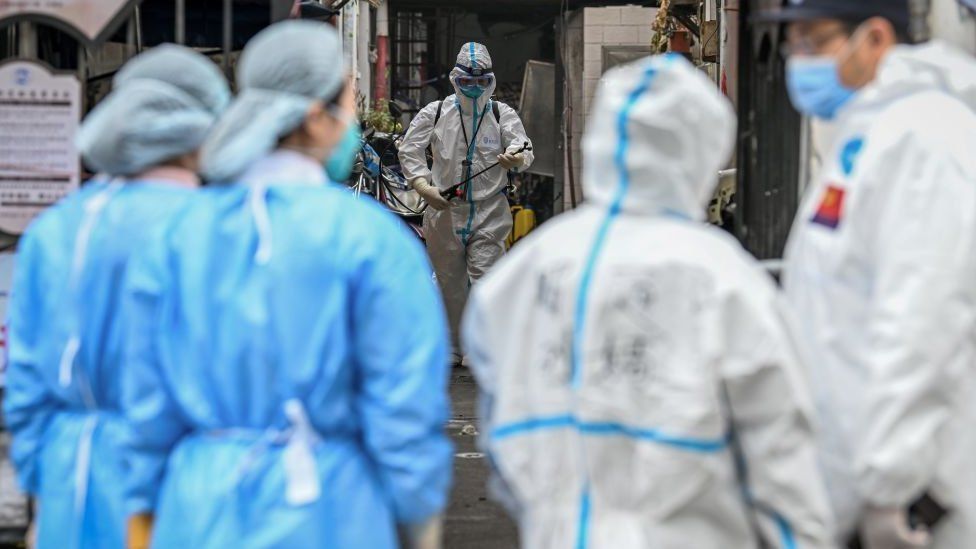
SharecloseShare pageCopy linkAbout sharingImage source, Getty ImagesChinese district authorities have fired four officials after an elderly patient from a Shanghai care home was believed to be dead and loaded into a hearse.On Sunday, online videos emerged showing two people who appear to be mortuary workers placing the body bag into a vehicle. The workers are later seen pulling the bag open, and one can be heard saying the patient is still alive. The incident has sparked widespread anger on Chinese social media. Officials in the Shanghai district of Putuo confirmed the incident late on Monday, adding that the patient had since been taken to hospital and was in a stable condition.District authorities said five officials and one doctor were under investigation.Four officials, including the deputy director of the local civil affairs bureau and the director of the care home, were fired. A doctor identified only by their surname Tian, also had their medical license revoked. The patient’s identity is still unknown. Many online condemned the incident, with former editor-in-chief of state news outlet Hu Xijing calling it a “serious dereliction of duty that almost led to death”.Another commenter on social media site Weibo said it was a sign of the “chaos” happening in Shanghai. China’s elderly suffer in Covid quarantine centresThe hard life of a homeless Shanghai deliverymanShanghai, China’s largest city and home to almost 25 million people, is now in its sixth week of restrictions aimed at curbing Covid cases, which began spiking again in March. Most people are still banned from leaving their homes for any reason – Covid-infected and their close contacts are forced to go to a state-run quarantine centre. Video has emerged of clashes between police and people being forced out of their homes. The BBC has previously reported evidence that authorities in Shanghai were struggling to deal with the outbreak. China is one of the last remaining nations still committed to eradicating Covid, in contrast to most of the world which is trying to live with the virus.But this zero-Covid policy has come under strain in recent weeks with the spread of the Omicron variant.This video can not be playedTo play this video you need to enable JavaScript in your browser.More on this storyChina’s elderly suffer in Covid quarantine centresThe hard life of a homeless Shanghai deliverymanElderly deaths contradict Shanghai Covid figures

Read more →

Roe v Wade: US Supreme Court may overturn abortion law, leak suggests

SharecloseShare pageCopy linkAbout sharingImage source, ReutersThe US Supreme Court could be about to overturn the nationwide legal right to abortion, according to an unprecedented leaked draft of a court document.In a 98-page draft opinion, Justice Samuel Alito writes that the 1973 Roe v Wade decision legalising abortion across the US is “egregiously wrong”.If the top US court strikes down the ruling, “trigger laws” could instantly make abortion illegal in 22 US states. The justices are not expected to issue a ruling until early July.The 1973 law is in the court’s sights because it is weighing up a challenge to Mississippi’s ban on abortion after 15 weeks, which the justices heard in December.But the reported threat to Roe v Wade comes at a time when reproductive rights are being threatened in Republican leaning states around the US.And it sparked immediate outcry from Democrats, and protests – by both pro and anti-abortion supporters – outside the Supreme Court on Monday night.Speaker of the House of Representatives Nancy Pelosi and Senate Majority Leader Chuck Schumer – both Democrats – issued a joint statement saying that if the report was accurate, the “Supreme Court is poised to inflict the greatest restriction of rights in the past 50 years”. News outlet Politico published the leaked document in full, quoting Justice Alito as saying: “Roe was egregiously wrong from the start. Its reasoning was exceptionally weak, and the decision has had damaging consequences.”And far from bringing about a national settlement of the abortion issue, Roe and Casey have enflamed debate and deepened division.”Neither the Supreme Court nor the White House have commented on the leak.An unprecedented leakAssume for a moment that this draft opinion becomes the law of the land. In an instant – because of statutes already on the books and “trigger” laws designed for such an occasion – abortion would be illegal in 22 states. The legality of the procedure would become a vicious political battleground in the midst of an election year.This is the significance of what may be unfolding in the Supreme Court.Draft opinions, however, are just that – drafts. And there have been accounts of justices shifting their views as the opinion-drafting process unfolds within the cloistered court chambers. This unprecedented leak short-circuits all that.For most of US history, the Supreme Court has operated like Mount Olympus, handing down opinions from on high. That opacity has been shattered perhaps for good, as the leaking spreads.What it will mean for the legitimacy of the judicial process in the US remains to be seen, but within the institution itself it seems safe to assume that all trust between the judges, a collegial group once referred to as “the brethren”, is gone.In an era when political norms have been broken like pottery in an earthquake, another big piece has fallen.Image source, ReutersSix of the nine current justices on the court were appointed by Republican presidents. The other three were picked by Democratic presidents.Politico reports that Justice Alito and four other Republican-appointed justices – Clarence Thomas, Neil Gorsuch, Brett Kavanaugh and Amy Coney Barrett – were in favour of the move against Roe v Wade but it is not clear how Chief Justice John Roberts will vote. The leaked document is marked as a “1st Draft” and it was circulated in February, according to Politico.If issued as a majority ruling, Justice Alito’s opinion would overturn the constitutional right to abortion in the US, paving the way for individual states to ban the procedure altogether, or place more restrictions on it.The American Civil Liberties Union said that if confirmed, the decision “would deprive half the nation of a fundamental, constitutional right that has been enjoyed by millions of women for over 50 years”. The US abortion battle explainedMeet the Supremes – the judges on the top US courtAccording to the BBC’s US partner CBS News, the leak itself will cause tremendous damage to one of America’s most respected institutions and likely see a full-blown investigation, involving the FBI, to unmask the source.Roe v Wade in 1973 gave women in the US an absolute right to an abortion in the first three months of pregnancy, and limited rights in the second trimester.In 1992, in Planned Parenthood v Casey, the court ruled that states could not place an “undue burden” on women seeking abortions before a foetus could survive outside the womb, at about 24 weeks.There were about 630,000 reported abortions in the US in 2019, according to the US Centers for Disease Control. This was an 18% decrease compared with 2010.Women in their 20s account for the majority of abortions – in 2019 about 57% were in this age group.Black Americans get abortions at the highest rate – 27 per 1,000 women aged 15-44.This video can not be playedTo play this video you need to enable JavaScript in your browser.Have you been affected by the issues raised in this story? Email haveyoursay@bbc.co.uk.Please include a contact number if you are willing to speak to a BBC journalist. You can also get in touch in the following ways:WhatsApp: +44 7756 165803Tweet: @BBC_HaveYourSayUpload pictures or videoPlease read our terms & conditions and privacy policy

If you are reading this page and can’t see the form you will need to visit the mobile version of the BBC website to submit your question or comment or you can email us at HaveYourSay@bbc.co.uk. Please include your name, age and location with any submission.

Read more →

Affirmative action bans had 'devastating impact' on diversity in medical schools, study finds

New UCLA-led research finds that in states with bans on affirmative action programs, the proportion of students from underrepresented racial and ethnic minority groups in U.S. public medical schools fell by more than one-third by five years after those bans went into effect.
The findings are particularly timely given medical schools’ increasing emphasis on health equity, including a push to ensure greater diversity among physicians in the workforce.
The study will be published May 3 in the peer-reviewed journal Annals of Internal Medicine.
“We know that a more diverse physician workforce leads to better care for racial- and ethnic-minority patients,” said Dr. Dan Ly, the study’s lead author, an assistant professor of medicine in the division of general internal medicine and health services research at the David Geffen School of Medicine at UCLA. “But we have made such poor progress in diversifying our physician workforce.
“Our research shows that bans on affirmative action, like the one California passed in 1996, have had a devastating impact on the diversity of our medical student body and physician pipeline.”
The researchers examined enrollment data from 1985 through 2019 for 53 medical schools at public universities, focusing on students from underrepresented racial and ethnic groups: Black, Hispanic, American Indian or Alaska Native, and Native Hawaiian or other Pacific Islander. The authors studied medical schools at public universities, not private ones, because states’ bans on affirmative action applied to public postsecondary institutions.

Read more →

'Resetting' the injured brain offers clues for concussion treatment

New research in mice raises the prospects for development of post-concussion therapies that could ward off cognitive decline and depression, two common conditions among people who have experienced a moderate traumatic brain injury.
The study in mice clarified the role of specific immune cells in the brain that contribute to chronic inflammation. Using a technique called forced cell turnover, researchers eliminated these cells in the injured brains of mice for a week and then let them repopulate for two weeks.
“It’s almost like hitting the reset button,” said senior study author Jonathan Godbout, professor of neuroscience in The Ohio State University College of Medicine.
Compared to brain-injured mice recovering naturally, mice that were given the intervention showed less inflammation in the brain and fewer signs of thinking problems 30 days after the injury.
Though temporarily clearing away these cells, called microglia, in humans isn’t feasible, the findings shed light on pathways to target that could lower the brain’s overall inflammatory profile after a concussion, potentially reducing the risk for behavioral and cognitive problems long after the injury.
“In a moderate brain injury, if the CT scan doesn’t show damage, patients go home with a concussion protocol. Sometimes people come back weeks, months later with neuropsychiatric issues. It’s a huge problem affecting millions of people,” said Godbout, faculty director of Ohio State’s Chronic Brain Injury Program and assistant director of basic science in the Institute for Behavioral Medicine Research.

Read more →

Self-eliminating genes tested on mosquitoes

Texas A&M AgriLife Research scientists have tested a technology to make temporary genetic modifications in mosquitoes. The modifications self-delete over time.
Texas A&M AgriLife Research scientists published an article detailing a mechanism to make temporary genetic alterations to mosquitoes. (Stock photo)
The mechanism to make temporary genetic changes could be important for scientists hoping to modify mosquitoes in ways that help manage populations and prevent vector-borne diseases like West Nile virus without permanently altering wild populations’ genetic makeup.
An article detailing their test results, “Engineering a self-eliminating transgene in the yellow fever mosquito, Aedes aegypti,” was published in Proceedings of the National Academy of Sciences’ PNAS Nexus. The authors, Zach Adelman, Ph.D., and Kevin Myles, Ph.D., both professors in the Texas A&M College of Agriculture and Life Sciences Department of Entomology, describe a method for programming the removal of edited genes within populations of mosquitoes over multiple generations.
The method is a first step toward building safeguards for genetic modifications developed to control populations of mosquitoes and the vector-borne diseases they carry. The idea is to test proposed changes without making the changes permanent and without the risk of transmitting them to wild populations, Adelman said.
“There are lots of ecological questions we don’t know the answers to, and when you are testing technology, you don’t want to get into a situation where you have to tell a regulatory agency or the public that ‘if something bad happens, we’re just out of luck,'” Adelman said. “This mechanism is about how we get back to normal whether the experiment does or doesn’t come out the way we expect.”
Adelman and Myles are co-directing a team of scientists who received a five-year, $3.9 million grant from the National Institute of Allergy and Infectious Diseases to test and fine-tune the self-eliminating transgene technology.

Read more →

Gene therapy reverses effects of autism-linked mutation in brain organoids

In a study published May 02, 2022 in Nature Communications, scientists at University of California San Diego School of Medicine used human brain organoids to reveal how a genetic mutation associated with a profound form of autism disrupts neural development. Using gene therapy tools to recover the gene’s function effectively rescued neural structure and function.
Several neurological and neuropsychiatric diseases, including autism spectrum disorders (ASD) and schizophrenia have been linked to mutations in Transcription Factor 4 (TCF4), an essential gene in brain development. Transcription factors regulate when other genes are turned on or off, so their presence, or lack thereof, can have a domino effect in the developing embryo. Still, little is known about what happens to the human brain when TCF4 is mutated.
To explore this question, researchers focused on Pitt-Hopkins Syndrome, an ASD specifically caused by mutations in TCF4. Children with the genetic condition have profound cognitive and motor disabilities and are typically non-verbal.
Existing mouse models of Pitt-Hopkins Syndrome fail to accurately mimic patients’ neural characteristics, so the UC San Diego team instead created a human research model of the disorder. Using stem cell technology, they converted patients’ skin cells into stem cells, which were then developed into three-dimensional brain organoids, or “mini-brains.”
Initial observations of the brain organoids revealed a slew of structural and functional differences between the TCF4-mutated samples and their controls.
“Even without a microscope, you could tell which brain organoid had the mutation,” said senior study author Alysson R. Muotri, PhD, professor at UC San Diego School of Medicine, director of the UC San Diego Stem Cell Program and member of the Sanford Consortium for Regenerative Medicine.

Read more →