Disposable vape ban begins but will teens quit?
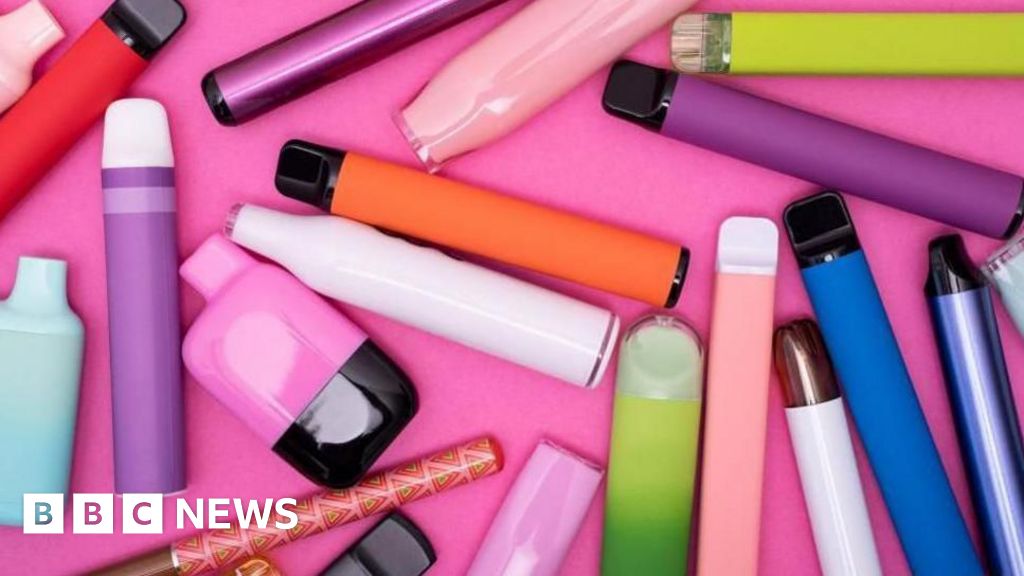
The ban on the sale of single-use disposable vapes will come into force on Sunday across the UK, aimed at protecting children’s health and the environment. It means shops and supermarkets will no longer be able to stock them – but they can still sell rechargeable or refillable devices. Disposable vapes have been cited as a key driver in the rise in youth vaping, while every year five million vapes are thrown away.Ministers predict it will have a significant impact but health experts say further regulation is needed to tackle youth vaping.Retailers in England and Wales breaching the ban face a £200 fine for the first offence with potentially unlimited fines or jail for those who repeatedly re-offend.The ban was first announced for England and Wales by the previous Conservative government but the law was not enacted before last summer’s general election.Labour then pushed ahead with it. Scotland and Northern Ireland have introduced their own bans, timed to coincide with the one in England and Wales.Vape use has risen rapidly over the last decade with 9% of the British public now buying and using e-cigarettes.Latest figures suggest about one in four vapers use the disposable versions, although that proportion has fallen since the ban was announced.And while it is illegal to sell vapes to anyone under 18, disposable vapes, often sold in smaller, more colourful packaging than refillable ones, have been cited as an important factor in the rise of youth vaping.Currently one in seven 18 to 24-year-olds vape but have never smoked.Vaping is substantially less harmful than smoking but it has not been around for long enough for its long-term risks to be known, according to the NHS.The environmental impact is considerable. Single-use vapes are difficult to recycle and typically end up in landfill where their batteries can leak harmful chemicals like battery acid, lithium, and mercury into the environment, the government said.Batteries thrown into household waste also cause hundreds of fires in bin lorries and waste-processing centres every year.The Department for Environment, Food and Rural Affairs estimates almost five million single-use vapes were either littered or thrown into general waste each week last year.Environment minister Mary Creagh said: “For too long, single-use vapes have blighted our streets as litter and hooked our children on nicotine. That ends today.”The government calls time on these nasty devices.”But Action on Smoking and Health chief executive Hazel Cheeseman questioned what impact the ban would have, pointing out new refillable vape kits were coming on to the market that look and cost similar to the single-use ones.She said it would not be until the Tobacco and Vapes Bill, which includes powers to regulate marketing, branding and advertising, came into power that the issue of youth vaping could be truly tackled.”Their appeal is driven by bright colours, wide availability and cheap prices,” she said.”The new regulations will hopefully help to address the environmental impact, but government will need further regulations to address the appeal of products to teenagers.”She said this was very much a balancing act as vapes were an important tool to help people quit.”Vaping is very much less harmful than smoking and is the most popular aid to quitting in the UK,” she added. John Dunne, of the UK Vaping Industry Association, said bans were “not the answer”.He said he was concerned that a black market in single-use vapes could develop and some people may be tempted to return to smoking cigarettes.”Disposables have played a huge role in reducing smoking levels amongst adults to record low levels. It’s why we are seeing stockpiling in the lead up to the ban,” he added.Scott Butler, executive director of Material Focus, an independent not-for-profit organisation, said that he was still concerned that vapes are still difficult to recycle and reuse. He said customers and businesses should demand sustainable options. “Given the rampant binning and littering that we already see, will we see any behaviour change? Only if producers, importers and retailers step up and meet their long existing legal obligations to provide and pay for takeback and recycling,” he said.

Read more →

Salmonella Outbreak Linked to Cucumbers Sickens 45 People

The outbreak, which was traced to a grower in Florida, has spread to 18 states, according to the C.D.C. Several distributors and stores, including Target, have recalled products containing cucumbers.A salmonella outbreak linked to cucumbers has sickened at least 45 people across 18 states, health officials said Friday and they warned that the number of people infected was likely higher.Companies including Target have issued recalls for products with cucumbers that may be contaminated.The cases have been reported across the Midwest and East Coast, with nearly a third of them in Georgia and Florida, according to the Centers for Disease Control and Prevention.It said 16 people had been hospitalized. Salmonella can cause diarrhea, fever, stomach cramps and dehydration.Health officials have linked the outbreak to Bedner Growers, a cucumber grower based in Boynton Beach, Fla., that sells to wholesale distributors and directly to consumers. Potentially contaminated cucumbers, distributed between April 29 and May 19, were sold widely to stores and restaurants, the C.D.C. said.Eight of the sick people had been on cruise ships in the week before they fell ill, all departing from ports in Florida, the C.D.C. said.We are having trouble retrieving the article content.Please enable JavaScript in your browser settings.Thank you for your patience while we verify access. If you are in Reader mode please exit and log into your Times account, or subscribe for all of The Times.Thank you for your patience while we verify access.Already a subscriber? Log in.Want all of The Times? Subscribe.

Read more →

Étienne-Émile Baulieu, Father of the Abortion Pill, Is Dead at 98

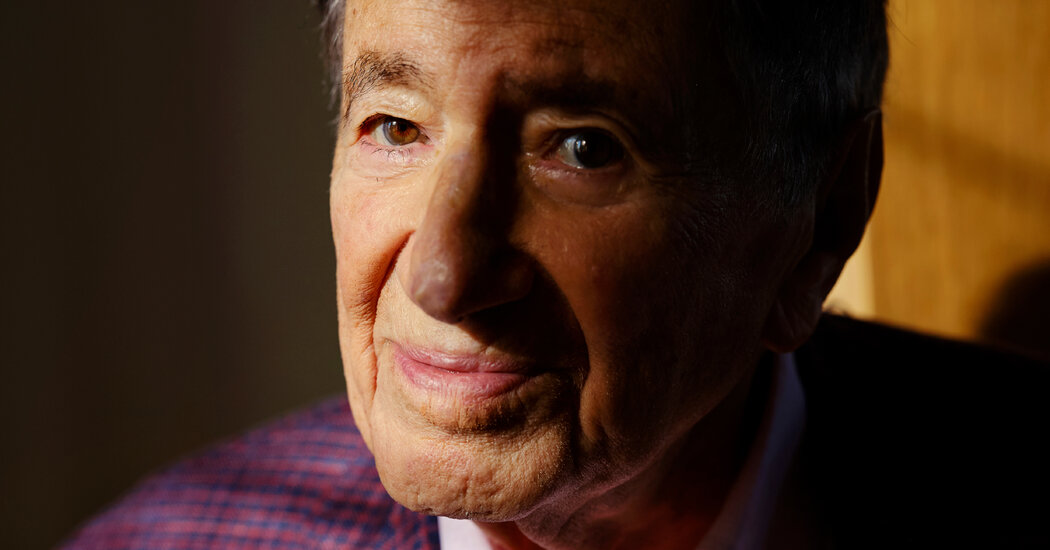
Étienne-Émile Baulieu, the French biochemist and physician who was often called the father of the abortion pill — and who was also known for his pioneering studies on the role of steroid hormones in human reproduction and aging — died on Friday at his home in Paris. He was 98.His wife, Simone Harari Baulieu, confirmed the death on social media.Dr. Baulieu’s early research focused on hormones, notably DHEA, one of the key hormones in the adrenal gland, as well as groundbreaking work on estrogen and progesterone. But it was his development in the early 1980s of the synthetic steroid RU-486, or mifepristone, that thrust him onto the public stage.Unlike the morning-after pill, which is used after sex to delay ovulation, RU-486 works as a kind of “anti-hormone,” in Dr. Baulieu’s words, by blocking the uterus from receiving progesterone, thereby preventing a fertilized egg from implanting.Taking the drug with misoprostol, a drug that causes uterine contractions, essentially triggers a miscarriage, enabling women to terminate early pregnancies without surgery.The two-dose treatment has been proved safe and highly effective — with a success rate of about 95 percent — and is commonly used in many countries; in the United States, medication abortions accounted for more than 50 percent of all abortions in 2020. After the 2022 Supreme Court decision overturning Roe v. Wade, demand for the pills surged, and abortion opponents began seeking ways to ban the drug nationwide.Controversy over RU-486 began as soon as its release in the 1980s. Dr. Baulieu developed the drug in partnership with the French drug company Roussel-Uclaf, where he was an independent consultant.We are having trouble retrieving the article content.Please enable JavaScript in your browser settings.Thank you for your patience while we verify access. If you are in Reader mode please exit and log into your Times account, or subscribe for all of The Times.Thank you for your patience while we verify access.Already a subscriber? Log in.Want all of The Times? Subscribe.

Read more →

World Scientists Look Elsewhere as U.S. Labs Stagger Under Trump Cuts

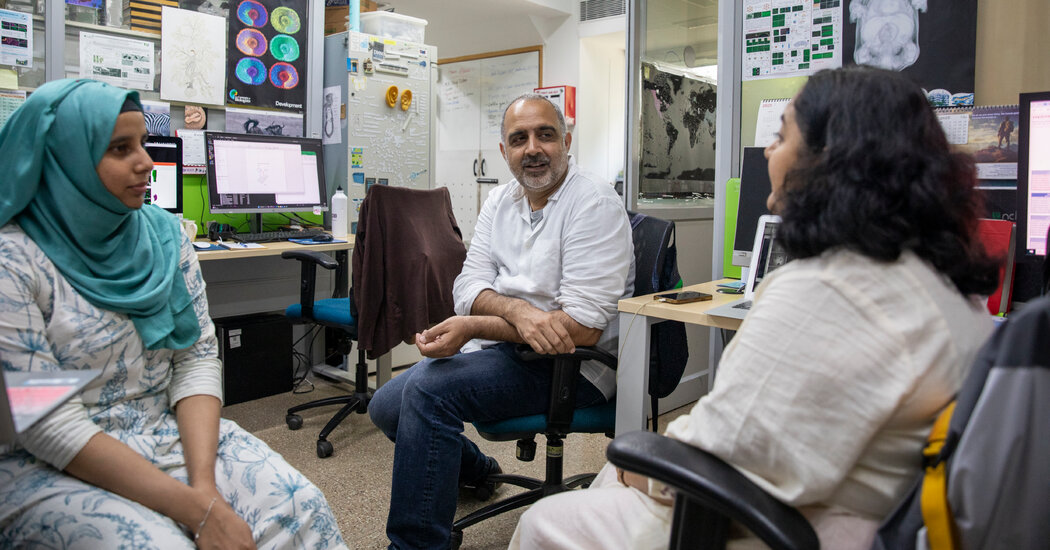
With the welcome mat withdrawn for promising researchers from around the world, America is at risk of losing its longstanding pre-eminence in the sciences.For decades, Bangalore, India, has been an incubator for scientific talent, sending newly minted Ph.D.s around the world to do groundbreaking research. In an ordinary year, many aim their sights at labs in the United States.“These are our students, and we want them to go and do something amazing,” said a professor at the National Center for Biological Sciences in Bangalore, Raj Ladher.But this is not an ordinary year.When Professor Ladher queried some 30 graduates in the city recently about their plans, only one had certain employment in the United States. For many of the others, the political turmoil in Washington has dried up job opportunities in what Professor Ladher calls “the best research ecosystem in the world.” Some decided they would now rather take their skills elsewhere, including Austria, Japan and Australia, while others opted to stay in India.As the Trump administration moves with abandon to deny visas, expel foreign students and slash spending on research, scientists in the United States are becoming increasingly alarmed. The global supremacy that the United States has long enjoyed in health, biology, the physical sciences and other fields, they warn, may be coming to an end.“If things continue as they are, American science is ruined,” said David W. Hogg, a professor of physics and data science at New York University who works closely with astronomers and other experts around the world. “If it becomes impossible to work with non-U.S. scientists,” he said, “it would basically render the kinds of research that I do impossible.”Research cuts and moves to curtail the presence of foreign students by the Trump administration have happened at a dizzying pace.We are having trouble retrieving the article content.Please enable JavaScript in your browser settings.Thank you for your patience while we verify access. If you are in Reader mode please exit and log into your Times account, or subscribe for all of The Times.Thank you for your patience while we verify access.Already a subscriber? Log in.Want all of The Times? Subscribe.

Read more →

Trump Administration Ends Program Critical to Search for an H.I.V. Vaccine

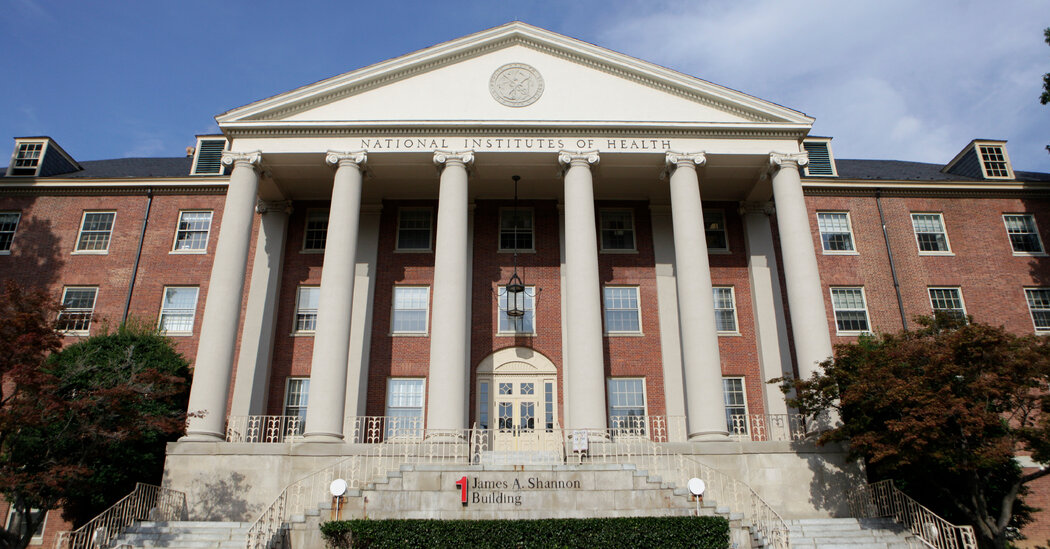
The termination is the latest in a series of cuts to H.I.V. research and programs to prevent the disease.The Trump administration has dealt a sharp blow to work on H.I.V. vaccines, terminating a $258 million program whose work was instrumental to the search for a vaccine.Officials from the H.I.V. division of the National Institutes of Health delivered the news on Friday to the program’s two leaders, at Duke University and the Scripps Research Institute.Both teams were collaborating with numerous other research partners. The work was broadly applicable to a wide range of treatments for other illnesses, from Covid drugs to snake antivenom and therapies for autoimmune diseases.“The consortia for H.I.V./AIDS vaccine development and immunology was reviewed by N.I.H. leadership, which does not support it moving forward,” said a senior official at the agency who was not authorized to speak on the matter and asked not to be identified.“N.I.H. expects to be shifting its focus toward using currently available approaches to eliminate H.I.V./AIDS,” the official said.The program’s elimination is the latest in a series of cuts to H.I.V.-related initiatives, and to prevention of the disease in particular. Separately, the N.I.H. also paused funding for a clinical trial of an H.I.V. vaccine made by Moderna.We are having trouble retrieving the article content.Please enable JavaScript in your browser settings.Thank you for your patience while we verify access. If you are in Reader mode please exit and log into your Times account, or subscribe for all of The Times.Thank you for your patience while we verify access.Already a subscriber? Log in.Want all of The Times? Subscribe.

Read more →

Breakthrough cancer drug doubles survival in trial

11 minutes agoShareSavePhilippa RoxbyHeath ReporterShareSaveLaura MarstonHundreds of thousands of people with advanced head and neck cancer could live longer without their cancer returning thanks to an immunotherapy drug, a clinical trial suggests.This is the first sign of a breakthrough for patients with this difficult-to-treat cancer for 20 years, say scientists behind the research.Laura Marston, 45, from Derbyshire, says she is “amazed she’s still here” after being given “dire” chances of survival following a diagnosis of advanced tongue cancer six years ago.She received the immunotherapy before and after surgery, which researchers say helps the body learn to attack the cancer if it returns.Cancers in the head and neck are notoriously difficult to treat and there’s been little change in the way patients are treated in two decades. More than half those diagnosed with advanced head and neck cancers die within five years.Laura was given only a 30% chance of surviving that long after her diagnosis in 2019, after having an ulcer on her tongue which wouldn’t go away. The next step was major surgery to remove her tongue, as well as lymph nodes in her neck, and then she had to learn to talk and eat again.”I was 39 and I was devastated,” she told BBC News.As part of an international study into new ways to treat the cancer, involving experts from the Institute of Cancer Research in London, Laura was one of more than 350 patients given the immunotherapy drug pembrolizumab before and after surgery to prime the body’s defences.Prof Kevin Harrington, who led the trial in the UK, explains: “We give the immune system the chance to have a good look at the tumour to generate anti-tumour immunity and then, after removal of the tumour, we continue to amplify that immune response by giving the drug continually for up to a year.”A similar number of patients diagnosed with similar cancers received the usual care offered. They all had advanced head and neck cancers in one area, that had not spread to the rest of the body.The new approach showed positive results. It doubled the length of time patients were cancer free, on average, from around 2.5 years to five years.After three years, patients given pembrolizumab had a 10% lower risk of their cancer returning elsewhere in the body.’Given me my life back’Six years on, Laura is working full-time and says she’s “in a good place and doing really well”.”It’s been phenomenal for me, because I’m here, able to talk to you.”I wasn’t expected to come this far,” Laura says.”My prognosis was quite dire.” She had muscle taken from her left arm and placed into her mouth to fill the void left by her tongue. It has been a tough journey.”Just having this amazing immunotherapy has given me my life back again.”The researchers say the key to their results was giving patients the drug before surgery, which trains the body to hunt down and kill the cancer if it ever comes back. Prof Harrington says immunotherapy “could change the world” for these patients.”It significantly decreases the chance of cancer spreading around the body, at which point it’s incredibly difficult to treat,” he said.About 12,800 new head and neck cancer cases are diagnosed in the UK every year. The approach worked “particularly well” for some patients, but it was “really exciting” to see the treatment benefitting all the patients in the trial, Prof Harrington said. He added that it should now be made available on the NHS, .The study findings are being presented at the American Society of Clinical Oncology (ASCO) annual meeting.The trial, called Keynote, involved 192 hospitals in 24 countries, was led by Washington University Medical School in St Louis and funded by drug company MSD.

Read more →

C.D.C. Contradicts Kennedy and Keeps Advice That Children May Get Covid Shots

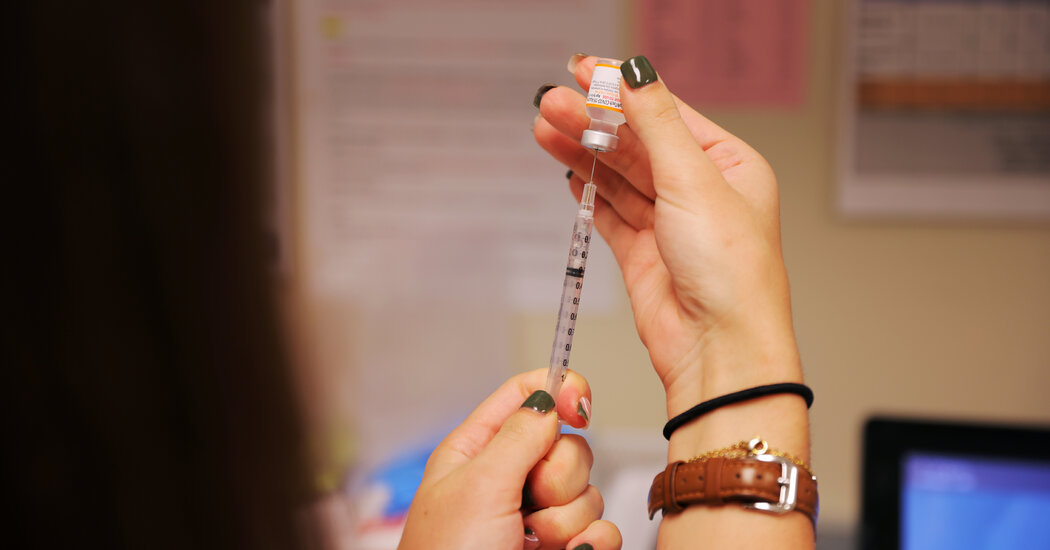
Health Secretary Robert F. Kennedy Jr. said on Tuesday that the vaccine would no longer appear on the childhood immunization schedule. C.D.C.’s update counters his policy.Days after Health Secretary Robert F. Kennedy Jr. announced that Covid shots would be removed from the federal immunization schedule for children, the Centers for Disease Control and Prevention issued updated advice that largely counters Mr. Kennedy’s new policy.The agency kept Covid shots on the schedule for children 6 months to 17 years old with a new condition. Children and their caregivers will be able to get the vaccines in consultation with a doctor or provider, which the agency calls “shared decision-making.”The shots will also continue to be available under those terms to about 38 million low-income children who rely on the Vaccines for Children program, according to an emailed update from the C.D.C. on Friday.However, the picture is less certain now for pregnant women, a group the C.D.C. had considered to be at high risk for a bad outcome from the virus. The official C.D.C. position for pregnant women is “no guidance,” according to a communication released from the agency Friday. Mr. Kennedy’s pronouncement on Tuesday had included a decision to drop the recommendation for pregnant women to receive Covid shots.The C.D.C.’s new guidance on pregnant women is a troubling turn of events for experts familiar with research showing that their risk of stillbirth, hospitalization and death rises if they have Covid.Dr. Michelle Fiscus, a pediatrician and chief medical officer with the Association of Immunization Managers, said that based on federal health officials’ statements in recent days, she had expected to see a recommendation for pregnant women to get the vaccine if they had an additional condition putting them at high risk.Days ago, the recommendation from the C.D.C. was that everyone 6 months or older should get the Covid vaccine. Now the advice is that children “may” get the shot but there is no longer any guidance for pregnant women.In a statement, Andrew Nixon, a spokesman for the Health and Human Services, carefully walked back Mr. Kennedy’s pronouncement about removing the vaccines from the recommended schedule of shots children should receive.“The old Covid-19 vaccine recommendations for healthy children under 18 and for pregnant women have been removed from the C.D.C. vaccine schedule,” the statement said. “The C.D.C. and H.H.S. encourage individuals to talk with their health care provider about any personal medical decision. Under the leadership of Secretary Kennedy, H.H.S. is restoring the doctor-patient relationship. If a parent desires their healthy child to be vaccinated, their decision should be based on informed consent through the clinical judgment of their health care provider.”

Read more →

Singing to babies improves their mood

Singing to your infant can significantly boost the baby’s mood, according to a recent study. Around the world and across cultures, singing to babies seems to come instinctively to caregivers. Now, new findings support that singing is an easy, safe, and free way to help improve the mental well-being of infants. Because improved mood in infancy is associated with a greater quality of life for both parents and babies, this in turn has benefits for the health of the entire family, the researchers say. The study also helps explain why musical behaviors may have evolved in parents.

Read more →