What benefits nutrition in Africa the most?

Malnutrition in developing countries is best addressed not by increasing the variety of crops grown on smallholder farms, but by improving access to markets. This is the conclusion of a recent study by the MwAPATA Institute in Malawi and the University of Bonn in Germany. More variety in animal production, however, does show positive effects. The findings are now published in the journal The Lancet Planetary Health.
Not only too little food, but also a diet that is too one-sided can have serious negative health consequences. A varied diet is thus an important means of preventing malnutrition. For this reason, researchers are often advocating that smallholders in Africa, who are particularly affected, should grow more diverse crops. As these farms produce to a significant extent for their own consumption, the greater variety in the field should have a positive impact on nutrition. To date, however, there have only been small, regionally limited studies on the actual effects of further farm diversification.
The researchers at the MwAPATA Institute and the University of Bonn have now drawn on a far more comprehensive trove of data: They evaluated surveys conducted by the national statistical offices of Ethiopia, Malawi, Tanzania, and Uganda, in which the same smallholder households had been repeatedly visited and surveyed over several years. The data show the number of crops grown and species of livestock kept. In addition, they provide information on the age, weight and height of children at the family farms. This makes it possible to calculate various indicators of their nutritional status.
Growth of 50,000 children and adolescents evaluated
“In total, we analyzed data from more than 50,000 children and adolescents from over 20,000 randomly selected farms,” explains MwAPATA Institute researcher Dr. Makaiko Khonje. “We linked these measurements to the production diversity of the farms.” The researchers discovered three important results: First, the number of crops had little effect on children’s growth and thus their nutritional status. A larger variety of animal species kept, however, did have a positive effect. Keeping goats or a cow, perhaps, in addition to chickens and other animals, can therefore improve nutritional status — that is the second message.
The third important result relates to local markets. “Improved market access has a particularly positive impact on nutritional status,” Khonje explains. Because those who can sell their products at the market and in turn purchase the foods that they themselves are lacking can thereby also ensure greater variety on the plate. In many places, however, the appropriate infrastructure is lacking. The roads to the market are often so bad that transport takes a long time and some of the products spoil or are damaged on the way. “If you can’t sell half the food in the end, but have to throw it away, then of course the effort is not worthwhile,” explains Prof. Dr. Matin Qaim from the Center for Development Research (ZEF) at the University of Bonn, who was also involved in the study.
Specialization can be useful, but no monocultures
The researchers recommend not to focus solely on more variety in the field, as in many cases, better market access would be more effective. Too much diversification is also counterproductive, they say, because each plant has its own requirements and thus requires special know-how. “Moreover, not every soil is suitable for every crop,” Khonje points out. “It’s better to focus on the species that do particularly well locally and sell the surplus.”
However, it is also not advisable to specialize too much, the researchers emphasize. “A certain amount of variety also makes sense from an environmental perspective and to reduce risk for smallholders,” says Qaim, who is also a member of the Transdisciplinary Research Area (TRA) “Sustainable Future” and the Cluster of Excellence “PhenoRob.” “Pure monocultures are certainly not the solution.”
Story Source:
Materials provided by University of Bonn. Note: Content may be edited for style and length.

Read more →

AI predicts infant age, gender based on temperament

It’s hard to tell the difference between a newborn boy and girl based solely on temperament characteristics such as the baby’s propensity to display fear, smile or laugh. But once babies reach around a year old that begins to change.
A new study in PLOS ONE used machine learning to analyze temperament data on 4,438 babies in an attempt to classify the infants by gender and age.
The results indicate it is far easier for computer algorithms to determine the age of a baby than it is for them to decipher a baby’s gender based off temperament data during the infant’s first 48 weeks of life.
However, once the babies passed 48 weeks of age, gender classification improved for the multiple algorithms considered, suggesting gender differences in infancy become more accentuated around this time.
“It is at least suggestive of a picture where temperament begins to differentiate by gender in a more powerful way around age one,” said Maria Gartstein, lead author of the study and a professor of psychology at Washington State University.
Previous research has investigated age and gender-based temperament differences in babies, but few if any studies have looked at the two variables together.

Read more →

Joubert Syndrome: Intellectual disability and defects in the hippocampus

An important link has been found between the intellectual disability experienced by children with the rare disease Joubert Syndrome (JS) and defects in the hippocampus. The hippocampus is the part of the brain associated with learning and memory. It also plays a role in various neurological and psychiatric disorders.
Biologists at the University of Bath in the UK, led by Dr Vasanta Subramanian, made this link in animal models by manipulating a gene (one of 34) known to cause JS in humans. Results from the study are published in Human Molecular Genetics.
By creating a deletion in the gene Talpid3 in healthy mice, graduate student Andrew L Bashford found that animals went on to develop defects to the primary cilia — a cell structure that is essential in the development of the hippocampus. When examining the brains of mutant animals, the researchers observed defects in the hippocampus that bore a striking resemblance to those found in children with JS.
The primary cilia — long, thin organelles that protrude from the surface of most cells — work like cellular antennae, sending signals from the external environment of the cell to the interior, instructing the cell on how to behave (e.g. should it migrate, divide, stop dividing?). Primary cilia are important for the structure and function of many types of cells, including brain cells.
The findings from the study suggest a link between hippocampal defects, and the learning and memory deficits seen in JS patients. Malformations in the hindbrain (the lower part of the brainstem) are already known to be responsible for many of the physical symptoms associated with JS.
“This is the first time we have seen a link between changes to the hippocampus and this disease in mouse models,” said Dr Subramanian. “This is an exciting area of research that we hope to continue making a contribution to. Joubert Syndrome is one of many rare diseases that has a devastating impact on those affected and is now rightly getting the research attention it deserves.”
With further research on animal models, Dr Subramanian and her team expect to deepen their understanding of the causes of JS. In time, they hope drugs will be developed to target some of the genes or proteins involved in the disease, thereby alleviating symptoms or stopping the disease from developing in the first place.
Joubert Syndrome is a rare childhood disease that leads to poor muscle coordination, developmental delay, abnormal eye movements and neonatal breathing abnormalities. It is estimated that between 1 in 80,000 and 1 in 100,000 newborns are affected by the condition.
Speaking on behalf of the family-support organisation Joubert Syndrome UK, Faith Douthwaite said: “We are delighted to hear about this new research, and also appreciate the dedication of medical professionals who continue to unravel the mysteries of Joubert Syndrome so as to improve the health and wellbeing of our beautiful and unique children.”
Story Source:
Materials provided by University of Bath. Note: Content may be edited for style and length.

Read more →

Stress may be associated with fertility issues in women

Female rats exposed to a scream sound may have diminished ovarian reserve and reduced fertility, according to a small animal study published in the Endocrine Society’s journal, Endocrinology.
Ovarian reserve is the reproductive potential left within a woman’s two ovaries based on the number and quality of eggs. A woman is born with a finite number of eggs and her body cannot create any more. Diminished ovarian reserve is the loss of normal reproductive potential in the ovaries due to a lower count or quality of the remaining eggs.
“We examined the effect of stress on ovarian reserve using a scream sound model in rats,” said Wenyan Xi, Ph.D., of the Second Affiliation Hospital of Xi’an Jiao Tong University in Xian, China. “We found that female rats exposed to the scream sound had diminished ovarian reserve and decreased fertility.”
The researchers used a scream sound model to investigate the effect of stress on ovarian reserve in female rats. They exposed female rats to a scream sound for 3 weeks and analyzed the effect on their sex hormones, the number and quality of their eggs and their ability to get pregnant and have babies after mating.
They found the scream sound decreased the rats’ estrogen and Anti-Mullerian hormone levels. Estrogen is a group of hormones that play an important role in growth and reproductive development, and Anti-Mullerian hormone is a hormone made by the ovaries which helps form reproductive organs. The scream sound also lowered the number and quality of the women’s eggs and resulted in smaller litters.
“Based on these findings, we suggest stress may be associated with diminished ovarian reserve,” Xi said. “It is important to determine an association between chronic stress and ovarian reserve because doing so may expand our appreciation of the limitations of current clinical interventions and provide valuable insight into the cause of diminished ovarian reserve.”
Other authors of this study include: Hui Mao, Haoyan Yao and Ruiting Shi of the Second Affiliation Hospital of Xi’an Jiao Tong University; and Zhiwei Cui of the First Affiliation Hospital of Xi’an Jiao Tong University in Xian, China.
The study received funding from the Natural Science Foundation of Shaanxi Provincial Department of Education.
Story Source:
Materials provided by The Endocrine Society. Note: Content may be edited for style and length.

Read more →

Research to Address the Real-Life Challenges of Opioid Crisis

Caption: NIDA Director Nora Volkow (center), HEAL Initiative Director Rebecca Baker (right), and I discuss NIH’s latest efforts to combat opioid crisis. Credit: Pierce Harman for Rx Drug Abuse & Heroin Summit 2022.

While great progress has been made in controlling the COVID-19 pandemic, America’s opioid crisis continues to evolve in unexpected ways. The opioid crisis, which worsened during the pandemic and now involves the scourge of fentanyl, claims more than 70,000 lives each year in the United States [1]. But throughout the pandemic, NIH has continued its research efforts to help people with a substance use disorder find the help that they so need. These efforts include helping to find relief for the millions of Americans who live with severe and chronic pain.

Recently, I traveled to Atlanta for the Rx Drug Abuse & Heroin Summit 2022. While there, I moderated an evening fireside chat with two of NIH’s leaders in combating the opioid crisis: Nora Volkow, director of the National Institute on Drug Abuse (NIDA); and Rebecca Baker, director of Helping to End Addiction Long-term® (HEAL) initiative. What follows is an edited, condensed transcript of our conversation.

Tabak: Let’s start with Nora. When did the opioid crisis begin, and how has it changed over the years

Volkow: It started just before the year 2000 with the over-prescription of opioid medications. People were becoming addicted to them, many from diverted product. By 2010, CDC developed guidelines that decreased the over-prescription. But then, we saw a surge in heroin use. That turned the opioid crisis into two problems: prescription opioids and heroin.

In 2016, we encountered the worst scourge yet. It is fentanyl, an opioid that’s 50 times more potent than heroin. Fentanyl is easily manufactured, and it’s easier than other opioids to hide and transport across the border. That makes this drug very profitable.

What we have seen during the pandemic is the expansion of fentanyl use in the United States. Initially, fentanyl made its way to the Northeast; now it’s everywhere. Initially, it was used to contaminate heroin; now it’s used to contaminate cocaine, methamphetamine, and, most recently, illicit prescription drugs, such as benzodiazepines and stimulants. With fentanyl contaminating all these drugs, we’re also seeing a steep rise in mortality from cocaine and methamphetamine use in African Americans, American Indians, and Alaska natives.

Tabak: What about teens? A recent study in the journal JAMA reported for the first time in a decade that overdose deaths among U.S. teens rose dramatically in 2020 and kept rising through 2021 [2]. Is fentanyl behind this alarming increase?

Volkow: Yes, and it has us very concerned. The increase also surprised us. Over the past decade, we have seen a consistent decrease in adolescent drug use. In fact, there are some drugs that have the lowest usage rates that we’ve ever recorded. To observe this more than doubling of overdose deaths from fentanyl before the COVID pandemic was a major surprise.

Adolescents don’t typically use heroin, nor do they seek out fentanyl. Our fear is adolescents are misusing illicit prescriptions contaminated with fentanyl. Because an estimated 30-40 percent of those tainted pills contain levels of fentanyl that can kill you, it becomes a game of Russian roulette. This dangerous game is being played by adolescents who may just be experimenting with illicit pills.

Tabak: For people with substance use disorders, there are new ways to get help. In fact, one of the very few positive outcomes of the pandemic is the emergence of telehealth. If we can learn to navigate the various regulatory issues, do you see a place for telehealth going forward?

Volkow: When you have a crisis like this one, there’s a real need to accelerate interventions and innovation like telehealth. It certainly existed before the pandemic, and we knew that telehealth was beneficial for the treatment of substance use disorders. But it was very difficult to get reimbursement, making access extremely limited.

When COVID overwhelmed emergency departments, people with substance use disorders could no longer get help there. Other interventions were needed, and telehealth helped fill the void. It also had the advantage of reaching rural populations in states such as Kentucky, West Virginia, Ohio, where easy access to treatment or unique interventions can be challenging. In many prisons and jails, administrators worried about bringing web-based technologies into their facilities. So, in partnership with the Justice Department, we have created networks that now will enable the entry of telehealth into jails and prisons.

Tabak: Rebecca, it’s been four years since the HEAL initiative was announced at this very summit in 2018. How is the initiative addressing this ever-evolving crisis?

Baker: We’ve launched over 600 research projects across the country at institutions, hospitals, and research centers in a broad range of scientific areas. We’re working to come up with new treatment options for pain and addiction. There’s exciting research underway to address the craving and sleep disruption caused by opioid withdrawal. This research has led to over 20 investigational new drug applications to the FDA. Some are for repurposed drugs, compounds that have already been shown to be safe and effective for treating other health conditions that may also have value for treating addiction. Some are completely novel. We have also initiated the first testing of an opioid vaccine, for oxycodone, to prevent relapse and overdose in high-risk individuals.

Tabak: What about clinical research?

Baker: We’re testing multiple different treatments for both pain and addiction. Not everyone with pain is the same, and not every treatment is going to work the same for everyone. We’re conducting clinical trials in real-world settings to find out what works best for patients. We’re also working to implement lifesaving, evidence-based interventions into places where people seek help, including faith, community, and criminal justice settings.

Tabak: The pandemic highlighted inequities in our health-care system. These inequities afflict individuals and populations who are struggling with addiction and overdose. Nora, what needs to be done to address the social determinants of racial disparities?

Volkow: This is an extraordinarily important question. As you noted, certain racial and ethnic groups had disproportionately higher mortality rates from COVID. We have seen the same with overdose deaths. For example, we know that the most important intervention for preventing overdoses is to initiate medications such as methadone, buprenorphine or vivitrol. But Black Americans are initiated on these medications at least five years later than white Americans. Similarly, Black Americans also are less likely to receive the overdose-reversal medication naloxone.

That’s not right. We must ask what are the core causes of limited access to high-quality health care? Low income is a major contributing factor. Helping people get an education is one of the most important factors to address it. Another factor is distrust of the medical system. When racial and ethnic discrimination is compounded by discrimination because a person has a substance use disorder, you can see why it becomes very difficult for some to seek help. As a society, we certainly need to address racial discrimination. But we also need to address discrimination against substance use disorders in people of all races who are vulnerable.

Baker: Our research is tackling these barriers head on with a direct focus on stigma. As Nora alluded to, oftentimes providers may not offer lifesaving medication to some patients, and we’ve developed and are testing research training to help providers recognize and address their own biases and behaviors in caring for different populations.

We have supported research on the drivers of equity. A big part of this is engaging with people with lived experience and making sure that the interventions being designed are feasible in the real world. Not everyone has access to health insurance, transportation, childcare—the support that they may need to sustain treatment and recovery. In short, our research is seeking ways to enhance linkage to treatment.

Nora mentioned the importance of telehealth in improving equity. That’s another research focus, as well as developing tailored, culturally appropriate interventions for addressing pain and addiction. When you have this trust issue, you can’t always go in with a prescription or a recommendation from a physician. So in American and Alaskan native communities, we’re integrating evidence-based prevention approaches with traditional practices like wellness gatherings, cooking together, use of sage and spirituality, along with community support, and seeing if that encourages and increases the uptake of these prevention approaches in communities that need it so much.

Tabak: The most heartbreaking impact of the opioid crisis has been the infants born dependent on opioids. Rebecca, what’s being done to help the very youngest victims of the opioid crisis born with neonatal opioid withdrawal syndrome, or NOWS?

Baker: Thanks for asking about the infants. Babies with NOWS undergo withdrawal at birth and cry inconsolably, often with extreme stomach upset and sometimes even with seizures. Our research found that hospitals across the country vary greatly in how they treat these babies. Our program, ACT NOW, or Advancing Clinical Trials in Neonatal Opioid Withdrawal, aims to provide concrete guidance for nurses in the NICU treating these infants. One of the studies that we call Eat, Sleep, Console focuses on the abilities of the baby. Our researchers are testing if the ability to eat, sleep, or be consoled increases bonding with the mother and if it reduces time in the hospital, as well as other long-term health outcomes.

In addition to that NOWS program, we’ve also launched the HEALthy Brain and Child Development Study, or HBCD, that seeks to understand the long-term consequences of opioid exposure together with all the other environmental and other factors the baby experiences as they grow up. The hope is that together these studies will inform future prevention and treatment efforts for both mental health and also substance use and addiction.

Tabak: As the surge in heroin use and appearance of fentanyl has taught us, the opioid crisis has ever-changing dynamics. It tells us that we need better prevention strategies. Rebecca, could you share what HEAL is doing about prevention?

Baker: Prevention has always been a core component of the HEAL Initiative in a number of ways. The first is by preventing unnecessary opioid exposures through enhanced and evidence-based pain management. HEAL is supporting research on new small molecules, new devices, new biologic therapeutics that could treat pain and distinct pain conditions without opioids. And we’re also researching and providing guidance for clinicians on strategies for managing pain without medication, including acupuncture and physical therapy. They can often be just as effective and more sustainable.

HEAL is also working to address risky opioid use outside of pain management, especially in high-risk groups. That includes teens and young adults who may be experimenting, people lacking stable housing, patients who are on high-dose opioids for pain management, or they maybe have gone off high-dose opioids but still have them in their possession.

Finally, to prevent overdose we have to give naloxone to the people who need it. The HEALing Communities Study has taken some really innovative approaches to providing naloxone in libraries, on the beach, and places where overdoses are actually happening, not just in medical settings. And I think that will be, in our fight against the overdose crisis, a key tool.

Volkow: Larry, I’d like to add a few words on prevention. There are evidence-based interventions that have been shown to be quite effective for preventing substance use among teenagers and young adults. And yet, they are not implemented. We have evidence-based interventions that work for prevention. We have evidence-based interventions that work for treatment. But we don’t provide the resources for their implementation, nor do we train the personnel that can carry it over.

Science can give us tools, but if we do not partner at the next level for their implementation, those tools do not have the impact they should have. That’s why I always bring up the importance of policy in the implementation phase.

Tabak: Rebecca, the opioid crisis got started with a lack of good options for treating pain. Could you share with us how HEAL’s research efforts are addressing the needs of millions of Americans who experience both chronic pain and opioid use disorder?

Baker: It’s so important to remember people with pain. We can’t let our efforts to combat the opioid crisis make us lose sight of the needs of the millions of Americans with pain. One hundred million Americans experience pain; half of them have severe pain, daily pain, and 20 million have such severe pain that they can’t do things that are important to them in their life, family, job, other activities that bring their life meaning.

HEAL recognizes that these individuals need better options. New non-addictive pain treatments. But as you say, there is a special need for people with a substance use disorder who also have pain. They desperately need new and better options. And so we recently, through the HEAL Initiative, launched a new trials network that couples medication-based treatment for opioid use disorders, so that’s methadone or buprenorphine, with new pain-management strategies such as psychotherapy or yoga in the opioid use disorder treatment setting so that you’re not sending them around to lots of different places. And our hope is that this integrated approach will address some of the fragmented healthcare challenges that often results in poor care for these patients.

My last point would be that some patients need opioids to function. We can’t forget as we make sure that we are limiting risky opioid use that we don’t take away necessary opioids for these patients, and so our future research will incorporate ways of making sure that they receive needed treatment while also preventing them from the risks of opioid use disorder.

Tabak: Rebecca, let me ask you one more question. What do you want the folks here to remember about HEAL?

Baker: HEAL stands for Helping to End Addiction Long-term, and nobody knows more than the people in this room how challenging and important that really is. We’ve heard a little bit about the great promise of our research and some of the advances that are coming through our research pipeline, new treatments, new guidance for clinicians and caregivers. I want everyone to know that we want to work with you. By working together, I’m confident that we will tailor these new advances to meet the individual needs of the patients and populations that we serve.

Tabak: Nora, what would you like to add?

Volkow: This afternoon, I met with two parents who told me the story of how they lost their daughter to an overdose. They showed me pictures of this fantastic girl, along with her drawings. Whenever we think about overdose deaths in America, the sheer number—75,000—can make us indifferent. But when you can focus on one person and feel the love surrounding that life, you remember the value of this work.

Like in COVID, substance use disorders are a painful problem that we’re all experiencing in some way. They may have upset our lives. But they may have brought us together and, in many instances, brought out the best that humans can do. The best, to me, is caring for one another and taking the responsibility of helping those that are most vulnerable. I believe that science has a purpose. And here we have a purpose: to use science to bring solutions that can prevent and treat those suffering from substance use disorders.

Tabak: Thanks to both of you for this enlightening conversation.

References:

[1] Drug overdose deaths, Centers for Disease Control and Prevention, February 22, 2022.[2] Trends in drug overdose deaths among US adolescents, January 2010 to June 2021. Friedman J. et al. JAMA. 2022 Apr 12;327(14):1398-1400.

Links:

SAMHSA’s National Helpline (Substance Abuse and Mental Health Services Administration, Rockville, MD)

Opioids (National Institute on Drug Abuse/NIH)

Fentanyl (NIDA)

Helping to End Addiction Long-term®(HEAL) Initiative (NIH)

Rebecca Baker (HEAL/NIH)

Nora Volkow (NIDA)

Read more →

How Ben Got His Penis

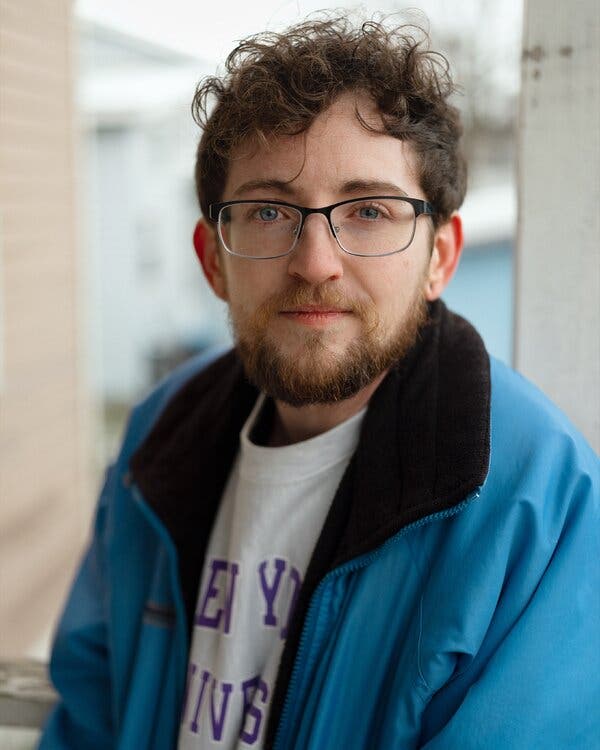
Nothing about Benjamin Simpson’s transition was inevitable, certainly not his penis. Though he did, in the end, grow up to be a man, he freely admits that in another place or time he might have grown into an unhappy woman, or the local eccentric, or a person who died too young from suicide. Raised in a village outside the Finger Lakes — a place, to this day, where cell service is spotty — he did not know what “transgender” was. As a young girl, he assumed he would become a man when he grew up. When he realized he would not, he forgot the whole idea and started collecting other evidence to explain why something in his life always felt off.First, there was the way he wore baggy clothes in the summer. (Then again, lots of teenage girls dislike their bodies.) Next came the lesbian rumors at school. (Though Ben did know that he liked girls, he did not feel like a lesbian at all.) To combat the gossip, he started dressing girlier and tried having sex with boys a few times. His interest in their bodies was more appraising than erotic. Browsing a Myspace group for lesbians, he found himself yearning for a clear identity. Where did he fit in the scheme of the world? Incomprehensible to himself, he tried a few times to end his own life. Soon after, he went looking for himself at New York University.Ben arrived at college in 2009. There, he started calling himself a “queer lesbian,” a term he used in an attempt to reconcile his attraction to women with his interest in men’s bodies. He joined a campus L.G.B.T. group and met people who seemed to know who they were, who called themselves things like “gender-fluid” or used “ze”/“zir” pronouns. Ben did not feel that these words applied to him, but for the first time he had community and language to help him disentangle himself. This was a stressful and exciting interlude. He went out in outfits from across the gender spectrum, in clothes he wouldn’t dream of putting on today. He had long debates over terms: What was the difference between a butch lesbian and a transgender man? What was the reason to use these words at all?In the spring of 2015, Ben got happy hour drinks with two friends at a Midtown barbecue spot. The setup was the usual — sitting at the bar, dissecting sex and gender, putting the pieces together again. They had done this many times before, but this time something clicked, and suddenly Ben understood he was a man. He stood up from the bar and told his friends: “[Expletive]! I’m trans! I gotta go!” Out in the street, he took off his heels and ran five sobbing blocks to the train. That night, he began the bureaucratic work of transition: texting his mother, posting a Facebook status, scheduling a doctor’s appointment to start testosterone.Shortly after that, Ben dropped out of college and moved to North Carolina with his cousin. There he began his life as a man, working at a hotel, wearing a uniform and smiling when Southern types called him “son.” The state’s so-called bathroom bill drove him back to his hometown; in North Carolina, neither restroom felt safe. Back in New York State, he could finally unclench, secure in the knowledge that he wasn’t just a man but a certain kind of man who belonged out in the country. College had expanded his knowledge of gender; now, finally, he could narrow it down. In 2017, he had “top surgery,” or a gender-affirming double mastectomy. As far as he knew, his transition was complete. His gender dysphoria was manageable. He felt fine about his sex life. Though he had read about “bottom surgery” online, the final outcomes did not seem good enough for him to justify the risks. People were comparing the results to soda cans, he recalls. “They were saying they weren’t functional. You couldn’t pee out of them. You couldn’t feel anything.”Ben at his home in upstate New York.Elle Pérez for The New York TimesHis calculus changed one night later that year, out with some friends at the local college dive. The place was filthy. Management had removed the bathroom stalls to keep people from doing cocaine. An undefended toilet next to a urinal is not an ideal place for a trans man to take a leak, but Ben was confident — and had to go. He walked past a guy using the urinal and quickly unzipped to sit on the toilet. The man kept his eyes to himself (the men’s room code), but as he left, he told the people waiting: “It’s going to be a while. That guy just sat down.”This was hardly an incitement to anti-trans harassment — he just thought Ben was taking a dump. Even so, as Ben sat there pretending to go, he pictured a more hostile group of drunken men and how they might react to the absence of his penis. Bathroom bills were on the rise, and every day for the rest of his life, taking a leak would mean managing risk. He was just 26 — still quite young. Looking ahead at a lifetime of this, the downsides of surgery suddenly seemed reasonable. Having a penis would help him feel safe, even if he still had to sit down in a stall. “I felt that any complication that would arise, including dying, was better than the alternative,” he says. That night, drunk at home, he ran a search for “FTM bottom surgery” and spent all night reading up on phalloplasty. The following week, he submitted a request for a consultation with Dr. Rachel Bluebond-Langner at N.Y.U. Langone.Phalloplasty, or surgery to construct a penis, is one of medicine’s most complex procedures. Though it technically refers to one step in a long process — the construction of a phallus from a flap of one’s own skin — the term is used more generally to describe a suite of modular surgeries, each attending to a different penile function. The penis, as an organ, is idiosyncratic, assigned to a seemingly random set of duties that you might not group together if designing it from scratch. The heart pumps blood; the stomach digests food. The penis procreates, urinates and transmits pleasure. It reacts to temperature, emotion and touch — a complex assemblage of tubes, tissue and nerve, configured in the awkward crook of space between the legs.The main recipients of phalloplasty are transgender men and nonbinary people, intersex people and cisgender men with penile injuries. These groups can have different starting anatomy, but in general, the surgical techniques are the same. Beyond the initial construction of the shaft, a phalloplasty might also include extending the urethra, creating a scrotum, defining the glans, adding testicular prostheses or inserting an erectile implant. Depending on the combination of procedures, a penis might take a couple of years to complete, involving many surgical stages and revisions and a long-term commitment to organizing life around access to doctors, insurance coverage, time off from work and postoperative care. For trans patients, the risk of complications is high — according to surgeons I spoke with, about 70 percent. (The small patient pool and customizable nature of the procedure pose challenges for empirical analysis.) Nevertheless, patient satisfaction rates are high. According to one report, presented at the 2012 Canadian Professional Association for Transgender Health Conference, which analyzed 29 studies of gender-affirming phalloplasty from 1980 to 2012, it is as high as 97 percent. In a 2021 survey published in The Journal of Sexual Medicine, which asked 79 patients to respond on a seven-point scale to the statement “I feel positively about my genitals,” transgender men who had completed at least one stage of phalloplasty scored equal to cisgender men.Dr. Lee Zhao demonstrating how an erectile implant works on a model of a penis. Squeezing a pump inside the scrotal sack provides an erection; on the right side is a silicone testicular prosthesis.Elle Pérez for The New York TimesPhalloplasty for trans men and nonbinary people — known in medicine as gender-affirming phalloplasty — has existed in some form since at least the 1940s, but until recently, it was rare in the United States, where insurance coverage was unreliable and few surgeons catered to the needs of trans patients. Some trans men traveled to Belgium, Serbia or Thailand, where care was both cheaper and easier to access; those who did have surgery in the United States often paid tens of thousands of dollars, forcing them to choose between a penis and a house (if they were well-off enough to face this choice at all). As hormones and top surgery became standard forms of health care, a penis remained an unlikely prospect, even to some who wanted it badly.Today, both access and attitudes are changing, thanks to efforts in peer education, recent advancements in surgical technique and, most consequential, the Affordable Care Act, which prohibits health programs that receive federal funding from discriminating on the basis of certain federally protected criteria, including sex. When the act passed in 2010, it was not immediately clear whether nondiscrimination would ultimately apply to transgender health care. The law protected sex, but not transgender status in particular, starting a 10-year legal dispute about whether one implied the other. This question intersected with some of the most hotly contested axes of American civil rights, including the freedom of religious organizations that receive federal funding.The Supreme Court’s Bostock v. Clayton County decision, handed down in 2020, resolved this ambiguity, at least for the time being: Transgender status is now understood to fall under the umbrella of sex, which in turn makes it a protected civil right, which in turn mandates coverage under the Affordable Care Act. Today, according to the L.G.B.T. organization Movement Advancement Project, Medicaid programs in 24 states explicitly cover transition-related care. Many companies — McDonald’s, Starbucks, Amazon and more — have begun offering insurance plans that follow suit, a sea change that puts phalloplasty within reach for more trans Americans than ever. Without insurance, phalloplasty would cost the patient as much $200,000 from start to finish.‘I felt that any complication that would arise, including dying, was better than the alternative.’On Being Transgender in AmericaElite Sports: The case of the transgender swimmer Lia Thomas has stirred a debate about the nature of athleticism in women’s sports.Transgender Youth: A photographer documented the lives of transgender youth. She shared some thoughts on what she saw.Remote Work: Remote work during the pandemic offered some people an opportunity to move forward with a transition. They are now preparing to return to the office.Corporate World: What is it like to transition while working for Wall Street? A Goldman Sachs’ employee shares her experience.According to the most recent prepandemic data from the American Society of Plastic Surgeons, some 1,100 people in the United States had gender-affirming phalloplasty in 2019. This number is probably low, considering the modular nature of the procedure and inconsistencies in how data is reported. Surgeons at all four programs I spoke with confirmed that phalloplasty is on the rise. All claimed wait lists of over a year. This increase in surgery has set off a frenzied cycle: better access, new techniques and more doctors, but also an influx of less-experienced doctors and urgent calls for better analysis of outcomes to help bring down the complication rate. This narrative unfolds within a mass cultural one, in which America, at a larger scale than ever, tries to come to terms with what defines a man or a woman. In this context, phalloplasty occupies an impossible position, seemingly upholding both the malleability of sex and the essentialist claim that the penis makes the man.In the six months before his phallo consultation, Ben spent a lot of time doing research. At first, his expectations were low; he could have been happy with a “frankenweenie,” he says, so long as it let him use the bathroom in peace. He scrutinized post-op photographs online, learning about the different techniques and their trade-offs. Though phalloplasty cannot yet produce a penis identical to the one most men are born with, it can provide for many of the classic penile pastimes: standing urination, penetrative sex, orgasm (without ejaculation), changing in a locker room. These prospects far exceeded Ben’s initial expectations. Many outcomes looked more than just fine to him; they looked great. Still, he was afraid to indulge in optimism. He needed rigor — candidness and data and photos of healing wounds. He found very little in mainstream trans resources. The search led him to a network of private Facebook groups, known to most people as “the phallo groups.”The phallo groups are a virtual support group crossed with a bootleg med-school education crossed with perhaps the world’s first fraternal order that freely proclaims what the rest suppress as subtext. Here, people of seemingly every class and creed, hailing from every corner of the nation, unite to discuss their shared investment in the penis. The largest group was founded in January 2015, as post-Affordable Care Act phalloplasty picked up steam; it now has more than 17,000 members at every stage in the surgical journey, from post-op down to just kicking tires. Wisdom is handed down through generations as individual members volunteer their time to offer the frankness that medicine cannot.Newcomers to the phallo groups often show up with some version of the question, “Which surgeon should I go to for the best penis?” Gently, an elder member might ask, “What do you mean when you say the ‘best penis’?” In the United States, there are two common types of phalloplasty: radial forearm flap (or R.F.F., which uses the forearm as a skin-flap donor site) and anterolateral thigh (or ALT, which uses the thigh). These flaps form the shaft and can be combined with various other procedures in pursuit of four major post-op priorities: standing urination, aesthetics, erectile function and sensation. Most surgeons begin by asking patients to rank these priorities. Though it is possible to achieve all four at once, the high complication rate means nothing is certain.In the phallo groups, members are directed toward resources to help decide the ideal penis for them. On Phallo.net, an information clearinghouse, there are guides comparing different combinations of procedures and the three different kinds of erectile implant. On Transbucket, a photo-sharing site, there are thousands of user-submitted post-op pics — from the front, from the side; with testicles, or without; on fat guys, on thin guys; on tall guys, on short guys; on medium-size nonbinary people. Choosing what type of phalloplasty you want is not just choosing the penis itself, but choosing the shape of your life for a few years — your budget, your job, your freedom to travel, your ability to reserve enough time to recover.Once group members have a sense of what they want, the next questions are often geographic: Does anyone know a good surgeon in Ohio? Near Albuquerque? In northeastern Indiana? Has anyone gone to Curtis Crane in Austin? Mang Chen in San Francisco? Loren Schechter in Chicago? Having surgery close to home is more convenient and allows for a better attended healing process. Even so, many patients must traverse state lines in order to access competent care. This means recovering in a hotel — a major inconvenience and significant expense. To help bring down the cost, the groups offer guidance on maximizing all sorts of arcane systems, from hotel rewards to credit-card points to hospital indemnity insurance. Such mastery of capitalist subjecthood feels unexpected from a group so often portrayed as socially deviant.“You will have patients that honestly know more about it than you,” says Jens Berli, a surgeon who specializes in phalloplasty at Oregon Health & Science University. “They know what other surgeons are doing, and they’ll come in and say, ‘Well, do you do an XYZ scrotoplasty?’ If you’re not familiar with all the variations, you as the surgeon might be the one that sits in the hot seat.”As Ben prepared for his consult with Bluebond-Langner and Lee Zhao, a reconstructive urologist and the co-director of N.Y.U. Langone’s transgender-surgery program, he researched the differences between ALT and R.F.F. The thigh’s skin is longer and tends to have more fat, which can add girth to the penis, for better or for worse. The forearm’s skin, by contrast, is shorter and leaner. The scar it leaves behind is more visible. Both procedures have similar complication rates. Ben’s primary goal was standing urination. He decided his next goals were penetrative sex and aesthetics, in part because he would be in a rural dating pool and would probably be the first trans guy most women had been with. At 4-foot-10 and 97 pounds, he felt he had certain disadvantages. “Women don’t like short men,” he said. “I kind of had to give myself all the edge up on the competition I could get.” Because he was so lean, ALT seemed like a fit. “If I got R.F.F.,” he said, “I would absolutely have a very thin penis.”Bluebond-Langner and Zhao agreed that ALT was the right choice, especially because Ben’s penis needed to be thick enough to support urethral lengthening. At his initial consultation, in March 2018, they explained how they would split his surgery into three stages: one for the initial creation of the phallus, and two for constructing the neo-urethra. With an added fourth stage for his erectile implant, his surgeries could take anywhere from two to three years, barring any complications that came up.Dr. Rachel Bluebond-Langner and Dr. Lee Zhao of N.Y.U. Langone’s transgender-surgery program.Elle Pérez for The New York TimesBluebond-Langner estimates about a 35 percent overall complication rate for patients in her practice. Some risks are common and ultimately manageable: dribbling while urinating, blockages or leaks in the new urethral plumbing, malposition or extrusion of the erectile device. Others are rarer and more severe, like rectal injury during vaginectomy or loss of the new penis by necrosis. (Bluebond-Langner has had this happen once in her career.) Ben knew people from the phallo groups who had stuck with the surgery through both excruciating complications and minor but persistently annoying disappointments. To him, these were acceptable risks. Two weeks later, over the phone, he scheduled his Stage 1 surgery for May 2019, over a year away.Rachel Bluebond-Langner, 44, has the open affect and distinctive vocation of someone you’d love to sit next to at a wedding. Growing up in Philadelphia, she spent a lot of time in hospitals, shadowing her mother, Myra Bluebond-Langner, an anthropologist who studied terminally ill children. The younger Bluebond-Langner wanted to help these kids and thought she might become a pediatric pulmonologist. Arriving at medical school at Johns Hopkins, she soon found her professional interests diverted — first by laparoscopic kidney surgery and then by plastic surgery. The inside of the body was intriguing but asocial. Plastics prioritized both function and form.She stayed at the same school for residency and soon found a mentor in Eduardo Rodriguez, the reconstructive craniofacial surgeon who would go on to perform the world’s first face transplant. Rodriguez, at that time, was researching face trauma; to help Bluebond-Langner refine her own interests, he recommended Douglas Ousterhout’s “Facial Feminization Surgery.” The book, published in 2010, is a practical guide for trans women seeking surgery, exploring the ways that minor traits like hairline might make a face read as female or male. Bluebond-Langner had never knowingly met a trans person, but she found herself drawn to gender-affirming surgery and the way it combined a broad range of disciplines — plastics, urology, gynecology — to help assuage something as ephemeral as dysphoria.Back in 2010, there was no formal path into gender-affirming surgery. Though the fundamentals of plastics — sewing, grafting, tissue expansion, flaps — are used in most gender-affirming procedures, it was still very hard to find targeted instruction in facial feminization, chest masculinization and the finer points of serving a population with a fraught relationship with medicine. Most gender surgeons in practice at that time had cobbled together their own paths into the field, completing a formal plastic-surgery training and then studying under other gender surgeons or seeking out additional training in outside specialties to master techniques that might be useful in their work. Pursuing this work was stigmatized. Some surgeons maintained separate websites: one for their mainstream practice, and one for their transgender clientele.When Bluebond-Langner started her rounds, she says, older surgeons warned, “Be careful what you’re known for.” Unheeding, she started assembling the training she would need to perform top surgery, vaginoplasty, phalloplasty and metoidioplasty (a less involved surgery that constructs a smaller penis using only the natal tissue of the clitoris). This training took her all over the world: to Thailand and Canada to study vaginoplasty and to Mexico City, where she learned microsurgery, the technique that facilitates skin-flap transfer by connecting nerves and vessels on a microscopic scale. She began performing complex urogenital surgeries, including phalloplasty for micropenis and trauma. At the University of Maryland in 2016, she performed her first gender-affirming phalloplasty. The surgery, as far as she knows, was a success. (She and the patient lost touch after two years.) A few years before, Rodriguez had moved to N.Y.U. Langone to be chairman of the plastic-surgery department. Eventually, he recruited Bluebond-Langner to come start a program in transgender surgery.The N.Y.U. transgender-surgery program occupies its own suite on the sixth floor of a glassy office building in Manhattan. I first went to visit in March 2021. Stepping out of the elevator, I immediately noticed how fancy everything was. The waiting room had Keurig machines and orchids in vases and iPads with futuristic palm-print scanners. Far from the age of the secret separate website, benefactors’ names were plastered on the wall. Taking a seat on the midcentury sofa (or leather swivel lounger or chrome accent chair), a transgender journalist could be forgiven for feeling more than just a little cynical. Trans people in America are in a complex bind with the medical establishment: On one hand, there’s the call to expand and improve care that has historically been denied; on the other, most of us are not blind to the fact that our bodies make good business in a for-profit system. “We’re salaried,” Bluebond-Langner said, by way of explaining that she doesn’t get more money for more patients. “Though they do incentivize us a little bit. They’ll give us more resources.”Bluebond-Langner is smiley and direct and generally immune to the surgeonly god complex. When she came to N.Y.U. in 2017 to start the program, she had only two colleagues — Zhao and Jamie Levine, a microsurgeon. Over the years, the team has grown to include an administrative staff, a research department, a physical therapist, two social workers and two nurse navigators. More than half the team identifies as trans, including two surgeons in training, who Bluebond-Langner hopes will someday succeed herself and Zhao.Medical transition is an endless to-do list. In order to be approved for phalloplasty, candidates must secure separate referrals from two mental-health providers. They need laser hair removal on the skin-flap donor site and support through recurrent (and often immobilizing) stages of healing. “Unfortunately, many of our patients have been marginalized,” Bluebond-Langner said. They cannot always depend on their jobs or families for support. She sees the program’s care team as key to achieving a sound surgical outcome. Though trans rights have progressed on paper, many of her patients still experience adversity — poverty, unstable housing, social ostracization — that makes recovery more difficult. “If it’s hard to get employment because you’re trans, it’s not going to help you with surgery.”‘People understand the trade-off. But we wouldn’t accept this rate of complication necessarily in other procedures.’Walking down the hall to Bluebond-Langner’s private office, we pushed past people rushing to and fro in custom N.Y.U. Gender Surgery track jackets. (The program’s logo is a coy fig leaf.) Inside, above a consultation table, hung an autographed poster of the “Pose” actress Dominique Jackson. On a bookshelf, back issues of Plastic and Reconstructive Surgery leaned next to a stack of coffee-table books: “The Vagina Bible,” “The Great Wall of Vagina,” “A Celebration of Vulva Diversity.” Bluebond-Langner does three vaginas for every one penis. She sometimes finishes three vaginas in a day; each penis usually takes at least two surgeries, but often four or more. “The demand is far higher for vaginoplasty,” she said. “I think this goes back to the fact that it’s a reductive, single-stage procedure. The risks are lower.”’The N.Y.U. program has performed just over 150 phalloplasties to date. At the initial surgical consultation, Bluebond-Langner tries to understand what kind of sex the patient likes to have, to better recommend what combination of procedures might best improve quality of life while minimizing risk of complications. In the early days of formalized transgender medicine in the United States — a period between roughly 1960 and 1980 — phalloplasty was rare and pretty much one-size-fits-all, with its goal being to replicate the idealized form and function of an imagined standard American penis. While this is still the hope of many individual patients, Bluebond-Langner herself, and medicine at large, have begun to move away from this benchmark as an objective measure of surgical success.Transgender surgery is designated as a treatment for gender dysphoria, not the condition of not being cisgender. There are partial interventions that can help achieve this goal while also minimizing risk. One patient, for instance, might choose to pursue standing urination but have no practical use for an erectile implant. Another might experience dysphoria as mainly visual but still enjoy vaginal receptive intercourse; phalloplasty without vaginectomy could meet this need with fewer procedures. “You can do glansplasty, no glansplasty. Scrotoplasty, no scrotoplasty. You can really do a whole mix-and-match thing to meet your goals,” Bluebond-Langner said.Despite these improvements in patient-centered care, phalloplasty has a long way to go. Even as the frequency of surgery increases, the patient pool is not yet large enough to know empirically what cuts down on complications or leads to satisfaction in the course of an entire life. Bluebond-Langner’s phalloplasty patients are generally young, between roughly 18 and 32. The F.D.A.-approved erectile implants are designed for the bodies of cisgender men. The one trans-specific implant is not approved in the United States, but even if it were, there is not yet a standard way to measure or report what makes for good surgical outcomes. Cases between doctors are rarely comparable because of differences in technique.“We need to improve the operation,” Bluebond-Langner said. “It’s an imperfect operation.” In this case, she says, the risks are justified only by the overwhelming impact on quality of life. “People understand the trade-off,” she said. “But we wouldn’t accept this rate of complication necessarily in other procedures.”Ben after his final surgery and a revision to his ‘‘top surgery’’ in March. From start to finish, Ben’s penis took four years to complete.Elle Pérez for The New York TimesThe main specialties of gender-affirming care — endocrinology and plastic surgery — were founded in the early 1900s, not as a means of transmogrifying gender but rather as tools for reifying it. Eugen Steinach’s experiments with hormones, conducted on rodents throughout the 1910s, gave rise to the Steinach rejuvenation method, a 20-minute partial vasectomy that he claimed could change decrepit aging men into “men of vigorous bloom who threw away their glasses, shaved twice a day, dragged loads up to 220 pounds and even indulged in such youthful follies as buying land in Florida.” (W.B. Yeats and Sigmund Freud both got “Steinached.”)The basic techniques of plastic surgery stretch back more than two millenniums, but the discipline matured in the course of World War I as a means of restoring the bodies of blast victims so that they might better rejoin the world as men and husbands. Harold Gillies, an early British plastic surgeon, popularized the tubed pedicle, a general technique for moving tissue across the body by shaping a flap of skin into a tube and inching it toward the site of injury through periodic cutting and reattachment. “Deformities,” Gillies wrote in his 1920 book, “Plastic Surgery of the Face,” “are not only the constant source of the greatest distress and anguish, but materially lower the market value of the individual.” In 1939, the British Ministry of Health, foreseeing the mass disfigurement of World War II, called on Gillies to found Rooksdown House, a plastic-surgery hospital. It was there that he would meet Lawrence Michael Dillon, the man on whom he eventually performed the world’s first known gender-affirming phalloplasty.Dillon was born in 1915 and raised as a girl by two morose aunts on a shabby estate near Dover. At St. Anne’s, a women’s college at Oxford, he spent most of his time rowing crew and wore his hair in the Eton crop — a short and slicked-down hairstyle, popular with lesbians on campus. Though Dillon liked girls, he did not think of himself as a lesbian; he dreamed of being taken to the blacksmith and somehow melted down into a man. Around the outbreak of World War II, he went to see a doctor who specialized in sex, who prescribed him tablets of testosterone. He had a mastectomy a few years later. This surgeon suggested he go see Gillies about a penis.Gillies, at Rooksdown, was busy with the war but told Dillon to come back after it ended. In 1945, he returned and began a series of either 13 or 17 operations. (His and Gillies’s papers disagree.) Dillon’s penis was constructed using Gillies’s tubed-pedicle method, which here involved lifting a flap of skin, shaping it into a phallus and letting it heal while attached at both ends, dangling from the abdomen like a suitcase handle. While healing in this state, Dillon finished medical school. Some time after the pedicle reached its intended destination, he quit medicine, bounced around a series of Buddhist monasteries in India, changed his name to Jivaka and settled down to write his autobiography. Of the completed penis, he wrote only: “How different was life now! I could walk past anyone and not fear to hear any comments for no one looked at me twice.” Gillies was happy with the surgery too. He documented the case, with substantial editorial liberties, in his 1957 textbook, “The Principles and Art of Plastic Surgery”: “Provided thus with the new organ, the patient’s life has been a social success; he has become an active and successful business man and is very anxious to have everything done that would make it justifiable for him to marry.”Dillon/Jivaka did not go on to marry, but the specter of marriage and social success would come to play a significant role in how gender-affirming medical care was conceived of and administered in the decades that followed. Formalized transgender medicine arrived in the United States between roughly 1960 and 1980, with the advent of the university-based “gender-identity clinic.” In the name of progressing medical research, these programs took on people who sought to change their sex, subjecting them to years of psychological study in exchange for a chance at hormones and surgery. Admission was limited to patients with the greatest chances of succeeding in life as employed heterosexual men or women. These candidates were almost always white. “The big benchmark was, ‘Could you disappear into a crowd?’” says Jules Gill-Peterson, associate professor of history at Johns Hopkins and author of “Histories of the Transgender Child.” “Medicine was not trying to make trans people happy. Medicine was trying to make trans people compliant.”At the gender-identity clinics, trans women were typically prescribed hormones, breast augmentation and vaginoplasty. For trans men, testosterone and mastectomy were common, but genital surgeries remained rare, in part because phalloplasty had only minimally evolved beyond Gillies’s tubed pedicle of the 1940s. In a 1978 paper, “Construction of Male Genitalia,” researchers from Stanford’s gender clinic wrote, “In the female-to-male transsexual, the objective of the surgical program is to construct a penis and all the external male genitalia including the scrotum, with implantation of testicular prostheses.” By this standard — and often the standards of the patients themselves — the penises of the late midcentury could hardly be described as a success. They rarely allowed for standing urination, and sexual sensation was regarded as incidental. For those who wanted one anyway, the barriers were nearly insurmountable. In the gender-clinic era, care was free, but only to model patients. With the demise of the clinics, surgery became available on the free market, but only to those with the necessary cash and time to negotiate bureaucracy. A domestic phalloplasty in that time cost more than most people’s annual salary.‘Healing is a weird thing in general, but especially when you have this big open wound on something as important and sensitive as your genitals.’Nevertheless, the procedure itself began to improve in the ’80s with the gradual advancement of microsurgery. By linking blood vessels on a microscopic scale, it opened the door for phalloplasty with a lower rate of loss and an increased capacity for both sexual and tactile sensation. By this point, trans men had begun communicating with one another through a small but robust network of newsletters — FTM Newsletter, Twenty Minutes — which covered these medical advancements with great hope. Progress was slow and often disappointing. Microsurgical technique would not truly mature until the period after 1998, when the Women’s Health and Cancer Rights Act began requiring insurance coverage for post-mastectomy breast reconstruction. The enormous increase in free-flap breast surgeries — arguably itself a form of gender-affirming care — advanced microsurgery’s sophistication, allowing the modern phalloplasty to be born.As Ben prepared for Stage 1 surgery, he told only his family and close friends. He knew that acceptance from some people in his life would hinge on every step going smoothly, and found himself acutely aware of a mandate to justify his desires. Though surgery today can construct a penis, it cannot reconcile millenniums of phallic anxiety: the tangled bond between penises and manhood; the supposedly inherent violence of the penis; the sense of the vagina as its wanting opposite; the feminist call to destroy gender essentialism. Even among trans men themselves, phalloplasty remains a highly scrutinized desire. It is easy to stand up for some vague and glittery right to gender self-determination; fighting for the penis is like rooting for the Yankees.“In the back of my mind, when I thought of complications, there was always somebody saying to me: ‘See? That’s why you shouldn’t go against nature,’” Ben says. “I did not ever want to come across an ‘I told you so.’”On the day of the surgery, Ben woke up in a hotel and checked into the hospital, where he changed into a gown and sat watching the Cartoon Network. He felt as if he were waiting forever. At 12:30 p.m., he was taken into the operating room and put under anesthesia. Six hours later, Stage 1 was done. Despite all the poking and prodding from doctors, and the swelling, and the wound on his thigh, and the drugs, the new penis felt like his right away. “I’d never had a penis before,” he says, “but once I had it, it just made sense that it was there.” The next few days were mostly pain and small achievements: first time standing up (May 11), removal of the catheter (May 13), discharge from the hospital (May 14). Even simple tasks were made better by the presence of his newly formed appendage. “Shower was AWESOME!!!” he posted to Facebook. “I got to hold my dick a bunch of times.”After leaving the hospital, Ben spent two weeks recovering in a long-term-stay hotel in New Jersey. At his first post-op appointment with Bluebond-Langner and Zhao, he handed out bubble-gum “It’s a boy!” cigars. At that point, his penis was really just a tube — as featureless and smooth as a sea cucumber. In Stage 2, five months later, the team began laying the groundwork for an organ with increased functionality. This surgery began with Bluebond-Langner’s removing Ben’s vagina. (He’d already had a hysterectomy in preparation for Stage 1.) Next, in what is perhaps the surgery’s most gruesome stage, she sliced his penis lengthwise up the underside and lined the open face with more tissue from his thigh. This surface would someday form his new urethra, but first this tissue graft had to heal. Ben’s recovery coincided with the arrival of the pandemic, and he lived for more than seven months with his penis splayed open. “The ‘hot-dog bun’ stage was the hardest stage for me,” he said. “Healing is a weird thing in general, but especially when you have this big open wound on something as important and sensitive as your genitals. It can be scary. You’re seeing lots of colors. You’re seeing lots of fluids. You’re smelling lots of things.”In May 2020, Bluebond-Langner stitched up the channel, connecting his existing urethra to his new one. At age 28, Ben was potty-trained again, teaching himself to pee standing up with a children’s urinal suctioned to the wall of his shower. (“When you hit the target,” he told me, “it would spin.”) He first used a public urinal a few months later, on crab-leg night at a restaurant in his hometown. (“My stepdad was like: ‘Oh, yeah! Go, Ben!’”) A few months later, in the Port Authority Bus Terminal, a stranger wondered aloud if he was in the wrong bathroom. “I was like, ‘Want to see my dick, bro?’” The man apologized, and Ben relieved himself, relieved. By this measure alone, the surgery was a success. Moreover, Ben’s goals had been drastically exceeded.Ben with his mother and stepfather.Elle Pérez for The New York Times“The best I can describe the feeling is that it was complete and total peace with my body as it was, without thinking about the next step, or the next surgery, or any sort of dissatisfaction,” he says. “If the world ended right then, I would forget that I was a trans man living in a trans body. I was just existing.”I spoke to Ben on and off over those months. Though he did not yet have his erectile implant, he was starting to feel optimistic about his future sex life. Through various “American Pie”-style experiments involving multiple condoms for stability and a sex toy from an online store called Cherry Pie, he already knew he could feel a few sensations — hot, cold, tactile, erogenous. The implant he wanted, the Coloplast Titan pump, would allow him to elicit an erection on demand by a squeezing a device inside his scrotal sack. Ben hoped to get the implant — and a matching silicon testicle — sometime in early 2022, but before that he wanted to address two complications. First, his urine stream had grown weak, and he worried he might have a urethral stricture. Second, his penis was still very thick — far too thick to put his hand around.In March 2021, Ben took an overnight bus to New York to consult with Bluebond-Langner and Zhao about these post-surgical concerns. I met him at the hospital at 8 a.m., each of us clutching a giant iced coffee. Even after a bad night’s sleep across two bus seats, Ben had a game and smooth-talking air, making wholesome, flirty chitchat with everyone he met. We went upstairs to the waiting room, where he handed out cupcakes to the office staff.Inside the examination room, a nurse instructed Ben to get undressed from the waist down. I offered to excuse myself, but Ben said it was fine to stay. He dropped his pants and pulled on a gown. His penis was a respectable length by any measure. It was thicker and paler than any I had personally seen, but it otherwise looked unremarkably handsome.Bluebond-Langner appeared in the door, followed by a pod of white-coated observers. Before Ben could say hello, she crouched down. “Looking good!” she exclaimed. “Did we take photos?” She took out her phone and snapped a few shots while listening to Ben’s concerns about his girth. She agreed they should excise some fat before implanting his erectile device. Ben stood up and put on his clothes. I followed him to another exam room, where Zhao would look inside his penis with a camera. A nurse produced a syringe of numbing gel and shot it up the length of Ben’s urethra. As he sat waiting for his penis to go numb, he asked me to pass him his cup of iced coffee.Zhao threaded the camera inside, and soon Ben’s urethra appeared across four screens. Ben pointed at some squiggles. “Are those hairs?” he asked. Zhao said they were, from what used to be his thigh, but they weren’t thick enough to affect the flow of urine. He fished the camera deeper until he met resistance. “There’s just a tiny bit of a narrowing,” he said. It was only scar tissue. Massaging the spot from the outside would help break it up and improve his urine flow. This was all good news. Ben put on his clothes and tossed his drained iced coffee in the trash.Ben went in for his “debulking” procedure that summer. His penis didn’t turn out as slender as he wanted, but finally he could grasp it in one hand. Describing the risks of further debulking, he repeated to me what Zhao had said to him: “Better is the enemy of good.” In March of this year, he returned for his final implant surgery and emerged from the hospital semi-erect; his penis had to heal with the pump partly inflated. By April, when we met again at N.Y.U. Langone, he was excited to get hard, but more excited to go soft. A month at half-staff had been somewhat awkward.Zhao was waiting in the examination room for a post-op lesson in inflating and deflating. He put on a pair of purple nitrile gloves and lifted Ben’s penis up with his right hand. With the other, he gently grasped Ben’s scrotum and started to explain how the implant was designed. There was now a small reservoir filled with saline embedded in Ben’s groin. Inside his scrotum was a testicle-shaped bulb, which pushed the saline into a tube running down the length of his penis.Zhao pinched the bottom of the pump a couple of times, and Ben’s penis stiffened. He moved the skin back and forth a little bit, to show how robust the whole mechanism was. “Now let’s try to deflate it,” Zhao said. Ben squeezed the pump inside his scrotum with his right hand. With the left, he began to compress his shaft like an accordion, pushing the saline back into the reservoir. Zhao said he should feel a “whooshing” sensation. After a few seconds, he gave a final push, and the penis flopped over, triumphantly flaccid.“I believe that Liberace had one of these,” Zhao said.With the clinical and congratulatory tone of a wedding officiant, Zhao cleared Ben for sexual activity. A few minutes later, Ben took out his phone and put on King Missile’s college-radio standard, “Detachable Penis,” which he said reminded him of his life before phalloplasty. He reflected on how surgery had changed him. The whole thing had taken just over four years, and in that time, his confidence improved. His relationship with his family had changed. His penis had improved his relationship to manhood, allowing him to inhabit the role with much less friction. He had told me in another conversation that this made sense for a small-town guy like him, but half-joked that it made him “a bad trans.”When Ben set out in pursuit of phalloplasty, his one and only goal had been safety. Along the way, he grew in touch with a desire to stand naked in front of the mirror and look at his body without any snag of dysphoria. I wondered aloud if the point of surgery was to grant him the freedom to stop thinking about his penis.“No,” Ben said, correcting me. “I think about it all the time. Touch it all the time. Look at it all the time. It’s my favorite thing to do.”Jamie Lauren Keiles is a contributing writer for the magazine. They are currently working on a book about the rise of gender-neutral pronouns and nonbinary identity in America. Elle Pérez is an artist who primarily works in photography and video. A solo exhibition of their most recent body of work, “Devotions,” is currently on view at the Baltimore Museum of Art through next spring.

Read more →

The Feminist Case for Breast Reduction

Listen to This ArticleAudio Recording by AudmTo hear more audio stories from publications like The New York Times, download Audm for iPhone or Android.The waiting rooms of plastic surgeons hardly resemble those of traditional doctor’s offices. Instead of fluorescent overhead lighting and plastic chairs, they have patterned wallpaper, wood floors and floral arrangements. In the autumn of 2019, I waited for one consultation on the Upper East Side under a crystal chandelier, beside a minifridge where patients could help themselves to petite bottles of Diet Coke and Perrier. Another had crimson window dressings, marble tables and red upholstered chairs, a boudoirish setting that both disconcerted and comforted me. This was the office I decided to return to after my initial consultation.On my second visit, I was grateful to find the exam room was the standard medical white, with its crinkly papered table and glass jars. The surgeon joined me, accompanied by a wordless young female assistant with immaculate makeup. He was tall with a sort of lewdly handsome face — full, pink lips and sleepy blue eyes. I was learning that my preference was for surgeons whose looks struck a dry and sexless note.The silent woman handed me a gown and gestured to the curtained corner of the exam room. It was absurd to disrobe behind a curtain and don a robe simply so that I could walk out from behind the curtain and open the robe for him to examine me, but I still appreciated the theatrical privacy. My breasts hadn’t been touched by a man in a very long time and had never been studied by one under such harsh light, or any light at all without the mediation of desire.I stared at a random spot on the wall as I stood with the robe open, my naked breasts prickling under his scrutiny, my mind willfully blank. His study complete, the surgeon snapped a photo with a camera that he plugged into a desktop computer. My torso appeared on the screen like a disassembled mannequin, bright against a black background.My breasts were even bigger than I imagined them: teardrop-shaped with wide purple nipples. As the surgeon moved his computer mouse, they changed shape. With a twitch of his finger, they rose on the disembodied torso and shrank into the breasts I had fantasized about for more than 25 years.Until age 11, I was a confident, athletic child. Tanned and strong, I played barefoot all summer in our rural New England neighborhood and took pride in the bruises and scrapes that mapped the days across my limbs. Then, my breasts arrived: huge, heavy and first among my peers. They marked the before and after of my body — what it meant in the world of people and what it meant to me.My transformation inhibited me both physically and socially. I couldn’t run anymore, partly because it was uncomfortable — sports-bra technology had not developed enough to bind a chest like mine on a body my age — but moreover because I could not be seen running. I stopped playing sports, stopped playing outside altogether. Worse, I was dogged by boys and loathed by girls and soon developed a reputation as a slut. At first, this was solely because of my breasts, but it worsened when I reluctantly yielded to the boys who wanted to touch them. Sexual attention could be alluring, but the specter of pleasure was a mirage. Afraid to rebuff that which I’d invited, I consented to acts that overwhelmed me and was relentlessly harassed at school.Over the next 25 years, my breasts drew attention that I would not otherwise have received. Like a sexual beacon, they signaled to men everywhere. I’d always known I was queer and began dating women as a teenager. While I found some refuge in these intimate relationships, I still lived in the world of men, and the size of my breasts meant that my body was theirs for the staring, commenting, grabbing and fetishizing. Most women contend with being sexually objectified but not all start at 10 or 11 years old. By the time I was 12, my body felt like a disguise that I couldn’t take off.For most of my life, I desperately wanted my body to be different, and I also understood the obsession as a shortcoming — as a failure to be a real feminist. I thought that I needed to accept my body, to love my body and find it beautiful, to successfully reject the internalized messaging of the patriarchal culture. My shame signified a personal failure at this. It never occurred to me that my problem was also material and social. I could accept and love my body entirely and men would still yell at me out of car windows, grope me in public, make assumptions about my intelligence and sexual availability. My perception of myself could never be entirely sealed off from other peoples’ perceptions of me.In the Diagnostic and Statistical Manual of Mental Disorders 5, body dysmorphic disorder is classified with other obsessive-compulsive disorders and defined as a “preoccupation with one or more perceived defects or flaws in physical appearance that are not observable or appear slight to others.” B.D.D. “causes clinically significant distress or impairment in social, occupational or other areas of functioning.” The definition of the word “dysmorphic,” however, elides the element of misperception. Its origin is the Greek dys- (bad, ill, difficult, abnormal) and morphē (form, shape). Though the words are often used interchangeably, it is a crucial distinction: to suffer from a misperception of the body as malformed and to suffer from a malformed body. One is a pathology, the other a practical condition. In a way, I suffered from both, though the category of malformed bodies becomes more opaque the closer you examine it. It becomes possible to see a body’s malformation as that of the society it inhabits.In 1993, People magazine featured Soleil Moon Frye, former star of the television series “Punky Brewster,” on its cover. “Teenage Plastic Surgery” read the headline. Frye, who was just three years older than I, had gotten a breast reduction, going from a 38DD chest to a 36C. “I couldn’t sit up straight without people looking at me like I was a prostitute,” she told the reporter. “I am just loving myself right now. I’m finally free to be the teenager that I am.” Frye and I were the same height, but her breasts were larger than mine, which were a 36D.Though I would have given anything for the freedom to be the teenager I imagined I could be with smaller breasts, I did not even consider the possibility of a breast reduction. I was certain that I would have needed a “real” deformity to justify even entertaining the suggestion. Frye’s size apparently qualified: gigantomastia, the magazine called it. No, I was sure it would have been the ultimate act of body hatred, a self-mutilation on par with any other form of pathological self-harm. Not to mention the frivolous expense; my family was not rich.I grew up in the 1980s and ’90s, thumbing through my mother’s issues of Ms. and occasionally attending NOW meetings with her. Despite never having read any feminist writing on cosmetic surgery, I knew that the consensus was, as Kathy Davis, the foremost contemporary feminist theorist on the subject, wrote in a 1991 article in the journal “Hypatia,” that cosmetic surgery was “regarded as an extreme form of medical misogyny, producing and reproducing the pernicious and pervasive cultural themes of deficient femininity.” The woman who yielded to the desire to commit such violence to her body was a “cultural dope,” afflicted by false consciousness, believing she made a personal choice while actually yielding to a system that controls and oppresses women.When I was 15, a friend’s mother took us to see Gloria Steinem speak at Brandeis University. During the Q. and A., a trembling young woman stepped up to the mic and asked Steinem if it was OK for feminists to shave their legs. Steinem, who had giant glasses and a chic blond bob, laughed warmly and told the audience that she was often asked this question. She said that foundational to feminism was the belief that women ought to be able to do whatever they want with their bodies. Relief washed through me. I had already been tormented for years by the seeming conflict between my love for high heels and makeup and the second-wave feminist belief that such trappings were complicit in patriarchy’s oppression of women.Years later, I found plenty of loopholes in my inherited feminism that permitted me to do things I would have thought off limits at 13, but none were big enough to fit cosmetic surgery. Even by my early 20s, the only people I knew who’d done it were friends who worked in the sex industry, for whom it seemed a professional investment rather than a personal one. I would need a more powerful kind of permission that I didn’t yet feel the authority to give myself.The idea that my breasts weren’t irregular enough to warrant surgery has a history longer than mine. The distinction between respectable plastic surgery and “aesthetic” surgery has been made for almost a century. As the writer Elizabeth Haiken explains in her 1997 book, “Venus Envy: A History of Cosmetic Surgery,” the modern practice of plastic surgery didn’t really begin until it was “reborn” after the First World War “as an art and a profession.” Practitioners said it was a medical response to the crisis of warfare and “chose the term plastic surgeon to distinguish themselves from the practitioners they called ‘beauty doctors’ and claimed the term plastic surgery to differentiate their work from what they variously called ‘featural,’ ‘beauty,’ ‘cosmetic’ or ‘aesthetic’ surgery.” They didn’t want to be mistaken for the doctors who advertised in the backs of women’s magazines and experimented with paraffin injections — a precursor to contemporary fillers that yielded catastrophic results.One clinical professor of surgery at Johns Hopkins stated in 1927 that “a beauty surgeon works strictly on a commercial basis” and saw the patient’s personal satisfaction as the only yardstick by which his work was justified, whereas the plastic surgeon “would be willing to operate only when the deformity was sufficient to justify it, and when he knew there would be real improvement.” It was, in other words, a noble service to reconstruct wounded soldiers’ faces but a disgrace to alter the bodies of women who had not been deformed by such crises. Being an ugly woman, or simply a woman who experienced her body dysphorically, was not a crisis on par with battlefield disfigurements, disease mutations or congenital anomalies that had clinical names like a cleft palate or gigantomastia.‘There’s something I want to talk to you about, but I’m not ready yet. I just want to put it out there. I think I might be ready soon.’Surgery has always been a field dominated by men, and plastic surgery most of all. In 2020, the American Society of Plastic Surgeons estimated that women make up 92 percent of all cosmetic-surgery patients, while a 2017 study found that only 20 percent of board-certified plastic surgeons were women. It’s fitting that the most well-known autobiography of a cosmetic surgeon, published in 1953, is titled “Doctor Pygmalion.” Its author, Dr. Maxwell Maltz, characterizes himself as an aesthete and an artist. Like Ovid’s sculptor and Shaw’s Henry Higgins, he delights in his ability to shape women: “I could whisk new noses out of the air … just about everything lay within the compass of my magical powers.” The tone of his memoir reminds me of two of the most popular cosmetic-surgery-themed television series: the reality concoction “Botched” and Ryan Murphy’s “Nip/Tuck,” which both feature male surgeon duos who sculpt their female patients’ bodies with an eroticized relish. That it was, and continues to be, up to the most likely male surgeon to determine “when the deformity was sufficient” squares with our general belief in the expertise of trained doctors — though you can also see it as a way of prohibiting women (and later, the gender-nonconforming) from claiming sovereignty over their bodies.We live in a visual culture, a culture whose hierarchies are most often assessed through the way we look. All I ever wanted was to lead with myself as I knew myself, not with my breasts and all that they connoted in the eyes of others. I wanted some agency in determining how I was perceived. I have since read this described as “bodily invisibility”: the privilege of accessing the world directly, without significant mediation or interference of others’ assumptions or biases against one’s body.I knew that as a woman, I was permitted by social conventions to modify my body only in certain ways. I could get manicures, shave and wax off half of my body hair, maintain a hairstyle, exercise for hours daily and wear makeup. My conception of feminism also permitted me to cover myself in tattoos, pierce just about every flap of skin on my body and stretch inch-wide holes in my earlobes as well as have them sewn back up 10 years later (a permissible “deformity” to have corrected). To change my body through cosmetic surgery, however, would violate the often-conflicting ideologies behind these allowances. Elective surgery was unnatural and irreversible, perverting my God-given form in too extreme a fashion.The supposed dichotomy between “medical” and “aesthetic” surgeries is reflected perhaps most starkly in today’s medicalization of sexual transition, the manner in which transgender people seeking surgery must pathologize their experience in order to receive permission from medical gatekeepers. Listening to the experiences of my trans friends and reading the works of trans writers pushed me to think differently about my own dilemma.Julia Serano writes in “Excluded” that, “in our culture, feminine appearances are more blatantly and routinely judged by society than masculine ones. It is also driven by the fact that connotations such as ‘artificial,’ ‘contrived’ and ‘frivolous’ are practically built into our cultural understanding of femininity.” This particular form of sexism is instrumental in the trans-misogynistic double bind, wherein trans women are faced with the pressure (in addition to their own personal desires) to have surgery in order to prove their femaleness and assure their physical safety, while they are damned post-surgery for the perceived artifice of their gender. The process of laying bare the internalized prescriptions for what I should or shouldn’t do with my body began to strip them of their power.In the winter of 2018, as my wife and I were driving home, I said: “There’s something I want to talk to you about, but I’m not ready yet. I just want to put it out there. I think I might be ready soon.”One of the biggest reasons I hadn’t considered cosmetic surgery was that it would require an acknowledgment to another person that I suffered because of the way my body looked. The prospect of saying it aloud had always seemed unbearably vulnerable, an exposure of my own weakness. In my mid-30s, however, I had found myself considering it anew. I actually hadn’t thought about a breast reduction for years. I still experienced all the familiar discomforts: the exercise and fashion inhibitions, the phobia of any lover’s seeing me stand naked with the lights on, the fantasies that I might simply wake up with a transformed body — but I had grown used to accommodating and tolerating them. I still thought about my body a lot, but less than ever before.One day, I simply asked myself: Would I do it if I didn’t have to explain myself to anyone? The answer was a resounding yes.Growing older had changed me. It was no longer important (or realistic) to strive for a particular kind of unattainable body. In my mid-30s, I could no longer choose to go hungry, nor exercise with my previous fervor without risking injury. Also, I cared little what men thought of me anymore. This, along with my age and the reduced frequency with which I dressed in clothes that drew their attention, was probably a factor in their lessening attention. I wasn’t sexually harassed on the street anywhere near as often as I had been in my 20s. I also cared a lot less what hypothetical fellow feminists thought of me, partly because I knew that I had few actual friends who would judge me if I decided to get cosmetic surgery.One day, I simply asked myself: Would I do it if I didn’t have to explain myself to anyone? The answer was a resounding yes. Did I truly believe it would improve my life? I knew with gut certainty that it would. I had considered surgery an impossibility for so long, consigned myself to tolerating the discomforts. It took me a long time to change that way of thinking, although the realization happened instantly: I did not have to live with it. It seemed suddenly absurd that I had been privileging hypothetical people’s imagined opinions over my own daily ease and happiness.The summer before I made the first appointment, my wife and I spent an afternoon in a private room at a bathhouse in Port Townsend, Wash., and that is where I told her about my decades-long struggle with my breasts and my interest in surgery. I had never spoken aloud about it to anyone. When I started talking, I couldn’t look her in the face, but that changed as our conversation progressed. She supported me entirely in whatever decision I made, she said. I felt immediately relieved. My fear had nothing to do with her, after all. It was the fear of that 11-year-old girl who had no words for her experience and had not found them for 25 years.When I told her the story for the first time, I stood in a warm bath as steam rose around me. My voice echoed against the tiled walls. It felt like a kind of christening, my words naming something that had not fully existed before I spoke it and that naming had finally made mine.It was a bizarre sensation, to look at my breasts for the last time. There would be some of the same tissue, yes, and a new nipple cut from the old one, but the breasts I had spent so many years wishing different, their particular weight, would be gone forever. In the surgical theater, the body is sacred only to its inhabitant. It did sneak up on me, the strange feeling of sacredness, as my surgeon squeezed and measured and scrawled on my breasts with a marker on the morning of my surgery.When I had my earlobes sewn up at 32, I didn’t feel a thing — not physically or emotionally — until I stood up afterward and looked down at the metal tray of tools beside my surgical bed, where the little gray lumps of my earlobes still lay, like two chewed pieces of gum. “Oops,” the surgical assistant said. “I’m not supposed to let you see those.” She folded them in green paper that lined the tray, which she then crumpled and threw in the steel waste bin. It tugged something in me, maybe my body’s basic instinct to keep itself intact. I suddenly wished I had asked to keep them. On the morning of my breast surgery, I was glad I wouldn’t have to see my discarded parts thrown in the trash.I was also glad for the sweet nurses, with their impeccably made-up faces and lilting voices. I was used to being in majority-female spaces, but these were often full of feminists, queers and trans and nonbinary people. The surgeon’s office was unabashedly feminine and steeped in the cozy assumption that everyone who entered was on the same page about beauty — how to define it and sure that they wanted it. Every time I stepped off the elevator, I felt like an interloper. If they had glimpsed my hairy legs, I would have felt guilty, exposed as a feminist Judas in deep cover.I found it an oddly comforting space. The implicit consensus precluded any tension in the atmosphere, and I found that I had no desire to challenge the doctor when he said things like, “They’re going to be so much perkier and more youthful,” or when one of the nurses squeezed my wife’s shoulder and promised her, “You’re going to love them!”Which is all to say that the culture of cosmetic-surgery offices, and perhaps the industry as a whole, aligns with the second-wave feminists’ take: an endorsement not only of patriarchal beauty standards, but of patriarchal social structure. I understand the temptation to extend this assessment to the patients who elect to participate in the industry. But while writing this essay, I spoke to a number of self-proclaimed feminists who felt no loss or regret about their surgeries — from thigh lifts to tummy tucks to vaginoplasty. Over all, the prevailing emotion was one of triumph and pleasure. It seems clear to me now that any feminist position on cosmetic surgery that doesn’t take women’s relationships to their own bodies into account actually objectifies them.I’d hated my body for years, felt both obscured and exposed by it, and subjected it to many acts that others wanted irrespective of my desires. These cumulative burdens had consumed an inestimable amount of time and energy. In large part, they had defined my relationship to myself. All the years of therapy and recovery and writing and reading and conversations with friends had changed that. I no longer hated my body. My experience in the world no longer felt so defined by my corporeal form. To physically change my body felt like an important way to concretize that work. It was not, as some might assume, a substitution for psychological change but rather a physical consummation of one that had already taken place: a ritual commemorating my reclamation of my body, once and for all. I didn’t want it to be a subtle process.Despite the consideration of women’s lived experience with cosmetic surgery, feminist theory still largely considers it problematic, a way of trading one terrible suffering for a less terrible suffering — the choices being to continue to live in a body that feels unbearable or to undergo an abhorrent violence. The assumption is that no one would choose bodily violence unless it was to alleviate unbearable suffering.This is simply not true. I say this not only as a former professional dominatrix, but as a person who has long understood that most forms of healing include hurt and many include violence. As one often hears in 12-step meetings, “pain is the touchstone of all spiritual progress,” and chosen pain should not be mistaken for self-hatred.While writing this, I had a conversation with a friend who suffered from dysmorphia as an adolescent and described having a face that drew negative responses from people her whole life. She decided to undergo elective facial reconstruction in her late 30s. She told me: “I wasn’t concerned with the improvement so much as I was concerned with having a literally violent, cathartic experience where I would go through a tremendous amount of pain and reconfiguration. And by doing that, I would reclaim ownership of my body and of my face from every single opinion about it.” In her words, I recognized an element of my own experience. My surgery had not only been a medical process but also a spiritual one, and the violence of it had been key to that. When I fasted the morning of the surgery and donned the surgical gown, it felt ceremonial, a rite marking not only a physical change but a metaphysical one.My wife and I remember the days of my convalescence after surgery like a fabulous vacation, because never on any of our vacations have I relaxed to such an extent. Perched in a nest of pillows on our couch, I sipped seltzer through a straw and ate saltines for days while she picked the movies and brought me my medications. I had never touched myself more tenderly than when I washed those wounds for the first time.My adaptation to this new form has amazed me. There was a period of trying on all of my clothes and discovering new freedoms — I can now shop online, wear bras without underwire or no bra at all, sprint without clutching my chest and wear a fitted T-shirt outside without getting honked at — but six months after my surgery, I already felt accustomed to my changed shape. Now, more than two years later, my wife and I still occasionally joke about my “modest bosom,” but I hardly think of it. I am happy with the physical results, but more notable, I enjoy the absence of that familiar preoccupation. The assumption about cosmetic surgery is that it will give the patient something she didn’t have before, but I’ve found the greater gift to be what it removes. My body’s meaning has consolidated and is less contingent on the perceptions of others.I had always experienced my body, particularly my breasts, as something I needed to keep hidden or to manage. In the first weeks after my surgery, I couldn’t look at myself in the mirror because the sight of the incisions made me woozy. Instead, I asked my wife to look and tell me what she saw. I stood and opened my shirt. It felt like baring myself to the sun for the first time. How warm it was. How quickly I had stopped treating my body like a terrible secret. It was less the physical alteration that made it possible than the conversation we had in that steamy room and the decision that followed. Naming my experience returned my body to me more conclusively than a scalpel ever could.Melissa Febos is the author of the recently published book “Body Work: The Radical Power of Personal Narrative” as well as the essay collection “Girlhood,” which won a National Book Critics Circle Award.

Read more →

Pediatricians Hold the Front Lines of a Mental Health Crisis

GLASGOW, Ky. — One crisp Monday morning in January, Dr. Melissa Dennison sat in a small, windowless exam room with a 14-year-old girl and her mother. Omicron was ripping through Kentucky, and the girl was among three dozen young patients — two of them positive for the coronavirus — that the pediatrician would see that day.But this girl was part of a different epidemic, one that has gripped the community and nation since long before Covid: She and her mother had come to discuss the girl’s declining mental health.The girl had dark hair and wore jeans and a T-shirt bearing the words “Purple Rain.” She was depressed, she told Dr. Dennison, and had been cutting her arm to relieve her emotional pain. Dr. Dennison suggested therapy, but the girl said she would not go.After the exam, Dr. Dennison stood in the hallway and described the case. “You need to get off the phone and the computer,” she had told the girl. “When it’s pretty outside like this, put on a bunch of clothes and go for a walk.”Dr. Dennison prescribed the antidepressant Zoloft, although she wasn’t sure the girl was clinically depressed.“I’d rather they see a psychiatrist,” she said. “But if I’ve got this child and they’re cutting and saying they’re going to kill themselves, I’ll say, ‘Well, I’ll see them today.’ If I call a child psychiatrist, they say, ‘I’ll see them in a month.’”Over the last three decades, the major health risks facing U.S. adolescents have shifted drastically: Teen pregnancy and alcohol, cigarette and drug use have fallen while anxiety, depression, suicide and self-harm have soared. In 2019, the American Academy of Pediatrics issued a report noting that “mental health disorders have surpassed physical conditions” as the most common issues causing “impairment and limitation” among adolescents. In December, the U.S. Surgeon General, in a rare public advisory, warned of a “devastating” mental health crisis among American teens.But the medical system has failed to keep up, and the transformation has increasingly put emergency rooms and pediatricians at the forefront of mental health care. Community doctors now routinely deal with complex psychiatric issues, making tough diagnoses after brief visits and prescribing powerful psychiatric medications for lack of better alternatives. “Pediatricians need to take on a larger role in addressing mental health problems,” the 2019 A.A.P. report concluded. “Yet, the majority of pediatricians do not feel prepared to do so.”Dr. Cori M. Green, a co-author of that report and a pediatrician at Weill Cornell Medicine, said medical training lagged behind. “We need to overhaul the whole system,” she said. “We need to see mental health through a prevention lens and stop seeing physical health as different than mental health.”Dr. Dennison in an examination room, wheeling a laptop from patient to patient. Twenty years ago, 1 percent of her cases related to mental and behavioral health, she estimates; now at least 50 percent do.In Glasgow, Ky., as elsewhere, there are counselors in the schools and therapists in town, including four at Dr. Dennison’s clinic. But they are often booked months out. Psychiatrists are scarce, here and nationwide. Seventy percent of counties in the United States lack a psychiatrist specializing in children or adolescents — and the psychiatrists who can be found are concentrated in wealthier areas, with many accepting only private payments.“There’s a need and nowhere else to go,” Dr. David Lohr, a child and adolescent psychiatrist at the University of Louisville, said of the growing role of primary-care doctors in mental health.Dr. Dennison, 62, has adapted. Two decades ago, she routinely prescribed antibiotics and saw patients with “strep throat, earaches and wheezing,” she said. “And no one heard of A.D.H.D.,” she said, referring to attention deficit hyperactivity disorder. She estimated that, back then, 1 percent of her cases related to mental and behavioral health; now at least 50 percent do.The causes of this crisis are not fully understood. Experts point to many possible factors. Lifestyle changes have led to declines in sleep, physical activity and other healthful activities among adolescents. This generation professes to feeling particularly lonely, a major factor in depression and suicide. Social media is often blamed for these changes, but there is a shortage of data establishing it firmly as a cause.In Glasgow, a town of 14,000, the challenges are intensified by high rates of drug addiction and poverty and their effect on families.

Read more →

Somerset First Aider witnessed 'inhuman' acts in Ukraine

SharecloseShare pageCopy linkAbout sharingAn ex-Army medic who volunteered to medically train troops in Ukraine said what he saw there was “inhuman”.First Aid At Work instructor Steve Brooks from Shepton Mallet travelled to the war-torn state to deliver life-saving equipment and skills.The 46-year-old former Army medic was supported by local group Somerset Aid for Ukraine and his wife Tabby at home.Mr Brooks said watching news about the conflict on his sofa when he was ill had inspired him to volunteer abroad.”The bombing of the maternity hospital was horrendous, the schools were horrendous.”I decided that I could be ill lying on my sofa or I could be ill helping other people, so I decided to help other people,” he added.Mr Brooks, who previously worked for the Royal Army Medical Corps, made an official request to the Ukrainian government to fly over and help train their troops in first aid.’So tired’He spent six weeks providing a course with “three of four life-saving skills” for the battlefield.His work as an NHS responder during the pandemic had helped to refresh his first aid skills, he said.Somerset Aid for Ukraine and Mrs Brooks helped to co-ordinate sending medical supplies, such as tourniquets and haemostatic dressings, to his station.Mr Brooks said he was scared “all the time” but became so tired that he “couldn’t even be bothered” to wake up for air raids.”So I just put a pillow over my head and hoped for the best.”Mrs Brooks said: “The first day he told me [he wanted to travel to Ukraine] I was really angry because I was frightened, but then we got into practical mode.”It became something he needed to do.””Some of the things that I saw human beings doing to other human beings will probably stay with me for the rest of my life,” Mr Brooks said.”What’s going on in Ukraine is terrifying, but the most humbling thing I have ever been through.”He said he still found time to listen to his local BBC Radio station while he was there.”I always listened to BBC Radio Somerset in the mornings. “I wanted to lighten the mood a little bit when I was over there so I would put it on and get other people involved. “Humour keeps you going everyday. You have to laugh otherwise you won’t be able to do the job.” Follow BBC West on Facebook, Twitter and Instagram. Send your story ideas to: bristol@bbc.co.uk More on this storyHard to criticise Brits in Ukraine – UK ambassadorVolunteers donating laptops to Ukrainian refugeesHosting Ukrainians right thing to do, family saysRelief as Ukrainian sisters reunited in the UKRelated Internet LinksSomerset Aid for UkraineThe BBC is not responsible for the content of external sites.

Read more →

Covid: Fourth-dose jab trial shows good boost

SharecloseShare pageCopy linkAbout sharingImage source, Getty ImagesFourth-dose Covid booster vaccines increase protection against Covid-19, particularly in people aged over 70, according to a UK trial.But scientists say any short-term protection against infection is likely to fall away quickly.The UK rolled out fourth doses to over-75s and the most vulnerable in April.A larger group of people may be offered a booster in the autumn, but any decision will be based on advice from the UK’s vaccine committee. It is likely to look at whether new worrying variants are spreading, and Covid pressure on hospitals.Some countries, such as Israel and Germany, have already started offering all adults a fourth dose.Health and Social Care Secretary Sajid Javid said the study findings were “further evidence underlining the importance of people coming forward for their booster as soon as they are eligible”.Who can book an extra Covid booster?Learning to live with Covid in the UKWhat’s the guidance for Covid in the UK now?The study of 133 people, two weeks after their fourth dose, found the vaccines were “well-tolerated” and “boosted immunity”.The researchers said “peak responses after the fourth dose were similar to, and possibly better than, peak responses after the third dose”.On the upBut the study, published in the Lancet Infectious Diseases, concluded that a large increase in anti-spike antibodies would probably wane rapidly, as was seen after third doses.All participants, some of whom were over 70 and some under 70, were vaccinated with a dose of Pfizer or a half dose of Moderna about six months after having their third dose.”There was good boosting in all groups, particularly for the over-70s, and the half dose of Moderna was slightly higher,” said Prof Saul Faust, Cov-Boost, study leader from the University of Southampton.Another part of the immune system called T-cells were also boosted after the fourth dose, which suggests longer-lasting protection against severe disease was increased.Prof Faust pointed out that the recent Omicron wave means most people will have been infected recently and now have high antibody levels, which means they are unlikely to gain much from another dose.The study is small and more research is needed over a longer time frame to track how long the immune response lasts.The UK regulator, the MHRA, decides whether vaccines are safe to use, while the Joint Committee on Vaccination and Immunisation advises health ministers on whether they should be used and who would benefit from them.Who is eligible for a fourth dose?adults aged 75 and overresidents in care homes for older adultsthose aged 12 and over with weakened immune systemsYou can book an appointment online three months (91 days) after your previous dose. However, to get maximum protection, the NHS recommends having the spring dose about six months later.More on this storyWho can book an extra Covid booster?Learning to live with Covid in the UKBooster at least 80% effective against severe Omicron

Read more →