Effects of stress on adolescent brain's 'triple network'

Stress and trauma during adolescence can lead to long-term health consequences such as psychiatric disorders, which may arise from neurodevelopmental effects on brain circuitry. A new study in Biological Psychiatry: Cognitive Neuroscience and Neuroimaging, published by Elsevier, has used functional magnetic resonance imaging (fMRI) to examine the effects of acute stress and “polyvicitimization,” or repeated traumas, on three brain networks in adolescents.
“While negative health outcomes have been associated separately with early life victimization exposure, disrupted adolescent neurodevelopment, and aberrant neural network responses to acute stress, no previous research had examined how these factors are related to each other,” explained Rachel Corr, PhD, University of North Carolina at Chapel Hill, NC, USA and lead author of the study. “This study aimed to put together these pieces of the puzzle.”
Dr. Corr and colleagues specifically wanted to explore “how acute stress influences functional connectivity of the brain’s ‘triple networks,'” referring to the default mode network, the salience network, and the central executive network. Together, the three networks are critical for controlling cognition, emotion, perception, and social interaction. Aberrant activity in and between the triple networks has long been associated with psychiatric symptoms.
The researchers analyzed functional connectivity (FC) data previously collected from 79 children aged 9 to 16, many with polyvictimization. To measure the effects of acute stress on brain connectivity, participants completed a task while undergoing fMRI scanning. In the control condition, subjects completed math problems at their own pace and were told their answers were not recorded; in the stress condition, participants had to do the math problems quickly during an allotted time and were given negative feedback about their performance throughout the test.
During the acute stress condition, participants showed altered functional connectivity between the three brain networks. Specifically, the researchers saw increased FC between the default mode and central executive networks, and decreased FC between the salience network and the other two networks. The authors postulate that the insula, a brain region associated with inwardly directed attention, could mediate the changes they saw in FC.
The team also wanted to investigate how the neural network stress response was affected by polyvictimization, in which adolescents may experience multiple forms of victimization, including by parents, peers, or other adults. By studying polyvictimization, they could study the potential cumulative effects of repeated exposures on the brain. Subjects who experienced polyvictimization were more likely to show greater reductions in FC between the salience and default mode networks and the insula in particular. Together the findings suggest that the brain may have adapted to repeated traumas to make it less able to react to stressful experiences. A better understanding of the neurodevelopmental effects of trauma on the brain will help researchers to better address the resulting psychiatric outcomes.
Cameron Carter, MD, Editor of Biological Psychiatry: Cognitive Neuroscience and Neuroimaging, said of the work, “This study shows how repeated trauma may lead to a maladaptive response to acute stress in important functional brain networks and reveals a potential mechanism by which multiple early life stressors may lead to increased neural vulnerability to stress and the associated liability to future mental health problems.”
Story Source:
Materials provided by Elsevier. Note: Content may be edited for style and length.

Read more →

Rising income inequality linked to Americans' declining health

Rising levels of income inequality in the United States may be one reason that the health of Americans has been declining in recent decades, new research suggests.
The study found that the level of income inequality that Americans experienced as children was linked to adult markers of health such as chronic inflammation and lung function, as well as the risk of developing diseases such as diabetes and cancer.
And with levels of income inequality increasing since the 1940s, the overall health of Americans has begun to decline as they have aged, said Hui Zheng, lead author of the study and associate professor of sociology at The Ohio State University.
“Children growing up in a period of rising income inequality seem to be particularly influenced by its negative effects,” Zheng said.
“It has a long-term impact on their health as adults.”
The study was published online recently in the journal Social Science & Medicine.

Read more →

Multiple diagnoses are the norm for mental illness; A new genetic analysis helps explain why

More than half of people diagnosed with one psychiatric disorder will be diagnosed with a second or third in their lifetime. About a third have four or more.
This can make treatment challenging and leave patients feeling unlucky and discouraged.
But a sweeping new analysis of 11 major psychiatric disorders offers new insight into why comorbidities are the norm, rather than the exception, when it comes to mental illness. The study, published this week in the journal Nature Genetics, found that while there is no gene or set of genes underlying risk for all of them, subsets of disorders — including bipolar disorder and schizophrenia; anorexia nervosa and obsessive-compulsive disorder; and major depression and anxiety — do share a common genetic architecture.
“Our findings confirm that high comorbidity across some disorders in part reflects overlapping pathways of genetic risk,” said lead author Andrew Grotzinger, an assistant professor in the Department of Psychology and Neuroscience.
The finding could ultimately open the door to treatments that address multiple psychiatric disorders at once and help reshape the way diagnoses are given, he said.
“If you had a cold, you wouldn’t want to be diagnosed with coughing disorder, sneezing disorder and aching joints disorder,” Grotzinger said. “This study is a stepping stone toward creating a diagnostic manual that better maps on to what is actually happening biologically.”
Looking for genetic patterns

Read more →

How 'calming' our spinal cords could provide relief from muscle spasms

Poor sleep, difficulty moving and injuries from hitting something accidentally are just some of the challenges faced by suffers of often-painful involuntary muscle spasms.
However, an Edith Cowan University (ECU) study investigating motoneurons in the spine has revealed two methods can make our spinal cords less “excitable” and could potentially be used to treat muscle spasms.
To move our bodies, the brain sends messages to muscles via these motoneurons in the spine which, thanks to ‘persistent inward currents’, can amplify neural signals so the brain doesn’t need to work as hard to contract our muscles.
PhD candidate and lead researcher Ricardo Mesquita said this amplification was vitally important but could also prove problematic; for example, following a spinal cord injury.
“These amplification powers are great, but sometimes they can be too much of a good thing,” he said.
“When you want to run fast for the bus, you want this amplification; studies show without it we wouldn’t be able to produce more than 40 percent of our usual maximal force.

Read more →

Gardening Shouldn’t Be Painful. Here’s How to Avoid Common Injuries.

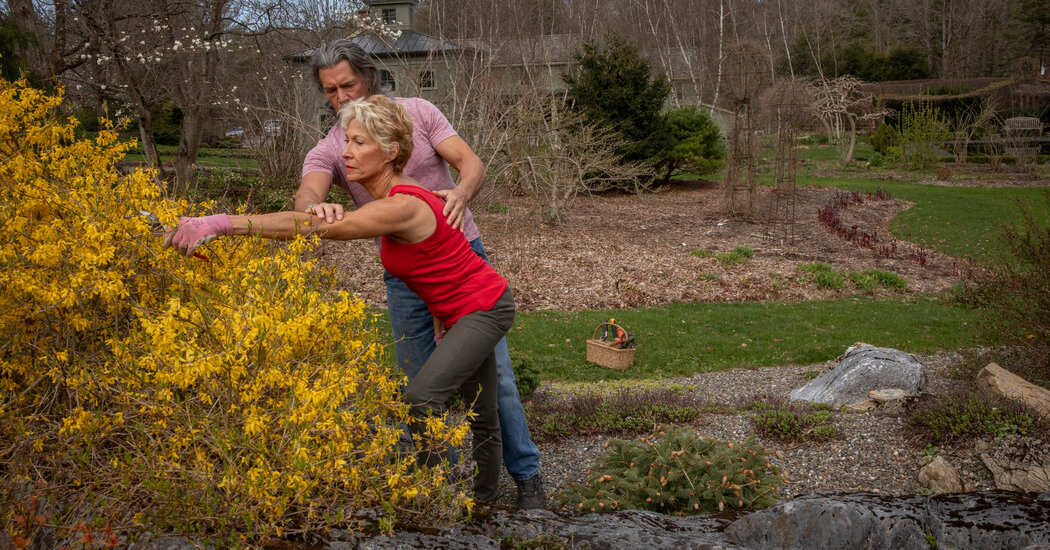
“GardenFit,” a new public television series, shows that gardeners need as much attention as their plants.If you want to garden smarter, you can invest in any number of tools — a telescoping pole pruner that extends your reach so you don’t have to strain quite as much, for example, or a kneeling pad with thicker cushioning. But the investment that really matters is in the most important tool of all: your body. And that requires forming new habits based on an awareness of how your body works when you’re gardening.That’s the premise behind a new public television series called “GardenFit,” a fusion of garden tours and self-care consultations en plein air, all with a reality-show vibe. The offering: Come for the gardens, stay for the hope of relief from aches and pains exacerbated by all that bending and crouching, and those repetitive one-handed and one-sided tasks.The show’s genesis goes back three years, to Madeline Hooper’s aching neck and shoulder. Despite the discomfort, Ms. Hooper, a retired public-relations executive and a longtime Hudson Valley gardener, was still outside several hours a day, doing what she loved. A friend suggested that she try a session with Jeff Hughes, who had helped him a couple of years earlier.Matthew Larkin’s topiary collection at Black Barn Farm, in the Berkshires of Massachusetts, is one of the gardens featured on “GardenFit.” Topiary requires lots of shearing, and Mr. Hughes encouraged Mr. Larkin to vary his chores, not doing any one activity for more than about 30 minutes at a time, to avoid repetitive stress injuries.Paul RocheleauMr. Hughes has worked as a personal trainer for 35 years, with businesses in Los Angeles, New York City and, since 2004, not far from Ms. Hooper. And their sessions together not only reduced her pain, but got her thinking: What they were doing would be useful to all of her gardener friends.“It’s silly to go on assuming that you should be in pain from gardening,” she recalled thinking. “There’s no reason to be.”And also: “We should share this with every person we know who gardens.”She and Mr. Hughes eventually decided to try to do just that, although neither had ever created a television program. The resulting series, presented by the WNET Group and distributed nationally by American Public Television, will be shown in 19 of the country’s top 20 markets, on more than 300 affiliate stations.The basic plot structure is simple: The pair travel to 14 gardens and small specialty farms around the country. Each visit begins with a tour of a notable site — among them, Matthew Larkin’s topiary collection at Black Barn Farm in the Berkshires of Massachusetts and Lauren Springer’s resilient garden in low-rainfall Fort Collins, Colo.But Mr. Hughes isn’t just enjoying the scenery. He’s watching the gardener at least as closely, with an ulterior motive.“When it comes time to sit down with them later in the day,” he said, “I’ve already got a pretty good idea of how they carry their body and what tasks they’re doing.”Mr. Hughes reminds Ms. Hooper about the repetitive one-sidedness of garden tasks like raking. Making a habit of deliberately twisting in the other direction can help counterbalance the effect.Tony Cenicola/The New York TimesPower in the Mind, and the HipsMr. Hughes’s approach puts a cognitive slant on conventional training. He helps clients adopt new habits to replace those that are not serving them, adhering to the philosophy that if you “train the mind, the body will follow.”Your body starts to do things incorrectly because it’s easier, Ms. Hooper said: “But then when you get the fixes, it feels so much better, because forming a new habit is welcoming to your body. I feel totally in charge of my body when I garden now — which is totally different.”Mr. Hughes is quick to note that he’s not performing some kind of medical intervention. “I’m just examining the cause of the problem,” he said with a laugh. “And we stop causing it.”His biggest takeaway from decades of coaching, he said, is a pragmatic one: “If I can give somebody something they will do, they will do it. If you give somebody something that will fix them but that they won’t do, it’s not a very good fix.”It takes about four weeks for the new habit to start to sink in, so they check in with each gardener a month later.One painfully familiar example of a habit that needed changing came from Elaine Burden’s Middleburg, Va., garden. Besides working in her extensive, English-inspired garden with its 15-foot-deep mixed borders and parterre framed by 144 boxwoods, Ms. Burden plays tennis and golf. Like raking and digging, those are very one-sided activities.Being right-handed had her constantly twisting to the left, which made her body unbalanced. Mr. Hughes suggested some stretches to the right, and also that she consciously try to use her left hand whenever possible: to pick up a golf ball, or to twist to the right and weed with her left hand. She also practiced raking left-handed, to relieve the repetitive strain that was causing nerve issues down one leg.It worked.Tasks like weeding, picking up tools or digging with a trowel can be done from what Mr. Hughes calls the armchair position without straining your lower back, as long as one elbow rests on one thigh.Tony Cenicola/The New York TimesThe Home-Base Position: The ArmchairSeveral other foundational tips address the complaints that Mr. Hughes saw most frequently while they were filming “GardenFit,” and might help the rest of us, as well.To each gardener, for instance, he stressed the hips’ key role: “They are power central to everything,” he said. “They’re where your power should come from by using them properly — not your knees and not your low back.”One refrain was common to virtually every gardener they visited, Ms. Hooper said: “Everyone wanted to know how to get up and down, as we do all day when gardening, without stressing their body and without hurting their knees.”To the rescue: the armchair. Everyday tasks like weeding, picking up tools or digging with a trowel can be done from this position without straining your lower back. And it’s the place to stop off on your way to crouching or kneeling, or when you’re coming back up.The armchair position is the home base, the place to stop off on the way to crouching or kneeling, or when coming back up. With your feet just slightly past hip width, squat down, keeping your knees from jutting beyond your toes. Resting your forearms on your legs relieves the lower back from the supporting role.  Tony Cenicola/The New York Times“Stopping off at the armchair is kind of a home base for everything else,” Mr. Hughes said. “The ground — not your back — is holding up your body, as long as there is one arm on one leg.”How it works: Spread your feet to just slightly past hip width. Then start by squatting down, keeping your knees from jutting forward beyond your toes. Rest your forearms on your legs, which relieves the lower back from the supporting role. If you do it right, you should feel in balance, Mr. Hughes said.As you begin to work, remember to keep one elbow on one thigh, an insight that resonated with gardeners like Robert Levine in Roxbury, Conn., whose Japanese-style landscape requires lots of detail work, especially weeding by hand.“GardenFit” visited Hollister House, the garden of George Schoellkopf in Washington, Conn., where brick walls and hedges form outdoor rooms.  George SchoellkopfPutting a Spin on ThingsTo get the rest of the way to the ground from the armchair, or back up without stressing your knees or lower back, add a spin to the move: Start from the armchair, and if you need to spin to the left, drop your right knee. As you do that, you’ll be turning, not dropping straight down.“It provides a soft touchdown, because you’re always balanced and in control,” Mr. Hughes said.To come back up off the ground, turn and spin back to the armchair en route. “Once I’m on the ground, I never stand straight up without twisting myself back to the armchair,” Ms. Hooper said.Another stressor is holding a tool — a hedge clipper, for instance — out in front of you and then trying to do all the work with your arms. We need to “teach our back muscles to jump into the game,” Mr. Hughes said, specifically the ones that pull the shoulder blades downward. Imagine you are sliding them down into your back trouser pockets.He calls this balancing act between your arms and your back muscles the seesaw. “Just being aware of them and making a habit of using them makes them as strong as they need to be,” he said.The armchair position comes into play again when lifting a large pot or a bag of potting soil — a move that can play havoc with your back if it’s done wrong. “Just make it part of your body,” Mr. Hughes said. “Don’t hold it out in front of you.”Tony Cenicola/The New York TimesIf It’s a Heavy Lift …The home base of the armchair comes into play again when it is time to lift that large pot or bag of potting soil — a move that can play havoc with your back if it’s done wrong.“Just make it part of your body,” Mr. Hughes said. “Don’t hold it out in front of you.”And then there is his prescription for something we all suffer from: overdoing it. Think of your to-do list as the choice of rides at a county fair, he said, and don’t spend the whole day on one ride: “Go around from one ride to the next. Do one task for 30 minutes or so, then stop. Do another for the same period, and whether you are done or not, stop and do something else.”Eventually, you can have another go at that first task, but by rotating, he said, “you didn’t push anything to the point where it wears out.”Once, Ms. Hooper might have resisted this advice, she said, but now the county fair is her favored approach.“This one is a real mental habit,” Mr. Hughes said. “Once you’ve done it a few times, your brain will say, ‘Hey, I have a great idea — let’s county-fair it today.’”It has been months since they finished filming, but Ms. Hooper is still receiving follow-up calls from guests, with progress reports on how much better they feel since integrating their new habits. And not just in the garden, either.“Now a lot of them are using their bodies that way when they clean the house or do anything else,” she said. “They really get it.”Margaret Roach is the creator of the website and podcast A Way to Garden, and a book of the same name.For weekly email updates on residential real estate news, sign up here. Follow us on Twitter: @nytrealestate.

Read more →

Deborah James: Big C presenter 'can't do anything more' to fight cancer

You, Me and the Big C’s Deborah James has revealed she is receiving end-of-life care at home for bowel cancer.The broadcaster said she had gone to her parents’ home to spend her remaining time with her family because it was “where I always wanted to die”.If you have been affected by any of the issues in this video, information on help and support is available on BBC Action Line.

Read more →

Chronic pain: The ‘unbearable’ condition affecting one in four

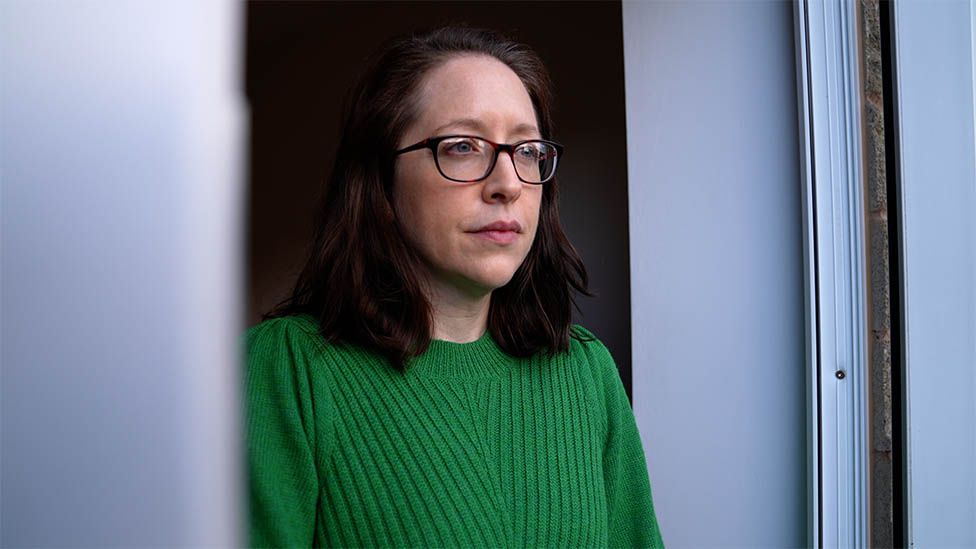
SharecloseShare pageCopy linkAbout sharingRelentless. Unbearable. Overwhelming. These are just some of the words used by the thousands of people who have revealed their battle with long-term, persistent pain.An exclusive survey of over 4,000 adults aged 16-75 for BBC News, carried out by research company Ipsos, suggests that a quarter of people in the UK are living with chronic pain – an often hidden and misunderstood condition. And pain specialists warn the health service is not set up to deal with such complex conditions. They say the treatments on offer are decades behind the science, leaving millions of patients without the support they need to manage their pain.Chronic pain – defined as pain that lasts longer than three months – can drastically change people’s lives. It can be caused by a physical problem – such as a slipped disc, but can also occur with no clear cause – known as primary pain. It destroys careers, breaks up relationships, steals independence and denies people the futures they had imagined.Jen Proudler says chronic pain has left her grieving for “the person she was”.It started four years ago with sporadic back pain, which she managed with the help of hot baths and paracetamol. Now she relies on opioid patches, anti-inflammatories, nerve pain medications and beta-blockers just to get through the day.”It has flipped everything upside down,” she says. “I feel I’ve lost every part of my life. I’ve lost me.”Jen, 38, who lives with her partner in Farsley near Leeds, was working as a dental hygienist and had a busy social life when she first started experiencing pain in February 2018.Image source, Jen ProudlerHer doctor said it was a problem with a disc in her back and advised taking some time off. Jen rested for about eight weeks, then went back to work. The pain hadn’t gone away but she felt she needed to get back to “some kind of normality”.”There were days when it was really bad, but I have this attitude of battling through it, because that’s what you do,” she says.But nine months after the pain first began, Jen was driving to work when she felt the most excruciating pain. “It was how I would imagine being kicked in the back by a horse.” Later that day she lost all sensation in her right leg.That was the last time she made it to work.After several incorrect diagnoses, Jen was eventually told by a neurosurgeon that she had a “pretty massive” far lateral disc herniation in her spine – a slipped disc that then compresses the nerves around it. But by then something was going on – her body’s defence system had gone into overdrive in response to the agony she was experiencing. The pain has now spread around her body – Jen has burning pins and needles sensations down her leg, as well as sharp pain, as if being cut by a razor. Sometimes it’s so bad, she can’t even bear any fabric to touch it.”Our nervous system becomes more and more protective, it feels danger and sends warning signals – and those warning signals contribute to the pain,” explains Dr Chris Barker, clinical director of an NHS community pain service in Ainsdale, Merseyside.He says such pain can be hard to diagnose, and the difficulty of getting the correct treatment can make things worse. “Incorrect diagnoses, delayed diagnoses, poor experiences in and out of the health system, not being believed – all of these can contribute to a more intense experience of pain.” Dr Barker says the NHS is not set up to deal with such a complex condition, despite the fact it is so common. “The prevalence of pain is huge. It dwarfs most other conditions.” The BBC study is the most recent snapshot – previous studies have found chronic pain affects between 20-50% of the UK – and the prevalence may be even higher in older age groups. What is chronic pain?Persistent pain that lasts more than three months, despite medication or other forms of treatmentSecondary chronic pain is a pain which tends to be caused by another condition, for example, arthritis, endometriosis, cancer painPrimary chronic pain is a condition in its own right – there is no known condition other than the pain itself – this can include conditions such as fibromyalgia or complex regional pain syndromeChronic pain is often confused with acute pain – a short-term pain such as a broken bone or a torn muscle Latest guidelines from the health regulator National Institute of Health and Care Excellence (NICE) say chronic primary pain should not be treated with opioids, or even paracetamol, while in Scotland, opioids can be prescribed for chronic pain in certain cases. Yet the results from BBC’s Ipsos survey suggest nearly a quarter of those who live with chronic pain are currently taking opioids – ranging from medication such as codeine to more powerful painkillers like morphine and fentanyl.Opioids are useful for short-term, acute pain, but there is little evidence they help long-term, persistent pain. Despite this, opioid prescribing more than doubled between 1998 to 2018. It prompted the MHRA, the UK’s medicine regulator, to issue stronger warnings around the risk of addiction and overdose. Our research suggests that more than 40% of those currently using opioids began taking them over five years ago, before these warnings were issued.Sitting at her kitchen table, packets of pills stacked up nearby, Jen says every day now revolves around managing her pain. Despite the support of her GP, she is struggling to see a way forward. She says the medication helps her function, but she worries she’s running out of options in the long term. Pain specialists believe the science calls for a different approach involving more support, more tailored care and most importantly, more options of how to cope with such a life-changing condition.Chronic pain: Antidepressants not painkillers recommended Dr Cathy Stannard, clinical lead on persistent pain for NICE, says medication like opioids has very little benefit for people with certain types of chronic pain. She fears millions of patients are not getting the bespoke treatment needed for such a complex condition. But the other options are a difficult sell to a patient in distress – especially in an under-pressure health service where they often don’t get the chance to build up a trusting, empathetic relationship.”People who are living with pain very understandably present with high levels of distress. When they say, ‘Are you going to leave me in pain?’ it is very difficult to say ‘Yes.’ It is always with the best intentions that we prescribe medicines, but often, it is a response to distress rather than a rational clinical decision.”Managing chronic painPatients tend to need the support of their GP, physiotherapists, psychologists and pharmacists. Depending on the condition, medication can be helpful but may only be part of the treatment – other elements that help include:ExercisePhysical therapies (hot or cold packs, massage, hydrotherapy)PhysiotherapyAcupuncturePsychological therapies (trauma therapy, cognitive behaviour therapy, meditation)Community support groupsDr Stannard stresses the NICE guidelines were not written to take medication away from people who feel it is helping them. The problem, she says, is the lack of options or tailored treatment for such a complex condition – and too often medication becomes the only answer, instead of part of it.And no-one should stop or change their medication without speaking to their doctor.Benjamin Ellis, a consultant rheumatologist and senior policy advisor for the charity Versus Arthritis, agrees, and says that while opioids can help people manage some conditions like osteoarthritis, too often they are seen as a long-term answer.”The health system is set up to support the prescribing of medication rather than supporting patients to access other treatments – physical activity, programmes to help people with their mental health, community support, peer support – they’re not so readily available, and even where they are, they’re not well connected with health services.”Lorraine English’s story illustrates the potential dangers of being prescribed opioids long term.She was a busy single mum with four kids, working as a teaching assistant, when she started to notice pain that had started in her neck and spread into her head and back.It led to her taking high doses of opioids, including morphine, for 12 years – at times she says she felt like her life was over. “It was so frightening, so isolating”.Lorraine, from Burnage, south Manchester, was eventually diagnosed with degenerative disc disease, osteoarthritis and fibromyalgia – a condition which causes all-over body pain and extreme tiredness.”I would get nerve pain shooting through my head and it would cause migraines, light-sensitivity – just my heel touching the floor would send pain up into my head.”As the pain continued, her opioid dose increased, while her ability to cope decreased.Eventually she had to give up work, taking pill after pill to beat what is known as “breakthrough pain” – a flare-up of pain despite being on huge doses of painkillers.For the last three years of her life on morphine, Lorraine was unable to function – bed-bound, existing in a fog of medication, her life ruled by pain.”It’s like being in a medicated coma and you can’t reach out to anybody, because you’re not even aware anyone’s out there. I felt like that for years, just laid in bed with my kids checking on me, asking, ‘You okay?'”Lorraine says she realised that she needed to reduce her medication – not only was she struggling to function, but she felt it was making the pain worse.It took nearly a year, but with the help of her GP, Lorraine has gradually tapered off her opioid medication, and the pain has reduced.Now opioid-free, she says she has learned to “embrace” the pain she still feels, and understand her body’s limits.”No matter how much pain I am in, I want to be able to manage it so I can hug my grandkids,” she says.Think differently about painPeople who live with chronic pain have told us how difficult it is to access any specialist services.Our research suggests that nearly a quarter (23%) of those living with chronic pain are on waiting lists for surgery or a pain management programme.An NHS spokesperson said more clinical pharmacists and trained staff are being recruited and will be based at GP surgeries so patients can get access to specialist care and be “offered alternatives to medication where appropriate”.There are areas of the UK which are offering a whole patient approach, like at Dr Barker’s clinic in Ainsdale, Merseyside, where he leads a team of pharmacists, physiotherapists and psychologists.This video can not be playedTo play this video you need to enable JavaScript in your browser.Over the last 20 years, he says, the scientific understanding of pain – how our brains respond, how we process it – has been transformed.Hurt does not always equal harm, he explains, and someone can be in pain without any physical injury. “Our traditional model of thinking about pain is about MRI scans and looking for structural things – the problem is we interpret that to mean that’s going to be the cause of pain.”Chronic pain is far more complex than that – an overly sensitised nervous system can change a normal signal from one of the body’s sensors into a threat signal which our brain then interprets as pain.There may be many complex reasons why the nervous system has been put on “red alert”, he says. If people are dealing with trauma, stress or grief, that can contribute to chronic pain. A Life Of PainThe BBC News investigation unearths huge numbers of people living with chronic pain. In an exclusive documentary, Dominic Hughes hears stories from those in pain, across the UK.Watch on BBC iPlayer now.This is why, Dr Barker says, sharing experiences can play a vital role when living with pain. Many of his patients attend Pain Clinic Plus, a peer support group at his clinic.”People tend to become isolated because they can’t do what they used to do, so people stop phoning them,” says Kev Howard, one of the organisers, who has lived with pain for years following a shoulder injury.”It’s so easy to sit at home and take a pill and fall asleep. The other way to go is to pop into groups similar to this, and basically have a laugh – because while you’re laughing you’re not crying.”

Read more →

Single cell RNA sequencing uncovers new mechanisms of heart disease

Hypertrophic cardiomyopathy is a heart disease that leads to a stressed, swollen heart muscle. Due to a poor understanding of underlying mechanisms, effective clinical treatments are not available. Patients receive generic heart medication and sometimes need open-heart surgery to remove excess tissue. Researchers at the Hubrecht Institute have now successfully applied a new revolutionary technology (scRNA-seq) to uncover underlying disease mechanisms, including specifically those causing the swelling. The extensive “big data” set is a treasure trove of novel observations that give insight in hypertrophic cardiomyopathy and potential new therapeutic venues. The results from this study, done by researchers in the group of Eva van Rooij, were published in the journal Cell Reports on the 10th of May.
The heart needs to pump every minute of every day. In patients with hypertrophic cardiomyopathy (HCM), this pumping function is impaired because of a defect in one of the molecules that perform the pulling motion. This leads to a stress response within the muscle cells, and swelling of the heart muscle to compensate for lost function. As a consequence, patients can experience typical heart disease symptoms like shortness of breath, chest pain and aberrant heart rhythm (arrhythmia). Up until today, development of HCM therapy is hindered by a lack of understanding of these phenomena.
Cogwheels
Surgery on HCM patients to remove excess heart tissue that hinders blood flow offers a unique opportunity to researchers, because they can use the removed tissue to study the disease. Hubrecht Institute researchers have now applied the novel single cell RNA sequencing (scRNA-seq) technology on this tissue to unravel the origins of HCM. One of the researchers, Martijn Wehrens, explains: “The human DNA contains approximately 30,000 genes, effectively a catalogue of 30,000 types of cogwheels that each have a role in making our bodies work. Typically, research focuses on a handful of genes, that have been identified as important after years of research. scRNA-seq technology is able to quantify the activity of all 30,000 cogwheels at once to understand their roles in the disease.”
A key feature that makes scRNA-seq powerful, is that it can look at individual cells. The human body, and also the heart, consist of many cell types, like muscle cells, blood cells, blood vessel cells, and many more. Each of the cell types have their own specialization. Wehrens: “Investigating this tissue is like looking at a photoshopped picture where a cat, dog and bird are merged together. You wouldn’t know what’s going on. During our scRNA-seq analysis, cells are separated from each other, such that we can see what’s going on in the heart. Like separating the merged photographs of the cat, dog and bird into individual ones.”
A vast amount of information
Application of the technique on heart tissue from surgery allowed the researchers to systematically identify changes that occur in the heart during the disease. They identified many novel regulatory interactions between genes, and key regulatory players. Another innovation was that the researchers recorded cell swelling during their analysis, which allowed for the identification of genes that drive the disease-related swelling. This knowledge can be used to develop new drugs. Current drugs given to HCM patients simply make the heart work less hard, thereby preventing excessive damage. Using the vast amount of information generated by this research, new drugs can be developed that actually target the underlying causes, and retain heart function whilst more effectively reducing disease progression.
Story Source:
Materials provided by Hubrecht Institute. Note: Content may be edited for style and length.

Read more →

Artificial cell membrane channels composed of DNA can be opened and locked with a key

Just as countries import a vast array of consumer goods across national borders, so living cells are engaged in a lively import-export business. Their ports of entry are sophisticated transport channels embedded in a cell’s protective membrane. Regulating what kinds of cargo can pass through the borderlands formed by the cell’s two-layer membrane is essential for proper functioning and survival.
In new research, Arizona State University professor Hao Yan, along with ASU colleagues and international collaborators from University College London describe the design and construction of artificial membrane channels, engineered using short segments of DNA. The DNA constructions behave much in the manner of natural cell channels or pores, offering selective transport of ions, proteins, and other cargo, with enhanced features unavailable in their naturally occurring counterparts.
These innovative DNA nanochannels may one day be applied in diverse scientific domains, ranging from biosensing and drug delivery applications to the creation of artificial cell networks capable of autonomously capturing, concentrating, storing, and delivering microscopic cargo.
“Many biological pores and channels are reversibility gated to allow ions or molecules to pass through,” Yan says. Here we emulate these nature processes to engineer DNA nanopores that can be locked and opened in response to external “key” or “lock” molecules.”
Professor Yan is the Milton D. Glick Distinguished Professor in Chemistry and Biochemistry at ASU and directs the Biodesign Center for Molecular Design and Biomimetics. He is also a professor with ASU’s School of Molecular Sciences.
The research findings appear in the current issue of the journal Nature Communications.

Read more →