New algorithm dramatically increases the speed of identifying two cancer drugs that work synergistically

An algorithm that can speed up by years the ability to identify from among thousands of possibilities, two or more drugs that work synergistically against a problem like cancer or a viral infection has been developed by bioinformatics experts.
The new algorithm enables investigators to use large existing databases with information about how one cancer drug changed the gene expression of a particular breast cancer cell line, and how well it killed the cell, then mathematically combine those results with the impact of another drug to see if they could work better together, says Dr. Richard McIndoe, director of the Center for Biotechnology and Genomic Medicine at the Medical College of Georgia.
While the algorithm does not immediately make available the kind of information that would set a clinical trial in motion, it does speed up the path to the trials, he says.
“The idea is we ultimately want to find these synergistic drug combinations that will hopefully help patients with cancer,” McIndoe says. “For researchers it becomes a particularly faster way to find those synergistic combinations, without having to screen one drug at a time, which is really not feasible.”
Drug combination therapies can improve drug efficiency, reduce drug dosage (and related toxicity) and overcome drug resistance in cancer treatments,” the investigators write in the journal PLOS ONE, and is becoming an important tool in cancer treatment.
“It’s not uncommon for the cancer to become resistant to chemotherapy drugs so one of the ways that clinicians try to get around that is using combinations, two chemotherapy drugs together,” McIndoe says. “The likelihood that you will develop resistance to both of them simultaneously is lower than if you had just one.”
But given the number of drugs and drug combinations available, there are not efficient, effective ways to identify the best combinations, the investigators say.

Read more →

Genetic study confirms sarin nerve gas as cause of Gulf War illness

For three decades, scientists have debated the underlying cause of Gulf War illness (GWI), a collection of unexplained and chronic symptoms affecting veterans of the Persian Gulf War. Now researchers led by Robert Haley, M.D., Professor of Internal Medicine and Director of the Division of Epidemiology at UT Southwestern, have solved the mystery, showing through a detailed genetic study that the nerve gas sarin was largely responsible for the syndrome. The findings were published in Environmental Health Perspectives, a peer-reviewed journal supported by the National Institute of Environmental Health Sciences, with an accompanying editorial on the paper by leading environmental epidemiologists.
Dr. Haley’s research group not only discovered that veterans with exposure to sarin were more likely to develop GWI, but also found that the risk was modulated by a gene that normally allows some people’s bodies to better break down the nerve gas. Gulf War veterans with a weak variant of the gene who were exposed to sarin were more likely to develop symptoms of GWI than other exposed veterans who had the strong form of the gene.
“Quite simply, our findings prove that Gulf War illness was caused by sarin, which was released when we bombed Iraqi chemical weapons storage and production facilities,” said Dr. Haley, a medical epidemiologist who has been investigating GWI for 28 years. “There are still more than 100,000 Gulf War veterans who are not getting help for this illness and our hope is that these findings will accelerate the search for better treatment.”
In the years immediately following the Gulf War, more than a quarter of the U.S. and coalition veterans who served in the war began reporting a range of chronic symptoms, including fatigue, fever, night sweats, memory and concentration problems, difficulty finding words, diarrhea, sexual dysfunction, and chronic body pain. Since then, both academic researchers and those within the military and Department of Veterans Affairs have studied a list of possible causes of GWI, ranging from stress, vaccinations, and burning oil wells to exposure to pesticides, nerve gas, anti-nerve gas medication, and depleted uranium.
Over the years, these studies have identified statistical associations with several of these, but no cause has been widely accepted. Most recently, Dr. Haley and a colleague reported a large study testing veterans’ urine for depleted uranium that would still be present if it had caused GWI and found none.
“As far back as 1995, when we first defined Gulf War illness, the evidence was pointing toward nerve agent exposure, but it has taken many years to build an irrefutable case,” said Dr. Haley, who holds the U.S. Armed Forces Veterans Distinguished Chair for Medical Research, Honoring Robert Haley, M.D., and America’s Gulf War Veterans.

Read more →

Sweet discovery could drive down inflammation, cancers and viruses

A WEHI-led study has identified a new enzyme involved in controlling cell death, in findings that could lead to better treatment options for a range of inflammatory conditions, cancers and viruses.
The discovery offers another way to regulate the cell death process for inflammatory diseases like psoriasis — conditions that occur due to excessive cell death in the body — and could also help in future to reduce the severity of viruses like COVID-19.
At a glance Australian-Swiss research discovers a new way to control the cell death process. Study reveals how an enzyme uses a ‘sugar tag’ to prevent excessive cell death. The findings could lead to better treatment options for inflammatory-driven infections, viruses and cancers.Inflammatory cell death is an important part of the body’s immune response. But when uncontrolled, it can lead to harmful amounts of inflammation in otherwise healthy organs and tissue, which fuels inflammatory disease.
The WEHI-led collaboration, involving researchers from Zürich University, the University of Melbourne, the Hudson Institute of Medical Research and Monash University found an enzyme known as tankyrase-1 uses a ‘sugar tag’ to prevent excessive cell death.
This discovery could have implications for patients suffering from chronic inflammatory diseases driven by unregulated cell death, such as psoriasis and rheumatoid arthritis.

Read more →

When unconscious, the brain is anything but 'silent'

The cerebral cortex is thought to be the seat of conscious processing in the brain. Rather than being inactivated, specific cells in the cortex show higher spontaneous activity during general anesthesia than when awake, and this activity is synchronized across those cortical cells. Improving our understanding of the neuronal mechanisms of general anesthesia could lead to better anesthetic drugs and improved surgical outcomes.
In a paper recently published in Neuron, researchers from the group of Professor Botond Roska at the University of Basel and the Institute of Molecular and Clinical Ophthalmology (IOB) reveal how different cell types in cortex change their activity during general anesthesia, helping to understand how unconsciousness may be induced.
You are lying on the operating table. The doctor tells you to count to 5, and places an anesthetic mask on your face. By the count of 4, you’ve lost consciousness. You will not wake up until after the surgery. What happened in your brain during this time?
One would probably assume that your brain has been silent. Especially your cortex, the brain area thought to be the seat of conscious processing. However, for close to 100 years, it has been known that some cells in the cortex are active and that cortex alternates between periods of high and low activity during general anesthesia.
Using EEG electrodes attached to the scalp is one of the few tools available to measure this activity, but electrodes don’t allow one to identify the cells underlying this activity. Therefore, the question has remained: which cells contribute to the rhythmic activity in the cortex, and how might that contribute to the loss of consciousness during general anesthesia.
On the trail of unconsciousness
Cortex is composed of different cell types, each with different functions. Different general anesthetics act on different receptors, located on different types of neurons, distributed throughout the brain. Yet, all general anesthetics lead to the loss of consciousness, and so “we were interested in finding if there is a common neuronal mechanism across different anesthetics,” says Dr. Martin Munz, one of the three first authors of the study.

Read more →

Ambulance wait times: Injured 10-year-old told ambulance would take hours to reach her

The latest data from NHS England shows that ambulance response times are now at their highest since the current system was introduced five years ago.Willow Clark, who was nine-years-old at the time, fell off her bike in October, cracking her helmet and leaving her with a fractured skull and a nine-inch laceration across her leg.When passers-by called for an ambulance, they were told it could be a 10 hour wait. In the end, Willow was taken to the hospital by her father, where doctors told her family that she should not have been moved because of her back and neck injuries.NHS England said the safety of patients is its “absolute priority”.

Read more →

North Korea: 'First' Covid cases prompt strict national lockdown

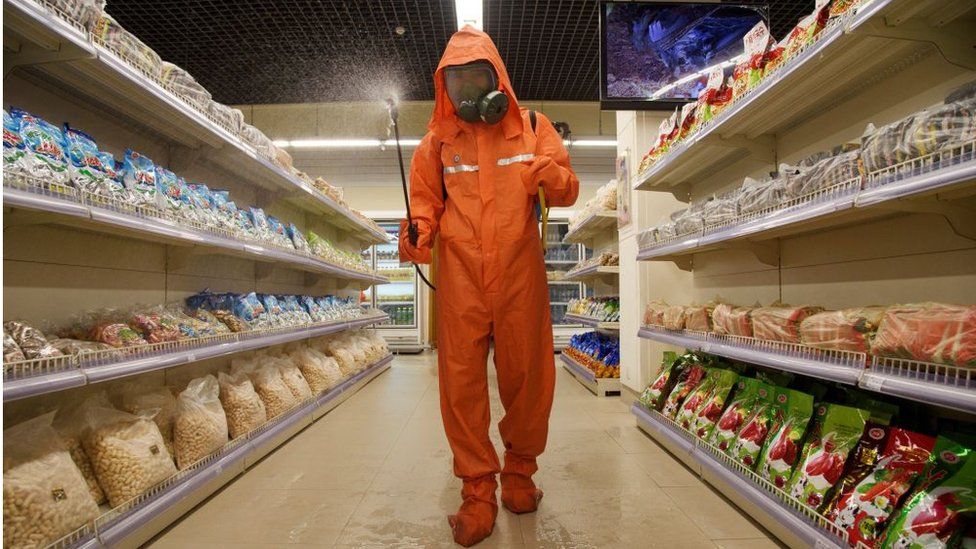
SharecloseShare pageCopy linkAbout sharingImage source, AFPNorth Korea has ordered a strict national lockdown after confirming its first official Covid infections.State media have reported an Omicron outbreak in the capital, Pyongyang, but did not state the number of cases.North Korea has rejected any kind of vaccine programme, even when offered a supply by other countries.Instead, it controlled Covid by sealing its borders – and had never recorded a case, despite experts believing the virus has long been present. Outsiders say the nation’s 25 million population is vulnerable due to the lack of a Covid-19 vaccine programme, even rejecting offers from the international community to supply millions of AstraZeneca and Chinese-made Sinovac jabs last year. There have also been concerns about North Korea’s impoverished healthcare system.KCNA said leader Kim Jong-un had vowed to eradicate the outbreak, which it called a “severe national emergency” that had breached the country’s “quarantine front”.But its strategy of sealing its foreign borders – one of the first countries to do so, in January 2020 – has also stopped essential supplies from entering the country, leading to food shortages and a faltering economy.Why doesn’t North Korea have enough food?How dangerous is the situation in North Korea?On Thursday, KCNA said Mr Kim had ordered “maximum emergency” virus controls, which appeared to include orders for localised lockdowns and gathering restrictions in workplaces.The North Korean news outlet added that the first case of the Omicron variant had been reportedly detected in the capital four days ago.Residents in some areas of Pyongyang had been subjected to lockdown for at least two days before the latest announcement, according to NK News, a Seoul-based monitoring site.South Korea’s government said it has renewed its offer of humanitarian assistance to the North in response to the news of the outbreak. Pyongyang has yet to respond.For more than two years, North Korea has, rather dubiously, claimed not to have a single case of Covid-19. So why admit to it now? Most likely it is because this outbreak is too serious and too difficult to hide. North Korea has been consistent in its public commitment to fighting the virus. This is how it has justified closing its borders for so long. Now that Omicron has entered the country, the challenge is to limit its spread. With no vaccines, poor healthcare and a limited capacity to test people, North Korea’s options are very limited right now. Authorities have clearly decided they have no choice but to put the country into lockdown. In order to do this, they simply have to tell people and the rest of the world. It does not necessarily mean they will be any more willing to accept outside help. Analysts say Pyongyang’s disclosure of the Covid cases at this time is significant and could hamper the state’s nuclear ambitions which have been on show this year.North Korea has claimed to have conducted more than a dozen banned missile tests, including one of an intercontinental ballistic missile, a weapon it hadn’t tested in over four years.Yang Moo-jin, a professor at the University of North Korean Studies, told AFP that North Korea might shelve plans for a nuclear test to focus on battling the outbreak, though if public fears escalated, Mr Kim may go ahead with a test “to divert this fear to another place”.But Leif-Eric Easley, a professor at Ewha University, said that North Koreans “may be less interested in nuclear or missile tests when the urgent threat involves coronavirus rather than a foreign military”.He added that he believed Pyongyang would “likely double down” on its lockdowns, given that it was entering a “period of uncertainty in managing its domestic challenges and international isolation”.Despite North Korea’s claims that it had “shining success” in keeping out Covid, there have been signs throughout the pandemic of the virus’ potential presence in the country. There were several unconfirmed reports of Covid cases previously.In June last year, state media reported that Mr Kim had punished officials over a “grave incident” related to Covid, but did not specify details.Then in September, the state held a military parade featuring lines of soldiers wearing hazmat suits and masks, which some analysts saw as a sign that a special force was created to help prevent the spread of Covid.North Korea shares land borders with South Korea and China, which have battled outbreaks. China is now struggling to contain an Omicron wave with lockdowns in its biggest cities.You might also be interested in:This video can not be playedTo play this video you need to enable JavaScript in your browser.More on this storyKim claims ‘shining success’ against virusNorth Koreans put hazmat suits on for paradeKim Jong-un admits North Korea food concerns

Read more →

North Korea Reports Its First Covid Cases

SEOUL — North Korea on Thursday reported its first outbreak of the coronavirus, declaring a “maximum emergency” and ordering all of its cities and counties to lock down to fight the spread.On Sunday, health officials tested residents in an unidentified organization in Pyongyang, the capital, who showed symptoms such as fever, and confirmed that they were infected with a subvariant, known as BA.2, of the Omicron variant of the virus, the North’s official Korean Central News Agency said. The news agency did not reveal how many people were infected.The report was the first time that the secretive country has confirmed any Covid-19 cases since the virus emerged in neighboring China more than two years ago.North Korea’s leader, Kim Jong-un, convened the Political Bureau of the ruling Workers’ Party on Thursday to discuss the crisis, the news agency said.An undated photo released by North Korea’s Korean Central News Agency showing the country’s leader, Kim Jong-un, convening what it said was a Workers’ Party meeting on an outbreak of the coronavirus.Korea Central News Agency, via ReutersMr. Kim ordered “all the cities and counties to thoroughly lock themselves down” to help prevent the virus from spreading, and that factory workers and farmers continue to work but in isolation.The news agency said Mr. Kim had also called for national unity at a time of state emergency, telling his people that “an enemy worse than the malicious virus is unscientific fear and a lack of faith and will.”Mr. Kim urged his country to continue to push forward with the bold five-year economic development plan he declared during a Workers’ Party congress in January last year. Under that plan, North Koreans have been building residential districts in Pyongyang and greenhouse complexes in provinces.Until Thursday, North Korea had publicly insisted that there were no cases of the virus in the country, although outside experts were skeptical, citing the country’s threadbare public health system and lack of extensive testing. North Korea has also rejected outside offers of pandemic-related humanitarian aid.Officials in South Korea have hoped that humanitarian shipments, such as Covid-19 vaccines, could help restart the stalled dialogue between North Korea and the United States and allies.It was unclear if the outbreak would change the North’s stance on humanitarian aid.Turkmenistan and several small island nations, such as Tuvalu and Nauru, had also reported having no coronavirus cases, according to data from Johns Hopkins University.North Korea had enforced some of the world’s harshest restrictions to contain the virus.In 2020, it created a buffer zone along the border with China, issuing a shoot-to-kill order to stop unauthorized crossings, according to South Korean and U.S. officials. Also that year, when a man from South Korea defected to the North, North Korea declared a national emergency for fear he might have brought the virus.

Read more →

World complacent on Covid, warns former UK prime minister Gordon Brown

SharecloseShare pageCopy linkAbout sharingImage source, Getty ImagesGordon Brown has warned that the world risks “sleepwalking” into another Covid variant crisis if it does not increase vaccinations in low-income countries. Wealthier countries needed to share the cost of global vaccinations, tests and treatments, he told the BBC.Speaking before an international Covid summit on Thursday, the former UK prime minister said the world had become “complacent” about the virus. US President Joe Biden is due to host the virtual summit at the White House.He does so at a time when Congress has failed to approve key funds earmarked for the global pandemic response. Campaigners fear that could mean other countries will not offer extra money either, leaving the push for better vaccine coverage around the world without momentum.Mr Brown, who is a World Health Organization (WHO) ambassador on health finance, said the numbers were “shocking”. “Only 11% have been vaccinated in low-income countries and we set a target of 70%,” he said.”Tragically, we are sleepwalking into the next variant, and political leaders are still not listening to the medical advice that is still there – that we’ve got to increase vaccination, continue to test at a high level, and provide the new treatments available.”‘Come back to haunt them’Mr Brown said that if wealthy countries did not pay for what is needed now, they might face huge economic costs later if a more lethal variant emerges in low-income countries and is detected too late.He also said daily testing in poorer countries was only averaging five tests per 100,000 people, rather than the goal of 100 per 100,000, as suggested by the WHO.Congress has so far been reluctant to approve extra funds of $5bn (£4bn) for international vaccination programmes. Mr Brown and other former leaders have written to Mr Biden urging the United States to keep up the momentum on the global vaccination push. Mr Brown said: “I think the Americans have forgotten that if they take no action, then the virus will spread from places that are least vaccinated and least protected, and it will come back to haunt them – even if they’ve been vaccinated four times.”The WHO says there’s a $15bn financing gap which richer countries need to fill collectively if the developing world is to have the right tools to fight the pandemic properly. But pressure groups are not expecting countries like the UK to allocate any more money than it has already.In Africa, more than 45 faith leaders have also called for “immediate action to address the massive inequalities in the global pandemic response”. In a joint statement, the religious leaders point out that only one in five Africans has received their first dose of vaccine, while high-income countries are rolling out third and fourth doses. The Archbishop of Cape Town, Thabo Makgoba, is one of those urging world politicians “not to see this as just a number, but as a reminder that each statistic represents a human being who deserves dignity and the ability to thrive in a post-pandemic world”.More on this storyTrue Covid pandemic death toll is 15 million – WHOWhy India’s real Covid toll may never be knownGlobal vaccine rollout a stain on our soul – BrownHow Covid funds went missing in DR Congo – reportVaccine hold-ups risk new Covid wave in DR Congo

Read more →

Comic or Graphic, Shows About Abortion Surface a Stark Divide

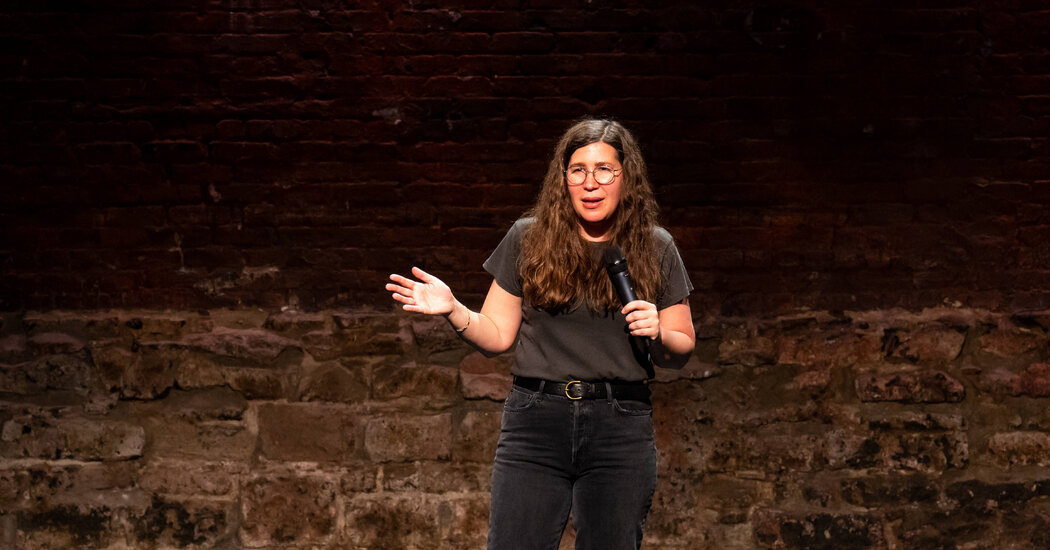
Decidedly anti-sensationalistic, Alison Leiby’s shrewd and funny personal monologue plays downtown. Uptown, a staged reading focuses on a gruesome case.A few nights after the leak of the Supreme Court draft opinion that would overturn the right to abortion protected by Roe v. Wade, the comedian Alison Leiby walked onto the stage of the Cherry Lane Theater, in Manhattan’s West Village, to greet the audience before her monologue.“How are we doing?” she asked, taking the temperature of a friendly crowd that had more men in it than you might expect. Then, easily: “The show is exactly the same as it was before we lost all of our rights.”Low-key sardonic, politically charged humor it would be, apparently. We might have guessed as much from the title of the insightfully funny piece she was about to perform: “Oh God, a Show About Abortion.”It is probably true, in terms of Leiby’s script and Lila Neugebauer’s direction, that the monologue — constructed around an account of the abortion that Leiby had three years ago, at 35 — has not changed. But the atmosphere surrounding abortion rights has; it’s more charged, more urgent, more anxious. And the audience always brings the outside world into the room.So here is the first thing you need to know about Leiby’s abortion story: In a smart and entertaining show, full of observations about the sometimes painful messiness of female bodies — menstruation, childbirth, lactation — and the social pressure to put on a happy face about all of it, her trip to Planned Parenthood is the least dramatic, most calmly straightforward part.“Does this feel anticlimactic to you?” she asks, when she’s done retelling it.She knows it must, because back when it happened, she’d expected something more lurid, too.“I think that I thought I’d have some kind of Scarlet A that tells everyone I had an abortion,” she says, “which would have been devastating because it’s private, and also red clashes with my complexion.”A laugh line, sure, but that bit about the fear of the Scarlet A? It lands.“Oh Gosnell: A Show About the Truth” is a staged reading based on court records that features the cast members, from left, Roxanne Bonifield, Kaché Attyana, Benjamin Standford and Andrea Edgerson.Russ RowlandA couple of miles uptown, at the Chain Studio Theater on West 36th Street, is a show that announced its New York run as “Oh Gosnell: The Truth About Abortion” — a tabloid title with stalkerish overtones, especially given that its own news release mentions Leiby’s show.A publicist for “Oh Gosnell” said that the creation of the play was inspired by Leiby’s comic monologue. “They laugh about it — we tell the truth about it,” says the website of the play now going by the name “Oh Gosnell: A Show About the Truth.”It’s written by Phelim McAleer, who is credited on IMDB as being a producer of the yet-to-be-released film “My Son Hunter,” starring Laurence Fox as Hunter Biden, and as a writer and a producer of “Obamagate,” starring Dean Cain, which The New York Post described as a play that had its premiere on YouTube. His other plays include “Ferguson,” about the 2014 police shooting of Michael Brown.Laughter and truth are not mutually exclusive, of course, even if McAleer, a right-wing provocateur whose program bio calls him “a veteran investigative journalist,” implies otherwise.As for conveying any general truth about abortion, rather than specific truths about the gruesome case of Kermit Gosnell — a Philadelphia physician convicted in 2013 of first-degree murder for killing three babies after botched late-term abortions — it doesn’t. Neither is it constructed to persuade.The script for the play, simply titled “Gosnell,” says that it was “compiled, verbatim, from grand jury and criminal trial transcripts” in the Gosnell case. In a spare, somewhat murky staged reading directed by David Atkinson, it has a cast of seven that includes a compelling young actor named Kaché Attyana, who I hope will soon get better work.“The first thing I want you to be assured of, ladies and gentlemen,” a prosecutor (Roxanne Bonifield) says, close to the top of the show, “is that this is not a case about abortion.”For emphasis, she repeats that assertion. Maybe McAleer, the co-author of a book about the Gosnell case, and a producer and co-screenwriter of the 2018 movie “Gosnell: The Trial of America’s Biggest Serial Killer,” didn’t hear her?Then again, in a program note, McAleer writes of the Gosnell trial: “Perhaps the desire to suppress information was why no national media covered the story. There is a reluctance to shine a spotlight on abortion in the U.S. Few people are prepared to go behind the doors and tell the truth of what is really happening there.”Heidi Schreck in her play “What the Constitution Means to Me,” which opened on Broadway in 2019.Sara Krulwich/The New York TimesThe problem with saying that no national media covered the story — well, his own show contradicts that right off the bat, when images of news clippings about the case include one from The New York Times. (Projections are by Meghan Chou.)As for going behind those doors, women do that every day, seeking abortion care. Leiby did it. I’ve done it. My mom did it, too, pre-Roe v. Wade, to save her life from an ectopic pregnancy before my brothers and I were born.Telling the truth about abortion, though — speaking of those experiences, that is, in a culture where abortion remains heavily stigmatized — well, that is rare.Which is maybe why Leiby expected to feel something more sensational than relief after her own abortion.“I thought I’d spend the next few days or months staring out the window like I’m in a depression medication commercial,” she says. “I thought I would carry sadness and emptiness with me everywhere I went.”Kidding, a little bit? Probably. But the notion of abortion as an automatic trauma is pretty deeply rooted in the culture, and it’s not often interrogated onstage. Which leaves the mystery intact.And, conversely, gives the shows that do discuss it an added potency — like Ruby Rae Spiegel’s “Dry Land,” which harnesses the ticking-time-bomb feeling of an unwanted pregnancy, and Lightning Rod Special’s “The Appointment,” which juxtaposes wild musical satire with the crisp quiet of an abortion clinic. And, of course, Heidi Schreck’s “What the Constitution Means to Me,” which put an abortion story on Broadway.In the Signature Theater revival of Suzan-Lori Parks’s play, Christine Lahti (right, with Joaquina Kalukango) portrayed an abortion provider. Richard Termine for The New York TimesWhen Leiby mentioned the Scarlet A, I thought of Suzan-Lori Parks’s take on “The Scarlet Letter” — the one of her Red Letter Plays whose title we can’t print here — with its heroine, Hester Smith, who is described in the list of characters as “the Abortionist.” Kia Corthron’s “Come Down Burning,” which also has a heroine who performs abortions, makes a clear connection between the option to safely end a pregnancy and women’s ability to control their own lives.Then there is Ciara Ni Chuirc’s “Made by God,” which had its premiere this winter at Irish Repertory Theater: a drama about a shame-filled Irish teenager who died alone with her newborn in the 1980s, and about the seismic shift in public opinion that led Ireland to legalize abortion in 2019. The play’s principal anti-abortion character is an American interloper.Leiby — who reports, incredulously, that she whispered the phrase “an abortion” to Planned Parenthood when she called to make an appointment for one — means her monologue to start people talking about theirs.Beyond that, though, her show makes a broader point: about the need for women to be able to decide what they want and don’t want, and shape their existences accordingly.“I’m a woman who did something she needed to do,” she says, “to protect the life she built for herself.”It’s not funny, but it’s true.Oh God, a Show About AbortionThrough June 4 at the Cherry Lane Theater, Manhattan; cherrylanetheatre.org. Running time: 1 hour 10 minutes.Oh Gosnell: A Show About the TruthThrough May 15 at the Chain Studio Theater, Manhattan; ohgosnell.com. Running time: 1 hour.

Read more →