
Weekly Health Quiz: Anxiety, Coffee and Contrast Dyes


A new method to combat malaria which sees the disease turn against itself could offer an effective treatment for the hundreds of millions of people infected globally each year, as the efficacy of current antimalarial drugs weakens.
The University of Melbourne-led research published today in Science has identified an anti-malarial compound, ML901, which inhibits the malaria parasite but does not harm mammalian — human or other mammals’ — cells.
Co-lead author Professor Leann Tilley, from the Bio21 Institute at the University of Melbourne, said the ML901 compound effectively made the parasite the agent of its own demise, underpinning it potency and selectivity.
“ML901 works by an unusual reaction-hijacking mechanism,” Professor Tilley said.
“Imagine a stealth weapon that can be used to launch a self-destruct attack on your vehicle — slamming on the brakes and cutting the engine. ML901 finds a particular chink in the machinery that the malaria parasite uses to generate the proteins needed to reproduce itself and stops it doing so.
“While there is much work to be done to fine tune what we’ve discovered, these results are really encouraging in the search for new antimalarials.”
In the collaboration with Takeda Pharmaceuticals, Medicines for Malaria Medicine — the peak international body for antimalarial drug development — and research labs across five continents, tests were conducted using molecules provided by Takeda, during which the ML901 compound was identified.
A new study published in the journal Cell shows that a non-coding RNA molecule regulates mitochondrial gene expression in human cells. The work results from a collaboration between the University of Gothenburg and Karolinska Institutet, both Sweden, and the University of Cologne, Germany.
Mitochondria are the powerhouses of cells and are crucial for converting energy from our food into the form of energy required for various cellular functions. A peculiar aspect of mitochondria is the existence of a separate mitochondrial genome, which, when damaged, can cause serious diseases, affecting high-energy tissues like the brain and heart. Hence, it is crucial to study how mitochondrial gene expression is regulated to — in the long term — find ways to control this process with therapies.
Human mitochondrial 7S RNA belongs to a large family of non-coding RNA molecules essential for proper development in mammals. It was previously known that levels of mitochondrial 7S RNA vary depending on the metabolic needs of the eukaryotic cell, but the molecular basis and functional implications for these changes were unknown. In their work, the scientists developed methods to study the effects of 7S RNA both on purified proteins and mitochondrial gene activity in cells.
“The most exciting thing about the study is that we identify a completely new mechanism for regulation of mitochondrial activity. Our findings reveal the function of 7S RNA, a molecule identified already 40 years ago. Despite 7S RNA being abundant and frequently measured in studies of mitochondrial function, its physiological role has remained an enigma until now. We are thrilled that we, in collaboration, could determine a cryo-EM structure that shows the probable mechanism for how 7S RNA inhibits mitochondrial gene activity” says Xuefeng Zhu. Xuefeng, and Xie Xie, both at University of Gothenburg, share the first authorship of the article with Hrishikesh Das at Karolinska Insititutet.
Non-coding RNA molecules play an important role in regulation of various processes in the nucleus, but a defined role in regulation of mitochondrial function has not previously been reported. “Our finding reveals a new and physiologically relevant level of regulation in human mitochondria. The challenge now is to understand how 7S RNA levels are fine-tuned in response to the metabolic needs of the human cell. We have ideas and will try to explore them in the years to come,” says Xie Xie, who performed the work as a postdoctoral student at University of Gothenburg, but now works as a scientist at Pretzel Therapeutics, a start-up developing new ways to address mitochondrial dysfunction.
“This is a new principle for regulating mitochondrial activity and future therapies targeting 7S RNA production, can be valuable,” says Maria Falkenberg, professor at the University of Gothenburg, who led the study together with Martin Hällberg at Karolinska Insititutet. However, the practical implications of the work will take years to explore. “These are early days, but this will open a new field in mitochondrial research” says Martin Hällberg.
Story Source:
Materials provided by Karolinska Institutet. Note: Content may be edited for style and length.
Autism Spectrum Disorder (ASD) is referred to as a “spectrum” because clinical features of ASD range from mild social impairments in some people to severe intellectual disability or epilepsy in others. Genetic studies have offered clues, identifying genes associated with ASD, but despite finding many pieces to the puzzle, scientists have not yet figured out how they all fit together, and why there is such wide variation in ASD symptoms.
In a new study, published in the June 2, 2022 online issue of Nature Genetics, an international team of scientists, led by researchers at the University of California San Diego School of Medicine, report significant progress in understanding how the combined effects of rare mutations and common genetic variation determine whether a child will develop ASD.
“We have known that the genetics of autism is complex, but we didn’t really have a picture of how genetic inheritance of rare and common variants works in families,” said senior study author Jonathan Sebat, PhD, professor and chief of the Beyster Center for Molecular Genomics of Neuropsychiatric Diseases at UC San Diego School of Medicine.
In the latest study, Sebat’s team analyzed the genomes of 37,375 individuals from 11,213 families in which at least one member (child or parent) had diagnosed ASD. The goal was to determine how combinations of genetic factors contribute to risk and clinical symptoms. The researchers looked at a variety of factors, such as de novo mutations, which are new genetic changes that occur for the first time in a child; rare variants that are inherited from the parents; and polygenic scores that quantify the genetic load of common variants of small effect.
“When you combine all the major factors that we can detect in a genome,” said Sebat, “the predictive value of DNA sequencing more than doubles compared to when you test just one category at time. Combining rare gene mutations with polygenic scores has the potential to make genetic testing more accurate.”
Sex is another major factor that influences autism risk. Males are diagnosed with ASD at ratio of 4 to 1 compared to females. In the new study, the authors showed that the lower prevalence of ASD in females is in part due to a “female protective effect” in which females have a greater tolerance for genetic risk than males. They found that the total genetic load was greater on average in females than in males, both in children with ASD and in their typically developing siblings. “Both rare variants and polygenic scores show evidence of a ‘female protective effect’,” said Sebat, “This suggests that the ‘liability threshold’ for autism differs by sex with females having a greater threshold than males.”
The researchers also looked at the effects of genetic factors on a variety of behaviors, including social communication, repetitive behaviors and motor coordination. They found that genetic factors influenced the severity of symptoms in children with ASD and in their typically developing siblings and parents. They also found that different factors were associated with different symptoms. Rare variants and polygenic scores had an influence on social communication, but only rare variants had an influence on motor coordination.
“The spectrum of symptom severity in ASD is attributable to a spectrum of genetic risk,” Sebat said. “People who meet diagnostic criteria for autism may be at one extreme, but these types of risk factors are present to varying degrees in all of us. We are all somewhere on a continuum.”
Finally, the authors found that different genetic factors have different patterns of gene expression in the developing brain. Genes implicated by rare variants were strongly enriched in neurons of the fetal brain. In contrast, genes implicated by common variants were more broadly expressed and were not dramatically enriched in specific cell types. These differences in brain expression may in part explain their associations with different traits.
Taken all together, wrote the authors, the different parts of the autism spectrum are attributable to each individual having their own a unique combination of genetic factors.
Co-authors include: Danny Antaki, James Guevara, Adam X. Maihofer, Marieke Klein, Madhusudan Gujral, Oanh Hong, Alysson R. Muotri, Lilia M. Iakoucheva, Eric Courchesne, Karen Pierce, Joseph G. Gleeson and Caroline M. Nievergelt, all at UC San Diego; Jakob Grove, Aarhus University, Denmark; Caitlin E. Carey and Elise Robinson, Harvard University and Massachusetts Institute of Technology; Maria J. Arranz, Fundacio Docencia i Recerca Mutua, Spain; Amaia Hervas, Hospital Universitari Mútua de Terrassa, Spain; Christina Corsello at University of North Carolina; and Keith Vaux, Human Longevity Inc.
An investigation into the evolution of Salmonella bacteria infecting Brazilian poultry shows that the introduction of a Salmonella vaccine, combined with increasing antibiotic usage by Brazilian farmers, has led to the rise of strains that are more antibiotic-resistant, but less likely to cause disease in humans. Andrea Micke Moreno of the University of São Paulo, Brazil, and Alison Mather of Quadram Institute Bioscience, UK, report these findings in a new study publishing June 2nd in the open access journal PLOS Genetics.
The bacterium Salmonella enterica is a common cause of food poisoning in humans that frequently results from contaminated poultry. Brazil is the world’s largest exporter of chicken meat globally, and a team led by Micke Moreno and Mather wanted to know if the strains of Salmonella present in Brazil were contributing to food poisoning cases in countries that import their products. The researchers compared the genomes of 183 Salmonella collected from chickens in Brazil and 357 Salmonella genomes collected from humans, domestic poultry, and imported Brazilian poultry products in the United Kingdom. They also looked at more than 1,200 publicly available genomes of the two main types of Salmonella found in Brazil to see what they could learn about the evolution of the Brazilian strains.
The team found that distinct lineages of the two main Salmonella types developed in Brazil in the early 2000s, around the same time that the country introduced a Salmonella vaccine for poultry. These bacteria possess genes that make them resistant to three types of antibiotics. But despite their rise in Brazil, these antibiotic-resistant bacteria have caused very few cases of Salmonella in humans in the UK and have not spread to domestic chickens.
Overall, these findings suggest that the use of the Salmonella vaccine in Brazil, along with greater antibiotic usage, enabled the rise of drug-resistant forms of Salmonella, but that these bacteria have not led to greater numbers of food poisoning cases in the UK. The researchers point out that their evaluation of Salmonella genomes from a range of sources in Brazil and the UK reinforces the importance of taking a “One Health” approach to disease, which involves collaborative, multidisciplinary efforts to improve the health of people, animals, and the environment.
Mather adds, “Through our genomic detective work, we have tracked how changes in chicken rearing in Brazil have changed the profile of Salmonella bacteria found circulating within the poultry industry. Whilst this poses no immediate health risk to importing countries like the UK, the bacteria were resistant to antimicrobial drugs, and this highlights the importance of taking a ‘One Health’ approach that sees the connections between the health of people, animals and the environment, especially when assessing global food supply chains.”
Story Source:
Materials provided by PLOS. Note: Content may be edited for style and length.
Researchers at the University of California, Irvine are conducting pioneering research into the concept that unpredictable parental behaviors, together with unpredictable environment, such as lack of routines and frequent disasters, disrupt optimal emotional brain circuit development in children, increasing their vulnerability to mental illness and substance abuse.
In an article published online today in Science, Dr. Tallie Z. Baram, corresponding author and UCI distinguished professor in the Departments of Anatomy & Neurobiology, Pediatrics, Neurology, and Physiology & Biophysics; and Matthew T. Birnie, first author, a UCI postdoctoral researcher, describe the principles of emotional brain circuit formation gleaned from animal studies, and their impact on children’s cognitive development and mental health.
“This perspective starts from basic principles of how the brain’s sensory — audio and visual — and motor circuits are established and refined, and we apply those to emotional circuits that govern reward-, stress- and fear-related behaviors. It’s not only positive or negative parental signals, but also the patterns of these behaviors and especially their predictability or unpredictability, that are linked to adverse outcomes such as poor emotional control in later life. The latter are indicators of higher risks for mental illness, post-traumatic stress disorder and substance abuse,” said Baram.
The formation of sensory brain circuits involves an initial phase of genetically and molecularly driven actions, including neuronal migration and the establishment of synapses. Complex emotional and cognitive human behavior involves many decisions and actions and are also executed by brain circuits. These higher-order circuits include the interactions of the prefrontal cortical areas, thalamic nuclei, hippocampus, amygdala and hypothalamic nuclei, and subcortical regions of the brain. They receive numerous streams of information which promote activity of the neurons in the circuits. This activity is required for maturation of the components and refinement of the integrative connections. In early life, as these emotional circuits are developing, parents are the proximate primary environment: They are the source of information that influences the child’s brain maturation.
Studies of mice reared by dams displaying unpredictable behavior sequences (but the same total amount of care) during the early postnatal period show that maternal behaviors influence synaptic connectivity in key brain nodes, including those that contribute to stress. Research involving infants and children suggests that unpredictable patterns of maternal behaviors are associated with later deficits in emotional control and behaviors. These effects persist even after correction for other early-life variables such as maternal sensitivity to the infant’s needs, socioeconomic status and maternal depressive symptoms.
“What’s significant about this research is that it identifies new targets for intervention and helps us think of measures we can put in place to best support the development of mentally and cognitively healthy children,” Baram said. “Unpredictability is actionable, because we can aim to inform and educate parents, caregivers and others about the importance of predictable signals and environments to infants’ and children’s brain maturation.”
Baram and her team are continuing to build on their research at the UCI Conte Center. “We are conducting mechanistic studies in experimental rodents and monitoring infants, children and adolescents in the center. We are now ready to test our discoveries in large scale, ‘real-world’ research,” she said.
This research was supported by the National Institutes of Health under grants P50 MH096889, MH73136, and NS108296; the Donald L. Bren Foundation; and the Hewitt Foundation for Biomedical Research.
Story Source:
Materials provided by University of California – Irvine. Note: Content may be edited for style and length.
A large genetic study by the U.S. Department of Veteran Affairs’ Million Veteran Program (MVP)) has found that a person’s height may affect their risk for several common health conditions in adulthood. Significant findings include a link between height and lower risk of coronary heart disease, and a link between height and higher risk for peripheral neuropathy and circulatory disorders.
The results appeared in the June 2, 2022, issue of the journal PLOS Genetics.
Dr. Sridharan Raghavan from the VA Eastern Colorado Health Care System, who led the study, described the results as “a significant contribution to understanding how height is related to clinical conditions from an epidemiologic perspective.” More research is needed before the findings might lead to changes in clinical care, says Raghavan. However, the results highlight the association between height and clinical conditions that impact the lives of Veterans, he explains. “The broad scope of our study yielded a catalog of clinical conditions associated with genetically predicted height. In other words, these are conditions for which height might be a risk factor, or protective factor, irrespective of other environmental conditions that also could impact height and health.”
Height is not typically considered a risk factor for diseases. But past research has shown correlations between how tall someone is and their likelihood of experiencing a number of health conditions. What isn’t well understood is whether this correlation has a biological basis or is due to other factors.
How tall someone grows to be as an adult is partly due to genes inherited from their parents. But environmental factors like nutrition, socioeconomic status, and demographics (for example, age or gender) also play a part in determining eventual height. This is why determining a connection between height and disease risk can be difficult.
To explore this connection, VA researchers looked at genetic and medical data from more than 280,000 Veterans enrolled in MVP. They compared these data to a list of 3,290 genetic variants associated with height from a recent genome analysis.
In a recent study, researchers at the University of Missouri are identifying new minimally invasive biomarkers to develop a blood test for early detection of non-small cell lung cancer (NSCLC), one of two main types of lung cancer. This blood test also could help identify potential drug resistance in patients who are in more advanced stages of the disease.
Yves Chabu, an assistant professor of biological sciences in the MU College of Arts and Science, said that lung cancer remains the deadliest cancer worldwide, and his team’s work addresses the pressing need for strategies to detect lung cancer early when the survival chances are significantly greater.
“Most cancer patients with NSCLC become symptomatic and come to the clinic when the disease has already progressed to the point where surgery is no longer an option and existing therapies are not effective,” Chabu said. “For instance, the probability that a patient with advanced NSCLC will be alive five years after diagnosis is only 7-10%. However, patients who are diagnosed early have more than 90% chance of surviving the cancer through surgical approaches and existing therapies.”
Their method relies on the detection of a molecular signature consisting of a combination of microRNAs that are circulating freely or packed inside extracellular vesicles (EVs) in the blood. Nadia Patterson, a graduate research assistant in Chabu’s lab, and co-author on the study, said this approach can be highly sensitive.
Patterson said it will potentially complement other existing diagnostic approaches, such as lung imaging, to reliably detect lung cancer very early, thereby improving survival outcomes for patients.
“A large number of patients end up with either a false positive or false negative result,” Patterson said. “The development and implementation of highly sensitive and robust approaches will positively transform outcomes for patients.”
Gangadhara Vadla, who was a post-doctoral fellow in Chabu’s lab at the time of the study, was surprised at how well the method was able to distinguish between individuals who developed cancer compared to others who were cancer-free.
“It was striking to see how robustly the identified biomarkers distinguish cancer patients from cancer-free individuals,” Vadla said. “Also, different from tissue biopsies which are considerably invasive, the blood-based approach relies on blood that can be drawn out easily from the patient’s arm.”
Additionally, Chabu said that their blood test might identify individuals who are particularly at risk of developing resistance to therapies. This is important because regardless of the treatment method — targeted therapies, chemotherapy and immunotherapy — he said in most patients the cancer will eventually return because their bodies develop resistance to whatever therapy they used during the course of treatment.
“By identifying predictive markers before patients begin treatment, we can help clinicians establish whether that patient is at risk of developing resistance to a particular therapy, and choose alternative treatment options,” Chabu said. “Furthermore, because these biomarkers are detecting resistance signals that can be turned off using existing drugs, combining standard therapies with these biomarkers and guided drugs will improve patients’ outcomes. Patients can derive durable survival benefits with these personalized precision treatment approaches.”
Chabu added that his team and other collaborators are now working to further validate these biomarkers in larger patient groups.
Story Source:
Materials provided by University of Missouri-Columbia. Note: Content may be edited for style and length.
Research recently published in Clinical Infectious Diseases from the University of Minnesota Medical School has found that Fecal Microbiota Transplantation, or FMT, is an optimal cost-effective treatment for first recurrent Clostridioides difficile infection, or CDI or C-Diff.
“The most effective therapies for CDI are also the cost effective therapies,” said Dr. Radha Rajasingham, MD, co-investigator and assistant professor of medicine at the Medical School and an infectious disease physician at M Health Fairview. “FMT should be moved earlier in the treatment algorithm for CDI. Our model suggests it is effective and cost effective when used in patients after a single episode of recurrent CDI.”
The research used mathematical modeling to understand both the effectiveness and cost effectiveness of earlier use of FMT in the treatment of CDI. CDI is a devastating infection of the colon that almost always results from antibiotics disrupting healthy gut bacteria.
While this disease is caused by antibiotics, it is often treated with antibiotics, including fidaxomicin for initial, non-severe CDI or vancomycin for severe CDI, followed by FMT for any recurrent CDI.s. Unfortunately in many cases, CDI recurs in the same person again. This cycle of infection is called recurrent CDI.
Current guidelines recommend using FMT as a last resort for people with recurrent CDI. The goal of this research was to examine the benefits of using FMT earlier in the cycle of CDI.
“Based on this analysis, we would recommend that rather than waiting for multiple recurrent CDI, providers should consider FMT use for any recurrent CDI,” said co-author Dr. Byron Vaughn, MD, MS, associate professor in the Medical School and gastroenterologist at M Health Fairview.
The authors suggest future research examine the role of FMT to prevent all recurrent CDI or even as primary prevention of CDI in high risk individuals.
This work was supported by the National Institutes of Allergy and Infectious Diseases [K23AI13885 to RR; K25AI118476 to EE].
Story Source:
Materials provided by University of Minnesota Medical School. Original written by Kat Dodge. Note: Content may be edited for style and length.
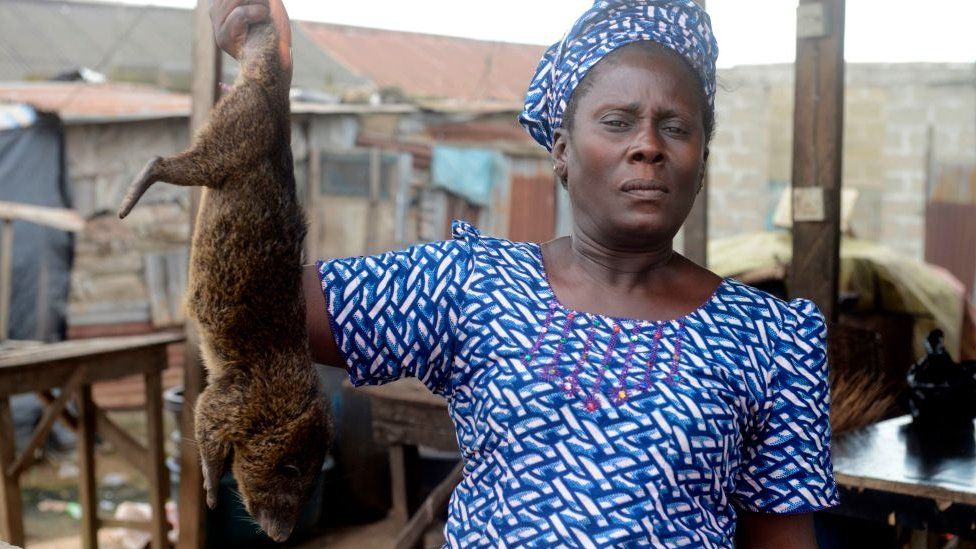
SharecloseShare pageCopy linkAbout sharingImage source, AFPThe Nigerian government has banned the sale of bushmeat as a precaution to stop the spread of monkeypox.Six cases have been detected in the country this month bringing to 21 the number of confirmed infections this year, the authorities said.Experts say it is possible that the virus can be caught by eating meat from an infected animal. But this is not the most common transmission route.Monkeypox, a mild viral infection, is endemic in Nigeria. It occurs mostly in remote areas, near tropical rainforests. The country has had sporadic cases since an outbreak in 2017. The virus was found mainly in the south of the country but, since 2020, it has spread to central, eastern and northern areas, the World Health Organization says.Out of the 21 confirmed cases this year, there has been one reported death of a person who had underlying conditions. But earlier this week the health authorities said “there has been no evidence of any new or unusual transmission of the virus, nor changes in its clinical manifestation documented”.What is monkeypox and how do you catch it?Africa Live: More on this and other stories from the continentScientists are struggling to explain a recent rise in monkeypox cases in Europe, which have not been linked to travel to the African countries where it is endemic. But there are suggestions the virus has been spreading from person to person for some time undetected.Monkeypox can be spread when someone is in close contact with an infected person. The virus can enter the body through broken skin, the respiratory tract or through the eyes, nose or mouth.Those infected in the UK have been advised to avoid having sex while they have symptoms.The animals that can pass on the virus are infected rodents, including rats and squirrels. According to health experts, this can happen if someone is bitten or touches an infected animal.Bushmeat refers to any wild animal that is killed for consumption, including antelopes, chimpanzees, fruit bats, rats, porcupines and snakes.In some remote areas of Nigeria it is a vital source of food, while in others it has become a delicacy.There are many bushmeat markets in Nigeria and it is unclear how the ban will be implemented.The ministry of agriculture also directed vets and its other officials to increase surveillance aimed at detecting any possible cases of monkeypox in animals.Operators of zoos, parks, conservation areas and recreational centres were reminded to make sure there was no contact between animals and humans
Read more →