Lessons on how to sleep: What we can learn from worms

Sleep regulation in a worm is not as different from sleep regulation in mammals, including humans, as you may think. Therefore, knowing how worms switch between being asleep and being awake can tell us a lot of useful information about sleep patterns in humans and what cells regulate them.
In a paper published in iScience in May 2022, researchers from the University of Tsukuba used the model organism Caenorhabditis elegans, a transparent worm, to reveal how “sleepiness” is encoded in the nervous system. C. elegans is one of the simplest organisms with a nervous system.
“Our sleep is homeostatically regulated. In other words, the more we stay awake, the more we subsequently sleep. How the preceding amount of wakefulness affects the subsequent amount of sleep still remains a great mystery. C. elegans also exhibits alternating cycles of wake and sleep that are homeostatically regulated,” explains Professor Yu Hayashi, lead author of the study. Thus, we expected that studies using C. elegans might give us hints regarding the molecular and cellular mechanisms underlying the homeostatic regulation of sleep.”
The researchers suspected that a single interneuron called ALA is a key player in the process. Intracellular calcium ion currents are essential in neurons; they act as little messengers telling the cell what to do depending on the external circumstances. The research team used a special imaging technique that allowed the visualization of calcium ions in the ALA neuron while the worms were asleep and while they were awake. “This study revealed that the interneuron ALA is crucial for homeostatic regulation of sleep,” explains Professor Hayashi, confirming their initial hypothesis. “We observed that intracellular calcium gradually increased in the ALA neuron during wakefulness and rapidly decayed upon transitions to sleep bouts. In addition, we also found that artificial activation of ALA can cause an immediate transition to sleep. Thus, ALA seems to act as a timer that measures the amount of time spent awake, and when it reaches a certain level it will force the animal to fall asleep. We also found that this function of ALA requires a protein called CEH-17, which is highly conserved in mammals.”
These findings shine light on the mechanisms in charge of the switch between sleep and wakefulness in worms. The next steps could involve studying similar mechanisms in mammals, such as mice and also humans. In addition, the knowledge that CEH-17 plays such a vital role in sleep is highly relevant to sleep dysregulation, and may contribute to the design of new treatments for insomnia and other sleep disturbances.
Story Source:
Materials provided by University of Tsukuba. Note: Content may be edited for style and length.
Read more →

Higher socioeconomic status linked to increased air pollution exposure in China

In some countries, including the United States, socioeconomic factors such as higher income and education correlate with less exposure to outdoor air pollution. But this isn’t the case in China. In fact, it’s the exact opposite.
For the first time, a University of Washington led team has uncovered that people living in China who have a higher socioeconomic status are actually more exposed to outdoor air pollution, also known as ambient air pollution. This finding runs contrary to existing studies conducted throughout North America, which have shown that higher pollution levels tend to be experienced among people with lower socioeconomic status.
The findings were published June 8 in Environmental Health Perspectives.
“Environmental disparities reflect a location’s history, culture, economics and power dynamics,” said co-author Julian Marshall, UW professor of civil and environmental engineering. “Those factors differ between the U.S. and China, so we see different patterns in environmental inequalities.”
While disparities in ambient air pollution are well-studied between different countries, variations within-country have been poorly studied except for in a few high-income countries. China accounts for one-fourth of the total 4 million worldwide deaths per year attributed to ambient air pollution, which is associated with stroke, chronic respiratory diseases and lung cancer.
The researchers investigated ambient nitrogen dioxide (NO2) and fine particulate matter (PM2.5) concentrations. The team selected these pollutants because they are widely tracked and have health effects associated with exposures. Also, estimates of pollution levels are newly available at small-scale spatial resolution (1 kilometer).

Read more →

New study shows how having had COVID-19 may negatively impact your performance at work

Individuals who contract COVID-19 often experience memory, attention, and concentration problems, even after recovering from the initial illness. A new study from the University of Waterloo shows individuals who had contracted COVID-19 reported significantly more cognitive failures at work.
“COVID-19 is going to be an ongoing part of life, at least for the foreseeable future,” said James Beck, an associate professor in Waterloo’s Psychology department. “It is now common for people to catch COVID-19, recover, and then return to work. Yet, in our study, people who had contracted COVID-19 reported more difficulties at work, relative to people who had never caught COVID.”
Beck and his graduate student, Arden Flow, collected data from a sample of 94 full-time working adults who either had or had not contracted COVID-19 at least one month prior to the study. Both groups were matched on key demographic characteristics.
“Relative to the group who had never had COVID-19, the group who had contracted COVID-19 reported more cognitive failures at work, which are defined as problems with memory, attention, and action,” Beck said.
A second finding of the work is that cognitive failures were associated with decreased self-ratings of job performance, as well as increased intentions to voluntarily leave one’s current job.
“These results may have important implications for managers and organizations more broadly,” Beck said. “Individuals returning to work after contracting COVID-19 may experience difficulties returning to their pre-COVID-19 level of performance, and accommodations may be necessary. These accommodations might include reducing workloads, extending deadlines, or providing flexible work arrangements.”
Story Source:
Materials provided by University of Waterloo. Note: Content may be edited for style and length.
Read more →

Human skin can be damaged by exposure to third-hand smoke and electronic cigarette spills

A University of California, Riverside, study has found that dermal exposure to nicotine concentrations found in thirdhand smoke, or THS, and electronic cigarette spills may damage the skin.
THS, of which nicotine is a major component, is created when exhaled smoke and smoke emanating from the tip of burning cigarettes settles on surfaces such as clothing, hair, furniture, and cars. Not strictly smoke, THS refers to the residues left behind by smoking. Electronic cigarette spills” are e-liquid spills that may occur by leaky electronic cigarette products or when consumers and vendors mix e-liquids for refillable electronic cigarettes.
Study results appear in Atmosphere, a journal.
“We found dermal contact with nicotine may impair wound healing, increase susceptibility to skin infections due to a decrease in immune response, and cause oxidative stress in skin cells,” said Giovanna Pozuelos, who graduated earlier this year from UC Riverside with a doctoral degree in cell, molecular, and developmental biology.
The study was performed using EpiDermTM, a 3D model of the human epidermis, and cultured human keratinocytes. Keratinocytes are epidermal cells that produce keratin, the protein found in hair and fingernails. The researchers exposed EpiDermTM for 24 hours to different nicotine concentrations typically found in THS environments and electronic cigarette spills. The researchers then proceeded to identify processes and pathways altered by the exposure. They investigated nicotine’s effect on cellular organelles, mitochondria, and peroxisomes — organelles containing enzymes involved in many metabolic reactions.
According to Pozuelos, the most susceptible individuals include those with skin conditions such as diabetic-related ulcers or arterial ulcers.

Read more →

Even with federal funds, U.S. schools still rely on low-cost methods to slow Covid, a study shows.

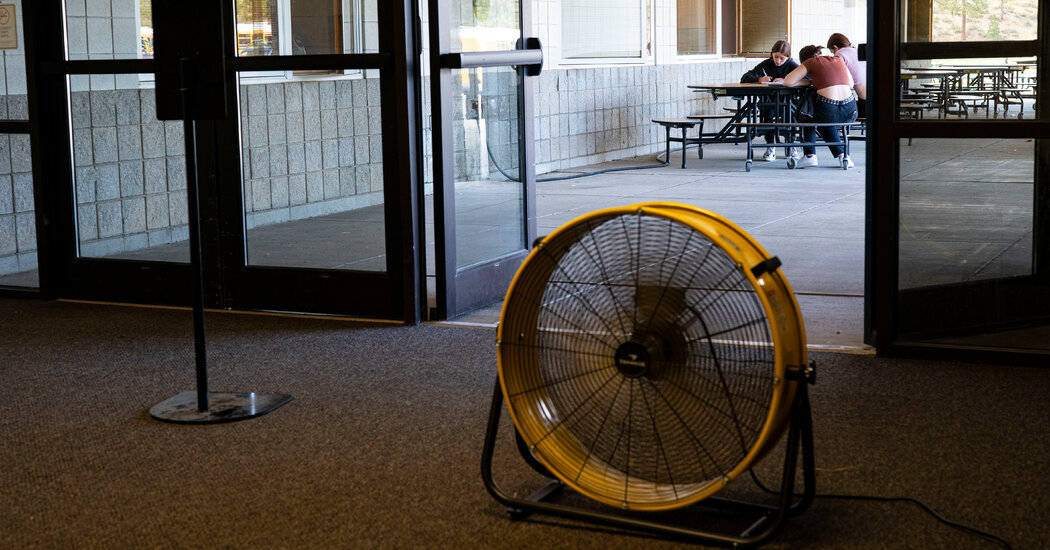
Despite additional federal funding, U.S. schools reported that they were most likely to rely on low-cost strategies to improve ventilation to slow the spread of the coronavirus, according to a study published Tuesday by the Centers for Disease Control and Prevention.The measures include holding activities outside, opening doors and windows, and inspecting existing heating, ventilation and air conditioning systems, the study said.Only about one-third of public schools reported taking costlier steps such as replacing or upgrading their HVAC systems. Fewer than one in three said they used high-efficiency particulate air (HEPA) filtration systems in classrooms and cafeterias.Schools that serve children in the poorest American communities were slightly more likely to have replaced or upgraded HVAC systems than those serving communities with medium levels of poverty, the study found. Almost half of schools serving the poorest communities — and close to half of schools serving the wealthiest communities — had replaced or upgraded their HVAC systems, compared with only one-third of schools with medium levels of poverty. The poorest schools were also more likely to have inspected and validated their HVAC systems than schools with medium levels of poverty.The authors of the C.D.C. report suggested that while schools in wealthier areas may have already had resources to upgrade their systems, schools in high-poverty areas might have more experience accessing and using federal funds for such purposes.Thirty-five percent to 44 percent of the schools in the poorest communities reported using HEPA filtration systems in spaces where children eat and in classrooms and high-risk areas, and 36 percent to 50 percent of schools serving communities with low poverty levels reported using HEPA filters in those areas.By contrast, only one in four or five schools serving communities with medium levels of poverty reported using HEPA filters in those places.The study was based on the findings of a nationally representative sample of 420 K-12 public schools, using data gathered between Feb. 14 and March 27 from the National School Covid-19 Prevention Study. The sampling framework consists of public schools from all 50 states and the District of Columbia; it is a web-based survey distributed to school administrators.Only 26 percent of schools that received the survey in February and March responded, however. The percentage of students eligible for free or discounted meals was used to determine the community poverty level of each school.Location also was correlated with measures taken to improve ventilation: Rural schools were less likely to use portable HEPA filtration systems than schools in cities and suburbs.Schools in cities, on the other hand, were less likely to open windows than rural, suburban or town schools, possibly because of concerns about noise and air pollution (some may also have windows that do not open). City schools were also less likely to use fans to increase the movement of air when they did open windows.“Additional efforts might be needed to ensure that all schools successfully access and use resources for ventilation improvements,” particularly schools in rural areas and those with medium levels of poverty, the authors wrote.

Read more →

Bad dreams could be early warning of Parkinson's disease

Older adults who start to experience bad dreams or nightmares could be exhibiting the earliest signs of Parkinson’s disease, say researchers at the University of Birmingham.
A new study, published in eClinicalMedicine, showed that in a cohort of older men, individuals experiencing frequent bad dreams were twice as likely to be later diagnosed with Parkinson’s as those who did not.
Previous studies have shown that people with Parkinson’s disease experience nightmares and bad dreams more frequently than adults in the general population, but using nightmares as a risk indicator for Parkinson’s has not previously been considered.
Lead author, Dr Abidemi Otaiku, of the University’s Centre for Human Brain Health, said: “Although it can be really beneficial to diagnose Parkinson’s disease early, there are very few risk indicators and many of these require expensive hospital tests or are very common and non-specific, such as diabetes.
“While we need to carry out further research in this area, identifying the significance of bad dreams and nightmares could indicate that individuals who experience changes to their dreams in older age — without any obvious trigger — should seek medical advice.”
The team used data from a large cohort study from the USA, which contained data over a period of 12 years from 3818 older men living independently. At the beginning of the study, the men completed a range of questionnaires, one of which included a question about sleep quality.
Participants reporting bad dreams at least once per week were then followed up at the end of the study to see whether they were more likely to be diagnosed with Parkinson’s disease.
During the follow-up period, 91 cases of Parkinson’s were diagnosed. The researchers found that participants experiencing frequent bad dreams were twice as likely to develop the disease compared to those who did not. Most of the diagnoses happened in the first five years of the study. Participants with frequent bad dreams during this period were more than three times as likely to go on to develop Parkinson’s.
The results suggest that older adults who will one day be diagnosed with Parkinson’s are likely to begin experiencing bad drams and nightmares a few years before developing the characteristic features of Parkinson’s, including tremors, stiffness and slowness of movement.
The study also shows that our dreams can reveal important information about our brain structure and function and may prove to be an important target for neuroscience research.
The researchers plan to use electroencephalography (EEG) to look at the biological reasons for dream changes. They will also look at replicating the findings in larger and more diverse cohorts and explore possible links between dreams and other neurodegenerative diseases such as Alzheimer’s.
Story Source:
Materials provided by University of Birmingham. Note: Content may be edited for style and length.

Read more →

Immune protein may drive alcoholism relapse

The anxiety that occurs during withdrawal from excessive alcohol use, and contributes to relapse, may be driven in part by the release of an immune protein in the brain, according to a new study from scientists at Scripps Research.
The discovery, reported online June 6, 2022, in Molecular Psychiatry, illuminates the molecular details of the brain’s response to alcohol withdrawal, and suggests that the immune protein, colony stimulating factor 1 (CSF1), could be a target of future treatments for alcohol use disorder (AUD).
“Alcohol withdrawal activates the stress system in the brain, which contributes to relapse, and in this study, we linked this stress response to CSF1, a neuroimmune mediator, opening up new opportunities for therapeutic intervention,” says study senior author Marisa Roberto, PhD, professor and Schimmel Family Chair in the Department of Molecular Medicine at Scripps Research.
The study’s first author, who performed many of the experiments, is Reesha R. Patel, PhD, a former postdoctoral researcher in the Roberto lab.
Alcohol is by far the most used and abused recreational drug. According to the 2019 National Survey on Drug Use and Health, nine million men and more than five million women in the United States have an alcohol use disorder (AUD), which is defined as an inability to control alcohol use despite its negative impact on the user’s health, social life and/or employment. Drug treatments, talk-therapy and support group-based treatments are available, but relapse is common, mainly due to the limited understanding of the brain-circuit dysfunctions underlying AUD.
Scientists know that relapse-promoting alcohol withdrawal symptoms include rising feelings of anxiety, caused at least in part by the release of stress molecules such as corticotropin-releasing factor (CRF) within the brain. CRF stimulates receptors on neurons in the prefrontal cortex, and in the limbic system, a set of more primitive brain structures that process emotions. If scientists could fully identify and characterize these CRF-sensitive neuronal populations, they could understand better how anxiety occurs during withdrawal and potentially devise effective treatments to block it.

Read more →

Enhertu Breast Cancer Drug Results in ‘Unheard-of’ Survival Rates

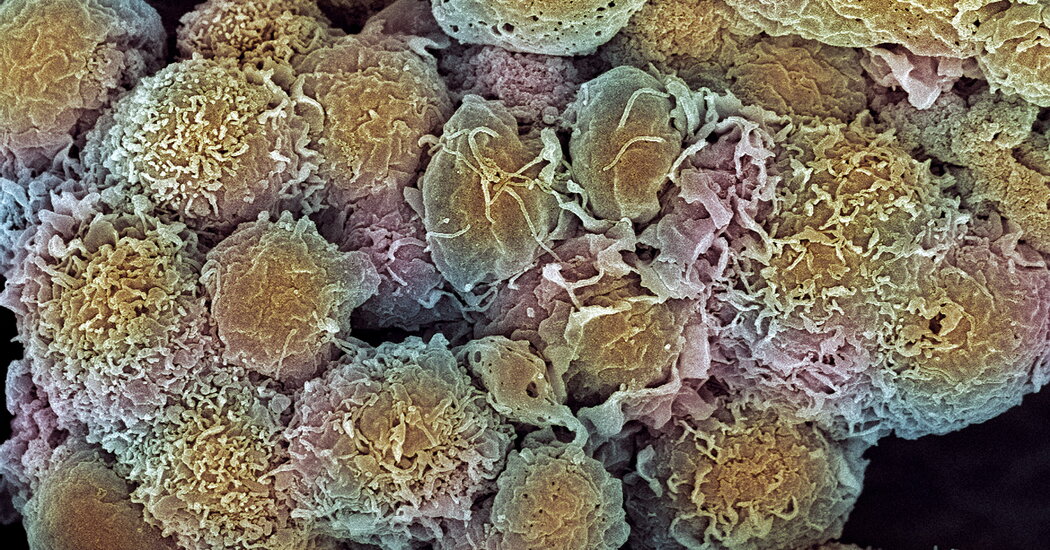
For some patients with metastatic tumors not significantly affected by other forms of chemotherapy, the treatment halted their cancer’s growth.The patients had metastatic breast cancer that had been progressing despite rounds of harsh chemotherapy. But a treatment with a drug that targeted cancer cells with laserlike precision was stunningly successful, slowing tumor growth and extending life to an extent rarely seen with advanced cancers.The new study, presented at the annual meeting of the American Society of Clinical Oncology and published on Sunday in the New England Journal of Medicine, would change how medicine was practiced, cancer specialists said.“This is a new standard of care,” said Dr. Eric Winer, a breast cancer specialist, director of the Yale Cancer Center and head of the A.S.C.O. Dr. Winer was not involved with the study. He added that “it affects a huge number of patients.”The trial focused on a particular mutant protein, HER2, which is a common villain in breast and other cancers. Drugs that block HER2 have been stunningly effective in treating breast cancers that are almost entirely populated with the protein, turning HER2-positive breast cancers from those with some of the worst prognoses into ones where patients fare very well.But HER2-positive cases constitute only about 15 percent to 20 percent of breast cancer patients, said Dr. Halle Moore, director of breast medical oncology at the Cleveland Clinic. Patients with only a few HER2 cells — a condition known as HER2-low — were not helped by those drugs. Only a small proportion of their cancer cells had HER2, while other mutations primarily drove the cancer’s growth. And that posed a problem because the cancer cells evaded chemotherapy treatments.The clinical trial, sponsored by the pharmaceutical companies Daiichi Sankyo and AstraZeneca and led by Dr. Shanu Modi of Memorial Sloan Kettering Cancer Center, involved 557 patients with metastatic breast cancer who were HER2-low. Two-thirds took the experimental drug, trastuzumab deruxtecan, sold as Enhertu; the rest underwent standard chemotherapy.In patients who took trastuzumab deruxtecan, tumors stopped growing for about 10 months, as compared with 5 months for those who with standard chemotherapy. The patients with the experimental drug survived for 23.9 months, as compared with 16.8 months for those who received standard chemotherapy.“It is unheard-of for chemotherapy trials in metastatic breast cancer to improve survival in patients by six months,” said Dr. Moore, who enrolled some patients in the study. Usually, she says, success in a clinical trial is an extra few weeks of life or no survival benefit at all but an improved quality of life.The results were so impressive that the researchers received a standing ovation when they presented their data at the oncology conference in Chicago on Sunday.Trastuzumab deruxtecan was already approved for patients with HER2-positive breast cancer, but few expected it to work because other drugs for such cancers had failed in HER2-low patients.The drug consists of an antibody that seeks out the HER2 protein on the surface of cells. The antibody is attached to a chemotherapy drug. When trastuzumab deruxtecan finds a cell with HER2 on its surface, it enters the cell, and the chemotherapy drug separates from the antibody and kills the cell.But “what is unique and distinct” about trastuzumab deruxtecan, Dr. Modi adds, is that the chemotherapy drug seeps through the cell’s membrane. From there, it can move into nearby cancer cells and kill them as well.Like all chemotherapy, trastuzumab deruxtecan has side effects, including nausea, vomiting, blood disorders and, notably, lung injuries that led to the deaths of three patients in the trials.But, Dr. Winer said, “if I were a patient with metastatic breast cancer, and if I were to get a drug with chemotherapy’s side effects, I’d prefer this drug.”Doctors have said they are planning to try the treatment in their breast cancer patients who have metastatic HER2-low cancers.New Developments in Cancer ResearchCard 1 of 6Progress in the field.

Read more →

Monkeypox Can Be Airborne, Too

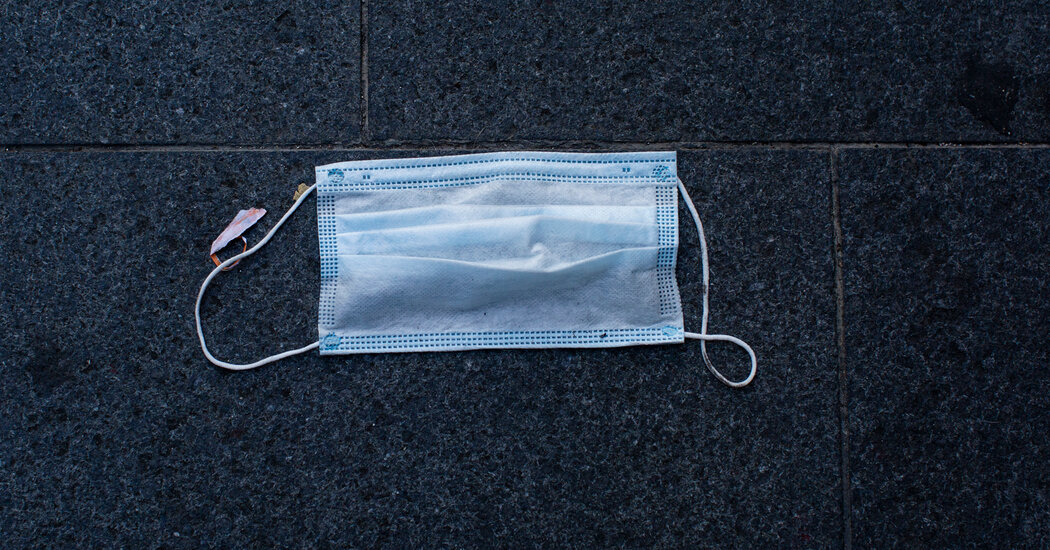
An abrupt change in C.D.C. guidance underscores a little-known phenomenon: On occasion, monkeypox can be transmitted through aerosols, similar to the coronavirus.The Centers for Disease Control and Prevention updated its guidance last week for travelers wishing to protect themselves against monkeypox. This was one of its recommendations: “Wear a mask. Wearing a mask can help protect you from many diseases, including monkeypox.”Late Monday night, that recommendation was deleted.“C.D.C. removed the mask recommendation from the monkeypox travel health notice because it caused confusion,” the agency said in a statement on Tuesday.However, the agency still says that in countries where monkeypox is spreading, “household contacts and health care workers” should consider wearing masks. That guideline also applies to “other people who may be in close contact with a person who has been confirmed with monkeypox.”The turnabout hints at a little-discussed aspect of the current monkeypox outbreak: The virus can be airborne, at least over short distances. While airborne transmission is only a small factor in the overall spread, experts said in interviews, there are no firm estimates regarding how much it contributes.Since May 13, when the first case in the outbreak was reported, more than a thousand people in 31 countries have been diagnosed with the virus, and at least another thousand cases are being investigated. As of Tuesday, the United States had recorded 31 cases in 12 states and the District of Columbia.In previous outbreaks, a majority of cases were reported in those who had close contact with an infected patient or animal. But in some instances, airborne transmission was the only explanation for the infections.Elsewhere on its website, the C.D.C. still urges monkeypox patients to wear a surgical mask, “especially those who have respiratory symptoms.” It also asks other household members to “consider wearing a surgical mask” when they are in the presence of the person with monkeypox.Monkeypox is assumed to behave much like its viral cousin, smallpox. In a 2012 review of smallpox transmission, Dr. Donald Milton, an expert on viruses at the University of Maryland, described several instances of airborne transmission.It was the only plausible explanation during a 1947 outbreak of smallpox in New York, he wrote, when one patient apparently infected another seven floors away in a hospital. Then, in 1970, a single patient infected several others on three floors of a hospital in Meschede, Germany, aided by air currents in the building.And scientists studying a 2017 outbreak of monkeypox in Nigeria observed cases of transmission within a prison and recorded infections in two health care workers who had no direct contact with patients.At a scientific conference last week organized by the World Health Organization, several researchers discussed the many unknowns about monkeypox, including its primary mode of transmission.New Yorkers being vaccinated for smallpox during an outbreak in 1947. In a few documented instances, airborne transmission was the only explanation for the infections.FPG/Hulton Archive/Getty Images“It’s very ambiguous what the true or dominant route of transmission is, and some of that can be addressed in animal models,” Nancy Sullivan, a researcher at the National Institute of Allergy and Infectious Diseases, said at the conference. “Probably that needs to take a front seat for some of the laboratory research.”But in briefings with the press and with the general public, health officials have not explicitly addressed the possibility of airborne transmission or the use of masks for protection.And in interviews, they emphasized the role of large respiratory droplets that are expelled from infected patients and drift onto objects or people. Monkeypox infection requires “really close sustained contact,” said Andrea McCollum, the C.D.C.’s leading expert on the virus.“This is not a virus that was transmitted over several meters,” she said. “That’s why we have to be really careful how to frame this.”When asked whether health officials should make the possibility of airborne transmission more widely known, Ms. McCollum said, “It’s a fair point to make, and it’s something we certainly should consider moving forward.”What to Know About the Monkeypox VirusCard 1 of 5What is monkeypox?

Read more →

Sponge-like solar cells could be basis for better pacemakers

Holes help make sponges and English muffins useful (and, in the case of the latter, delicious). Without holes, they wouldn’t be flexible enough to bend into small crevices, or to sop up the perfect amount of jam and butter.
In a new study, University of Chicago scientists find that holes can also improve technology, including medical devices. Published in Nature Materials, the paper describes an entirely new way to make a solar cell: by etching holes in the top layer to make it porous. The innovation could form the basis for a less-invasive pacemaker, or similar medical devices. It could be paired with a small light source to reduce the size of the bulky batteries that are currently implanted along with today’s pacemakers.
“We hope this opens many possibilities for further improvements in this field,” said Aleksander Prominski, the first author on the paper.
Light work
Prominski is a member of the lab of University of Chicago chemist Bozhi Tian, which specializes in creating ways to connect biological tissue and artificial materials — such as wires to modulate brain signals and surfaces for medical implants.
One of the areas they’re interested in is making devices that can be powered by light. We’re most familiar with this technology in the form of solar cells, but they can also use any light source, including artificial ones. When operating in the body, such devices are known as photoelectrochemical cells and can be powered from a tiny optical fiber implanted in the body.

Read more →