Memory boxes help families remember lost voices

A PhD student has been creating audio memory boxes for hospice patients. Isaac Gibson is studying at the Sonic Arts Research Centre in Queen’s University Belfast. As part of his research, he recorded interviews with hospice patients and combined them with fitting music and sound effects. Each recording is accessed through a handmade wooden box, designed to resemble a vintage radio. The purpose was to create individual listening experiences for patients and their families. Isaac contacted Marie Curie hospice with the idea after first recording a series of interviews with his terminally-ill grandfather. He has created 10 memory boxes for Marie Curie hospice patients in Northern Ireland.Video journalist: Niall McCracken

Read more →

You Can Get Covid Again. Here’s What to Know About Reinfection.

Some reinfection questions, answered.If you’re one of the millions of Americans who have already had Covid-19, you may be wondering how long you will have immunity from the coronavirus. Earlier in the pandemic, most people assumed that getting infected had at least one upside: that you would be protected against future encounters with the virus. But as the latest wave heads toward the Western region of the country and the virus shows no signs of easing up, reinfections seem to have become common. Already, many people are reporting second or even third infections with newer variants.Experts have warned that exposure to the coronavirus — through vaccination or infection — does not mean that you are completely protected from future infections. Rather, the coronavirus is evolving to behave more like its closely related cousins, which cause common colds and infect people repeatedly throughout their lives.“I’ve thought, almost since the beginning of this pandemic, that Covid-19 is eventually going to become an inevitable infection that everybody gets multiple times, because that’s just how a new respiratory virus gets established in the human population,” said Dr. Amesh Adalja, an infectious-disease specialist at Johns Hopkins University.However, the coronavirus doesn’t yet fit into clear seasonal patterns like the other common cold viruses. It can also cause debilitating symptoms that persist for months or years in some people, and has claimed the lives of millions of others. So what can you do to protect yourself, not only from infection but also reinfection? We asked experts for answers to common questions.How long will my immunity last after getting Covid?Before Omicron, reinfections were rare. A team of scientists, led by Laith Abu-Raddad at Weill Cornell Medicine-Qatar, estimated that a bout with Delta or an earlier coronavirus strain was roughly 90 percent effective in preventing a reinfection in both vaccinated and unvaccinated people. “But Omicron really changed that calculus,” said Dr. Abu-Raddad, an infectious disease epidemiologist.After Omicron emerged, prior infections only provided about 50 percent protection against reinfection, Dr. Abu-Raddad’s study showed. The coronavirus had acquired so many mutations in its spike protein that newer versions became more transmissible and better able to evade immunity. That means you can catch a version of Omicron after recovering from an older, non-Omicron variant. You can even get sick with one of the newer Omicron subvariants after getting over a different version of it.Other factors also increase your vulnerability to reinfection, starting with how long it has been since you had Covid. Immune defenses tend to wane after an infection. A study published in October 2021 estimated that reinfection could occur as soon as 3 months after contracting Covid-19. While these findings were based on the genome of the coronavirus and accounted for expected declines in antibodies that could fight off the virus, the study did not account for new variants like Omicron that were radically different from older variants. Because of how different Omicron is, your protection may wane even sooner. In a study published in February that has not yet been peer-reviewed, scientists from Denmark found that some people got reinfected with the BA.2 sublineage of Omicron as soon as 20 days after they got infected with the original Omicron BA.1.Because the virus is infecting more people now, your chances of being exposed and getting reinfected are also higher, Dr. Abu-Raddad said. And while it’s unclear if some people are simply more susceptible to Covid-19 reinfection, researchers are beginning to find some clues. People who are older or immunocompromised may make very few or very poor quality antibodies, leaving them more vulnerable to reinfection, Dr. Abu-Raddad said. And early research shows that a small group of people have a genetic flaw that cripples a crucial immune molecule called interferon type I, putting them at higher risk of severe Covid symptoms. Further studies could find that such differences play a role in reinfection as well.For now, you should treat any new symptoms, including a fever, sore throat, runny nose or change in taste or smell, as a potential case of Covid, and get tested to confirm if you are positive again.Will subsequent infections be more or less severe?The good news is that your body can call on immune cells, like T cells and B cells, to quash a reinfection if the virus sneaks past your initial antibody defenses. T cells and B cells can take a few days to get activated and start working, but they tend to remember how to battle the virus based on previous encounters.“Your immune system has all kinds of weapons to try and stop the virus even if it gets past the front door,” said Shane Crotty, a virologist at the La Jolla Institute for Immunology in California.Many of these immune cells build up their protections iteratively, Dr. Crotty said. That means that people who are vaccinated and boosted are especially well equipped to duke it out with the coronavirus. Similarly, people who have been infected before are able to keep the virus from replicating at high levels if they get reinfected. And most people who have logged encounters with both the vaccine and the coronavirus build up a hybrid immunity that may offer the best protection.The result is that second or third infections are likely to be shorter and less severe.Dr. Abu-Raddad, who has been tracking reinfections among large groups of people in Qatar, has already started seeing this promising pattern in patient records: Of more than 1,300 reinfections that his team identified from the beginning of the pandemic to May 2021, none led to hospitalization in an I.C.U., and none were fatal.But just because reinfections are less severe, it doesn’t mean that they are not terrible. You may still run a fever and experience body aches, brain fog and other symptoms. And there’s no way of knowing if your symptoms will linger and become long Covid, Dr. Adalja said.It is possible that each Covid infection forces you into a game of Russian roulette, though some researchers hypothesize that the risk is highest right after your first infection. One of the risk factors for long Covid is having high levels of virus in your system early in an infection, and you are likely to have such a high viral load the first time you are infected, Dr. Abu-Raddad said. In subsequent infections, your body is better prepared to fight off the coronavirus so you may be able to keep the virus at low levels until it is completely cleared, he said.What can you do to reduce your risk of reinfection?Many of the tools and behaviors that help protect against infection can still help you avoid reinfection, Dr. Abu-Raddad said. “There is no magical solution against Covid reinfection.”Getting vaccinated and boosted, for example, is a good idea even after you’ve had Covid. You only need to wait a few weeks after an infection to get a shot. The vaccines will bolster your antibody levels, and research shows that they are effective in preventing severe outcomes if you get sick again. “Scientific confidence in vaccine-induced immunity was and is much higher than infection-induced immunity,” Dr. Crotty said.Additional measures, like masking indoors and in crowded spaces, social distancing and improving ventilation where possible, can provide another layer of protection. But because most people and communities have largely dropped these protections, it is up to individuals to decide when to adopt extra precautions based on their risk of getting Covid and how much they’d like to avoid it.“If you had an infection just last week, you probably don’t have to mask up,” Dr. Adalja said. “But as a month or so passes from your infection and new variants start circulating in the U.S., it may make sense for high risk individuals to do that. People who are trying to avoid getting Covid because they’re going on a cruise soon or because they need a negative P.C.R. test for some other reason may consider taking precautions. Covid protections don’t have to be one-size-fits-all.”What Questions Do You Have About Covid?

Read more →

Canada mulls putting warnings on each cigarette

SharecloseShare pageCopy linkAbout sharingImage source, Science Photo LibraryCanada’s government is proposing putting health warnings on individual cigarettes in what would be a world-first way of tackling the habit. Mental Health and Addictions Minister Carolyn Bennett said she hoped the measure would help reach more people. She said the key target were young people who often access cigarettes “in social situations sidestepping the information printed on a package”.A 75-day public consultation period on the issue starts on Saturday.The battle for control of the cigarette packetWhy US lags behind on graphic cigarette warnings”Adding health warnings on individual tobacco products will help ensure that these essential messages reach people,” Ms Bennett told reporters.She added that photo warnings on cigarette packets – introduced in Canada in 2001 – were no longer as effective as the government had hoped.The Heart and Stroke Foundation of Canada welcomed the new proposal.”Canada will now have the strongest health warning regime for cigarettes in the world,” the foundation’s CEO, Doug Roth was quoted as saying by Canada’s CBC public broadcaster.”These are deadly products, and these measures will help to further reduce their appeal to youth and non-smokers, as well as to support current smokers in their efforts to quit.”In 2020, more than four million Canadians were daily or occasional smokers, according to Statistics Canada.Tobacco use is still the leading preventable cause of illness and premature death in the country with the population of more than 38 million.An estimated 48,000 Canadians die each year as a result of smoking, according to the Canadian Lung Association.More on this storyWhy US lags behind on graphic cigarette warningsCanada tobacco firms to pay damagesThe battle for control of the cigarette packetTobacco firms challenge packaging lawThe country that’s hooked on tobaccoCan anti-smoking tactics curb obesity?

Read more →

Study Shows Case of Likely Cat-to-Human Virus Spread, but Risk Remains Low

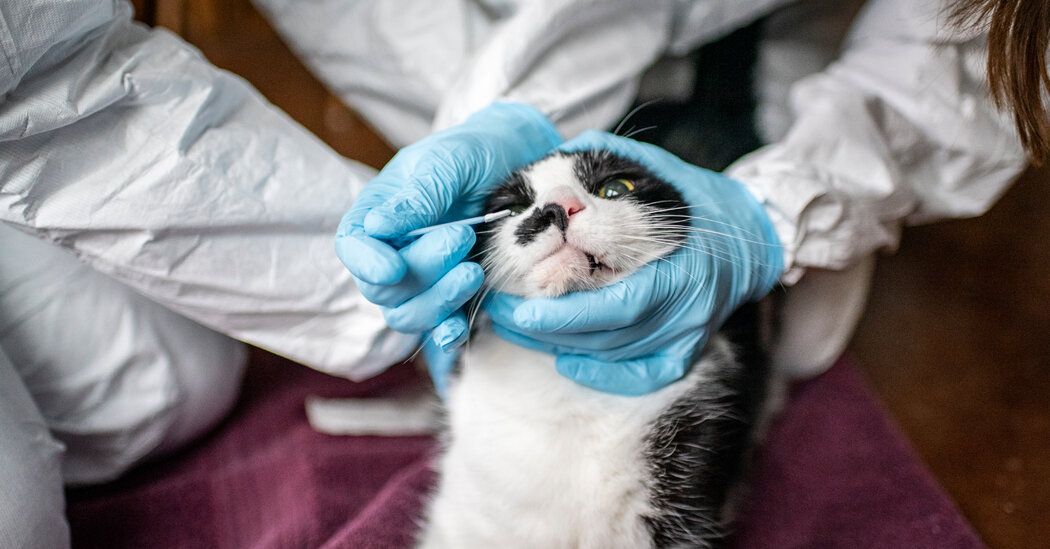
A veterinarian in Thailand likely contracted the coronavirus from an infected pet cat last year, researchers concluded in a new study. It is the first documented case of suspected cat-to-human transmission, although experts stress that the risk of cats infecting humans with the virus remains low overall.One of the cat’s two owners, who both had Covid-19, probably passed the virus to the cat, which then sneezed in the veterinarian’s face, according to the paper, which was written by scientists at Thailand’s Prince of Songkla University. Genomic sequencing confirmed that the cat and all three people were infected with an identical version of the virus, which was not widespread in the local population at the time.Cats are far more likely to catch the virus from people than to transmit it to them, scientists say. But the case is a reminder that people who are infected with the virus should take precautions around their pets — and that veterinarians and shelter workers who may come into contact with infected animals should do the same, said Dr. Scott Weese, an infectious diseases veterinarian at the University of Guelph in Ontario.“When things become human diseases, we too often forget everything else,” he said. “I think it’s important for us to recognize this virus still can move between species.”Previous research has shown that pet owners can infect their cats and that, in certain conditions, cats can transmit the virus to each other. But it has been difficult to prove that cat-to-human transmission happens in natural settings. (Mink, hamsters and deer have been reported to spread the virus to humans.)The new paper appeared this week in the journal Emerging Infectious Diseases, which is published by the U.S. Centers for Disease Control and Prevention. It makes a strong case for cat-to-human transmission, Dr. Weese said: “They’ve got a pretty good story here.”On Aug. 4, a father and son in Bangkok developed symptoms of Covid-19 and subsequently tested positive for the virus. Because of a shortage of hospital beds in Bangkok, the two men were transported on Aug. 8 to a hospital in Songkhla, a province in southern Thailand, via a 20-hour ambulance ride. For reasons that are unclear, they brought their pet cat.When the men were admitted to the hospital, the cat was sent to a veterinary hospital for an exam. Although the cat appeared to be healthy, the veterinarian, a 32-year-old woman, collected nasal and rectal swabs, which tested positive for the virus. While the veterinarian was swabbing the cat’s nose, the animal sneezed in her face. (The veterinarian was wearing gloves and a mask during the exam, but no face shield or eye protection.)On Aug. 13, the veterinarian developed Covid-19 symptoms, including a fever and a cough. Shortly thereafter, she tested positive for the virus.Genomic sequencing revealed that the cat’s owners, the cat and the veterinarian were all infected with the same version of the Delta variant, which was distinct from viral samples taken from other patients in Songkhla at the time.P.C.R. testing suggests that the cat had a high viral load at the time of its veterinary exam. None of the veterinarian’s close contacts are known to have had Covid-19 at the time, and she had no prior encounters with the pet’s owners, adding support to the theory that the cat was the source of the veterinarian’s infection. (It was not clear whether she met with the owners later.)The C.D.C. recommends that people who are infected with the virus avoid contact with their pets. “If you’re trying to stay away from people because you’re potentially infectious,” Dr. Weese said, “just try to stay away from animals at the same time.”

Read more →

Stress protein in fibroblasts may be a good target for future cancer drugs

A stress protein that is overactive in many types of tumor cells also has a key role in tumor-supporting cells called fibroblasts, and may be a good target for future cancer treatments, suggests a study from researchers at the Perelman School of Medicine at the University of Pennsylvania.
The researchers, whose findings appear in Nature Cell Biology, discovered in experiments with mouse models of pancreatic cancer and melanoma that the stress protein, known as ATF4, enables fibroblasts to support tumor growth by promoting the formation of tumor-serving blood vessels. Deleting ATF4 in fibroblasts severely impaired new tumor-supportive vessel formation as well as tumor growth, without causing significant harm to the mice, the researchers found.
“Our results suggest that inhibiting ATF4 could work against many types of cancer, and we’re now actively pursuing that strategy,” said study senior author Constantinos Koumenis, PhD, the Richard H. Chamberlain Professor of Research Oncology in the department of Radiation Oncology at Penn. “Every tumor we’ve looked at upregulates ATF4.”
The study’s first author, who performed most of the experiments, was Ioannis Verginadis, PhD, a senior research investigator and adjunct assistant professor in Koumenis’s laboratory.
ATF4 is produced in cells as part of a broad response to stresses such as oxygen- or nutrient-deprivation. It works as a master switch for the activities of hundreds of genes that help cells survive these stresses. As Koumenis’s laboratory and others have shown in recent years, many tumor types rely on this ATF4-associated stress response to survive despite the severe stresses they create for themselves by their rapid growth.
The researchers began the new study by engineering mice whose ATF4 gene could be deleted body-wide at any time. They found that if they deleted ATF4 before or even after tumors began growing in the mice, the growth of the tumors and their ability to spread to distant organs were greatly impaired. The scientists then used a powerful and relatively new technique called single-cell RNA sequencing to examine the impact of ATF4 deletion in all the cell types within the tumor — and observed a strikingly large effect on a population of tumor-supporting cells called cancer-associated fibroblasts (CAFs).

Read more →

Decoding a key part of the cell, atom by atom

Whatever you are doing, whether it is driving a car, going for a jog, or even at your laziest, eating chips and watching TV on the couch, there is an entire suite of molecular machinery inside each of your cells hard at work. That machinery, far too small to see with the naked eye or even with many microscopes, creates energy for the cell, manufactures its proteins, makes copies of its DNA, and much more.
Among those pieces of machinery, and one of the most complex, is something known as the nuclear pore complex (NPC). The NPC, which is made of more than 1,000 individual proteins, is an incredibly discriminating gatekeeper for the cell’s nucleus, the membrane-bound region inside a cell that holds that cell’s genetic material. Anything going in or out of the nucleus has to pass through the NPC on its way.
The NPC’s role as a gatekeeper of the nucleus means it is vital for the operations of the cell. Within the nucleus, DNA, the cell’s permanent genetic code, is copied into RNA. That RNA is then carried out of the nucleus so it can be used to manufacture the proteins the cell needs. The NPC ensures the nucleus gets the materials it needs for synthesizing RNA, while also protecting the DNA from the harsh environment outside the nucleus and enabling the RNA to leave the nucleus after it has been made.
“It’s a little like an airplane hangar where you can repair 747s, and the door opens to let the 747 come in, but there’s a person standing there who can keep a single marble from getting out while the doors are open,” says Caltech’s André Hoelz, professor of chemistry and biochemistry and a Faculty Scholar of the Howard Hughes Medical Institute. For more than two decades, Hoelz has been studying and deciphering the structure of the NPC in relation to its function. Over the years, he has steadily chipped away at its secrets, unraveling them piece by piece by piece by piece.
The implications of this research are potentially huge. Not only is the NPC central to the operations of the cell, it is also involved in many diseases. Mutations in the NPC are responsible for some incurable cancers, for neurodegenerative and autoimmune diseases such as amyotrophic lateral sclerosis (ALS) and acute necrotizing encephalopathy, and for heart conditions including atrial fibrillation and early sudden cardiac death. Additionally, many viruses, including the one responsible for COVID-19, target and shutdown the NPC during the course of their lifecycles.
Now, in a pair of papers published in the journal Science, Hoelz and his research team describe two important breakthroughs: the determination of the structure of the outer face of the NPC and the elucidation of the mechanism by which special proteins act like a molecular glue to hold the NPC together.

Read more →

Immunotherapy may get a boost

T cells are usually very good at eliminating diseased cells. But they seem to fail when it comes to tumor cells. In JCI Insight, MDC teams led by Armin Rehm and Uta Höpken describe what inhibits this immune function, how they can release the brake and boost the immune response against cancer.
T cells are the immune system’s SWAT team. Their job is to constantly patrol the blood, lymphatic system, tissues, and organs. If they come across cells that are contaminated with or damaged by pathogens, they eliminate them. They can also recognize and destroy cancer cells. The problem, though, is that the tumor cells find ways of escaping this line of defense. Researchers around the world are working to prevent these evasive maneuvers and harness T cells for targeted immunotherapies against cancer.
The labs led by Dr. Armin Rehm and Dr. Uta Höpken at the Max Delbrück Center for Molecular Medicine in the Helmholtz Association (MDC) in Berlin have now identified a mechanism that tumor cells use to dodge the body’s immune response. “In many cases, tumor cells read the EBAG9 gene especially often. The cells then produce a protein that protects them. But EBAG9 also influences the cells of the immune system because T cells produce it too. In T cells, EBAG9 inhibits the secretion of enzymes that act as poison to kill tumor cells,” says Rehm. Writing in the journal JCI Insight, the researchers describe how they released this brake in mice: “We shut down the EBAG9 gene,” says co-lead author Dr. Anthea Wirges, who works in Rehm’s research group. “This meant we could stop EBAG9 being produced in the T cells and strengthen the immune response to cancer for the long term.”
EBAG9 disarms immune cells
Scientists already know that cancer cells can outwit immune cells. This knowledge led to the development of checkpoint inhibitors, a type of immunotherapy that is already in clinical use. Checkpoint inhibitors make it hard for the cancer cells to trick T cells into thinking they’re harmless. “But EBAG9 gives cancer cells another line of defense against our immune system,” says Rehm. “It disarms the immune cells and stops them from secreting substances that would harm the cancer cells.”
Rehm and Höpken have long suspected that EBAG9 inhibits T cells. In 2009, Rehm’s ream developed a mouse model in which the researchers switched off the EBAG9 gene. “The mice’s immune system worked better without EBAG9 and they were able fight infections much more effectively,” says Rehm. Höpken’s team then crossed the EBAG9-free mice with another genetically modified mouse model that spontaneously developed leukemia. “We observed these doubly modified mice over a long period of time,” says Höpken. “Their tumors developed much more slowly than in the mice with EBAG9.”
Cancer and infections trigger different immune responses
Wirges checked the effects of the EBAG9 gene on the T cells using single-cell RNA sequencing and bioinformatic methods. As well as confirming that EBAG9 inhibits the T cell response, the data also showed that the immune response to cancer differs from the one triggered by infections.
“Knowledge about how the immune system develops a ‘memory’ comes from infection models. It can’t be transferred 1:1 to tumors,” says Rehm. T cells recognize diseased or infected cells by the signaling molecules on their surface. When they detect these harmful structures, they differentiate into cytotoxic T cells and memory T cells. The cytotoxic T cells secrete proteins that punch holes in the target cell’s membrane so that they can penetrate it and kill it by poisoning. Infected tissue also produces inflammatory signaling molecules, such as cytokines, that summon more T cells and cause them to mature into memory T cells. The memory cells record the immune response so that the immune system doesn’t have to start from scratch every time the T cells detect a disease.
The idea: Create CAR T cells without an immune brake
Tumors don’t cause inflammation in their early stages. Previously, scientists assumed that this was because T cells can’t identify tumor cells very well. “Because they’re produced by the body, tumor cells have very few surface molecules that are identifiable as foreign,” says Höpken. But it seems as if these minimal differences are enough for the T cells to spot the tumor cells: When the researchers switched off EBAG9, the reaction was astonishing. “The uninhibited T cells eliminate tumor cells very early and very radically,” notes Rehm. This also creates lasting protection against tumor cells. “The stronger the initial T cell reaction, the better the subsequent T cell memory,” says Rehm.
“Based on these findings, we now want to develop CAR T cells without EBAG9 as an immunotherapy for leukemia,” says Wirges. CAR stands for chimeric antigen receptor — an artificial receptor that detects tumor cells and is integrated into the patient’s own T cells. When patients have a CAR T-cell infusion, it equips their body with cells capable of fighting the cancer. The MDC researchers expect the CAR T cells to be even more effective without EBAG9. Although it will be a while before the cells reach the clinical trial stage, it could well be worth the wait: “We aren’t just hoping that this therapy will result in more efficient treatments for leukemia and lymphoma. We’re hoping that it will cure them,” says Rehm.

Read more →

Proteomic study of 2,002 tumors identifies 11 pan-cancer molecular subtypes across 14 types of cancer

A new study that analyzed protein levels in 2,002 primary tumors from 14 tissue-based cancer types identified 11 distinct molecular subtypes, providing systematic knowledge that greatly expands a searchable online database that has become a go-to platform for cancer data analysis by users worldwide.
The University of Alabama at Birmingham Cancer Data analysis portal, or UALCAN, was developed and released to public use in 2017 as a user-friendly portal for pan-cancer omics data analysis, including transcriptomics, epigenetics and proteomics. UALCAN has had nearly 920,000 site visits from researchers in more than 100 countries, and it has been cited more than 2,750 times.
“UALCAN is an effort to distribute comprehensive cancer data to researchers and clinicians in a user-friendly format to make discoveries and find needles in the haystack,” said Sooryanarayana Varambally, Ph.D., professor in the UAB Department of Pathology Division of Molecular and Cellular Pathology and director of UAB’s Translational Oncologic Pathology Research program. “Cancer detection, diagnosis, treatment, cure and research need a global team effort, and making sense of the huge amount of data involved needs a way to analyze and interpret these data.”
Cancer is a complex disease, and its initiation, progression and metastasis, the spread to distant organs, involves dynamic molecular changes in each type of cancer. Individual cancer patients show variations apart from some of the common genomic events.
In the new study, Varambally worked with longtime collaborator Chad Creighton, Ph.D., Baylor College of Medicine, Houston, Texas. Creighton led the proteomic study, published in Nature Communications, “Proteogenomic characterization of 2002 human cancers reveals pan-cancer molecular subtypes and associated pathways.” This extends two early proteomics studies published in 2019 and 2021.
Previously the team performed RNA transcripts analysis, providing the data to researchers through UALCAN, to determine which pathways the myriad forms of cancer use to aid growth, spread and aggressiveness. With this recent study, the team performed and incorporated large-scale proteomics analysis. The data and results provide new ideas for further research and possible therapeutic interventions.

Read more →

IgG antibodies in breast milk help shape infants' gut bacteria and immunity

Researchers have known for some time that maternal breast milk provides critical nutrients for newborns, and antibodies from mothers vaccinated against a specific disease-causing bacterium or virus can be transferred via breast milk to babies. Now a new preclinical study by Weill Cornell Medicine investigators shows that one specific set of antibodies that is induced naturally by gut beneficial bacteria can be transferred from mothers to infants through breast milk and help infants defend against infection-induced diarrheal illness. The study suggests boosting these “naturally-produced” antibodies in mothers might enhance infants’ immunity against bacterial pathogens that cause infectious gastrointestinal diseases.
In the study, published June 10 in Science Immunology, the team focused on a class of antibodies called IgG, which help rid the body of infectious bacteria and viruses. Little was known about how IgG antibodies that are naturally induced by gut bacteria influence infant gut immunity. So, the investigators used a mouse model to determine how these IgG antibodies are transferred from a mother’s blood to her breast milk and how they protect young mice from Citrobacter rodentium (equivalent to pathogenic E. coli in humans) that causes potentially dangerous intestinal infections.
“We found that these IgG antibodies were protective against gut infection in the babies and that we could enhance this protection,” said senior author Dr. Melody Zeng, an assistant professor of immunology in pediatrics within the Department of Pediatrics and a member of the Gale and Ira Drukier Institute for Children’s Research at Weill Cornell Medicine.
Just as antibodies against the SARS-CoV-2 virus are detected in the breast milk of women who had been vaccinated with mRNA vaccines for COVID-19, the researchers sought to confer extra protection against intestinal infections in infants by inducing IgG antibodies that could be transferred this way. They developed a vaccine using a component found in gut bacteria, then immunized female mice with it before they became pregnant.
“The same concept, in which vaccination enhances mothers’ IgG antibody levels and transfers this immunity to her babies, could protect human babies,” Dr. Zeng said. “This strategy could especially benefit premature babies, since they tend to be at much higher risk from diarrheal diseases.”
Such infections pose significant dangers for young children in general. Diarrheal illnesses are the second leading cause of death among children under five, according to the World Health Organization.
In their experiments, the researchers, including co-first authors Dr. Katherine Sanidad and Dr. Mohammed Amir, both postdoctoral associates in the Zeng lab, first demonstrated that when passed to infant mice through breast milk, IgG prevented disease-causing bacteria from attaching themselves to the lining of infants’ intestines, an early step in infection.
They also studied how IgG interacted with another set of microbes — beneficial bacteria that live in the gut — to facilitate healthy development of gut bacteria in infants. Scientists are finding that these microbes contribute to the development and function of the immune system. For instance, helpful bacteria train the immune system to recognize their pathogenic relatives.
This study uncovered long-term effects of these protective IgG antibodies too. Mice that never received IgG from their mothers developed abnormal microbial communities within their guts, which led to changes to their immune systems. Specifically, the researchers found an increase in gut immune cells that produce IL-17, a proinflammatory cytokine that is linked to inflammatory diseases. As adults, the IgG-deprived mice were more susceptible to abnormal inflammation associated with inflammatory bowel disorder.
“Our findings really underscore the benefits of breastfeeding, both immediately and for the long-term development of the immune system in the offspring,” Dr. Zeng said.
Dr. Melody Zeng is a consultant for Guidepoint.
Story Source:
Materials provided by Weill Cornell Medicine. Note: Content may be edited for style and length.

Read more →

C.D.C. Dismisses Airborne Transmission of Monkeypox. Some Experts Disagree.

The virus “is not known to linger in the air,” agency officials said. But the research is far from definitive.Officials at the Centers for Disease Control and Prevention on Friday pushed back against the idea that the monkeypox virus can spread through the air, saying the virus is usually transmitted through direct physical contact with sores or contaminated materials from a patient.The virus may also be transmitted by respiratory droplets expelled by an infected patient who comes into physical contact with another person, they said. But it cannot linger in the air over long distances.Experts on airborne transmission of viruses did not disagree, but some said the agency had not fully considered the possibility that respiratory droplets, large or small, could be inhaled at a shorter distance from a patient.The World Health Organization and several experts have said that while “short-range” airborne transmission of monkeypox appears to be uncommon, it is possible and warrants precautions. Britain also includes monkeypox on its list of “high-consequence infectious diseases” that can spread through the air.“Airborne transmission may not be the dominant route of transmission nor very efficient, but it could still occur,” said Linsey Marr, an expert on airborne viruses at Virginia Tech.“I think the W.H.O. has it right, and the C.D.C.’s message is misleading,” she added.In the United States, the monkeypox outbreak has swelled to 45 cases in 15 states and the District of Columbia, C.D.C. officials said at a news conference. The global tally has risen swiftly since May 13, when the first case was reported, to more than 1,450. At least 1,500 cases are still under investigation.Historically, people with monkeypox have reported flulike symptoms before a characteristic rash appears. But some patients in the current outbreak have developed the rash first, and some have not had these symptoms at all, Dr. Rochelle Walensky, the agency’s director, said on Friday.No deaths have yet been recorded in the current outbreak, she said.Questions about airborne transmission of the monkeypox virus are important because the answers in turn will bear on recommendations for masking, ventilation and other protective measures should the outbreak continue to grow.The C.D.C. said on Thursday that monkeypox “is not known to linger in the air and is not transmitted during short periods of shared airspace.” The statement followed a New York Times article on Tuesday in which scientists described uncertainties about transmission of the virus.“What we do know is that those diagnosed with monkeypox in this current outbreak described close, sustained physical contact with other people who were infected with the virus,” Dr. Walensky said on Friday. “This is consistent with what we’ve seen in prior outbreaks and what we know from decades of studying this virus and closely related viruses.”But monkeypox is poorly studied, other experts said, and occasional episodes of airborne transmission have been reported for the closely related smallpox virus. In a 2017 outbreak of monkeypox in Nigeria, infections occurred in two health care workers who had no direct contact with patients, scientists said at a recent W.H.O. conference.A few patients in the current outbreak do not when or how they contracted the virus, C.D.C. officials acknowledged.The agency is right to reassure the public that the outbreak is not a threat to most people, because monkeypox is not nearly as contagious as the coronavirus, said Dr. Donald Milton, an expert on airborne virus transmission at the University of Maryland.Airborne transmission is unlikely to be a risk for anyone other than immediate caregivers, Dr. Milton said, but cautioned that denying the possibility entirely “is the wrong way to do it.”When a virus is present in saliva or in the respiratory tract, as monkeypox has been shown to be, it can be expelled in respiratory droplets when talking, singing, coughing or sneezing, Dr. Milton and other experts said.The droplets may be heavy and quickly fall onto objects or people, or they may be small and light, lingering in the air for long periods and distances. The C.D.C.’s assessment hinges in part on whether the virus is present only in large droplets or also in the very small ones, called aerosols.A similar debate unfolded at the beginning of the coronavirus pandemic, when the agency and the W.H.O. focused on large droplets as the main route of transmission. But aerosols turned out to be a major driver.The new C.D.C. guidance on monkeypox described the respiratory droplets emitted by patients as “secretions that drop out of the air quickly.”But the virus “can be present in respiratory particles of any size,” not just large droplets, said Lidia Morawska, an air quality expert at Queensland University of Technology in Australia.“In my view, there is no basis to the statement that the virus is transmitted only by large droplets and presenting infection risk only on close distances,” she wrote in an email.Patients in the current outbreak seem to have become infected through close, sustained contact, C.D.C. officials said on Friday. But this can be difficult to determine.What to Know About the Monkeypox VirusCard 1 of 5What is monkeypox?

Read more →