Advisers to the C.D.C. recommend Modena’s vaccine for children and teens aged 6 through 17.
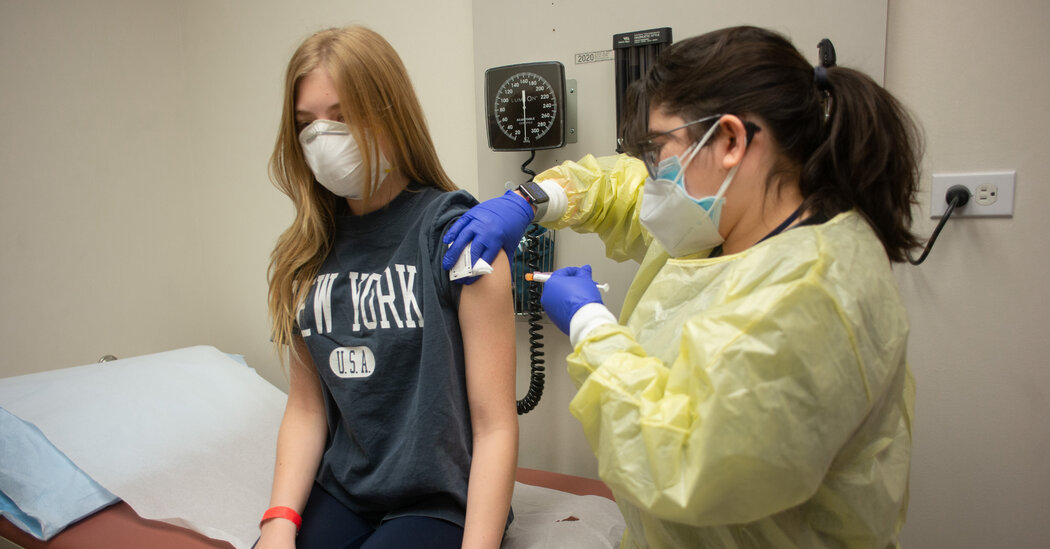
Advisers to the Centers for Disease Control and Prevention on Thursday voted unanimously to recommend Moderna’s coronavirus vaccine for children and adolescents aged 6 through 17 years.Their endorsement was neither a surprise, nor urgently anticipated. The Food and Drug Administration authorized the Moderna vaccine for that age group late last week, and the decisions of the two agencies have rarely been at odds.The recommendation was one of the last hurdles before a second vaccine option becomes available to a large swath of those younger than 18. The vaccine produced by Pfizer and BioNTech has been available to children 5 through 15 since last year and to Americans 16 and older since late 2020.Dr. Rochelle Walensky, the C.D.C.’s director, is likely to sign off on the panel’s recommendation later on Thursday, less than a week after she endorsed Moderna’s vaccine for even younger children.Moderna’s vaccine was authorized for adults in December 2020. Last June, the company applied to use its vaccine in adolescents aged 12 to 17 years, who would receive 100 micrograms, the same dose as adults. But while the F.D.A. took roughly a month to sign off on Pfizer’s application for older children, it stalled Moderna’s application.In an announcement in October, Moderna said the F.D.A. was reviewing reports that suggested its vaccine can cause heart problems in adolescent boys. The company also said it would hold off on applying for authorization for children 6 through 11 until the F.D.A. had made a decision for the older children.In May, Moderna submitted its application to the F.D.A. for children 6 through 11, who would receive 50 micrograms, or half the adult dose.In a closely watched two-day meeting last week, advisers to the F.D.A. first endorsed the Moderna vaccine for children 6 through 17 years, and then the use of both the Moderna and the Pfizer vaccines for children as young as 6 months.Meetings of the C.D.C. advisers late last week prioritized the urgent need for vaccines for the youngest children, deferring a decision on the Moderna vaccine for older children until this week.In their meeting on Thursday, the committee members were presented with data indicating that the Moderna vaccine has an efficacy against symptomatic infection of about 80 percent in children 6 through 11 years and of about 90 percent in adolescents 12 to 17 years. But that data were all collected before the arrival of the Omicron variant, which has shown some ability to dodge immunity.“We know that Covid can cause severe disease and death among children and adolescents, including those without underlying medical conditions,” said Dr. Sara Oliver, a C.D.C. scientist who presented some of the data.“The benefits outweigh the risks for mRNA Covid-19 vaccines in all ages,” Dr. Oliver said.C.D.C. researchers said the Moderna vaccine is safe overall. It carries a very small risk of transient heart problems in adolescent boys aged 12 to 17, but a similar risk has been observed with the Pfizer vaccine, according to Dr. Tom Shimabukuro, a C.D.C. scientist who presented the data.Several studies have shown that Covid itself carries a much higher risk of heart problems than either vaccine.Still, to minimize the risk of heart problems, the C.D.C. now recommends that boys and men between ages 12 and 39 years space their doses apart by eight weeks.Much of the discussion on Thursday was focused on the potential confusion for providers administering different vaccines, at different doses, for several different age groups.There is no data on the usefulness of a booster shot of the Moderna vaccine for children and adolescents, and the F.D.A. authorized the vaccine only for primary doses. But those data are likely to be available by the time these children would become eligible for a Moderna booster shot, C.D.C. scientists said.

Read more →

Centenarian Tortoises May Set the Standard for Anti-Aging

Tortoises and turtles don’t just live for a long time — they barely age while they live.For mammals like humans, aging is inevitable. No matter how many vitamins we take, skin sags, bones soften and joints stiffen over time. However, turtles and tortoises age more gracefully. Despite their wrinkled skin and toothless gums, species like Galápagos giant tortoises seem unscathed by the ravages of aging. Some show few signs of slowing down as they plod into their 100s.To determine what drives these ageless wonders, two groups of researchers examined turtles, tortoises and their ectothermic, or coldblooded, brethren in a pair of studies published Thursday in the journal Science. Prior aging research has largely revolved around warm-blooded animals like mammals and birds. But ectotherms like fish, reptiles and amphibians dominate the longevity record books. For example, salamanders called olms slither through subterranean caves for nearly a century. Giant tortoises can live twice as long — earlier this year, a Seychelles tortoise named Jonathan celebrated his 190th birthday.In one of the new studies, researchers compiled data sets on 77 species of wild reptiles and amphibians including Komodo dragons, garter snakes and tree frogs. The team utilized decades of monitoring data to analyze traits like metabolism to determine their impact on aging and longevity.“We had these awesome data sets to get at questions of aging in a way that hasn’t been done before,” said Beth Reinke, an evolutionary biologist at Northeastern Illinois University and an author of the new study. “Getting at the heart of the issue of how aging evolves can only be done with this broad taxonomic approach.”Living so long requires a gentle aging curve. After most animals reach sexual maturity, much of their energy is devoted to reproduction at the expense of mending aging tissue. This physical deterioration, or senescence, often causes an uptick in mortality risk as older animals become susceptible to predators or disease. But several coldblooded animals experience little senescence as they age.The black marsh turtles displayed negative rates of senescence, meaning their mortality risk decreased as they aged.iStock/Getty Images One theory is that coldblooded animals are better equipped to manage the wear of aging because they rely on the environment to calibrate their body temperatures instead of the energy-draining metabolisms of endothermic, or warm-blooded animals. But what Dr. Reinke and her colleagues found was more complex. They discovered that some ectotherms aged much faster than similar-sized endotherms, while others aged much slower. The aging rates for lizards and snakes were scattered but were remarkably low in certain crocodiles, salamanders and the enigmatic tuatara. However, the only group that barely aged at all were turtles and tortoises.The other new study drilled deeper into the aging of these timeless turtles. The researchers examined age-related decline in 52 species of captive turtles and tortoises in zoos and aquariums. They found that 75 percent of the species, including Aldabra giant tortoises and pancake tortoises, exhibited low or negligible senescence. A few, like Greek tortoises and black marsh turtles, even displayed negative rates of senescence, meaning their mortality risk decreased as they aged. Around 80 percent had aging rates slower than those of modern humans.Turtles being the anti-aging standard makes sense, considering their sluggish metabolisms. Researchers have also linked their sturdy shells to longer lives. As herbivorous turtles and tortoises spend their lives munching on veggies (well, mostly), snug suits of armor provide protection to even grizzled geezers.These lethargic aging rates are unsurprising considering the pampered lives of captive turtles. But unlike humans, who age regardless of the fantasy of cryogenic preservation, captive turtles provide evidence that ideal environments in zoos can slow aging because the reptiles lounge in ideal temperatures and enjoy a balanced diet of fruits and greens.“We compared the populations in zoos to wild populations and found that the ones under protected conditions were able to switch off senescence,” said Rita da Silva, a population biologist at the University of Southern Denmark and an author of the tortoise study. “For humans, our environment continues to get better and better, but we are still not able to switch off senescence.”While the mortality risk in long-living turtles and tortoises remained stagnant over the decades, they haven’t obtained eternal youth according to Caleb Finch, a gerontologist at the University of Southern California who studies aging in humans. Like elderly humans, eventually eyesight and hearts weaken in turtles and tortoises.“Some of them get cataracts and are feeble to the point where they need to be fed by hand,” said Dr. Finch, who was not involved with the new studies. “They wouldn’t survive in the real world, so there’s no question that they do age.”While these lumbering reptiles cannot outpace death, they may hold insights for prolonging longevity and decreasing age-related decline.“If we continue to study the evolution of aging in turtles, at some point we’ll find a clear connection between turtles and human health and aging,” Dr. da Silva said.

Read more →

A potentially more effective treatment for HER2 mutant metastatic breast cancer

Breast cancers with HER2 mutations respond to the drug neratinib, but the responses are variable and often not durable. Looking to better understand the underlying cause of this variation, a team led by researchers at Baylor College of Medicine investigated whether different HER2 mutations drove different responses to therapy. They were able to identify a mutation that conferred therapeutic resistance and promoted metastatic behavior.
Importantly, they also showed that the drug poziotinib, which is already approved for other cancer types, reduced tumor growth and multi-organ metastasis in laboratory tests and animal models. These findings support conducting future clinical trials to assess the value of poziotinib to treat HER2-mutant driven metastatic breast cancer in patients. The study appears in Cancer Research, a journal of the American Association for Cancer Research.
“In this study we focused on two types of breast cancer, ductal breast cancer and lobular breast cancer, which is understudied when compared to ductal breast cancer,” said leading author Dr. Shyam M. Kavuri assistant professor at Baylor’s Lester and Sue Smith Breast Center and the Department of Medicine. “More than 20% of patients with these types of breast cancer develop a metastatic or invasive form of the disease, for which there is no current treatment.”
The researchers looked into studies that sequenced the genes of human lobular and ductal breast cancers, specifically looking at the mutations in the HER2 gene. They found that the HER2 L755S mutation was more common among patients with metastatic lobular breast cancer than in ductal breast cancer patients.
Furthermore, patients with the HER2 L755 alterations had significantly reduced overall survival when compared to those carrying the natural or non-mutated form of HER2, suggesting that recurrent L755 alterations are associated with the more aggressive form of lobular breast cancer.
“On the other hand, we did not detect any difference of overall survival in ductal breast cancer with HER2 mutations, suggesting an important difference between the lobular and the ductal form with critical clinical implications,” said Kavuri, a member of the Dan L Duncan Comprehensive Cancer Center at Baylor.

Read more →

As US obesity epidemic grows, new study shows who is gaining weight over the last decade

Newly published research from BYU exercise science researchers reveals critical, rare data detailing the severity of the obesity epidemic in the United States.
The article, published in the Journal of Obesity, looked at the long-term weight gain of more than 13,800 U.S. adults — a rare data point unearthed in obesity research. They found that more than half of American adults in the study gained 5% or more body weight over a 10-year period. What’s more, more than a third of American adults gained 10% or more body weight and almost a fifth gained 20% or more body weight.
“The U.S. obesity epidemic is not slowing down,” said study lead author Larry Tucker, a BYU professor of exercise science. “Without question, 10-year weight gain is a serious problem within the U.S. adult population.”
Study participants were selected randomly as part of the National Health and Nutrition Examination Survey, an annual survey that examines a nationally representative sample. NHANES is a CDC-sponsored series of studies that began in the early 1960s and became a continuous program in 1999.
Using the NHANES data, the study also found that 10-year weight gain was significantly greater in women than in men, with women gaining about twice as much weight: 12 pounds on average for women compared to 6 pounds for men. Weight gain also differed across races, with Black women experiencing the greatest average weight gain over the 10-year period (19.4 pounds) and Asian men experiencing the least (2.9 pounds).
As far as age goes, the greatest gains in weight were found in young and middle-aged adults; less weight is gained as age increases. According to the data, on average Americans gain the following weight: 17.6 pounds between their 20s and 30s 14.3 pounds between their 30s and 40s 9.5 pounds between their 40s and 50s 4.6 pounds between their 50s and 60sIf adults gain the average amount of weight during each decade of adult life, they will have gained more than 45 pounds, which would push many of them into the obese category. According to the Department of Health and Human Services and the CDC, 42.4% of U.S. adults are currently obese. That’s up substantially from the 30.5% measured in 2000.
“In roughly 20 years, the prevalence of obesity increased by approximately 40% and severe obesity almost doubled,” Tucker said. “By knowing who is more likely to become obese, we can help health care providers and public health officials focus more on at-risk individuals.”
Story Source:
Materials provided by Brigham Young University. Original written by Todd Hollingshead. Note: Content may be edited for style and length.

Read more →

New technology helps reveal inner workings of human genome

Weill Cornell Medicine and New York Genome Center researchers, in collaboration with Oxford Nanopore Technologies, have developed a new method to assess on a large scale the three-dimensional structure of the human genome, or how the genome folds. The genome is the complete set of genetic instructions, DNA or RNA, enabling an organism to function.
Using this method, the researchers demonstrated that cell function, including gene expression, may be affected by groups of simultaneously interacting regulatory elements in the genome rather than pairs of these components. Their findings, published May 30 in Nature Biotechnology, may help shed light on the relationship between genome structure and cellular identity.
“Knowing the three-dimensional genome structure will help researchers better understand how the genome functions, and particularly how it encodes different cell identities,” said senior author Dr. Marcin Imieliński, associate professor of pathology and laboratory medicine and computational genomics in computational biomedicine at Weill Cornell Medicine and a core member of the New York Genome Center. “The ways that we’ve had to study genome structure have given us amazing insights, but there have also been key limitations,” he said.
For example, previous technology to assess the genome’s three-dimensional structure has allowed researchers to study how frequently two loci, or physical locations on the genome, interact with one another. Traditionally, pairs of loci called enhancers and promoters — components in the genome that interact with one another to influence gene expression — have been observed.
Information about these pairings offers incomplete insight into genome structure and function. For instance, linking a folding pattern to how the genome encodes for a specific cell identity — like a liver, lung or epithelial cell — has been difficult, said Dr. Imieliński, who is also a member of the Englander Institute for Precision Medicine and the Sandra and Edward Meyer Cancer Center at Weill Cornell Medicine. Scientists have theorized that this folding influences gene expression. “But how cell types are encoded, particularly in the structure of DNA, has been a mystery,” he said.
Dr. Imieliński and his research team, including first author Aditya Deshpande, a recent graduate of the Tri-Institutional Ph.D. Program in Computational Biology & Medicine working in Dr. Imieliński’s lab, developed a new genome-wide assay and algorithm that allows them to study groups of loci, not just pairs.
They adapted a traditional technology, Hi-C (chromatin conformation capture), which assesses a mixture of DNA and protein to analyze three-dimensional genome structure, to nanopore sequencing, or the high-throughput sequencing of long, continuous strands of DNA molecules. The resulting assay, which the researchers called Pore-C, enabled them to observe tens of millions of three-dimensional locus groupings.
They also developed statistical methods to determine which locus groupings were important, based on whether they interacted cooperatively to affect gene expression. “Many three-dimensional interactions of the genome are not important,” Dr. Imieliński said. “Our analytic methods help us prioritize the group interactions that are likely to matter for genome function.” As a key finding of the study, the researchers found that the most significant cooperative groupings of DNA elements occurred around genes associated with cell identity.
Future experiments will explore which specific groupings of genomic components are essential for various aspects of cell identity. The new technology may also help researchers to understand how stem cells, the immature, master cells of the body, differentiate into different cell types.
In addition, researchers may be better able understand abnormalities in cancer cells. “In the future, this technology may be really helpful in understanding how cancer cell genomes are rearranged, and how those rearrangements drive the altered cell identities that enable cancers to grow and spread” Dr. Imieliński said.

Read more →

Many human genomes shaped by past events that caused sharp dips in the population, study finds

The genomes of many human populations show evidence of founder events, which occur when a small number of initial members start a new population, and can lead to low genetic diversity as well as increase the risk of certain genetic diseases in the new population. Rémi Tournebize and Priya Moorjani of the University of California, Berkeley, U.S. report these new findings June 23 in the open access journal PLOS Genetics.
Founder events can occur when a population experiences a sharp decrease in numbers or when a few individuals colonize an isolated environment, such as an island. Despite the large impact that founder events can have on a population’s genetics, we know few details of how these events have shaped the evolution of humans and other species. To better understand these past events, researchers developed a new technique called ASCEND that uses genomic analysis to estimate the timing and strength of founder events. In the new study, they applied ASCEND to analyze about 460 human populations worldwide. The researchers found that over half of the populations that they analyzed had evidence of recent founder events, including most living hunter-gatherer, nomadic and indigenous groups that were sampled. These founder events are associated with geographic isolation, a hunter-gatherer lifestyle, or the cultural practice of marrying within your own group or religion.
The researchers also analyzed about 200 modern dog populations and found that most populations show signs of extreme founder events. These events occurred within the last 25 generations, coinciding with the start of dog breeding during Victorian times, and may be related to inbreeding and the use of a few highly prized males to sire numerous litters.
The new analysis technique will help scientists to identify groups that experienced strong founder events and that may be at high risk of certain genetic diseases. Ashkenazi Jews and Finns, who experienced strong founder events, often undergo genetic screening to learn about their pre-disposition to certain genetic diseases. The study found that several populations among Native Americans, Oceanians, and South Asians have experienced even more extreme founder events than Ashkenazi Jews, and so these populations may also benefit from genetic screening.
Tournebize and Moorjani add, “Some human populations like Ashkenazi Jews or Finns have been extensively studied in population genetics and have helped researchers identify many disease-causing mutations. Hence, we wanted to study if other populations have a similar history that could enable further progress in medical genetics. We were surprised to see how widespread the history of founder events is in humans, both in present-day and ancient DNA samples, suggesting that investigation of disease-causing variants will be fruitful to identify and reduce disease burden among contemporary groups.”
Story Source:
Materials provided by PLOS. Note: Content may be edited for style and length.

Read more →

Improved protein function opens way for new drug development concept

Researchers at Karolinska Institutet and SciLifeLab describe in a study published in Science how they have improved the ability of a protein to repair oxidative DNA damage and created a new protein function. Their innovative technique can lead to improved drugs for diseases involving oxidative stress, such as cancer, Alzheimer’s disease and lung diseases, but the researchers believe it has even greater potential.
Drug development has long been based on finding specific pathogenic proteins and creating treatments that involve blocking these proteins in various ways. However, many diseases are caused by a loss of or decrease in protein function, which cannot be directly targeted by using inhibitors.
Based on a Nobel Prize-winning discovery
In the current study, researchers from Karolinska Institutet improved the function of a protein called OGG1, an enzyme that repairs oxidative DNA damage, implicated in ageing and diseases such as Alzheimer’s disease, cancer, obesity, cardiovascular diseases, autoimmune diseases and lung diseases.
To conduct their research, the group used a method called organocatalysis, a tool developed by Benjamin List and David W.C. MacMillan who were awarded the 2021 Nobel Prize in Chemistry. The method is based on the discovery that small organic molecules can serve as catalysts and induce chemical reactions without themselves being part of the final product.
The researchers examined how such catalyst molecules, previously described by others, bind to OGG1 and affect its function in cells. One of the molecules proved to be of particular interest.

Read more →

New tool brings missing sense of touch to minimally-invasive surgery procedures

A team of researchers from the NYU Abu Dhabi (NYUAD) Advanced Microfluidics and Microdevices Laboratory (AMMLab) have developed a simple, yet effective approach for on-demand tactile sensing in minimally-invasive surgery, overcoming a key limitation — the inability of surgeons to “feel” tissues during an operation. The researchers successfully tested the efficacy of their new tool, which uses off-the-shelf sensors integrated into a laparoscopic grasper, with the assistance of surgeons from Cleveland Clinic Abu Dhabi (CCAD).
Minimally-invasive surgery (MIS), also known as “keyhole surgery,” has many advantages. Using specialized surgical instruments with thin, long tube-like shafts associated with endoscopes and surgical graspers, needles, and shears, MIS allows visualization and surgical access to target organs through small incisions. It requires shorter recovery times than “open surgery” and often involves less pain and scarring. Nonetheless, it offers surgeons limited field of vision and no ability to “feel” relative differences and stiffness of tissues during operation. Therefore, MIS operations are associated with the “lost sense of touch” dilemma for surgeons.
In a new study titled “Stiffness Assessment and Lump Detection in Minimally Invasive Surgery Using In-House Developed Smart Laparoscopic Forceps” in the IEEE Journal of Translational Engineering in Health and Medicine, the researchers, led by NYUAD Associate Professor of Mechanical Engineering and Bioengineering Mohammad Qasaimeh, describe how they incorporated a system of commercially available sensors into common laparoscopic instruments to develop their Smart Laparoscopic Forceps (SLF), a system that measures in real-time the grasping force and angle of the grasped tissue using a force sensor on the grasping jaw and an angle sensor at the handle. The data is analyzed using a microcontroller, and the grasping feedback is displayed on a monitor. Based on the deformation parameters captured by the two sensors, this smart tool gives the surgeon a relative stiffness index of the tissue on top of the applied force magnitude to help with decision-making throughout the surgery. Using this approach, conventional surgical tools can be made smart with tactile feedback features, on-demand, and in plug-and-play configuration.
“The basic idea of this work is very simple, and we teach the concept of Hooke’s law to our students early on, in fundamental solid mechanics. Yet, this work shows how basic engineering concepts can be powerful in translational engineering in medicine,” said Qasaimeh.
The prototype was tested in the lab with the help of MIS CCAD surgeons using different soft and hard tissues, including home-fabricated samples with known stiffness, raw and cooked chicken meat samples, as well as sheep samples from digestive organs including stomach and bowel. Results showed that the developed tool significantly helped them in accurately sort the different samples based on their stiffness. Further, the developed tool was able to identify hidden embedded lumps within these samples, demonstrating the capability to offer surgeons tactile feedback information including grasping forces, organ stiffness, and the presence of embedded lumps.
“During open surgeries, surgeons use their fingers to interact with internal tissues and organs, giving them tactile information that informs real-time surgical decisions,” said Wael Othman, a PhD candidate in Mechanical Engineering and the first author of the study. “But open surgeries come with costs, including the need for major incisions and potential serious consequences, including pain, risk of infection and lengthy recovery times. Our approach is exciting because it gives surgeons similar tactile information that, until now, has been missing during minimally-invasive surgeries.”
“While the current prototype serves as a proof of concept, our future work will focus on developing even more precise ability to mechanically discern subtle differences in tissue stiffness and texture, and in collaboration with our colleagues from the CCAD, we plan to perform experiments with samples that represent better human organs,” said Qasaimeh.
Story Source:
Materials provided by New York University. Note: Content may be edited for style and length.

Read more →

Juul: US bans all products from leading vaping company

SharecloseShare pageCopy linkAbout sharingImage source, ReutersThe US is banning the sale of all products sold by Juul, one of the country’s top e-cigarette companies.The Food and Drug Administration (FDA) said it did not have enough data to be sure that marketing the firm’s products was “appropriate for the protection of public health”.Juul said it would challenge the move.It comes after other recent anti-smoking efforts by the FDA, including plans to reduce the amount of addictive nicotine allowed in cigarettes. The agency had already barred the fruity flavours that helped make Juul a phenomenon among teenagers a few years ago.”Today’s action is further progress on the FDA’s commitment to ensuring that all e-cigarette and electronic nicotine delivery system products currently being marketed to consumers meet our public health standards,” FDA commissioner Robert M. Califf said in a statement.Juul, founded in California in 2015 by a pair of former smokers, has promoted its vaping pods as a healthier alternative to traditional tobacco cigarettes.But the products, which contain high concentrations of nicotine, raised alarm as use among teens exploded, with more than quarter of high schoolers using e-cigarettes in 2019, according to a federal survey.In 2020 the FDA said it would require companies to submit their e-cigarette products for approval. It has since granted some of them a green light.US plans to reduce nicotine in cigarettesJuul’s rise to a $38bn vaping phenomenonIn its statement, the FDA said it had not received any information to suggest an “immediate hazard”.But it also noted the major role Juul, whose products under review had nicotine levels of 3% and 5%, still plays in the market.”We recognise these make up a significant part of the available products and many have played a disproportionate role in the rise in youth vaping,” Mr Califf said.Juul said it would seek a stay of the ruling, which would allow it to keep selling as it explores options including an appeal.”We respectfully disagree with the FDA’s findings and decision and continue to believe we have provided sufficient information and data based on high-quality research to address all issues raised by the agency,” the firm’s chief regulatory officer, Joe Murillo, said in a statement.”We intend to seek a stay and are exploring all of our options under the FDA’s regulations and the law, including appealing the decision and engaging with our regulator.”We remain committed to doing all in our power to continue serving the millions of American adult smokers who have successfully used our products to transition away from combustible cigarettes, which remain available on market shelves nationwide,” he added.Juul has already seen its business hit by regulatory action, as officials investigated its marketing practices to teens and tightened rules on what flavours could be sold. International restrictions have also limited its expansion outside the US.Altria Group, which took a 35% stake in the company in 2018 for more than $12bn, has been forced to write off much of the value of its investment. The firm’s shares sank 9% on Wednesday, after the Wall Street Journal reported plans for the ban.More on this storyUS plans to reduce nicotine in cigarettesJuul’s rise to a $38bn vaping phenomenon

Read more →

Researchers discover solutions to gender bias in autism diagnoses

Published in Biological Psychiatry, a multidisciplinary study led by the University of Minnesota demonstrated that an equal number of girls and boys can be identified as having concerns for autism spectrum disorder (ASD) when screened earlier, correcting large gender differences in current diagnoses.
“Conventional wisdom has been that more boys than girls have ASD,” said study lead author Casey Burrows, Ph.D., L.P., an assistant professor at the University of Minnesota Medical School and a psychologist with M Health Fairview. “Our research shows that girls and boys show similar rates of concerns for ASD and identifies some of the biases contributing to the inflated sex ratios. We hope this research will bring relief to women and girls who have struggled socially without knowing why.”
Using data from the Infant Brain Imaging Study Network, the study used a less-biased sample that tracked a group of children at higher likelihood of developing ASD (e.g., infant siblings of autistic children) from six to 60 months of age.
The study found that there are equally as many girls identified as having ASD-related concerns when children are screened early and when corrected for sex-based bias in diagnostic instruments. This is in sharp contrast to the current 4-to-1 sex ratio when following standard clinical referral processes.
“We know the screening processes and diagnostic tools in ASD often miss many girls who later go onto receive an ASD diagnosis,” said Dr. Burrows, who is also a member of the Masonic Institute for the Developing Brain. “This prevents many girls from receiving early intervention services at a time when they can have the most impact in early childhood. Most studies in ASD focus on children after they are diagnosed, missing information about symptoms in children who are missed by common screening practices.”
The research team looked at whether girls and boys presented with similar symptoms and found subtle differences in the structure of core symptoms of ASD. After correcting for these differences, the subgrouping analysis identified a ‘high concern’ group that had 1-to-1 male to female sex ratio.
“This approach — unbiased ascertainment, ensuring that our instruments are measuring what we think they are measuring — may help address current disparities in autism identification,” according to Jed Elison, Ph.D., an associate professor at the Institute of Child Development and Medical School and co-author on the paper. “It is imperative to acknowledge and understand the limitations of traditional diagnostic and screening approaches and generate creative solutions to identify all children who could benefit from early intervention services.”
Researchers are planning to follow up on this work by examining how children in the high social concern group fare in primary to secondary school ages. They are also investigating group differences in underlying brain structure and function.
This study was supported by grants from the National Institutes of Health (R01-HD055741, R01-MH118362-01, R01-MH118362-02S1, U54-HD079124, P50-HD103573 (project ID 8084), U54-HD086984), Autism Speaks, and the Simons Foundation (140209). Dr. Burrows was supported by a NIH career development award (K12-HD055887).
Story Source:
Materials provided by University of Minnesota Medical School. Original written by Kat Dodge. Note: Content may be edited for style and length.

Read more →