Highly antibiotic-resistant strain of MRSA that arose in pigs can jump to humans

A new study has found that a highly antibiotic-resistant strain of the superbug MRSA — methicillin resistant Staphylococcus aureus — has emerged in livestock in the last 50 years, probably due to widespread antibiotic use in pig farming.
The strain, called CC398, has become the dominant type of MRSA in European livestock in the past fifty years. It is also a growing cause of human MRSA infections.
The study found that CC398 has maintained its antibiotic resistance over decades in pigs and other livestock. And it is capable of rapidly adapting to human hosts while maintaining this antibiotic resistance.
The results highlight the potential threat that this strain of MRSA poses to public health. It has been associated with increasing numbers of human infections, in people who have and have not had direct contact with livestock.
“Historically high levels of antibiotic use may have led to the evolution of this highly antibiotic resistant strain of MRSA on pig farms,” said Dr Gemma Murray, a lead author of the study, previously in the University of Cambridge’s Department of Veterinary Medicine and now at the Wellcome Sanger Institute.
She added: “We found that the antibiotic resistance in this livestock-associated MRSA is extremely stable — it has persisted over several decades, and also as the bacteria has spread across different livestock species.”
Antibiotic use in European livestock is much lower than it has been in the past. But the researchers say that ongoing reductions in antibiotic use on pig farms — due to recent policy changes — are likely to have a limited impact on the presence of this strain of MRSA in pigs because it is so stable.

Read more →

Common antiretroviral drug improves cognition in mouse model of Down syndrome

Lamivudine, a commonly-used antiretroviral drug for treating HIV, improves cognition in a mouse model of Down syndrome, according to the findings of a joint new study by researchers at the Centre for Genomic Regulation (CRG) and the IrsiCaixa AIDS Research Institute, a centre jointly promoted by the “la Caixa” Foundation and the Department of Health of the Generalitat de Catalunya. The research is published today in the Journal of Cellular and Molecular Medicine.
Though clinical studies are necessary to confirm that the drug elicits a similar effect in humans, the initial research highlights the potential of using pharmacological interventions such as lamivudine — or other drugs capable of blocking the same therapeutic target — as a treatment for ameliorating cognitive impairment of people with Down syndrome.
Down syndrome is a condition in which a person has an extra chromosome. Typically, a baby is born with 46 chromosomes. Babies with Down syndrome have an extra copy of one of these, the 21st chromosome. This results in mild to moderate intellectual disability, affecting general cognition traits such as memory, attention span and speaking ability. Adults with Down syndrome also experience accelerated aging, resulting in relatively rapid cognitive decline more commonly seen in much older adults in the general population.
People with Down syndrome are also at increased risk of Alzheimer’s disease. Chromosome 21 plays an important role in this relationship as it carries a gene — amyloid precursor protein (APP) — that produces amyloid proteins that build up in the brain and are associated with disrupting brain function. Amyloid accumulation is common in most adults over the age of 40 with Down syndrome.
To aid independent living, most people with Down syndrome undergo psychosocial interventions such as cognitive stimulation therapy, one of the only treatment options currently available. However, no pharmacological interventions exist to date. Targeting retrotransposons is a new unexplored option for Down syndrome that this work demonstrates is of great therapeutic interest.
Retrotransposons are segments of DNA that change their location within the genome by making RNA copies of themselves that jump back into DNA at another location. Retrotransposons can insert themselves into specific areas of the genome and, by chance, position themselves in gene-promoting regions associated with neurodegenerative diseases, enhancing their activity. Rates of retrotransposition increase with age and cellular senescence.

Read more →

Natural gas used in homes contains hazardous air pollutants

Every day, millions of Americans rely on natural gas to power appliances such as kitchen stoves, furnaces, and water heaters, but until now very little data existed on the chemical makeup of the gas once it reaches consumers.
A new study finds that natural gas used in homes throughout the Greater Boston area contains varying levels of volatile organic chemicals that when leaked are known to be toxic, linked to cancer, and can form secondary health-damaging pollutants such as particulate matter and ozone. The research by the Center for Climate, Health, and the Global Environment at Harvard T.H. Chan School of Public Health, PSE Healthy Energy, Atmospheric and Environmental Research (AER), Gas Safety Inc., Boston University, and Home Energy Efficiency Team (HEET) was published in Environmental Science & Technology.
“It is well-established that natural gas is a major source of methane that’s driving climate change,” said Drew Michanowicz, Visiting Scientist at Harvard Chan C-CHANGE and Senior Scientist at PSE Healthy Energy. “But most people haven’t really considered that our homes are where the pipeline ends and that when natural gas leaks it can contain health-damaging air pollutants in addition to climate pollutants.”
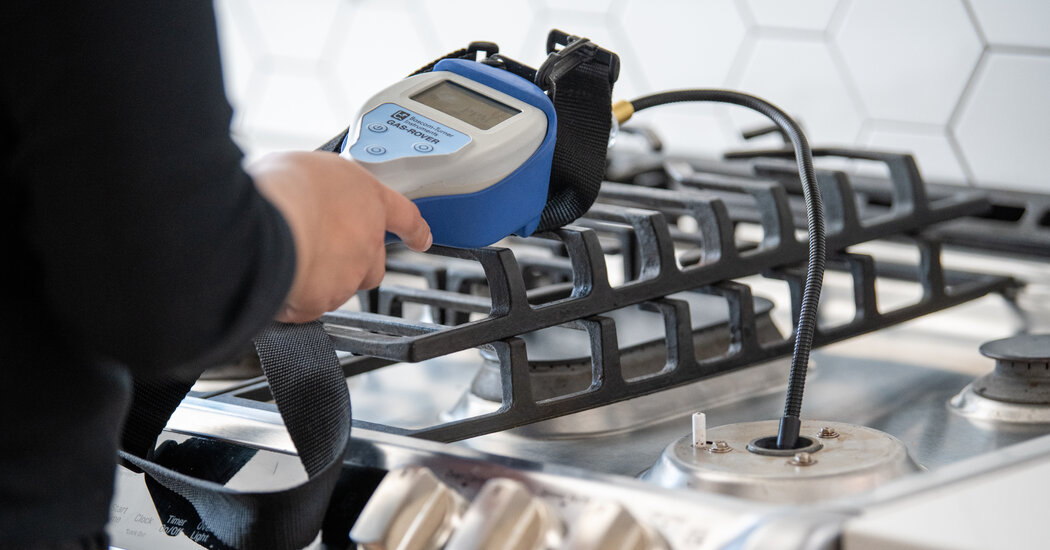
Researchers conducted a hazard identification study, which evaluated whether air pollutants are present in unburned natural gas, but did not evaluate human exposure to those pollutants. Between December 2019 and May 2021, researchers collected over 200 unburned natural gas samples from 69 unique kitchen stoves and building pipelines across Greater Boston. From these samples, researchers detected 296 unique chemical compounds, 21 of which are federally designated as hazardous air pollutants. They also measured the concentration of odorants in consumer-grade natural gas — the chemicals that give gas its characteristic smell — and found that leaks containing about 20 parts per million methane may not have enough odorant for people to detect them. The samples were taken from the territories of Eversource Gas, National Grid, and the former Columbia Gas, who together provide service to 93% of Massachusetts gas customers.
Key findings: Consumer-grade natural gas supplied to Massachusetts contains varying levels of at least 21 different hazardous air pollutants, as defined by the U.S. EPA, including benzene, toluene, ethylbenzene, xylene, and hexane. Concentrations of hazardous air pollutants in natural gas varied depending on location and time of year, with the highest concentrations found in the winter. Based on odorant concentrations, small leaks can be undetectable by smell — leaks up to 10 times naturally occurring levels may be undetectable, equating to a methane concentration of about 20 parts per million.When gas leaks occur, even small amounts of hazardous air pollutants could impact indoor air quality because natural gas is used by appliances in close proximity to people. Persistent outdoor gas leaks located throughout the distribution system may also degrade outdoor air quality as precursors to particulate matter and ozone.
“This study shows that gas appliances like stoves and ovens can be a source of hazardous chemicals in our homes even when we’re not using them. These same chemicals are also likely to be present in leaking gas distribution systems in cities and up the supply chain,” said Jonathan Buonocore, co-author and Research Scientist at Harvard Chan C-CHANGE. “Policymakers and utilities can better educate consumers about how natural gas is distributed to homes and the potential health risks of leaking gas appliances and leaking gas pipes under streets, and make alternatives more accessible.”
The researchers share actions that policymakers and individuals can take to mitigate health risks posed by natural gas used in homes.
Policy Actions: Gas pipeline companies could be required to measure and report more detailed information on the composition of natural gas, specifically differentiating non-methane volatile organic compounds such as benzene and toluene. Gas utility providers could be required to routinely measure and report natural gas odorant content to customers similar to informational postings often produced by interstate gas pipeline companies. State regulations could require direct measurement of leaked, unburned natural gas in ambient air to be included in emissions inventories and to better determine public health risks. The Consumer Product Safety Commission has the authority to set performance standards for gas stoves and ventilation hoods to limit air pollutant emissions. Home inspectors and contractors could be required to perform natural gas-appliance leak detection surveys or to measure for ppm-range methane, similar to radon tests done prior to the completion of a real estate transaction. Given the importance of odorants in detecting gas leaks, federal natural gas odorization regulations could be updated so that natural gas is odorized to meet much lower detection levels than the current 1/5th the lower explosion limit (detectable at ~1% methane).Individual Actions: Because small leaks may evade our sense of smell, getting an in-home natural gas leak detection survey performed by a licensed plumber or heating, ventilation, and air conditioning (HVAC) contractor can verify that no small leaks are present. Increasing ventilation is one of the most accessible and important actions to reduce sources of indoor pollution. Opening windows and turning on a vent that exhausts to the outside when cooking are simple steps that can lower the risk of indoor exposure. If you smell gas, exit the building and then immediately call your gas company to assess whether there is a leak in or nearby your home.
Story Source:
Materials provided by Harvard T.H. Chan School of Public Health. Note: Content may be edited for style and length.

Read more →

Gas Piped Into Homes Contains Benzene, Other Risky Chemicals, Study Finds

While the concentrations are low, the chemicals are potentially dangerous and some are linked to cancer risk, the researchers found.The natural gas delivered to homes contains low concentrations of several chemicals linked to cancer, a new study found. Researchers also found inconsistent levels of odorants — substances that give natural gas its characteristic “rotten egg” smell — which could increase the risk of small leaks going undetected.The study, which was published in the journal Environmental Science & Technology, adds to a growing body of research that links the delivery and use of natural gas to detrimental consequences for public health and the climate.Most prior research has documented the pollutants present where oil and gas extraction takes place, but there are “fewer studies as you work your way down the supply chain,” said Drew Michanowicz, the lead author of the study, looking at “where we actually use it, in our homes.”Over 16 months, researchers collected 234 samples of unburned natural gas from 69 homes in the Boston metropolitan area that received natural gas from three suppliers. They found 21 “air toxics” — an Environmental Protection Agency classification of hazardous pollutants known or suspected to cause cancer, birth defects or adverse environmental effects — including benzene, which was detected in 95 percent of the samples.Short-term exposure to high levels of benzene in particular could lead to drowsiness, dizziness, headaches and irritation of the eyes and skin, according to the Centers for Disease Control and Prevention. Longer-term exposure can increase the risk of blood disorders and certain cancers like leukemia.The highly flammable chemical is colorless or light yellow, and is found in products made from coal and oil including plastics, resins and nylon fibers, and also some types of rubbers, dyes and pesticides. It is also regularly found in vehicle exhaust, tobacco smoke and gasoline.The concentrations of benzene that the researchers found in the natural gas samples were “much lower compared to the amount in gasoline,” Dr. Michanowicz said on Friday during a conference call with reporters. Even so, he said, the finding is concerning since “natural gas is used so widely in society and in our indoor spaces.”Americans spend more than 90 percent of their time indoors, according to the E.P.A., where concentrations of some pollutants can range from two to five times as high as outdoor concentrations.Benzene is a carcinogen, and exposure over time adds up, leading some experts to suggest that there is no safe level of exposure.The researchers said that the goal of their study was to identify the presence and concentration of certain hazards, and that more research is needed to understand the health risks.“The largest sources of benzene in most people’s lives are gasoline from cars and smoking,” said Rob Jackson, an earth scientist at Stanford University who did not work on the study. “On the other hand, any unnecessary benzene in your home is just too much.”The unburned natural gas also contained inconsistent levels of odorants, or substances that give off a perceptible smell, the researchers said. Methane, the main component of natural gas, is odorless, so odorants are routinely added to help detect leaks.Understand the Latest News on Climate ChangeCard 1 of 5Logging.

Read more →

When Abortion Pills Were Banned in Brazil, Women Turned to Drug Traffickers

With Roe v. Wade overturned, states banning abortion are looking to prevent the distribution of abortion medication. Brazil shows the possible consequences.RIO DE JANEIRO — Last November, Xaiana, a 23-year-old college student in northern Brazil, began exchanging text messages with a drug dealer in the south of the country. Following the dealer’s instructions, she transferred 1,500 reais ($285), her living expenses for several months. Then, she waited three agonizing weeks for the arrival in the mail of a blister pack of eight unmarked white pills.When she took them, they had the effect she was hoping for: She underwent a medication abortion at home with her boyfriend, ending an eight-week pregnancy.But Xaiana kept bleeding for weeks, an unusual but not rare complication. “It was like a murder scene every time I had a shower,” she said. She was afraid to get help because it is illegal for a woman in Brazil to use the drug, misoprostol, to trigger an abortion. If she went to a clinic, she feared, the staff might figure out she had induced the abortion and report her. The penalty for having an abortion in Brazil is up to three years in jail.“It’s the loneliest feeling I’ve ever felt in my life,” she said, asking to be identified only by her first name out of fear of prosecution.After seven weeks, she went to a women’s clinic and admitted to having terminated a pregnancy. She was given a simple cauterization, and no one reported her.Proponents of abortion rights in the United States have suggested that a post-Roe America would differ in a key way from the era before abortion was legalized nationally. Women seeking abortions today have the option of a medical termination, using hormone pills to trigger the body to expel the fetus in private, a practice approved by the Food and Drug Administration.But the wave of state trigger laws that have begun to take effect after the Supreme Court’s ruling overturning Roe on Friday, bar all abortion, including medication abortions. To get the pills legally, women will have to travel to states where it is allowed, for a medical consultation, even if it is by video or phone, as required by the F.D.A. The trajectory of access to abortion pills in Brazil may offer insight into how medication abortion can become out of reach and what can happen when it does.While surgical abortion was the original target of Brazil’s abortion ban, the proscription expanded after medication abortion became more common, leading to the situation today where drug traffickers control most access to the pills. Women who procure them have no guarantee of the safety or authenticity of what they are taking, and if they have complications, they fear seeking help.Boxes of misoprostol were stored in a pharmacy cabinet at a university hospital in Recife, Brazil. The hospital was one of the few hospitals to perform abortions under the exceptions allowed by Brazilian legislation.Dado Galdieri for The New York TimesToday, black market misoprostol, brought in from India, Mexico and Argentina, is sold for anywhere from about $200 to $400 for the eight tablets recommended for an abortion, compared with less than $15 for a 60-pill bottle in the United States. It took a New York Times reporter under one minute of asking to find someone willing to sell eight pills for $300, in a Rio neighborhood known for the sale of black market goods.“You buy it from a dealer, you don’t know what it is, the whole process is made frightening, it’s secret, it’s not a medicine any more,” said Maira Marques, who is the director of campaigns for an abortion access advocacy organization called Milhas pelas Vidas das Mulheres. “This is supposed to be the straightforward, less complicated way to have an abortion but now instead it’s buying contraband.”It has been illegal in Brazil to have an abortion since 1890, although exceptions were added in 1940 for women who were pregnant as a result of rape or incest and in cases where a woman’s life was endangered by the pregnancy; more recently, access was added for women carrying a fetus with anencephaly (missing parts of its brain). But starting in the late 1980s, word spread a that an ulcer medication called Cytotec could “bring on a period.” In fact, it was Brazilian women’s experience with off-label use of the drug that led to research and eventual global adoption of medical abortion as a lower-cost, less invasive way to end pregnancies that could increase access, especially in developing countries.Cytotec is misoprostol, one half of the World Health Organization’s recommended combination of hormones (the other is mifepristone) to carry out a medication abortion. Mifepristone has never been approved for use in Brazil, and women, unaware of the drug, do not seek it on the black market. Misoprostol is usually enough to induce a safe abortion; a study published in The Lancet found that 8 percent of women who used misoprostol to terminate a pregnancy experienced complications, including bleeding and abdominal pain requiring medical attention.The drug was sold in pharmacies without a prescription until 1991, and then it was regulated to require prescription, although the prescription rules were lax.The availability of the pills sharply reduced the number of women turning up in hospitals with the life-threatening infections or hemorrhages from abortions they had tried to induce with the castor root or bleach or coat hangers, said Dr. Ana Teresa Derraik, an obstetrician-gynecologist in Rio. “It was a big relief for those of us who didn’t think women should be punished like this.”Brazilian President Jair Bolsonaro attending a gathering of anti-abortion demonstrators in Brasilia in 2020. Sergio Lima/Agence France-Presse — Getty ImagesBut misoprostol was becoming a focus of attention for anti-abortion campaigners in Brazil and beyond. In 1998, Brazil’s health regulatory agency, ANVISA, included misoprostol on the list of controlled drugs, alongside opiates, which meant a prison sentence of up to 15 years for anyone caught importing or buying it. International pharmaceutical companies that made misoprostol were hit with boycotts and stopped producing it; a small domestic company took over manufacturing a generic version of the drug to sell only to the Ministry of Health for hospital use.In 2006, the law prohibiting misoprostol distribution was strengthened to ban selling or publishing information about the drug on the internet.When Jair Bolsonaro was elected Brazil’s president in 2018, with the enthusiastic support of Brazil’s fast-growing evangelical Christian community, access became even more scarce.International reproductive rights organizations such as Women on Web used to mail abortion pills to Brazil, and local feminist groups used to source them and supply them, along with instructions for safe use, said Juliana Reis, director of Milhas. Now, they have almost entirely stopped.“Because of the political climate, it’s much more difficult to get safe products and to get proper counseling, because the networks that used to do that are much more afraid,” said Sonia Corrêa, a researcher of reproductive health technologies in Rio.New guidelines issued by the Ministry of Health this month include the assertion that “inducing abortion by telemedicine, using drugs from the special control list, can cause irreversible damage to the woman.”Dr. Helena Paro, a gynecologist in the city of Uberlândia, who introduced telemedicine consultations for legal abortion patients during the Covid pandemic, called the guideline “completely ideological and contrary to the scientific evidence.” The W.H.O. considers the practice safe.Juliana Reis of the of the advocacy organization Milhas pelas Vidas das Mulheres, held an artwork titled “Padrão sobre Corpos,” by Agrade Camiz, prints of which were sold to raise money for safe abortions.Dado Galdieri for The New York TimesIn response to questions from The Times, the ministry said the guidelines reflect that “misoprostol is authorized only in hospital establishments, that its use outside this environment is not allowed” by law and that use of misoprostol for abortion via telemedicine meant women would not have “timely access to health services that can manage the possible clinical or surgical complications resulting from the procedure.”Dr. Derraik says she has seen an intensification of scrutiny for use of misoprostol in the hospitals where she offers abortion services to women who qualify as well as a simultaneous increase in the level of investigation of women who report miscarriages.Other women have fallen into police traps. In 2012, a Rio sociologist decided she could not continue her pregnancy — she was already struggling to parent a 12-year-old with intense special needs. The sociologist (who asked to be identified by her first initial, A., because her family does not know about her abortion) went to her gynecologist.“He said, ‘This medication exists, Cytotec, but I can’t give it to you: You’ll have to buy it from the black market’,” she recalled.She found a website, ordered the drug and paid several months’ salary for it, but the package never arrived: She was tracking it online, and watched it stall when it entered the country.She found a drug trafficking contact through a friend of a friend and bought a second batch, took the drug at home and ended the pregnancy with no complications — her only regret being that she had to be alone through a frightening process.A year later, a letter arrived summoning her to the police. She thought it was about her car, which had been stolen the year before. But when she arrived, a male officer asked her, “Do you know what Cytotec is?”She said she did. He asked if she had bought it. She could see he had her credit card information from the purchase on the paper in front of him, so she admitted she had.He asked if she had carried out the abortion. She replied, “Of course not — the medication never arrived.”The pharmacy of the university hospital in Recife. Doctors in the hospital have taken many extraneous steps when using the drug “because of the intense paranoia.”Dado Galdieri for The New York TimesIt turned out that police were monitoring the website where she bought misoprostol, traced the package and said they would charge her with unlawful purchase of a controlled substance. After several years of hearings, she entered an alternative sentencing program and performed 60 hours of community service. She continues to have to report her whereabouts to police and cannot leave her state.Women’s reliance on the black market for access to medication abortions means they may not follow best medical practice. When C., a 24-year-old teacher in Recife, bought misoprostol from a drug dealer last year, she searched Google to figure out how to take it. “Because it was illegal, there was no information about how to take it or what to take,” she said.Her search found recommendations to insert the tablets in her vagina, as a doctor would if she were in a clinic, but cautioned that traces might be left behind and give her away if she wound up in hospital; instead, she dissolved them under her tongue, a method that also works but less quickly.C., who asked to be identified only her middle initial out of fear of prosecution, bled for weeks after and wanted to ask her mother, a gynecologist, for advice. But her mother is an anti-abortion activist. Finally, C. said she thought she had miscarried, and her mother took her to see a colleague who performed a dilation-and-curettage under anesthetic.“When I was having the curettage, I had to keep saying over and over to myself, ‘Don’t say anything, you can’t say anything’ — it was torture,” she said. “Even though I was totally sure that I wanted an abortion, I had no doubts, you still feel like you’ve done something wrong because you can’t talk about it.”The restriction on misoprostol has complicated regular obstetric care, which uses on the drug for induction of labor, said Dr. Derraik. At the Rio public maternity hospital where she is medical director, a doctor must fill out a request in triplicate for the drug, have it signed by Dr. Derraik, take it to the pharmacy where the supervisor must also sign before taking it out of a locked cabinet, and then the physician must administer the drug with a witness, to ensure it is not diverted for black market sale.“Not all of these steps are officially required,” Dr. Derraik said. “But hospitals do them because of the intense paranoia around the drug.”

Read more →

Covid-booster response hope for most vulnerable

Published2 days agoSharecloseShare pageCopy linkAbout sharingImage source, Getty ImagesMore than a million vulnerable people could improve their protection against Covid by taking a short break from medication after a booster jab, a trial suggests.It found stopping the common immune-suppressing drug methotrexate for two weeks doubled spike antibody levels for up to 12 weeks.Some people experienced disease flare-ups but no impact on quality of life. Research is needed to find out if a similar approach works for other drugs.Patients should always consult their doctor or specialist hospital team before pausing their medication, scientists writing in the Lancet Respiratory Medicine said.Until now, UK guidance has been to continue taking methotrexate after a Covid booster – but in the US, patients have been advised to stop for a week.Serious illnessProf Abhishek Abhishek, from the University of Nottingham, who led the trial, said he was “extremely pleased” with the initial results.Drugs such as methotrexate are good at controlling autoimmune inflammatory conditions, because they dampen down the body’s immune response.But this means they also weaken the body’s response to Covid vaccines and its ability to fight off infections.”Implementing these results could vastly improve the protection provided by boosters against Covid-19, for millions of people living with these conditions,” Prof Abhishek said.”Covid-19 has left them vulnerable to serious illness. “We hope this evidence is the next step in helping them with their lives going forward.”‘Too risky’However, Prof Neil Mabbott, from the University of Edinburgh, said unanswered questions included whether this could reduce serious Covid illness and the risk of admission to hospital.”This type of treatment should only be taken under medical advice and may in some circumstances be too risky for some patients with serious conditions or in those with complex diseases,” he said.Of the 2.2 million people in the UK advised to shield themselves from coronavirus during the first phase of the pandemic, about 1.3 million are regularly prescribed methotrexate for conditions such as rheumatoid arthritis or psoriasis.In the trial, 254 adults, from 26 NHS hospitals across England and Wales, who had just had a Covid booster jab, were equally divided and asked to either:stop taking methotrexate for two weekscontinue using it as normalFour weeks later, levels of spike antibodies in the blood – which block the virus from infecting cells inside the body – were twice as high in the first group as the second group, and they remained noticeably higher after 12 weeks.Some disease symptoms temporarily returned after a month but this had no negative impact on their general health.’Good outcome’The research team, from Nottingham, the University of Manchester, Imperial College London, the University of Oxford and Queen Mary University of London, now plan to measure T-cell responses – the part of the immune system that signals longer-lasting protection against severe disease – six months on.Rosemary Boynton, professor of immunology and respiratory medicine at Imperial College London, said: “Slower waning is a very good outcome for these patients.”This has important implications for future vaccination strategy in this immunosuppressed patient group.” Dr Benjamin Ellis, consultant rheumatologist and senior clinical advisor at charity Versus Arthritis said hundreds of thousands of people on these medications for arthritis had to shield from Covid at the height of the pandemic.He said that for most people, pausing methotrexate for a couple of weeks was “probably a good idea” but further research was needed “to really understand if this is necessary”.”People should never pause their immune system medication without checking first with their health-care team,” Dr Ellis added.More on this storyFirm behind Covid vaccine to set up base in UK22 June

Read more →

Why young Arab men turn to anti-impotency drugs

Published28 JuneSharecloseShare pageCopy linkAbout sharingImage source, Getty ImagesIn his apothecary shop in the historic neighbourhood of Bab al-Shaaria in the heart of Cairo, herbalist Rabea al-Habashi shows what he calls his “magical blends”. Mr Habashi has made a name for himself selling aphrodisiacs and natural sexual enhancements in the Egyptian capital. For the past few years, though, he has seen a change in what his customers most want.”Most men are now going for the blue pills which they get from the Western companies,” he says.According to several studies, young Arab men have been increasingly using drugs such as sildenafil (known commercially as Viagra), vardenafil (Levitra, Staxyn), and tadalafil (Cialis). Despite the evidence, perhaps unsurprisingly most young men the BBC spoke to on the streets of Egypt and Bahrain denied using medicine for erectile problems or even knowing of them. Some even refused to talk about the issue in the first place, as they deemed it “contrary to the morals of society”.In fact, according to a 2012 study Egypt was the second highest consumer of anti-impotence drugs per capita in the Arab world. Saudi Arabia topped the list.Al-Riyadh, the Saudi newspaper which published the report, estimated at the time that Saudis spent $1.5bn (£1.23bn; €1.43bn at today’s exchange rate) annually on sexual enhancement pills. Saudi Arabia’s consumption was about 10 times higher than that of Russia, whose population was then five times larger, it said.More recently, the results of a study by the Arab Journal of Urology showed that 40% of young Saudi male participants had used a Viagra-like drug at some point in their lives.Egypt still ranks highly. According to state statistics from 2021, sales of anti-impotence drugs there amount to about $127m a year, which is equivalent to 2.8% of the whole Egyptian pharmaceuticals market.Male pressuresInevitably, some want a piece of the action. In 2014, an anti-impotence drug called Al-Fankoush appeared in Egyptian grocery stores in the form of a chocolate bar. Al-Fankoush was sold for one Egyptian pound, ($0.05; £0.04; €0.04 at today’s exchange rate). Shortly after it was brought to market, Al-Fankoush’s distribution was halted and its producer arrested by security forces after local media reported that it had been sold to children.The use of anti-impotence drugs is known to be more prevalent among older than younger men. In Yemen, however, data from the ministry of health shows they are mostly used by men between the ages of 20 and 45. Local reports suggest the use of Viagra and Cialis as recreational party drugs has become a phenomenon among young men since the start of the civil war between the rebel Houthi movement and the Saudi-backed government in 2015.Mohamed Sfaxi, a Tunisian professor of urology and reproductive surgery, stressed in an interview with the BBC that such drugs were “not stimulants” and were there to treat conditions that were in most cases “afflicting the elderly”.Talking about sex no longer so taboo in the Arab worldMeanwhile, an expert on sexuality in the Middle East suggests young Arab men are turning to anti-impotency pills because of the prevailing culture.”The reason may refer to a bigger issue young Arab men are facing,” explains Shereen El Feki, an Egyptian-British journalist and author of Sex and the Citadel: Intimate Life in a Changing Arab World.Responding to the results of a major 2017 UN-backed survey on gender equality in the Middle East, Ms El Feki explains: “Almost all male participants were fearful of the future and how they would provide for their families. Many men talked about the enormous pressure of being a man while women described “how men are not men anymore”.”As what it means to be a man is under pressure and sexual potency is woven into the culture of masculinity, there is more stress on sexual performance,” she says.Ms El Feki attributes the stress on performance in part to misconceptions and inflated expectations created by pornography “which changes young men’s notions of what constitutes ‘normal’ when it comes to virility”.Historical perceptionsWhile the use of medications for sexual needs might be considered a modern phenomenon in Arab societies, the consumption of aphrodisiacs has been part of popular culture throughout Arab history.Ibn Qayyim al-Jawziyya, an important 14th Century Islamic scholar and writer, included in his book series Provisions for the Hereafter a collection of herbal recipes aimed at enhancing sexual desire.Shereen El Feki suggests that in Arabic tradition and the Islamic heritage “women are seen historically as much more potent and have more sexual drive than men”, while men feel the need to “improve their sexual performance to keep up”.This idea is reflected during the period of the Ottoman Empire, when writer Ahmed bin Suleiman wrote Sheikh’s Return To Youth at the request of Sultan Selim I, who ruled from 1512 to 1520. The book was an encyclopaedia of medicines and herbal recipes to treat sexual diseases and stimulate male and female sexual desires.Hundreds of years later many young Arab men are still turning to remedies, and the market for them is vibrant.More on this storyThe Arab country turning to ‘female Viagra’18 January 2019Only quarter of Mid-East men back equality2 May 2017What is ‘female Viagra’? – in 60 seconds19 August 2015

Read more →

El Salvador's abortion ban: 'I was sent to prison for suffering a miscarriage'

SharecloseShare pageCopy linkAbout sharingThe news from the US that women face tighter restrictions on abortion has been felt in El Salvador, which itself has very strict laws preventing access.In February, four women sat down before the full glare of El Salvador’s press. Between them, they had served nearly 50 years in prison. Their crime was to have the misfortune of suffering a miscarriage – in a country with one of the strictest abortion laws in the world. Among them was Elsy. In June 2011, Elsy was pregnant and working as a domestic worker in her hometown. She remembers going to the toilet at work, where she apparently passed out. When she came to a little later, she was surrounded by police officers. Her baby was gone. Her boss had reported her for terminating the pregnancy. At her trial, Elsy was sentenced to 30 years for aggravated homicide. She served 10 before campaigners managed to get her sentence shortened. Image source, Getty Images”I felt terrible in prison, all I could think of was the 30 years,” Elsy told the BBC. “I thought I’d never see my mother or any of my family again.” Elsy tried to distract herself in jail. She got her high school diploma, participated in workshops and volunteered at the prison church. Yet it wasn’t enough to stop her from entering a dark place in her head. “I just kept thinking, ‘Why? Why did those who testified against me do this?'” What happens now Roe v Wade has been overturned?The world reacts to US abortion ruling Now back living with her family, Elsy says her sentence was simply an “injustice which happens” in El Salvador. She points out there are many still going through what she did. As recently as May, a woman identified as “Esme” was sentenced to 30 years, also for aggravated homicide following a miscarriage. But protests have been difficult since the country’s controversial president, Nayib Bukele, imposed a state of exception giving the police wide-ranging powers of arrest. Mariana Moisa is one of the leading women’s rights activists in El Salvador. She is part of the “green wave” abortion rights movement sweeping across Latin America.Ms Moisa says their battle isn’t just to free the women or even change the law, but to shift attitudes in society. “We have to keep working, it depends on us and not the political parties”, she says at her organisation’s headquarters in San Salvador. “We have to face up to our reality and promote real cultural changes.” Inside a US abortion clinic on its last dayThe church in Texas helping women get an abortionOver in the United States, the US Supreme Court has overturned a ruling that made abortion a constitutional right. Campaigners like Ms Moisa fear this will strengthen the hand of conservatives across Central America. The US would do well to look south, she warns, to see how an outright ban can lead to “denying women their freedom in these circumstances”. Image source, Getty ImagesChanging attitudes in El Salvador won’t come easily, though. Padre Vito Guarato is a home for abandoned children in San Salvador, many of whom have some form of disability. Five-year-old resident Ana Lucia has microcephaly, where children are born with significantly smaller heads, possibly due to infection with the Zika virus. Lying in her cot, surrounded by donated teddy bears, Ana Lucia needs round-the-clock attention. Her carers do everything they can to provide her with a comfortable and dignified life.But in truth, with no option to abort in El Salvador, some parents see little choice but to abandon. “I think the mothers should assume their responsibility”, says Rosa Evelyn, one of the managers at the church-run children’s home.”If God bestowed upon you the virtue of becoming a mother, then you must be one for as long as God allows it,” she says. It’s a view shared by many in this traditionally Catholic nation. What’s more, the fastest-growing religion in Central America today is evangelical Christianity. As its reach grows, so too does its political clout, with evangelical values and views increasingly present inside parliament. Guillermo Gallegos, one of the vice presidents of the national assembly, is staunchly anti-abortion. He insists decriminalisation would never pass the first legislative hurdle, “even where the mother’s life is at risk”. “In any case where that little creature still has life,” he tells me, “then I lean towards saving it over saving the mother”. In a national address on the anniversary of his third year in office, President Bukele applauded a plan, led by his wife, to make childbirth safer in El Salvador’s public hospitals. Abortion, though, remains strictly off limits, even in cases of incest or rape – an entrenched view now bolstered by the ruling of the US Supreme Court. More on this storyUS court may overturn abortion rights, leak suggestsCan one country’s abortion law change a continent?Honduras moves to cement strict abortion lawThousands of women in El Salvador march for rights

Read more →

The abortion clues that can hide on your phone

SharecloseShare pageCopy linkAbout sharingImage source, Getty ImagesAfter the Supreme Court overturned citizens’ constitutional right to abortion in the US, there has been concern about data protection, particularly in the 13 states which have already moved to make ending a pregnancy illegal.But what sort of data might incriminate someone, how could the authorities get hold of it, and what are the tech firms doing?Digital tracesGina Neff, professor of technology and society at University of Oxford, tweeted the day after the ruling: “Right now, and I mean this instant, delete every digital trace of any menstrual tracking.”Her message has so far received more than 200,000 likes and been retweeted 54,000 times.Period trackers are used to help women predict when their next period is likely to be, and are often used to either try to prevent pregnancy or to try to conceive.Image source, Google Play StoreLike a number of other high-profile apps, Natural Cycles, which is billed as a digital form of contraception, insisted last month that all the data it stored was “safe and will be protected”.Period apps data warning over US Roe v Wade caseHowever, on Monday it told the BBC it is working on “creating a completely anonymous experience for users”.”The goal is to make it so that no-one – not even Natural Cycles – can identify the user,” it said.That sounds like it is considering encryption. Speaking of which, how about messaging services – that confidential exchange between two close friends that feels so private at the time?The use of end-to-end encryption messaging services such as WhatsApp and Signal (Telegram is not by default encrypted, although it can be) to discuss sensitive issues is generally preferred by security experts and privacy campaigners.Image source, ReutersThe firms which run them cannot see the content of the messages themselves, and do not receive or store them – only the sender’s and recipient’s devices are able to decode them.Can my device be seized?However, this is only useful if those devices are themselves not taken away or unlocked by anybody else.Generally in the US, the police need a warrant to search an electronic device such as a phone or laptop, just as they would to search a house. Broadly speaking, the protection here comes under the Fourth and Fifth Amendments. However, there are some exceptions. Digital rights group the Electronic Frontier Foundation says US police have a right to search without a warrant if they “have probable cause to believe there is incriminating evidence in the house, or on an electronic device that is under immediate threat of destruction”. Under the Fifth Amendment, which is the individual’s right not to incriminate themselves, a person can refuse to unlock a device even if it is taken, but the reality is blurry, according to various lawyers.”Courts have reached conflicting conclusions as to whether and when the compelled decryption of a password – or biometric identifier-protected device runs afoul of the Fifth Amendment,” wrote the Congressional Research Service in a report in 2020.The power of subpoenaAnd if the device itself is not seized – a subpoena from the authorities to the tech firms, asking for an individual’s data, is a powerful tool. Giants like Google and Apple not only run back-up and cloud services for their customers using their own storage, but also collect their own separate user data, including internet activity and location.Google says that even after something has been deleted by a user and is therefore not visible to them – such as a browser history – some of it may still be retained “to comply with legal or regulatory requirements”.If these firms receive an official demand, they can challenge it, but the pressure is on them to comply.In 2021, the New York Times reported that in the first six months of 2020, Apple challenged only 4% of requests for customer account data. and generally complied with 80-85%.According to Google’s transparency report, it supplied “some data” in 82% of cases requesting information in the first six months of 2021. Of almost 51,000 cases, 20,701 were subpoenas and 25,077 search warrants.Tech firms tight-lippedIs this the time for tech firms to reconsider their data practices?Last month, a number of senior members of the US Congress, including Elizabeth Warren and Bernie Sanders, signed an open letter to Google asking it to collect and store less data about its users, including location information, out of concern that it could be used to bring about abortion prosecutions.”No law requires Google to collect and keep records of its customers’ every movement,” they wrote.So far, the tech firms have not commented on whether they plan to make any changes to the way in which they collect and manage customer data in light of the ruling. The BBC has asked for this information.Image source, Getty ImagesWhat many large US firms – including Facebook owner, Meta, as well as Disney and Amazon – have said is that they will fund expenses for employees who have to travel to another state for medical care which is not available where they are, including abortion.US firms pledge to pay abortion travel expensesThere is some concern that people who live in a state where abortion is banned but travel out of state to have one, may face prosecution when they return. It is unclear whether this could be the case, but it is not routinely applied to other laws which vary from state to state, such as gambling.Dr Stephanie Hare, author of the book Technology is not Neutral, says that while the companies’ commitment is “a welcomed first step”, it’s not enough.”That’s only going to help a very small amount of people, assuming some of them want to share this information with their employer in the first place,” she said. “What we need to know is what these firms are going to do to limit data collection on all users, and how they can prevent user data from being used against them in their healthcare choices.”So how can you protect their data if you are worried?Image source, Digital Defense Fund The EFF has published a privacy guide which includes this advice:run a separate browser, phone number and email address for reproductive matters minimise location services when deleting data, make sure the deleted folder is also emptied As for researching abortion online, Prof Alan Woodward, from University of Surrey, believes it’s unlikely that law enforcement will speculatively begin to seek this sort of personal data. “They’re not likely to be going after people who are thinking about having an abortion,” he said.”But if they are gathering evidence after the event, if they have arrested someone – that evidence could then include browser history, emails and messages.”More on this storyWhat happens now Roe v Wade has been overturned?The battle over end-to-end encryptionUS firms pledge to pay abortion travel expensesPeriod apps data warning over US Roe v Wade case

Read more →

What's it like living with an invisible disability?

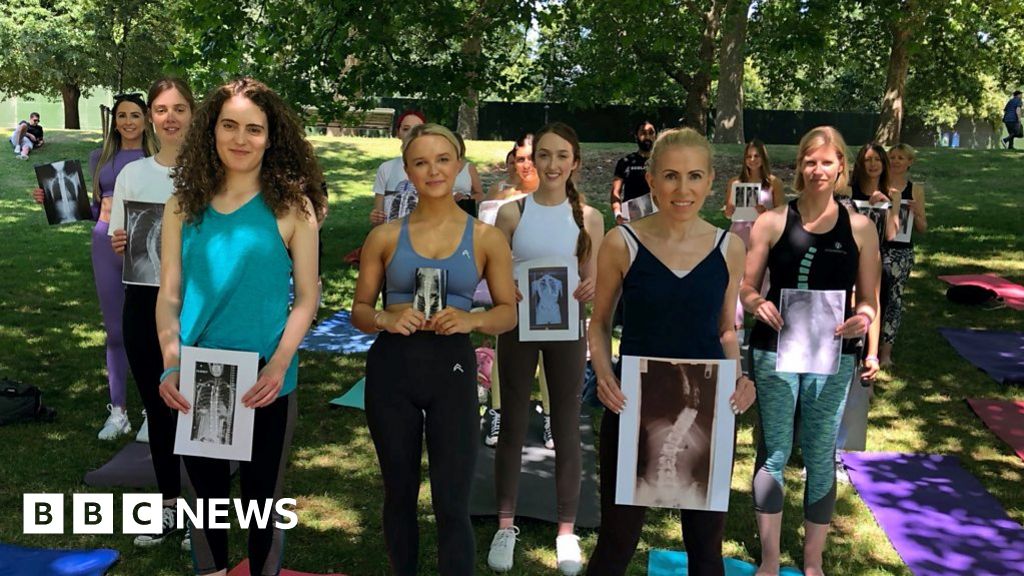
What’s it like living with a chronic condition? BBC London’s Gem O’Reilly has scoliosis and wanted to look into what it means to have an invisible disability.Chronic conditions like scoliosis make up about 18% of non-visible disabilities in the UK, according to a survey by Hidden Disabilities UK.Emily Hale had to have spinal fusion surgery for her scoliosis, now she’s helping others through Pilates and pain management.Video by Gem O’Reilly

Read more →