Major UK project launched to tackle drug-resistant superbugs with AI

3 hours agoShareSaveJames GallagherHealth and science correspondentShareSaveImperialThe UK is to use artificial intelligence (AI) to tackle the rising numbers of infections that have become resistant to treatment.The project – a collaboration between the Fleming Initiative and the pharmaceutical company GSK – is a battle between superbugs and supercomputers.It aims to speed up the discovery of fresh antibiotics and deliver new ways of killing other threats, including deadly fungal infections.Overusing antibiotics drives bacteria to evolve resistance to infections, which means new drugs are a priority.Drug-resistant infections are a growing problem – one known as “the silent pandemic”.Superbugs are now thought to directly kill around one million people a year worldwide and contribute to the deaths of millions more. Those figures are predicted to continue to grow. The collaboration will spend £45m on six fields of research.”This represents the single biggest investment in a UK antibiotic project I’m aware of,” says Dr Andrew Edwards from Imperial College London.He will be targeting AI at a tricky group of infections, called Gram-negative bacteria, that includes well known bugs such as E. coli and Klebsiella pneumoniae.These species have an extra outer layer they use to control what gets in and out of a bacterium. Gram-negative species can block antibiotics from getting in and rapidly pump out those that penetrate the bacterial defences – making them tough to treat.ImperialThe team will be performing experiments using molecules with different chemical structures and recording what can get inside and stay inside these bacteria. This data will then be fed into the AI so it can learn what it takes for an antibiotic to persist inside a Gram-negative bacterium. “The sort of AI that people are using routinely today is built on the sum total of information on the internet – it doesn’t just produce answers out of thin air,” Dr Edwards told the BBC.”If you want to make progress, you have to have data,” he says.The aim is to convert years of research, if done by hand, into a simple job for a computer. Then once the chemical code has been cracked, it will guide scientists on how to modify potential antibiotics to bypass the organism’s defences. Dr Edwards said there were cases coming out of the conflict in Ukraine now where infections could not be treated with any antibiotic. “That means that limbs have to be amputated. I would say it’s a glimpse into the future, but it’s happening right now, it’s a pretty horrific thought.”So can AI outpace bacterial evolution?”That’s a very good question, I think what we’ve seen is that if we can get a few good antibiotics, then we’ll be back on on the front foot and then I think we can keep things in check,” says Dr Edwards. ImperialThe Fleming Initiative is named after Alexander Fleming, who discovered penicillin in 1928 and started the antibiotic age. Even by the time he won the Nobel Prize in Physiology or Medicine 80 years ago, he had warned of the dangers of resistance. Alison Holmes, the director of the Fleming Initiative, said antibiotics were “one of the greatest health resources that has been squandered” and we should all think of how much we owe to antibiotics. “Whether it’s that time we stepped on a nail and or got cellulitis following an insect bite or our C-section wound, or our UTI, or our STI – we all depend on them,” she said.The collaboration will also use AI like a weather forecast to predict how superbugs emerge and spread. And the project is also looking beyond bacteria to use AI to tackle the rise of deadly fungal infections, starting with Aspergillus mould.Its spores are normally harmless, but can become deadly in people with weakened immune systems. Tony Wood, the chief scientific officer at GSK, said: “We will open up new approaches for the discovery of novel antibiotics as well as anticipate and outpace the development of resistance to transform the treatment and prevention of serious infections.” Researchers in the US and Canada have already started using AI to shortlist drugs or even design antibiotics from scratch to target drug-resistant bacteria like gonorrhoea.Data for the UK suggests nearly 400 new antibiotic-resistant infections are being detected every week.

Read more →


A surprising CBD advance calms pain without side effects

Many people use CBD-infused oils and lotions believing they offer an easy and relatively low-risk way to ease discomfort. However, scientists still have a limited understanding of how CBD actually interacts with the nervous system.
The popularity of cannabis-based products has risen sharply over the past ten years. One major reason is the 2018 federal decision to remove hemp from the Controlled Substances Act, which allowed hemp-derived CBD to be legally sold and widely distributed. As a result, CBD is now commonly available in oils, creams, and cosmetic items. It is widely accepted that CBD does not cause a ‘high’, but its effects within the human brain and body remain poorly understood. At this time, the Food and Drug Administration only approves CBD as an additional treatment for certain types of epilepsy, and it advises against its use during pregnancy.
“We need to understand more about this compound, what mechanisms it interacts with in the brain, its impact on the body, and whether it is a potentially safer solution for treating the chronic pain epidemic,” said Kuan Hong Wang, PhD, professor of Neuroscience and member of the Del Monte Institute for Neuroscience at the University of Rochester. Working with researchers at Harvard Medical School and Boston Children’s Hospital, Wang’s lab recently showed in mice that they could deliver CBD directly to the brain to relieve neuropathic pain without producing harmful side effects. These results were published in Cell Chemical Biology.
A New Way to Deliver CBD to the Brain
The main obstacle for researchers was the blood-brain barrier, a protective system that shields the brain from harmful substances. While essential for brain health, this barrier significantly limits how much CBD can enter the brain, especially because CBD does not dissolve well in water. As a result, very little of the CBD taken in its usual oil form reaches the brain.
To address this challenge, staff scientist Jingyu Feng, PhD, the study’s first author, helped create a specialized delivery method called inclusion-complex-enhanced nano-micelle formulation, or CBD-IN. This approach encloses CBD molecules within water-soluble nano-micelles, which are considered safe for use in foods and medicines.
Tests in mice showed that CBD-IN triggered pain relief within half an hour. Importantly, the mice did not experience the common side effects often linked to conventional pain medications, such as problems with balance, movement, or memory. “The pain relief also lasted through repeated use,” said Feng. “We did not see its effect wear off over time.”
How CBD-IN Affects the Nervous System

With the help of imaging tools and genetic mapping, the researchers found that CBD-IN reduces excessive nerve activity in areas of the brain and spinal cord involved in processing touch and pain. This effect only appeared in regions experiencing abnormal activation, such as after a nerve injury. Healthy neurons were unaffected.
Another unexpected result was that CBD-IN did not rely on the well-known cannabinoid receptors (CB1 and CB2) typically involved when THC or other cannabis compounds act in the body. “Instead, CBD-IN seems to influence broader electrical and calcium signaling in nerve cells, offering a new way to control nerve hyperactivity without triggering the ‘high’ or dependency risks associated with traditional cannabinoids or opioids,” Feng said.
Potential for Treating Chronic Pain and Other Brain Disorders
“The broader implication of this research is that nanotechnology can make natural compounds like CBD more effective and precise,” said Wang, co-senior author of the study. “By enhancing brain delivery and targeting only disease-related neural overactivity, this strategy could open new doors for treating chronic pain and possibly other neurological disorders, such as epilepsy or neurodegenerative diseases, where abnormal nerve activity plays a central role.”
This work was carried out through a collaboration involving the University of Rochester, Harvard Medical School, and Boston Children’s Hospital. Additional contributors include Jessica Page, PhD, and Leeyup Chung, PhD, both co-first authors, and Zhigang He, PhD, co-senior author, from Harvard Medical School. Funding was provided by the National Institutes of Health and the Del Monte Institute for Neuroscience.

Read more →

Chronic pain may dramatically raise your blood pressure

Chronic pain appears to play a meaningful role in raising the risk of developing high blood pressure. How long the pain lasts and where it occurs both influence that risk, and part of the connection is explained by depression and inflammation. Researchers say the results underscore how important effective pain management can be for preventing and controlling high blood pressure, a major driver of cardiovascular disease and death.Chronic Pain Linked to Rising Blood Pressure RiskChronic pain in adults may raise the likelihood of developing high blood pressure, and factors such as where the pain is located, how widespread it is, and whether a person also has depression appear to play important roles. These findings come from new research published today (November 17) in Hypertension, an American Heart Association journal.
An evaluation of health information from more than 200,000 adults in the U.S. showed that individuals who experienced chronic pain throughout their bodies had a higher chance of developing high blood pressure compared to those reporting no pain, short-term discomfort, or pain limited to one region.
“The more widespread their pain, the higher their risk of developing high blood pressure,” said lead study author Jill Pell, M.D., C.B.E., the Henry Mechan Professor of Public Health at the University of Glasgow in the United Kingdom. “Part of the explanation for this finding was that having chronic pain made people more likely to have depression, and then having depression made people more likely to develop high blood pressure. This suggests that early detection and treatment of depression, among people with pain, may help to reduce their risk of developing high blood pressure.”
Understanding High Blood Pressure and Its Dangers
High blood pressure and hypertension occur when blood presses too strongly against vessel walls, increasing the chance of heart attack or stroke. High blood pressure, including stage one or stage two hypertension (blood pressure readings from 130/80 mm Hg to 140/90 mm Hg or higher), affects nearly half of adults in the U.S. It is also the leading cause of death nationally and worldwide, according to the 2025 joint American Heart Association/American College of Cardiology guideline endorsed by 11 other organizations.

Earlier studies show that chronic musculoskeletal pain — pain in the hip, knee, back or neck/shoulder that lasts for at least three months — is the most common form of long-term pain in the general population. The new study examined how the presence, type, and distribution of pain across the body relate to later high blood pressure.
Inflammation and depression are already recognized as contributing factors for high blood pressure; however, Pell noted that no previous research had evaluated how much these elements might explain the connection between long-lasting pain and future hypertension.
How Researchers Collected and Measured Pain Data
Participants completed a baseline questionnaire describing whether they had experienced pain in the previous month that interfered with daily activities. They identified whether the pain occurred in the head, face, neck/shoulder, back, stomach/abdomen, hip, knee or across the entire body. Those reporting pain also indicated whether symptoms had persisted for more than three months.
Depression was assessed through a questionnaire asking about depressed mood, disinterest, restlessness or lethargy during the previous two weeks. Inflammation was measured using blood tests for C-reactive protein (CRP).
Key Findings After Long-Term Follow-Up
After an average follow-up period of 13.5 years, the results showed: Nearly 10% of all participants developed high blood pressure. Compared to people without pain, those with chronic widespread pain faced the greatest increase in risk (75% higher), while short-term pain was associated with a 10% higher risk and chronic pain in a single location was tied to a 20% higher risk. When looking at pain locations, chronic widespread pain was linked to a 74% higher risk of high blood pressure; chronic abdominal pain to a 43% higher risk; chronic headaches to a 22% higher risk; chronic neck/shoulder pain to a 19% higher risk; chronic hip pain to a 17% higher risk; and chronic back pain to a 16% higher risk. Depression (11.3% of participants) and inflammation (0.4% of participants) explained 11.7% of the connection between chronic pain and high blood pressure.

“When providing care for people with pain, health care workers need to be aware that they are at higher risk of developing high blood pressure, either directly or via depression. Recognizing pain could help detect and treat these additional conditions early,” Pell said.
Expert Perspective on Pain, Inflammation and Hypertension
Daniel W. Jones, M.D., FAHA, chair of the 2025 American Heart Association/American College of Cardiology High Blood Pressure Guideline and dean and professor emeritus of the University of Mississippi School of Medicine in Jackson, Mississippi, said, “It is well known that experiencing pain can raise blood pressure in the short term, however, we have known less about how chronic pain affects blood pressure. This study adds to that understanding, finding a correlation between the number of chronic pain sites and that the association may be mediated by inflammation and depression.”
Jones, who was not involved in the study, recommended further research using randomized controlled trials to explore how different pain management strategies influence blood pressure. He highlighted the importance of understanding how Nonsteroidal Anti-Inflammatory Drugs (NSAIDs) such as ibuprofen may raise blood pressure.
“Chronic pain needs to be managed within the context of the patients’ blood pressure, especially in consideration of the use of pain medication that may adversely affect blood pressure,” said Jones.
Study Limitations and Participant Characteristics
The researchers noted that the study population mainly consisted of middle-aged or older white adults of British origin, which means the findings may not apply to people of other racial or ethnic backgrounds or younger age groups. Pain levels were self-reported, and the study relied on clinical diagnostic coding, a single pain assessment, and two blood pressure measurements.
How the Study Was Designed
Study details, background and design: The analysis used data from the UK Biobank, a large population-based project that recruited more than 500,000 adults ages 40-69 between 2006 and 2010. Participants lived in England, Scotland and Wales. This study focused on 206,963 adults. The average age was 54 years; 61.7% were women, and 96.7% were white adults. Overall, 35.2% of participants reported chronic musculoskeletal pain; 62.2% reported chronic pain at one body site; 34.9% had chronic pain at two to three musculoskeletal sites; and 3.2% reported pain at four sites. Compared with participants without pain, those reporting pain were more often women, had less healthy lifestyle patterns, larger waist circumference, higher body mass index (BMI), more long-term health issues, and were more likely to live in areas with higher unemployment, lower home and car ownership, and more overcrowding. Researchers adjusted for factors associated with both pain and high blood pressure, including self-reported smoking status, alcohol intake, physical activity, sedentary time, sleep duration, and fruit and vegetable consumption. Data from the UK Biobank was gathered through a touch-screen questionnaire, interview, physical measurements (height, weight, BMI, waist circumference, blood pressure), and blood samples for cholesterol and blood sugar (hemoglobin A1c). Hospital records were used to identify high blood pressure using standard International Statistical Classification of Diseases and Related Problems and diagnostic codes (ICD-10 codes). The follow-up period was measured from baseline until one of these events occurred: a diagnosis of high blood pressure, the participant’s death, or the end of available follow-up records. The first of these events marked the end of follow-up for each participant.

Read more →

New DNA test predicts dangerous heart rhythms early

Researchers used whole genome sequencing to bring together monogenic and polygenic testing, two methods that are usually separated in both research and clinical practice. Experts say many more physicians should be using genetic testing, although a large portion of the medical workforce is not yet trained to interpret it. The results provide an early foundation for creating targeted treatments tailored to each person’s unique genetic profile.New Genetic Approach to Predicting Dangerous Heart RhythmsIn a new study from Northwestern Medicine, researchers have created a more refined genetic risk score that helps determine whether a person is likely to develop arrhythmia, a condition in which the heart beats irregularly. Arrhythmias can lead to serious medical problems, including atrial fibrillation (AFib) and sudden cardiac death.
The team reports that this improved method strengthens the accuracy of heart disease risk prediction while also offering a broad framework for genetic testing. According to the scientists, the same strategy could be adapted to assess other complex, genetically influenced conditions such as cancer, Parkinson’s Disease and autism.
Building a More Complete Genetic Picture
“It’s a very cool approach in which we are combining rare gene variants with common gene variants and then adding in non-coding genome information. To our knowledge, no one has used this comprehensive approach before, so it’s really a roadmap of how to do that,” said co-corresponding author Dr. Elizabeth McNally, director of the Center for Genetic Testing and a professor of medicine in the division of cardiology and of biochemistry and molecular genetics at Northwestern University Feinberg School of Medicine.
The researchers say their findings could support the development of targeted treatments shaped around an individual’s full genetic profile. They also note that this type of analysis may allow clinicians to identify people at risk long before any symptoms arise.

The study, which analyzed data from 1,119 participants, was published on November 11 in Cell Reports Medicine.
Integrating Three Major Genetic Testing Methods
Current genetic testing typically falls into one of three separate categories: Monogenic testing: Identifies rare mutations in a single gene, similar to spotting a typo in a single word. Polygenic testing: Looks at many common gene variants to estimate overall risk, similar to examining the tone of a chapter. Genome sequencing: Reads the complete genetic code, much like reviewing an entire book.”Genetic researchers, companies and geneticists often operate in silos,” McNally said. “The companies that offer gene panel testing are not the same ones that provide polygenic risk scores.”
In this study, the team combined information from all three genetic sources to produce a fuller view of disease risk. This integrated method uncovers rare mutations, evaluates cumulative genetic effects and reveals subtle patterns across the entire genome.
“When you sequence the whole genome, you can say, ‘Let me look at this cardiomyopathy gene component, the gene panel and the polygenic component.’ By combining the data together, you get a very high odds ratio of identifying who is at highest risk, and that’s where we think this approach can really improve upon what is currently used,” McNally said.

Why Physicians Need Greater Access to Genetic Testing
Cardiologists usually assess heart risk based on symptoms, family history and diagnostic tools such as EKGs, echocardiograms and MRIs. McNally said she also incorporates genetic testing into her patient evaluations.
“It helps me manage that patient better, know who’s at greatest risk, and if we think the risk is really high, we’ll recommend defibrillators for patients like that,” McNally said. “Knowledge is power.”
Despite the benefits, genetic testing remains underused. McNally said that only an estimated 1 to 5% of people who would benefit from genetic testing actually receive it. Even within cancer care, where genetic links are widely recognized, only 10 to 20% of eligible patients undergo testing.
“We need to improve uptake,” McNally said. “The biggest challenge is a workforce that isn’t trained in how to use genetic testing. As polygenic risk scores become more common, our approach will become even more valuable.”
How Researchers Carried Out the Study
The research team enrolled 523 people diagnosed with arrhythmias, some of whom also had heart failure. They thoroughly reviewed each participant’s records, including data directly from implanted devices, to confirm the diagnoses. Afterward, the scientists sequenced each person’s genome and used both monogenic and polygenic testing to calculate a risk score.
They then compared these results to the genomes of 596 control participants drawn from the NUgene biobank. These control individuals were age 40 or older and had no known history of cardiac disease.
“It was painstaking going through 500-plus records and making sure that the people in the study really belonged in the study,” McNally said.
The paper is titled “A combined genomic arrhythmia propensity score delineates cumulative risk.” Additional Northwestern contributors include Tanner Monroe, Megan Puckelwartz, Lorenzo Pesce, Dr. Alfred George and Dr. Gregory Webster.

Read more →

Bake Off winner and Strictly star John Whaite reveals steroid addiction

55 minutes agoShareSaveSteven McIntoshEntertainment reporterShareSaveShutterstock/ITVTV chef John Whaite has revealed his five-year addiction to steroids “made me want to end my life”.The 36-year-old is best known for winning The Great British Bake Off in 2012, and came second as a contestant on Strictly Come Dancing in 2021.In an emotional video posted on Instagram, the 36-year-old revealed he had been “taking anabolic steroids illegally for five years, and these things have really, really messed with my life”.He said he was speaking out now in the hope that “young lads will think very carefully about how they treat their bodies”.Whaite is also known for fronting cooking segments on daytime shows such as ITV’s Lorraine and Steph’s Packed Lunch.He told his followers he began taking steroids during lockdown “because I looked in the mirror and hated what I saw”.Whaite explained he has bulimia, an eating disorder, and body dysmorphia, where a person perceives defects in their own body which are often less noticeable to others. He said: “The more people acknowledged how I looked on steroids, the more I felt good about myself, I felt valid.”He said one side effect was that his testicles had shrunk: “I’ve got tiny balls now, there’s your headline,” he said.Whaite also said steroids had led to him having acne and an unregulated sex drive.The chef and TV presenter said he decided to speak out after he heard a younger male member of his family discussing a “dangerously strong steroid”.”I am genuinely worried for the young lads growing up and seeing these unrealistic physiques on Instagram,” Whaite said in the tearful video.”You’ve only got one body, so please just respect it, please just let it do what it can do, don’t try and push it, stretch, eat well, try and get to the place where you look in the mirror and you see yourself with kind eyes.”Taking steroids, he added, had been a “stupid decision of my own”, adding that he was “tired of being tethered to this solution”.In a caption accompanying the video, Whaite concluded: “Steroids have made me want to end my life. “That stops now. I choose life. I choose health. I choose love. I choose a simpler life.”The BBC has contacted Whaite for comment.What are steroids and are they illegal?Anabolic steroids – a man-made substance that copies the male hormone testosterone – are class C drugs that are legal for personal use.Pharmacists can issue them, but only with a prescription.But it is illegal to supply or sell them, including giving them to friends. This carries a maximum prison sentence of 14 years.Seizures of anabolic steroids increased by 26% in the UK last year to 995,830 doses, most were found at the UK border.There is no official medical research or guidance on how to reduce risks of taking them.The steroids stop many of the body’s normal function including sperm production. Side effects such as testicle shrinkage can be reversible when men stop taking the drug, but it may take years and often is not complete.If you’ve been affected by any of the issues in this story, you can find support via BBC Action Line.

Read more →

CRISPR unlocks a new way to defeat resistant lung cancer

Researchers at ChristianaCare’s Gene Editing Institute have demonstrated that turning off the NRF2 gene with CRISPR technology can make lung cancer cells responsive to chemotherapy again. By blocking this gene, the treatment restores how tumors react to common cancer drugs and slows their growth. The study was published on November 14 in the journal Molecular Therapy Oncology.
This advance builds on more than ten years of work at the Gene Editing Institute, where scientists have closely investigated NRF2 and its role in therapy resistance. Their findings showed consistent results in both laboratory tests using human lung cancer cell lines and in animal studies designed to mirror real tumor behavior.
“We’ve seen compelling evidence at every stage of research,” said Kelly Banas, Ph.D., lead author of the study and associate director of research at the Gene Editing Institute. “It’s a strong foundation for taking the next step toward clinical trials.”
Expanding the Impact Beyond One Cancer Type
The study focused on lung squamous cell carcinoma, a fast-growing form of non-small cell lung cancer (NSCLC) that represents 20% to 30% of all lung cancer cases, according to the American Cancer Society. More than 190,000 people in the U.S. are expected to receive a lung cancer diagnosis in 2025.
Although the work concentrated on this specific disease, the findings point to broader applications. NRF2 overactivity plays a major role in chemotherapy resistance in several solid tumors, including cancers of the liver, esophagus and head and neck. These results indicate that CRISPR approaches aimed at NRF2 could eventually help restore drug sensitivity across multiple treatment-resistant cancers.
“This is a significant step toward overcoming one of the biggest challenges in cancer therapy — drug resistance,” Banas said. “By targeting a key transcription factor that drives resistance, we’ve shown that gene editing can re-sensitize tumors to standard treatment. We’re hopeful that in clinical trials and beyond, this is what will allow chemotherapy to improve outcomes for patients and could enable them to remain healthier during the entirety of their treatment regimen.”
Pinpointing a Mutation That Shields Tumors

The team focused on a tumor-specific mutation in the NRF2 gene known as R34G. NRF2 serves as a master controller of how cells respond to stress, and when it becomes overly active, cancer cells are better able to survive chemotherapy.
To counter this, researchers used CRISPR/Cas9 to engineer lung cancer cells carrying the R34G mutation and then knocked out the NRF2 gene. This change restored the cells’ responsiveness to widely used chemotherapy drugs such as carboplatin and paclitaxel. In animal models, tumors treated directly with CRISPR to remove NRF2 grew more slowly and responded more effectively to chemotherapy.
“This work brings transformational change to how we think about treating resistant cancers,” said Eric Kmiec, Ph.D., senior author of the study and executive director of the Gene Editing Institute. “Instead of developing entirely new drugs, we are using gene editing to make existing ones effective again.”
Significant Benefits Even With Partial Gene Editing
One of the most notable findings was that editing only 20% to 40% of tumor cells was enough to enhance chemotherapy response and reduce tumor size. This insight is important for clinical treatment, since altering every cancer cell in a tumor may not be possible.
For mouse studies, the researchers delivered CRISPR using lipid nanoparticles (LNPs), a non-viral system that offers efficiency while limiting the risk of unwanted genetic changes. Sequencing showed that the edits were highly targeted to the mutated NRF2 gene, with very few unintended modifications elsewhere in the genome.
“The power of this CRISPR therapy lies in its precision. It’s like an arrow that hits only the bullseye,” said Banas. “This level of specificity with minimal unanticipated genomic side effects offers real hope for the cancer patients who could one day receive this treatment.”

Read more →

Sex Had Become a Chore. Then They Started Reading Romantasy.

The wildly popular fiction genre allows readers to talk openly about yearning, sex and desire. And it’s spilling over into their bedrooms.Brittani Morton was 21 when she met her husband. That’s pretty young to meet your life partner, she said, but they got pregnant soon after and committed to making it work.In many ways, the couple was happy. Ms. Morton loved her husband deeply and reliably orgasmed whenever they had sex, she said, but she still felt like something was missing.“In my 20s, I wanted to be a good wife and a good mother and a well-respected woman,” said Ms. Morton, now 38. “Internally, that didn’t really line up with my natural curiosities and fiery sense of self.”By the time she and her husband were in their 30s, parenting three children, she said intimacy “felt like a chore.”Then, about four years ago, Ms. Morton’s Audible algorithm recommended a romantasy book — an erotic retelling of the Greek myth of Hades and Persephone. She inhaled it, blushing much of the time.“I immediately texted my husband and was like, ‘Um, I think I’m reading the first smut book I’ve ever read,’” said Ms. Morton, who runs a children’s boutique in Portland, Ore.We are having trouble retrieving the article content.Please enable JavaScript in your browser settings.Thank you for your patience while we verify access. If you are in Reader mode please exit and log into your Times account, or subscribe for all of The Times.Thank you for your patience while we verify access.Already a subscriber? Log in.Want all of The Times? Subscribe.

Read more →

A tiny ancient virus reveals secrets that could help fight superbugs

A research effort led by Ōtākou Whakaihu Waka has generated an in-depth structural map of a bacteriophage, offering new insight into how these viruses could be used to counter drug-resistant bacteria.
Lead author Dr. James Hodgkinson-Bean, who completed his PhD in the Department of Microbiology and Immunology, says bacteriophages are “extremely exciting” to scientists searching for alternatives to antibiotics as antimicrobial resistance continues to rise.
“Bacteriophage viruses are non-harmful to all multi-cellular life and able to very selectively target and kill a target bacterium. Due to this, they are increasingly being researched and applied in ‘phage therapy’ to treat highly drug-resistant bacteria,” he says.
He explains that bacteriophages are “exquisitely intricate viruses” that infect bacteria using large mechanical structures known as ‘tails’.
3D Analysis Reveals How a Phage Attacks E. coli
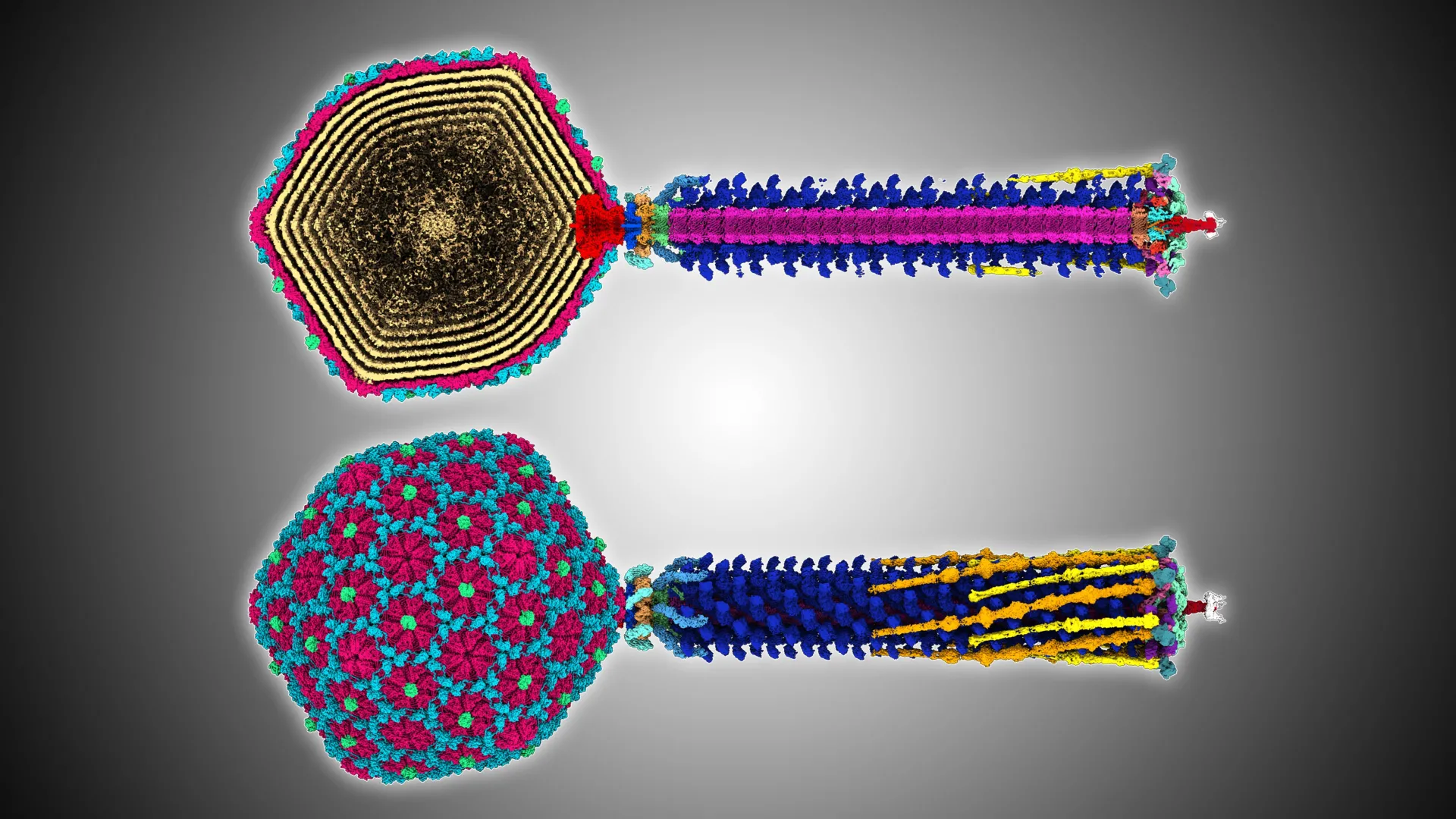
The study, published in Science Advances, involved researchers from Otago and the Okinawa Institute of Science and Technology. They examined the structure of Bas63, a virus that infects E. coli, at a molecular scale to better understand how its tail functions during infection.
“This kind of research is important for understanding how we can select the optimal bacteriophages for therapies, and to understand the differences in infectious behavior we see in the lab,” Dr. Hodgkinson-Bean says.

Senior author Associate Professor Mihnea Bostina, also from Otago’s Department of Microbiology and Immunology, notes that rising antibiotic resistance and growing threats to global food security from plant pathogens make bacteriophages an increasingly valuable alternative.
“Our detailed blueprint of a bacteriophage advances rational design for medical, agricultural, and industrial applications, from treating infections to combating biofilms in food processing and water systems.
“Beyond science, the 3D data — which shows the virus’ rare whisker-collar connections, hexamer decoration proteins, and diverse tail fibers — may inspire artists, animators, and educators.”
Structural Clues Strengthen Understanding of Viral Evolution
According to Dr. Hodgkinson-Bean, insights into viral structure also help clarify how these viruses have evolved.
“While DNA generally serves as the best evolutionary marker in humans, the 3-dimensional structure of a virus is more informative of its distant evolutionary relationships with other viruses,” he says.

The team identified features that had previously only been seen in viruses that are very distantly related, revealing evolutionary connections that had not been documented before.
“We know through structural studies that bacteriophages are related to Herpes viruses — this relationship is thought to extend back billions of years to before the emergence of multi-cellular life. For this reason, when we look at bacteriophage structure, we are looking at living fossils, primordial ancient beings.
“There is something truly beautiful about that.”
Building on Earlier Discoveries
This newly described structure is the second of its kind documented by the same research group. It follows an earlier investigation into pathogens responsible for potato diseases, which was recently published in Nature Communications.

Read more →

“Great Unified Microscope” reveals micro and nano worlds in a single view

Researchers Kohki Horie, Keiichiro Toda, Takuma Nakamura, and Takuro Ideguchi at the University of Tokyo have created a microscope capable of detecting signals across an intensity range fourteen times broader than that of standard instruments. The system also works label-free, meaning it does not rely on added dyes. This gentle approach allows cells to remain unharmed during long-term imaging, which could benefit testing and quality control in pharmaceutical and biotechnology settings. The study appears in Nature Communications.
Microscopes have driven scientific progress since the 16th century, but major improvements have often required increasingly specialized tools. As techniques became more advanced, they also faced tradeoffs in what they could measure. Quantitative phase microscopy (QPM) uses forward-scattered light to visualize structures at the microscale (in this study, over 100 nanometers), which makes it useful for capturing still images of complex cell features. However, QPM cannot detect very small particles. Interferometric scattering (iSCAT) microscopy works differently by capturing back-scattered light and can detect structures as tiny as single proteins. While iSCAT enables researchers to “track” individual particles and observe rapid changes inside cells, it lacks the wider view offered by QPM.
Capturing Two Directions of Light at Once
“I would like to understand dynamic processes inside living cells using non-invasive methods,” says Horie, one of the first authors.
Motivated by this goal, the team examined whether collecting light from both directions at the same time could bridge the gap and reveal activity across a broad range of sizes and motions in a single image. To explore the idea and confirm that their microscope performed as expected, they observed how cells behaved during cell death. In one experiment, they captured an image that contained information from both forward- and backward-traveling light.
Separating Overlapping Signals
“Our biggest challenge,” Toda, another first author, explains, “was cleanly separating two kinds of signals from a single image while keeping noise low and avoiding mixing between them.”
The researchers succeeded in identifying the movement of larger cell structures (micro) as well as much smaller particles (nano). By comparing the patterns in forward- and back-scattered light, they could estimate each particle’s size and its refractive index, which describes how strongly light bends or scatters when it passes through a material.
Future Applications for Smaller Particles
“We plan to study even smaller particles,” Toda says, already thinking about future research, “such as exosomes and viruses, and to estimate their size and refractive index in different samples. We also want to reveal how living cells move toward death by controlling their state and double-checking our results with other techniques.”

Read more →

Daily music listening linked to big drop in dementia risk

Listening to music after the age of 70 appears to be associated with a meaningful reduction in dementia risk. A research team from Monash University analyzed data from more than 10,800 older adults and found that people in this age group who regularly listened to music experienced a 39 percent lower likelihood of developing dementia.
The project, led by Monash honours student Emma Jaffa and Professor Joanne Ryan, examined how both listening to music and playing instruments relate to cognitive health in adults over 70. Their analysis showed that individuals who consistently listened to music, compared with those who never, rarely, or only sometimes did so, had a 39 percent reduced risk of dementia. Playing an instrument was also tied to benefits, with a 35 percent reduction in dementia risk.
Findings Drawn From Large-Scale Aging Studies
Researchers based their work on information from the ASPirin in Reducing Events in the Elderly (ASPREE) study and the ASPREE Longitudinal Study of Older Persons (ALSOP) sub‐study. The results were published in the International Journal of Geriatric Psychiatry.
People who reported always listening to music demonstrated the strongest cognitive advantages. This group showed a 39 percent lower incidence of dementia and a 17 percent lower incidence of cognitive impairment, along with higher overall cognitive scores and better episodic memory (used when recalling everyday events). Those who both listened to and played music on a regular basis had a 33 percent reduced risk of dementia and a 22 percent reduced risk of cognitive impairment.
Music as an Accessible Activity for Brain Health
Ms Jaffa noted that the outcomes of the research “suggests music activities may be an accessible strategy for maintaining cognitive health in older adults, though causation cannot be established,” she said.

The findings come at a time when population aging is creating new public health challenges. Longer life expectancy has led to rising rates of age‐related conditions, including cognitive decline and dementia, which places increasing pressure on families and healthcare systems.
Lifestyle Choices May Shape Cognitive Aging
Senior author Professor Ryan emphasized the urgency of exploring options to help delay or prevent dementia. “With no cure currently available for dementia, the importance of identifying strategies to help prevent or delay onset of the disease is critical,” she said.
She added that “Evidence suggests that brain aging is not just based on age and genetics but can be influenced by one’s own environmental and lifestyle choices. Our study suggests that lifestyle-based interventions, such as listening and/or playing music can promote cognitive health.”

Read more →