Only seven percent of adults have good cardiometabolic health

Less than 7 percent of the U.S. adult population has good cardiometabolic health, a devastating health crisis requiring urgent action, according to research led by a team from the Friedman School of Nutrition Science and Policy at Tufts University in a pioneering perspective on cardiometabolic health trends and disparities published in the July 12 issue of the Journal of the American College of Cardiology. Their team also included researchers from Tufts Medical Center.
Researchers evaluated Americans across five components of health: levels of blood pressure, blood sugar, blood cholesterol, adiposity (overweight and obesity), and presence or absence of cardiovascular disease (heart attack, stroke, etc.). They found that only 6.8 percent of U.S. adults had optimal levels of all five components as of 2017-2018. Among these five components, trends between 1999 and 2018 also worsened significantly for adiposity and blood glucose. In 1999, 1 out of 3 adults had optimal levels for adiposity (no overweight or obesity); that number decreased to 1 out of 4 by 2018. Likewise, while 3 out of 5 adults didn’t have diabetes or prediabetes in 1999, fewer than 4 out of 10 adults were free of these conditions in 2018.
“These numbers are striking. It’s deeply problematic that in the United States, one of the wealthiest nations in the world, fewer than 1 in 15 adults have optimal cardiometabolic health,” said Meghan O’Hearn, a doctoral candidate at the Friedman School and the study’s lead author. “We need a complete overhaul of our healthcare system, food system, and built environment, because this is a crisis for everyone, not just one segment of the population.”
The study looked at a nationally representative sample of about 55,000 people aged 20 years or older from 1999 to 2018 from the 10 most recent cycles of the National Health and Nutrition Examination Survey. The research team focused on optimal, intermediate, and poor levels of cardiometabolic health and its components, rather than just presence or absence of disease. “We need to shift the conversation, because disease is not the only problem,” O’Hearn said. “We don’t just want to be free of disease. We want to achieve optimal health and well-being.”
The researchers also identified large health disparities between people of different sexes, ages, races and ethnicities, and education levels. For example, adults with less education were half as likely to have optimal cardiometabolic health compared with adults with more education, and Mexican Americans had one-third the optimal levels versus non-Hispanic White adults. Additionally, between 1999 and 2018, while the percentage of adults with good cardiometabolic health modestly increased among non-Hispanic White Americans, it went down for Mexican American, other Hispanic, non-Hispanic Black, and adults of other races.
“This is really problematic. Social determinants of health such as food and nutrition security, social and community context, economic stability, and structural racism put individuals of different education levels, races, and ethnicities at an increased risk of health issues,” said Dariush Mozaffarian, dean of the Friedman School and senior author. “This highlights the other important work going on across the Friedman School and Tufts University to better understand and address the underlying causes of poor nutrition and health disparities in the U.S. and around the world.”
The study also assessed “intermediate” levels of health — not optimal but not yet poor — including conditions like pre-diabetes, pre-hypertension, and overweight. “A large portion of the population is at a critical inflection point,” O’Hearn said. “Identifying these individuals and addressing their health conditions and lifestyle early is critical to reducing growing healthcare burdens and health inequities.”
The consequences of the dire state of health among U.S. adults reach beyond personal health. “Its impacts on national healthcare spending and the financial health of the entire economy are enormous,” O’Hearn said. “And these conditions are largely preventable. We have the public health and clinical interventions and policies to be able to address these problems.”
Researchers at the Friedman School work actively on many such solutions, O’Hearn said, including Food is Medicine interventions (using good nutrition to help prevent and treat illness); incentives and subsidies to make healthy food more affordable; consumer education on a healthy diet; and private sector engagement to drive a healthier and more equitable food system. “There are a lot of different avenues through which this can be done,” O’Hearn said. “We need a multi-sectoral approach, and we need the political will and desire to do it.”
“This is a health crisis we’ve been facing for a while,” O’Hearn said. “Now there’s a growing economic, social and ethical imperative to give this problem significantly more attention than it has been getting.”

Read more →

Where the Risks of Pregnancy Meet Abortion Laws and Health Care

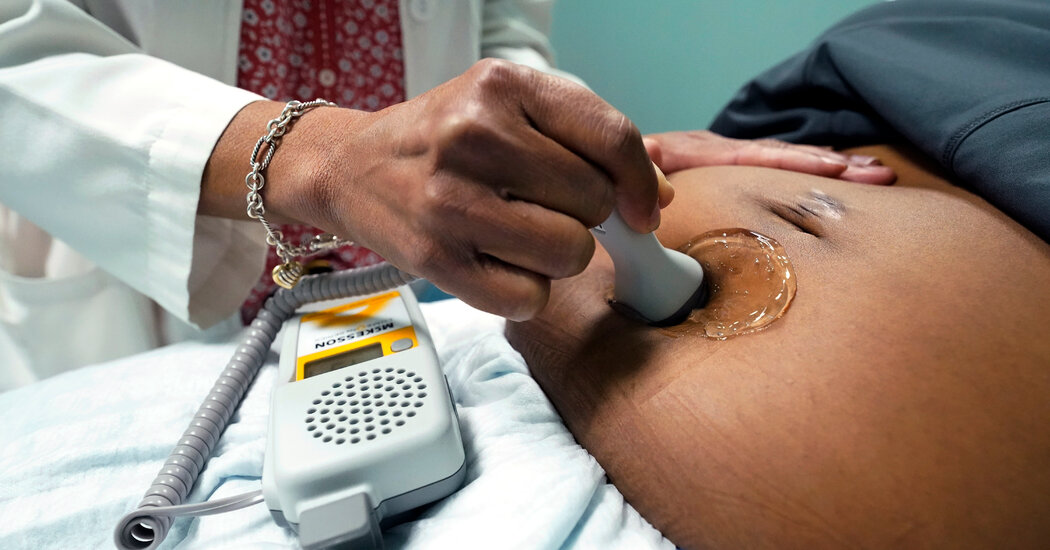
Even before the wave of abortion bans, medical treatment and advice for pregnancy has largely focused on fetal safety over the mother’s.As the United States has grappled with the unfolding consequences of the Supreme Court’s decision overruling Roe v. Wade, one question lurks between the lines of court opinions and news stories alike: Why are the risks of pregnancy so rarely discussed anywhere, even though that information is relevant not just to individual decisions but to policies about abortion, pregnancy, and health care for women?With the wave of abortion bans taking place in states across America, those risks are going to be more in the spotlight — figuring both in women’s decisions about whether to risk getting pregnant if they live in a state that has banned abortions, and the arguments that will happen in state legislature chambers over how much threat to a mother’s health must be present to permit an abortion under untested and rapidly changing state laws.“We spend an awful lot of time talking about avoiding behaviors because of very small risks that could happen that are associated with the fetus. ‘Don’t eat bean sprouts,’ or ‘don’t eat deli meats,’” Emily Oster, a Brown University economist and author “Expecting Better,” a data-driven book about pregnancy, told me. “And then we sort of never talk to people about the risks of things that are almost definitely going to happen.”For instance, in a vaginal birth, “Your vagina’s going to tear. It’s going to tear a lot,” she said. “That’s not even risk, it’s just realistic.” Those who give birth via cesarean section, a major abdominal surgery, end up with a large wound requiring a significant recovery period.And more serious complications, while rare, are not that rare. In any given moms’ group, someone has probably survived hyperemesis gravidarum (which can occur in up to one in 30 pregnancies), an ectopic pregnancy (up to one in 50 pregnancies), or a pregnancy-induced hypertensive disorder (up to one in 10 pregnancies). All of those conditions can be lethal.From Opinion: The End of Roe v. WadeCommentary by Times Opinion writers and columnists on the Supreme Court’s decision to end ​​the constitutional right to abortion.Michelle Goldberg: “The end of Roe v. Wade was foreseen, but in wide swaths of the country, it has still created wrenching and potentially tragic uncertainties.”Spencer Bokat-Lindell: “What exactly does it mean for the Supreme Court to experience a crisis of legitimacy, and is it really in one?”Bonnie Kristian, journalist: “For many backers of former President Donald Trump, Friday’s Supreme Court decision was a long-awaited vindication.” It might also mark the end of his political career.Erika Bachiochi, legal scholar: “It is precisely the unborn child’s state of existential dependence upon its mother, not its autonomy, that makes it especially entitled to care, nurture and legal protection.”In most situations, the standard for risk is informed consent: awareness of the potential for harm, and a chance to accept or refuse it. If riding in a car or taking a plane meant a near-guaranteed abdominal or genital wound and a 10 percent chance of a life-threatening accident, people would expect a warning and an opportunity to consider whether the journey was worth it.But pregnancy is different.Doctors in Jakarta, Indonesia, performing a cesarean section delivery.Adek Berry/Agence France-Presse — Getty ImagesJonathan Lord, a practicing gynecologist and the English medical director of MSI Reproductive Choices, an organization that provides family planning and abortion services in countries around the world, said that he suspects people often don’t talk about the dangers of pregnancy for women’s health because they see such conversations as a cause of unnecessary distress. “It’s sort of ingrained in society, really. It’s not so much a medical thing, but people do not talk about the risks and the unpleasant aspects, and I think that’s largely because people want to be kind,” he said.Oster had a similar hypothesis about serious pregnancy complications. “In general, we’re not interested in confronting the risk of really bad things,” she said. “We would very much like to pretend that they’re zero.”And yet if you look at the messaging around risks to the fetus during pregnancy, rather than the mother, the plot thickens.Women are “bombarded” with messaging about the risks they themselves could pose to their fetuses, said Rebecca Blaylock, the research lead of the British Pregnancy Advisory Service, a charity that provides abortion and other reproductive health services. The research team at her organization, along with colleagues from Sheffield University, studied British media messaging around pregnancy. They found that media coverage overwhelmingly framed women as a vector of harm, not a population in need of protection. Fetuses were the sole focus of health outcomes.Such assumptions even affected prenatal care. “We were seeing women suffering with hyperemesis gravidarum” — an extreme and potentially deadly form of morning sickness that involves near-constant vomiting — “who weren’t receiving appropriate treatment because their health care providers thought the medication posed a risk to their pregnancy, and who really felt they had no option but to terminate an otherwise wanted pregnancy at that point,” Blalock said.The differing attitudes toward risk “really fit within a larger cultural climate where women are blamed for any and all ills that may or may not befall their children, and a preoccupation with reproducing the next generation of healthy citizens” Blaylock told me.That study focused on the United Kingdom. But Kate Manne, a professor of philosophy at Cornell University and author of two books on the ways sexism shapes society, said that there is a widespread assumption in the United States and elsewhere that having children is something that women are naturally or even morally destined to do. Accordingly, guiding them toward that — even if that means denying them an opportunity to give informed consent to the risks — is seen by some as in their best interests. (She noted that transgender men and nonbinary people can also get pregnant, but said that the norms and societal assumptions about pregnancy tend to presume pregnant people are women.)“We don’t tend to think of pregnancy as something that someone might very rationally decide not to do because it’s too much of a risk,” she said. “That kind of thought process is obviated by the sense that it’s natural and moral, and perhaps also holy, for women to do this.”But such reluctance to acknowledge risks can make the dangers of pregnancy invisible to policymakers as well. One consequence is abortion bans that are written so bluntly that they fail to provide clear paths for doctors to protect women’s lives and health. In Poland, where most abortions are not allowed, vague exceptions that would allow them to go ahead have left doctors confused about potential liability, leading to the death of a pregnant woman last year. And now similar confusion is unfolding in U.S. states whose abortion bans took effect after last week’s Supreme Court decision overturning Roe v. Wade.Doctors in several U.S. states, for instance, have raised concerns about whether women will be able to get timely care for ectopic pregnancies, a condition in which a fertilized egg implants outside the uterus or in the wrong part of it. Such pregnancies are never viable: It is not possible for a fetus to grow to term unless it implants correctly. But those that implant in scar tissue in the uterus, Dr. Lord said, can continue to develop for several months before eventually rupturing, at which point they are life threatening to the mother, he said.“You really need to get in there early before it’s grown to that extent,” he said. “It’s an inevitability that the fetus will die, but it will probably kill the mother with it.”“I do fear that in those states that have got strict laws, that will happen.”

Read more →

Researchers develop rapid COVID-19 test to identify variants in hours

Last year, pathologist Jeffrey SoRelle, M.D., and colleagues developed CoVarScan, a rapid COVID-19 test that detects the signatures of eight hotspots on the SARS-CoV-2 virus. Now, after testing CoVarScan on more than 4,000 patient samples collected at UT Southwestern, the team reports in Clinical Chemistry that their test is as accurate as other methods used to diagnose COVID-19 and can successfully differentiate between all current variants of SARS-CoV-2.
“Using this test, we can determine very quickly what variants are in the community and if a new variant is emerging,” said Dr. SoRelle, Assistant Professor of Pathology and senior author of the study. “It also has implications for individual patients when we’re dealing with variants that respond differently to treatments.”
The testing results at UT Southwestern’s Once Upon a Time Human Genomics Center have helped public health leaders track the spread of COVID-19 in North Texas and make policy decisions based on the prevalence of variants. Doctors have also used the results to choose monoclonal antibodies that are more effective against certain strains infecting critically ill COVID-19 patients.
While a number of other tests for COVID-19 exist, they generally detect either a fragment of SARS-CoV-2 genetic material or small molecules found on the surface of the virus, and don’t provide information to identify the variant. In addition, many researchers worry that these tests aren’t accurate in detecting some variants — or may miss future strains. To determine which variant of COVID-19 a patient has, scientists typically must use whole genome sequencing, which is time-consuming and expensive, relying on sophisticated equipment and analysis to spell out the entire RNA sequence contained in the viruses.
In early 2021, Dr. SoRelle and his colleagues at UT Southwestern wanted to track how well current tests were detecting emerging variants of SARS-CoV-2. But they realized that sequencing a lot of specimens would not be timely or cost-effective, so they designed their own test, working in the McDermott Center Next Generation Sequencing Core, part of the Eugene McDermott Center for Human Growth and Development directed by Helen Hobbs, M.D., Professor of Internal Medicine and Molecular Genetics.
CoVarScan hones in on eight regions of SARS-CoV-2 that commonly differ between viral variants. It detects small mutations — where the sequence of RNA building blocks varies — and measures the length of repetitive genetic regions that tend to grow and shrink as the virus evolves. The method relies on polymerase chain reaction (PCR) — a technique common in most pathology labs — to copy and measure the RNA at these eight sites of interest.
To test how well CoVarScan works, Dr. SoRelle’s team ran the test on more than 4,000 COVID-19-positive nasal swab samples collected at UT Southwestern from April 2021 to February 2022 — from patients both with and without symptoms. The tests were validated with the gold-standard whole genome sequencing, and the results were used by doctors to choose treatments in some critically ill COVID-19 patients.
Compared to whole genome sequencing, CoVarScan had 96% sensitivity and 99% specificity. It identified and differentiated Delta, Mu, Lambda, and Omicron variants of COVID-19, including the BA.2 version of Omicron, once known as “stealth Omicron” because it did not show up on some tests designed to detect only the Omicron strain.
“A common critique of this kind of test is that it requires constant adjustment for new variants, but CoVarScan has not needed any adjustment in more than a year; it is still performing very well,” said Dr. SoRelle. “In the future, if we did need to adjust it, we could easily add as many as 20 or 30 additional hotspots to the test.”
Dr. SoRelle plans to continue developing CoVarScan as a commercial test and has a pending patent application based on this work. As the inventor of the genotyping PCR test for variants, Dr. SoRelle is entitled to income from its use.
Other UTSW researchers who contributed to this study include Andrew Clark, Zhaohui Wang, Emily Ostman, Hui Zheng, Huiyu Yao, Brandi Cantarel, Mohammed Kanchwala, Chao Xing, Li Chen, Pei Irwin, Yan Xu, Dwight Oliver, Francesca Lee, Jeffrey Gagan, Laura Filkins, Alagarraju Muthukumar, Jason Park, and Ravi Sarode.
Dr. Hobbs holds the 1995 Dallas Heart Ball Chair in Cardiology Research, the Philip O’Bryan Montgomery, Jr., M.D. Distinguished Chair in Developmental Biology, and the Eugene McDermott Distinguished Chair for the Study of Human Growth and Development. Dr. Sarode holds the John H. Childers, M.D. Professorship in Pathology.

Read more →

Researchers use AI to detect new family of genes in gut bacteria

Using artificial intelligence, UT Southwestern researchers have discovered a new family of sensing genes in enteric bacteria that are linked by structure and probably function, but not genetic sequence. The findings, published in PNAS, offer a new way of identifying the role of genes in unrelated species and could lead to new ways to fight intestinal bacterial infections.
“We identified similarities in these proteins in reverse of how it’s usually done. Instead of using sequence, Lisa looked for matches in their structure,” said Kim Orth, Ph.D., Professor of Molecular Biology and Biochemistry, who co-led the study with Lisa Kinch, Ph.D., a bioinformatics specialist in the Department of Molecular Biology.
Dr. Orth’s lab has long focused on studying how marine and estuary bacteria cause infections. In 2016, Dr. Orth and her colleagues used biophysics to characterize the structure of two proteins called VtrA and VtrC complex that work in concert in a bacterial species known as Vibrio parahaemolyticus. She and her team then discovered the VtrA/VtrC complex in V. parahaemolyticus – which is often the cause of food poisoning from contaminated shellfish – senses bile from the bacterial cell surface, sending a signal to launch a chemical cascade that prompts this microbe to invade the intestinal cells of its human host.
Although VtrA shares some structural features with a protein called ToxR found in a related bacteria called Vibrio cholerae that causes cholera, it was unclear whether a homolog for VtrC also existed in this or any other bacteria.
“We had never seen anything like VtrC,” said Dr. Kinch. “But, we thought, other proteins like it must exist.”
Without any known genes with sequence identities similar to VtrC, the researchers turned to software released just two years ago called AlphaFold. This artificial intelligence program can accurately predict the structure of some proteins based on the genetic sequence that codes for them – information that previously was only gleaned through laborious work in the laboratory.
AlphaFold showed that a protein called ToxS in V. cholerae is very similar in structure to VtrC, even though the two proteins did not share any recognizable portions of their genetic sequences. When the researchers searched for proteins with similar structural features in other organisms, they found homologs for VtrC in several other enteric bacteria species responsible for human disease, including Yersinia pestis (which causes the bubonic plague) and Burkholderia pseudomallei (which causes a tropical infection called melioidosis). Each of these VtrC homologs appears to work in concert with proteins structurally similar to VtrA, suggesting that their roles could be the same as those in V. parahaemolyticus.
Dr. Orth said these structural similarities could eventually lead to pharmaceuticals that treat conditions caused by different infectious organisms that rely on similar pathogenic strategies.
Dr. Orth is a Howard Hughes Medical Institute Investigator who holds the Earl A. Forsyth Chair in Biomedical Science and is a W.W. Caruth, Jr. Scholar in Biomedical Research. A member of the National Academy of Sciences since 2020, this is her inaugural article in PNAS.
Other UTSW researchers who contributed to this study include Qian Cong, Ph.D., a Southwestern Medical Foundation Scholar in Biomedical Research, and Jananee Jaishankar, Ph.D.
This study was funded by grants from The Welch Foundation (I-1561), Once Upon a Time Foundation, and the National Institutes of Health (R01 GM115188).
Story Source:
Materials provided by UT Southwestern Medical Center. Note: Content may be edited for style and length.

Read more →

Updated Covid Shots Are Coming. Will They Be Too Late?

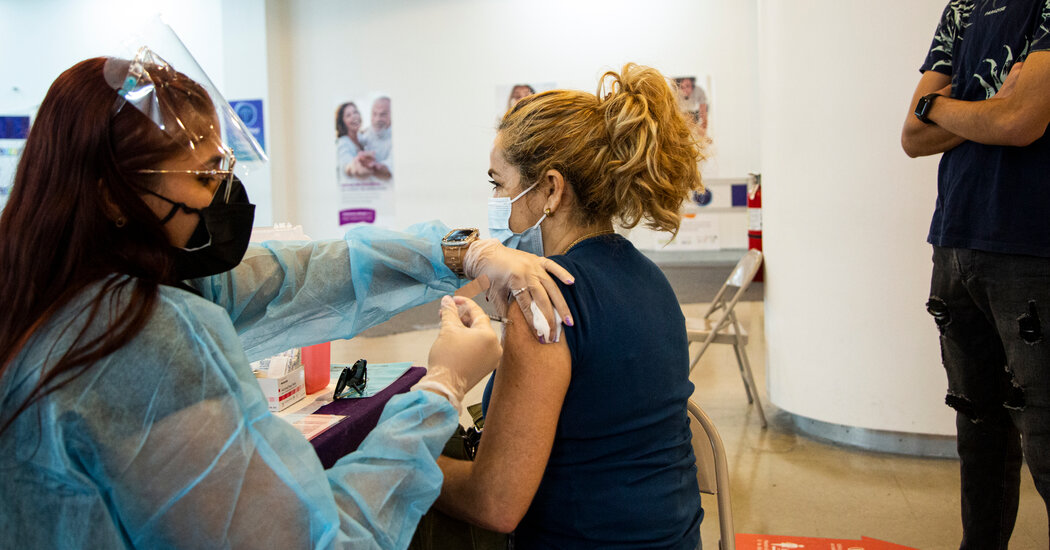
The government has greenlit new vaccines to defend against the latest Omicron variants. But the shots won’t arrive until the fall, and cases are rising now.Roseann Renouf, 77, has grown tired of the current generation of coronavirus shots. Having “never been one for a lot of vaccination,” she decided to forgo the latest round of boosters after watching vaccinated friends contract Covid-19, even though the doses offer a critical extra layer of protection.“It’s just taking another same booster,” Ms. Renouf, a retired nurse anesthetist from Fort Worth, said. “They haven’t done anything different with them to cover new variants.”But her gripe about the Covid vaccines may soon be settled. American regulators committed last week to updating the 2020 vaccine recipes for this fall’s booster campaign with new formulas meant to defend against the ultra-contagious Omicron subvariants, offering Ms. Renouf and other holdouts a fresh reason to change their minds.The Biden administration is betting that the new cocktails, the centerpiece of an effort to drastically speed up vaccine development, might appeal to the half of inoculated Americans who have so far spurned booster shots, a key constituency in the fight against future Covid waves.Vaccine updates are becoming more urgent by the day, many scientists said. The most evasive forms of Omicron yet, known as BA.4 and BA.5, appear to be driving a fresh surge of cases across much of the United States. The same subvariants have sent hospital admissions climbing in Britain, France, Portugal, Belgium and Israel.Covid deaths in the United States, which had been hovering for months near their lowest levels of the pandemic, are rising again. In the worst case, epidemiologists have predicted some 200,000 Covid deaths in the United States within the next year.“We’re hoping that we can convince people to go get that booster,” said Dr. Peter Marks, who oversees the vaccines office at the Food and Drug Administration, “and help mature their immune response and help prevent another wave.”Many scientists believe that updated boosters will be critical for diversifying people’s immune defenses as subvariants eat away at the protection offered by vaccines. Catching up with a virus that has been so rapidly mutating may be impossible, they said. But it was far better to be only a few months, rather than a couple of years, behind the pathogen.“Omicron is so different that, to me, it seems pretty clear we’re starting to run out of ground in terms of how well these vaccines protect against symptomatic infections,” said Deepta Bhattacharya, an immunologist at the University of Arizona. “It’s very important that we update the shots.”Now, the question is whether those modified boosters will arrive in time. In a bid to match the latest forms of the virus, the F.D.A. asked vaccine manufacturers to tailor their new shots to the BA.4 and BA.5 subvariants, rather than to the original version of Omicron from last winter.Virologists said that a subvariant vaccine would generate not only the strongest immune defenses against current versions of the virus, but also the type of broad antibody response that will help protect against whatever form of the virus emerges in the months ahead.But building a fall booster campaign around vaccines at the forefront of the virus’s evolution could also come at a cost. Pfizer and Moderna said that they could deliver subvariant vaccine doses no earlier than October. Some F.D.A. advisers warned in a public meeting last week that the timeline could be slowed even further by any number of routine delays.Scientists said vaccine updates were becoming more urgent by the day, with the BA.4 and BA.5 subvariants driving a fresh surge of cases.Saul Martinez for The New York TimesIn contrast, a vaccine targeting the original version of Omicron is closer at hand: Moderna and Pfizer have already started making doses tailored to the original form of Omicron, and Moderna said that it could start supplying them this summer. Whether the benefits of a newer subvariant vaccine outweigh the drawbacks of having to wait longer depends on when exactly it arrives and how much havoc the virus wreaks before then, scientists said.They said that having some form of an updated vaccine by the fall was crucial.“I would lean toward thinking BA.4, BA.5 is a good choice unless it dramatically extends the timeline,” said Jesse Bloom, a virologist at the Fred Hutchinson Cancer Center in Seattle, voicing support for the subvariant vaccine. “If using BA.4, BA.5 only modestly extends the timeline, I think it’s a good choice.”The updated shots will test the public’s openness to an accelerated vaccine program that is reminiscent of the way annual flu shots are formulated, but that is entirely new when it comes to the coronavirus.The original Covid vaccines had to withstand slow and laborious testing: Volunteers took the shots and then went about their lives while researchers tracked who got sick. But there is now ample evidence that the shots are safe. And any tweaks to the recipe could be wasted if scientists were to spend the better part of a year testing them.Instead, vaccine manufacturers have been studying volunteers’ blood samples in the lab to gauge their immune responses to a booster that is tailored to the first version of Omicron. The subvariant boosters have so far been through lighter testing: Pfizer has studied only how they have affected antibody responses in mice.The F.D.A. said that it would not require clinical trial data for the subvariant boosters before authorization and would rely instead on studies of boosters targeting the original version of Omicron. Some scientists said that authorizing modified vaccines without time-consuming human studies was essential to keeping up.“It just seems dangerous to overly bureaucratize the rollout of an updated vaccine,” said Jeremy Kamil, a virologist at Louisiana State University Health Shreveport. Moving too slowly, he said, would risk leaving older and other vulnerable people exposed to a pathogen that looks different than what the original vaccines had prepared them for.“If a bank robber’s grown a beard and dyed their hair,” he said, “it’s going to help your response to know what they look like today rather than when they were 14 years old.”Some government vaccine advisers have said that regulators had not yet proven that updated boosters protected substantially better than existing boosters against severe Covid. Others have expressed concern that reformulating vaccines would undercut confidence in the vaccination program.For some booster-shy Americans, though, the fact that the current offerings had grown dated was the source of their apathy.“It probably helps a bit, the booster, but not to the extent of going to the trouble of getting it,” said Cherry Alena, a retired medical secretary in her 70s from Northern California, whose last Covid vaccine was 16 months ago. “It’s not specifically formulated for the thing that’s going around.”A modified shot would appeal to her, she said, because “it gives you specific immunity against the specific thing.”Gaps in booster coverage have left the United States more exposed to deaths during Omicron waves. More than half of vaccinated Americans have not received a booster. Three-quarters of those eligible for a second booster have not gotten one.This spring, people age 50 and older who had received a single booster were dying from Covid at four times the rate of those with two booster doses, according to the Centers for Disease Control and Prevention.A Pfizer-BioNTech Covid vaccine manufacturing plant in Puurs, Belgium. Both Pfizer and Moderna have said that they could deliver subvariant vaccine doses no sooner than October.Pfizer, via Associated PressThere are no certainties when it comes to forecasting the pathogen’s evolution. Come winter, the virus could take an unexpected turn away from the Omicron branch of the evolutionary tree. And whereas flu viruses typically turn over in the course of years, new coronavirus variants can emerge and then start stampeding across the world within months.But scientists said it was reassuring that the updated boosters — which would also contain a component of the original formulation — appeared to generate strong immune responses to many different versions of the virus. And for now, signs are pointing toward this winter’s virus being a descendant of Omicron.“The more time that passes, the more likely it is that anything new is going to emerge from Omicron,” said Trevor Bedford, an evolutionary biologist at the Fred Hutchinson Cancer Center.Even though the coronavirus evolves faster than the flu, Dr. Bedford said, mRNA technology enables Covid shots to be modified more quickly, too. Decisions about the composition of an autumn flu vaccine are typically made in February, he noted; this fall’s coronavirus vaccines are not being decided upon until early summer.And scientists have a wider window into what coronavirus strains are spreading and how quickly. “With SARS-CoV-2, we have 12 million genomes,” Dr. Bedford said of the virus. “For flu, we have collected 250,000 over decades.”The F.D.A.’s decision to give its blessing to updated vaccines may have ripple effects across the globe, setting Moderna and Pfizer on the path to making those shots. But some countries may choose boosters targeting the earlier version of Omicron because they will be ready sooner.Some F.D.A. advisers also said that a vaccine made for the original strain by a third company, Novavax, held promise as an Omicron-targeted booster. That shot is not yet authorized for use.Scientists said they were eager for a clearer picture of how updated vaccine candidates would be chosen in the future and how quickly they could be made. Some also pressed for closer cooperation between American regulators and the World Health Organization, which supports updating the vaccines but with the original version of Omicron, not its latest subvariants, as a different way of broadening immune responses.The ultimate goal, many scientists said, was to compress the time between when the next immune-dodging variant emerges and when people can be vaccinated against it.“We’re now seven months out from when we first detected Omicron,” said Dr. Michael Z. Lin, a professor of neurobiology at Stanford who has tracked the regulatory process. “We need a rapid way for strain selection, and it needs to be more rapid than what we’ve done so far.”Among those likely to line up for a modified vaccine is Randi Plevy, 57, of New York. Having been vaccinated, and then infected twice, she held off on getting a booster shot.“Why am I getting a booster if it’s not going to protect me against what’s out there?” she said. “If they can demonstrate you’re getting ahead of the curve, and ‘Here is the latest and greatest that is going to protect you from the next strain,’ I think that’d be really attractive to a lot of people.”

Read more →

Thalidomide survivors in Scotland to get lifelong support

Published2 hours agoSharecloseShare pageCopy linkAbout sharingImage source, PA MediaThalidomide survivors living in Scotland will receive lifelong financial support, the Scottish government has announced. Health Secretary Humza Yousaf said he hoped the commitment to provide grants would reassure those affected.There are 50 known survivors of the banned pregnancy drug living in Scotland, most now in their 60s.They are among thousands born with limb deformities after their mothers took thalidomide while pregnant. The drug was commonly used to treat morning sickness from 1958 to 1961.In 2013 the Scottish government committed £14.2m to help survivors over a 10-year period, with the money going on health and living costs.Ministers have now extended that agreement, with grants to be allocated to survivors on a needs basis, as assessed by the Thalidomide Trust.Mr Yousaf said: “This funding is used to give thalidomide survivors as much assistance as they need to maintain their independence. It has been a vital support in helping people adapt their homes and manage their pain.”I hope this lifelong commitment to continue this support will reassure recipients and help them deal with any challenges they face.”Life with ‘chronic pain’Jean, 61, who was born with damage to all four of her limbs as a result of thalidomide, welcomed the announcement.She said the health grant had enabled her to to make her kitchen wheelchair accessible and build a gym in her garden, which had improved her physical strength and mental health.Jean added: “Due to thalidomide, I live with chronic pain and if I don’t move around my body would stiffen and seize up.”The grant also allows me to pay for a personal trainer who understands my disabilities and can keep me fit and flexible, without causing further damage.”Knowing this funding is going to continue indefinitely has given me, and many other Thalidomiders living in Scotland, such peace of mind.”Image source, PA MediaDeborah Jack, executive director of the Thalidomide Trust, said the latest funding announcement was “fantastic and very welcome news”.She added: “Sadly, as our beneficiaries age they are experiencing multiple health problems, in addition to their original thalidomide damage, and the costs of meeting their complex needs are significant.”Many of them have been really anxious about the prospect of this much-needed funding coming to an end.”We are really pleased that the Scottish government has recognised this by committing to lifetime financial support and also agreeing to review the level of funding regularly to ensure it is meeting their changing needs.”Scotland played a leading role in dealing with the impact of thalidomide in the past. In 1961, Edinburgh GP Ekke Kuenssberg and two colleagues were among the first to realise the danger it posed to babies in the womb. The city’s Princess Margaret Rose Hospital became a world centre in helping young survivors and provided artificially-powered limbs they could control themselves.More on this storyPrescriptions, scans and the smoking ban26 June 2018£14m to help thalidomide survivors20 December 2012Thalidomide: Were more affected?14 October 2013Probing Thalidomide’s Nazi links25 November 2011The price of Thalidomide’s impact?25 November 2011Related Internet LinksThe Thalidomide TrustThe BBC is not responsible for the content of external sites.

Read more →

Listeria Outbreak Is Linked to Ice Cream, C.D.C. Says

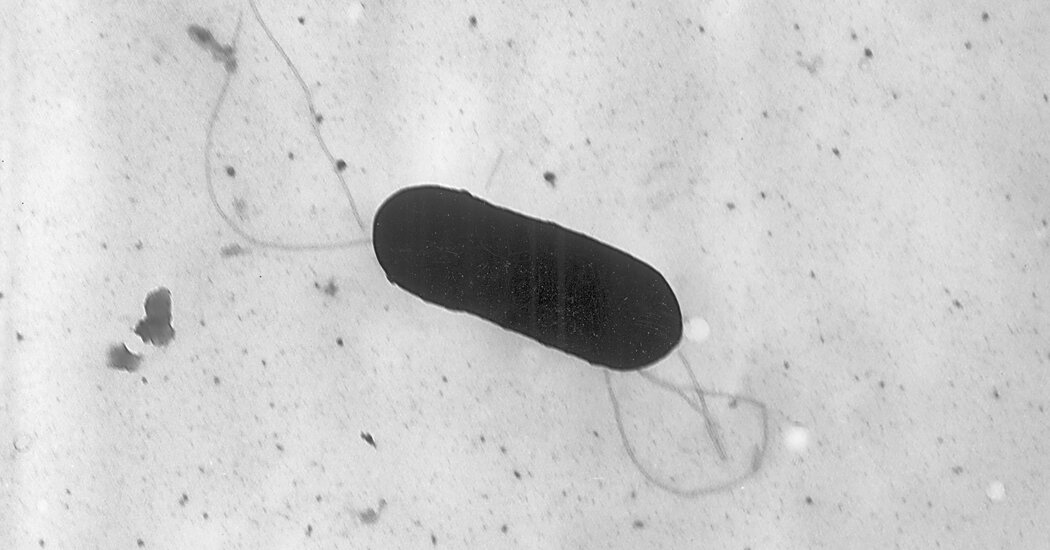
Big Olaf Ice Cream products, which are made in Florida, have sickened people across 10 states, the federal authorities said.A listeria outbreak blamed for the death of one person and the hospitalization of 22 people across 10 states has been linked to ice cream made in Florida, the federal authorities said on Saturday.Big Olaf Creamery, a family-owned company in Sarasota, Fla., exclusively sells ice cream in Florida, the federal Centers for Disease Control and Prevention said. Of those hospitalized, 10 people lived out of state and had visited Florida in the previous month, the C.D.C. said.The infections tied to Big Olaf ice cream products occurred over the last six months and affected people less than a year old to 92 years old, the C.D.C. said. Five became ill during pregnancy, with one experiencing a fetal loss.Of 17 people interviewed by the C.D.C., 14 said they had consumed ice cream. Six people reported eating ice cream made by Big Olaf or having ice cream at a location where the brand might have been supplied.Big Olaf’s ice cream is made by Amish craftsmen at a creamery near the village of Pinecraft, just outside of Sarasota, according to the company’s website.Big Olaf began contacting retail locations on Friday to recommend against selling the product, said the C.D.C., which advised customers to discard any remaining products from the brand. A full recall has not been issued.Big Olaf Creamery representatives were not immediately available for comment on Sunday.Listeria bacteria causes an illness that can be fatal. About 1,600 people contract listeriosis in the United States each year from contaminated food.Infections can cause flulike symptoms, including fever, muscle aches, vomiting and diarrhea, which generally begin roughly two weeks after ingesting food laced with the bacteria, though the onset can vary, the C.D.C. said. Severe cases can take months to develop, the U.S. Food and Drug Administration said.Past listeria outbreaks have been connected to unpasteurized milks and ice cream, undercooked poultry, and raw vegetables, according to the F.D.A. Older adults, pregnant women and newborns, and people with compromised immune systems are particularly vulnerable to becoming ill.About one in five people with listeriosis die, according to the C.D.C. The infection is especially dangerous during pregnancy, causing fetal loss in about 20 percent of cases.The number of people affected by Listeria outbreaks generally is higher than reported, the C.D.C. said.

Read more →

A Clunky Mask May be the Answer to Airborne Disease and N95 Waste

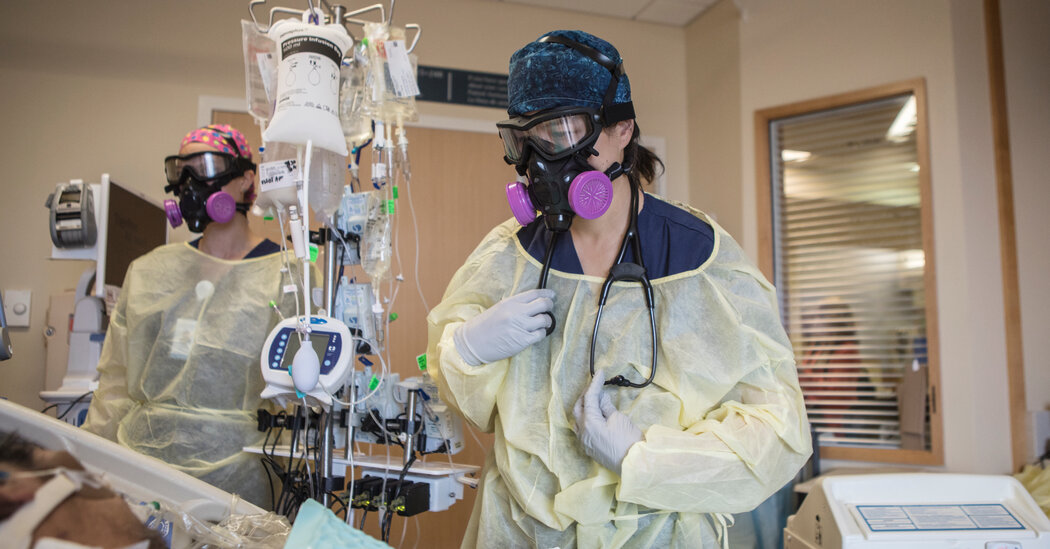
Experts say the U.S. government has unintentionally encouraged a dependency on imported masks by failing to promote elastomeric respirators, a reusable mask that is domestically produced.In the early 1990s, long before P.P.E., N95 and asymptomatic transmission became household terms, federal health officials issued guidelines for how medical workers should protect themselves from tuberculosis during a resurgence of the highly infectious respiratory disease.Their recommendation, elastomeric respirators, an industrial-grade face mask familiar to car painters and construction workers, would in the decades that followed become the gold standard for infection-control specialists focused on the dangers of airborne pathogens.The Centers for Disease Control and Prevention promoted them during the SARS outbreak of 2003 and the swine flu pandemic of 2009. A few studies since then have suggested that reusable elastomeric respirators should be essential gear for frontline medical workers during a respiratory pandemic, which experts predicted would quickly deplete supplies of N95s, the disposable filtration masks largely made in China.But when the coronavirus swept the globe and China cut off exports of N95s, elastomeric respirators were nowhere to be found in a vast majority of hospitals and health clinics in the United States. Although impossible to know for sure, some experts believe the dire mask shortage early on contributed to the wave of infections that killed more than 3,600 health workers.The pandemic has generated a bevy of painful lessons about the importance of preparing for public health emergencies. From the Trump administration’s tepid early response to the C.D.C.’s bungled coronavirus testing rollout and its mixed messaging on masking, quarantining and the reopening of schools, the federal government has been roundly criticized for mishandling a health crisis that has left one million Americans dead and dented public faith in a once-hallowed institution.Three years into the pandemic, elastomeric respirators remain a rarity at American health care facilities. The C.D.C. has done little to promote the masks, and all but a handful of the dozen or so domestic companies that rushed to manufacture them over the past two years have stopped making the masks or have folded because demand never took off.Most cost between $15 and $40 each, and the filters, which should be replaced at least once a year, run about $5 each. Made of soft silicone, the masks are comfortable to wear, according to health care worker surveys, and they have a shelf life of a decade or more.“It’s frustrating and frightening because a mask like this can make the difference between life and death, but no one knows about them,” said Claudio Dente, whose company, Dentec Safety, recently stopped making elastomeric respirators that were specifically redesigned at the request of federal regulators for health care workers.The government’s tentative approach to elastomeric respirators during the pandemic has largely escaped public scrutiny, even as American mask producers, health policy experts and nursing unions have been pressing federal officials to promote them more aggressively. The masks, they note, are an environmentally sustainable and cost-effective alternative to N95s. Worn properly, they offer better protection than N95s, which, as their name suggests, only filter out 95 percent of pathogens. Most elastomerics exceed 99 percent.The masks have another notable attribute: Most are made in the United States.Surgical masks are manufactured at a factory in central China. N95s are largely produced there, which has caused problems for mask supplies in the United States.Chinatopix, via Associated PressNow that hospitals have resumed buying cheap, Chinese-made face coverings and the resurgent American mask industry has imploded, experts warn of the perils of the nation’s continued dependency on foreign-made protective equipment. Many of the U.S. companies calling it quits are start-ups whose founders jumped into the P.P.E. business out of a sense of civic duty.“It’s sad to see all of this manufacturing capacity come online during a crisis, only to be shut down because hospitals and even our own government would rather save a few pennies buying from China,” said Lloyd Armbrust, president of the American Mask Manufacturers Association. Its membership includes just eight companies that are still producing masks, down from 51 a year ago. He said 17 of the companies have shut down.Some experts say the C.D.C.’s hands-off approach to elastomeric respirators is unintentionally encouraging a return to the nation’s reliance on disposable masks made overseas. Dr. Eric Feigl-Ding, an epidemiologist who heads the Covid-19 task force at the World Health Network, criticized federal officials for inaction despite compelling evidence that elastomerics provide the highest level of protection against aerosolized viruses. “At a certain point, you need to act on the existing science, and the failure to do otherwise is a dereliction of duty,” he said.To be clear, federal health experts back the use elastomerics but say they are awaiting additional study results before offering full-throated support for their widespread adoption by medical personnel. Emily Haas, a scientist at the C.D.C.’s National Institute for Occupational Safety and Health, or NIOSH, said researchers were still grappling with the need to regularly disinfect them and complaints about muffled communication, though some newer models make it easier for wearers to be heard.The bigger challenge, she says, is convincing hospitals and group purchasing organizations to embrace the masks given the abundance of N95s, which offer comparable protection during routine medical care and can be thrown away after each use.“There’s been so much research in the last 10 years that has really supported elastomerics, so in some ways the issue right now is cultural,” Dr. Haas said. “No one likes change, and introducing a whole new system of respiratory protection can be a heavy lift.”Experts say such obstacles could be overcome through more muscular federal leadership. Dr. Tom Frieden, who led an unsuccessful effort to fill the Strategic National Stockpile with elastomerics when he was C.D.C. director in 2009, said the advantages of providing them to frontline medical workers were clear, especially given the nation’s ruinous overreliance on single-use masks. He said health authorities could promote elastomerics by highlighting their cost savings for hospitals and the environmental benefits of a reusable mask to help reduce the tsunami of N95s that end up in landfills. “To me, it’s a puzzle why they haven’t become more widespread,” Dr. Frieden said.Providing an elastomeric respirator to each of the nation’s 18 million health care workers would cost roughly $275 million, according to Nicolas Smit, an expert on elastomerics and executive director of the American Mask Manufacturers Association. By comparison, he noted that the federal government spent $413 million on a disastrous effort to decontaminate N95 masks so they could be safely reused.N95s have posed environmental concerns since they have limited number of uses and end up in landfills.Cooper Neill for The New York TimesJames C. Chang, an industrial hygienist, has long been a fan of elastomerics. In 2018, he helped to produce a report on them for the National Academies of Sciences, Engineering and Medicine, and after the short-lived swine flu pandemic of 2009, he persuaded his employer, the University of Maryland Medical Center, to purchase 1,500 masks. The decision was based in part on research that predicted a respiratory pandemic lasting more than a few weeks would lead to catastrophic supply-chain shortages.“When you ran the numbers, it was pretty clear we’d burn through a six- or seven-digit cache of disposables pretty quickly,” he said. “It’s just not feasible for any hospital to stock that many masks.”Initially he had a handful of concerns — that their “Darth Vader” look would frighten patients or that disinfecting them would be burdensome. But those fears quickly faded in early 2020 as hospitals across the country scrambled to find N95s, and the C.D.C. issued guidelines saying N95s could be reused up to five times — guidance that evoked widespread skepticism among health professionals.To deal with the need to disinfect the masks, he set up a system that allowed workers to drop them off after each shift so they could be cleaned before being made available to others.“It was a real success story on our end because our staff had respirators to wear and they felt more reassured wearing elastomerics than wearing N95s,” Mr. Chang said.One of the only other hospital systems in the country to adopt the masks on a large scale was Allegheny Health Network of Western Pennsylvania, which early in the pandemic, distributed more than 8,000 respirators at its 14 hospitals. The decision to do so stemmed from a coincidence of geography: Allegheny’s headquarters in Pittsburgh was not far from the manufacturing plant of MSA Safety, a century-old company that got its start producing coal miner protective gear with help from Thomas Edison.Prompted by an appeal from hospital administrators, MSA began sending over the industrial-grade masks but they quickly ran into a problem. The protruding filters only screened inhaled air, which meant that exhaled air from an infected wearer could pose a potential health risk to those nearby, according to Dr. Zane Frund, executive director for materials and chemicals research at MSA Safety.The solution was not exactly rocket science: Product designers simply removed the masks’ exhalation valve, and NIOSH in late 2020 approved the new models. A subsequent design tweak added a mechanical voice amplifier to help ease communication.Dr. Sricharan Chalikonda, Allegheny’s chief medical operations officer, said he was surprised by just how popular they became among the 2,000 medical personnel who had been outfitted to wear them — a process aimed at ensuring air would not evade the mask’s tight face seal.Health experts have said they are awaiting additional studies on elastometric masks before throwing their weight behind them.Kirsten Luce for The New York TimesAccording to a paper he published in the Journal of the American College of Surgeons, none of the employees went back to wearing N95s. The cost benefit of relying almost entirely on elastomerics became irrefutable: Outfitting the workers was one-tenth as expensive than supplying them with disposable N95s. A separate study found that after one year, the filters were still 99 percent effective.“Elastomerics for us really were a game changer,” Dr. Chalikonda said. “When I think of all the millions of dollars wasted on N95s and then trying to reuse them makes you realize how much elastomerics are a missed opportunity.”Federal health officials say they are moving as fast as possible to produce stronger guidance on elastomerics. Maryann D’Alessandro, director of the National Personal Protective Technology Laboratory, said scientists were reviewing feedback from a study that distributed nearly 100,000 respirators to hospitals, nursing homes and first-responders across the country. “If we can get a tool kit together to serve as a guide for organizations and educate the users, we hope it can help move the needle,” she said.Many masks entrepreneurs are not likely to last that long. Max Bock-Aronson, the co-founder of Breathe99, which makes an elastomeric respirator that Time magazine included on its 2020 list of best inventions, has been winding down operations at the company’s Minnesota plant.He blamed the slump in sales on Covid fatigue and waning public interest in protective gear. The company’s fortunes, he added, were doomed early on by the C.D.C.’s mask guidance, which prompted Amazon, Google and Facebook to limit or bar the sale of medical-grade masks to consumers, even as P.P.E. imports once again began flooding the United States.“The whole industry has been gutted,” said Mr. Bock-Aronson. “Every time there’s a new variant, we get a small bump in sales, but I haven’t taken a nickel out of the company since last May,”For now, he is focused on finding a buyer for his company while selling off his inventory online. The masks cost $59 and can be sheathed in washable covers that come in eight colors, among them crimson, linen and royal blue.All sales, the website points out apologetically, are final.

Read more →

US woman denied termination in Malta: 'I was terrified'

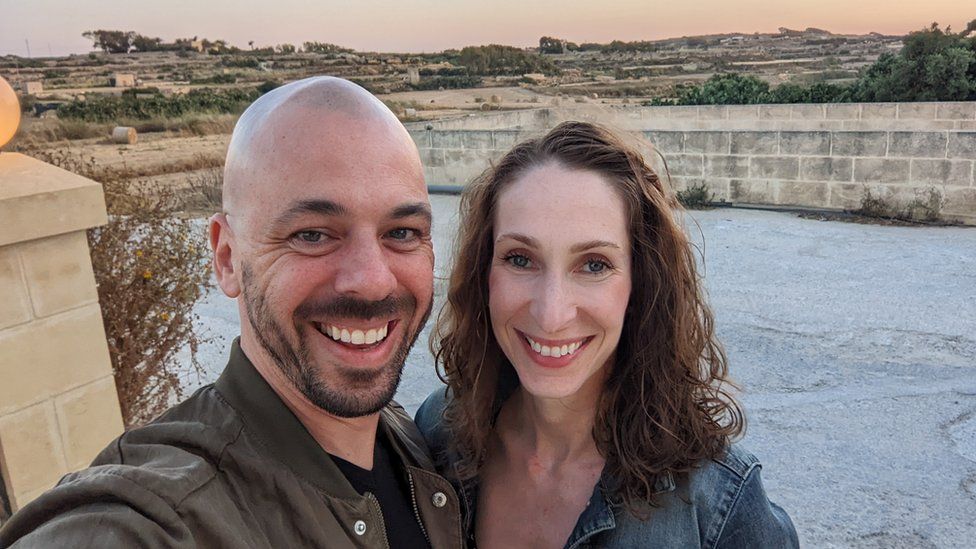
Published30 minutes agoSharecloseShare pageCopy linkAbout sharingImage source, Jay WeeldreyerNow that her ordeal is over, Andrea Prudente is ready to speak out: she is determined that no other woman should go through what she did.After days of anxious wait, she and her husband Jay were airlifted from Malta to Spain where Andrea received the treatment Maltese doctors had denied her. Her pregnancy – one that had been deemed no longer viable – was terminated before her body developed a potentially deadly infection.Fears for US woman’s life as she’s denied abortion in MaltaI speak with Andrea as she’s recovering from the procedure in a hotel in Mallorca. She looks pale and still shaken. She tells me it will take her a long time to process what happened.Andrea and Jay were on holiday in Malta when she started bleeding and her waters broke. She was 16 weeks pregnant. Doctors told them that without amniotic fluid, with the placenta partially detached, and so early in the pregnancy, their baby had no chances of survival.”It was a shock,” Andrea tells me. “The heartbreak of finding out that this baby that we wanted, that we planned for, was going to die, was devastating on its own.”But when they got to the Mater Dei hospital in Malta, their grief was gradually overshadowed by the realisation that doctors there could not terminate her pregnancy: the baby’s heart was still beating, and under Malta’s complete ban on abortion, this meant there was nothing they could do but wait.”One of the midwives told me when I would be on the ‘brink of death’ – she used these words – then they might intervene with a termination. It was terrifying,” Andrea tells me.But Dr John Mamo, the President of the Malta College of Obstetricians and Gynaecologists, insists doctors would have never let Andrea’s condition deteriorate to that degree.”We have patients like this approximately five [times] a year – and this is the management we use and we’ve had no problems with mothers over the past ten years at least,” he tells me.”There are studies that show that even at this early stage of the pregnancy between 10 to 40 percent of babies do survive,” he adds. “So with a lady that comes into the hospital, we don’t rush to terminate the pregnancy.”Dr Mamo assured me that, had Andrea developed a fever or showed any early signs of infection, the doctors at Mater Dei would have wasted no time and would have terminated the pregnancy.Andrea and Jay waited a week in hospital for either her body to naturally expel the foetus, or for her to develop a life-threatening infection. They say this took a heavy toll on their mental health.”There was this tangled sentiment where every day we would listen to the little heartbeat of this child that we wanted, but the presence of this heartbeat meant I was still in danger. So on the one hand we were rejoicing at the sound of that heartbeat, but at the same time we wanted it to stop,” Andrea says.Eventually, the couple managed to secure an emergency medical evacuation to Spain, paid for by their travel insurance. Image source, Jay WeeldreyerBut they are aware this option often is not available to Maltese women or others who wouldn’t have the financial means to sustain the costs of an evacuation to another country.”Abortion is a complicated, intensely emotional and personal topic and, whatever your ideology is, a complete ban on abortion, in effect puts the lives of women at risk – sometimes for no gain at all,” Andrea tells me.”I just don’t want this to keep happening and it will keep happening with complete bans on abortion. The thought of women who might find themselves in my position and have no way out, not being able to get somewhere where they can have humane and compassionate care, that’s just wrong,” she adds.A legal challenge for MaltaAndrea is visibly worn out by this experience. Jay is enraged.”We lost our child, and they also put Andrea’s life at risk,” he tells me. “We’re not abortion activists, we wanted this baby, but the way the law is written in Malta, is just in complete disregard of the fact that there’s already suffering and pain there.” Malta is the only country in the European Union that completely bans abortion. The law considers no exceptions, for example if the pregnancy is the consequence of rape or incest.But Andrea’s case has now reignited a discussion over the ban in the country. Earlier this week Rosianne Cutajar, a Labour MP, called on her colleagues in Parliament to reform the law. “As a country, we cannot and should not wait for another traumatising incident (or worse) before we review our current legal framework on abortion,” she says.On Thursday, the country’s Health Minister, Chris Fearne, said he had asked for a review of the legislation to ensure the current law doesn’t prevent doctors from saving lives. But for Andrea and Jay this move comes too late. The couple say they now plan to sue the Maltese government.More on this storyFears for life of US woman denied abortion in Malta22 JuneLocked-down women turn to pills amid Malta abortion ban9 January 2021

Read more →

Inside a US abortion clinic in its final days

A Supreme Court decision has allowed states to ban or severely restrict the ability for women to get abortions, and nowhere was this felt more immediately than in the state of Arkansas, where so-called ‘trigger laws’ forced its last abortion clinic to close.The BBC spent the final days inside the clinic with medical staff and doctors as they came to terms with a ruling that overturned Roe v Wade after nearly 50 years.Produced by the BBC’s Sophie Long and Sam Granville, filmed and edited by Ian Cartwright.

Read more →