Rocking shadows in protoplanetary discs

Astronomers from the University of Warwick reveal a new phenomenon dubbed the “rocking shadow” effect that describes how discs in forming planetary systems are oriented, and how they move around their host star. The effect also gives clues as to how they might evolve with time. Dr Rebecca Nealon presented the new work this week at the 2022 National Astronomy Meeting at the University of Warwick.
Stars are born when a large cloud of gas and dust collapses in on itself. The leftover material that doesn’t make it into the star ends up circling around it, not unlike how water swirls around the drain before falling in. This swirling mass of gas and dust is called a protoplanetary disc, and it’s where planets like the Earth are born.
Protoplanetary discs are often thought to be shaped like dinner plates — thin, round and flat. However, recent telescope images from the Atacama Large Millimeter/Submillimeter Array (ALMA) show that this is not always the case. Some of the discs seen by ALMA have shadows on them, where the part of the disc closest to the star blocks some of the stellar light and casts a shadow onto the outer part of the disc. From this shadow pattern, it can be inferred that the inner part of the disc is oriented completely differently to the outer part, in what is called a broken disc.
In this research, the team used high performance computers to run three-dimensional simulations of a broken disc. The team then produced a mock observation, modelling what such a disc would look like if it were to be observed through a telescope, and how it would change over time.
As the inner disc moved through the gravitational pull of the central star, the shadow it cast moved across the outer disc. But instead of the shadow pattern moving around the disc like a clock-hand as expected, it rocked back and forth with a see-saw-like motion. So although the inside disc kept turning in the same direction, its shadow looked like it was rocking forwards and backwards. The team suggest this is caused by a geometric projection effect, which is likely to occur in all broken discs.
Our research is important because it bridges the gap between theory and observations. In the light of new observations from telescopes like JWST, our cutting-edge numerical techniques mean we have a variety of tools to interpret these data and to learn more about how planets are born.
Rebecca says: “JWST promises to give us a look at embryonic planetary systems in unprecedented detail, and with our new models we’ll be able to find out a lot more about the birth of planets.”
Video: https://youtu.be/jGYLuEx-I78
Story Source:
Materials provided by Royal Astronomical Society. Note: Content may be edited for style and length.

Read more →

Men over 40 who regularly eat sunomono more likely to be in lower blood pressure category, study finds

An observational study led by Professor Hiroaki Kanouchi from Osaka Metropolitan University presents the first evidence that eating sunomono — a Japanese vinegared side dish — correlates to lower blood pressure categorization in men.
“The benefits of vinegar in a healthy diet are well known. Our research is the first observational study of these benefits; we didn’t ask participants to change anything,” explained Professor Kanouchi.
Previous studies have shown that subjects drinking 30 mL of vinegar daily had lower blood pressure but also lost weight that could account for the lower blood pressure. Sunomono provided an opportunity to conduct an observational study to examine if vinegar consumption as part of a normal diet correlated to differences in blood pressure.
Sunomono is a traditional side dish made with sliced cucumber or seaweed in rice vinegar, often with seafood garnish. It is a normal food, regularly eaten by older generations in Japan, with individually prepackaged portions available for purchase in supermarkets, making it a common source of larger volumes of dietary vinegar.
This led the research team to recruit 1498 men and women over 40 years old who were screened for hypertension or other disqualifying health conditions. 746 participants had their blood pressure tested and categorized based on the Japanese Society of Hypertension guidelines, then filled out a dietary surveyed, paying attention to sour vinegary food consumption, particularly sunomono.
“Vinegar is hard to observe because it isn’t a big ingredient in meals; you might get a little in vinaigrette or pickles, but people rarely drink the pickle’s vinegar brine. In sunomono, vinegar is part of the dish, people usually finish it,” Professor Kanouchi explained.
While analyzing the health information and dietary survey, the researchers noticed an interesting trend.
“Men who did not habitually eat sunomono had significantly higher blood pressure, even though their weight and BMI were the same,” Professor Kanouchi announced. “We believe it could be promoting growth of good gut microbiota, but we would need more studies to confirm that.”
Eating sunomono — at least monthly — correlated with lower average blood pressure among men, even when adjusted for age, BMI, smoking history, and intake of sodium, potassium, and alcohol, amongst other factors. This indicates that eating sunomono could already be having a positive impact on health.
“We are not sure how the vinegar causes these health benefits; increasing vinegar consumption doesn’t lead to further improvement in blood pressure. However, diet is one of the easiest things to change! I want everyone to know that even occasionally eating sunomono could make a difference in blood pressure,” Professor Kanouchi concluded.
Story Source:
Materials provided by Osaka Metropolitan University. Note: Content may be edited for style and length.

Read more →

Increased use of videoconferencing apps during COVID-19 pandemic led to more fatigue among workers, study finds

Researchers at Nanyang Technological University, Singapore (NTU Singapore) have found that the increased use of videoconferencing platforms during the COVID-19 pandemic contributed to a higher level of fatigue, as reported by workers.
Following work-from-home orders issued by governments worldwide during the pandemic, many employees attended meetings virtually using technologies such as Zoom or Microsoft Teams, instead of meeting face-to-face.
In a survey conducted in December 2020, the NTU research team found that 46.2% of all respondents reported feelings of fatigue or being overwhelmed, tired, or drained from the use of videoconferencing applications.
The researchers derived the results through an analysis of a survey of 1,145 Singapore residents in full-time employment and who had indicated that they use videoconferencing apps frequently.
The researchers from the NTU Wee Kim Wee School of Communication and Information (WKWSCI) and its Centre for Information Integrity and the Internet (IN-cube), published their findings in the journal Computers in Human Behavior Reports in June 2022.
Assistant Professor Benjamin Li, from NTU’s WKWSCI, who led the study, said: “We were motivated to conduct our study after hearing of increasing reports of fatigue from the use of videoconferencing applications during the pandemic. We found that there was a clear relation between the increased use of videoconferencing and fatigue in Singaporean workers. Our findings are even more relevant in today’s context, as the use of videoconferencing tools is here to stay, due to flexible work arrangements being a continuing trend.” He is also a member of IN-cube.

Read more →

With ‘How to Change Your Mind,’ Taking a Trip With Michael Pollan

Based on the book about psychedelic therapy, a new Netflix docu-series prompted another writer to reach out to Pollan — and dig into his own experiences.In late 2012, the best-selling author and journalist Michael Pollan (“The Omnivore’s Dilemma”) was at a dinner party in Berkeley, Calif. Among his fellow diners was a prominent developmental psychiatrist, in her 60s, who spoke at some length about a recent LSD trip. This pricked up Pollan’s ears.His first thought, as he shared during a recent video interview: “People like that are taking LSD?” The psychiatrist went on to explain that the drug gave her a better understanding of the way children think.“Her hypothesis,” Pollan said, “was that the effects of psychedelics, LSD in that case, give us a taste of what child consciousness would be like — this kind of 360-degree taking-in of information, not particularly focused, fascinated by everything.”Pollan had already heard about clinical trials in which doctors were giving cancer patients psilocybin to help them deal with their fear of death. Now, he was really curious about psychedelic therapy. That curiosity became an article in The New Yorker (“The Trip Treatment,” 2015). The article became a book, “How to Change Your Mind” (2019).And now the book has become a four-part Netflix series of the same name, which debuted Tuesday. Pollan is an executive producer (along with the Oscar-winning filmmaker Alex Gibney) and the primary on-camera presence.A thoughtful and wide-ranging look at psychedelic therapy, the series is grounded in accounts of their centuries-long sacramental use and of their uneasy history in modern society, especially in the United States. In particular, it focuses on four substances — LSD, mescaline, MDMA (known as Ecstasy or Molly) and psilocybin (the active ingredient in magic mushrooms) — and the ways in which they are being used to treat patients with maladies including post-traumatic stress disorder, addiction, depression, anxiety and obsessive-compulsive disorder.One of those patients is Lori Tipton, a New Orleans woman who endured a Job-like run of ill fortune. Her brother died of an overdose. Her mother murdered two people and then killed herself; Tipton found the bodies. She was raped by an acquaintance. Not surprisingly, she developed severe PTSD.“I really felt like I couldn’t access joy in my life, even when it was right in front of me,” Tipton said in a video interview. She thought about suicide constantly. When she heard about a clinical trial for MDMA, held in 2018, she figured she had nothing to lose.“I really felt like I couldn’t access joy in my life, even when it was right in front of me,” said Lori Tipton, whose participation in a clinical MDMA trial helped her deal with trauma.NetflixI can relate to some of this. A few years back I was diagnosed with PTSD and clinical depression after my life partner, Kate, was diagnosed with a terminal brain disease and died about 18 months later, in 2020. I didn’t have much interest in living. Running out of options, my doctor prescribed me a weekly regimen of esketamine, which is a close relative of the dissociative hallucinogen ketamine.Like many, I had experimented with hallucinogens, including mushrooms and LSD, in my youth. I was partying, not seeking. I never planned to go back there. But the treatment started helping me almost immediately.Pollan, 67, never did the youthful experimenting. Known primarily as an expert in plants and healthy eating — his latest book, “This is Your Mind on Plants,” comes out in paperback on July 19 — he came to psychedelics late in life. He was too young to indulge in the Summer of Love, and by the 1970s, the war on drugs and anti-LSD hysteria had quashed what had been a fertile period of scientific research in the ’50s.But once he began studying, and experimenting, he became a convert rather quickly.“At this age sometimes you need to be shaken out of your grooves,” he says in the Netflix series. “We have to think about these substances in a very cleareyed way and throw out the inherited thinking about it and ask, ‘What is this good for?’”Tall and bald with the build of a swimmer, Pollan is no Timothy Leary — he isn’t asking anyone to drop out — and the medical trials described and shown in “How to Change Your Mind” shouldn’t be confused with Ken Kesey’s freewheeling acid tests of the ’60s. Back then, when psychedelics left the laboratory and entered the counterculture, the power structure freaked out.“Kids were going to communes, and American boys were refusing to go to war,” Pollan said. “President Nixon certainly believed that LSD was responsible for a lot of this, and he may well have been right. It was a very disruptive force in society, and that is why I think the media after 1965 turns against it after being incredibly enthusiastic before 1965.”Junk science spread nonsense about LSD scrambling chromosomes. The drug was made illegal in California in 1967, and then nationally in 1970. Researchers weren’t forbidden from continuing their work with psychedelics, but the stigma made such work very rare until it re-emerged in the 2000s. Today, clinical trials are approved by the F.D.A. and D.E.A.“From the early ’70s to the early ’90s, there was no approved psychedelic research in human subjects,” said Charles Grob, a professor of psychiatry and pediatrics at U.C.L.A., who has written widely about psychedelic therapy. “Since then, research development has re-emerged and slowly evolved, until the last few years when professional and public interest in the topic appears to have exploded.”Given evolving attitudes, one challenge facing the filmmakers, including the directors Alison Ellwood and Lucy Walker, was how to depict the psychedelic experience in a sophisticated way, without stumbling into the territory of a ’60s exploitation movie.“We didn’t want to fall into the trap of using psychedelic visual tropes — wild colors, rainbow streaks, morphing images,” Ellwood wrote in an email. “We wanted to keep the visual style more personal, intimate and experiential. We wanted people watching the series who have not had their own psychedelic experiences to be able to relate to the visuals.”So-called magic mushrooms, whose psychoactive ingredient is psilocybin, have been used in religious ceremonies for thousands of years. NetflixOne imaginative scene recreates the famous bicycle ride taken by the Swiss chemist Albert Hofmann, who first synthesized LSD in 1936 but didn’t discover its psychedelic effects until 1943 (accidentally). Feeling strange after ingesting 250 micrograms, Hofmann rode his bike during the peak of his trip. In “How to Change Your Mind,” we see the buildings around him bend and waver as he rides. The road beneath him blurs. The tombstones in a graveyard sway.Tipton’s experience in her clinical MDMA trials was more controlled but no less profound. The results after three sessions, she said, were beyond what she could have imagined.“As the sessions progressed, I worked with the therapists to remain embodied and fully present to my emotions as I recalled some of the most difficult experiences of my life,” Tipton said. “In doing this, I was able to find a new perspective, one that had eluded me for years. And from this place I could find empathy, forgiveness and understanding for many people in my life, but most importantly for myself.”Her descriptions sounded familiar. In 2020, I began going to my doctor’s office once a week to ingest three nasal spray inhalers and sit for two hours, pausing only to have my blood pressure taken halfway through. I didn’t hallucinate, but I found myself conversing with Kate as if she were in the room.I saw my grief as something separate from my being, something more akin to love than death. I didn’t identify with my pain in the same way.It was, without question, a spiritual experience. Then, two hours later, a bit groggy but otherwise back to normal, I was ready to go home. After a few such sessions, combined with talk therapy, I started to see a light at the end of the tunnel. Esketamine is technically not a psychedelic, but it had certainly changed my mind.It’s safe to say Pollan’s has changed, too. He recently became a co-founder of the University of California Berkeley Center for the Science of Psychedelics. A portion of his author website now serves as an informational clearinghouse for people looking to learn more. Word of his effort appears to be spreading. His book on the subject was name-checked on a recent episode of the HBO Max series “Hacks.” The Netflix series has already cracked the streamer’s Top 10 in the United States.Bit by bit, the country’s laws are beginning to reflect evolving attitudes. Last year, Oregon voters approved a ballot initiative that directs the Oregon Health Authority to license and regulate “psilocybin products and the provision of psilocybin services.” Colorado appears likely to vote on a similar initiative this fall.For Pollan, such efforts strike a personal nerve.“The ego is a membrane between you and the world,” he said. “It’s defensive and it’s very useful. It gets a lot done, but it also stands between us and other things and gives us this subject-object duality. When the ego is gone, there is nothing between you and the world.”“Getting perspective on your ego is something you work at in psychotherapy,” he added. “But this happened for me in the course of an afternoon, and that’s what’s remarkable about it.”

Read more →

Whole blood exchange could offer disease-modifying therapy for Alzheimer's disease

A novel, disease-modifying therapy for Alzheimer’s disease may involve the whole exchange of blood, which effectively decreased the formation of amyloid plaque in the brains of mice, according to a new study from UTHealth Houston.
A research team led by senior author Claudio Soto, PhD, professor in the Department of Neurology with McGovern Medical School at UTHealth Houston, in collaboration with first author Akihiko Urayama, PhD, associate professor in the department, performed a series of whole blood exchange treatments to partially replace blood from mice exhibiting Alzheimer’s disease-causing amyloid precursor proteins with complete blood from healthy mice of the same genetic background. The results of the study were published today in Molecular Psychiatry.
“This article provides a proof-of-concept for the utilization of technologies commonly used in medical practice, such as plasmapheresis or blood dialysis, to ‘clean’ blood from Alzheimer’s patients, reducing the buildup of toxic substances in the brain,” said Soto, director of the George and Cynthia Mitchell Center for Alzheimer’s Disease and Related Brain Disorders and the Huffington Foundation Distinguished Chair in Neurology at McGovern Medical School. “This approach has the advantage that the disease can be treated in the circulation instead of in the brain.”
Previous studies by Soto and other UTHealth Houston researchers have shown that the misfolding, aggregation, and buildup of amyloid beta proteins in the brain plays a central role in Alzheimer’s disease. Therefore, preventing and removing misfolded protein aggregates is considered a promising treatment for the disease.
However, the treatment of Alzheimer’s disease has long been complicated, due to the difficulty in delivering therapeutic agents across the blood-brain barrier. Through their latest research, Urayama, Soto, and others discovered that manipulating circulating components in Alzheimer’s disease could be the key to solving this issue.
“Blood vessels in the brain are classically considered the most impermeable barrier in the body,” Urayama said. “We have been aware that the barrier is at the same time a very specialized interface between the brain and the systemic circulation.”
After multiple blood transfusions, the researchers found that the development of cerebral amyloid plaques in a transgenic mice model of Alzheimer’s disease was reduced by 40% to 80%. This reduction also resulted in improved spatial memory performance in aged mice with the amyloid pathology, and lowered the rates of plaque growth over time.
While the exact mechanism by which this blood exchange reduces amyloid pathology and improves memory is currently unknown, there are multiple possibilities. One possible explanation is that lowering amyloid beta proteins in the bloodstream may help facilitate the redistribution of the peptide from the brain to the periphery. Another theory is that blood exchange somehow prevents amyloid beta influx, or inhibits the re-uptake of cleared amyloid beta, among other potential explanations.
However, regardless of the mechanisms of action associated with the blood exchange treatment, the study shows that a target for Alzheimer’s disease therapy may lie in the periphery.
Other co-authors affiliated with the Mitchell Center included Ines Moreno-Gonzalez, PhD; Diego Morales-Scheihing, PhD; and Sandra Pritzkow, PhD. Vineetkumar Kaharat, BSc, a former student at UTHealth School of Public Health, also contributed. Soto and Urayama are also faculty members with The University of Texas MD Anderson Cancer Center UTHealth Houston Graduate School of Biomedical Sciences.
The study was funded by The Cynthia & George Mitchell Foundation and National Institutes of Health Grant R01AG059321.

Read more →

Nonopioid pain prescriptions increased after 2016 CDC guideline, study finds

After the Centers for Disease Control and Prevention released a guideline for prescribing opioids to patients experiencing chronic pain in 2016, the prescribing rate of non-opioid pain medication increased each year above and beyond what would be expected based on the preexisting trends, a new study finds.
The 2016 guideline aimed to help U.S. clinicians treat adult patients for chronic pain while weighing the benefits and risks of prescribing opioids, as more Americans died of opioid-related overdose. Using insurance claims data from over 15 million patients, a team of researchers from Michigan Medicine and the CDC analyzed the prescribing rates of nonopioid pain medications, such as acetaminophen and nonsteroidal anti-inflammatory drugs (NSAIDs).
They found that the odds of prescribing a nonopioid pain medication in 2016 were 3% higher than expected from pre-guideline estimates for the same year. That number increased to 8% in 2017 and 9.7% in 2018. The results are published in JAMA Network Open.
“These findings suggest that clinicians have been prescribing nonopioid pain medications more frequently since the 2016 guideline was released, and that may mean that they’ve considered opioid therapy only if its expected benefits exceeded the expected risks to the patient,” said Jason Goldstick, Ph.D., lead author of the study and a research associate professor of emergency medicine at University of Michigan Medical School.
“Though many characteristics — such as pain intensity and effectiveness of pain management — are not available in these data, these results may represent an increase in guideline-concordant pain treatment.”
The increase in nonopioid pain medication prescribing coincided with a significant drop in opioid prescribing over the same period, consistent with other research showing reductions in opioid prescribing following the 2016 guideline release. Increases in nonopioid pain medication prescribing were consistent across several patient subpopulations, including those with recent opioid exposure, as well as those with anxiety or mood disorders.
“The 2016 guideline encouraged caution in prescribing opioids, and it was possible that it could have reduced the use of pain treatments overall,” said Amy Bohnert, Ph.D., M.H.S., senior author of the paper and associate professor of psychiatry at U-M Medical School. “Our analysis provides an encouraging sign that patients were more often offered other treatments for pain than before the guideline, rather than only being offered opioids less often.”
Researchers say the changes in prescribing may have also led to a shift toward the use of some nonpharmacologic treatments, including physical therapy and cognitive behavioral therapy. They note additional research on changes in nonpharmacologic pain treatments, as well as undertreatment of pain and patient pain outcomes, are needed to gain a fuller understanding of changes to the pain management landscape following the 2016 guideline release.
“Multimodal and multidisciplinary approaches to pain management that address the biological, psychological and social characteristics of each person are a critical part of a comprehensive treatment protocol,” researchers wrote. “Further analysis can help identify the avenues through which pain relief can be optimized.”
Additional authors include, Matthew G Myers, M.P.H., of Michigan Medicine, and Gery P. Guy, Ph.D., M.P.H., Jan L. Losby, Ph.D., M.S.W., and Grant T. Baldwin, Ph.D., M.P.H., all of the CDC
This work was funded in part by grant 19IPA1906094 (Dr Goldstick), U01CE002780 (Dr Bohnert), and R49CE003085 from the Centers for Disease Control and Prevention.

Read more →

Comparing physicians' performance to peers decreases job satisfaction and increases burnout, study finds

A new study finds that a commonly used behavioral intervention — informing primary care physicians about how their performance compares to that of their peers — has no statistically significant impact on preventive care performance. It does, however, decrease physicians’ job satisfaction while increasing burnout.
Burnout rates among physicians are rising — often resulting in mental health problems, job turnover, and higher healthcare costs. Meanwhile, health system leaders and policymakers are concerned with motivating physicians to adhere to medical best practices. One commonly used strategy is showing physicians how their job performance compares to that of their peers. It is critical to assess how such peer comparison information influences physicians’ well-being at work, beyond their job performance.
The UCLA Department of Medicine’s Quality Team and researchers from the UCLA Anderson School of Management conducted a five-month field experiment involving 199 primary care physicians and 46,631 patients to examine the impact of a peer comparison intervention on physicians’ job performance, job satisfaction, and burnout.
The evidence suggests that the peer comparison intervention inadvertently signaled a lack of support from leadership, thus reducing physicians’ job satisfaction while increasing burnout. The study also shows that training leaders on how to best support physicians and contextualize the peer comparison intervention mitigated such negative effects on perceptions about leadership support and physician well-being.
“Behavioral interventions such as providing peer comparison information offer attractive, cost-effective ways to promote positive behavior change,” said Dr. Justin Zhang, resident physician in internal medicine at the University of California, San Francisco, who co-led the study while a UCLA medical student. “This research highlights the importance of assessing less visible outcomes, such as job satisfaction and burnout, when policymakers and organizational leaders implement seemingly innocuous behavioral interventions. This work also underscores the importance of attending to the way in which an intervention may inadvertently change employees’ perceptions of their managers and thus elicit negative reactions. To preempt negative perceptions, such as reduced feelings of leadership support, this research suggests that organizational leaders ought to engage employees in the design phase of an intervention, probe their feelings, and revise the design if needed. Finally, this work highlights that when leaders offer the necessary context and support to accompany a peer comparison intervention, recipients may draw more positive inferences about their leaders’ intent. This can buffer against the harmful effects of peer comparison interventions on well-being.”
Study co-authors are Joseph Reiff, Jana Gallus, Hengchen Dai, Dr. Nathaniel Pedley, Sitaram Vangala, Dr. Richard Leuchter, Craig Fox, Dr. Maria Han, and Dr. Daniel Croymans of the David Geffen School of Medicine at UCLA and of the UCLA Anderson School of Management; and Gregory Goshgarian of the University of Maryland.
The paper is published in the peer-reviewed Proceedings of the National Academy of Sciences.
This material is based upon work supported by the National Science Foundation Graduate Research Fellowship Program under Grant No. DGE-1650604.
Story Source:
Materials provided by University of California – Los Angeles Health Sciences. Note: Content may be edited for style and length.

Read more →

She treated Myanmar's resistance and paid with her life

Published9 hours agoSharecloseShare pageCopy linkAbout sharingAt about 13:00 on 14 June, members of the volunteer People’s Defence Force arrived at a patch of ground in the fields between two villages just west of the Chindwin River, in central Myanmar. They had been alerted by a cow herder, who had spotted crows picking at what he believed was a corpse. The volunteers saw a human hand protruding from the earth. It belonged to a young fighter from their group, Wu Khong, who had been injured and gone missing during an attack by the army four days earlier. With him, in the shallow grave, were four other bodies, dismembered and burned. From the clothing, a watch and a medical bag found nearby, they also identified 27-year-old Zarli Naing, a nurse who had come to this area in the Magway Region last year to provide healthcare to insurgents and locals.They were opposing Myanmar’s military which had seized power on 1 February 2021, overthrowing the elected government led by Aung San Suu Kyi.Through interviews with Zarli Naing’s friends and family, those who trained her, and the villagers and fighters she lived with until her death, the BBC has pieced together the story of a bright and courageous young woman whose decision to oppose the coup ended in tragedy. This is also the story of the desperate resistance being put up against the military junta by communities across a large swathe of the dry zone, an impoverished and drought-prone region of Myanmar.Image source, AFPZarli Naing was the youngest of four girls from a poor farming family, which lived close to the great temple complex of Bagan. The only one of them who did well at school, she went on to qualify as a nurse and got a job at a hospital in the capital, Nay Pyi Taw. She was working there when the coup happened. Like thousands of other healthcare workers across the country, Zarli Naing joined the civil disobedience movement (CDM), refusing to work with the military-controlled administration. A month after the coup, she left Nay Pyi Taw and returned to her home village. But fearing her political activism would endanger her family, she decided to move on to a safe zone in the north of Magway, which is largely controlled by opposition forces such as the People’s Defence Force or PDF.There she became part of an extensive underground healthcare network run by the thousands of doctors and nurses who have left their jobs in protest against the coup. She was also trying to complete an online degree course from the prestigious University of Nursing in Mandalay. She had started the programme in early 2020, but it was disrupted by the pandemic.”When I spoke to her a month ago she told me how happy she was to be there,” says one of her online supervisors, a nursing instructor for the clandestine network.”She was especially happy that she could give first aid training to the PDF fighters in her area, because there are no other healthcare staff there. She was the only one able to give that service to them.”Image source, EPAImage source, AFPZarli Naing had spent the past 14 months in a village called Dan Bin Gan. She was invited there by a friend, Khin Hnin Wai, a teacher the same age as her, who was working at a school run by a respected head teacher, Win Kyaw. Win Kyaw was a prominent local CDM leader who backed the parallel National Unity Government, which was formed last year to challenge the military junta’s rule. Dan Bin Gan was, in effect, a liberated zone. It had an active PDF wing, which had established its base in the centre of the village. Most of the 2,500 inhabitants are farmers, eking out a living from cultivating beans, sesame and groundnuts, and a little corn to feed their cattle. This part of Myanmar is known for being deeply loyal to Aung San Suu Kyi and her National League for Democracy, which, in the last election, won every seat in Magway in both the national and local parliaments. Opposition to the coup here, and in neighbouring southern Sagaing Region, is as strong as anywhere in Myanmar, with dozens of volunteer militias taking on the army using captured and home-made guns, and improvised mines. The village also lies just 6km (nearly 4 miles) from Sin Pyu Shin bridge, one of the only road crossings of the Chindwin River, and so vital for moving troops and other reinforcements around.Zarli Naing offered the only medical treatment for communities no longer able to use the local hospital, both because it was under military control, and also because after the coup so many nurses and doctors had abandoned state-run institutions. Friends and PDF fighters who knew her say she was deeply committed to the armed struggle, and ran first aid classes for the fighters.”Zarli was very strong,” says another of her supervisors, who is based in the UK, where some medics are providing support for the underground health network in Myanmar. “She was always very upbeat. She never spoke about her own difficulties. She just asked smart questions when she needed to fix something. The clandestine health workers can get depressed by the challenges they face.”Sometimes their patients cannot reach them because of roadblocks or fighting, and they cannot refer patients to hospitals if they need more complex surgery. That is very hard for them – many of their patients in that situation do not survive.”But Zarli Naing “did not express any regret for the path she had chosen”, says a friend who worked near her in northern Magway. “There were many times she missed her family. She never told them what she was doing. Knowing she was working for the CDM would have put them in danger. “We used to ask people we knew for donations, to pay for the medicines we needed. We often used to speak together on the phone, and talk about the medical problems we faced, or about our support for the CDM.”From her Facebook page she seems to have been a keen reader, posting colourful covers of the Burmese novels she liked. The photos of herself that she shared show her either reading, or holding up her hand in the three-fingered symbol of defiance that has become so popular in South East Asia in recent years. One post has a series of pictures of a much younger Aung San Suu Kyi with her family back in the UK.The day before Zarli Naing died – 9 June – three PDF groups together launched an attack on the military post guarding the Sin Pyu Shin bridge, killing three soldiers and taking control of it for a few hours. A military counter-attack was inevitable, and in the early hours of 10 June, about 30 soldiers in four vehicles were spotted making for Dan Bin Gan from the east. Not all the soldiers were in uniform, but those that were could be identified by their shoulder badges as coming from infantry battalions 256, 257 and 258, based at Hpu Lon, near Yesagyo town about 25km to the south. At 03:00 the residents of Dan Bin Gan started fleeing the village, heading for open country to the west. Zarli Naing was among them.To slow the army down PDF fighters laid homemade mines along the road into Dan Bin Gan. One of them, Wu Khong, injured his leg in a fall while doing this. Zarli Naing stayed with him to treat his leg. Win Kyaw, who was protective of the young nurse, stayed back too. So did Zarli Naing’s friend, Khin Hnin Wai, who was pregnant, and another young female fighter, Thae Ei Ei Win. They had run to the western edge of Dan Bin Gan, according to eyewitnesses, but had stopped for Zarli Naing to deal with Wu Khong’s injury, when they were intercepted by a group of soldiers. Guided by an informer, the soldiers had come around the south of the village to avoid the mines. They captured Zarli Naing and her friends, tied their hands, and together with nine other people they had detained, began marching them north for about an hour to the village of Thit Gyi Taw. Eyewitnesses heard the soldiers asking their captives if they were members of the CDM, and warning that they could be jailed or shot. They say the soldiers repeatedly struck and kicked their captives; and stole food and alcohol from the now empty homes in the villages. According to PDF sources, they also set 70 houses in Thit Gyi Taw alight, sending up a large plume of black smoke over the fields. This video can not be playedTo play this video you need to enable JavaScript in your browser.Later in the afternoon the captives were moved a little way south to a temple in a village called Peik Thit Kan. Nine of them were then released, the soldiers telling them to run for their lives. One of them told us the remaining five were still alive at that point.Exactly what happened to Zarli Naing and the other four prisoners after that is unclear. At some point in the night they were moved south of Peik Thit Kan, and killed by their captors. Some villagers have reported hearing them shouting for help. But it’s not clear when and why their bodies were dismembered and burned.Local PDF fighters believe the military targeted Dan Bin Gan because it was a known centre of resistance to the coup, and also because of the school established there by Win Kyaw. The school had opened only in May, but had already attracted 250 students. Its success made it something of a showcase for the parallel administration which the National Unity Government is trying to run outside military-controlled zones.The PDF believes the informer travelling with the soldiers identified Win Kyaw, Zarli Naing and Khin Hnin Wai as important figures in Dan Bin Gan. Killing them has robbed the village and surrounding communities of leaders who helped to sustain the insurgency. It has also robbed Myanmar of a promising young nurse, in a country which, even before the disastrous military takeover, had one of Asia’s poorest healthcare systems.”I am sure she was a wonderful nurse,” says her online instructor. “She always tried so hard to do a good job. “Just imagine, she was providing healthcare to the people of the village while all that time she was also taking all our online courses, even though there was no reliable internet access where she was. And she was taking the Bachelor degree course as well. The workload was enormous. “Even I could not do all that. She was just wonderful. One of her teachers told me that her exam results were really good.” Zarli Naing had finished her first semester exams just two days before she died.At the time of writing, the inhabitants of Dan Bin Gan are still hiding in the forested area to the west of the village. It is the first time they have been forced to evacuate, but many other villages in this region have been attacked multiple times. This has repeatedly displaced their populations, creating serious humanitarian needs which are not being met because of the conflict and lack of access given to international agencies. Thousands of houses in northern Magway and southern Sagaing have been destroyed by the army; even when they feel safe enough to return, people do not have the resources to rebuild their homes. Last year’s coup has unleashed a brutal war of attrition in this Burmese heartland, with uncountable casualties. Zarli Naing’s story is just one of so many.Myanmar at a glanceMyanmar is a country of 54 million people in South East Asia which shares borders with Bangladesh, India, China. Thailand and Laos.It was ruled by an oppressive military government from 1962 to 2011.Nearly all expressions of dissent were banned and accusations of severe human rights abuses led to international condemnation and sanctions.Aung San Suu Kyi spent years campaigning for democratic reforms. A gradual liberalisation began in 2010, though the military still retained considerable influence.A government led by Ms Suu Kyi came to power after free elections in 2015. But a deadly military crackdown two years later on Rohingya Muslims sent hundreds of thousands fleeing to Bangladesh and triggered a rift between Ms Suu Kyi and the international community.She has remained popular at home and her party won again by a landslide in the 2020 election. But the military have now stepped in to take control once more.BACKGROUND: The general who returned Myanmar to military ruleAS IT HAPPENED: Myanmar coup: What happened and why?PROFILE: Aung San Suu Kyi: Democracy icon who fell from grace All photos subject to copyrightMore on this storyThe general who returned Myanmar to military rule1 February 2021Myanmar: What has happened since the coup?27 AprilStreet tales from Myanmar: ‘Take care of our baby if I die’21 March 2021

Read more →

Sharp Drop in Childhood Vaccinations Threatens Millions of Lives

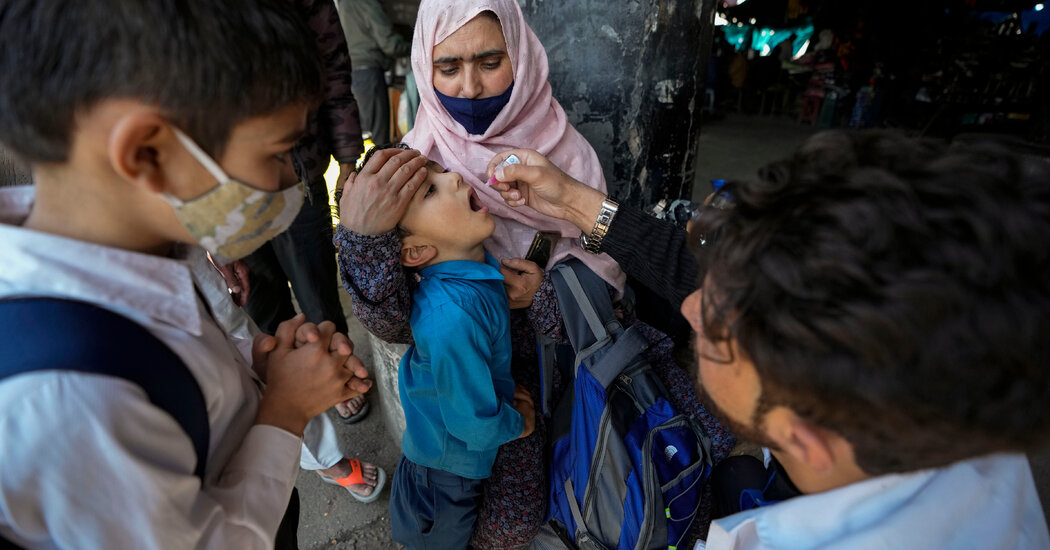
Millions of children around the world, most of them in the poorest countries, missed some or all of their childhood vaccinations over the past two years because of a combination of conflicts, climate emergencies, misinformation campaigns, pandemic lockdowns and Covid vaccination efforts that diverted resources, according to a new analysis from Unicef, the United Nations agency that vaccinates half the world’s children.It is the largest backslide in routine immunization in 30 years, the report said. Combined with rapidly rising rates of malnutrition, it has created conditions that could threaten the lives of millions of young children.“This is an emergency for children’s health — we have to think about the immediate stakes, the number of children that are going to die because of this,” said Lily Caprani, head of advocacy for Unicef. “It’s not in a few years’ time; it’s quite soon.”The percentage of children worldwide who had received three doses of the vaccine against diphtheria, tetanus and pertussis, known as DTP3 — which Unicef uses as a benchmark for immunization coverage — fell five points between 2019 and 2021, to 81 percent. Measles vaccination rates also fell to 81 percent, and polio coverage dropped significantly, too. A vaccination coverage rate of 94 percent is necessary for herd immunity, to interrupt the chain of transmission of a disease.This translates to 25 million children who did not receive a basic intervention to protect against lethal illnesses.The number of what Unicef calls zero-dose children — those who have not received a single dose of the most basic vaccines — increased sharply during the pandemic, to 18 million from 13 million in 2019. This group includes half of all children who die before age 5.The agency had been hoping that after a sharp decline in 2020 that was driven by lockdowns, school closures and other Covid response measures, childhood vaccination coverage would rebound in 2021, said Dr. Niklas Danielsson, Unicef’s Nairobi-based senior immunization specialist.But instead, the problem got worse. DTP3 and measles coverage are at the lowest level since 2008, the report found.Anti-vaccine demonstrators in São Paulo in February.Nelson Almeida/Agence France-Presse — Getty ImagesDr. Danielsson said the rate of vaccination coverage in 2021 matched that of 2008. “But since then, the birth cohorts have increased, which means that the number of children who do not complete vaccinations, or do not even start, is the largest in the last 30 years,” he said.He and many others in the child immunization field had anticipated a recovery last year as health systems learned to adapt to the demands of the pandemic. Instead, misinformation campaigns about Covid vaccination, and broader mistrust of governments over public health measures, spilled over to deter routine immunization, he said.At the same time, health systems in the poorest countries scrambled to carry out limited Covid vaccination, diverting critical access to freezers and the health workers to put shots in arms.The world made sustained progress on childhood vaccination coverage through the 1990s and the first decade of this century. Rates then began to plateau, because the remaining children were the hardest to reach, such as those in active war zones or in nomadic communities. But before the pandemic, there had been a redoubled commitment, with support from organizations like the Bill and Melinda Gates Foundation and Gavi, the global vaccine alliance, to try to reach the remaining pockets of zero-dose children. Covid has pulled away much of that attention and investment.Over the last two years, India, Nigeria, Indonesia, Ethiopia and the Philippines recorded the highest numbers of children who had missed out on vaccines.Brazil was also on the list of the 10 most-affected countries, a harsh shift for a country once renowned for its high vaccination coverage rates. About 26 percent of Brazilian infants had received no vaccines in 2021, compared with 13 percent in 2018.“The work of 30 years has been lost overnight,” said Dr. Carla Domingues, an epidemiologist and former coordinator of Brazil’s national immunization program.Vaccination became a politicized subject in Brazil during the Covid pandemic, she said. The federal government, led by President Jair Bolsonaro, downplayed the significance of the coronavirus even as Brazil had one of the world’s highest death rates and said he would not get his own 11-year-old vaccinated against the virus.“For the first time, the federal government was not recommending a vaccine, and it created a whole environment of doubt that had never existed in Brazil, where vaccination was totally accepted,” Dr. Domingues said.At the same time, anti-vaccination groups that had not had much purchase in Brazil moved into the country during the pandemic, she said, and began circulating misinformation in Portuguese on social media.And all of this was happening, Dr. Domingues said, at a time when Brazilians were a generation removed from the serious illnesses they were being urged to vaccinate their children against, leading them to question the necessity.“Parents don’t know the impact of measles, or of polio, so they start to pick and choose vaccinations,” she said. Data showing that acceptance of the pneumonia vaccine is higher than that for polio makes that clear. “Parents are choosing not to do polio. They say, ‘It’s been 30 years with no polio, so do I need to do this?’”And yet they have a clear sign of the risk, she said: A handful of measles cases were found earlier this year in São Paulo, six years after Brazil had reported eradicating the disease. “Measles is now circulating — that gives us a concrete example of what could happen with diphtheria, meningitis and so many other diseases,” she said.Administering a polio vaccine in Manila in 2019. Forty-three percent of infants in the country had had no vaccinations last year.Eloisa Lopez/ReutersIn the Philippines, 43 percent of infants had not had any vaccinations last year. There, the problem lies partly in tough Covid public health measures, including lockdowns. “If you are not allowed to take your children out apart from certain hours of the day, if they can’t go to school, if living costs are increasing, going to a health enter to have your child vaccinated drops down on your priorities,” Dr. Danielsson said.But the Philippines’ situation is also complicated by lingering mistrust of vaccination after a wide rollout of a dengue vaccine in 2016 that later proved to have caused more severe cases of the disease in some who had received it.Ms. Caprani of Unicef said an extraordinary amount of resources and commitment would be needed to bring vaccine levels back up to where they had been.“It’s not going to be enough to just go back to business as usual and restore ordinary, routine immunization,” she said. “We’re going to need really concerted investment and catch-up campaigns, because there’s a growing cohort of millions of children who are completely unimmunized living in countries that have high levels of malnutrition and other stresses.”In Zimbabwe, for example, there is currently a measles outbreak in which one in 10 children hospitalized with the illness is dying. (The typical mortality rates are one in 100 in low-income countries and below one in 1,000 in high-income nations.)Dr. Fabien Diomande, a polio eradication expert with the Task Force for Global Health who worked for years on polio campaigns in West and Central Africa, said reversing the decline in childhood immunization would require new nimbleness, innovation and resources.“It’s like we’re in a new world — those emergencies not going to disappear,” he said. “We will still have Covid. We will still have climate crises. We have to learn how to work in the context of multiple public health emergencies.”Dr. Domingues in Brazil said that Covid vaccination efforts could offer some lessons for how to catch up. Brazil achieved high vaccination coverage by providing pop-up vaccination posts and making shots available at night and on weekends.Ms. Caprani said that while there was a heartening renewed interest in global health cooperation because of Covid, investment in new surveillance measures and other novelties risked distracting from the simple intervention needed to address the child immunization crisis: deployment of thousands of community health workers.“We aren’t going to solve this with poster campaigns or social media posts,” she said. “You need outreach by reliable, well-trained, properly compensated community health workers who are out there day in, day out, building trust — the kind of trust that means you listen to them about vaccines. And there simply aren’t enough of them.”Jason Gutierrez

Read more →

Does this ring a bell? Wild bats can remember sounds for years

There are certain skills that once we acquire them, we rarely have to relearn them, like riding a bike or looking both ways before crossing a street. Most studies on learning and long-term memory in the wild focus on a handful of animal species. Now, in a publication in Current Biology, researchers working at the Smithsonian Tropical Research Institute (STRI) share the first report of long-term memory in frog-eating bats (Trachops cirrhosus).
“Frog-eating bats are an excellent emerging model organism for studying cognitive and sensory ecology,” explains biologist M. May Dixon, lead author of the paper, who just finished her doctoral degree at the University of Texas at Austin, “learning plays a big part in their lives.”
The bats’ ability to learn and retain information means that when they are hunting frogs, their main prey, they don’t have to continuously relearn which frog calls indicate that a frog is good to eat, poisonous, or too big to carry.
Dixon and colleagues trained 49 wild bats to respond to cellphone ringtones played through speakers. Bats responding to two of the tones found a bait fish reward on the speaker every time, but when they responded to three other tones, they were never rewarded. They quickly learned to fly to the speaker when ringtones indicated a snack, and not to respond to the other tones. The bats were then microchipped and released back into Panama’s Soberania National Park.
Researchers recaptured eight trained bats between one to four years later, and when they played the experimental sounds again, the bats recognized and responded to the two rewarded ringtones even four years later. For comparison, the experiment included 17 untrained frog-eating bats that usually twitched their ears attentively but did not fly to the sounds.
When Dixon was working as a STRI intern with PhD student and co-author Patricia Jones to find out if the bats could learn which novel tones meant a reward by watching the responses of other bats, she realized that she could also find out if the bats could remember the tones.

Read more →