Alzheimer's breakthrough: Genetic link to gut disorders confirmed

People with gut disorders may be at greater risk of developing Alzheimer’s Disease (AD).
A world-first Edith Cowan University (ECU) study has confirmed the link between the two, which could lead to earlier detection and new potential treatments.
AD destroys memory and thinking ability and is the most prevalent form of dementia.
It has no known curative treatments and is expected to affect more than 82 million people and cost US$2 trillion by 2030.
Previous observational studies have suggested a relationship between AD and gastrointestinal tract disorders, but what underpins these relationships had been unclear — until now.
ECU’s Centre for Precision Health has now provided new insights into these relationships by confirming a genetic link between AD and multiple gut disorders.

Read more →

Synthetic tools conduct messages from station to station in DNA

Rice University researchers have demonstrated that CRISPR-Cas9, increasingly famous as a gene-editing tool, can be employed in powerful additional ways in human cells.
A team led by Rice bioengineer Isaac Hilton and graduate student Kaiyuan Wang used deactivated Cas9 (dCas9) proteins to target key segments of the human genome and synthetically trigger the transcription of human genes.
By using dCas9 to recruit proteins that can naturally turn genes on, the Rice team was able to reveal important details about human promoters and enhancers — the pieces of our DNA that coordinate when, and to what extent, our genes are turned on — which in turn controls the behaviors of our cells.
“We’re using these synthetic biology tools to improve the ability to engineer gene expression and program human cells, and consequently to better understand how our genes work naturally,” Hilton said. “These types of studies are important because in the long run this knowledge and these technical capabilities can enable better gene and cell therapies and biotechnologies.”
Hilton said the study in Nucleic Acids Research highlights the growing potential of CRISPR-Cas9-based tools for synthetic gene control and cellular engineering. The team’s strategy also demonstrates the power of dCas9 to influence and understand the epigenetic factors that animate the human genome.
“Only around 2% of our genome contains protein-coding genes, and the remaining 98% is so-called noncoding DNA,” Hilton said. “Enhancers and promoters are key parts of our noncoding genomes and, although the vast majority of these elements do not make conventional genes, there is fascinating genetic variation in noncoding DNA. This variation gives us the magnificent diversity that enables our species to be both amazing and adaptable.

Read more →

Demand for Monkeypox Vaccine Exceeds Supply, C.D.C. Says

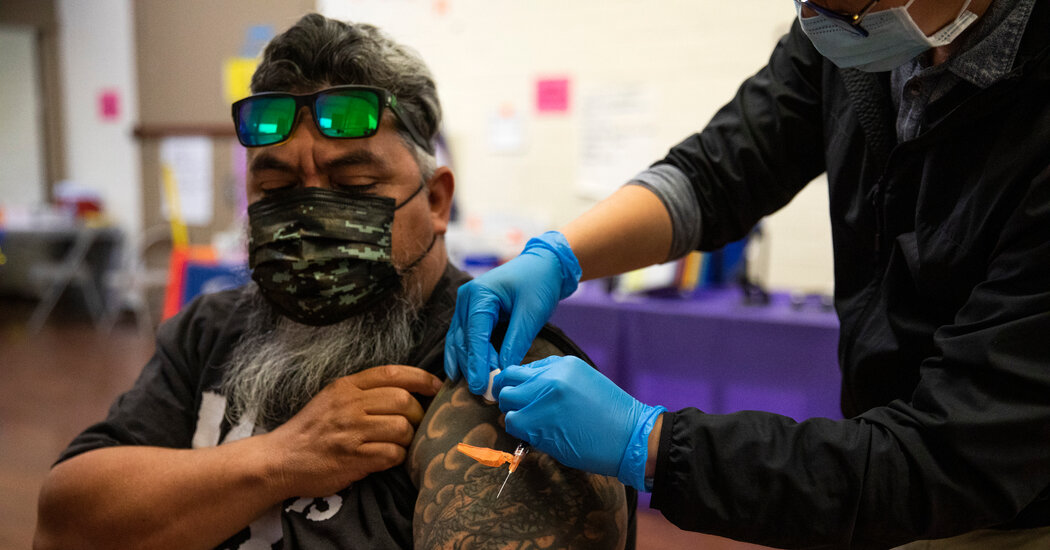
The United States has ordered nearly seven million doses in total, but most of them will not arrive for months.As the monkeypox outbreak grows in the United States, demand for the vaccine is outstripping the nation’s supply, Dr. Rochelle Walensky, the director of the Centers for Disease Control and Prevention, said at a news briefing on Friday.“We don’t yet have all the vaccine that we would like in this moment,” she said.When the supply crunch will ease is unknown. The federal government made another 131,000 doses available to states and other jurisdictions on Friday. But the scope of the outbreak remains unclear, in part because diagnostic testing has been slow and limited.Nearly 1,500 cases have been identified in the United States, primarily in men who have sex with men, and the figure is likely to rise in the coming weeks, Dr. Walensky said. Globally, more than 11,000 cases have been identified in 65 countries, she added.“Our window of opportunity to control it is rapidly closing,” said Anne Rimoin, an epidemiologist and monkeypox expert at the University of California, Los Angeles. “There are probably a lot more cases out there than we’re aware of.”The Department of Health and Human Services ordered an additional 2.5 million doses of the vaccine, known as Jynneos, on Friday, but those doses are not scheduled to arrive until next year.A previously ordered 2.5 million doses should begin arriving late this year, officials said.“It’s like saying we have a tanker of water coming next week when the fire is happening today,” said Gregg Gonsalves, an epidemiologist at the Yale School of Public Health.Public health experts have criticized the U.S. response to the outbreak as slow and inefficient, beset by some of the same problems that plagued the early months of the Covid-19 pandemic.Initially, for instance, monkeypox testing was extremely limited, and each diagnosis had to be confirmed by the C.D.C., creating delays that might have allowed the virus to spread unseen and unchecked.“Now we’re in a situation where it’s going to be exceedingly difficult, with limited supplies of the vaccine and still some problems with testing, to get this under control,” Dr. Gonsalves said.The C.D.C. has teamed up with five commercial testing companies to expand the nation’s testing capacity, which now stands at 70,000 samples per week, up from 6,000 at the beginning of the outbreak.What to Know About the Monkeypox VirusCard 1 of 5What is monkeypox?

Read more →

Ghana confirms first cases of deadly Marburg virus

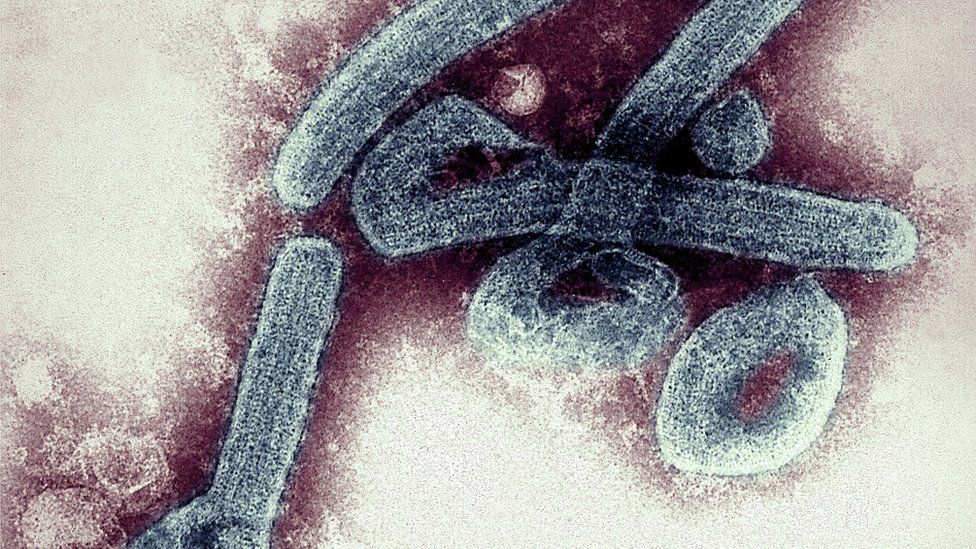
Published8 hours agoSharecloseShare pageCopy linkAbout sharingImage source, Getty ImagesGhana has confirmed its first two cases of the deadly Marburg virus, a highly infectious disease in the same family as the virus that causes Ebola.It says both patients died recently in hospital in the southern Ashanti region.Their samples came back positive earlier this month and have now been verified by a laboratory in Senegal.Health officials in the West African nation say 98 people are now under quarantine as suspected contact cases.No treatment yet exists for Marburg – but doctors say drinking plenty of water and treating specific symptoms improves a patient’s chances of survival.The virus is transmitted to people from fruit bats and spreads between humans through the transmission of bodily fluids.It is a severe, often fatal illness with symptoms including headache, fever, muscle pains, vomiting blood and bleeding. Officials are warning people to keep away from caves and to thoroughly cook all meat products before consuming them. In Africa, previous outbreaks and sporadic cases have been reported in Angola, Democratic Republic of the Congo, Kenya, South Africa and Uganda, the WHO says. The first ever Marburg outbreak was in Germany in 1967 where seven people died.The virus killed more than 200 people in Angola in 2005, the deadliest outbreak on record according to the global health body.More on this storyEbola-like Marburg virus found in Guinea10 August 2021

Read more →

Woman had smear test every day to help its discovery

Dr George Papanicolaou was the inventor of the Pap smear test which can detect early cancerous cells in the cervix and has saved millions of women’s lives. But it took a long time for the medical community to accept his research.Dr Pap was helped by his wife who, as well as providing emotional support, took a smear test every day for 20 years to provide him with more evidence. Witness History spoke to the couple’s great-niece, Olga Stamatiou.

Read more →

Vaccine protection against COVID-19 short-lived, booster shots important, new study says

Since COVID-19 vaccines first became available to protect against infection and severe illness, there has been much uncertainty about how long the protection lasts, and when it might be necessary for individuals to get an additional booster shot.
Now, a team of scientists led by faculty at the Yale School of Public Health and the University of North Carolina at Charlotte has an answer: strong protection following vaccination is short-lived.
The study is the first to quantify the likelihood of future infection following natural infection or vaccination by the Moderna, Pfizer, Johnson & Johnson, or Oxford-AstraZeneca vaccines. The findings are published in the Proceedings of the National Academy of Sciences.
The risk of breakthrough infections, in which a person becomes infected despite being vaccinated, depends on the vaccine type. According to the study, current mRNA vaccines (Pfizer, Moderna) offer the greatest duration of protection, nearly three times as long as that of natural infection and the Johnson & Johnson and Oxford-AstraZeneca vaccines.
“The mRNA vaccines produce the highest levels of antibody response and in our analysis confer more durable protection than other vaccines or exposures,” said Jeffrey Townsend, the Elihu Professor of Biostatistics at Yale School of Public Health and the study’s lead author. “However, it is important to remember that natural immunity and vaccination are not mutually exclusive. Many people will have partial immunity from multiple sources, so understanding the relative durability is key to deciding when to provide a boost to your immune system.”
Dependable protection against reinfection requires up-to-date boosting with vaccines that are adapted to address changes in the virus that occur as part of its natural evolution over time, the researchers said.
“We tend to forget that we are in an arms race with this virus, and that it will evolve ways to evade both our natural and any vaccine-derived immune response,” said Alex Dornburg, assistant professor at the University of North Carolina at Charlotte, who led the study with Townsend. “As we have seen with the Omicron variant, vaccines against early virus strains become less effective at combating new strains of the virus.”
The researchers’ data-driven model of infection risks through time takes advantage of the striking similarities of reinfection probabilities between endemic coronaviruses (which cause “common colds”) and SARS-CoV-2, the virus that causes COVID-19. These similarities allowed the scientists to make longer-term projections than studies focused solely on current-day infections. Furthermore, the model placed antibody responses following natural and vaccine-mediated immunity into the same context, enabling comparison.
“SARS-CoV-2 mirrors other endemic coronaviruses that also evolve and reinfect us despite natural immunity to earlier strains,” said Townsend. “Continual updating of our vaccinations and booster shots is critical to our fight against SARS-CoV-2.”
Funding for the research was provided by the National Science Foundation.
Story Source:
Materials provided by Yale School of Public Health. Note: Content may be edited for style and length.

Read more →

How blood vessels remember a stroke

Networks adapt over time and in this way form a kind of memory. This is the key finding of a new study by researchers from the Max Planck Institute for Dynamics and Self-Organization in Göttingen and the Technical University of Munich. They show that the structure of blood vascular network is dynamic and can adapt to external factors. In particular, the scientists found that rarely used connections are weakening more and more until they disappear eventually.
The vascular system within our body provides a constant flow of nutrients, hormones and other resources, thus ensuring efficient transport. The researchers Komal Bhattacharyya, David Zwicker, and Karen Alim investigated in which way such a network is able to adapt and change over time. Using computer simulations, they modelled the network and identified adaptation rules for its connections.
“We found that the strength of a connection within a network depends on the local flow,” explains Karen Alim, corresponding author of the study. “This means that links with a low flow below a certain threshold will decay more and more until they eventually vanish,” she continues. As the amount of biological material to build the vascular system is limited and should be used in an efficient way, this mechanism offers an elegant way to streamline the vascular system.
Changes in the network are persistent
Once a connection has become very weak due to a low flow rate, it is very difficult to recover that connection. A common example for this is the blockage of a blood vessel which in a bad case even might lead to a stroke. During a stroke some blood vessels in a certain brain region become very weak due of the blockage of blood flow. “We found that in such a case, adaptations in the network are permanent and are maintained after the obstacle is removed. One can say that the network prefers to reroute the flow through existing stronger connections instead of re-growing weaker connections — even if the flow would require the opposite,” explains Komal Bhattacharyya, principal author of the study.
With this new understanding of network memory, the researchers can now explain that blood flow permanently changes even after successful removal of the clot. This memory capability of networks can also be found in other living systems: the slime mold Physarum polycephalum uses its adaptive network to navigate its environment based on imprints by food stimuli, as demonstrated previously.
Story Source:
Materials provided by Max Planck Institute for Dynamics and Self-Organization. Note: Content may be edited for style and length.

Read more →

New insights into melanoma brain metastases

Brain metastasis is one of the most common causes of cancer-related deaths and occurs very frequently in patients with advanced melanoma. Although new immunotherapies are effective in some patients with melanoma brain metastases, little is known about the reasons for melanoma’s spread to the brain and the lower response rates to many therapies.
Columbia researchers have now completed one of the most comprehensive studies of the cells inside melanoma brain metastases, uncovering details that could spur the development of a new generation of therapies.
“Brain metastases are extremely common in patients with melanoma, but we have only had a rudimentary understanding of the underlying biology,” says study leader Benjamin Izar, MD, PhD, assistant professor of medicine at Columbia University Vagelos College of Physicians and Surgeons. “Our study gives us new insights into the genomics, immunology, and spatial organization of these tumors and serves as a foundation for further discovery and therapeutic exploration.”
The findings were published online in Cell.
Innovative methods allow for deeper analysis
To begin understanding why melanoma brain metastases evade current treatments, Izar and his team needed to invent new techniques for performing single-cell genetic analyses of frozen brain samples.

Read more →

US monkeypox outbreak: Demand for vaccines outstrips supply

Published2 days agoSharecloseShare pageCopy linkAbout sharingImage source, Getty ImagesUS health officials say they do not have enough monkeypox vaccines to cope with surging demand. The US has seen more than 1,800 cases so far, though that is thought to be an undercount as testing has also lagged.There has been growing concern about the rate at which monkeypox is spreading – especially in New York City, the epicentre of the US outbreak. The disease, characterised by lesions on the skin, usually clears up on its own but can be extremely painful. Most confirmed cases have been among men who have sex with men, although anyone can be infected with the virus.What is monkeypox and how do you catch it? “We don’t yet have all the vaccine that we would like in this moment,” US Centers for Disease Control director Rochelle Walensky told a news briefing on Friday.The US has received 370,000 out of nearly 7m vaccine doses that the government has purchased in total. But millions of the doses are not expected to arrive until next year.The federal government has distributed about 156,000 doses nationwide and expects to start shipping another 130,000 doses from Monday, according to the US Department of Health and Human Services.Earlier this week, New York city’s vaccinations website crashed as thousands of people tried to book vaccine appointments at once.New York City Health Commissioner Ashwin Vasan apologised for the patchy roll-out of the vaccine.”We own it. You know, those mistakes shouldn’t happen and so we’re working to correct those and do better,” he said at a news conference. During a call on Tuesday with Biden administration officials, New York Mayor Eric Adams asked for the city to be allocated more doses.The true scope of the US outbreak is unknown as diagnostic testing has lagged and it can take up to three weeks for symptoms to appear. A month ago the US had just 45 cases.Image source, Getty Images”We’re still having problems with availability of testing and vaccine supply, all these issues that we saw with Covid,” Gregg Gonsalves, an associate professor of epidemiology at the Yale School of Public Health, told Kaiser Health News last week. “Now, the prospects for containment are receding quickly.”The US has bought more than 1.1m doses of the Jynneos vaccine produced by Bavarian Nordic in Denmark. Hundreds of thousands more doses are expected to arrive soon in the US after American federal health officials said they had completed an inspection of the Danish plant.More than 12,500 cases of monkeypox have been reported in nearly 70 countries, according to the US Centers for Disease Control.

Read more →

Vaccine protection waned this spring but boosters helped, the C.D.C. reports.

The emergence of highly contagious Omicron subvariants this spring in the United States appeared to reduce the protection offered by vaccines against Covid hospitalizations, scientists from the Centers for Disease Control and Prevention reported on Friday.But first and second booster shots helped to shore up people’s defenses, the agency found. The additional shots raised people’s levels of protection against those Omicron subvariants and restored some of the protection that was lost as time passed since their last shots.“Booster doses should be obtained immediately when persons become eligible,” the C.D.C. scientists wrote.The findings, however, came with a notable caveat: Measurements of vaccine effectiveness have been complicated by the number of unvaccinated people who have been infected by the virus, especially during the wintertime surge of Omicron cases.Those prior infections give people some protection against Covid. As a result, in studies like the C.D.C.’s that compare outcomes from the virus in vaccinated and unvaccinated people, the vaccines appear less protective than they really are.The C.D.C. scientists used what little information they had about patients’ infection histories to try to account for those difficulties. Using data from hospitals across 10 states, the agency’s scientists studied some 58,000 hospitalizations with a diagnosis of Covid-like illness from mid-December through mid-June. The study focused on adults with healthy immune systems.By late April, subvariants of Omicron known as BA.2 and BA.2.12.1 had outcompeted the version of Omicron that spread across the country over the winter.After those subvariants became dominant, the Pfizer-BioNTech and Moderna vaccines were less effective in keeping people from being admitted to the hospital with Covid than they had been during the wintertime Omicron wave, the study found.Two doses of the vaccines were 24 percent effective against hospitalizations after the variants took over, compared with 61 percent during the period when the original version of Omicron dominated. (Those figures held for people who had been given their second dose at least five months earlier.)That decline probably partly resulted from the ability of the subvariants to evade people’s immune defenses from the vaccine, and partly from unvaccinated people drawing some protection from earlier infections.A booster dose helped considerably, even though the benefits of those additional doses appeared to wane over time. Once the subvariants became the main sources of infection, a third dose of Pfizer or Moderna raised the vaccines’ effectiveness against hospitalization to 69 percent initially, and 52 percent after four months or more.The third doses had been even more protective during the wintertime surge of the original version of Omicron.Second boosters were authorized in late March for people 50 and older with healthy immune systems, and those additional boosters appeared to help people weather the subvariant surge, the C.D.C. found.At least a week after a fourth dose, the vaccines were 80 percent effective against hospitalizations with Covid, the agency said. That was a considerable lift from the 55 percent effectiveness offered by three doses after four months in that age group.It was not clear how quickly the protection offered by that fourth dose would diminish. The study also did not measure the vaccines’ performance against BA.5, the latest Omicron subvariant, which appears to be driving a fresh surge of cases and hospitalizations. That subvariant has become dominant among new U.S. cases and appears to be the most evasive form of Omicron to spread in the country.With hospital admissions rising, federal health officials have urged eligible people to get booster doses as soon as possible, saying that those shots would not prevent people from getting an additional dose of an updated, variant-specific vaccine in the fall or winter. The latest results reinforced the need for booster shots, the agency said.“Given recent increases in deaths and hospitalizations associated with the BA.5 variant,” the C.D.C. said on Friday, “everyone should stay up to date with recommended Covid-19 vaccinations, including additional booster doses for those who are moderately to severely immunocompromised and adults over 50.”

Read more →