Finding the right target to prevent medulloblastoma relapse

When MUSC Hollings Cancer Center researcher Jezabel R. Blanco, Ph.D., began studying neurosciences, first as a graduate student and later as a postdoctoral fellow, her research was focused on understanding the mechanisms underlying brain disease, both in the context of neurodegeneration and cancer, but mostly from a basic research angle. 
However, after she arrived at MUSC Darby Children’s Research Institute and Hollings Cancer Center as an assistant professor in 2020, she began working with the doctors who treat pediatric brain cancer patients and interacting with the families of some of these kids. She heard their stories of children with medulloblastoma, the cancer that she studies, and their firsthand accounts changed the way she thought about things. 
“The toxicity that is linked to the treatment that they receive is terrible,” she said. 
Further, because there is less research into pediatric cancers than adult cancers, most of the drugs used to treat medulloblastoma are decades old – the newest was developed in the late 1990s. Some of the others were approved  back in the ‘60s and ‘70s, she said. And when patients relapse, doctors don’t have any further options for them. While the five-year survival rate for medulloblastoma is about 70%, for those kids who relapse, this number is close to zero. Unfortunately, she said, 30% of these children will relapse. 
This has made Blanco determined to understand the biological mechanisms that cause relapse so that new drugs can be developed.  
“We need to have better treatments for these kids. We need treatments to be more targeted so they will be less toxic and more effective,” she said.  
She is already making progress.  

Read more →

Do benefits of physical, mental activity on thinking differ for men and women?

Studies have shown that physical and mental activity help preserve thinking skills and delay dementia. A new study suggests that these benefits may vary for men and women. The study is published in the July 20, 2022, online issue of Neurology®, the medical journal of the American Academy of Neurology.
The study looked at the effects of physical and mental activities, such as reading, going to classes, or playing cards or games, on cognitive reserve in the areas of thinking speed and memory. Cognitive reserve is the buffer that occurs when people have strong thinking skills even when their brains show signs of the underlying changes associated with cognitive impairment and dementia.
“We found that greater physical activity was associated with greater thinking speed reserve in women, but not in men,” said study author Judy Pa, PhD, of the University of California, San Diego. “Taking part in more mental activities was associated with greater thinking speed reserve for both men and women.”
Greater physical activity was not associated with memory reserve in men or women.
The study involved 758 people with an average age of 76. Some had no thinking or memory problems, some had mild cognitive impairment, and some had dementia. The participants had brain scans and took thinking speed and memory tests. To calculate cognitive reserve, people’s thinking tests scores were compared against the changes in the brain associated with dementia, such as the total volume of the hippocampus, a key brain region impacted by Alzheimer’s disease.
People were also asked about their usual weekly physical activity. For mental activity, they were asked whether they participated in three types of activities in the past 13 months: reading magazines, newspapers or books; going to classes; and playing cards, games or bingo. They were given one point for each type of activity, for a maximum of three points.

Read more →

Improving serious illness communication for patients with advanced cancer

Patients with advanced cancer want and need to partner with their care team to make treatment decisions that reflect their own values and align with what matters most. “Serious illness conversations” include two equally important parts: clinicians sharing information on prognosis and treatment options, and patients and their loved ones sharing their values and preferences. Despite professional guidelines recommending early serious illness conversations for all patients with advanced cancer, many times these conversations occur, unfortunately, late or not at all.
As the first part of a larger initiative across Dartmouth Cancer Center, a broad team of clinician-researchers, clinical partners, data scientists and even a patient partner have implemented a quality improvement project that was able to increase the occurrence and documentation of these important conversations in two disease-specific medical oncology clinics. Over the 18-month study period, the teams increased their baseline documentation rate from 0% to 70%, or 43 of 63 eligible patients.
Results of the project, “Interdisciplinary Approach and Patient/Family Partners to Improve Serious Illness Conversations in Outpatient Oncology,” are newly published in JCO Oncology Practice, an American Society of Clinical Oncology journal.
“We partnered with our colleagues in Palliative Care, who provided an evidence-based training program to increase our knowledge, skills and comfort in leading serious illness conversations,” says lead author Garrett T. Wasp, MD, a medical oncologist in Dartmouth Cancer Center’s Head & Neck Cancer Program.
The group identified four drivers for their success: standardized work, an engaged interdisciplinary team, engaged patients and families, and system-level support. With the help of Dartmouth Health’s technology team, clinicians succeeded in documenting serious illness conversations in a standardized, one-page format that was easily accessible in the electronic medical record. The work also inspired creation of clinician-facing tools that allow for automated tracking and reporting of serious illness conversations.
The Serious Illness Conversation Model of Care is one intervention in the Promise Partnership Learning Health System: a joint venture between Dartmouth Cancer Center, The Dartmouth Institute for Health Policy & Clinical Practice and Dartmouth Health. Co-author and palliative care physician Amelia M. Cullinan, MD, joined by a team of skilled communication coaches, has spread the intervention to three additional clinical oncology groups, with two more onboarding in summer of 2022.
“These partnerships have led to insights into strategies that both individuals and health systems can use to enhance communication and decision-making for all serious illnesses, not just cancer,” says Wasp. “More effective patient-clinician communication will lead to better adherence to professional guidelines and should produce care that is more patient-centered.”
More publications and presentations at national meetings of this and future work are planned, including using patient-reported outcomes to help better access the impact.
Story Source:
Materials provided by Dartmouth-Hitchcock Medical Center. Original written by Lara Stahler. Note: Content may be edited for style and length.

Read more →

Post-COVID lung disease shares origins with other scarring lung disorders

While most people recover from COVID-19 within a week or two, up to one-third of survivors experience persistent or new symptoms weeks and months after initial infection.
One form of “long COVID” is interstitial lung disease (ILD), a group of chronic pulmonary disorders characterized by inflammation and scarring (fibrosis) that make it hard for the lungs to get enough oxygen. Little is currently known about ILD, from diagnosis to prognosis to management. In its most severe form, the disease is fatal without a lung transplant.
In a new study, published in the July 20, 2022 online issue of eBioMedicine, researchers at University of California San Diego provide the first insights into the fundamental cellular pathologies that drive ILD.
“Using an artificial intelligence (AI) approach, we found that lung fibrosis caused by COVID-19 resembles idiopathic pulmonary fibrosis (IPF), the most common and the deadliest form of ILD,” said co-senior study author Pradipta Ghosh, MD, professor in the departments of Medicine and Cellular and Molecular Medicine at UC San Diego School of Medicine. “At a fundamental level, both conditions display similar gene expression patterns in the lungs and blood, and dysfunctional processes within alveolar type II (AT2) cells.”
AT2 cells play several critical roles in pulmonary function, including the production of lung surfactant that keeps lung cells from collapsing after exhalation and regeneration of lung cells after injury.
“The findings are insightful because AT2 cells are known to contain an elegant quality control network that responds to stress, internal or external,” said Ghosh. “Failure of quality control leads to broader organ dysfunction and, in this case, fibrotic remodeling of the lung.”
To conduct their study, Ghosh collaborated with co-senior author Debashis Sahoo, PhD, associate professor in the departments of Computer Science, Engineering and Pediatrics at UC San Diego to access transdisciplinary approaches, such as AI-assisted ‘big data’ analysis.

Read more →

Novel gene therapy could reduce bleeding risk for haemophilia patients

A single gene therapy injection could dramatically reduce the bleeding risk faced by people with haemophilia B, finds a study involving UCL researchers.
For the paper, published in the New England Journal of Medicine, experts from UCL, Royal Free Hospital and biotechnology company Freeline Therapeutics trialled and continue to evaluate a new type of adeno-associated virus (AAV) gene therapy candidate, called FLT180a, to treat severe and moderately severe cases of the condition.
Haemophilia B is a rare and inherited genetic bleeding disorder caused by low levels of the factor IX (FIX) protein, needed for forming blood clots that help prevent or stop bleeding. The gene responsible for making FIX protein is located on the X chromosome, so the severe form of haemophilia B is much more common in men.
Currently, patients with haemophilia B need to inject themselves regularly — usually weekly — with recombinant FIX, i.e. regular replacement therapy to prevent excessive bleeding. Despite advances in treatment, patients may continue to see debilitating joint damage.
The Phase I/II multi-centre clinical trial, called B-AMAZE, and the related long-term follow up study found that one-time treatment with FLT180a led to sustained production of FIX protein from the liver in nine of ten patients, across four different dose levels, removing the need for regular replacement therapy.
Out of 17 male patients aged 18 or over who underwent screening, ten with severe or moderately severe haemophilia B took part in the 26-week trial of FLT180a. They are also all enrolled in the long-term follow up study to assess safety and durability of FIX expression for 15 years.

Read more →

Hypertension elevates risk for more severe COVID-19 illness

Hypertension more than doubles the risk of hospitalization related to Omicron infection, even in people who are fully vaccinated and boosted, according to a new study led by investigators in the Smidt Heart Institute at Cedars-Sinai. The findings are published in the journal Hypertension.
The risk is especially widespread given that nearly 1 out of every 2 adults in the U.S. have hypertension, according to the U.S. Centers for Disease Control and Prevention.
“The take-home message is that avoiding infection is extremely important — even when the circulating viral variant is presumed to cause mild disease in most people,” said Joseph E. Ebinger, MD, a clinical cardiologist and director of clinical analytics at the Smidt Heart Institute and first author of the study.
By reviewing electronic medical records, Cedars-Sinai investigators identified 912 people who were fully vaccinated with an mRNA vaccine, received a booster shot and were subsequently diagnosed with COVID-19 during the Omicron surge that occurred in Southern California from Dec. 1, 2021 through April 20, 2022. Of these individuals, 145 required hospitalization.
“We were surprised to learn that many people who were hospitalized with COVID-19 had hypertension and no other risk factors,” said Susan Cheng, MD, MPH, director of the Institute for Research on Healthy Aging in the Department of Cardiology at the Smidt Heart Institute and a senior author of the study. “This is concerning when you consider that almost half of American adults have high blood pressure.”
The team also found that chronic kidney disease, having had a heart attack, or heart failure, greatly increases the risk of hospitalization after infection.

Read more →

Transformational therapy cures haemophilia B

Published8 hours agoSharecloseShare pageCopy linkAbout sharingImage source, Elliott MasonA “transformational” therapy has effectively cured people with the bleeding disorder haemophilia B, say British doctors. The treatment corrects a genetic defect that leaves people’s blood struggling to clot and stop bleeding. Elliott Mason, who was part of the trial which tested the therapy, says his life now feels “completely normal”. The medical team says the majority of adults with haemophilia could be cured in the next three years. From the day Elliott was born, he was unable to make enough of a crucial protein called clotting factor IX. When you cut yourself and it scabs over, clotting factor IX is one of the proteins that stops the bleeding. It meant Elliott grew up “anxious of getting hurt”, and teachers “wrapped me up in bubble wrap”. The sport he wanted to play – rugby – was completely off limits. “I didn’t like the fact that I was different and not able to do things,” he says.At one point, Elliott was having injections of factor IX every other day in order to prevent a deadly bleed. But he managed to stay healthy, unlike many others with haemophilia who face severe damage to their joints from the bleeding.”We have a lot of young patients in excruciating agony and there’s nothing we can do to reverse the joint damage,” says Prof Pratima Chowdary, from the Royal Free Hospital and University College London. Gene therapyElliot was given an engineered virus that was filled with the instructions for manufacturing the missing factor IX.The virus acts like a microscopic postman that delivers the blueprints to the liver, which then starts producing the clotting protein.It was a one-off infusion that took about an hour to drip into Elliott’s body. He recalls being “astonished” to see the amount of factor IX in his blood go from only 1% of normal levels to normal. Image source, Elliott MasonThe findings, published in the New England Journal of Medicine, showed nine out of 10 patients given the therapy no longer needed their clotting factor IX injections. “I’ve not had any treatment since I had my therapy, it’s all a miracle really, well it’s science, but it feels quite miraculous to me,” says Elliott, who now lives in London.”My life is completely normal, there’s nothing that I have to stop and think ‘how might my haemophilia affect this?’.” For Elliott, that includes skiing and riding a motorbike. ‘Very excited'”We’re very excited by the results,” said Prof Chowdary. She says there was a “transformational impact” about a year after the therapy, when suddenly people realised: “I don’t need to worry about my haemophilia at all.” This trial is just the latest in a series of breakthroughs in treating both haemophilia A and B. Haemophilia A trial results ‘mind-blowing’Prof Chowdary told me she’s now “looking for my next job”, as curing haemophilia “will be a reality for the majority of the adults in the next one to three years.”But there are still questions which need answering:How much will the gene therapies cost? Current clotting factor injections can cost between £150,000 and £200,000 per patient per year How long will the treatment last? Studies suggest it will be at least a decade, but nobody knows for sureHow early in life can the therapy be given? Before the age of 12 the liver is still developing, but scientists hope it will be an option from then onClive Smith, chairman of the Haemophilia Society, said: “This initial data is promising, but we continue to monitor gene therapy trials closely and cautiously, as with all new treatments. “If they are shown to be safe and effective, NICE [National Institute for Health and Care Excellence] and the NHS must work together to make these innovative treatments available.” Follow James on Twitter.

Read more →

Pesticide made us sterile, banana workers say

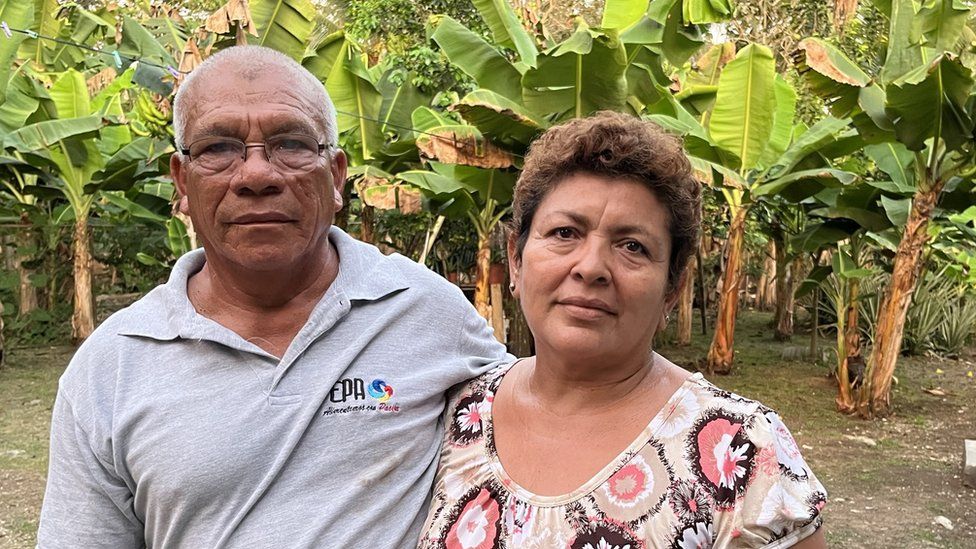
Published5 days agoSharecloseShare pageCopy linkAbout sharingTens of thousands of former banana workers say they were made sterile by a pesticide used by US companies on plantations in Latin America in the 1970s. The United States restricted and then banned its use on the US mainland because of the health risks, but workers in Central America and South America continued to be exposed to it. Grace Livingstone reports from Panama on the workers’ decades-long battle for justice. Isabel Coba Mojica was 16 years old when he got a job on a banana plantation in Panama’s Chiriquí province. When he started working at the plantation in 1967, it was run by a subsidiary of the US fruit giant United Fruit Company, which has since changed its name to Chiquita Brands International.Mr Coba was hoping to start a family with his girlfriend, but she did not fall pregnant. Eventually the couple split up and he met another woman, but his new partner also failed to conceive. Three years into his 25 years at the plantation, Mr Coba sought medical advice. The doctor tested his sperm and told him that he could not have children.”I couldn’t believe it. I went crazy, I didn’t think it was worth going on living. I felt sadness and loss,” he recalls. Mr Coba was not the only banana worker to experience medical problems.Rafael Martínez González worked on two different banana plantations run by United Fruit in Panama. Three years after starting work, Mr Martínez’s wife had a miscarriage when she was six months pregnant. The couple never conceived another baby.No gloves, no bootsAcross Panama, there are more than 1,100 former banana workers who say that a pesticide used by United Fruit on the plantations made them sterile.The pesticide, called Di-bromochloropropane or DBCP, targets microscopic worms that damaged banana plants. But it can also affect men’s fertility. Mr Martínez thinks not enough precautions were taken when the pesticide – which had several brand names including Fumazone – was sprayed. “I sprayed lots of chemicals. Normally when I sprayed Fumazone, they’d give me a mask, but they didn’t give me gloves, boots or any other protective clothing,” he says.US lawyers helped Mr Martínez and Mr Coba, along with hundreds of other Panamanians, to launch lawsuits against Chiquita and the manufacturers of the pesticide, but the two men say they never found out what happened to their legal challenge and have never received any compensation. The problem is not restricted to Panama either. Costa Rica, Ecuador, Guatemala, Honduras and Nicaragua, tens of thousands of former banana workers have sued the companies that manufactured DBCP and the fruit companies which used it. The fruit companies in question are Dole Fruit, Del Monte and Chiquita, and the manufacturers Shell, Dow Chemical, Occidental Chemical and AMVAC. Animal testing shows testicular atrophyThe lawsuits state there was evidence that DBCP caused sterility in animals as early as the 1950s. Scientists working for two of the manufacturers – Dow and Shell – carried out exposure studies on rabbits, rats and mice, which showed a reduction in sperm counts and testicular atrophy in some cases. Dr Charles Hine, one of the scientists who carried out the tests, said in a 1961 draft report for US regulators that repeated exposure to DBCP could affect human reproduction. But according to company correspondence seen by the BBC, Shell’s official in charge of registering chemicals with the authorities responded: “Leave out speculation about possible harmful conditions to man. This is not a treatise on safe use.”When the pesticide was licenced in 1964, the label made no reference to possible impacts on male fertility. Dr Hine, who became a consultant for Dow and Shell, had also advised wearing impermeable protective clothing, but the pesticide’s label did not mention any need for protective gear.Factory workers become sterileStandard Fruit (now known as Dole Fruit) began using DBCP on banana plantations in Latin America in the 1960s, while Chiquita and Del Monte began in the early 1970s. BBCI see my nephews running around and sometimes I feel a sense of loss. It’s sad, it’s painfulIsabel CobaPanamanian banana workerAccording to a lawsuit lodged in US courts, Dole and Chiquita continued to use DBCP in Central America after 1977, even though US regulators had restricted its use in mainland US because of the health risks. In that year, 35 workers at a DBCP manufacturing plant in California were found to be sterile. The US Environmental Protection Agency therefore suspended the use of DBCP on 19 crops grown in the United States in 1977 and imposed a “conditional suspension” on all other US crops, which meant it could only be used in very restricted ways: only certified applicators could handle it and they were required to wear respirators and other protective clothing. In 1979, the Environmental Protection Agency finally cancelled the registration for DBCP for all uses in the US, exempting pineapple growers in Hawaii until 1985. Even though Shell and Dow stopped manufacturing DBCP in 1977, they continued legal exports of their unused stocks of the pesticide to several Central American countries, although not to Panama after that date. Approached by the BBC, Dow said that it “stopped manufacturing DBCP on 11 August 1977, three weeks after it learned DBCP is capable of causing effects on male fertility in humans when encountered in very high doses in manufacturing plants”. GettyThe science of DBCP is clear. Dose is the determinative factor.
Low dose, outdoor, or intermittent exposures will not affect male fertilityDow ChemicalThe statement adds that “Dow’s manufacture of DBCP, and every sale or shipment of DBCP, occurred well before October 1979”, when the pesticide’s registration for uses in the US was cancelled. Shell’s brand name for DBCP was Nemagon. A Shell spokesperson said: “Shell voluntarily suspended the manufacture of Nemagon in 1977 after the US Environmental Protection Agency first raised concerns about the effects of DBCP, and had already ceased all sale or manufacture of Nemagon before the EPA banned its use in the United States in 1979.”According to the lawsuit, Occidental Chemical continued to sell DBCP to Panama until 1979 and AMVAC continued to supply DBCP to Panamanian distributors as late as 1985. Occidental Chemical did not want to comment. But AMVAC’S chief administrative officer told the BBC that “the sales and uses upon which you are focused date back 40-plus years”.The officer wrote: “According to records that I have seen, the company apparently sold DBCP in bulk to distributors who, in turn, sold the goods into various LatAm countries. The final destination for these goods was often unclear. “As to why the company sold DBCP during the subject time frame following the US cancellation, I do not know. That would have been known to those who were making decisions in the 1970s.” Dow added that “the science of DBCP is clear” and that “dose is the determinative factor”. “Low dose, outdoor, or intermittent exposures will not affect male fertility,” it maintains. Its statement said that DBCP had been “shown to possibly affect reproductive function of some male workers who handled it directly in very high doses at manufacturing plants”. But it argues that “agricultural workers would have potentially experienced significantly lower doses, and no studies of agricultural workers have shown a similar effect from working with DBCP”.Dole says on its website that “there is no credible scientific evidence that Dole’s use of DBCP on banana farms caused any of the injuries claimed in any of the DBCP lawsuits, including sterility”.The company also said that it stopped purchasing DBCP in 1979, when the US Environmental Protection Agency cancelled the registration for its use in the US. Chiquita and Del Monte did not respond to the BBC’s inquiries.Decades-long legal battleAfter almost three decades, there has been only one case in which a US court considered whether the pesticide caused sterility.Six Nicaraguan banana workers were found to have been made sterile by DBCP, but that landmark judgement was overturned on appeal, when the companies successfully argued that the case had been marred by corruption. To date, there have been no successful litigations in the US by banana workers.Their cases have been dismissed on procedural matters or the companies have settled out of court, making payments to some plaintiffs, but not accepting liability. There are currently just two active cases in the US. Scott Hendler, the lawyer pursuing them on behalf of workers from Guatemala, Costa Rica, Ecuador and Panama, says the companies are “resorting to procedural matters again and again”.He wants a jury to see the evidence.”There is no question that DBCP can cause sterility,” he says. “The question is whether each of these individual plaintiffs sustained sufficient exposure in their own right to be a substantial factor in causing their own infertility.”Mr Martínez in Panama is one of thousands of banana workers whose case was dismissed without the evidence ever being heard. BBC investigations show that his lawsuit, along with those of more than 1,160 Panamanians, was thrown out by a California judge in 2010 on the grounds of forum non conveniens – a legal doctrine which means that this particular court was not the best place to try the case. The court never heard about Mr Martínez’s infertility or that he handled DBCP without gloves. Mr Coba’s name is not on any of the lawsuits still pending, so it is probable that his case has also been dismissed. Mr Coba sometimes thinks about what might have been: “My brothers who did not work in the banana plantations have children. I see my nephews running around and sometimes I feel a sense of loss. It’s sad, it’s painful.”To hear more about the banana workers and their legal battle, listen to Grace Livingstone’s documentary on Business Daily on the BBC World Service.More on this storyUK ‘has double standards’ on banned pesticides10 September 2020Switzerland to vote on pesticide ban16 May 2018UK farmers call for toxic weedkiller ban1 April

Read more →

F.D.A. Seeks Outside Review of Troubled Food and Tobacco Units

The agency’s commissioner asked an external foundation to examine its operations in the wake of the baby formula and vaping crises.The Food and Drug Administration has commissioned a review of its food and tobacco programs following public outrage over baby formula shortages and concerns about flavored nicotine products.Dr. Robert Califf, the head of the F.D.A., said the agency had confronted issues that “have tested our regulatory frameworks and stressed the agency’s operations,” prompting the review announced on Tuesday.The review will be conducted by the Reagan-Udall Foundation, a nonprofit affiliated with the agency. Its directors include nonprofit, academic, corporate and trade association leaders.Congressional lawmakers have hammered the agency for its handling of the infant formula shortage, saying it was slow to heed a whistle-blower’s warning about the troubled plant and did not place a priority on food safety. For several years now, the agency has also been under scrutiny for what some have viewed as an inability to curb the teenage vaping crisis.At a congressional hearing on Wednesday, Dr. Califf defended the agency but said there was still room to examine the structure, funding and leadership of its food safety division that had oversight authority of consumer goods like infant formula.“We have the safest food in the world,” Dr. Califf told members of the Senate Appropriations subcommittee. “Every expert I’ve talked with — the C.D.C. monitors this carefully — said that our food is as safe as it’s ever been. So to say it’s not working is, in my view, just incorrect. That doesn’t mean it can’t be a lot better and that there aren’t major problems. So, you know, that’s why we’re doing this top-down review and plan to make significant changes.”Dr. Califf said that the country’s food system was being challenged by supply chain problems and climate change and that it could better embrace the revolution in technology.The agency is also seeking an examination of its tobacco division and enforcement operations as it faces “an increasing number of novel products that could potentially have significant consequences for public health,” according to an statement. They included highly potent cannabis products, including vapes, that are being tied to addiction and psychosis in teens.Lawmakers and the public have been pressuring the F.D.A. to take action against makers of flavored synthetic nicotine e-cigarettes in flavors that appeal to young people. Congress gave the agency the authority to remove such products from the market in April, and enforcement powers kicked in earlier this month.Yet, the agency has said it was reviewing the marketing applications of about one million applicants submitted by about 200 companies. It issued warnings to two companies, which were selling about 10,000 types of vape products without authorization.Lawmakers and a group of physicians have urged the agency to act faster, though, with a group of Massachusetts General Hospital pediatricians and others calling for “swift action” as more teenagers become addicted to high-nicotine e-cigarettes.The F.D.A. was caught off guard by baby formula shortages spurred earlier this year after it shut down a baby formula factory over quality and safety concerns. The agency had discovered a deadly bacteria called cronobacter sakazakii inside the plant, as reports began to emerge of infant deaths possibly tied to the bacteria.Although the deaths were not definitively linked to the bacteria at the plant, the F.D.A. and the Justice Department entered into a consent decree with the manufacturer, Abbott Nutrition, to oversee process improvements at its Michigan formula plant.Dr. Califf acknowledged that the F.D.A. had limited infant formula supply chain insight during Congressional hearings over the matter. The shortages frightened parents of young children and led to hospitalization of some children who were dependent on formula. Since then, the agency has allowed some foreign formula imports and announced changes to help overseas manufacturers gain access to the U.S. market.Dr. Califf has promised a thorough review of the steps that led to the formula shortage.The external review by the Reagan-Udall Foundation is expected to take two months.

Read more →

Cellular protein identified as possible drug target to combat Lassa hemorrhagic fever

Scripps Research in collaboration with the La Jolla Institute for Immunology have used a novel strategy to identify and study host cell proteins that contribute to multiplication of Lassa virus, a virus that causes a severe hemorrhagic fever disease. The discovery could lead to potential new drug targets for treating the disease.
Lassa virus (LASV) is highly prevalent in Western Africa. The virus is typically transmitted to humans via contact with aerosols or the droppings and secretions of infected rodents. Infected individuals can develop Lassa fever (LF), a hemorrhagic fever disease associated with high morbidity and mortality. Notably, many LF survivors experience long-term side effects including sensory-neural hearing loss. Other than off-label use of ribavirin- which is of limited and controversial efficacy- there are no treatments for LF, nor any licensed vaccines.
The research, led by Juan Carlos de la Torre, PhD, of Scripps Research, in collaboration with the laboratory of Erica Ollmann Saphire, PhD, at La Jolla Institute for Immunology, was published in the Proceedings of the National Academy of Sciences (PNAS) on July 18, 2022.
To identify host cell proteins that contribute to LASV replication, the researchers implemented a new strategy that combined proximity proteomics with the use of a non-infectious cell-based LASV minigenome system that recreates the molecular processes involved in LASV replication. Proximity proteomics fuses a protein of interest to an enzyme that will label nearby proteins with a chemical tag, which facilitates their identification.
“Viruses don’t operate in isolation,” says Saphire. “They hijack and require molecules of the cell for their own purposes.”
De la Torre compares the process to the way social networks can “leave traces of interactions” and provide information about how people might relate to one another, for example, whether two users are located in the same city or household, or if they are family members or acquaintances.

Read more →